When I saw there was a Gestapo headquarters, I knew I needed to see it. I didn’t expect it to be so powerful and gut wrenching. If you go here, the audio guide is a must since most things are in German and the stories included help in understanding.
Cologne was one of the largest cities in Nazi Germany and an important center for both oppression and the resistance.
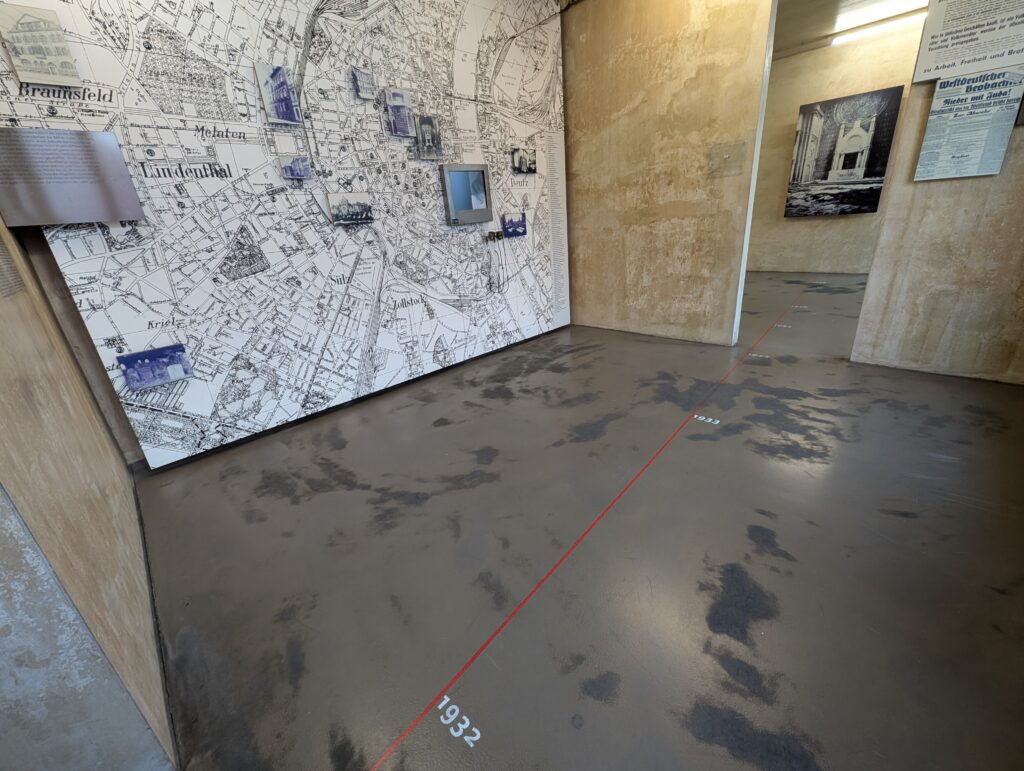
The Gestapo in Cologne. The Gestapo (Geheime Staatspolizei, Secret State Police) established a major regional office in Cologne soon after Hitler took power in 1933. The museum laid out what happened in the 10 years before Hitler took power and all the subtle and not so subtle changes that took place during that time. The timelines on the floor that showed the span in years as you were walking through really brought it all together. As I walked through the area of the changes in societies, attitudes, and how Nazi ideology was slowly permeating throughout, I really felt heavy in my heart and a pit in my stomach with all the parallels currently happening in my country and the world. It was depr swing and terrifying.
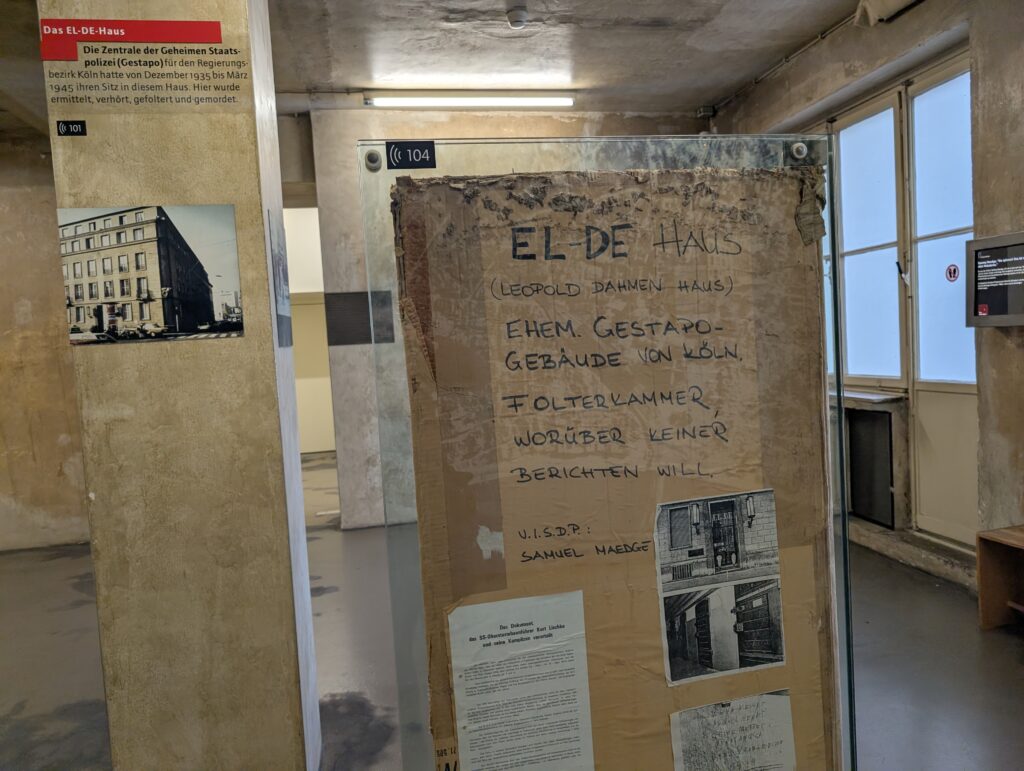
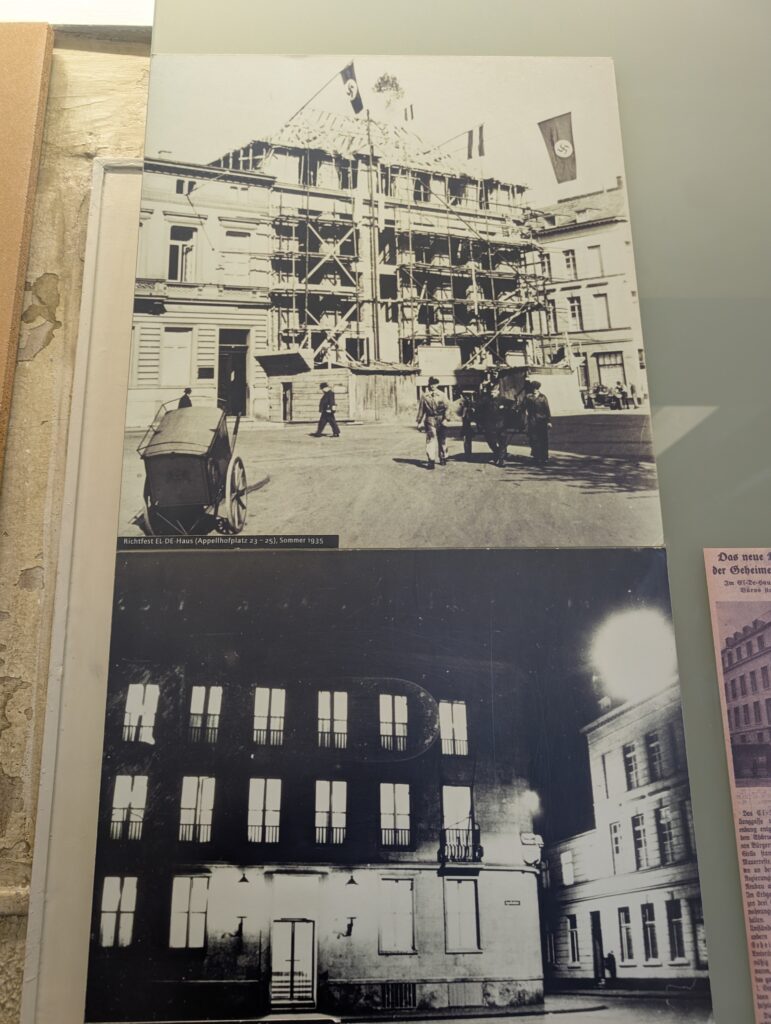
The main Cologne Gestapo headquarters was located at: EL-DE-Haus (Ehrenfeld district / Appellhofplatz) and named after the owner Leopold Dahmen (L.D.).
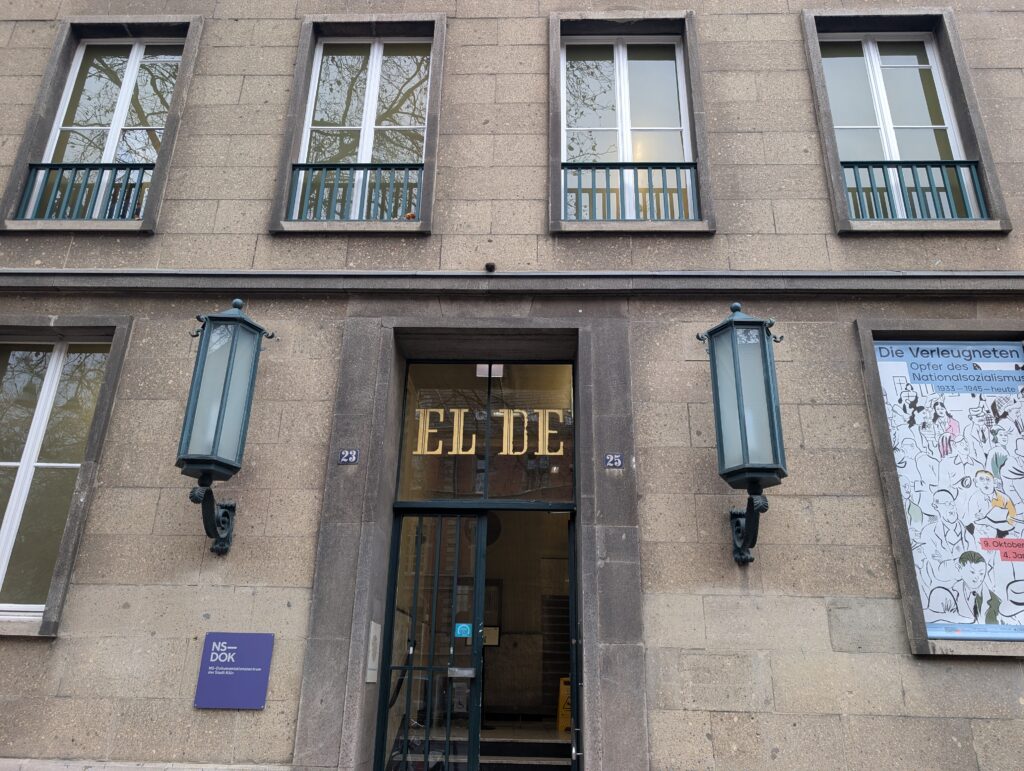
The Gestapo rented the building from him.
Propaganda beginning in 1918. The Jews are our downfall…
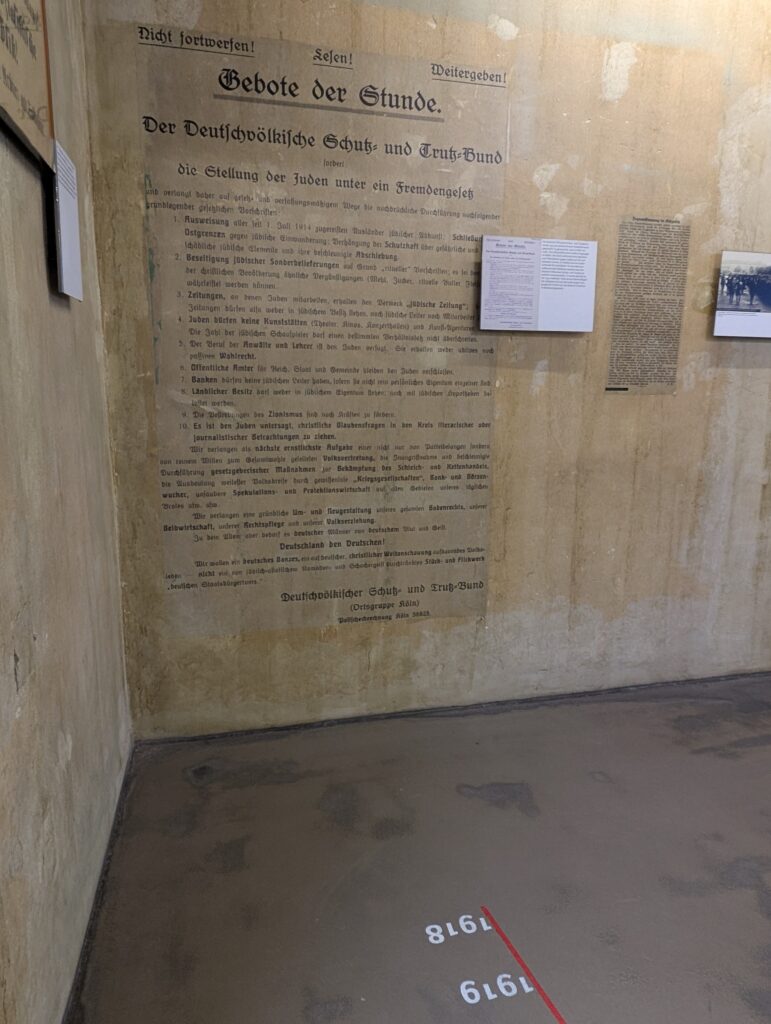
The rise of Hitler in 1932/33.
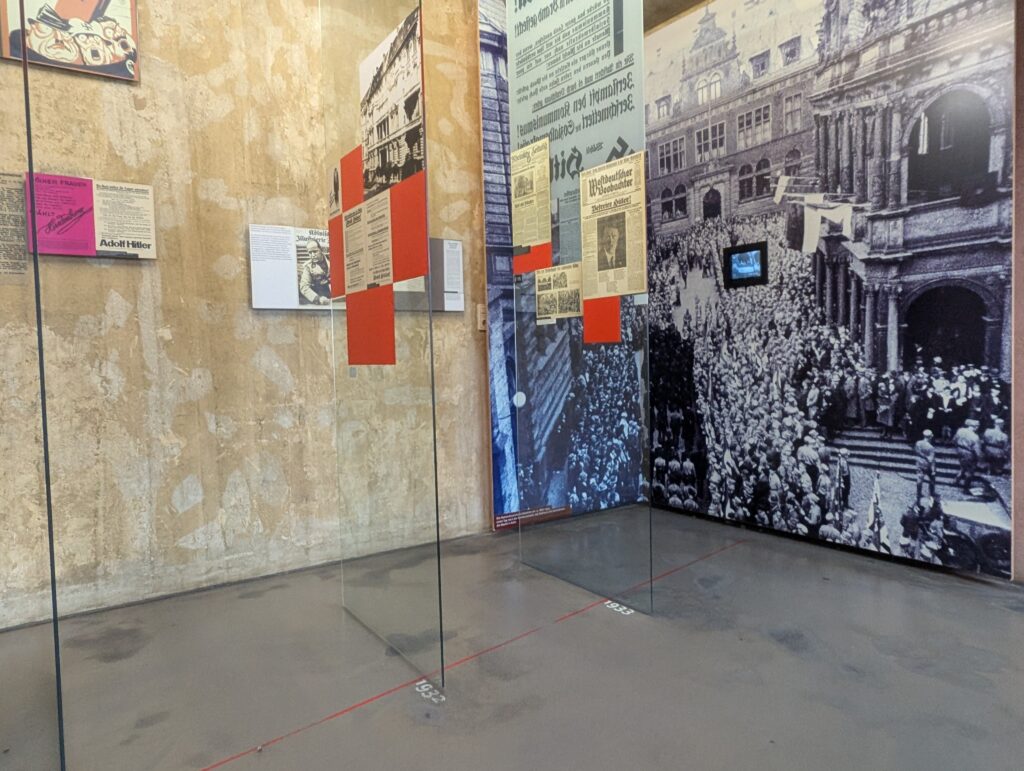
It became one of the most important Gestapo branches in western Germany because Cologne was: a major industrial city that had a railway hub near Belgium and the Netherlands. It was also home to large Catholic and labor communities (viewed as “unreliable” by the Nazis). From 1935 to 1945, the building was used for Gestapo offices, interrogation center, and prison and torture site. It went through all the officers involved, which it seems the majority did not see any trials after the war and were free to live normal lives despite what they did.
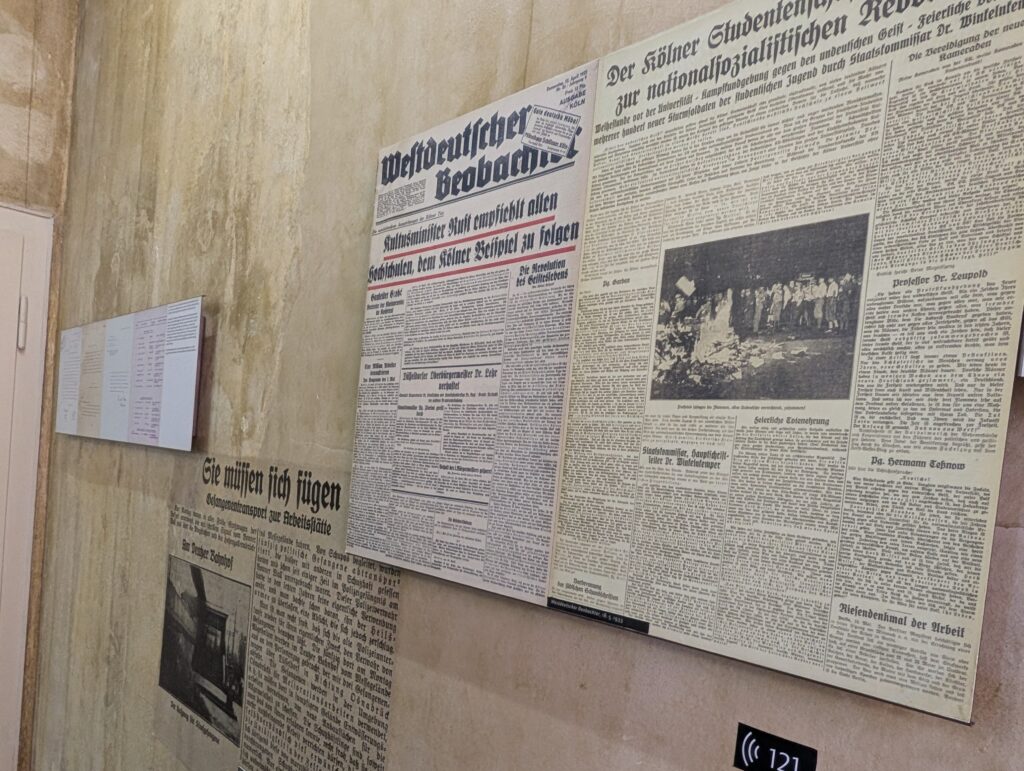
Burning of books is shown in this newspaper clipping. Getting professionals on board to force sterilization, teach the view of history they want, and to enforce any laws that moved fascism forward propelled the viewpoint. Many thought it would go away and stayed silent.
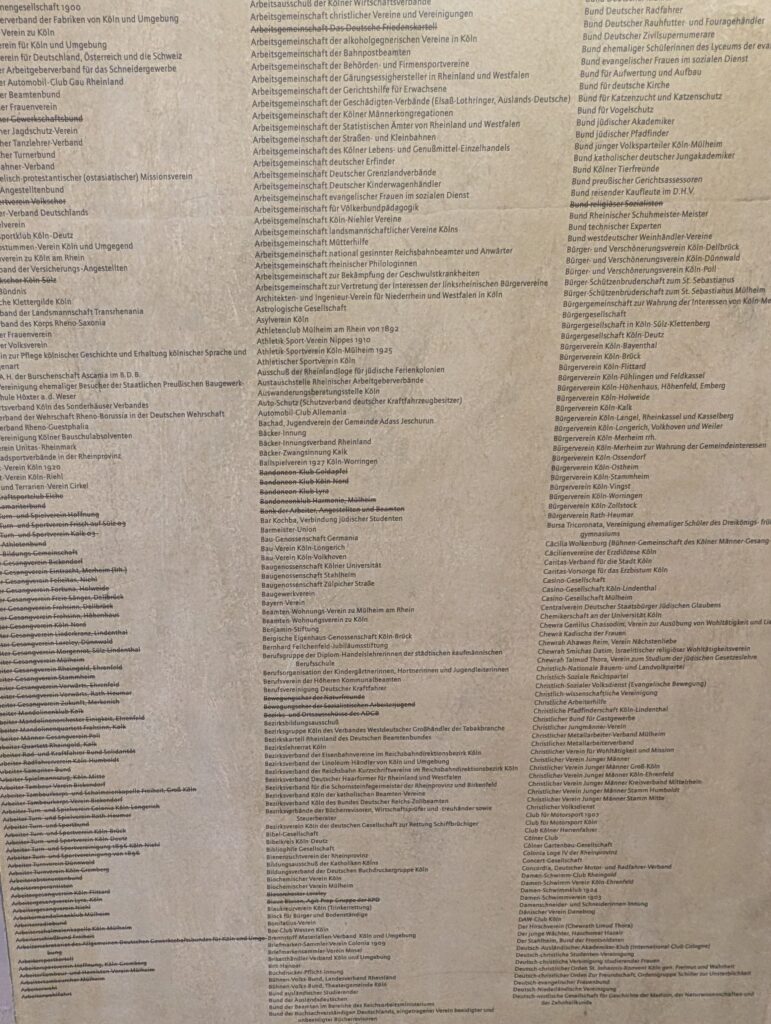
Groups and organizations that were in Cologne are listed on these panels. The ones crossed out were no longer allowed to be in existence. There is a whole room of lists of groups and those with no right to exist.
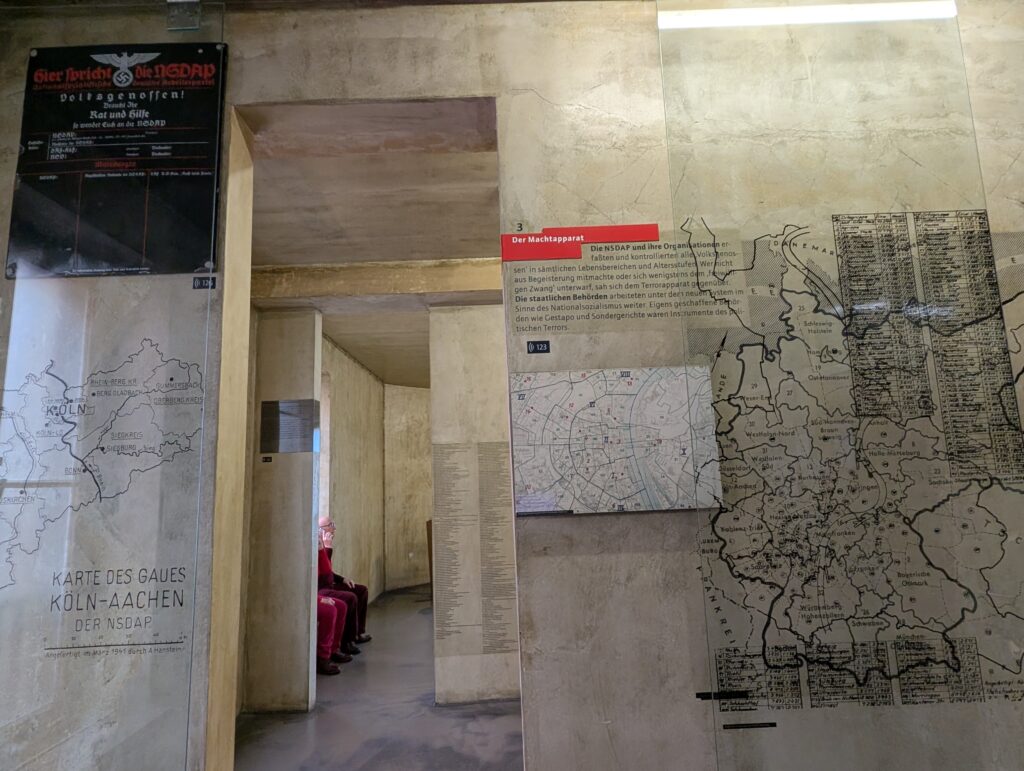
The starkness of the walls and floors added to the feeling and what was being conveyed in the audio guide. What appears impersonal became deeply personal with the stories and artifacts present. These are maps of control of Germany by the Gestapo. All was recorded and everyone was watched and reported on. At the top left is the board of one commander that would report findings on whole neighborhoods.
People considered undesirable (disadvantaged, homosexual, neurology conditions, those not fitting into the norm) were sentenced to forced labor. They were identified with patches on their clothes.
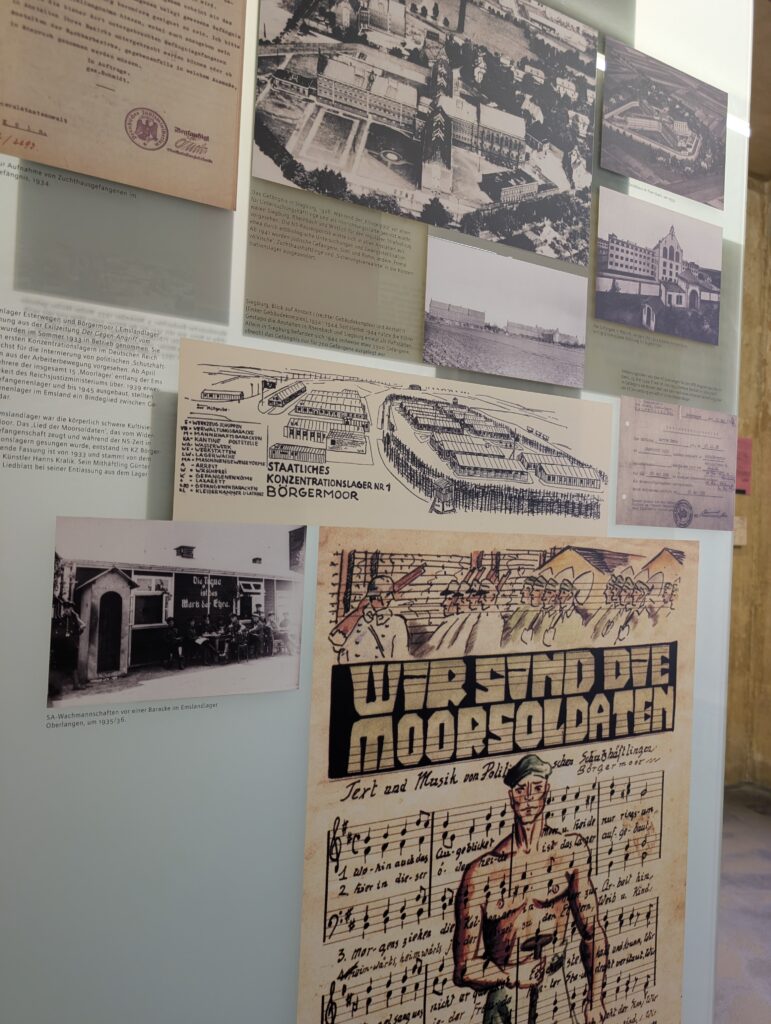
Again another timeline of how the rights of people were taken away and how things changed after 1932.
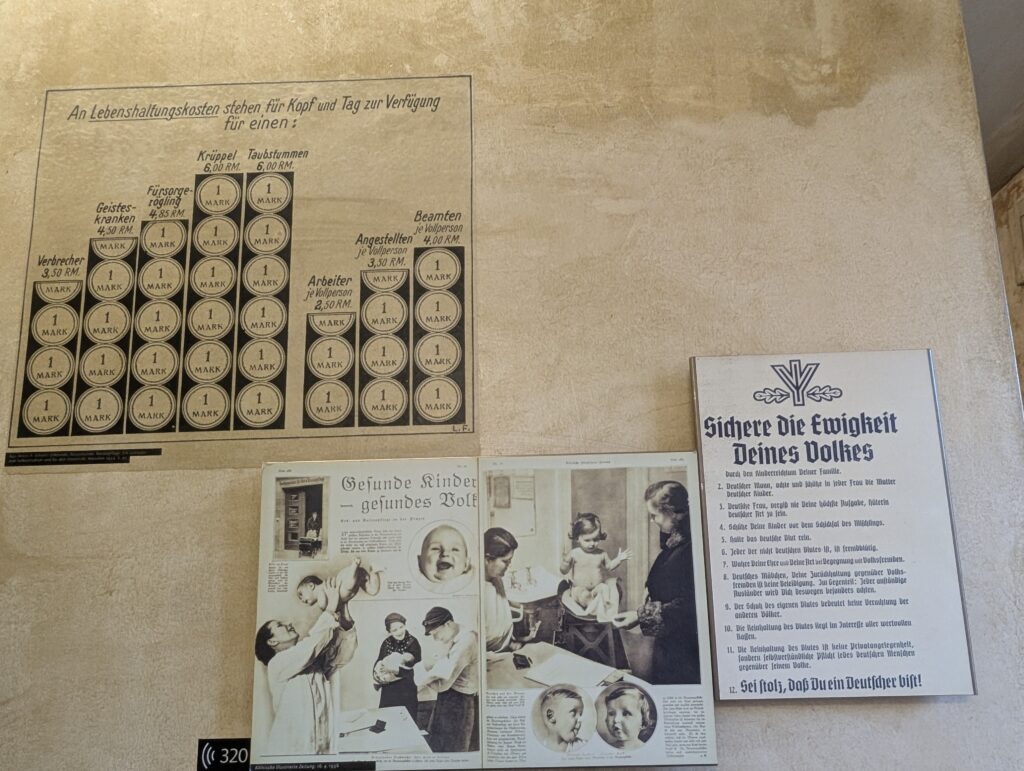
Propaganda of how much certain groups of people cost society and the reasoning for laws against intercultural marriage, the right to exist, and more births of Aryan babies.
Documentation of whole families of gypsies such as Romani people and homeless (many originally here from the 12th century) and their eventual discrimination and deportation.
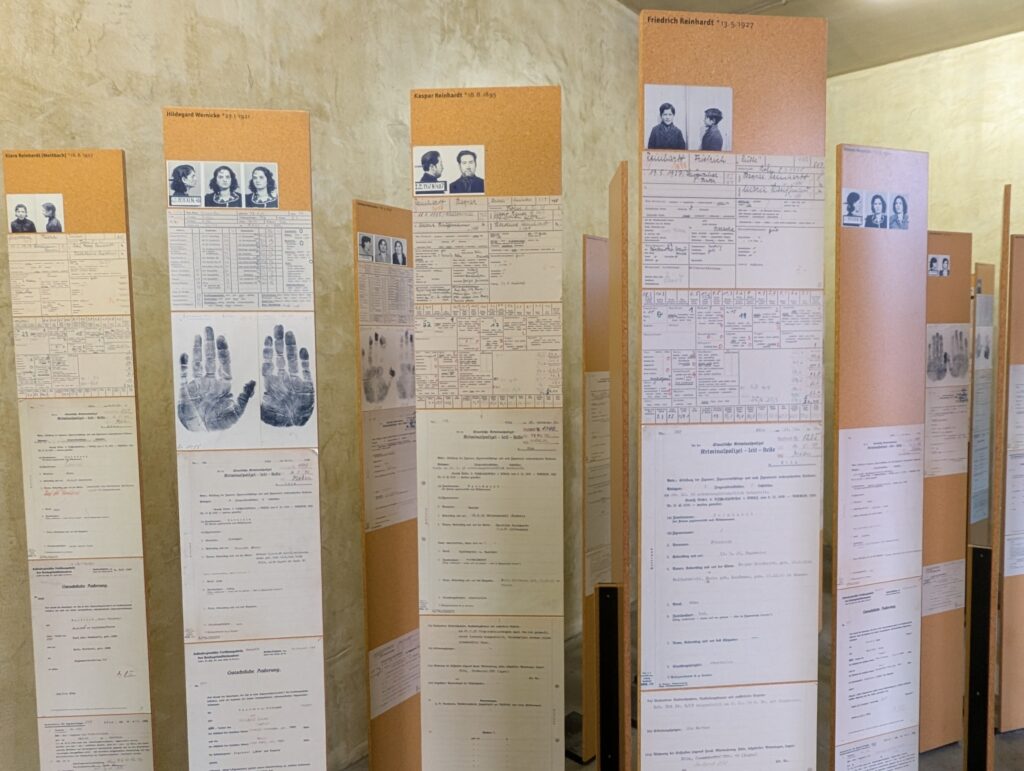
There is a book of all the people who were interrogated and sent off to concentrations camps. I can say that throughout this whole section I found myself actually crying through the rooms. I do not know how someone could not be moved by the personal testimonies, last letters to loved ones, and stories being told.
All Jewish deportations from Cologne (starting in 1941) were organized by the Gestapo. The major collection point was the Müngersdorf assembly camp, from which people were deported to Lodz, Minsk, Theresienstadt, Auschwitz, and other camps.
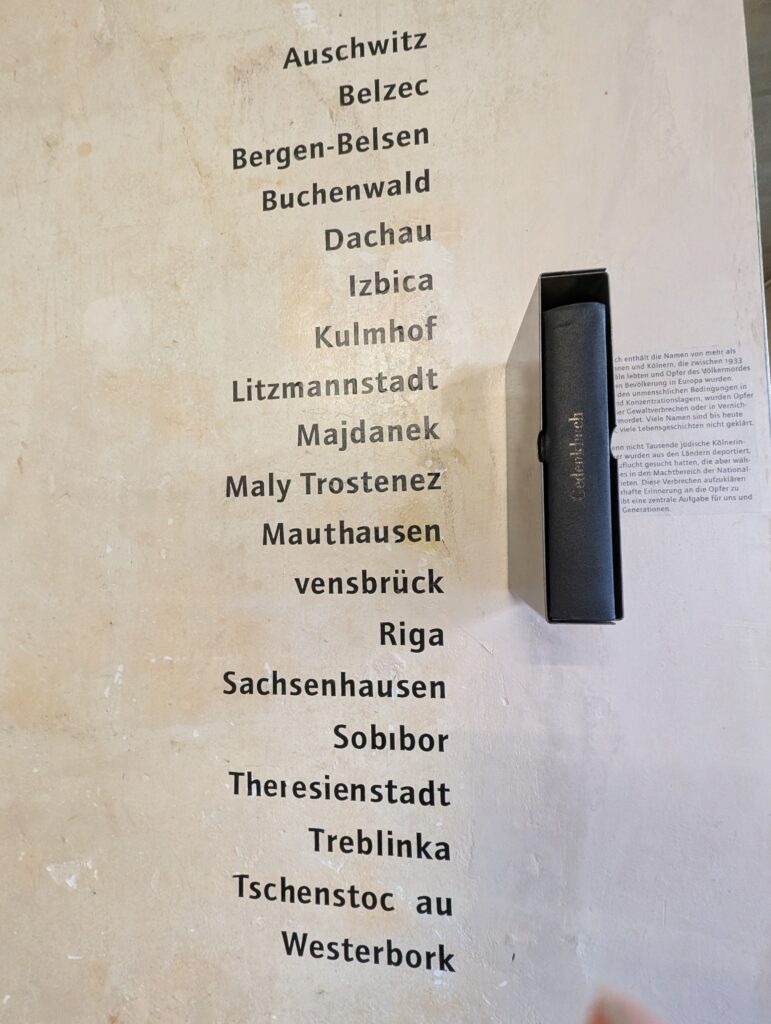
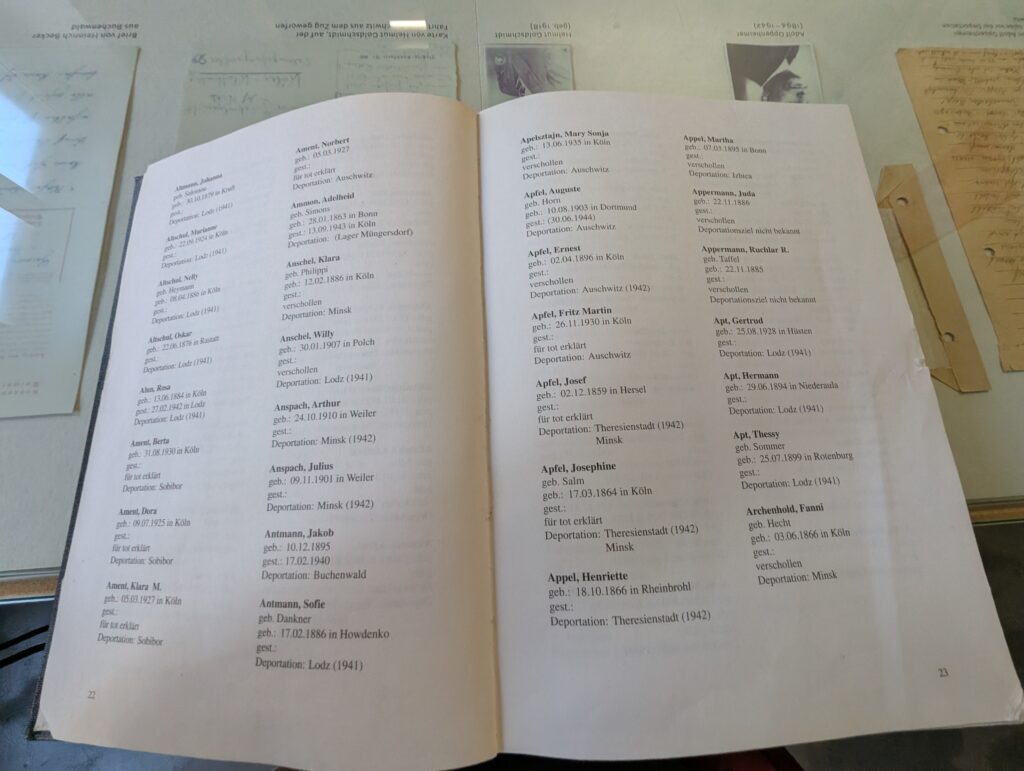
Cologne had several well-known anti-Nazi groups. There were many stories of people brave enough to show their resistance including many business owners and professionals including the church (though cautiously). Mostly they were put in jail for a time or questioned, but usually released. As the atrocities accelerated, some in the resistance were executed in 1944.
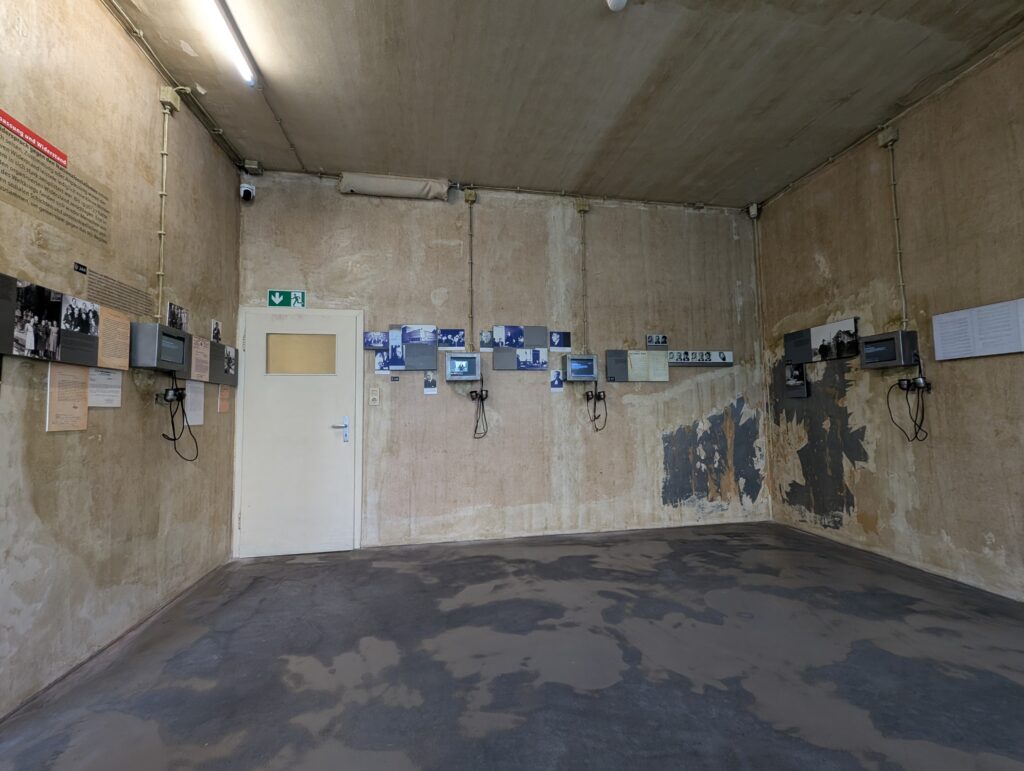
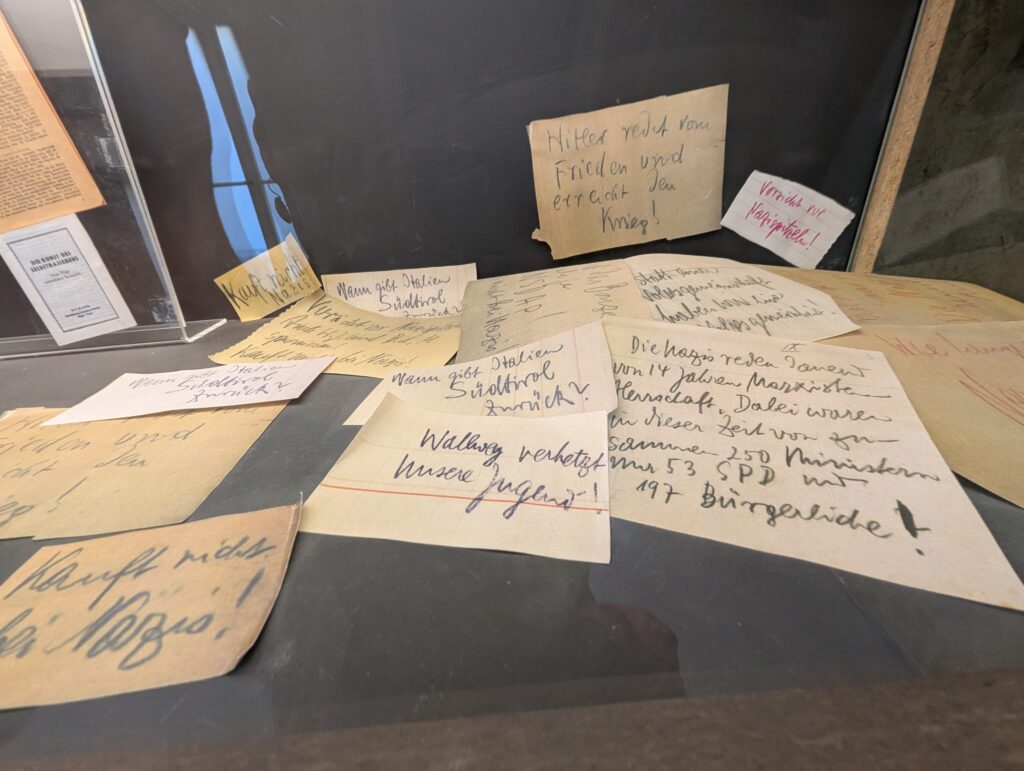
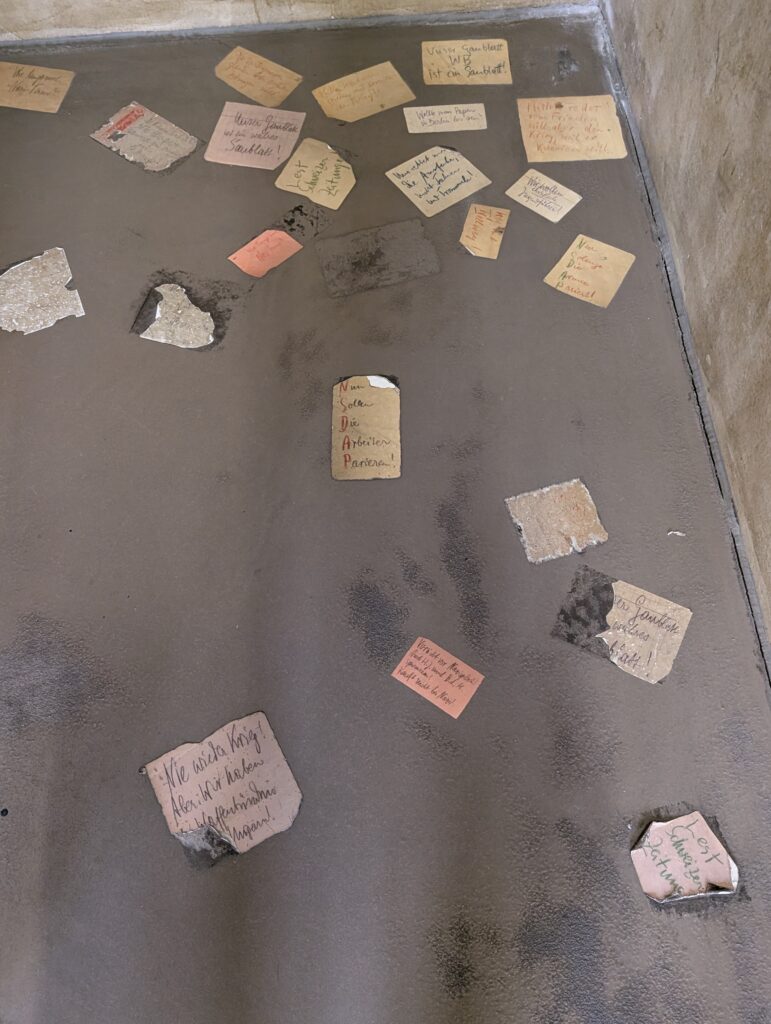
Resistance notes that would be left here and there in the city to get others involved, to continue the resistance, and to let those involved know that not everyone agreed.
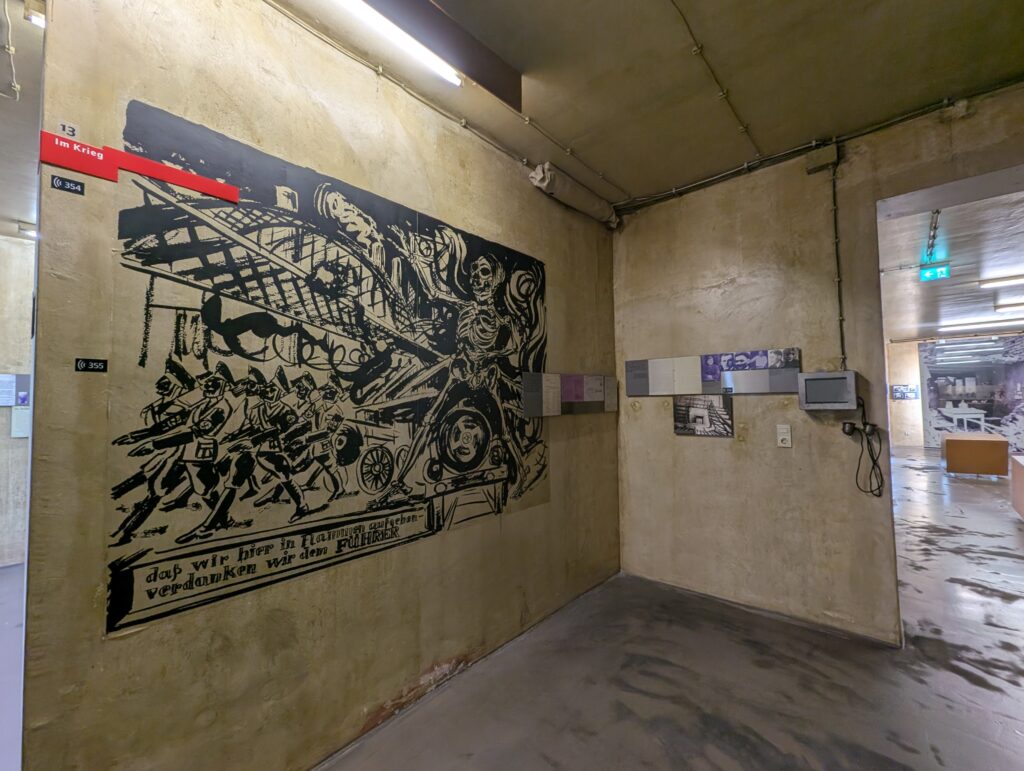
This is a great piece of propaganda. It was made in Denmark and shows Hitler bringing war and death to the country. It was correct.
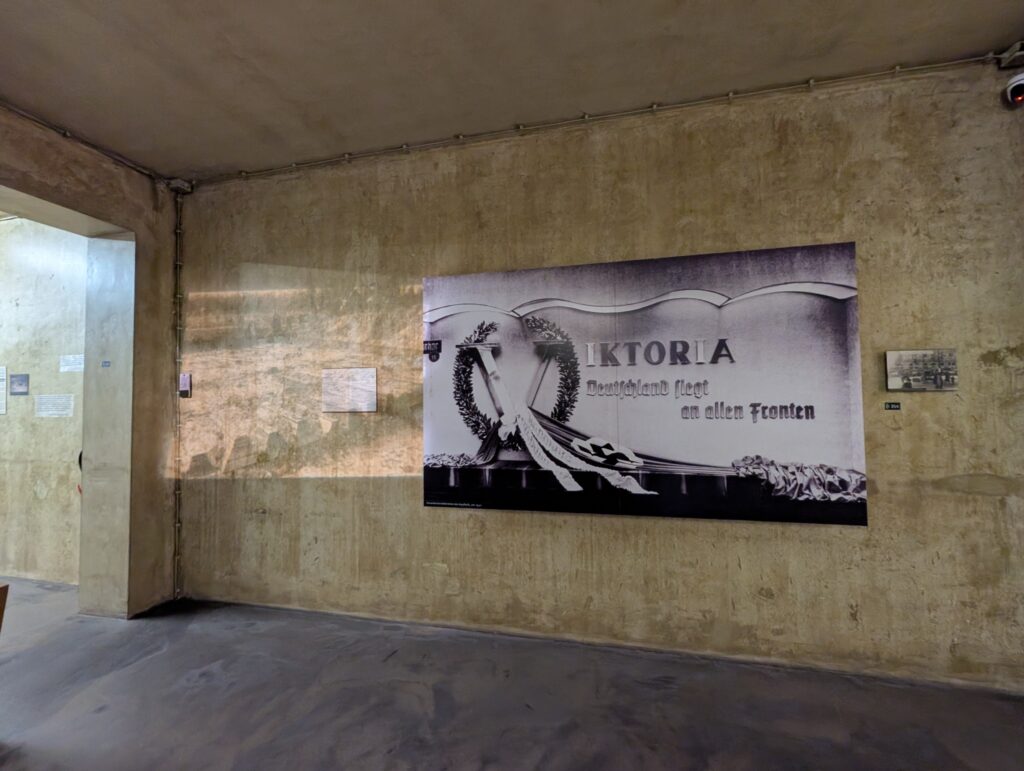
The next few rooms were about war coming to Germany and Cologne. Propaganda from the Reich forecasted prosperity and a new world order for Germany.
Pictures from soldiers who were from Cologne and were at the Eastern and Western fronts.
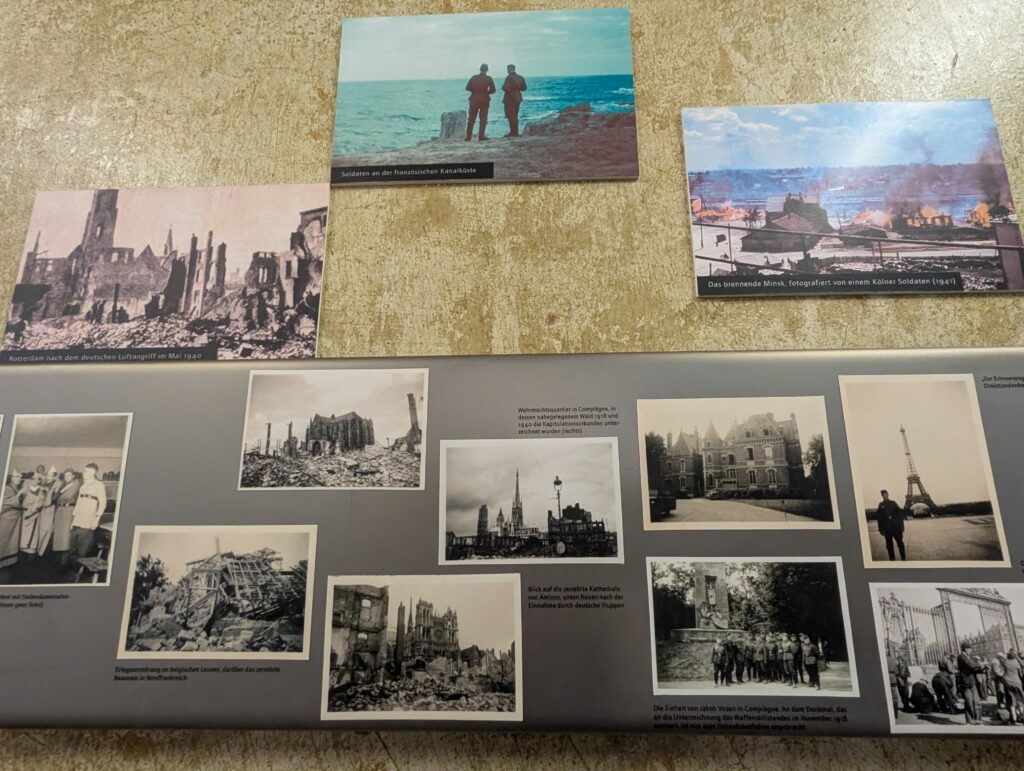
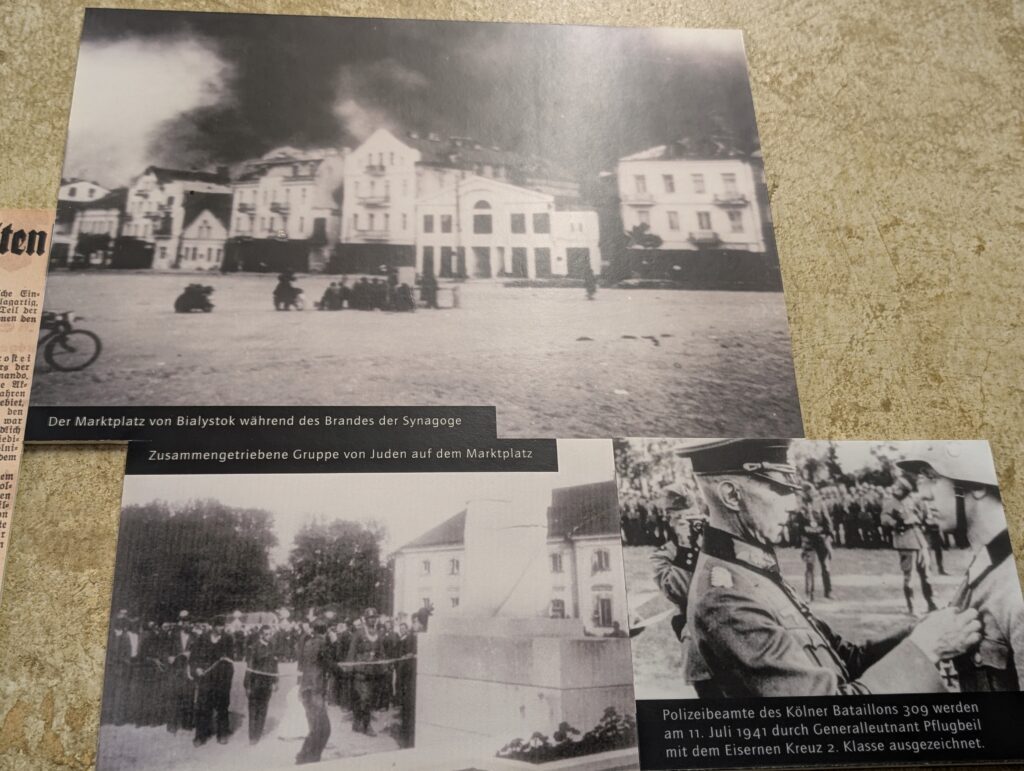
The fire occurring in the background of Bialystok was the result of rounding up local Jews and having them go into the synagogue. Rows of guards surrounded the synagogue to prevent escape as it was set on fire as a mass live crematorium for the 1000 inside.
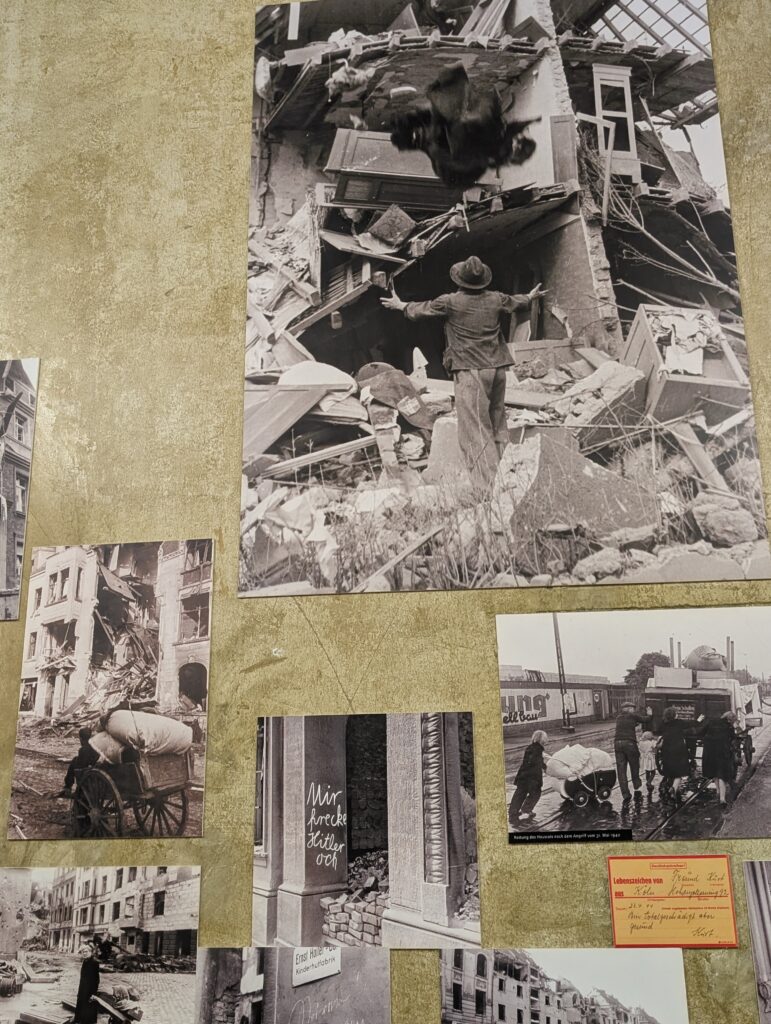
Destruction in Cologne was massive as it was a major industrial and transport center for the Nazis. Many locals perished in the bomb shelters. It is easy to not be moved by their plight and I wanted to skip over these sections. But it was still easy to care and feel horrible for them despite what those in their country have done. They are still people and if I feel they don’t matter, then I am no better.
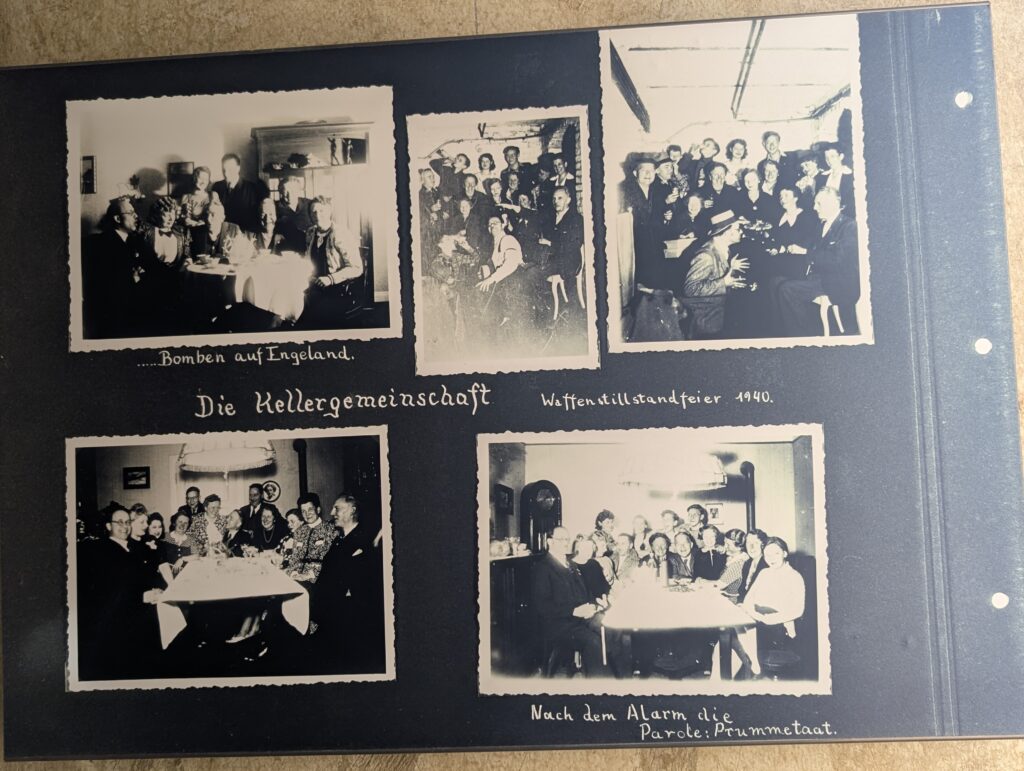
As with the rest of the world, people gave up things and worked for the war effort. Others celebrated every advancement Germany made (taking Paris. Bombing London, etc.) and made a celebration of it. This is underground dinner parties of supporters from a scrapbook found later.
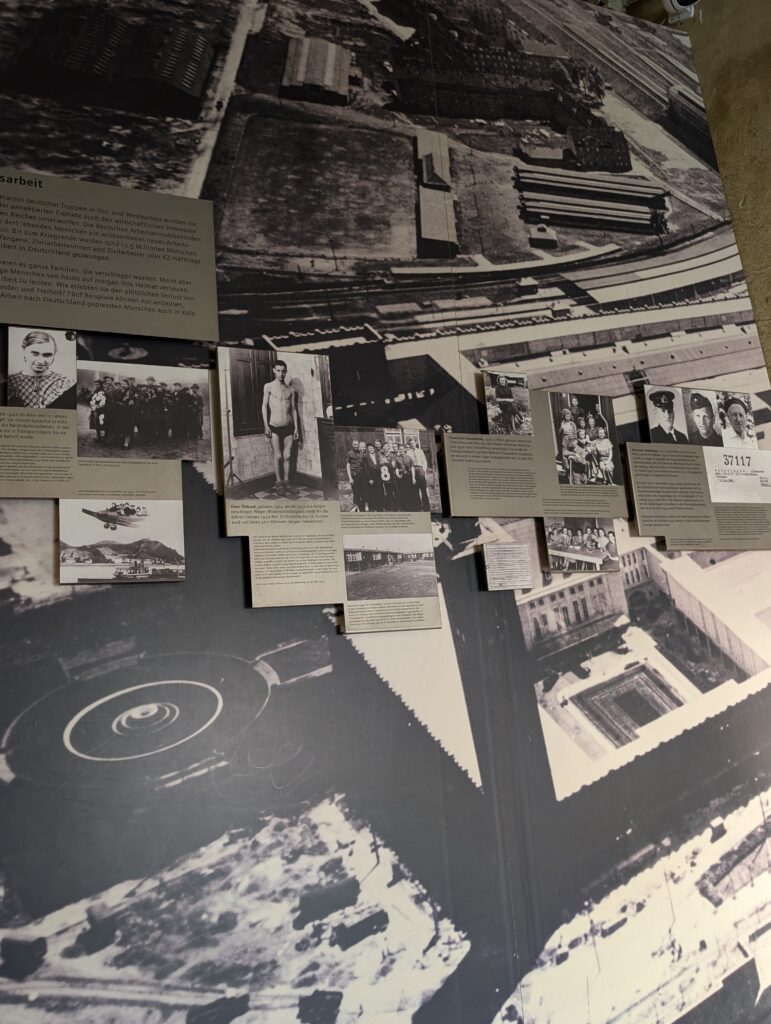
As most men were in the war, workers were needed, and they were brought in from other countries. Sometimes against their will and other times they were coerced (threatening the death of family members). In the last final months of the war, many were killed.
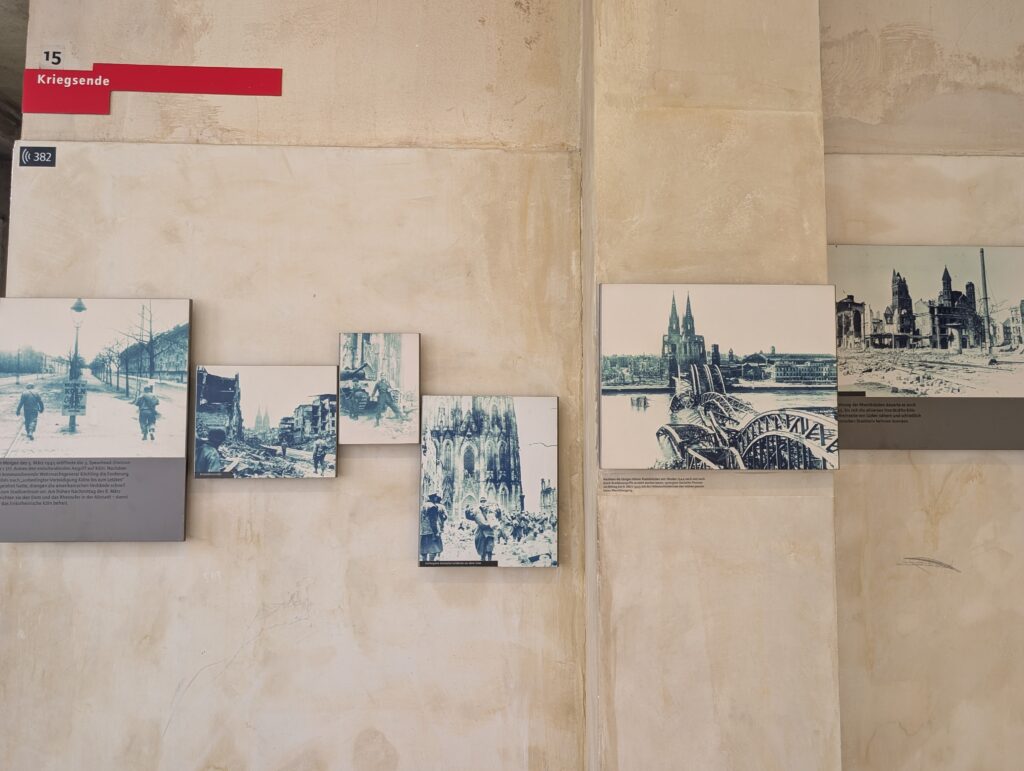
The pictures below is of the taking of Cologne by Allied forces on March 6, 1945. Propaganda reminded residents that Hitler promised prosperity in 5 years and now instead they have ruin. Cologne was bombed 262 times as it was an important target. The cathedral sustained damage but was still standing (despite being bombed 14 times) and the Gestapo headquarters was spared as well. 90% of the city was destroyed and the population of 760,000 was no about 100,000.
I am glad that I purchased the audio guide and I listened to everything. I really felt emotionally drained at the end and as I went downstairs I realized I was not finished. There was still the basement which was the prison. The words I heard as I went down was “you are walking down the same stairs that prisoners walked down (they did not walk back out). What a sinking feeling. This is the only part of the museum that has translation on the placards in English.
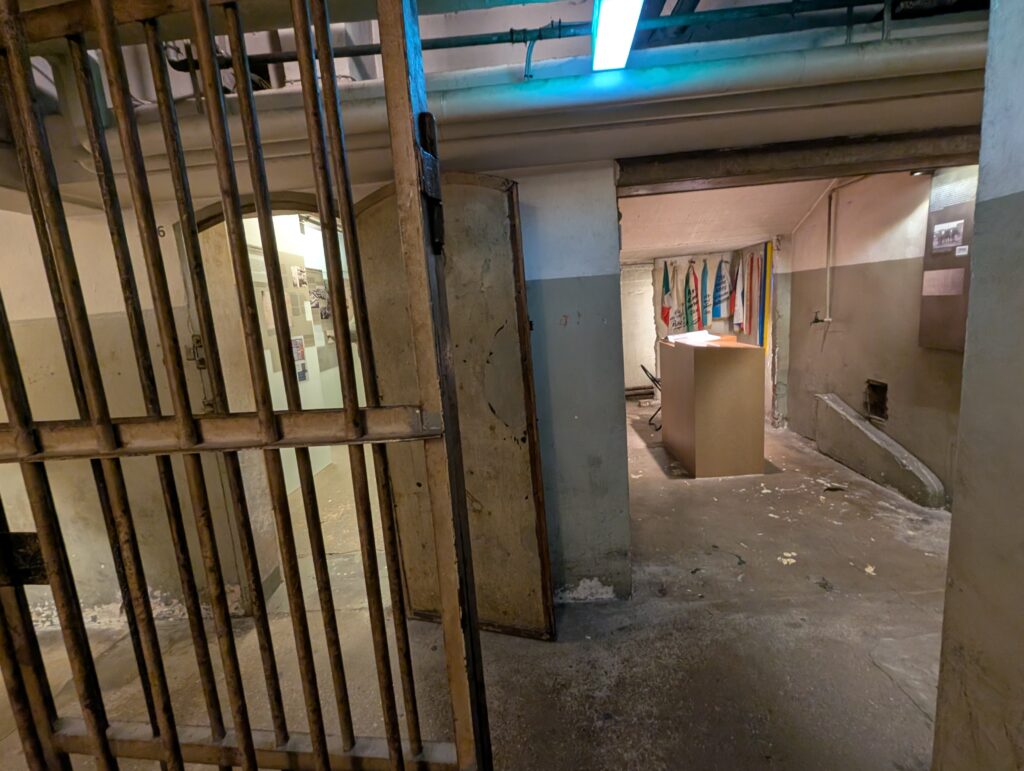
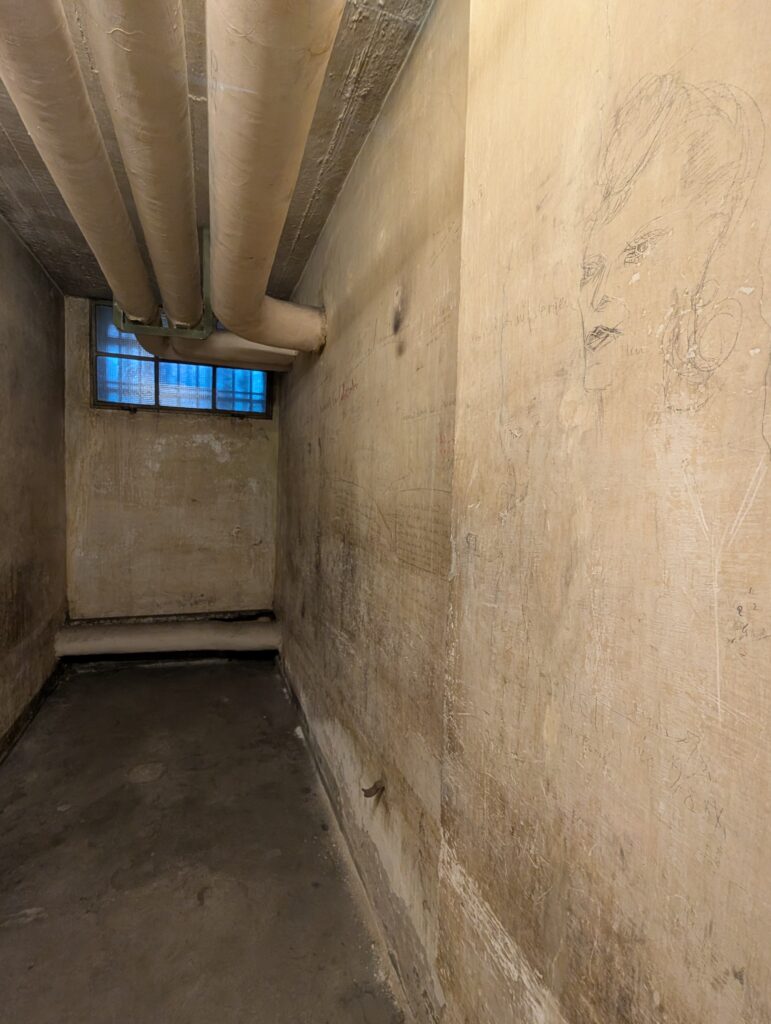
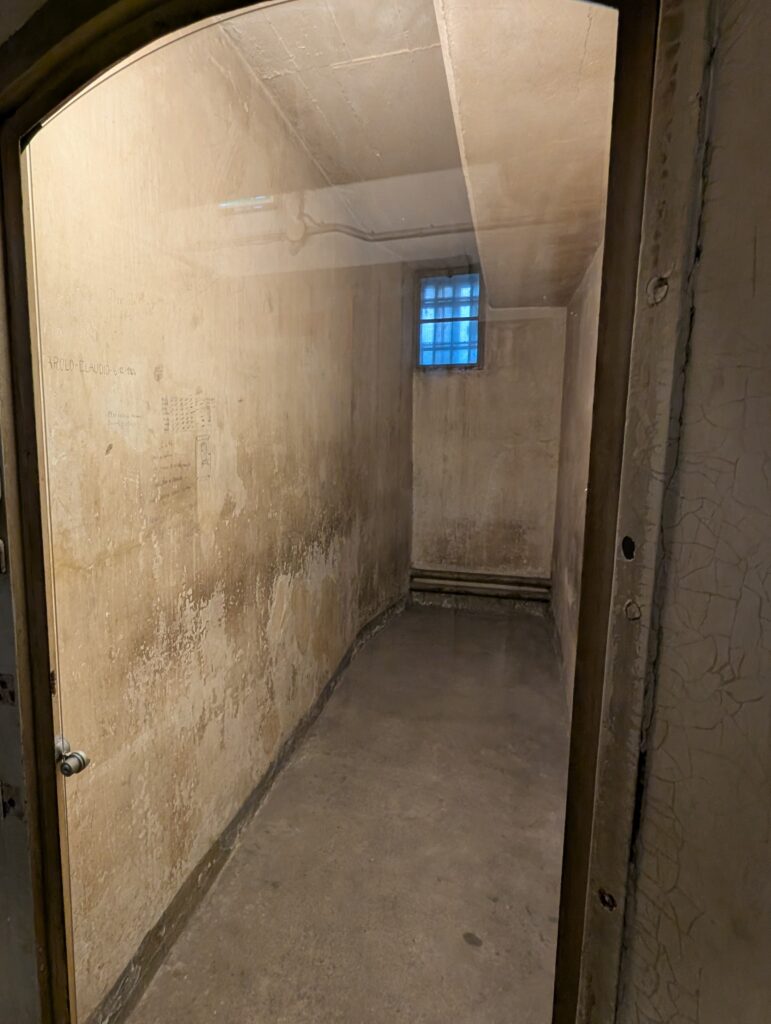
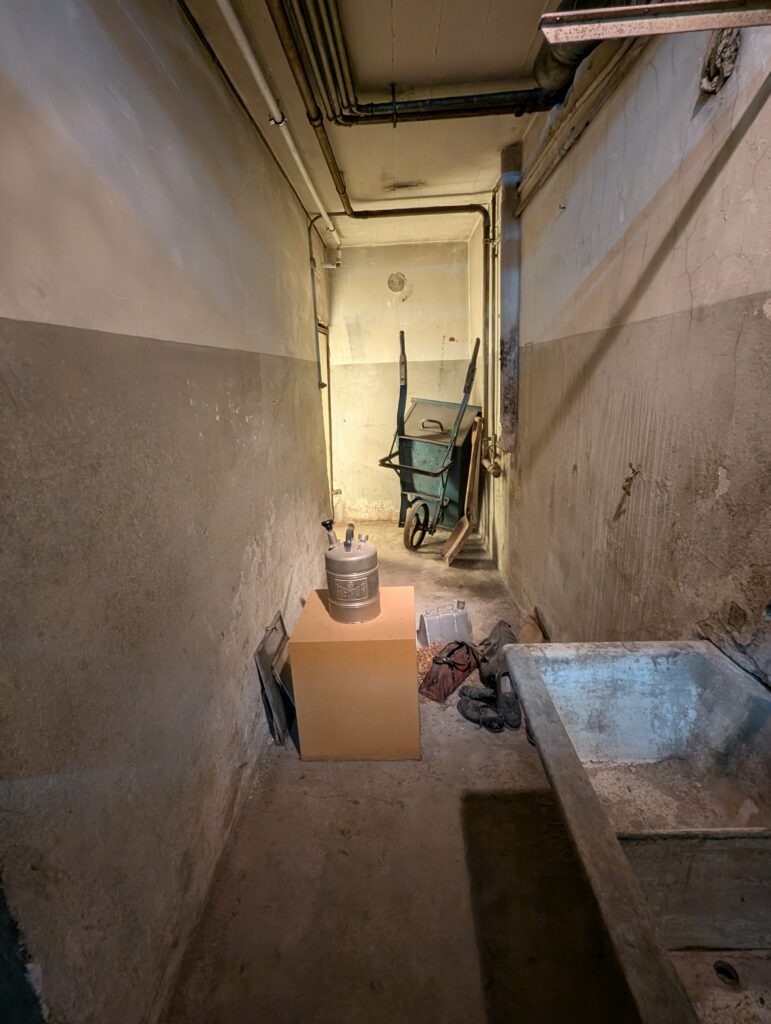
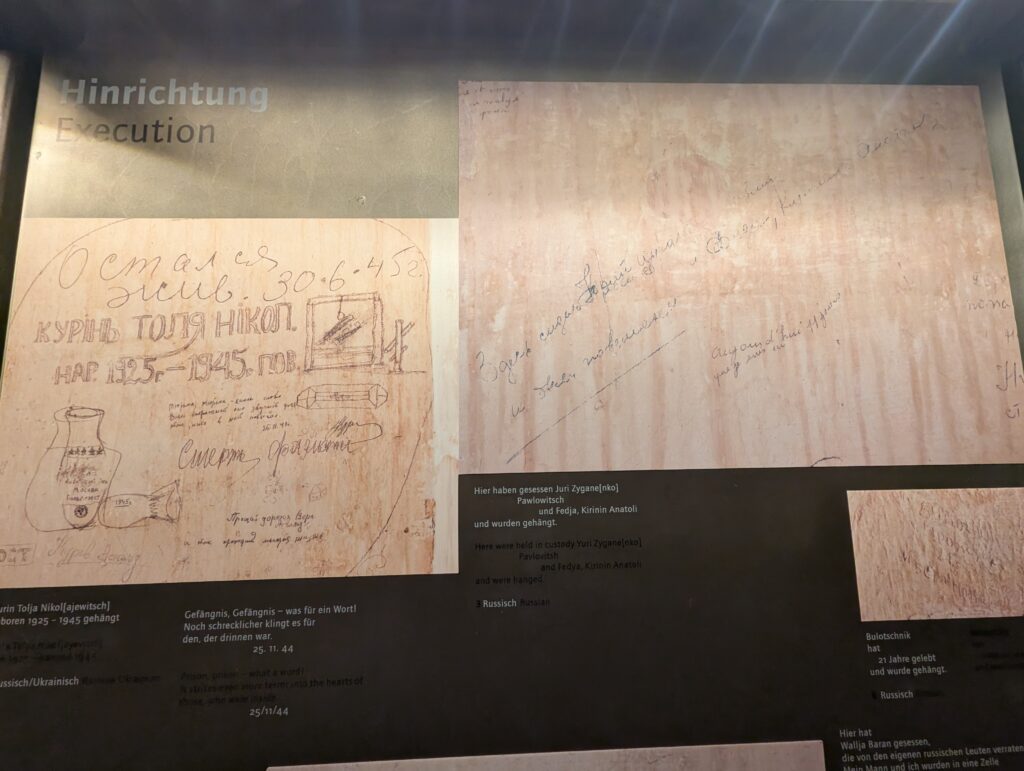
Drawings and scratchings still exist on the walls and many others are recorded in visuals in other rooms. There are 14 prison cells.
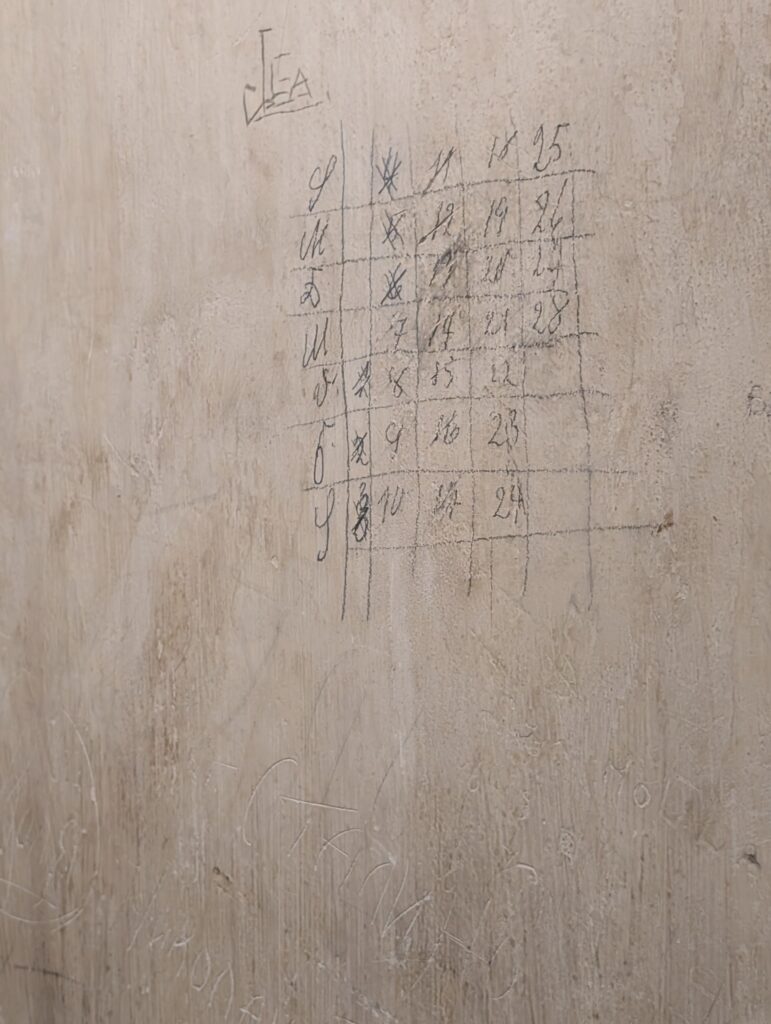
A calendar to keep track of days.
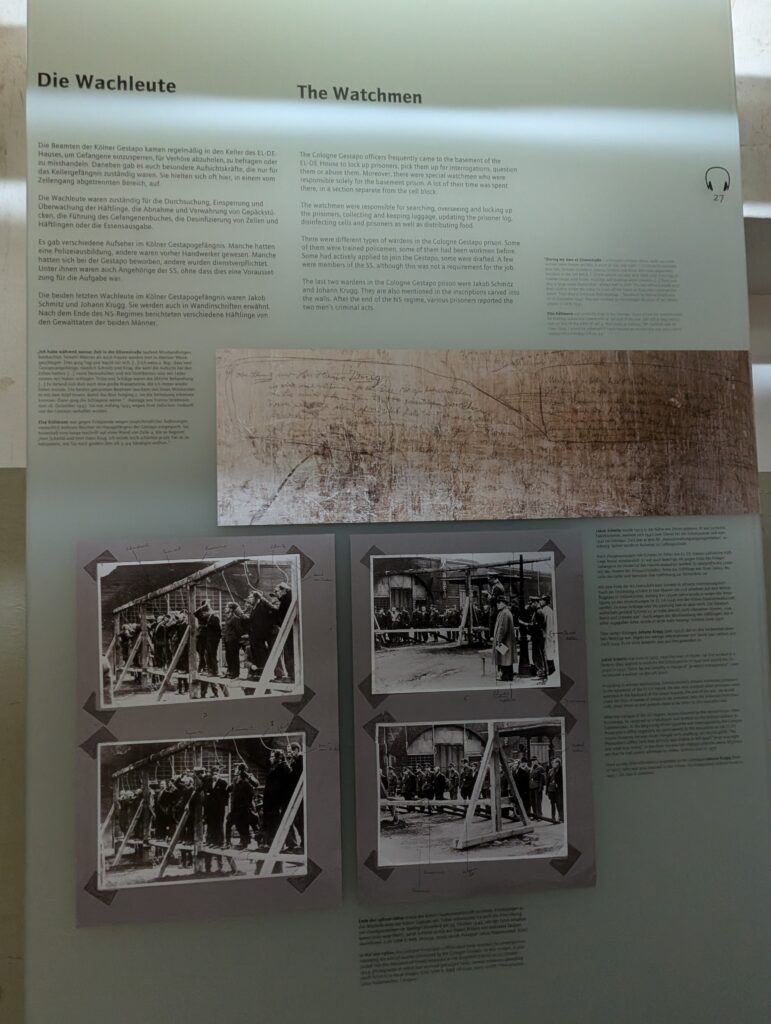
They sometimes had 33 people in a cell with bathroom privileges twice a day and buckets for in between. The smell it was said permeated outside and people could hear the suffering on the street but no one did anything.
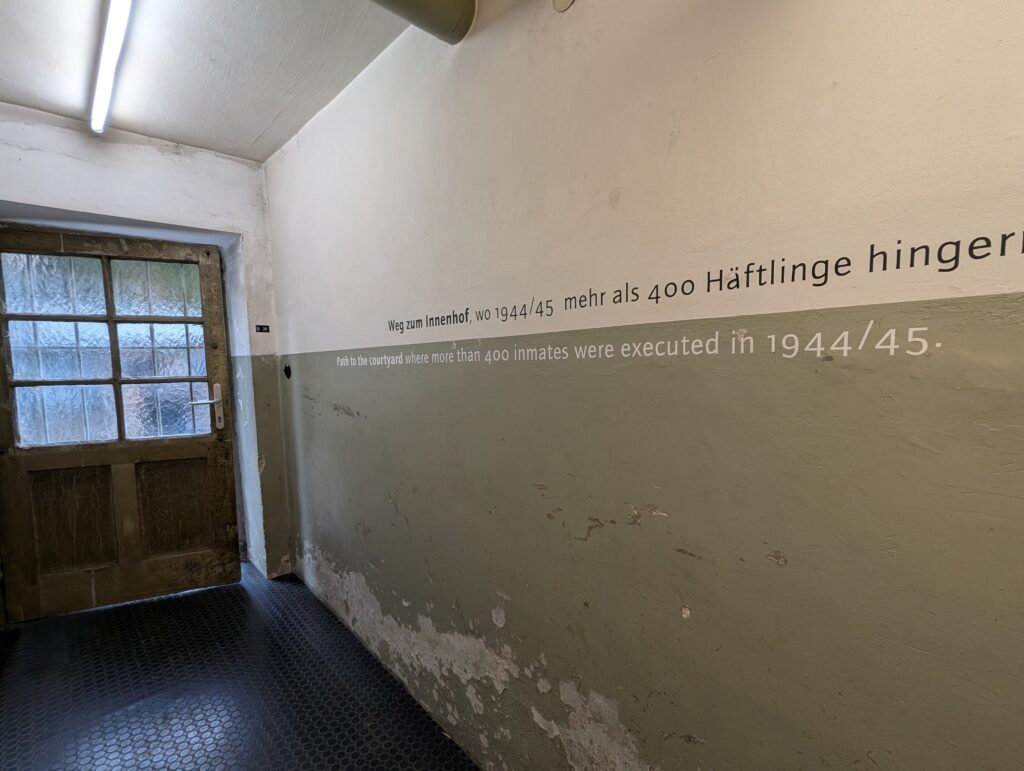
Hanging occurred outside the corridor below in the courtyard. There were buildings overlooking this. And no one did anything.
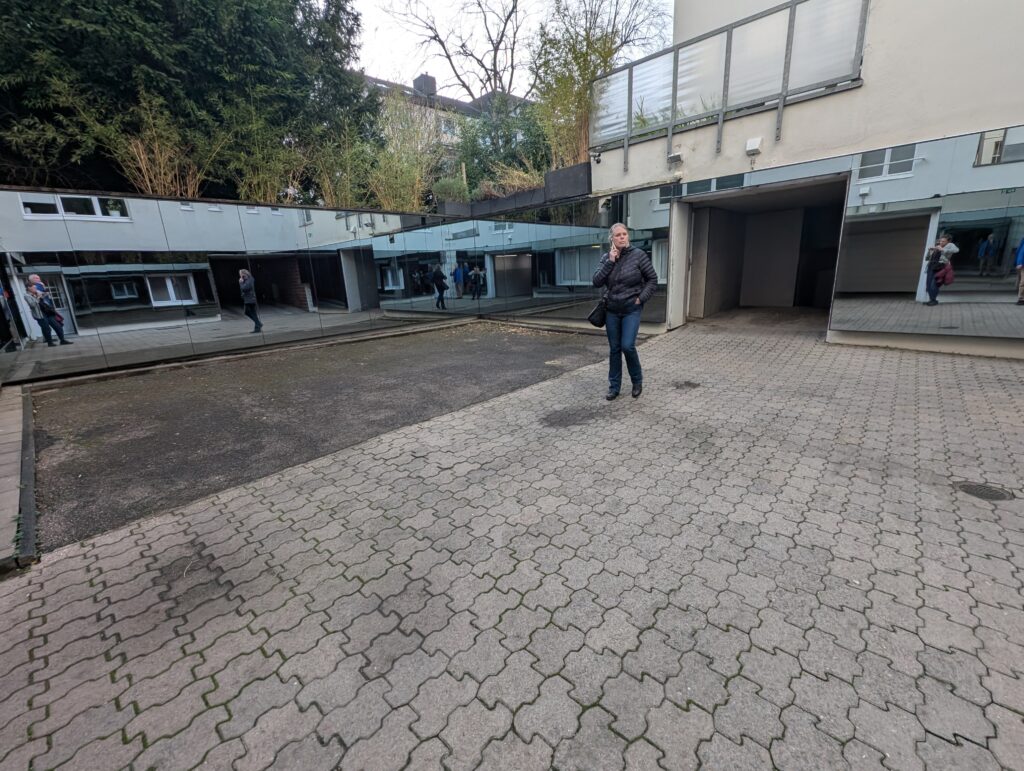
An artist created these wall of mirrors for the courtyard. Mirrors were positioned in such a way that there was no way that you could not see yourself. It was quite a feeling that you could not be there and not “see”. You were exposed and also able to see everything. Powerful and emotional.
These artifacts were found under the stairs. An actual can that released chemicals to stop the spread of typhus and shoes and other personal effects of the prisoners.
Some of the drawings on the wall from people in the prison.
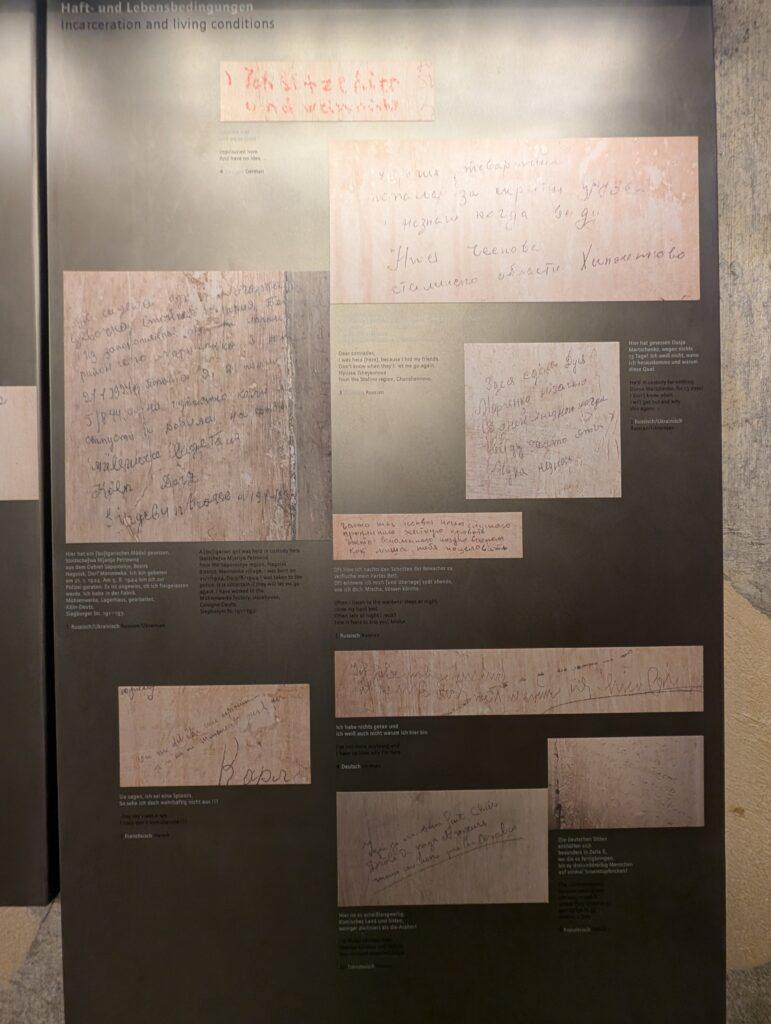
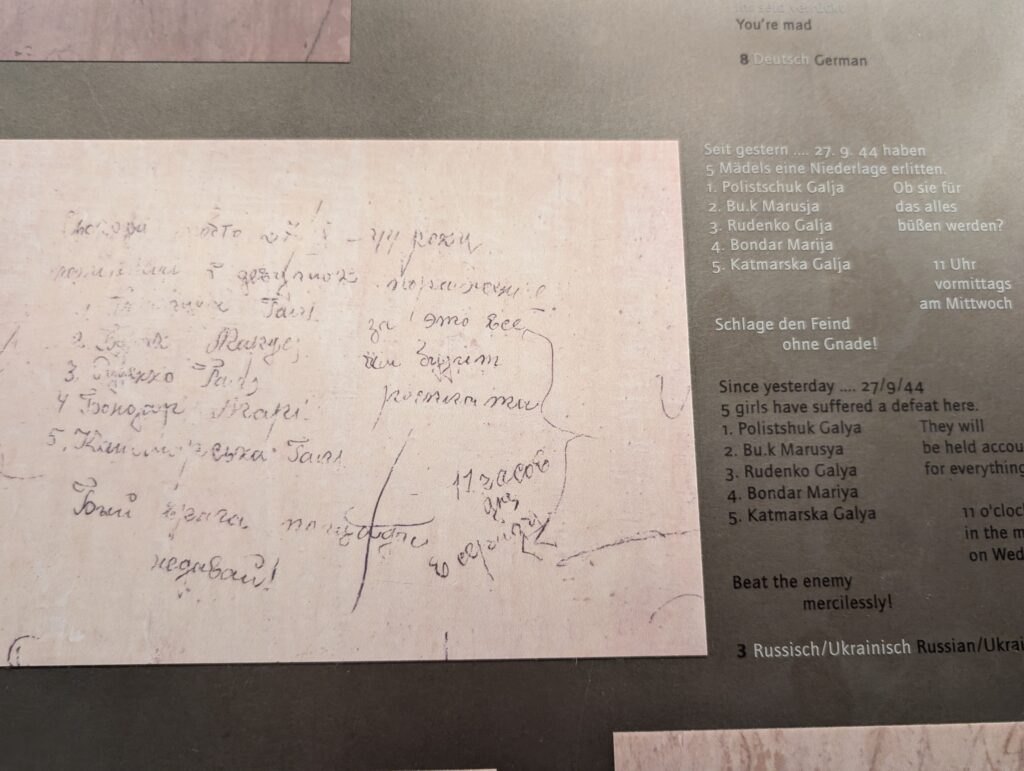
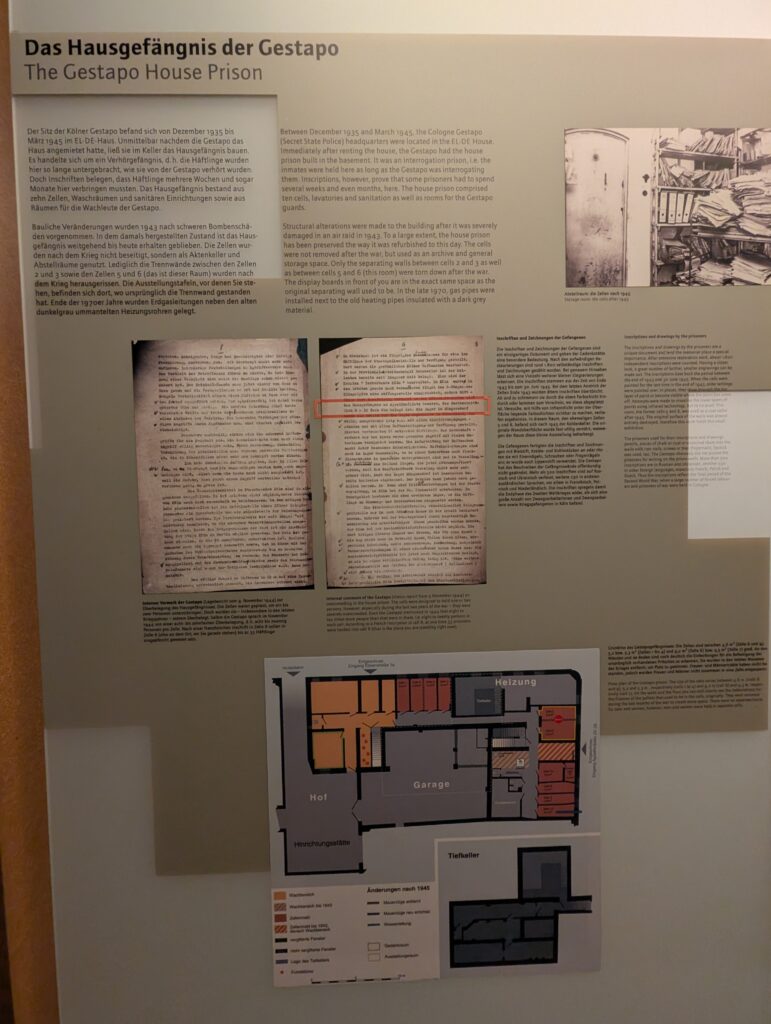
Today, the EL-DE-Haus is the NS-Dokumentationszentrum (NS Documentation Center). It is considered one of Germany’s most important museums on Nazi terror. The basement cells, preserved and covered in prisoner graffiti, are one of the most authentic Gestapo prison sites in Europe. What is interesting is that things were filed and stored here for decades before they were found and realized the prison was completely ly intact. Crazy, but once the war was over everything that happened here was conveniently forgotten.
In 1981 artifacts were assembled into the museum and it is one of the best museums I have seen. It really gives the perspective of locals on all sides and those who were persecuted. It really showcases how the horrors of that time were committed by their own people living here next door instead of a story of people halfway around the world.