The Natchez Trace are a series of Native American trails that was used in the 1700’s and 1800’s for traveling between Nashville and Natchez (which is near the Mississippi). It has tremendous history and many different things have happened along this trail. I loved driving it even though I started in Tupelo and will do the northern portion on another trip.
Many of the markers were for missions, stations where people could get goods or stay, locations of the Chickasaw settlements, agencies where people were the go betweens between settlers and native Americans, and geologic information about the best places for farmland. DeSoto also crossed near the middle of the trace in 1540.
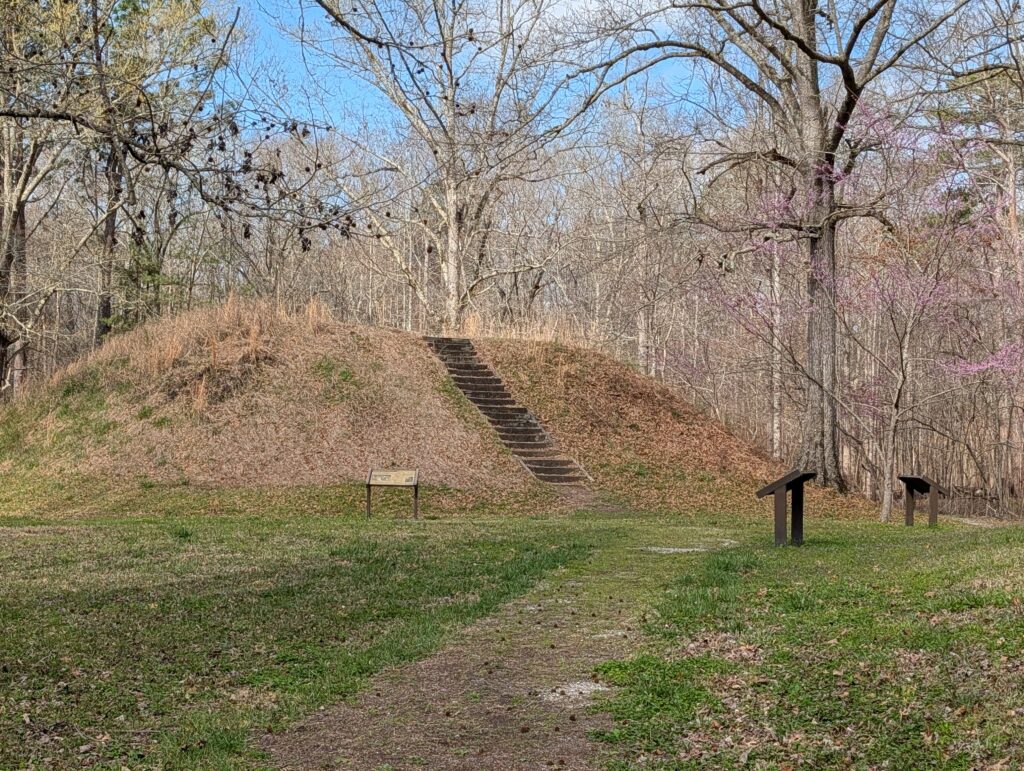
The owl Creek mounds were used from 1000 to 1500 and dwellings were built on top.
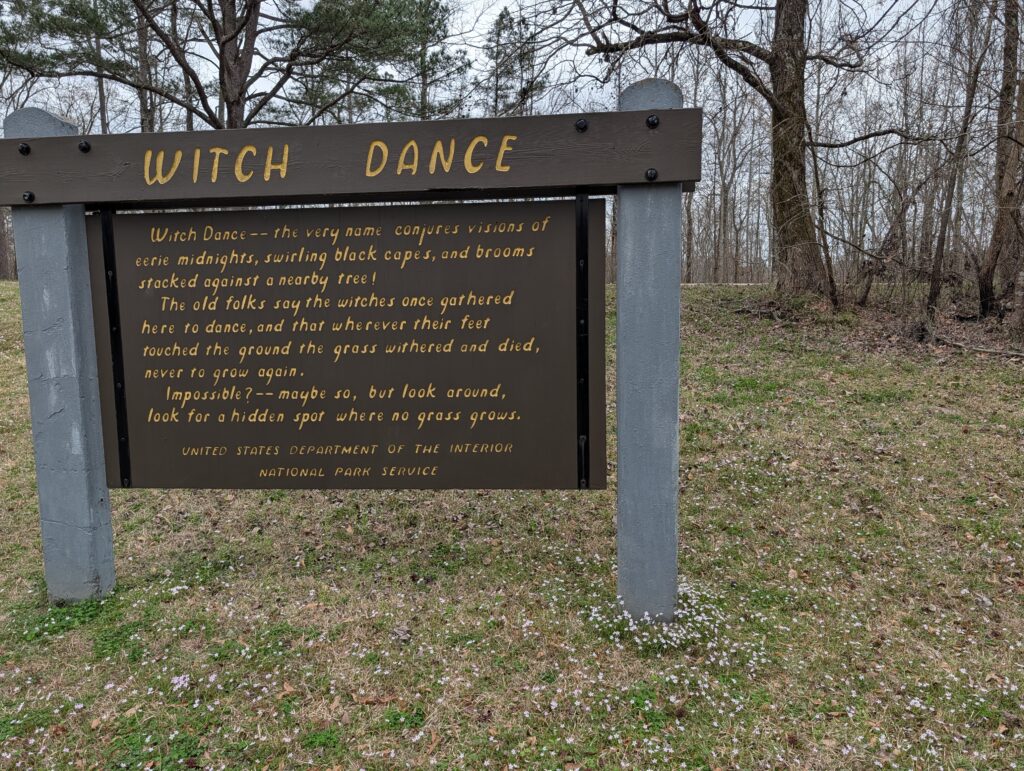
I laughed at the witch dance stop as the sign said there were stories of witches here and that you should walk around to look for places that the grass does not grow. What a great way to stretch your legs!
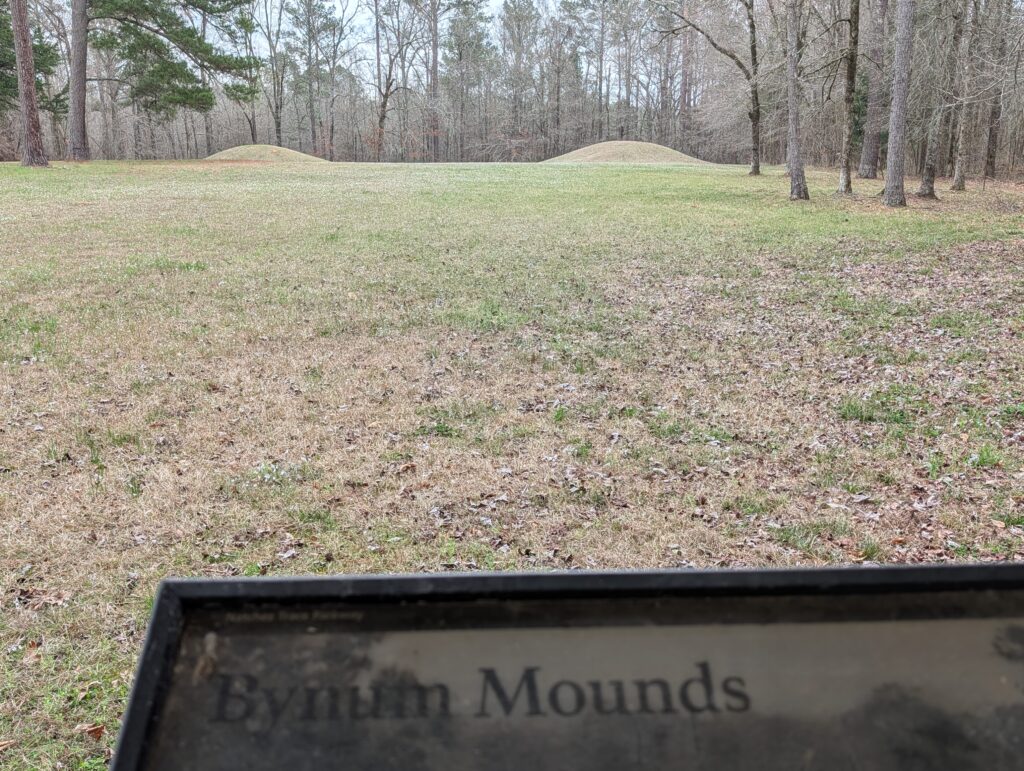
Bynum mounds wher woodland Indians lived.
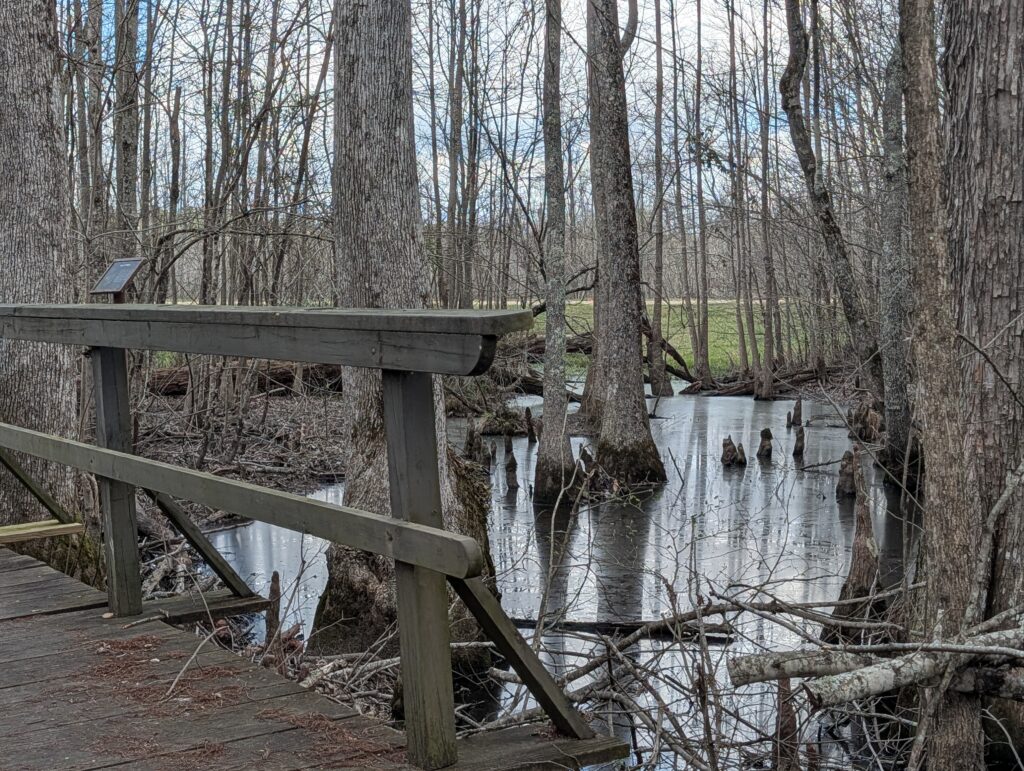
I enjoyed the little walks on the nature trails and those that were still part of the old trace trail. I especially liked the trails through the cypress swamps.
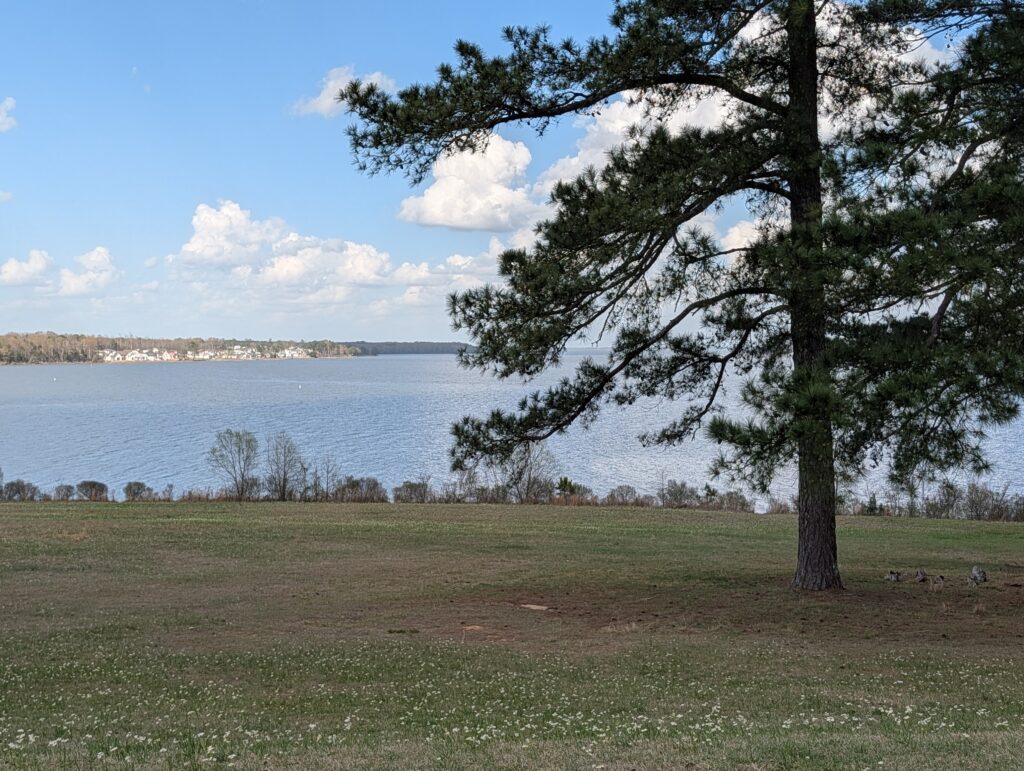
The reservoir stop was beautiful!
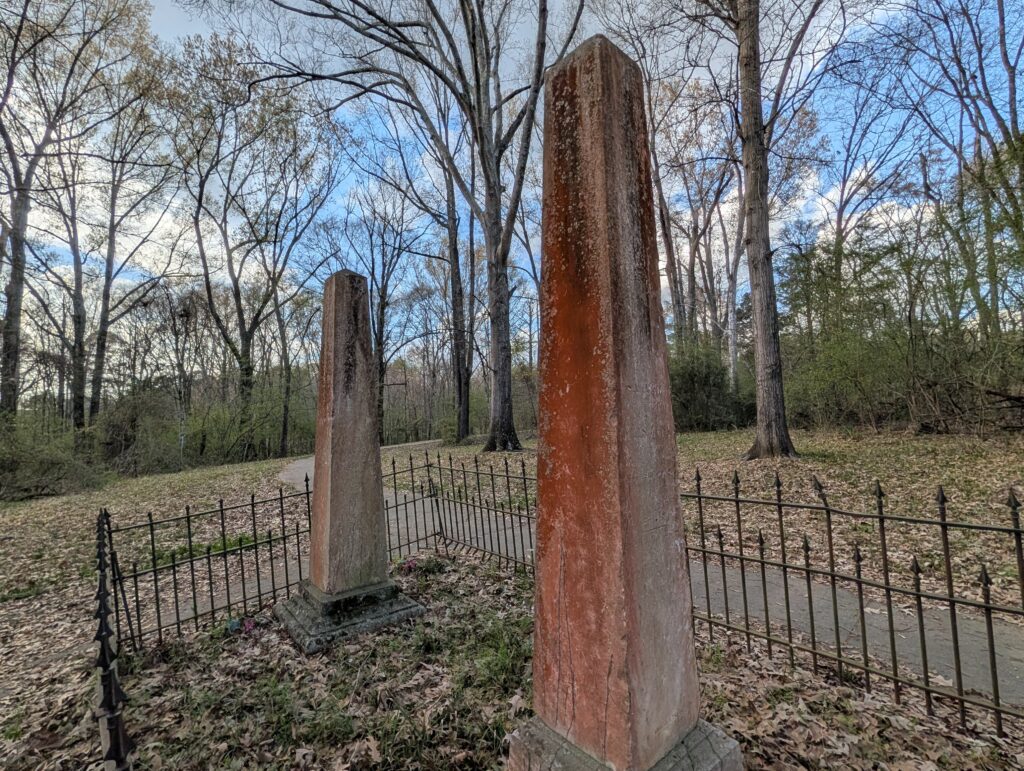
Cowles Mead made a tavern along the Trace and held many government offices. He pursued Aaron Burr for treason and built a house along this road. All that is left is his grave.
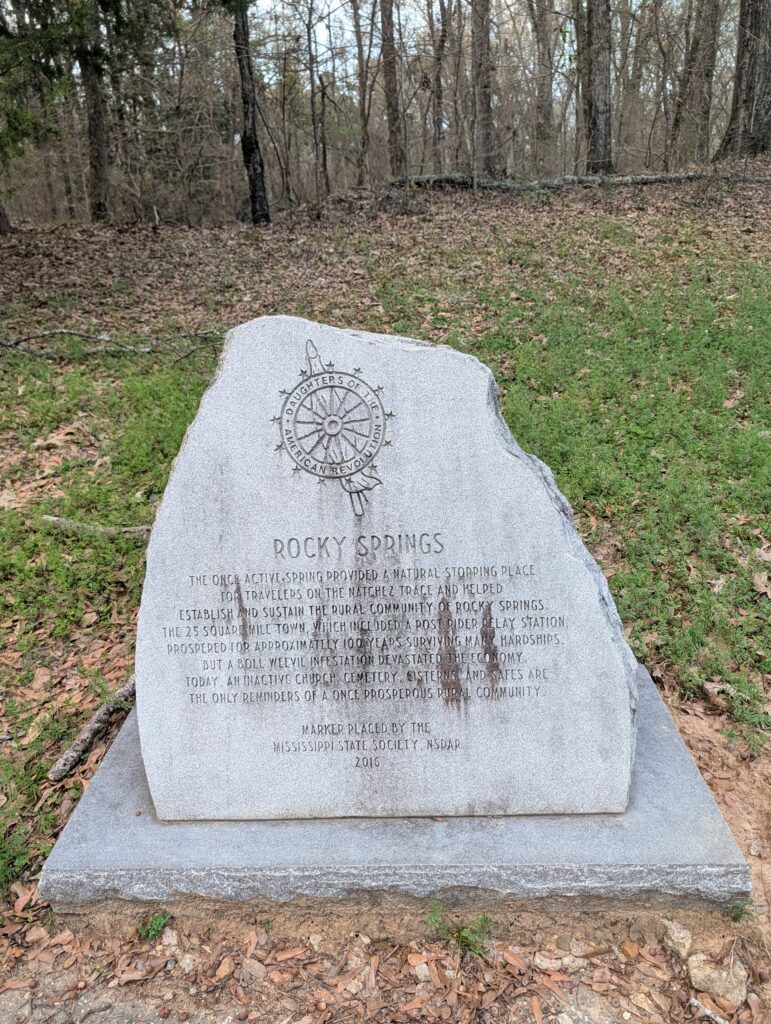
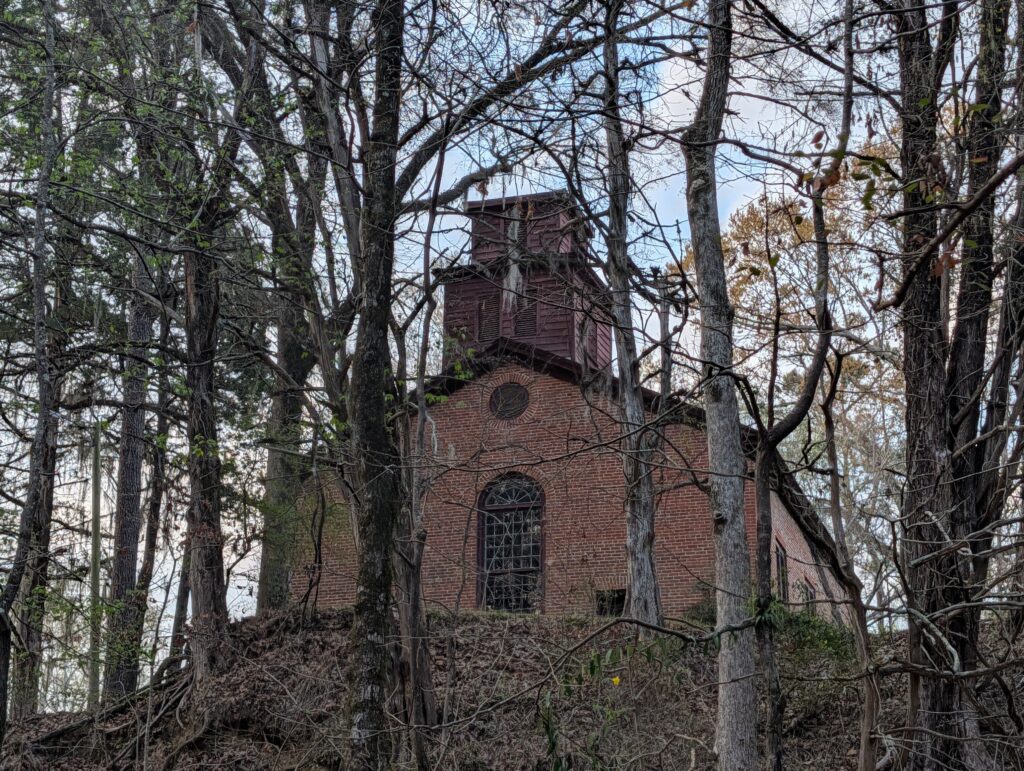
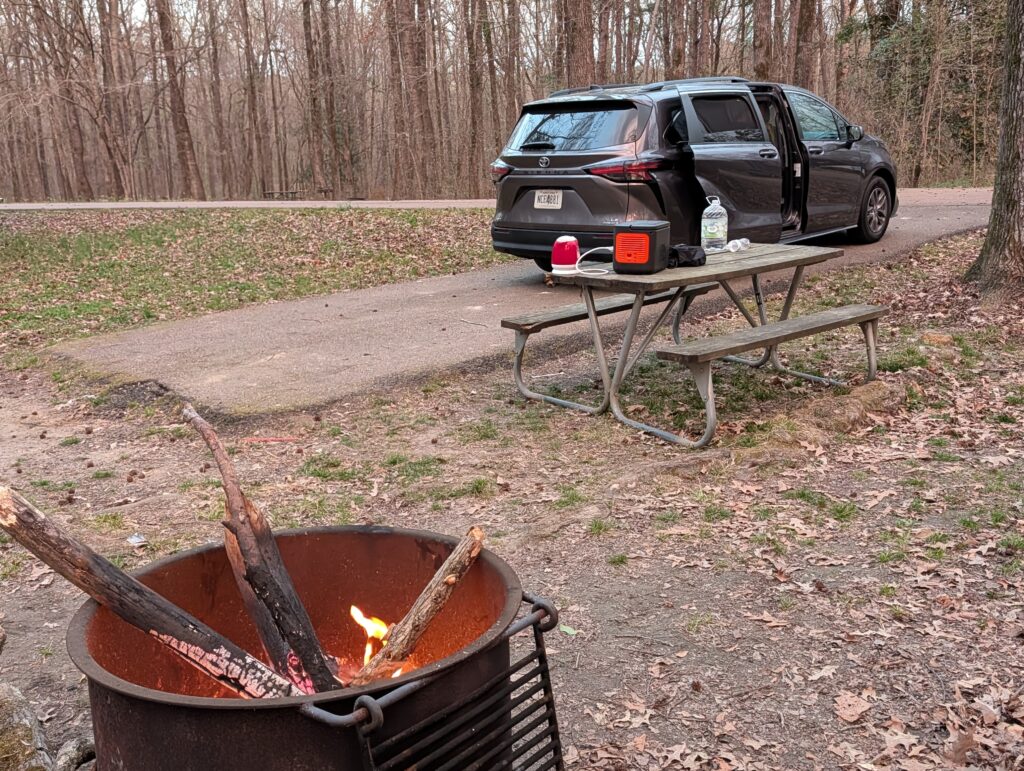
I stopped a night at Rocky Springs campground. This is where a community lived that was supported by the Trace. All that is left here is a church. I built a fire which was doused an hour later by major thunderstorms. It was a peaceful night sleep though.
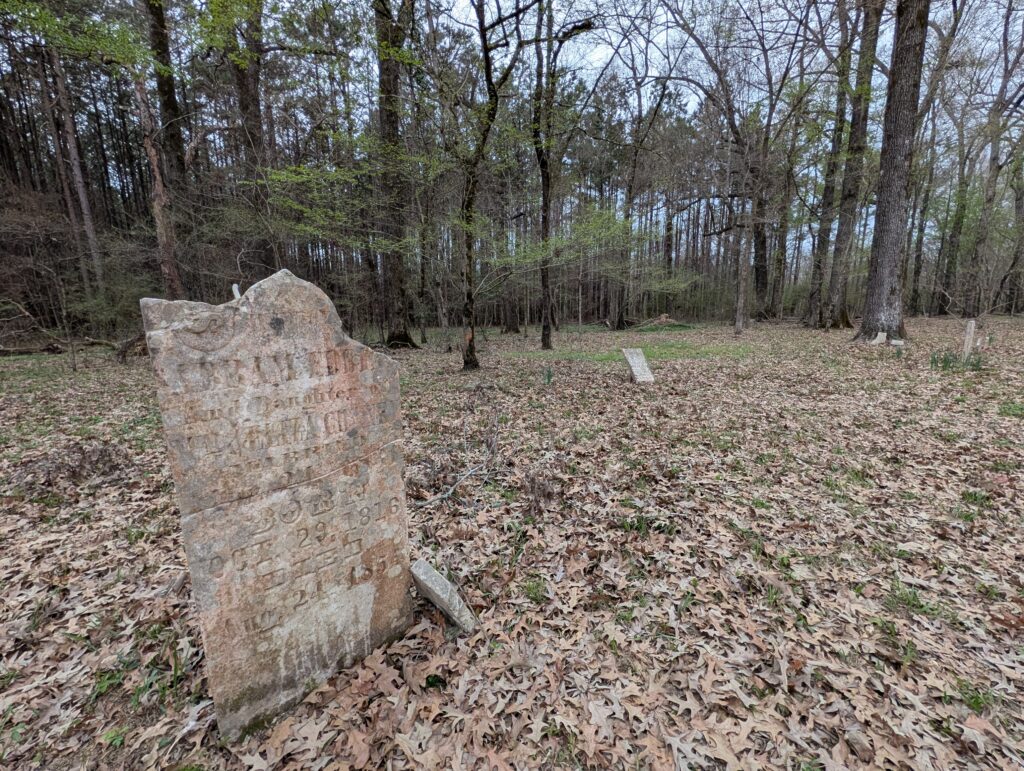
Grindstone Ford is a place where a water mill was located and troops who stayed here during the Burr conspiracy to allegedly secede the western states. What is left here are some graves.
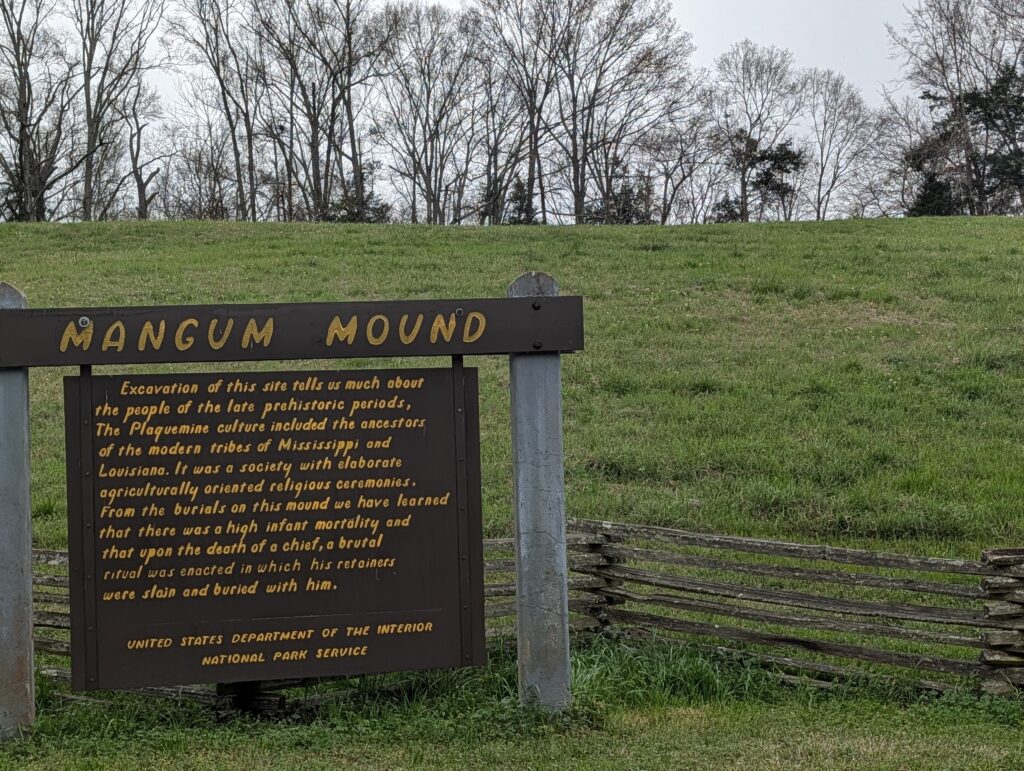
The Mangum mounds were the Plaque and culture that had advanced agriculture tied to religion. Evidence from the mound shows high infant mortality and that when the chief dies, his servants were slain and buried with him.
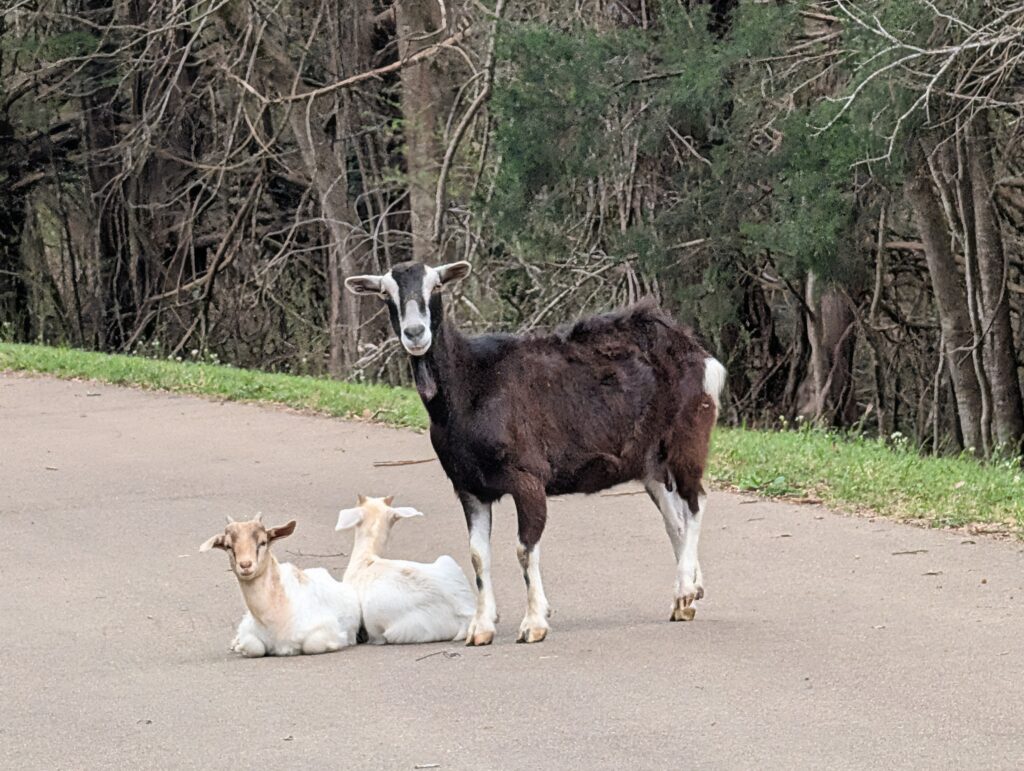
I did get out to walk around these goats on the side road that did not want to move in order to view the mounds.
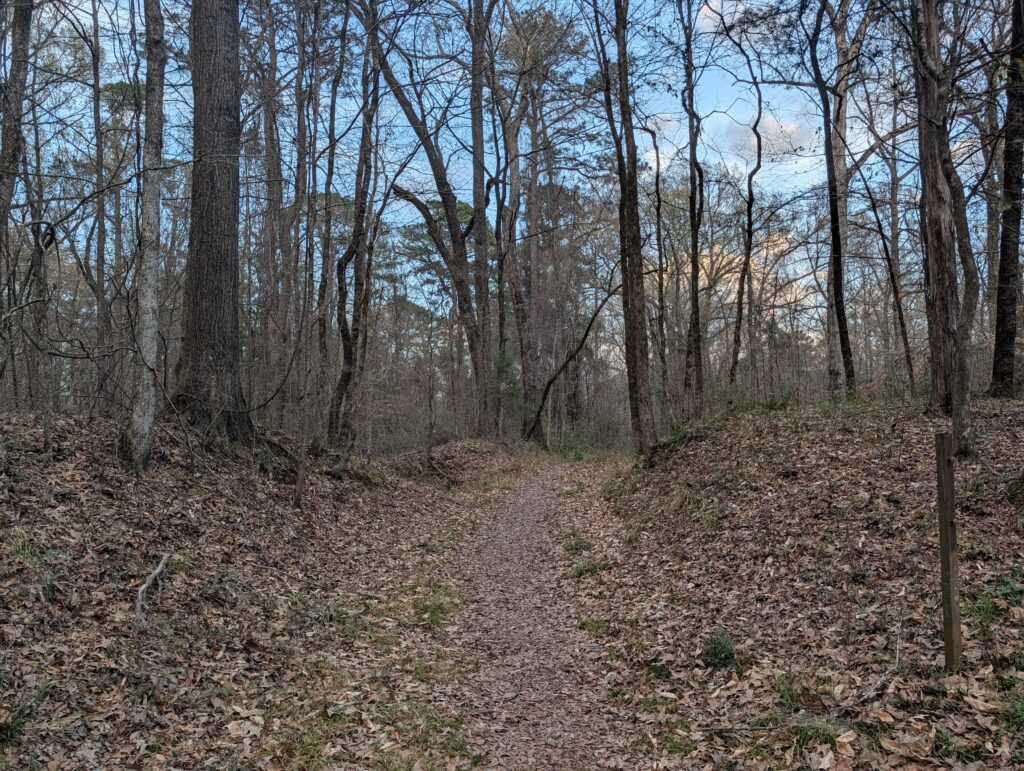
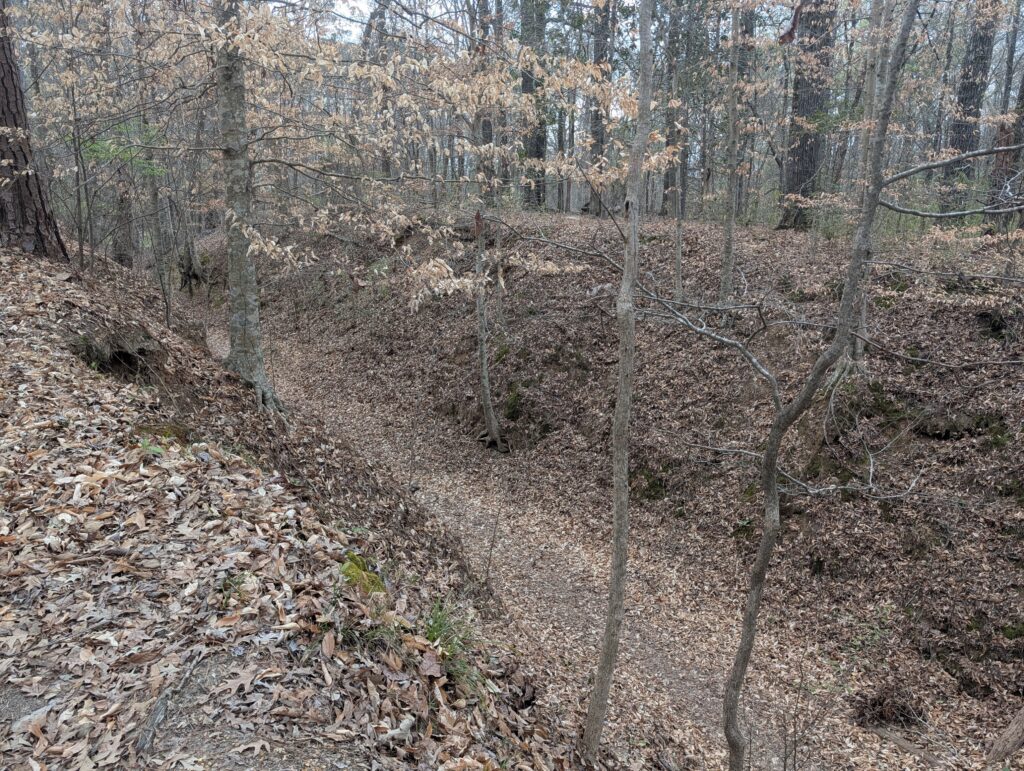
A section of the old trace that is sunken below the ground level.
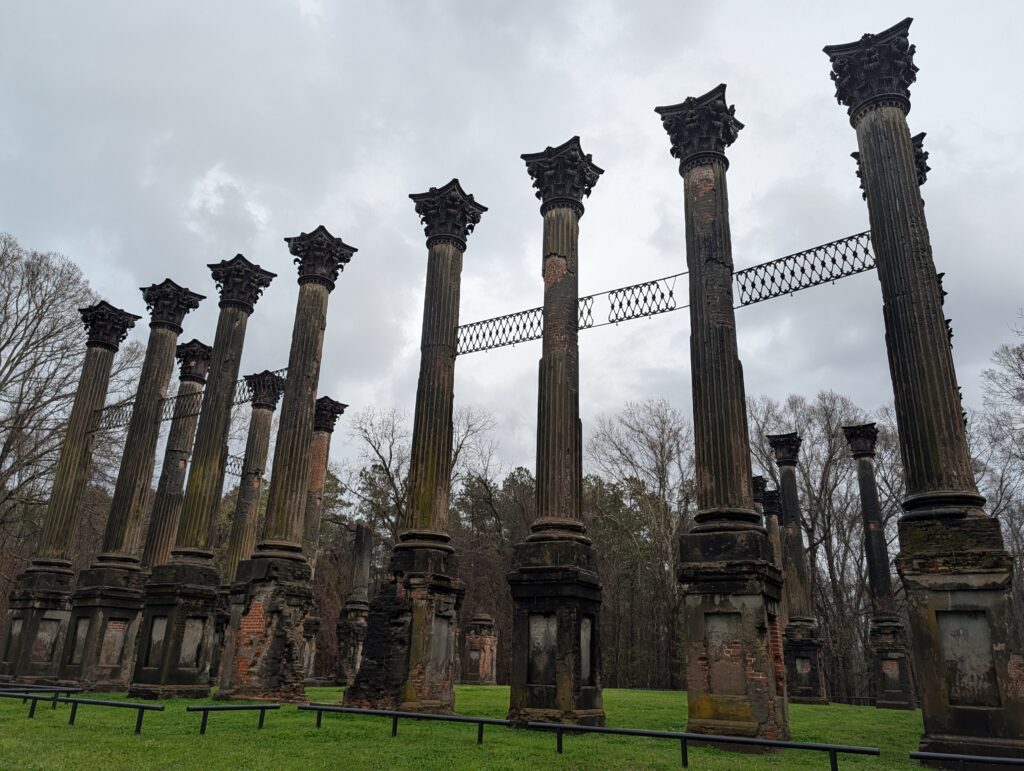
Windsor ruins were built between 1859 and 1861 by plantation owner Smith Coffee Daniell II. With 25 grand Corinthian columns it was considered one of the most elaborate homes in the pre-Civil War South. It survived the Civil War as it was used by Union troops as an observation post and field hospital. In 1890, a guest accidentally started a fire and only the 23 surviving columns standing as ruins.
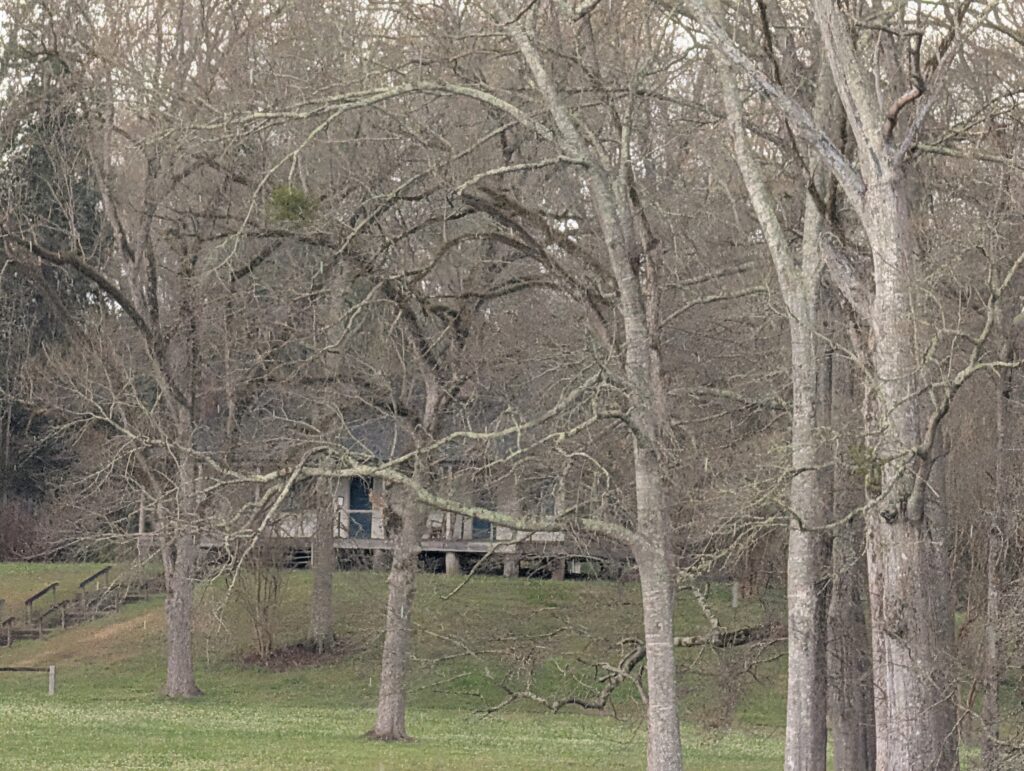
An old inn still exists in the Trace, though it was closed.
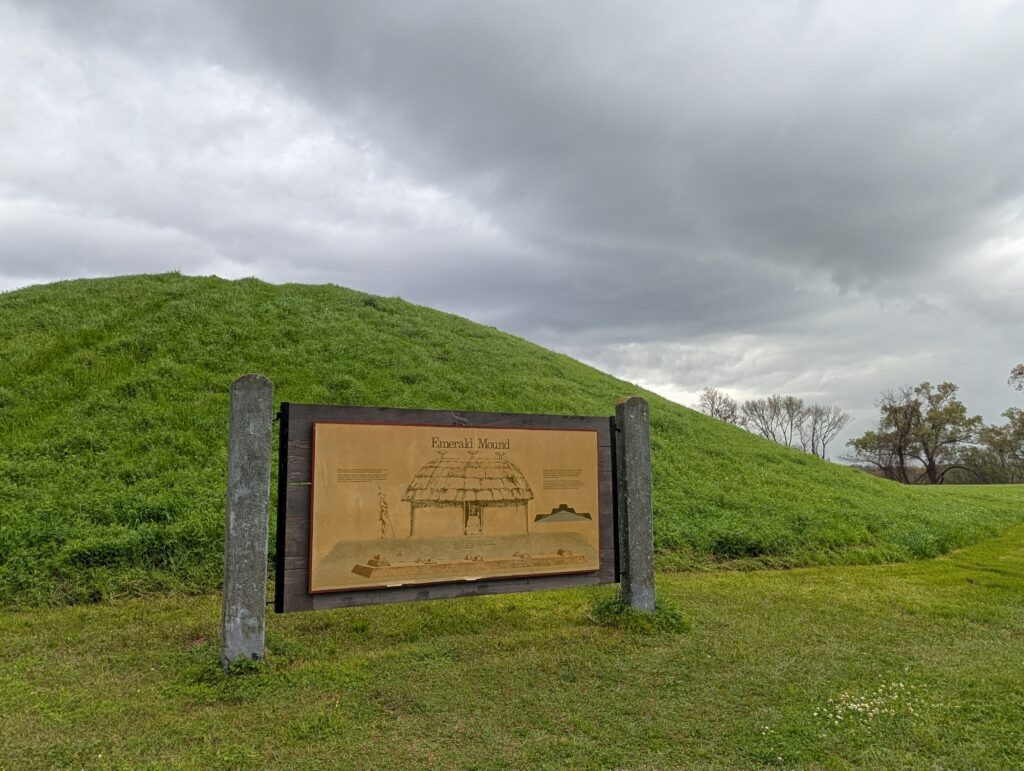
Emerald Mound was built by the Mississippians was used for temples and ceremonies as well as burials. The top of the mound would hold the place of the religious leader.
I also spent some time in Vicksburg and Natchez.