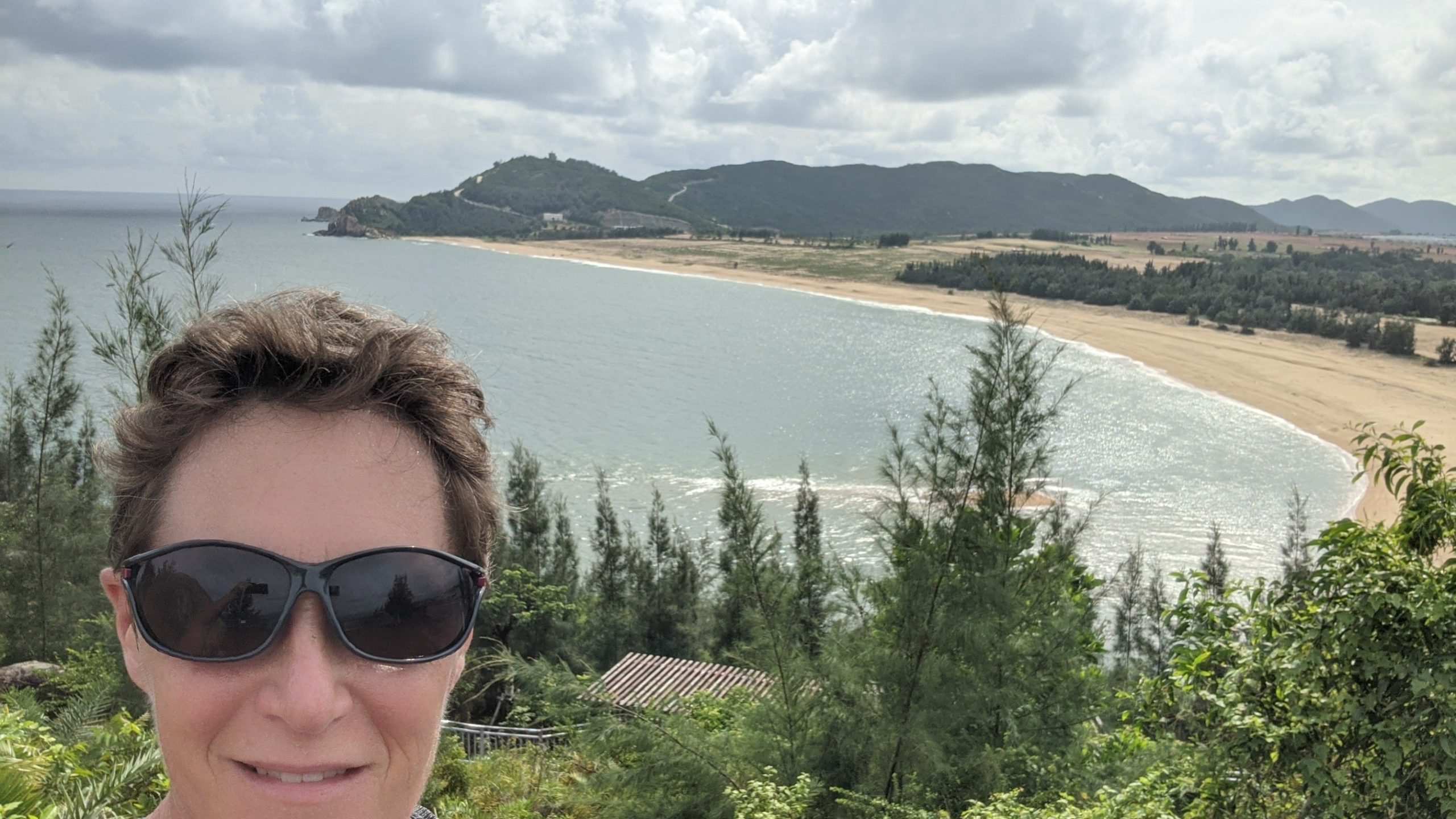
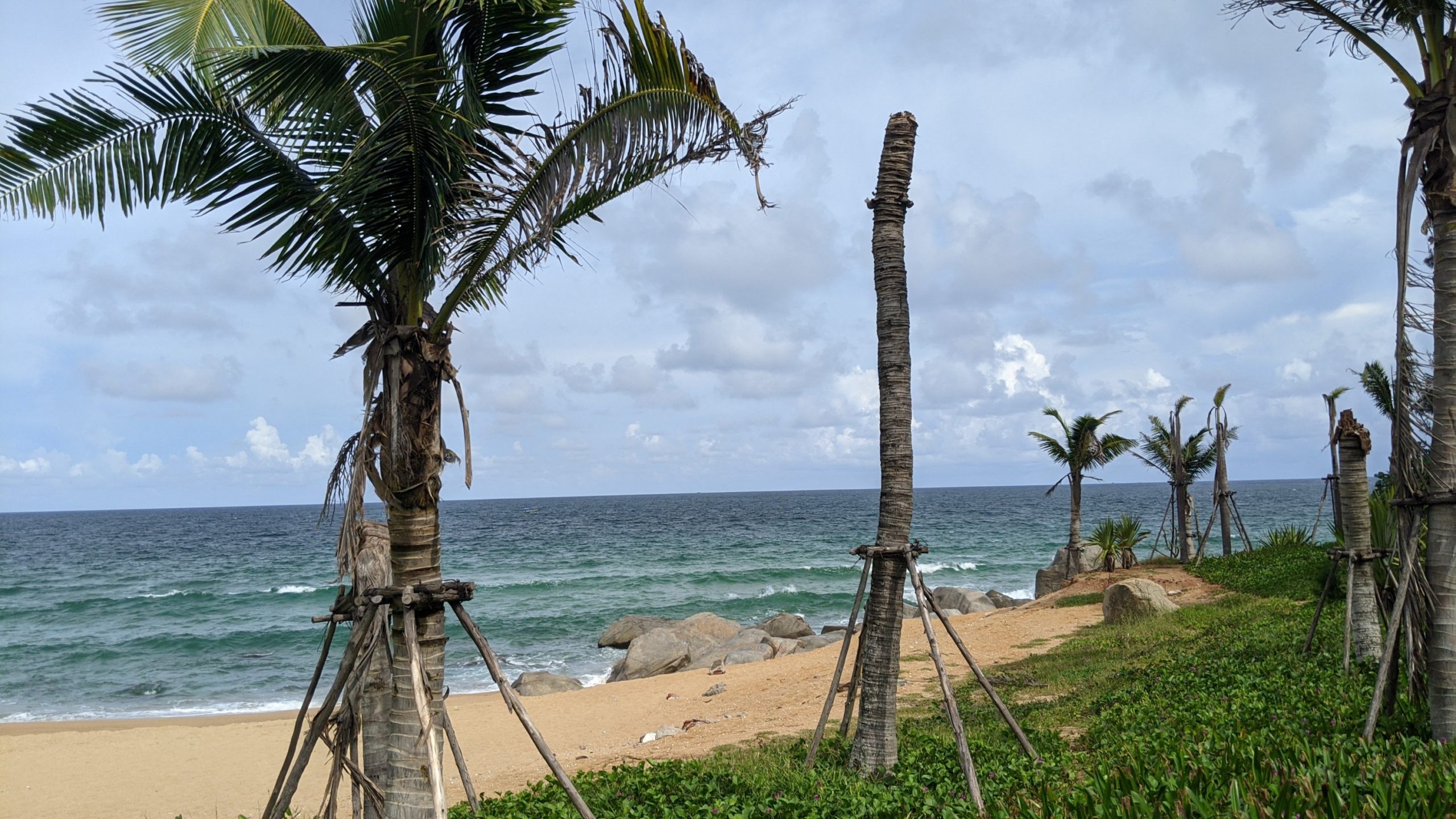
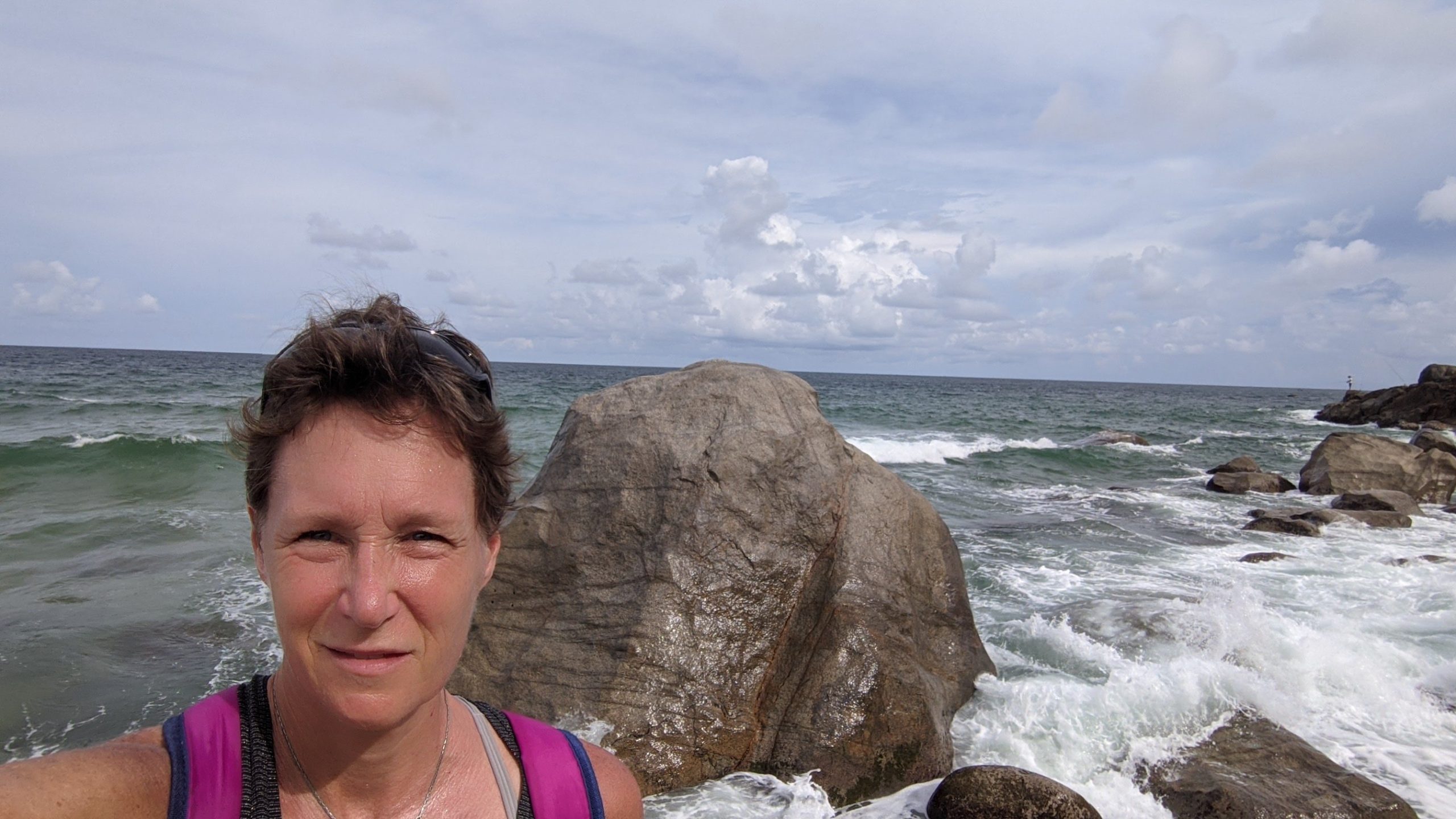
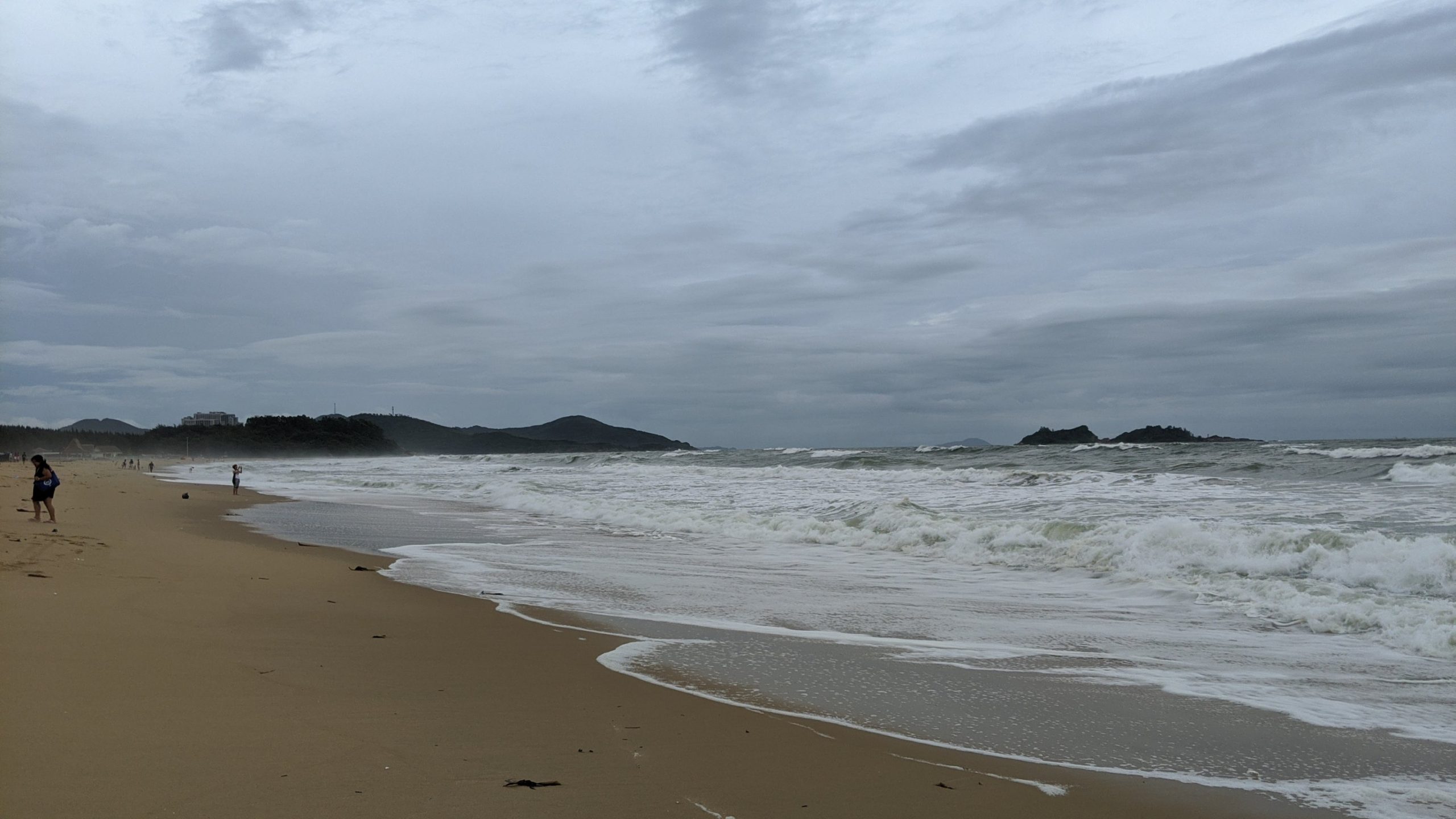
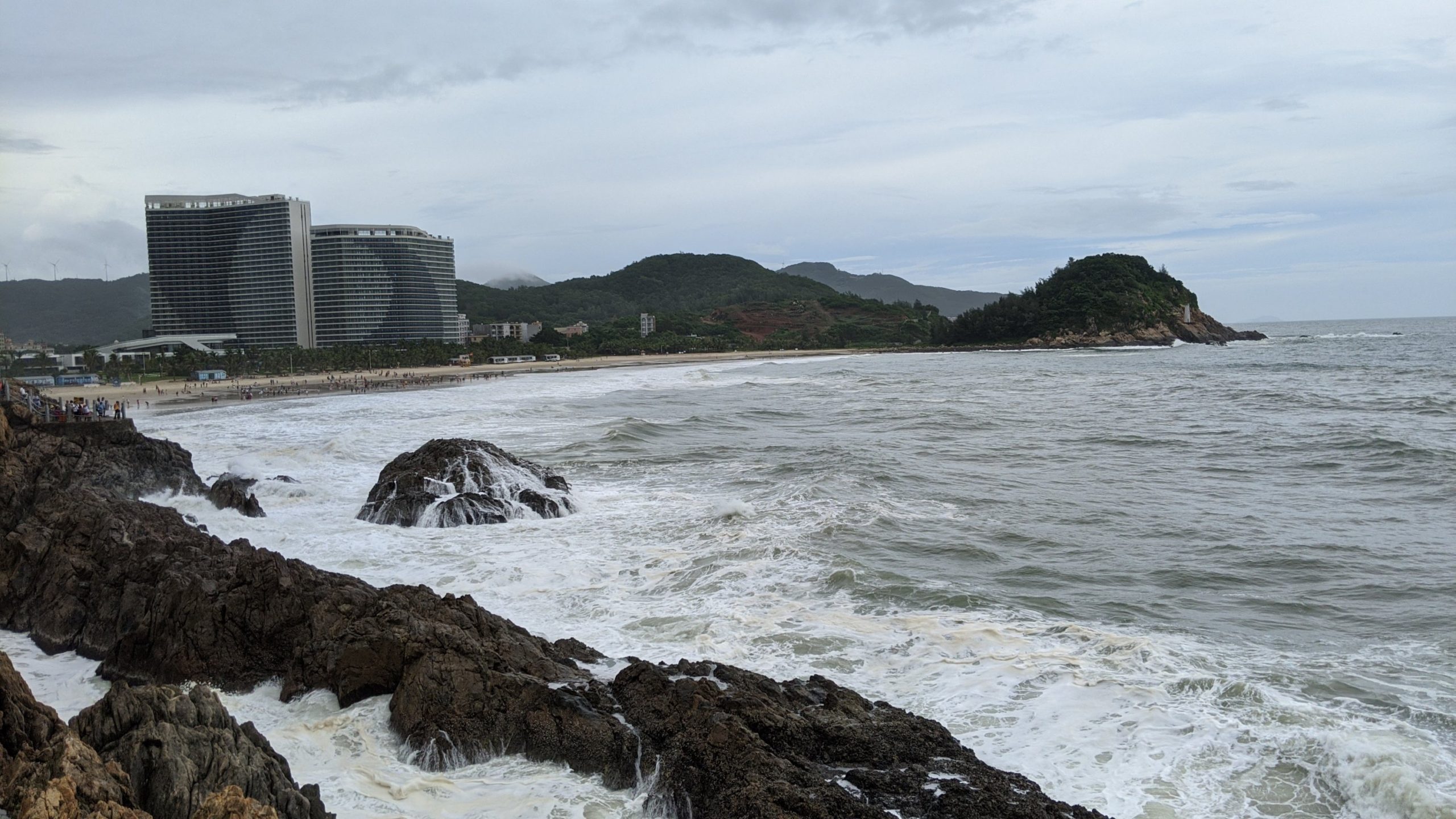
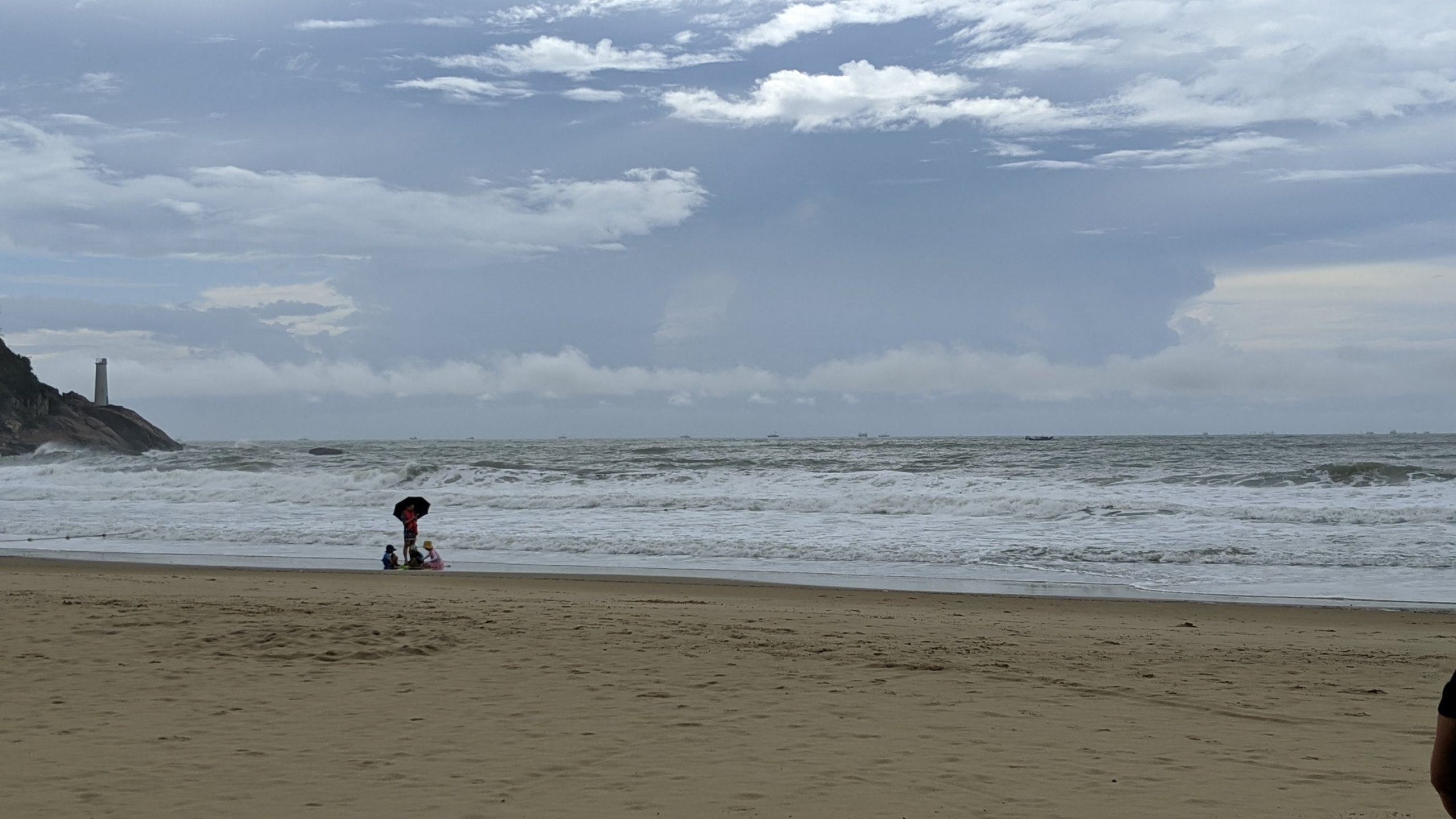
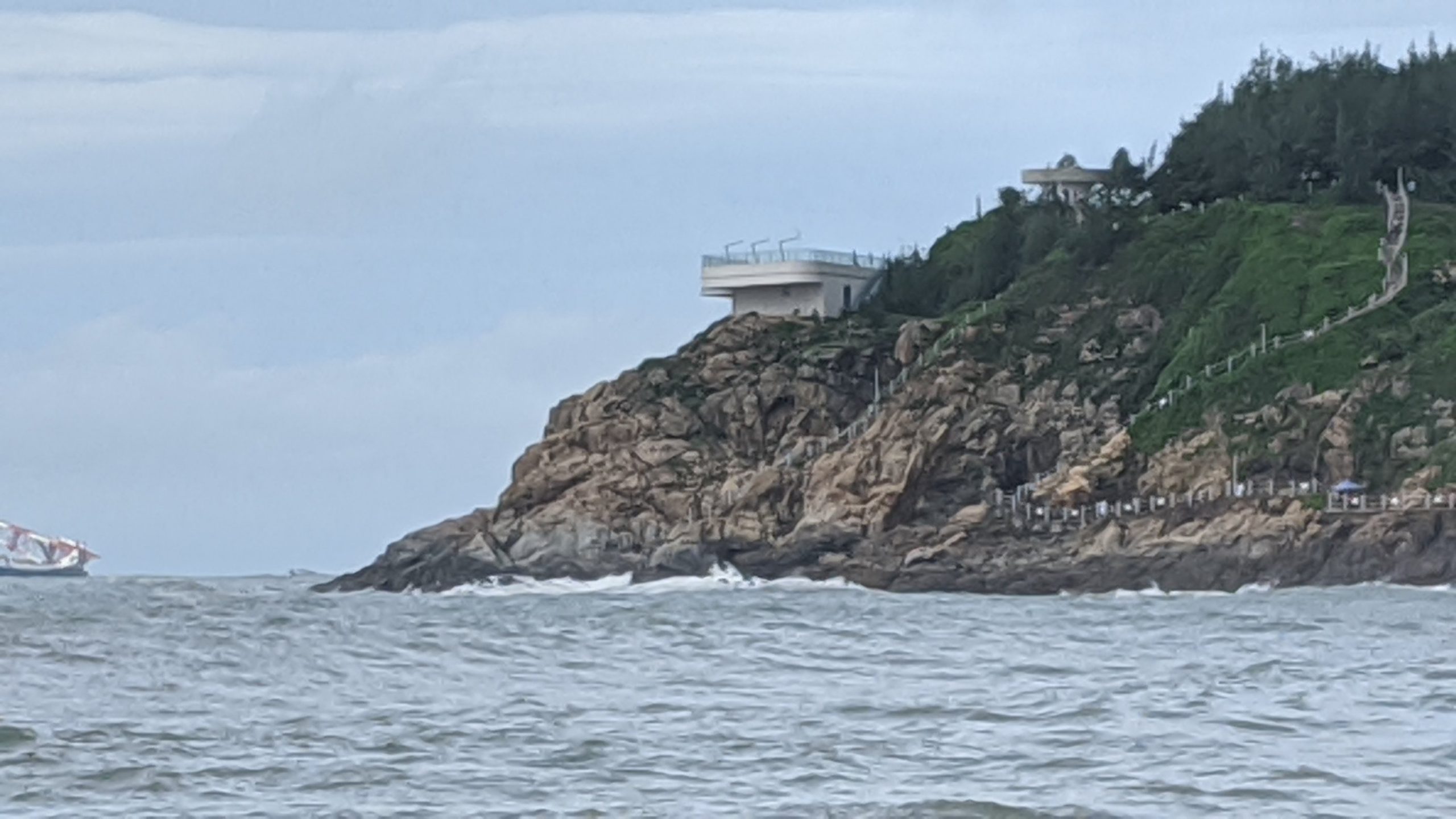
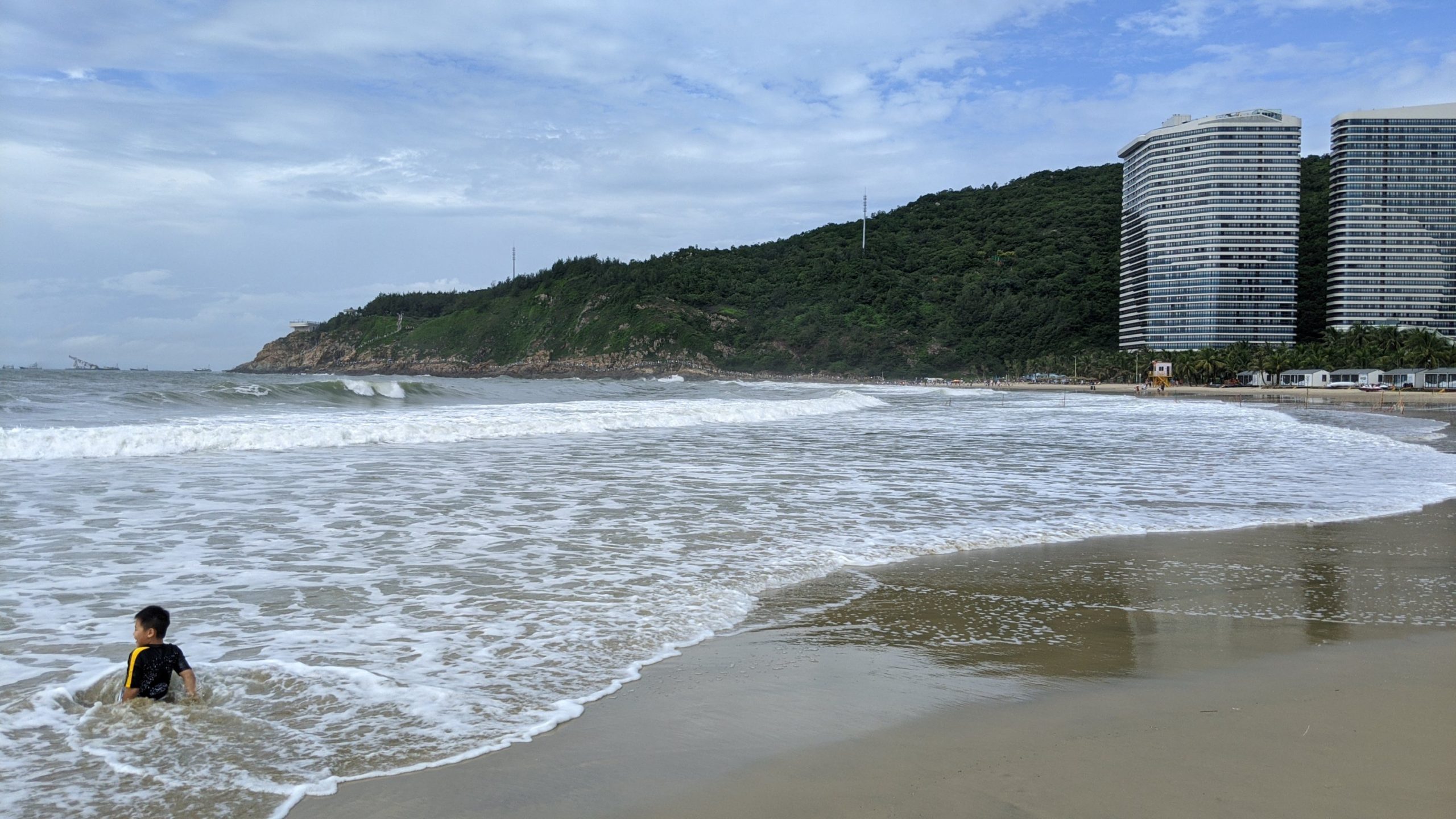
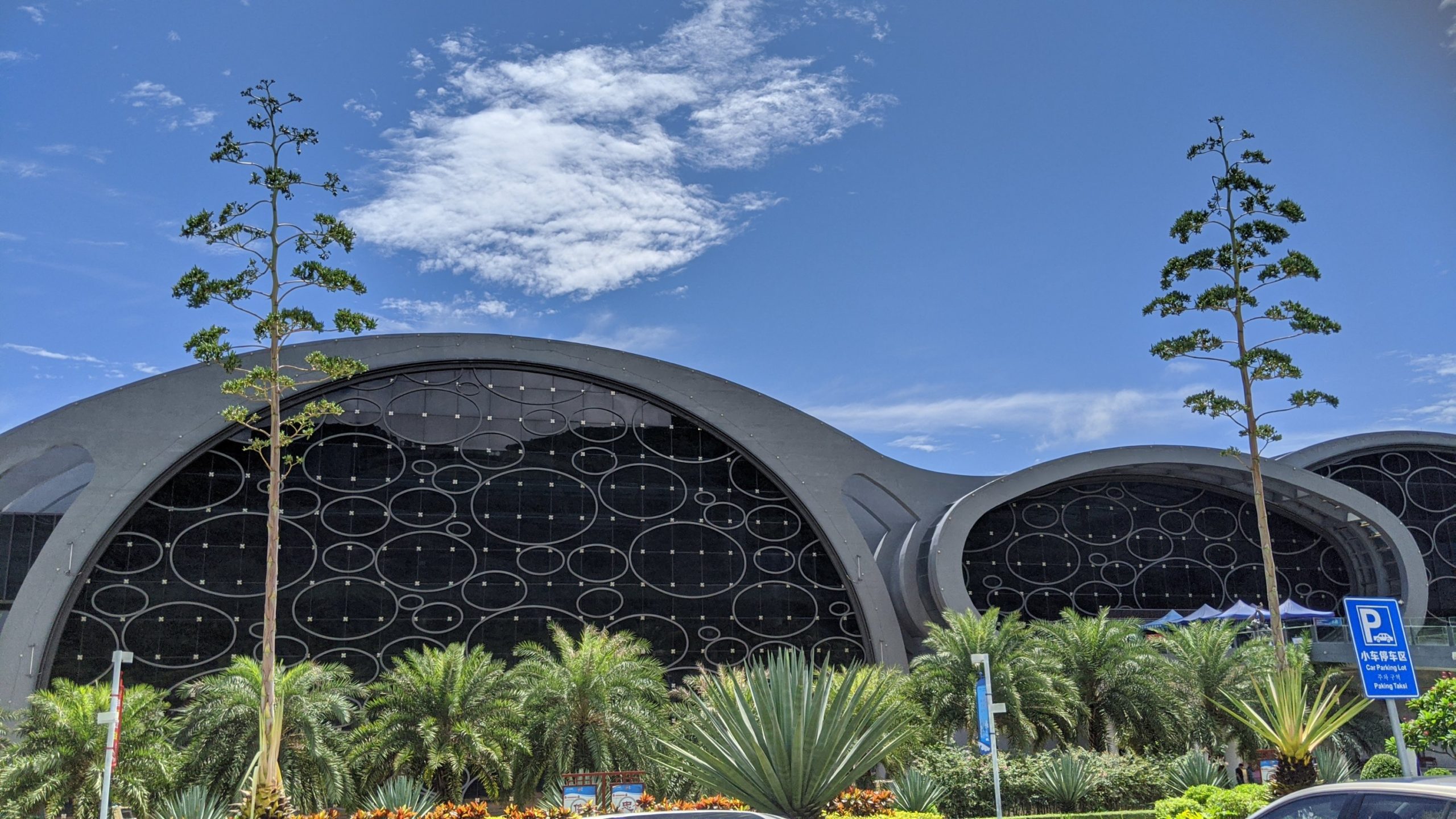
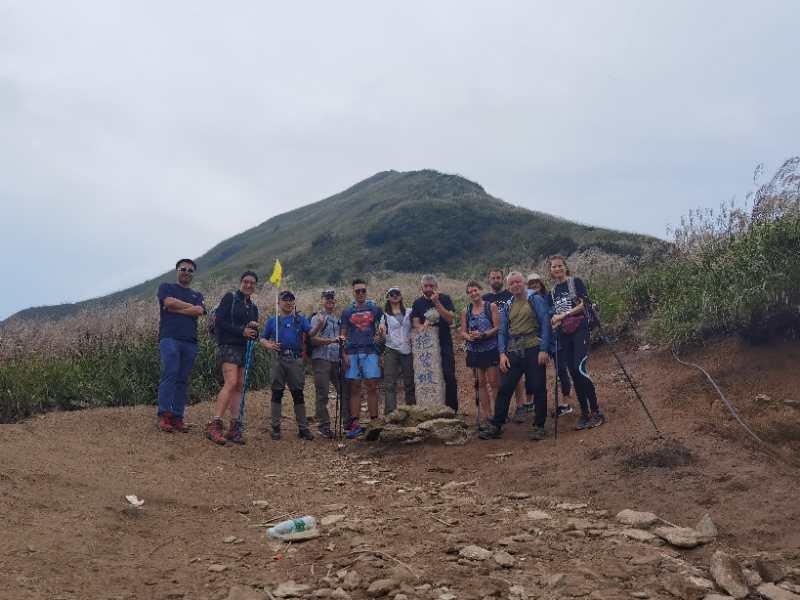
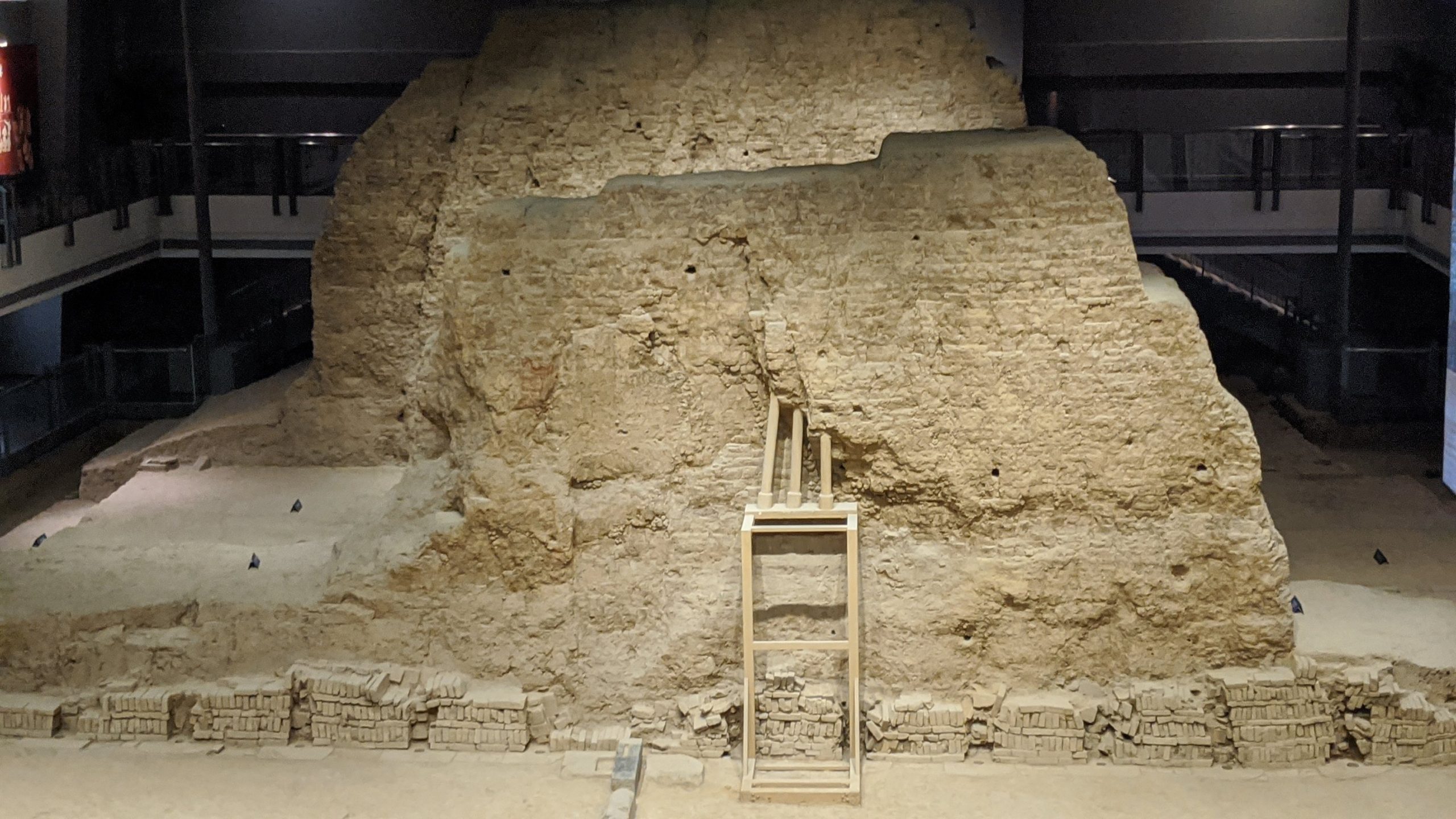
Xiangshui Bay, Hainan

I decided to go to Hainan on October break which is billed as the Hawaii of China. Of course I know there is no comparison and this is still a tourist trap but I felt I should check it out. My other option, Chengdu, is not allowing feeding of the pandas right now due to covid and I’ll wait to see if that changes. (Honestly I don’t know how the world could go back to normal.)

I took the metro to the airport. It is a straight shot and cheap. Usually it is mundane and routine. Not this time. I really need to be that person who videos things. There was a scary yet spectacular fight between a man and a woman. Skip this part if you want: Both ended up with injuries and it took multiple of us to keep them apart. But when it was really crowded, they got into it and I yelled STOP. It got everyone’s attention as it was in English and I gestured to the packed car to show there were too many people here. A few of us got between them. It stopped it for a bit but when he left he spat on her. In the age of covid….

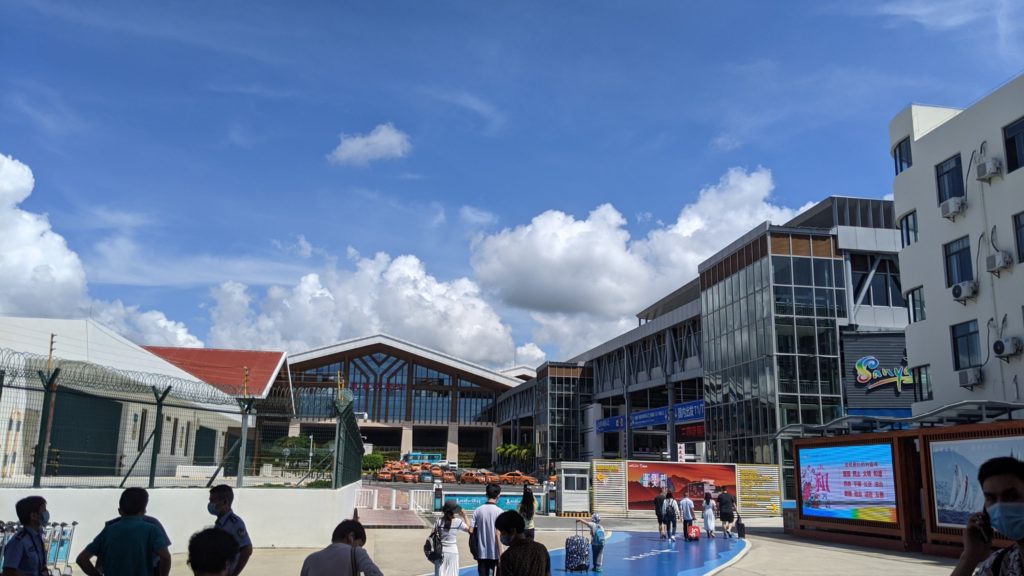
I landed in Sanya then took a train to Lingshui. It is easy here as the train station is right outside the airport.
As for Hawaii….

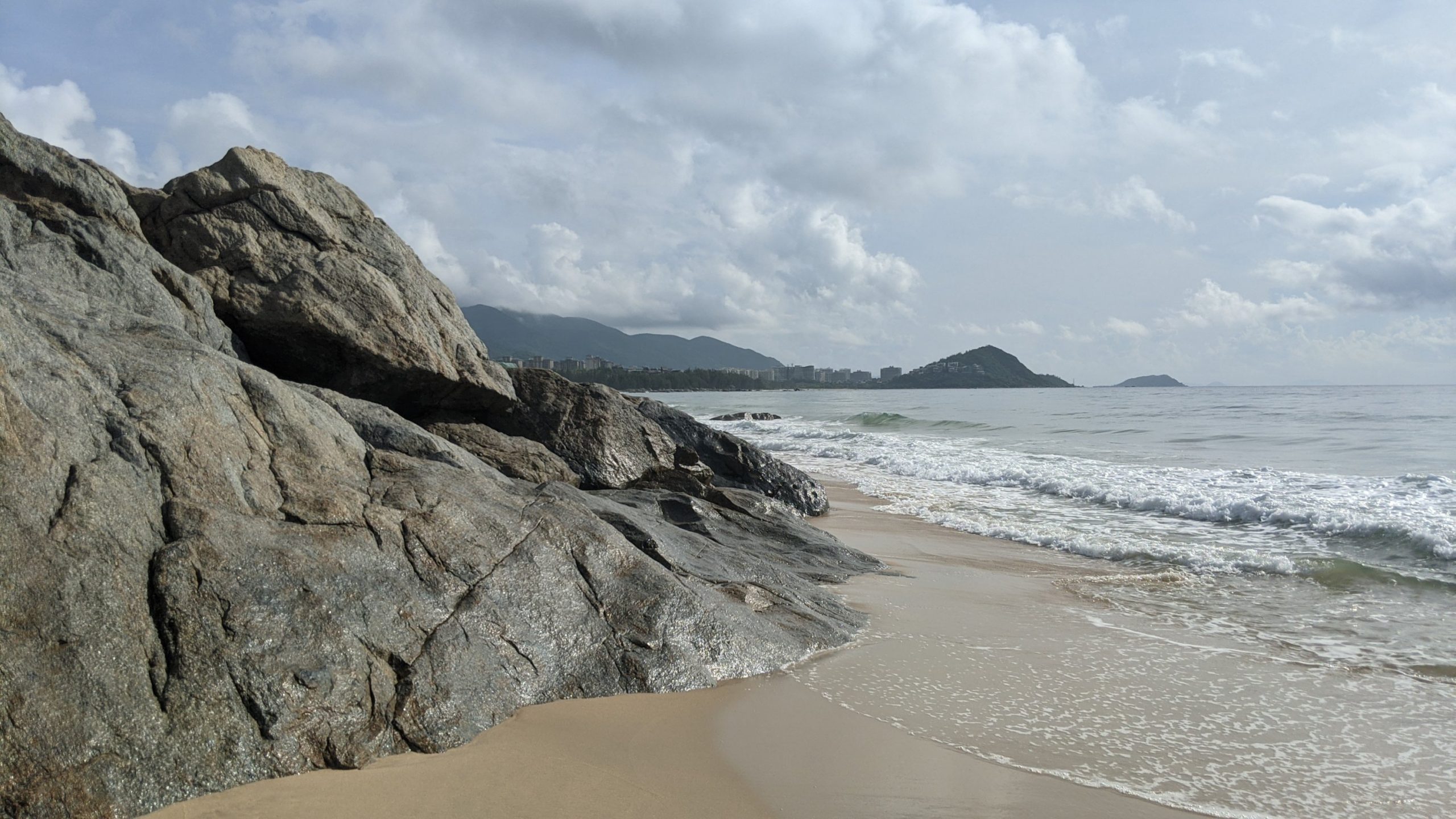
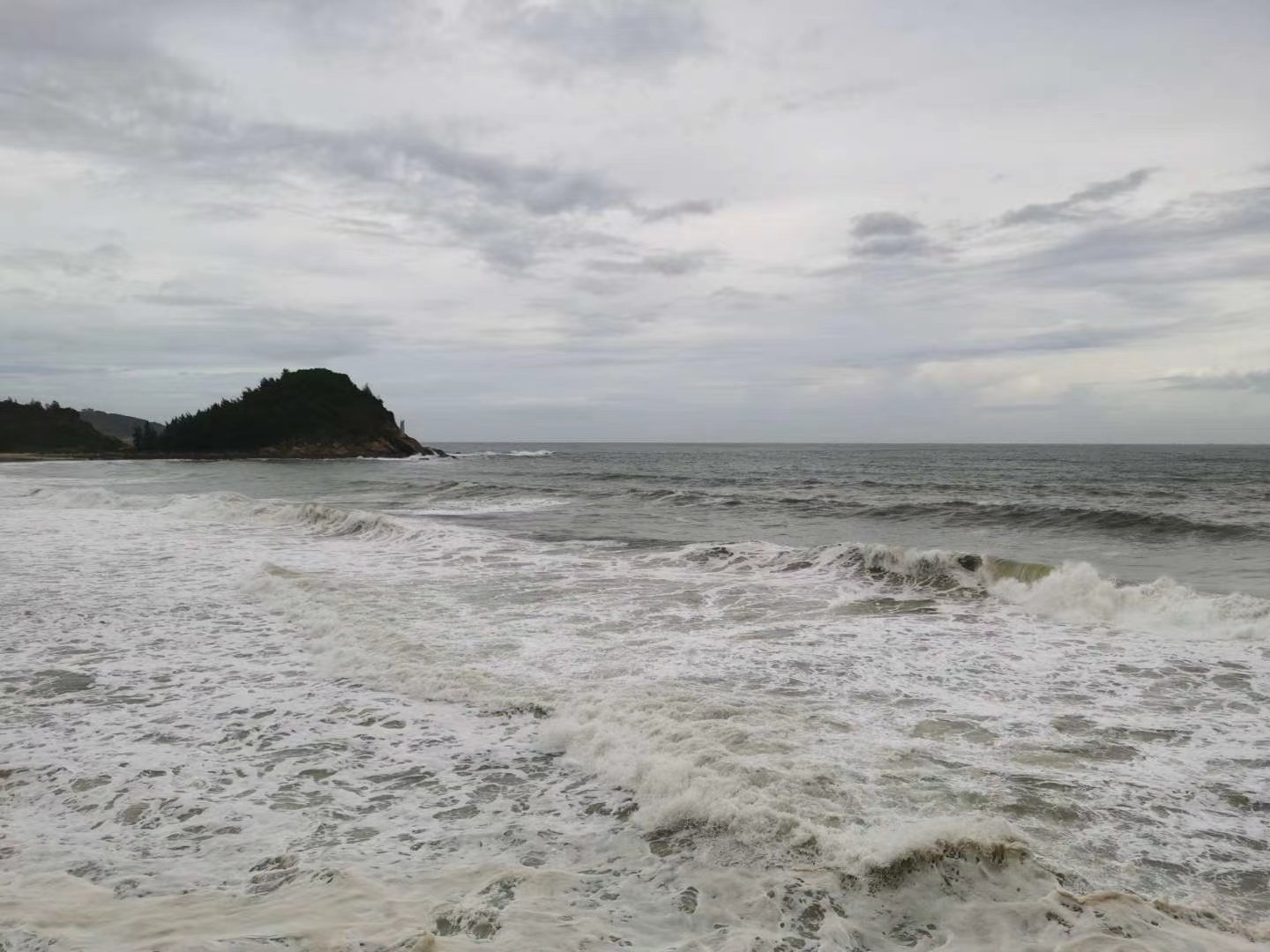
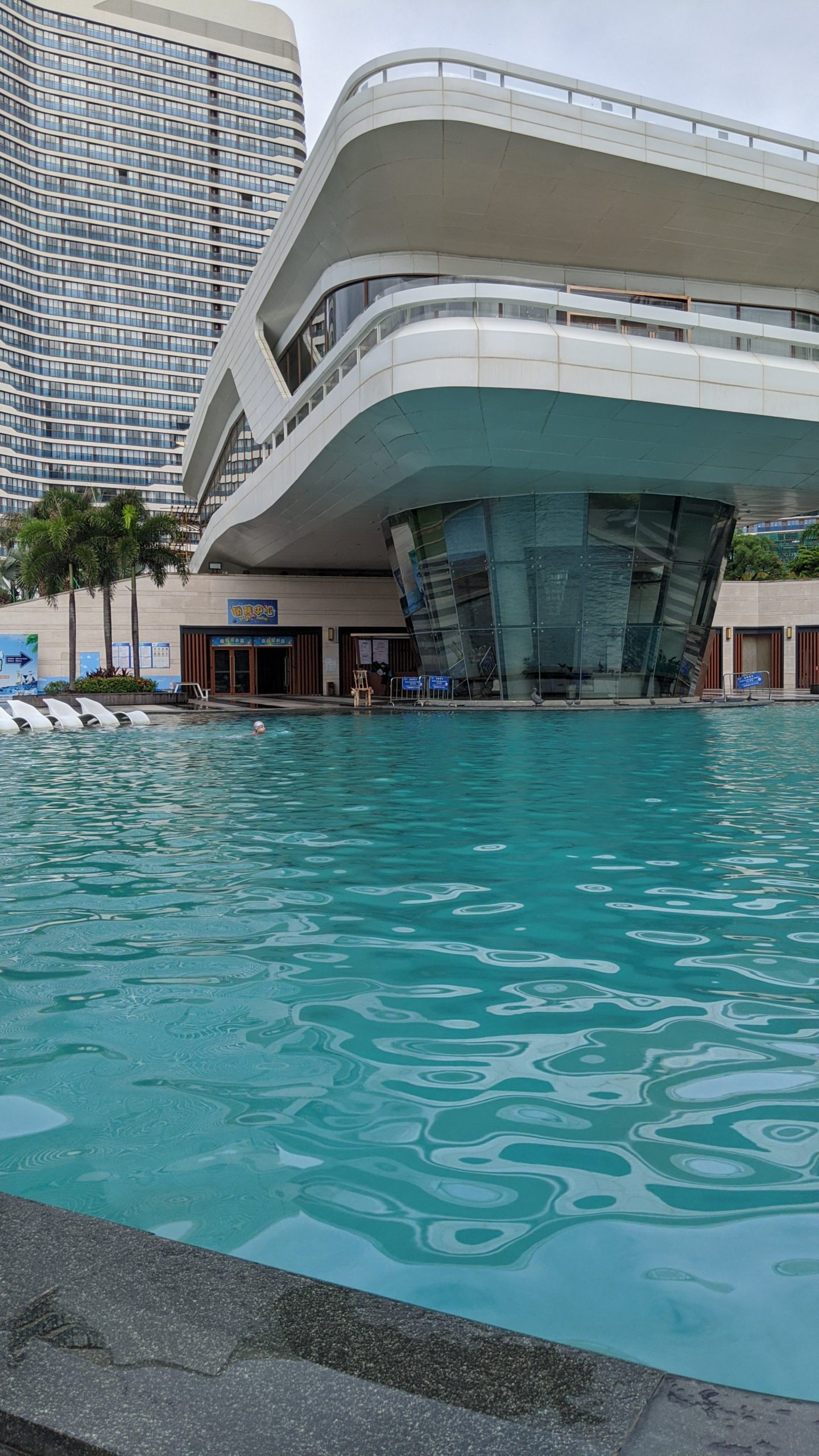
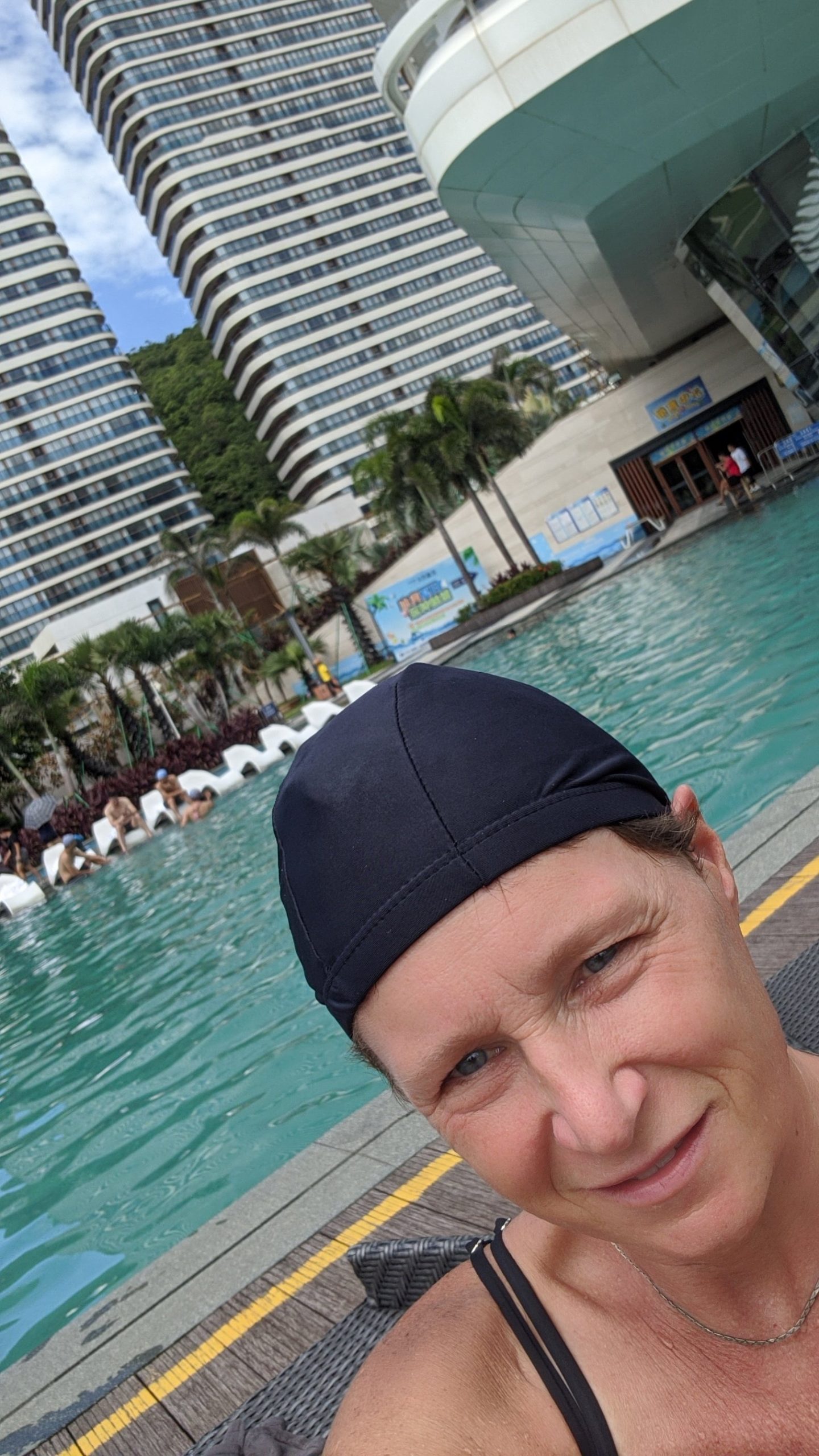
The Marriott is beautiful, the pools are nice, but just like the majority of places in Hainan, you can’t swim in the ocean. In the park across the bay I could see people in the water. I decided to run there the next morning and wore my swimsuit to cool down in the water. It becomes deep quickly. In defense I can see why there is surfing but no swimming. I know there are a few areas that you can if you look.

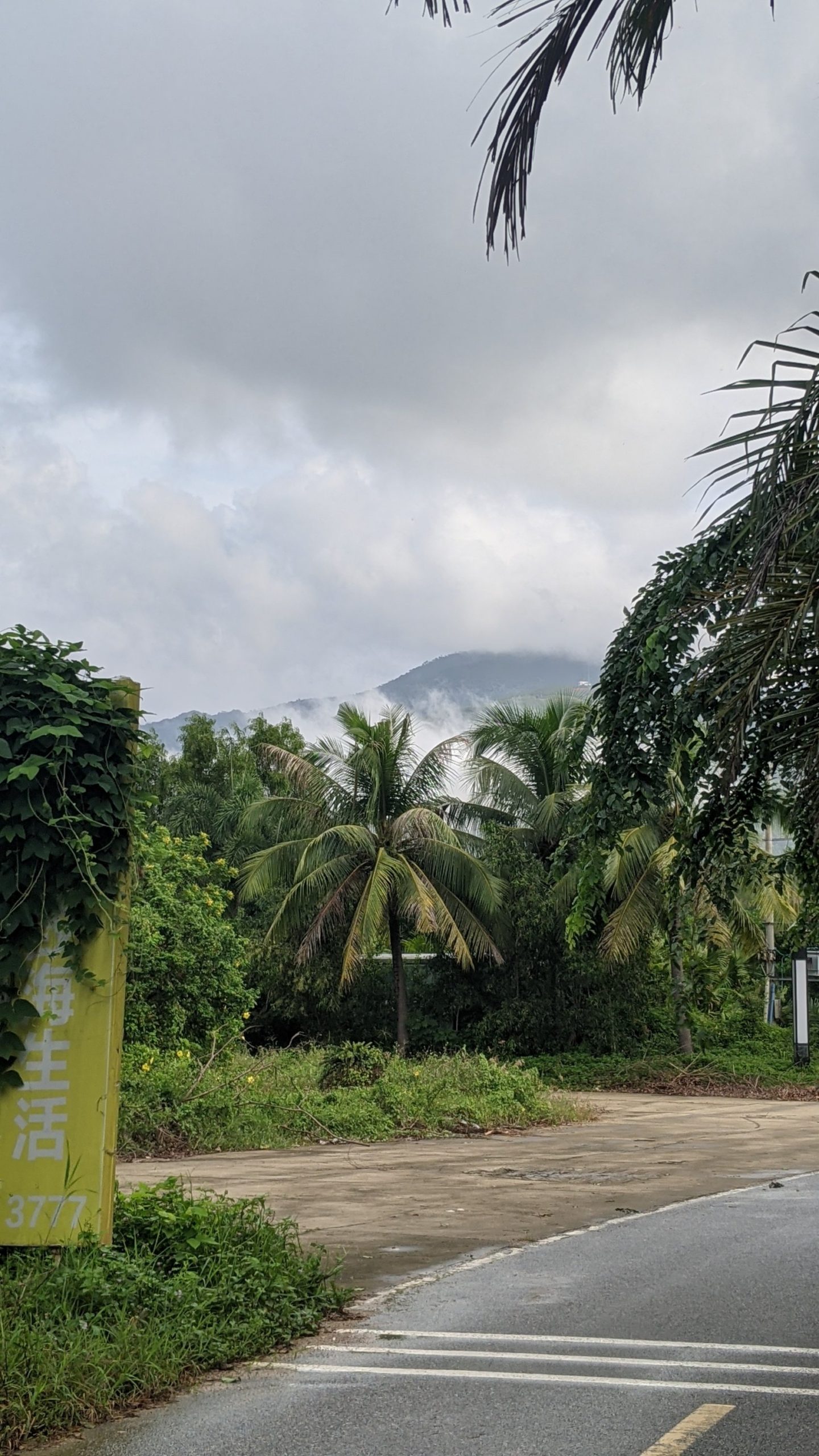
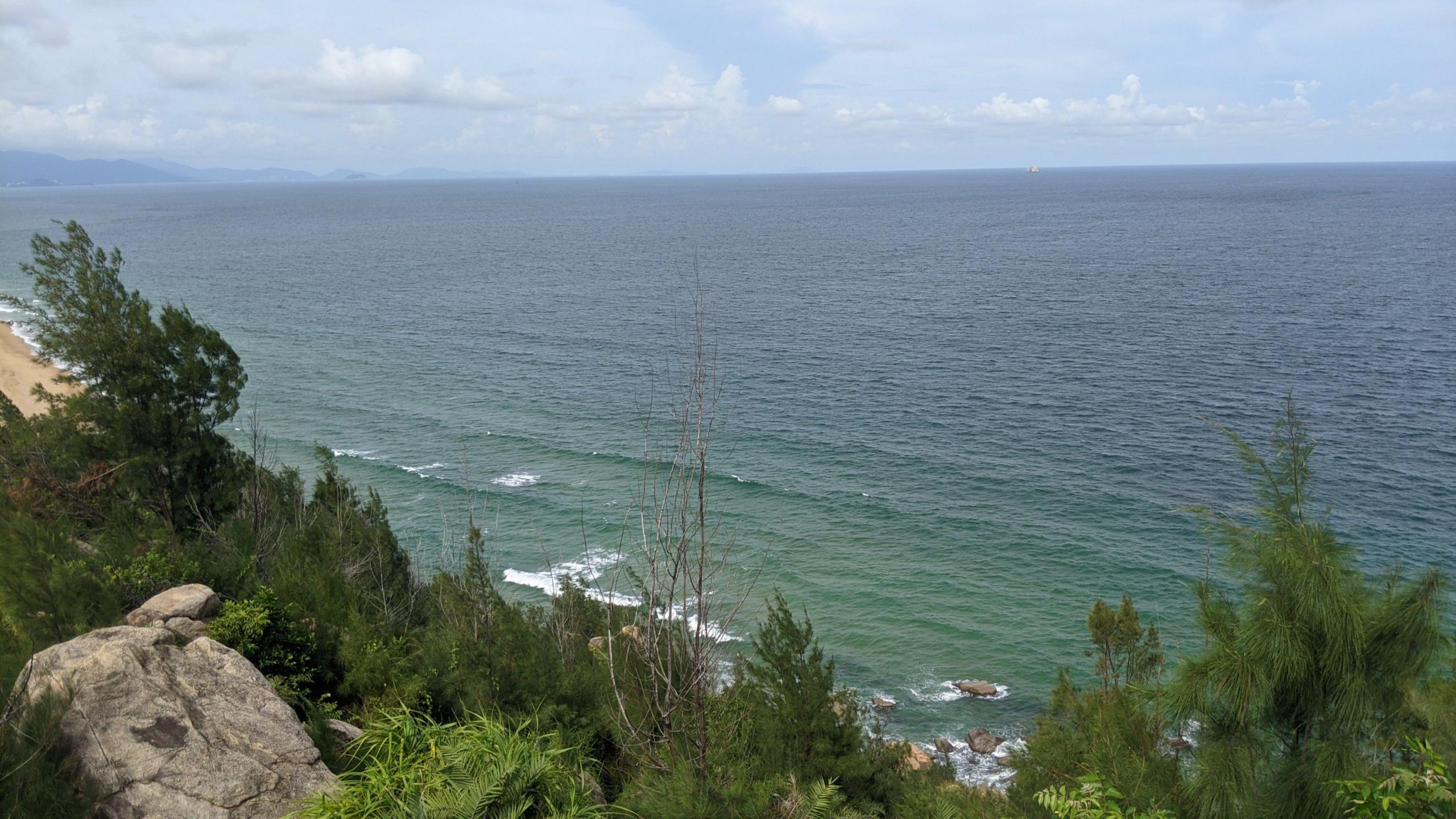
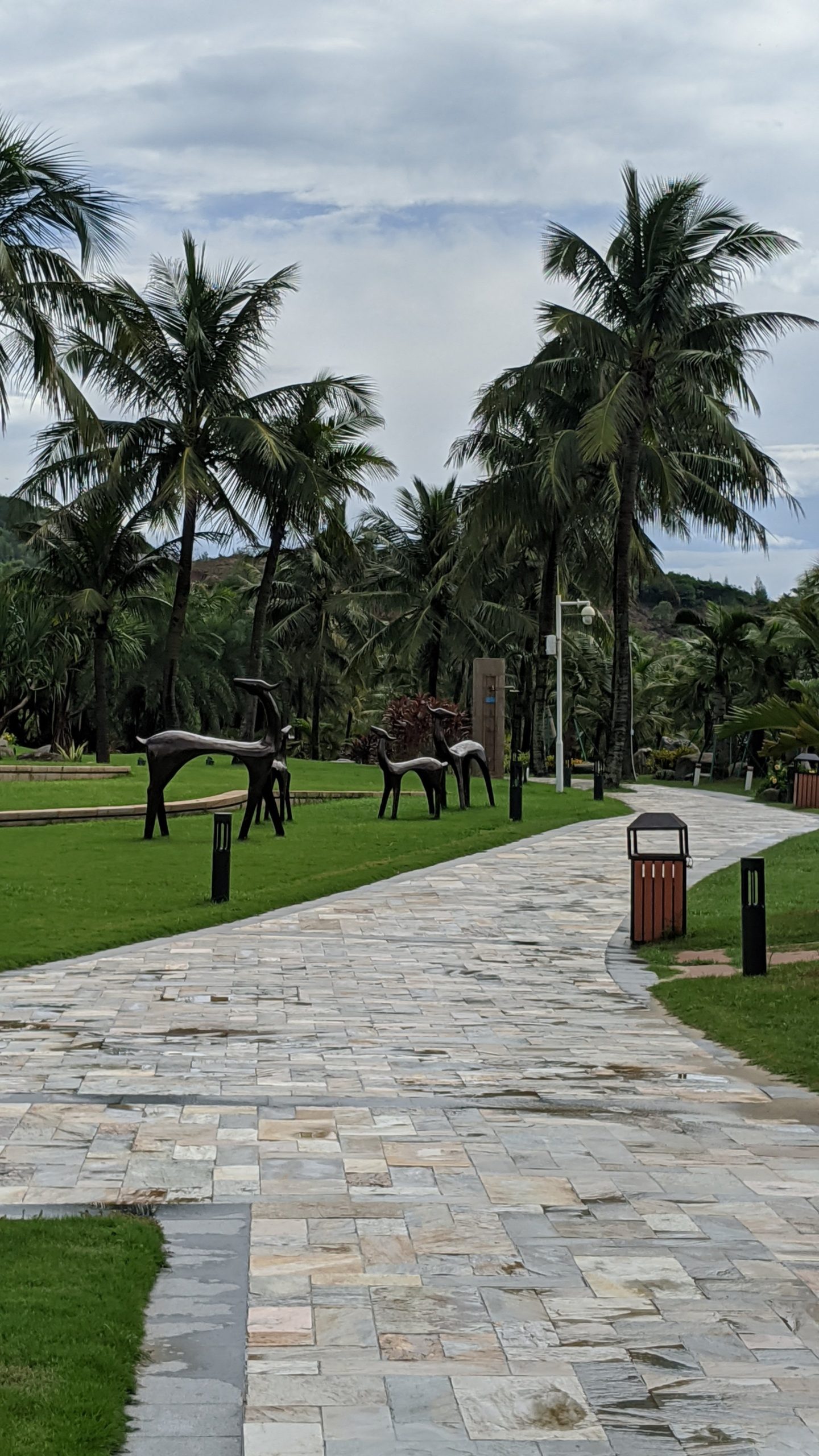
Views from the 11.6 km run.
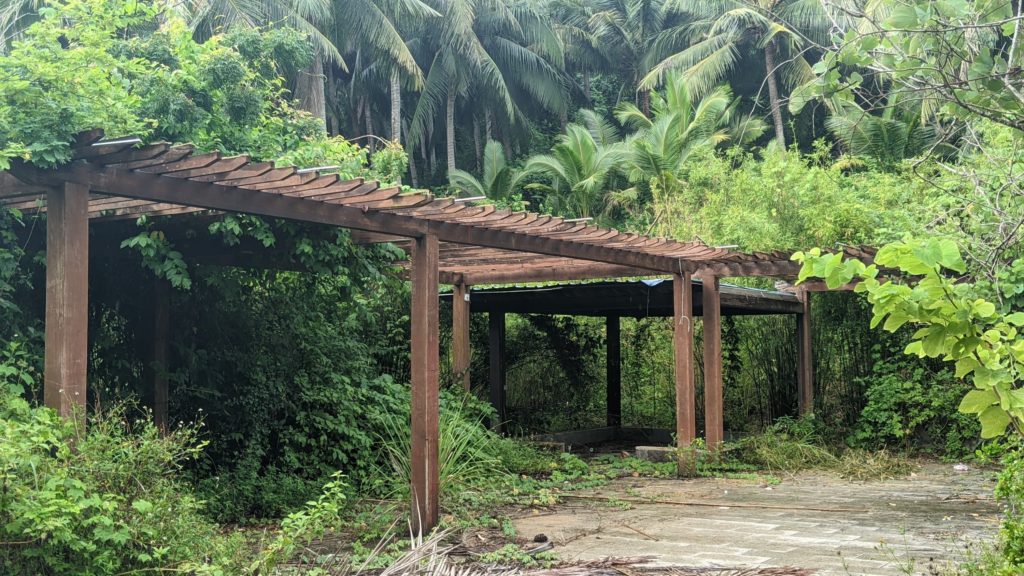
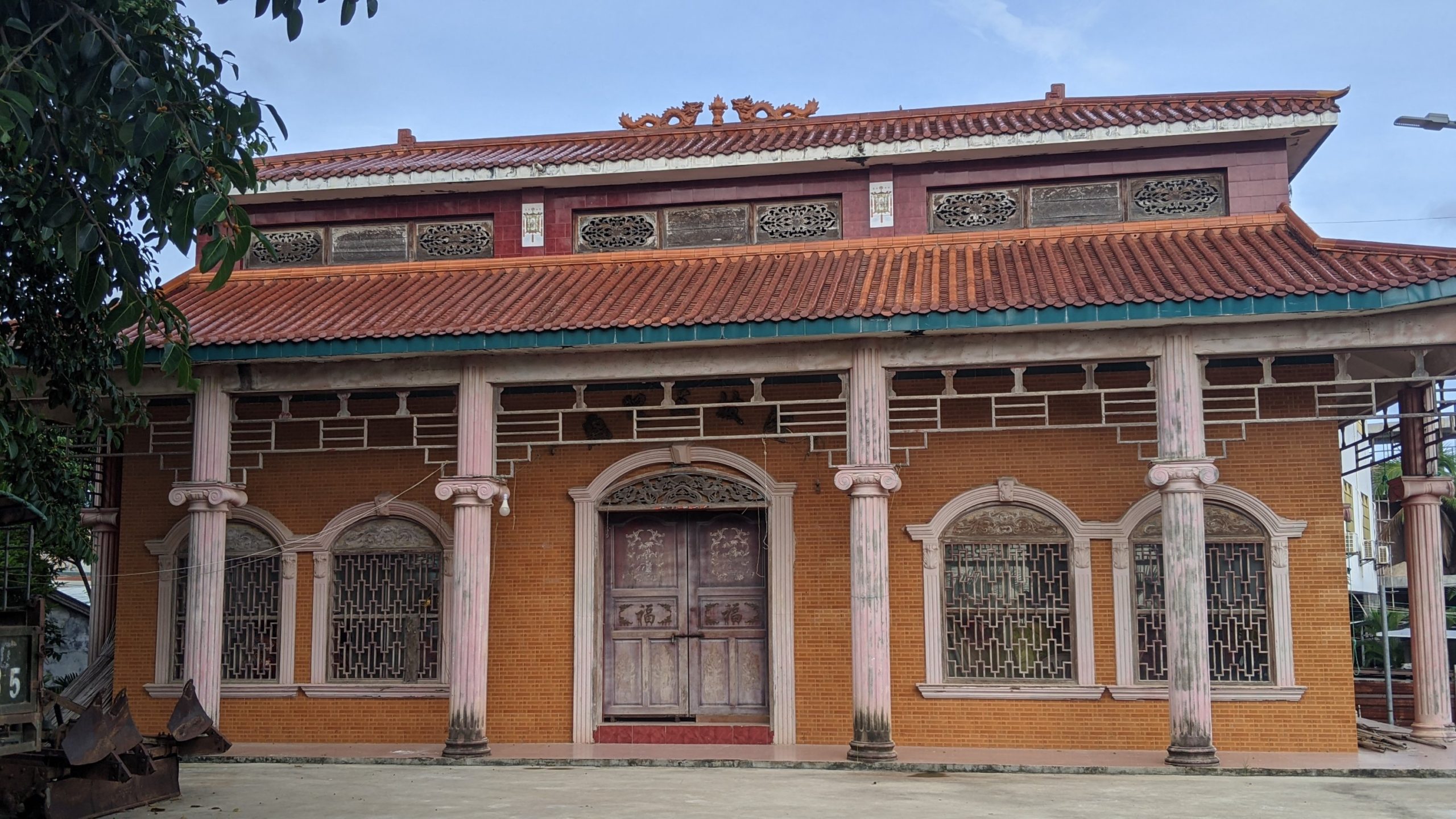
There are a lot of places where development here has stopped due to Covid-19. The jungle quickly takes over.
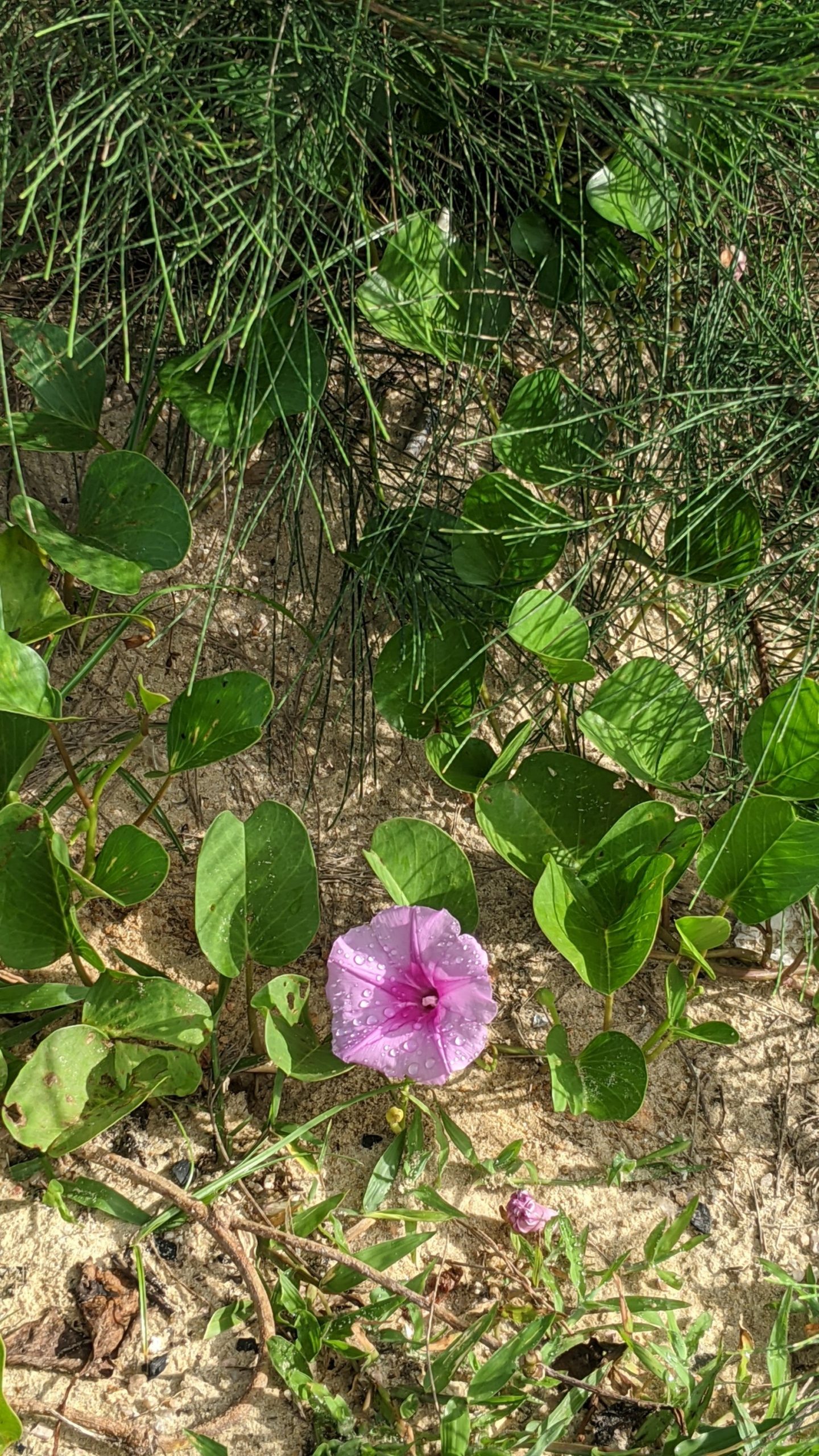
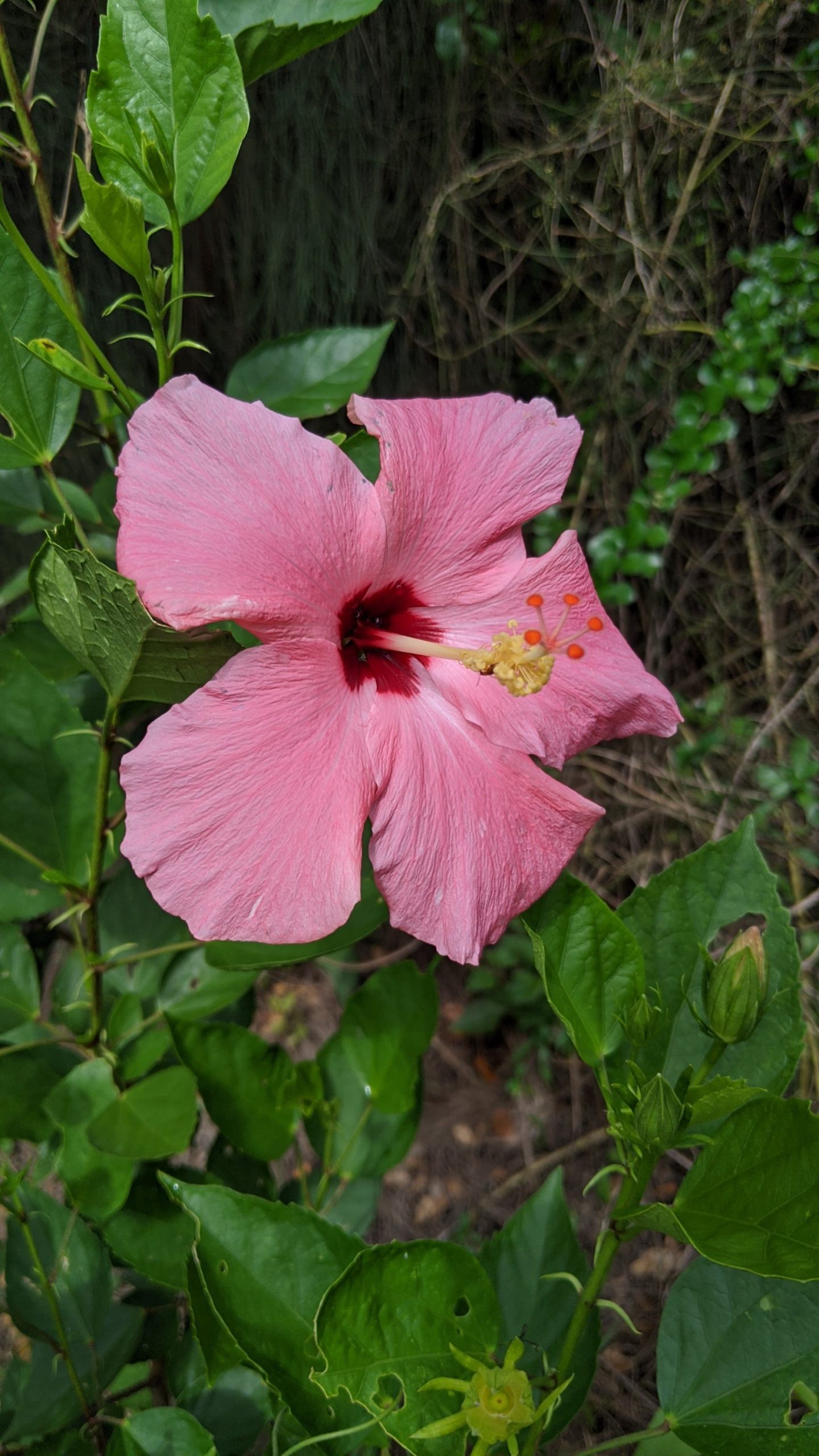
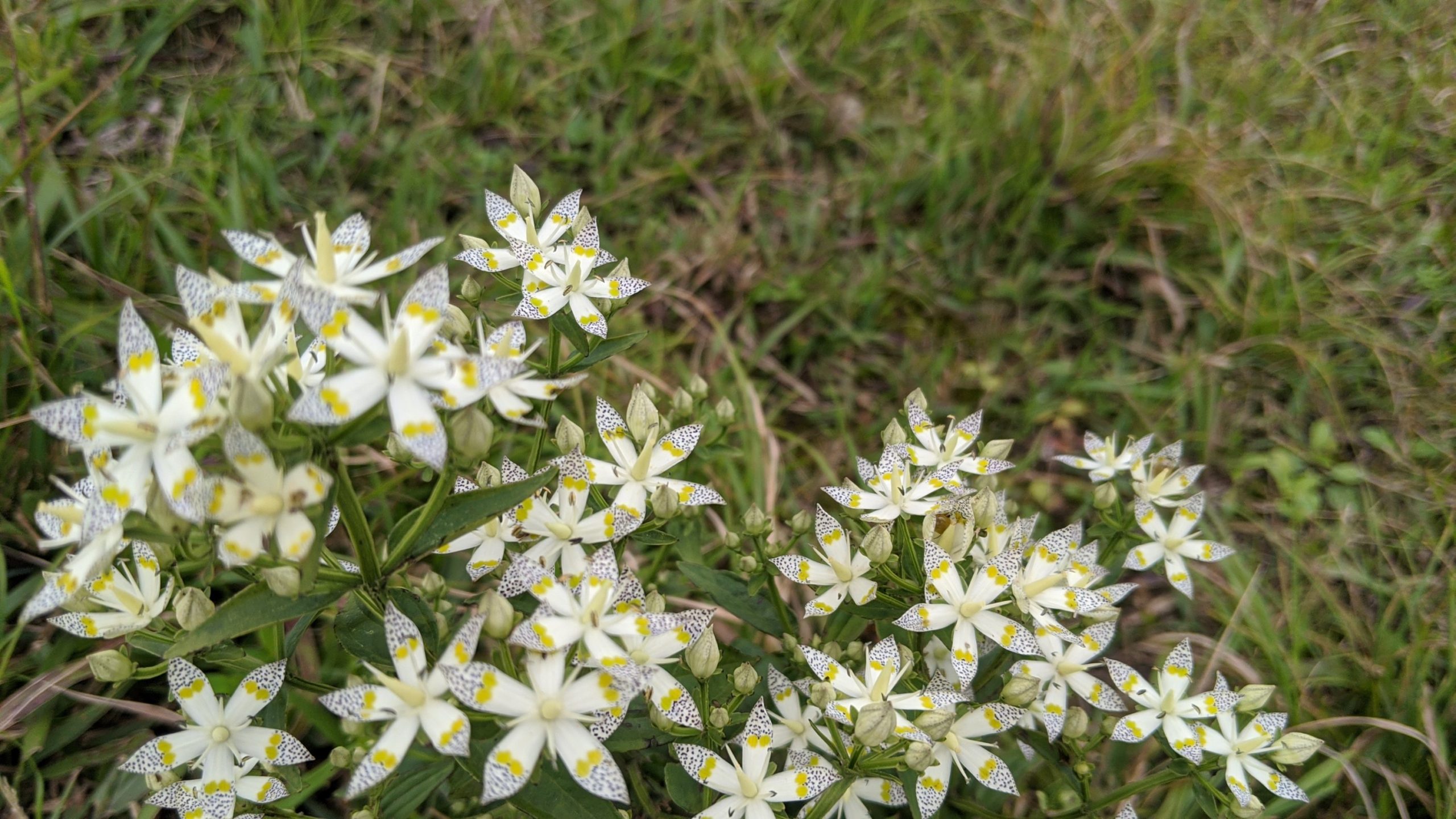
This flower was pretty. There were fire ants that reminded me to just keep moving!
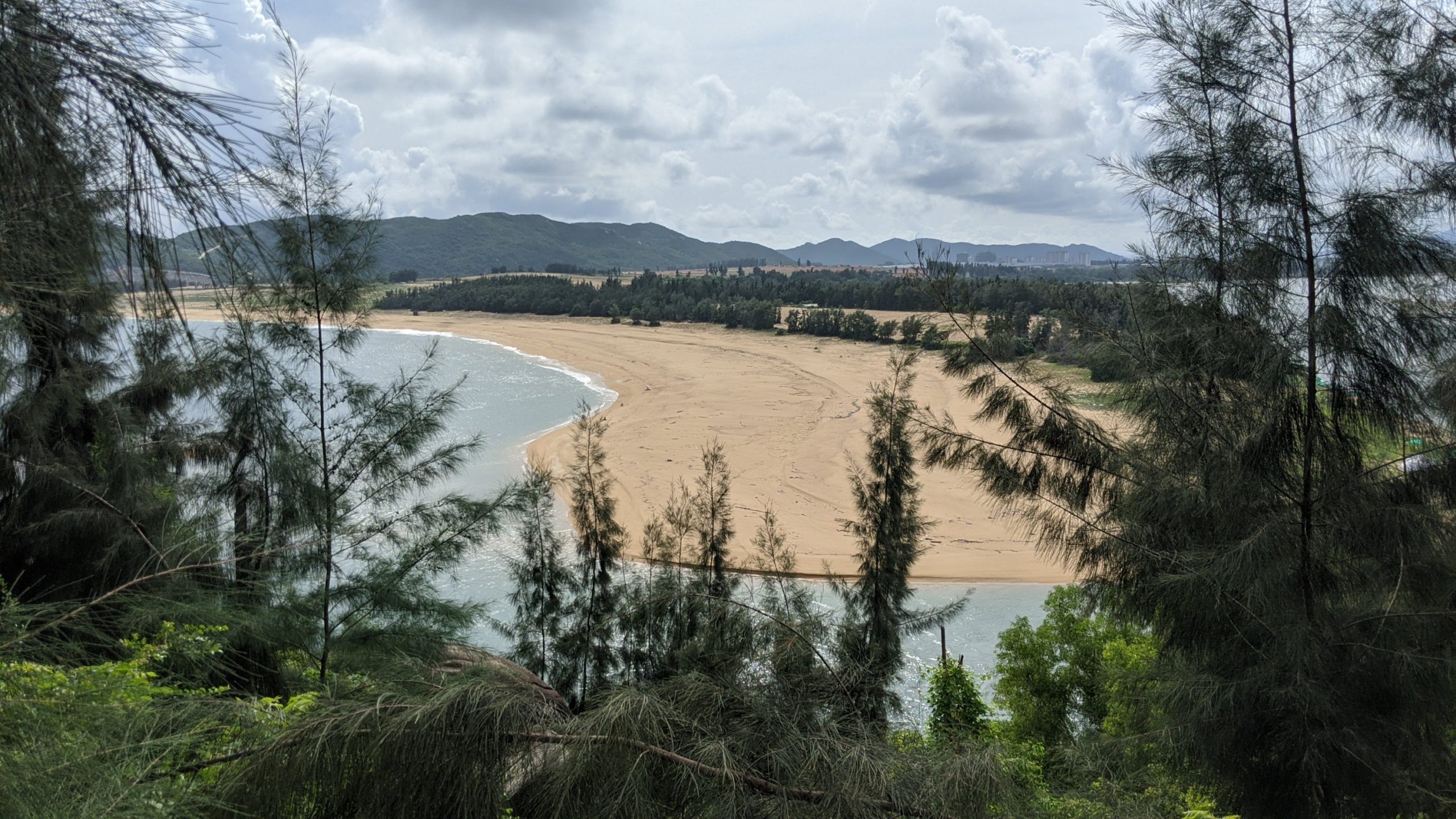
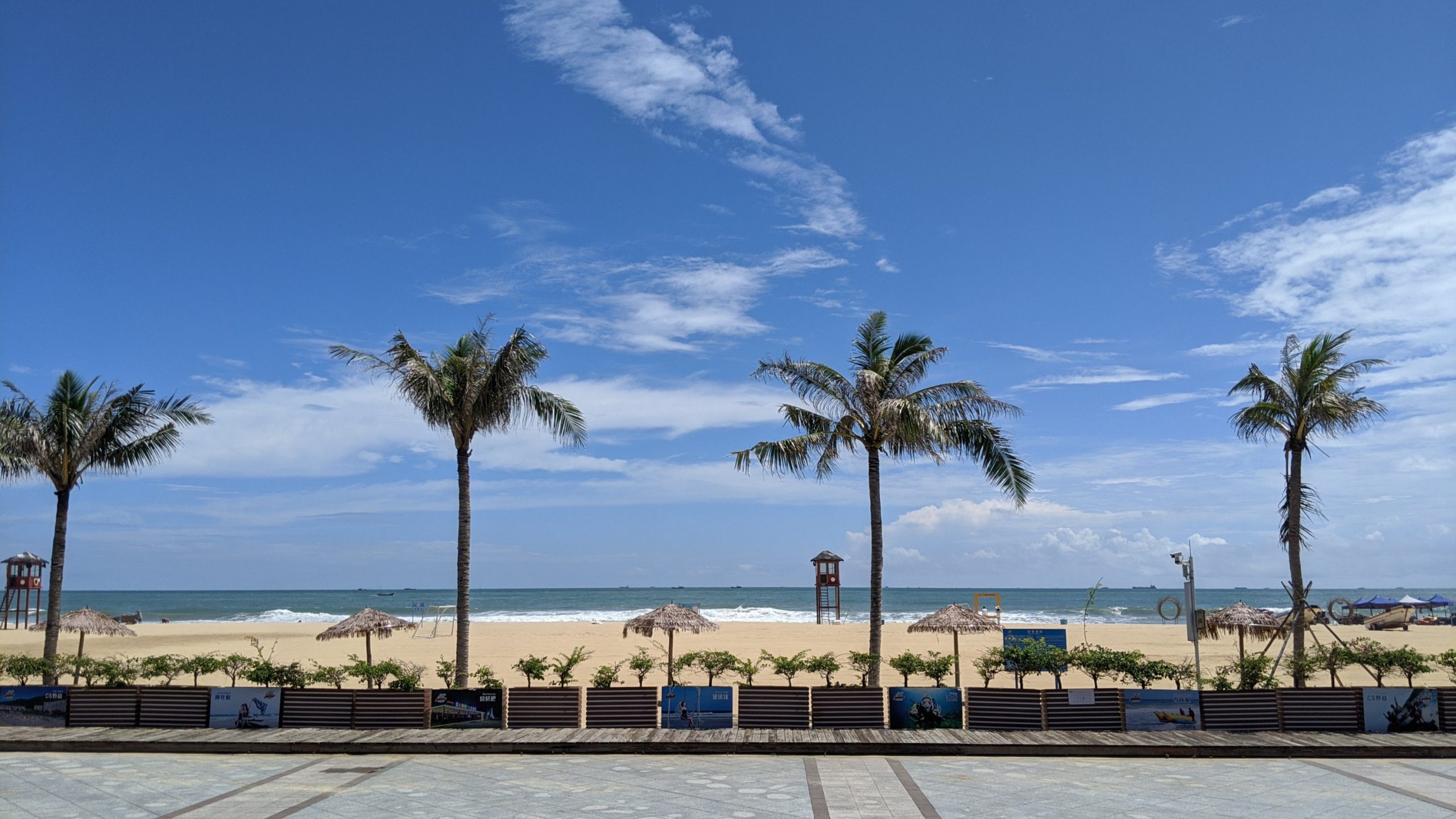
The beach I ran on where i stopped to get in the water.
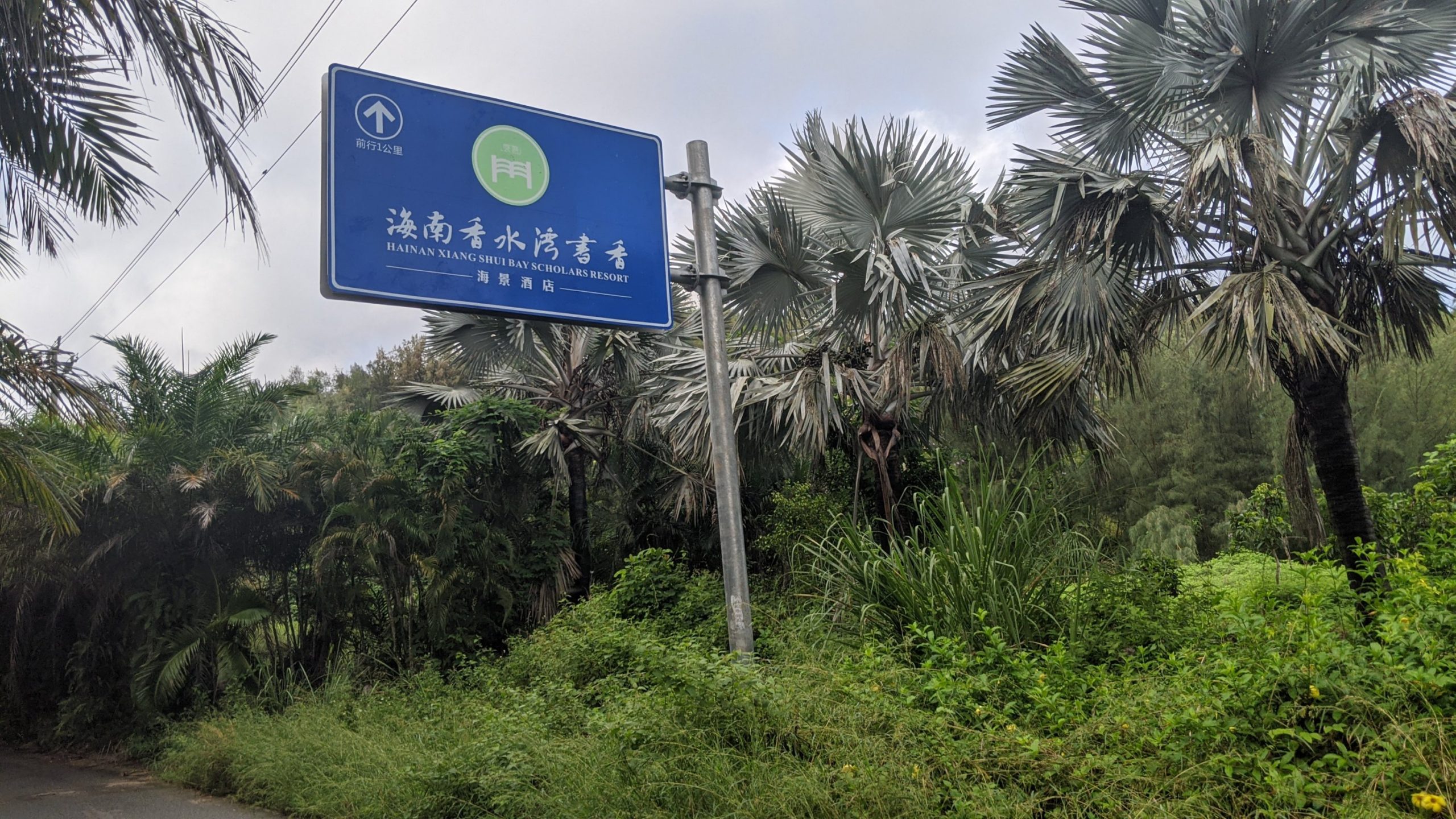
Scholars resort!!

First evening.

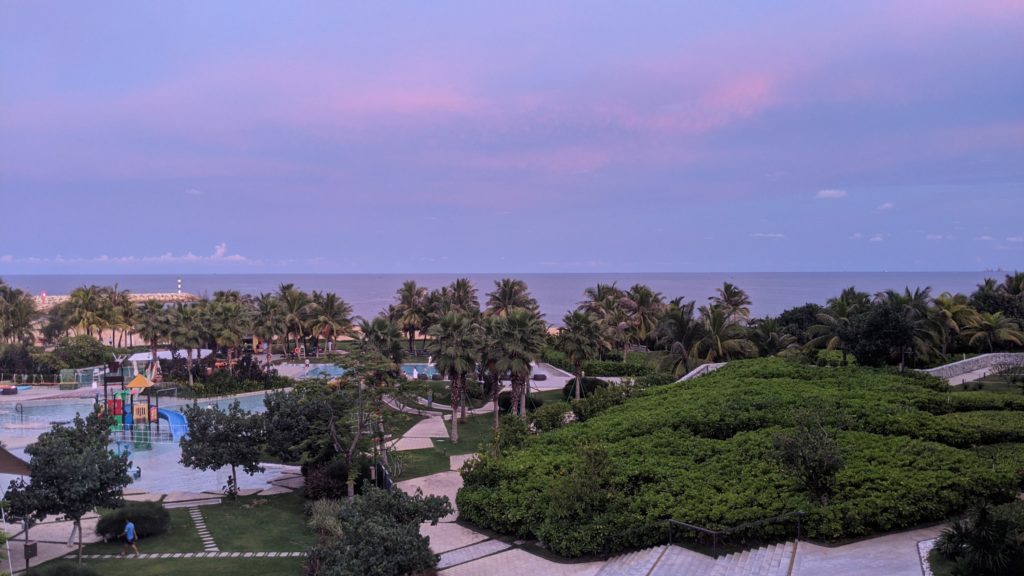
Looking over the pools to the ocean.
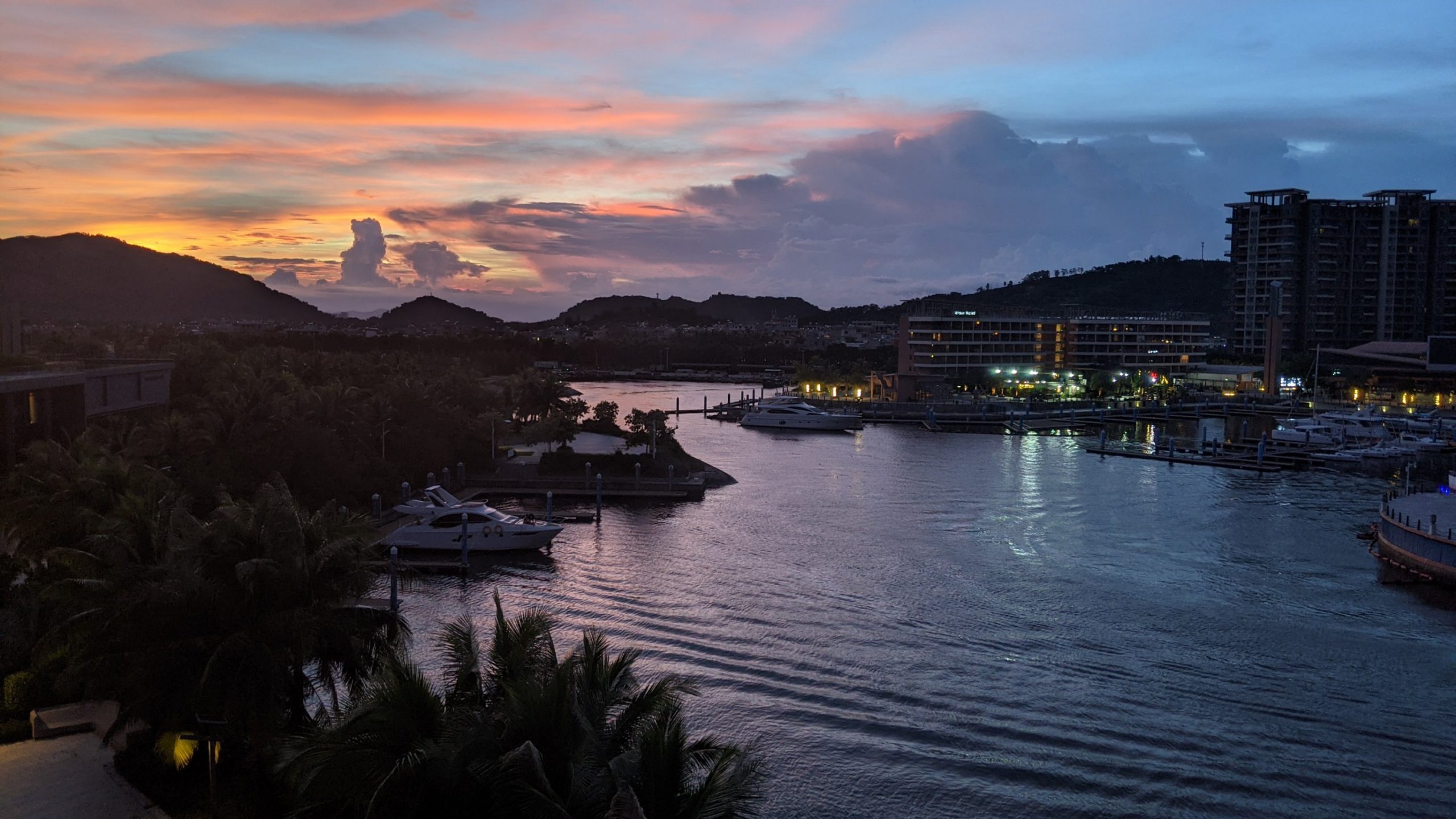
Looking over the bay.

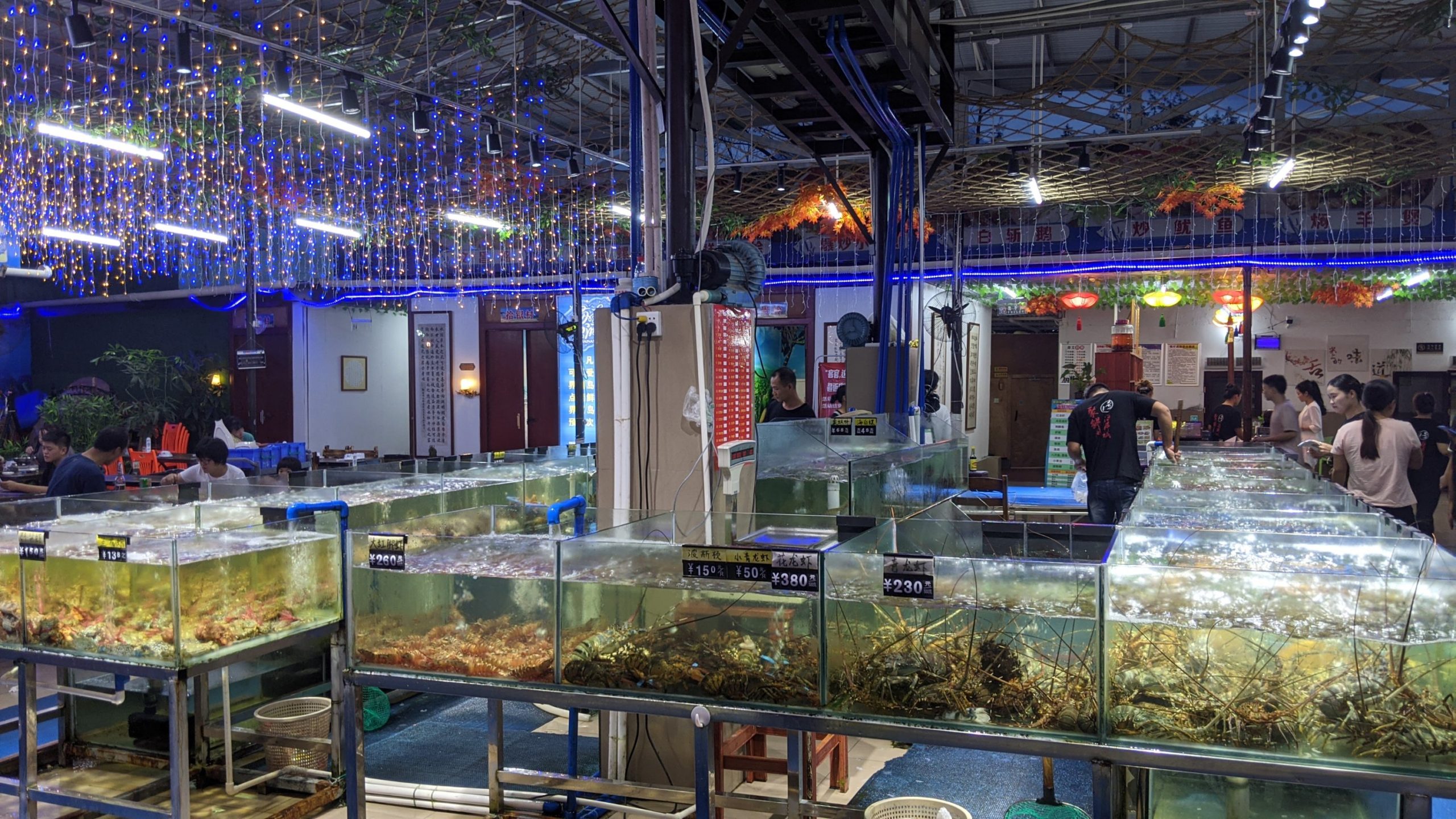
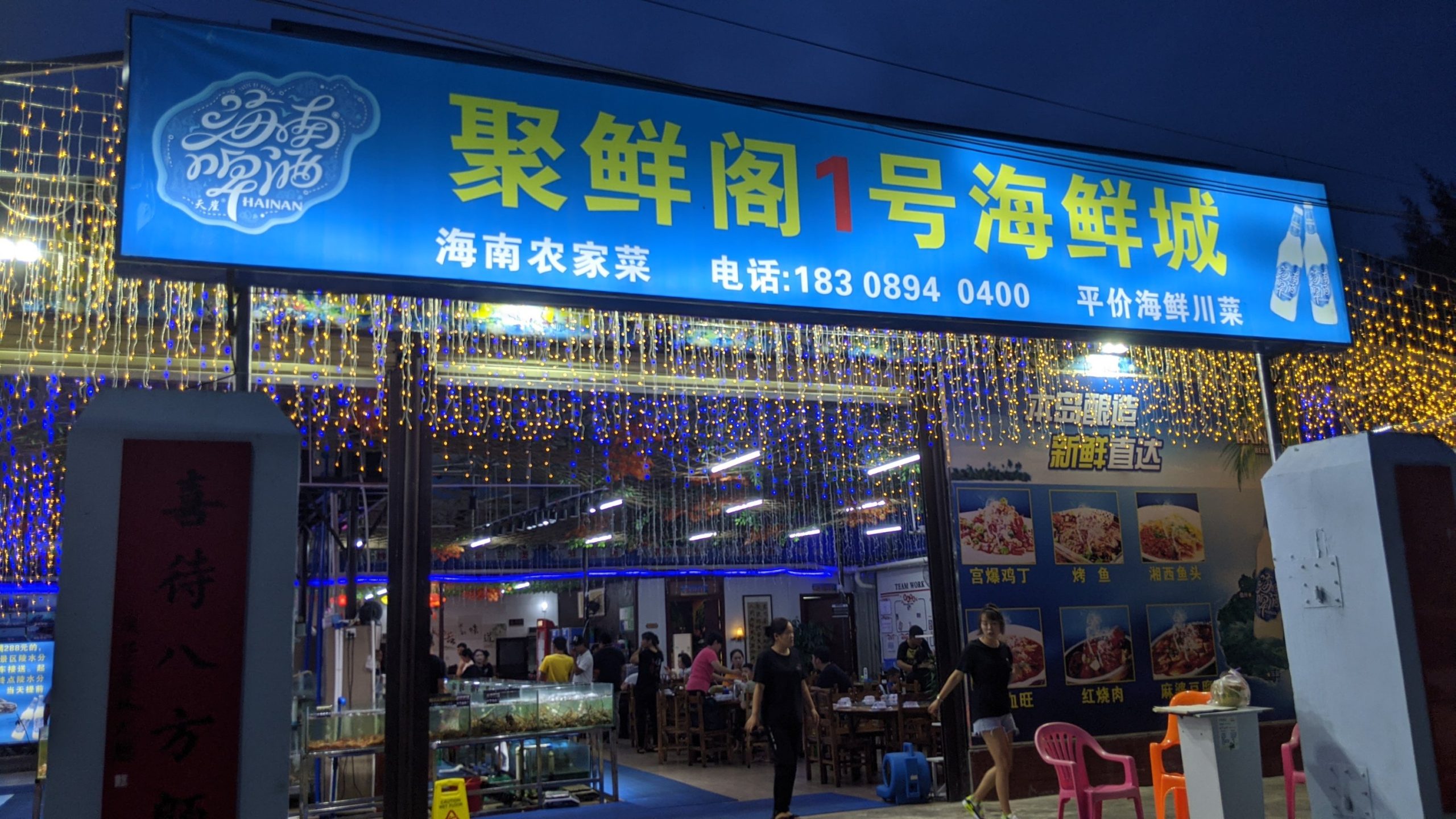
A little restaurant one km away from the hotel is where I ate the first two nights. They all want to help with my order and it was a way to use their translation apps. I’m amazed at the people who assume I just arrived in China and do not have WeChat or Didi apps. They forget people are here to work. Of course I practiced Chinese too.
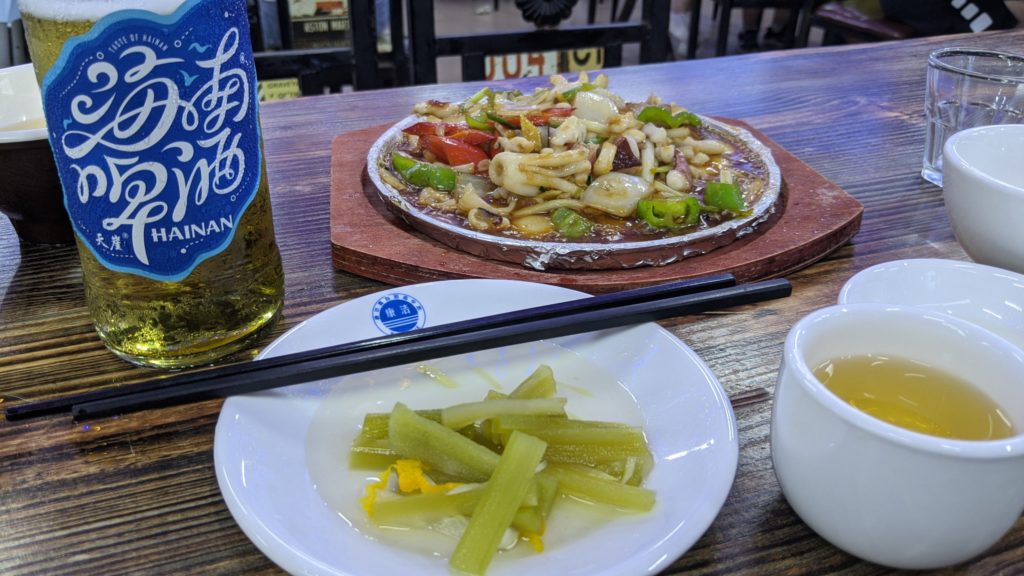
Squid Teppenyaki and a pickled vegetable that was pretty spicy!
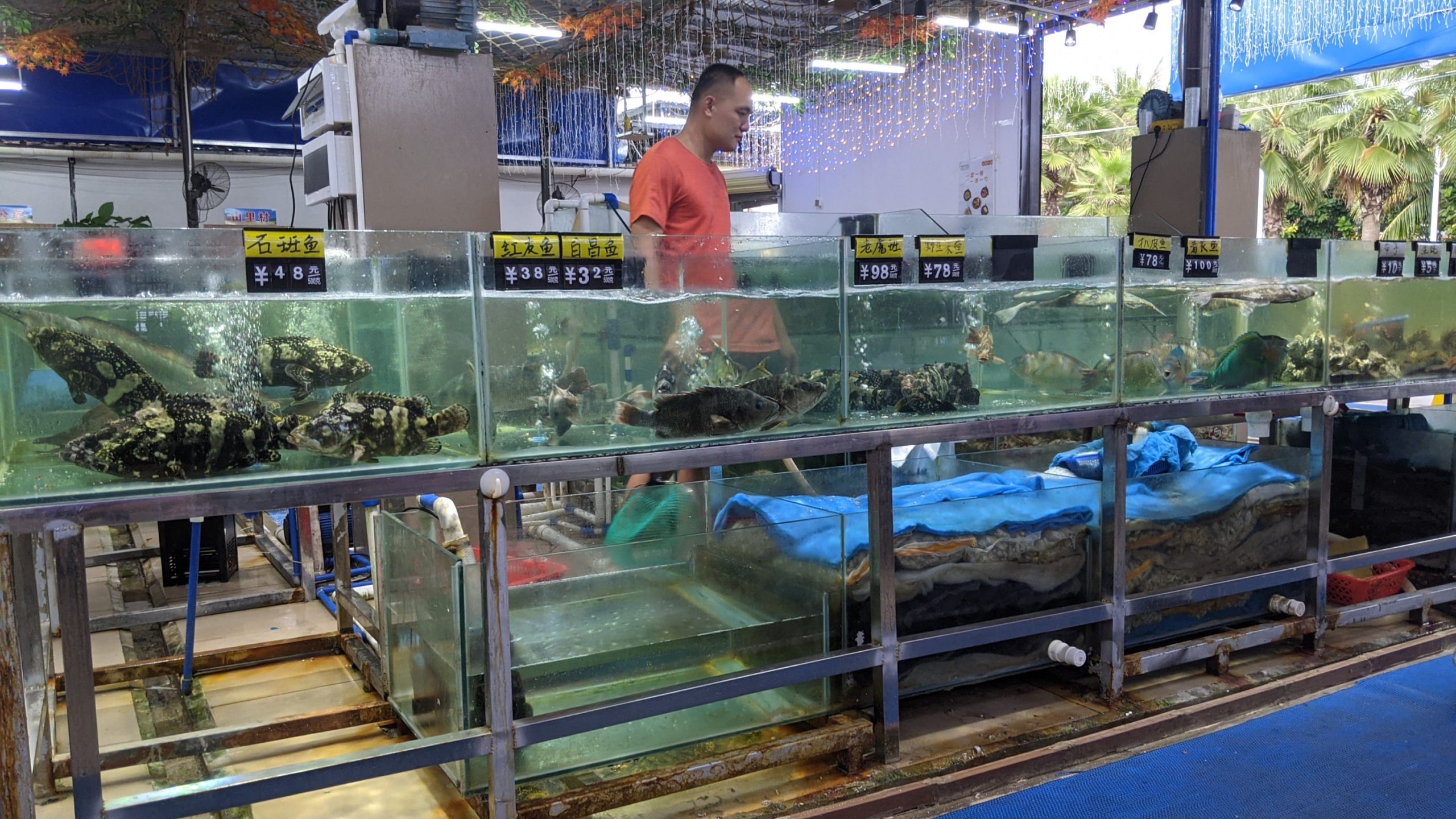
Fresh seafood.

A friend recommended Gangmen Harbor.
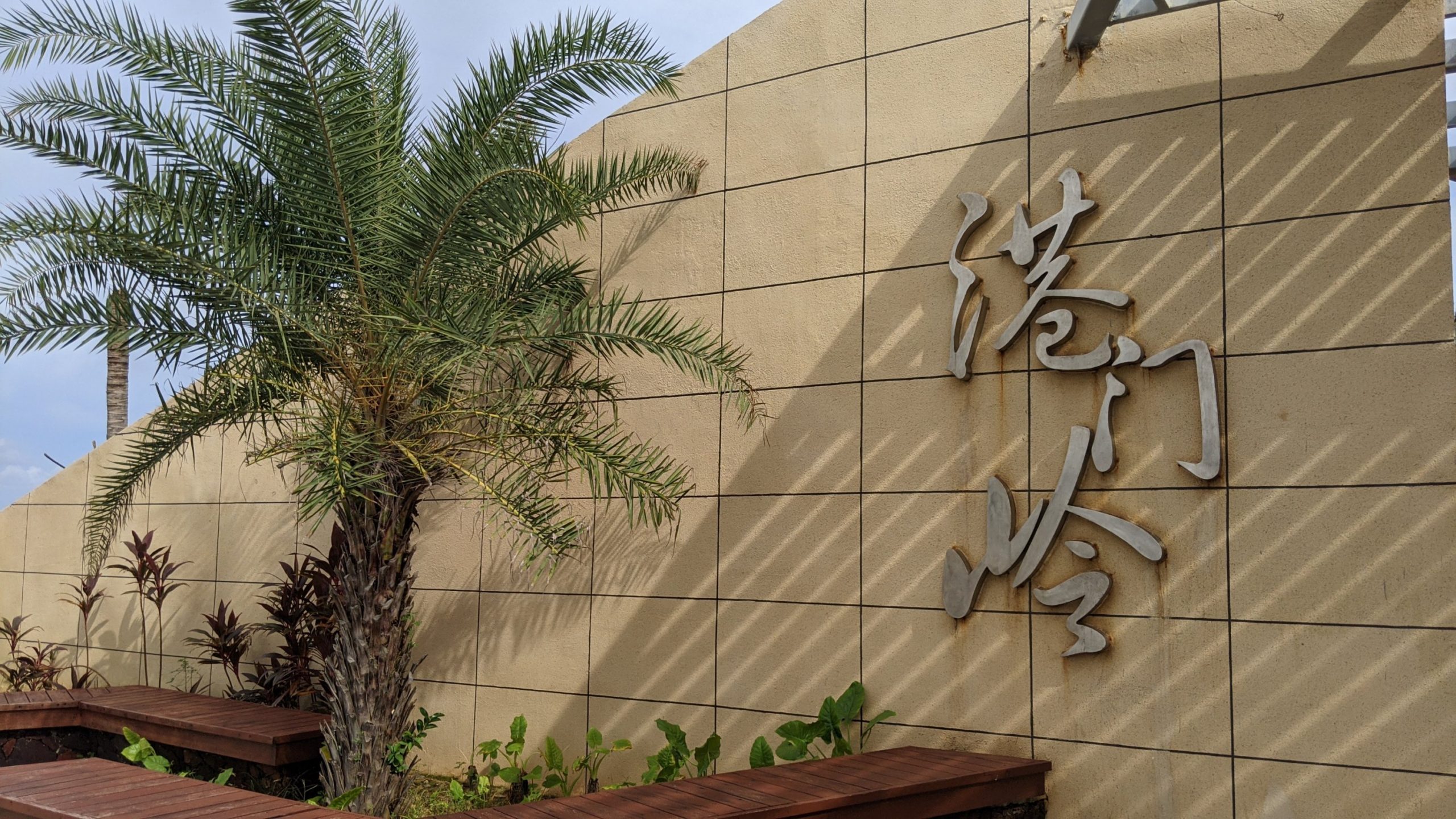
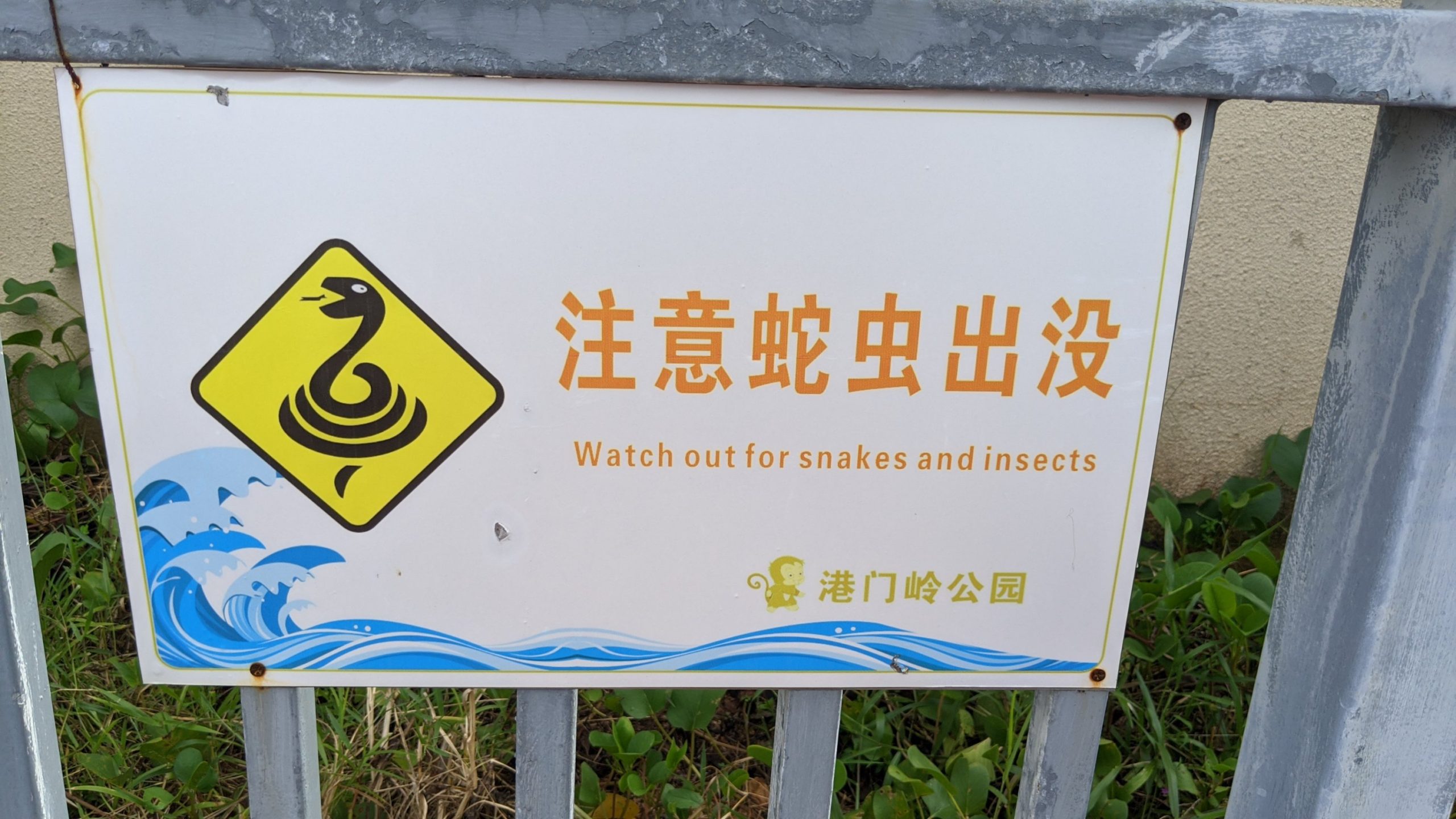
I’ve thought about going off the path a few times but this reminded me not to.

It was pretty but a long drive for a short visit. As the Didi driver left I wondered if I would have trouble getting another car out here. I was right. After two failed attempts I decided to walk as I noticed that we traveled through a couple small villages.

I was definitely a source of amusement. I stopped for drinks and eventually noticed a taxi that would definitely have to be going past me again. I was lucky… These small towns have narrow streets and many bikes.
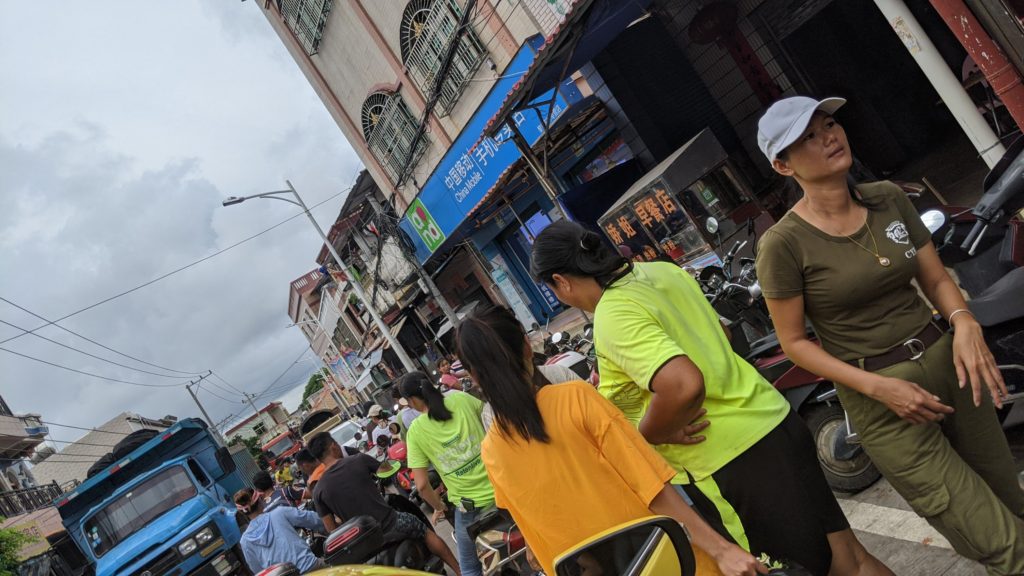
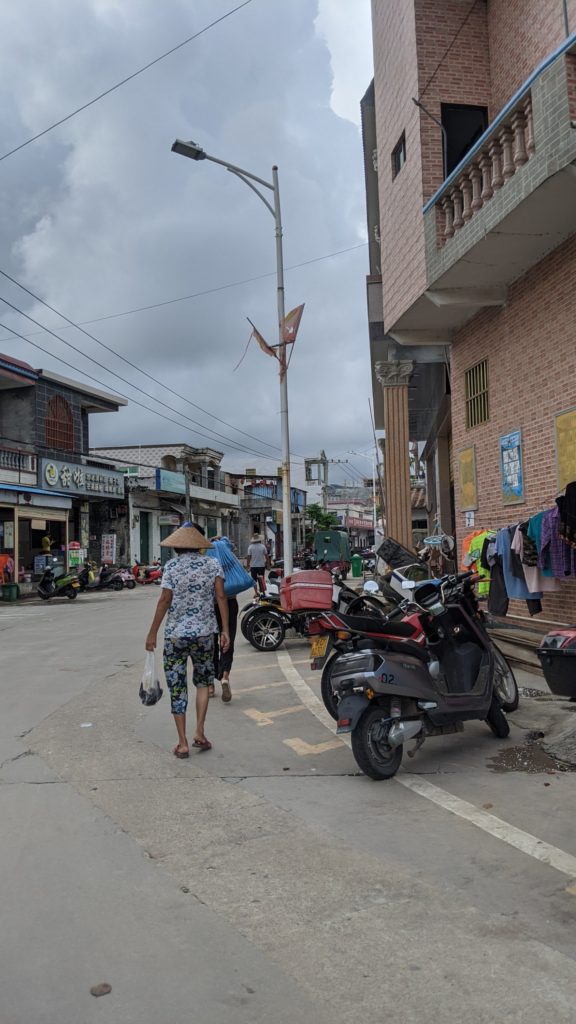
This trip has been easier without having to show documents over and over. People here are still taken aback at seeing a foreigner and I have not seen any others while here. The guard at Gangmen Harbor did ask me where I was going (in ‘hinese). I replied sight seeing. He at least stepped aside.
Bunlos Resort, Yangjiang

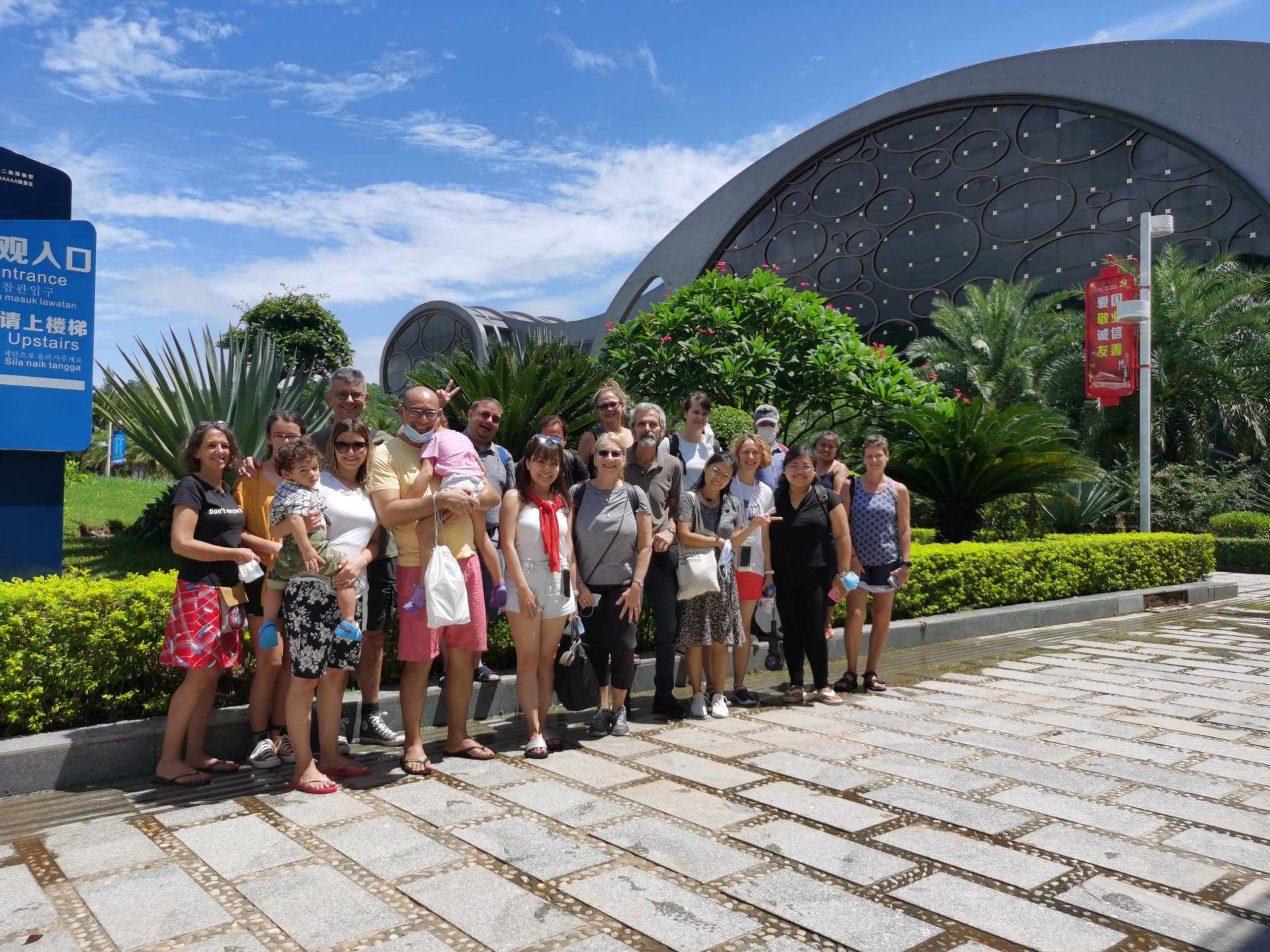
I went on a banana tour to a resort this last weekend and was so happy to see friends from my school and dear friends from other schools I don’t see often enough!

This will be a great resort when it is fully open. It was a soft opening so not all stores and restaurants were open. But to be able to walk on the beach, swim in pools, and be with friends it was a great weekend.

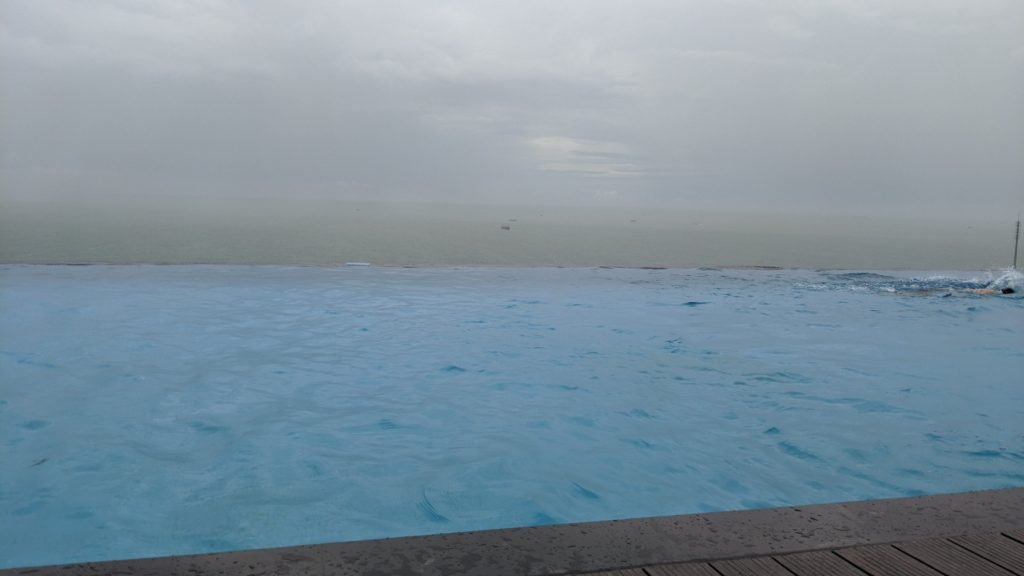
The infinity pool at the top is nice. A typhoon was off shore so the weather changed constantly.

I enjoyed the pool off of the beach even more.

Fresh watermelon juice just blended with no sugar.

There is a rock path that leads to a cliff pool. We walked the path but did not pay to enter the pool.

For dinner we bought beer and take our and ate in one of the rooms so we could have good conversations and company.

Some other pictures of walking around the beach.

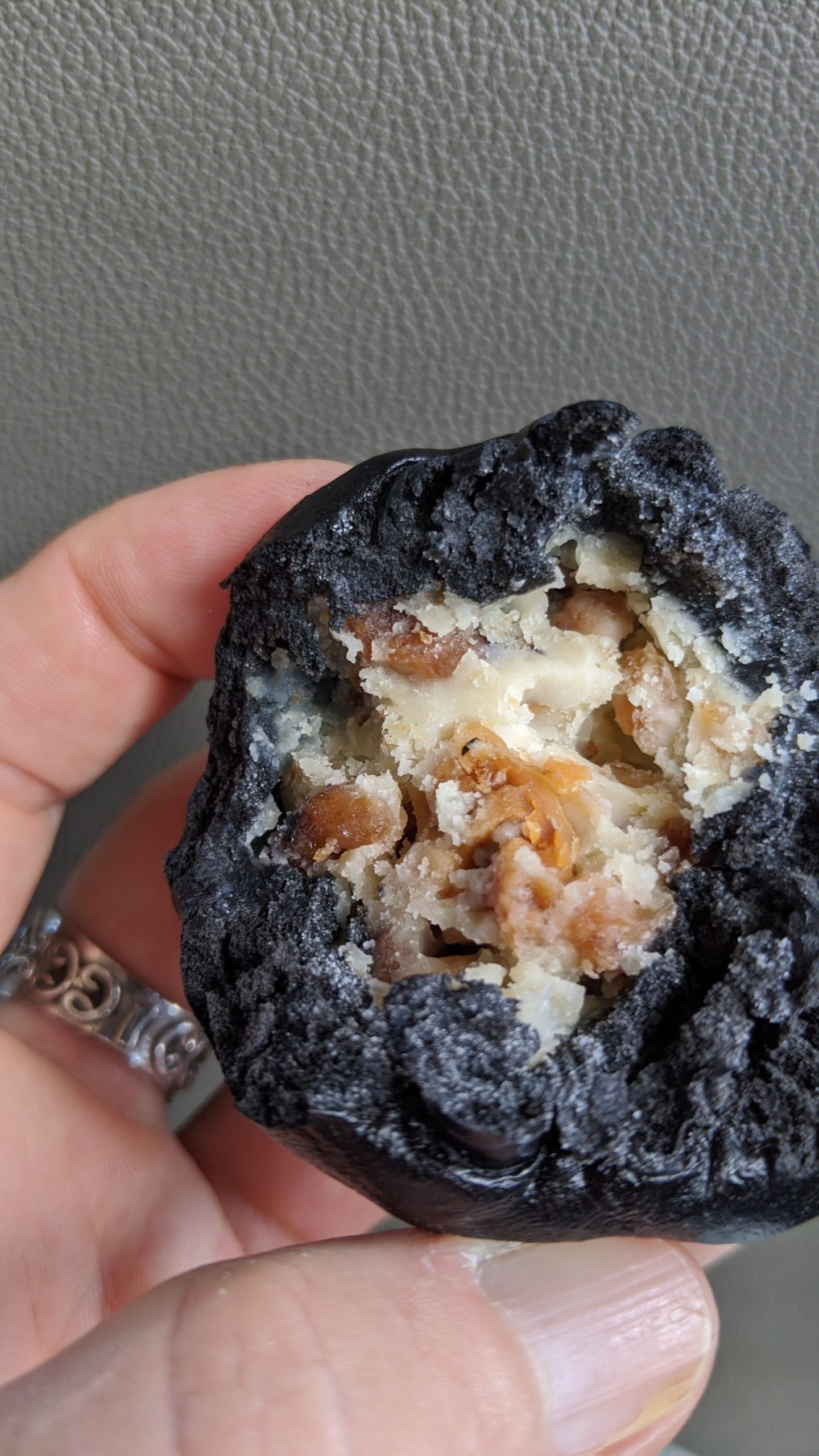
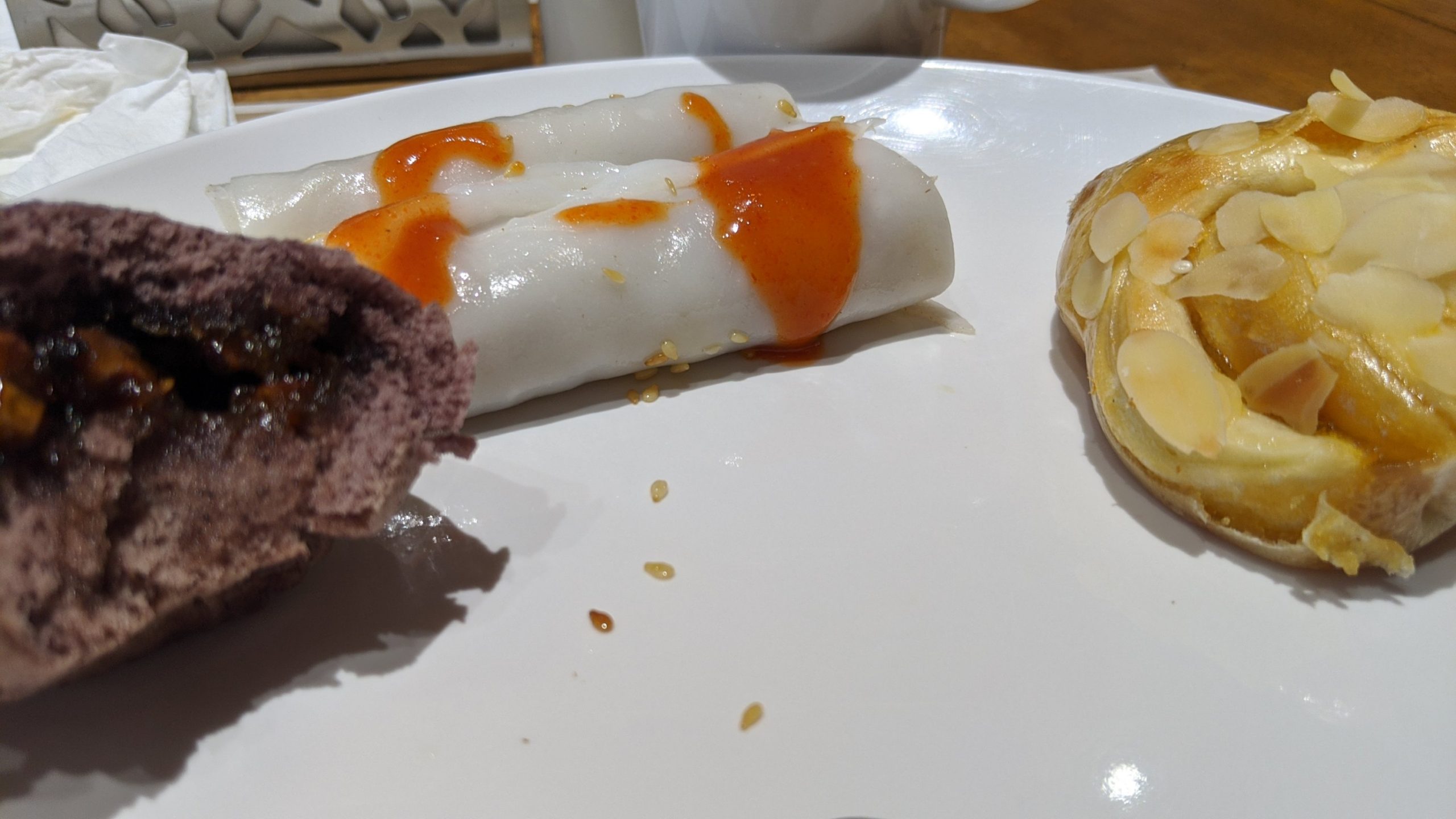
The breakfast buffet was good! I especially liked the steamed buns. The purple taro ones had date filling inside. The black ones were chocolate with a nut filling. The rice rolls are a local specialty and have shredded cabbage inside.
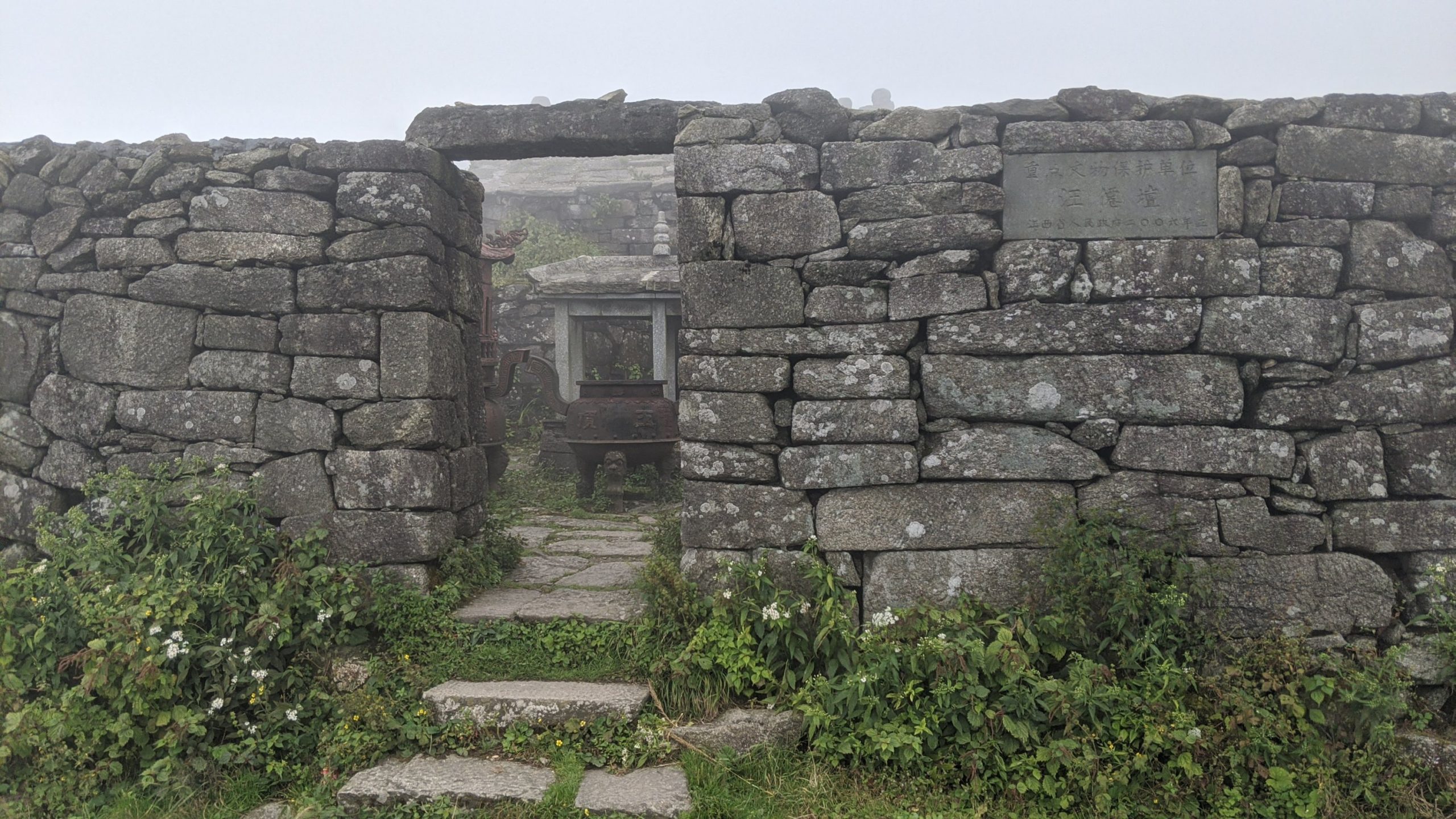
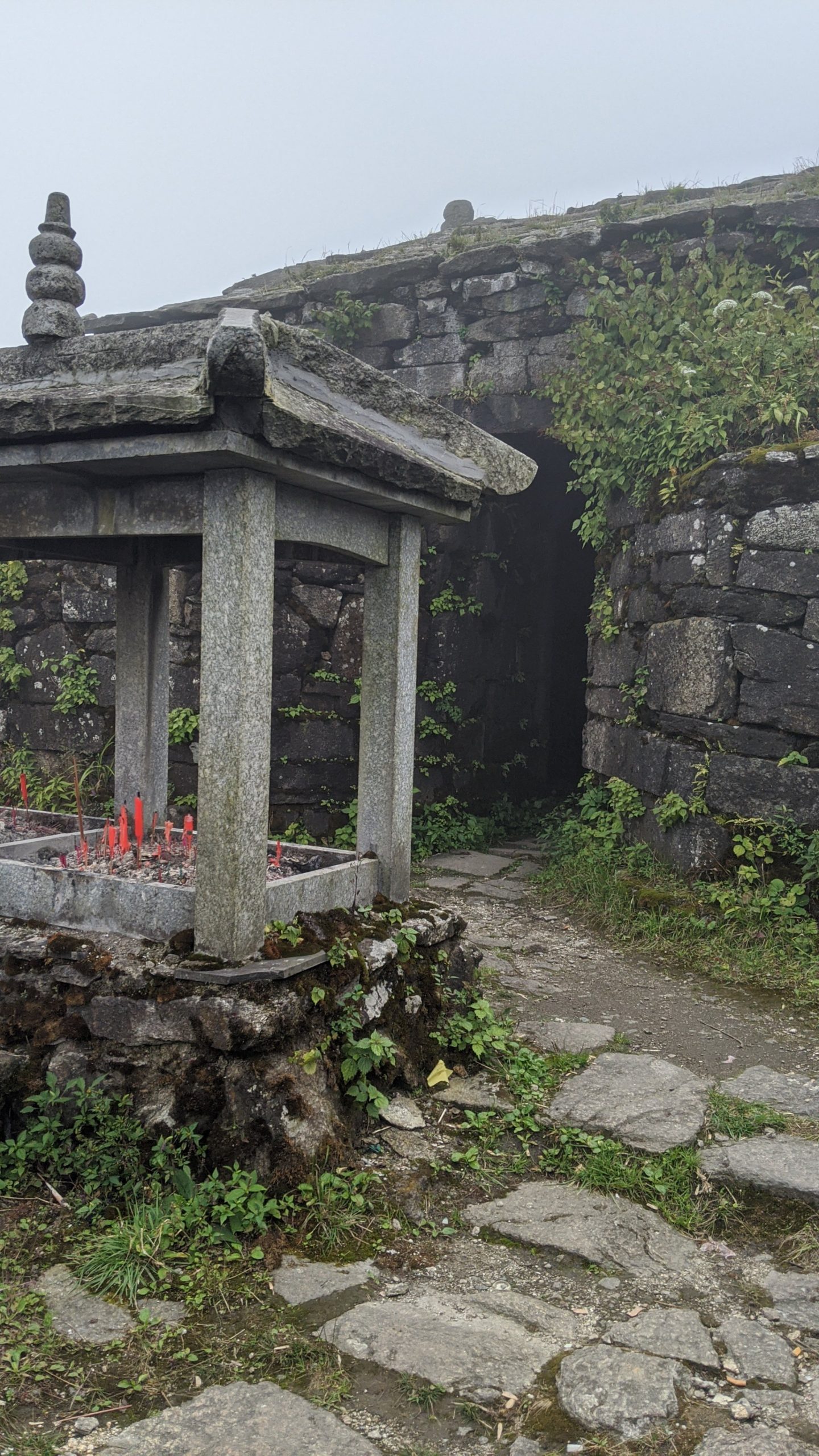
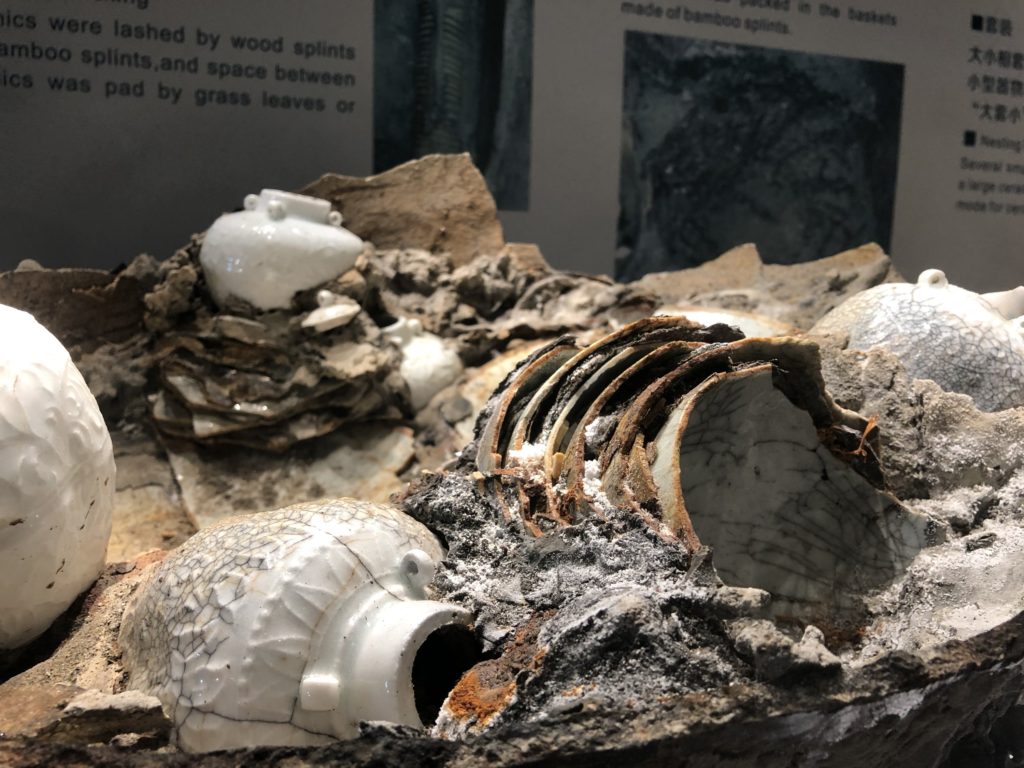
The Nanhai Maritime silk road museum was interesting and they recovered many artifacts from the sunken ship. The ship sank in 1000 AD.

The maritime silk road connected China with the Middle East and Europe. It takes its name from ‘Nanhai’ – the South China Sea. The wreck is in exceptional condition as a container was placed around it under sea and a bottom added. They then lifted the whole thing out and excavation is now done in the museum where people can watch. Quite the undertaking. It is thought to contain 60,000 to 80,000 precious pieces of cargo, especially ceramics.

Outside the museum is another beach and local merchants.

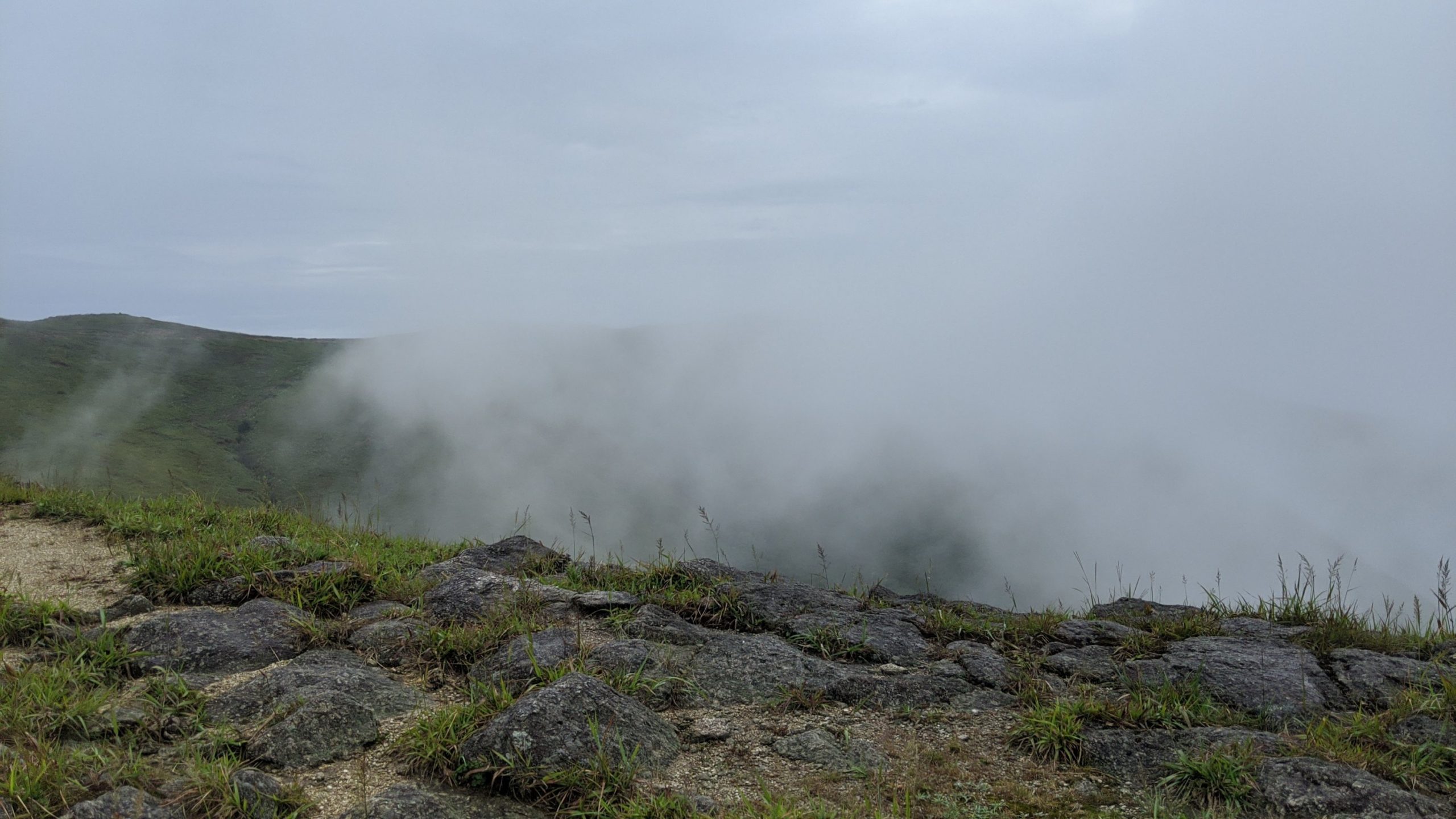
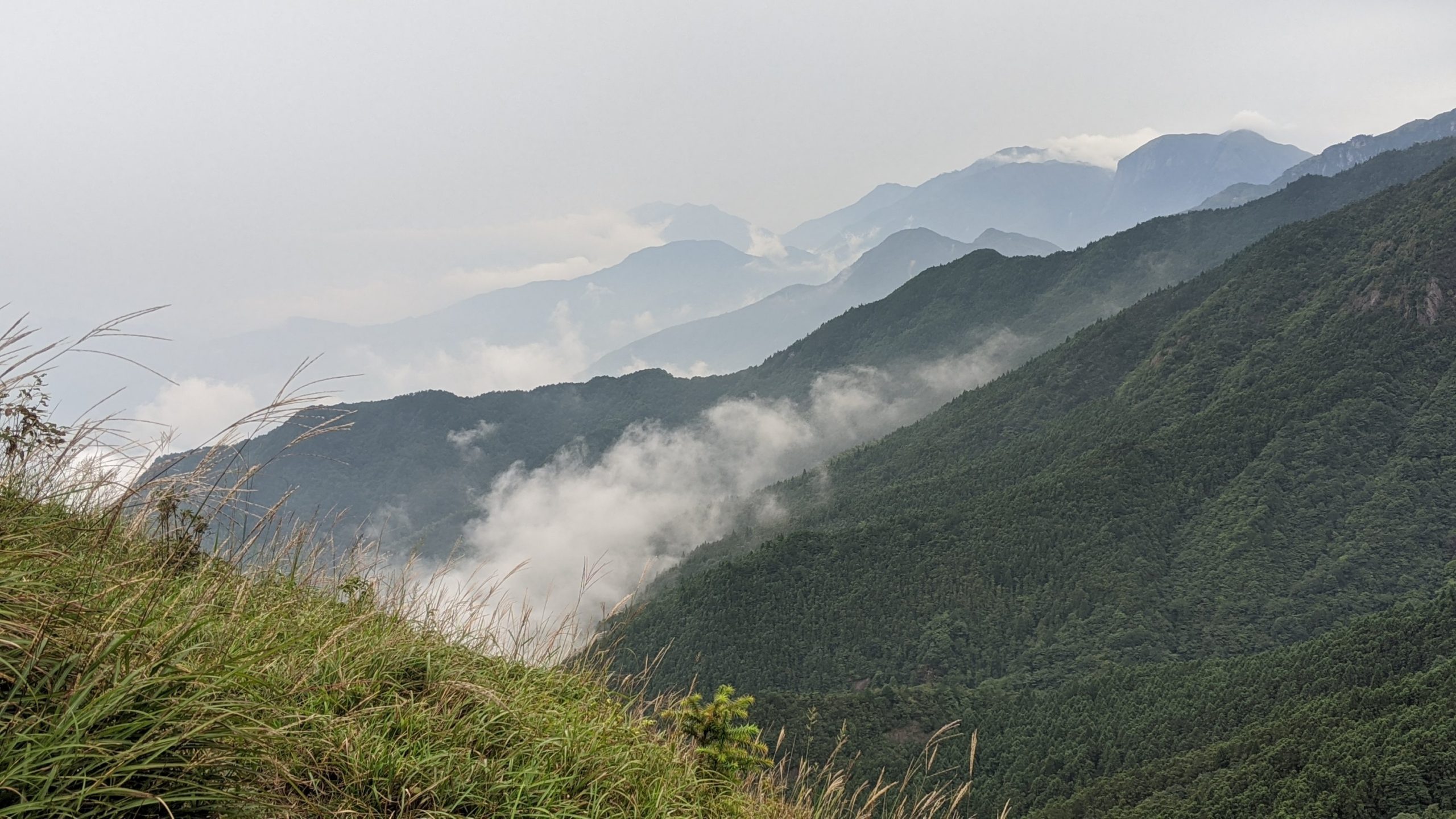
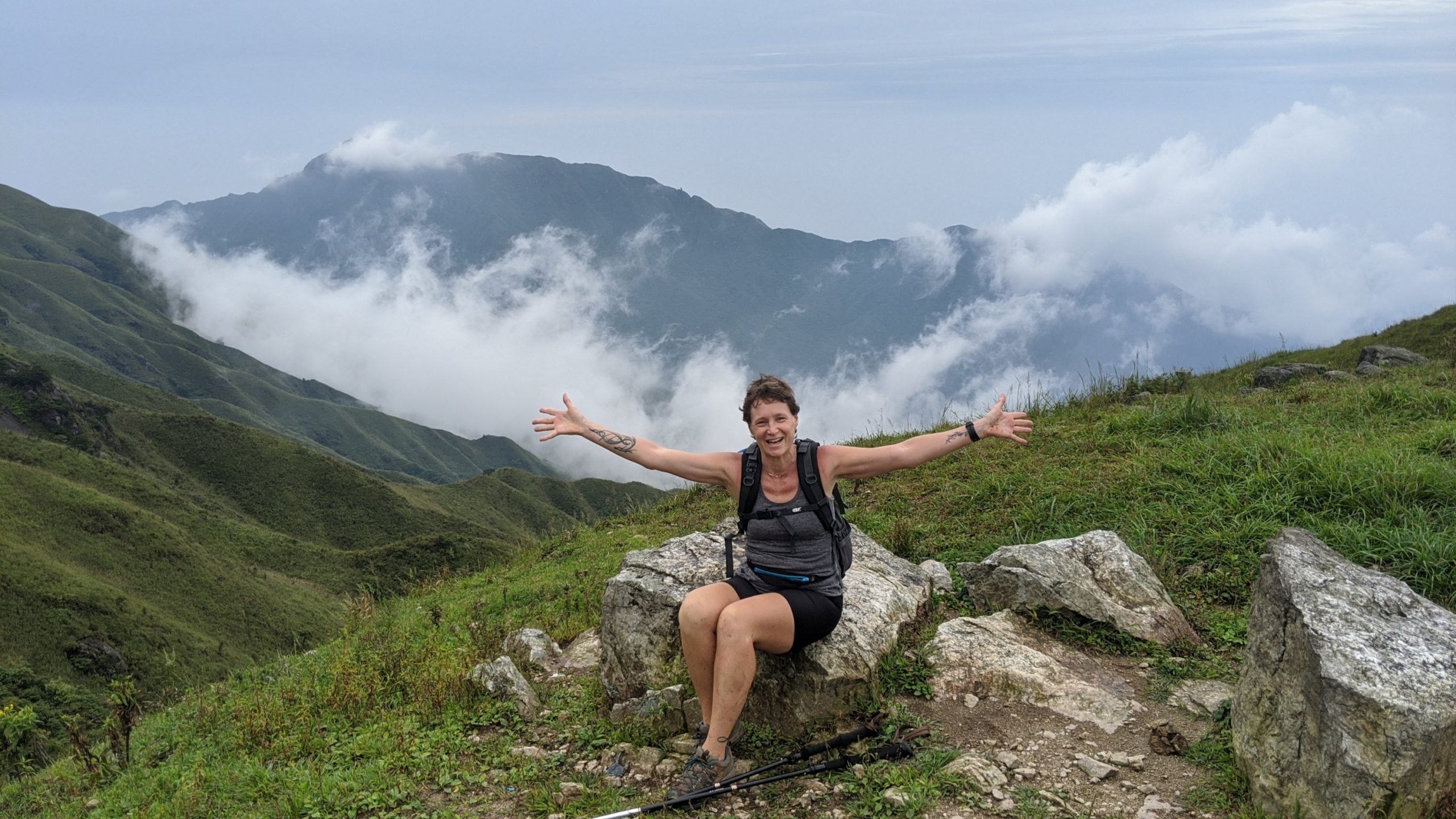
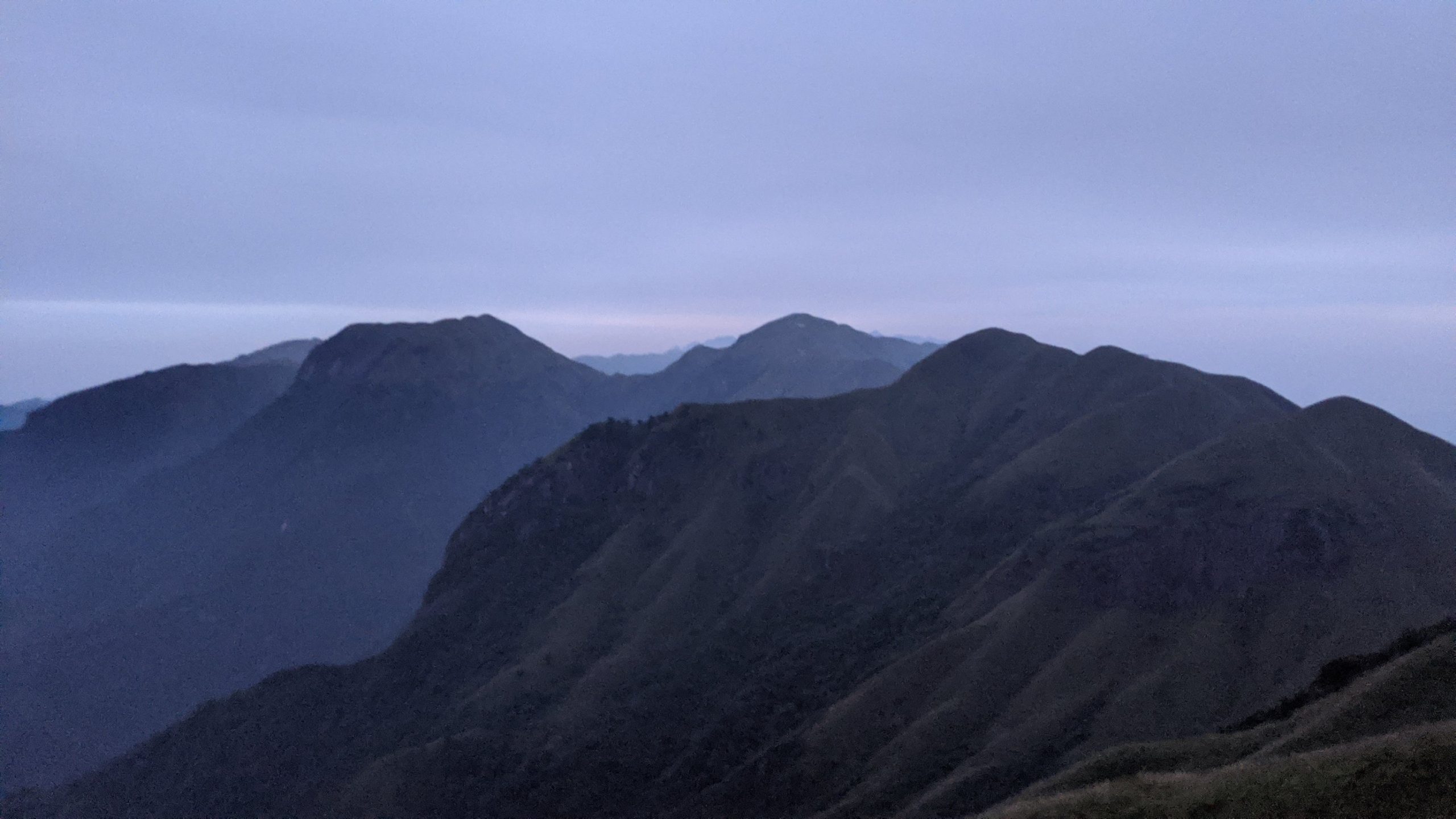
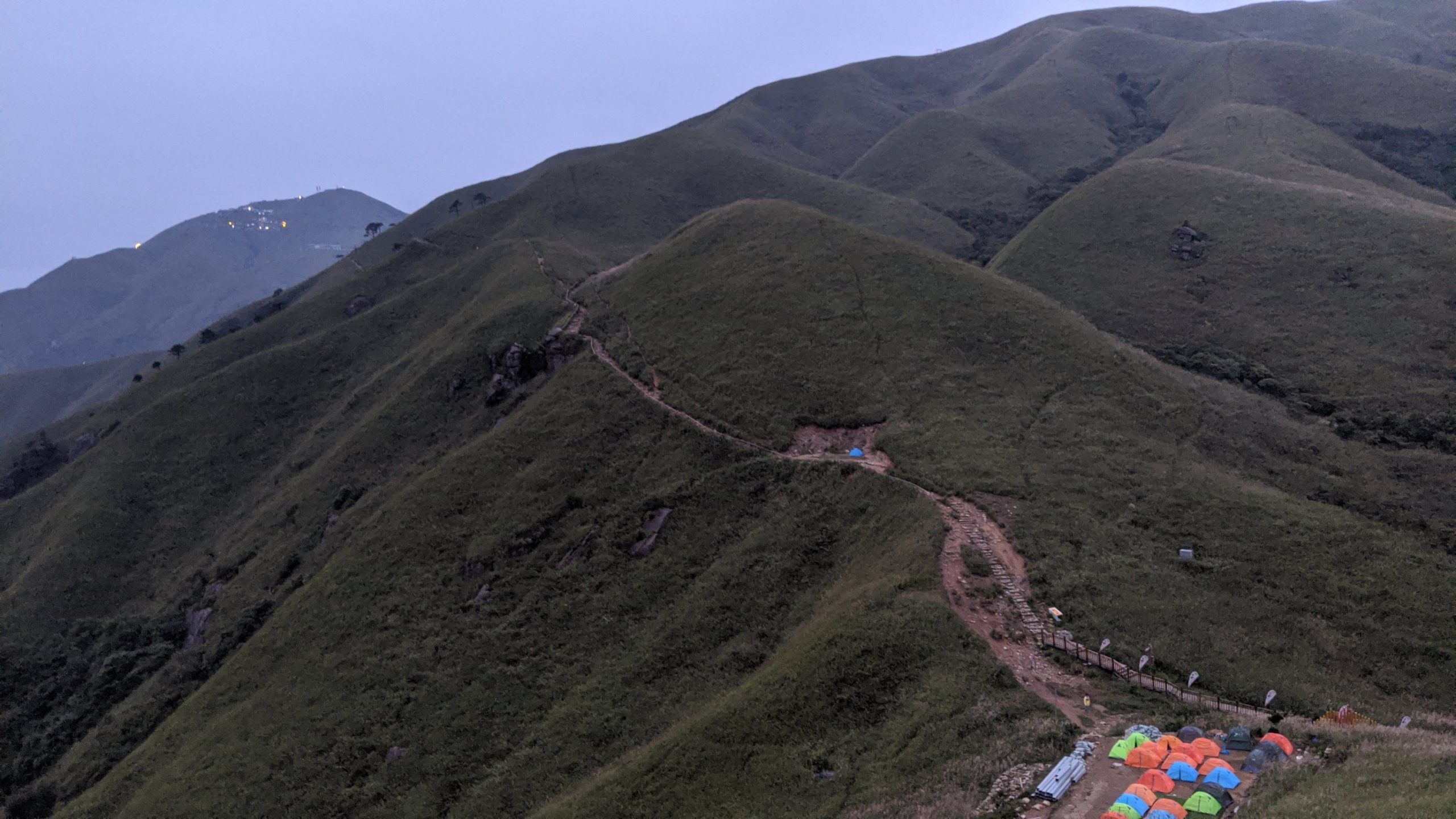
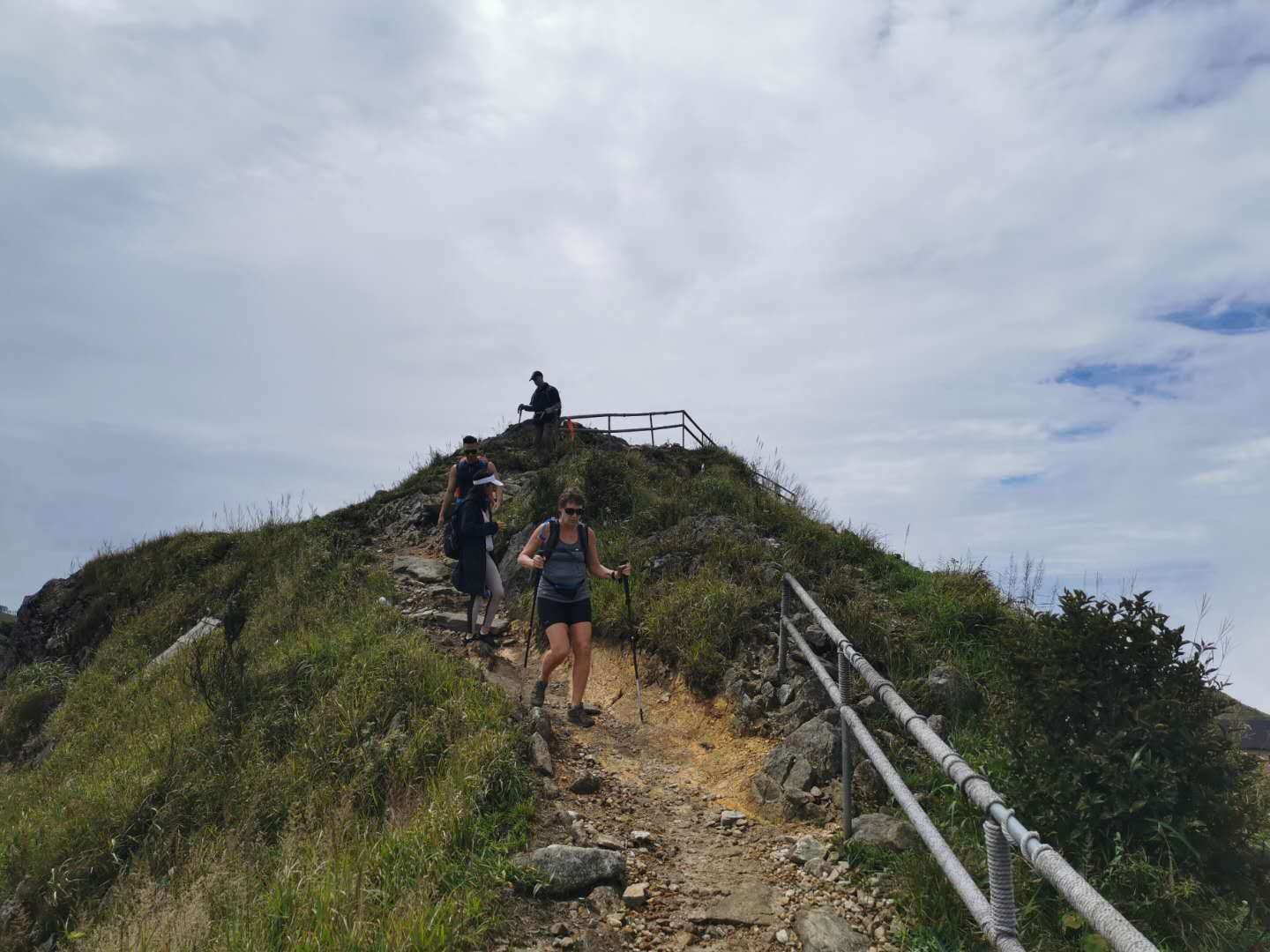
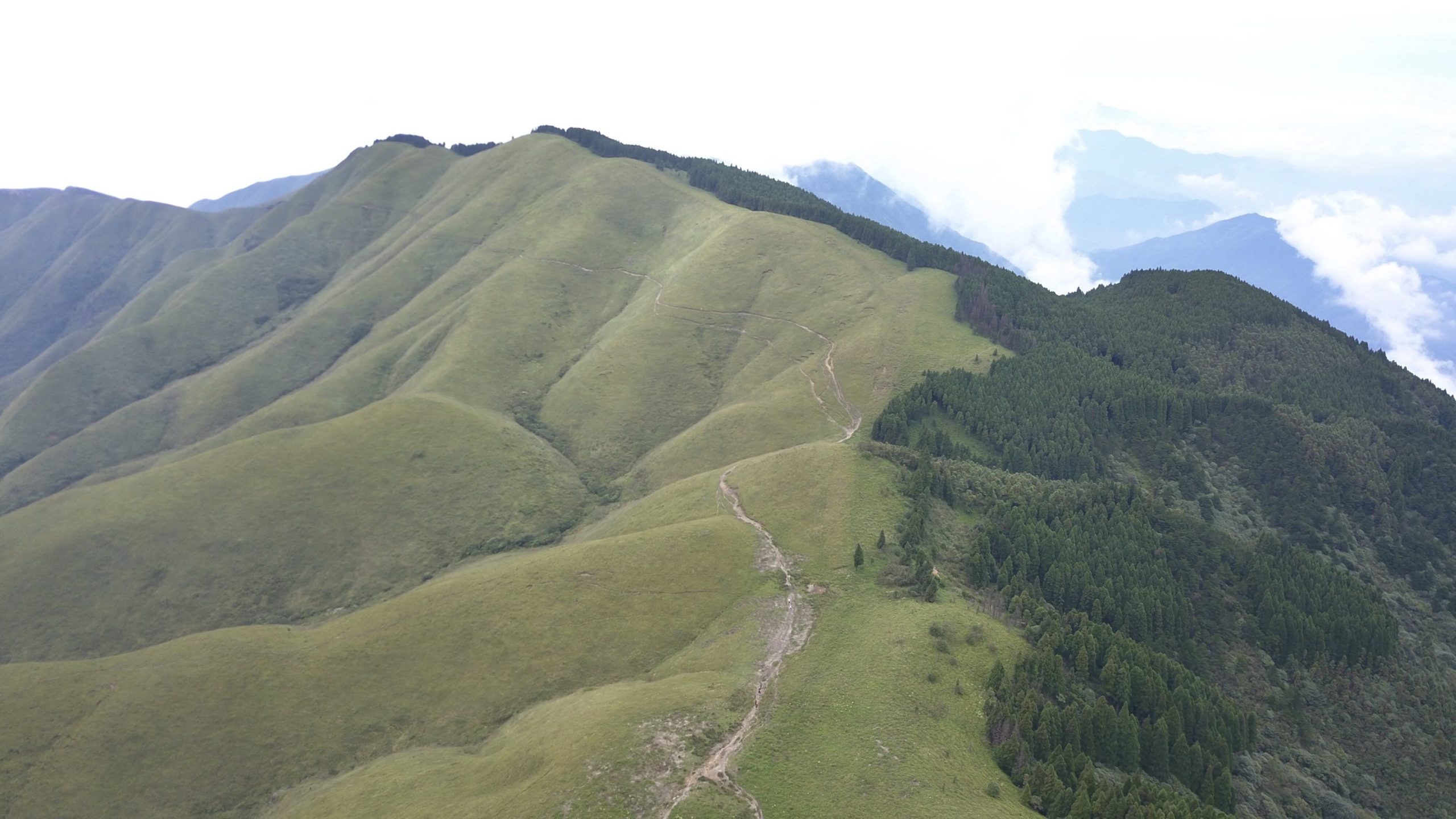
Wugong mountain hiking

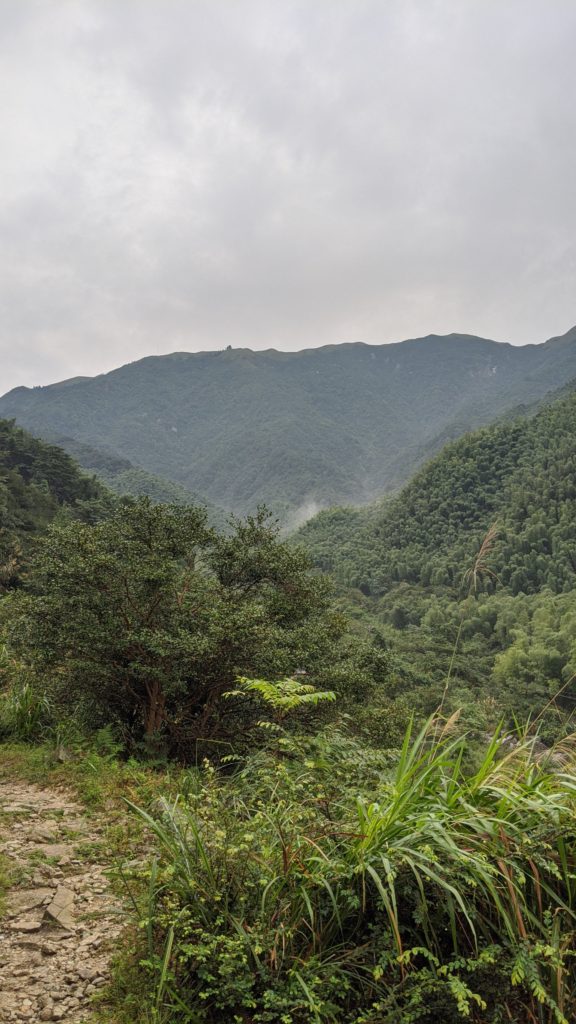
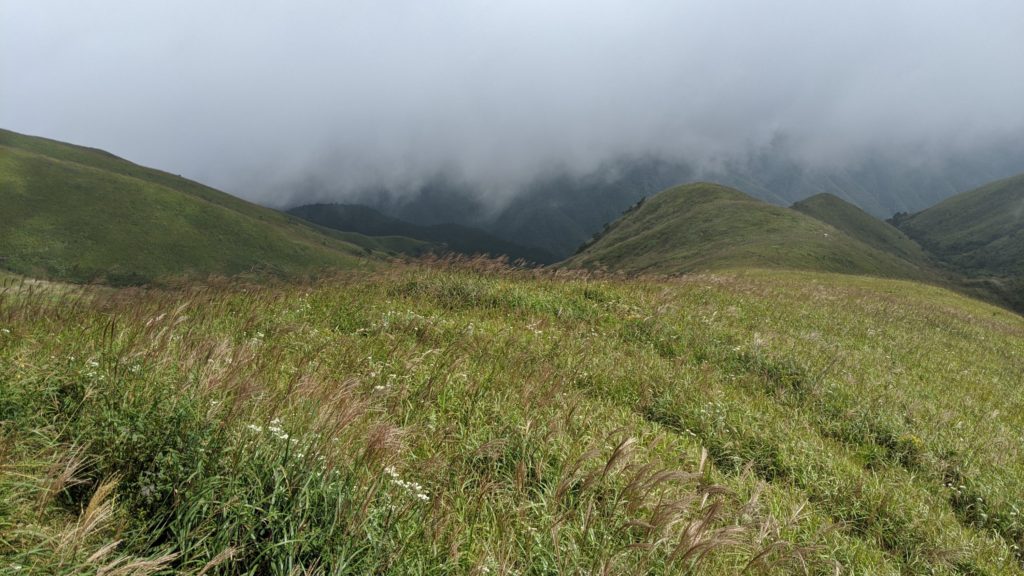
Wugong Mountain is in Jiangxi Province. This is one of China’s three great mountains south of the Yangtze River. The view of the alpine meadows is spectacular. One I have not seen on other hikes.

I took a super long metro (over an hour) to get to the high speed train station. From there the three and a half hour train and shirt car ride put us at the hotel at the base of the trail. The next morning we hiked.


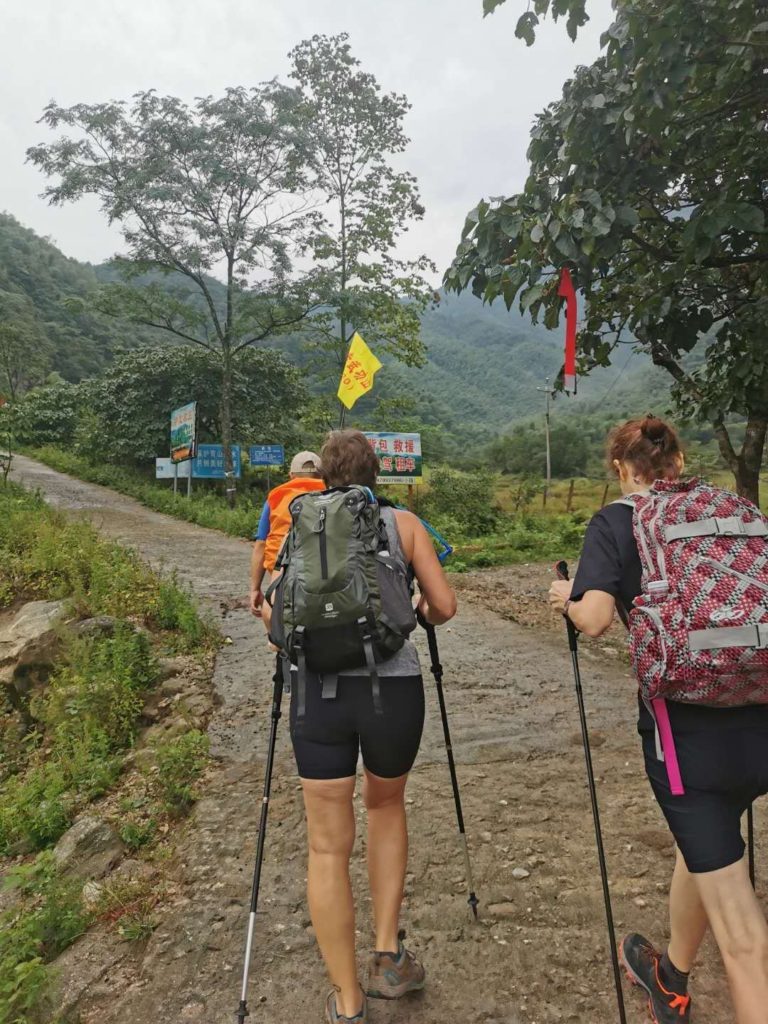
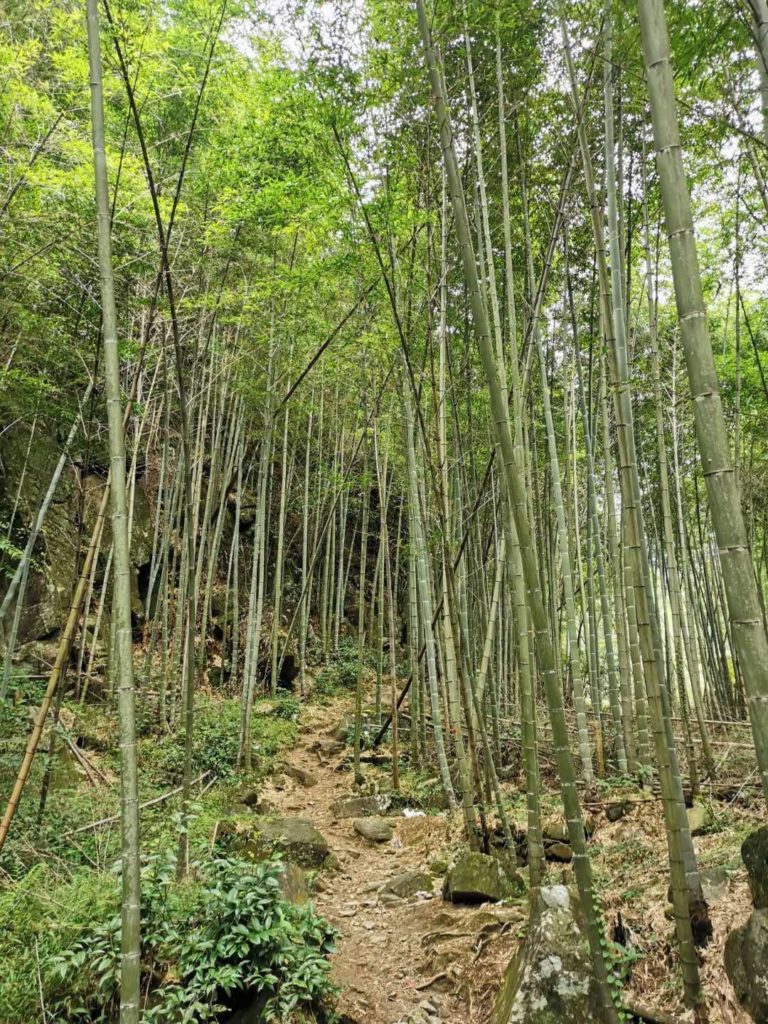
We hiked 2 hours through the bamboo forest.

As we climbed higher it began to change to alpine forest then alpine meadows.

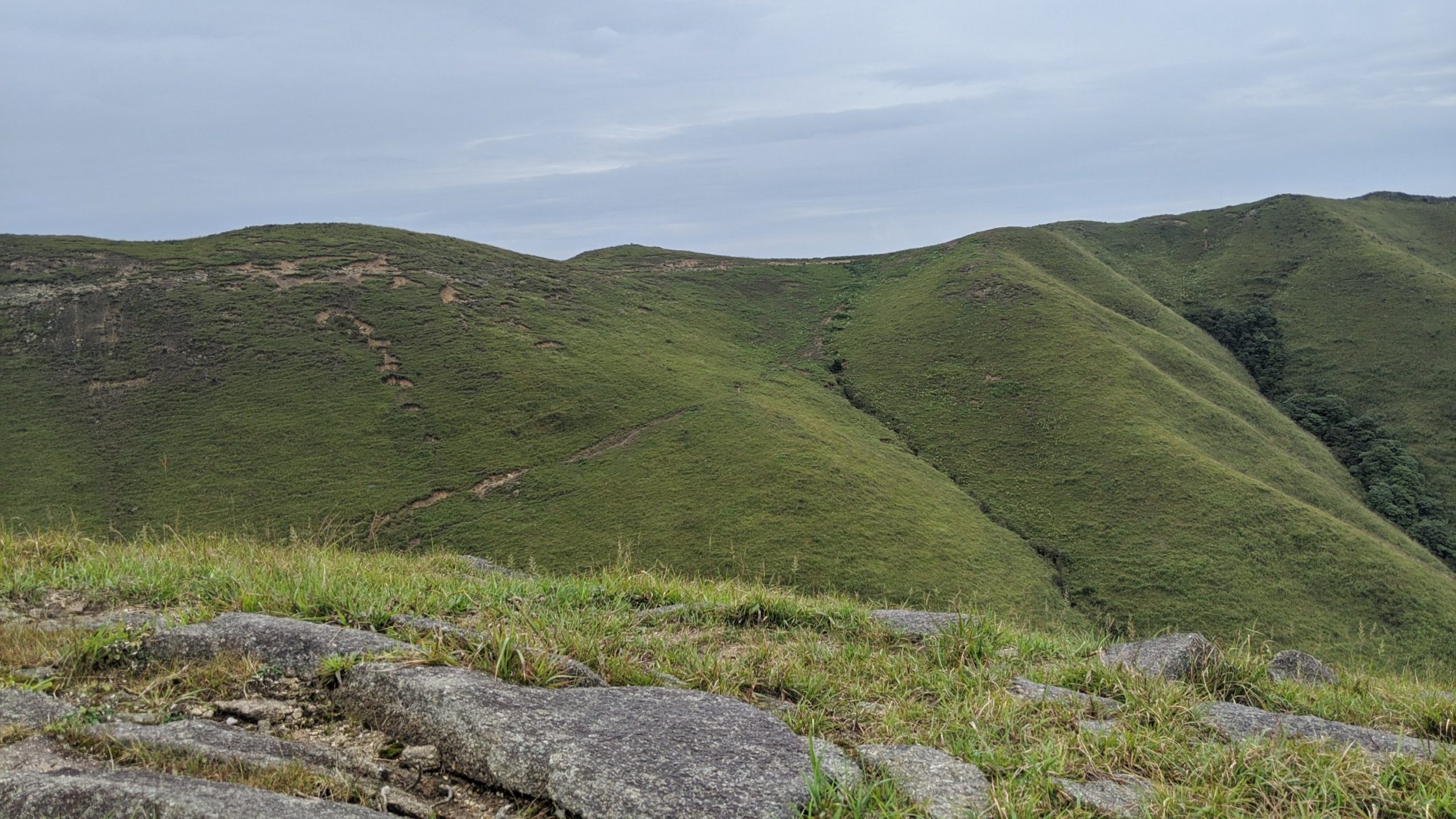
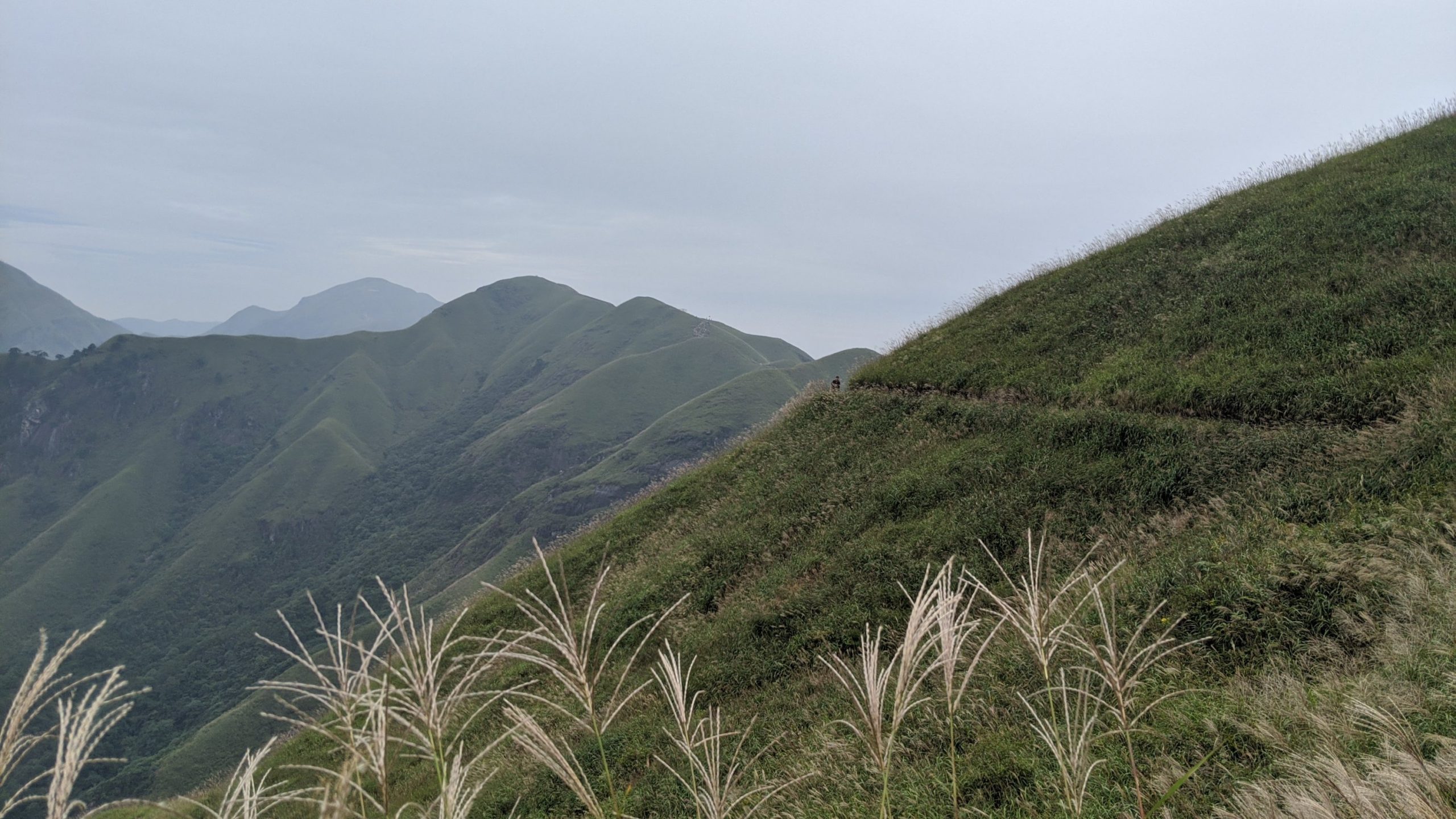
Eventually we emerged on the alpine meadows. We walked up and down through the meadows to where we stopped for lunch.

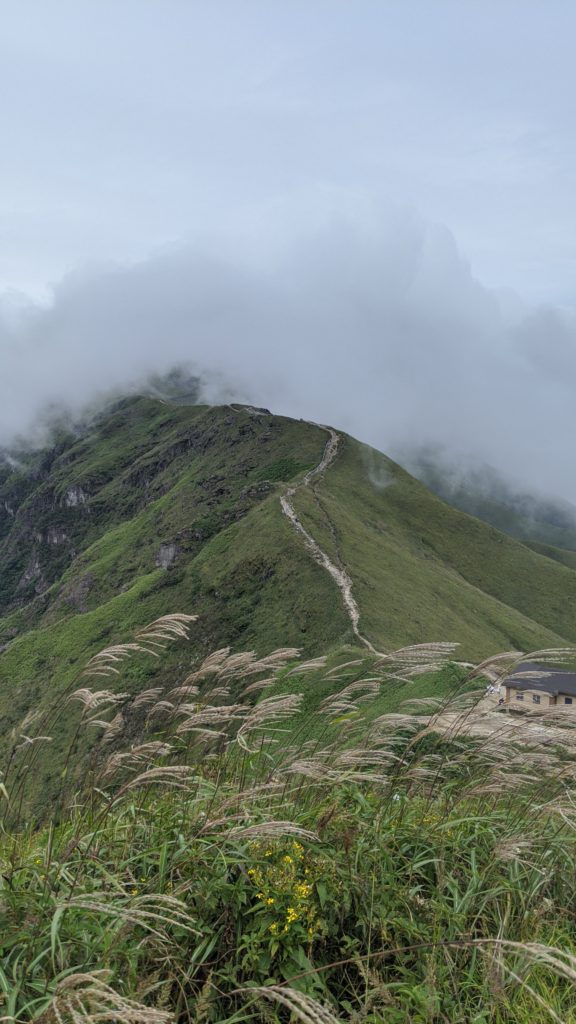
A few more hours of hiking up and down through the hills we reached the golden peak. Here you are surrounded by fields of tall grass that turn golden in autumn. They were just starting to turn but not at their full colour yet.

There were also quite a few temples at the top including this Taoist temple called the fairy temple.

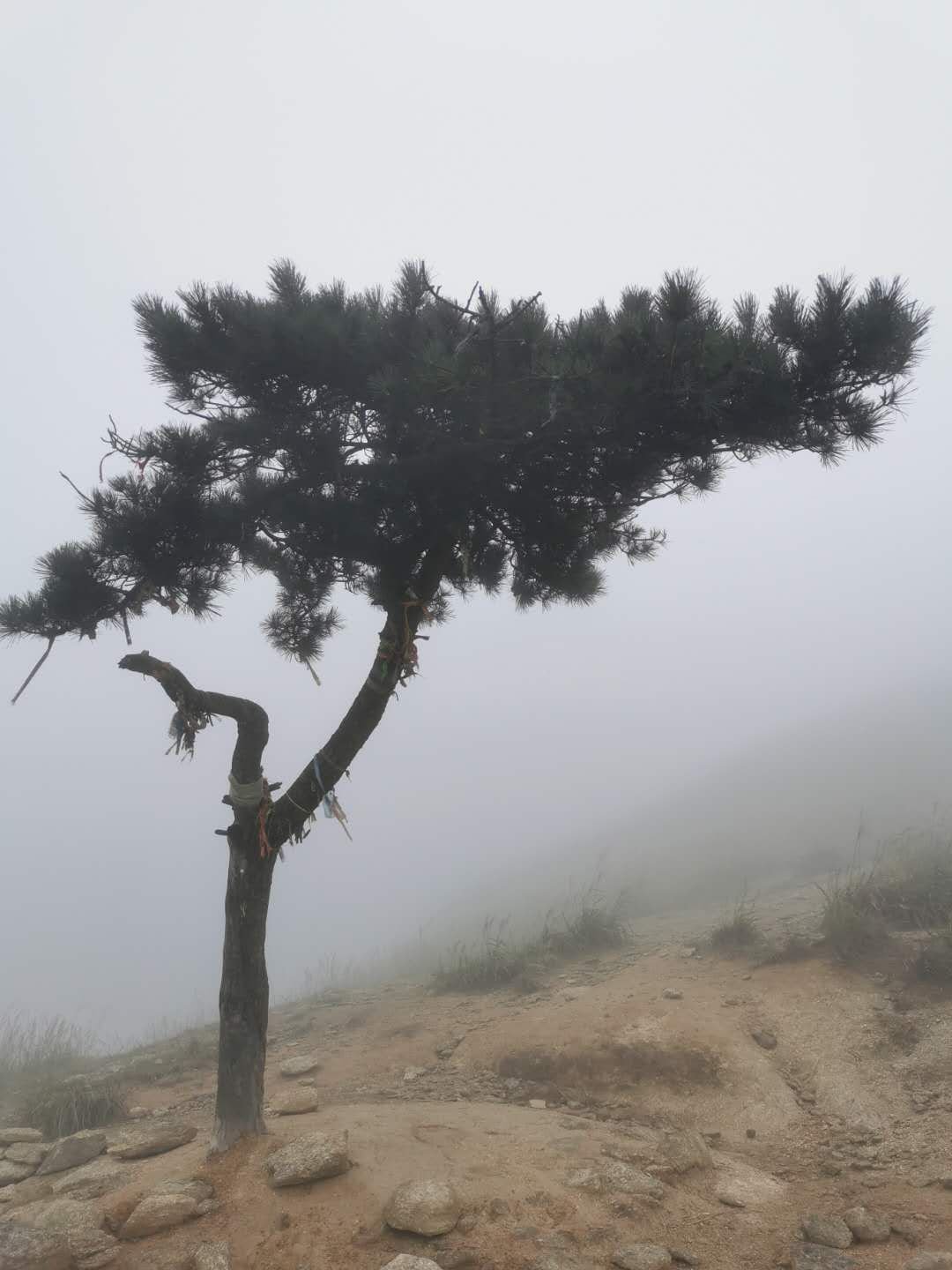
While we were hiking the weather changed dramatically with a lot of wind, some rain, and the clouds taking over. Every turn brought different weather conditions.

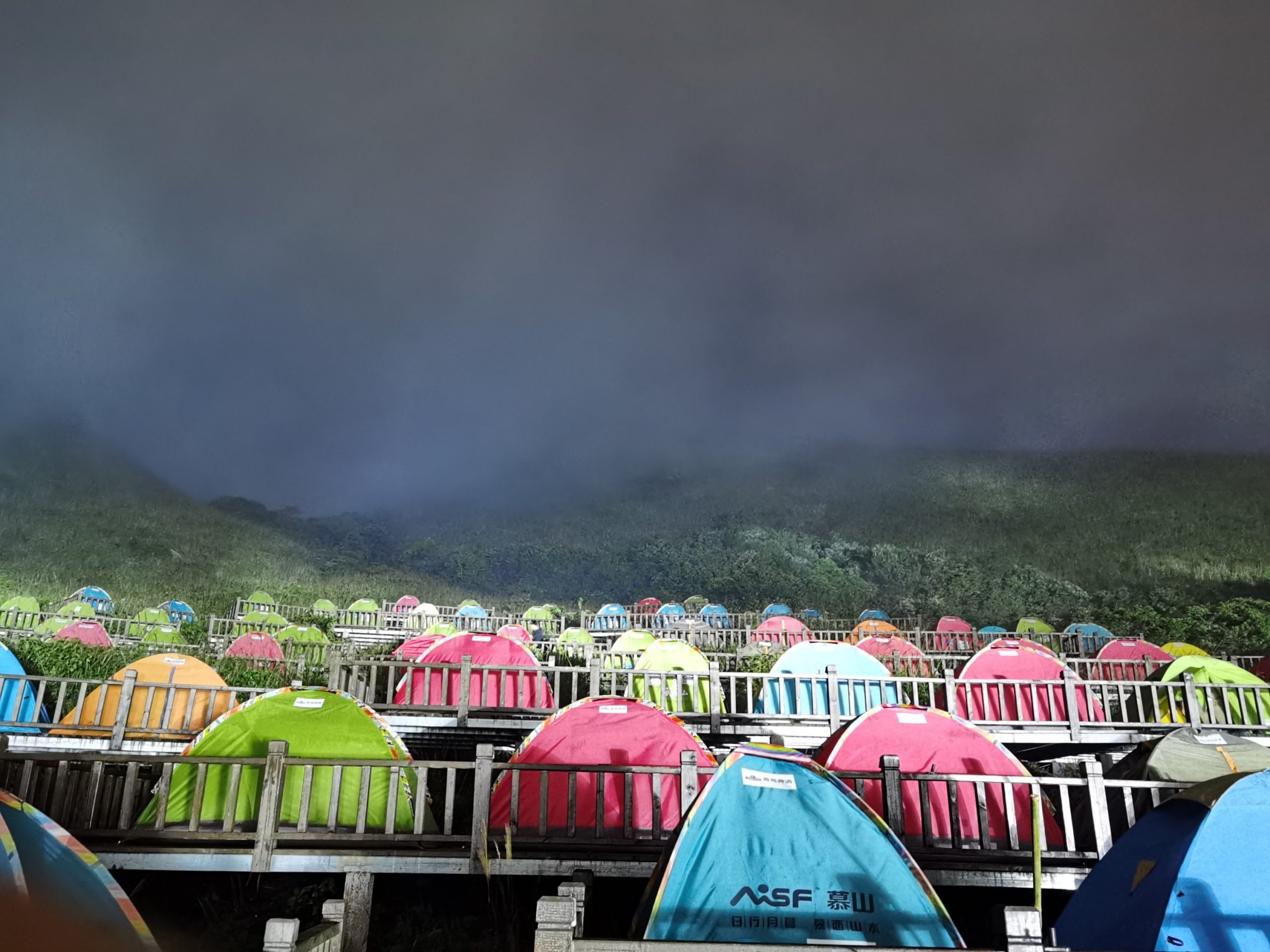
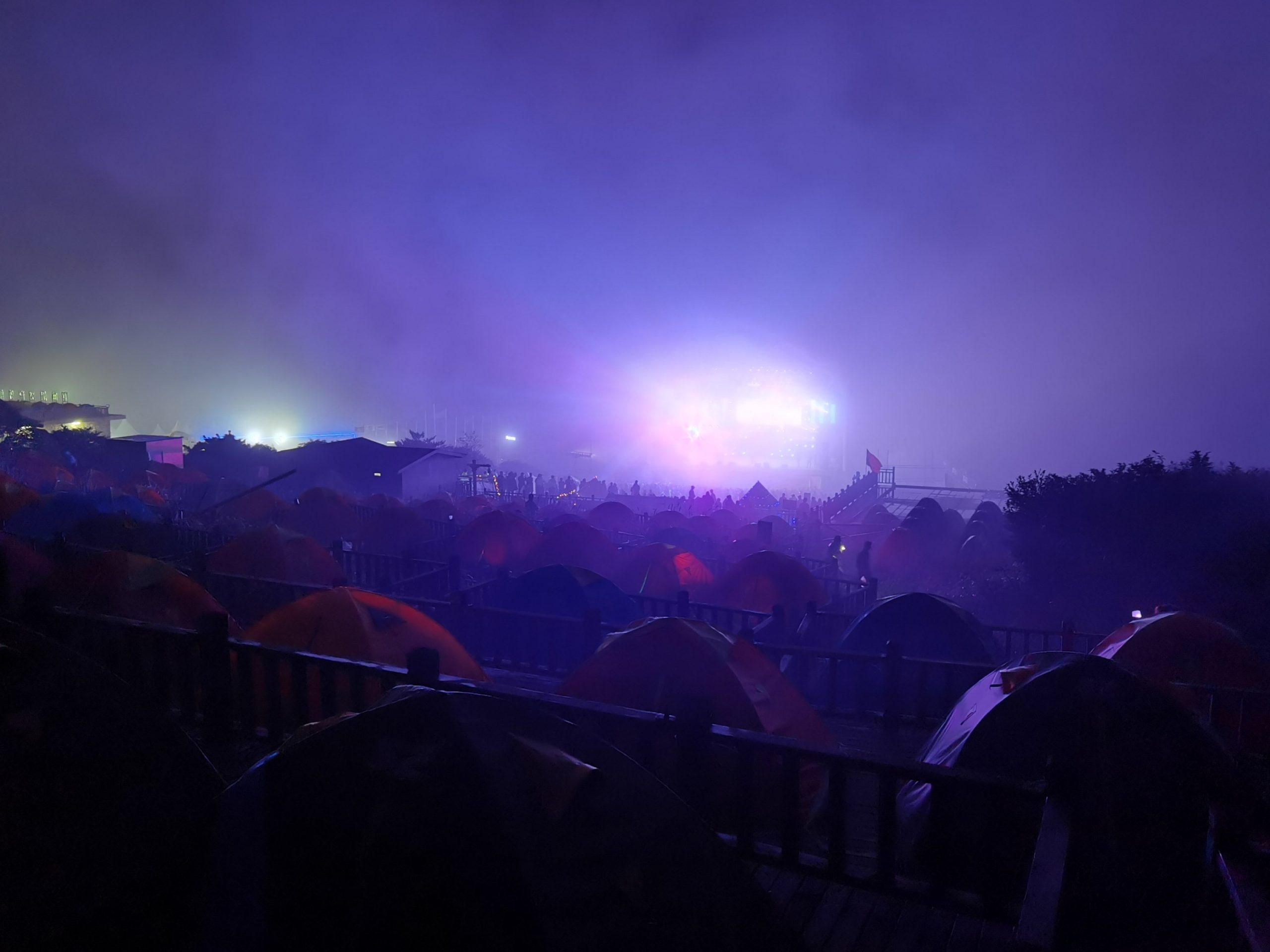
Another hour of hiking and we arrived at the tents we were to stay for the night. An earlier festival had been rescheduled for this weekend.

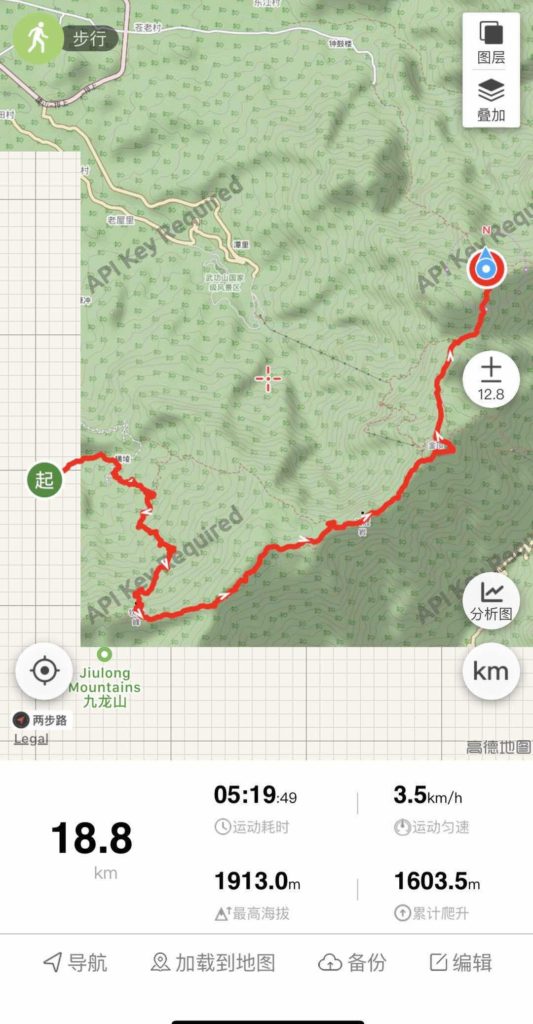
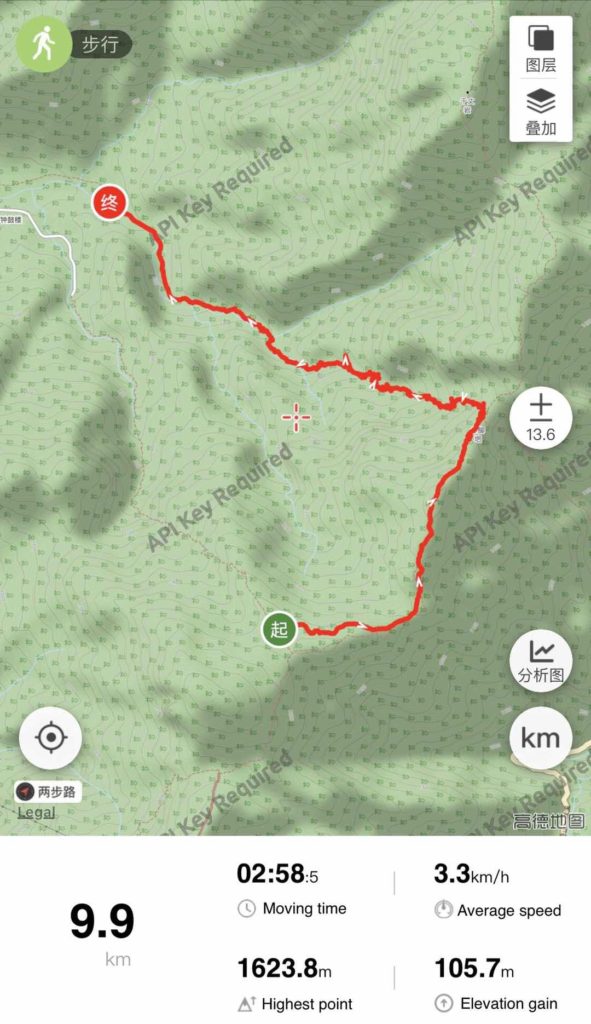
We hiked 18.8 km and covered much elevation. There were rough shower and bathroom facilities but grateful to have any!

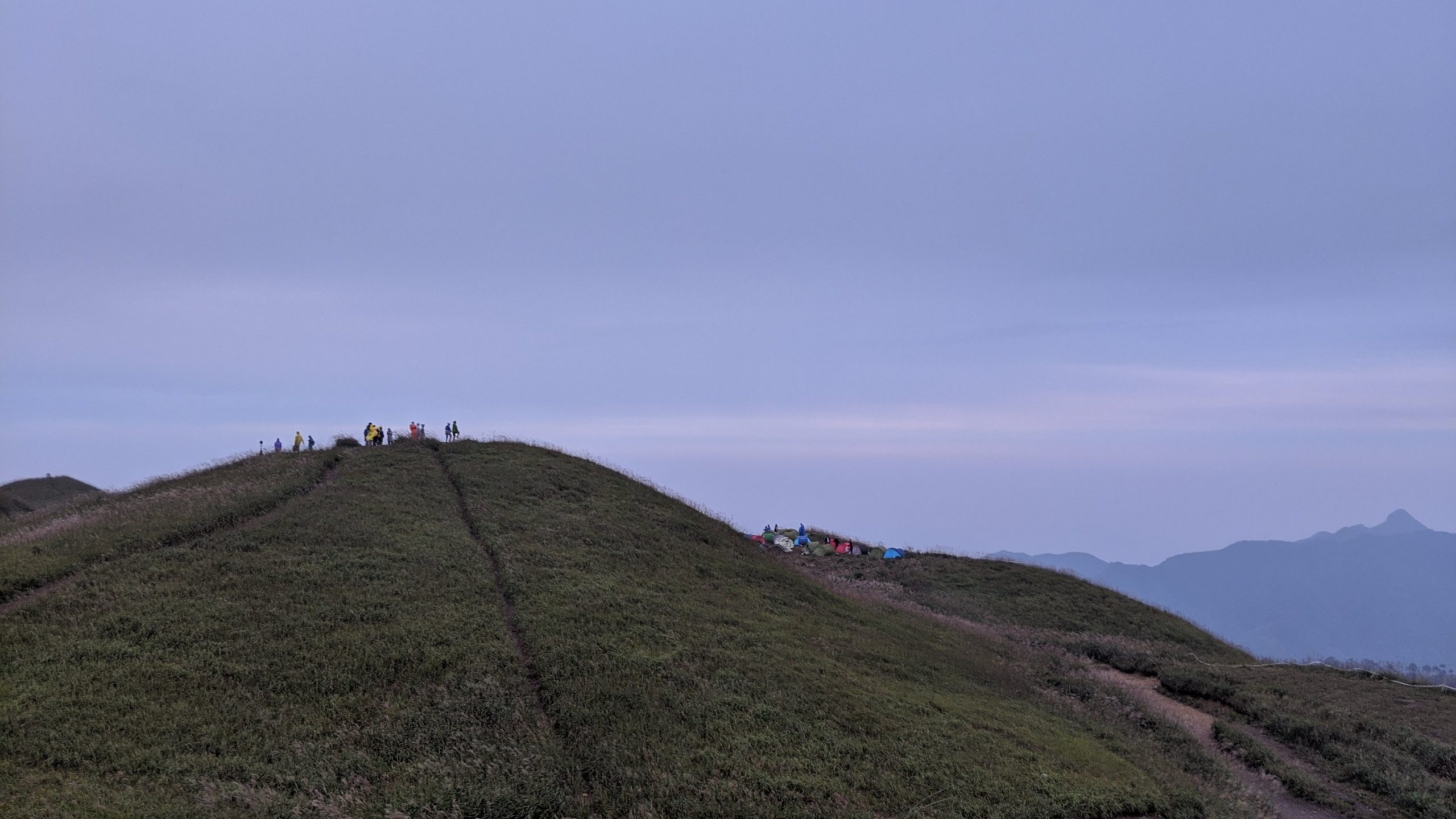
The next morning some of us tried to capture sunrise but there were a lot of clouds.

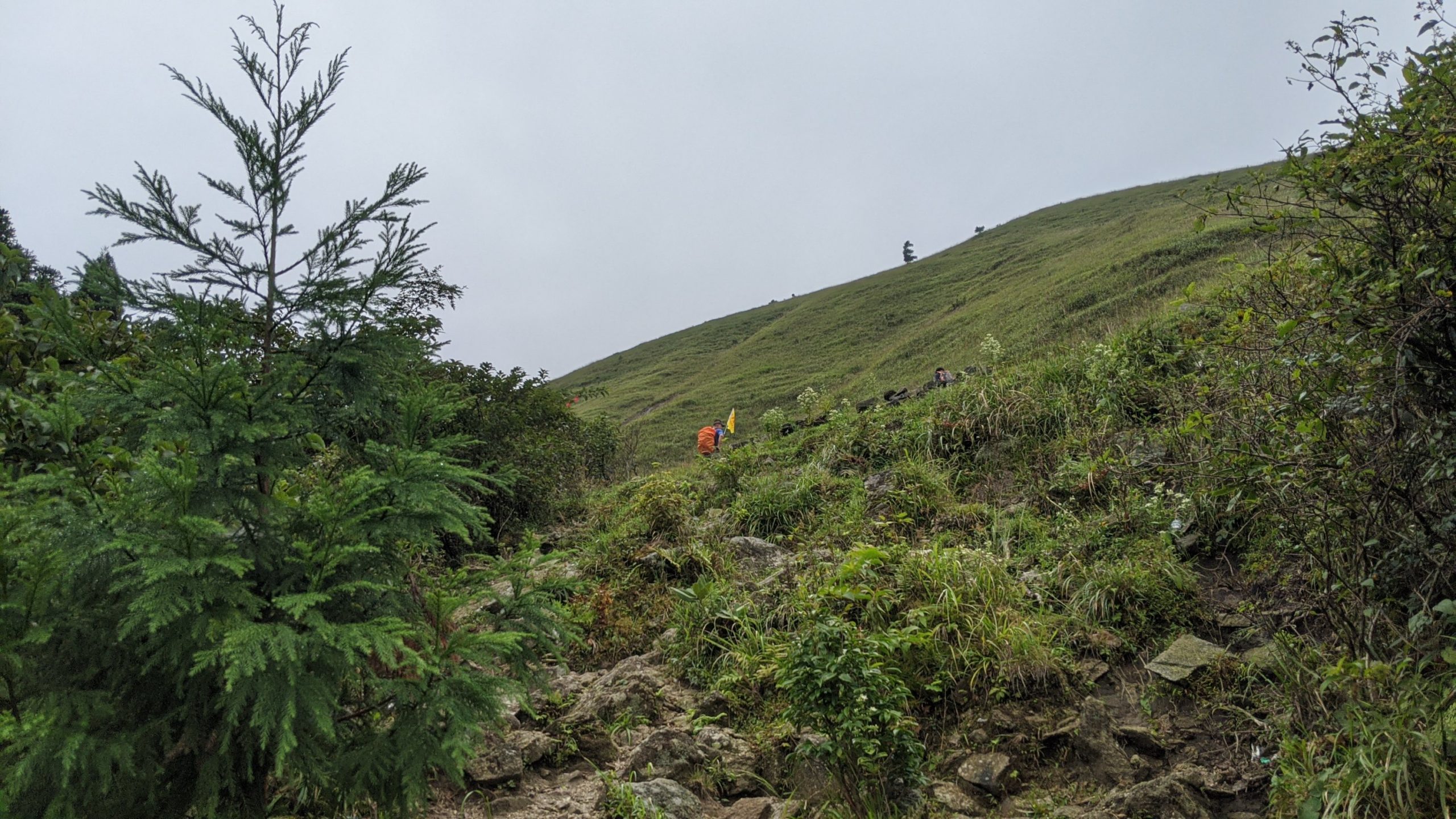
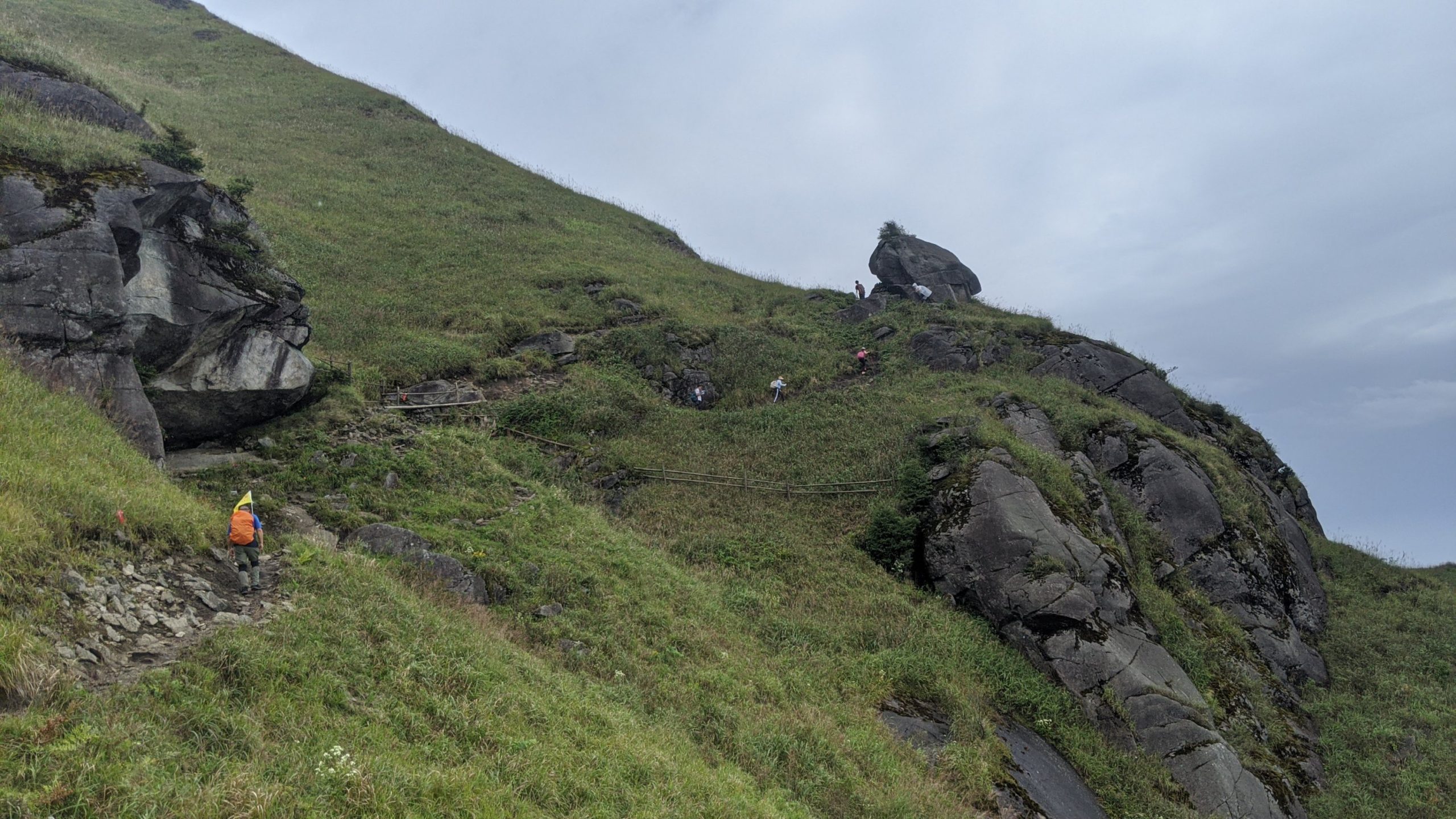
We had breakfast, returned our sleeping bags and mats then started the hike down. Downhill is not my favourite (my knees are starting to hate that). There were many very steep sections in the meadows to get through.

The hill was called desperation hill. It spanned 1300 meters and we were all pretty desperate just to get to the bottom.

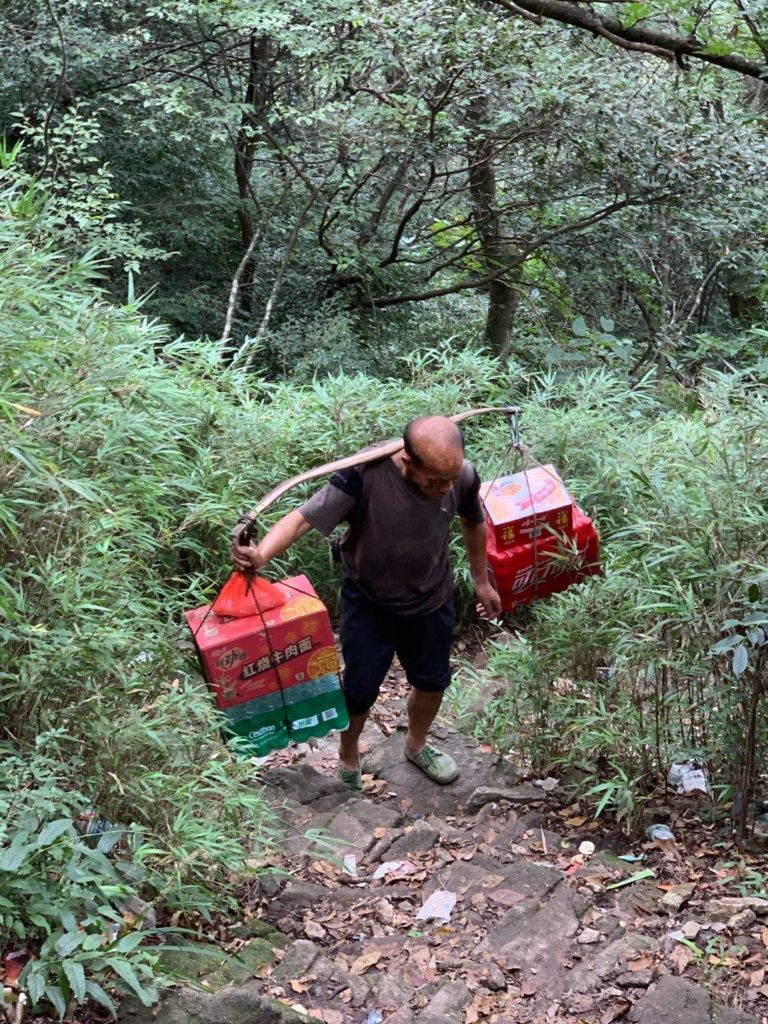
There were many rocks to maneuver over. Just when I thought it was so tough were saw this man carrying the drinks they sell near the peak. Carrying that much weight is a feat.

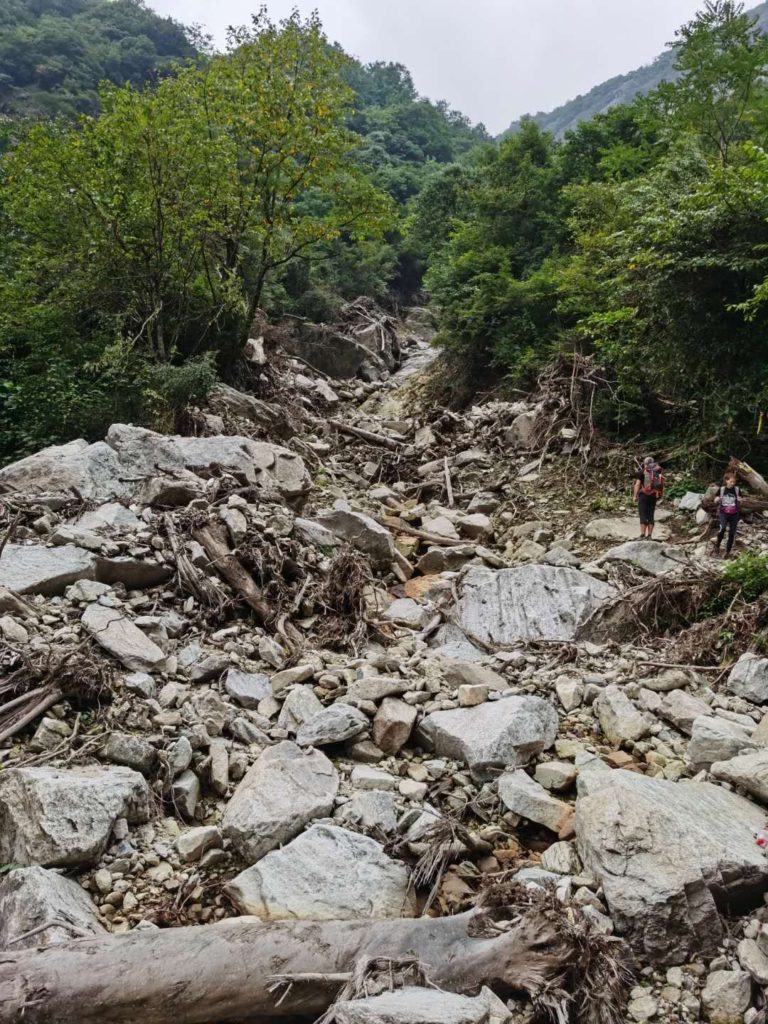
A landslide from 4 months ago destroyed much of the pathway and we had to find our way over and back across the stream which was still flowing around all of the debris.

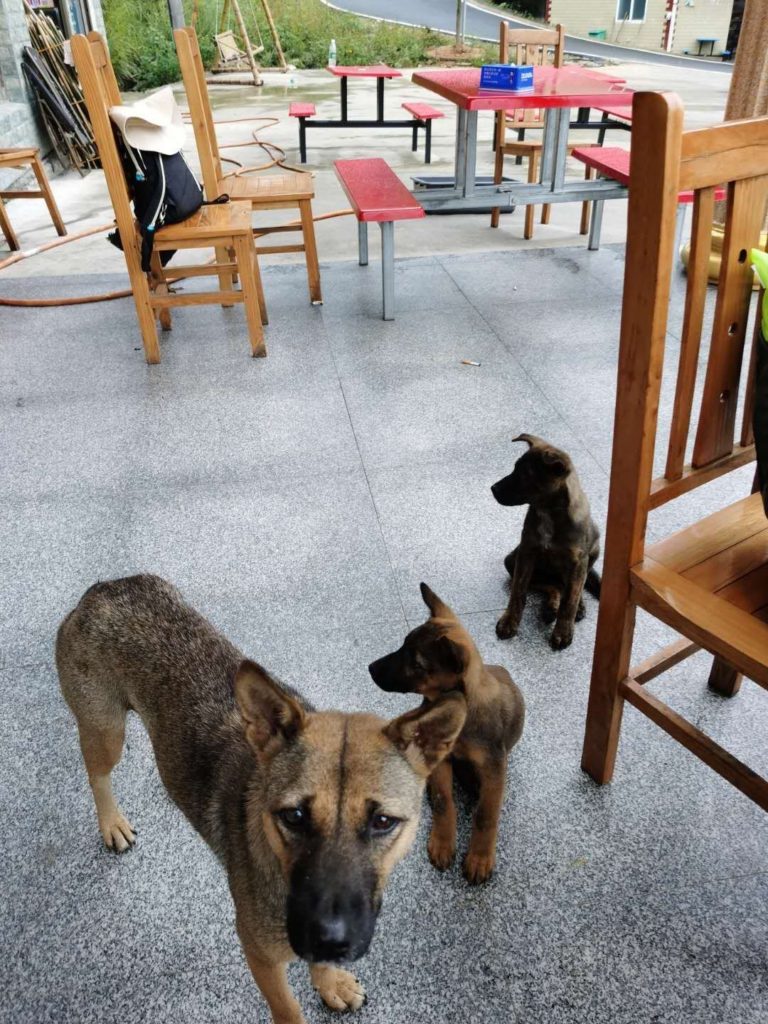
At the end, we were picked up by a car and driven to the hotel we stayed in the first night. A nice shower, late lunch, and playing with the puppies that resided there was a nice end of the day before taking the train back.

Where to stay in Xi’an

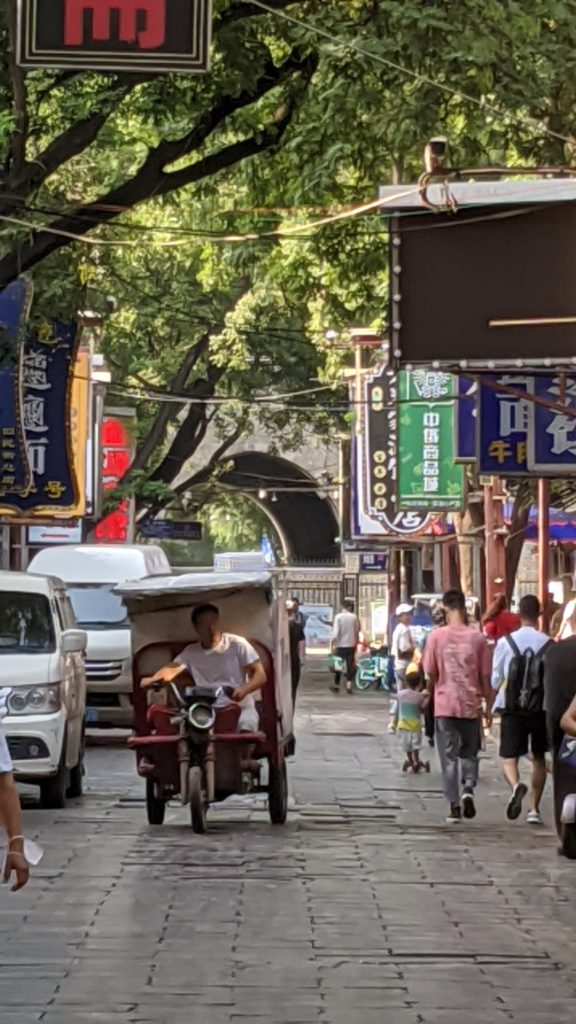
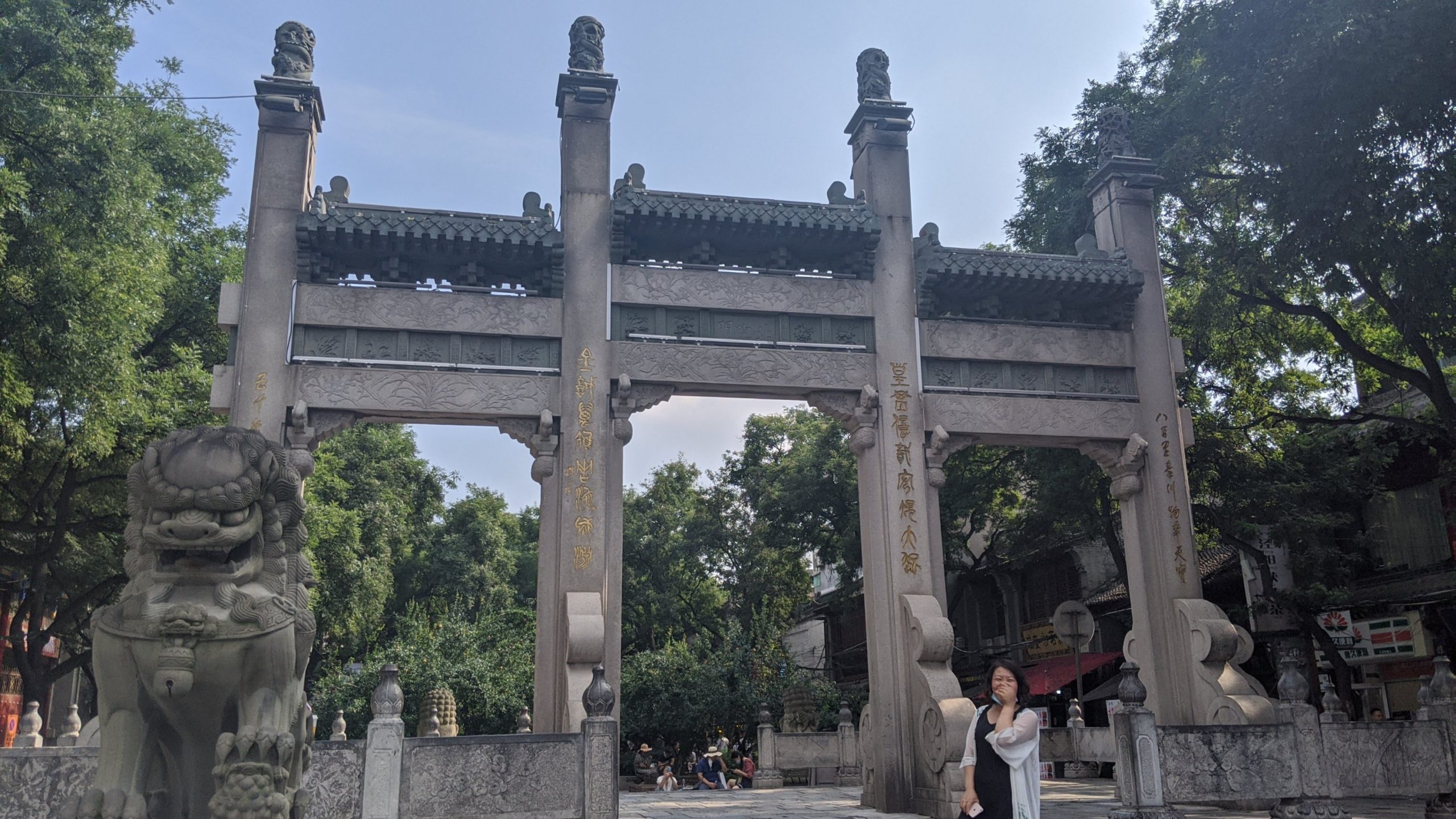
If you visit Xi’an, you will want to stay within the city wall in the old city. Almost in the middle is where we stayed, just a few minutes walk to the Muslim quarter and great food streets.

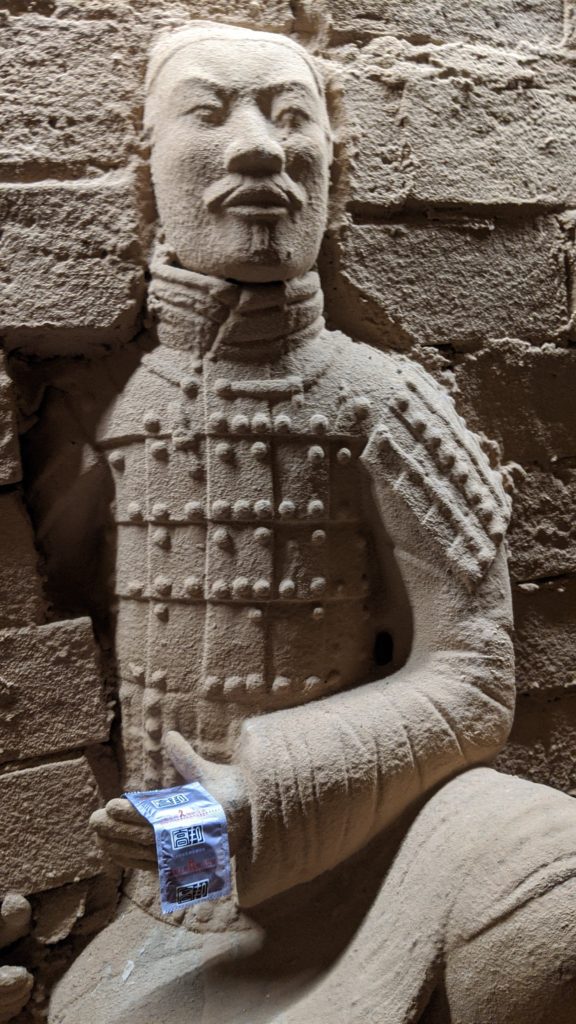
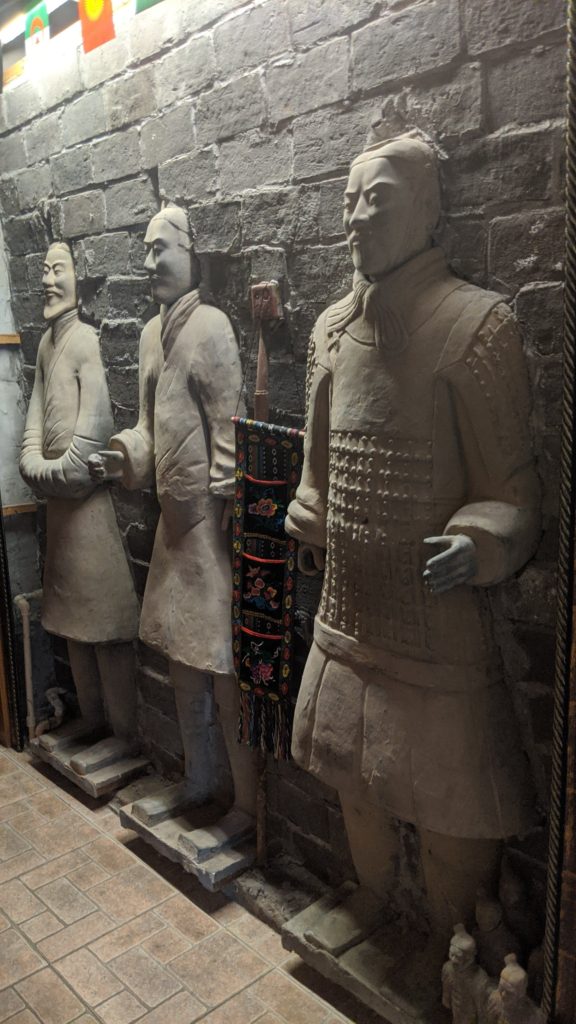
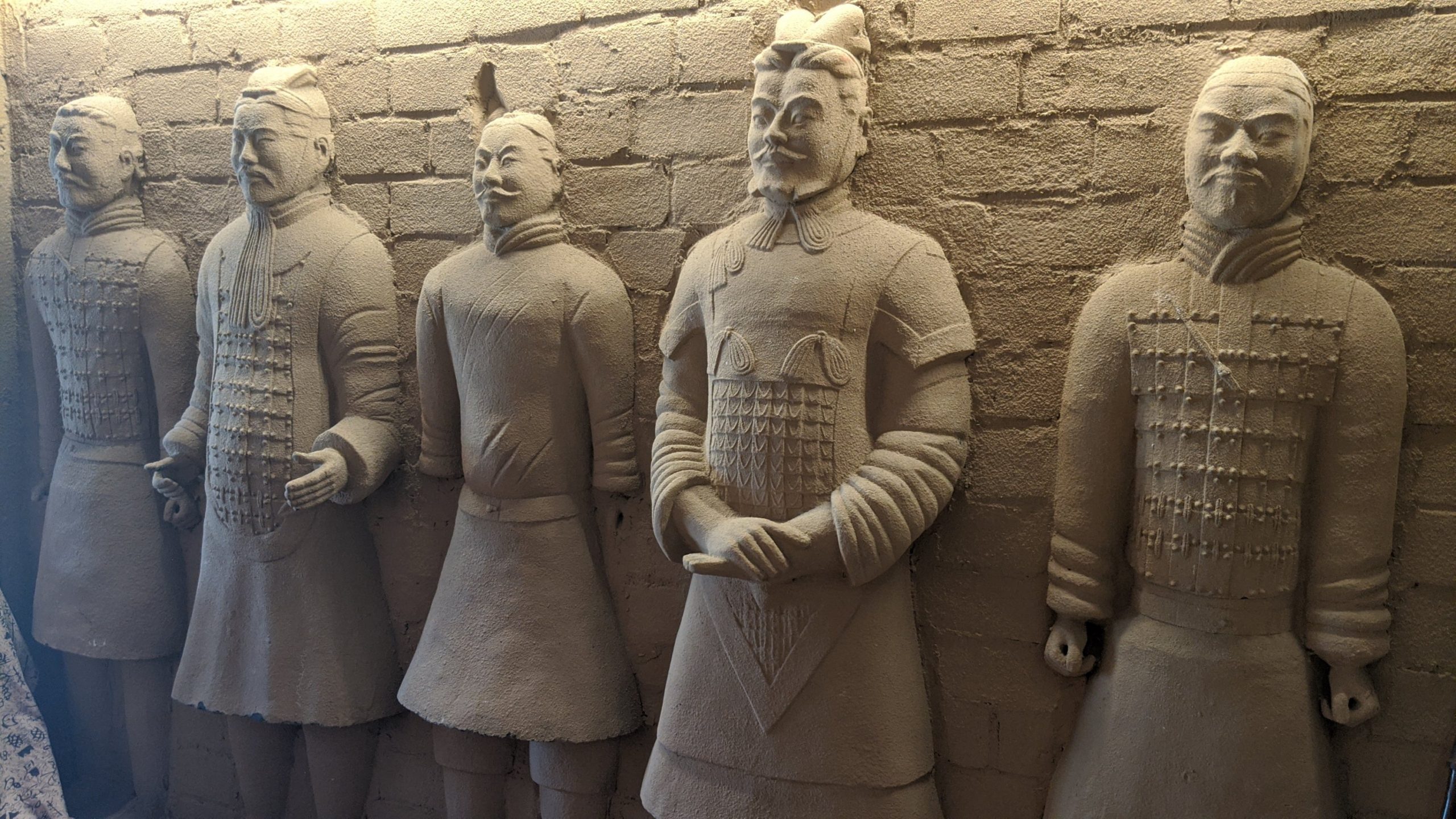
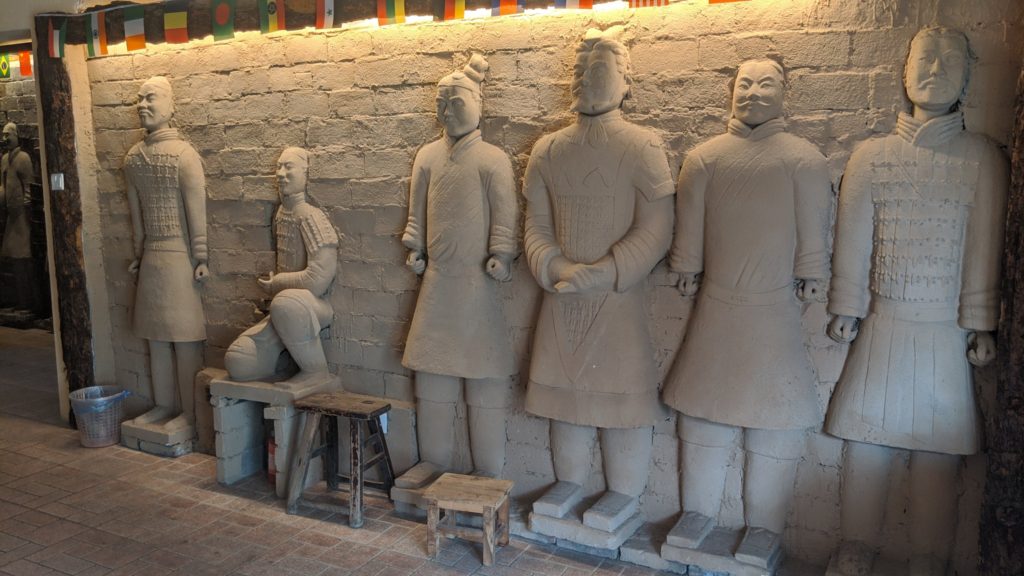
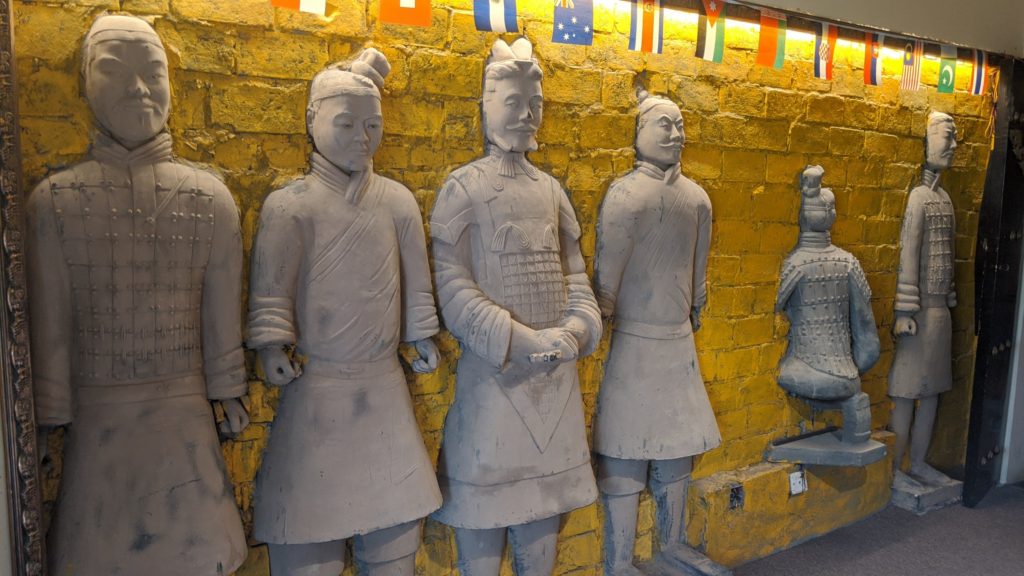
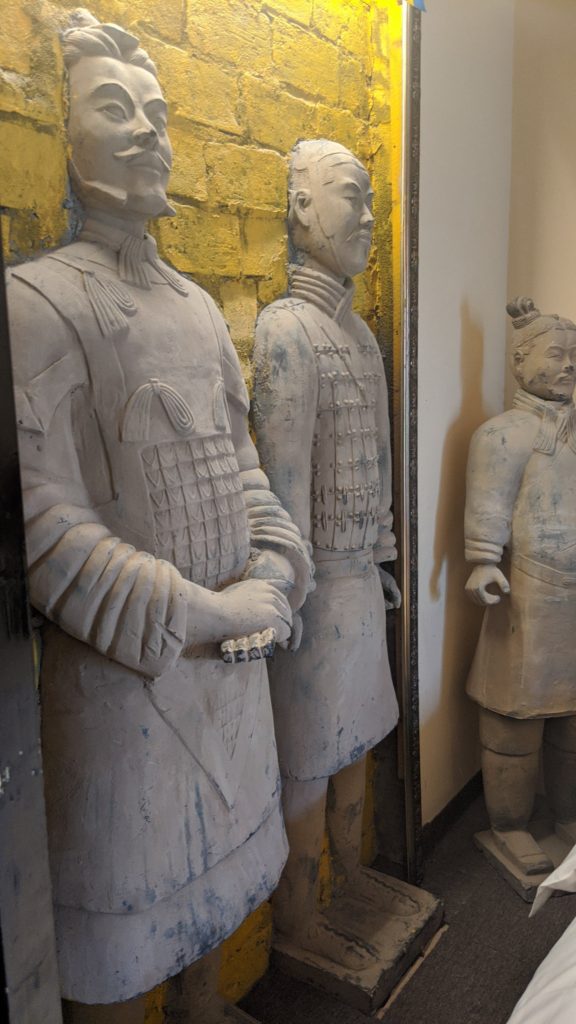
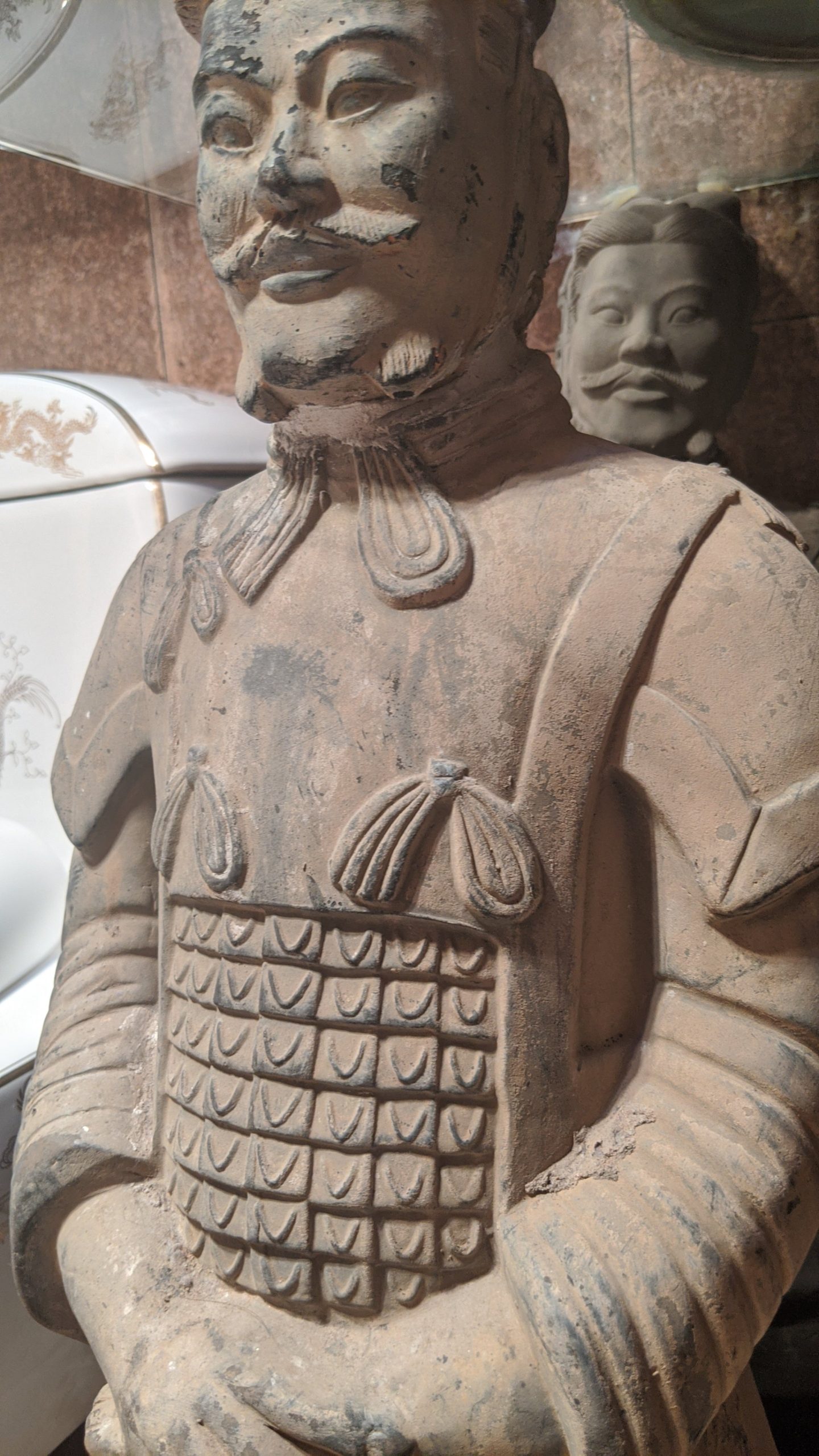
Clarence Guo is a wonderful person who owns the apartment. He not only outfitted it with terracotta warriors statues which makes for a wonderful stay, but also will give a tour for you as well. A small group tour from a person who has done this for the last 30 years and lived here all his life was incredible. We saw other things we may not have seen otherwise.

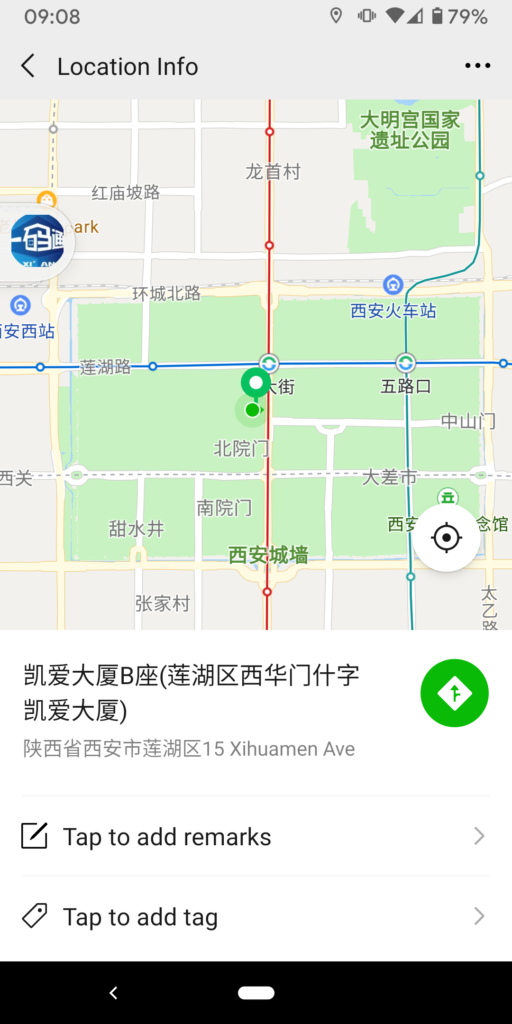
Here is a map of the location of the apartment.

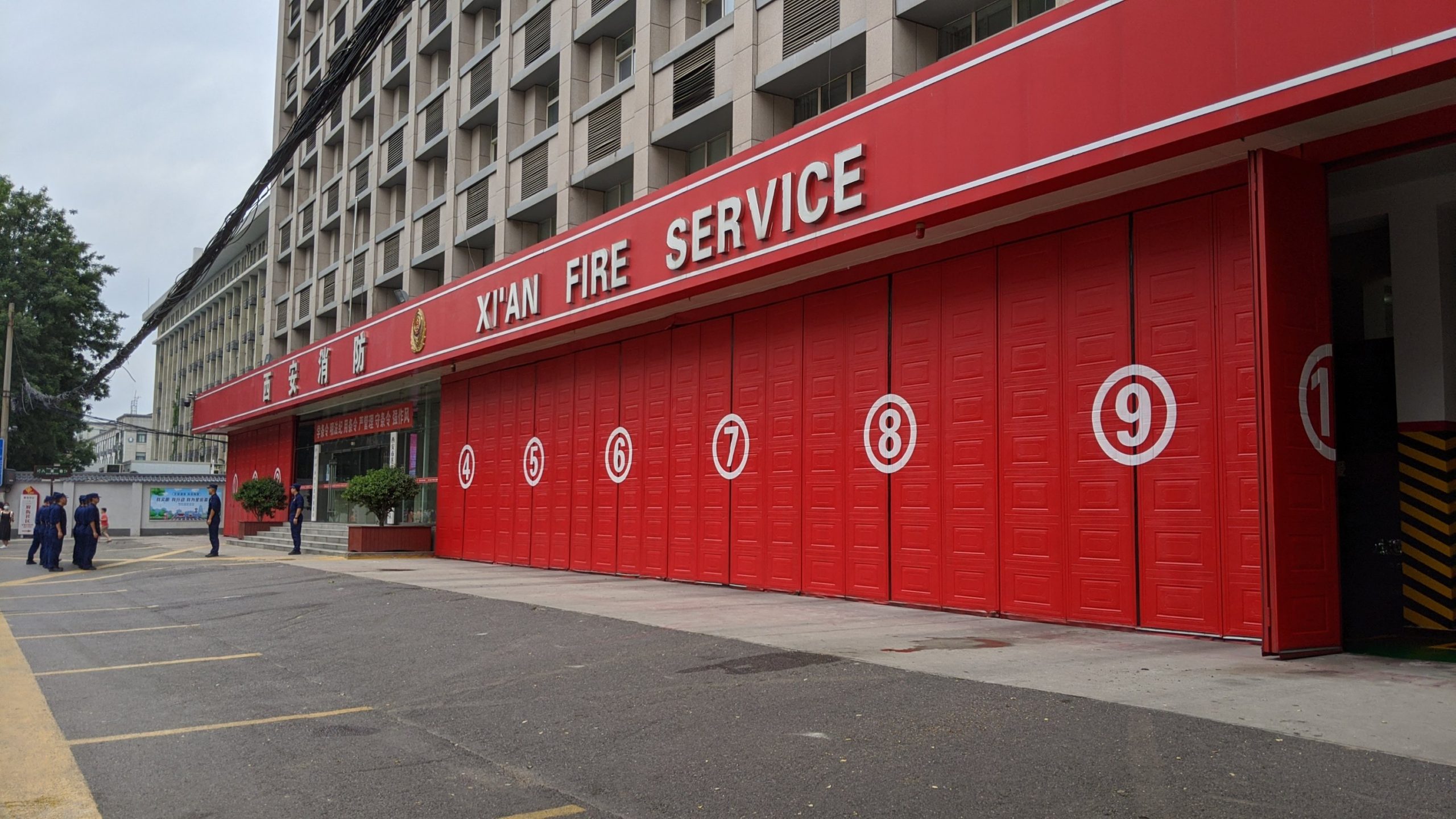
This fire station was an important landmark to know where you were facing. The apartment is behind it.

The morning we left I ran 12 km towards the east wall and then down along the south and part of the west Wall before heading back.

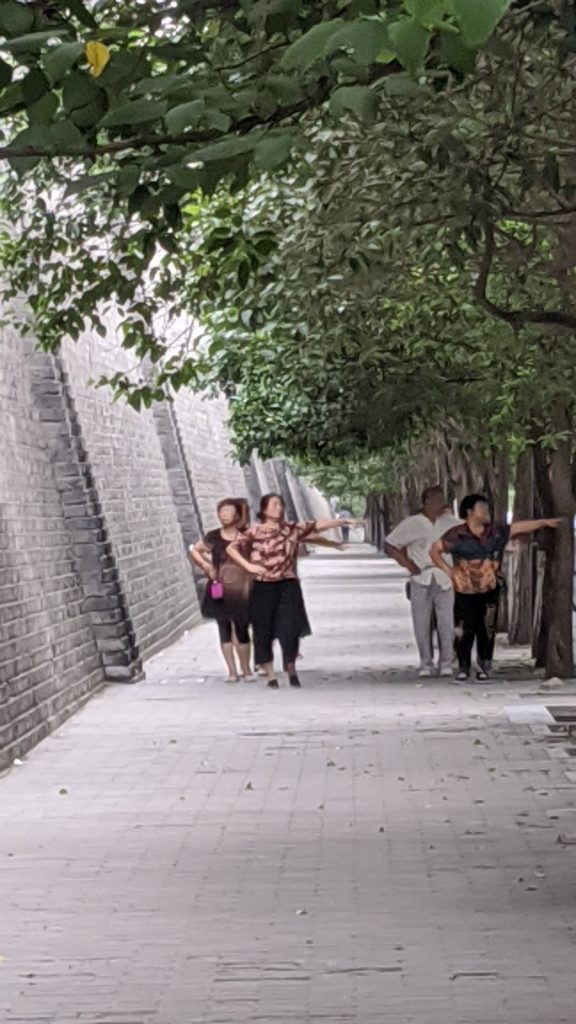
Dance exercise.
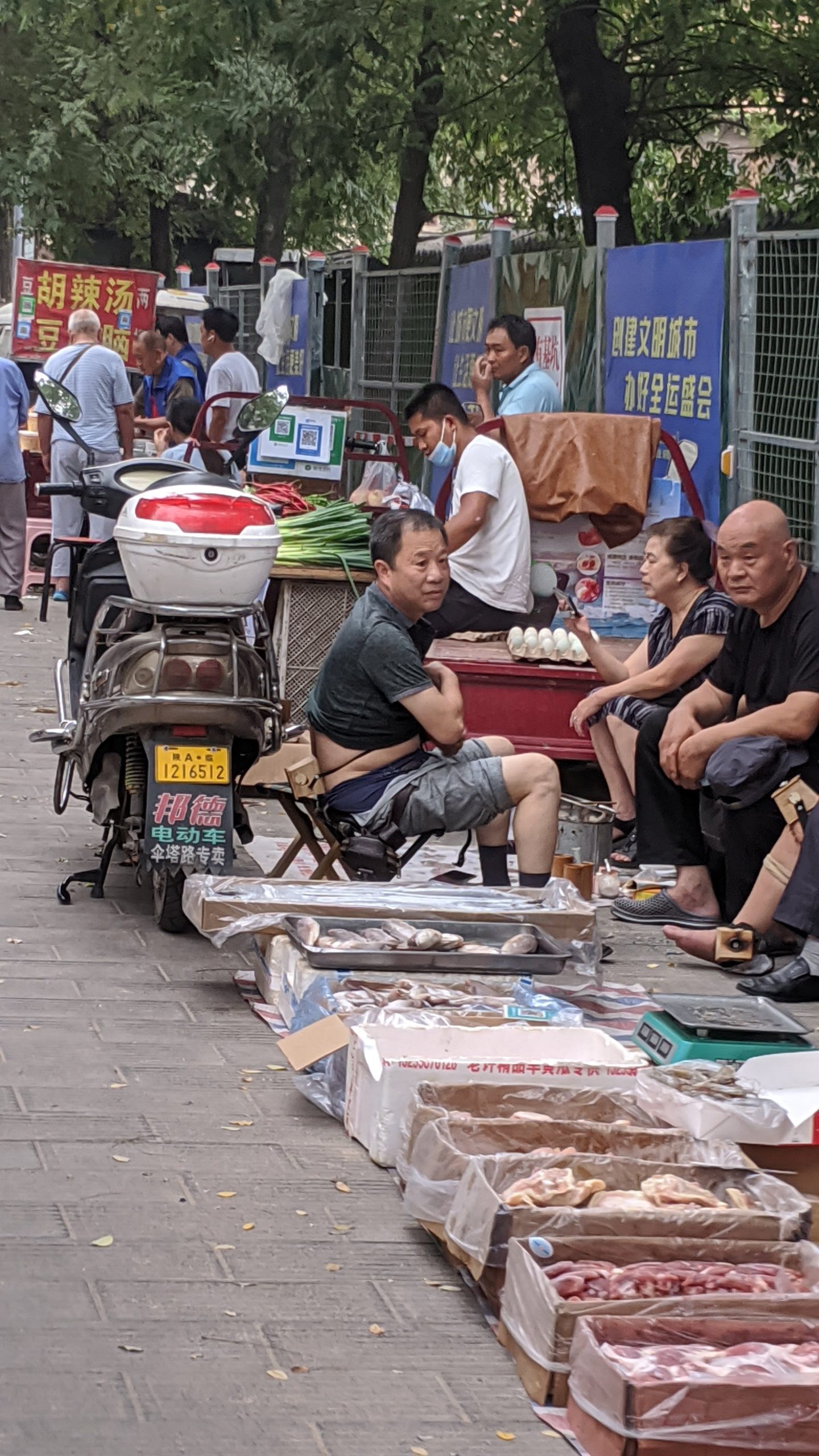
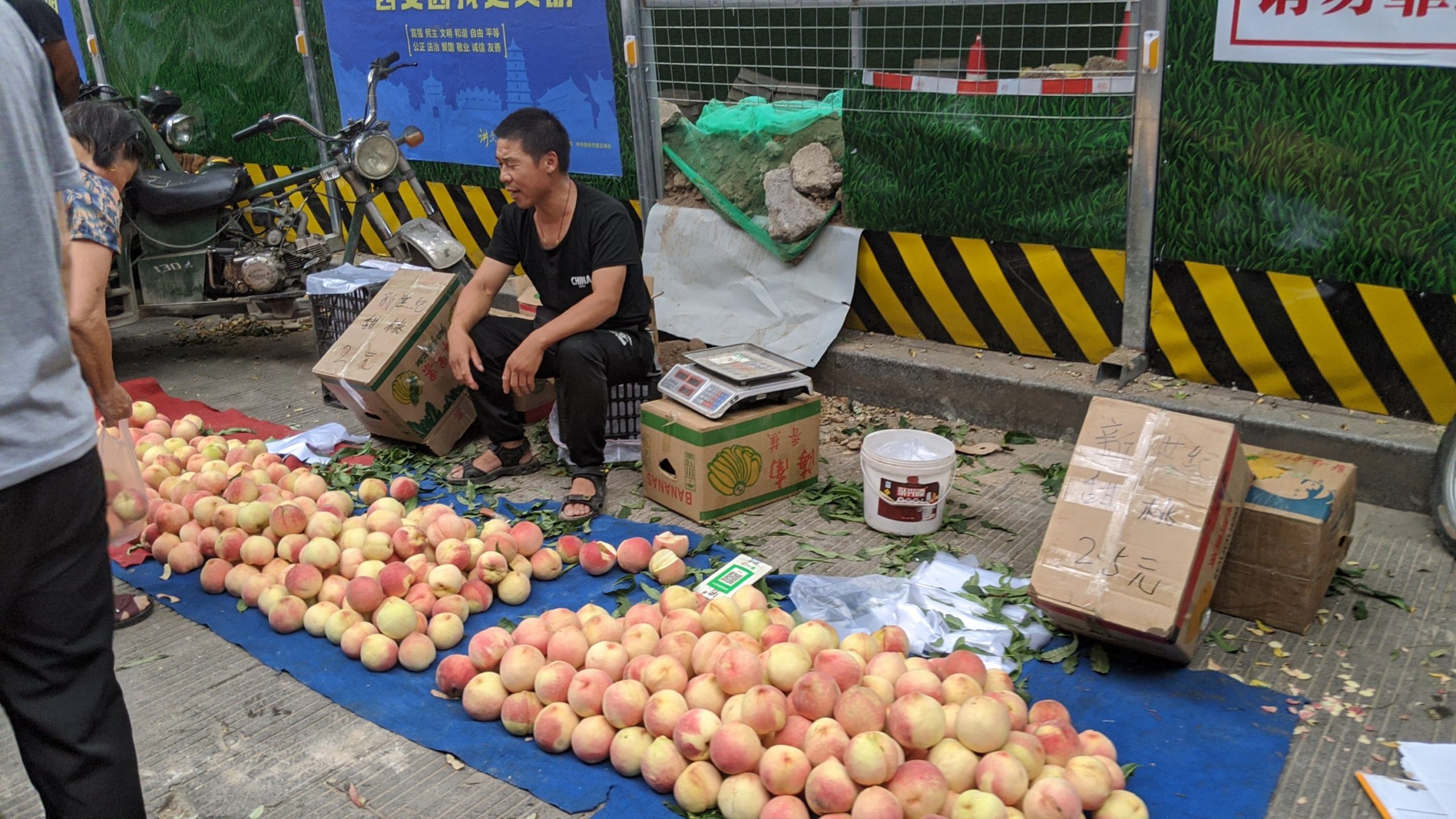
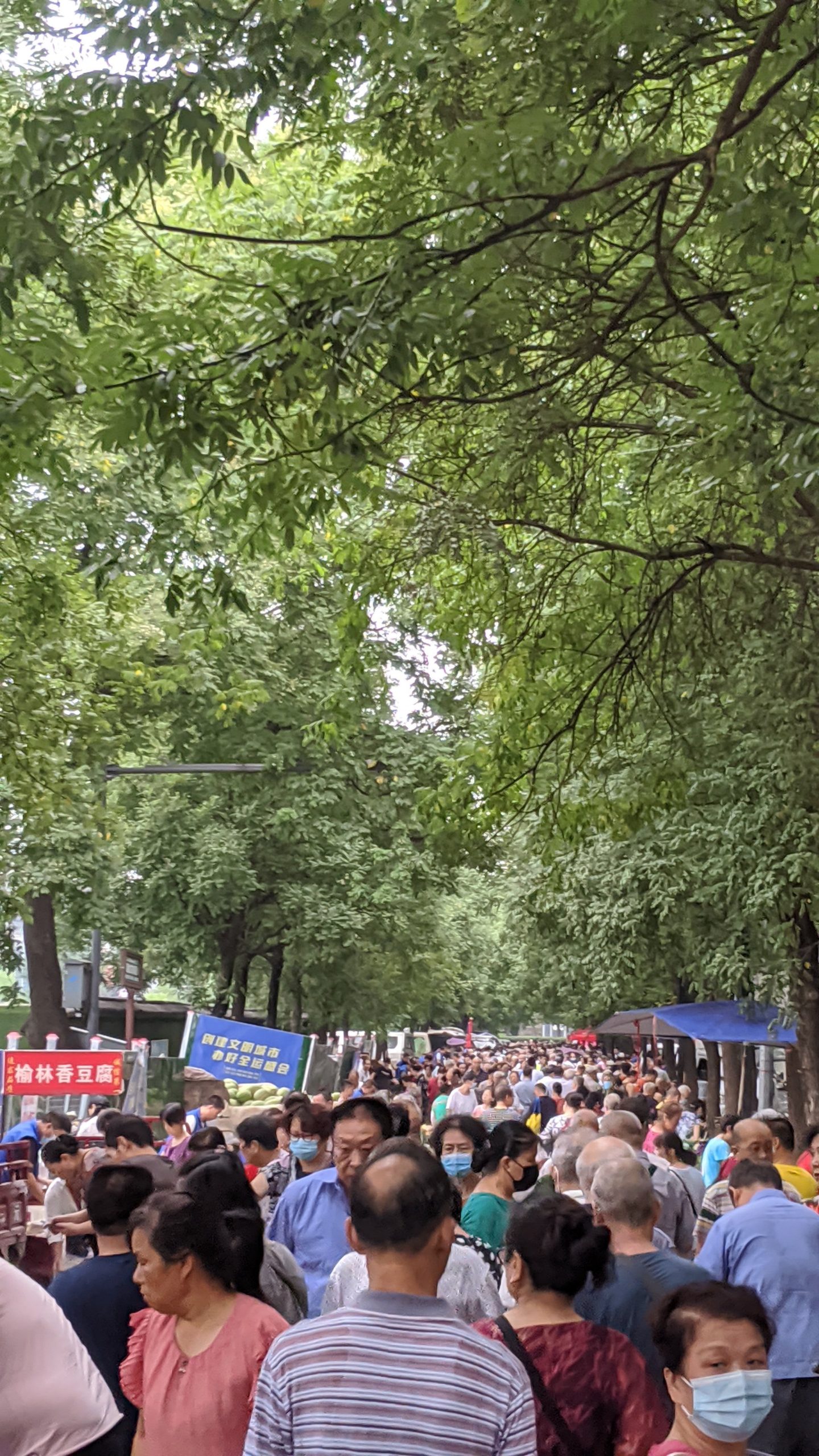
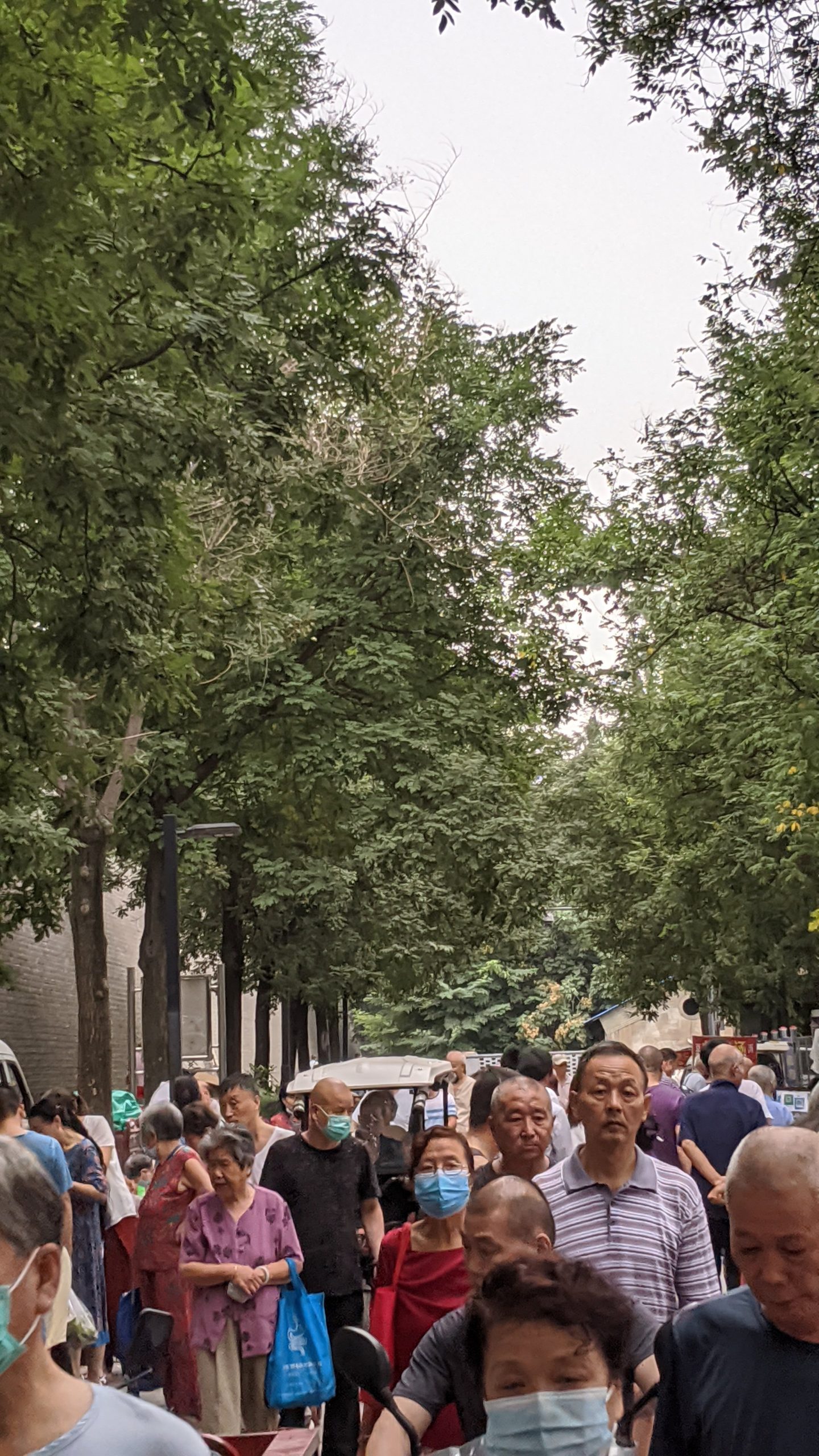
A market along the east wall which team for about 1 km.
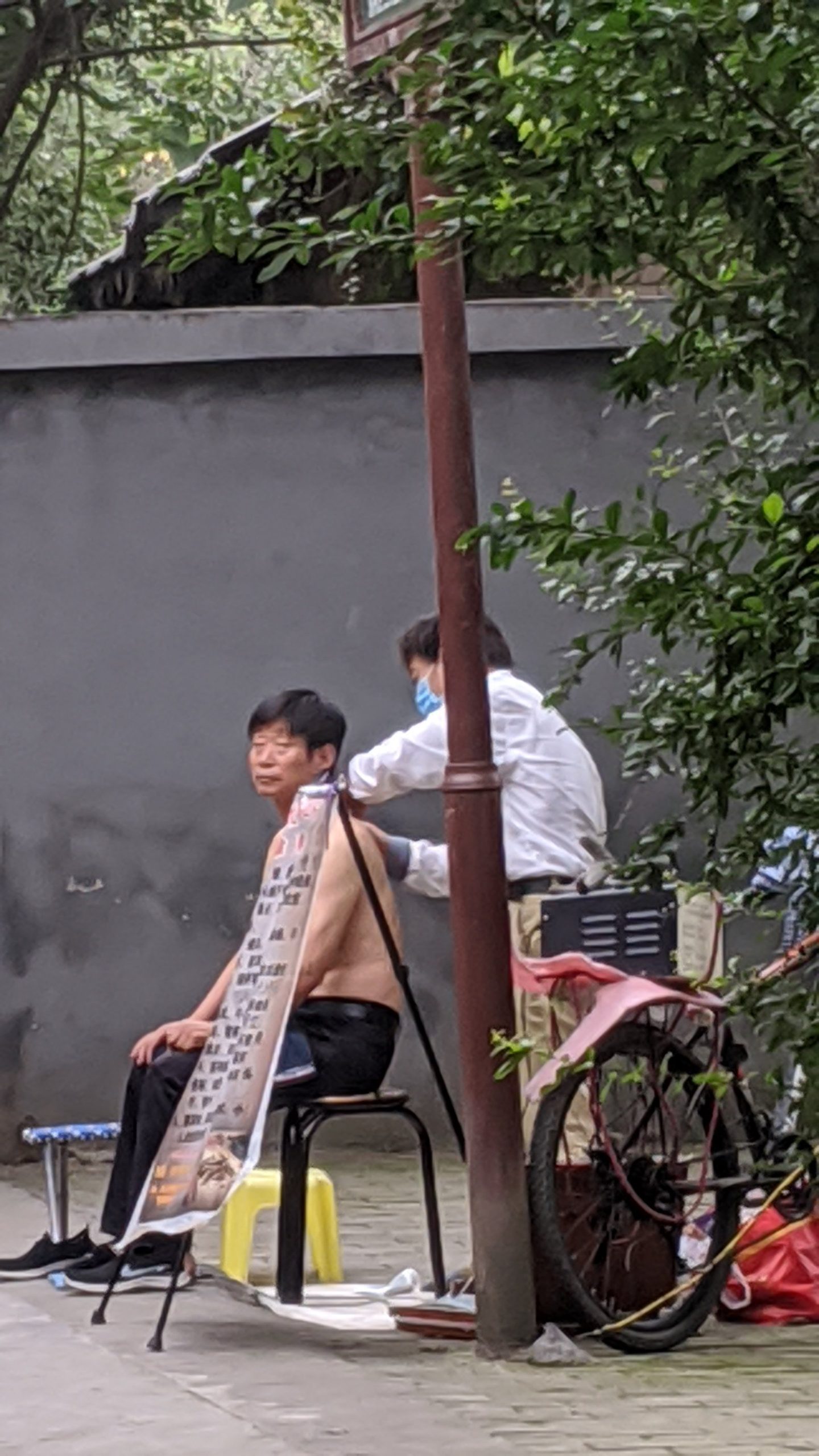
You can even get a massage or a haircut.

We could not have picked a better location than this. It was fairly inexpensive and Clarence not only have us a tour to the warriors but also took us to and from the airport. He can do other tours as well.

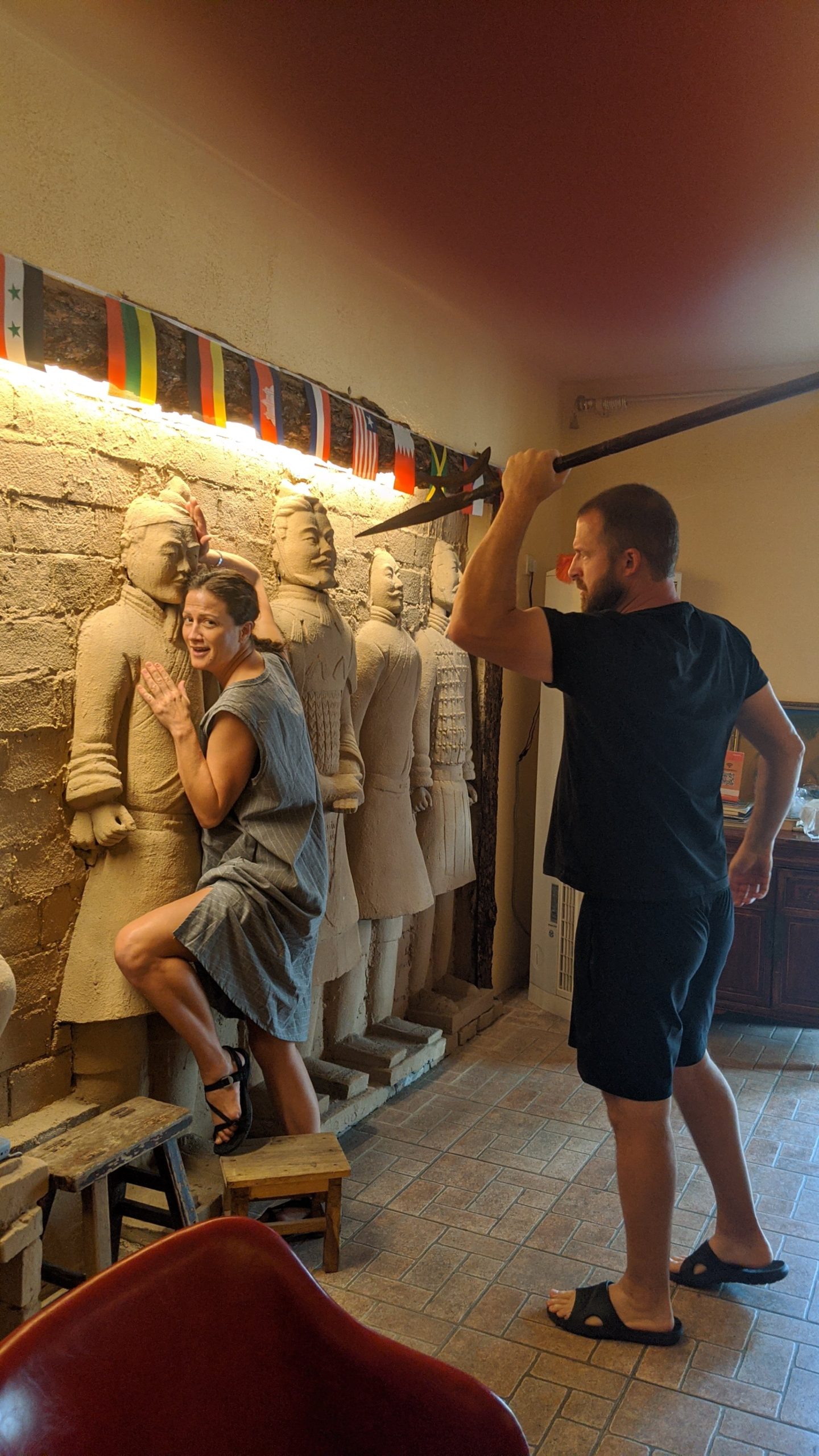
Looking for the air conditioner remote we found some condoms. I could not resist starging one more picture with the warriors.

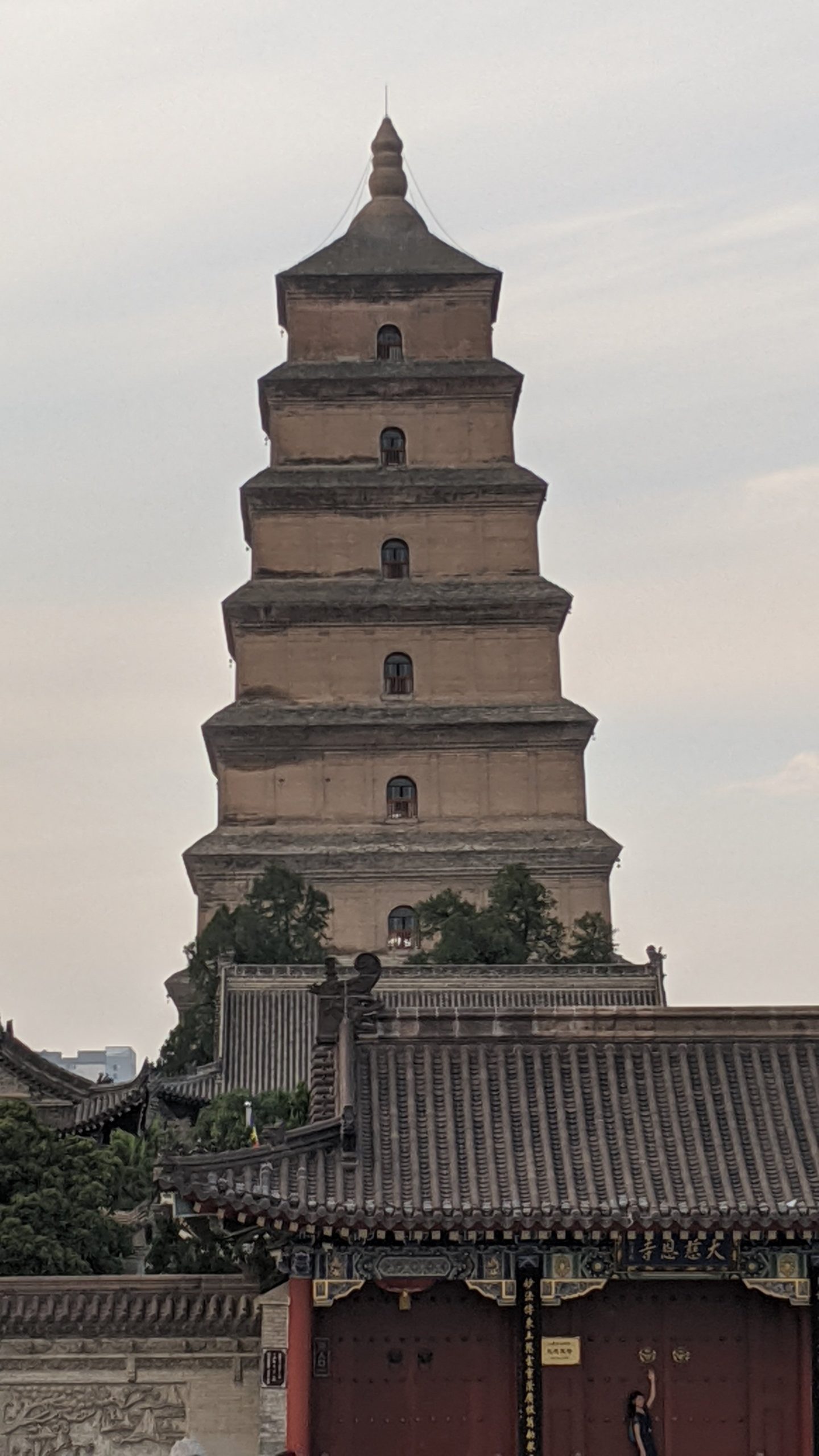
Xi’an city wall and the Big Goose Pagoda

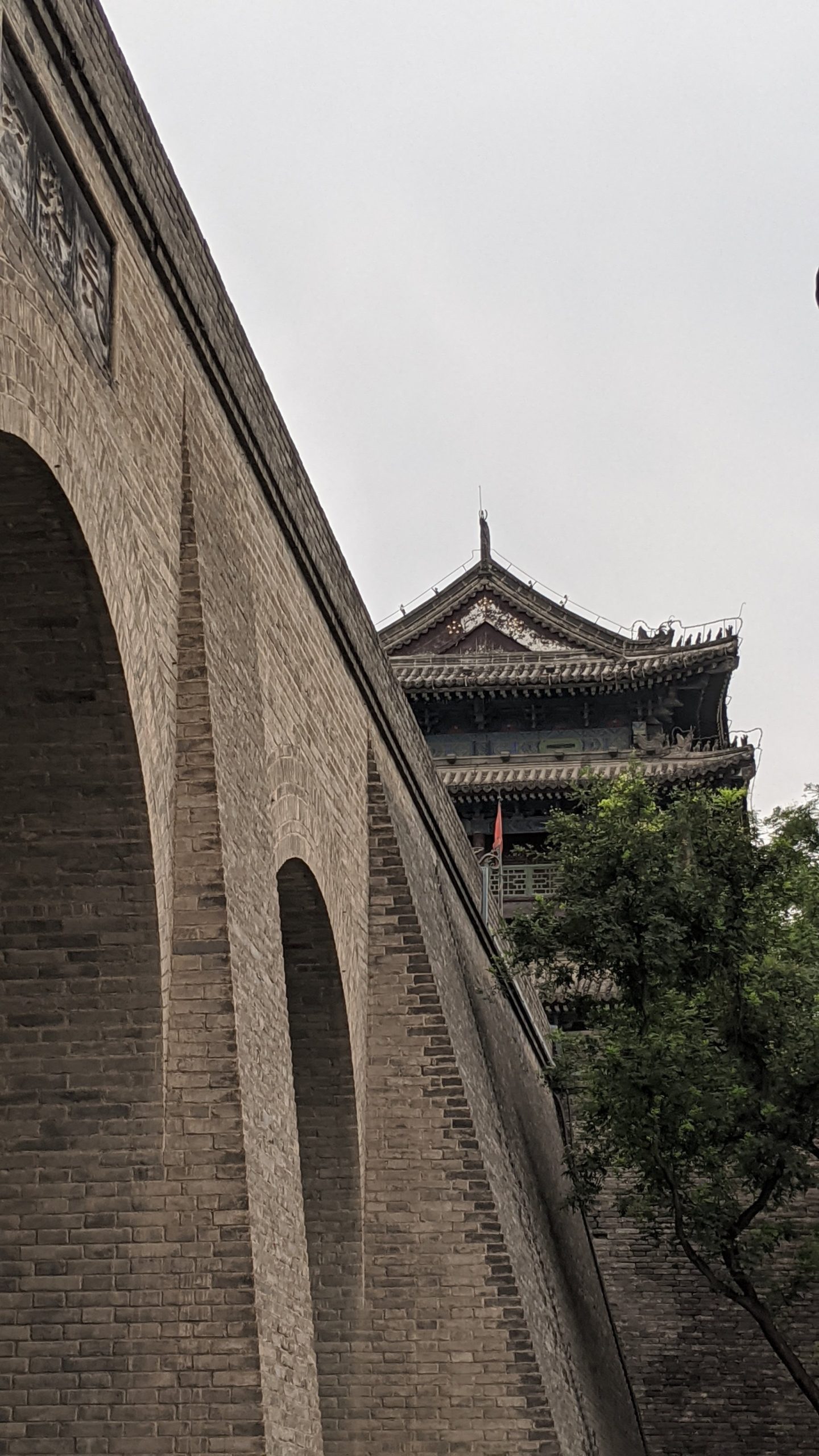
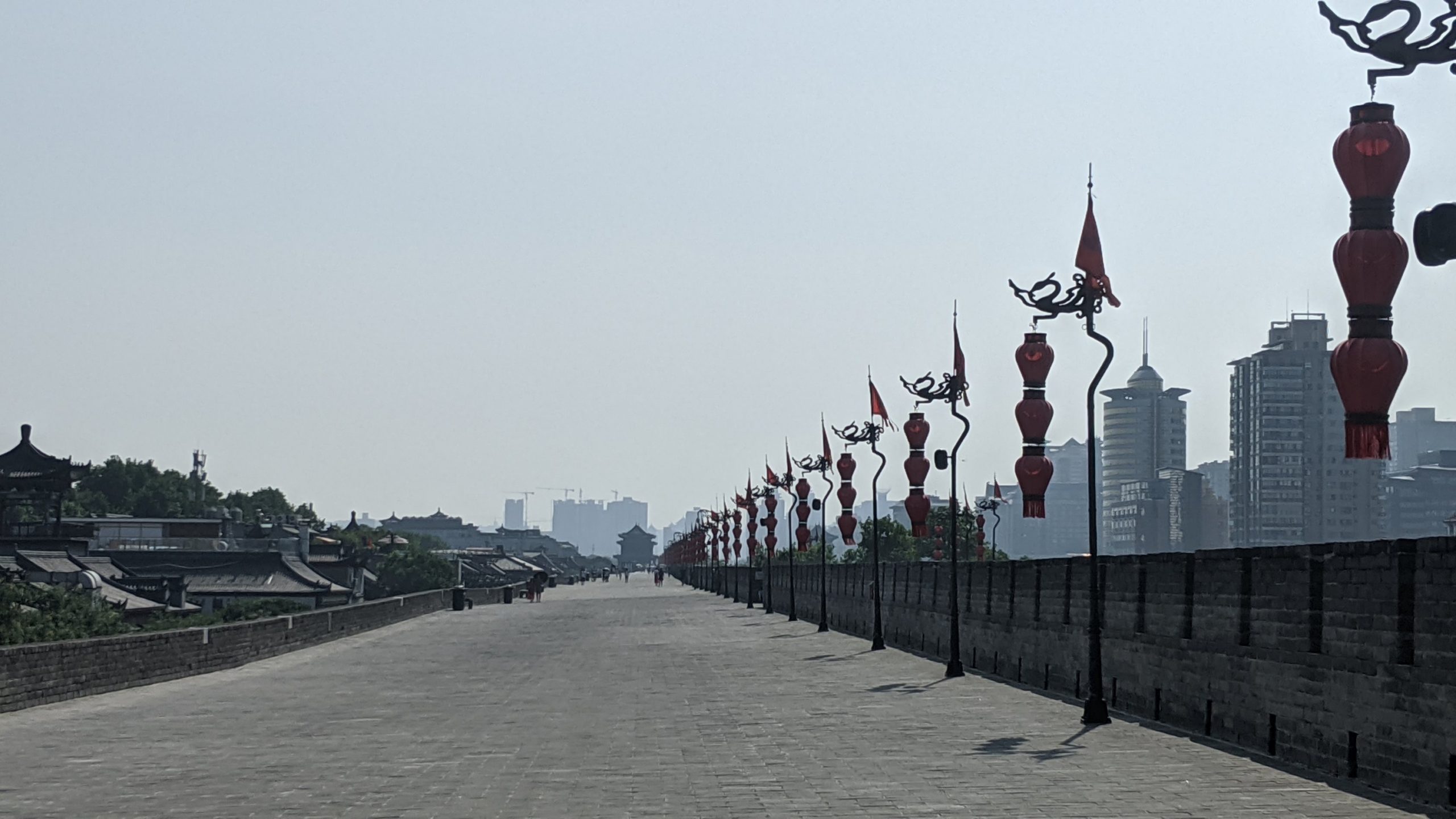
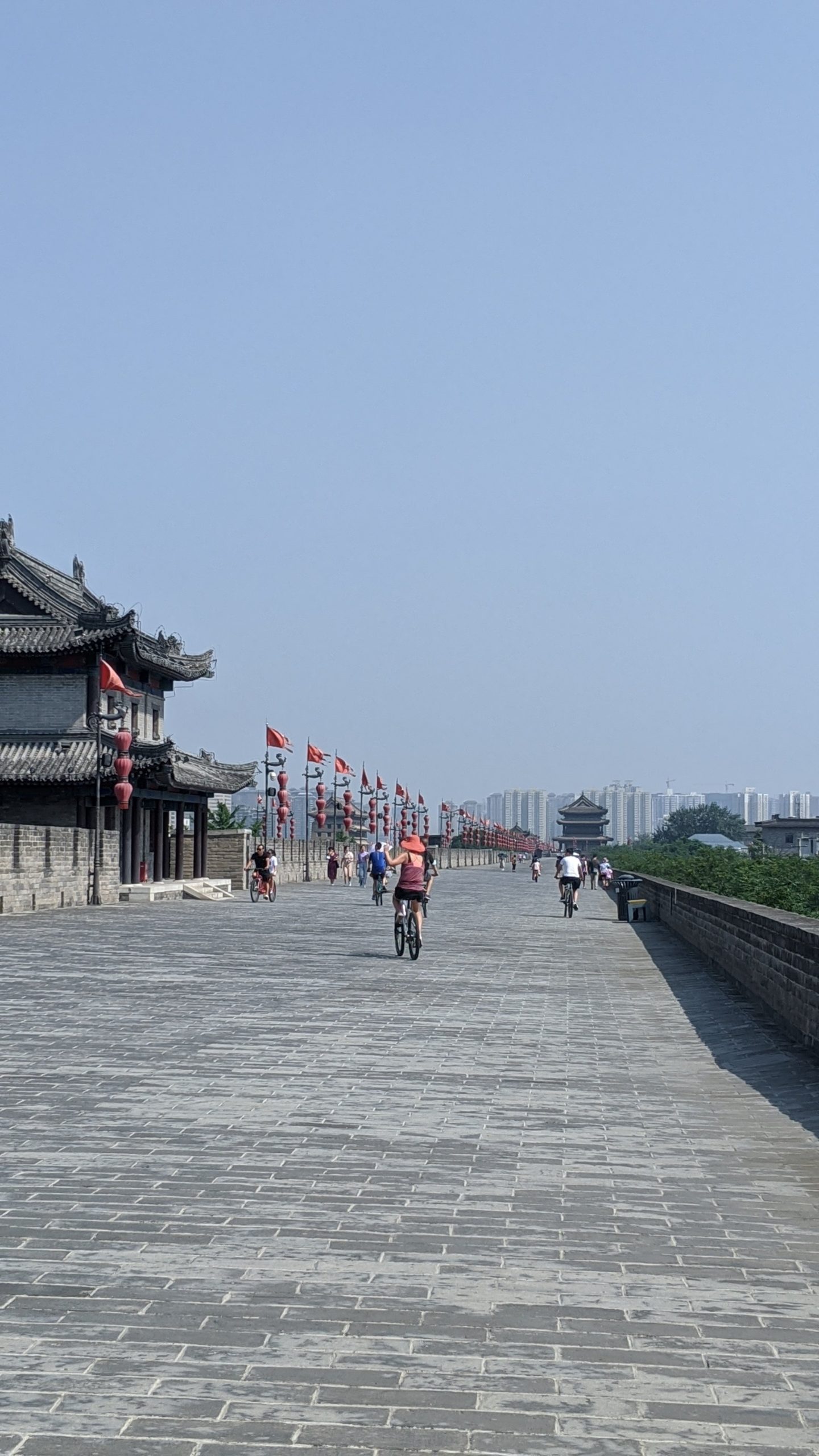
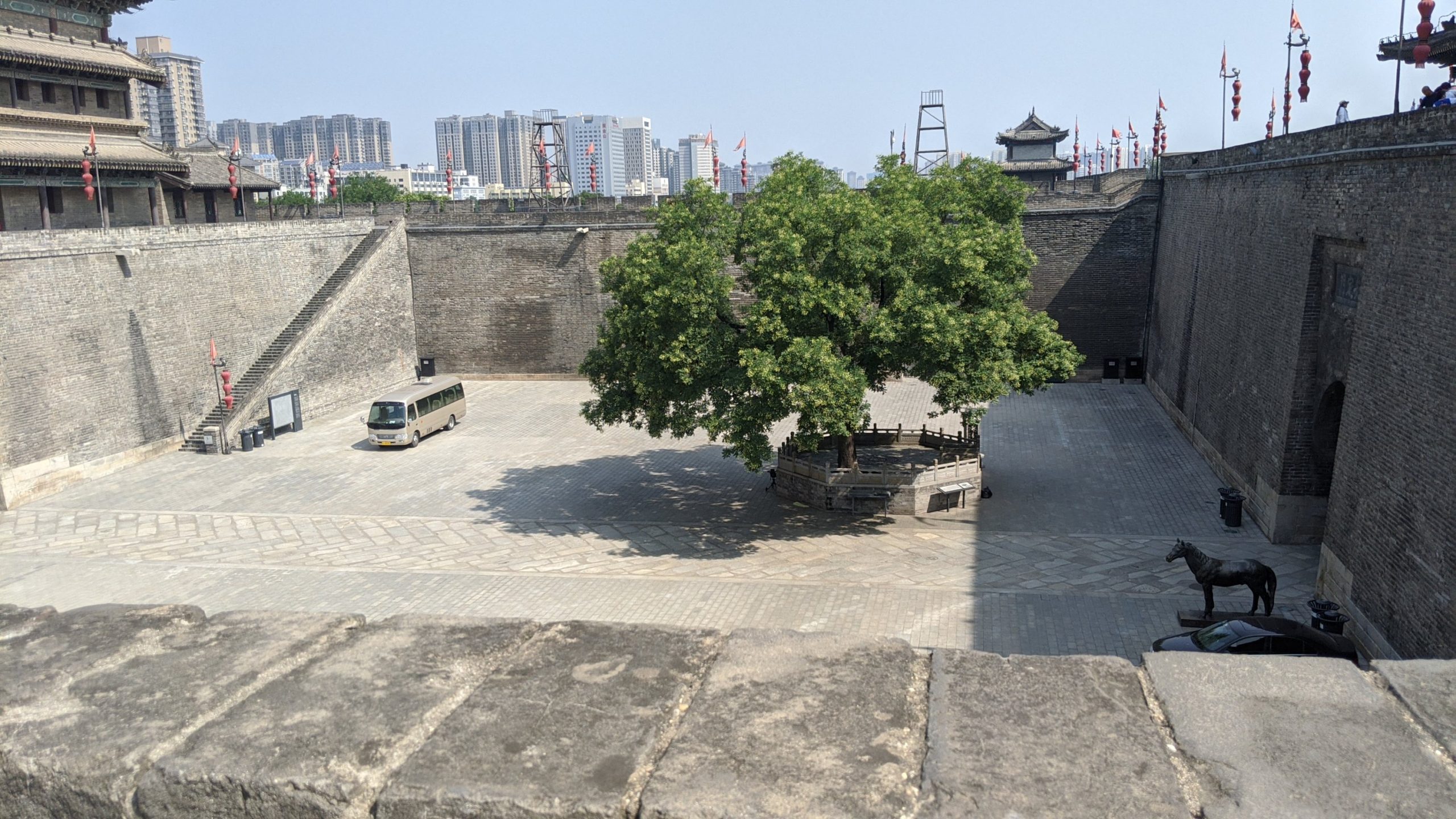
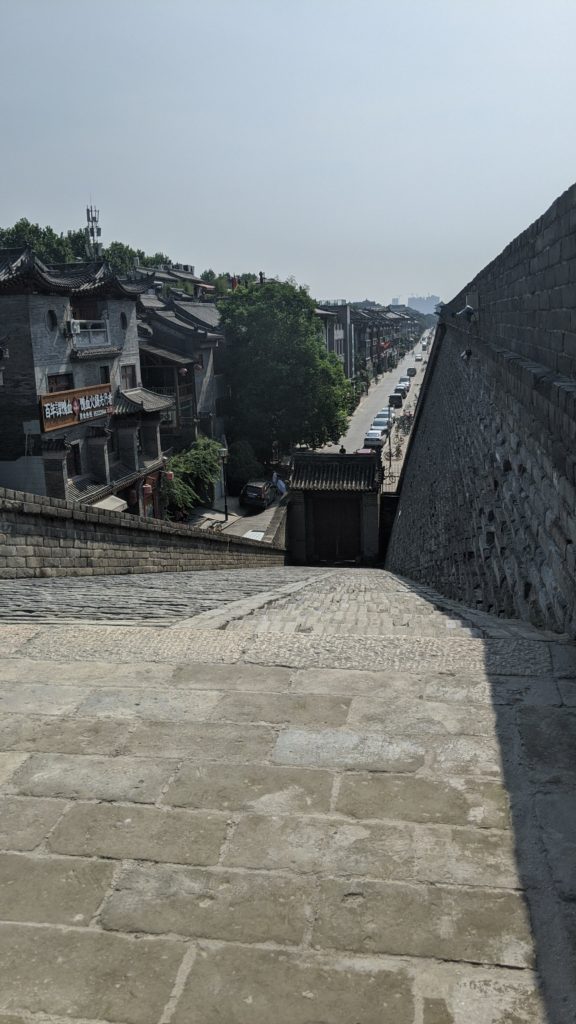
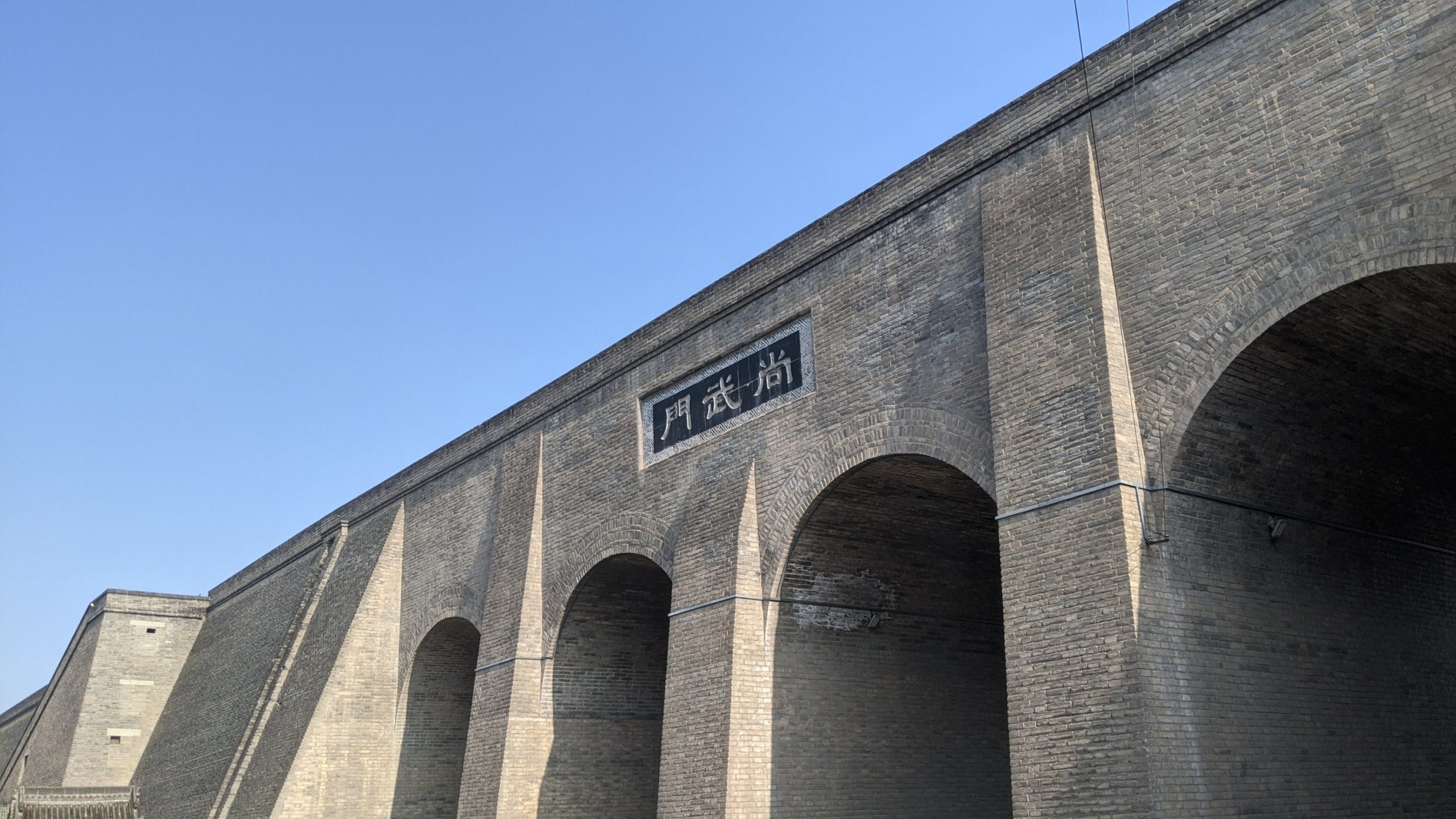
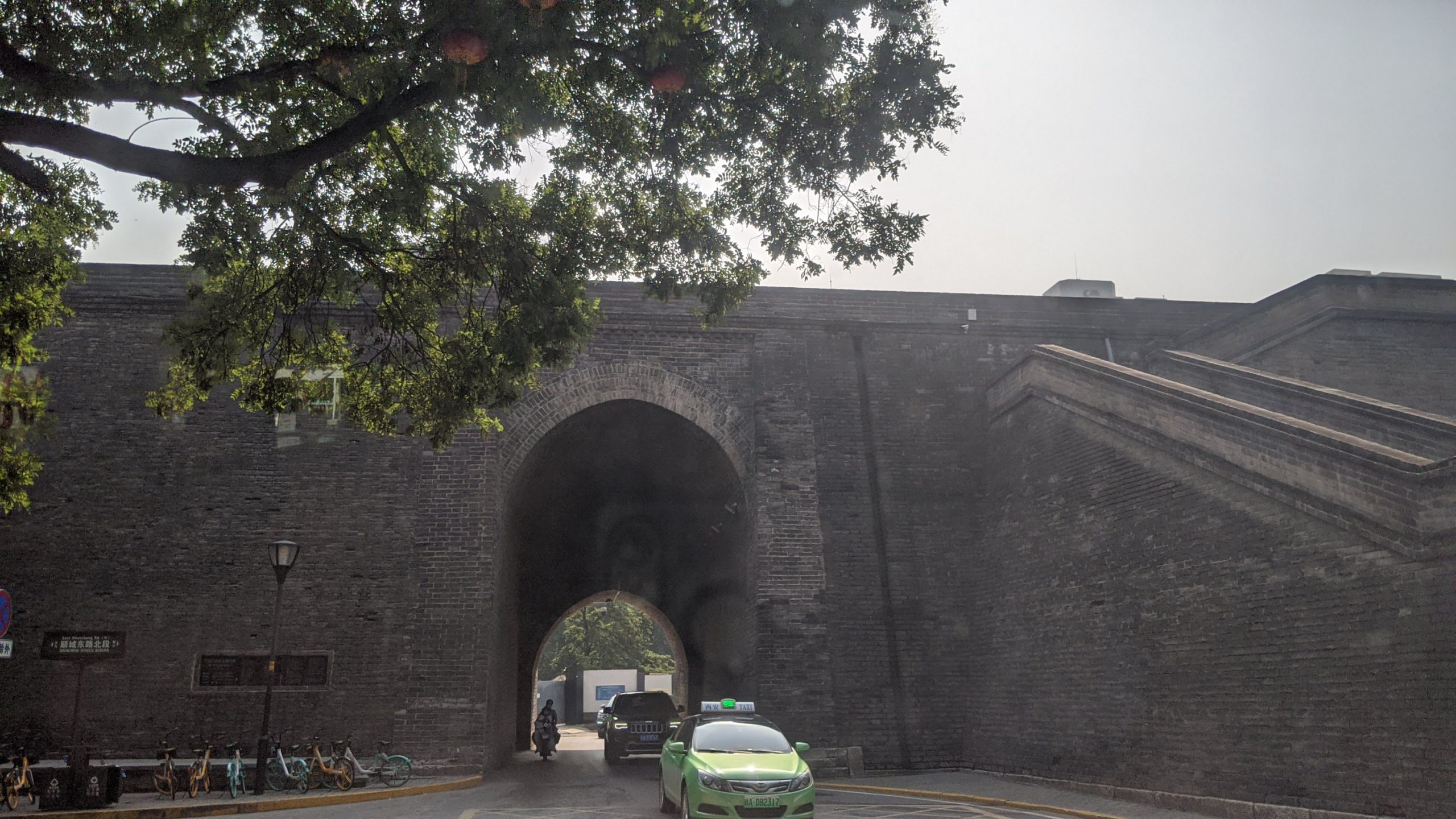
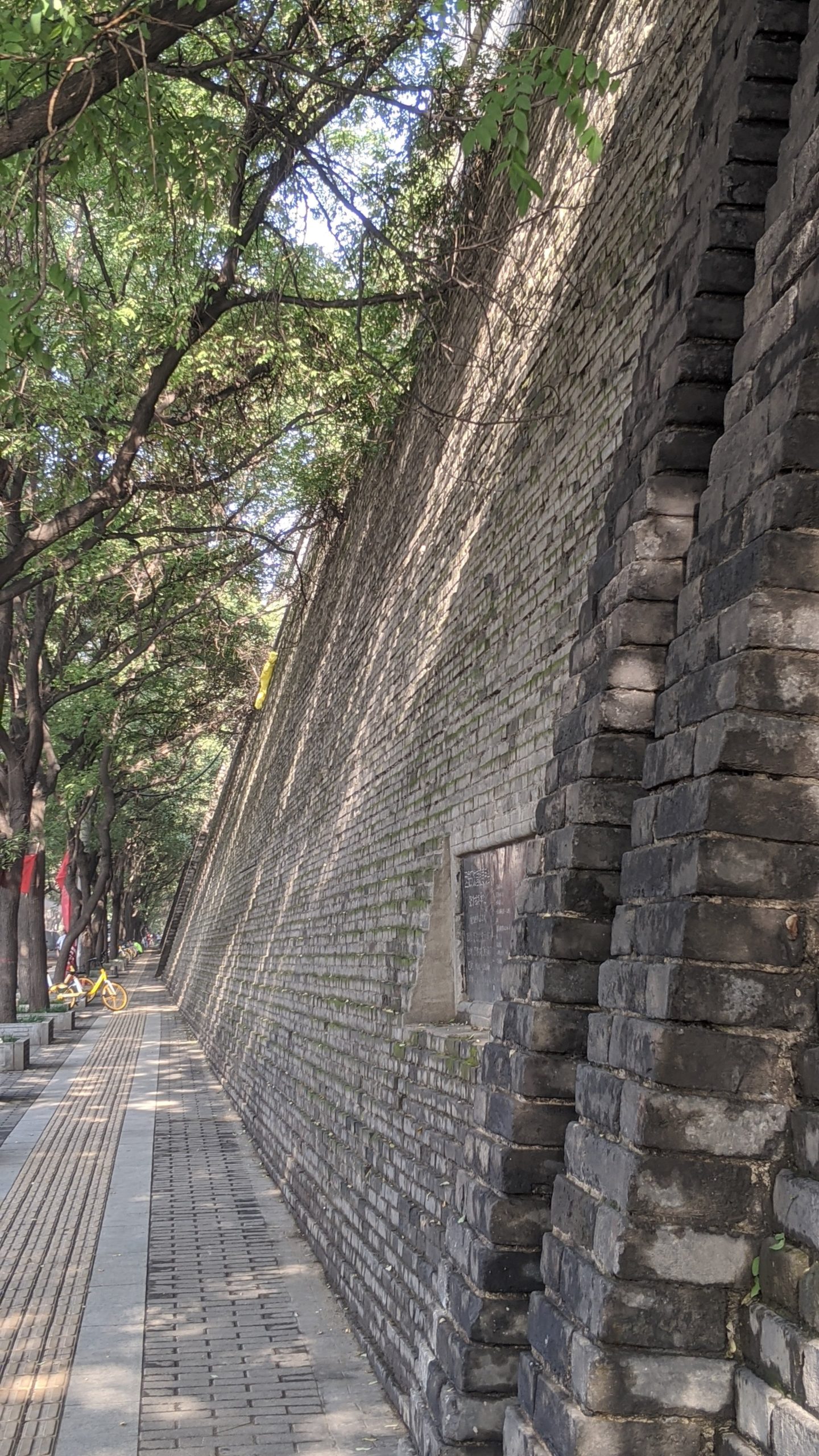
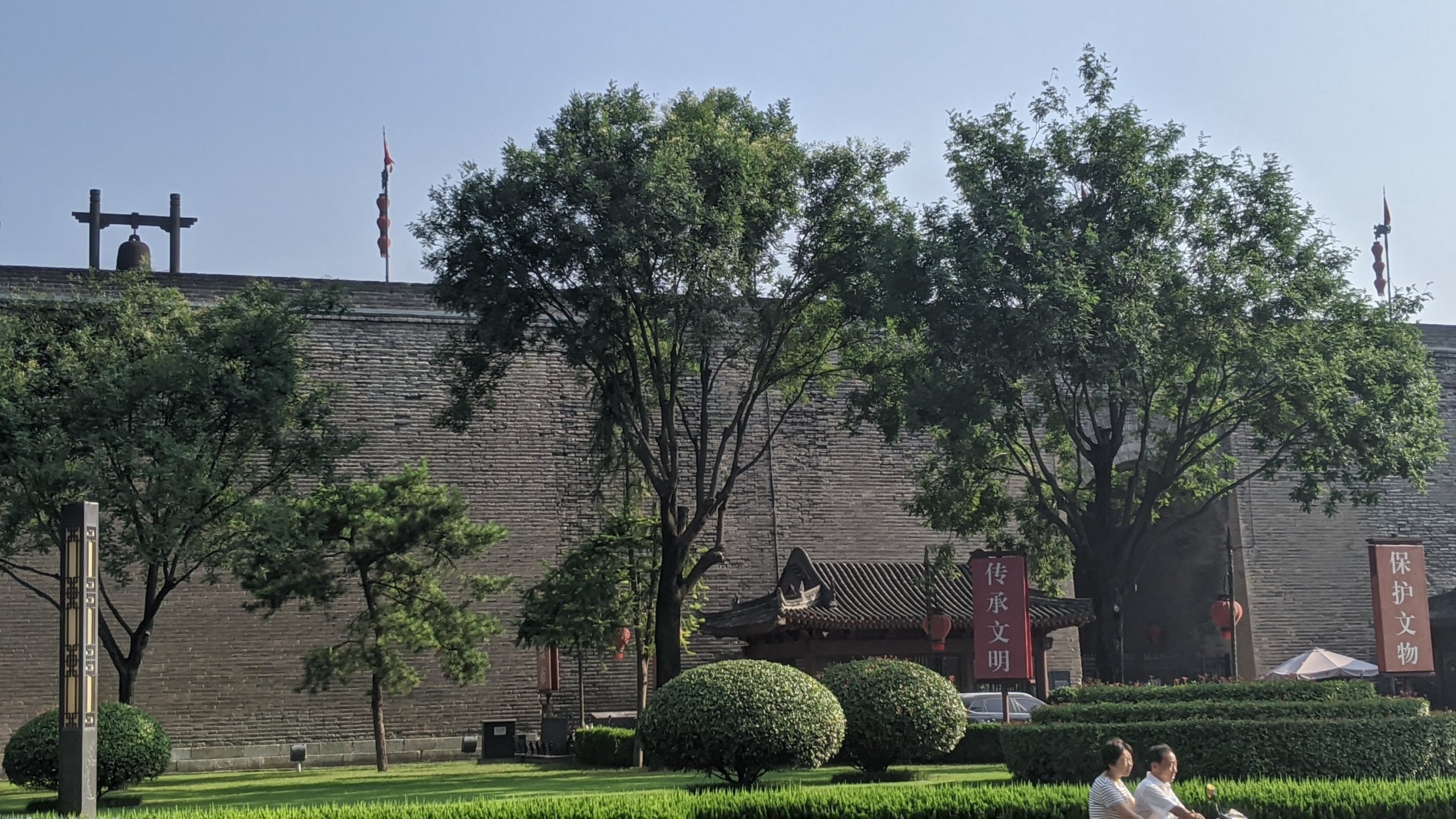
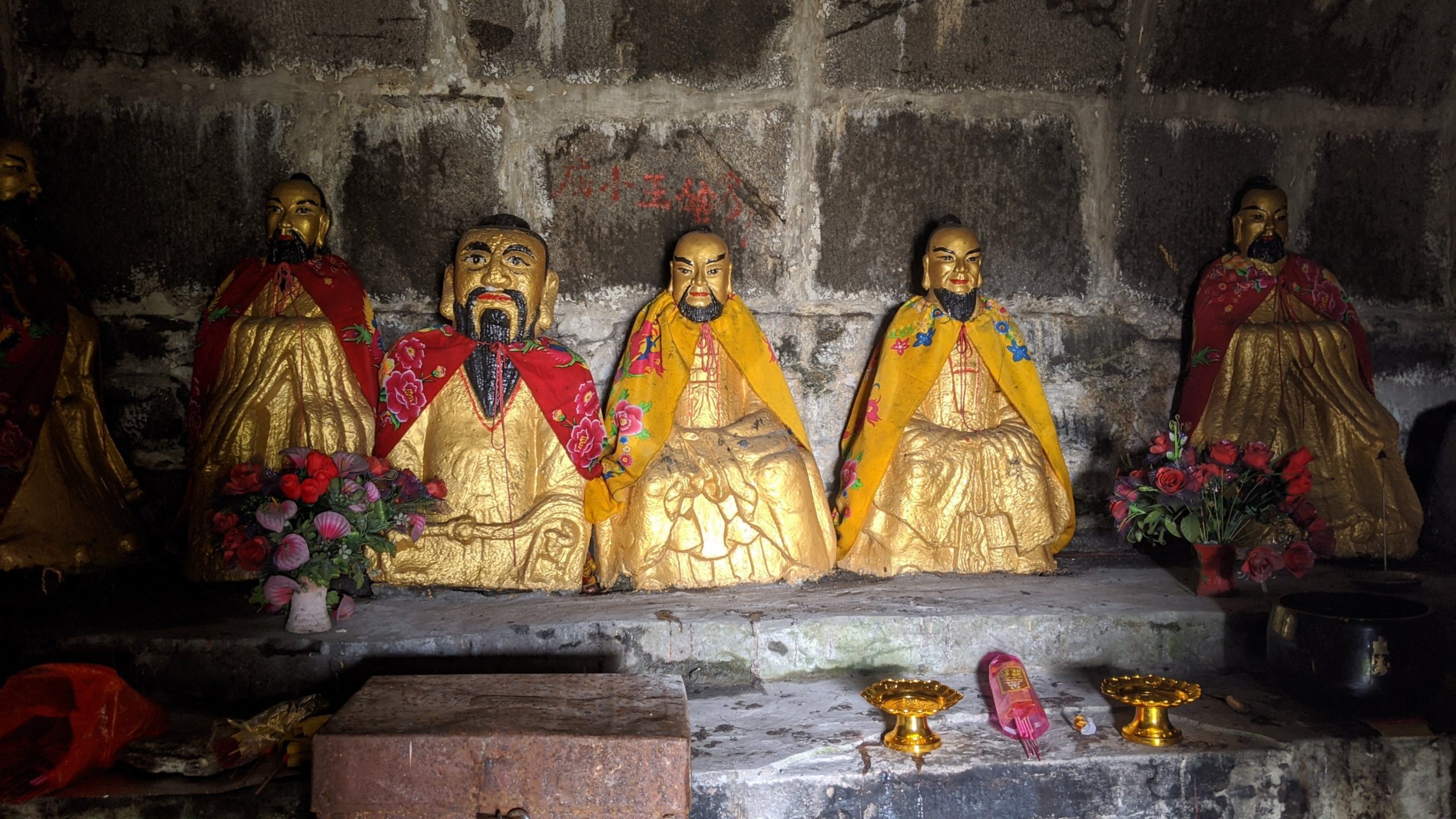
The Xi’an wall is the most complete city wall that has survived in China. It is also one of the largest ancient military defensive systems in the world. It was originally built in 1370 after the establishment of the Ming dynasty.

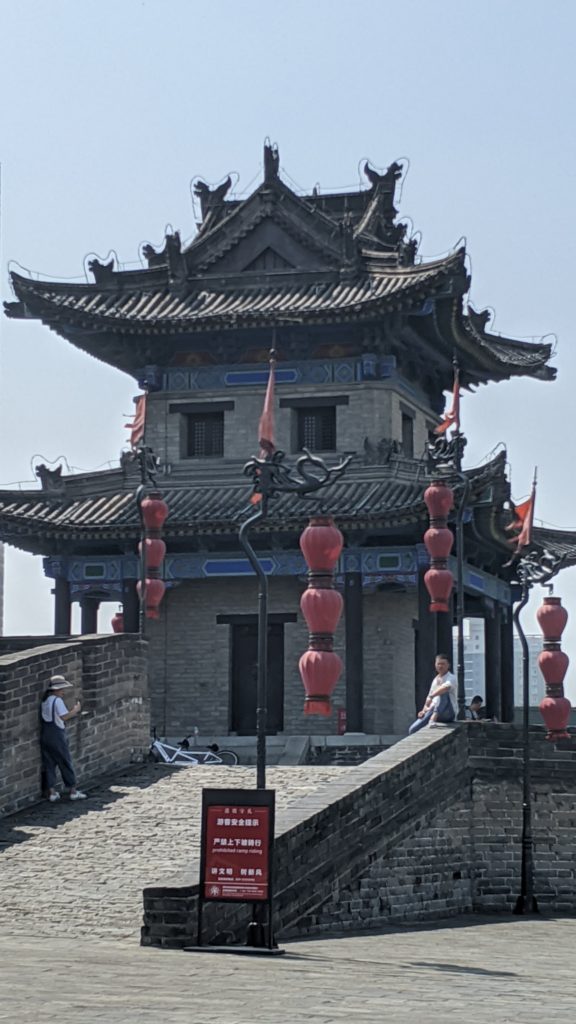
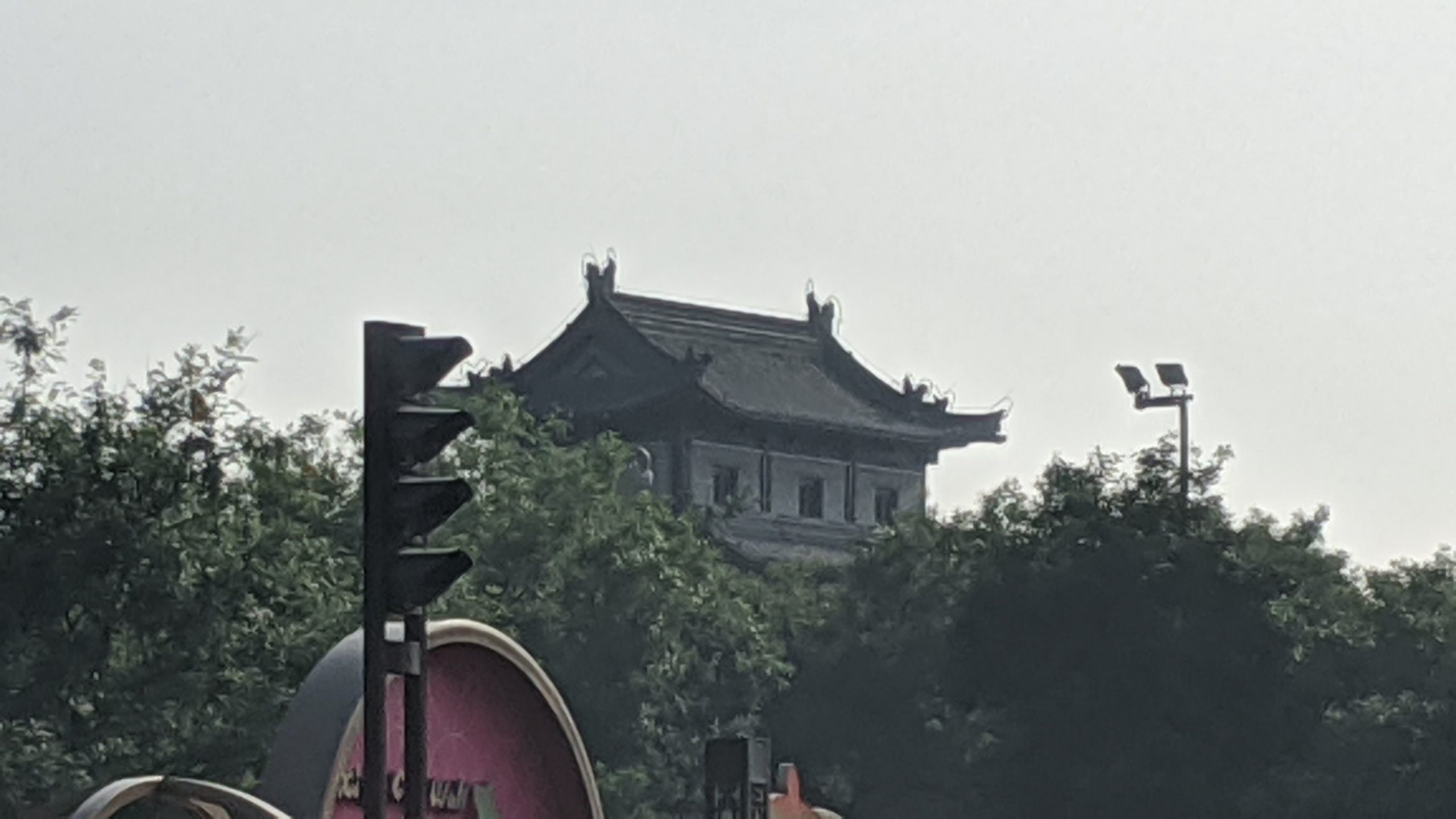
Every 120 meters, there is a rampart which extends out from the main wall. All together, there are 98 ramparts, which were built to defend against the enemy climbing up. Each rampart has a sentry building, in which the soldiers could protect the entire wall without exposing themselves to the enemy. Besides, the distance between every two ramparts is just within the range of an arrow shot from either side, so that they could shoot the enemy, who wanted to attack the city, from the side. On the outer side of the wall, there are 5,948 crenellations, namely battlements. The soldiers can outlook and shoot at the enemy. On the inner side, parapets were built to protect the soldiers from falling off.
https://www.travelchinaguide.com/attraction/shaanxi/xian/citywall.htm

Walking from the apartment we passed the bell tower, which has shows.

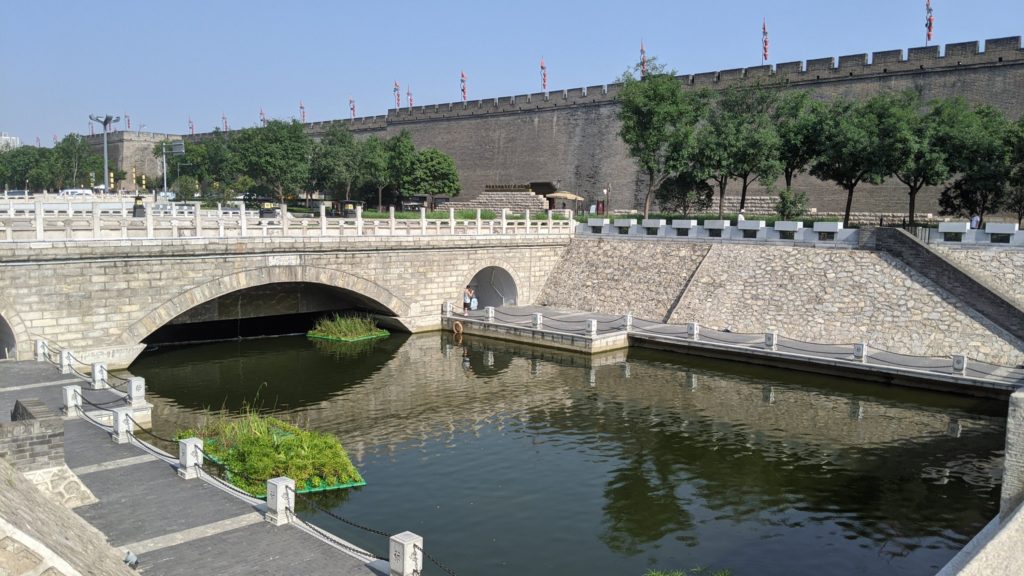
We also walked past the moat on the outside to get to the ticket office on the south gate.
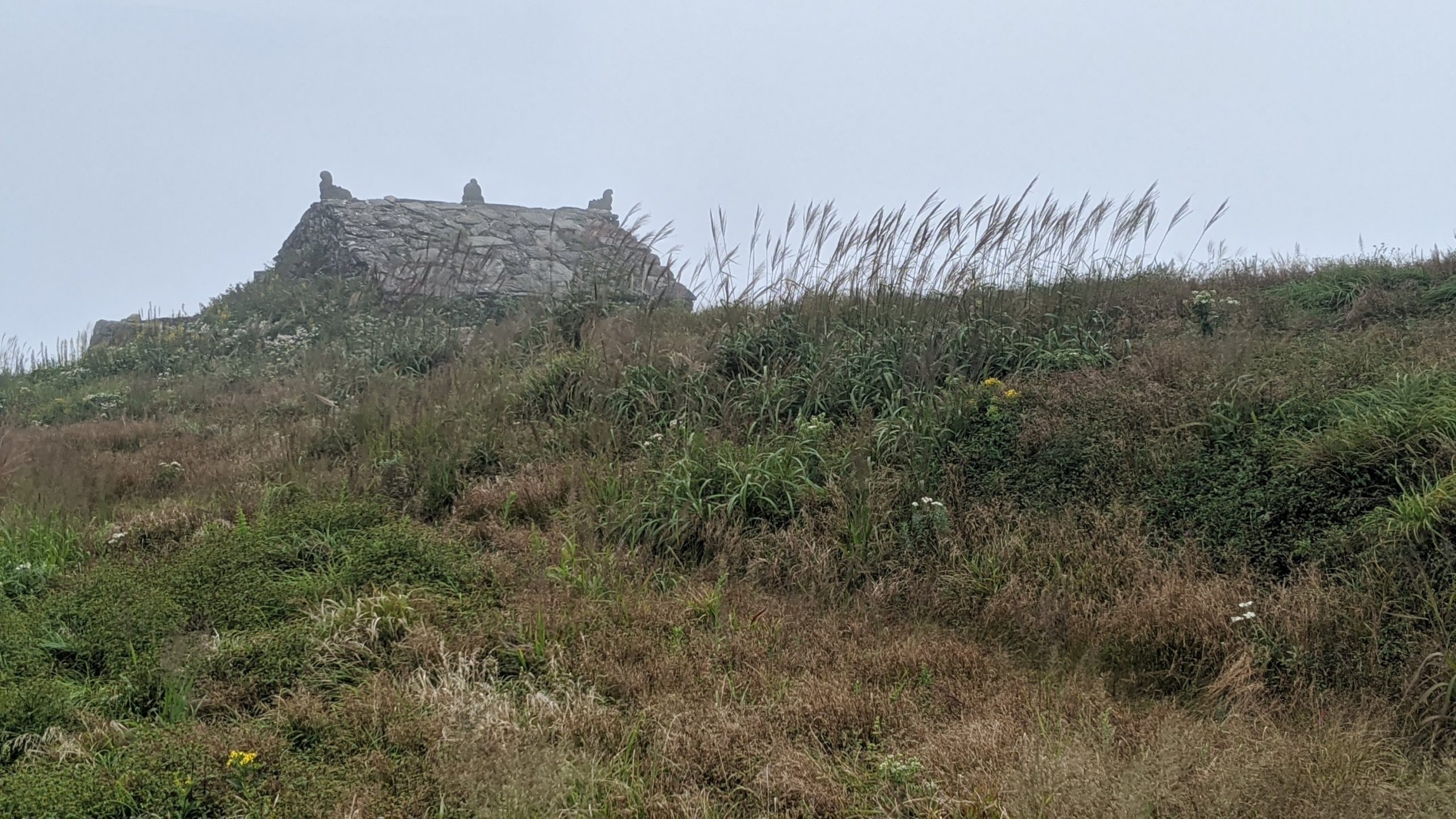
They have floating gardens using hydroponics.
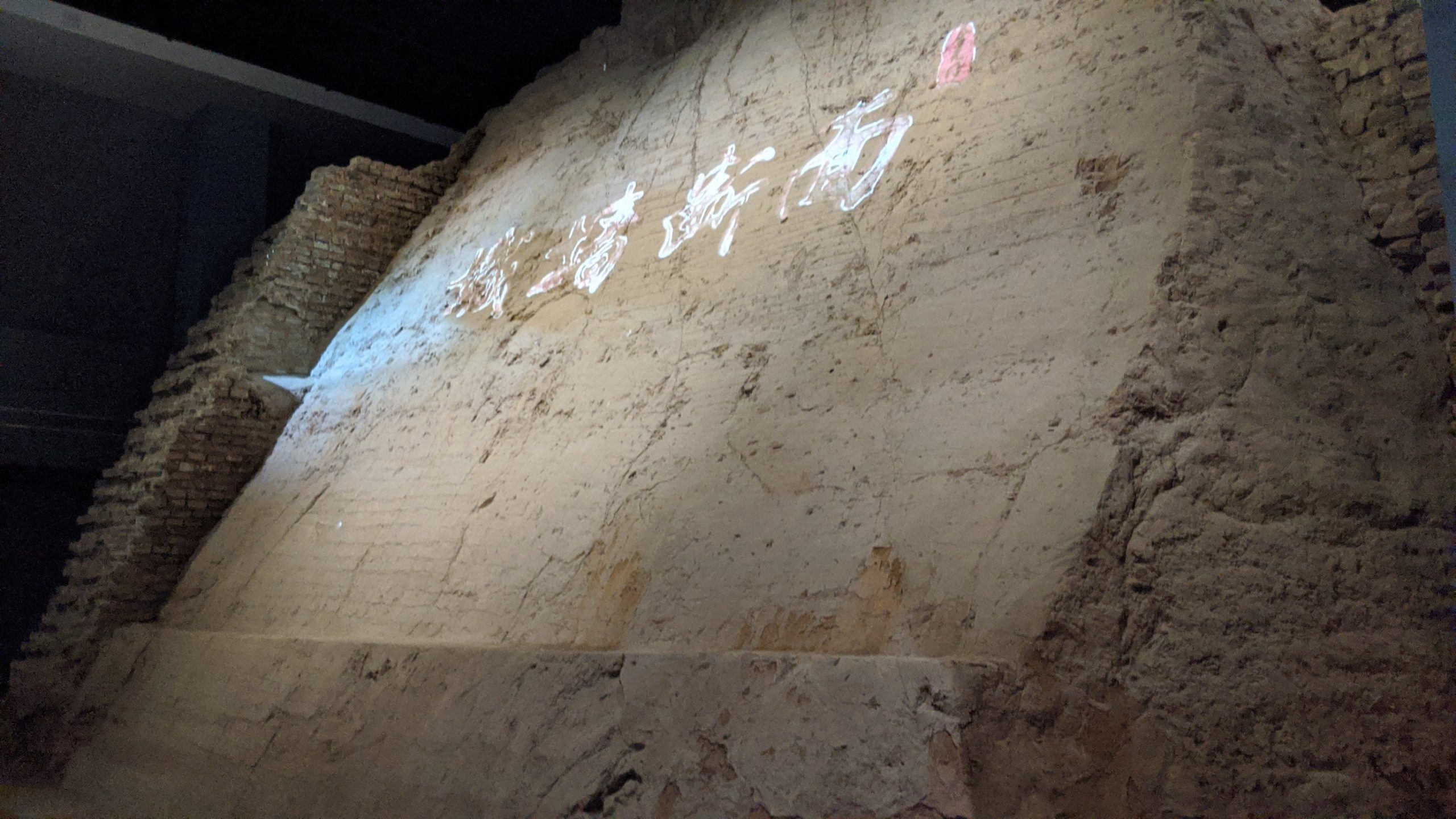
After paying to get into the wall, we looked at some of the artifacts then went on top of the wall.

The original wall which stands about one story tall.

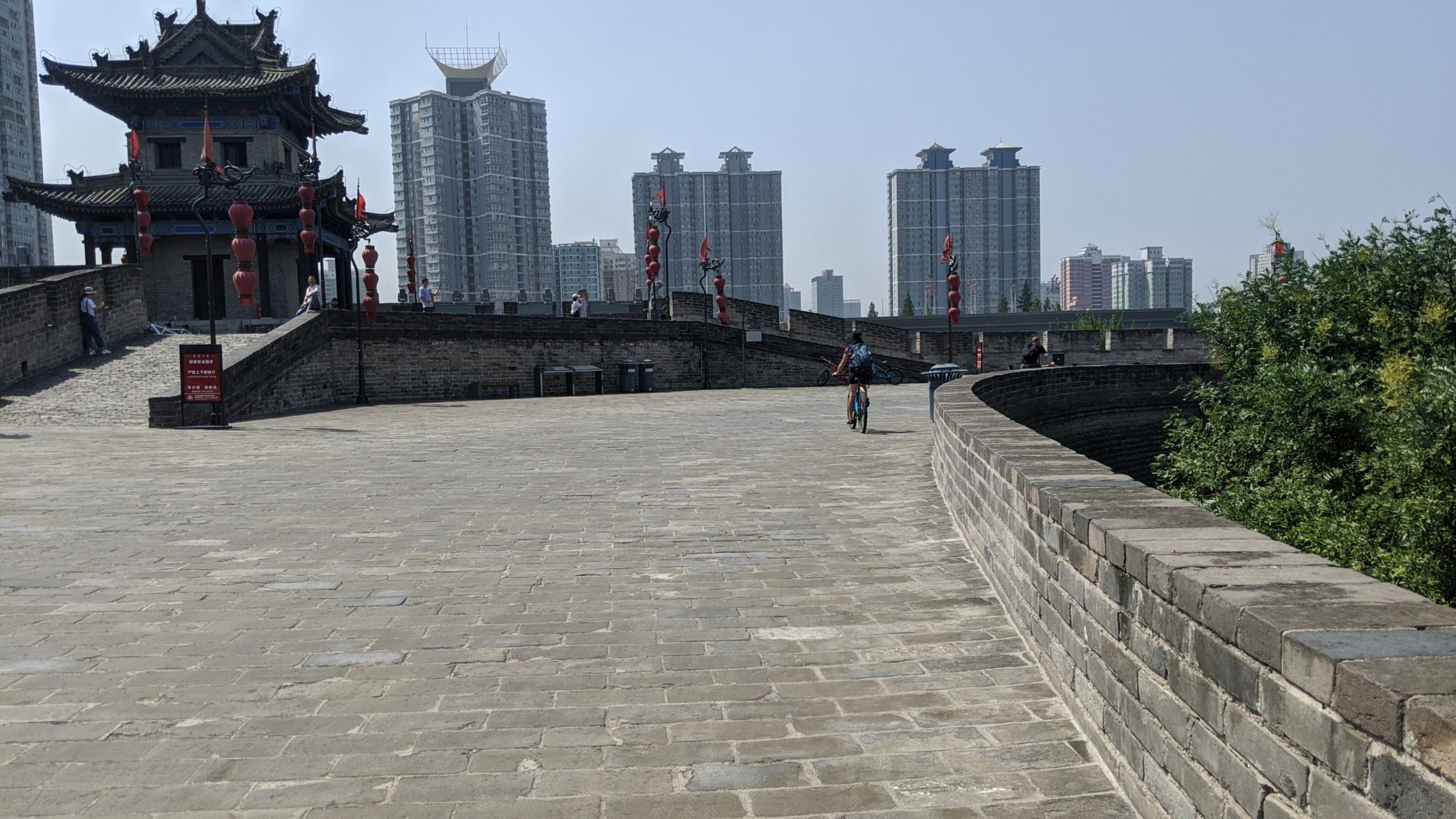
You can also rent a bike to cycle the 13.7 km around the top. We rented the bikes and bikes the whole way around. Pretty hot outside.
Really and stairs for horses and soldiers.

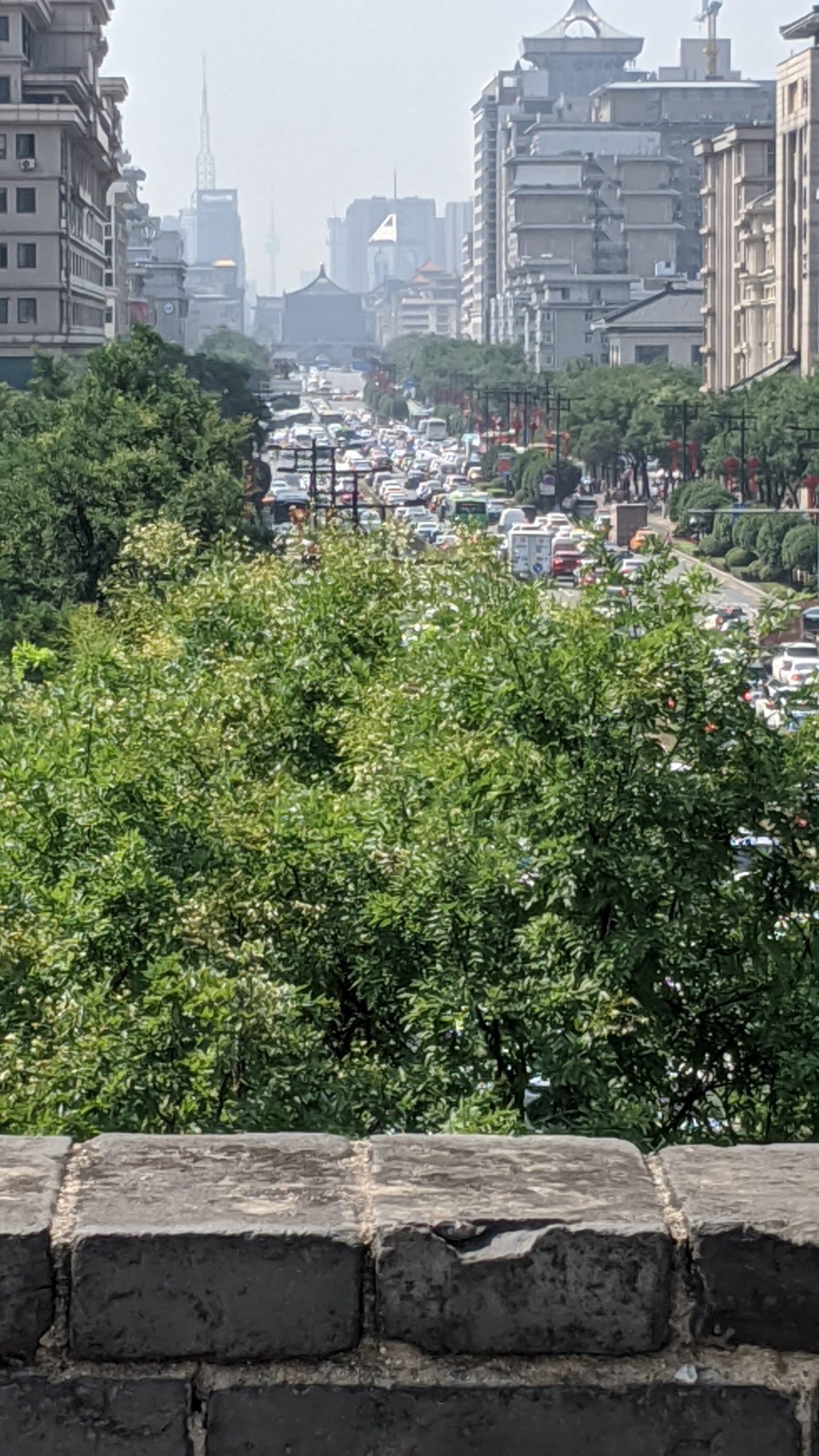
The original city is to the right of all the pictures. The expanded city has taller buildings on the outside than the buildings on the left.

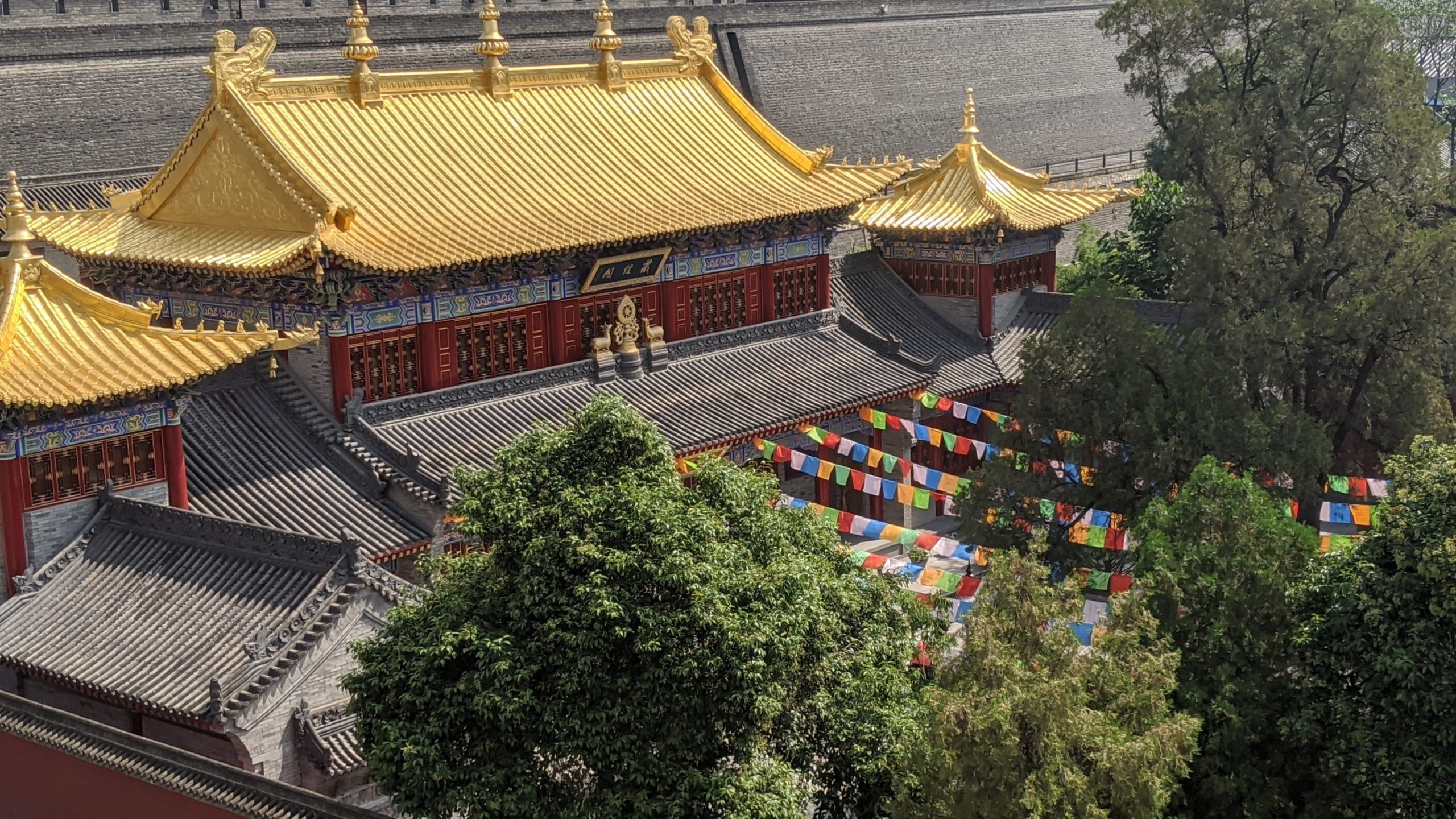
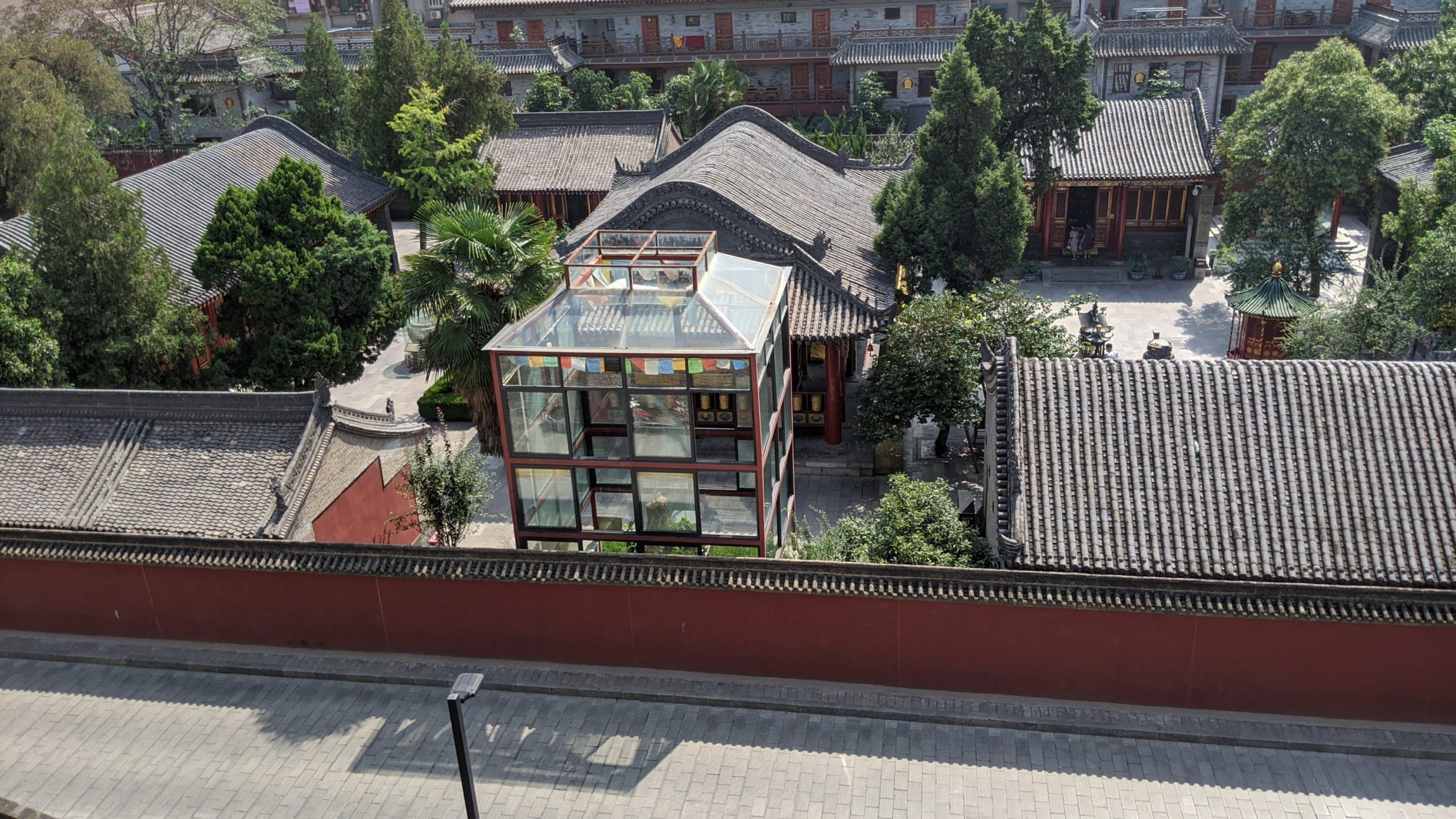
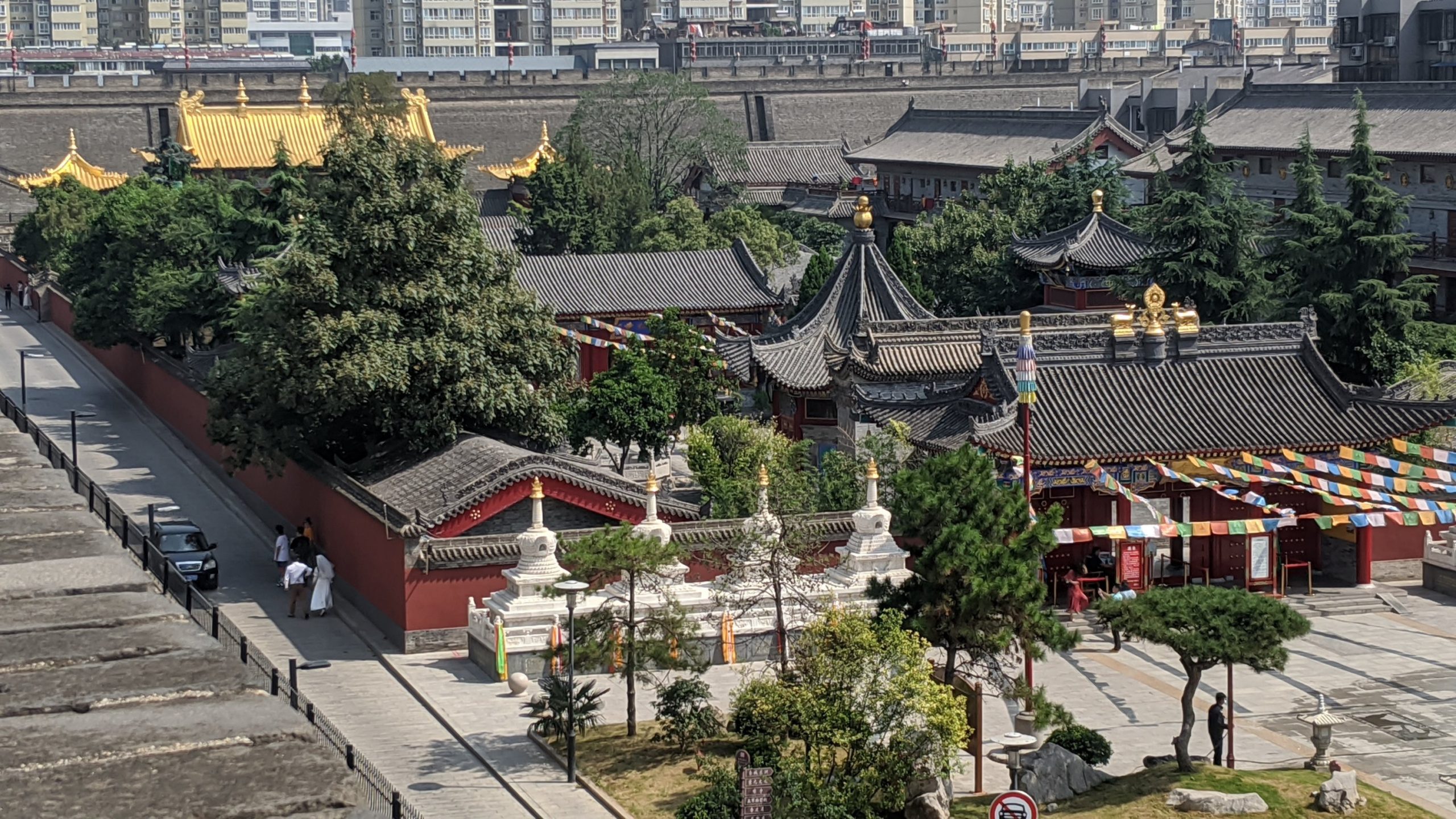
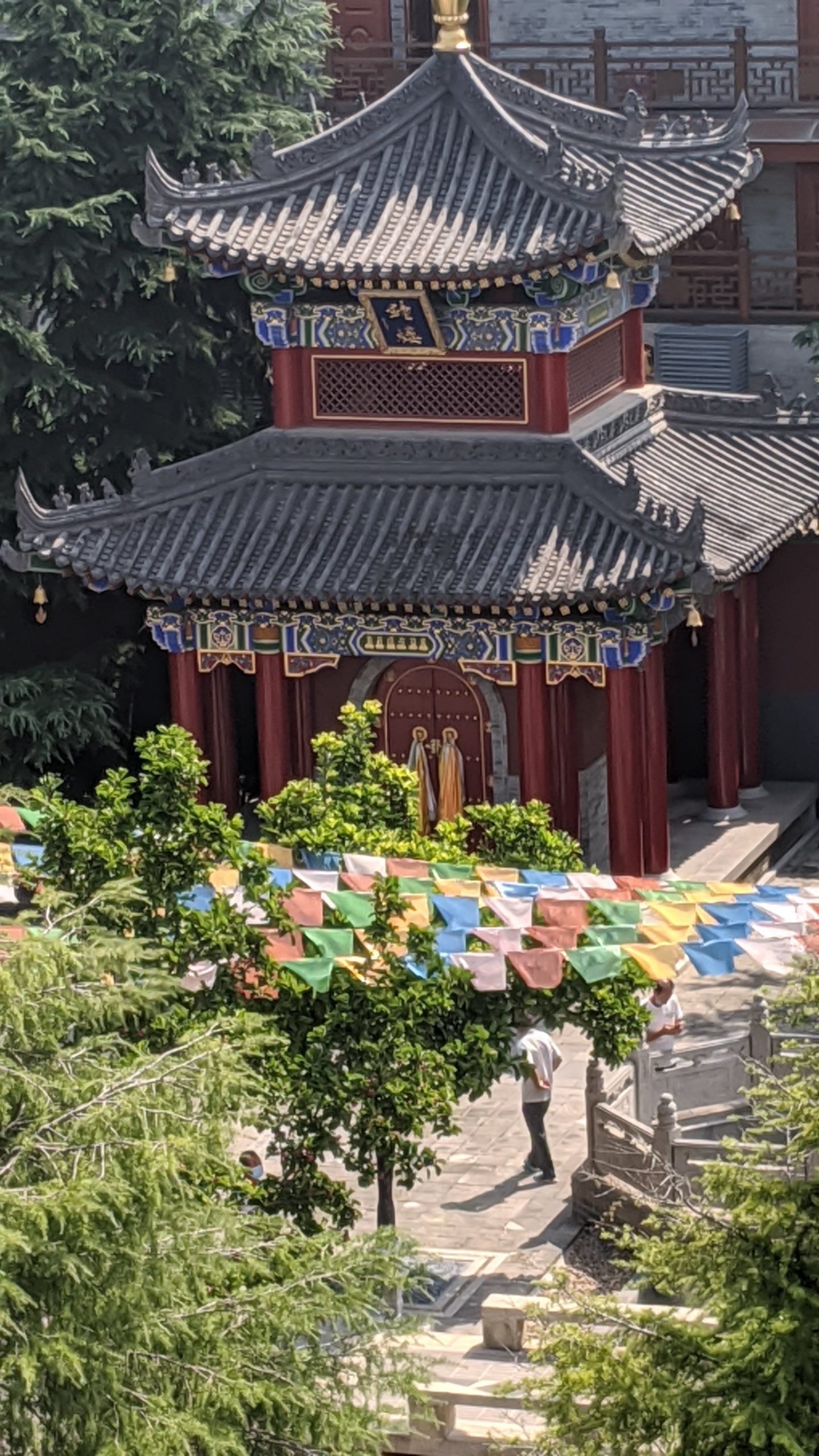
These are pictures of a Buddhist temple inside the old city wall.

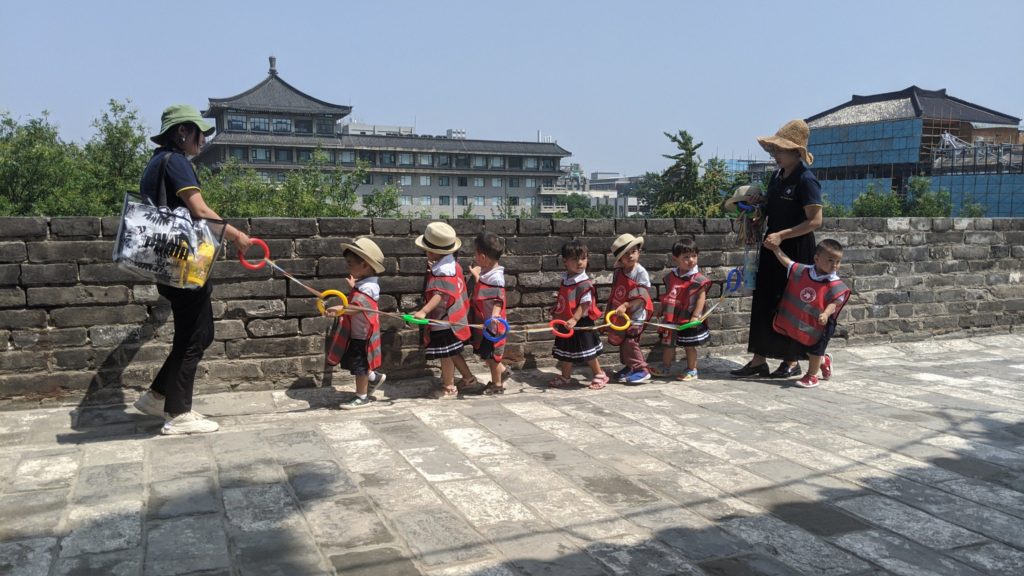
Preschoolers were walking in the wall as well.

Walking at the bottom of the north side of the wall.

Soldiers and horses can make it to the top of the wall.

East wall

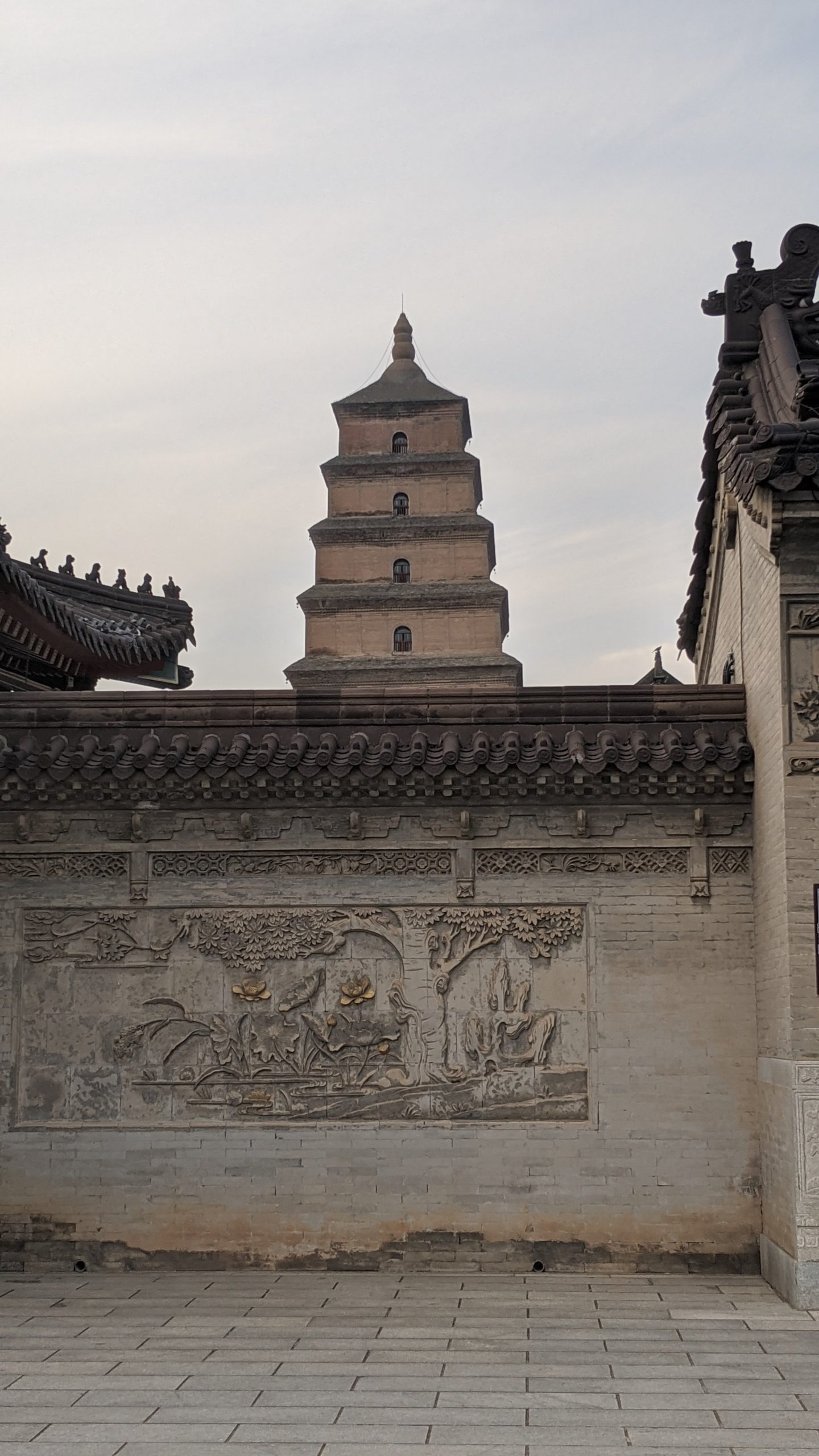
Later in the afternoon we went to visit the Big Goose Pagoda. It was closed but we walked around to visit the sights.

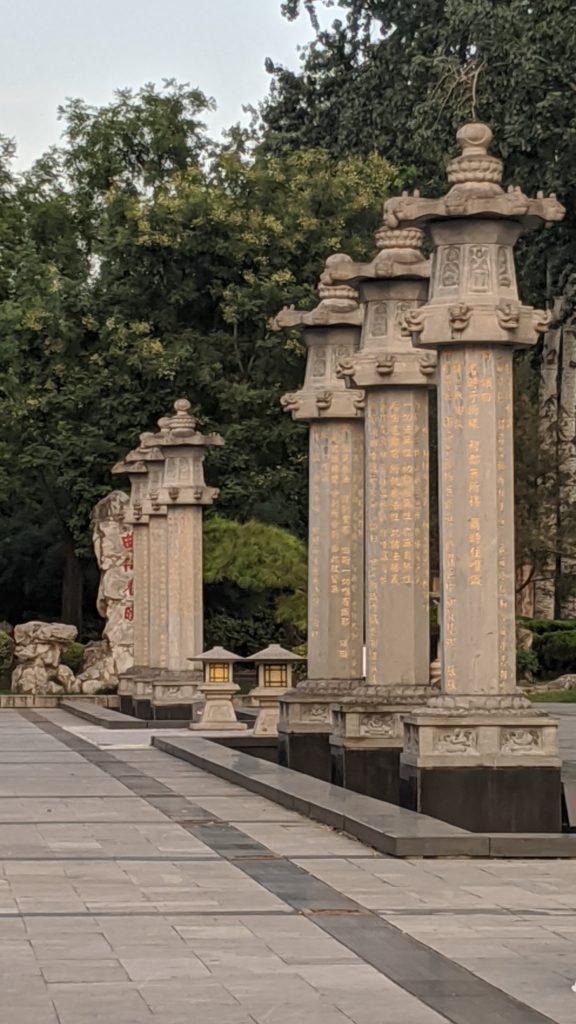
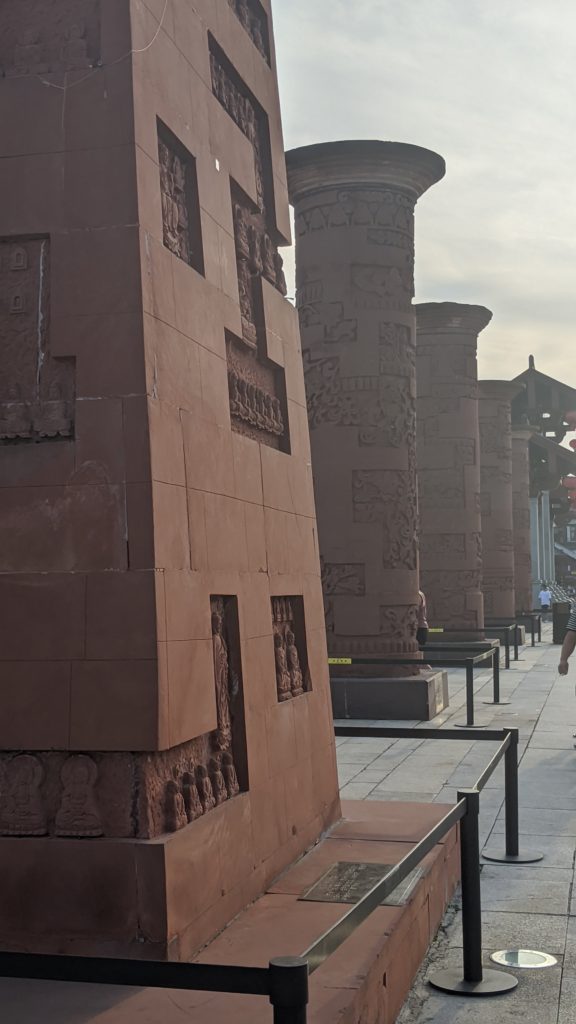
Columns depicting the various dynasties

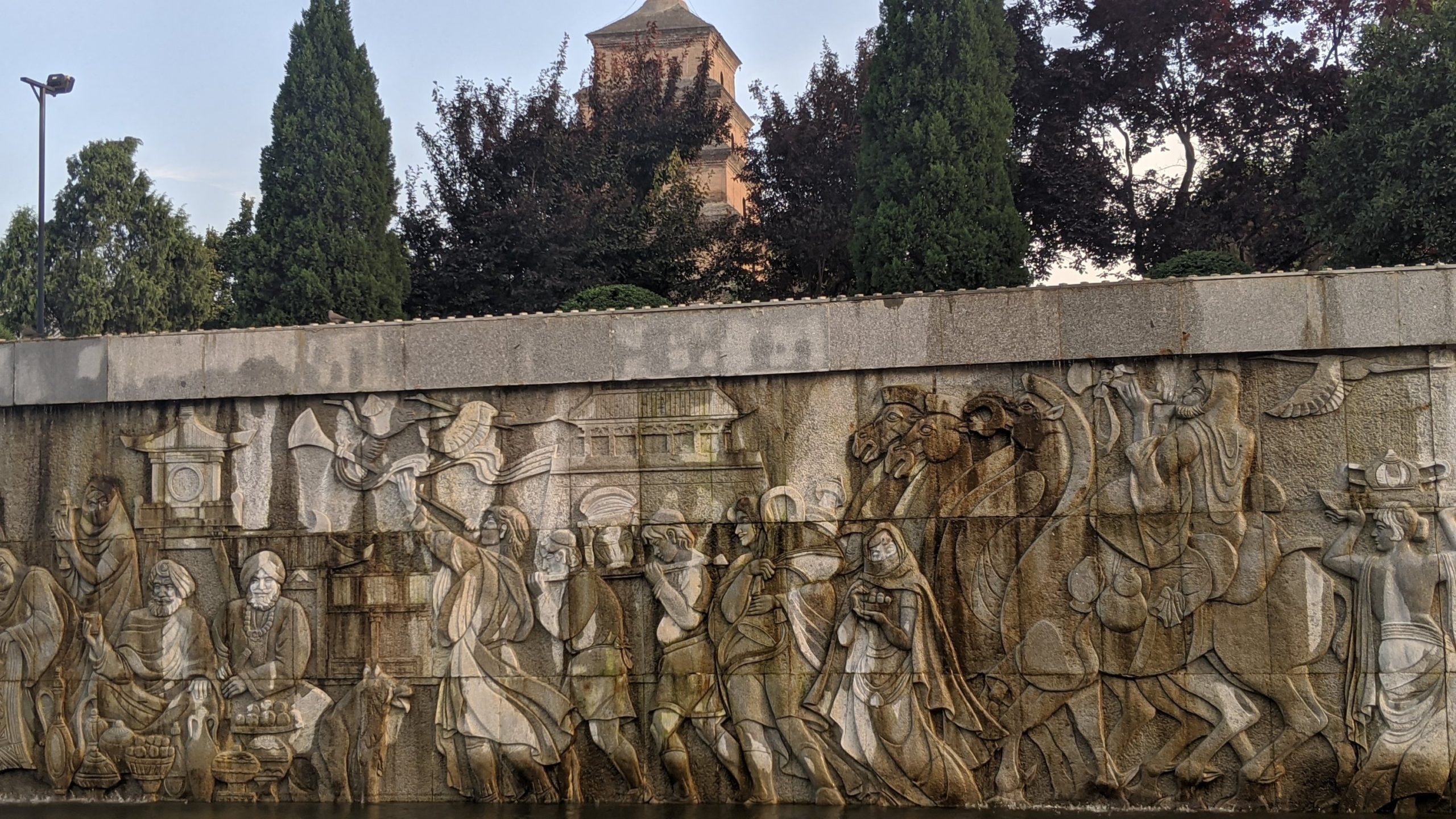
We walked through the area around the pagoda.

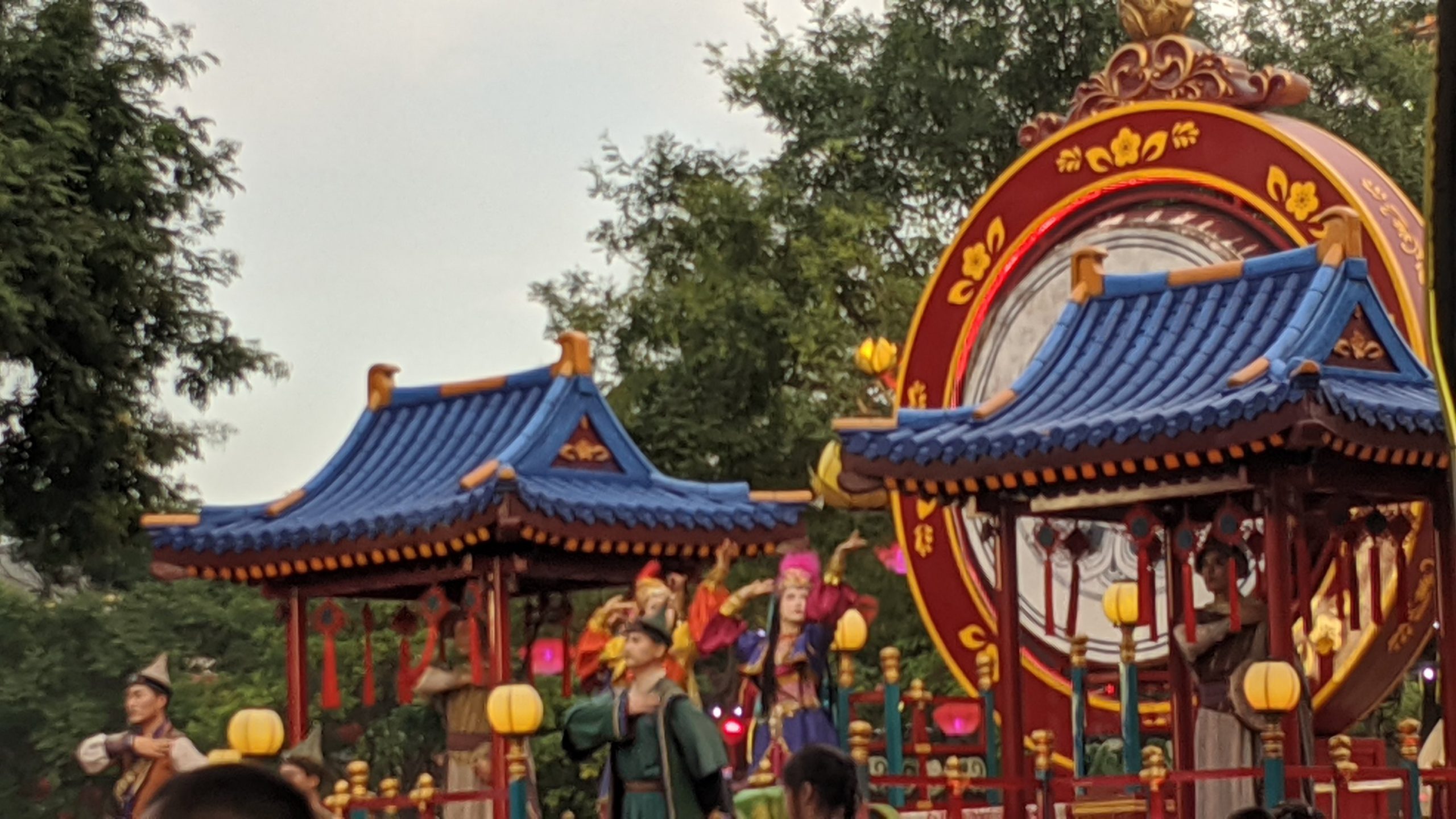
There was a performance that showed the east meeting the west on the silk road.

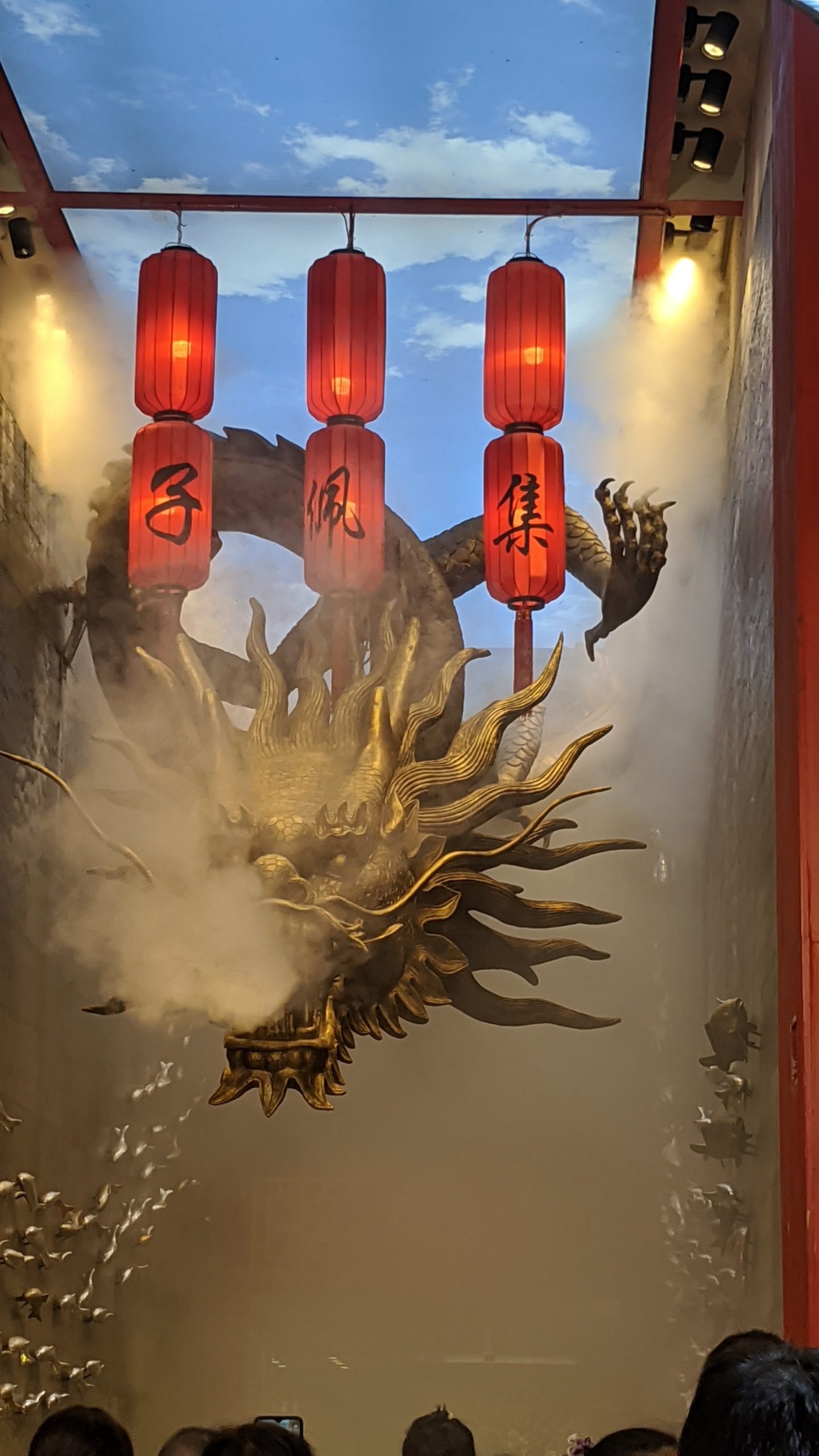
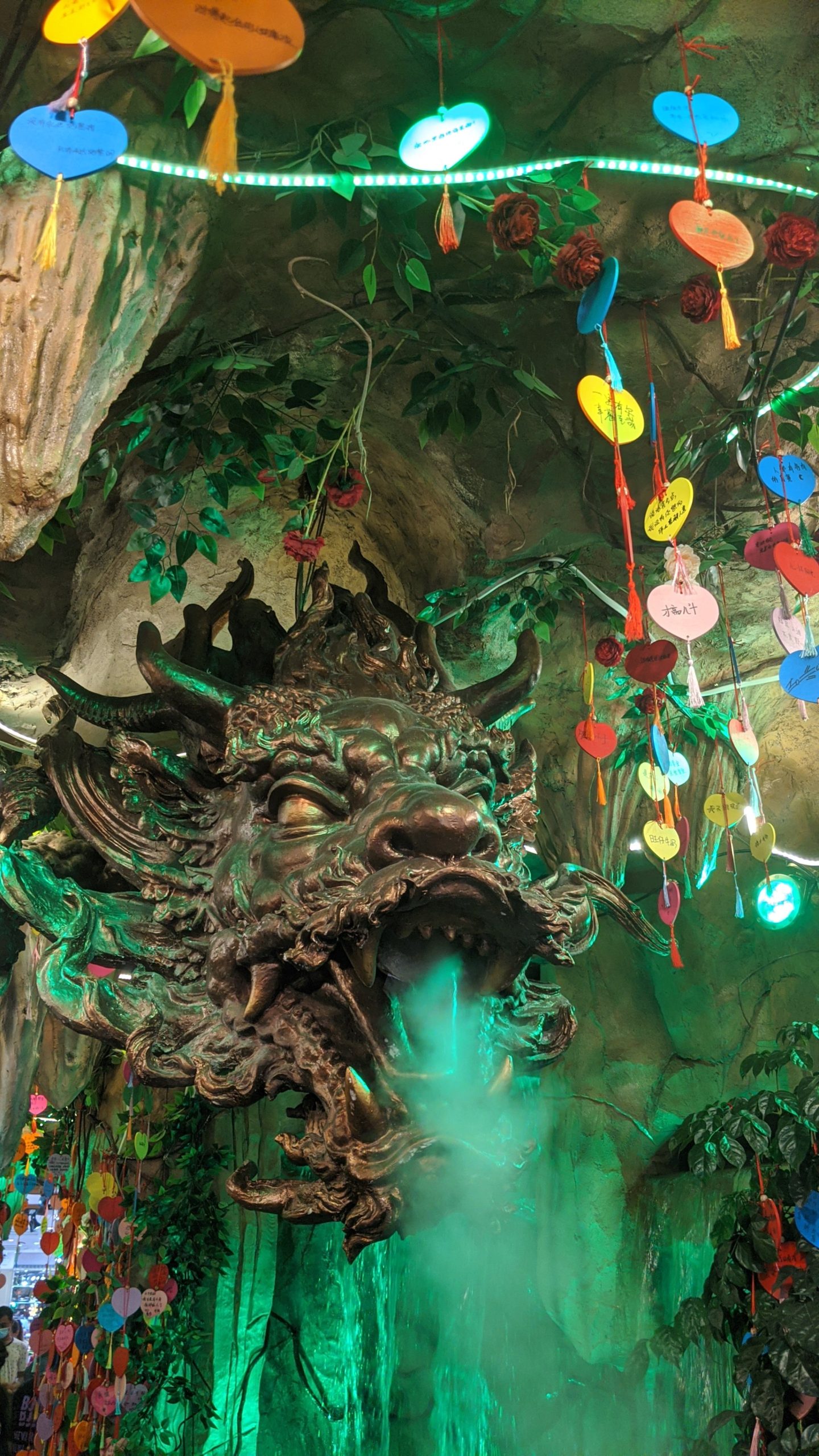
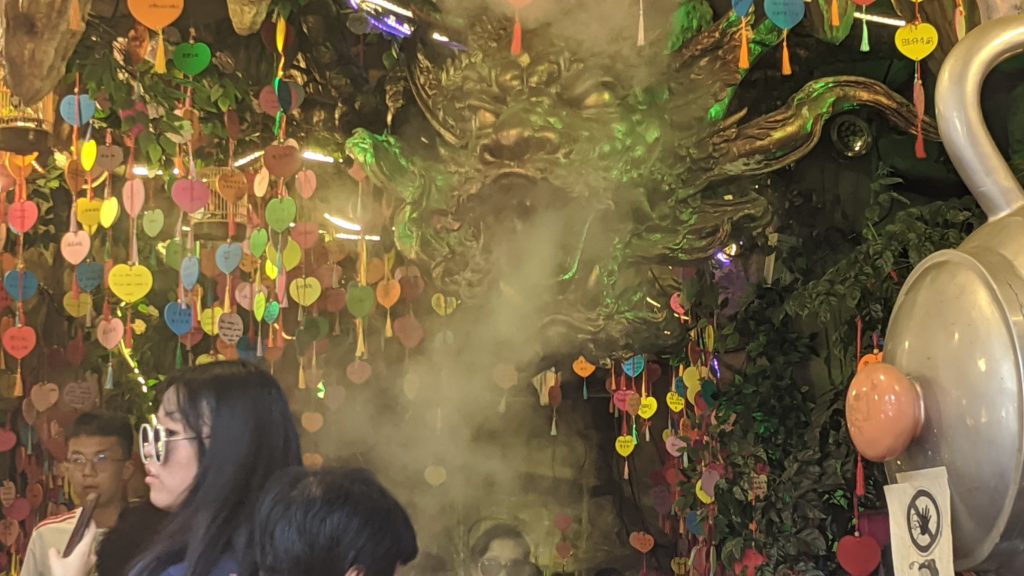
At night we went back to the Muslim Quarter to find dinner. These dragons caught our eye. They were putting out water droplets to cool people off. The second one led to a store behind it.

Cave village in the suburbs of Xi’an

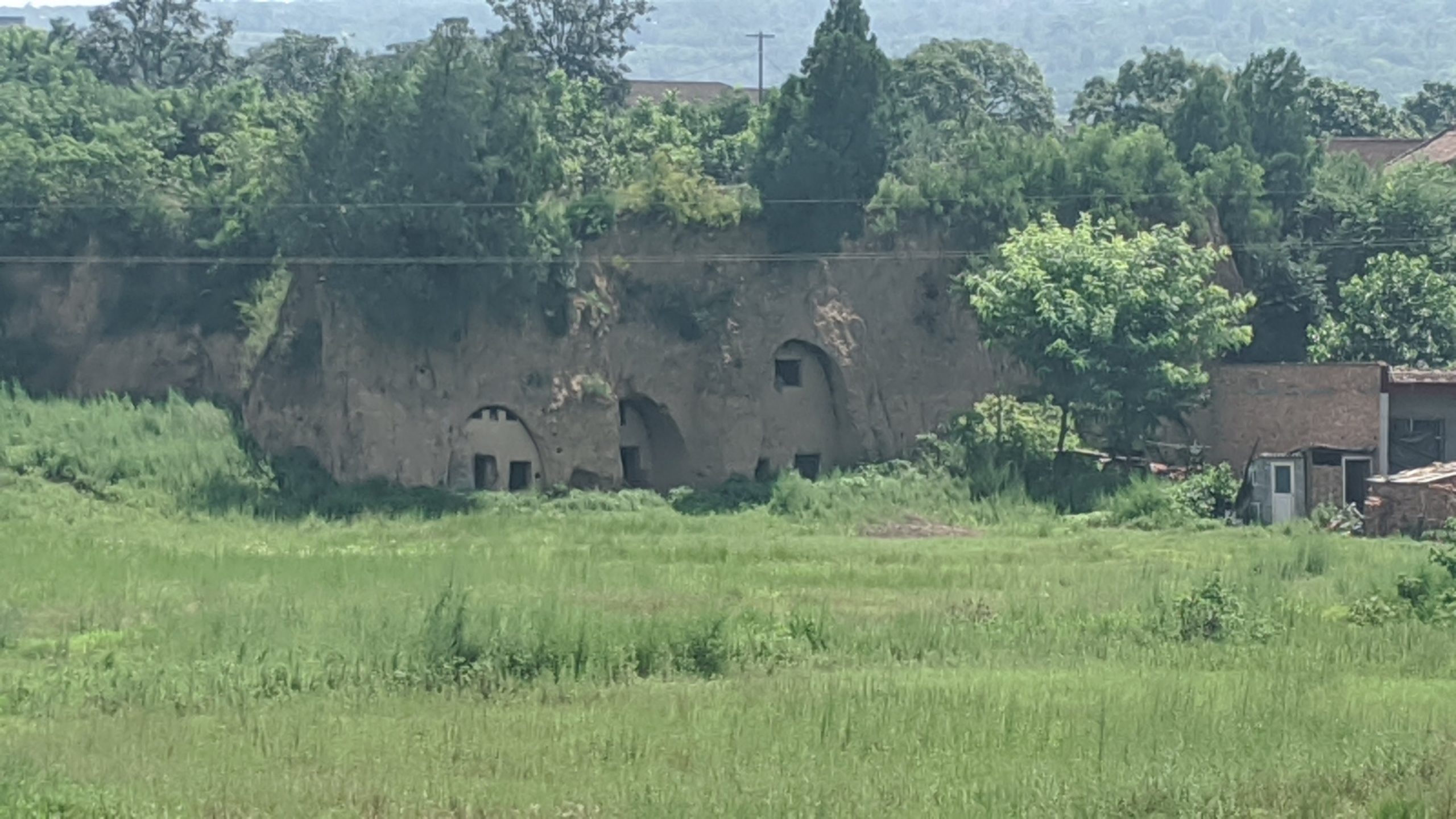
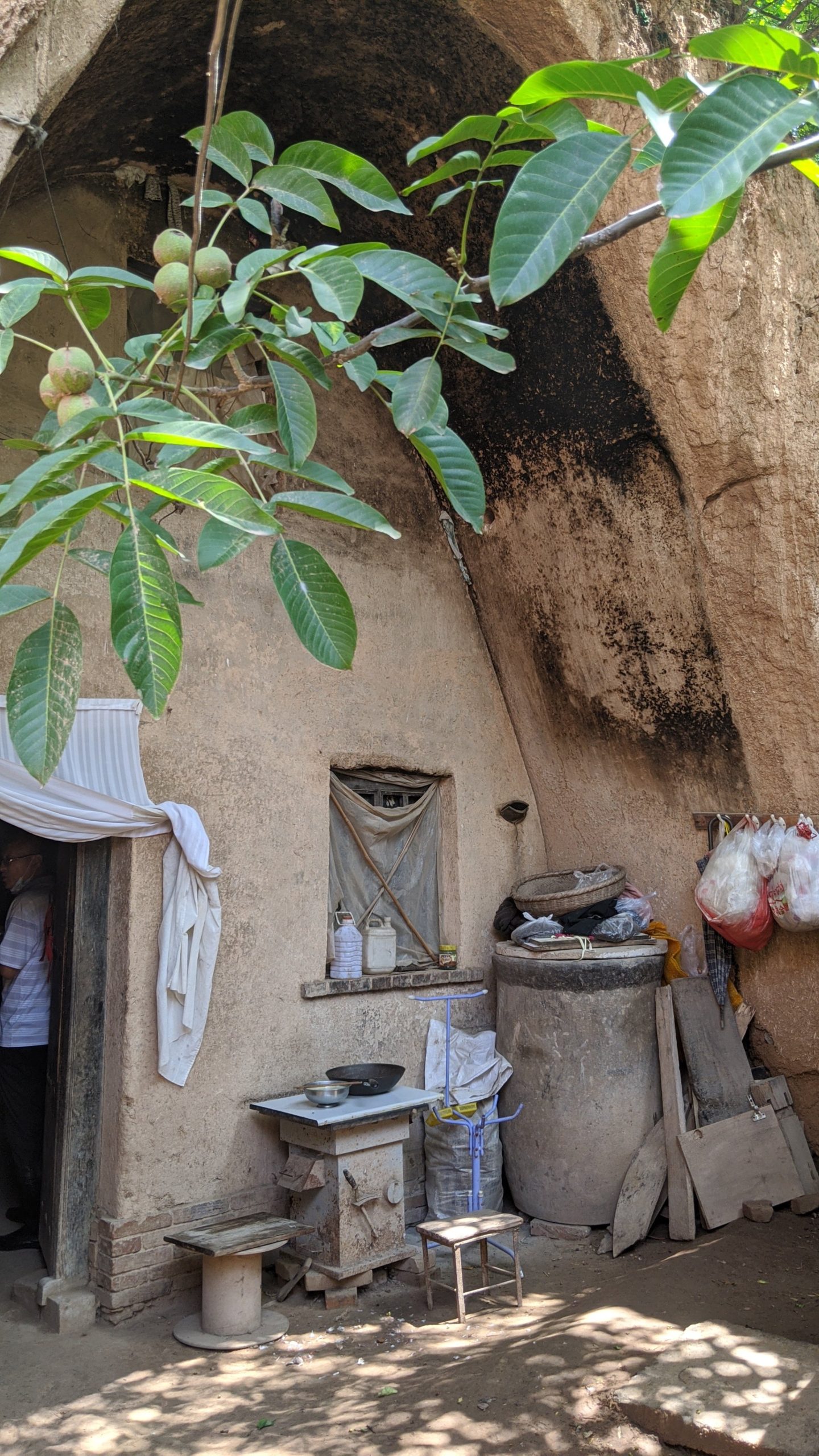
Clarence drove us to caves after the Temple and before we arrived to see the warriors. He was setting the stage for really old rural Xi’an life dating back 5000 years. The villagers today have stayed in these caves living a simple life and pass it down to their families. 20 families live here.

Clarence. Or tour guide and owner of the apartments. Really nice guy.
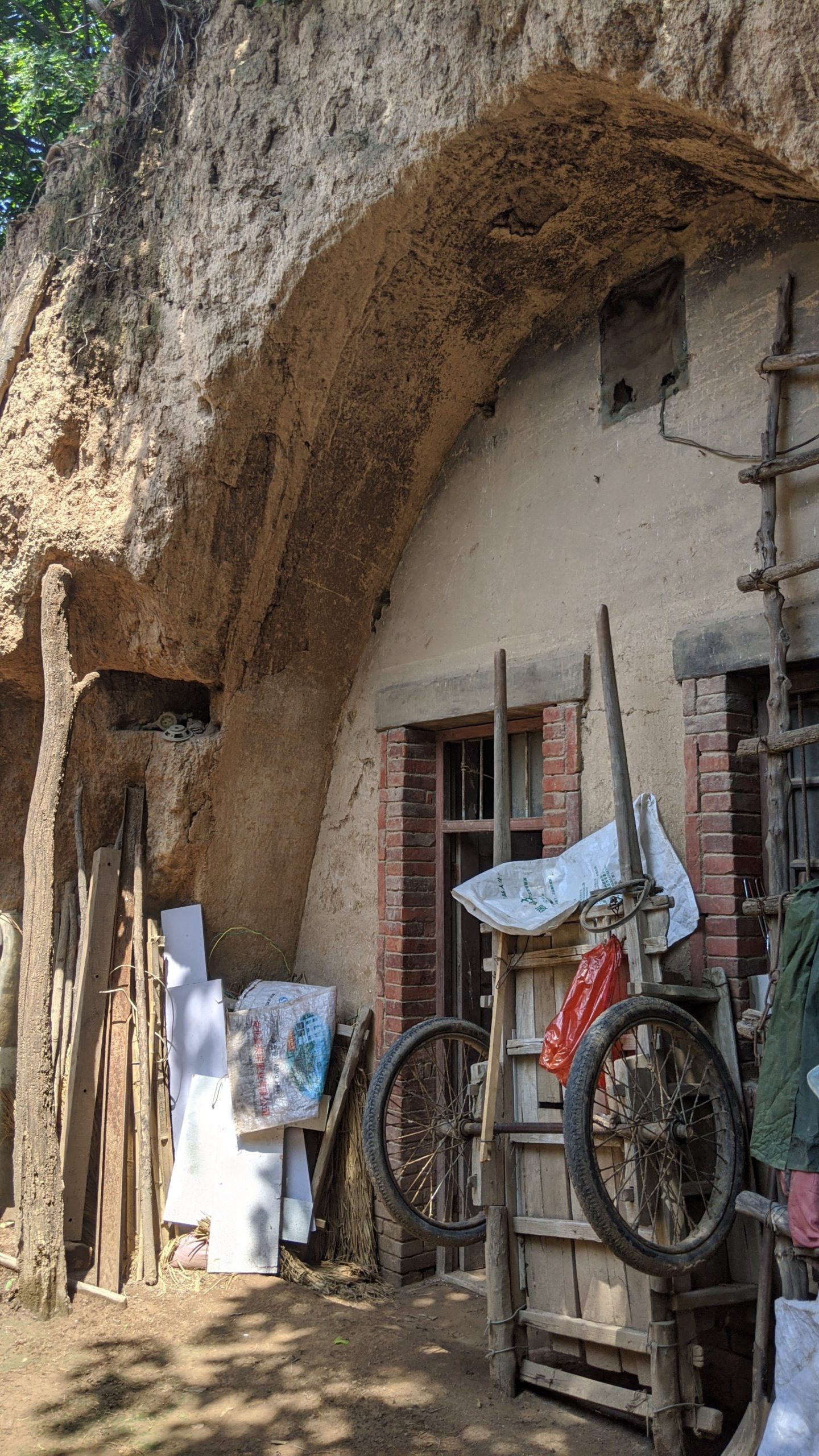
The caves.
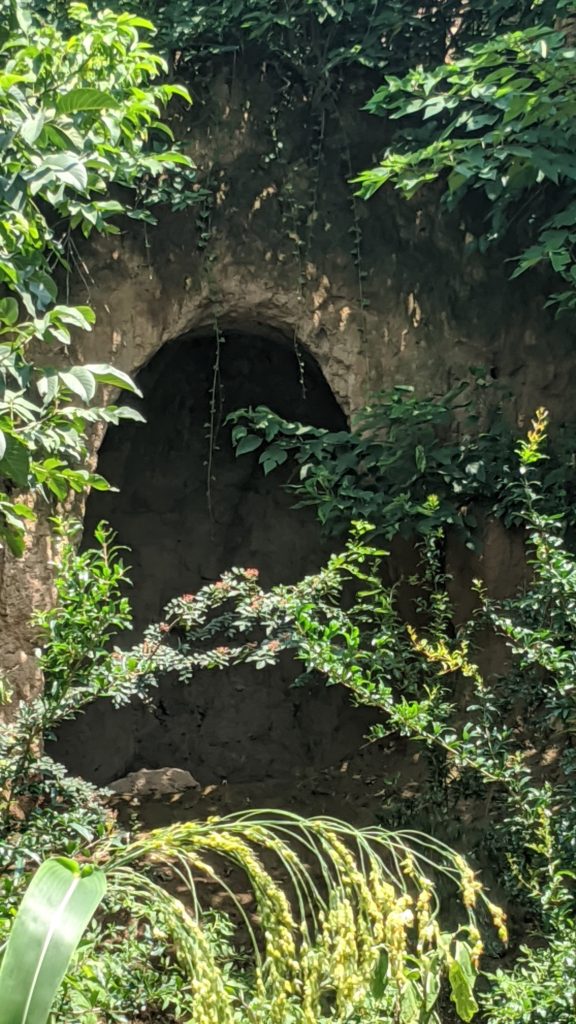
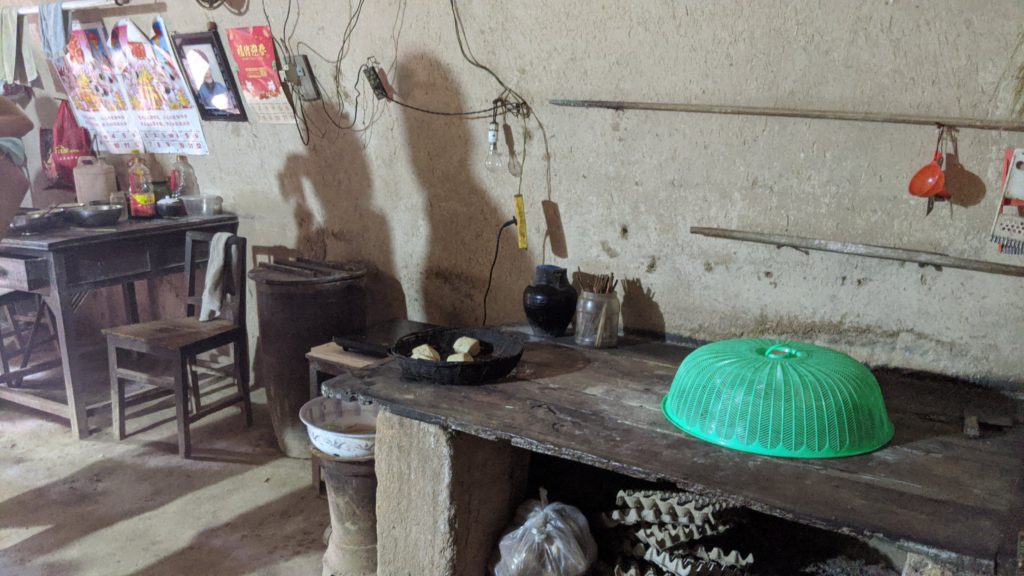
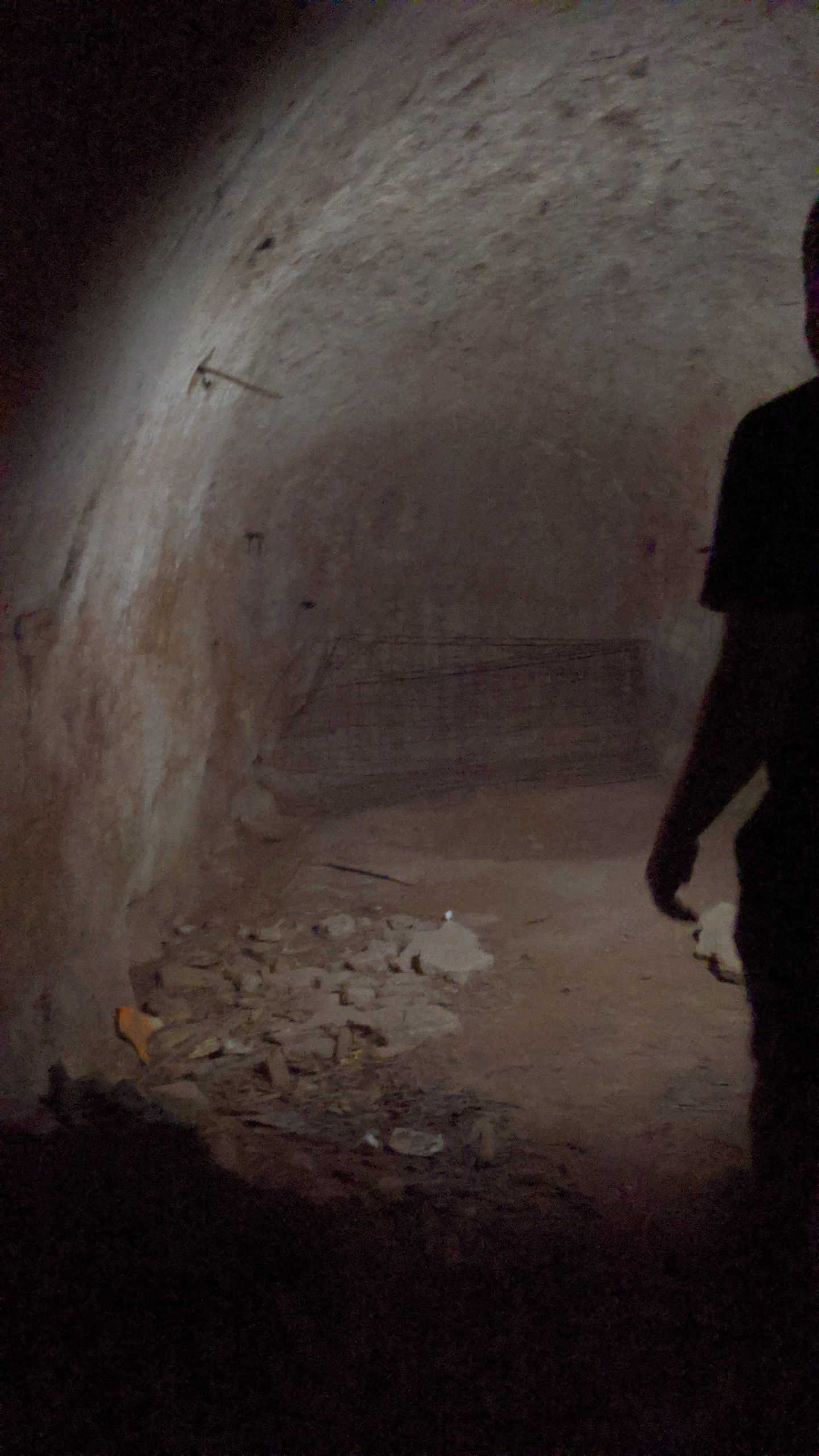
Inside the cave is one big room with other rooms behind it.
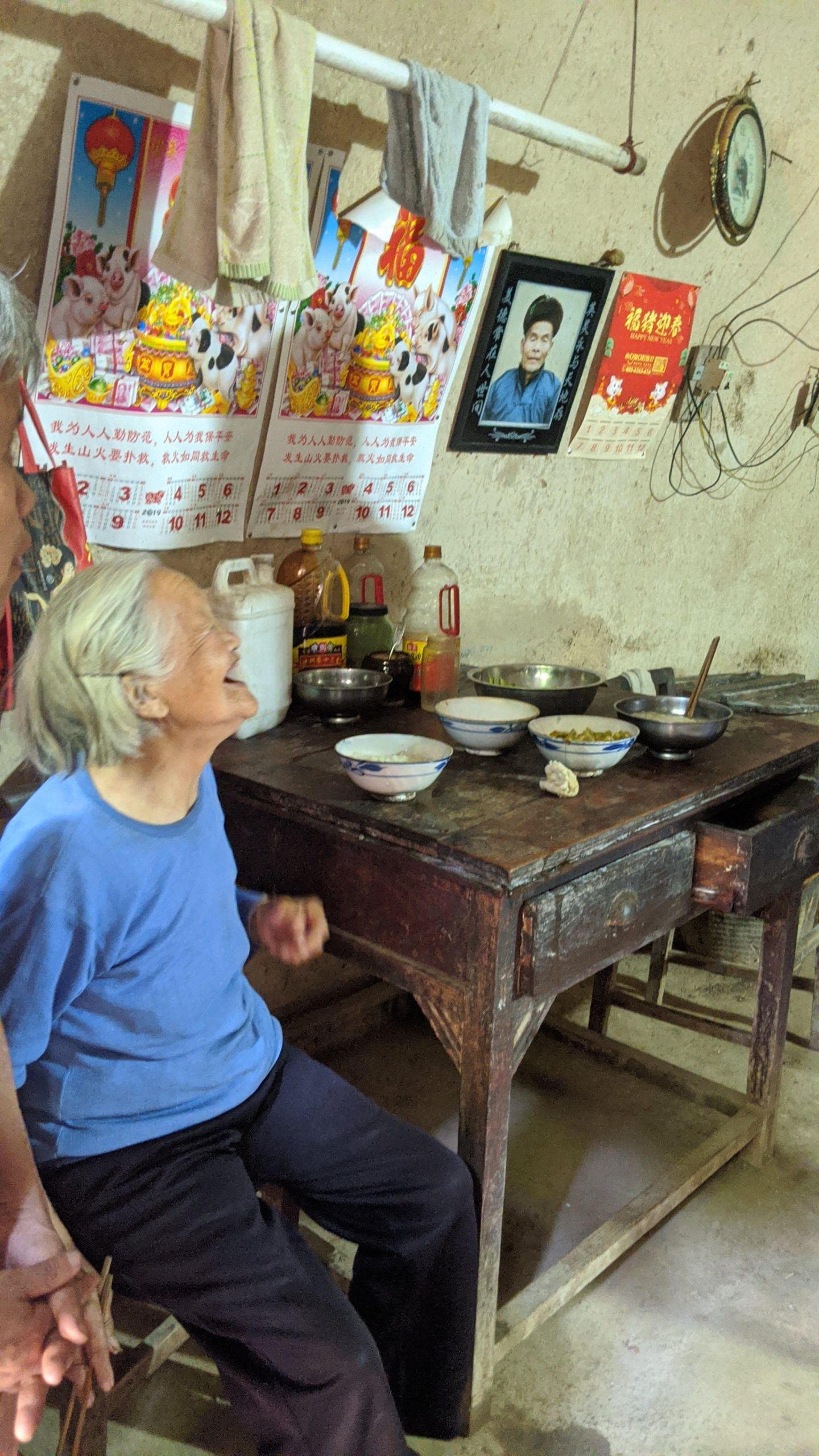
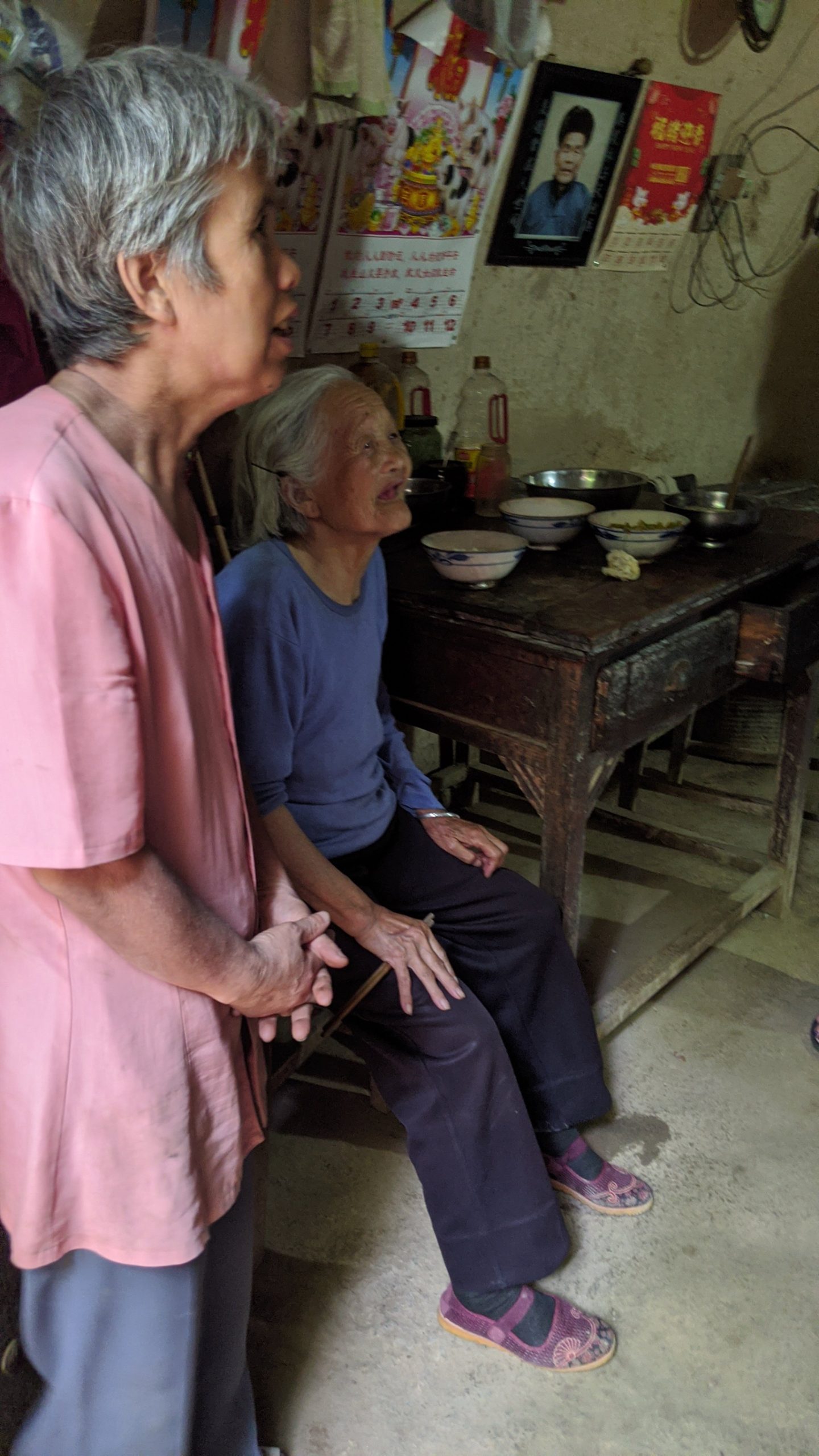
This woman is 85.
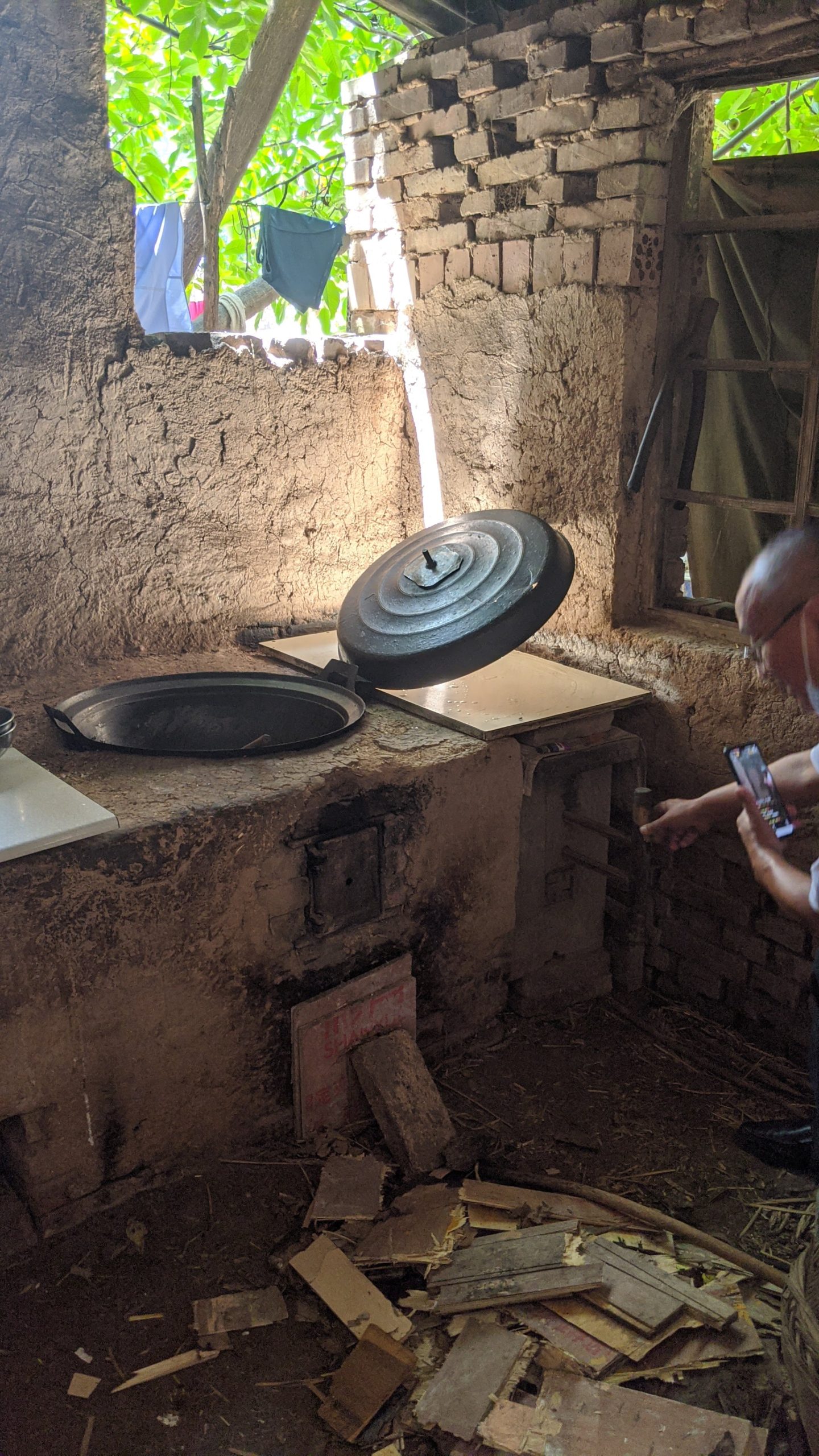
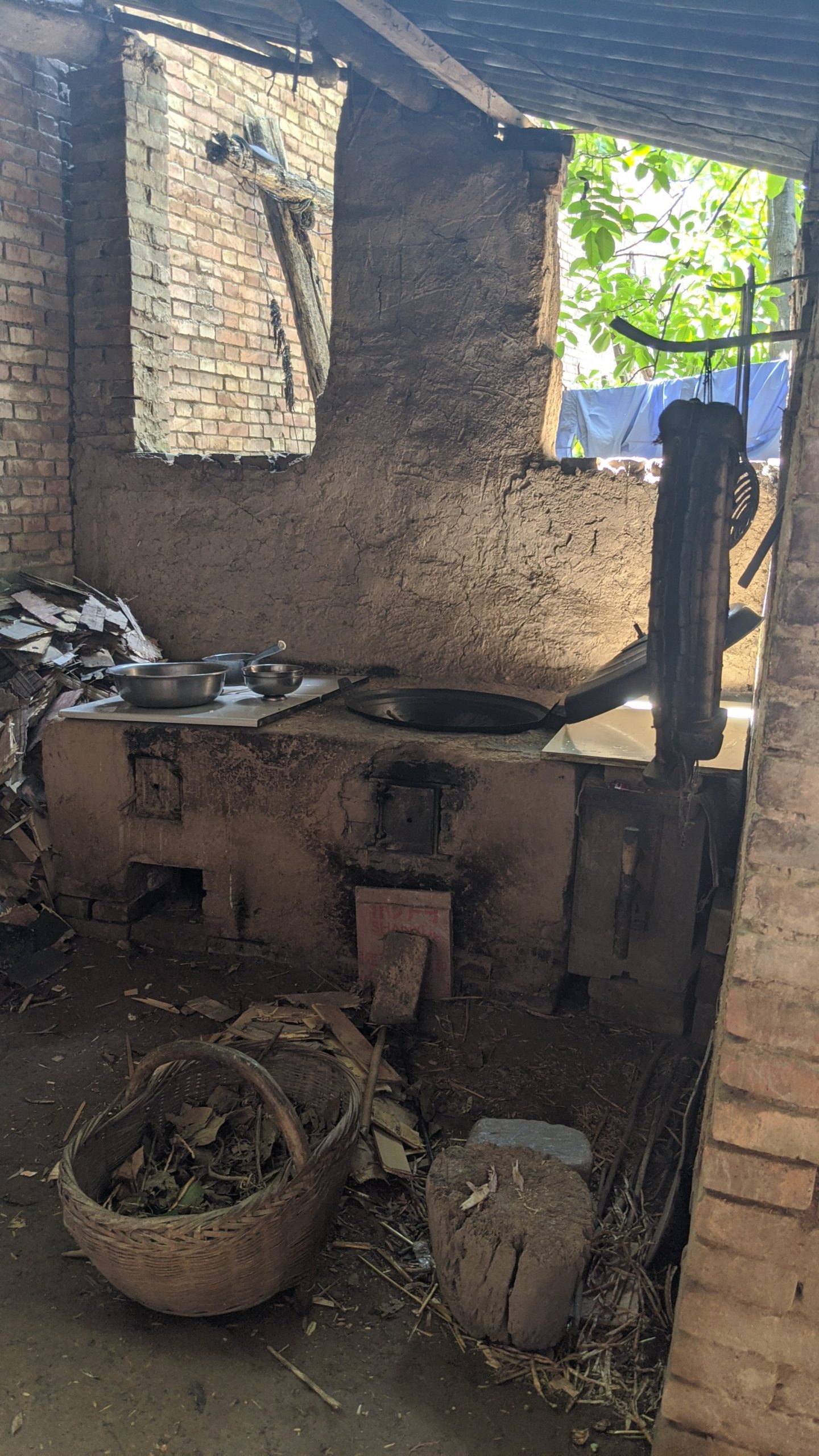
The kitchen is outside and on the right you can push and pull the bellows to fan the flames.
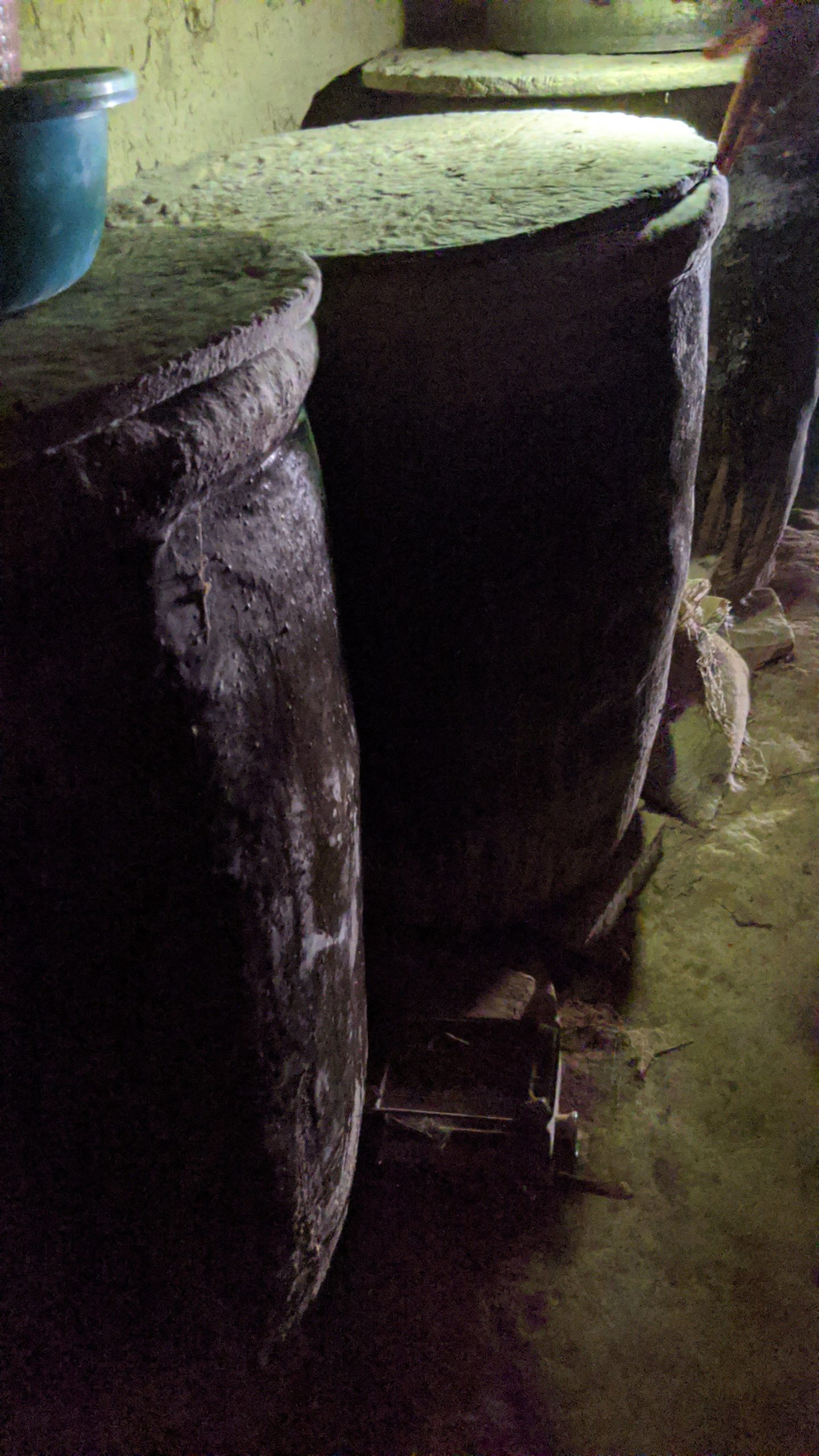
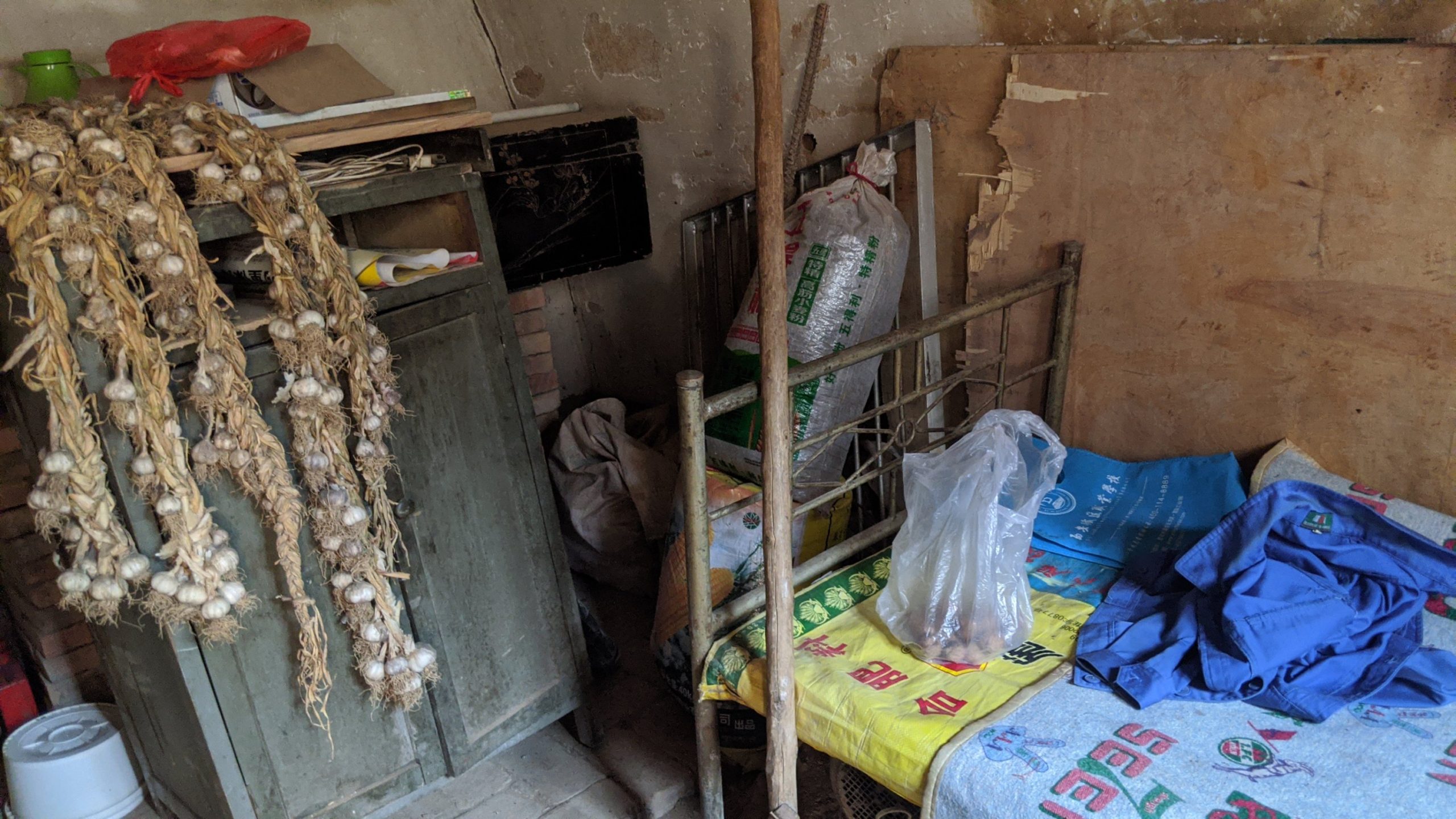
Grain storage.
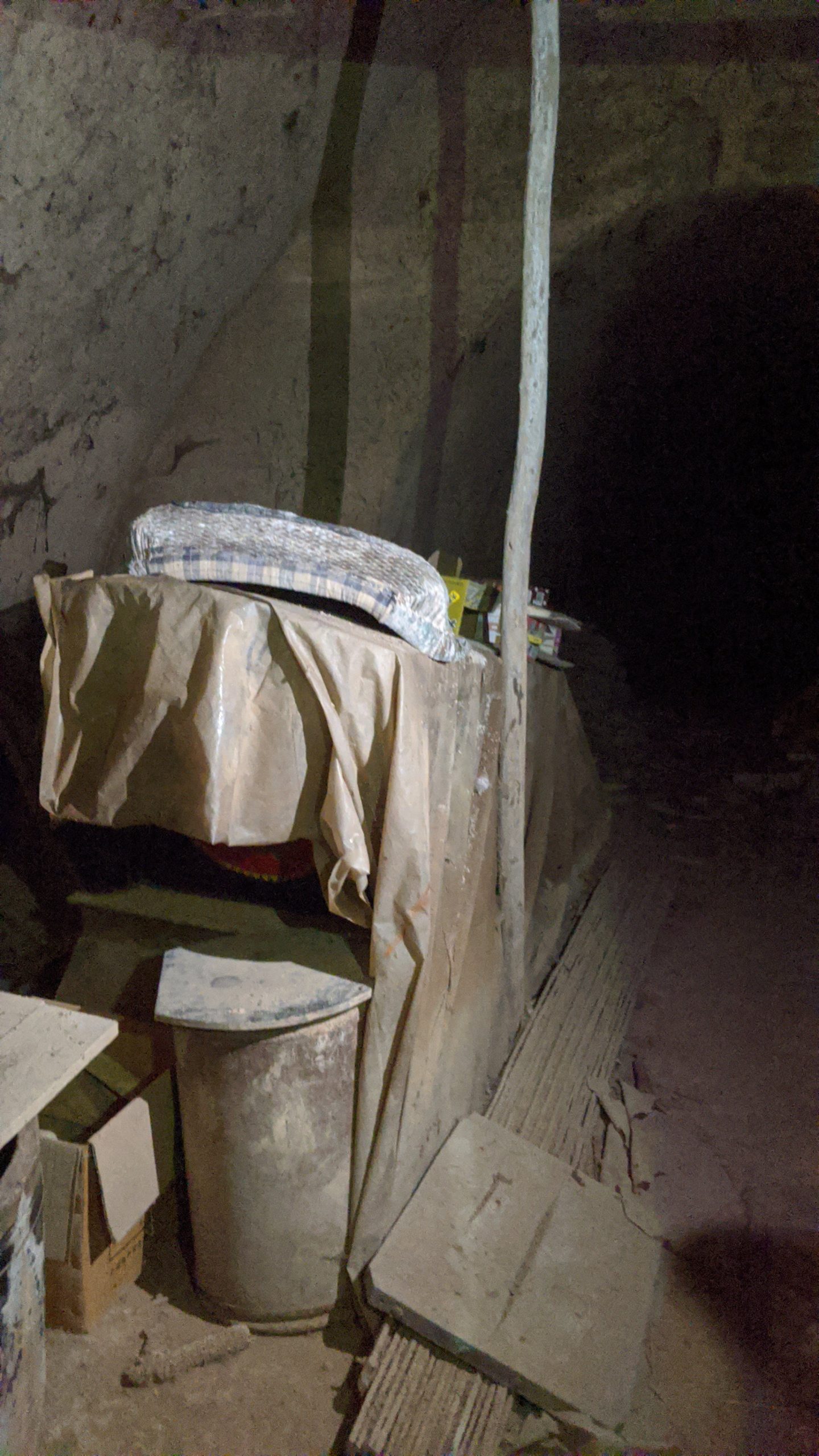
The old woman has already prepared hey coffin for when she dies.
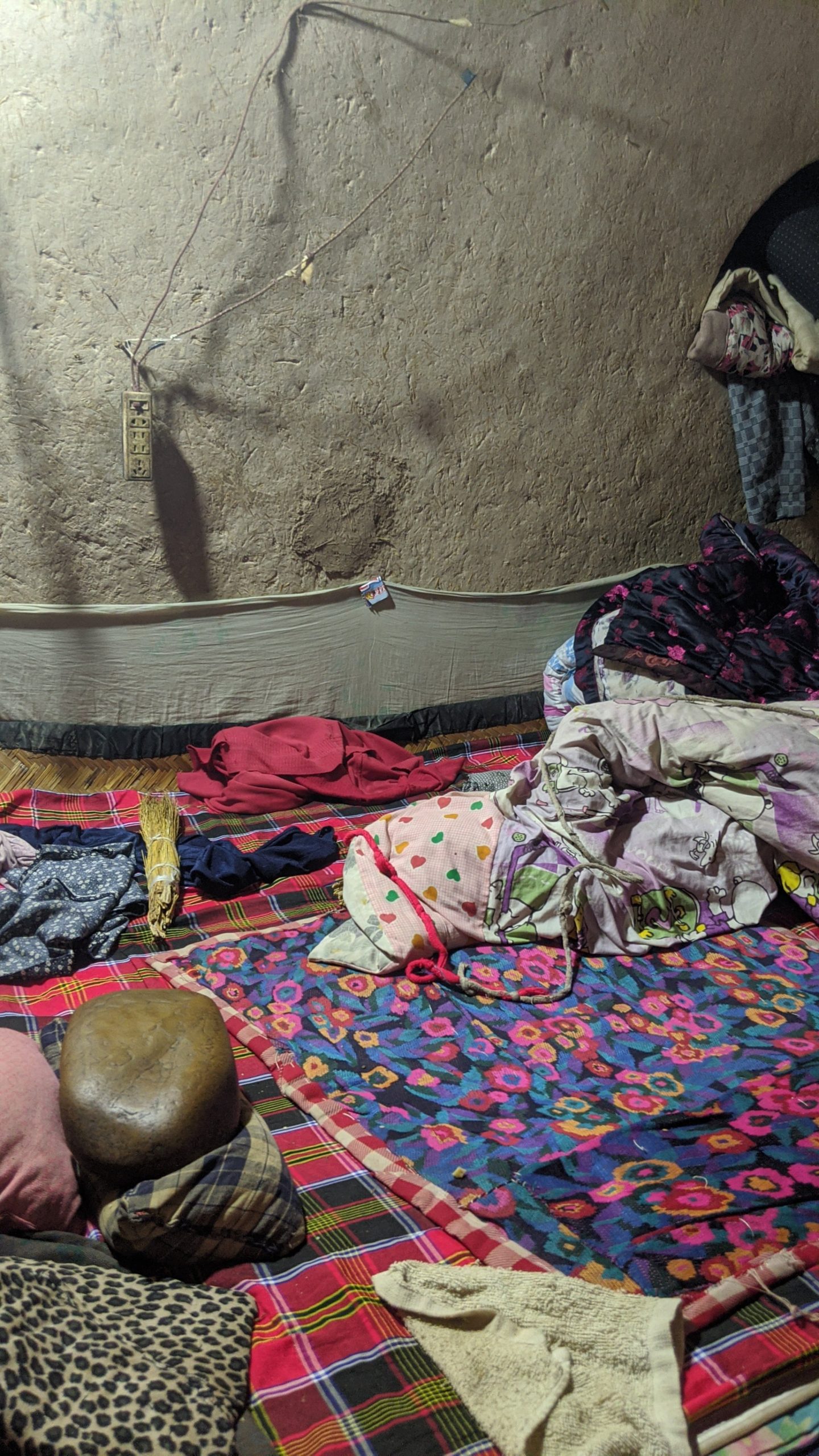
Like the Japanese, they use hard surfaces for a pillow. Here they use a smooth rock.
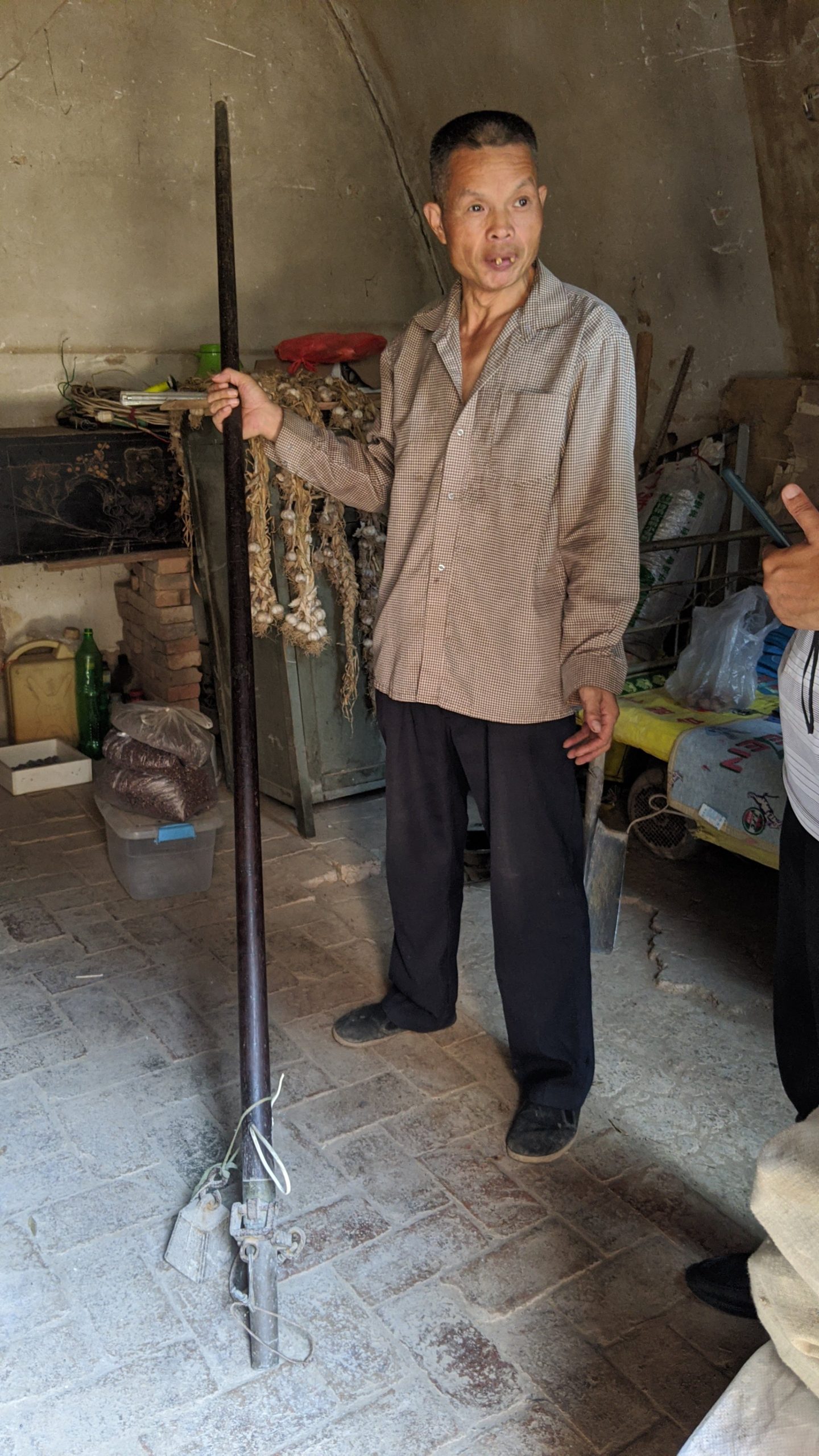
This is used to measure the weight of produce as they are farmers that sell to people in the market.
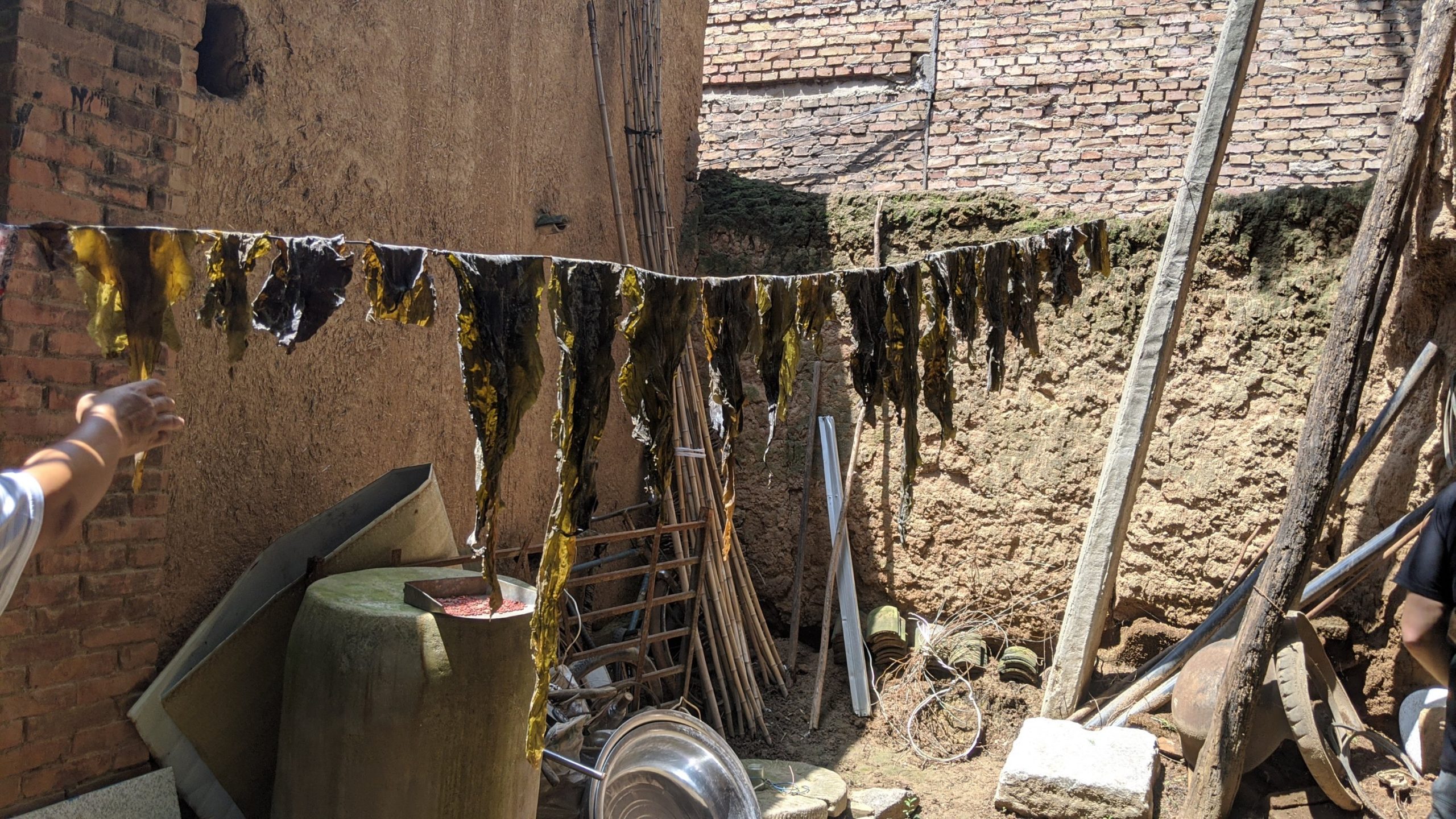
Drying seaweed.
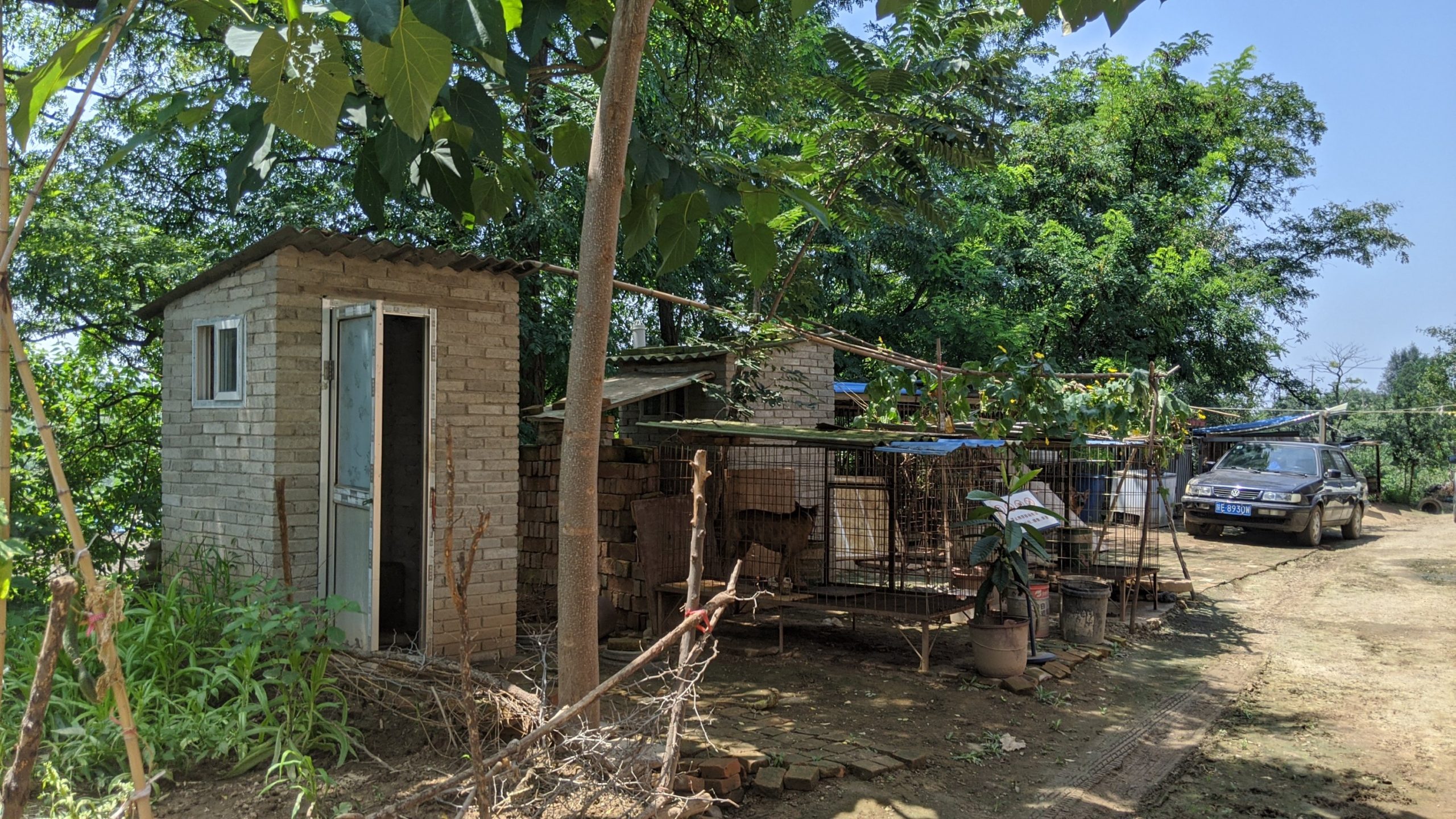
Community bathroom. To the right are did kennels. Unfortunately, one villager breeds dogs to sell for dog fighting. Yes they are pit bulls which are illegal in China.

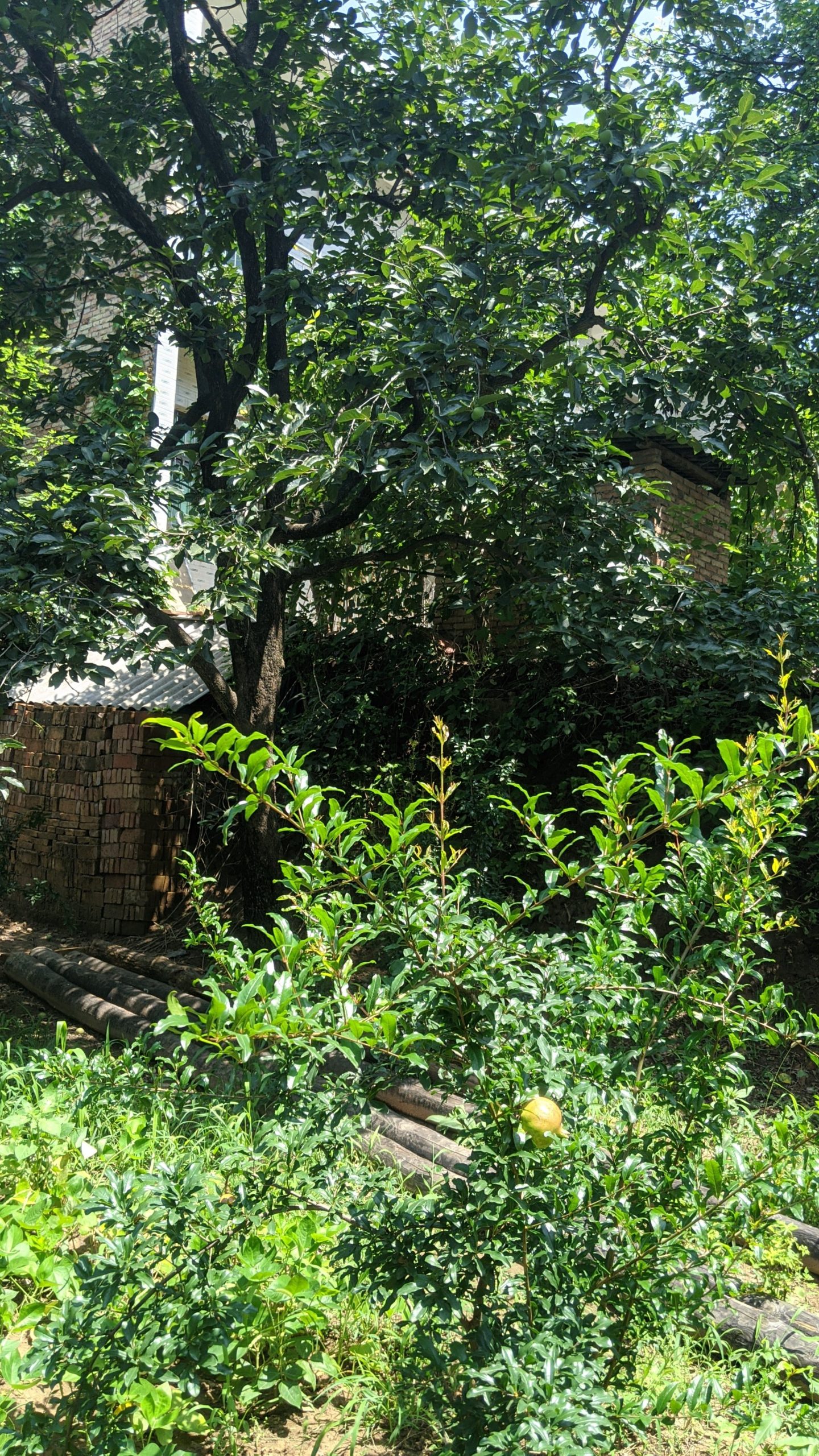
They have walnut trees and many others. In the front is pomegranate. Behind is a persimmon tree.

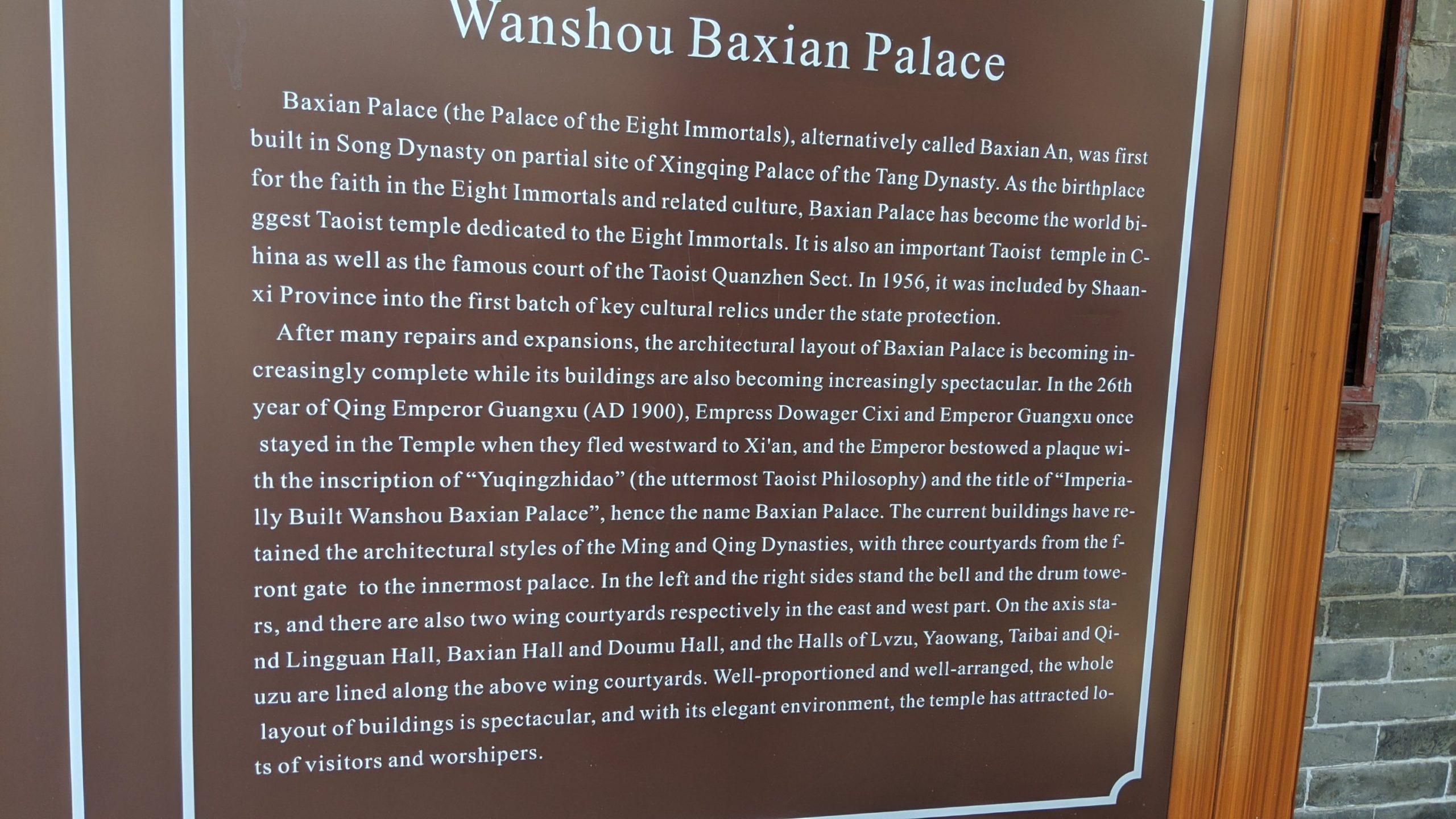
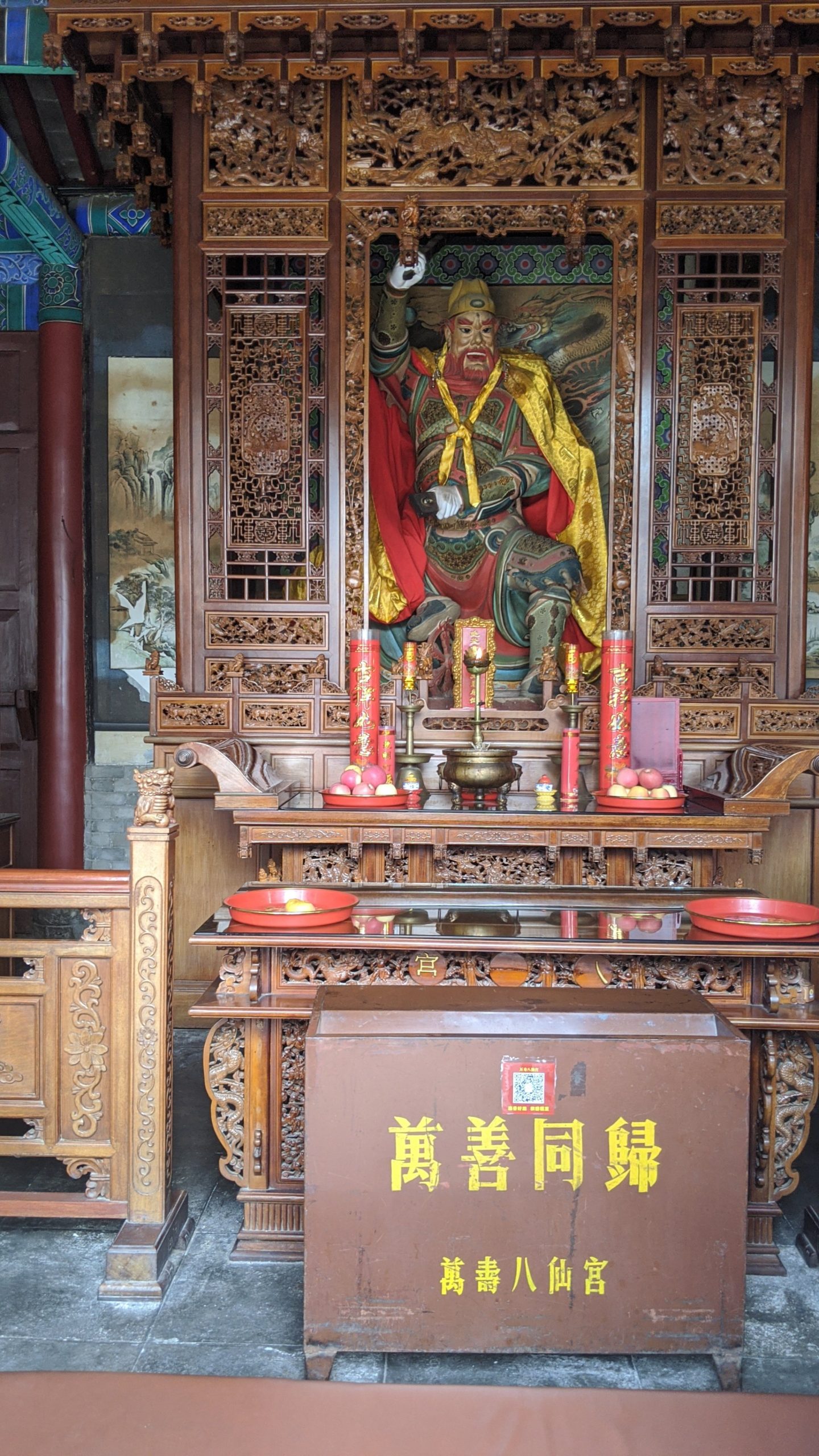
Ba Xian An, Temple of the 8 immortals

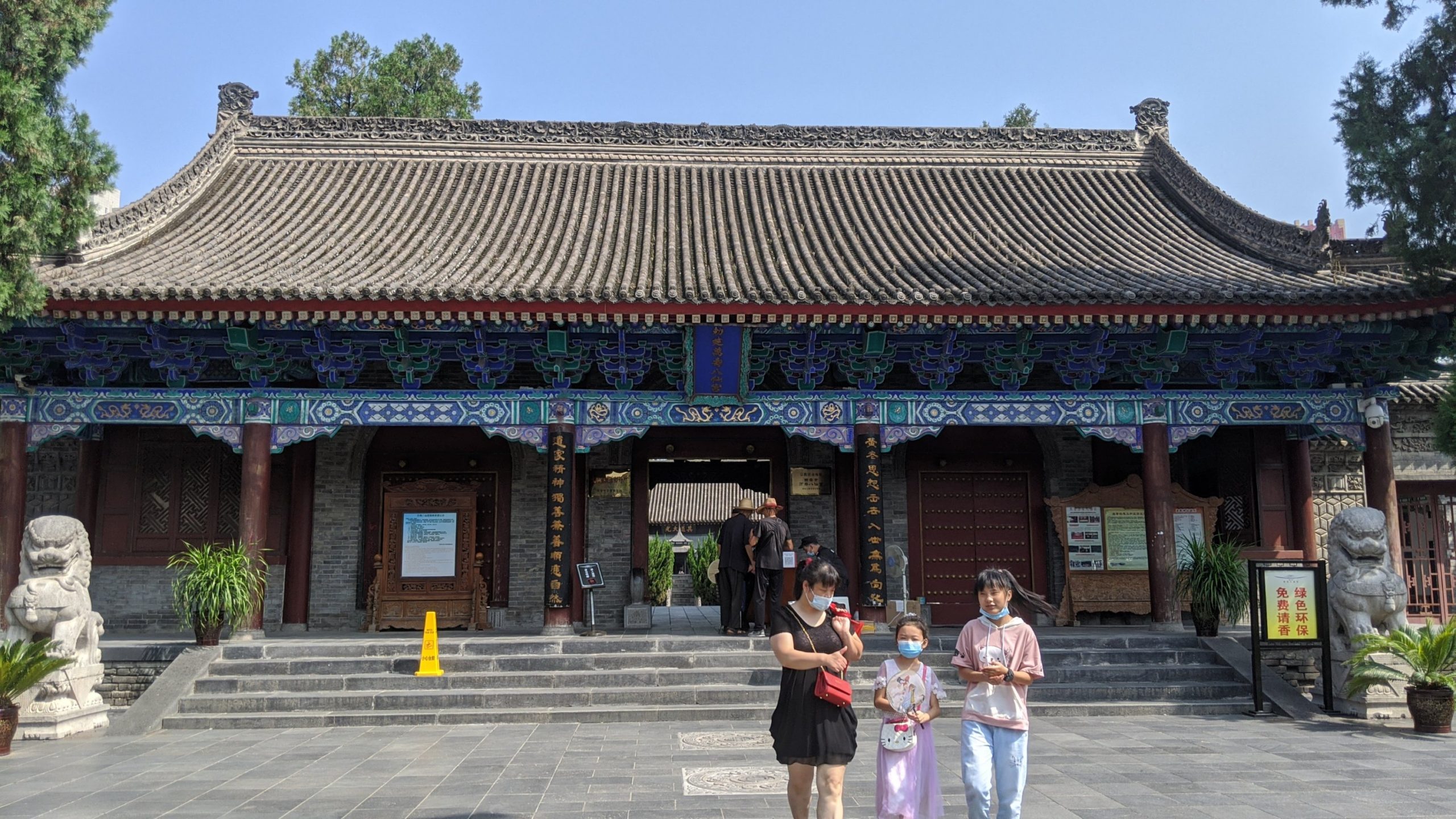
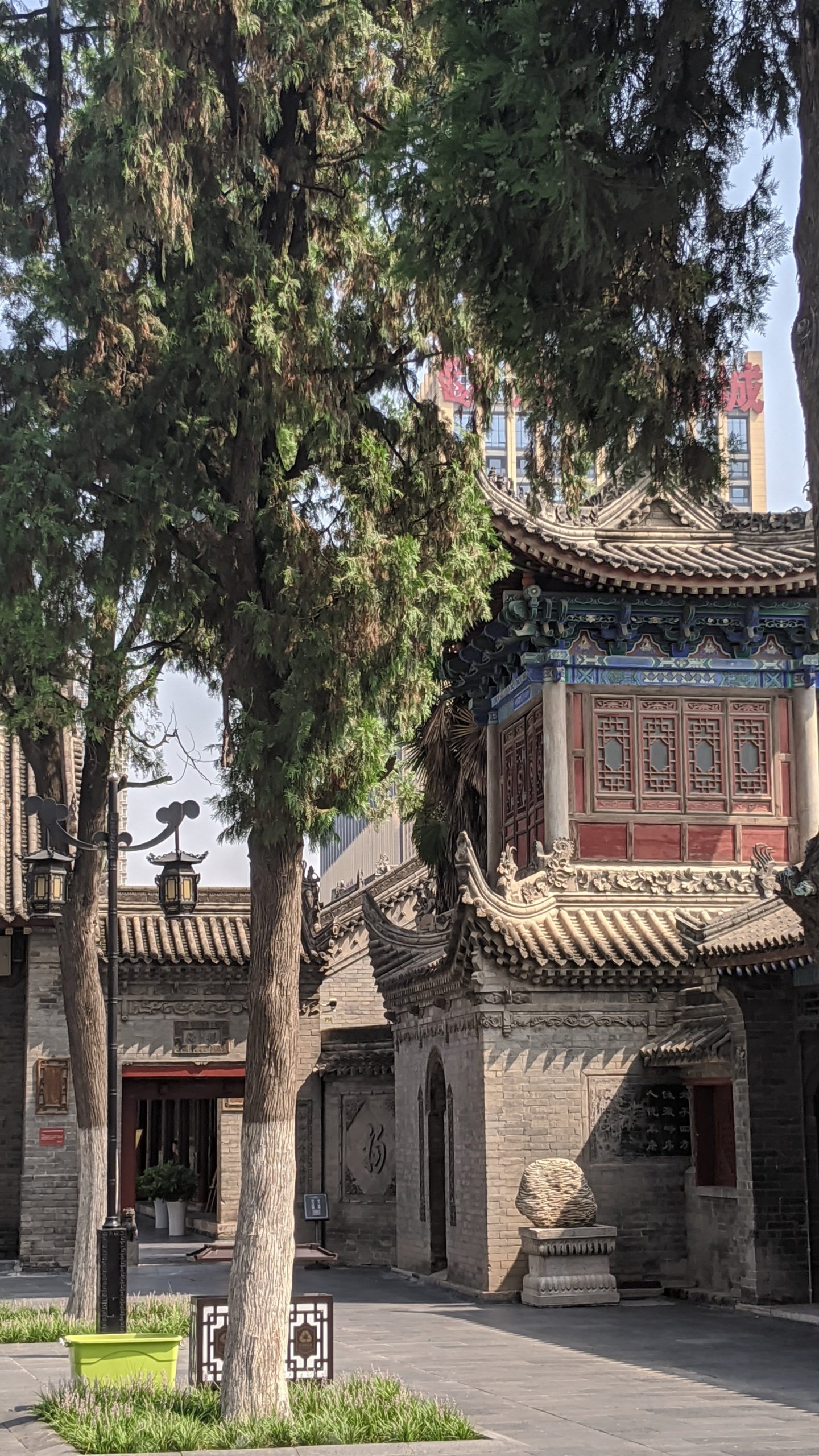
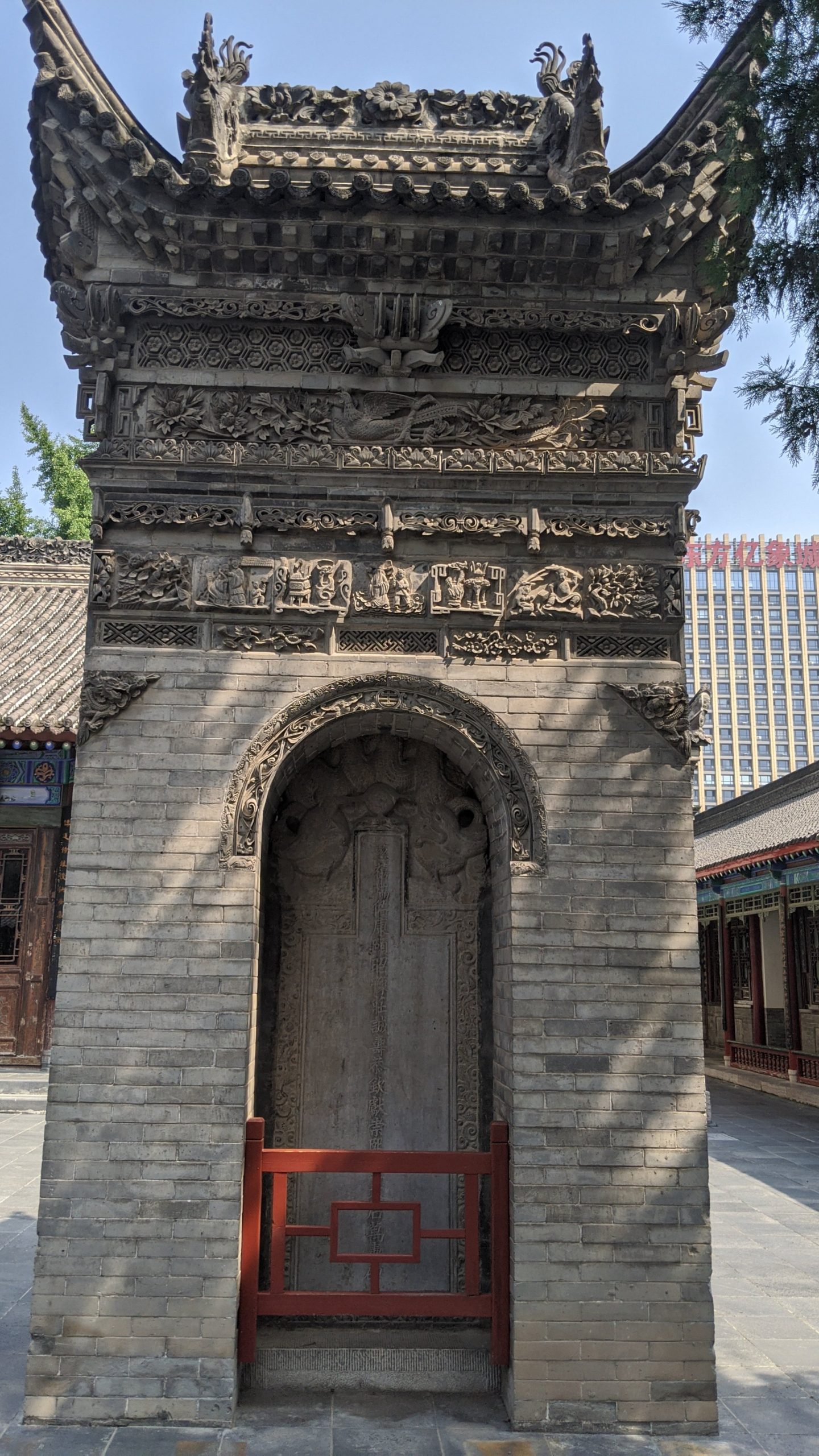
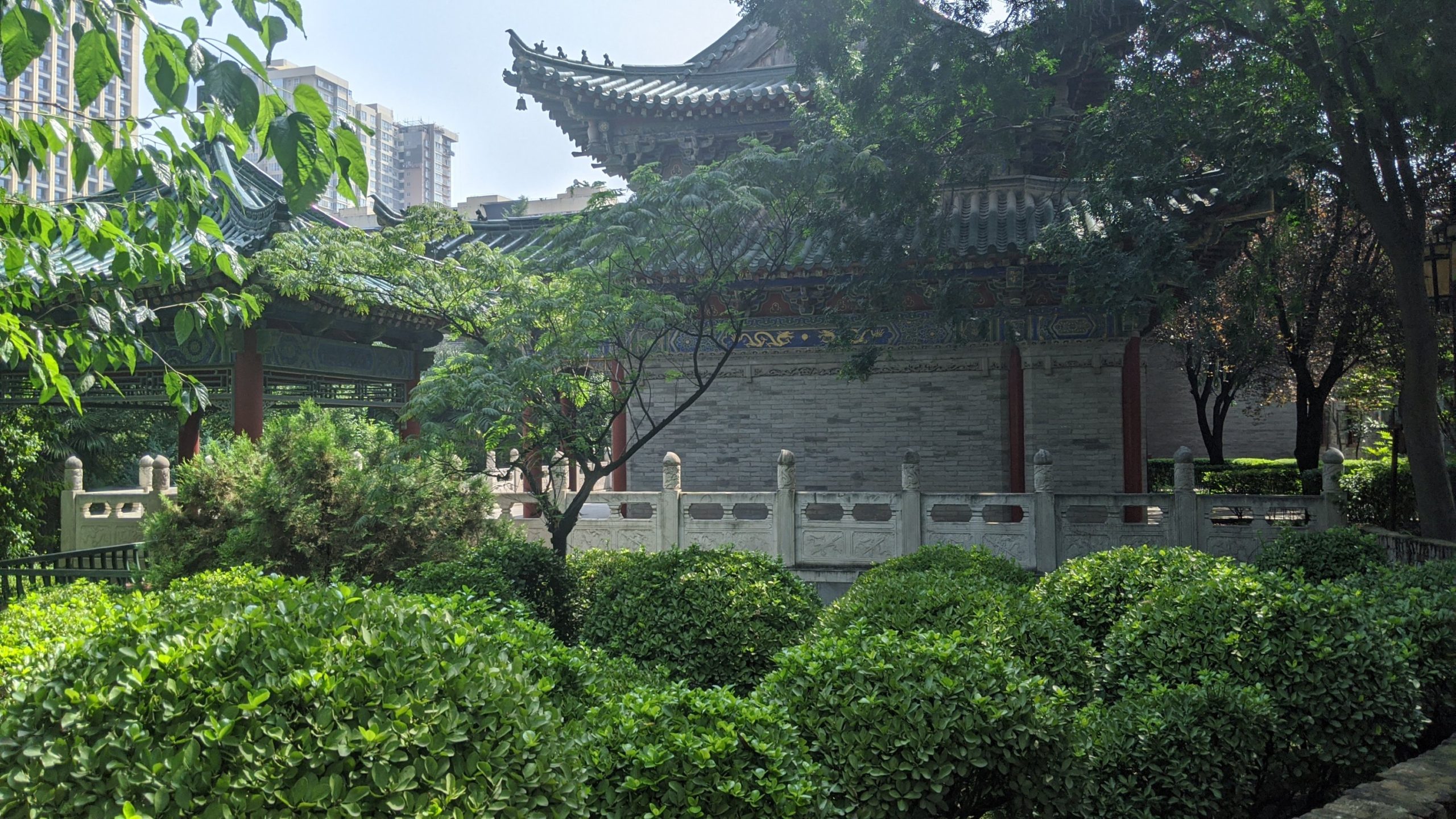
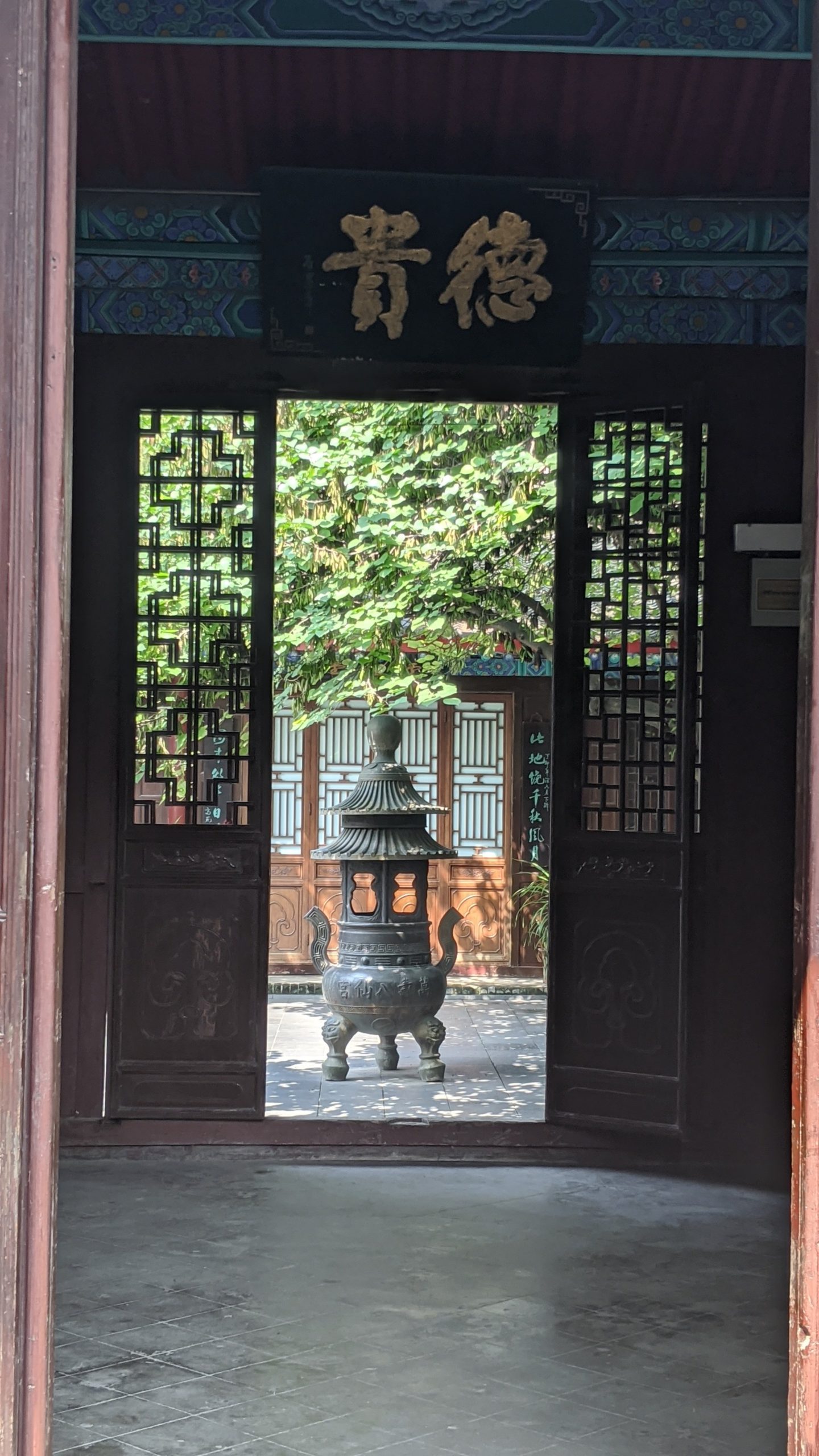
This is the biggest Taoist temple in Xi’an and is a famous Taoist architecture in northwest China. This was built in the Song Dynasty but the fastest renovation was in the Qing Dynasty. This place is very peaceful and serene and why I was attracted to chinese culture.

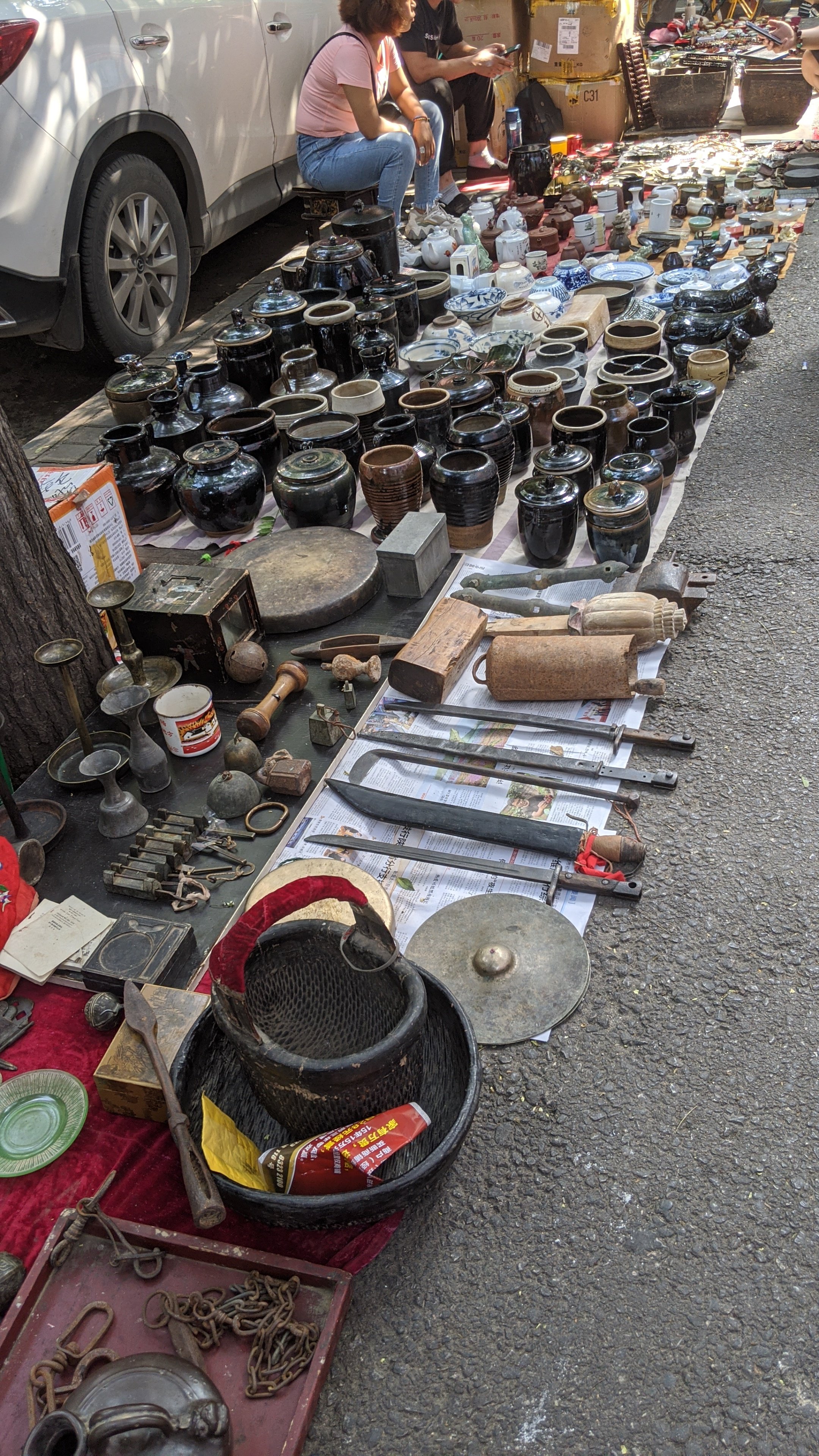
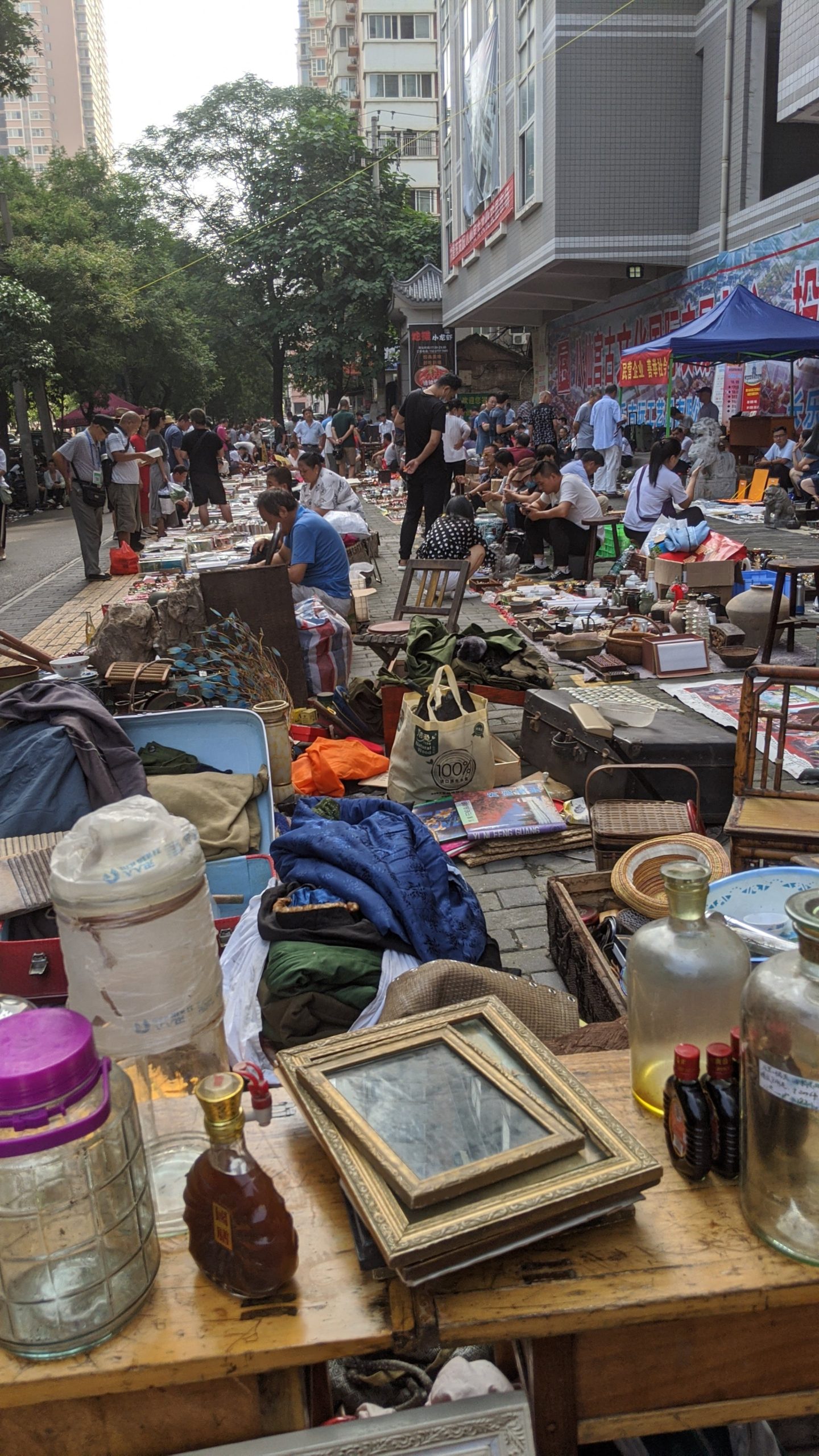
Outside of the Temple were antique sellers on the outer streets leading to the temple.

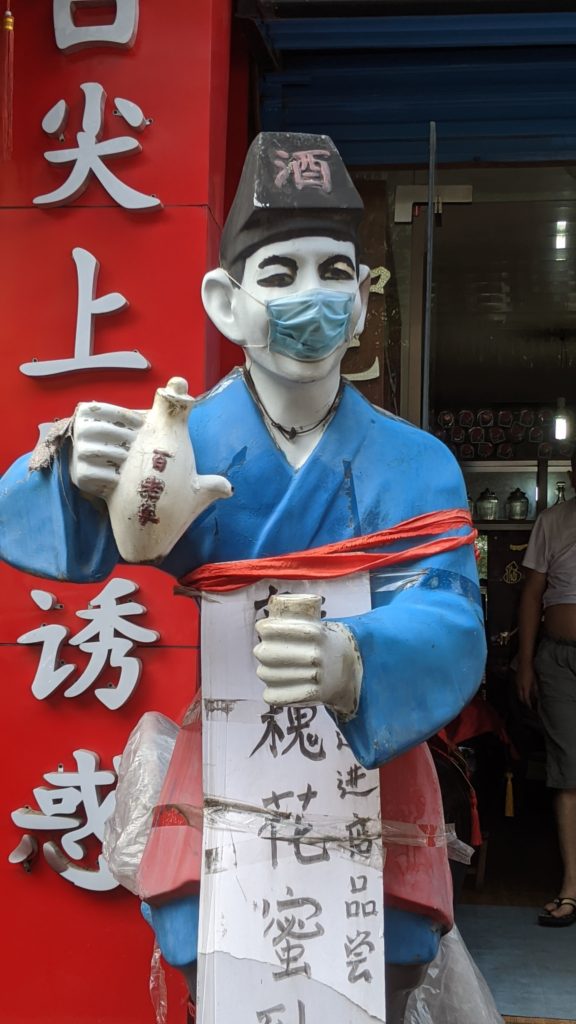
A sign of our pandemic times.

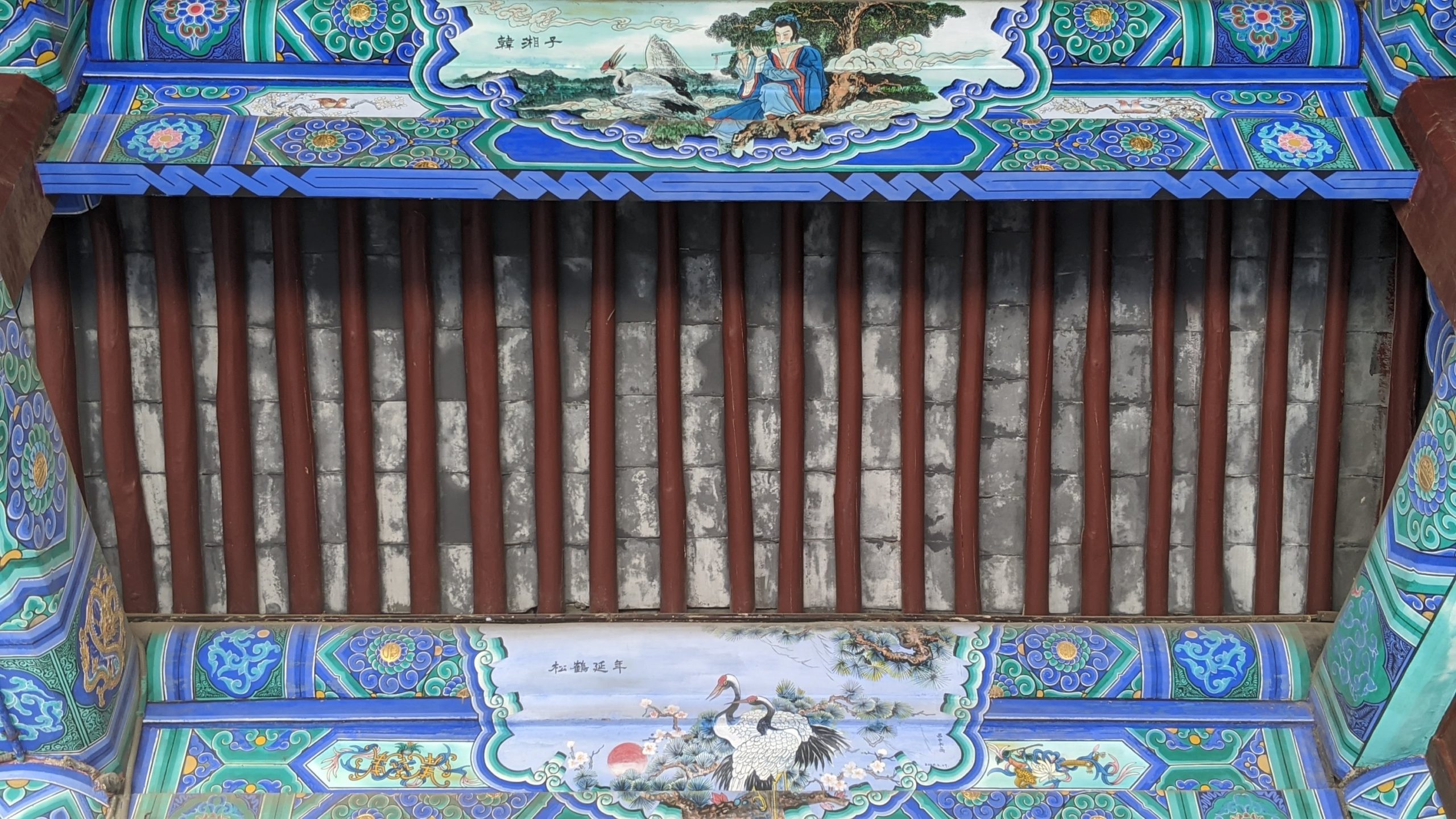
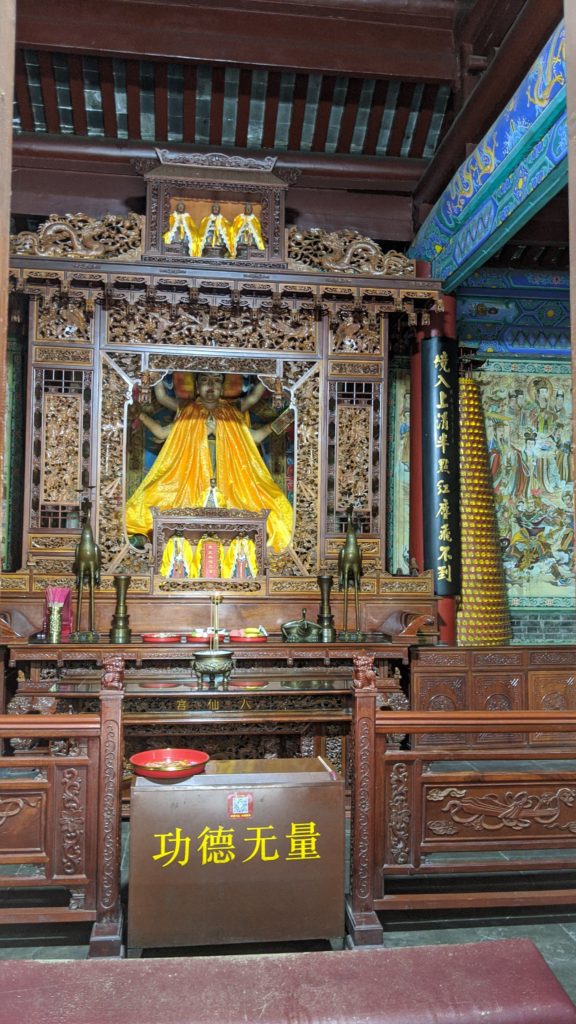
The immortals are legendary in Chinese mythology. Each immortals power can be transferred to a vessel to bestow life or destroy evil. One of the immortals is female. The may have been named after the 8 immortal scholars in the Han Dynasty.

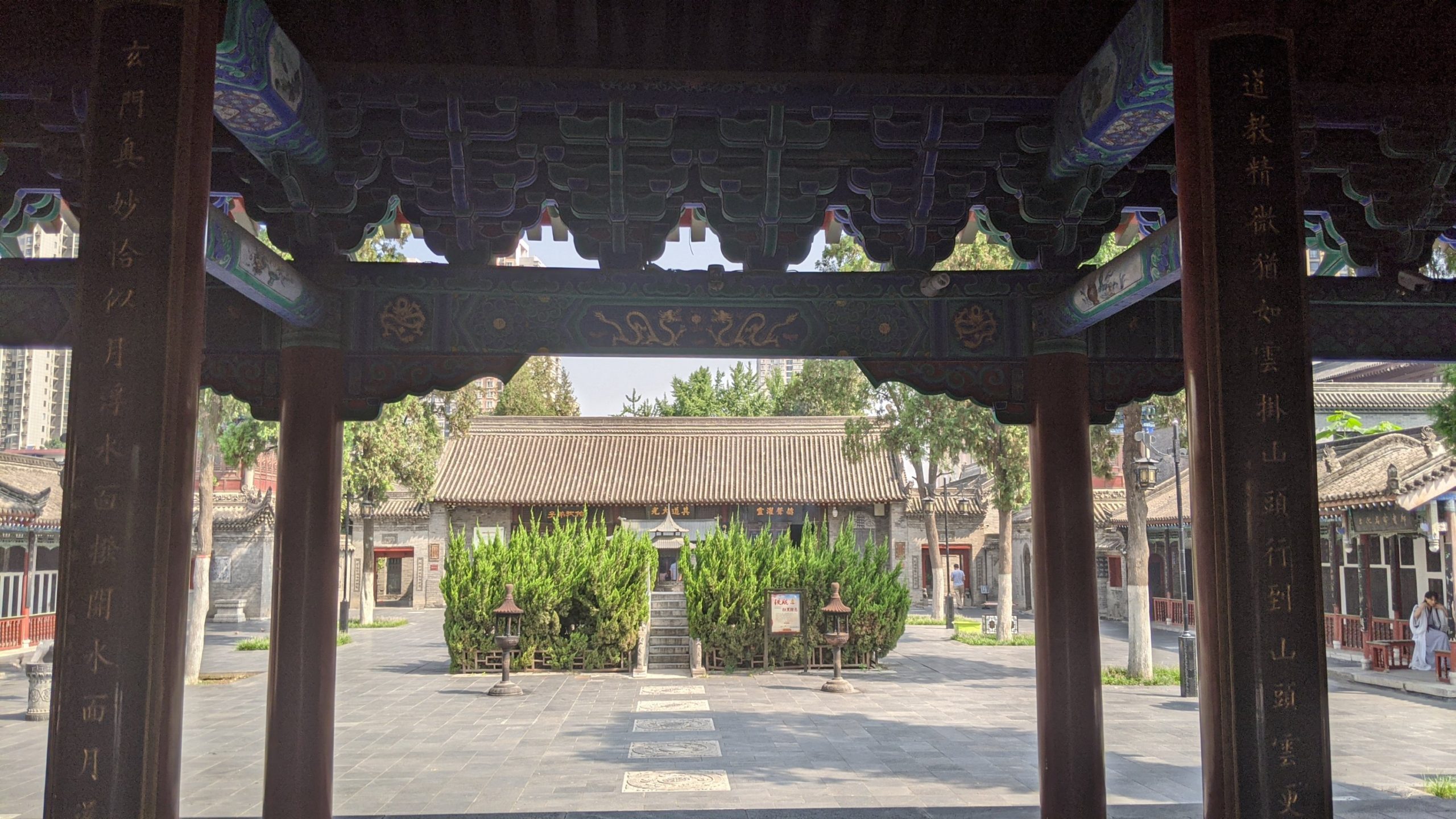
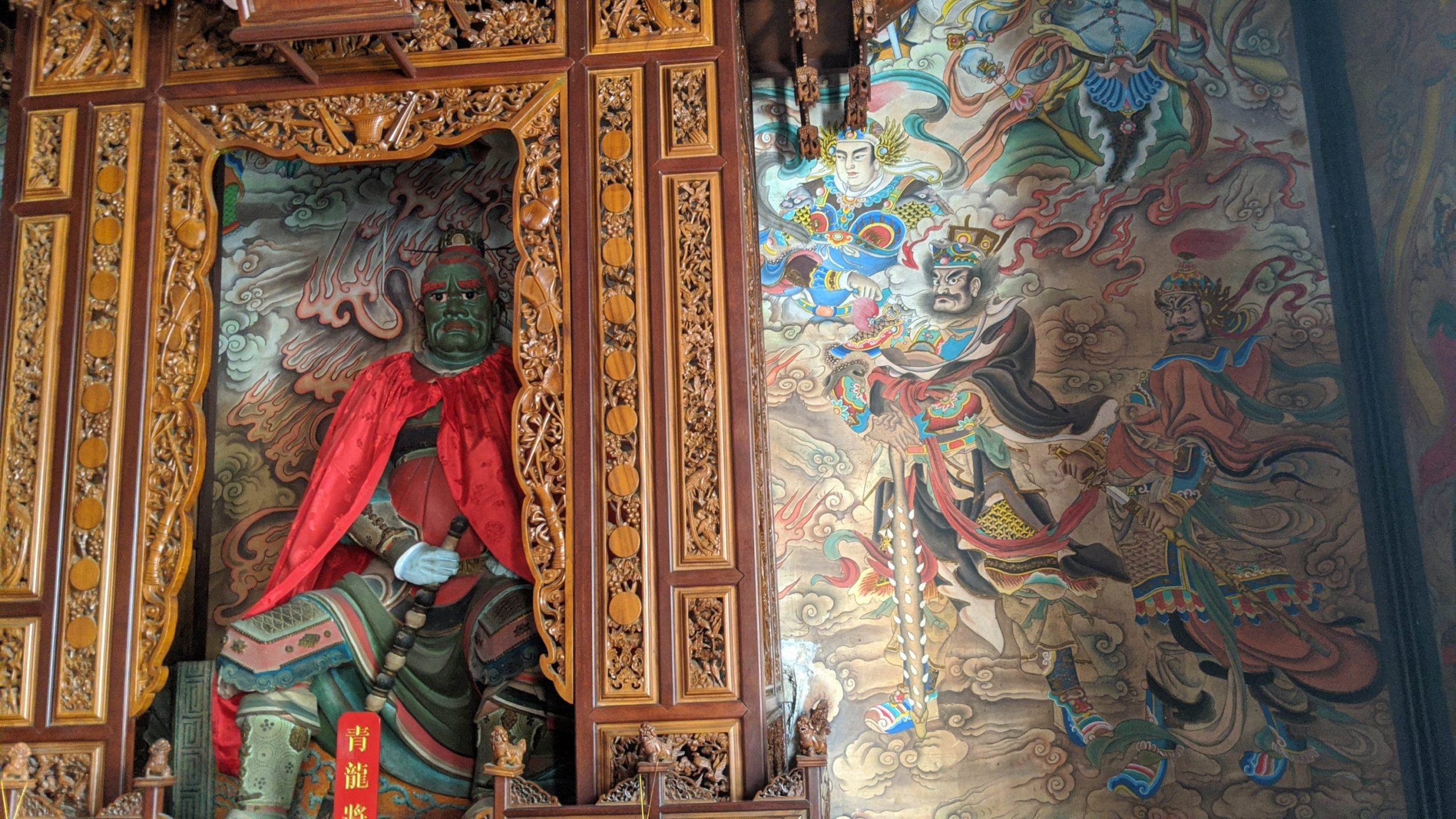
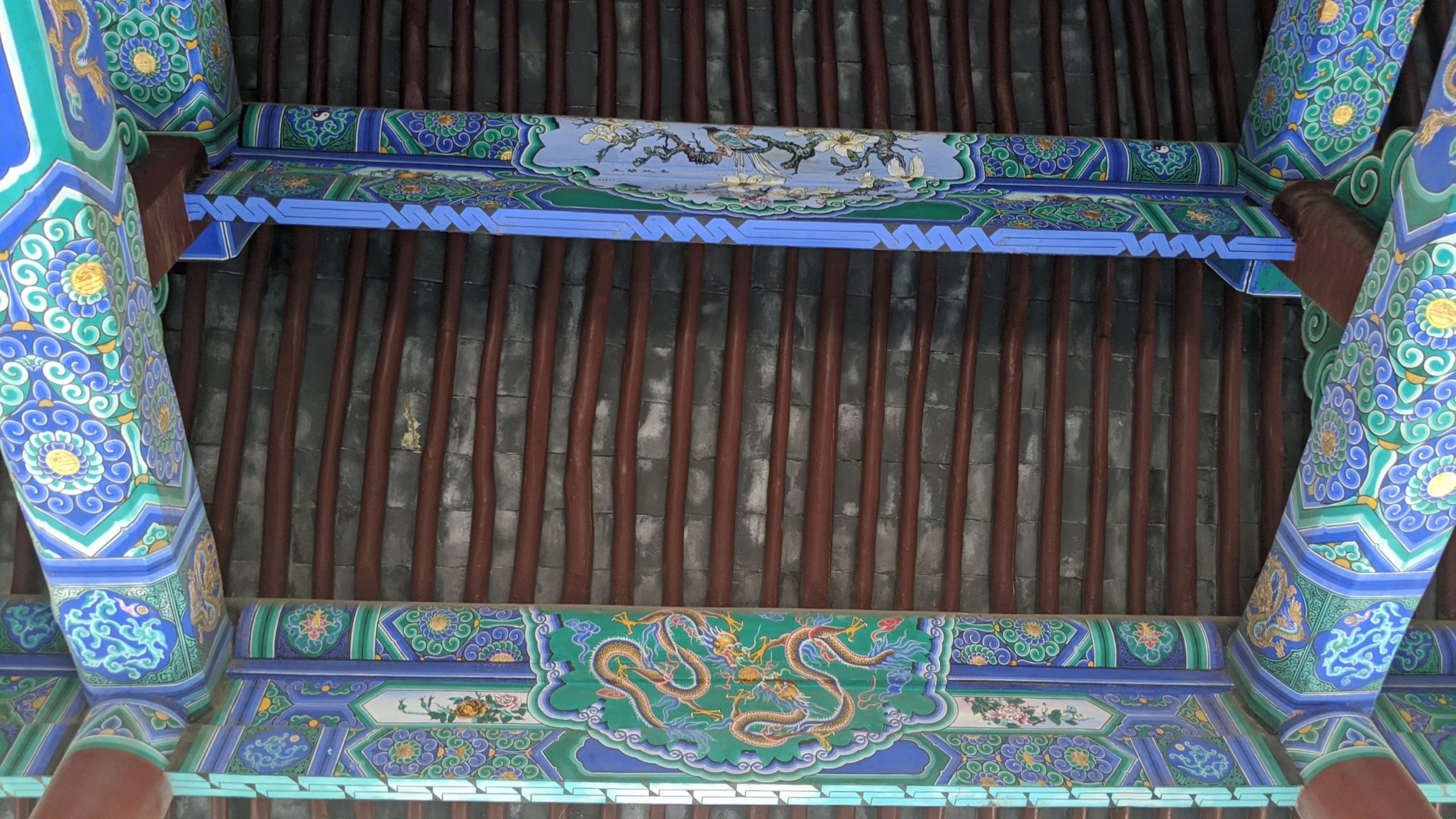
The paintings in the ceiling are impressive.

Taoism is based upon the writing of Lao-tzu from the 6th century BC. It is based upon humility, living in harmony with the Tao, and religious piety. It is the oldest religion in the world and as much philosophy as it is religion:

It emphasizes doing what is natural and “going with the flow” in accordance with the Tao (or Dao), a cosmic force which flows through all things and binds and releases them.

https://www.ancient.eu/Taoism/

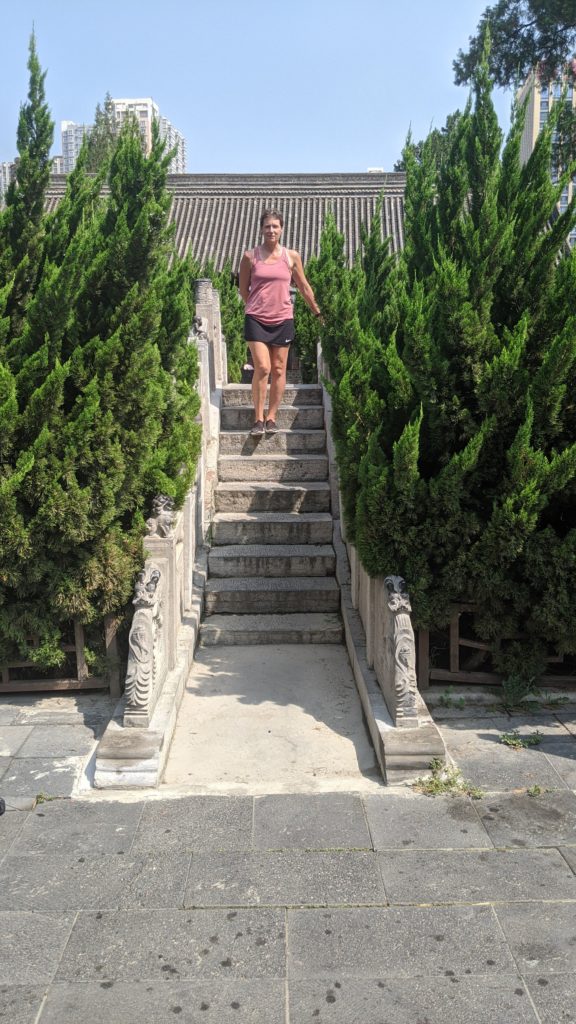
Taoist temples are usually not in cities but in mountains which makes this one special. It is said you will meet the immortals when on the bridge.

The eye on left hand off this sculpture means it can tell whether you are a good or bad person.

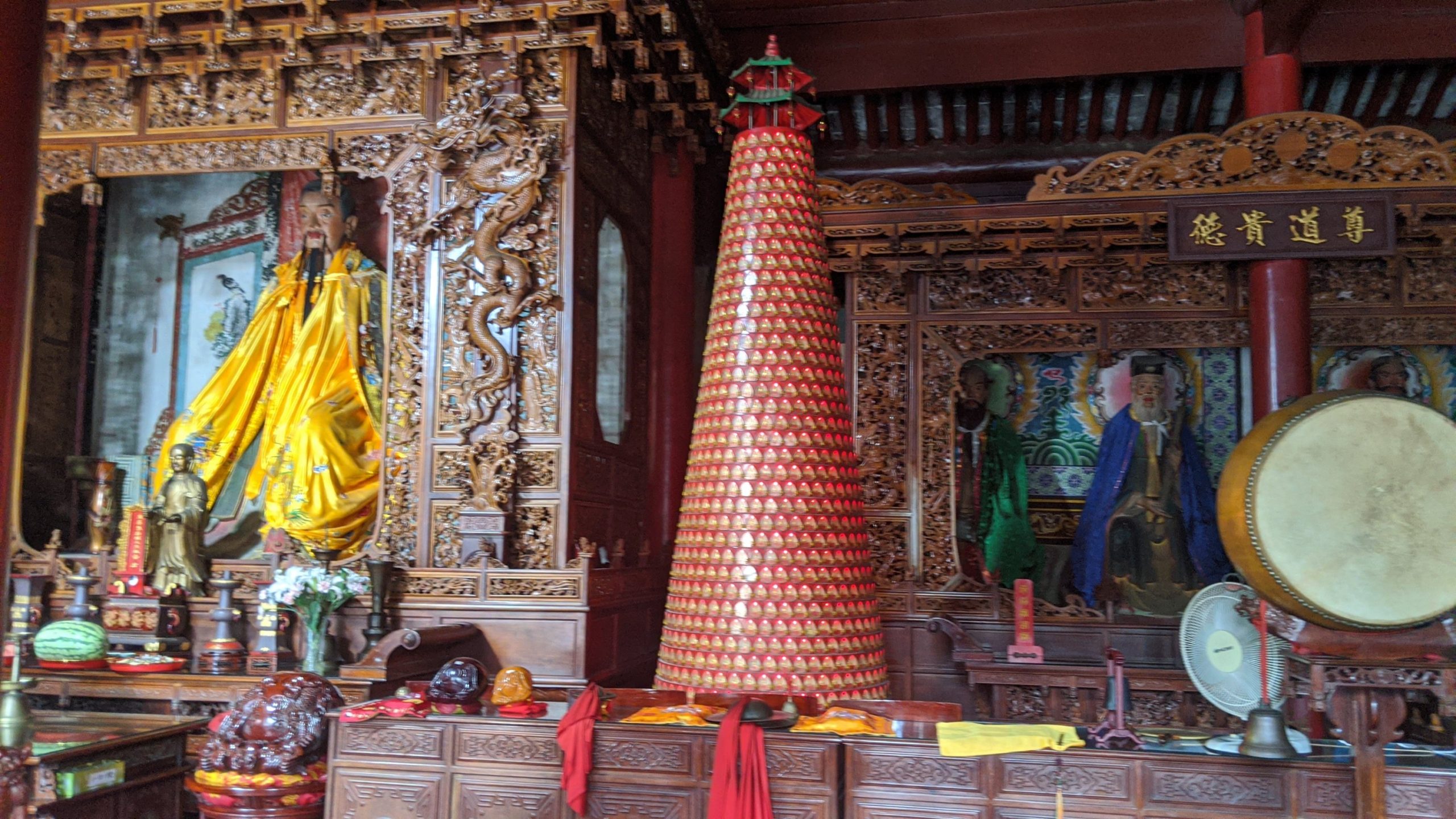
The colors of the faces have particular meaning. Green stands for green dragon and is the god of east. The white tiger is the god of the west. The black turtle is the god of the north. The red bird is the one for the south.

When die you go to the west as sun sets.

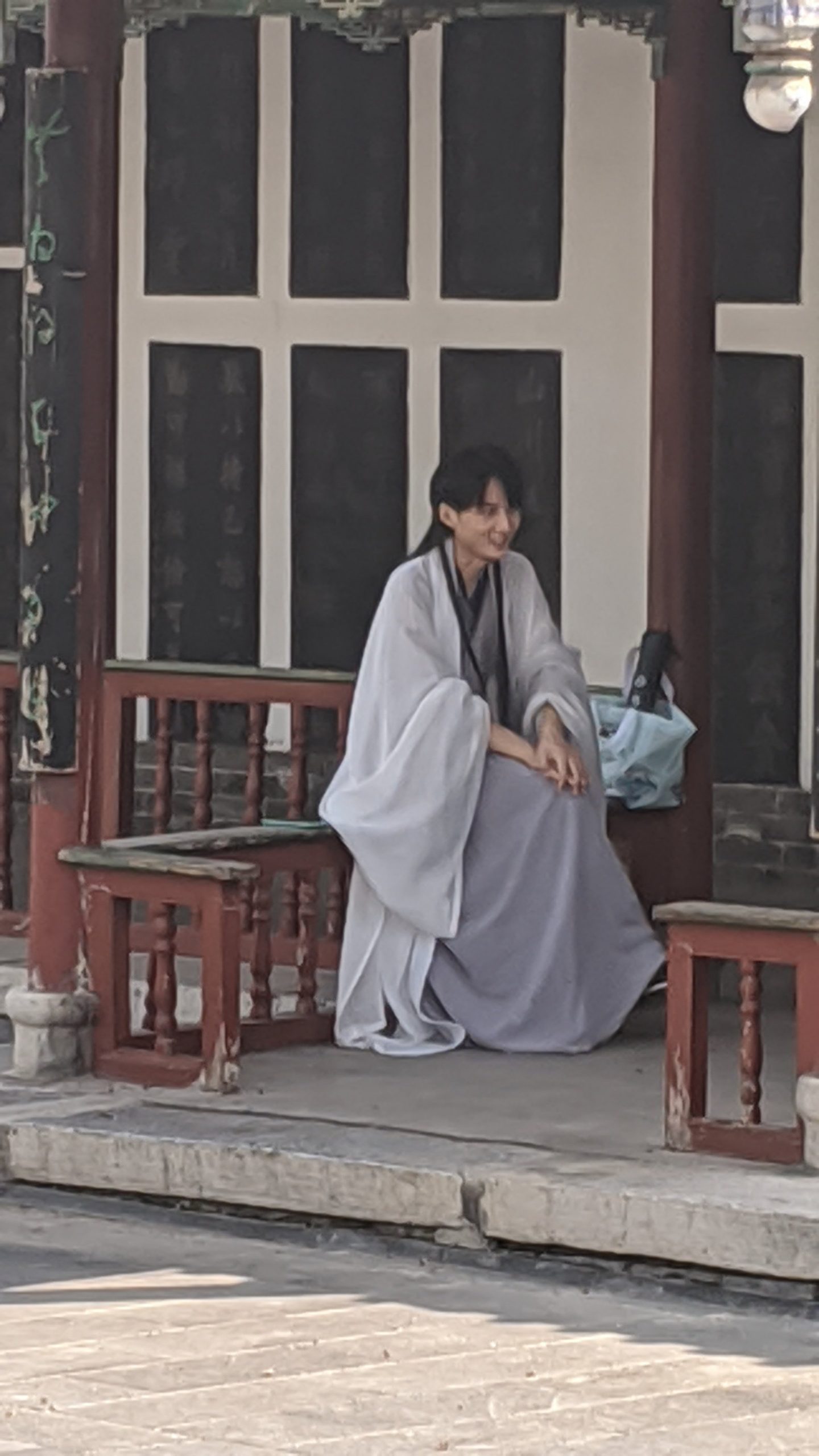
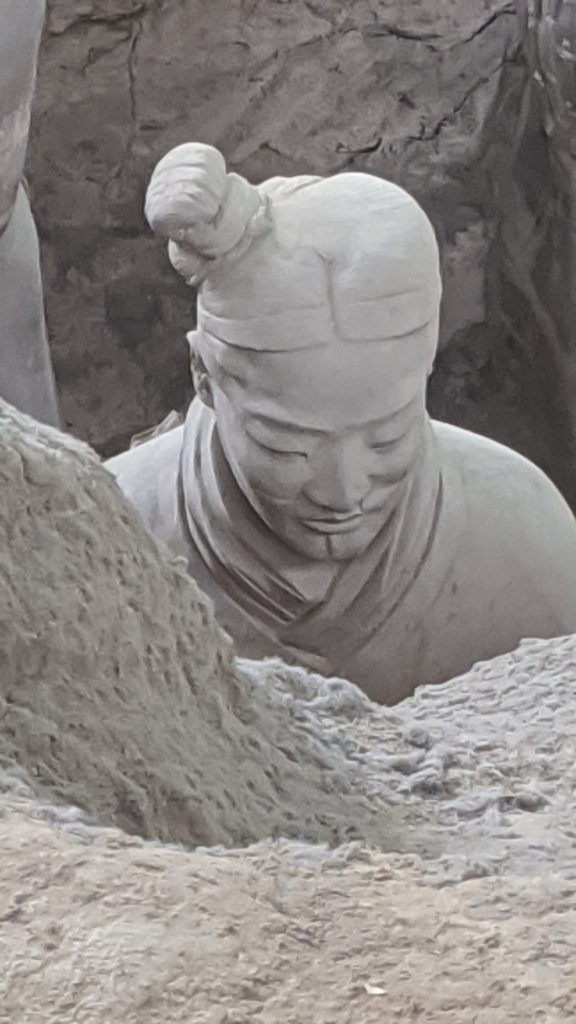
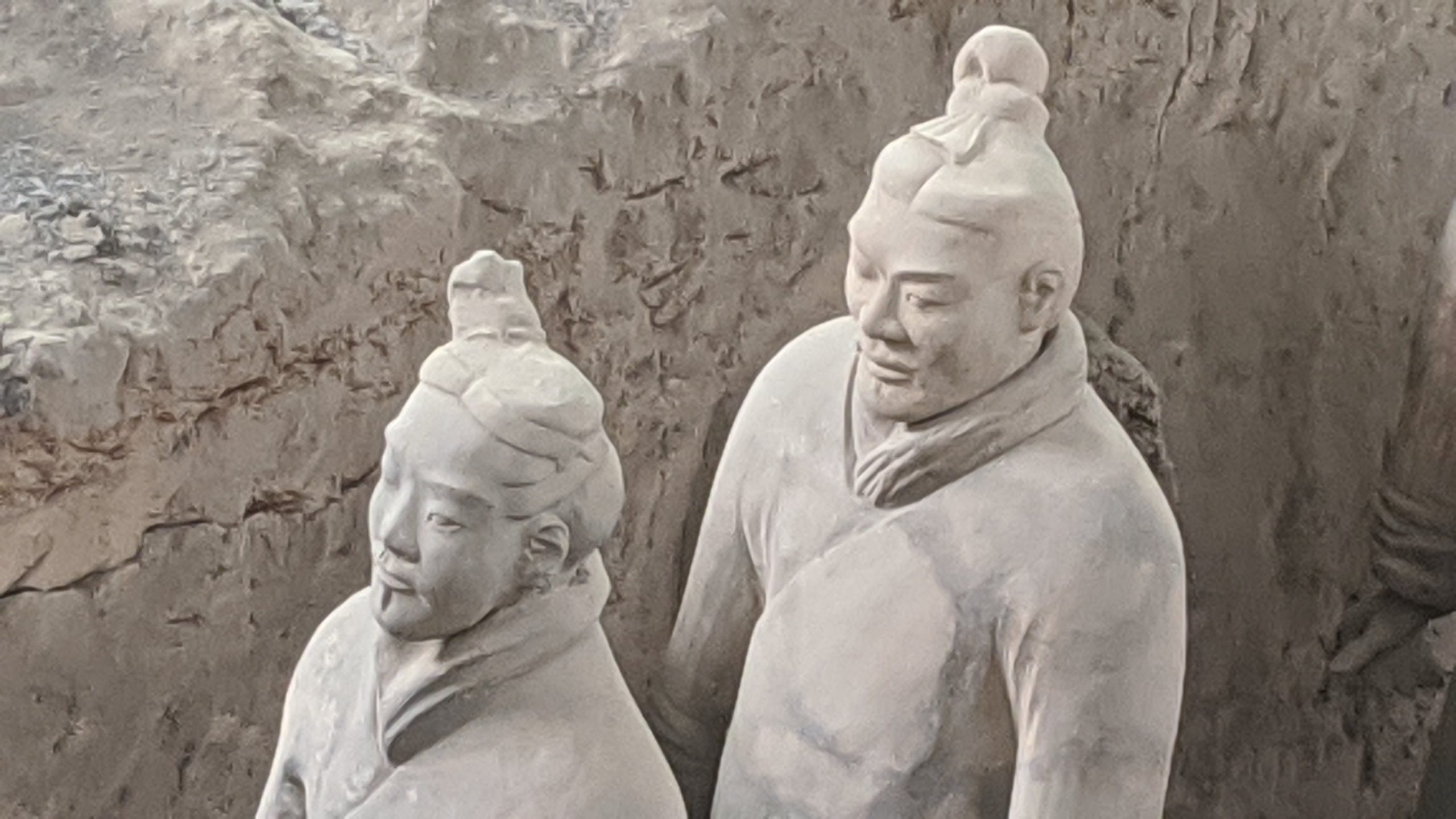
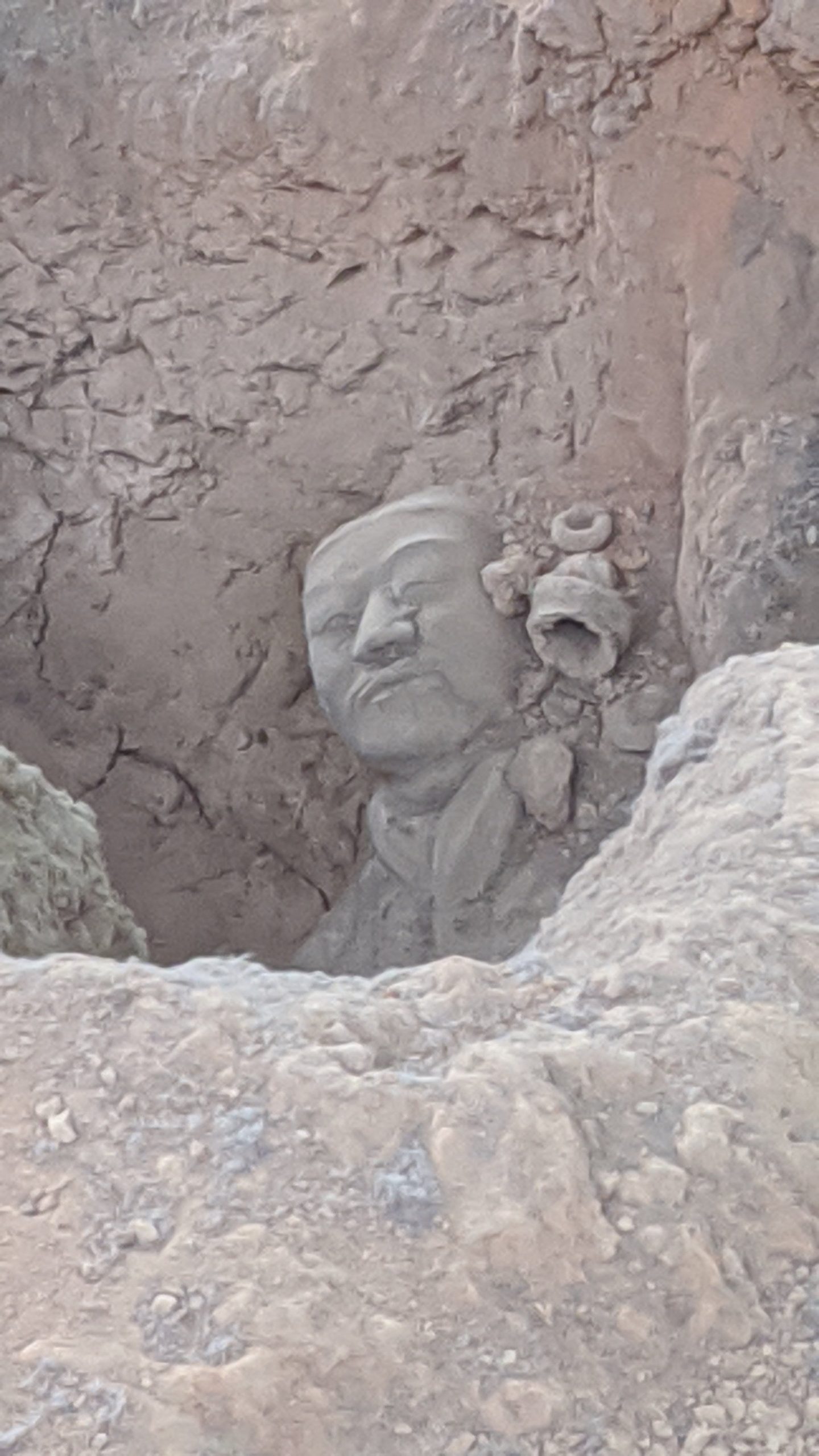
Taoist people wear their long hair in a knot on the top of the head. This was also seen in the terracotta warriors as that was the religion back then.

This is the oldest religion. All other religions were brought to China on the silk road. As I walked through a passage, people would put their hands in specific phrases on this plaque. You can see where people touch the most.

Terracotta warriors, Xi’an

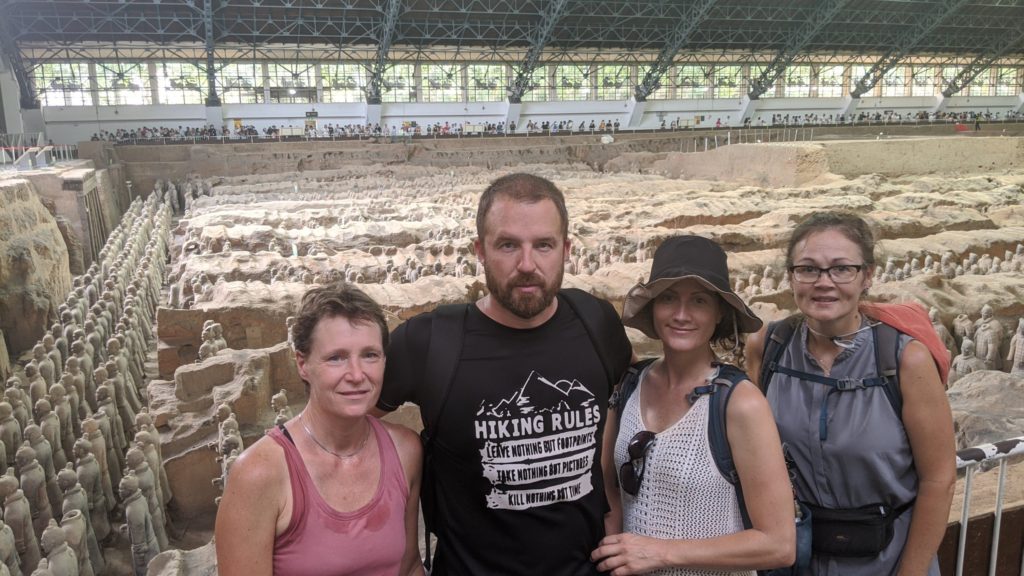
Before we went to see the terracotta warriors, we ate at a restaurant nearby. They had lots of warrior copies. Clarence, the guy who rented us the apartment was our tour guide.
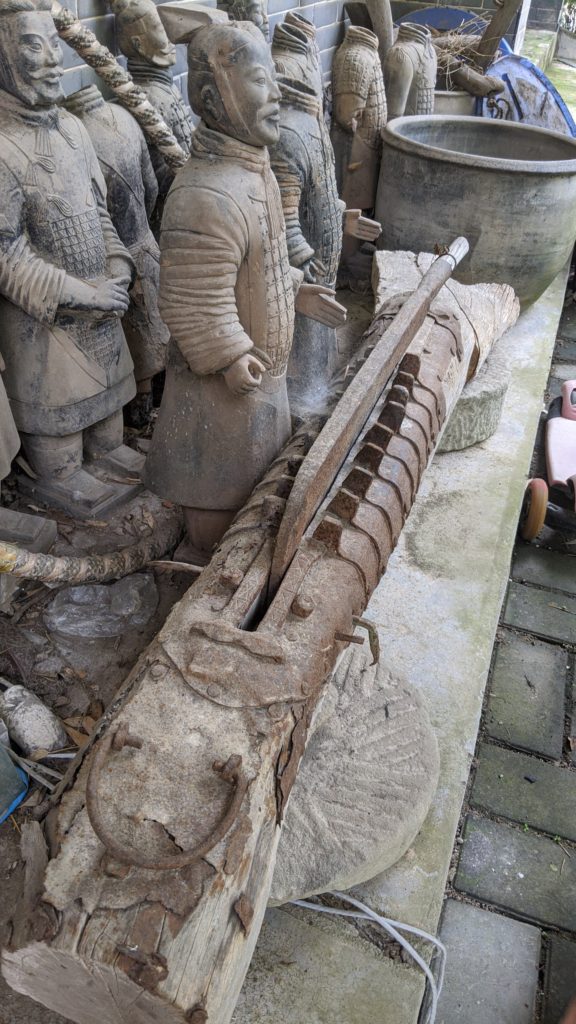
This is used to cut hay for the horses

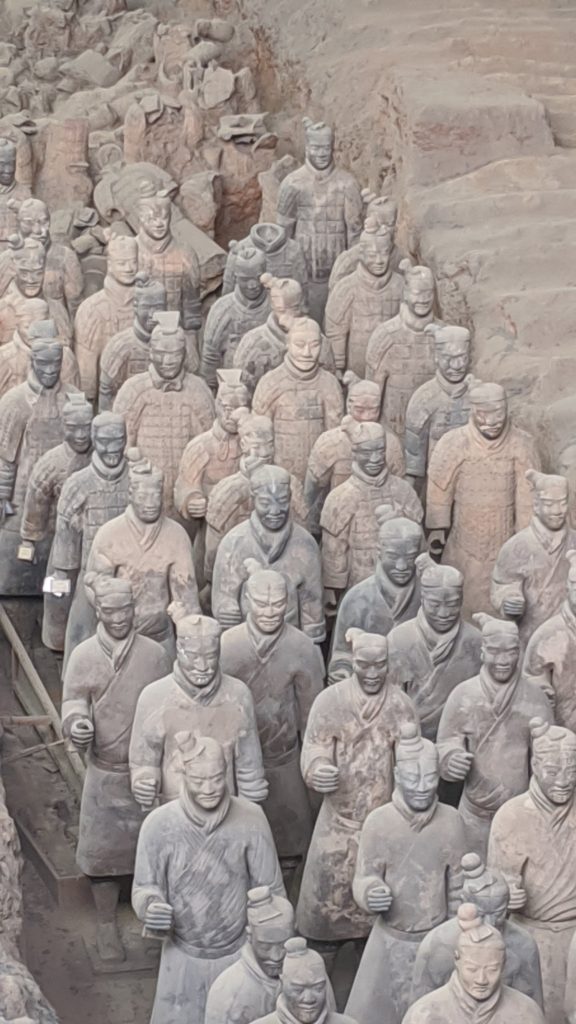
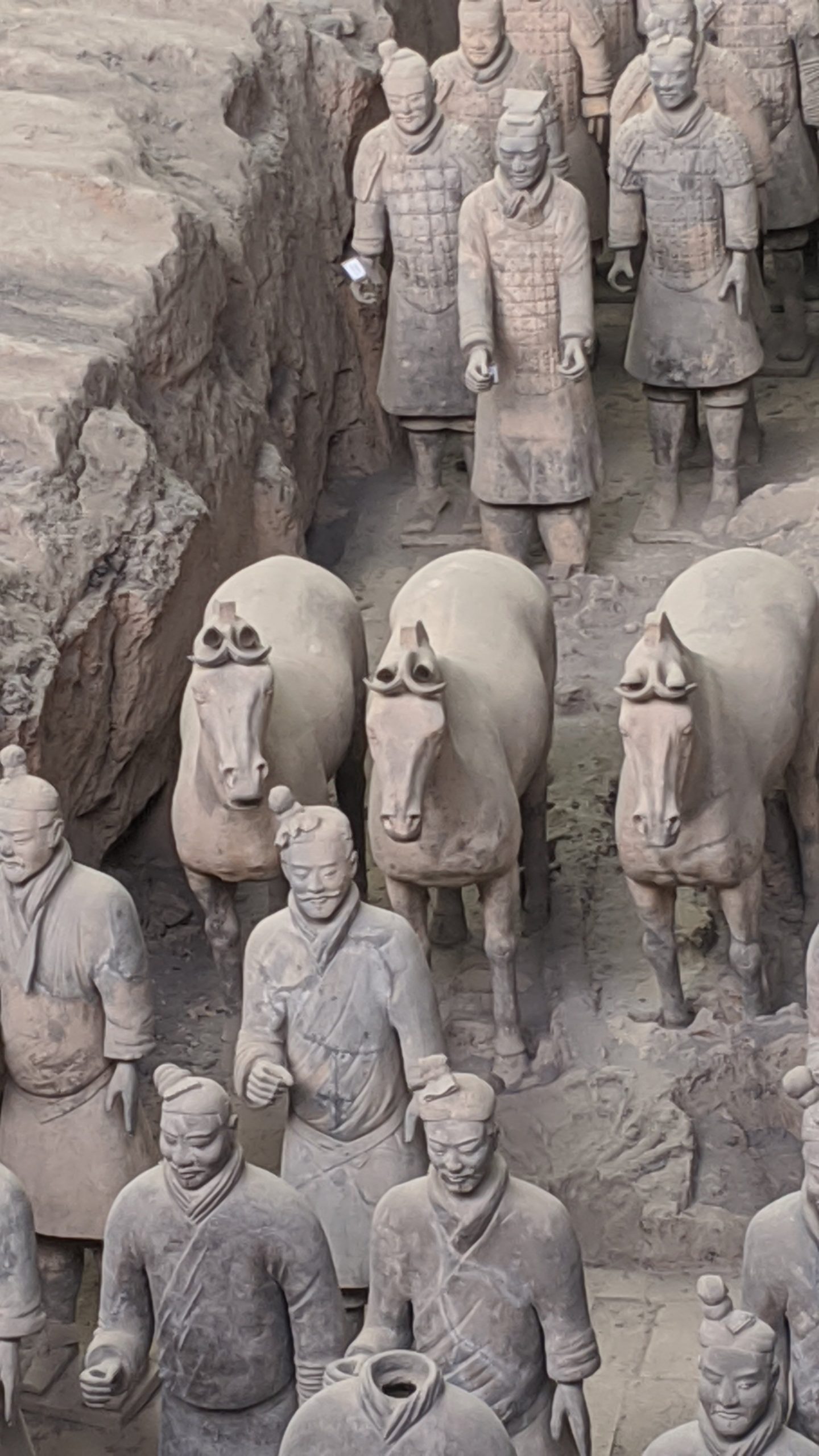
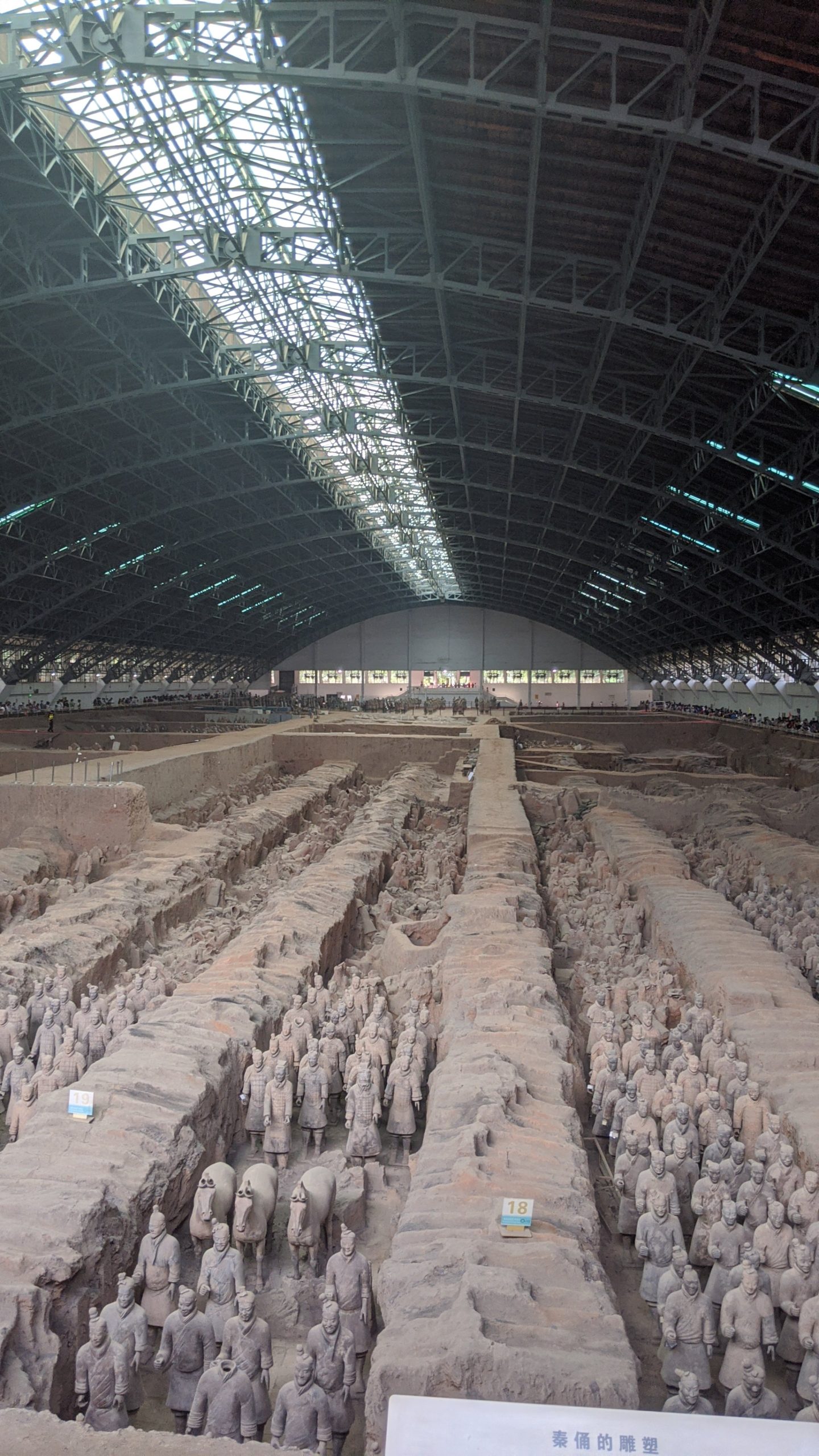
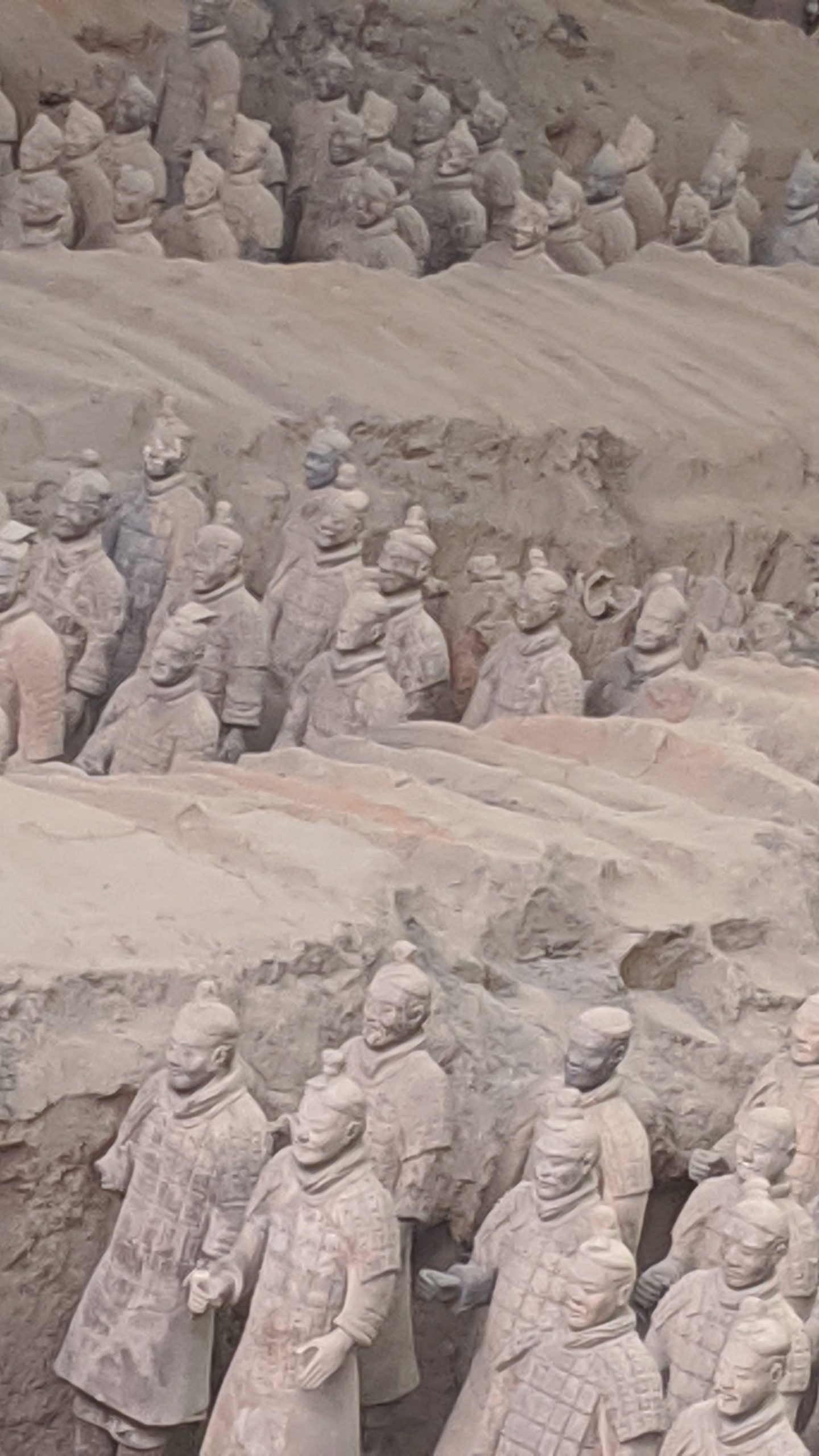
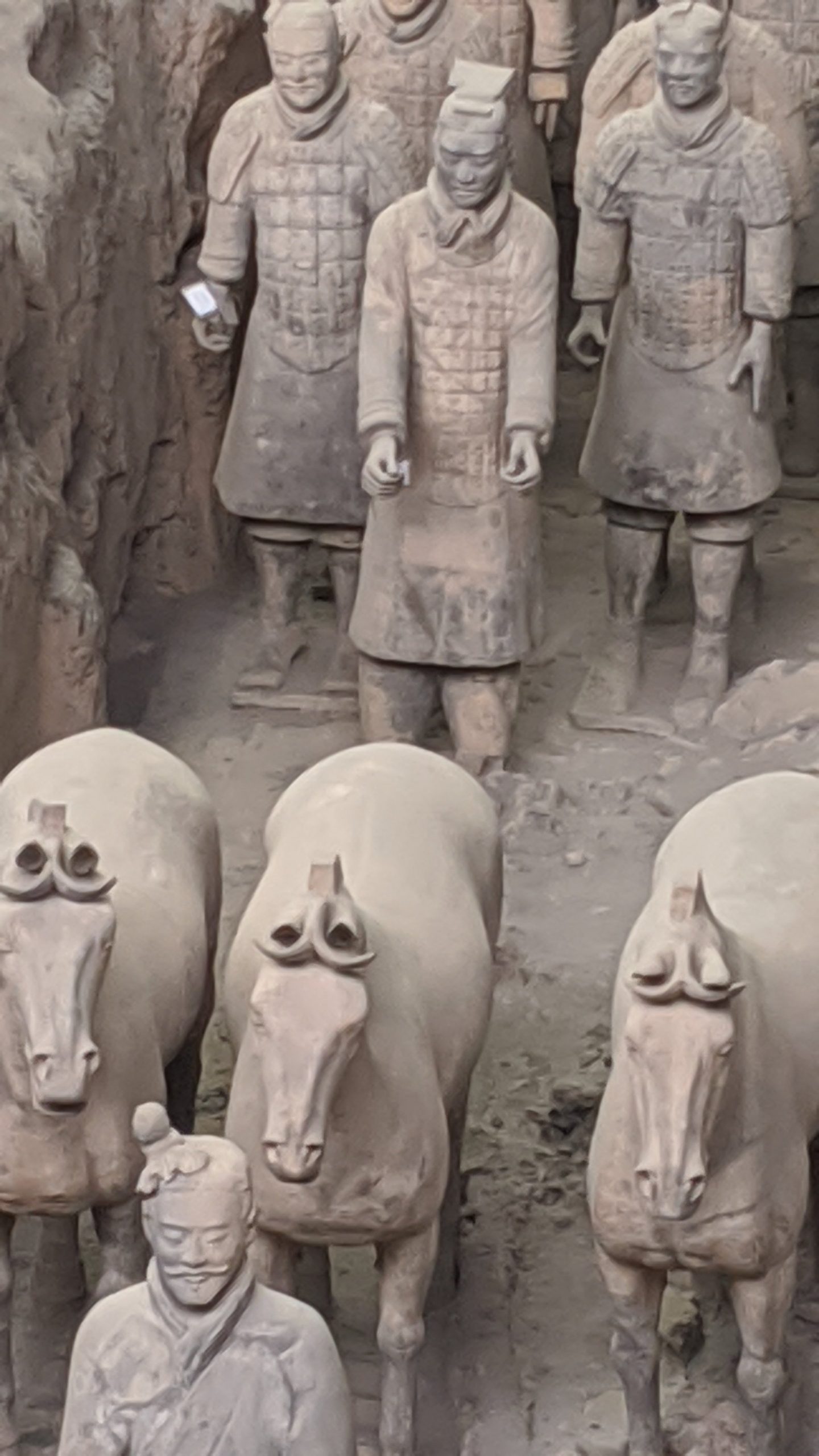
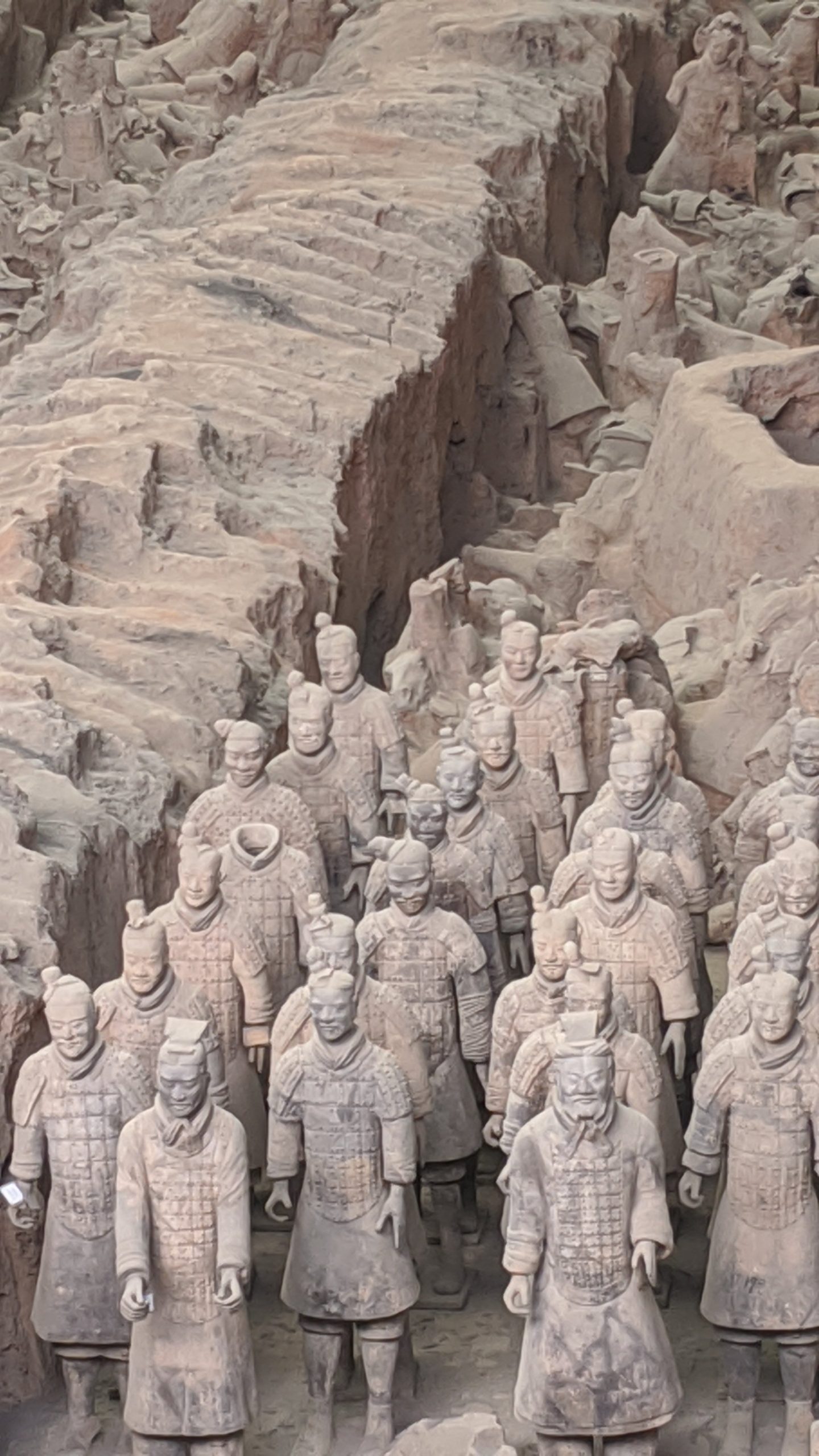
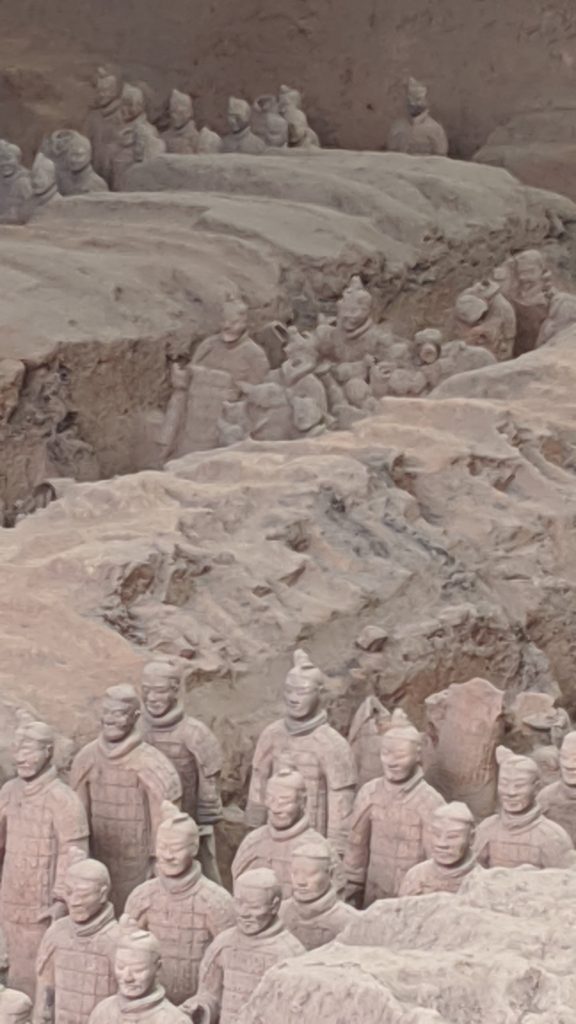
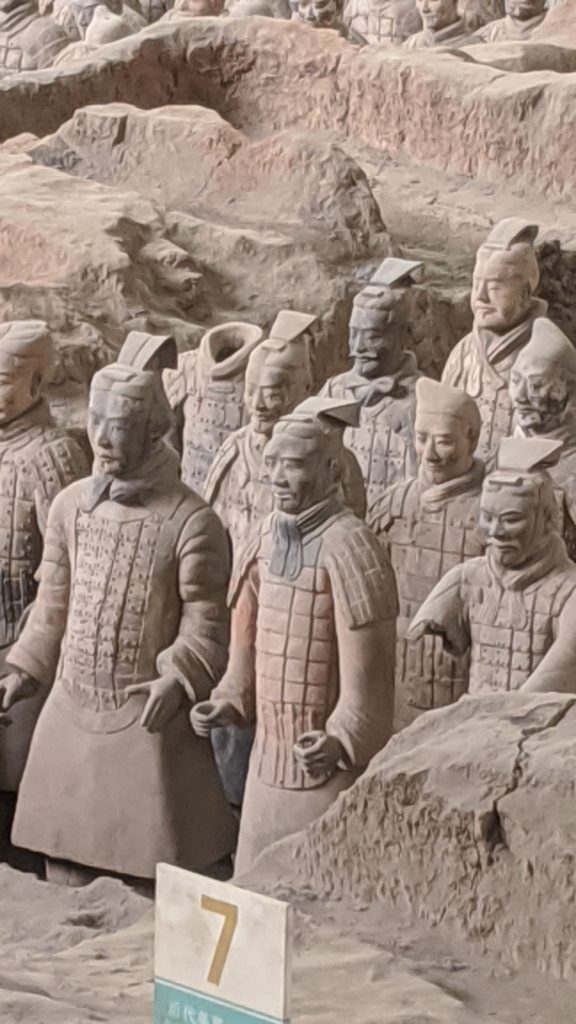
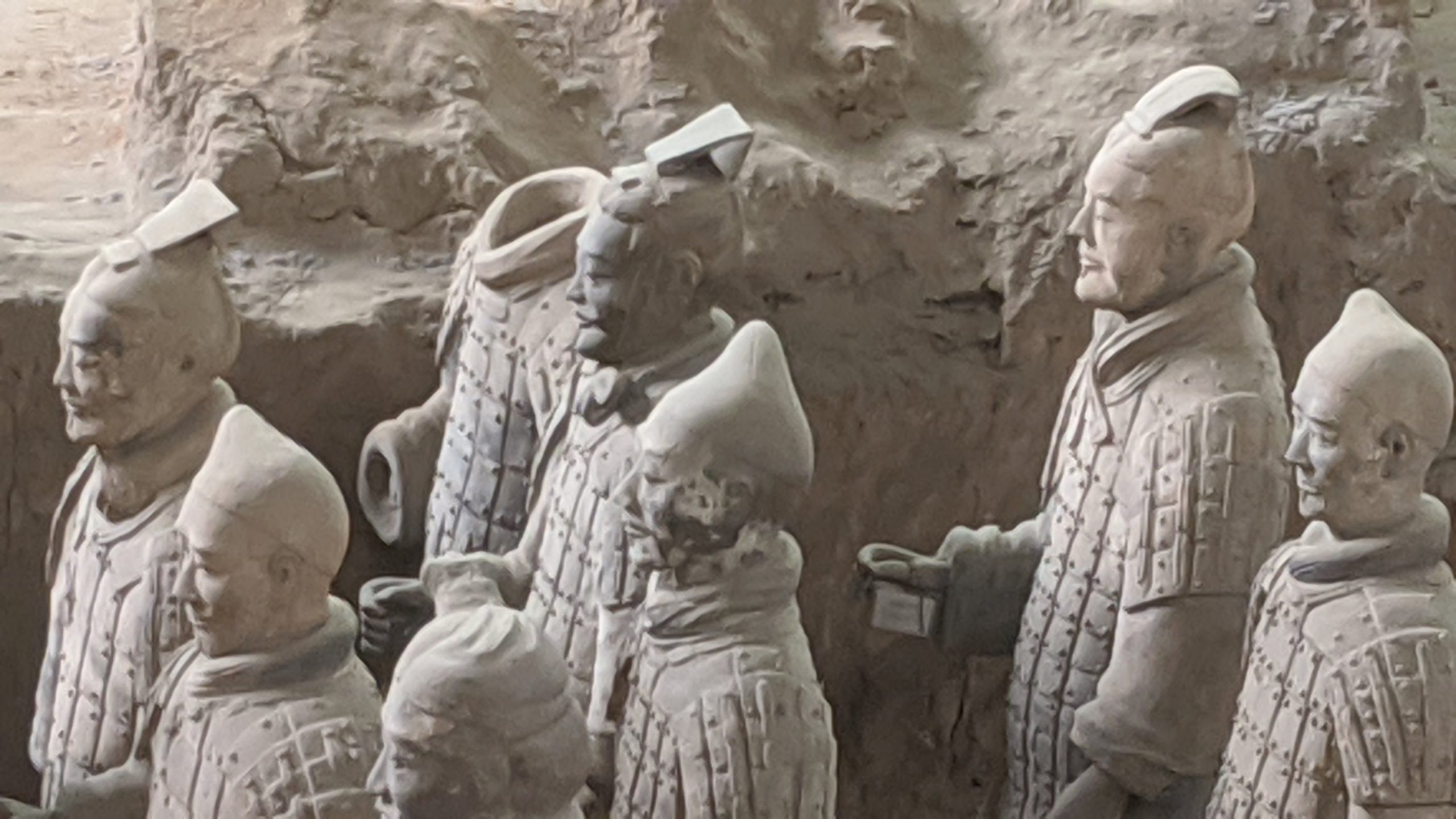
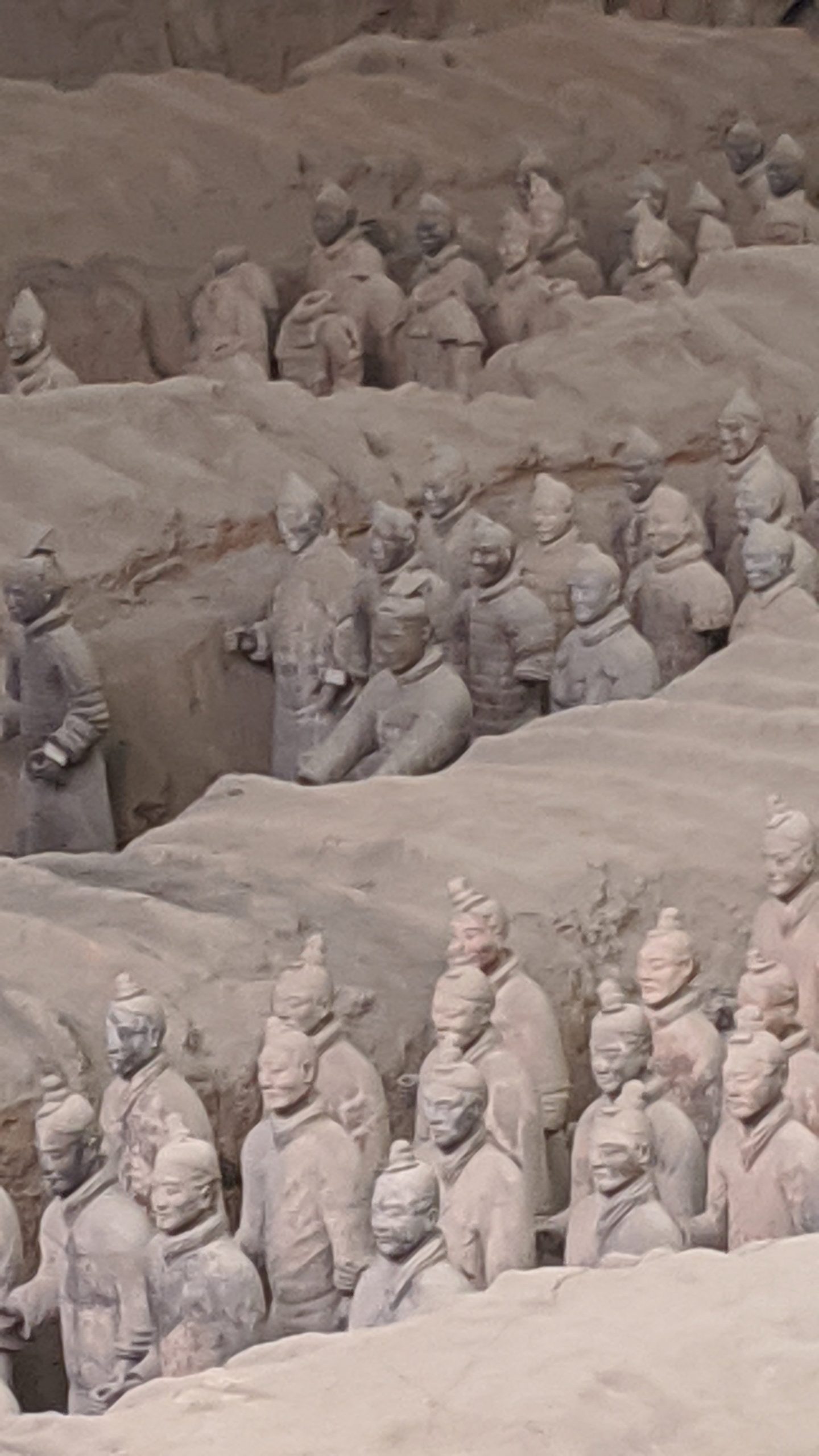
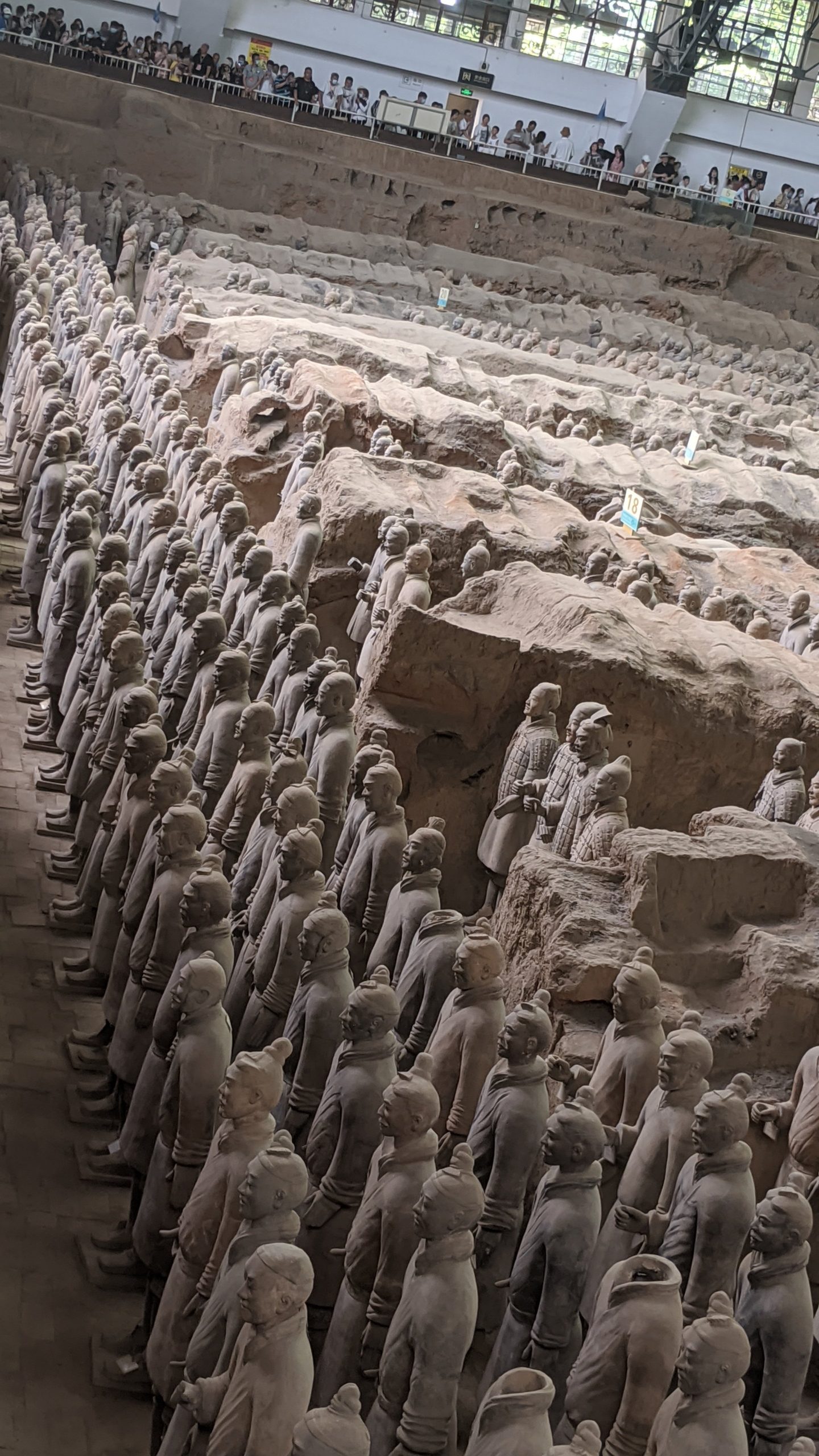
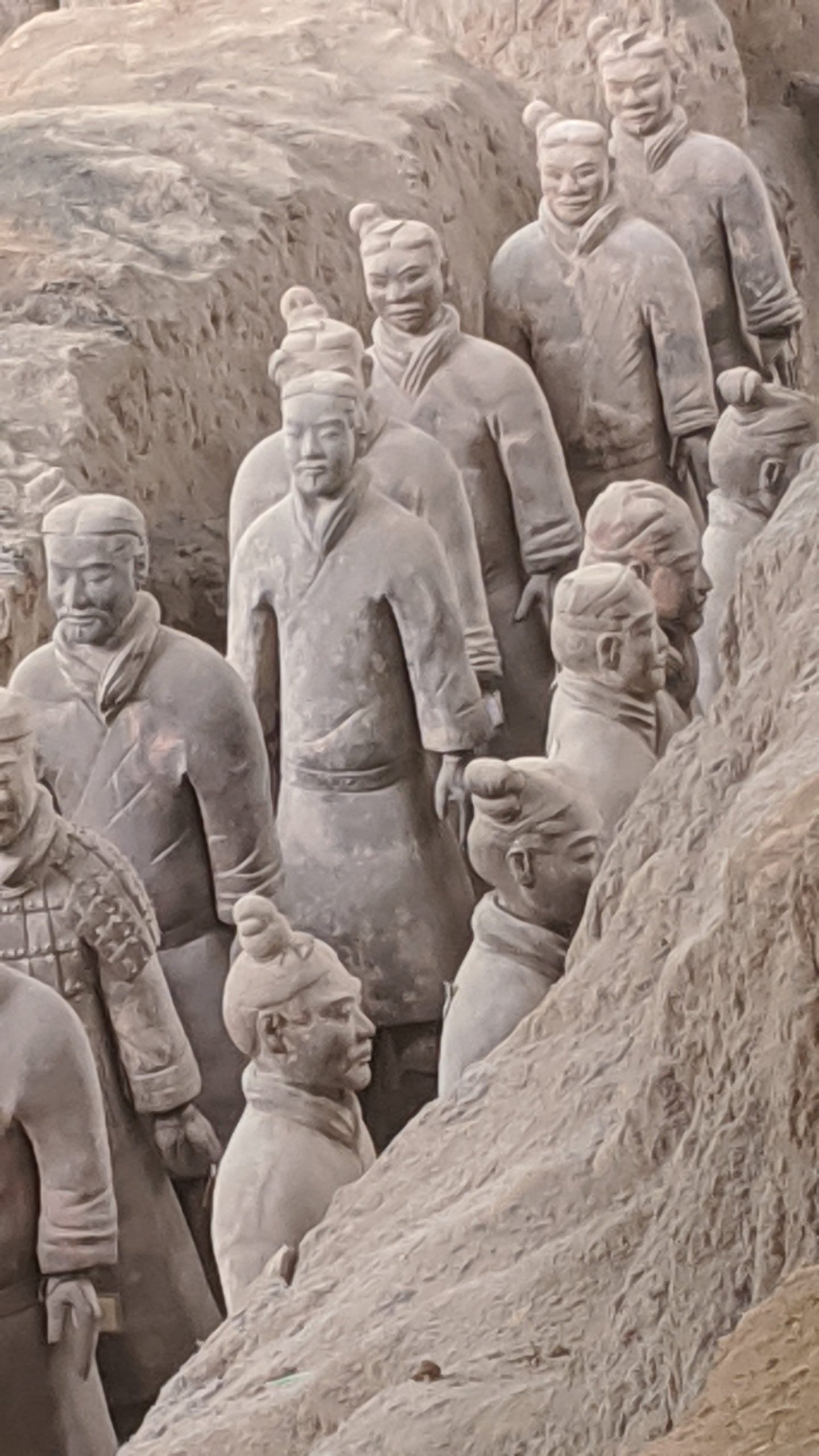
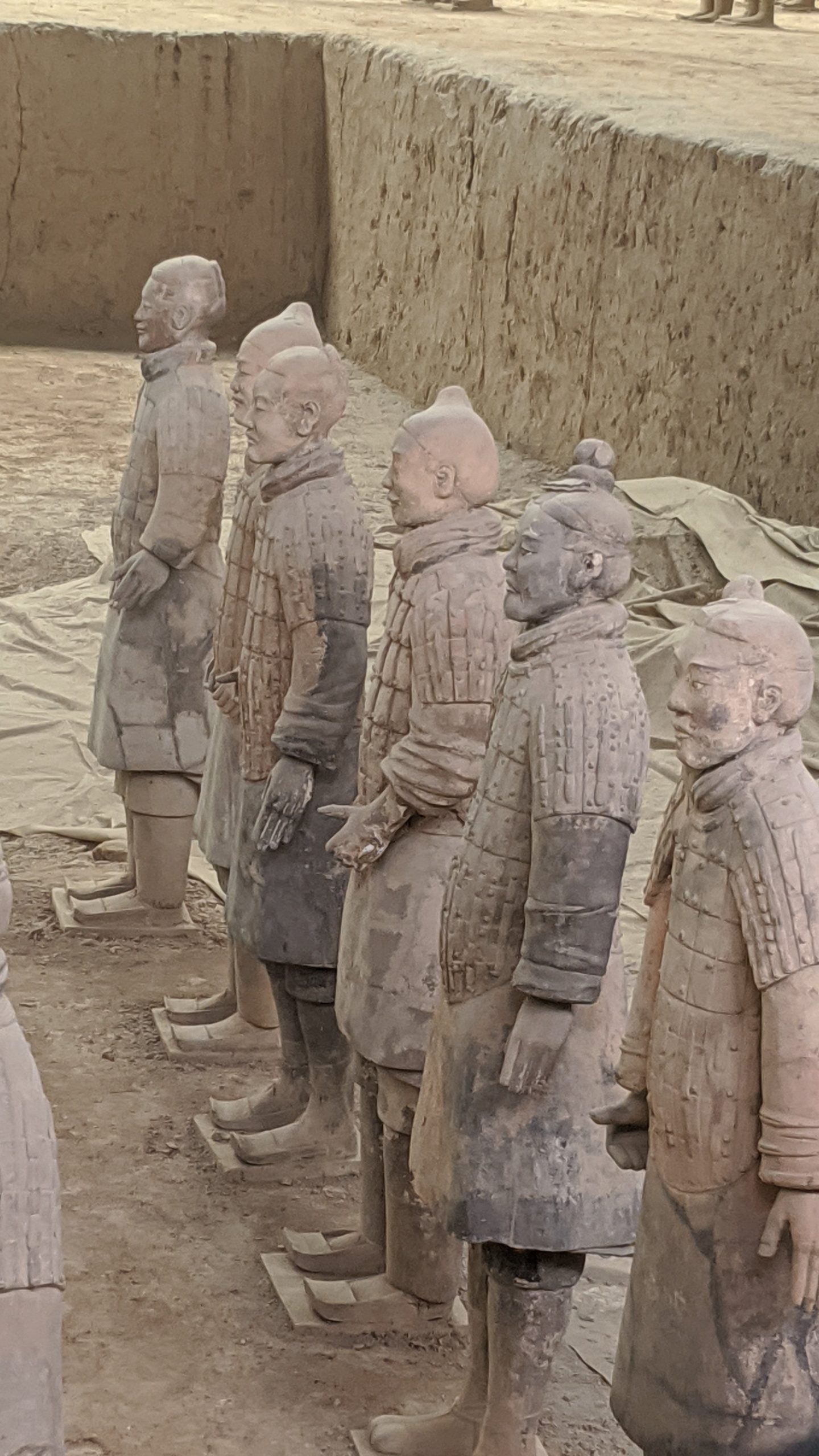
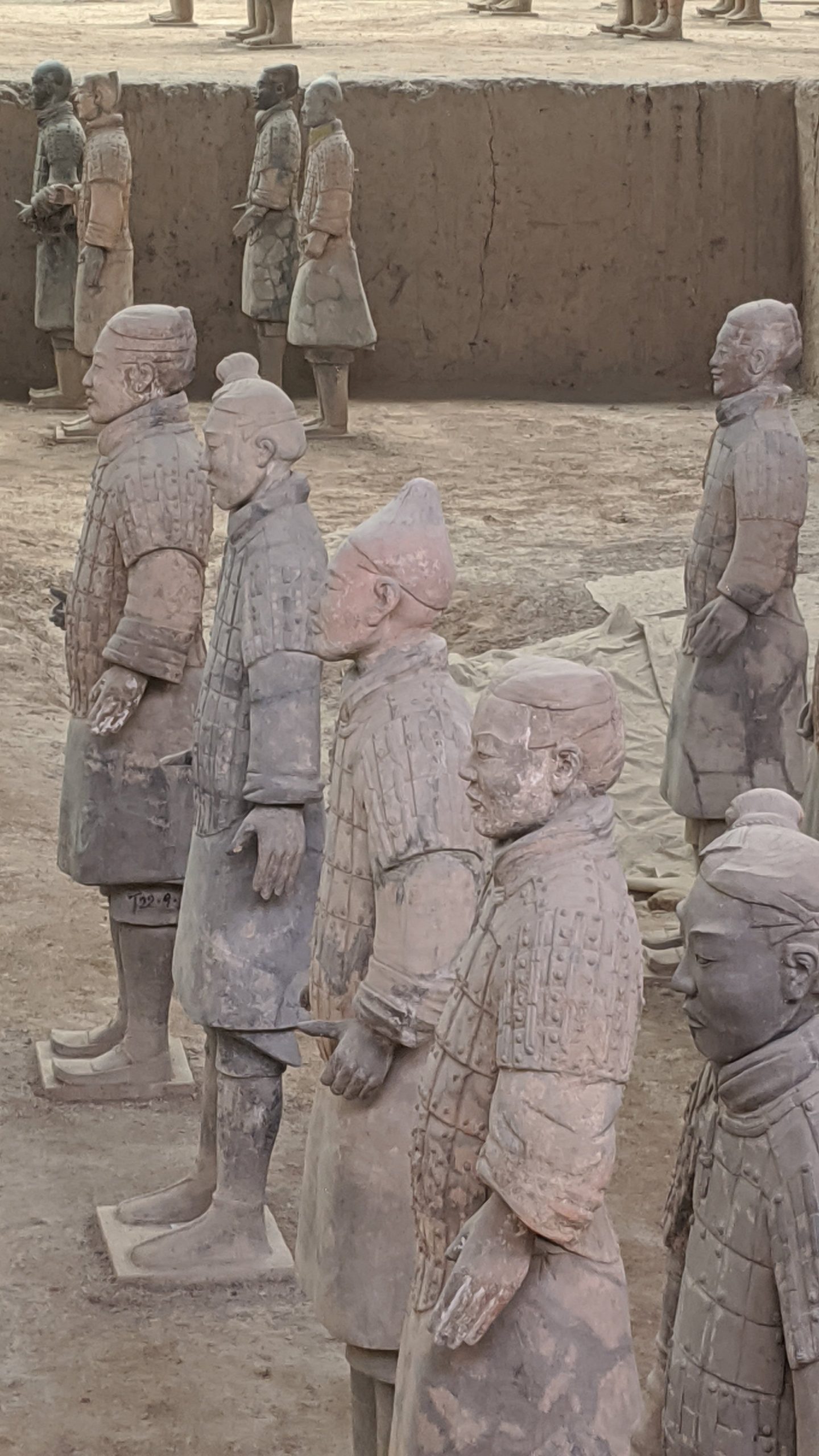
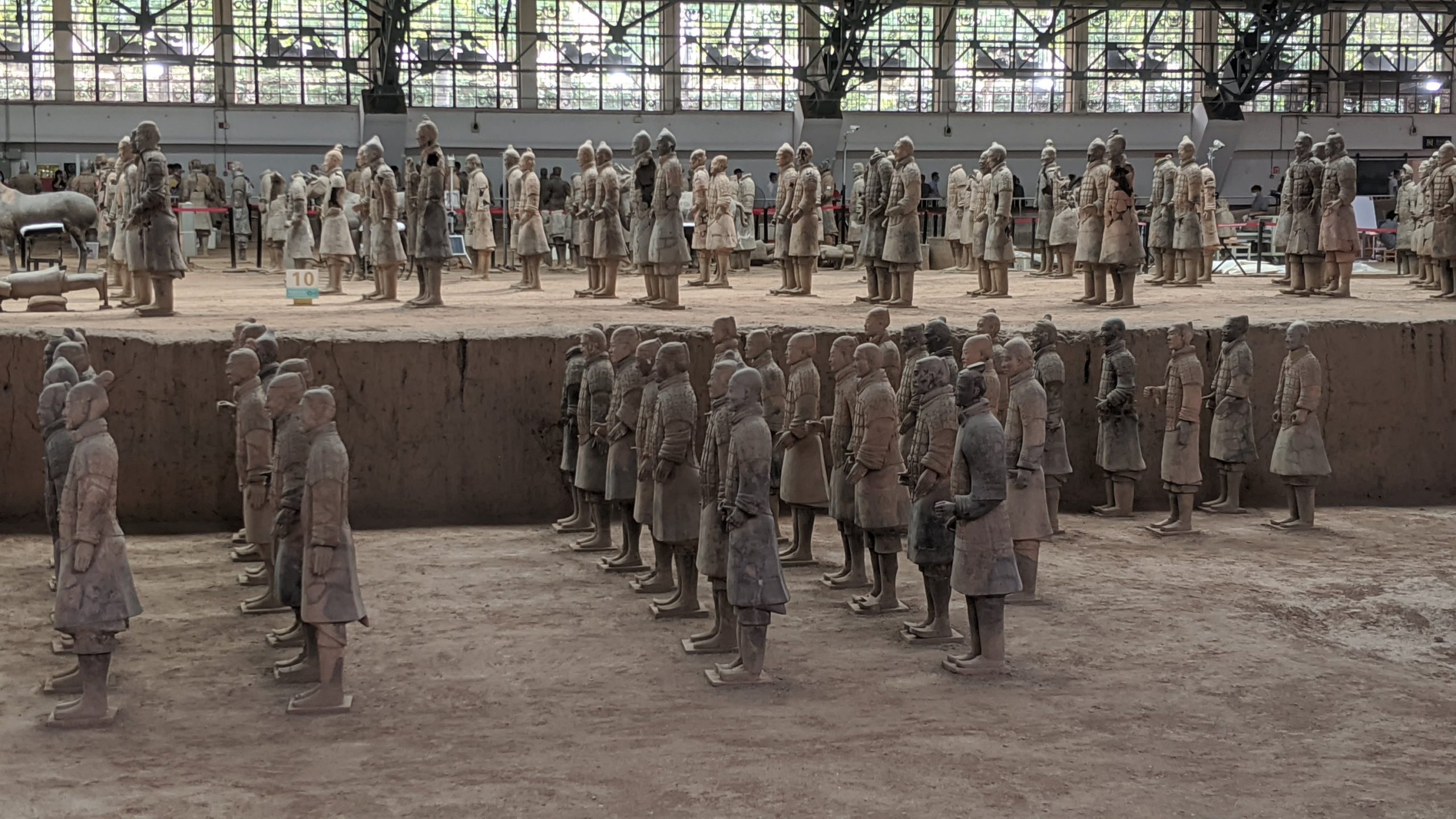
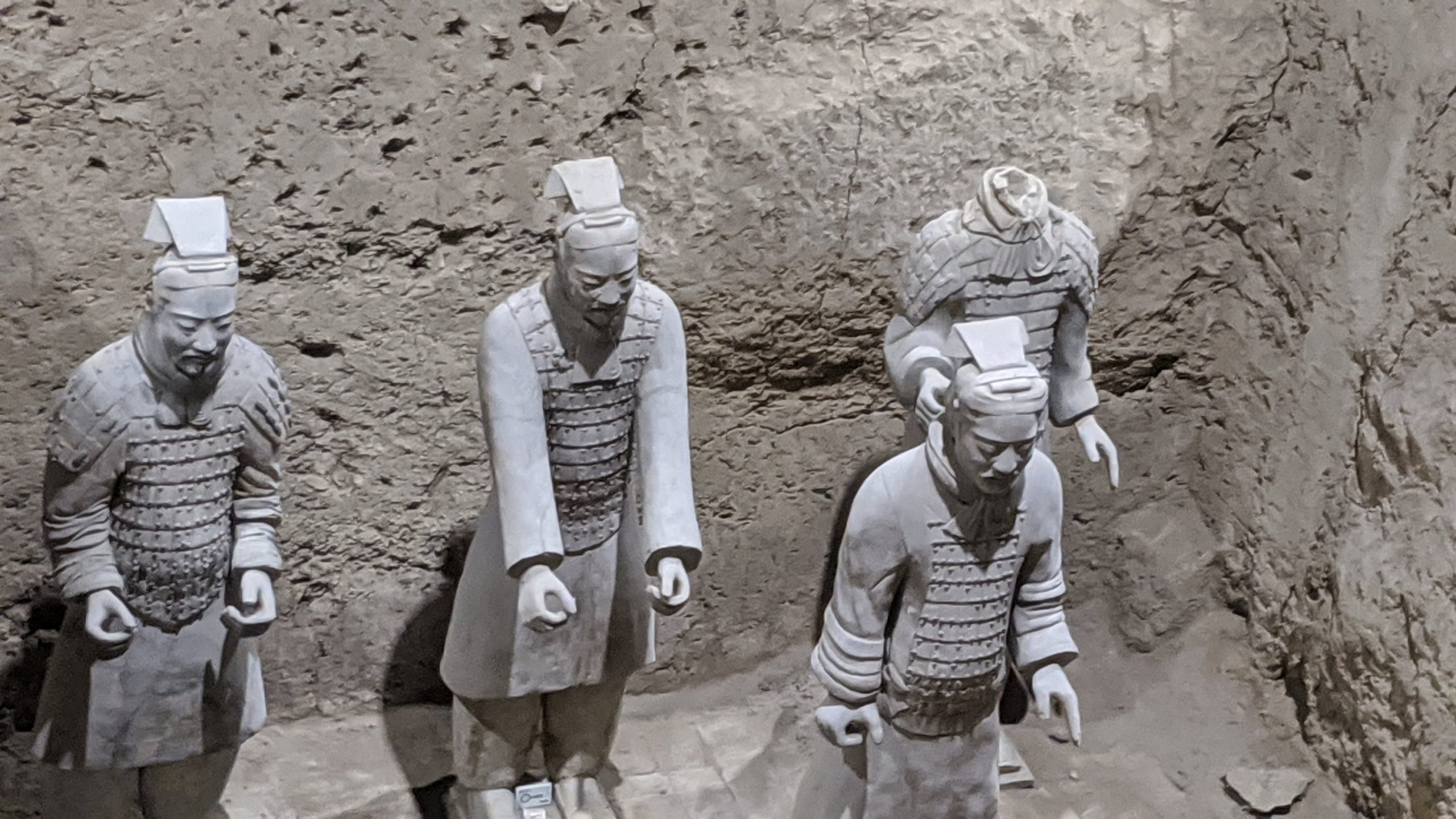
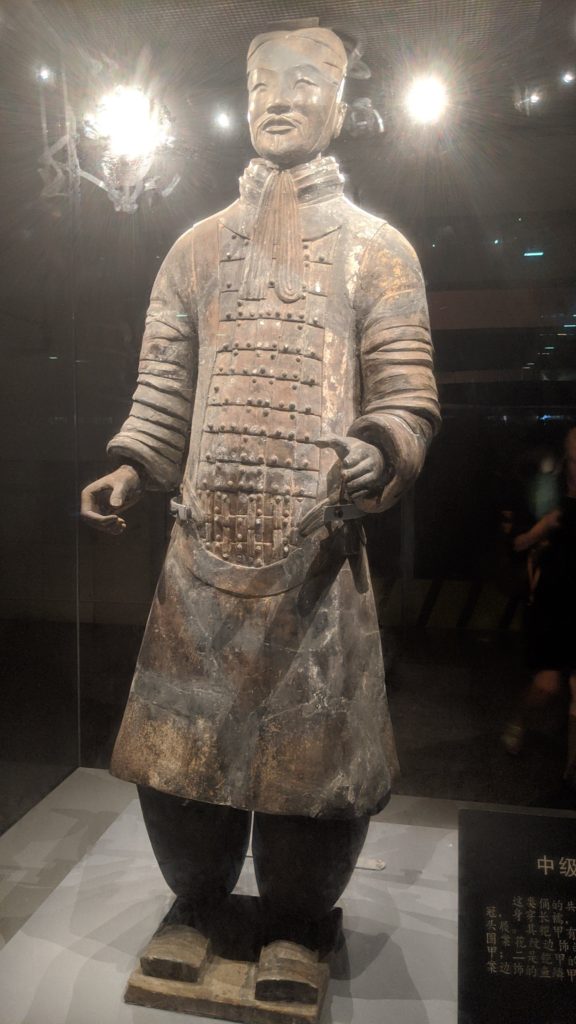
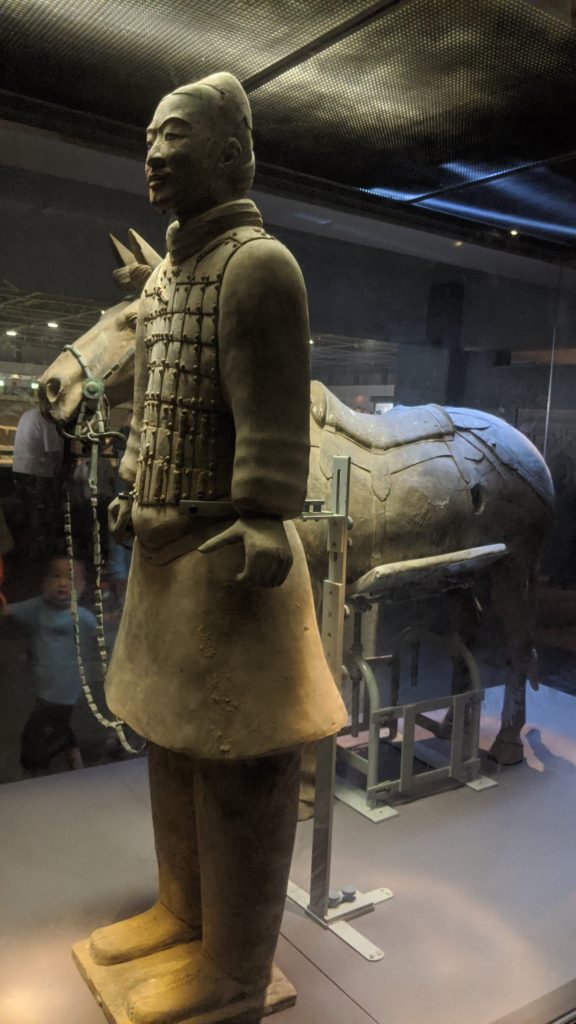
The Terracotta Warriors in Xi’an, are life-size terra cotta sculptures in battle formations, reproducing the imperial guard troops of Emperor Qin Shi Huang (259 – 210BC), the first emperor of the first unified dynasty of Imperial China. He conquered the 6 warring kingdoms in the east and took them over to unify China. He was a brutal emperor. Each warrior was different and resembles his army.

It was a funerary project started at the time at the age of 13 to protect him in his afterlife. He became emperor at 22 and resigned for 37 years. He ordered the construction of the Great Wall and his 100 km high mausoleum in the mountain.

Found in 1974 by farmers digging a well, it is considered the most important archaeological find of the 20th century. They were discovered many times before but since this area was originally Taoist, many thought that it would be bad luck to dig it up as they thought it was a temple or were afraid something would happen to it. There were too many farmers in 1974 there to keep it quiet and as the cultural revolution had happened there was less chance that it would be destroyed.

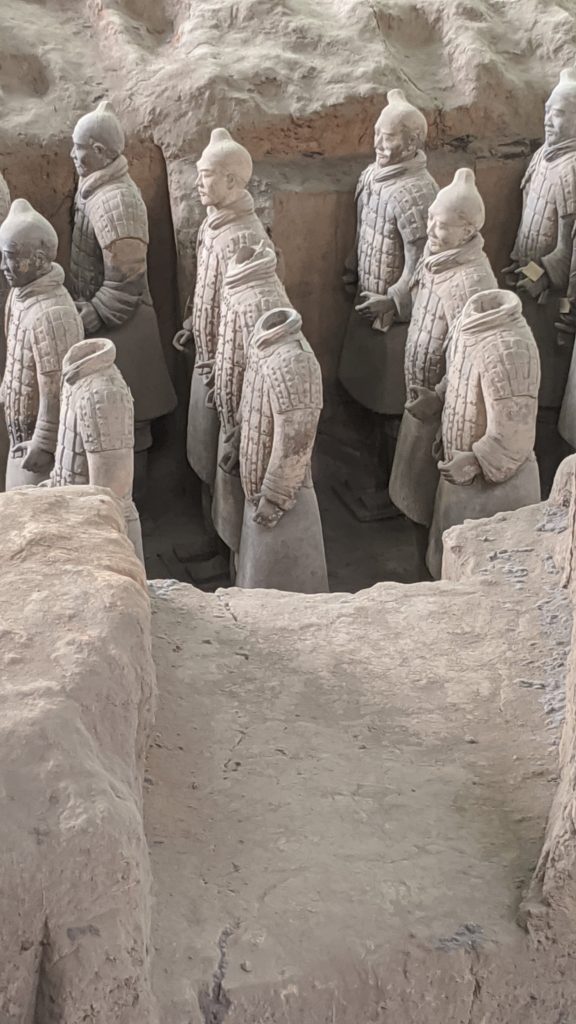
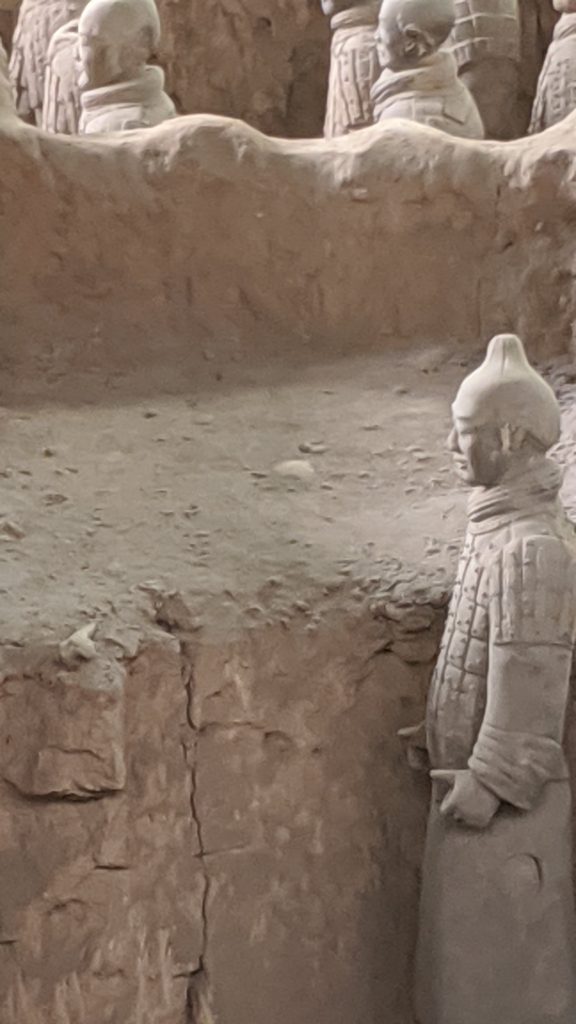
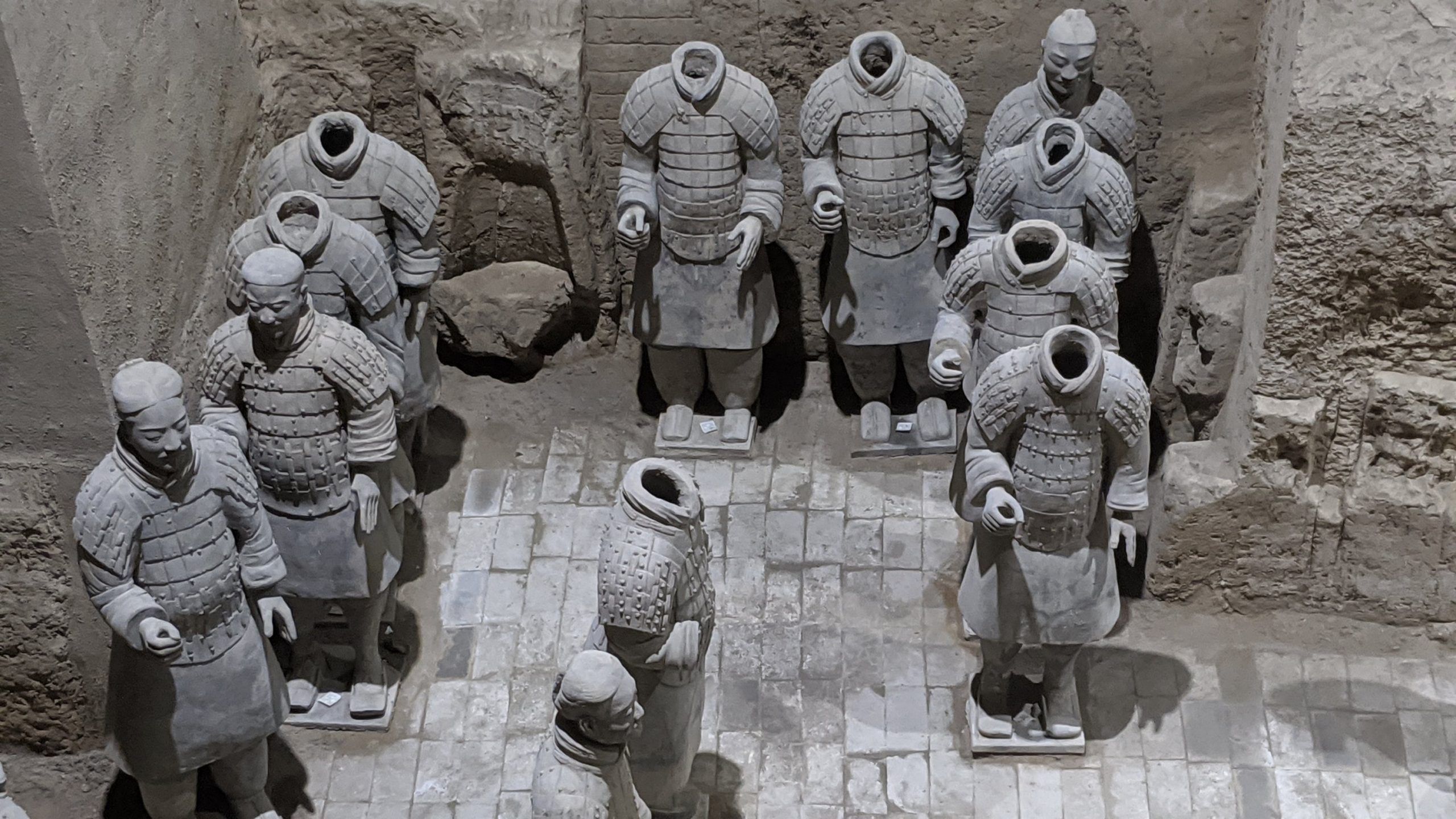
All of the warriors have their hair in a bun. This is characteristic of Taoist people.

The figures vary in height depending upon their roles, with the generals being the tallest. Flowing rivers were simulated by using mercury in his tomb. The soils there do show mercury contamination.

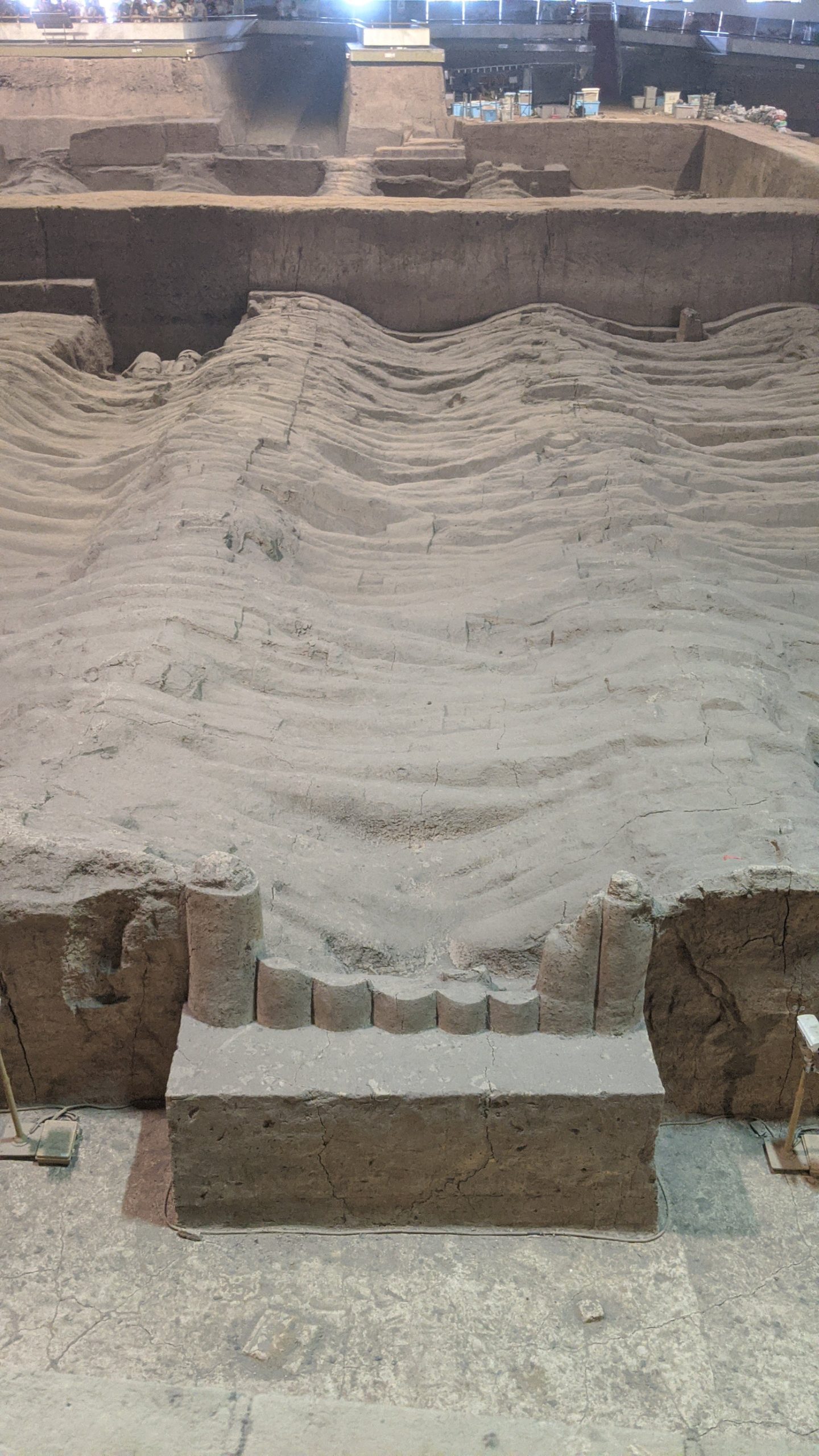
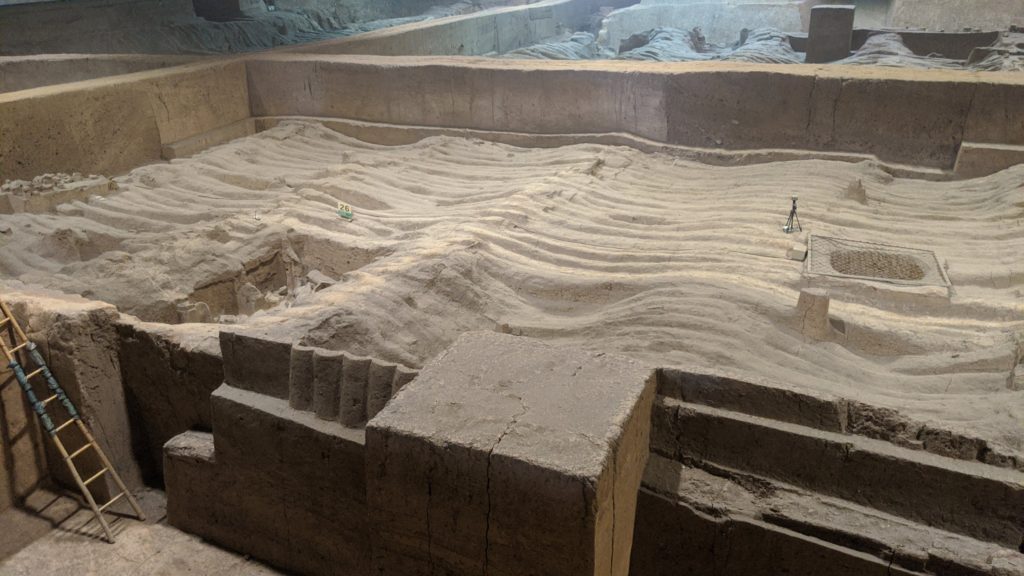
Originally the warriors were half under ground and then a roof was put on. They took the forest away to make pits. After they were buried, the erosion of clay over time buried them deeper at 8 meters. 72,000 slaves were used to build this.

Xiang yu created an uprising after he died and broke into the mausoleum. However there are other theories. The weapons, chariots, and roof were made of wood and generally you burn the body and things for the afterlife. Some believe that they were burnt first then buried. The flank guards face out to protect the guards and they were the statues more intact. Theory is that the clay is harder on the outside than the inside and therefore did not collapse over time like other areas. If it had been broken into and destroyed, those flank men would not have stayed in such good condition.

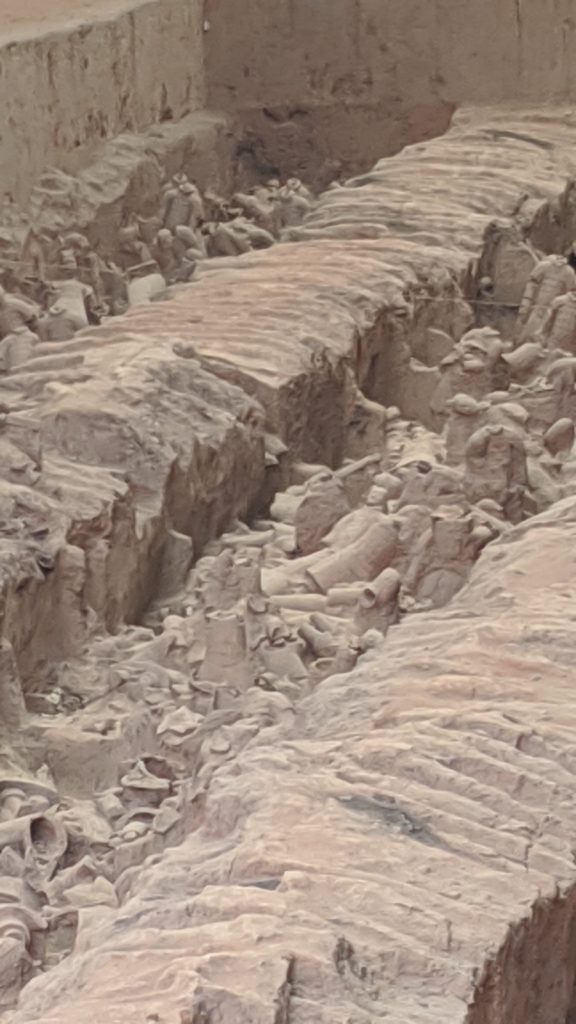
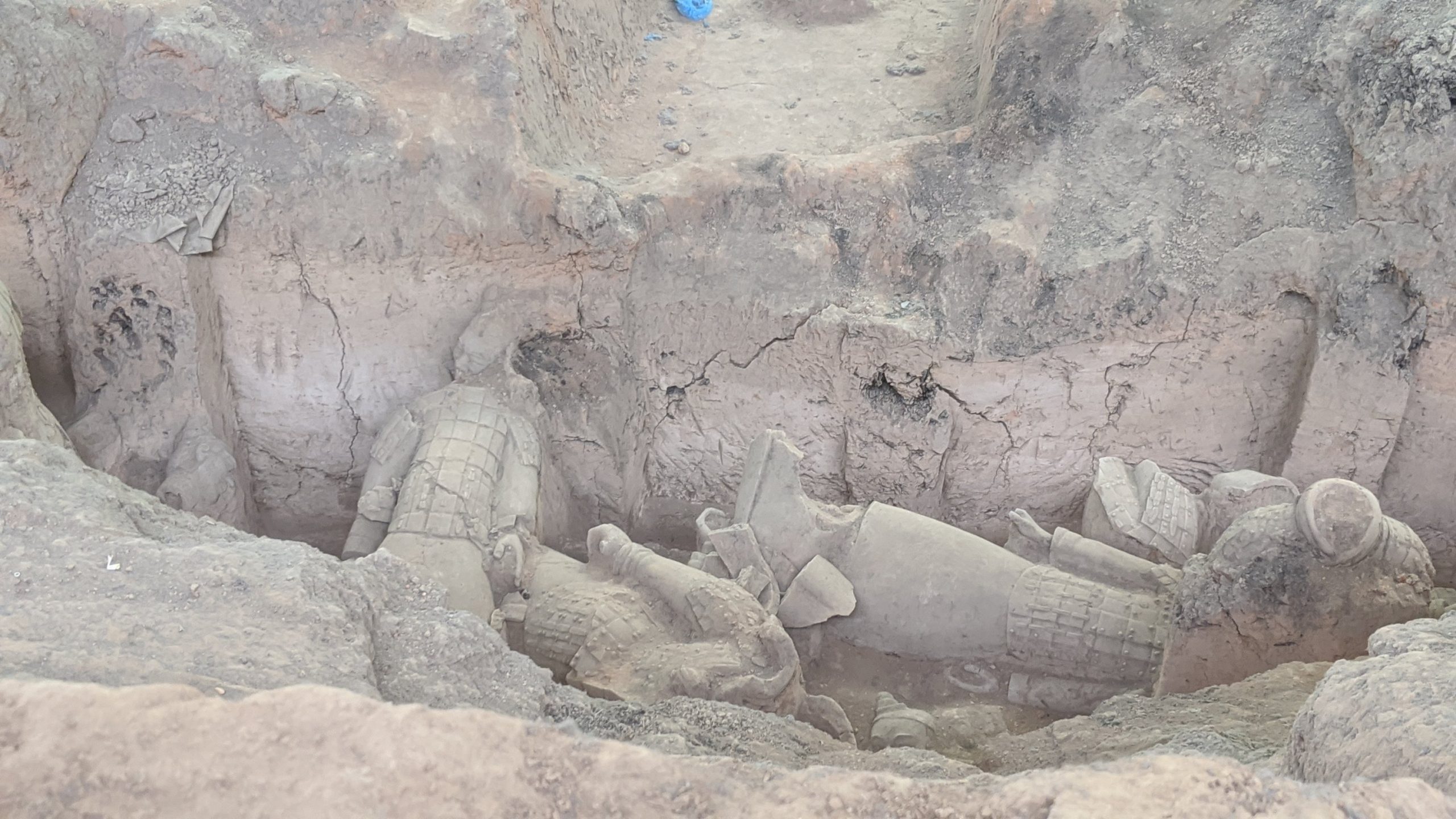
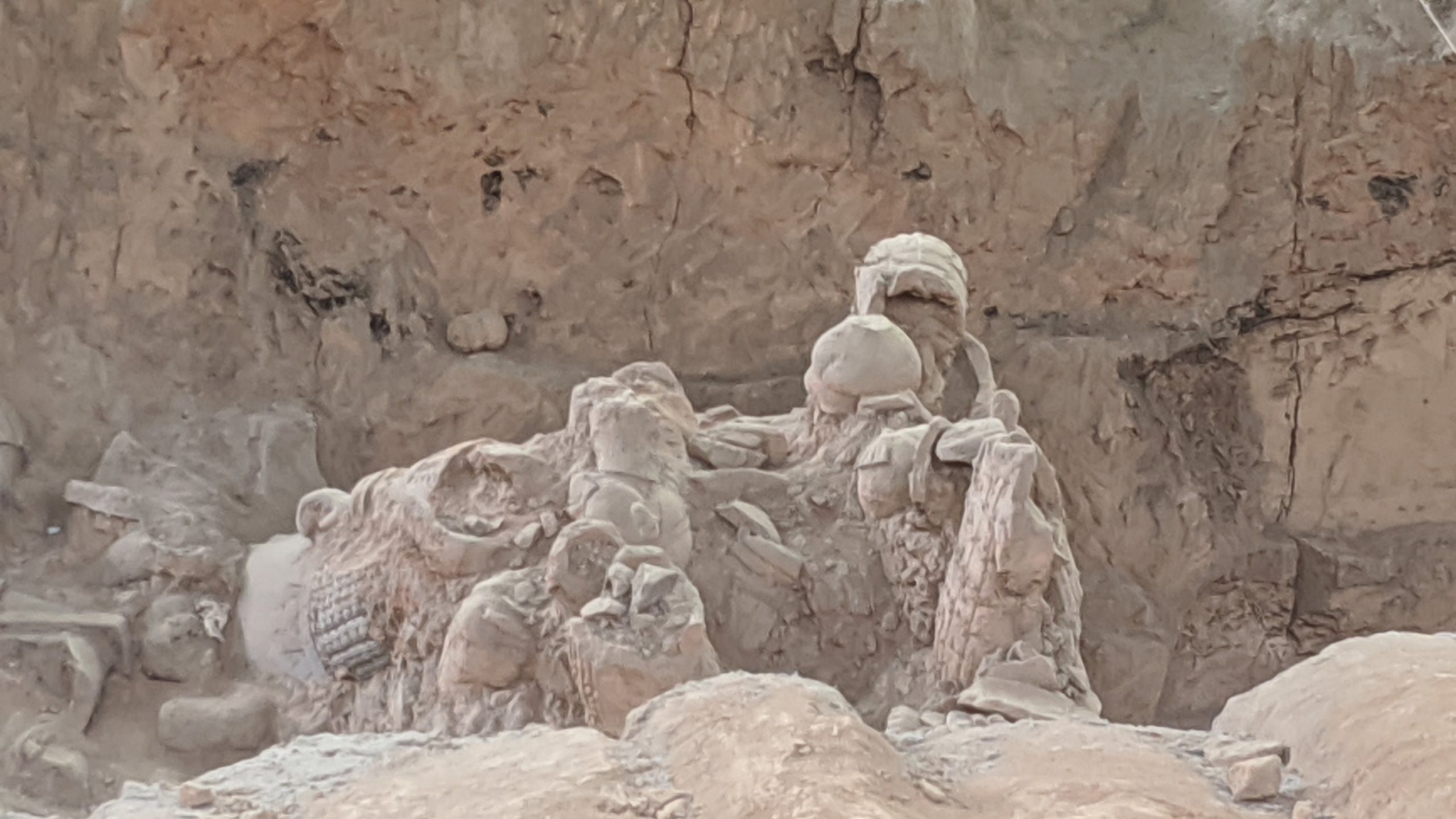
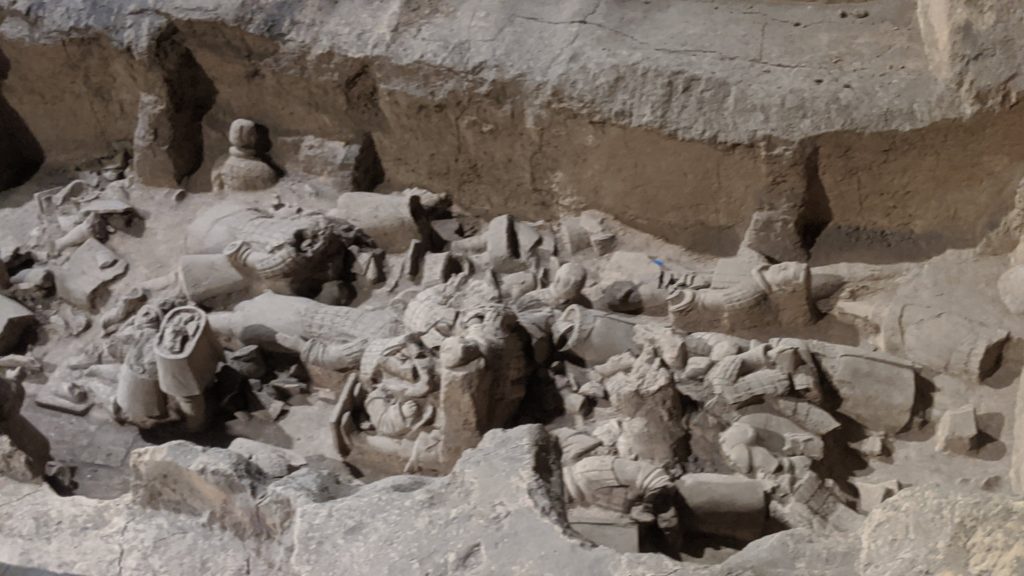
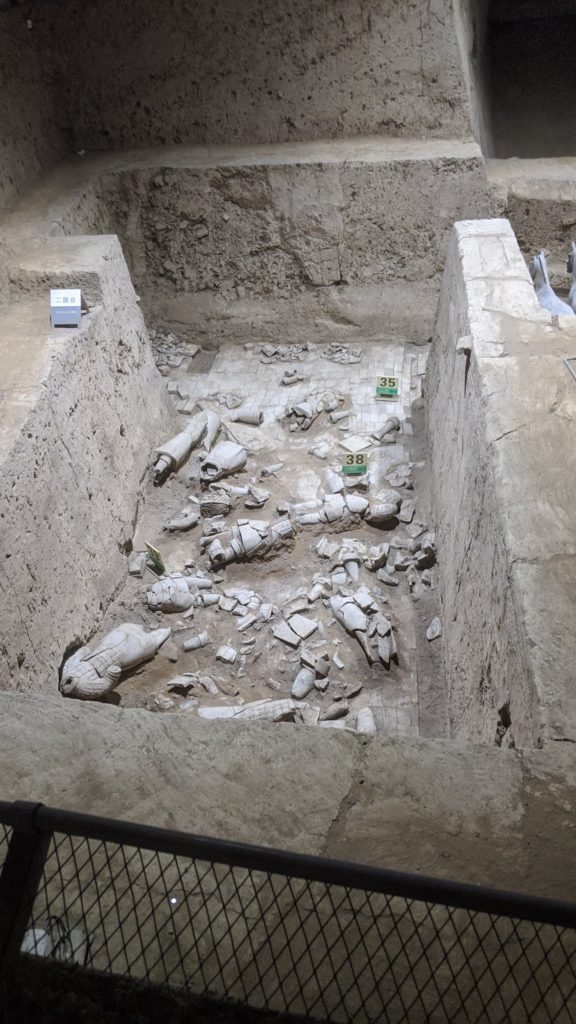
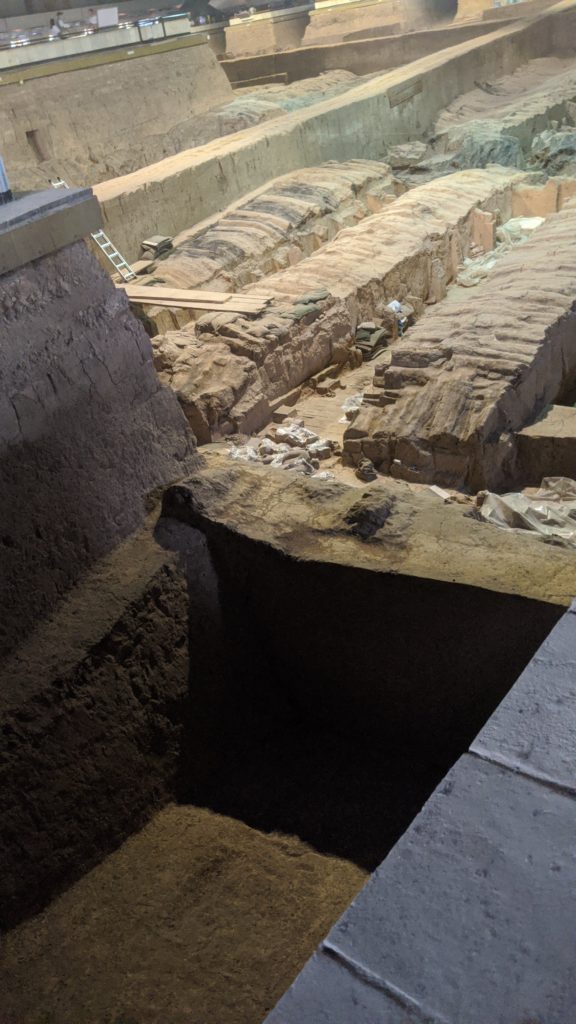
This section is just being excavated. They remove pieces to put together in a different section, then place the warriors back in position when finished.

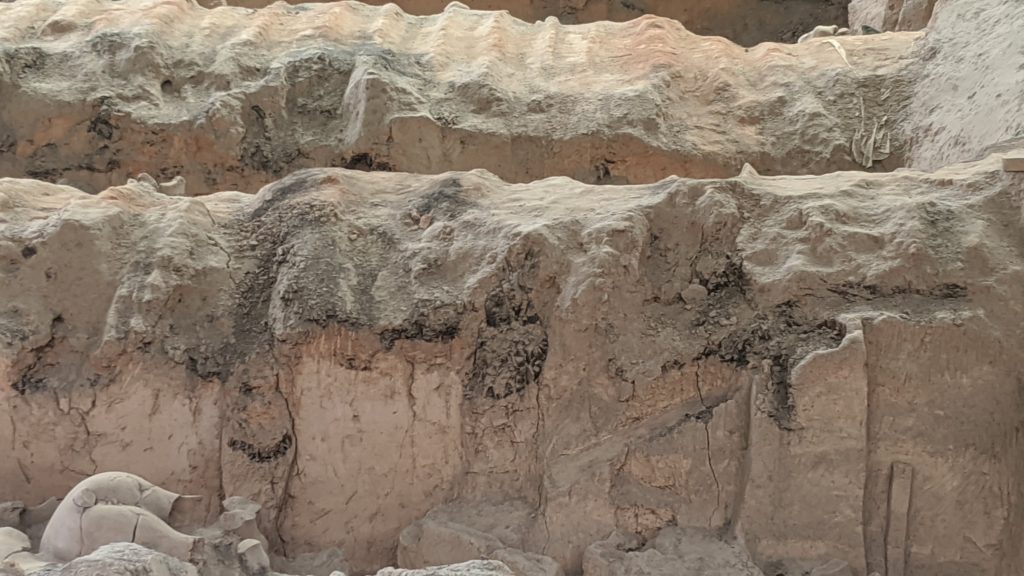
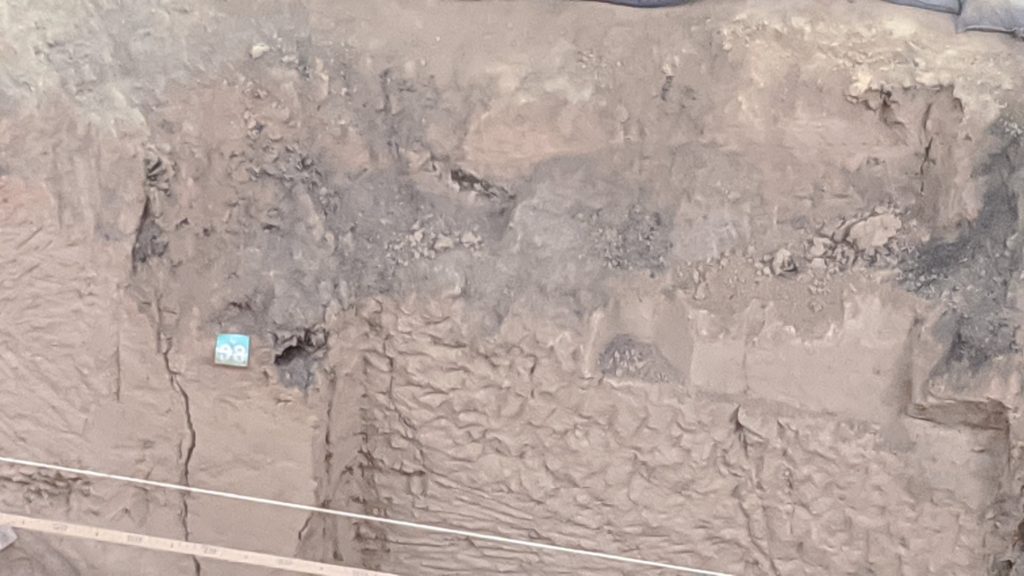
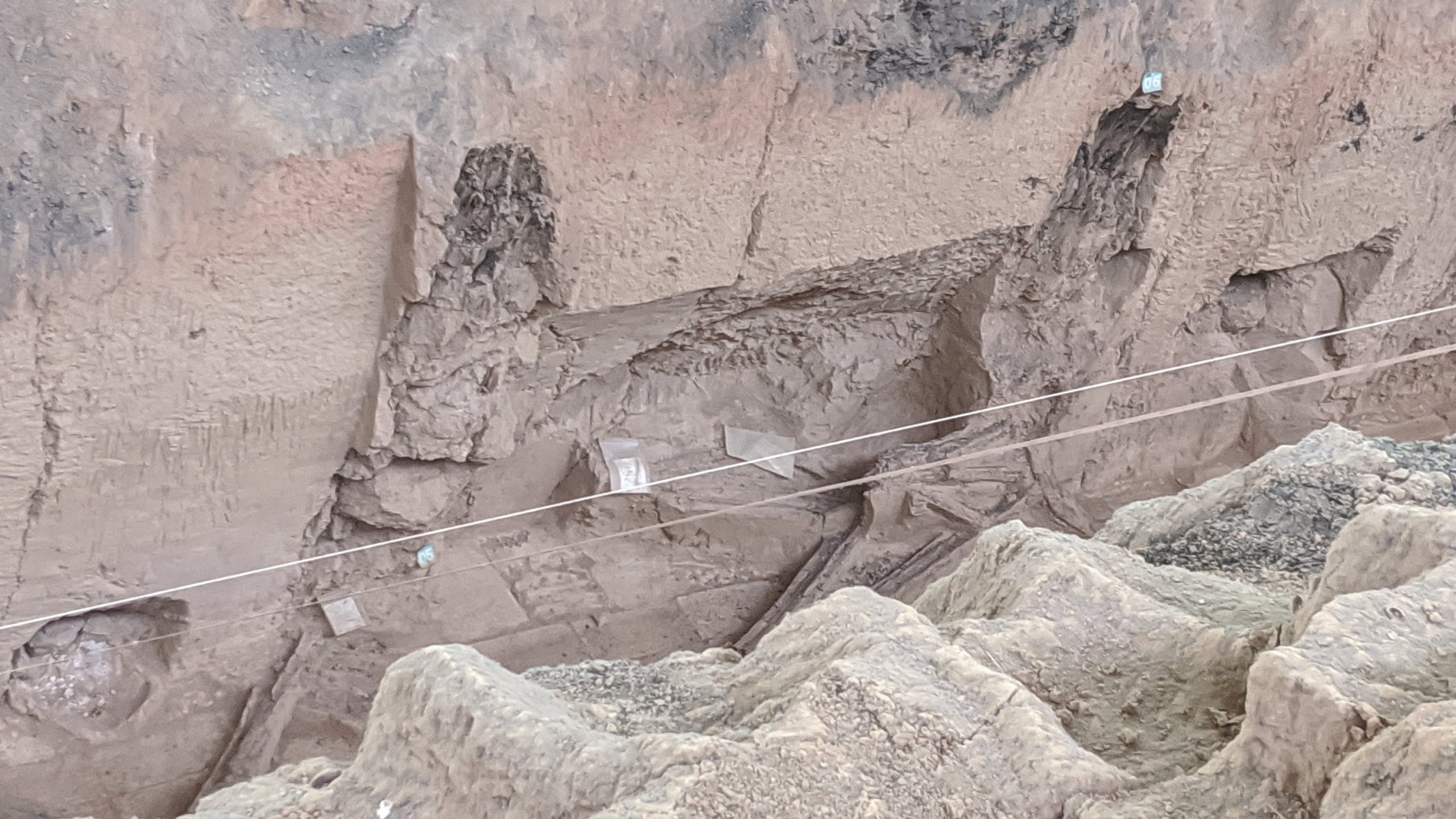
Imprints of the wood beams in the clay. Chariots were made of wood and not survived. Warrior with hands holding in front are holding weapons.

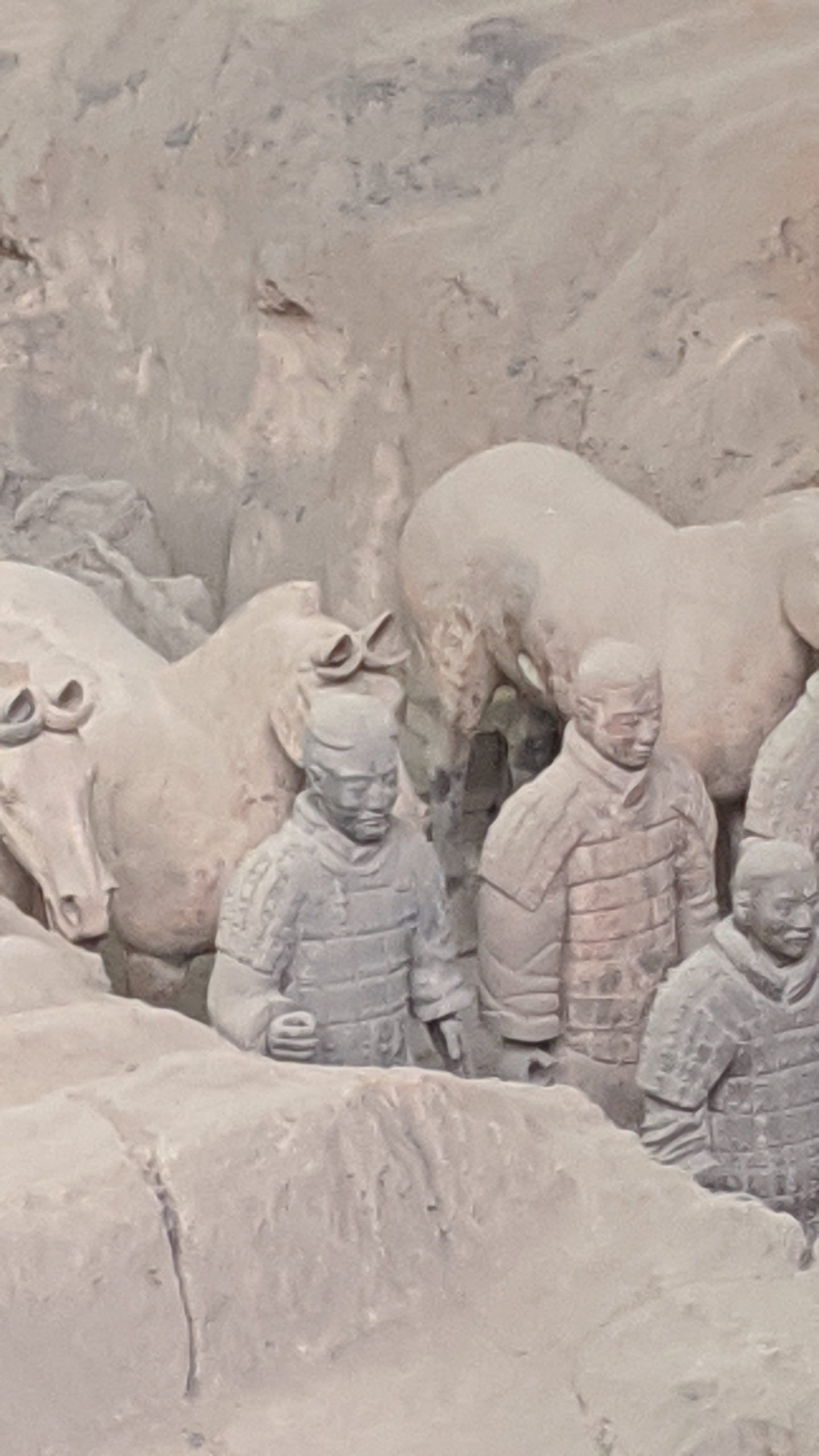
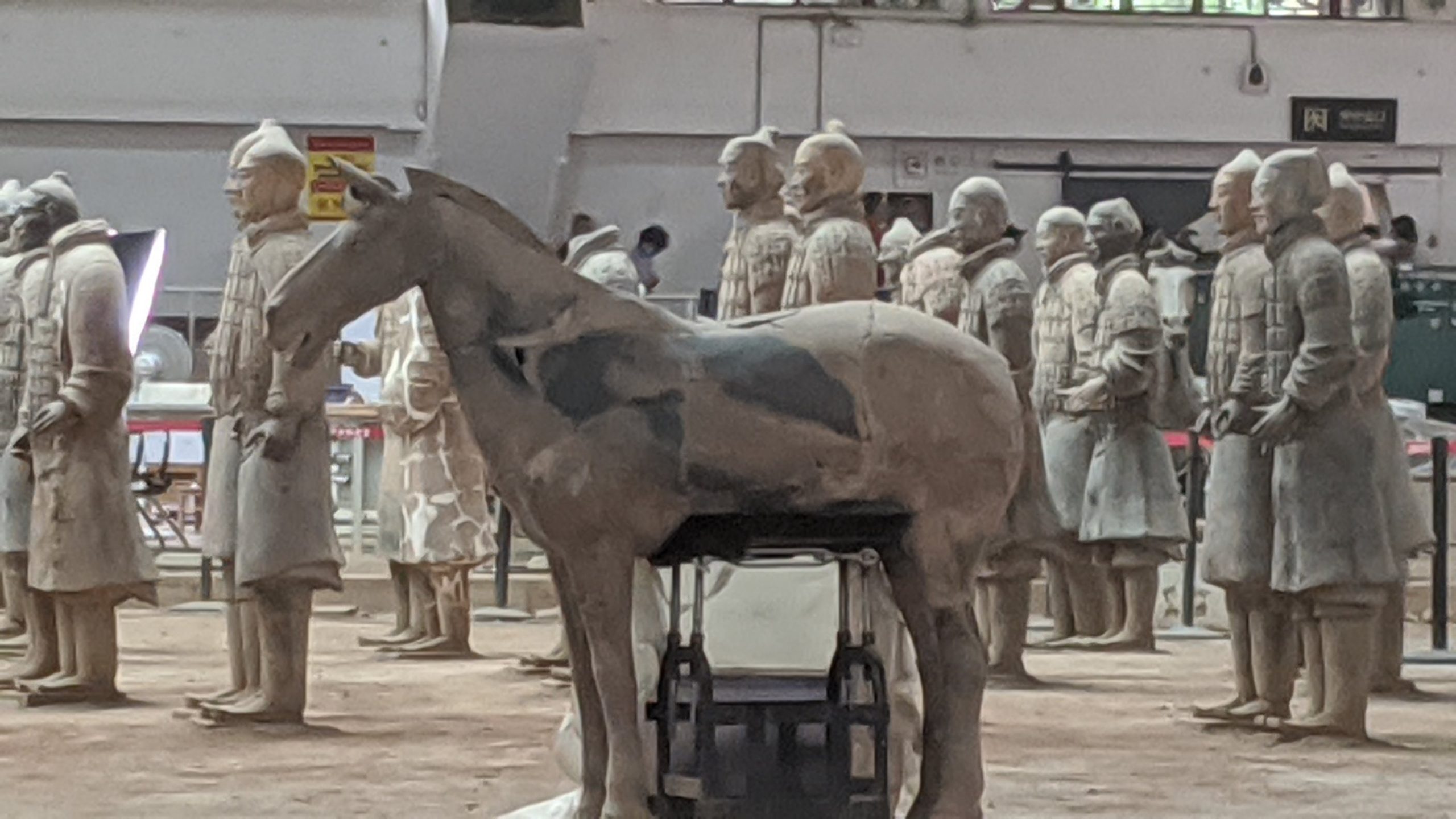
The vanguard is along the front of Pit 1. They are the archers. Others are holding spears. Those that have the armor is the infantry.

Those facing it were flankmen to watch the sides.

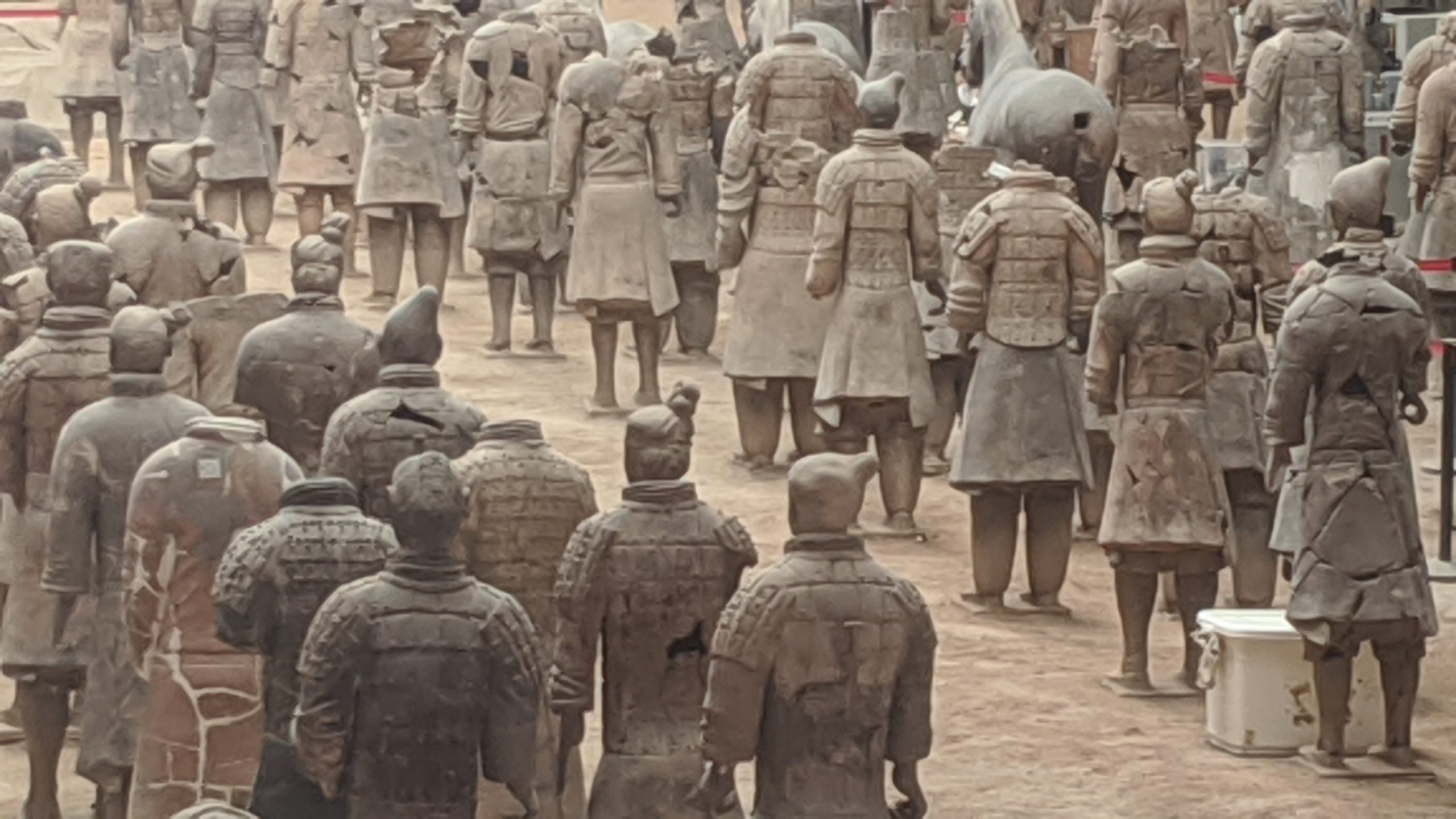
This cutout area is where coffins were buried long before 1974. Heads are missing around where the coffins were. When they dug, they would cause damage to the warriors. Back then when they found a piece they thought it was from a temple because of Taoist past beliefs. They did not mention what they found.

Coffin inside still in this one part. The wood is gone, but the bones remain.

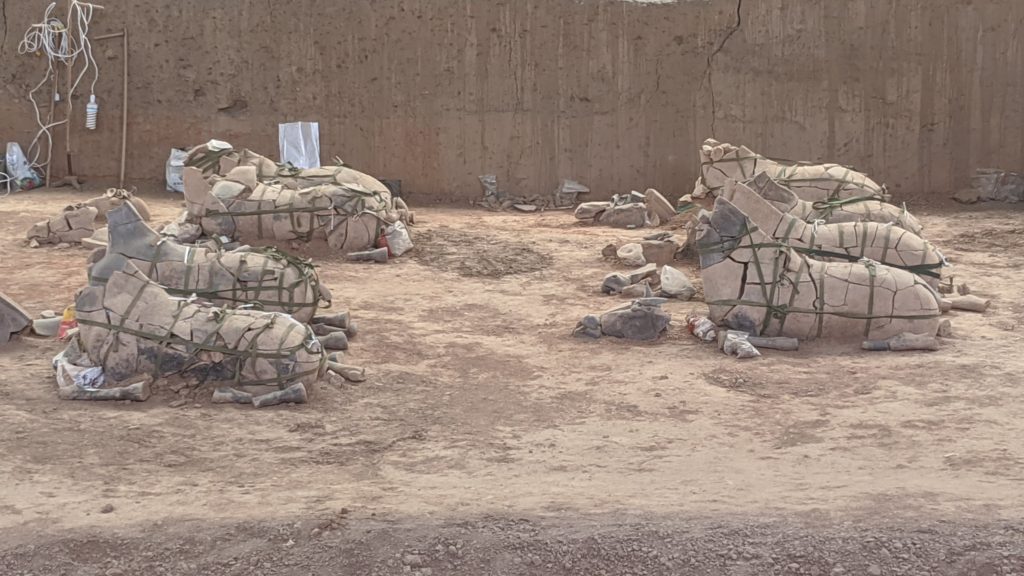
All the warriors were broken this way and then restored.

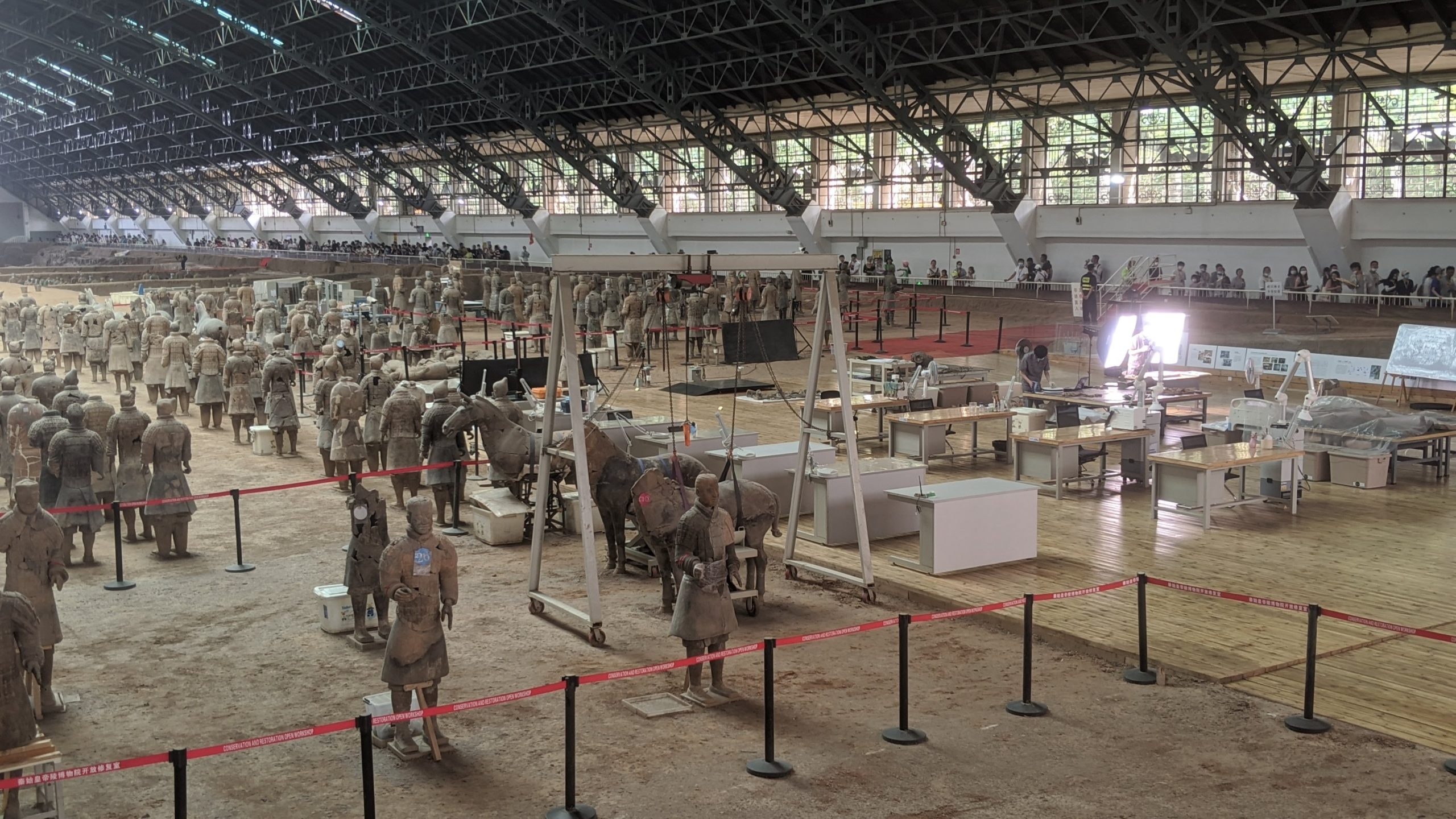
Area of restoration as they search for pieces. All of the warriors are numbered by GPS.

Each warrior is 150 to 300 kg.

Remains of the burnt wooden ceiling from 2200 years ago. But maybe burnt as Taoist burial first then buried.

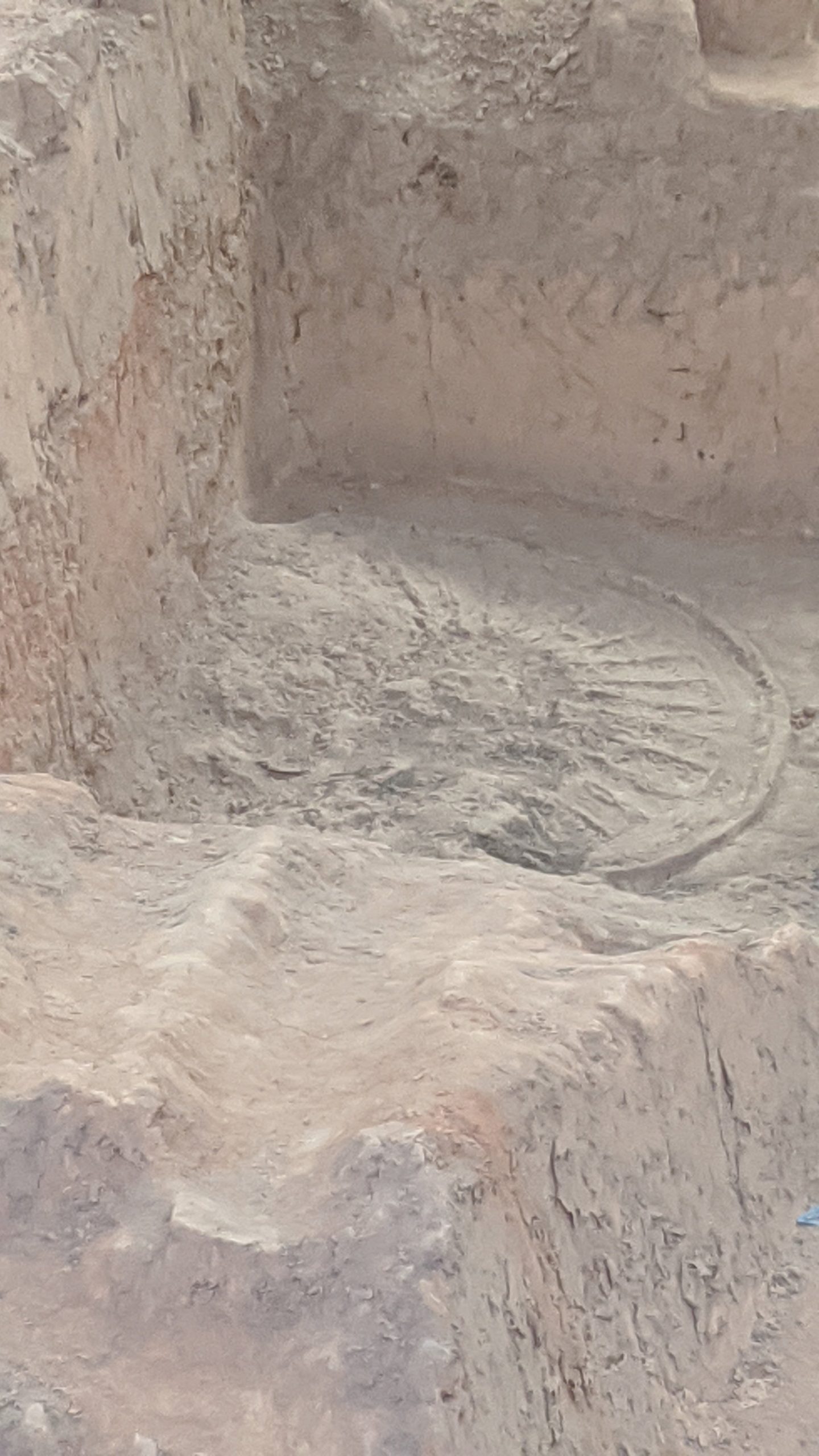
Imprint of wheel from a chariot though the wooden wheel is long gone.

Print of crossbow.

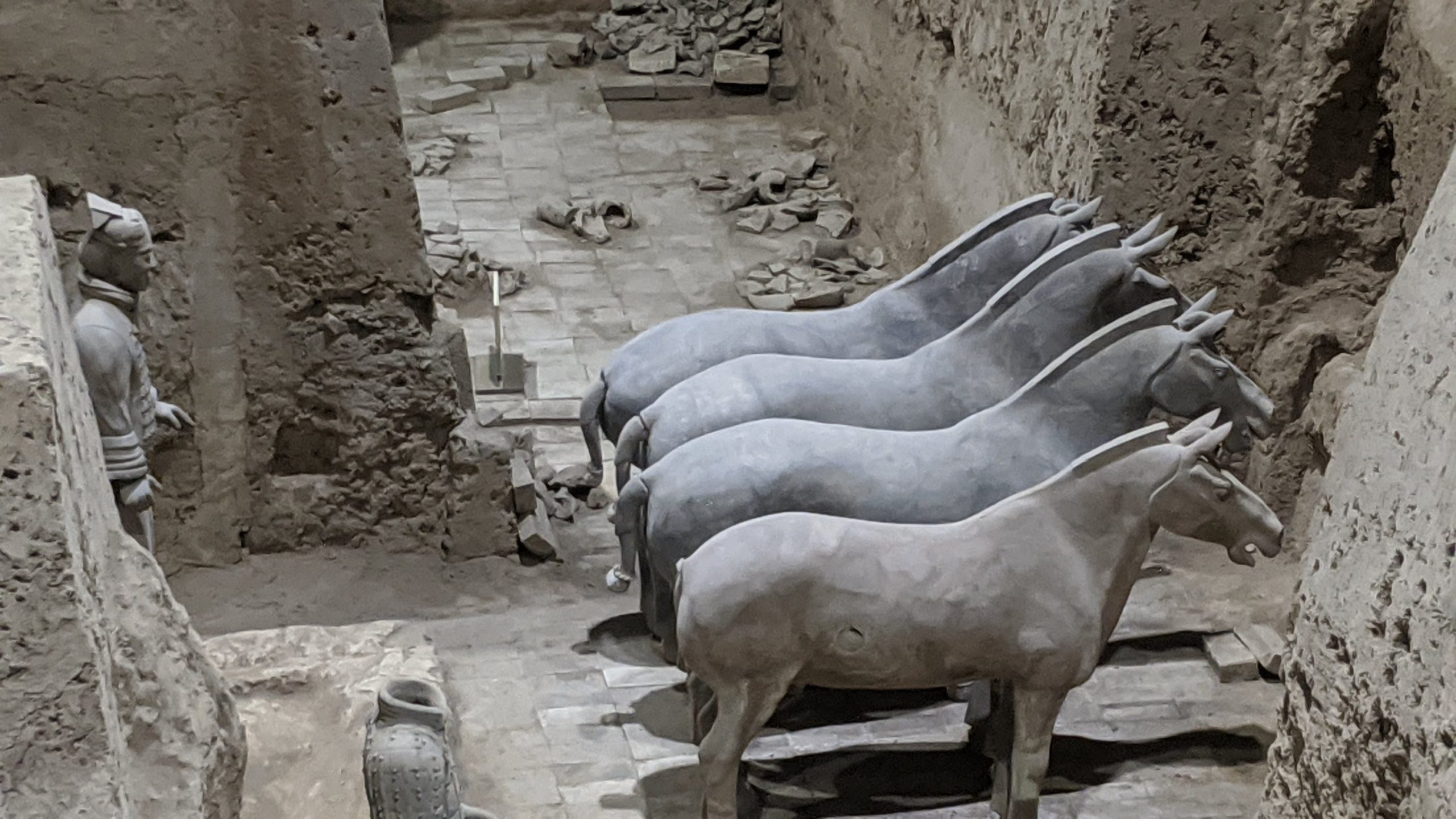
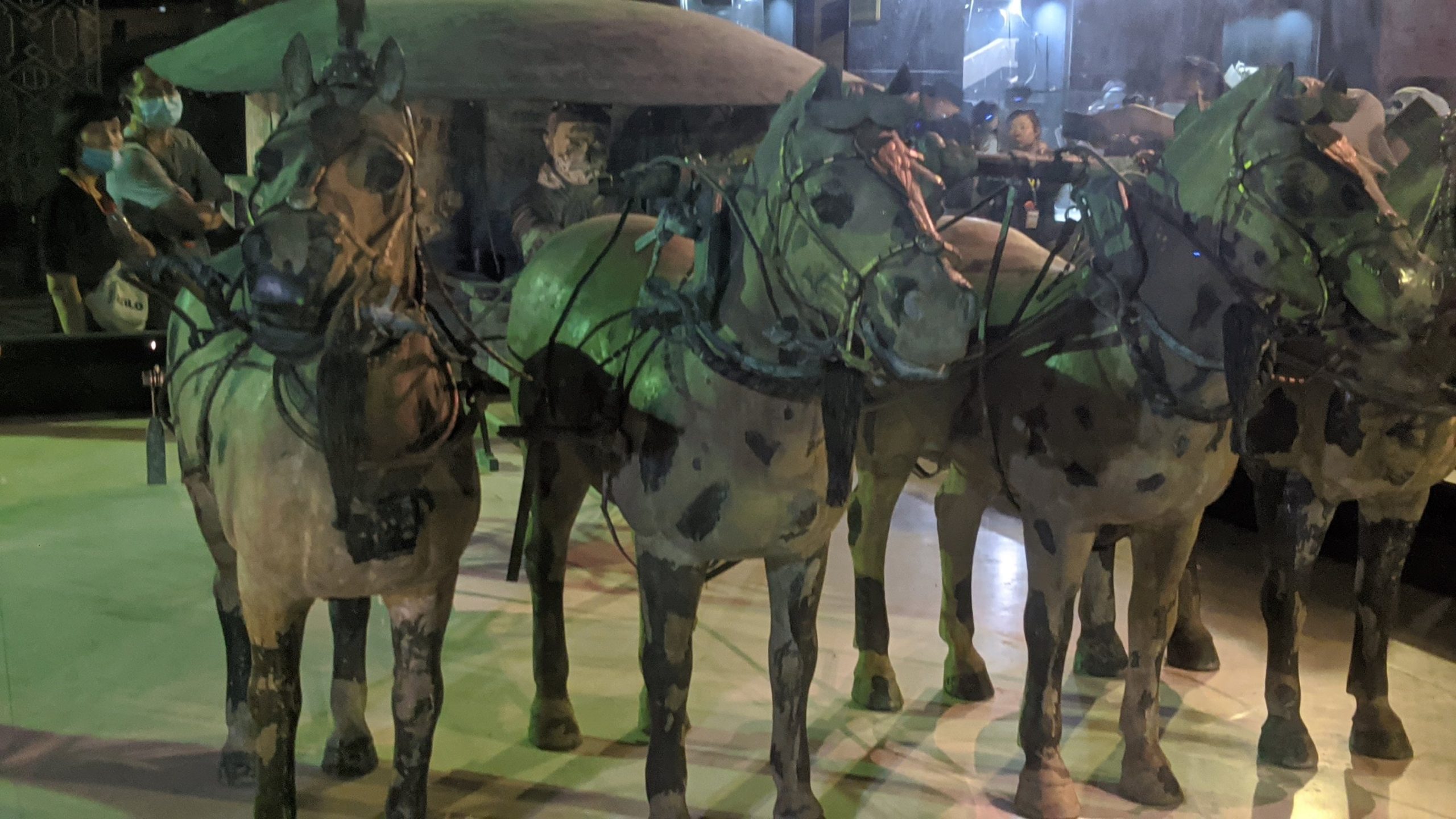
Horses.

Workers scanning pieces.

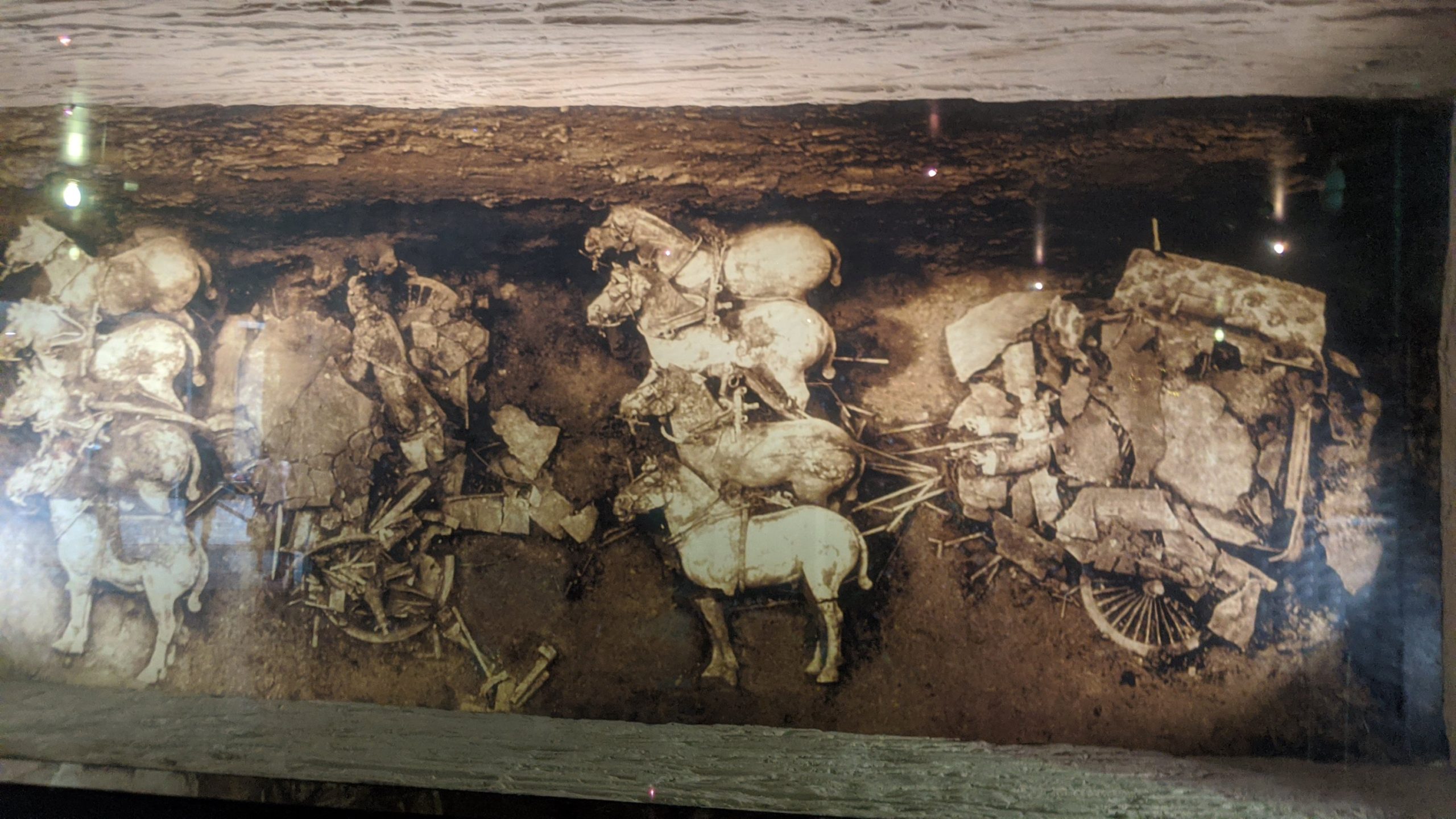
Pit 3 was found in 1976. This is the original ground level. The picture below shows how they were found at the beginning.

Bodyguards of the emperor.

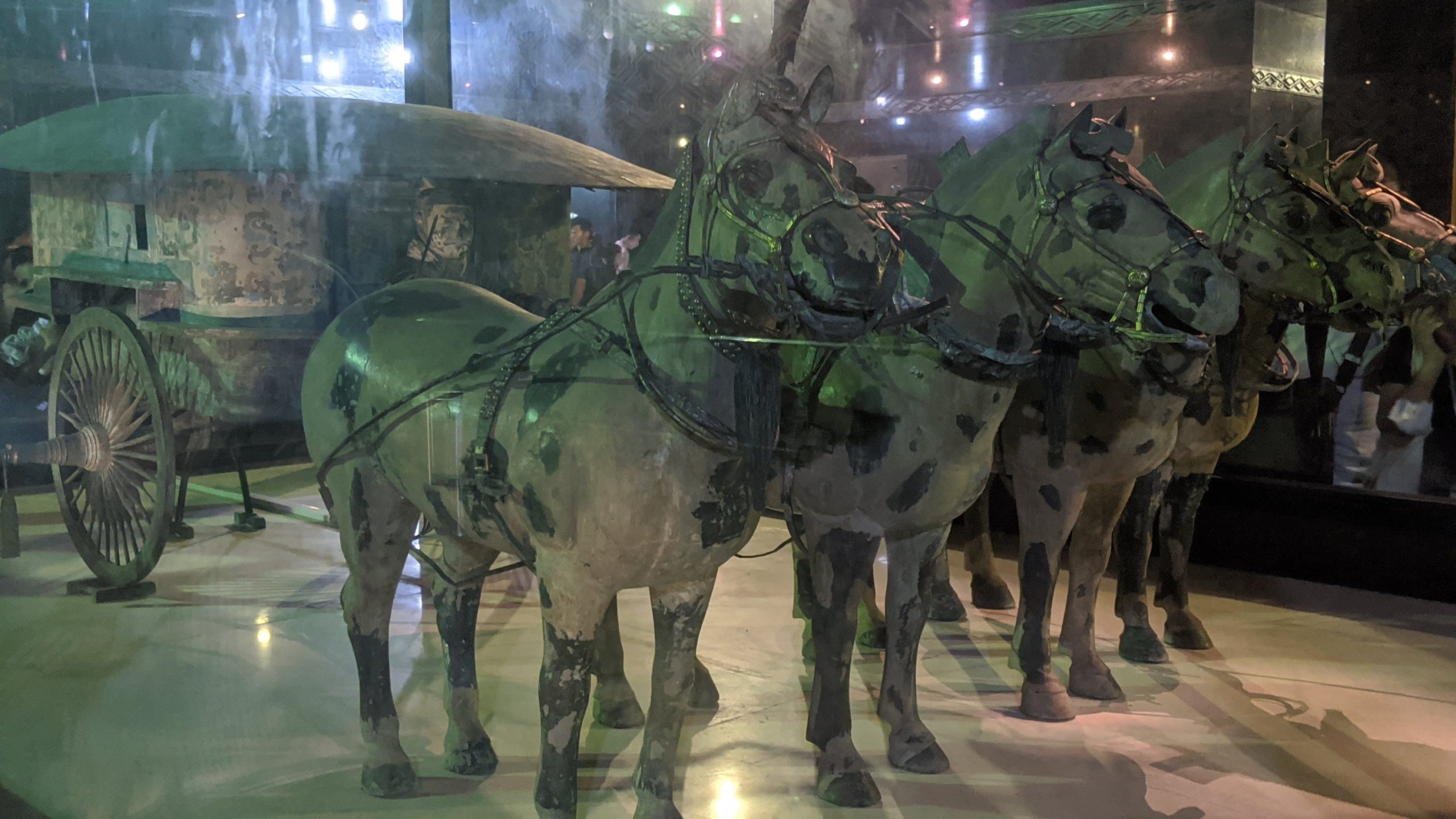
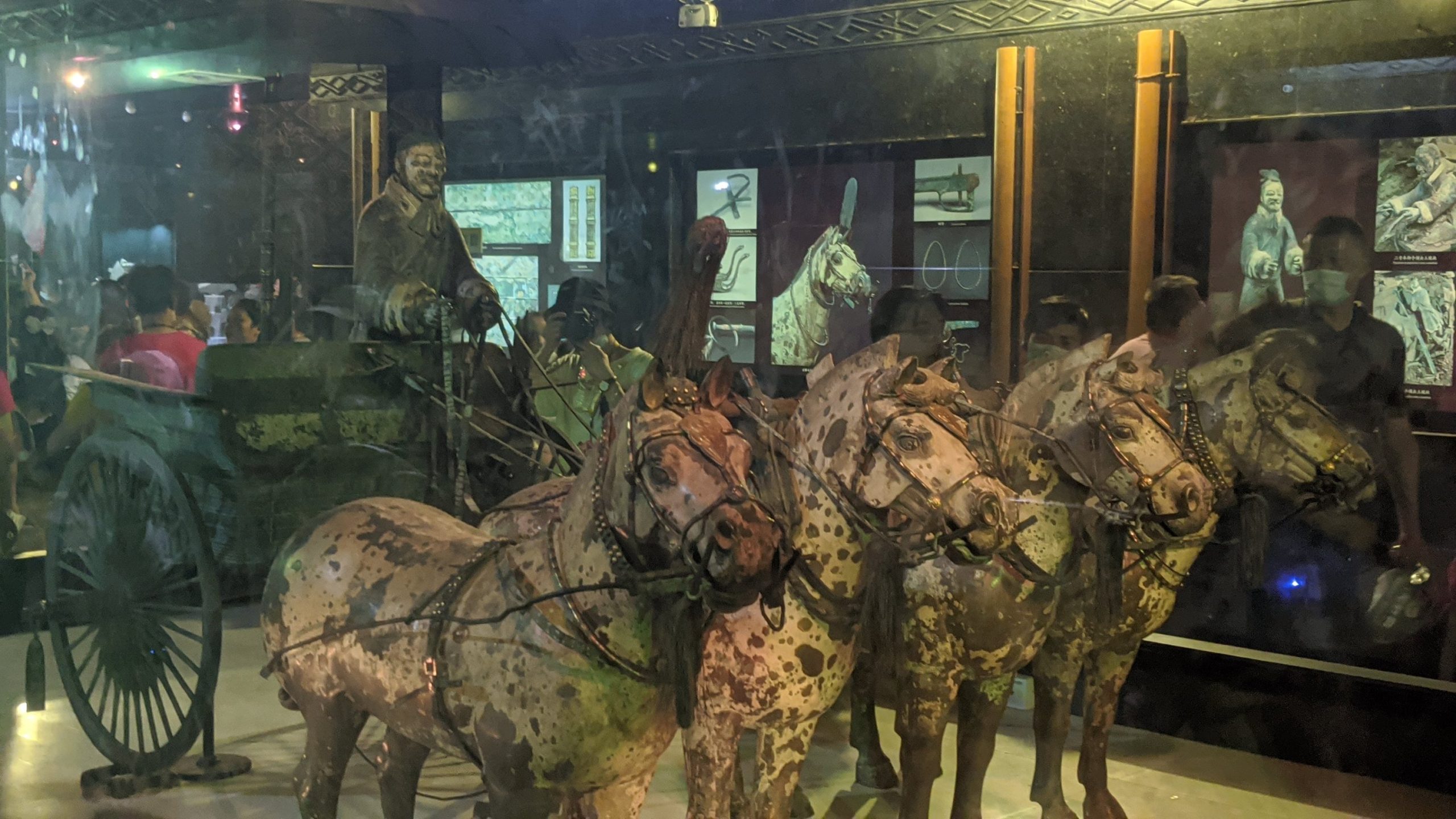
4 horses with 4 people for a chariot. They used colors and sounds (drum, gong) to tell movements like retreat and direction to move.

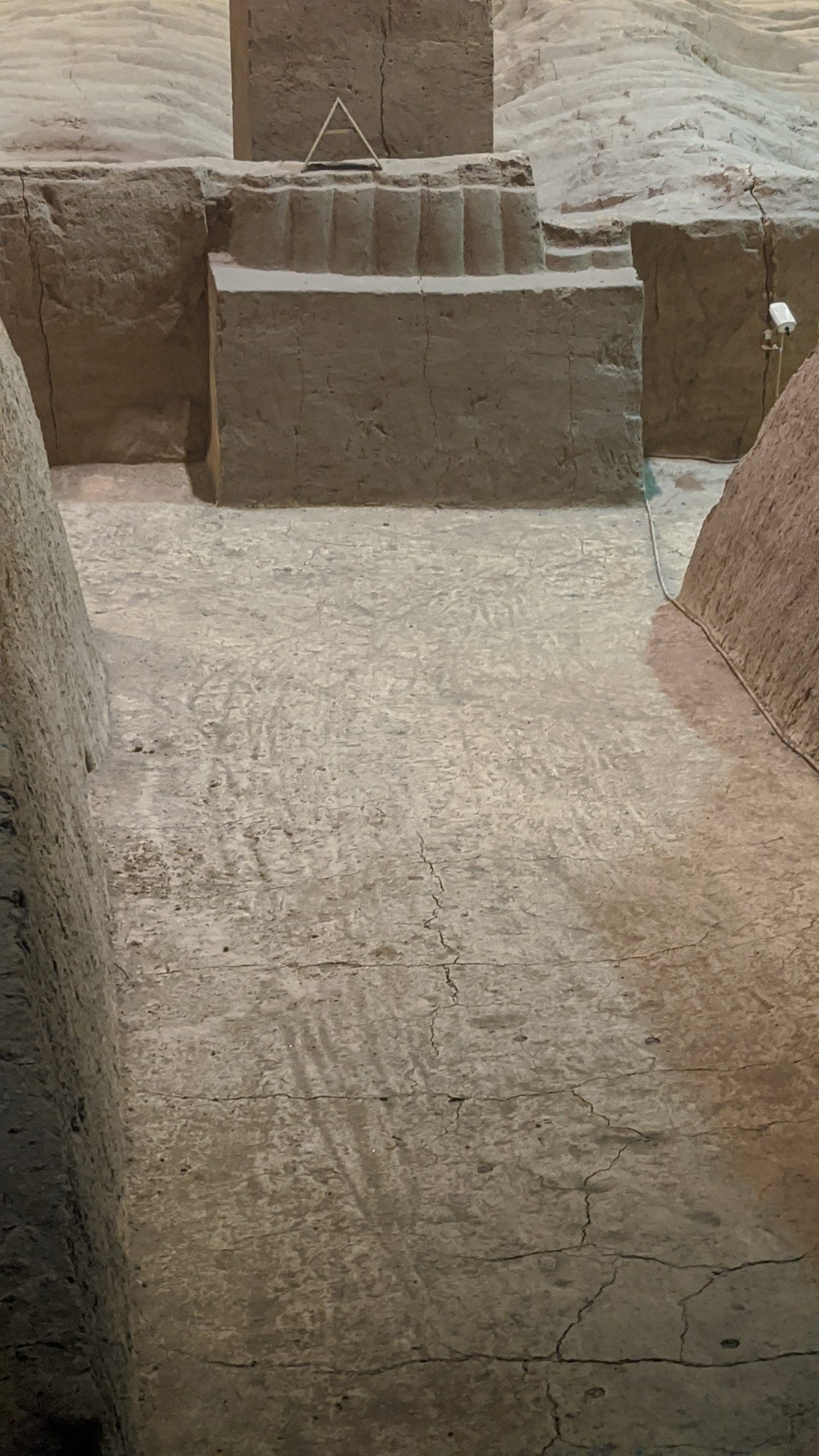
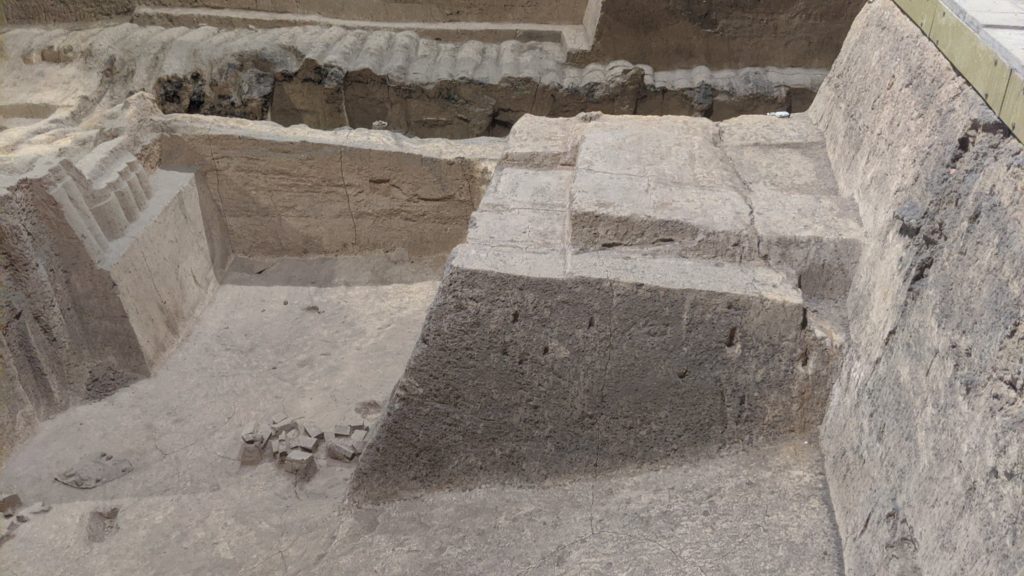
The ramp at the bottom left was used to bring the warriors in by chariot. There were 11 entrances.
You can see the grooves from the chariot at the bottom of this area.

Given the area, it would have been better to bury so if these in a cave. It would make sense why they would create a wood city as there is a burning ritual for burial.

This tomb is from the Han dynasty. Holes in the chat were created with an auger to determine the she and whether there were warriors present.

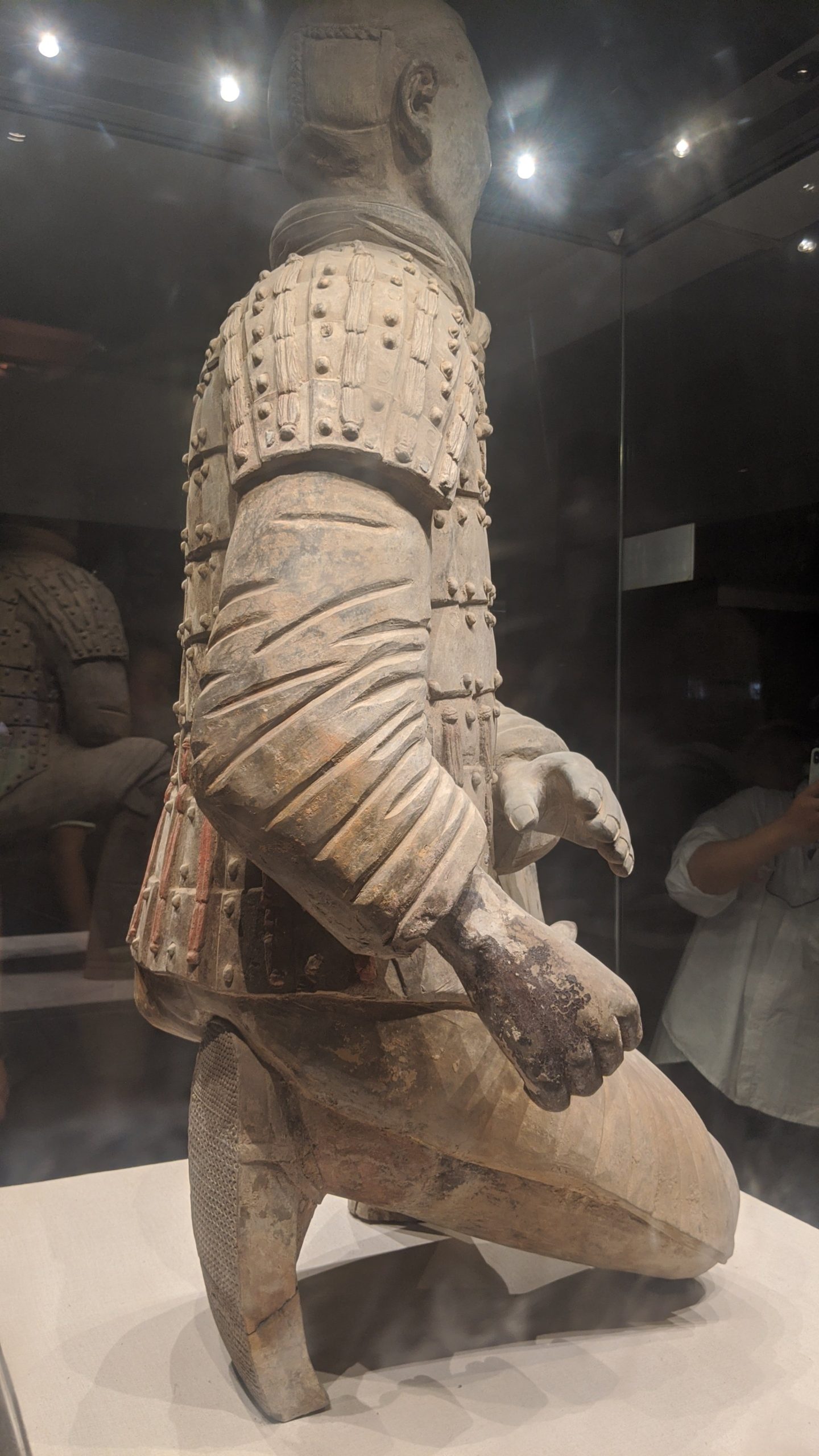
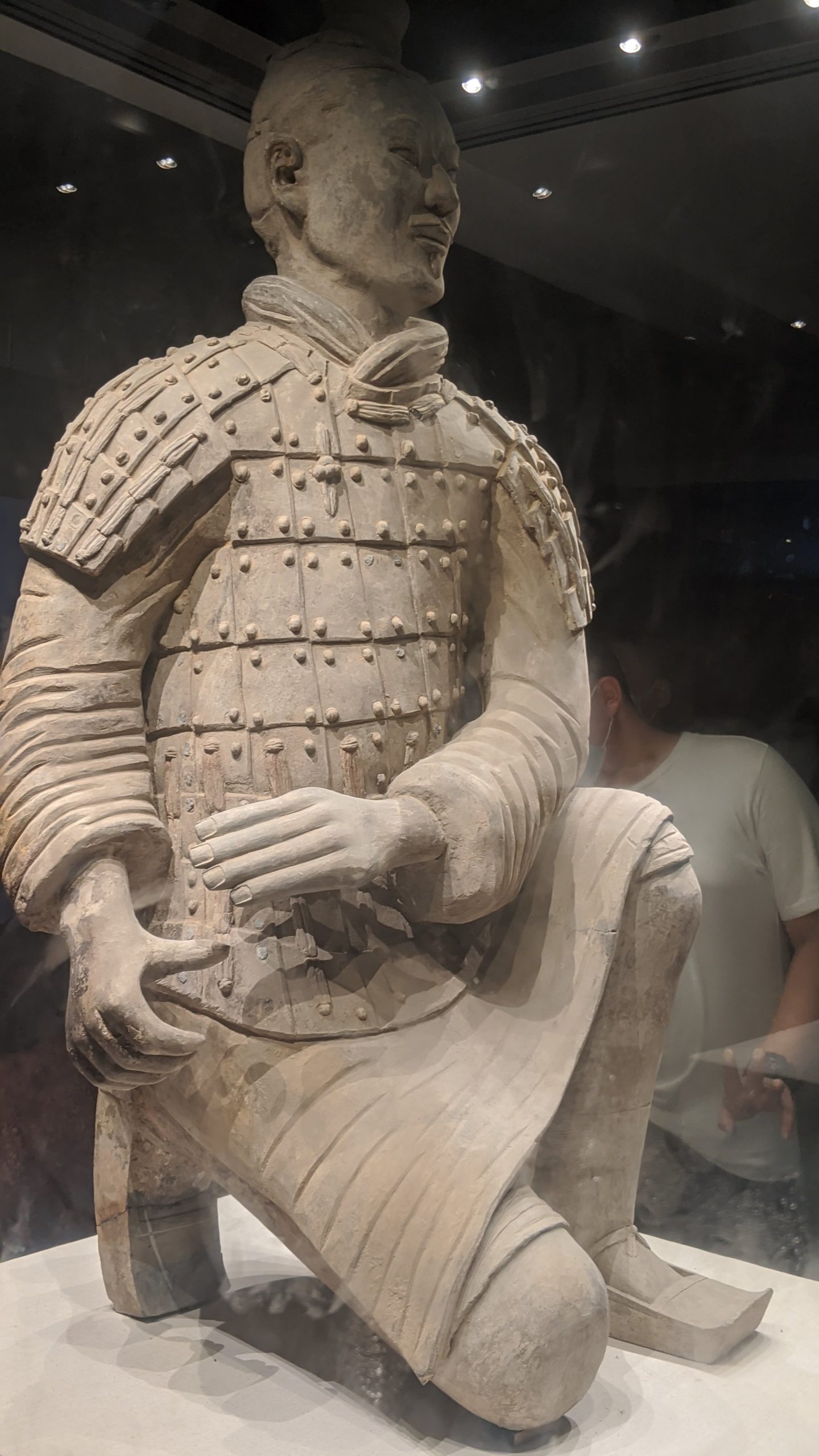
Kneeling Archer was one if the most interact pieces. It was preserved better as since it was lower to the ground there were less forces from the top.

Officer.

The representation if the horse show they had saddles back then but not stirrups. This was an archer.

To small bronze chariots were found and signify the carrying of soul back to palace. This was found on the other side of the tomb and they face westward as the sun sets to the west.

Xi’an had been the capital of many dynasties as this was the seat of power after this first emperor reigned.

Silk road extended, Xi’an and the terracotta warrior apartments

Despite a little trouble on the airplane with extra requirements as we were foreigners, the rest of the trip was uneventful. I am really beginning to wonder what the narrative serves by thinking that only foreigners moving around need scrutinized and not Chinese. They have to register with the app like we do, but they do not need to be virus tested before traveling or having to show the date when we arrived back to China.

Regardless, we found someone to help us register the health code on the plane and the owner of the apartment picked us up. He gave us history of Xi’an.

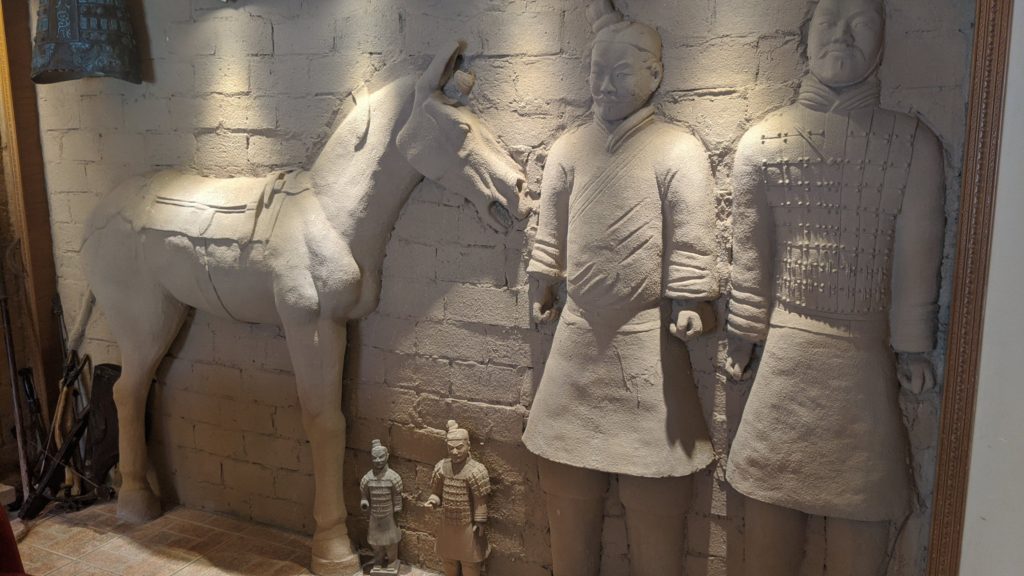
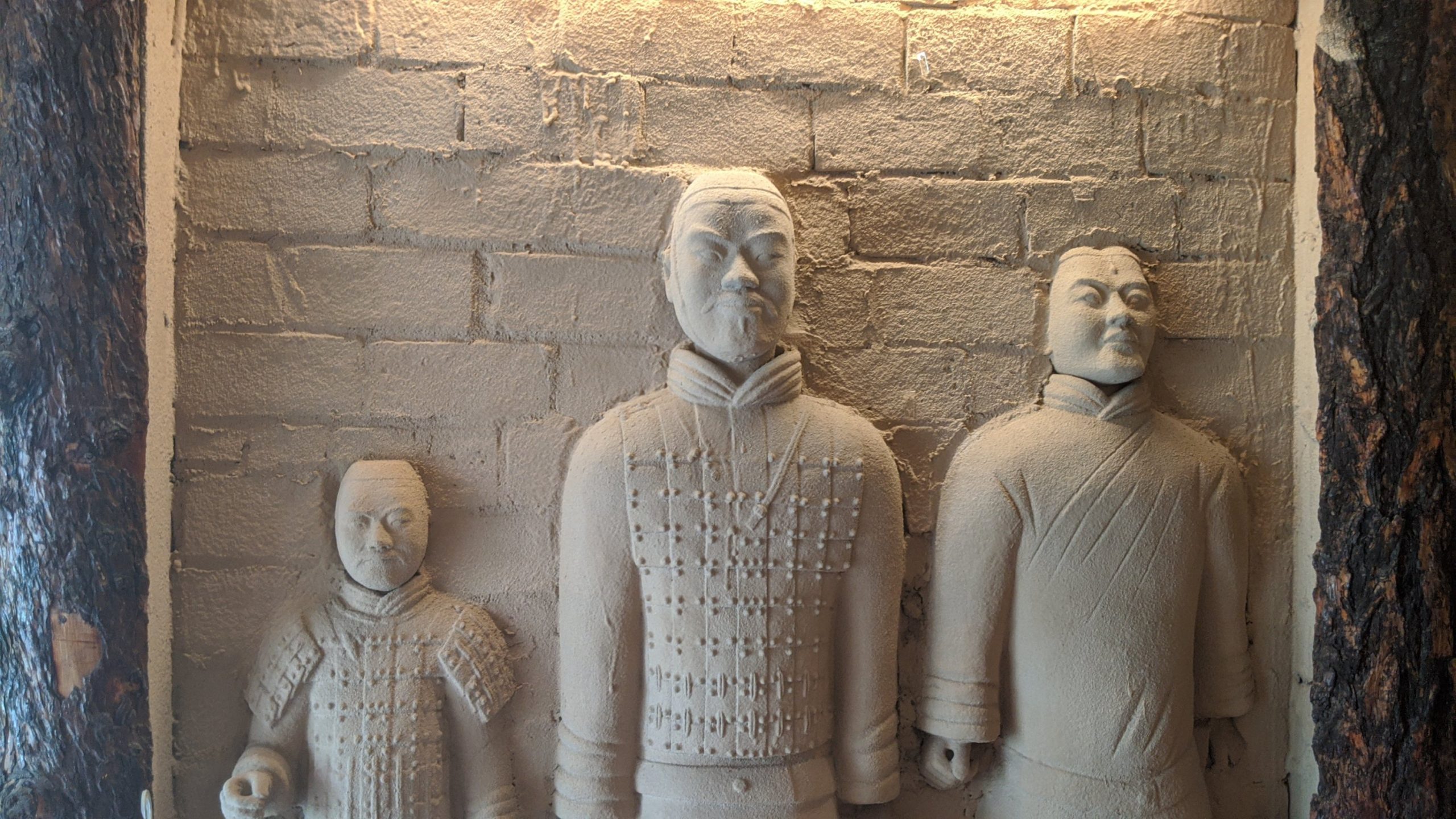
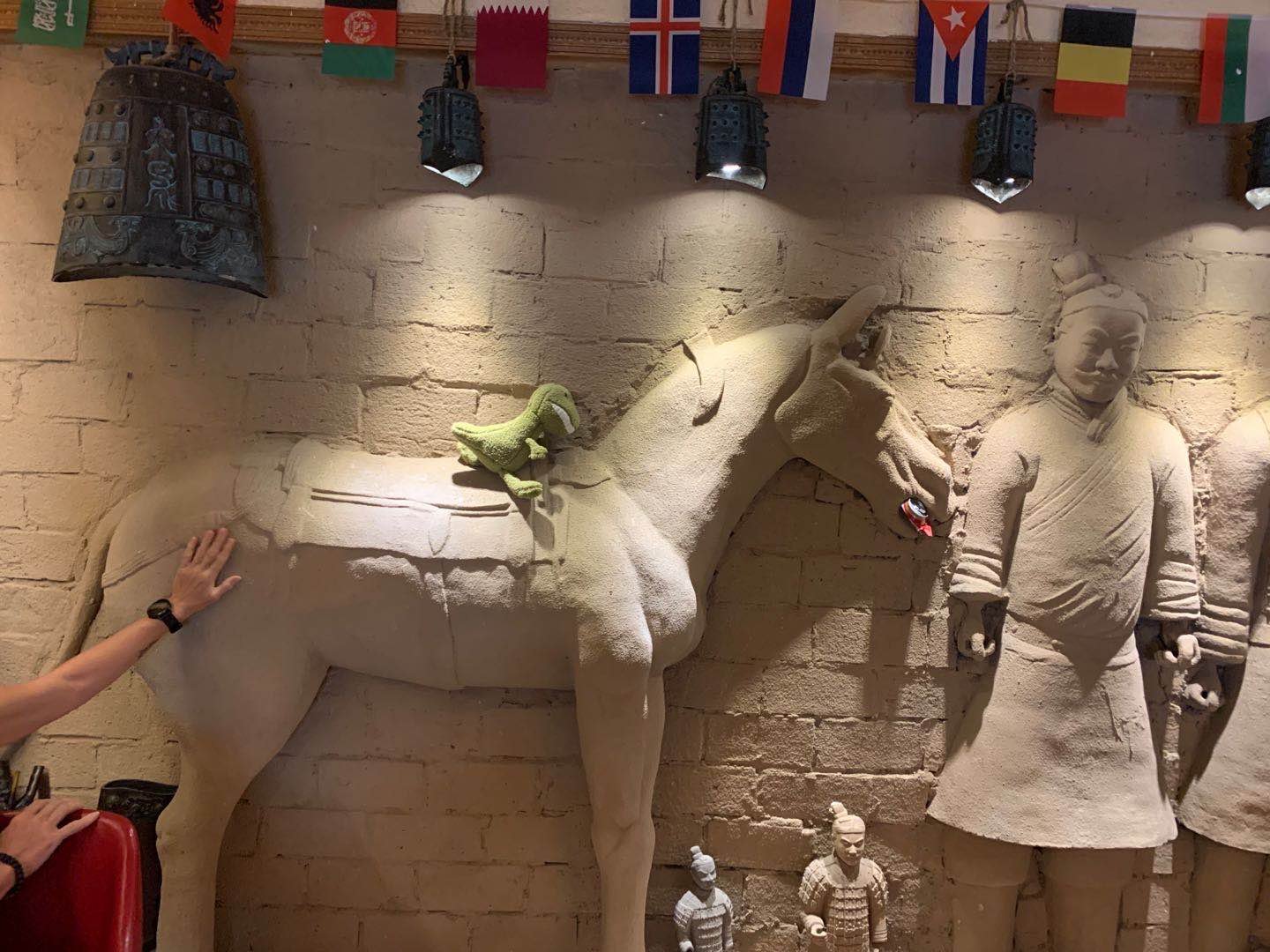
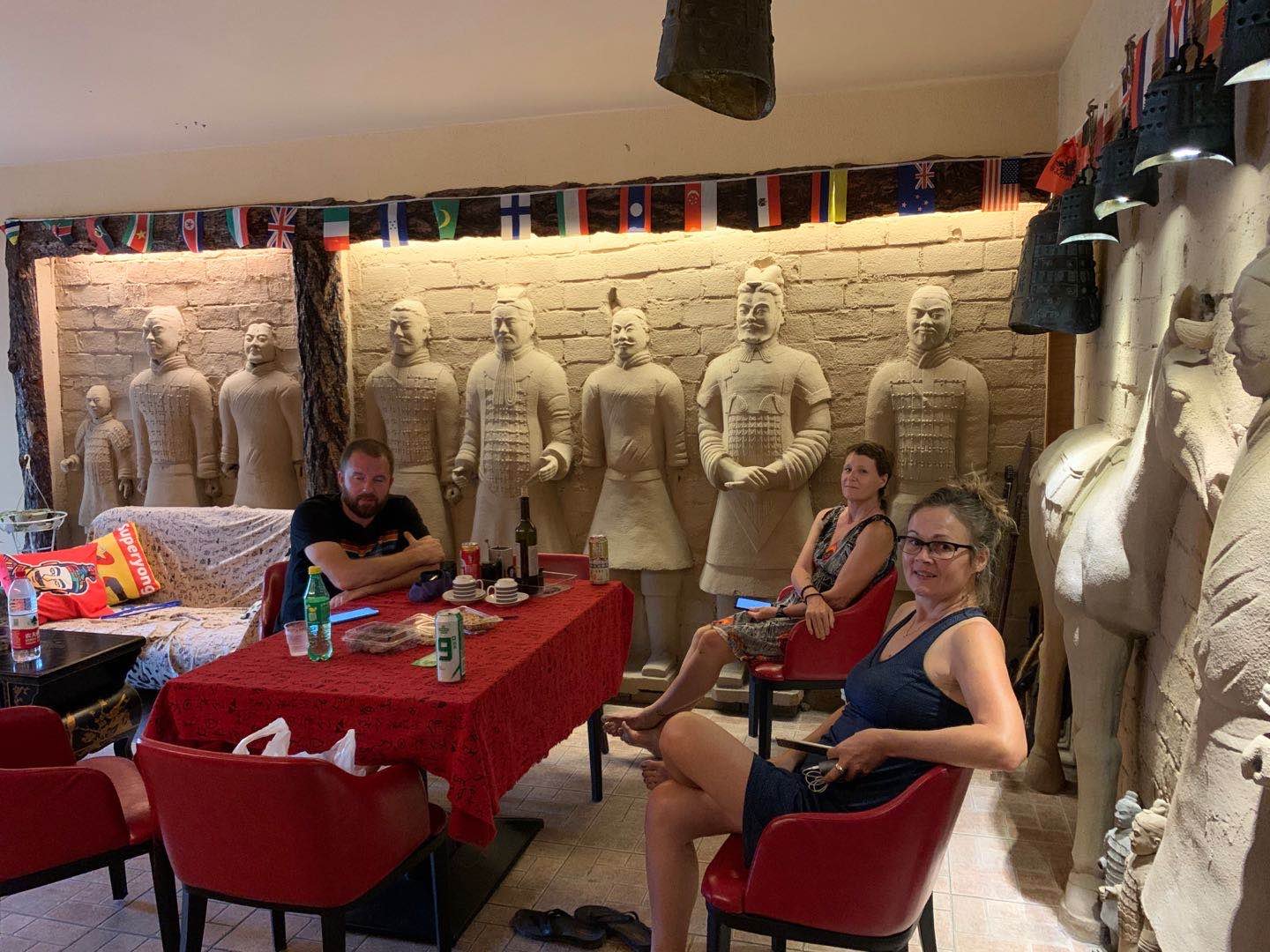
His apartment is called Warrior pit 1 (he also has a Warrior pit 2). As a tour director for decades, he outfitted the apartment with clay warrior sculptures.

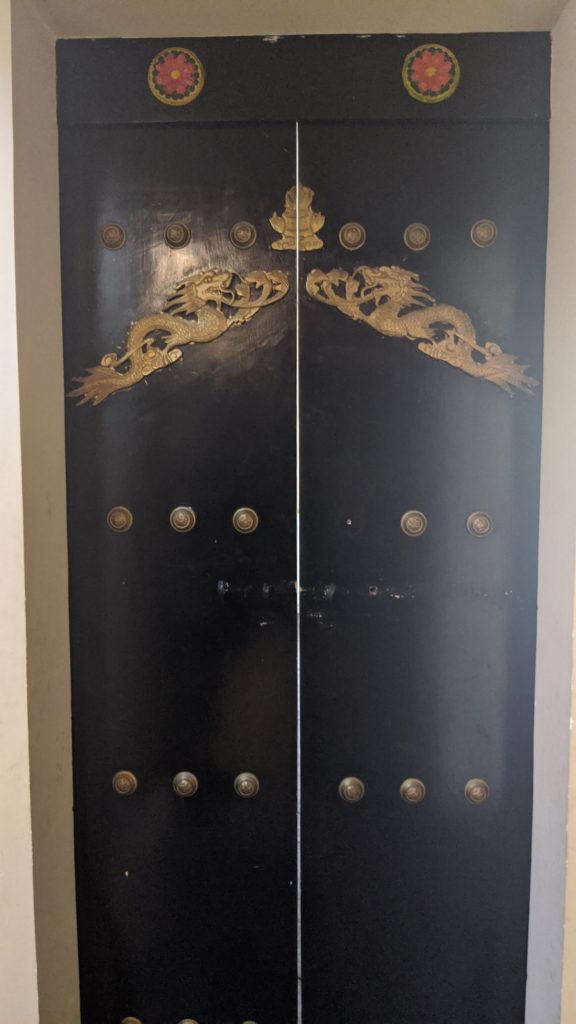
Entrance

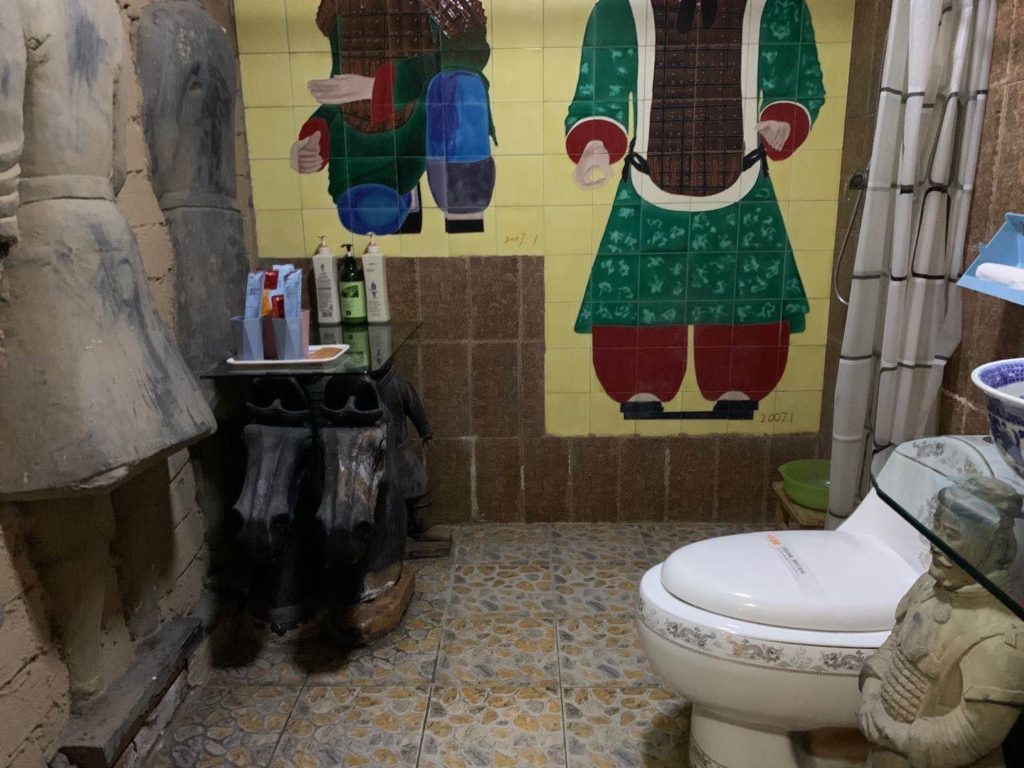
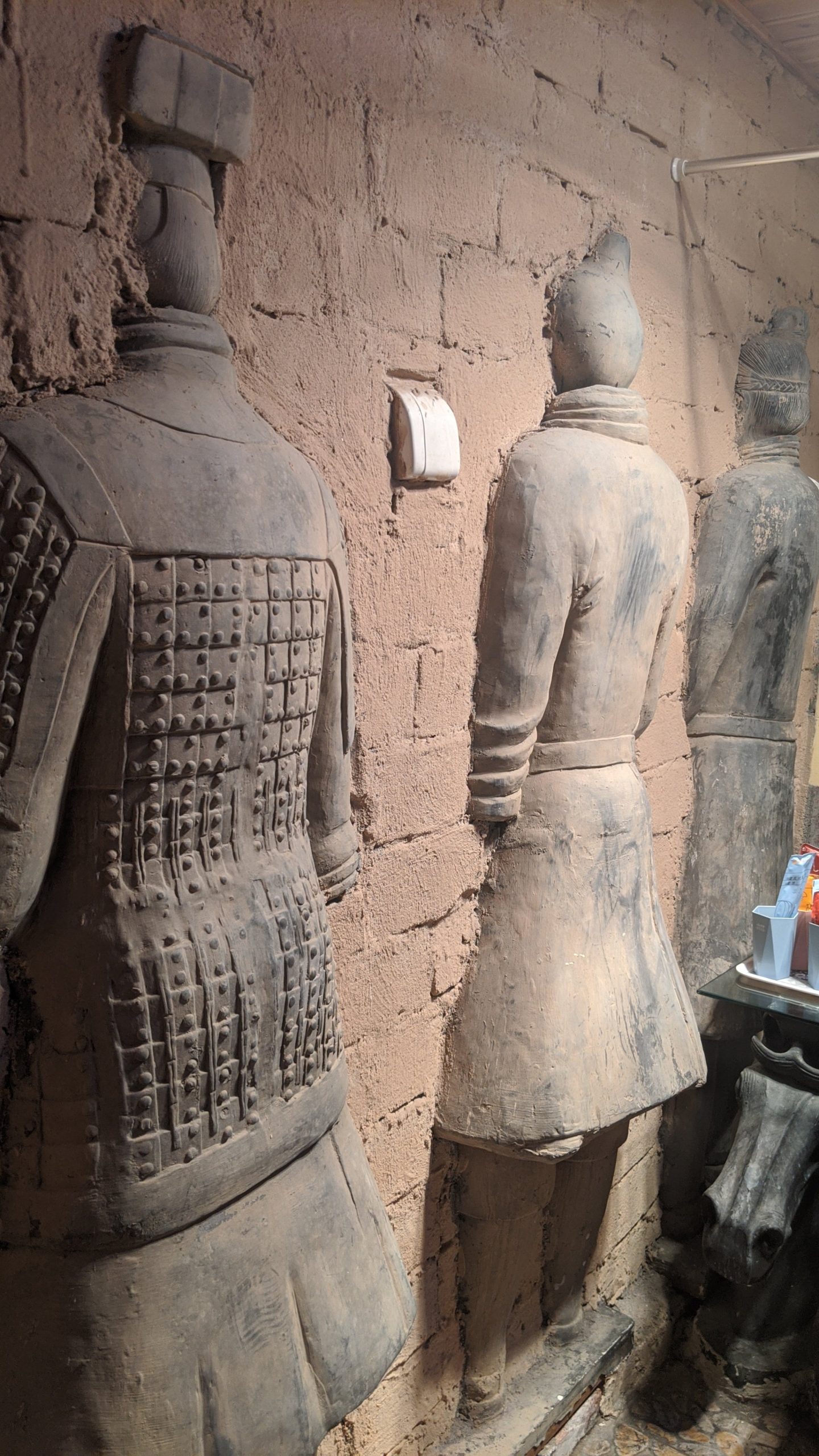
The backsides of these waitress are in the bathroom!

Living area

The kneeling warrior’s backside protrudes through the wall in the bedroom.

Bedroom

Bathroom

At least the warriors in the bathroom are faced away! They actually go through the real and they face the hallway.
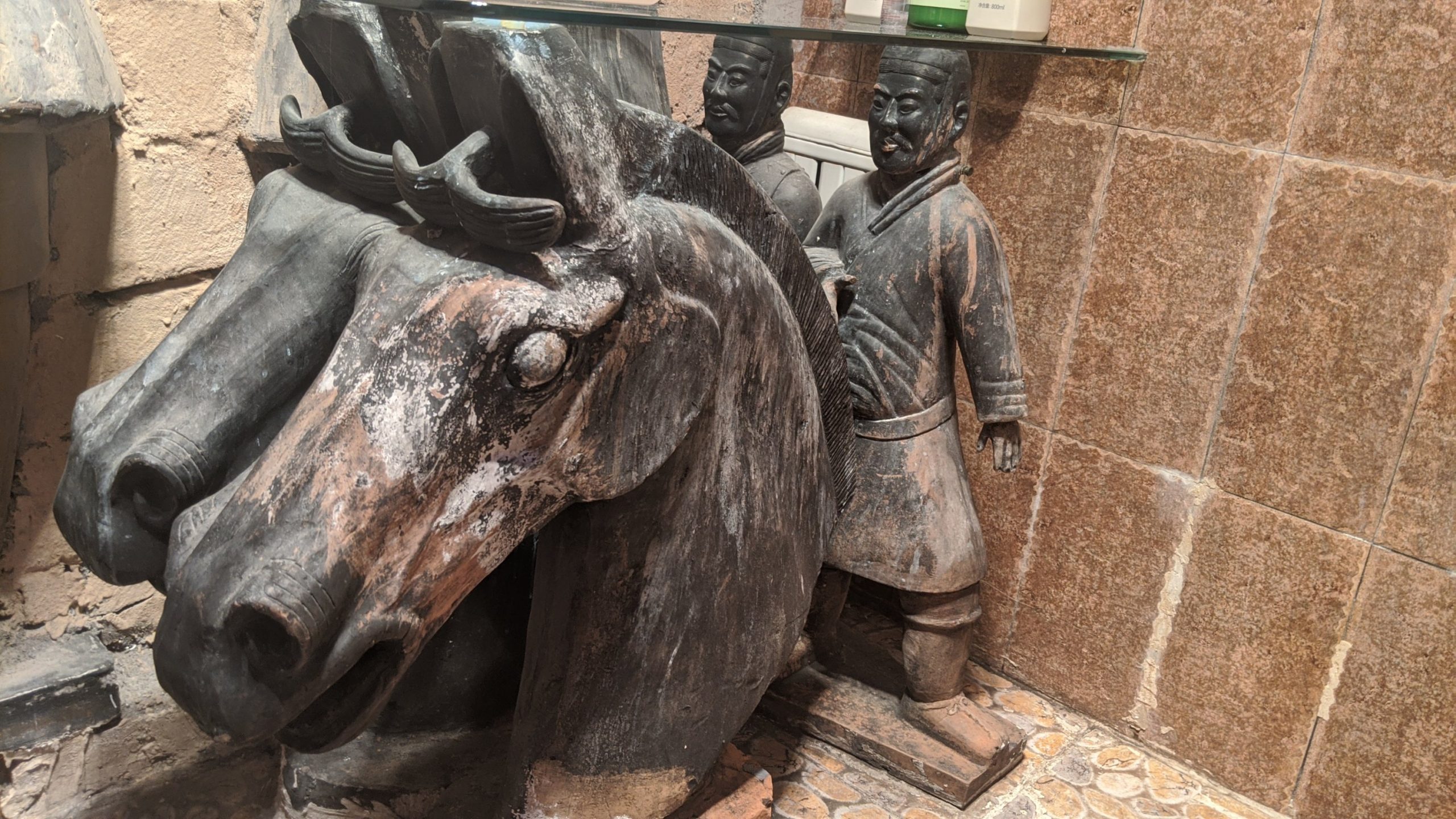
Table base holding toiletries.
Under the sink.

We went out to the Muslim quarter to look for food.

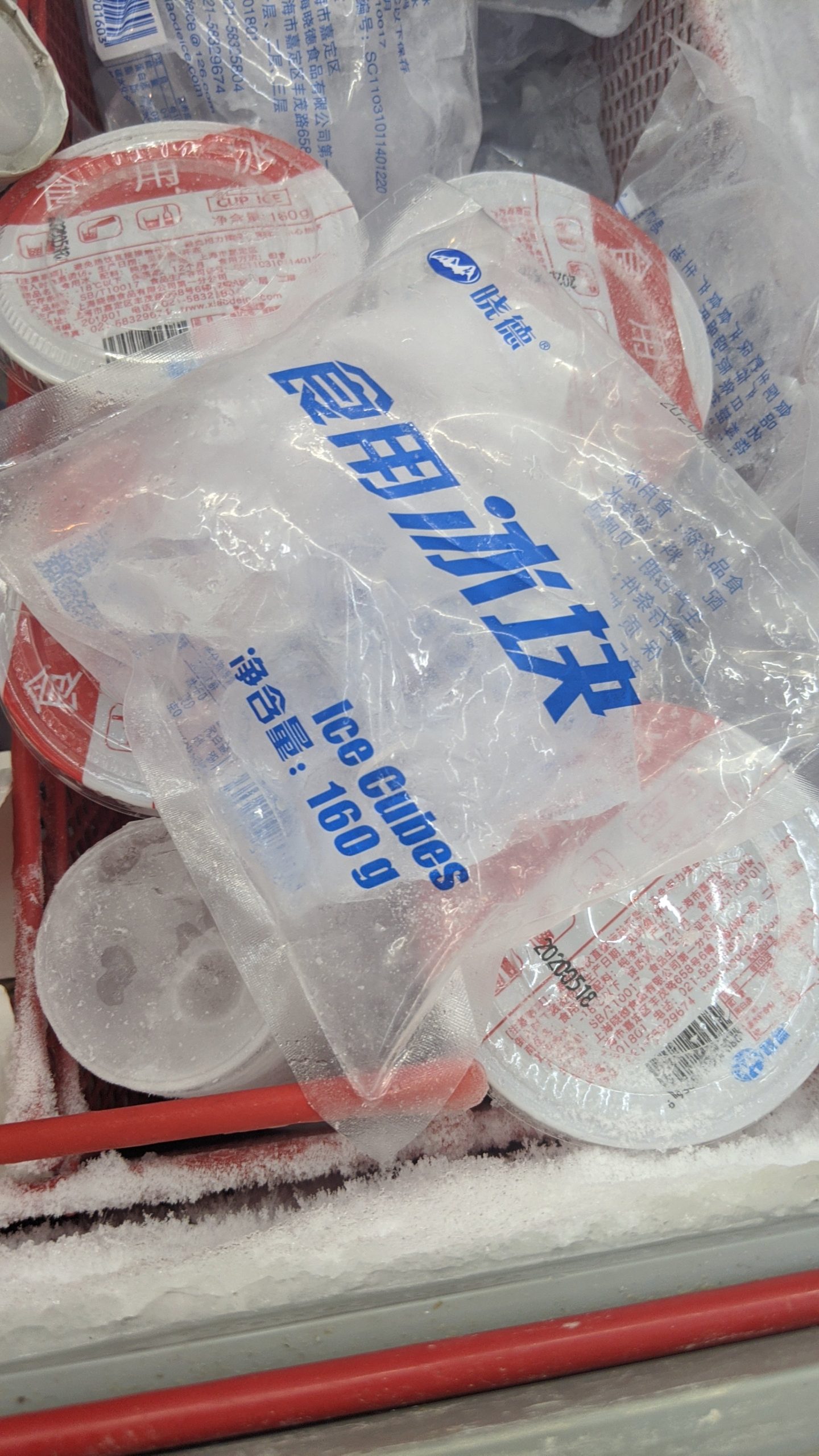
Bags of ice in China are small amounts of ice cubes not like the big bags in the US.
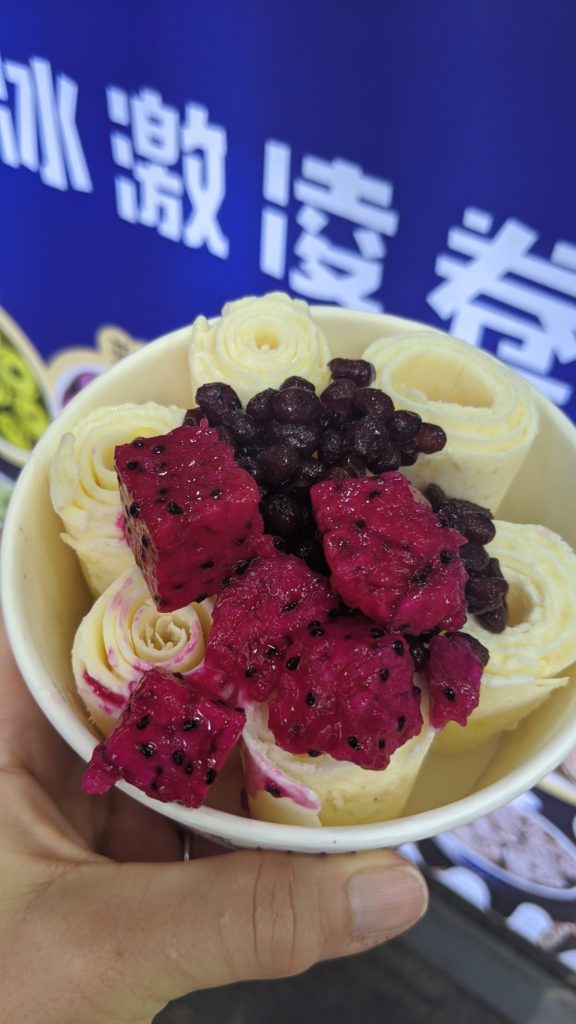
Frozen yogurt made on an anti-griddle.

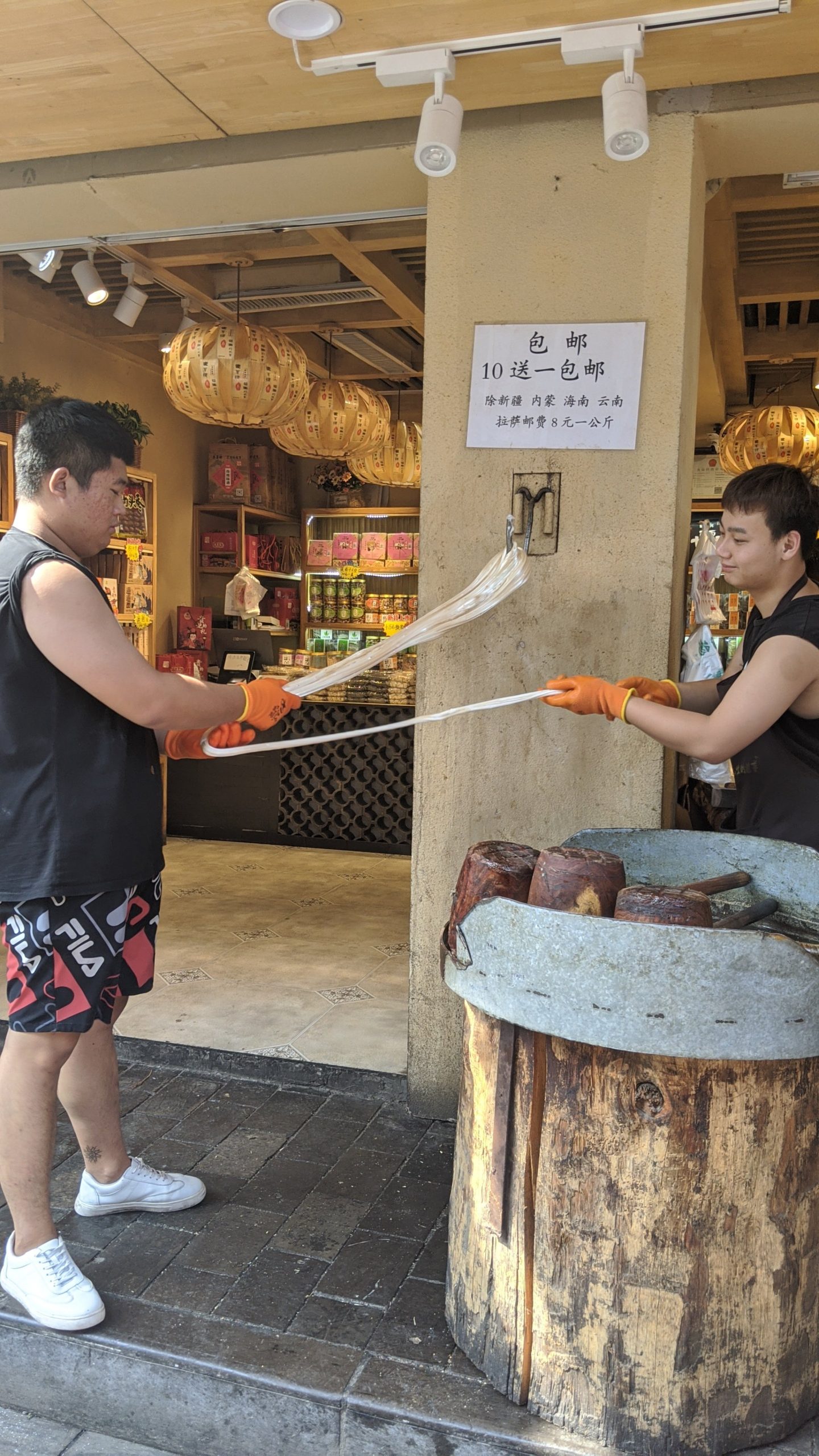
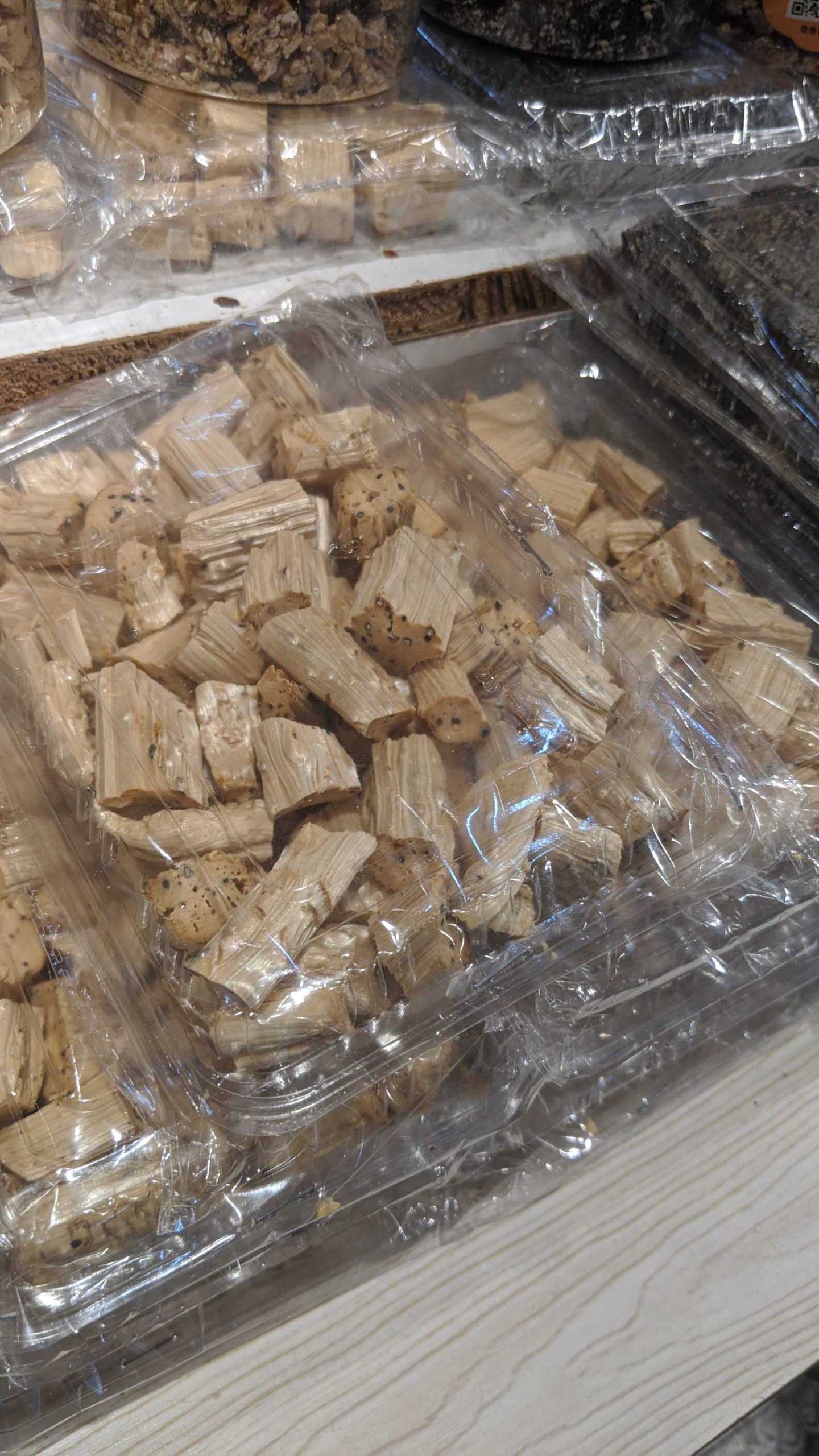
Making a hard ginger candy.
The ginger candy.
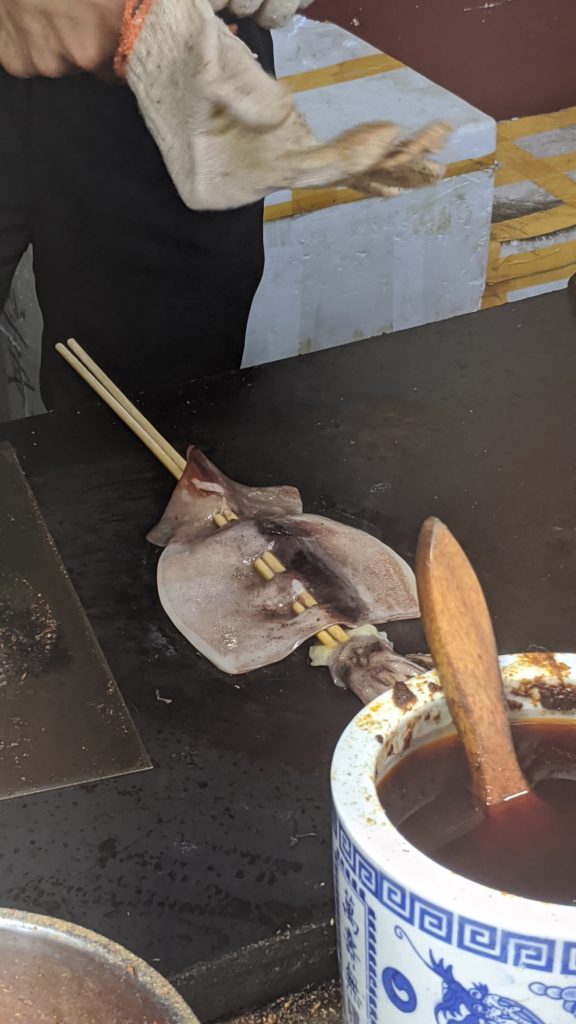
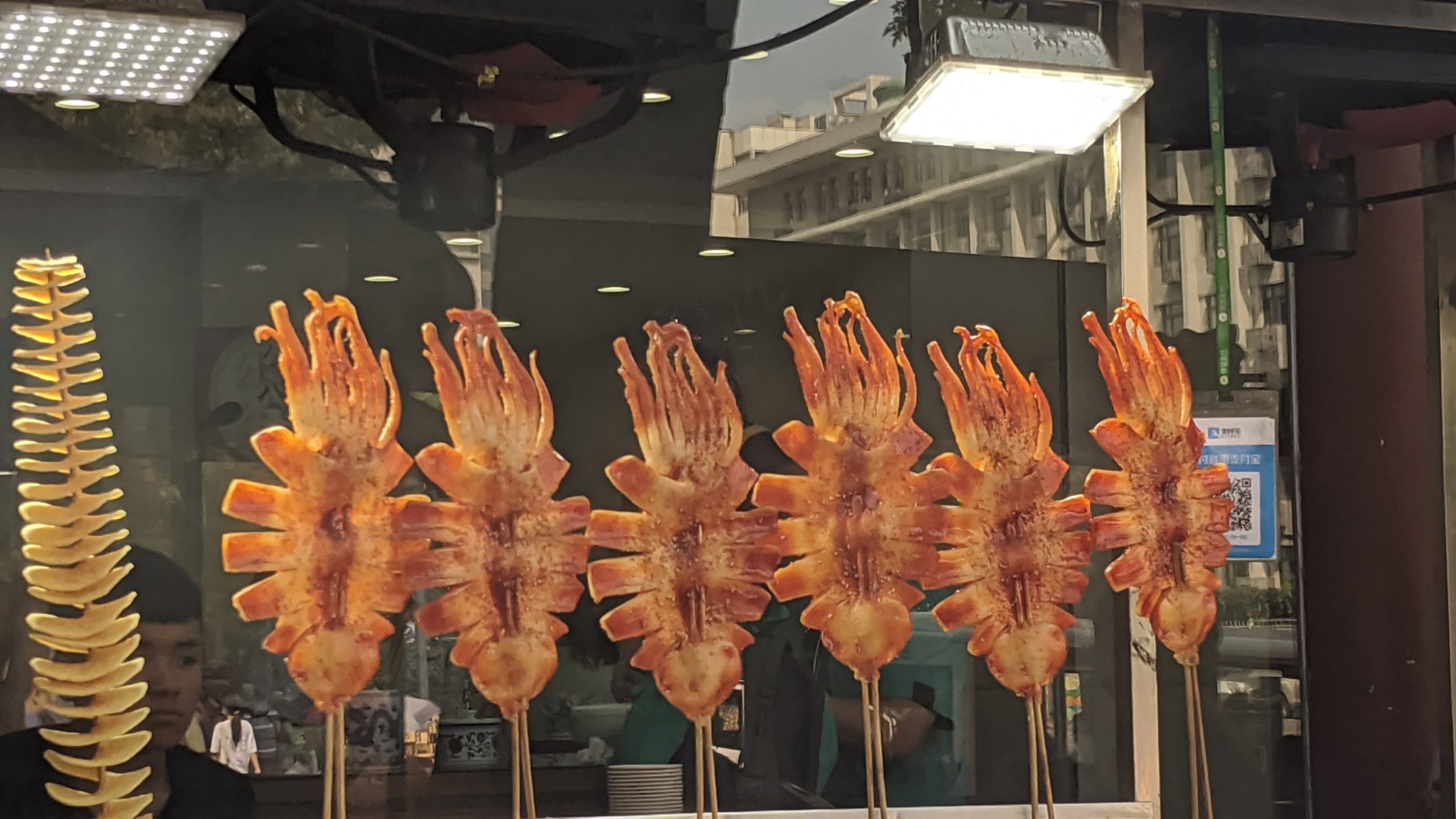
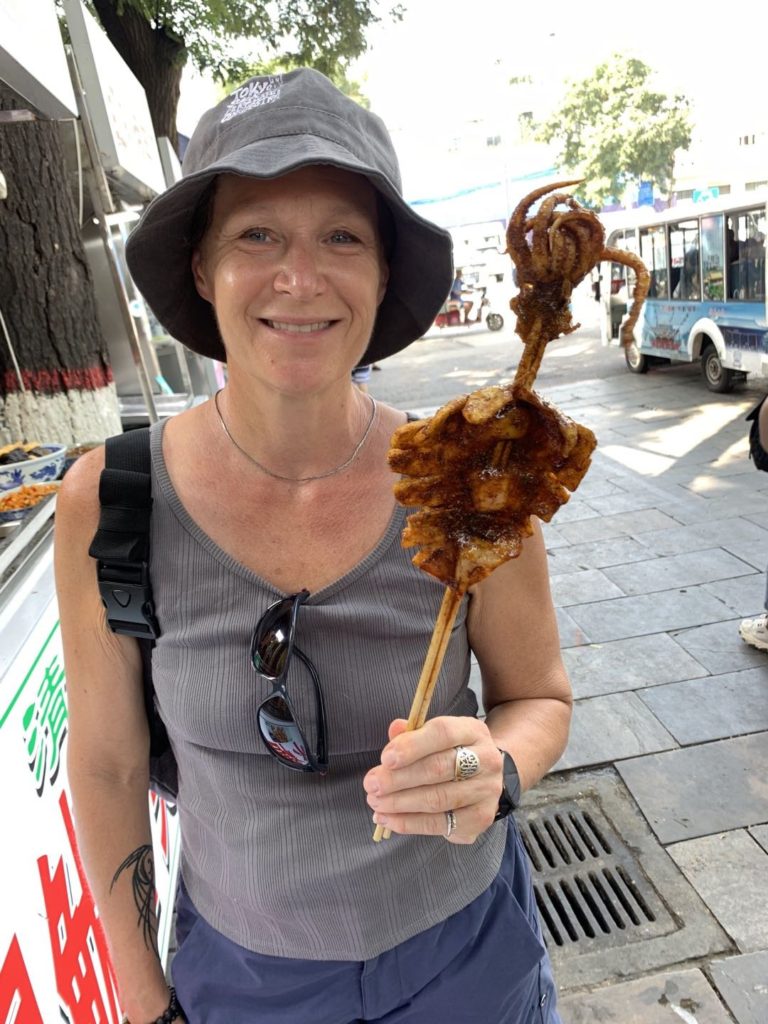
I had fried squid for a snack.
The poor little squids. I already ate the larger one.
Not exactly sure what this place is.

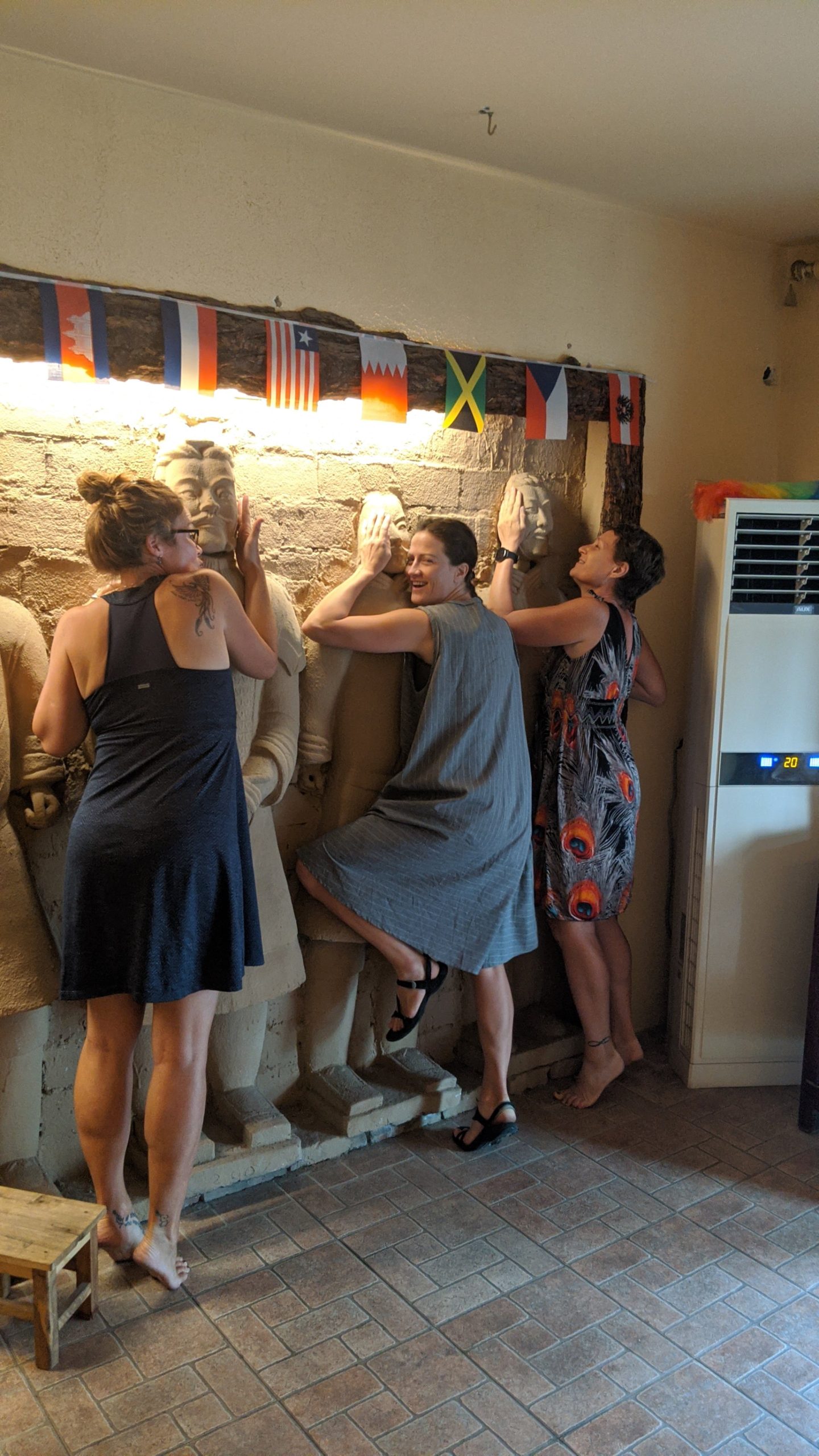
Fun with the warriors

Relaxing in the apartment we thought of funny things to do with the warriors. We will think of more…

Silk road tour, day 7, Gobi Desert

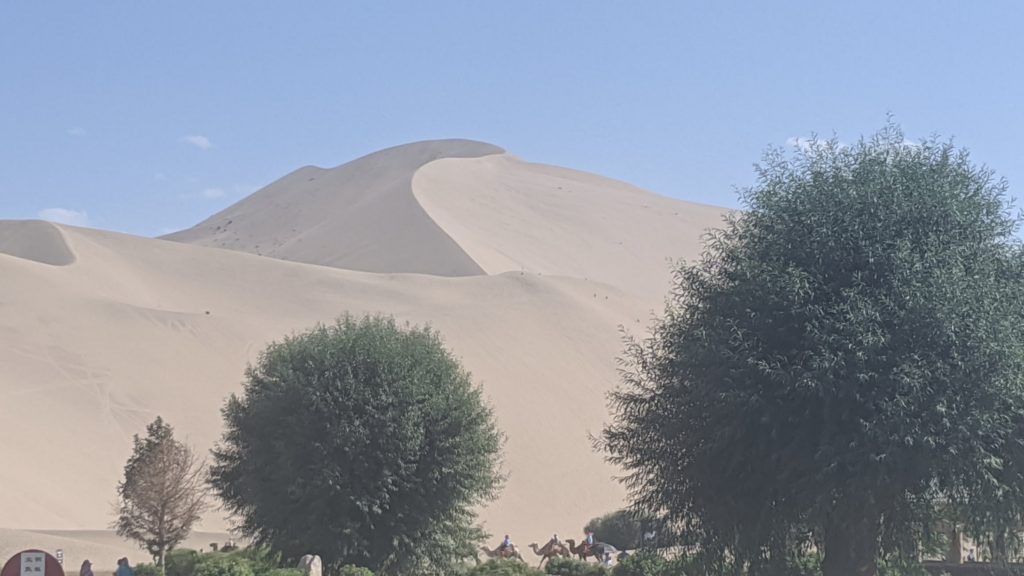
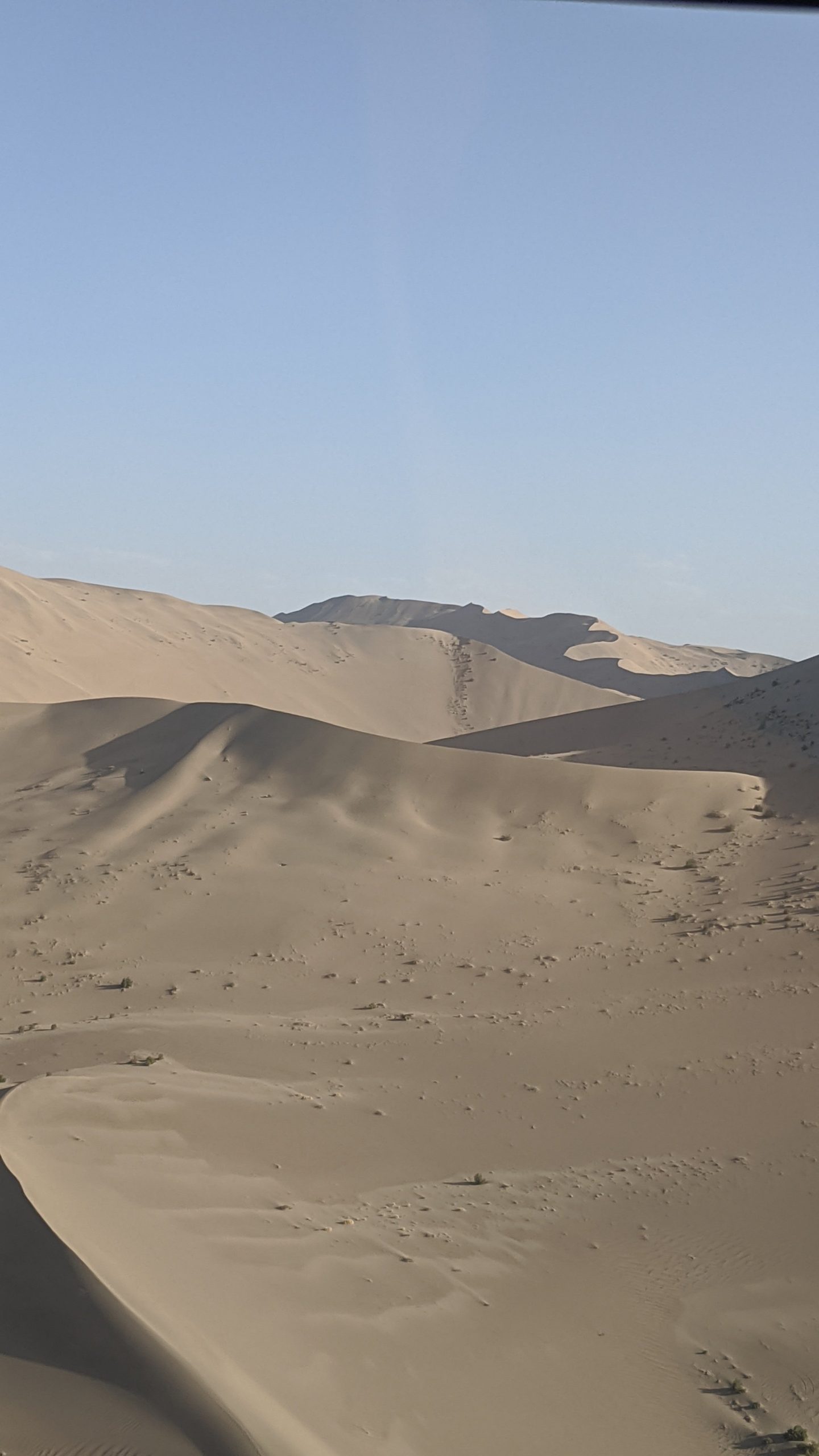
We left to visit the Gobi desert after a brief rest from the caves. It was really hot out (34C) but at least there was no humidity.

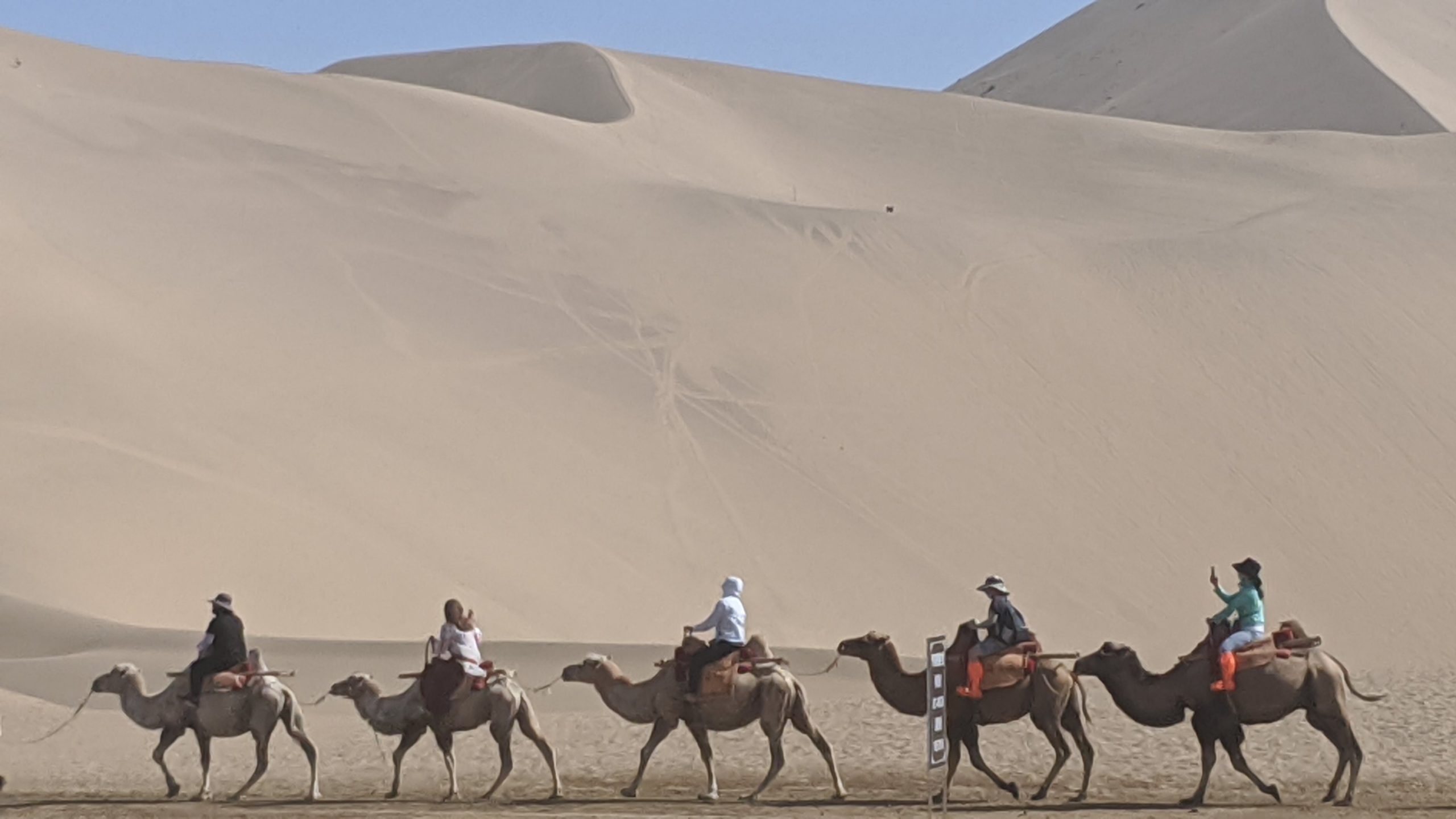
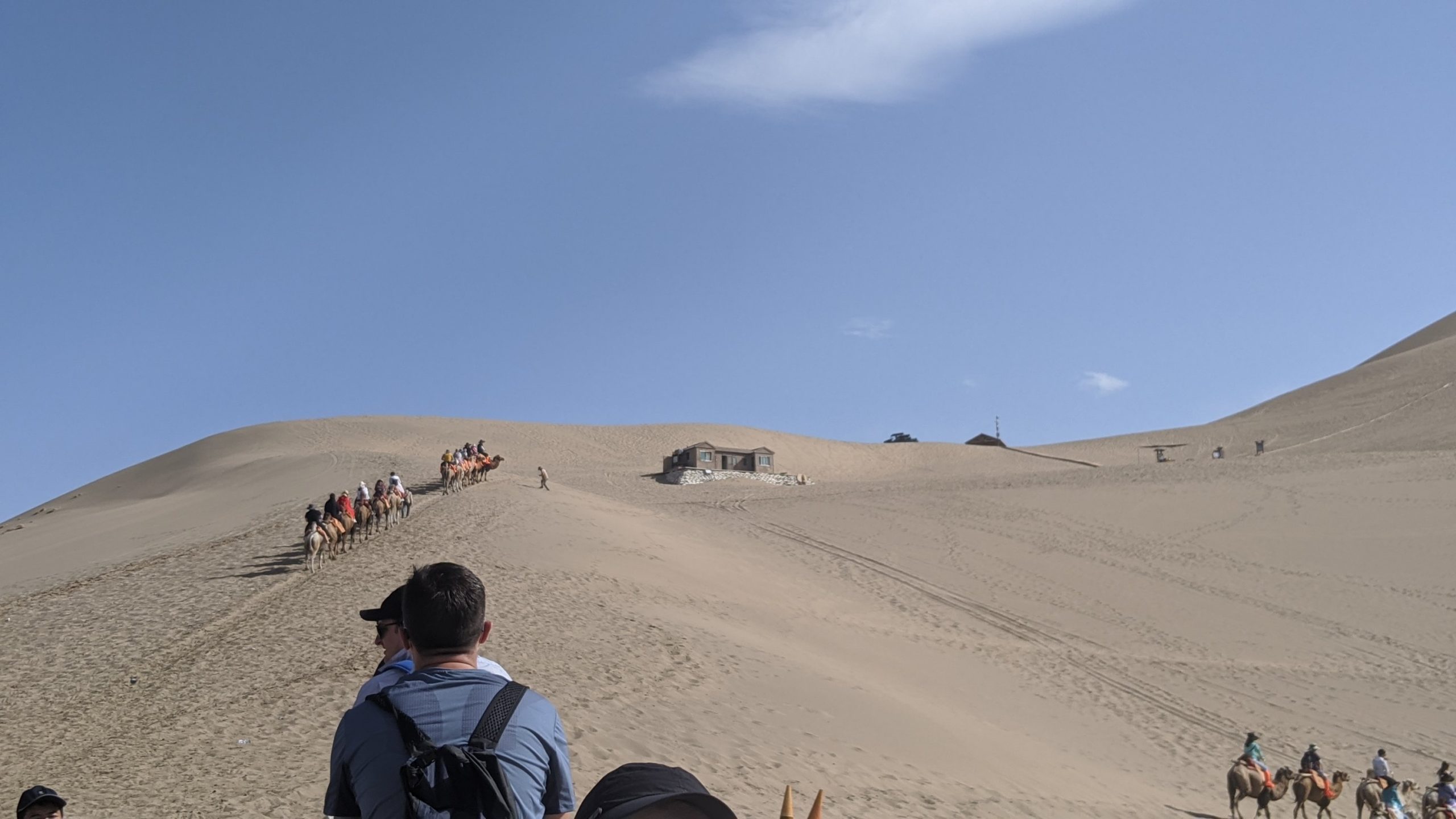
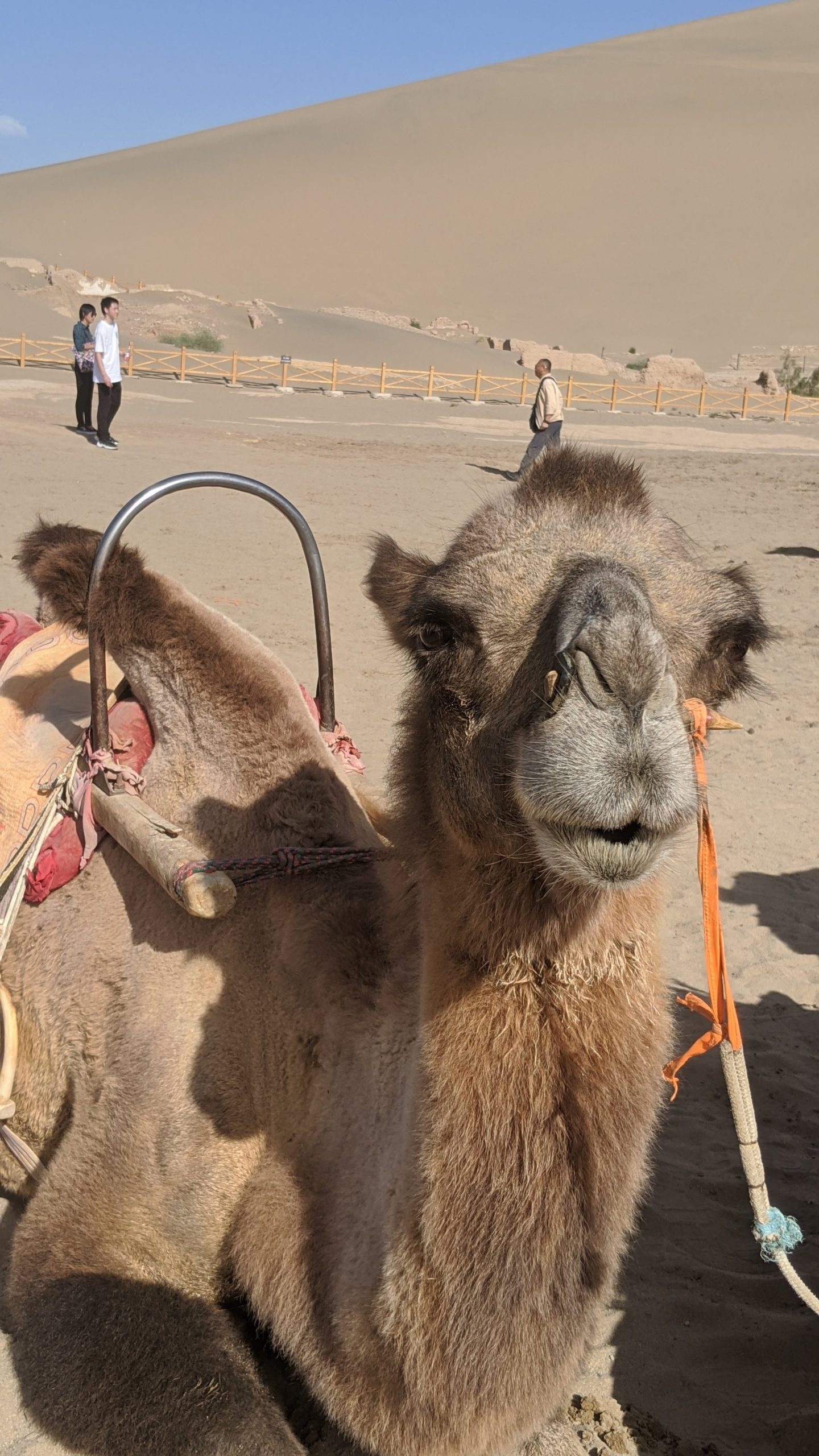
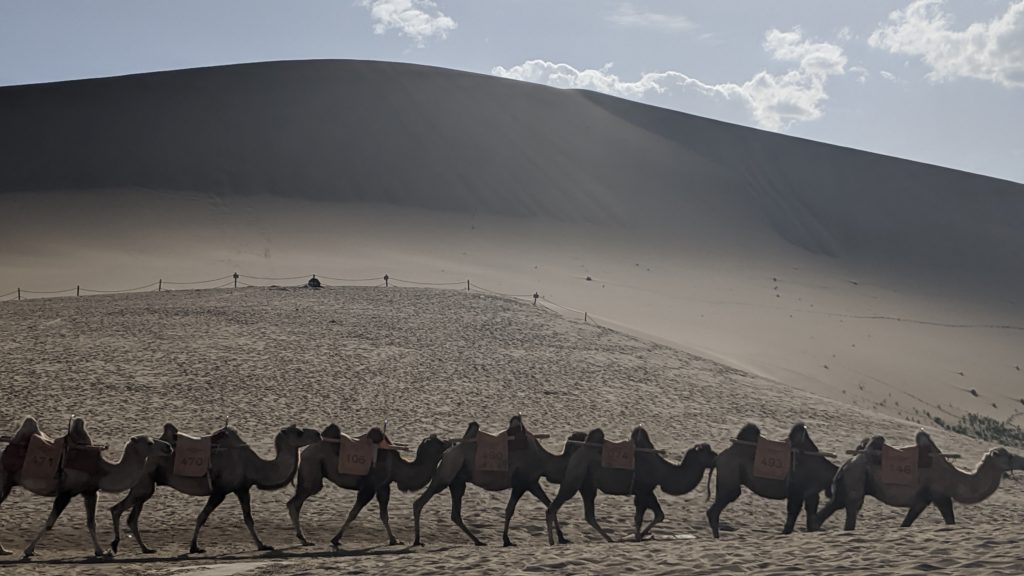
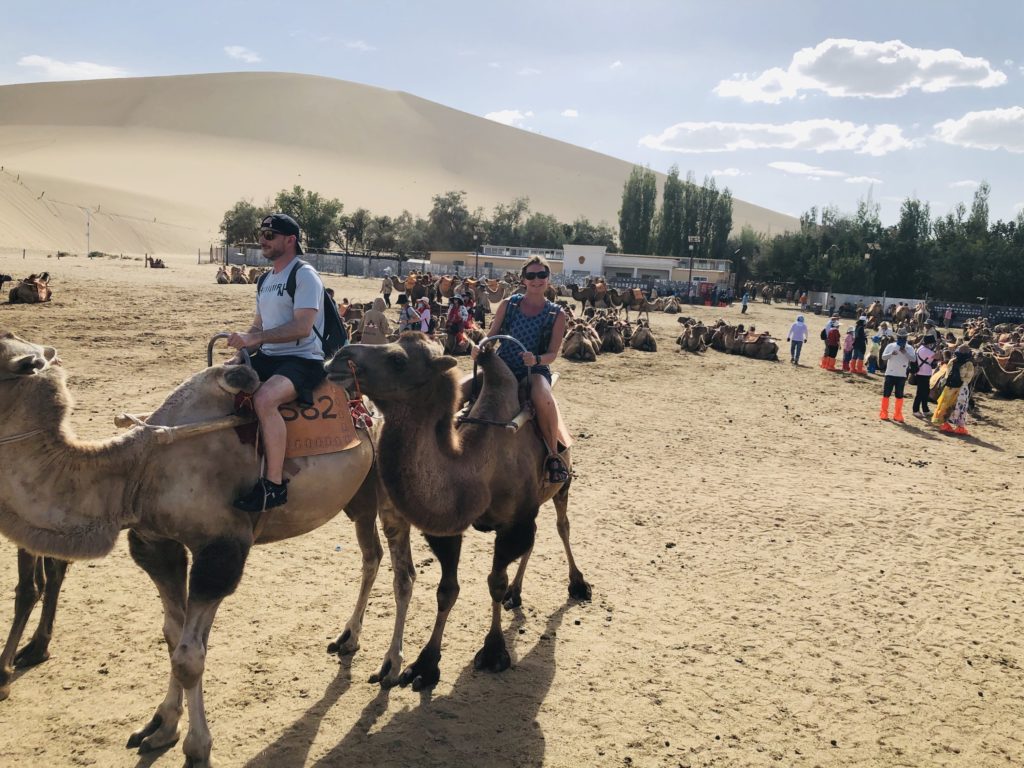
The first thing we did was to ride the camels. It was a 40 minutes trek through the desert with a guide leading a string of camels. Pretty fun and relaxing. Yes this is a tourist trap but now I can check riding a camel into the desert off of my list!

My camel.

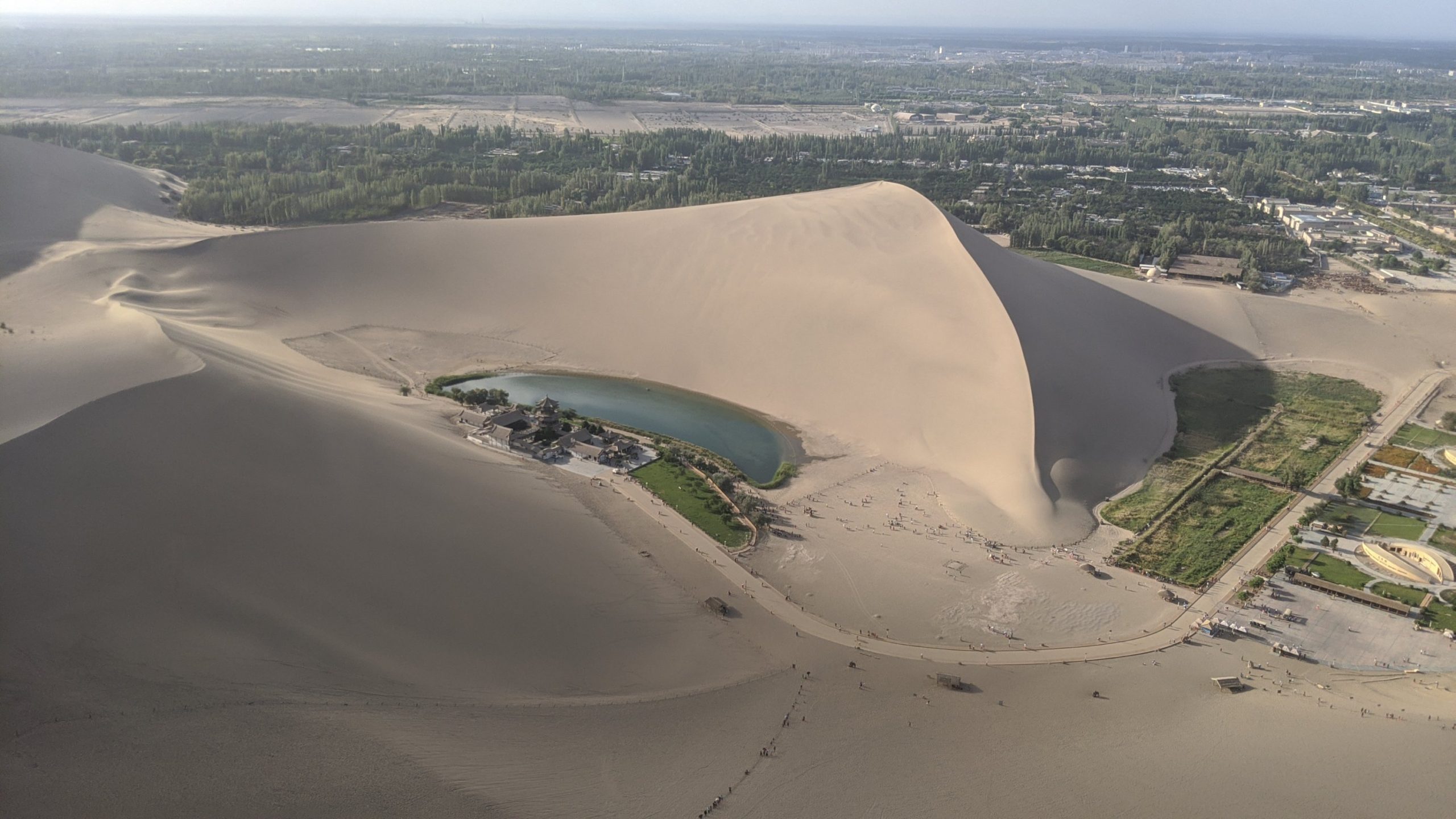
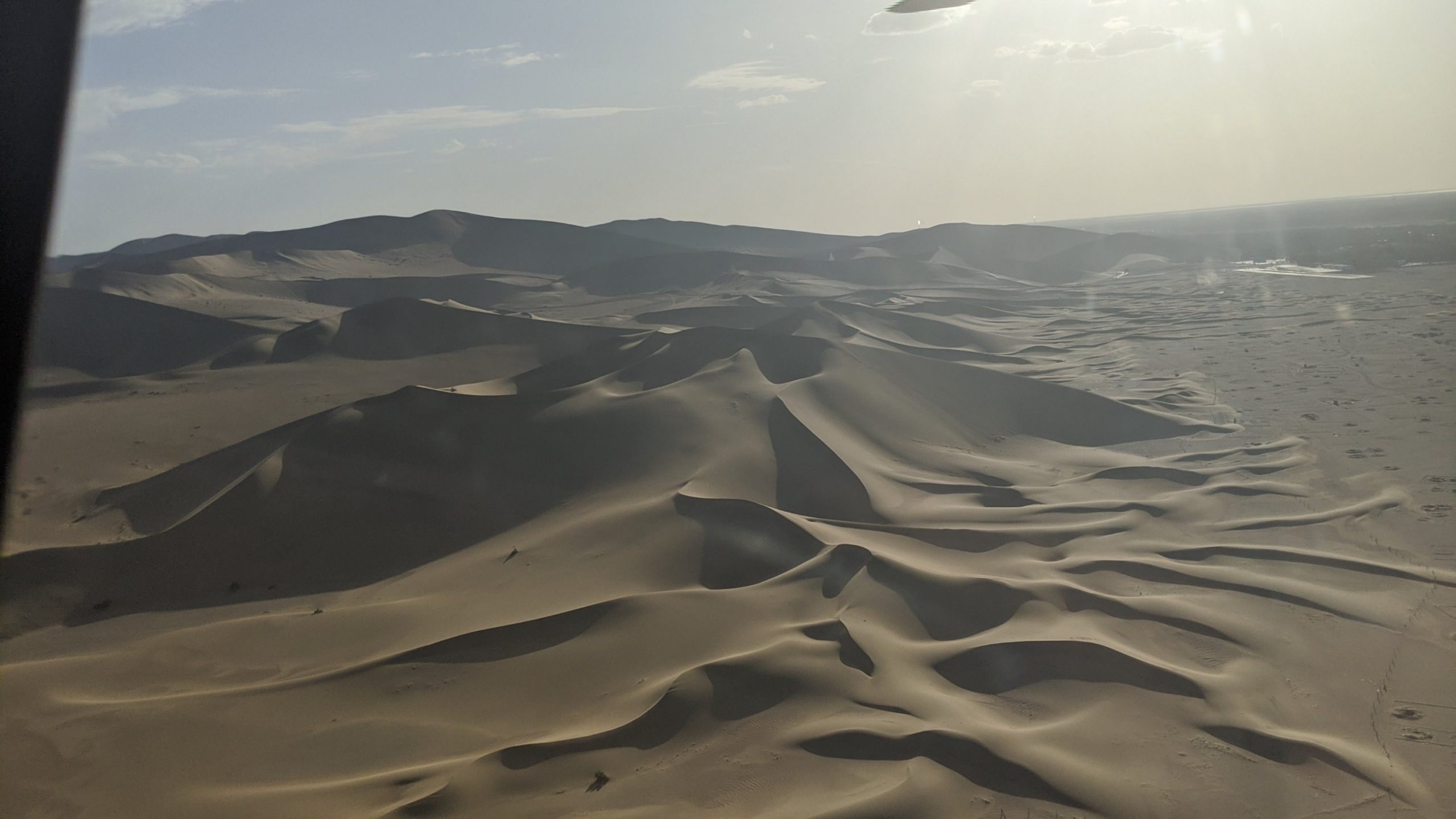
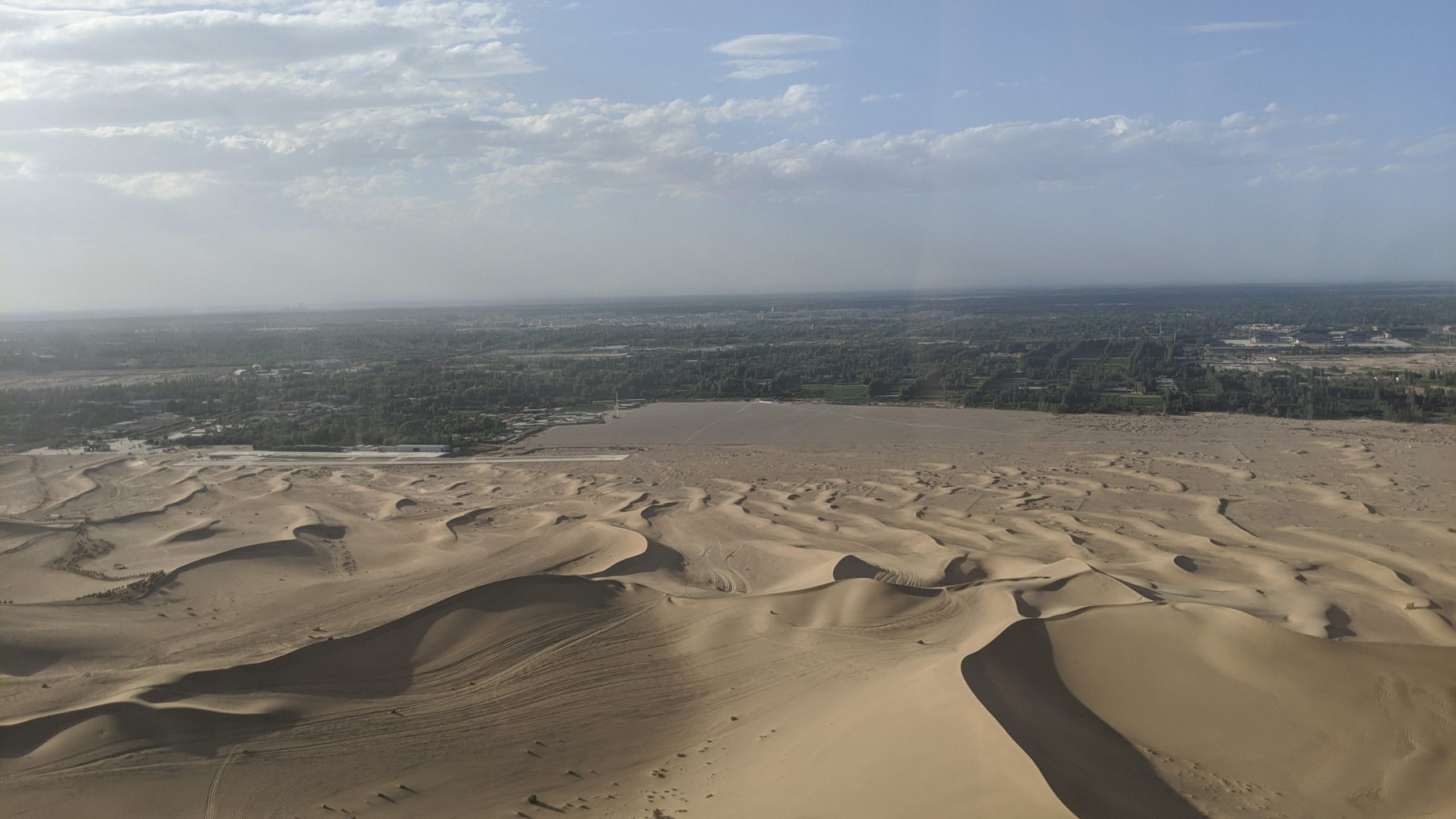
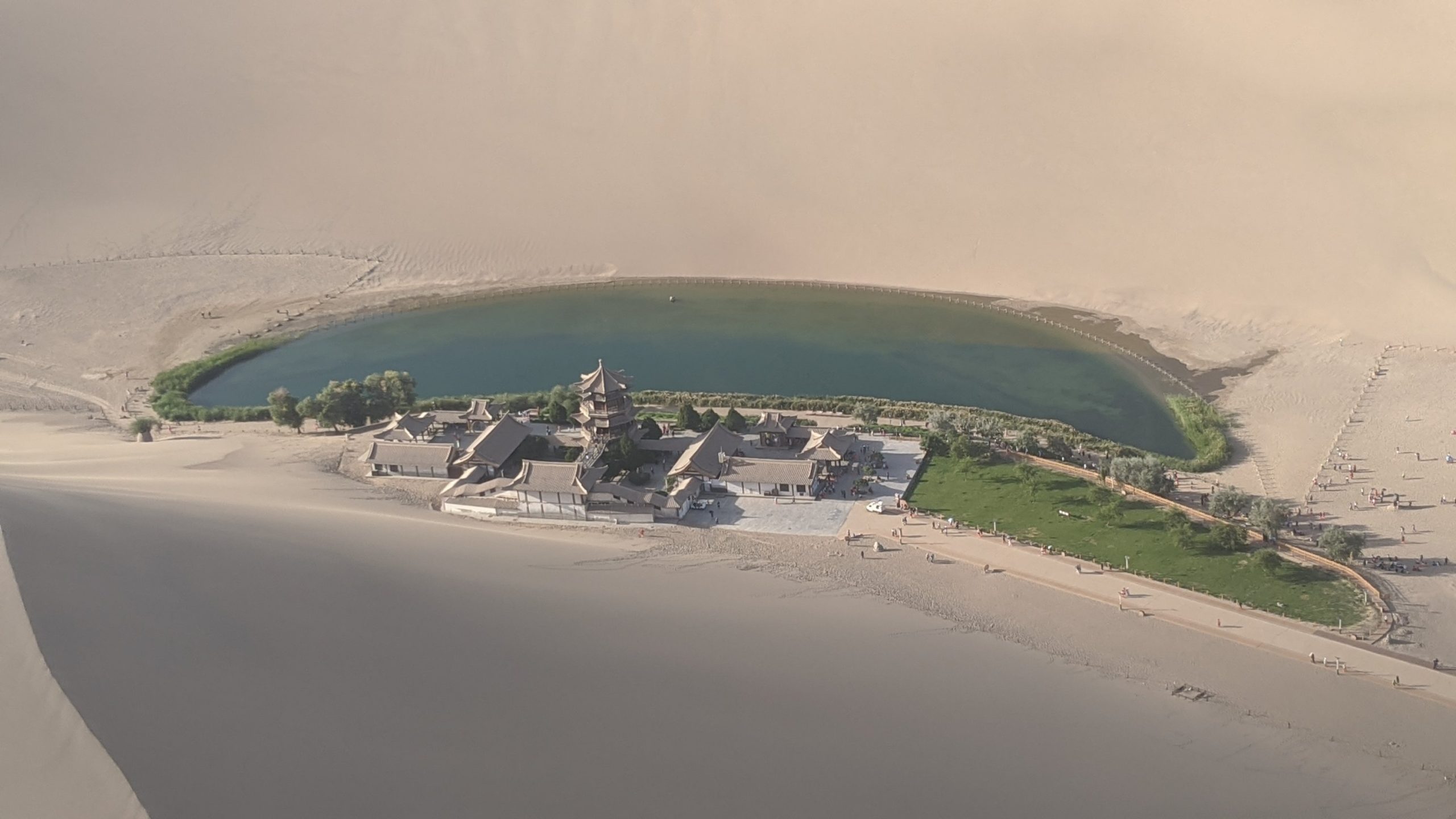
Afterwards I found a couple people from my tour who wanted to ride the helicopter and would split the cost. It was a quick ride but easy to see the crescent lake oasis from above.

Crescent Lake oasis.

Two videos from sections of the flight:

I did not have enough time to do some sand sledding or hike up the dunes as a lot more tourists showed up. But I went to the oasis to get more water and walk with new friends from the tour for awhile before heading to the bus.

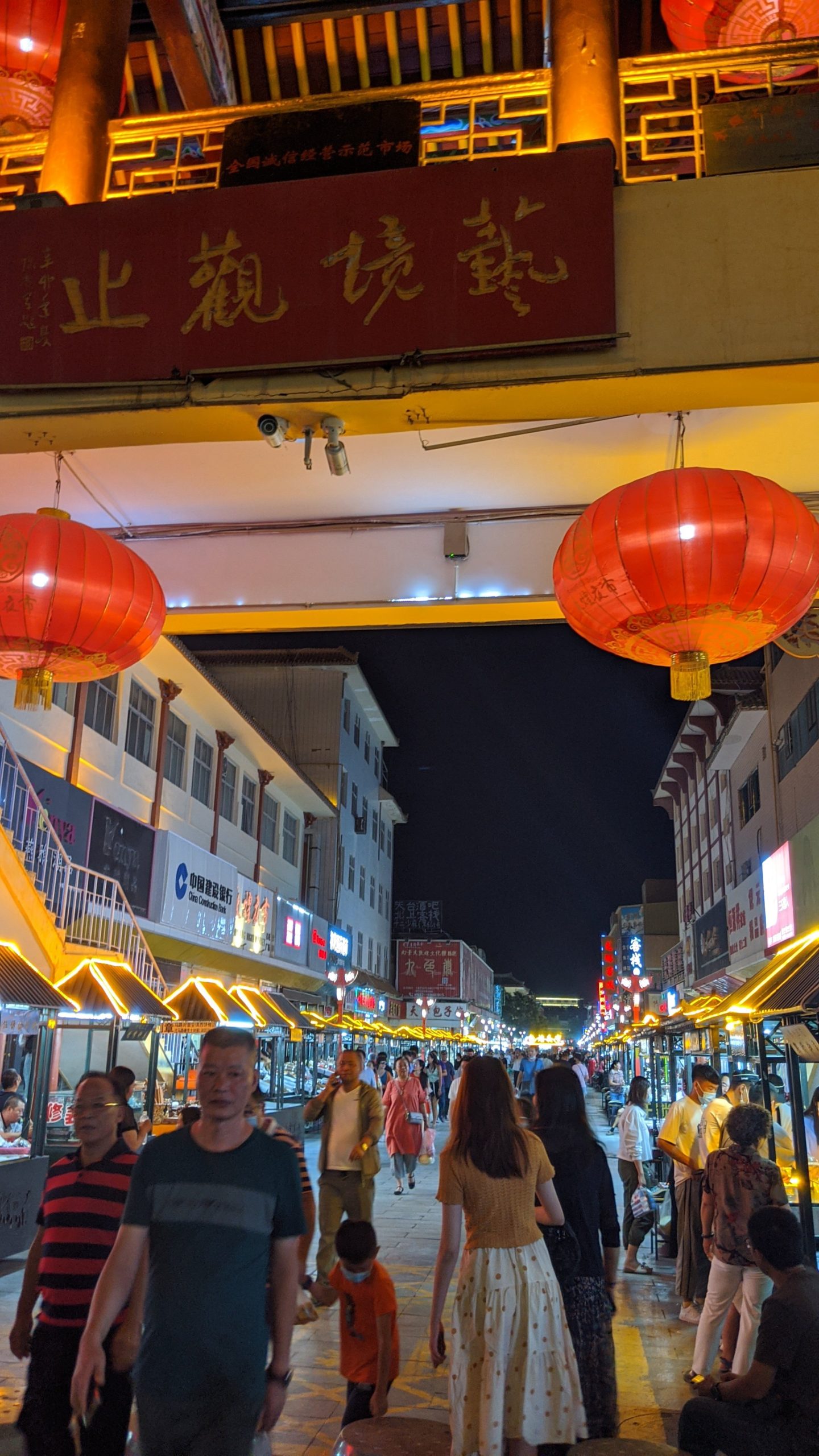
Back at the hotel for a shower and then walk to the night market to look around.

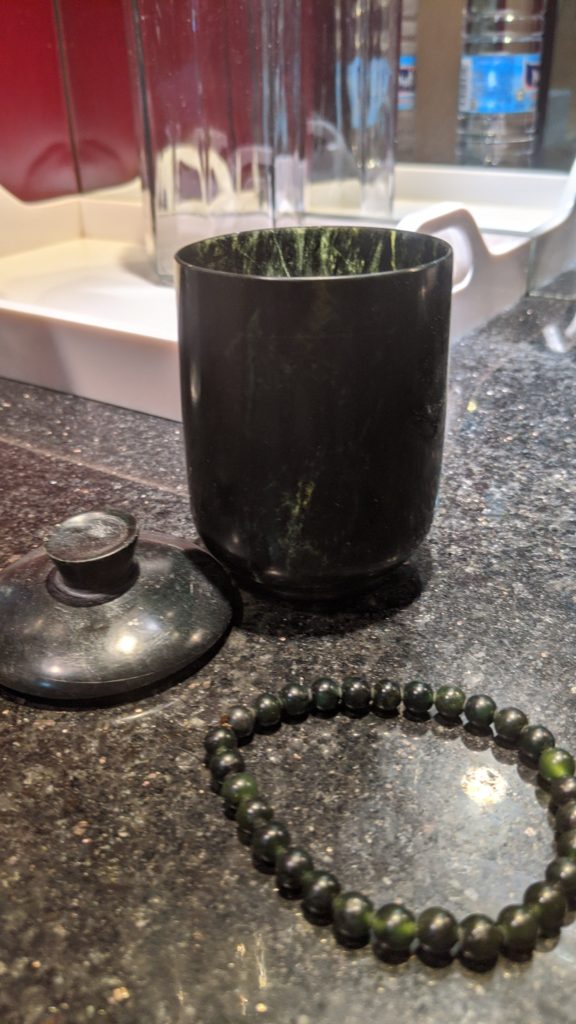
We are a local spicy potato dish with some beer and stopped at a seller of black Jade. I bought 3 glasses with lids and a Black Jade bead bracelet. In the light you can pick out there green though the rock itself is black.