York

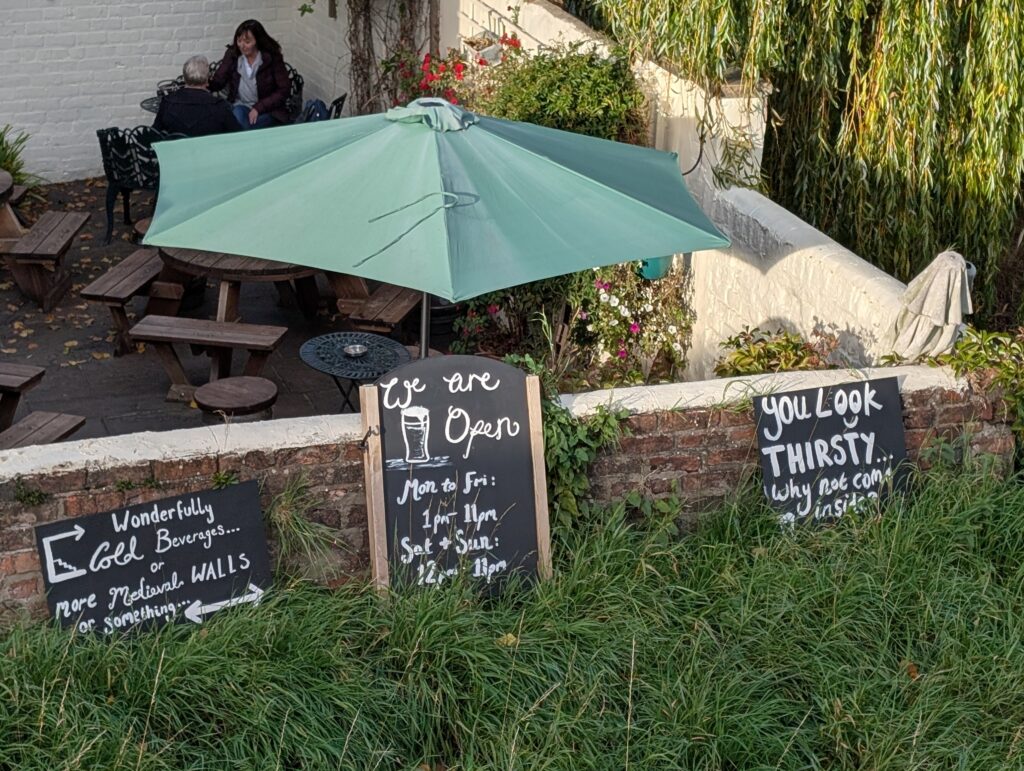
I still had time between the two pet sitting and the second home owner suggested York. What a great city. It has Roman and Viking roots with many intact medieval streets.

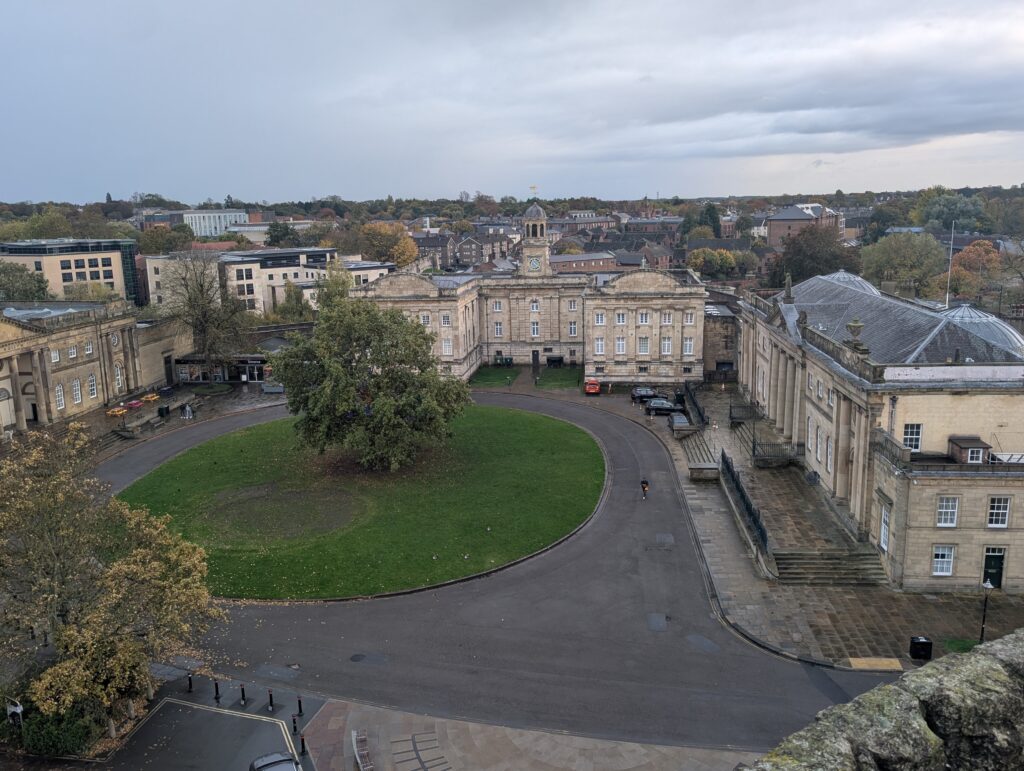
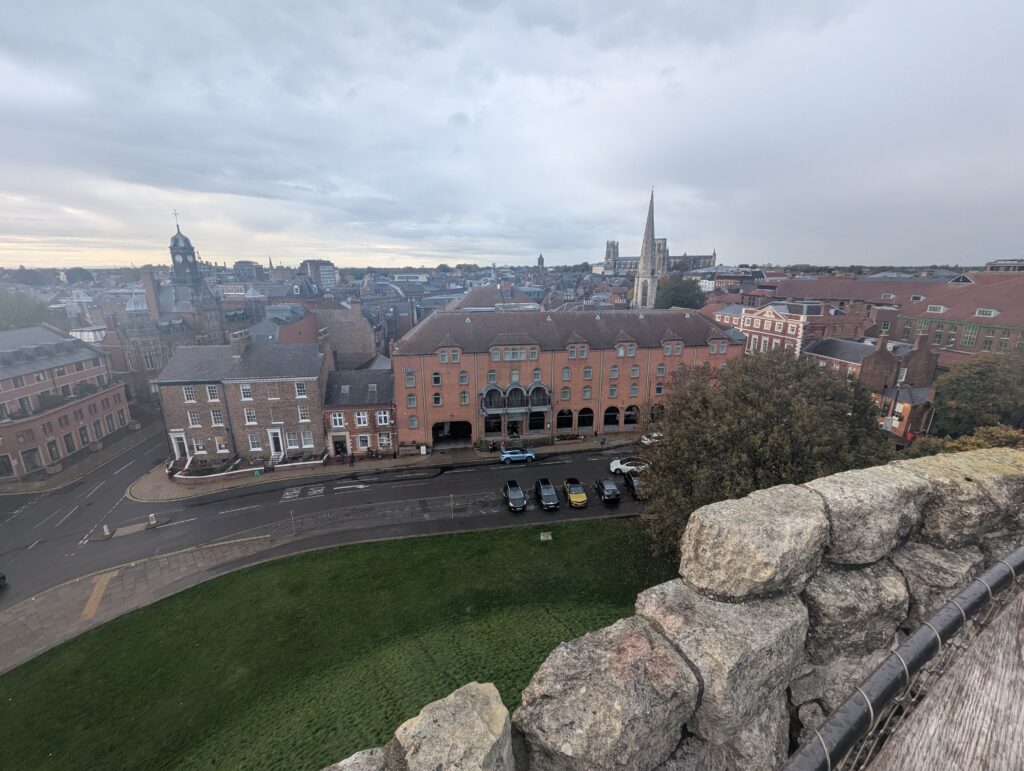
I first went to Clifford tower which was first built by William the Conqueror in the 11th century and in 1190 was the site of a Jewish massacre by mobs (many killed themselves rather than convert). Many who were not Jewish were also massacred. It was destroyed and rebuilt in the 13th century. Many people were hanged here as well and is close to the prisons.
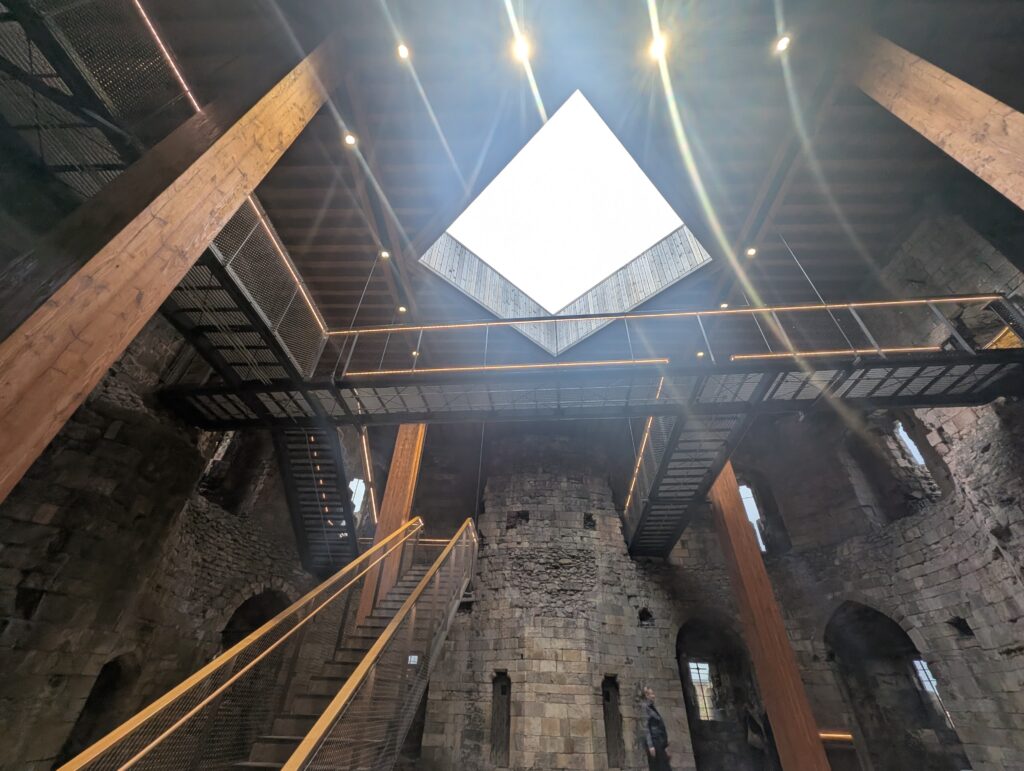
The red stones are where there was a fire and changed color after being scorched.
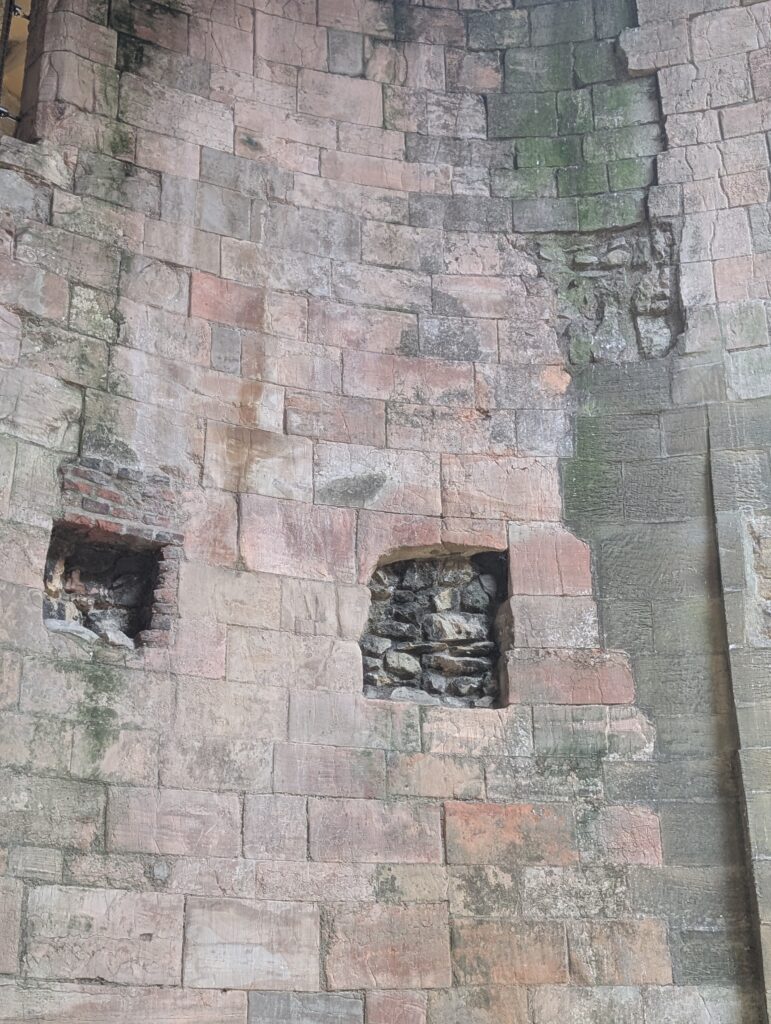
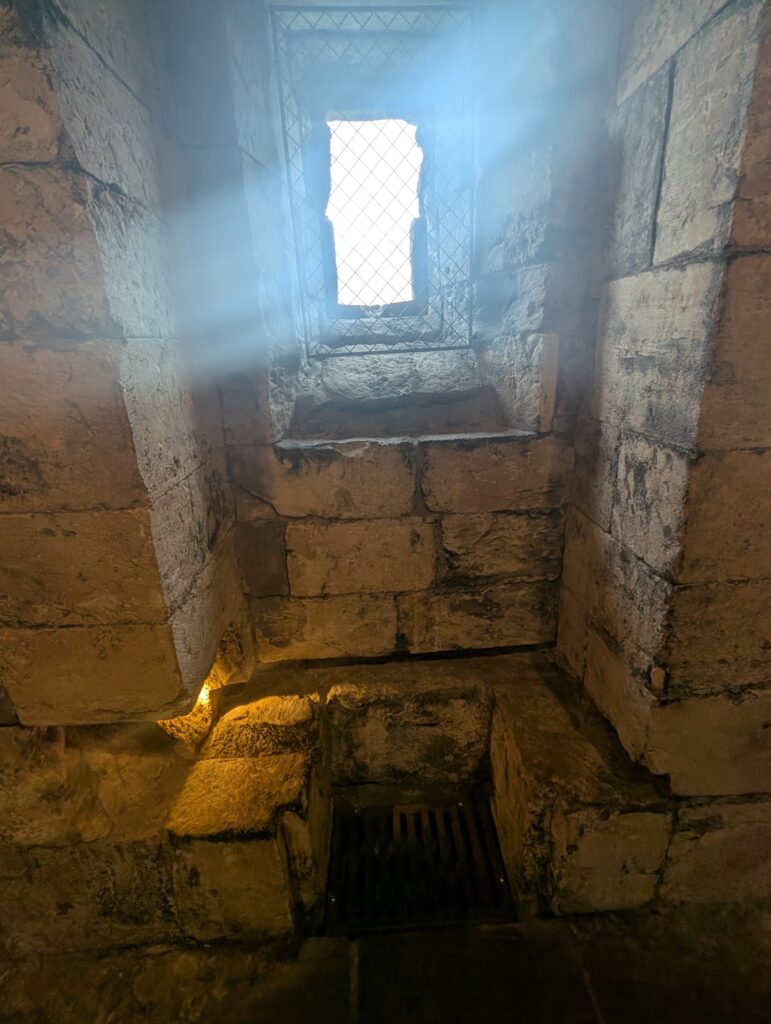
This was the kings latrine.
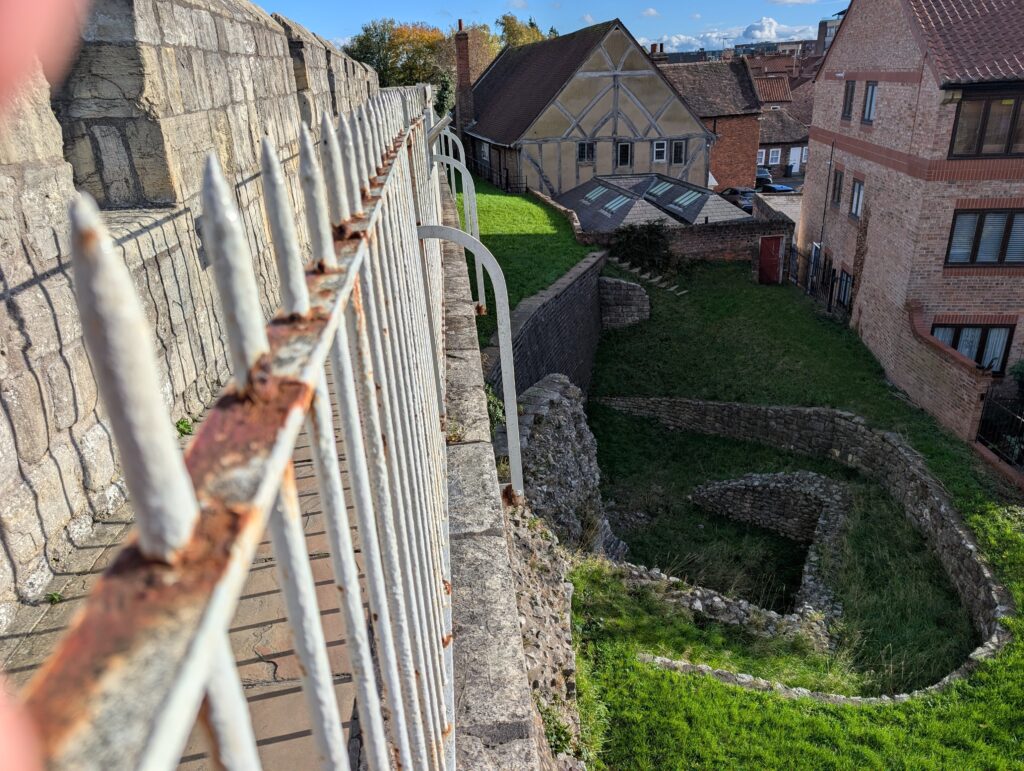
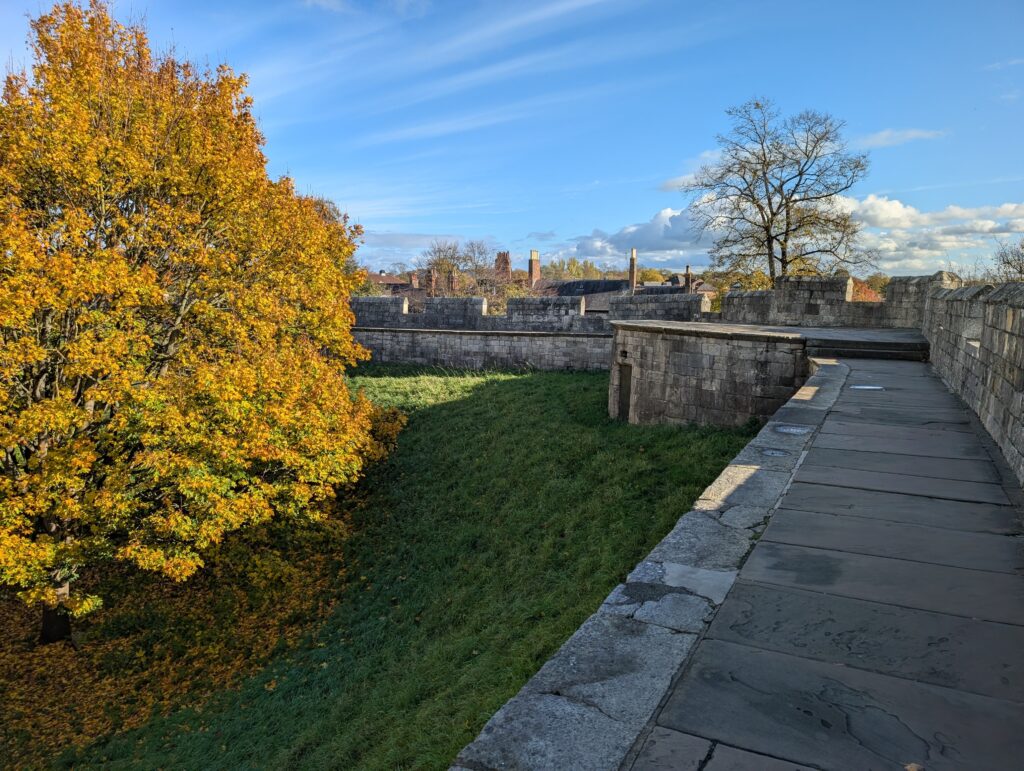
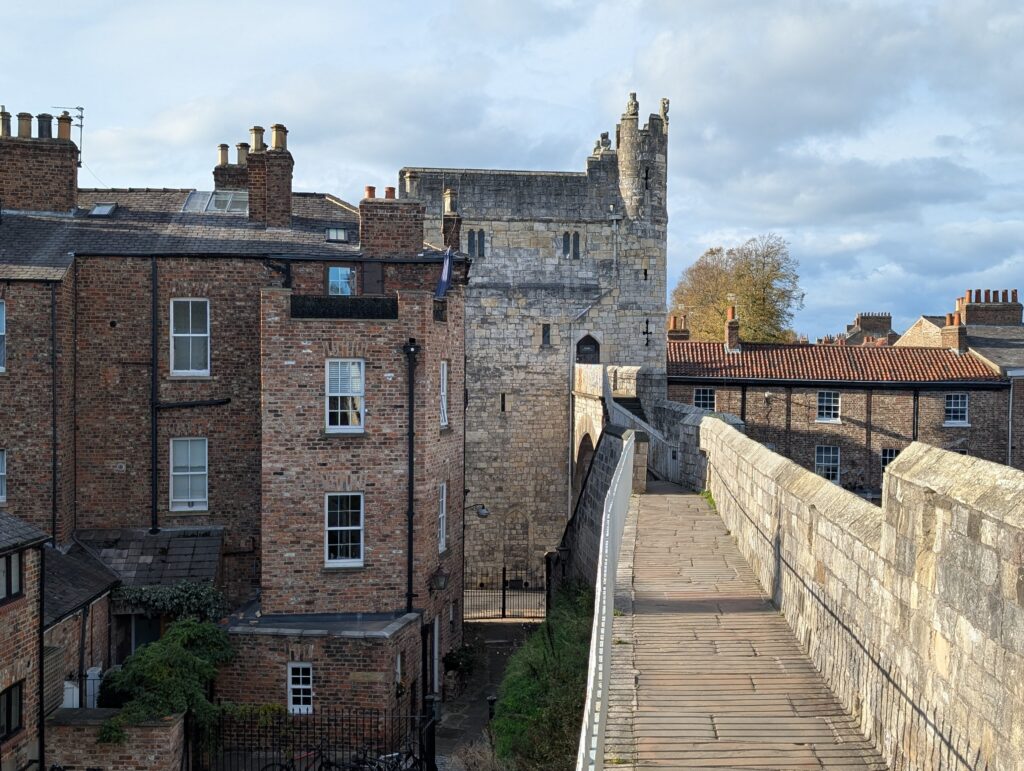
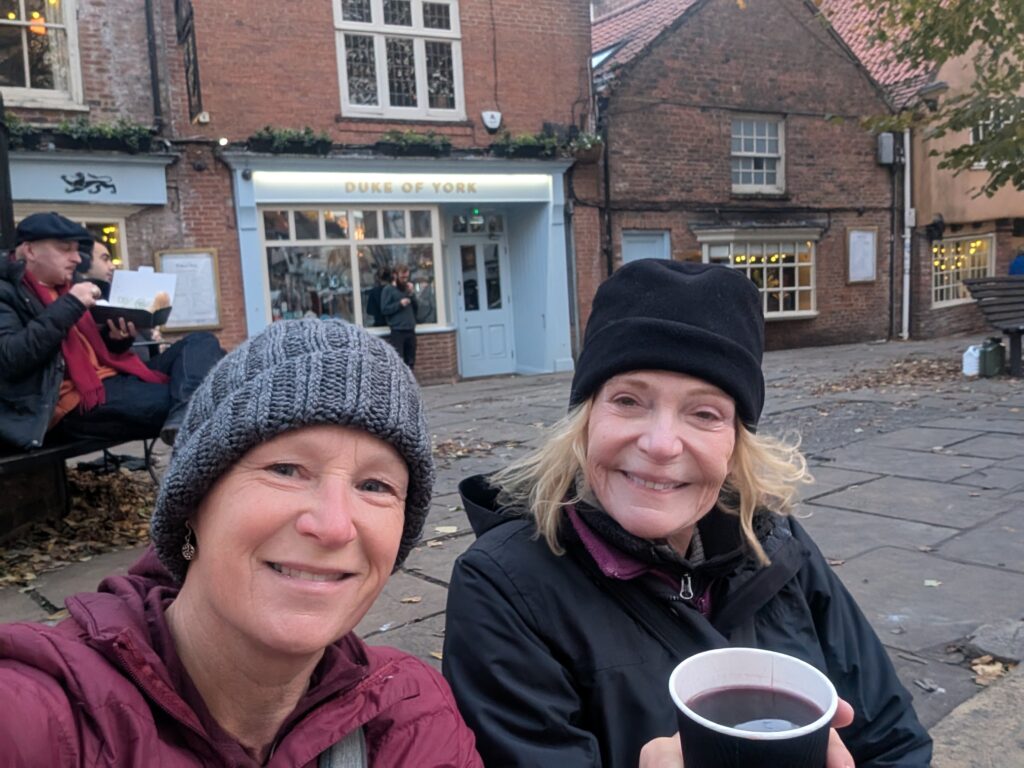
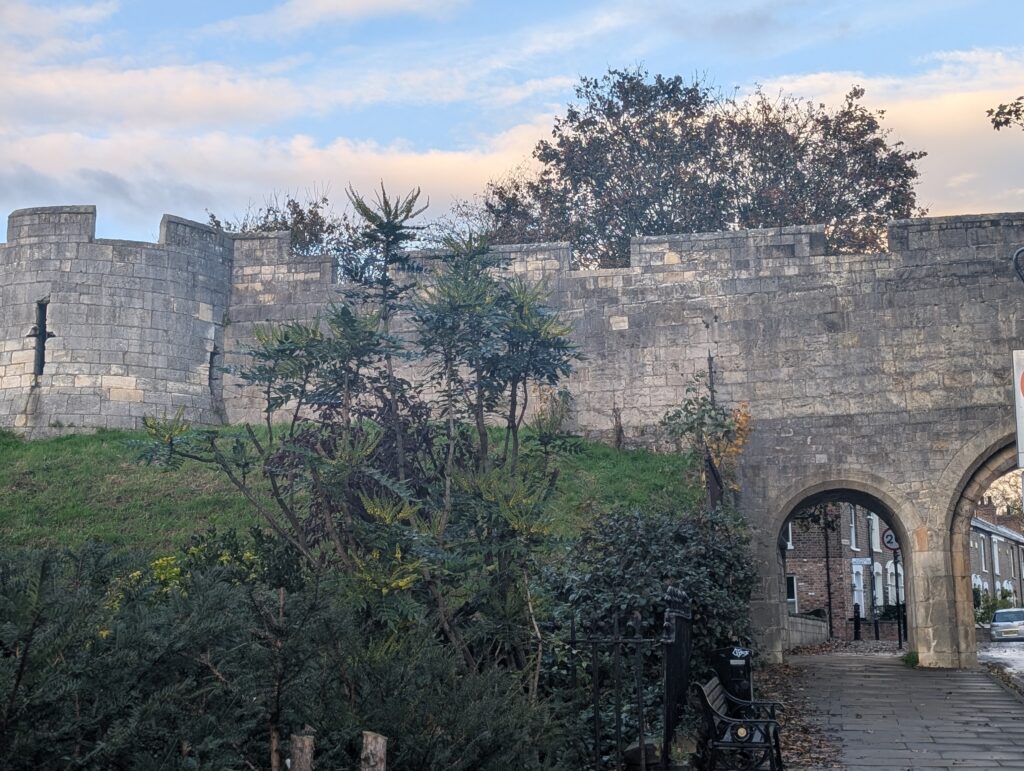
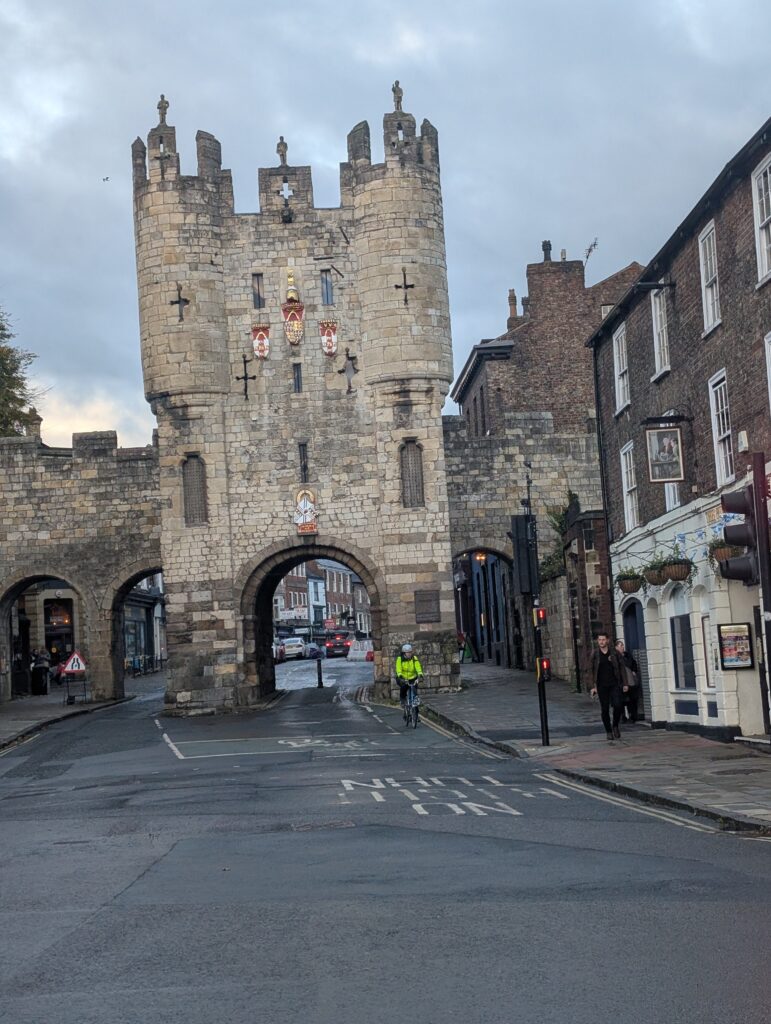
I also walked the city walls twice, once with a new friend that I met in Hexham and agreed to meet again here. The city walls were erected on top of part of the Roman walls. In the 1800’s it was almost torn down but public pressure changed that. It still is a popular place to walk.
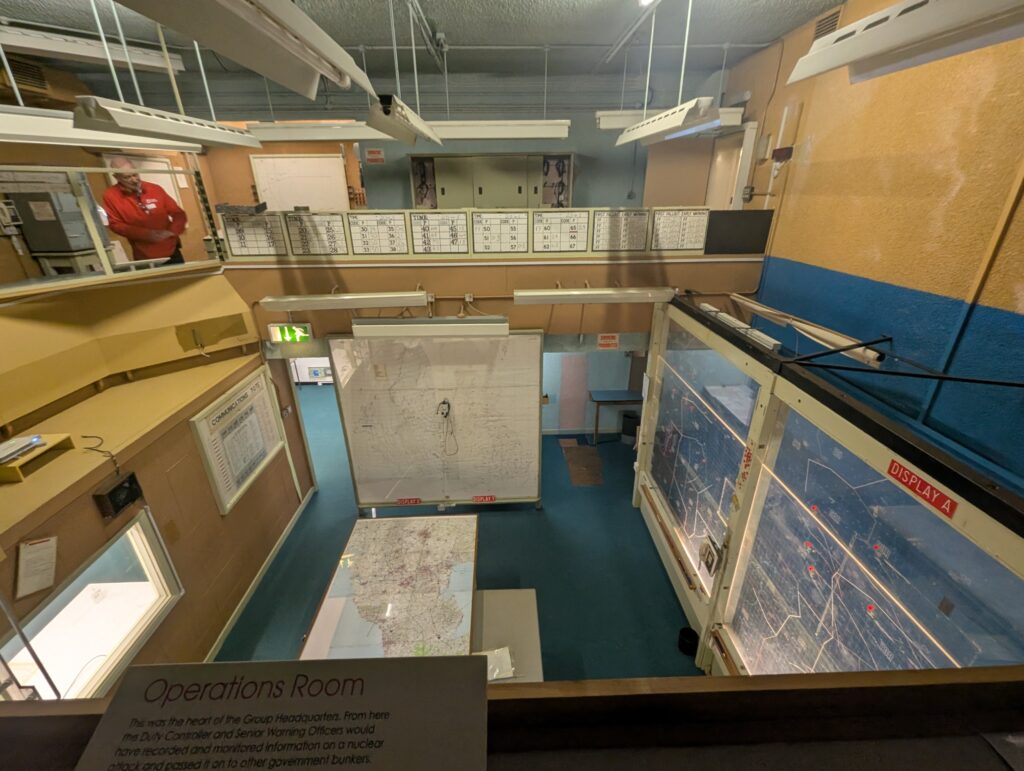
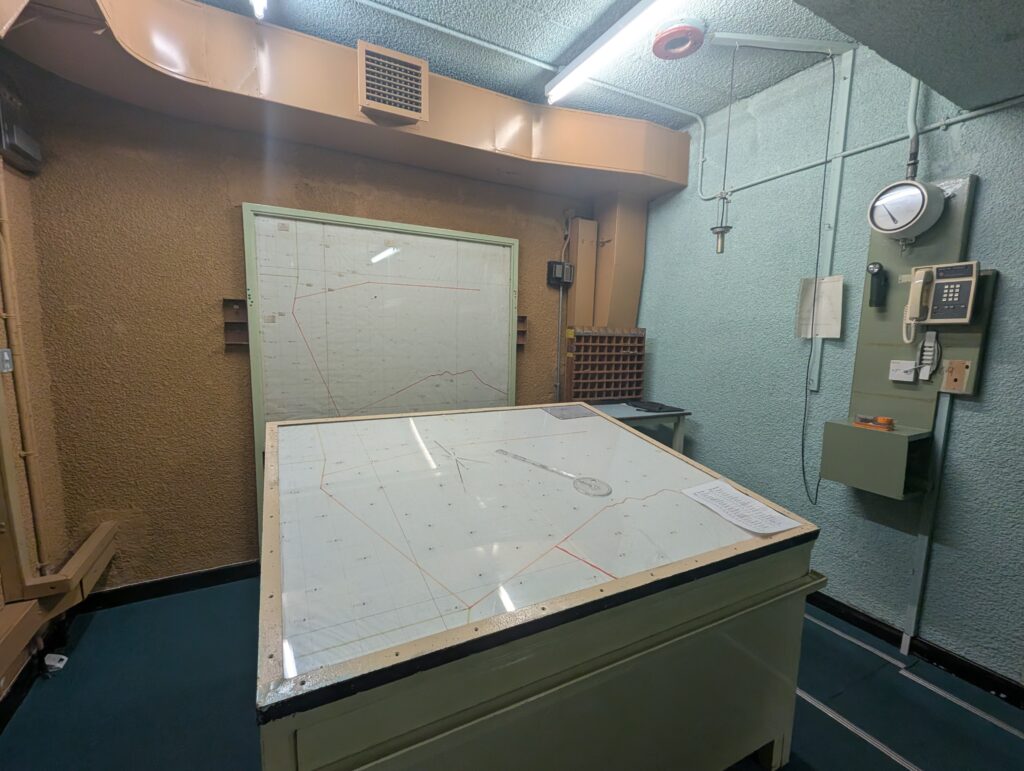
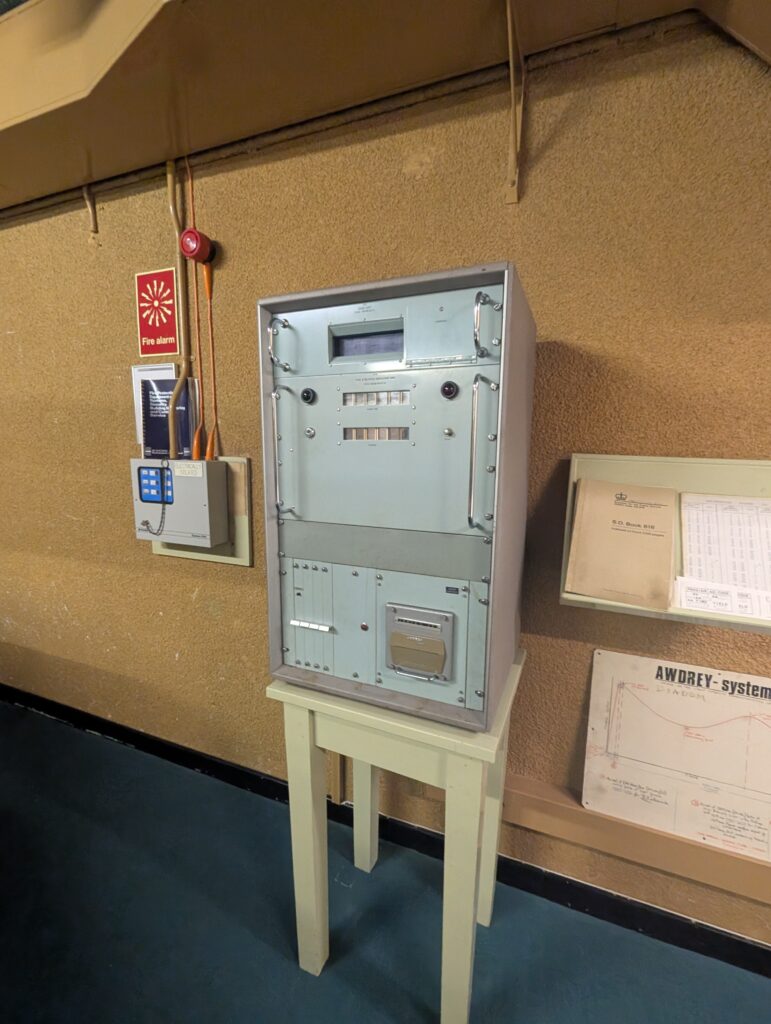
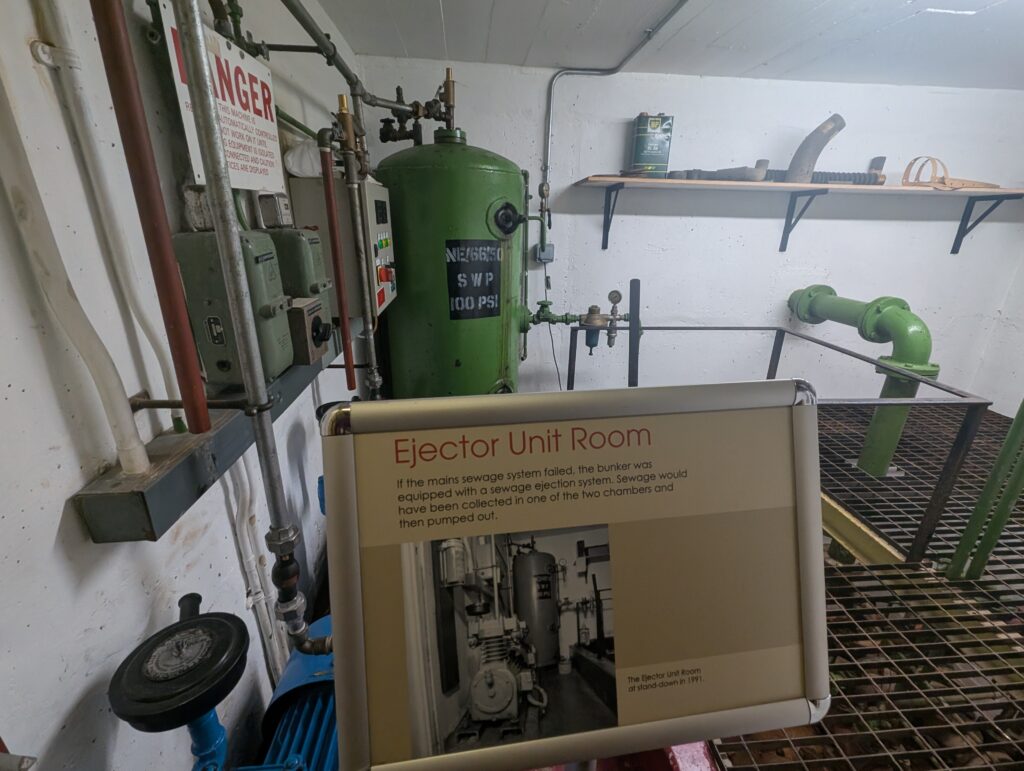
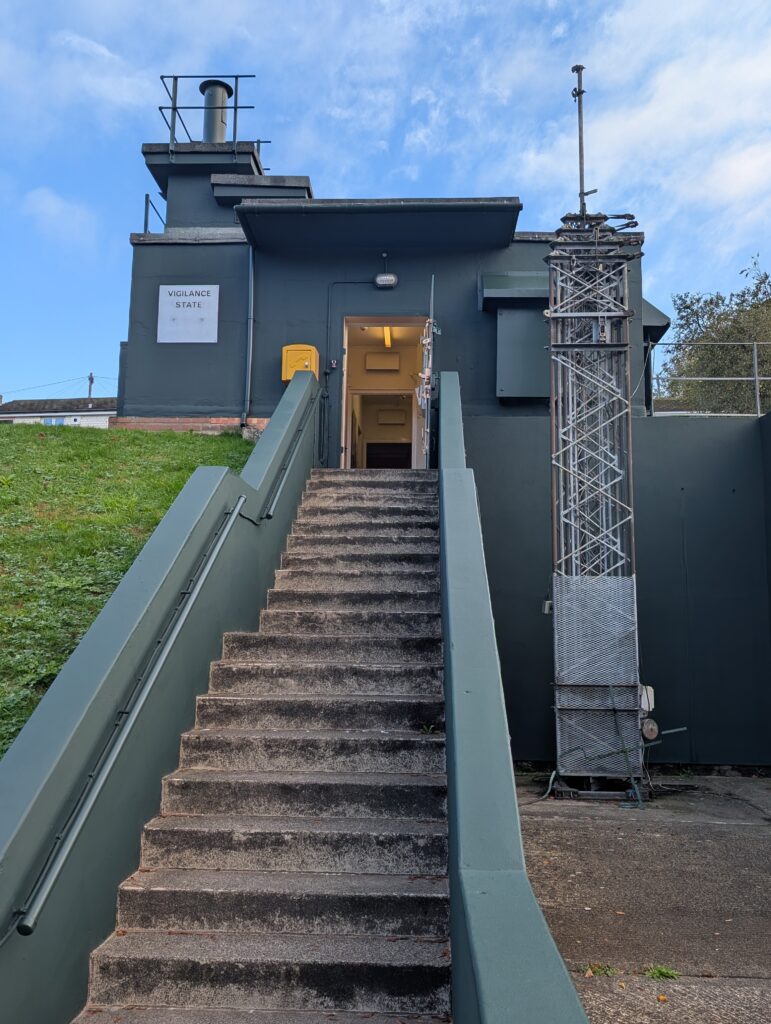
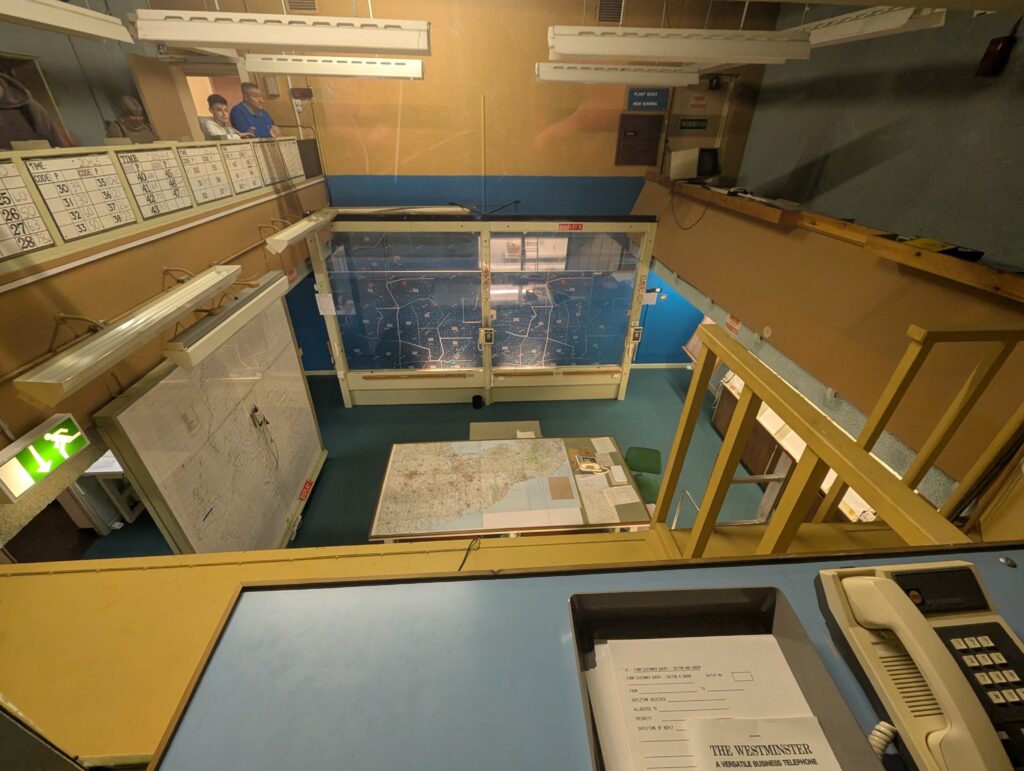
i also looked at doing some different things from what I have been doing as I traveled. I learned there was a Cold War Bunker nearby that was used between 1961 and 1991. It’s purpose was to monito any explosions using information gathered to determine radioactivity levels, etc. There were 20 stations around England that relayed information between the others. It was pretty cool. When they left in 1991, it w as sealed as is.
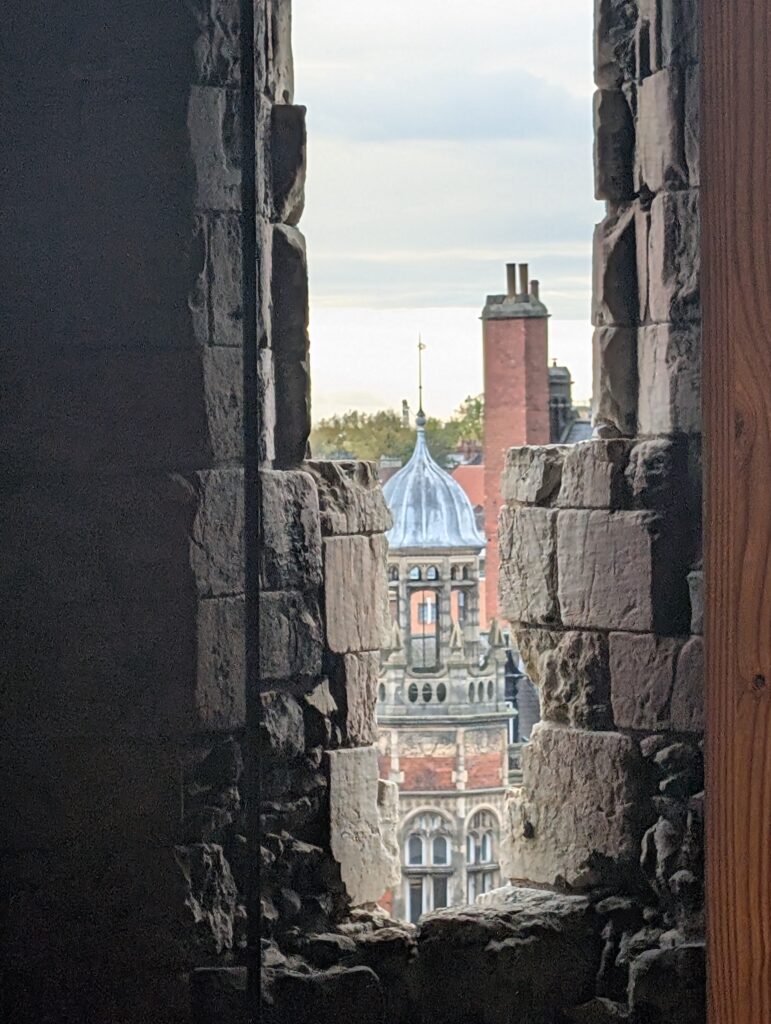
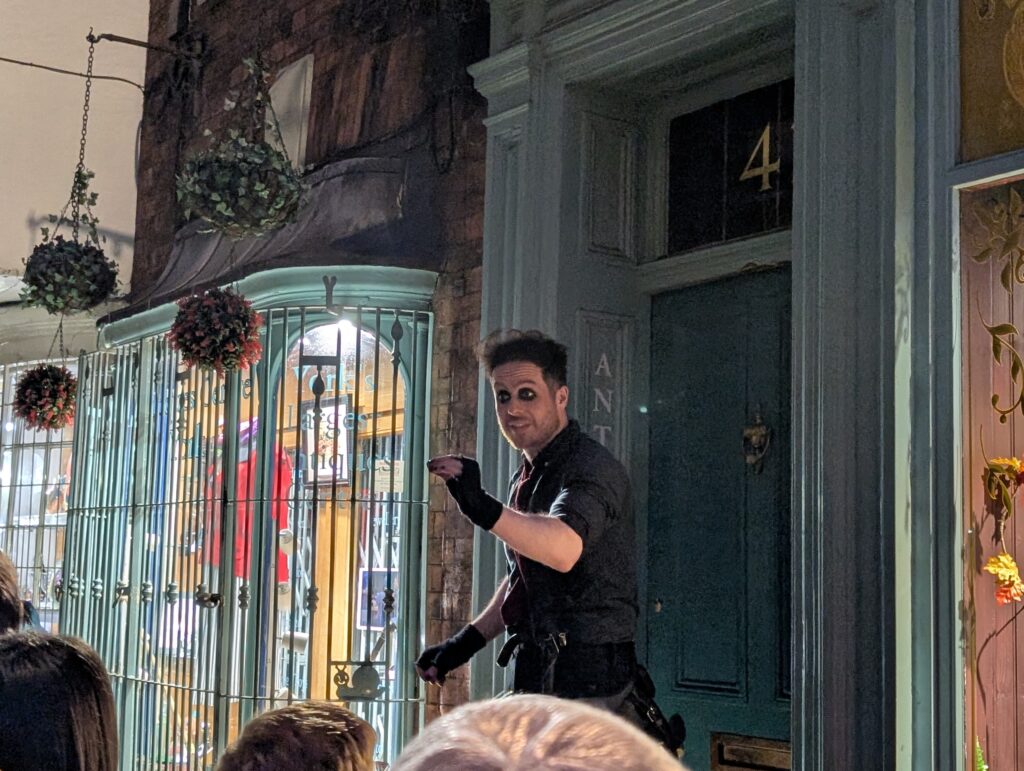
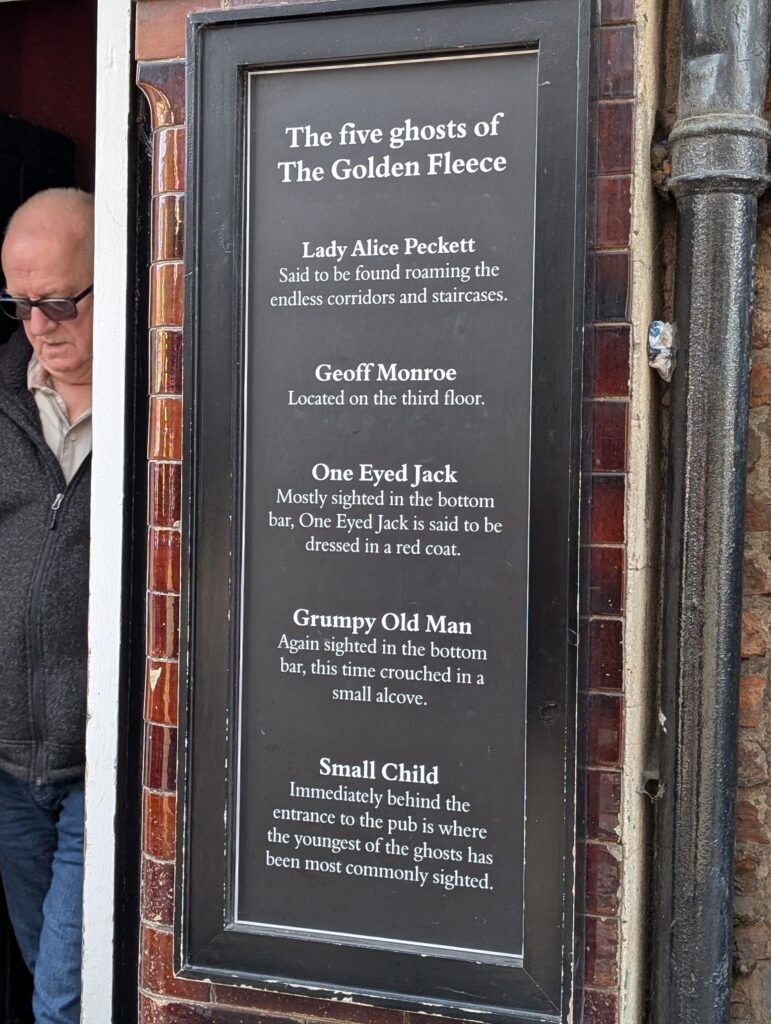
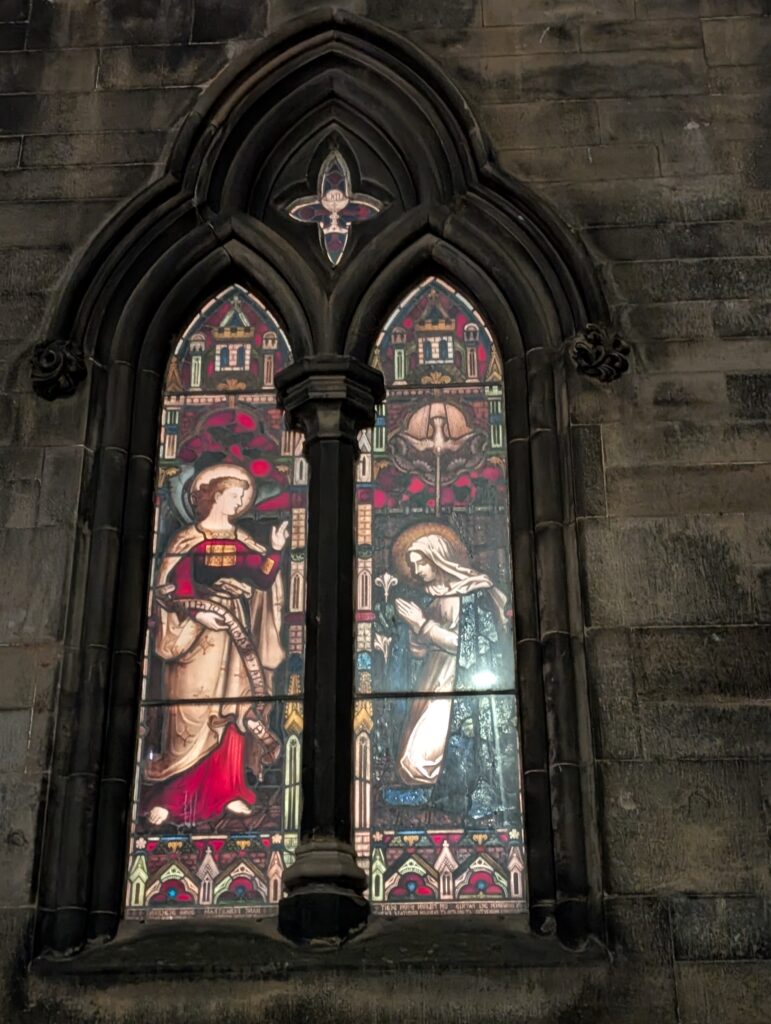
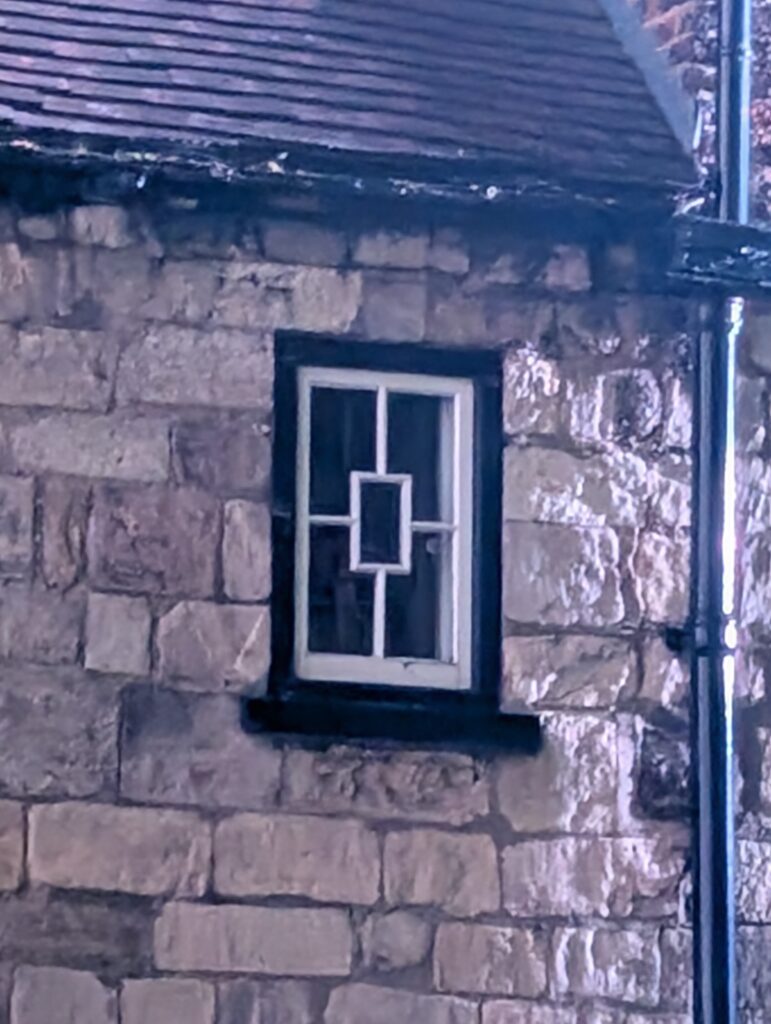
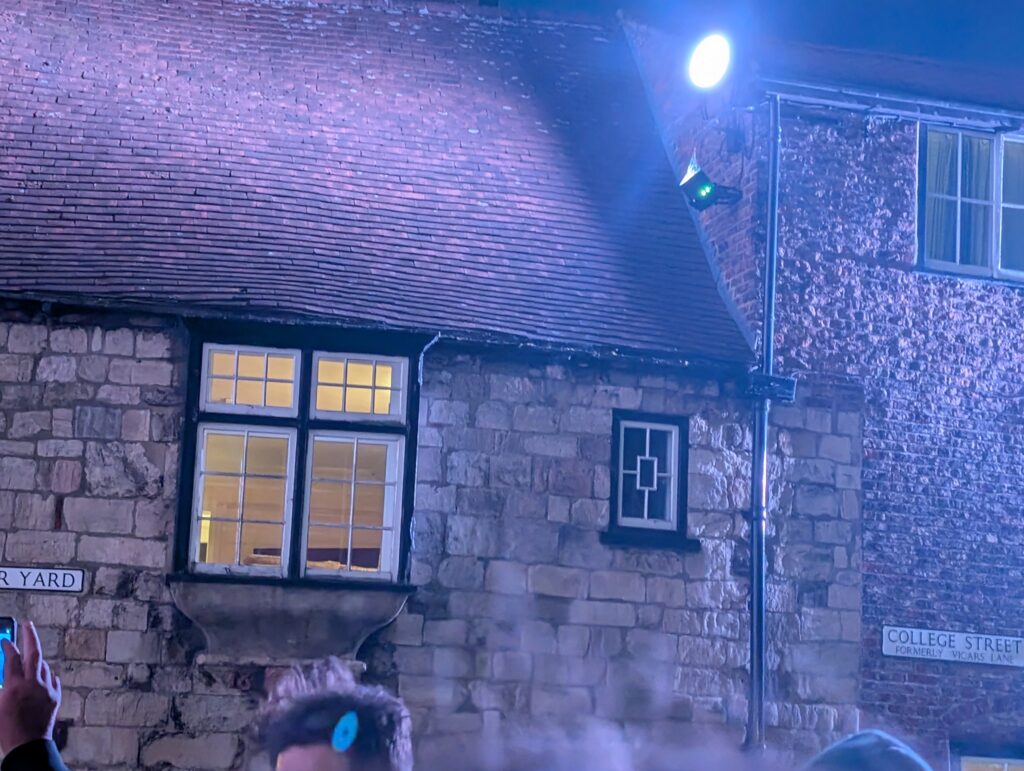
I also went on a ghost walk tour. There were some incredible stories of ghosts and poltergeists including one of a 7 year old who was the sole survivor of the plague in her house. They thought she was a witch and locked her in to die. It is said she can be seen in this window.
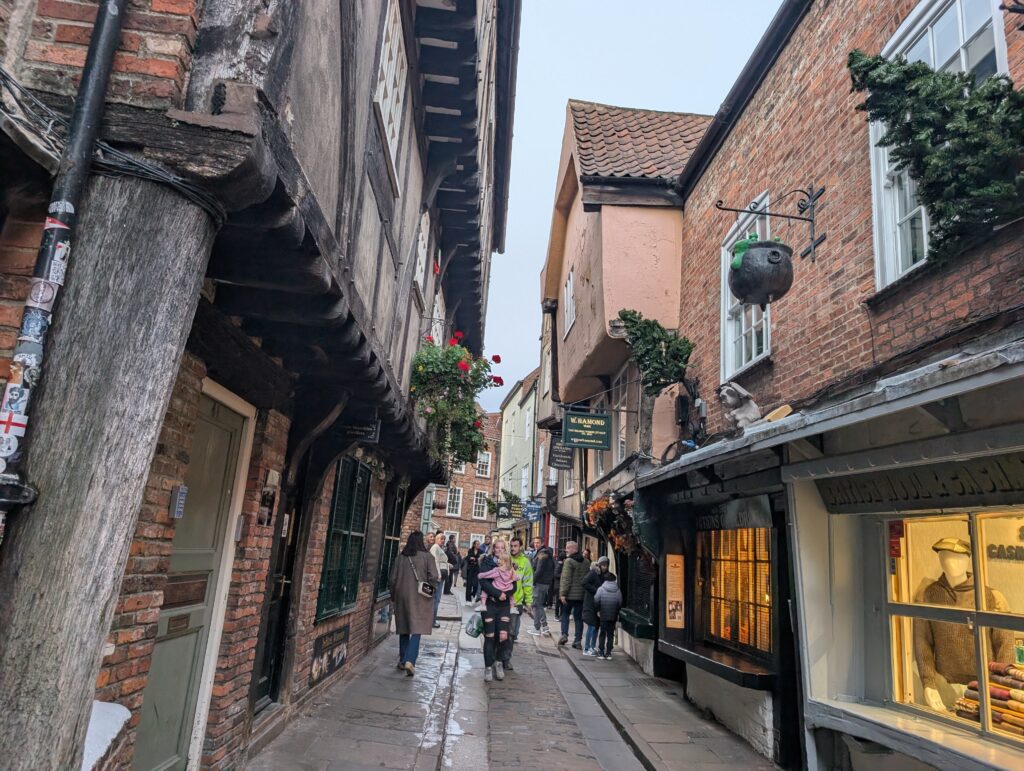
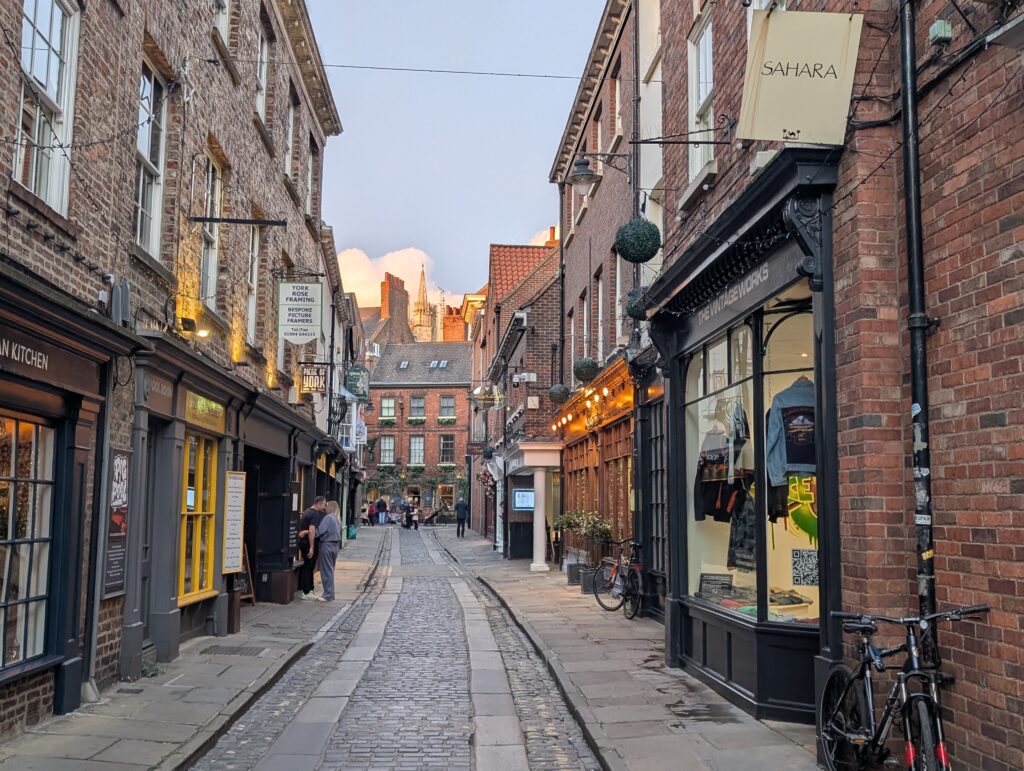
I also walked through the Shambles, the area that is still authentically medieval.
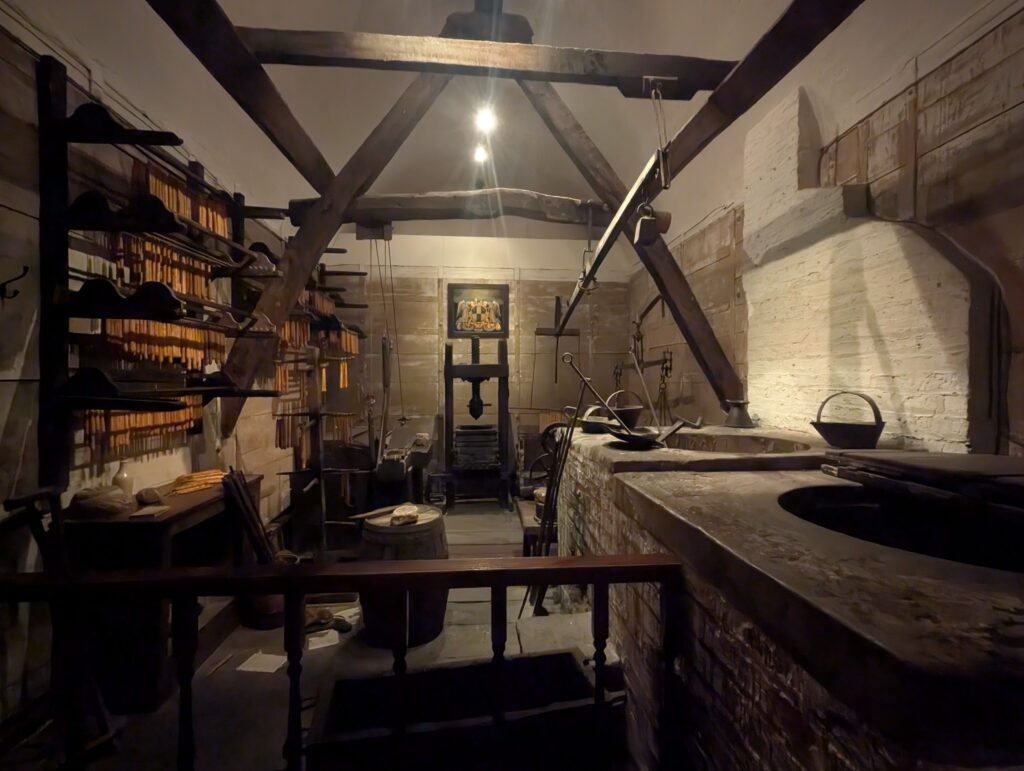
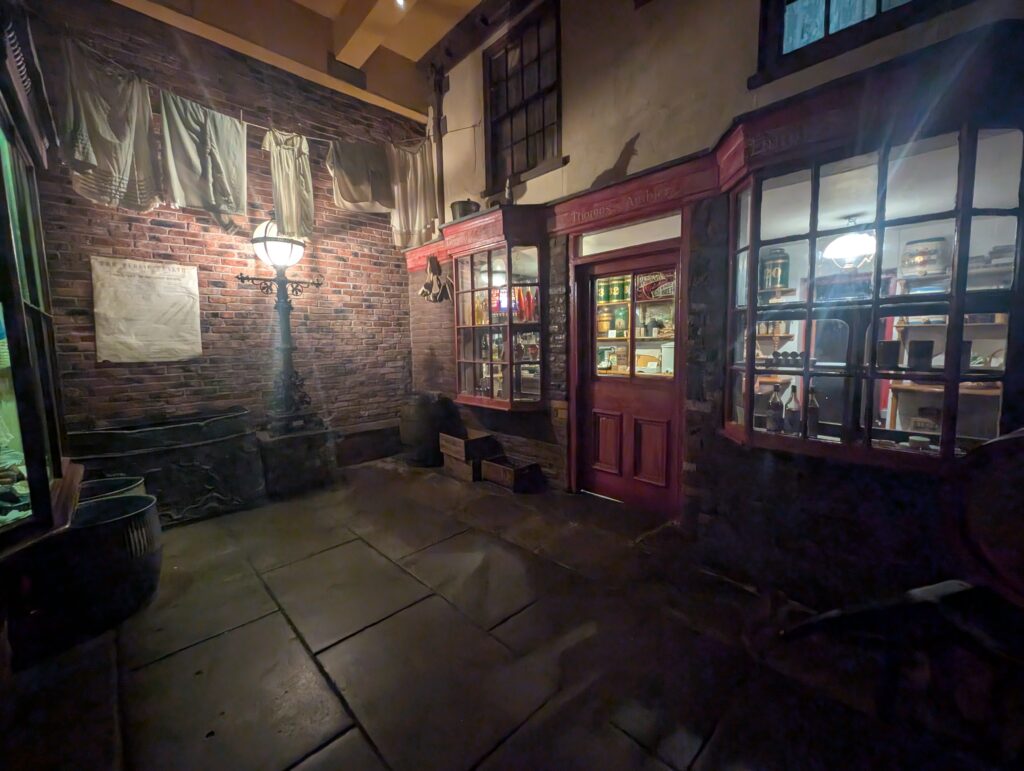
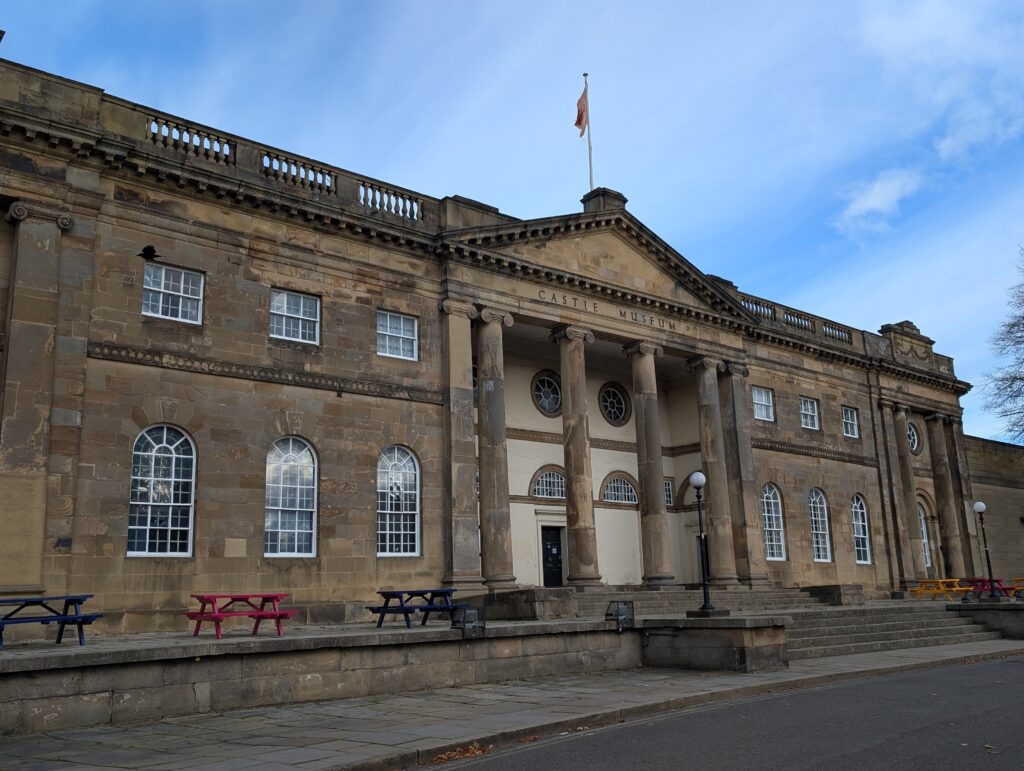
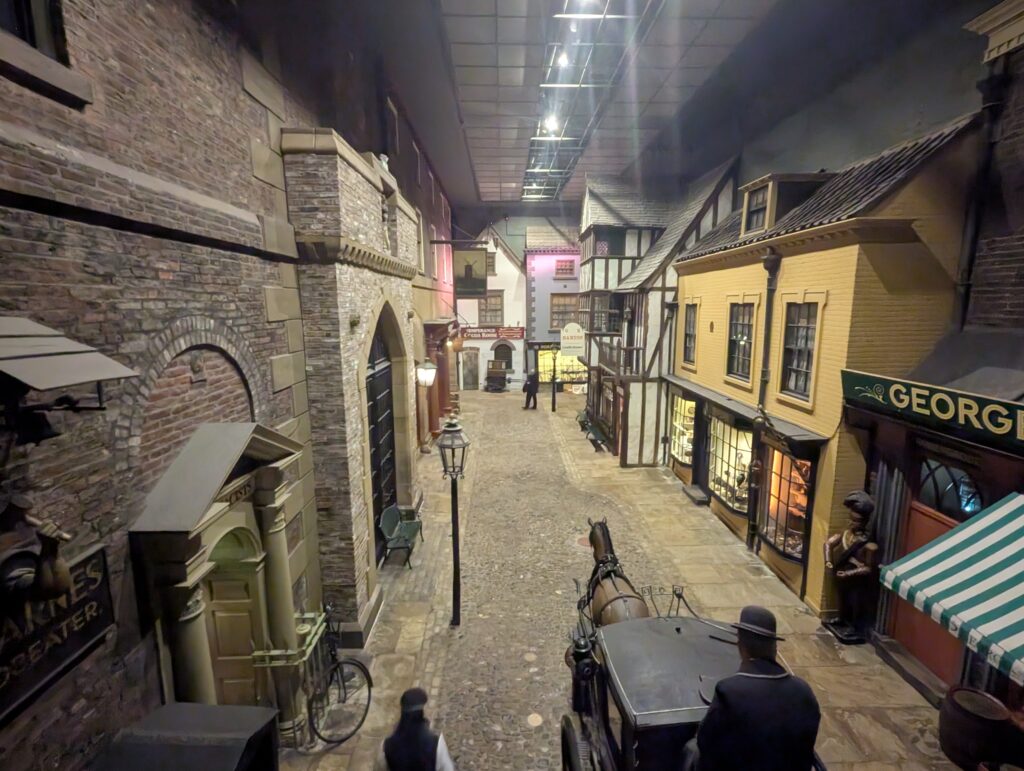
I also visited the Castle museum which was more about life in medieval time including a full Victorian street created from actual artifacts. You could walk down the street and take alleys to see inside some of the buildings. They even had sounds as if you were actually there, leaving you feel a little uncomfortable in the poorest back alleys.
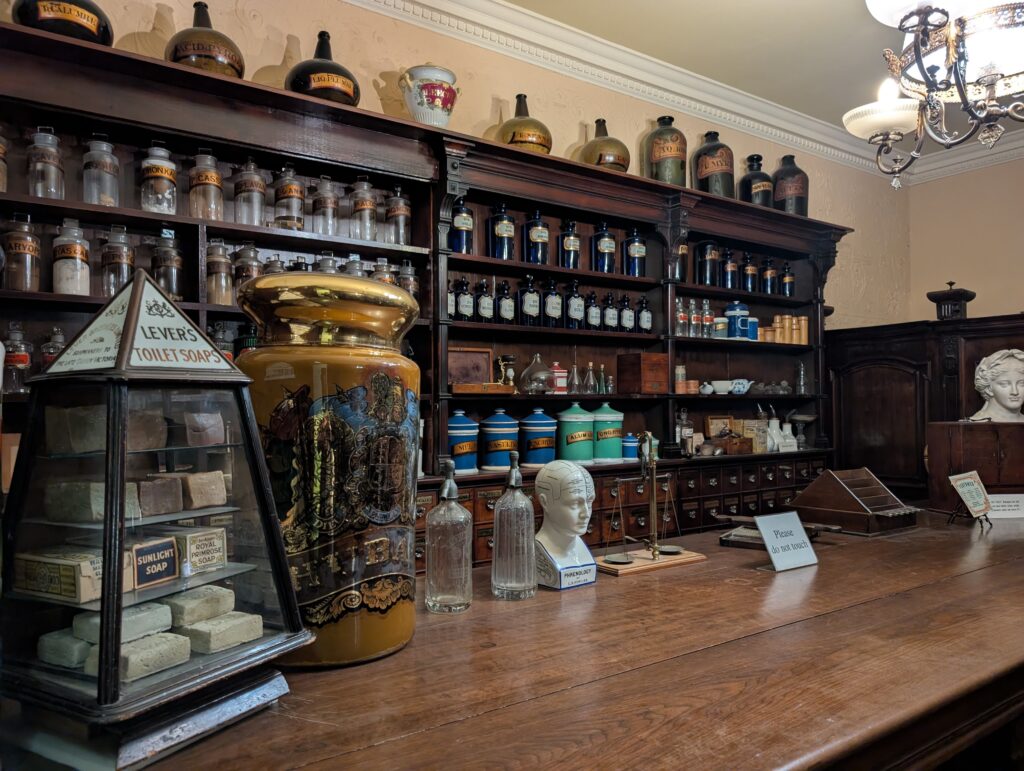
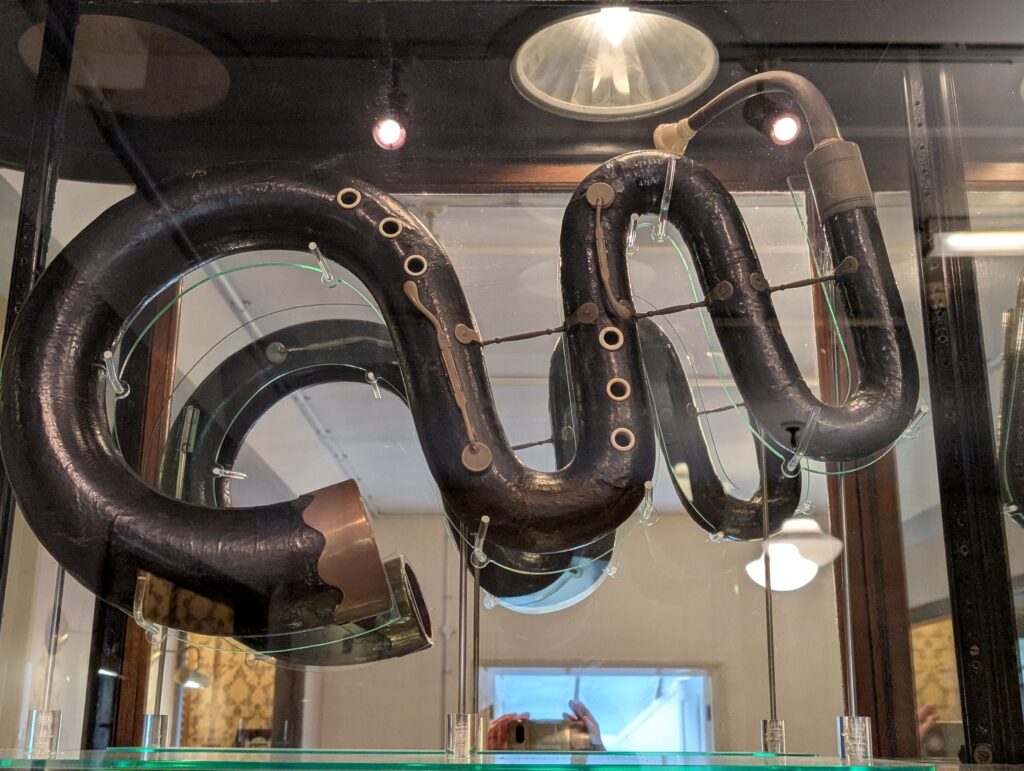
Many of the artifacts came from a local physician who acquired them when residents could not pay for services.
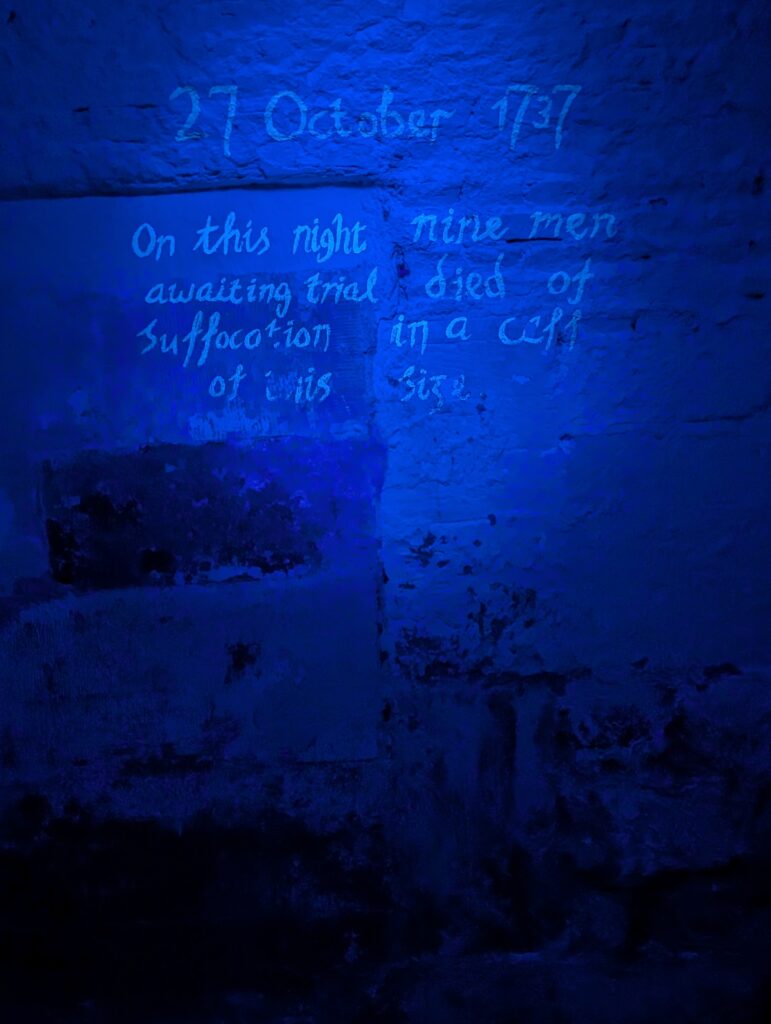
The visit through the prisons was crazy learning about how they were cared for and finding out through walking along what happened to 5 prisoners. Images and sounds made it interactive.
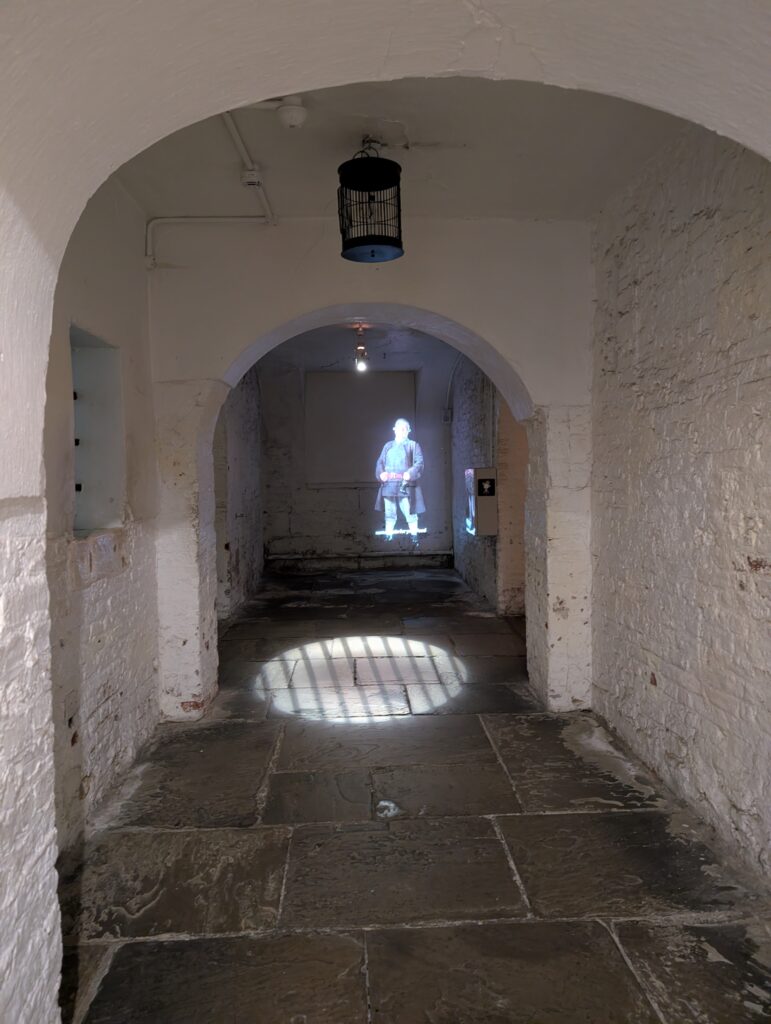
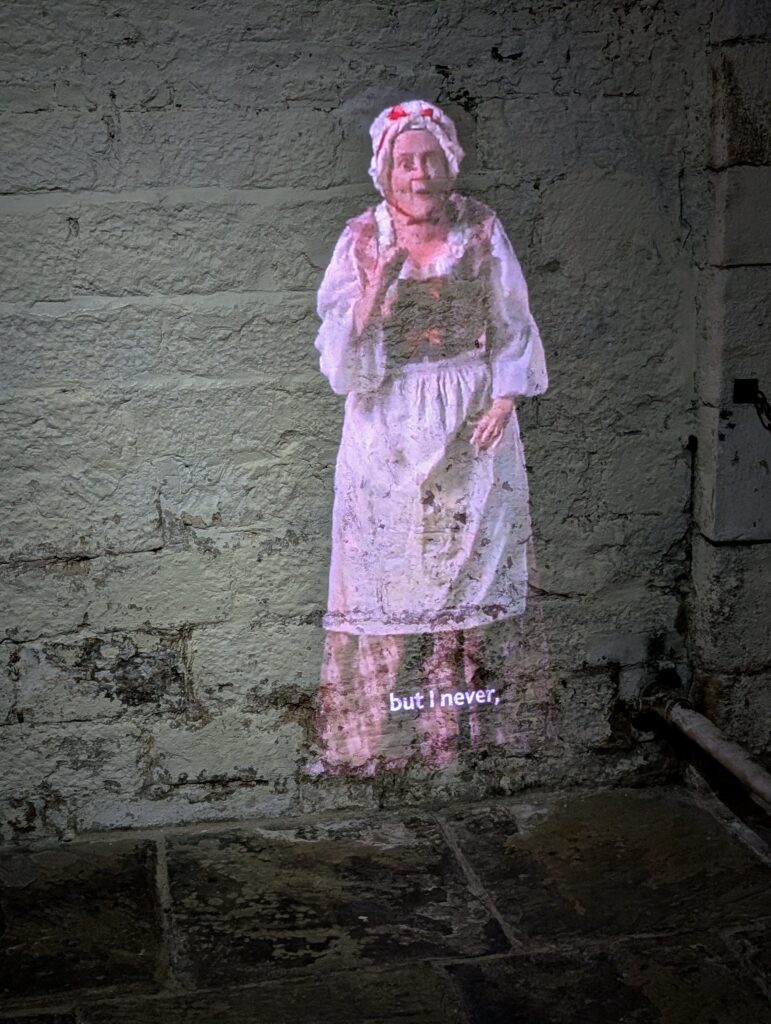
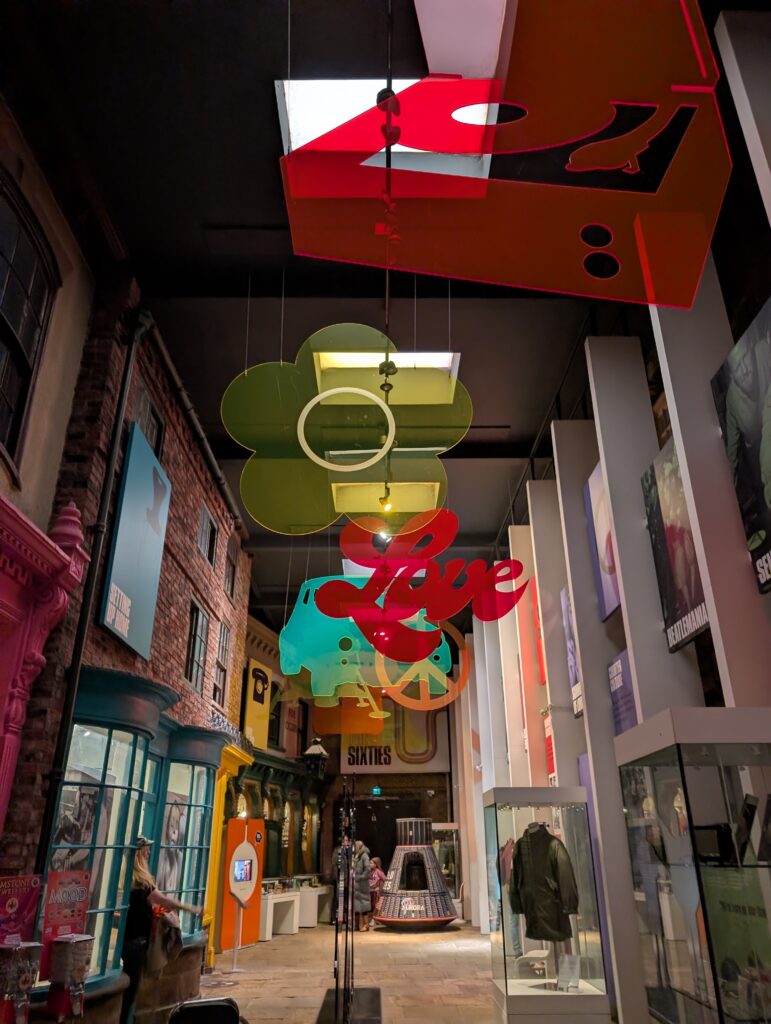
There was a section on World War I which was incredible and was followed by a walk through the 60’s.
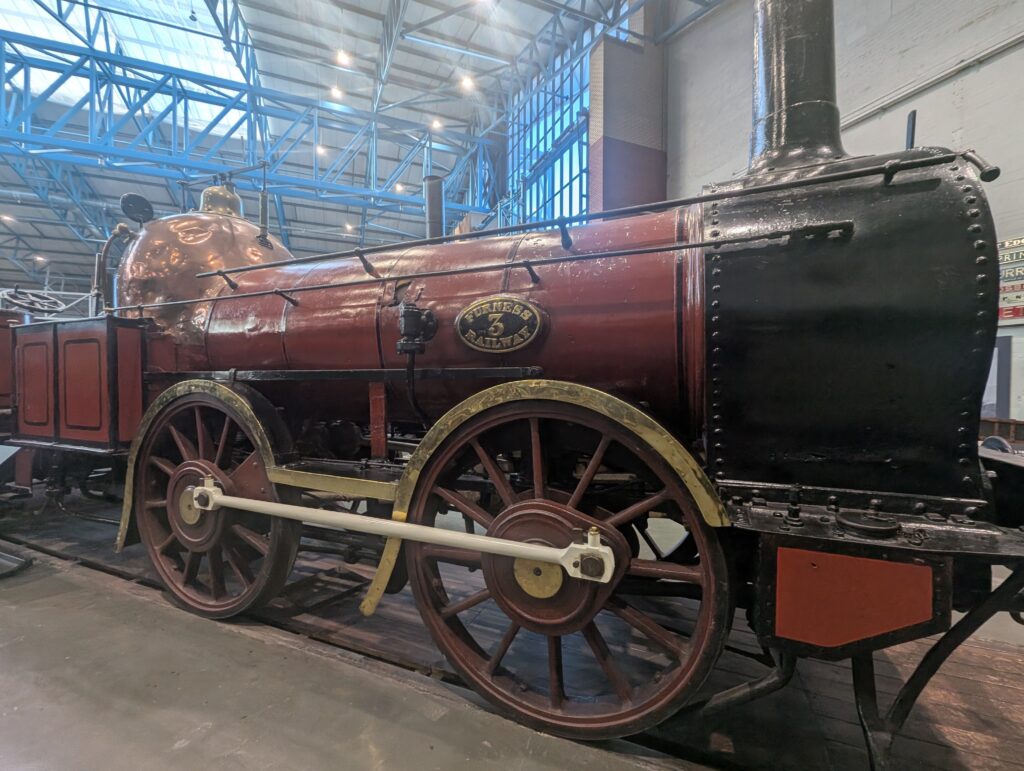
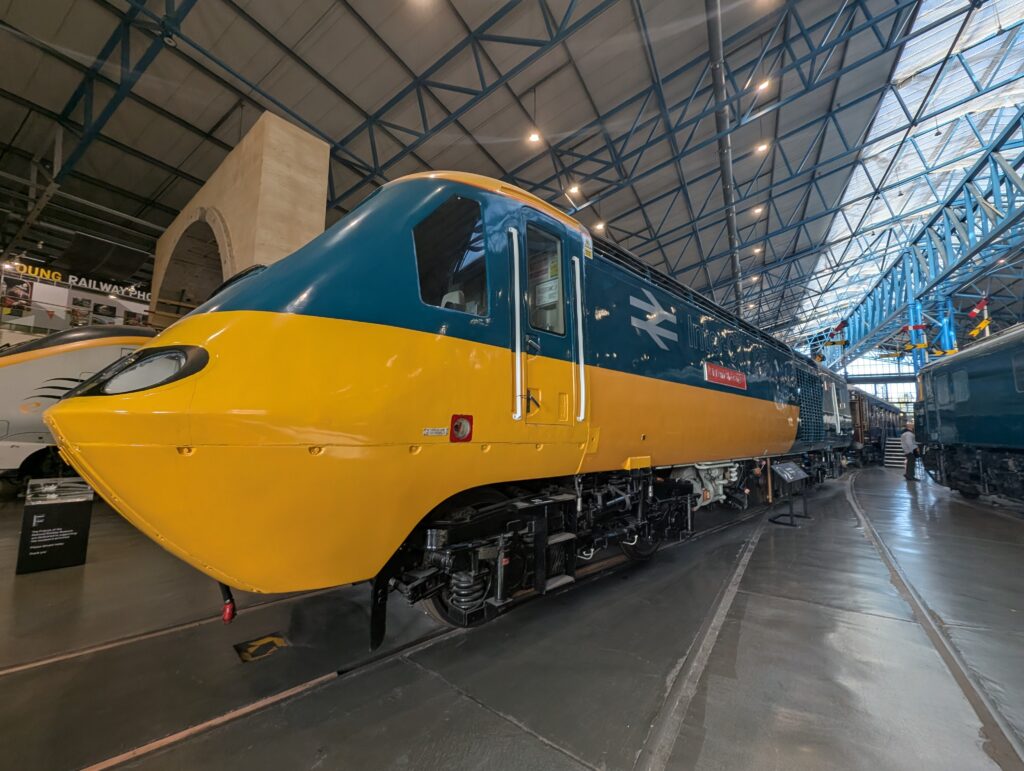
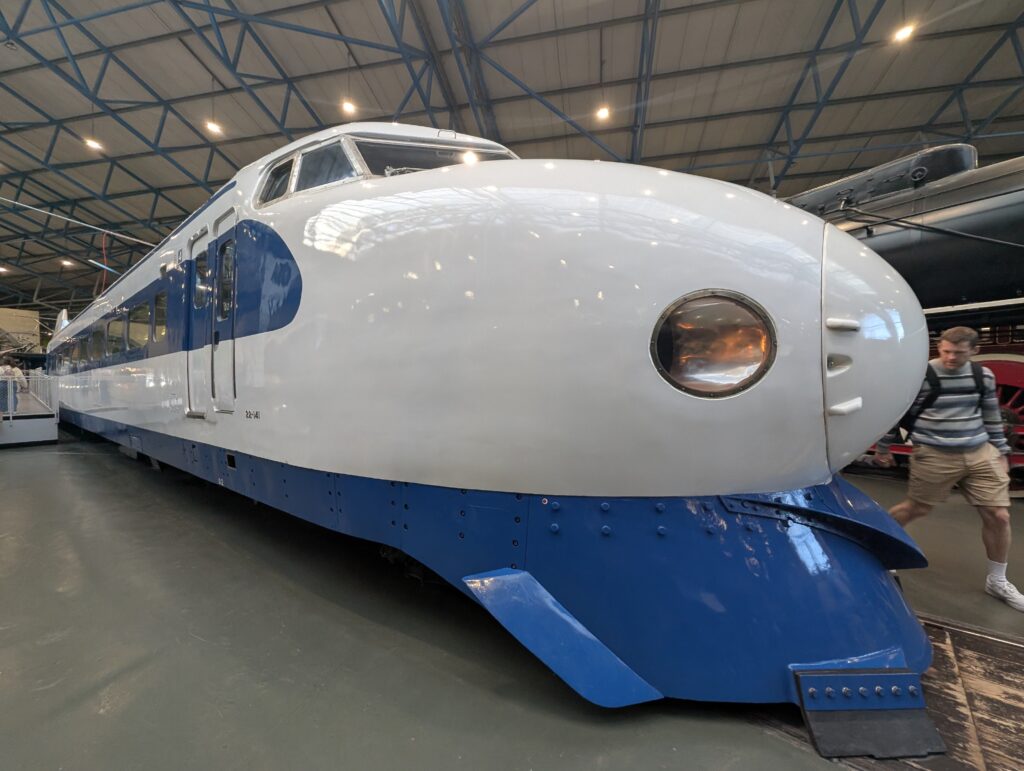
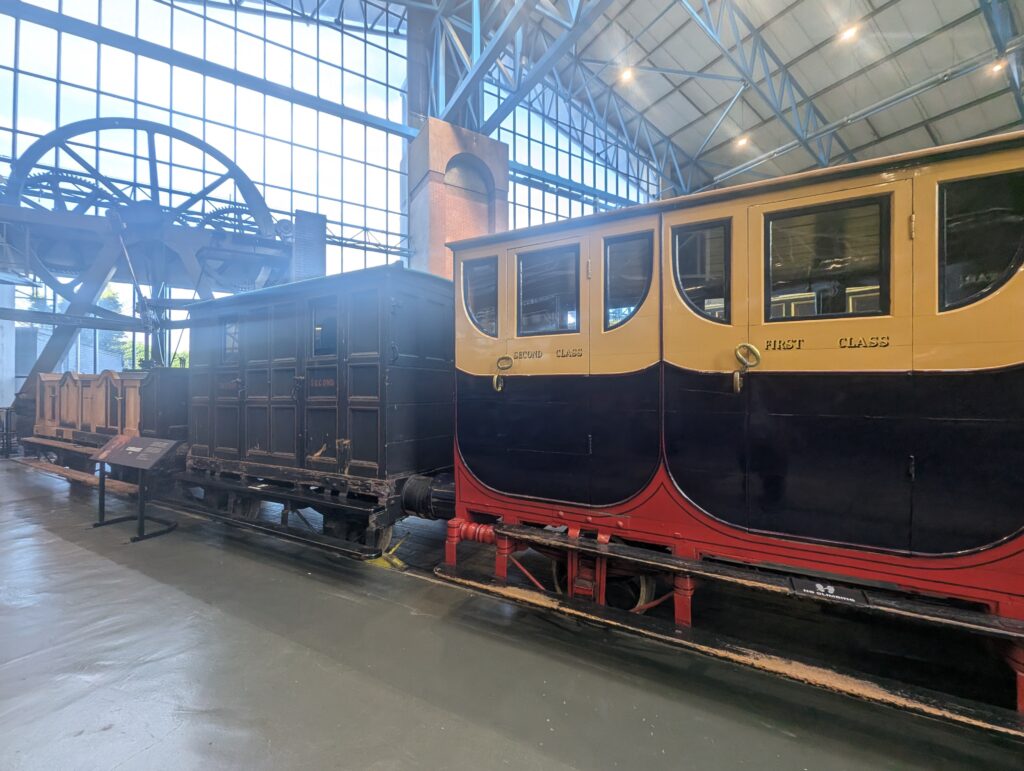
The last place I toured was the train museum. The trains were impressive and showed all the changes from the 1800’s to today including the Japanese bullet train.
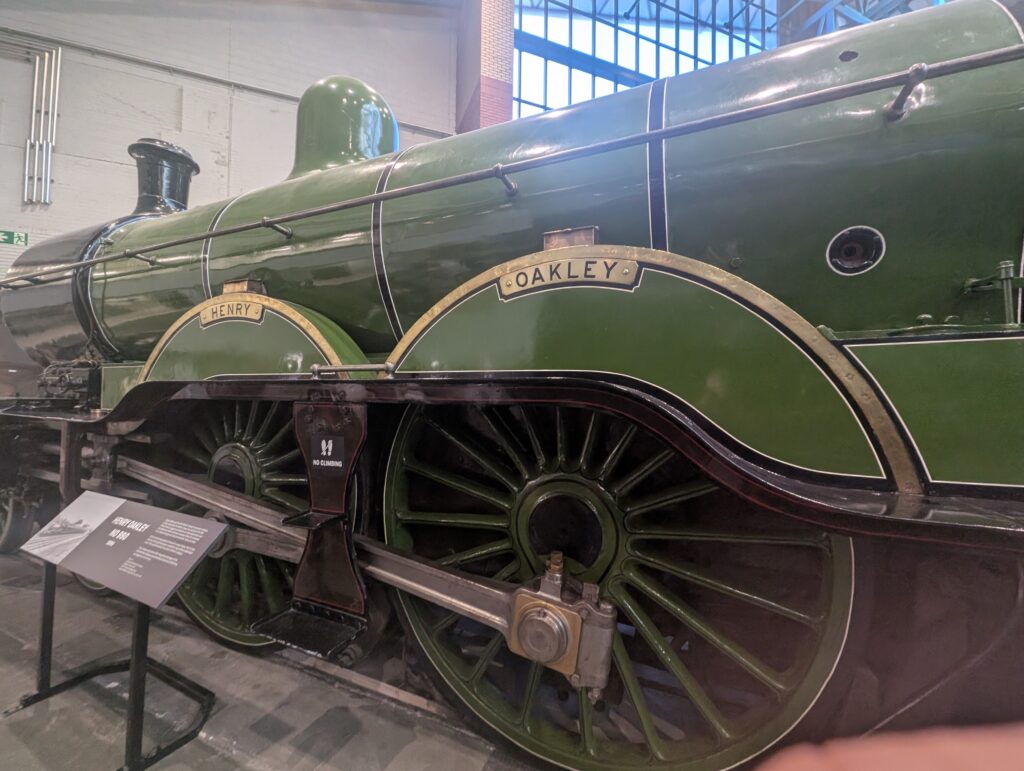
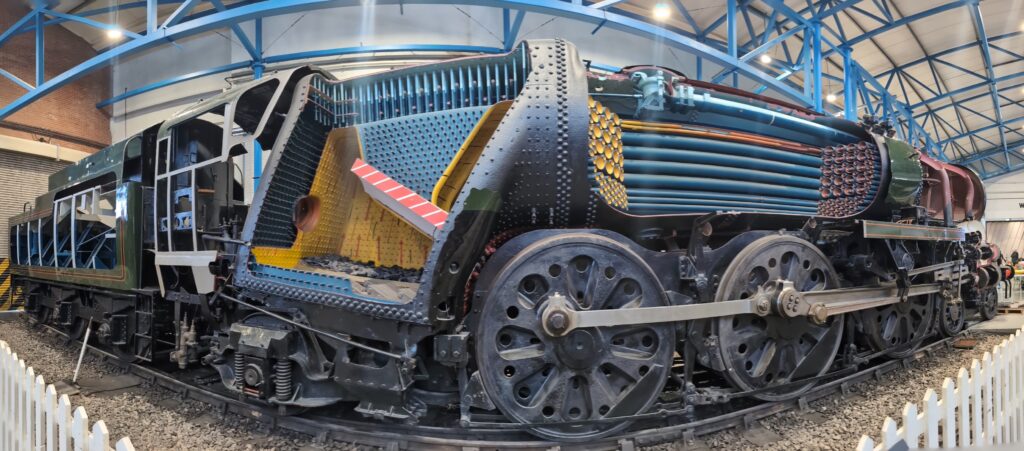
They even had a train that was cut in half to see all the parts down the length of the train!
There are many other incredible things to see in York!
Hadrian’s wall road tour

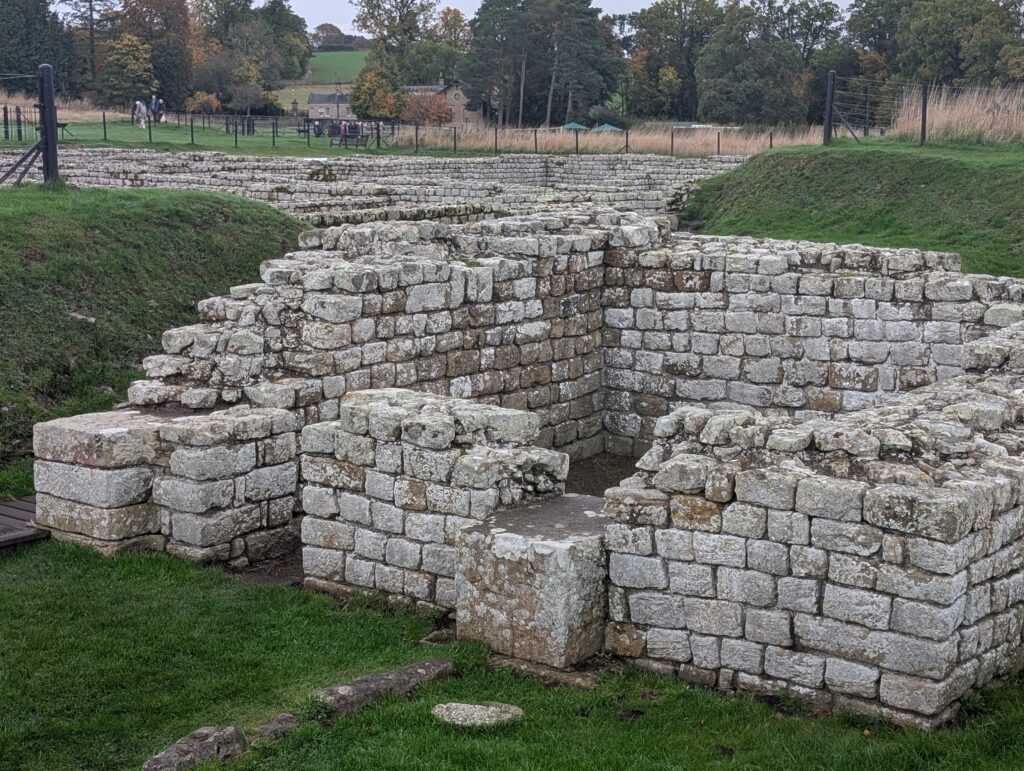
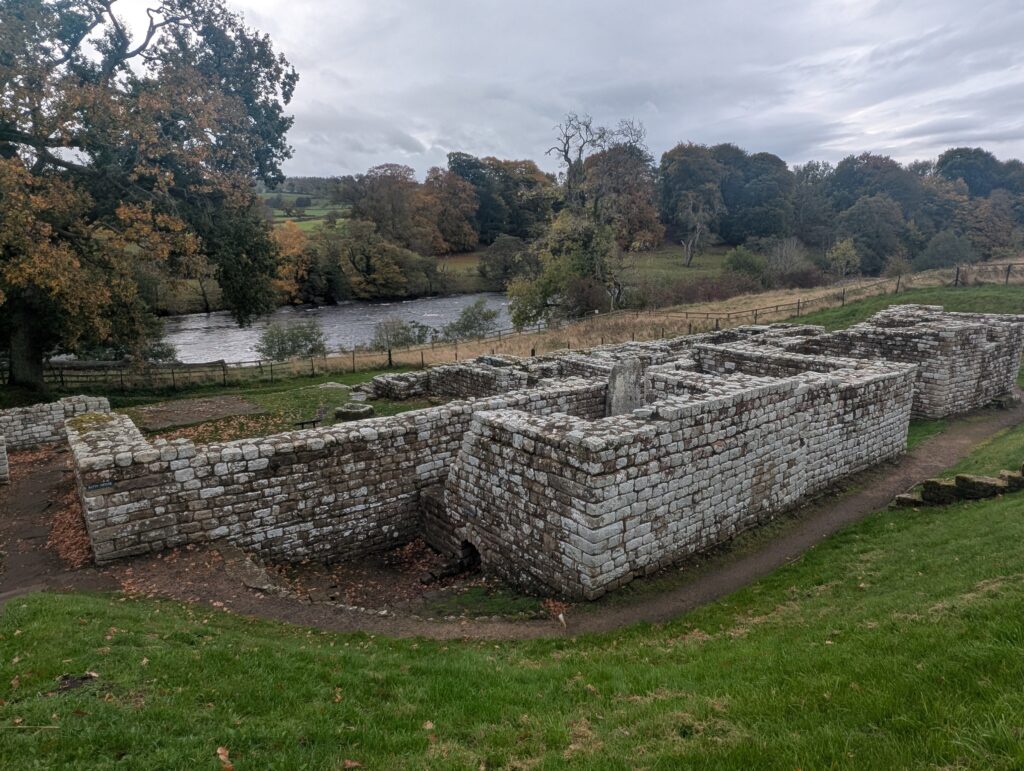
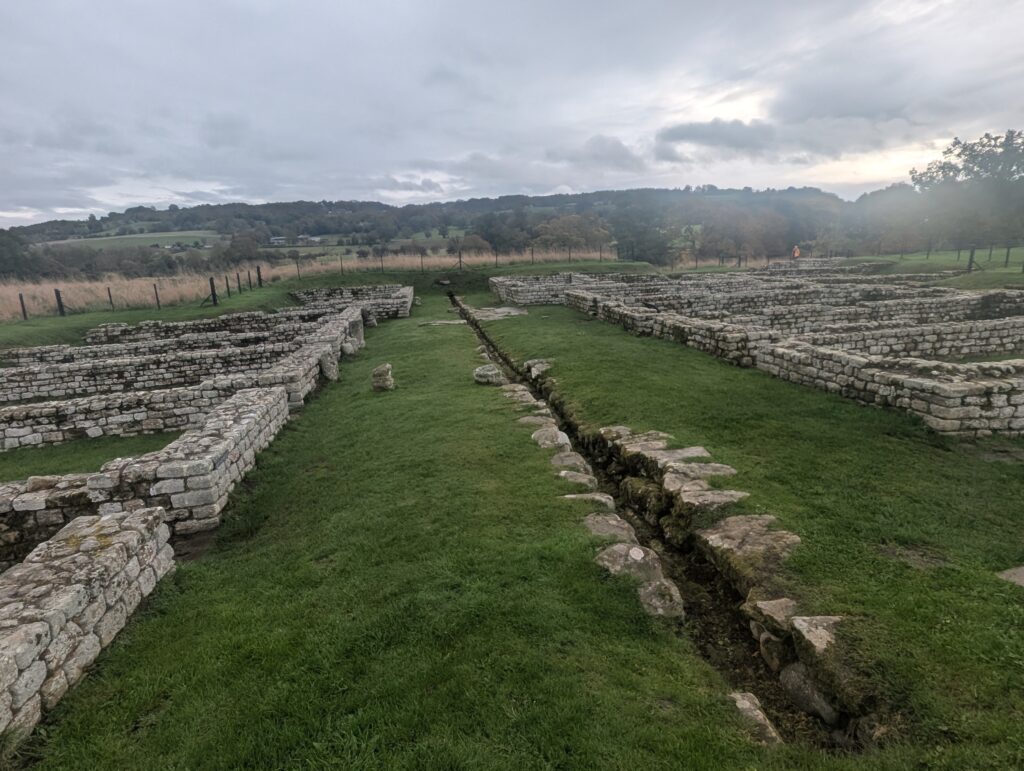
I rented a car for a day to try to see as many points along the wall as I could. I stopped first at Chester’s Roman fort. It is named for a gentleman who inherited a house and land and noticed the rock structures partially buried in the ground. As people talked about a high wall that those in the 17th century would walk in, he believed these to be part of a Roman wall that defined the outer reaches of the Roman empire in 150 AD.

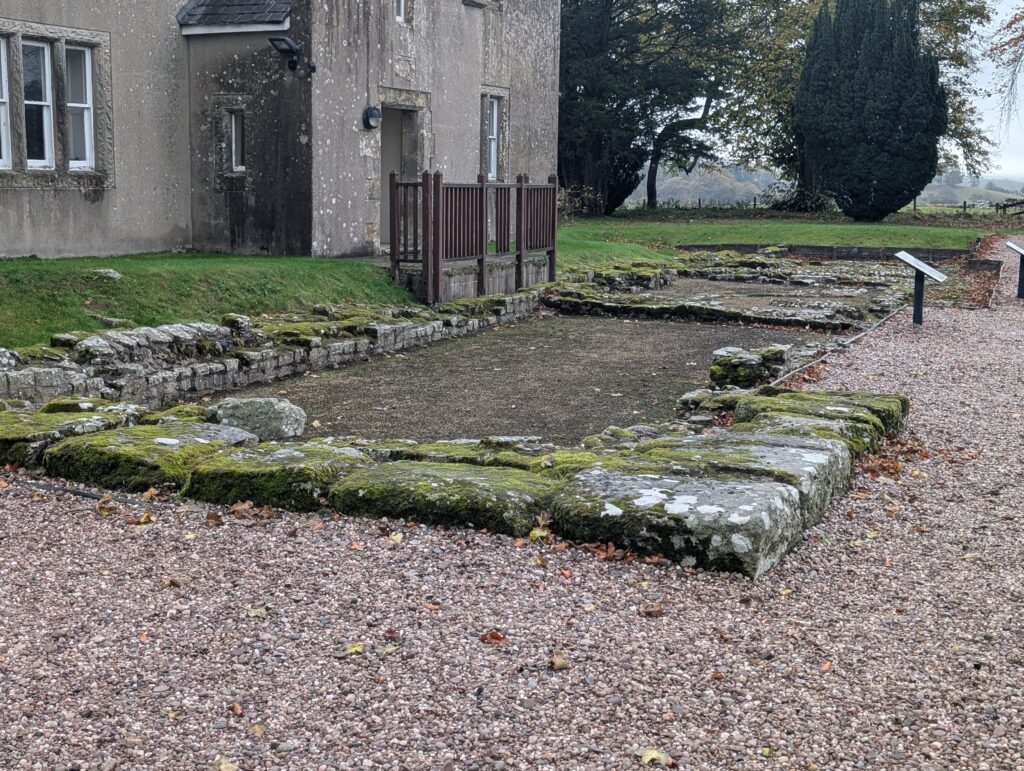
On each side here are garrisons for troops. In each room, the men stayed with their horses as they were rented by the soldiers.

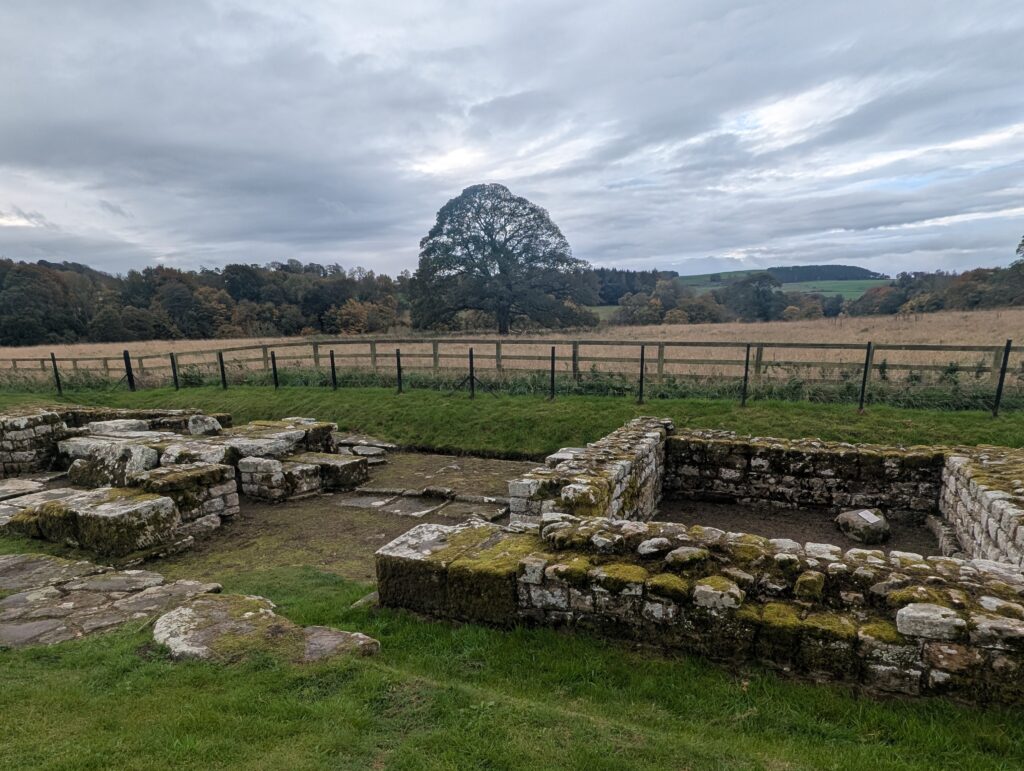
A base of one of the watch towers.

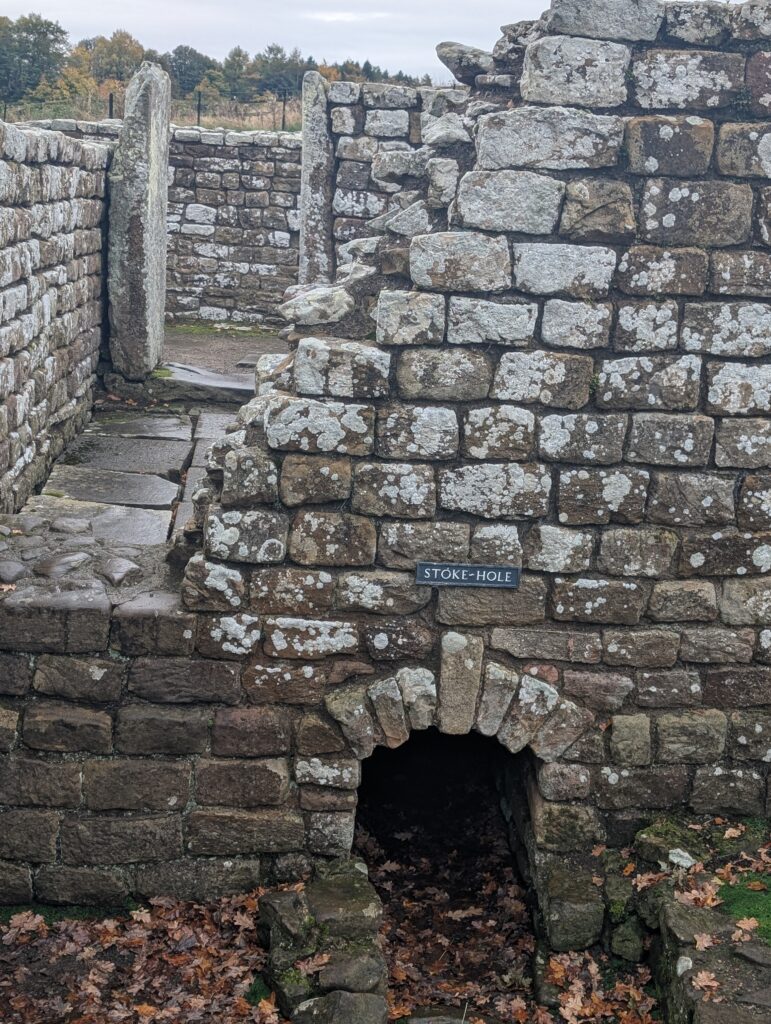
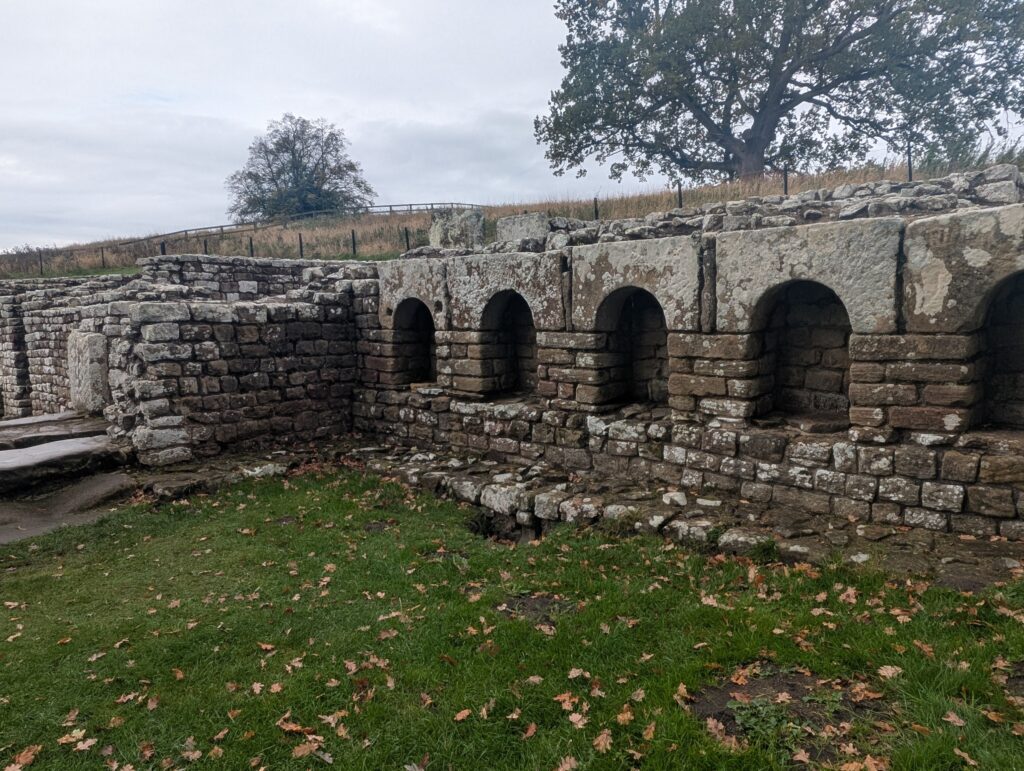
This part is near the river Tyne and is a bath house. Water was heated for steam rooms and warm baths with the lower areas being cold baths.

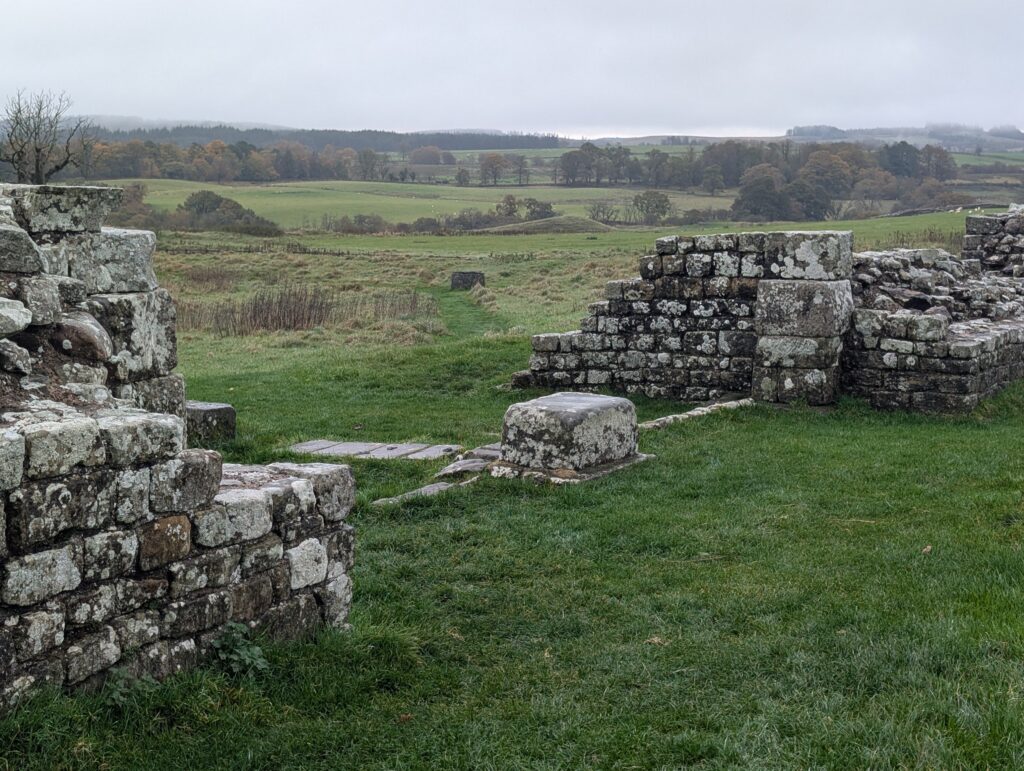
The west gate has two towers and gates that closed in the middle.

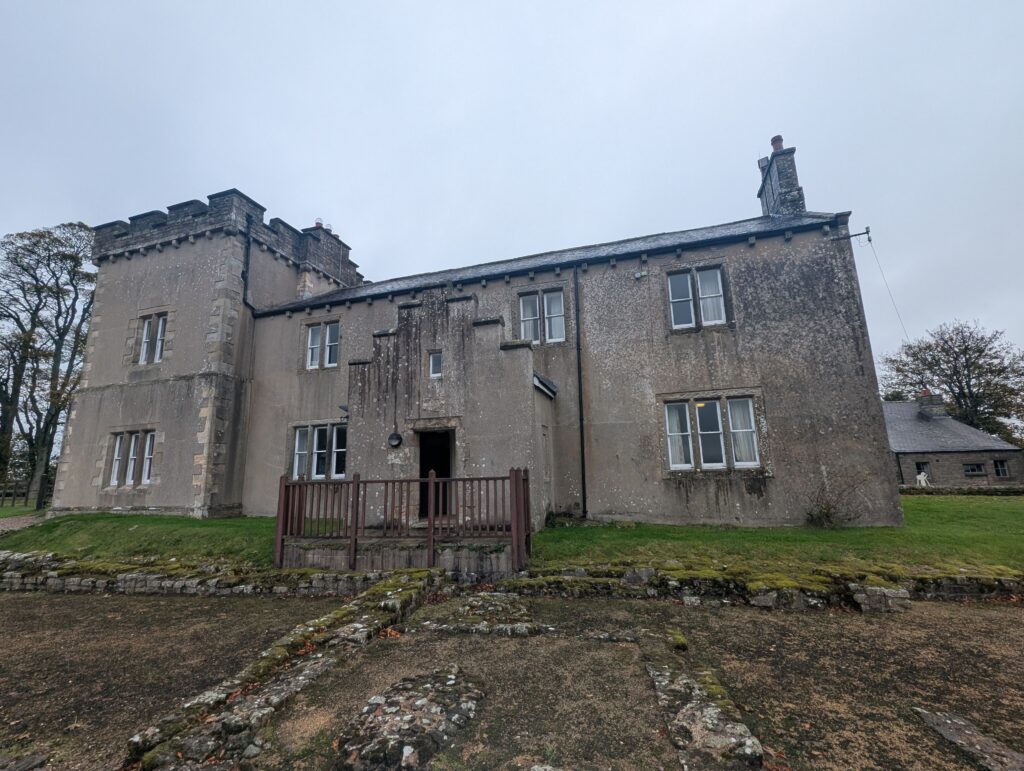
The commanders quarters which were much grander.

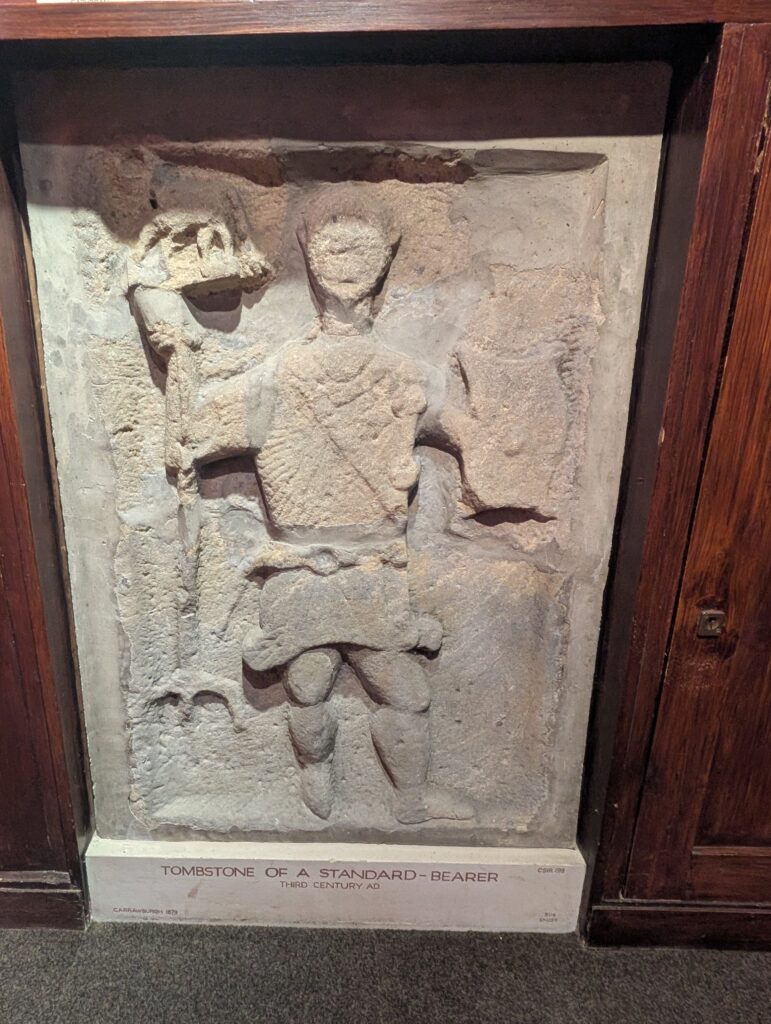
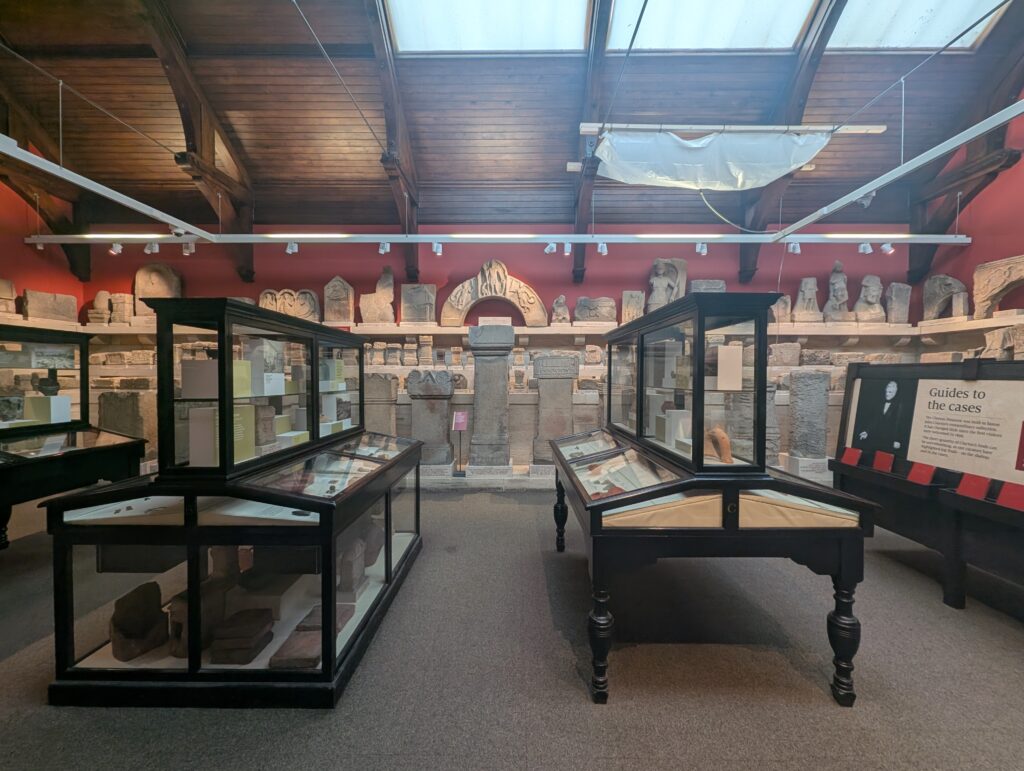
The artifacts taken from the area were placed in a museum on site.

Next I went to Carrawburgh Roman fort.

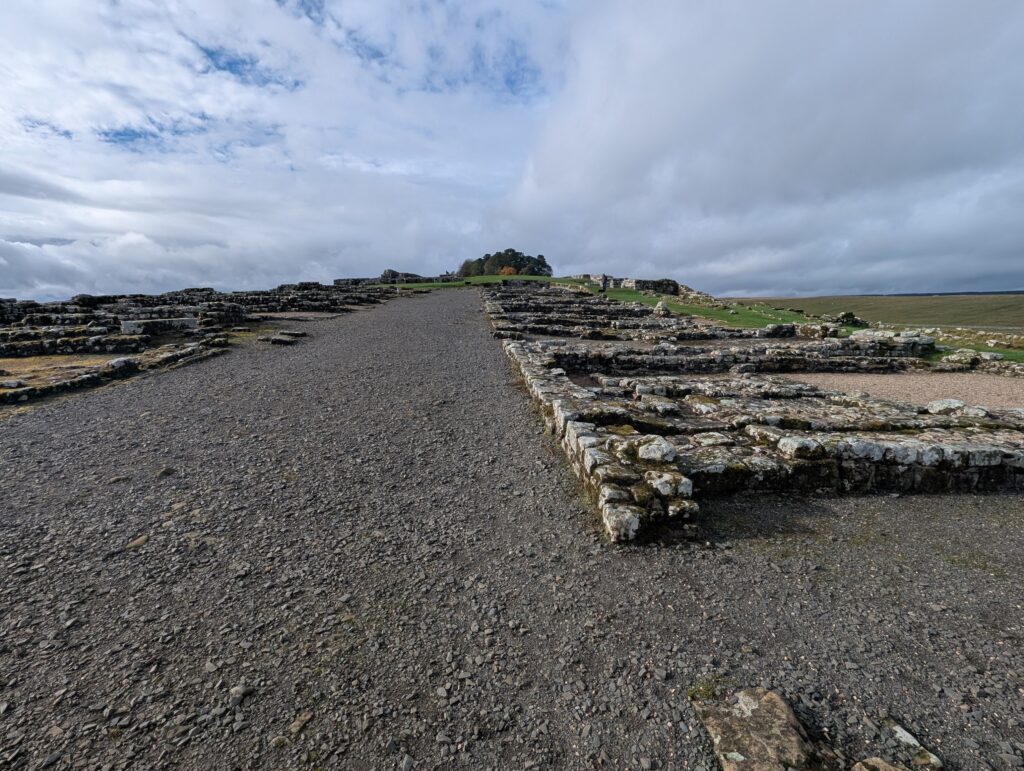
This would be the road that runs through the fort.

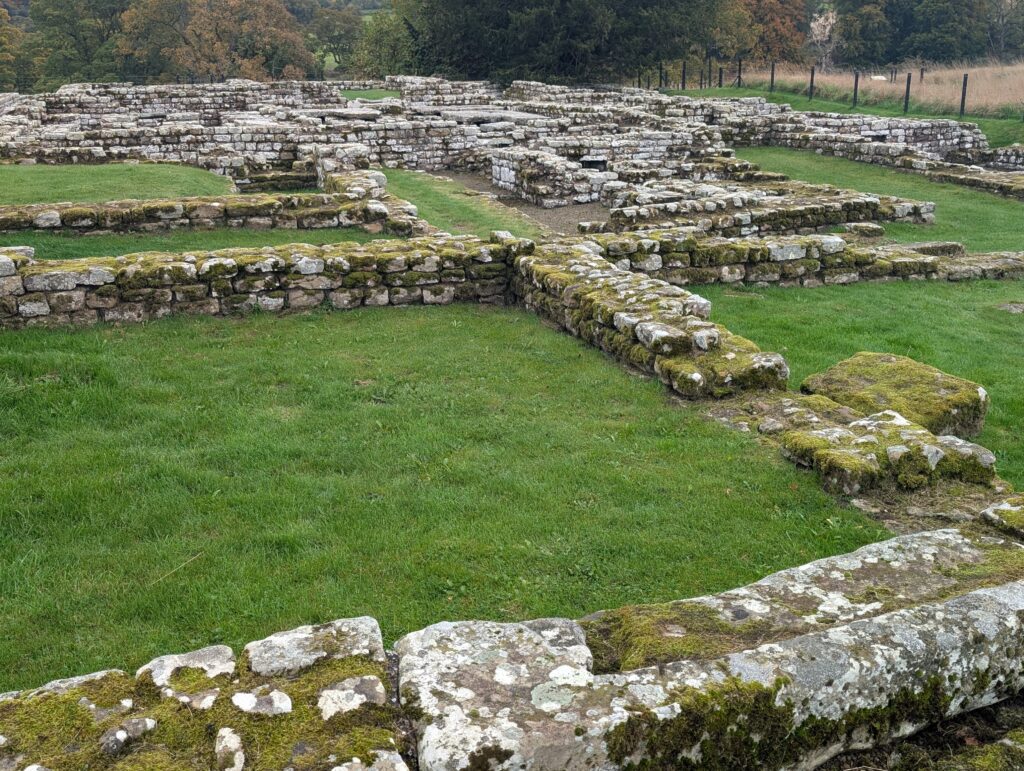
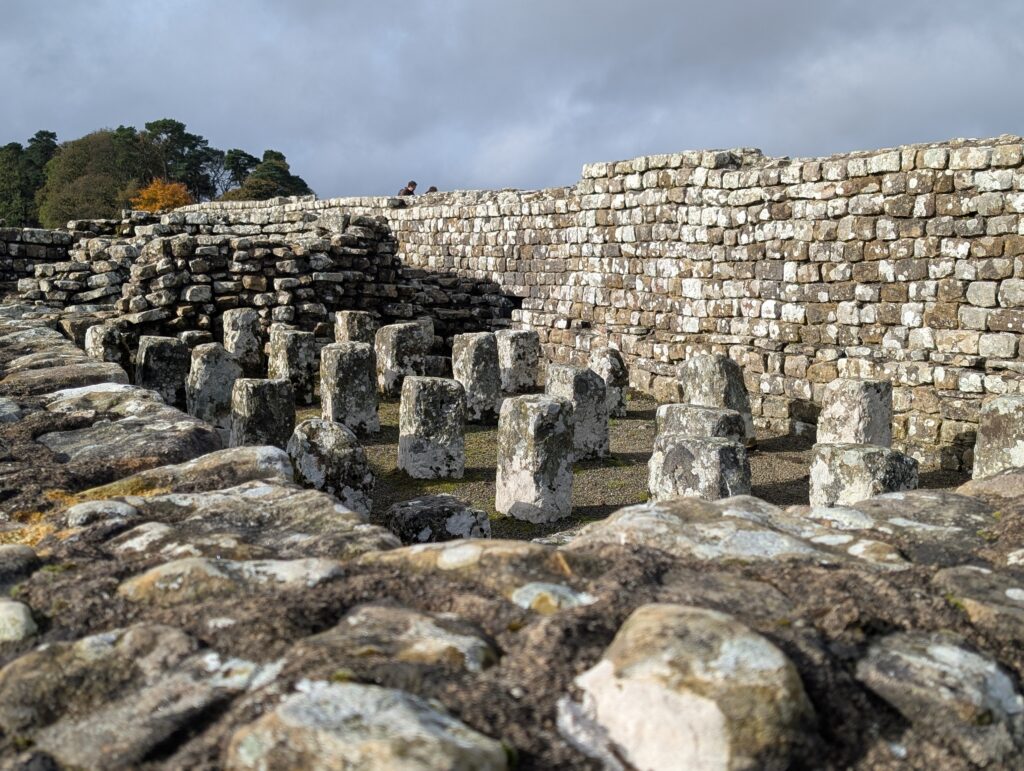
This would be the posts that would hold the sub floor of the granary. It would be elevated to keep pests out and had air vents for circulation.

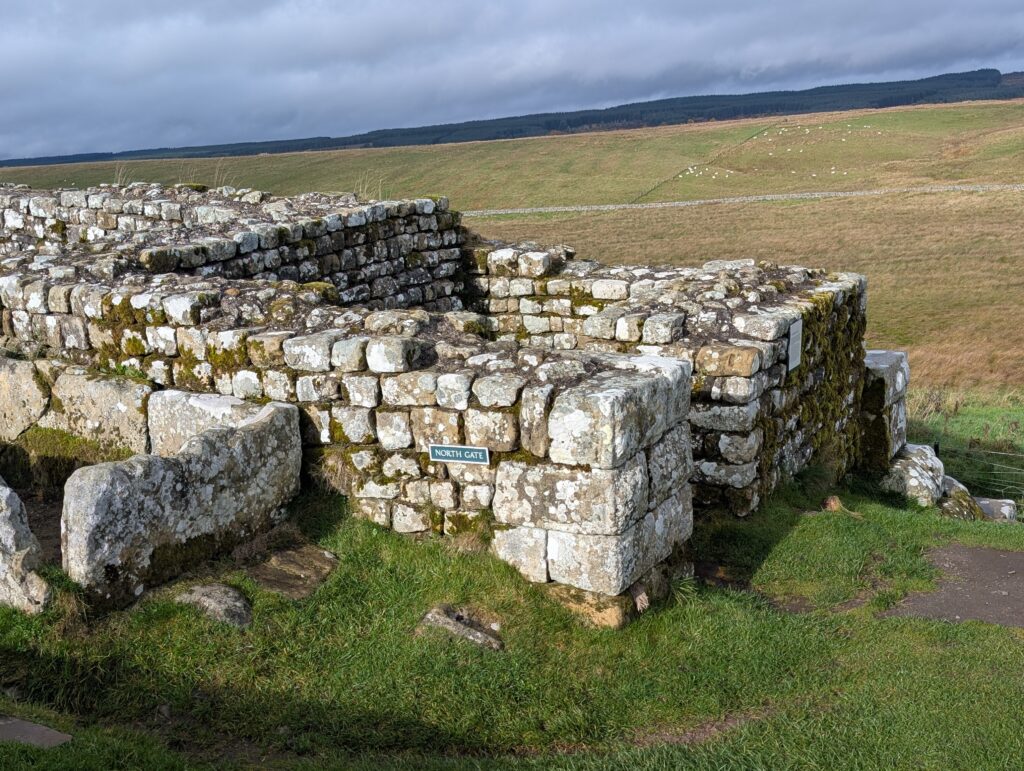
The North gate. Outside the gates would be village houses of those that would have places for visitors to stay and merchants that sold food and other items.

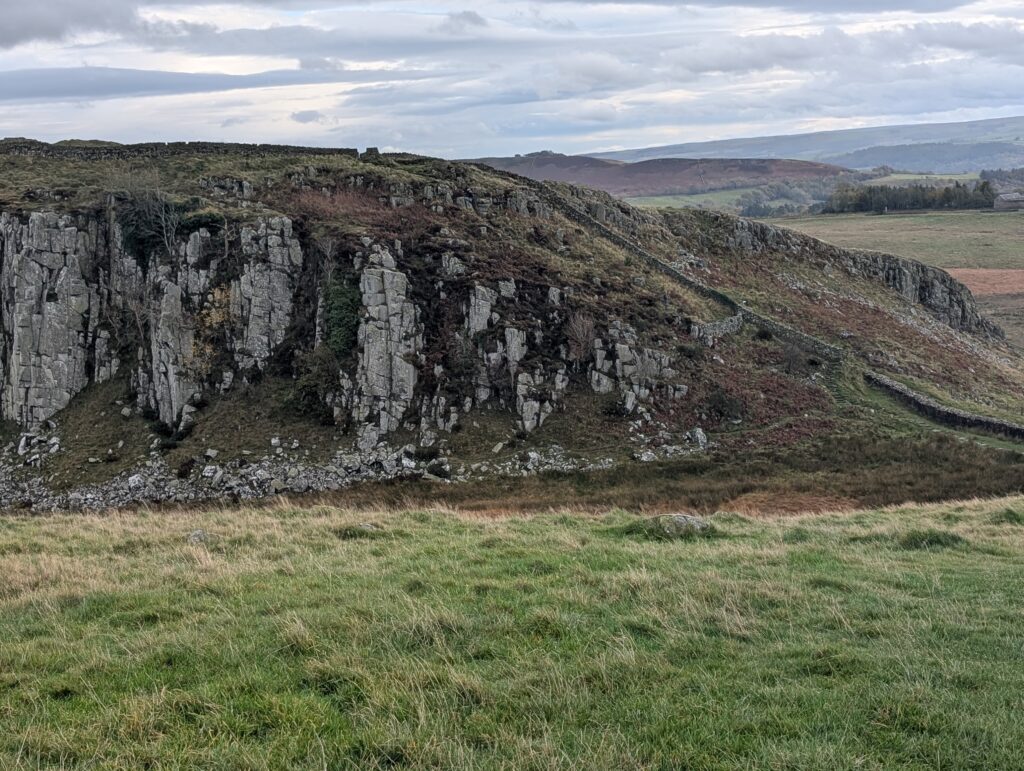
I then drove to Steel Rigg which did not have a fort but was a section of the wall that went over a large hill. As it started raining and the stones were slippery, I only went up half way.

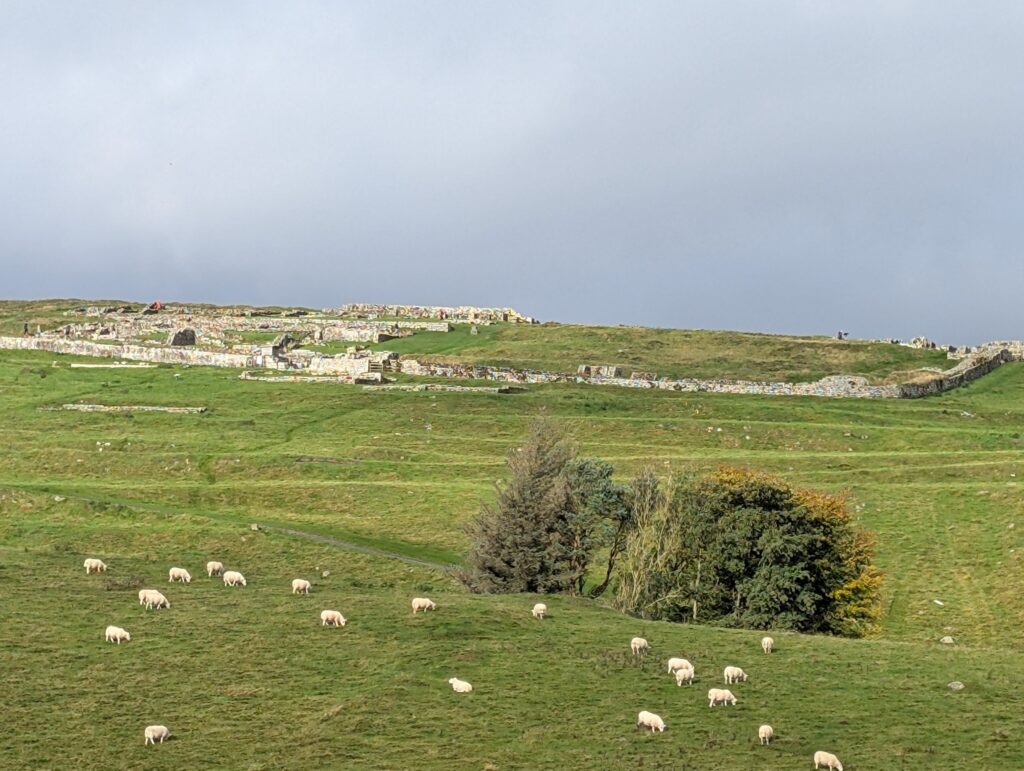
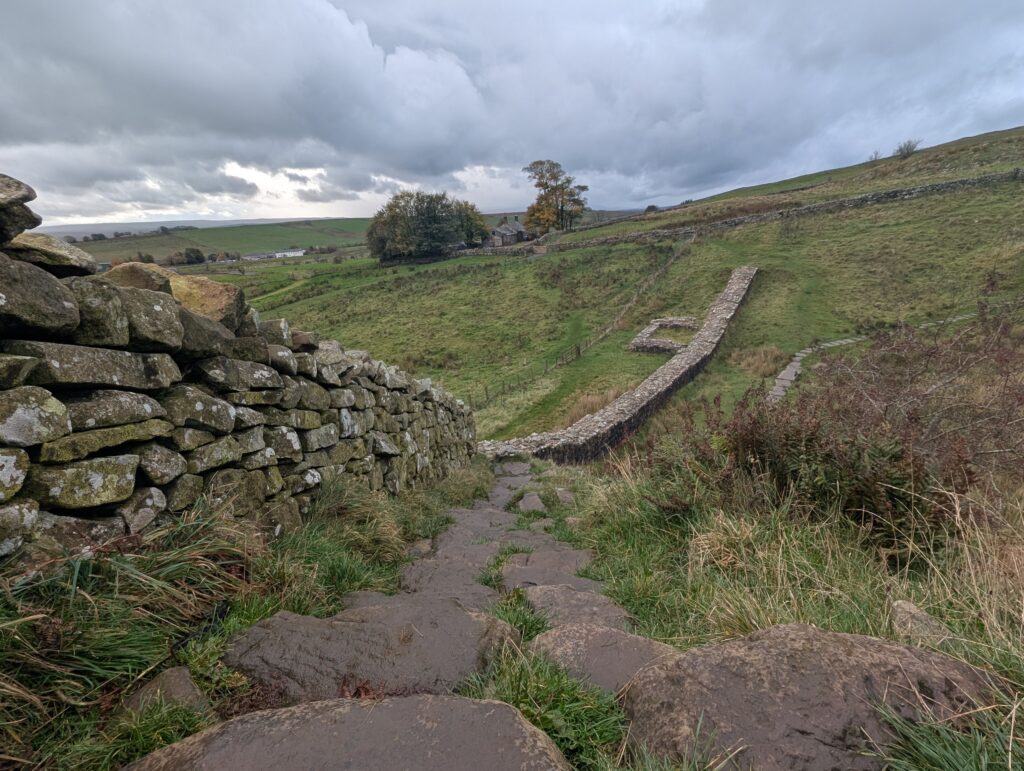
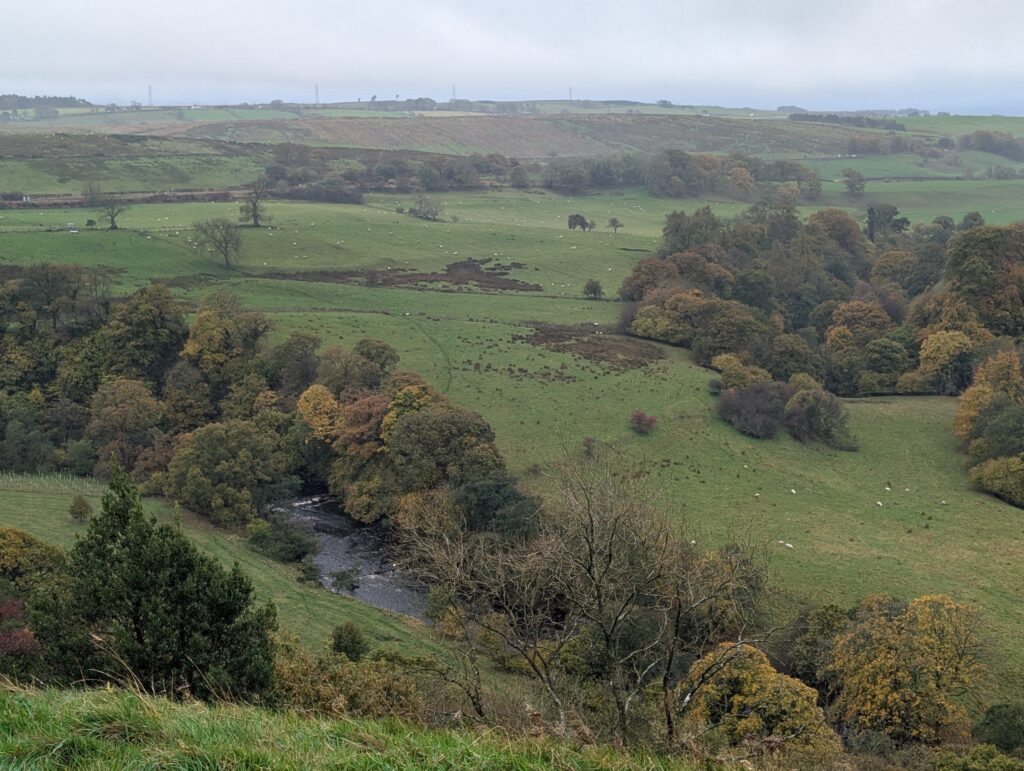
At many points along my tour you can see where the walls seemed to end as they were covered over in earth and no excavated. The walls themselves were 4.5 meters high. What is left is not as high. As I drove around, I could not help but wonder which farmers stone fence and stone buildings were made from rocks taken from Hadrian’s wall.

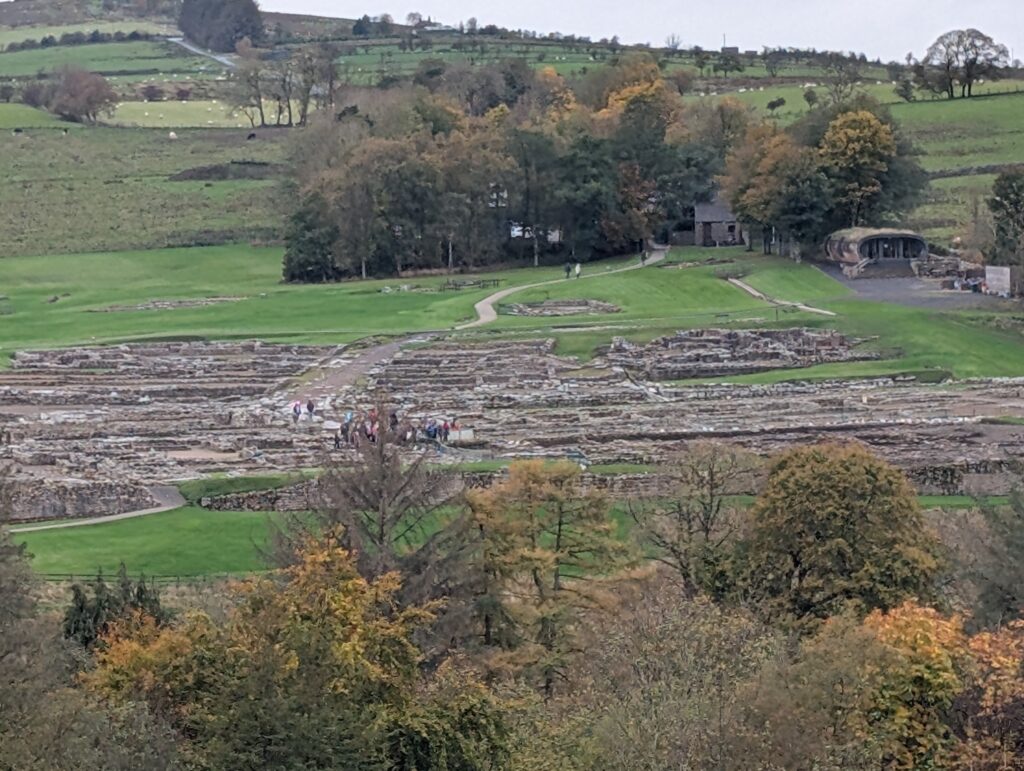
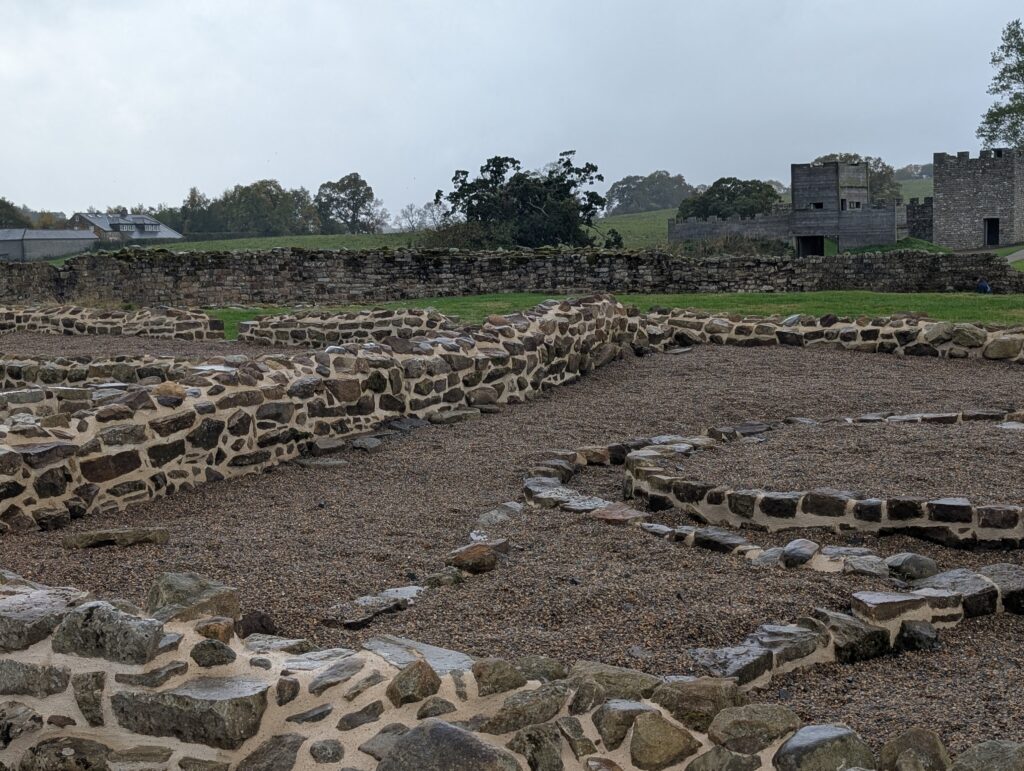
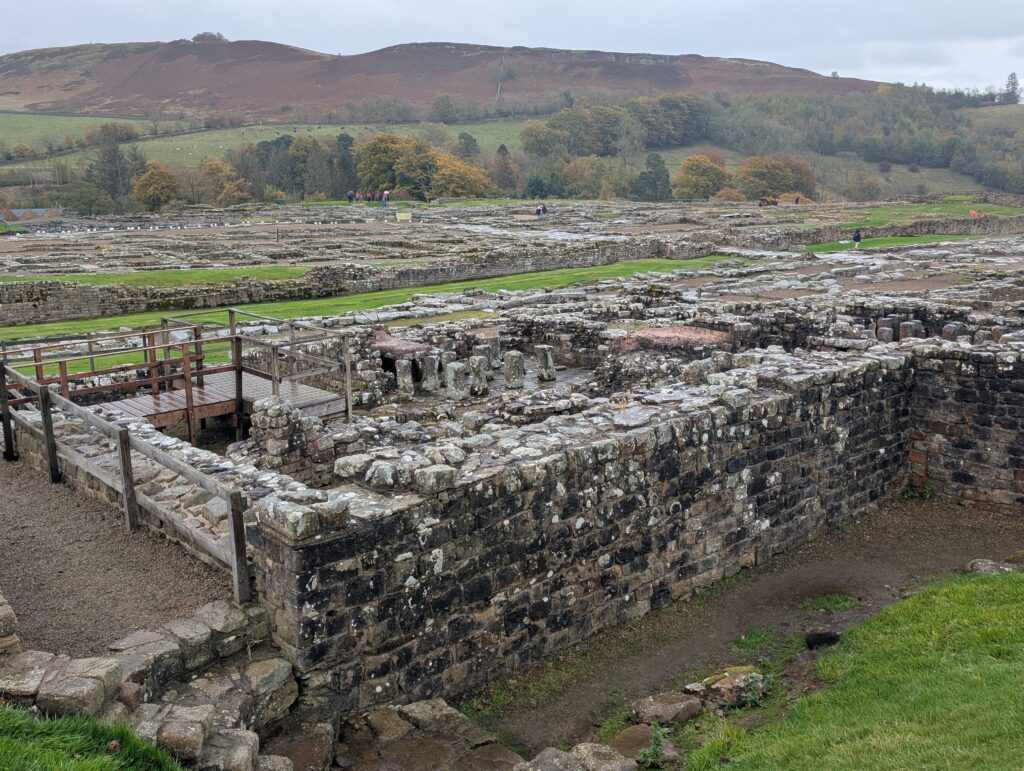
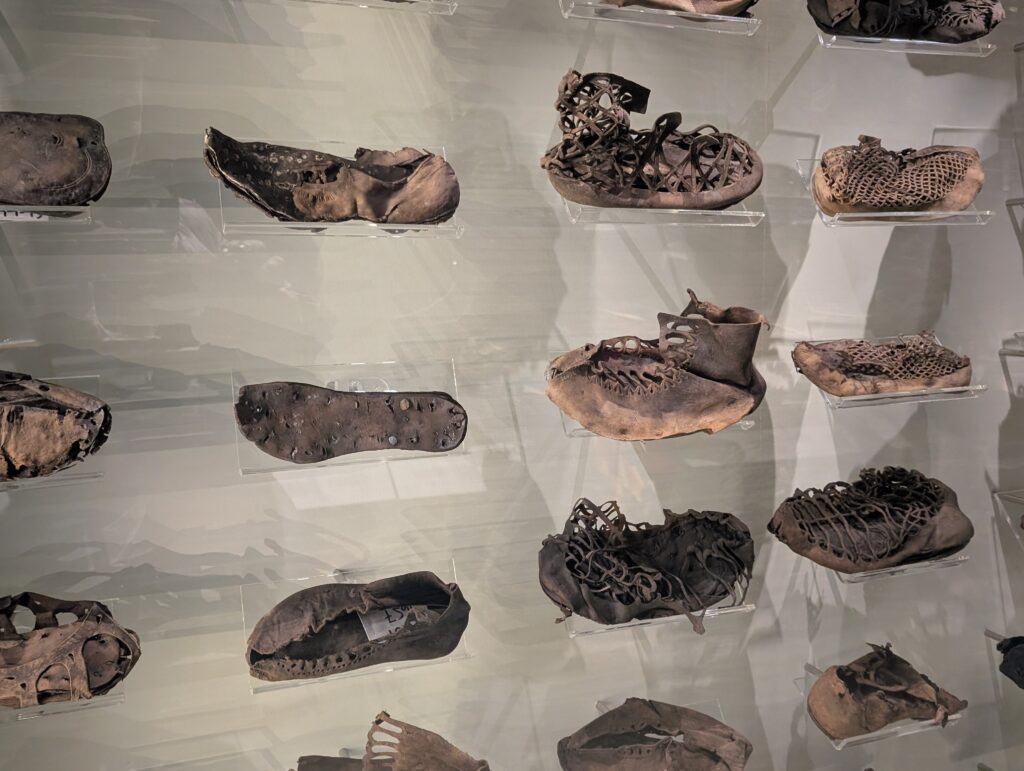
In Vindolanda I saw much of the same things. There was more remnants of the village houses outside the walls of the fort. There also was a large cache of discarded footwear discovered that surprisingly did not deteriorate. Driving to these places was beautiful and quite fun with the narrow English country roads.

Next was Birdoswalds. It had a later created house that protected the village from raiders. Living space was on the upper floor and ladders could be pulled up so that people could not get to the people or their property.

This is the one archaeological site that has a drill and exercise hall based upon the artifacts recovered.

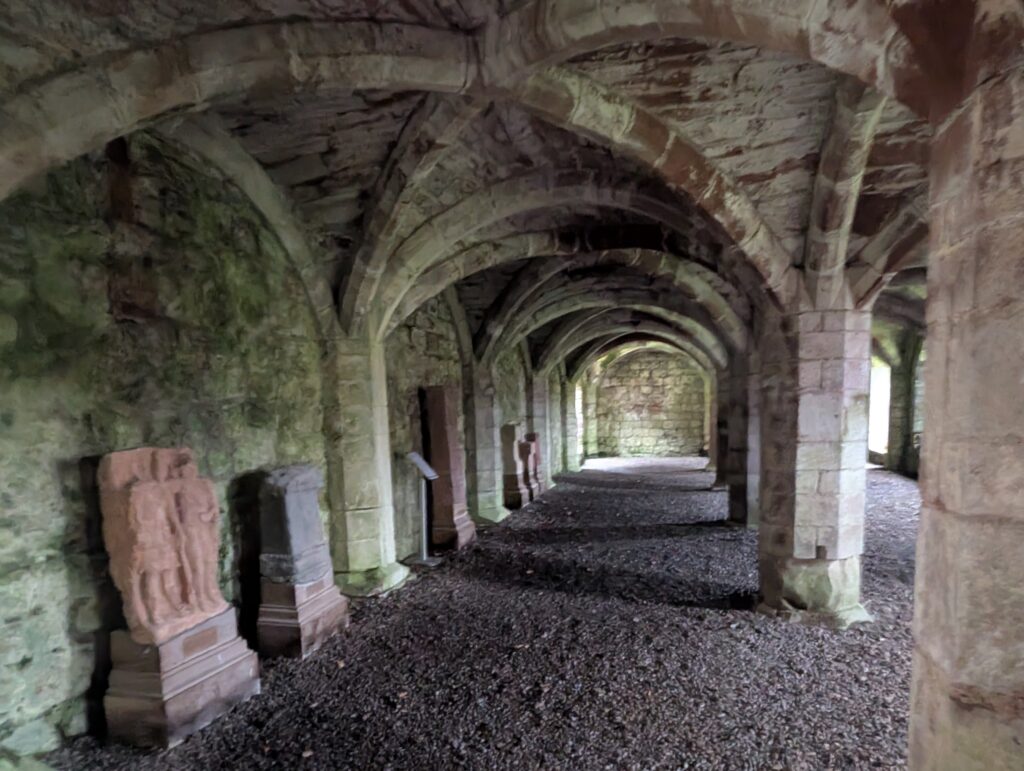
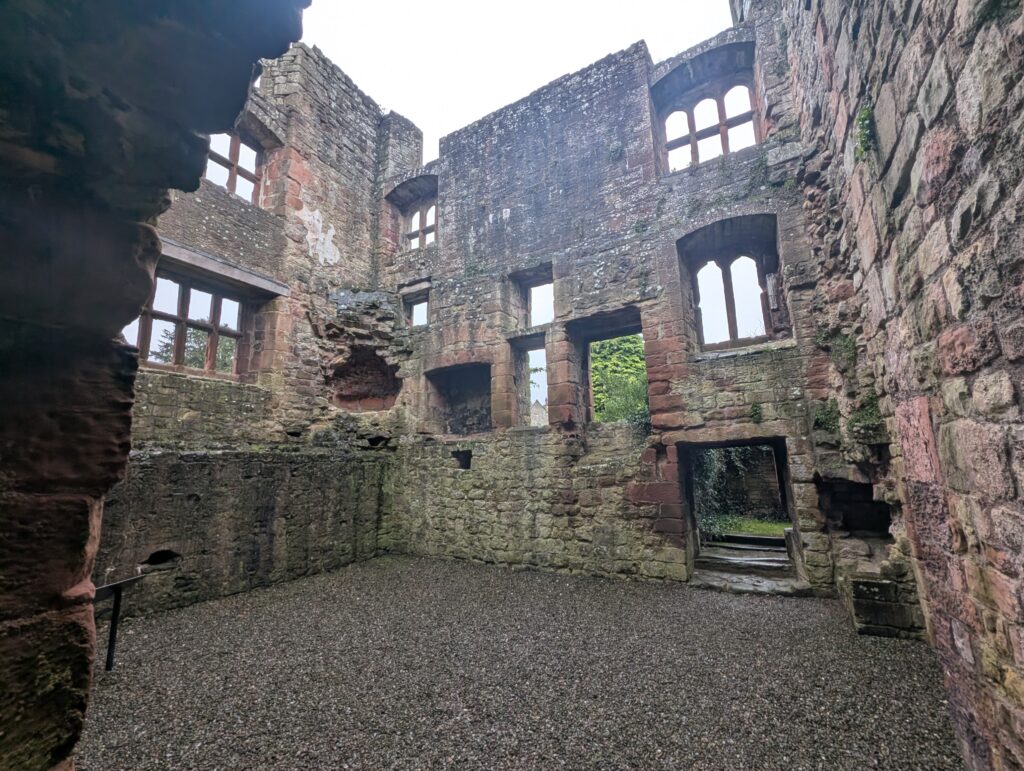
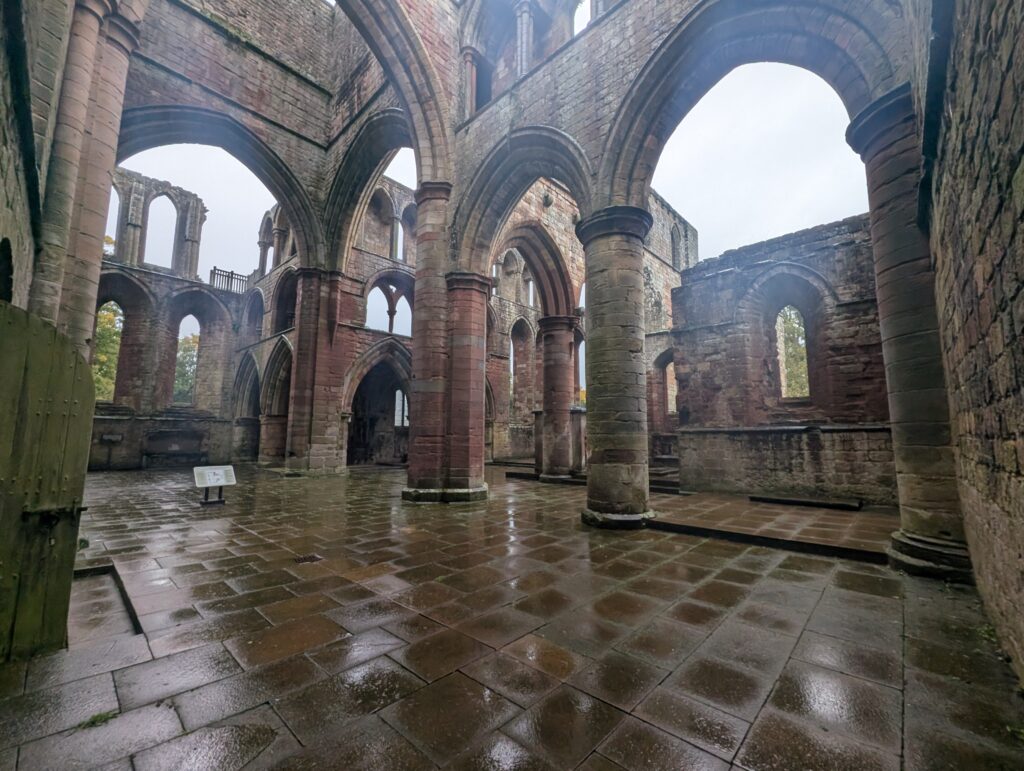
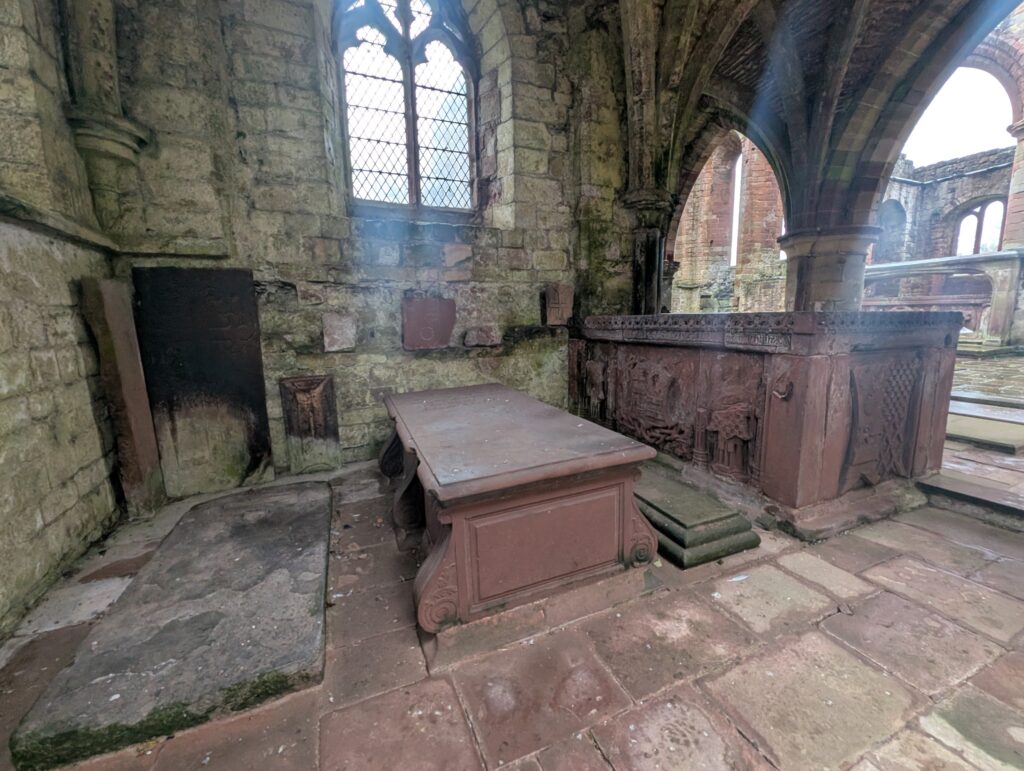
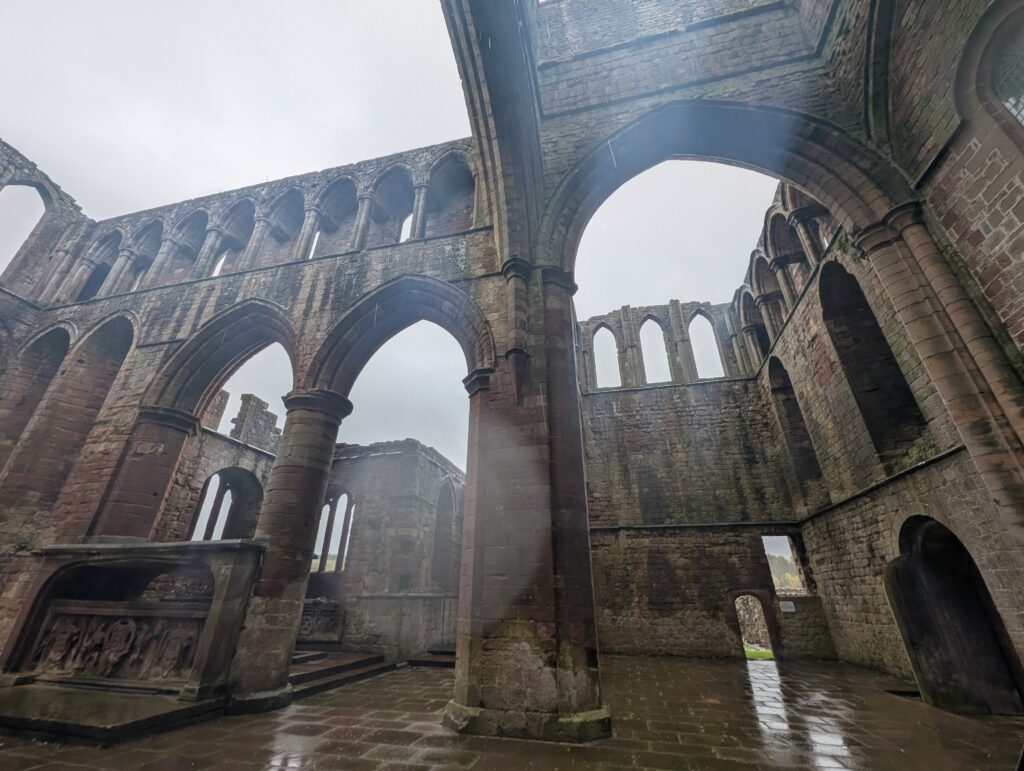
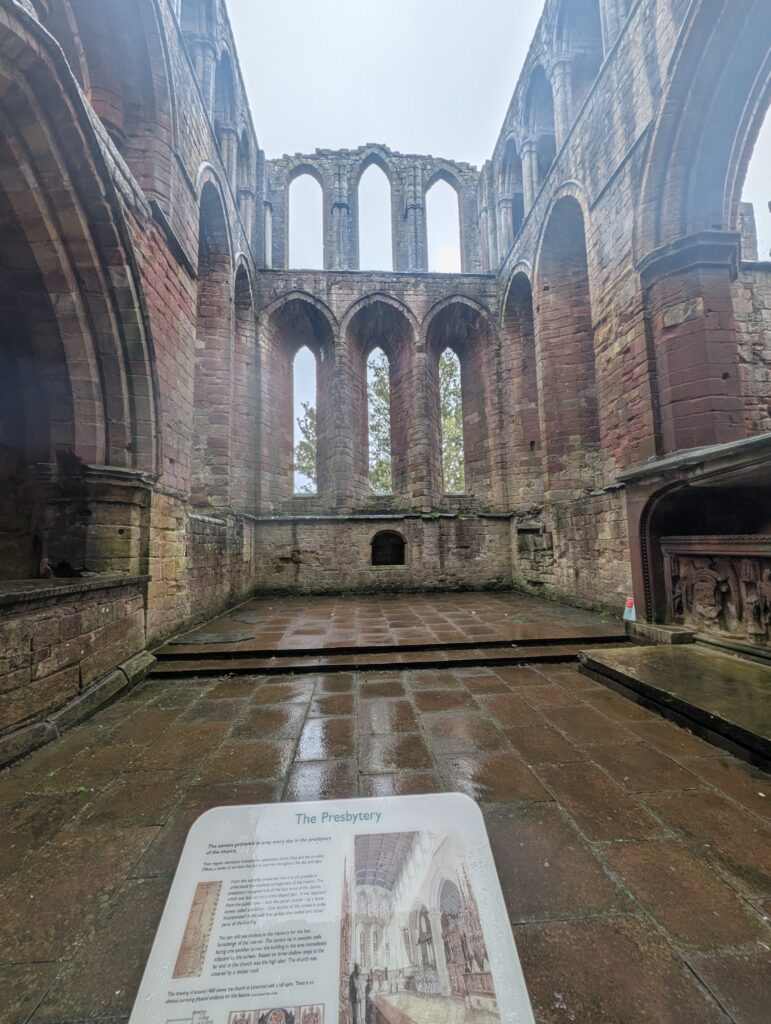
Close by was the Lanercost priory. It was created in 1165. Since it is close to the England and Scottish border, it was in the middle of many disputes and offered refuge to people and pilgrims.

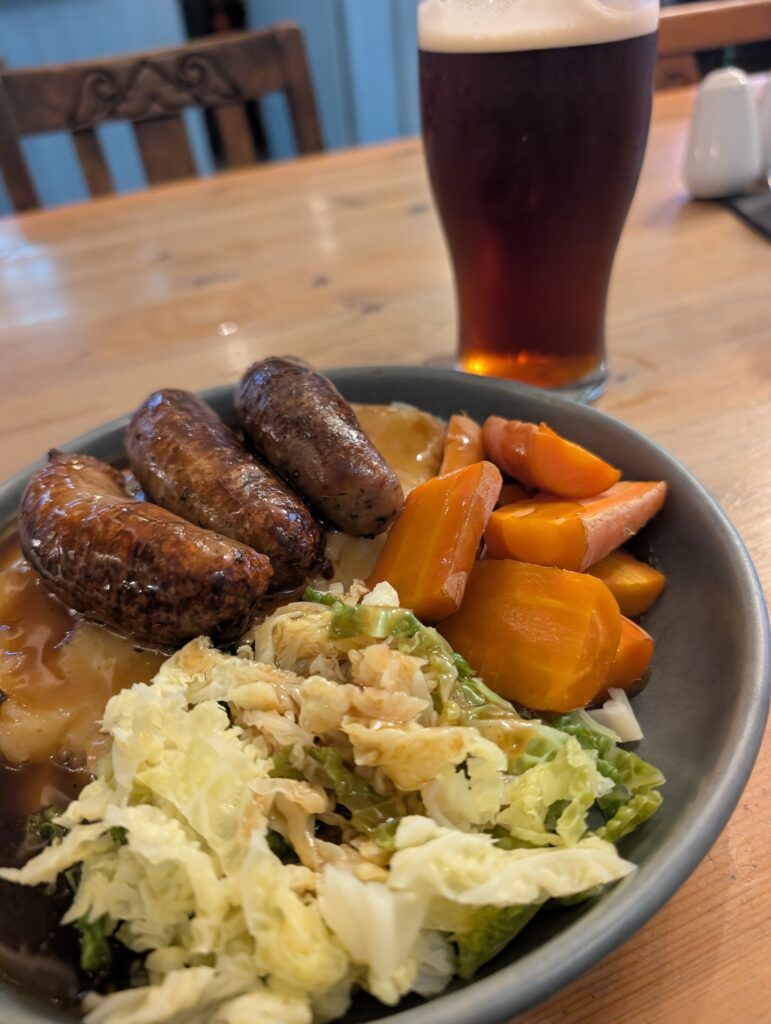
At this point my shoes and jacket were wet from rain and there was no more time to gain entry into another historical place. I drove back to Hexham and returned the car. I also did not stop for lunch and was hungry. I looked at places along the way and saw this tavern that had Bangers and mash. Very warm and filling after a long day.

Edinburgh

I took a train ride to Edinburgh and the Castle Rock hostel. it is by far the best hostel I have been in. Many large relaxing lounges, a large bedroom area, and the shower facilities were great.

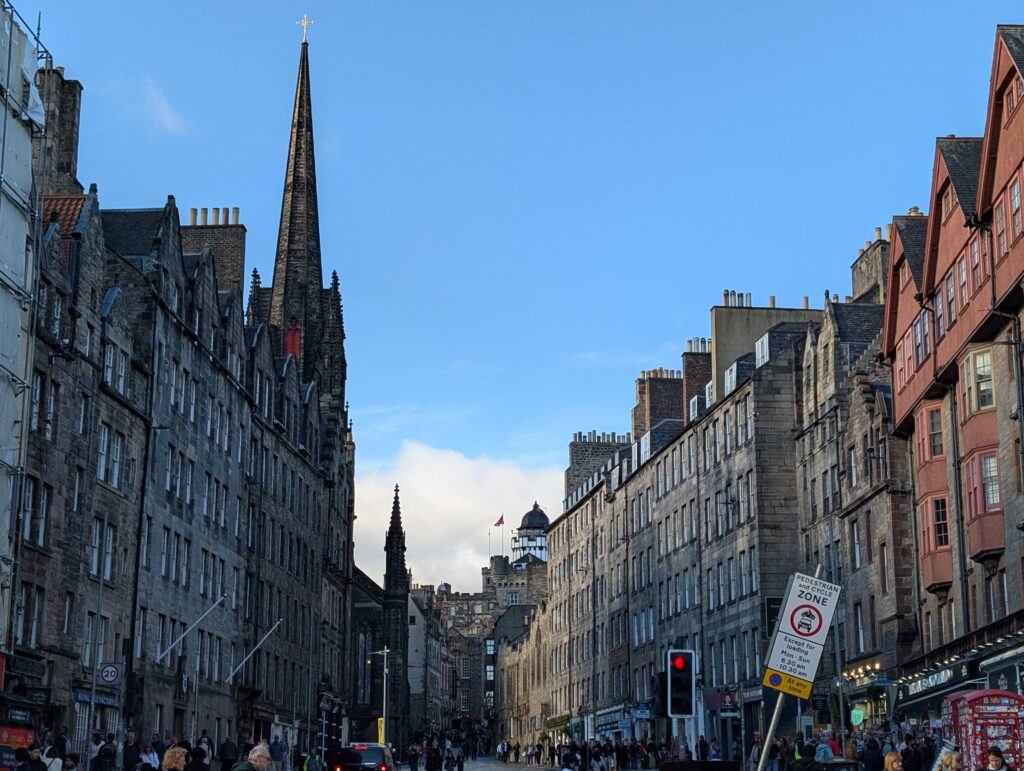
Immediately I liked the vibe in Edinburgh even though it is touristy. I participated in a pub crawl which is something I normally don’t do. It was pretty fun with competitions between groups and I met some great people.

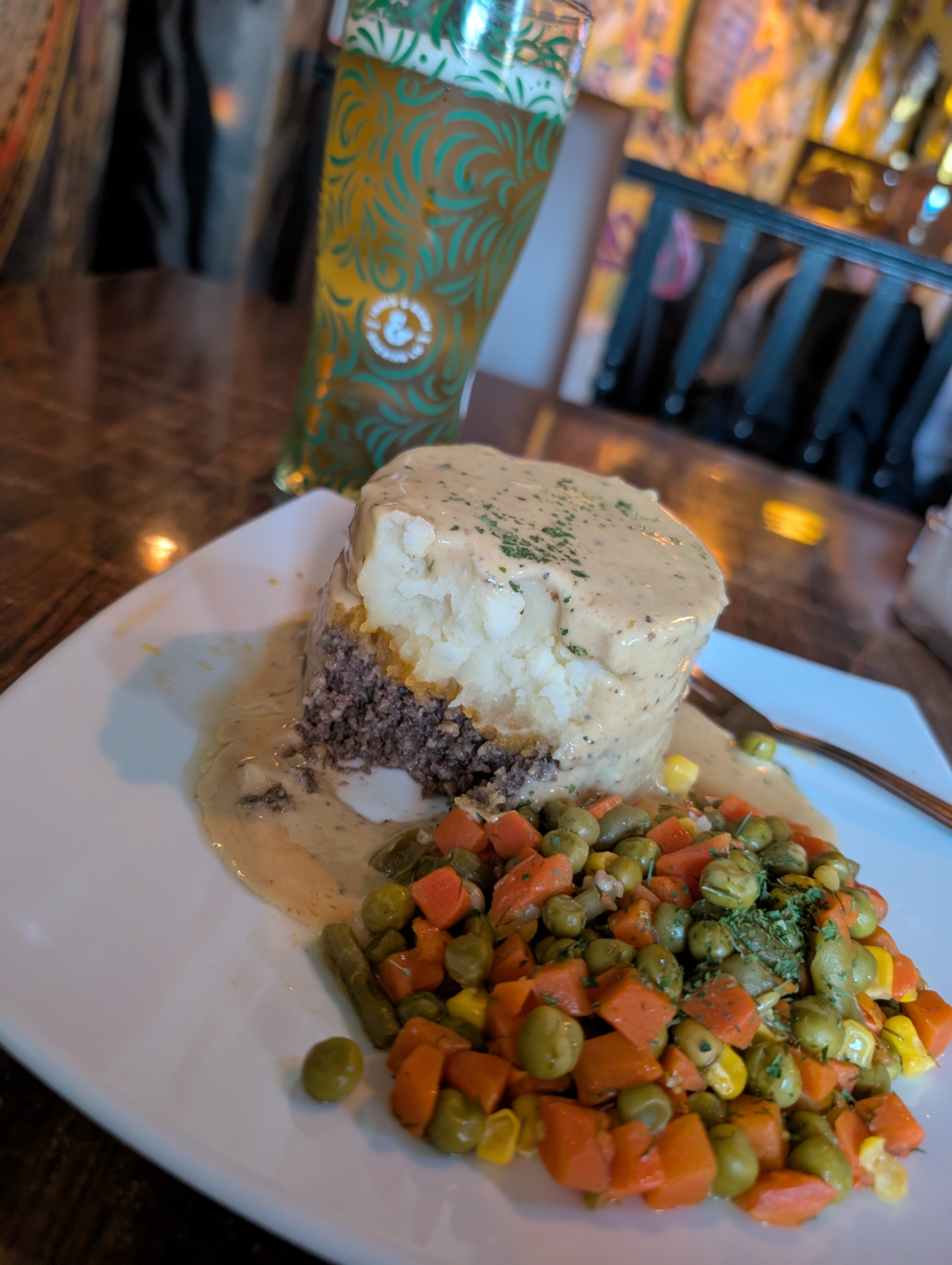
I also ordered Haggis, neeps, and tatties which is traditional Scottish food. So what is it?

Haggis: A savory pudding made from a sheep’s heart, liver, and lungs (often referred to as “pluck”), minced with onion, oatmeal, suet, and spices. it looks a bit like ground beef but has a really good taste and is spiced well. Traditionally, it was boiled in a sheep’s stomach, but today it is usually cooked in an artificial casing.

Neeps: The Scottish term for mashed rutabaga or swede, a root vegetable similar to a turnip. It is typically boiled and mashed with butter, pepper, and sometimes nutmeg.

Tatties: The Scottish term for mashed potatoes. They are also prepared with butter and seasoned for serving.

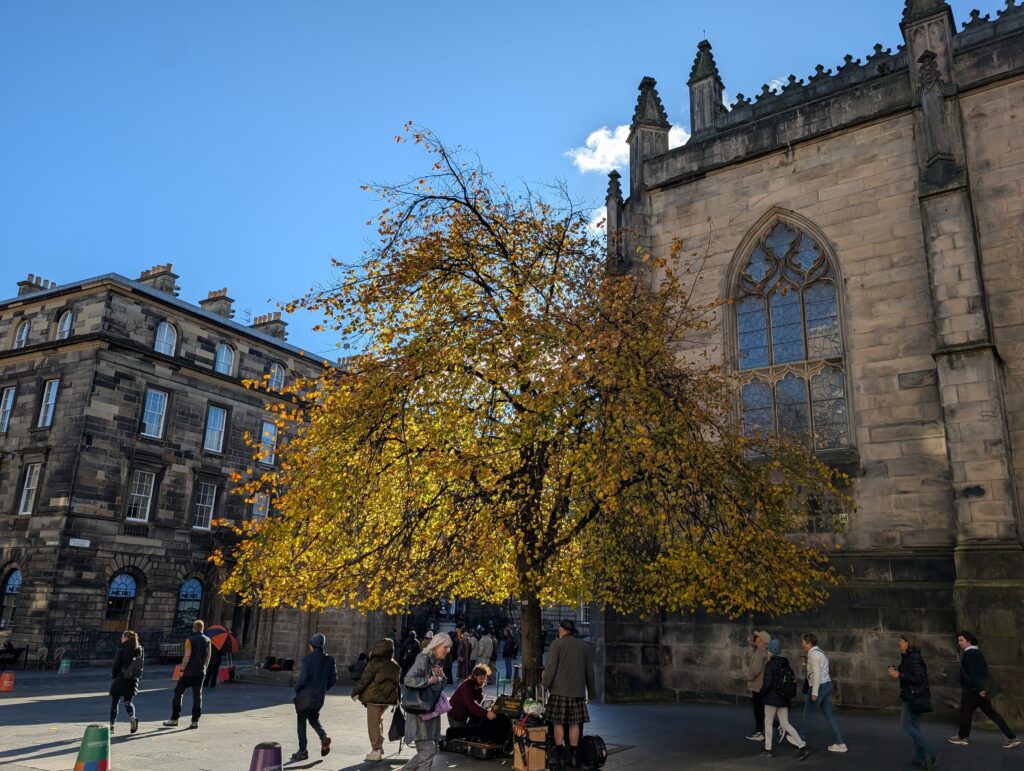
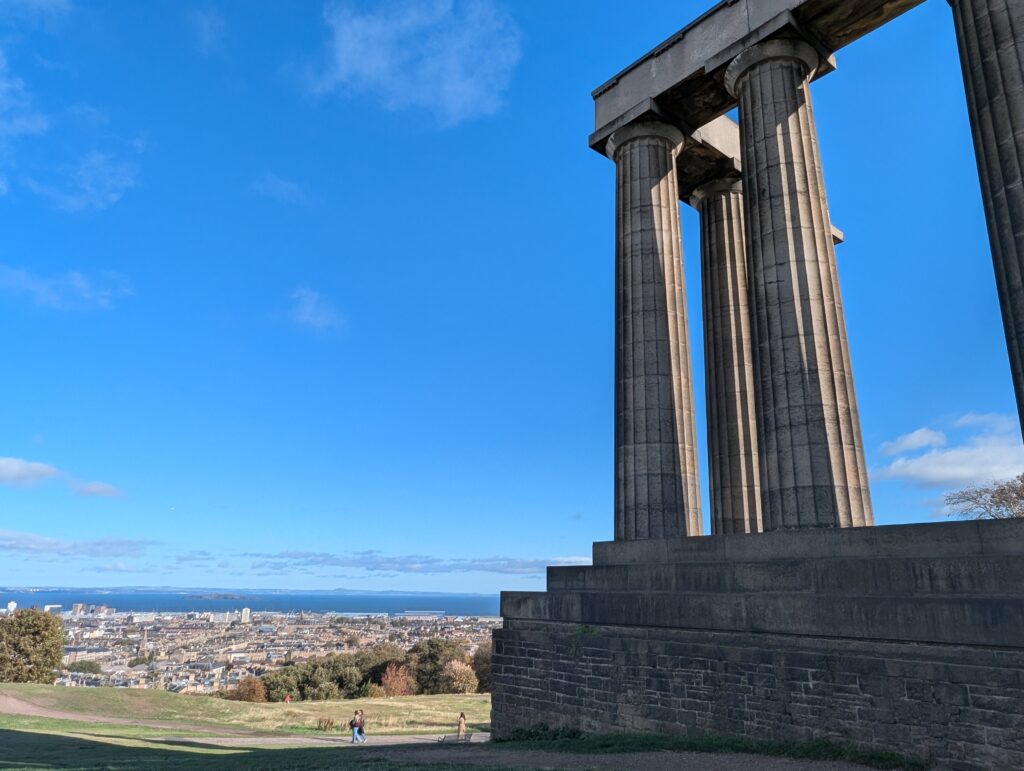
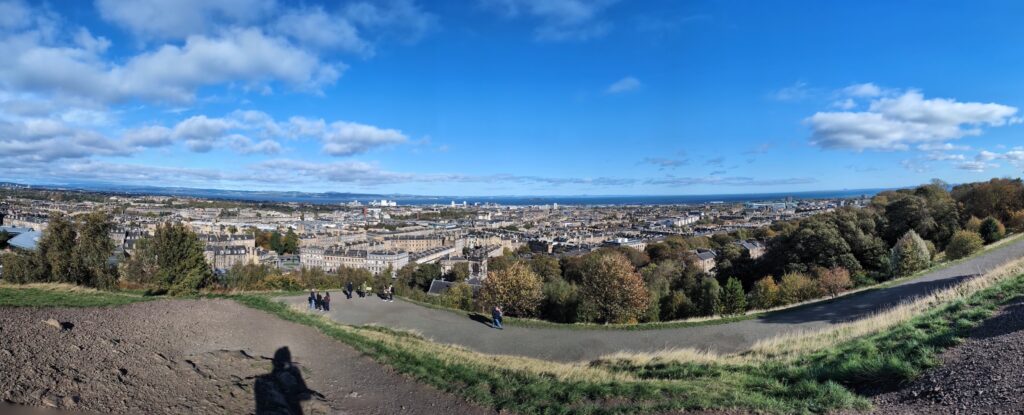
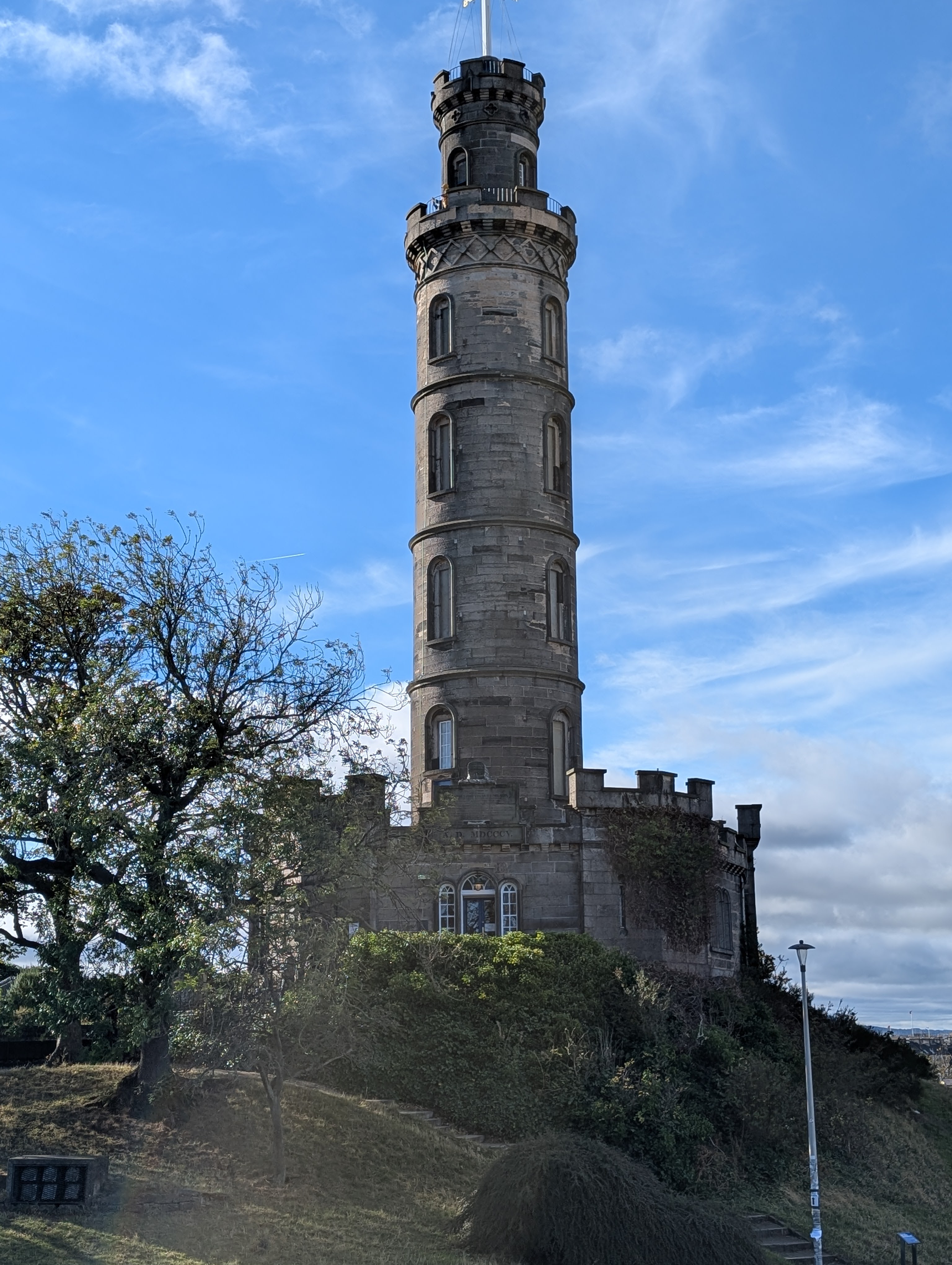
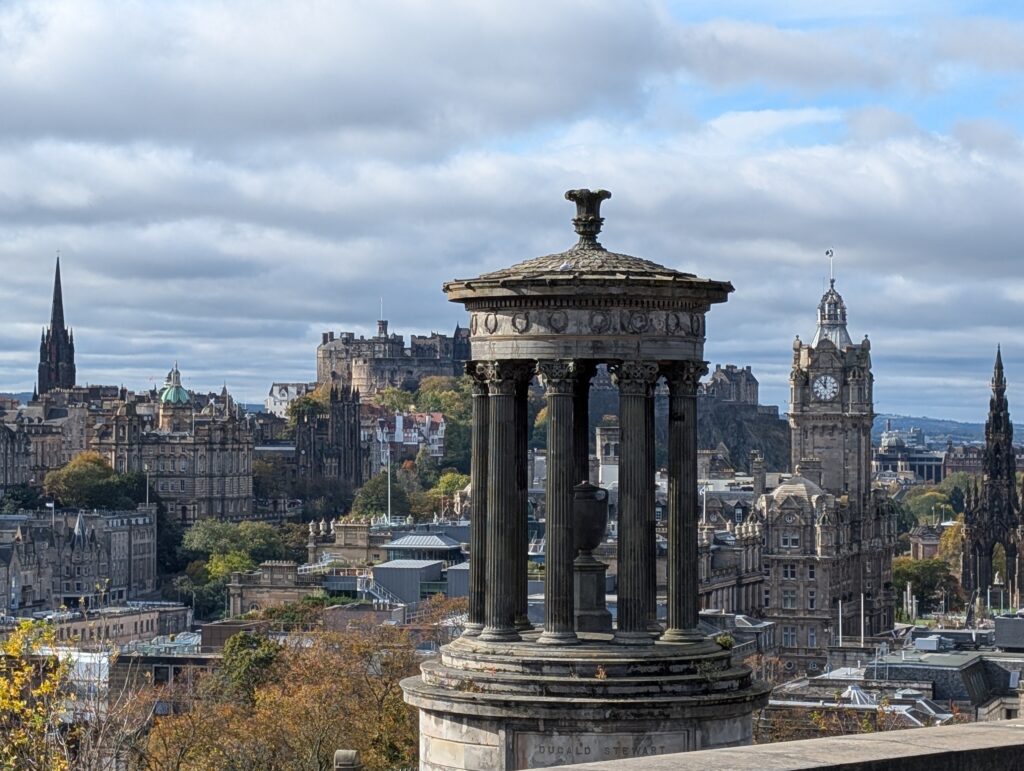
I also walked to Calton Hill to see the views of the city and look at some of the art installations in the buildings there.

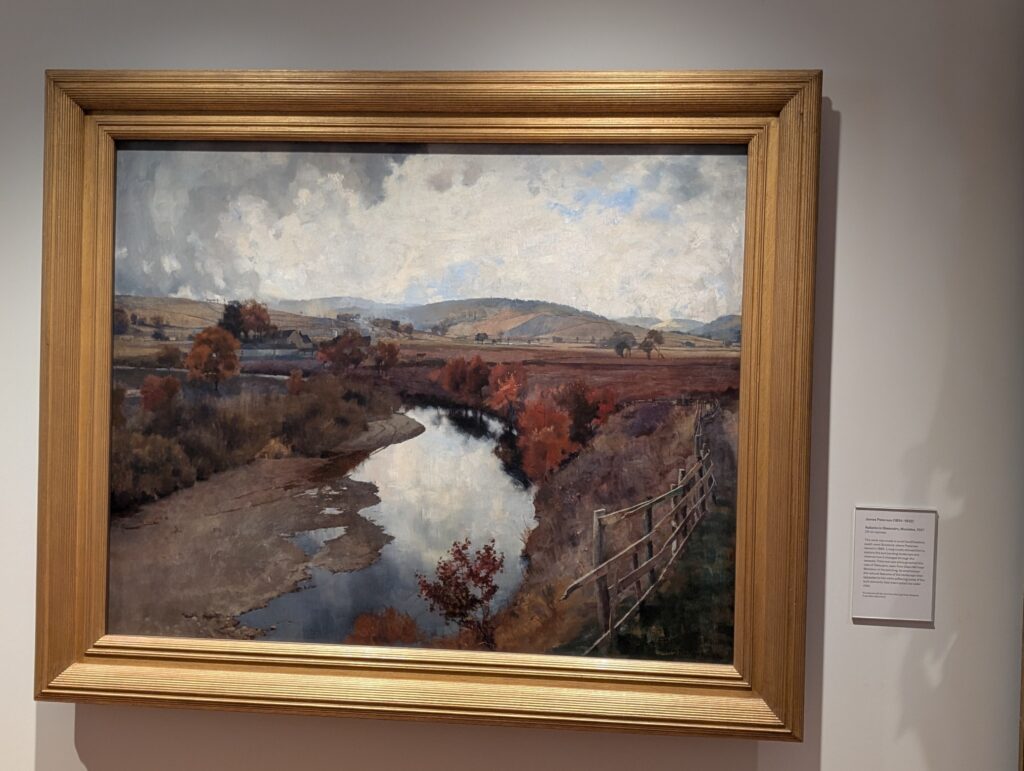
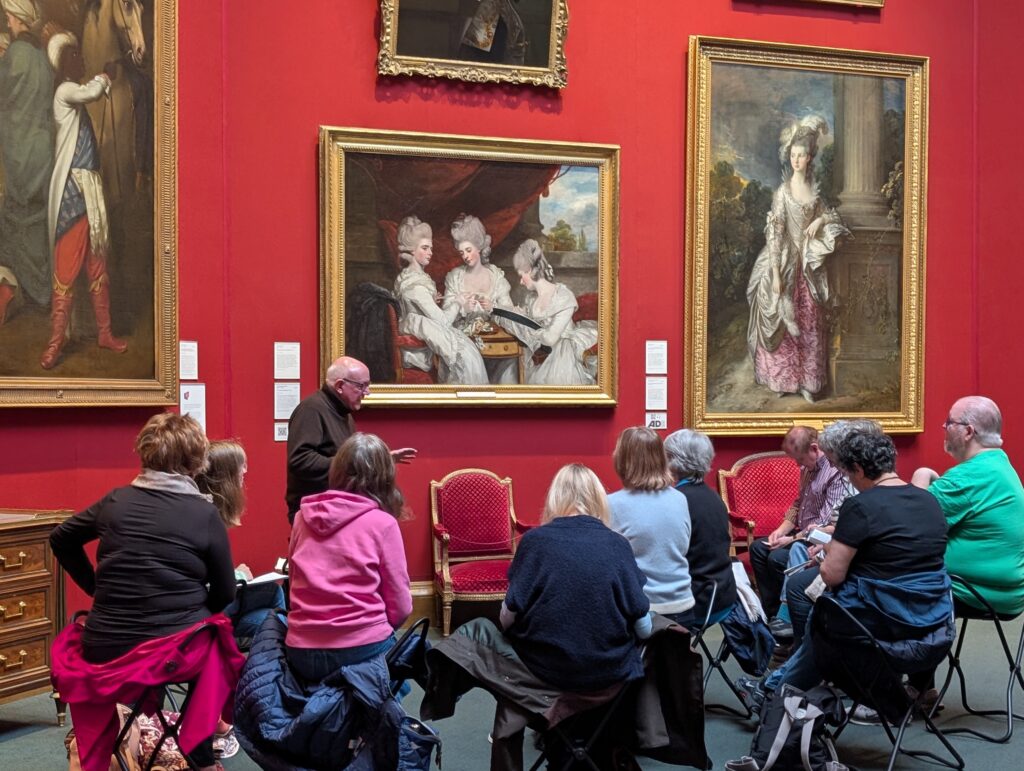
After the Isle of Skye tour, I came back to Edinburgh for a few more days. The National gallery and the National museum are free. The National Gallery has some amazing art from Scottish painters and others from around the world including many French impressionists artists. There was a person leading a discussion on the meanings of parts of the painting.

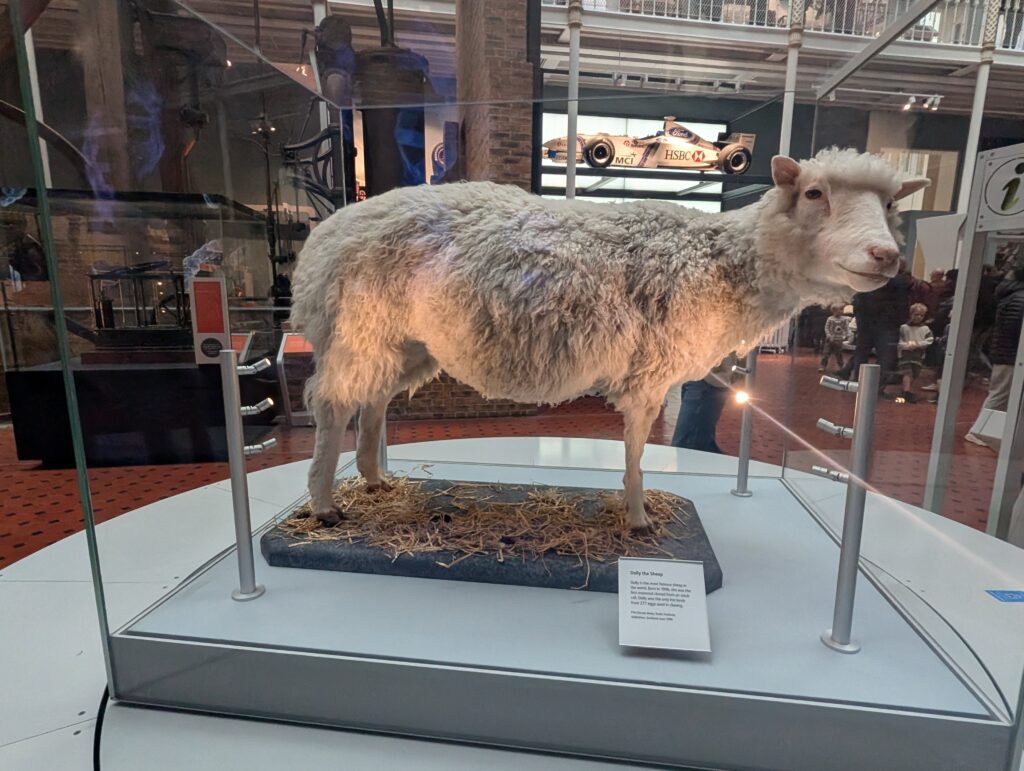
The National museum had many exhibits from all over the world. The most interesting was the body of Dolly, the cloned sheep. She had been preserved and was on display.

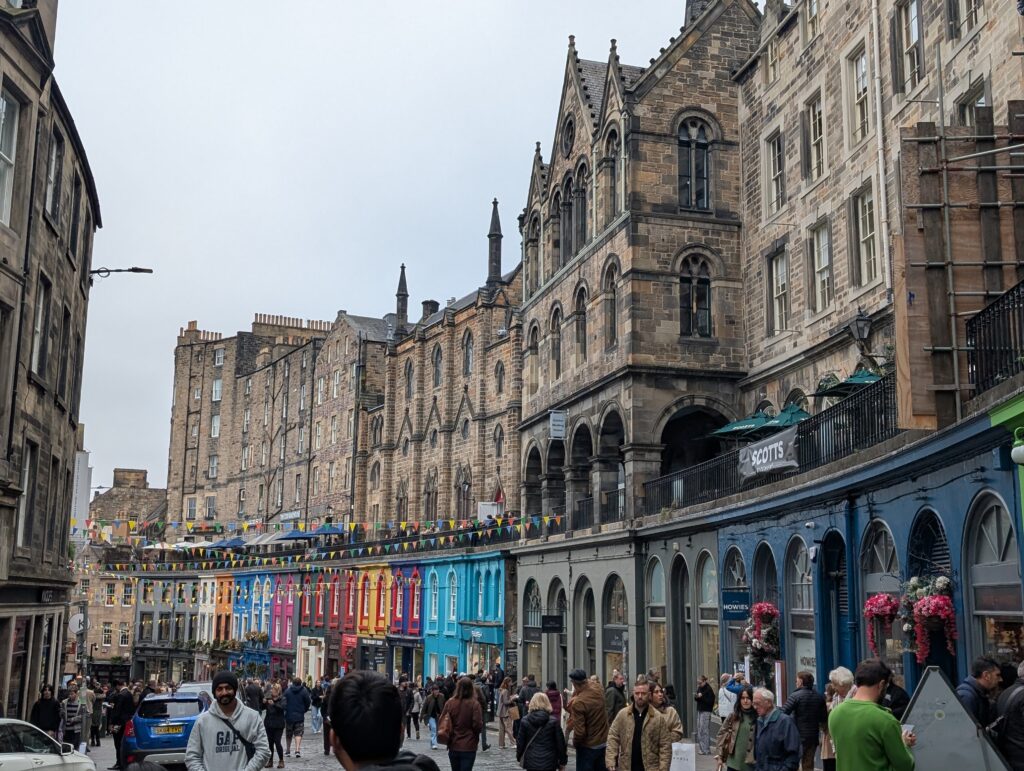
I walked along Victoria Street with all the amazing colorful stores.

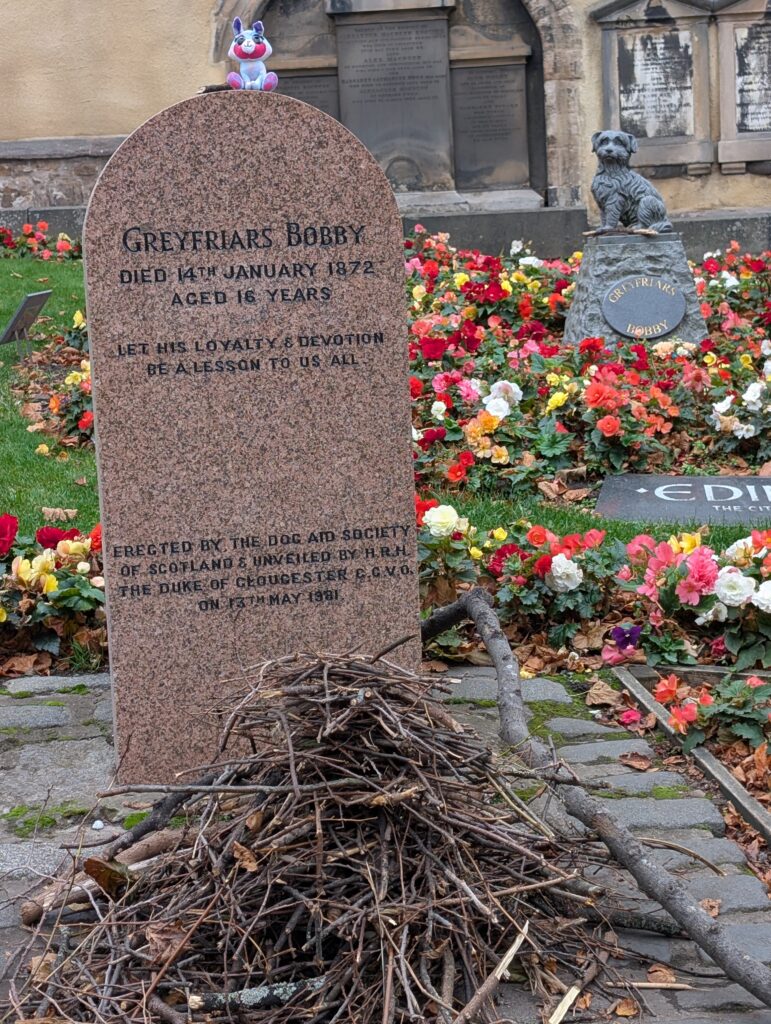
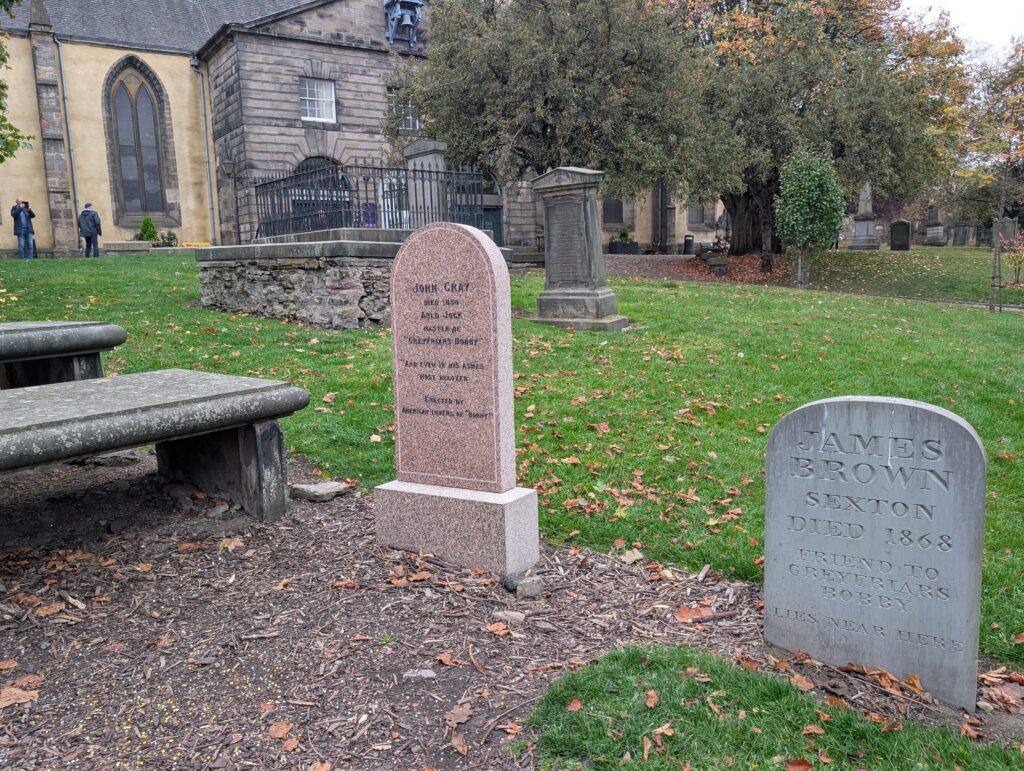
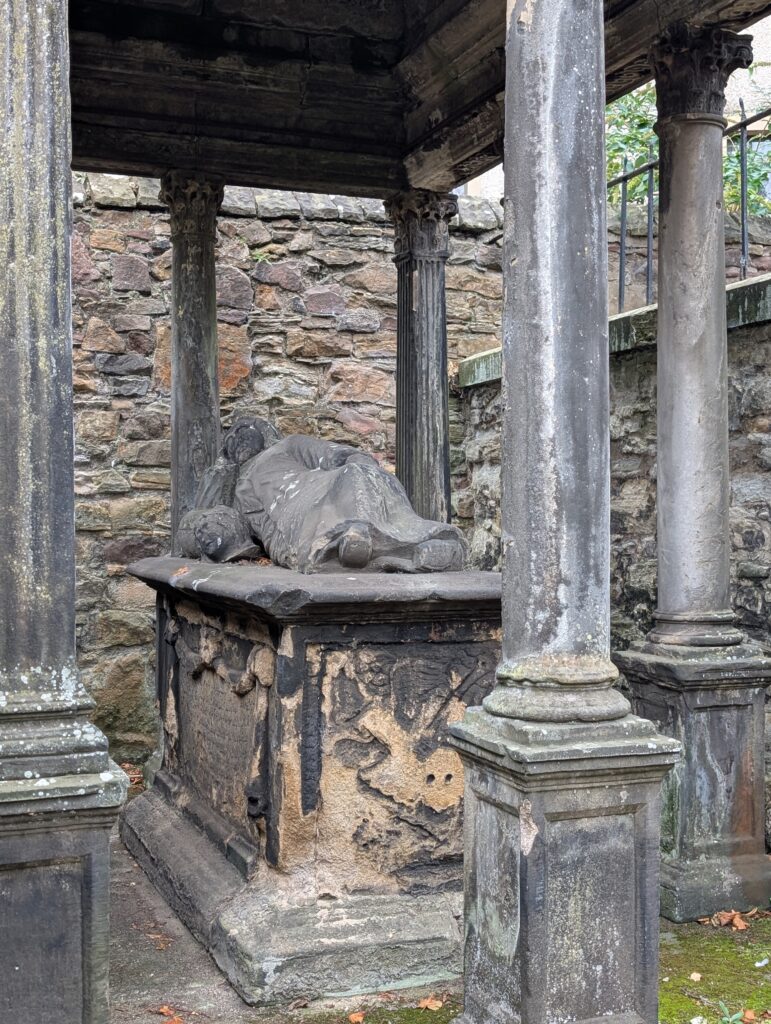
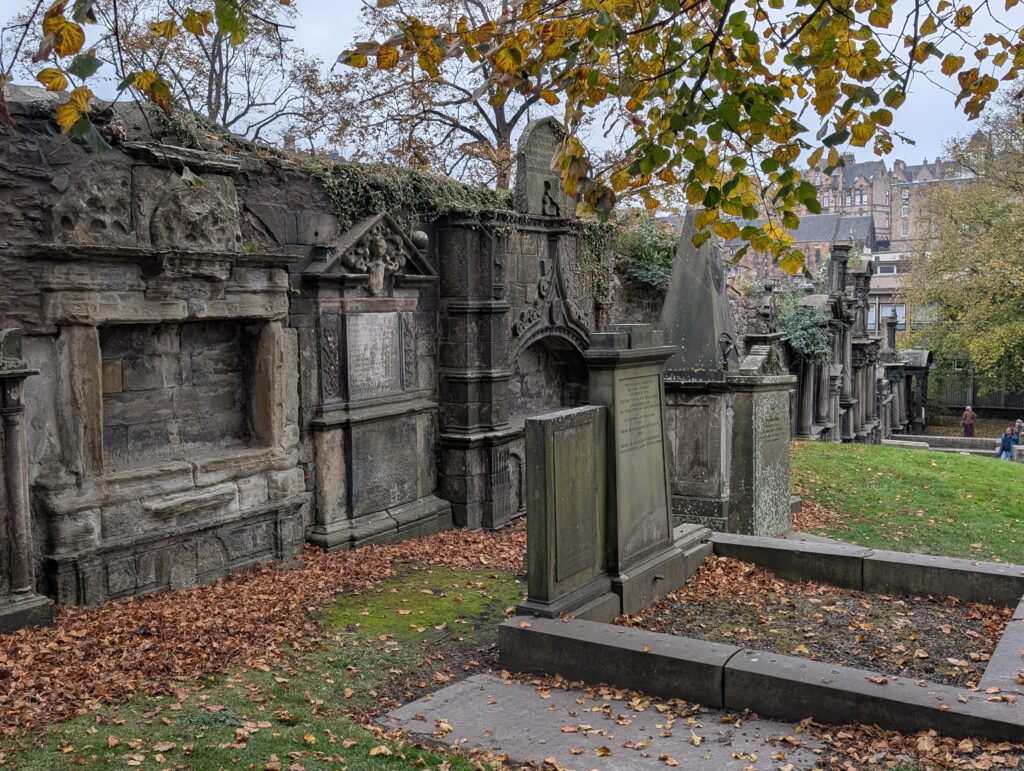
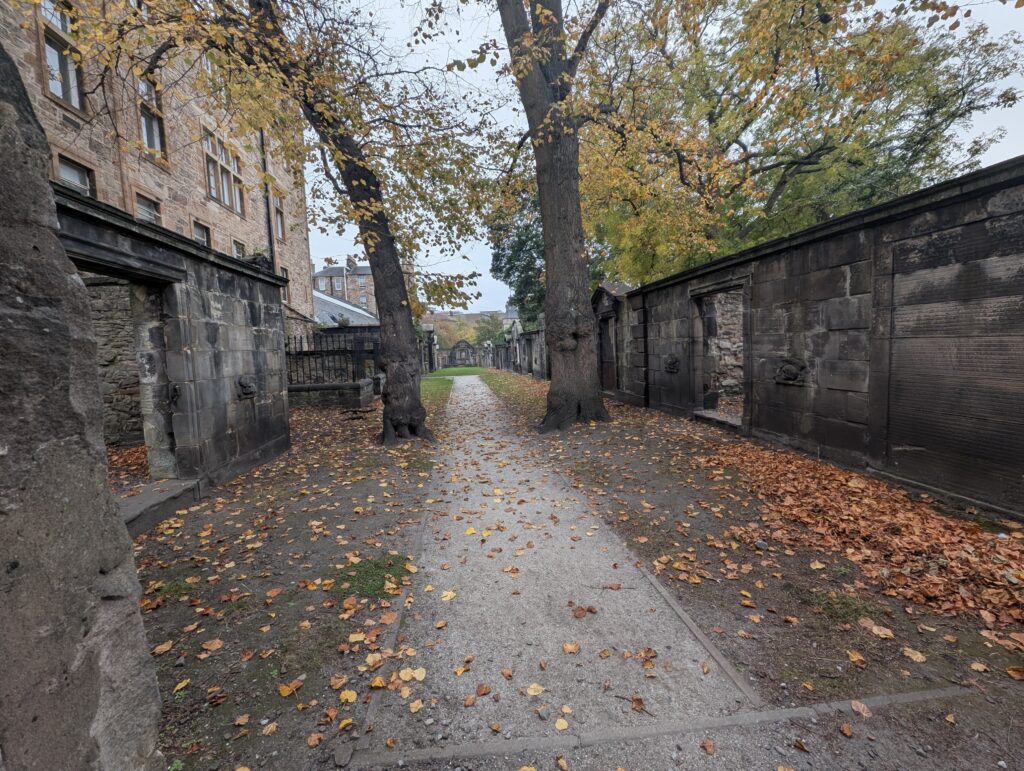
I then visited Greyfriars cemetery which is said to be haunted. The first thing you see is Greyfriars Bobby. He was the Skye terrier of John Gray, a philosopher and writer. When he died, his dog guarded his grave for 14 years. The owner of the local pub right outside the cemetery gate, made him a house and bed and made sur he was fed until he died. He is. It buried with his master because of cemetery rules but is nearby.

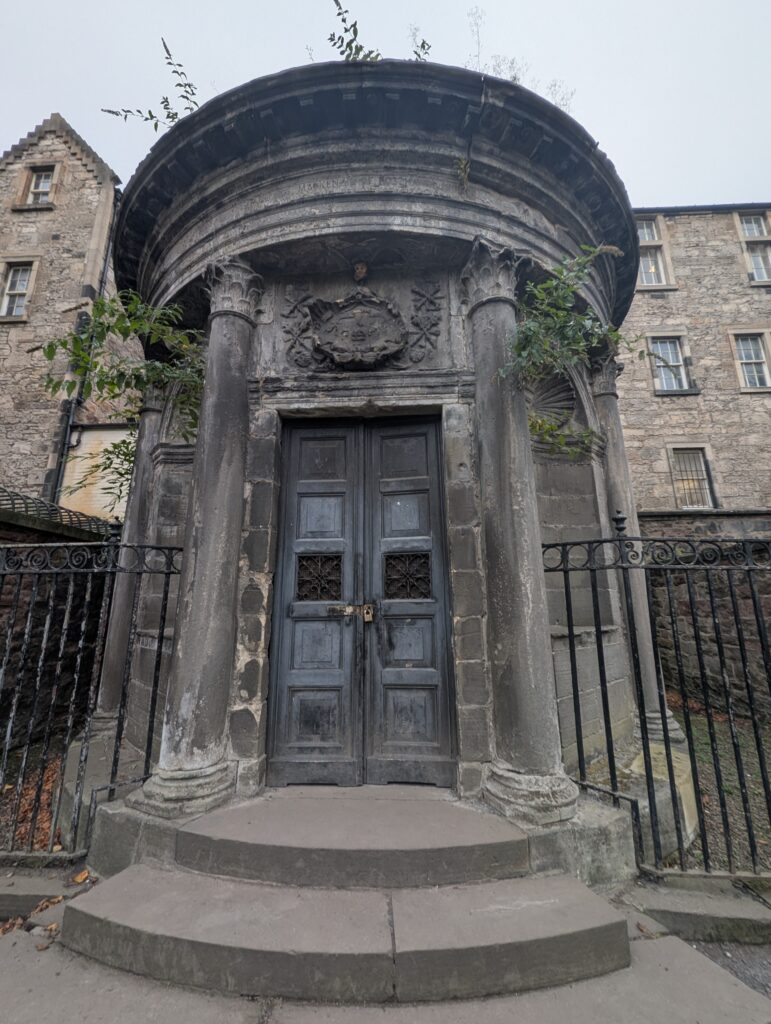
other graves to note is this one that is said to be haunted by a poltergeist.

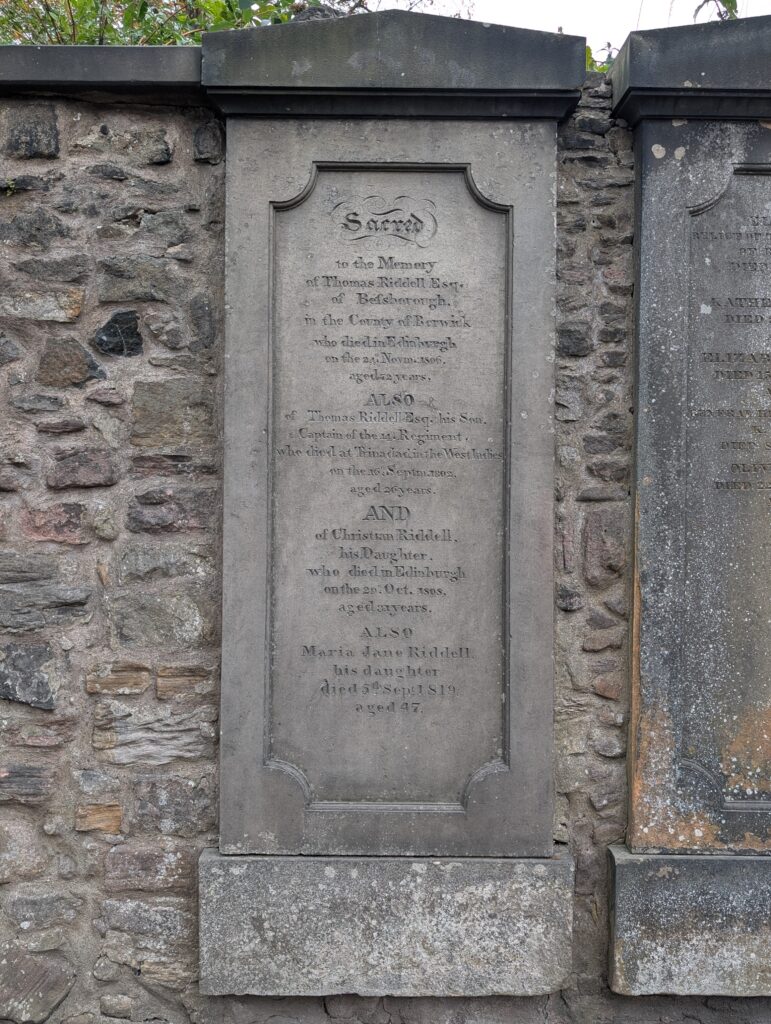
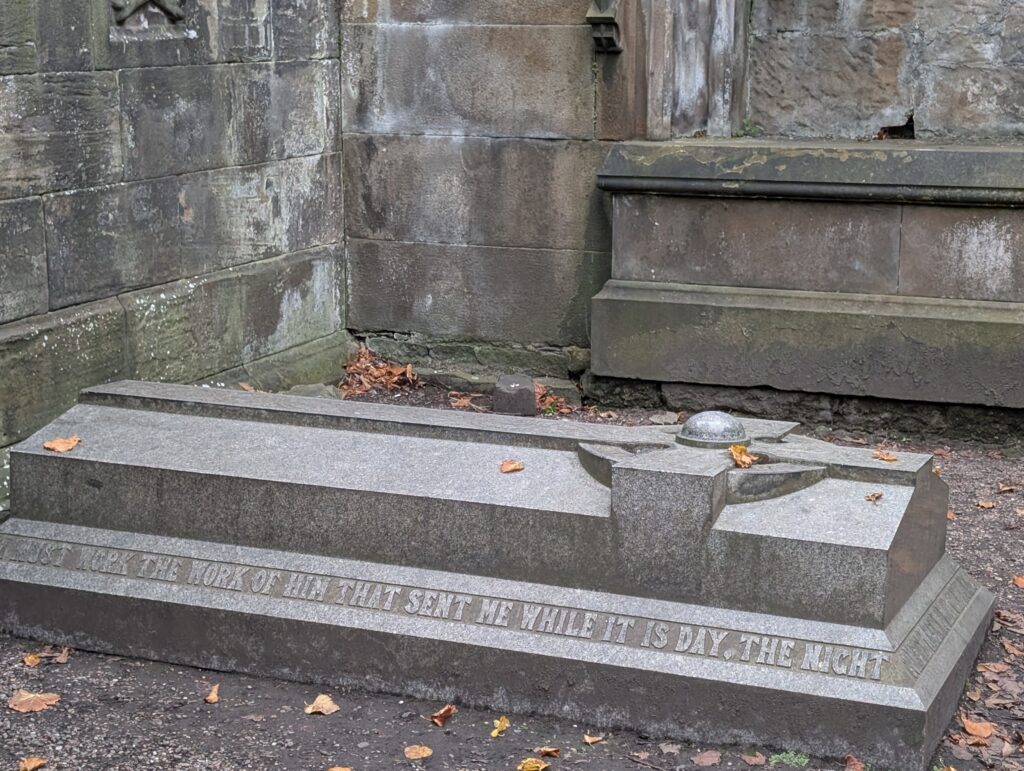
This is the grave of Thomas Riddle. I did not research about him, but all I could think of was Harry Potter. Some other pictures I took.

The Covenanter prison was located here. They were held in horrible conditions until they all died and were buried here.

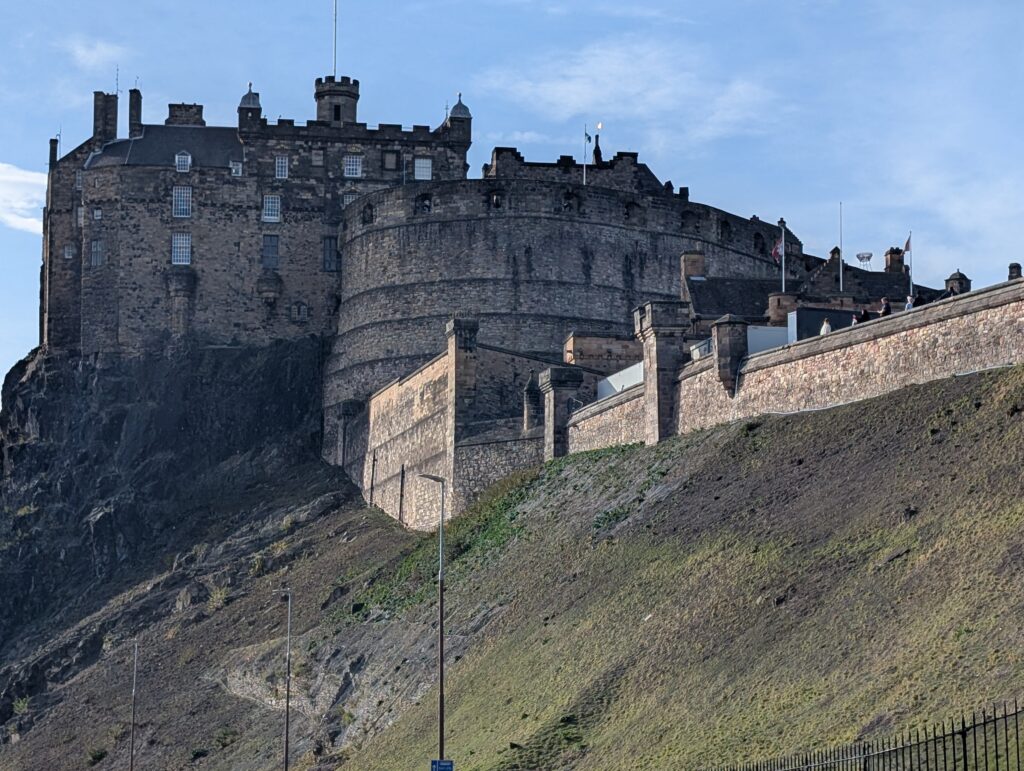
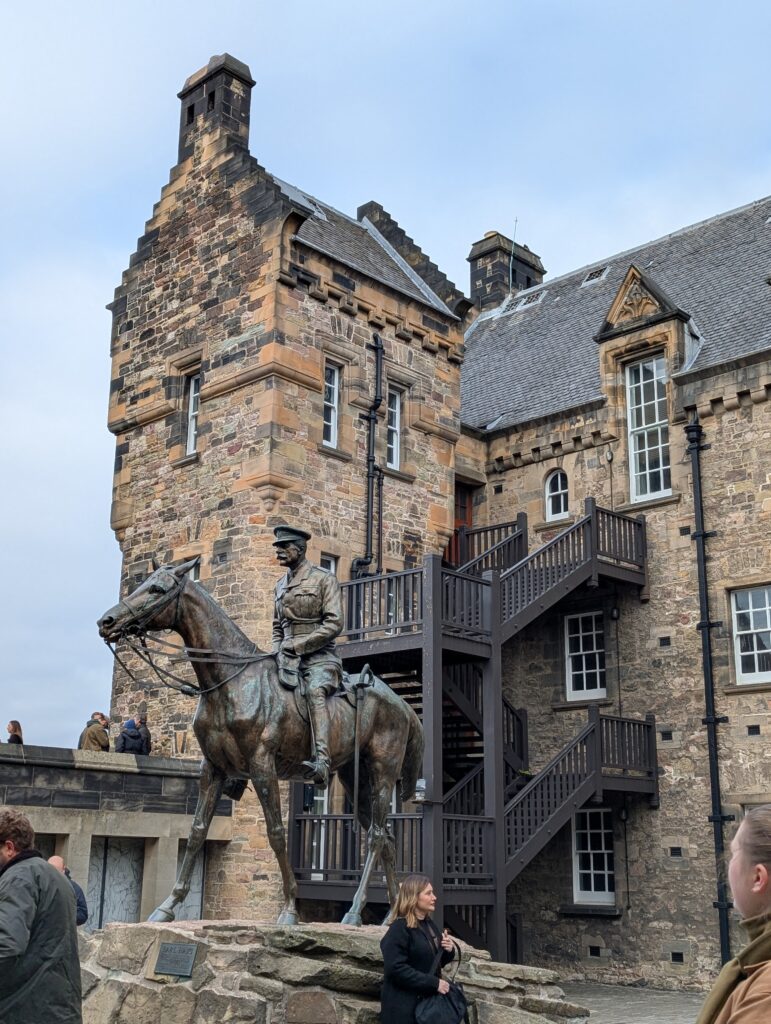
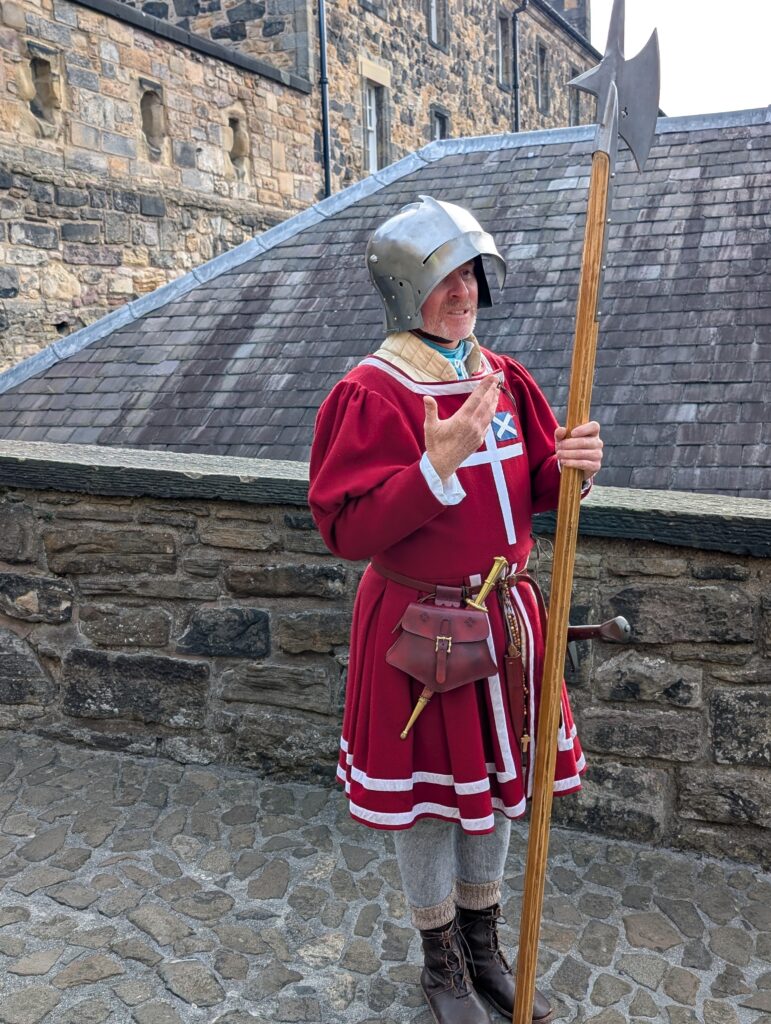
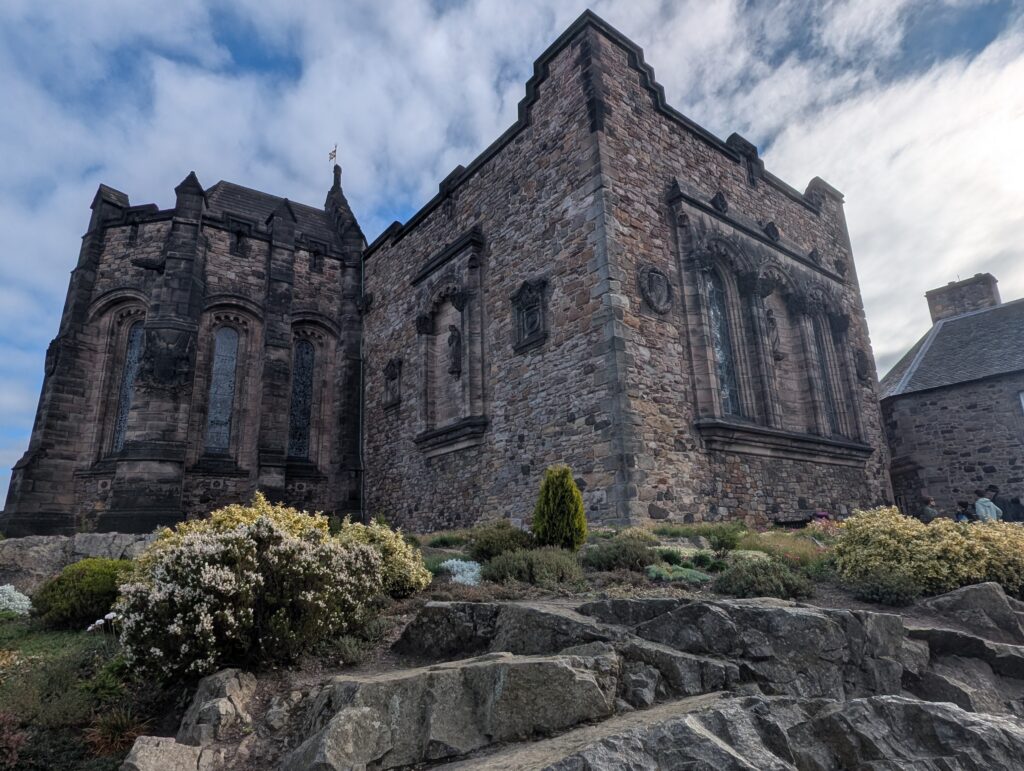
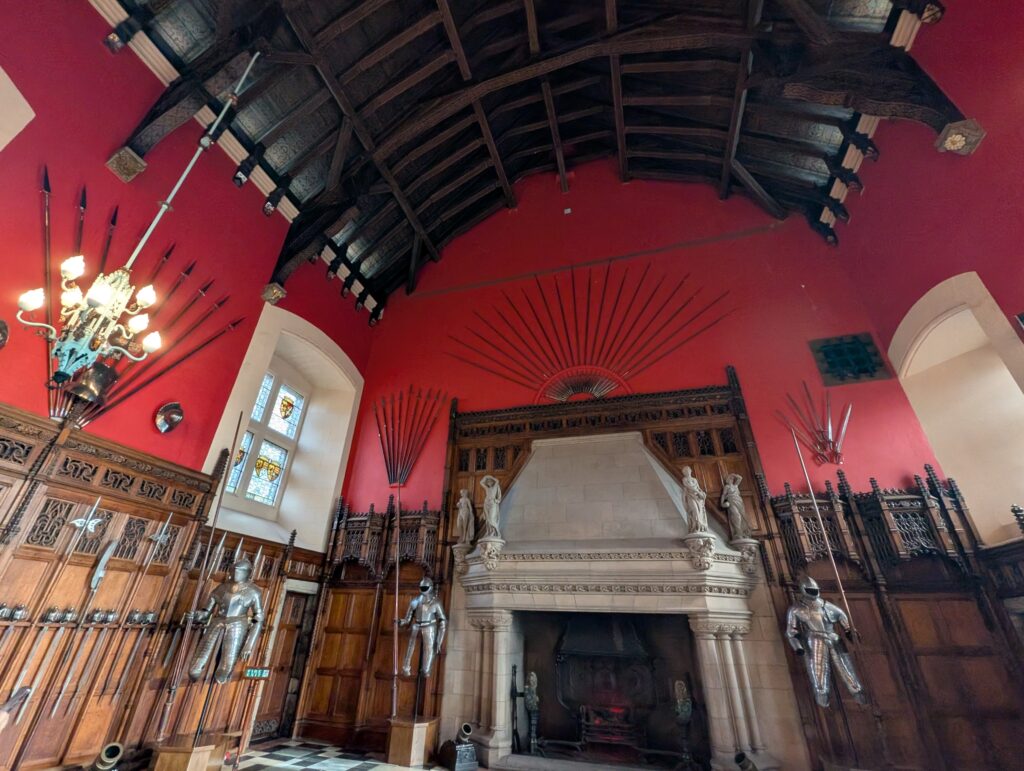
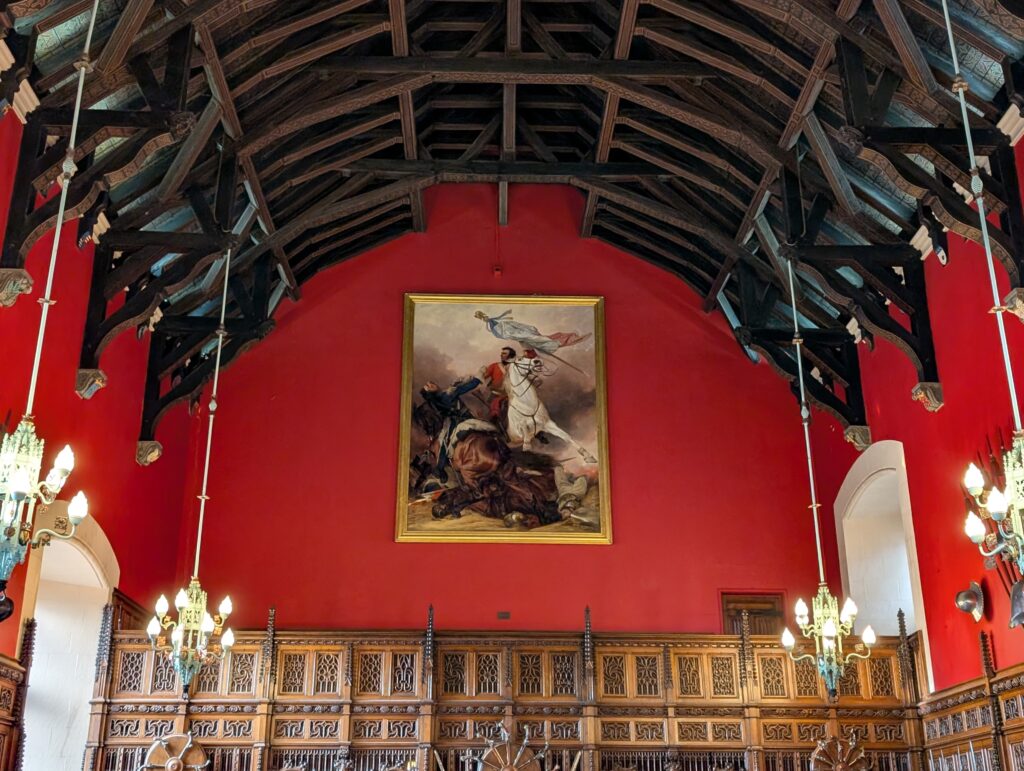
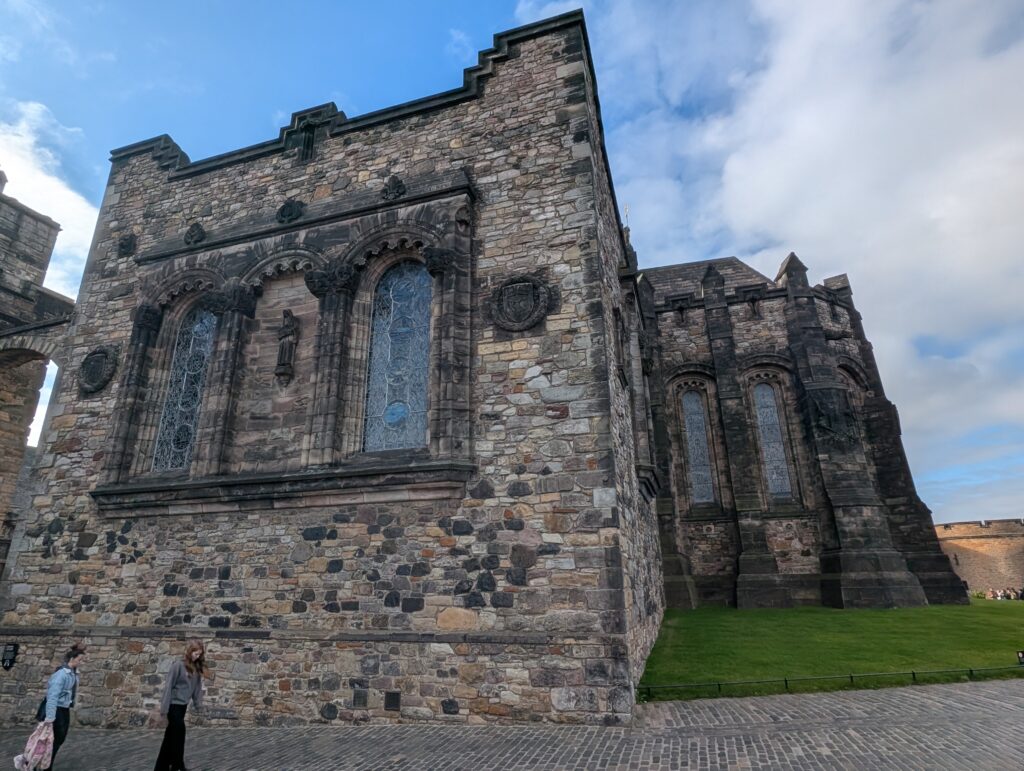
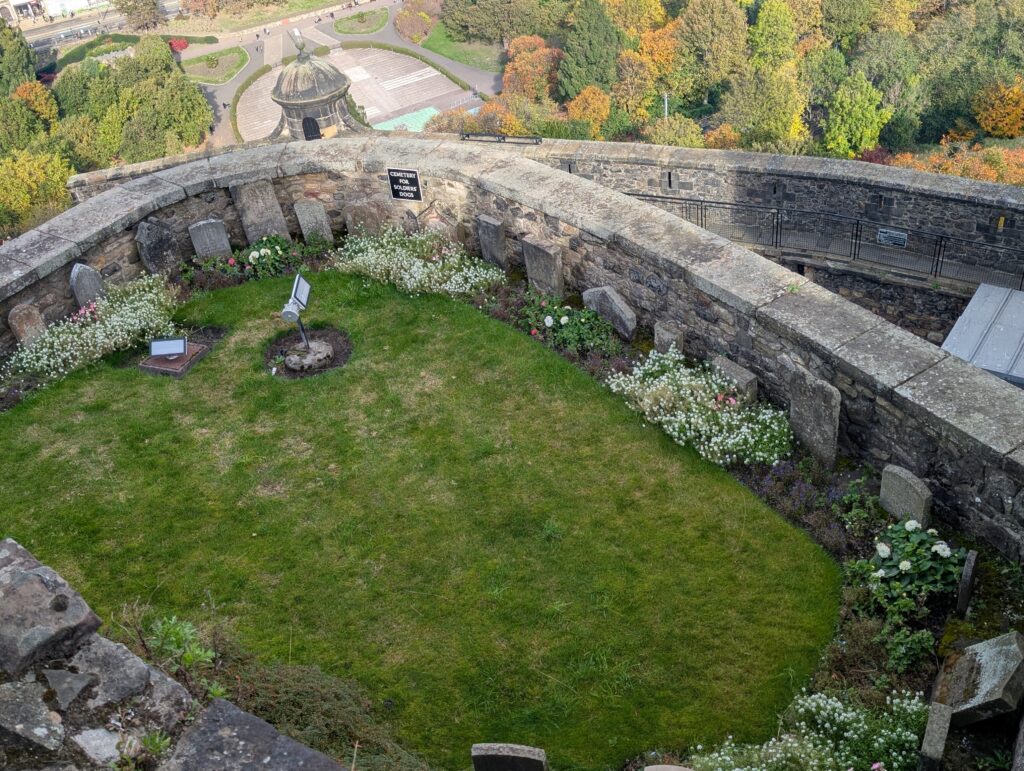
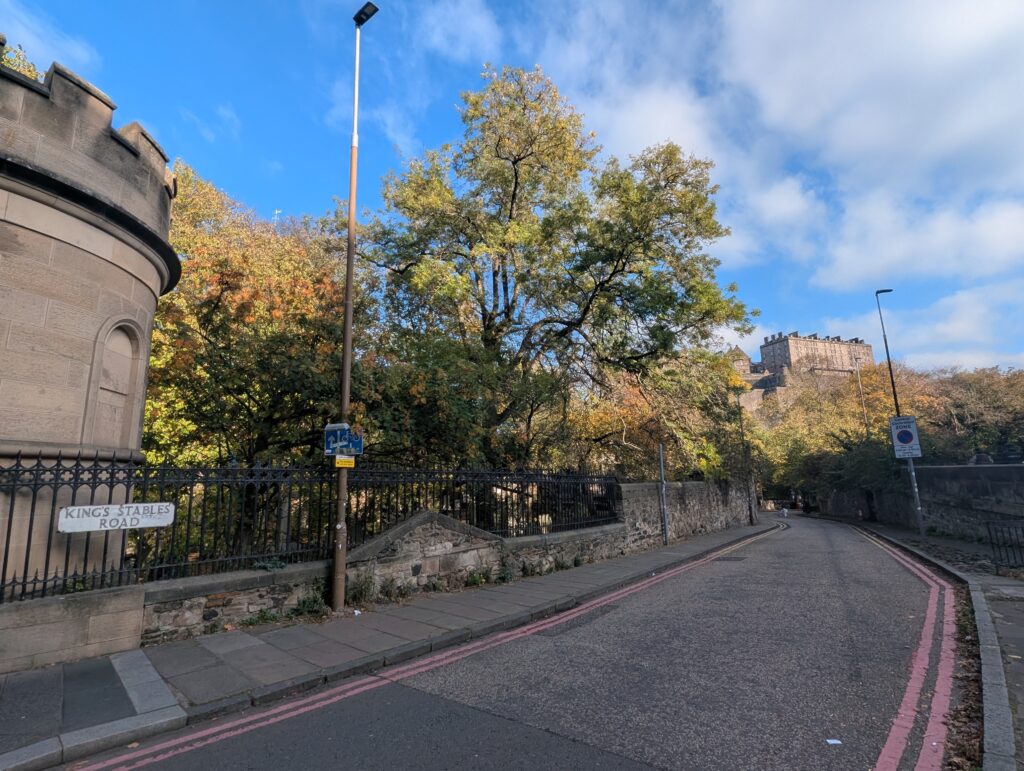
Edinburgh castle was pretty good to tour though they do not show you all the parts of the castle or take pictures. They showed the crown jewels though no photos were allowed. I learned about the history and how they dealt with prisoners.

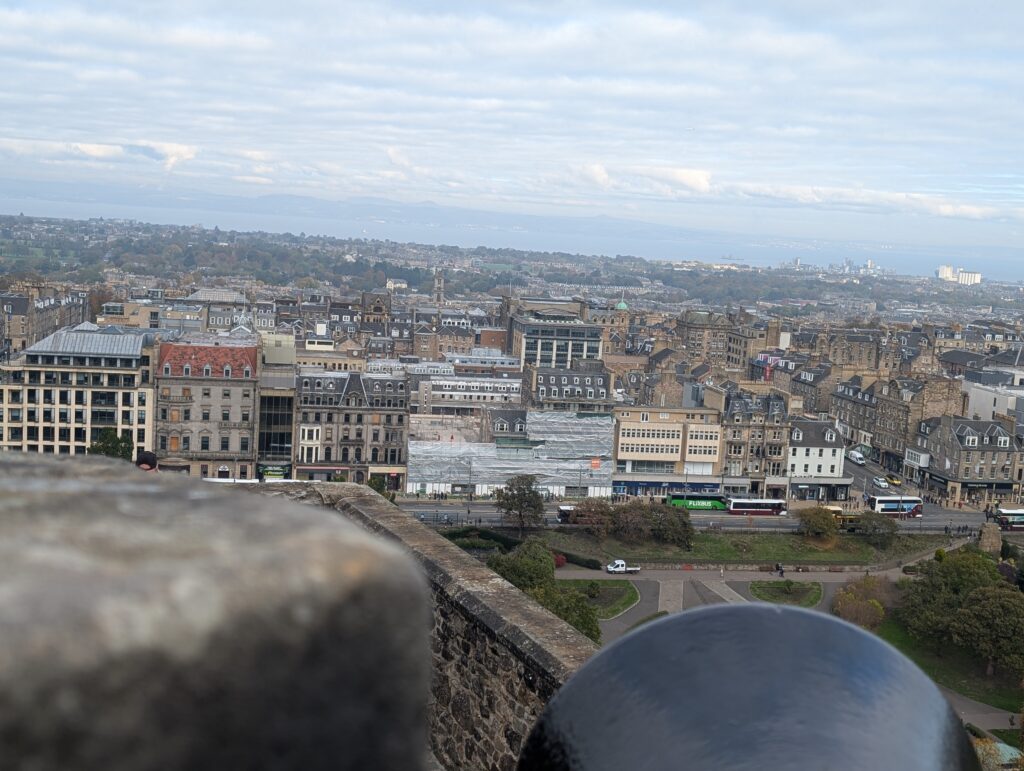
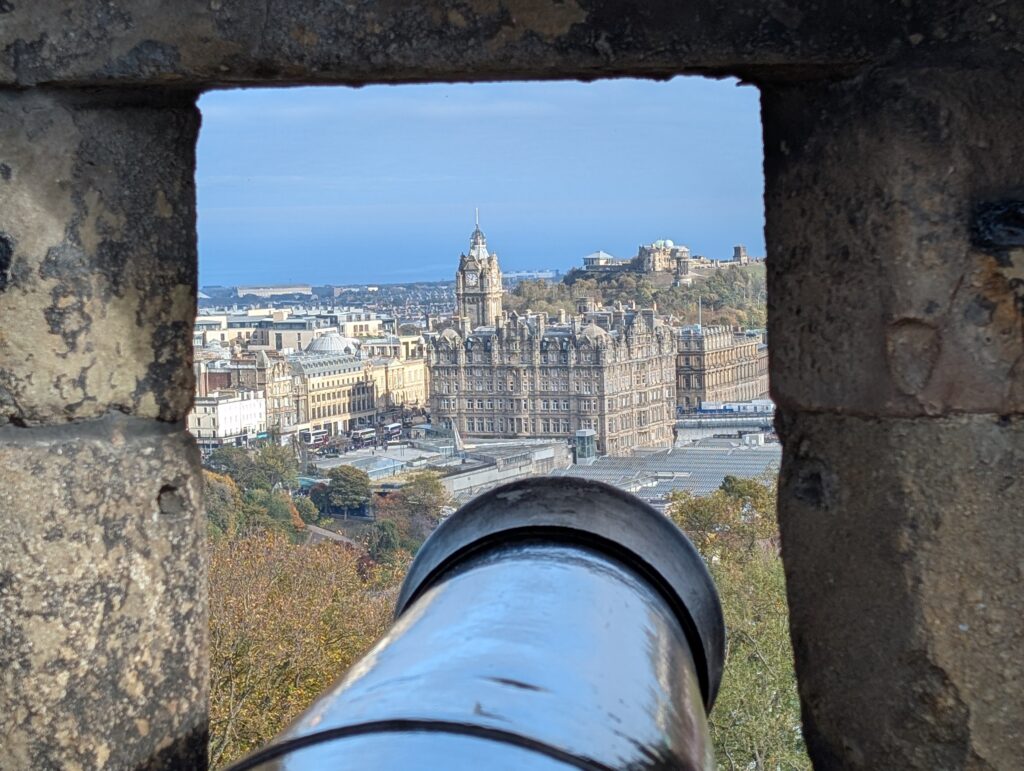
The views from the cannon holes are impressive.

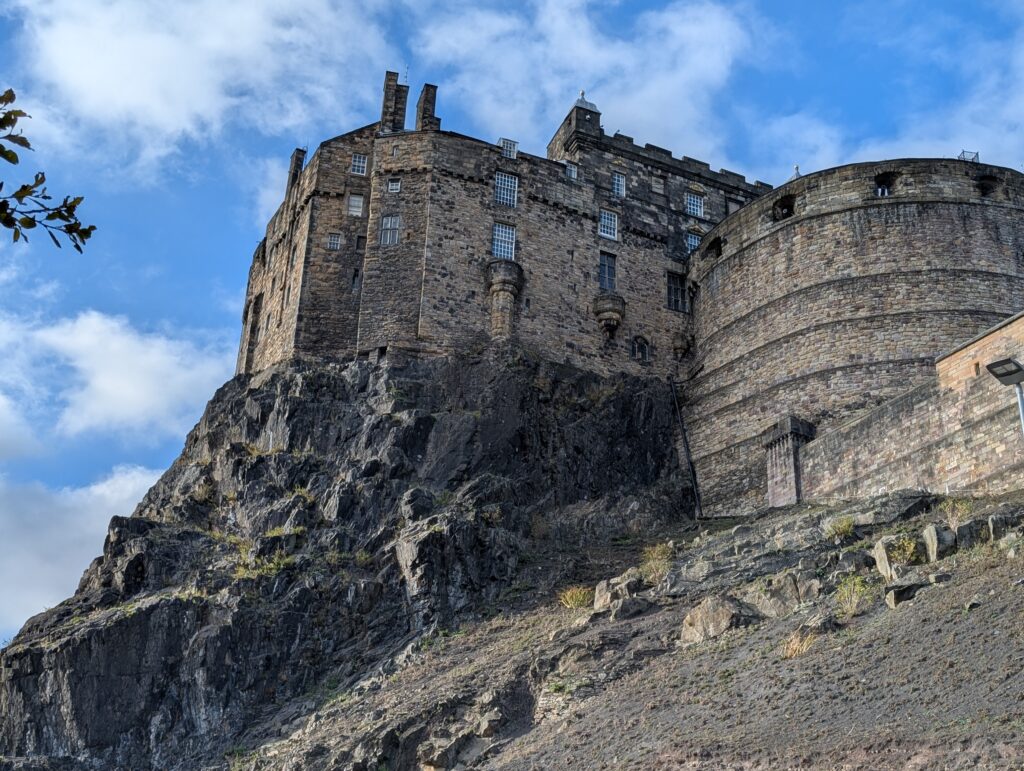
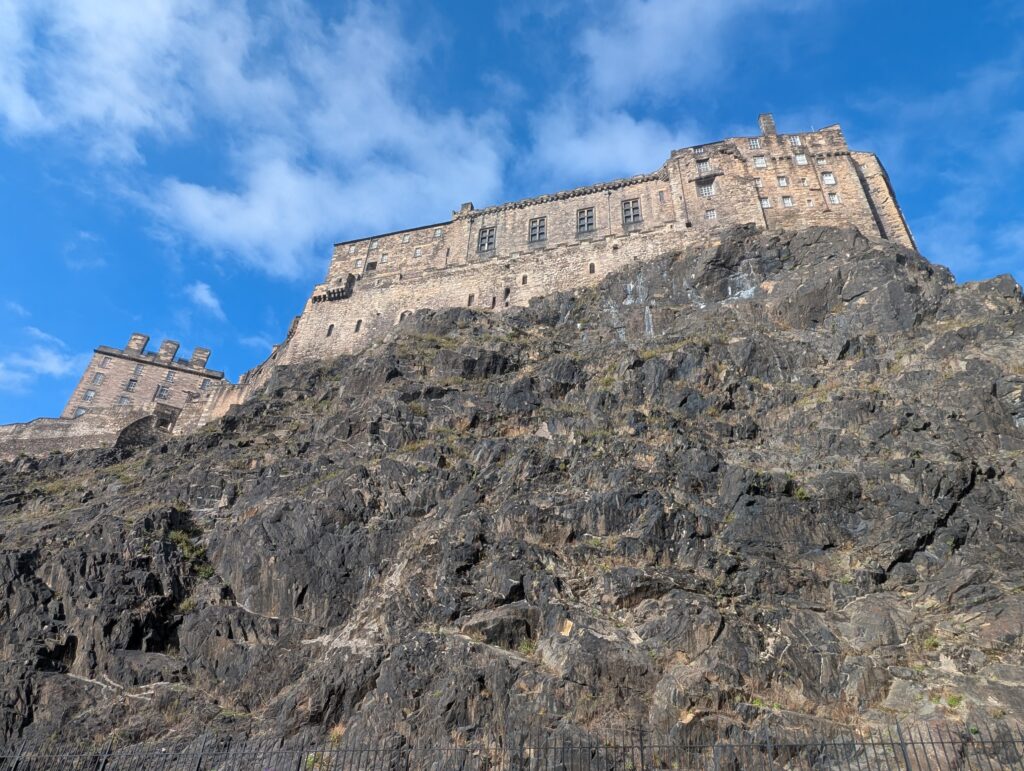
As the house of the Stewart’s and pretty fierce Scottish fighters, this castle seeming to rise straight out of volcanic rock is truly formidable.

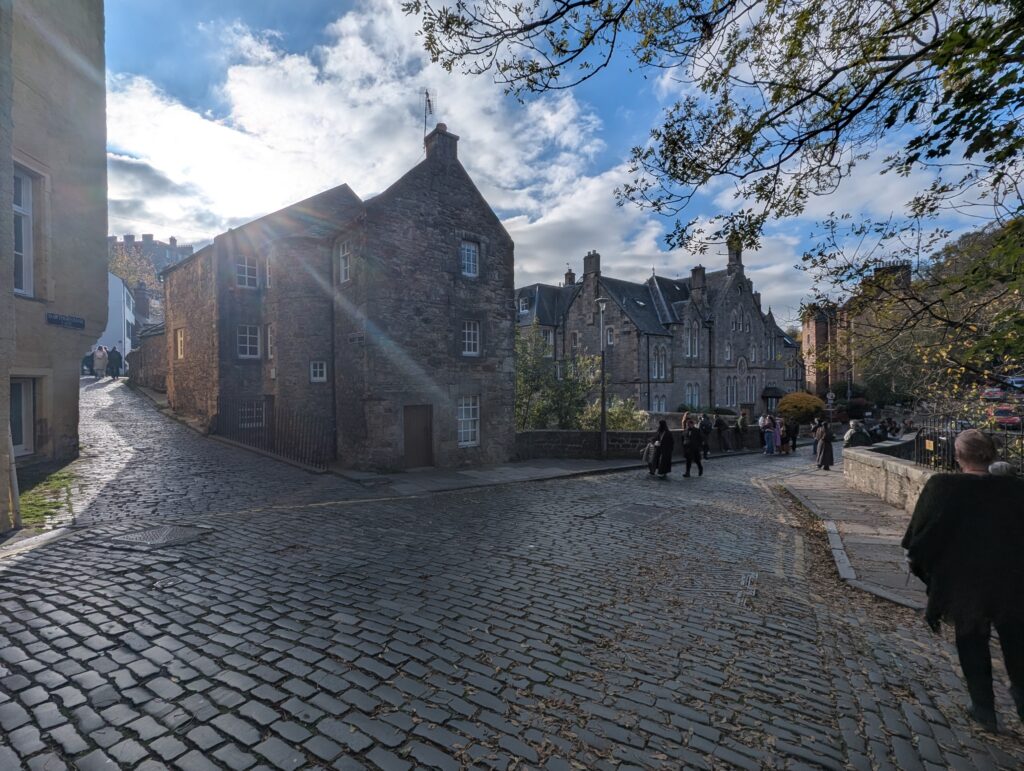
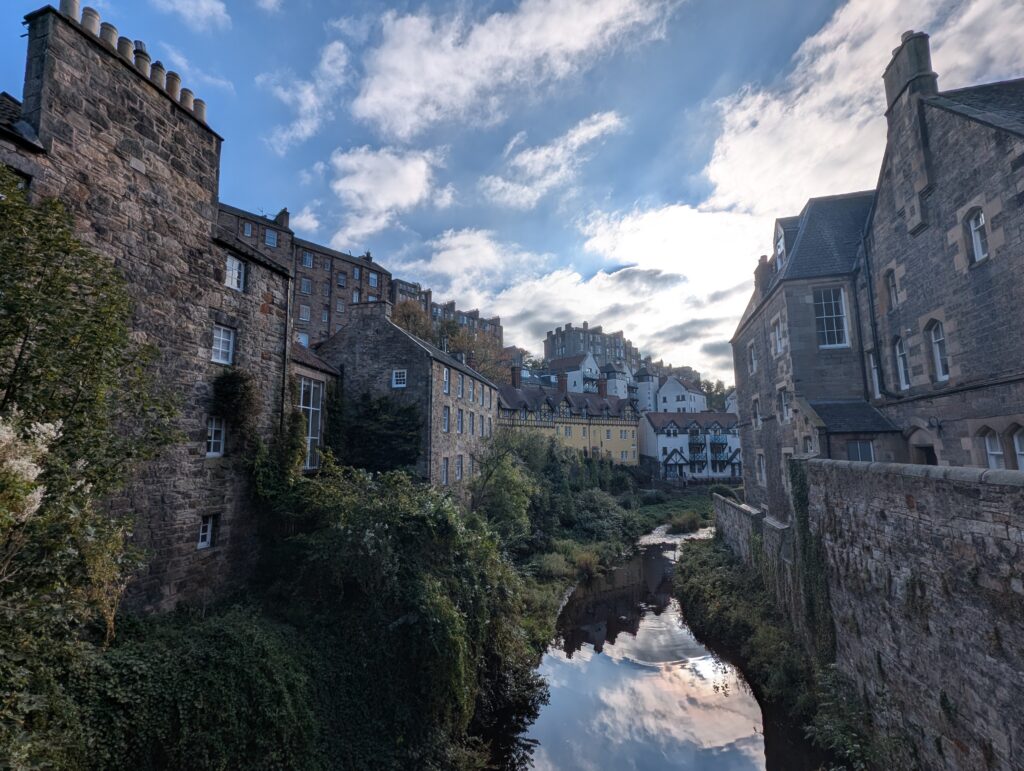
I also walked to one of the waterway paths. It was a beautiful walk. Edinburgh is an incredible city.

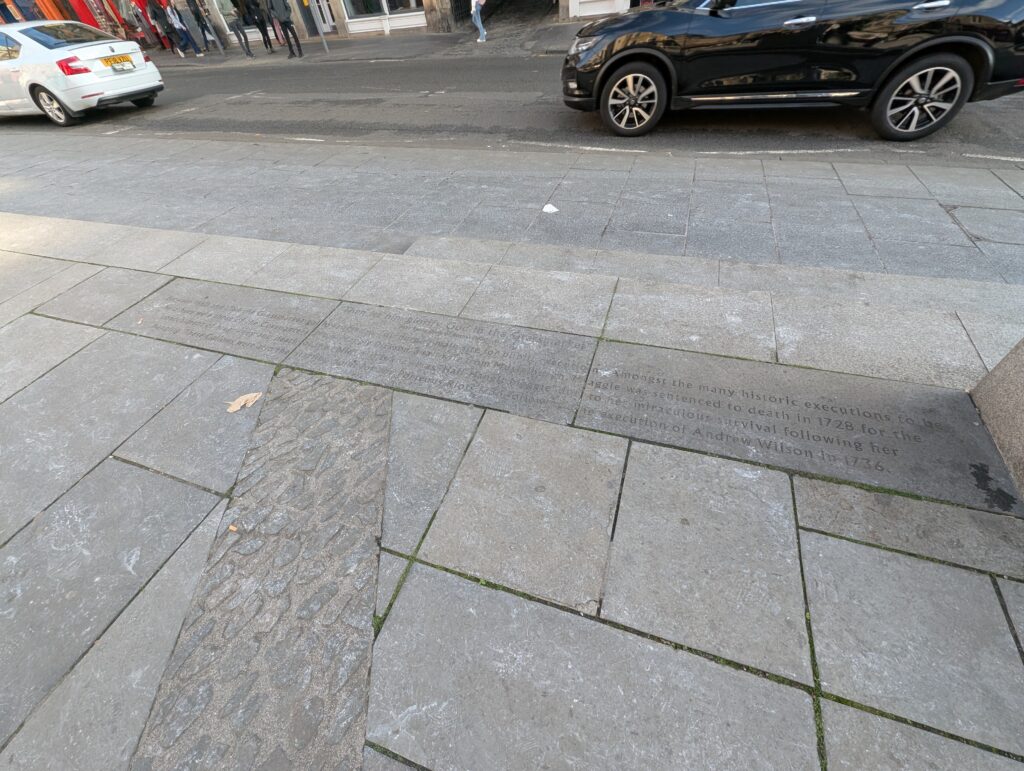
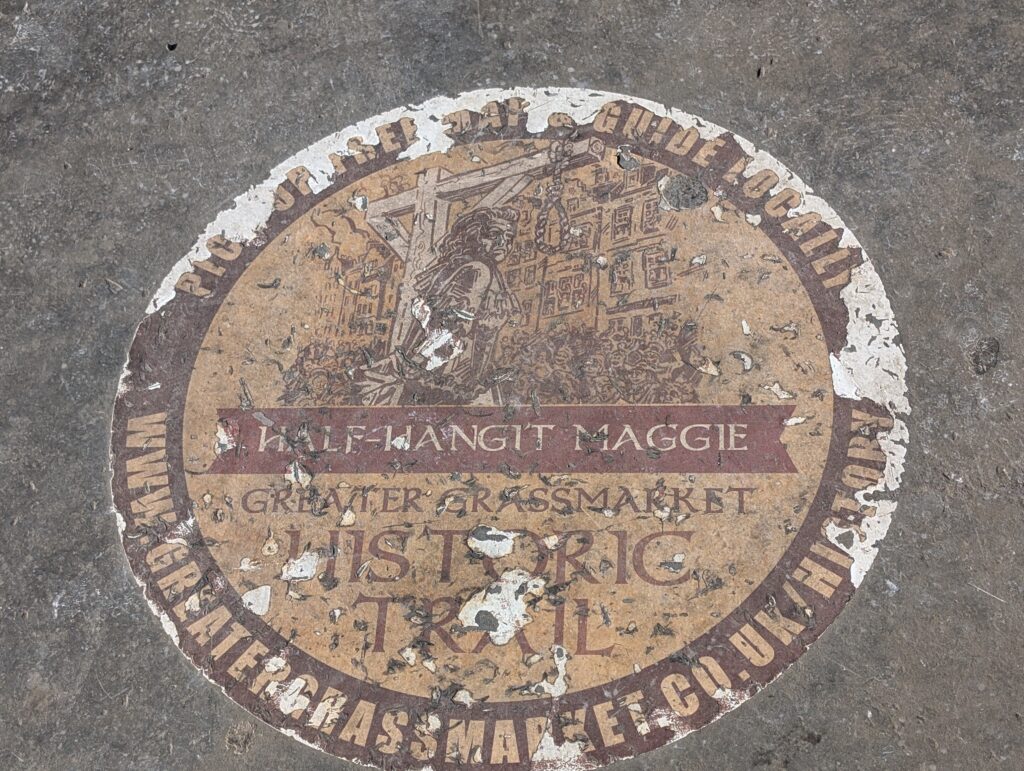
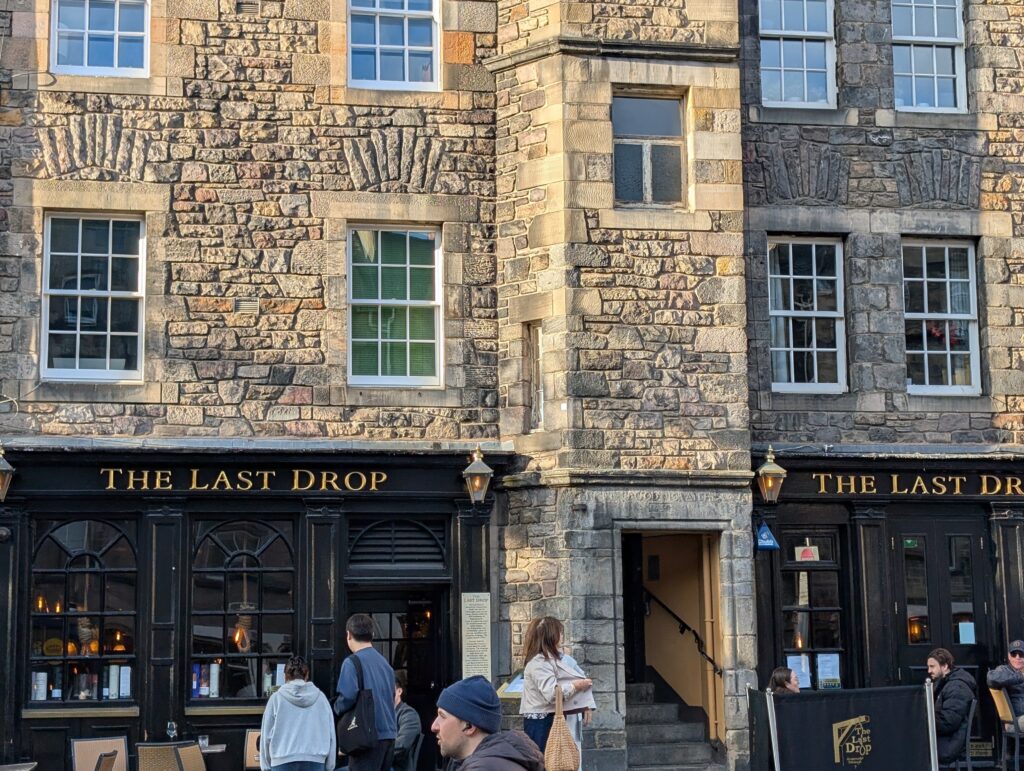
Gallows existed in the city on this spot and hangings continued until 1760. One woman, Maggie, convicted of hiding a pregnancy and killing a child was hanged but survived. They decided not to try it again and she was thought to be a witch. The condemned were taken to The Last Drop bar for a drink before being hanged.

The Way to Santiago

I arrived in Santiago de Compostela by train and met my friend, Maggie. Our intention: to complete the Camino de Santiago from Sarria. 115 km with a 7 kg pack. We left the rest of our belongings in Santiago for when we return.

Some background: James was one of the apostles who was a martyr and was beheaded. His head was buried in Jerusalem but his body was taken by boat guided by an angel to Santiago where it was buried. In the 9th century, his room mains were discovered and a church was ordered to be erected at the site. His remains are interred in the church. When news of the discovery of his remains spread far and wide, religious people made the pilgrimage to Santiago. Some of these routes may have already been trade routes, but the paths were followed by others over the centuries and are known as the Camino de Santiago. There are quite a few paths over many countries.

I thought the Camino Frances would be good as there are many stopping points and it was the original one I wanted to do. Initially I was going to do the complete Camino Frances, walking over the Pyrenees and across the top of Spain for a total of 780 km.

Recovery from the knee replacement is proceeding but I am limited in how many km I can walk in a day. We averaged about 10-15 km per day and it still was a test of mental, physical, and spiritual strength.

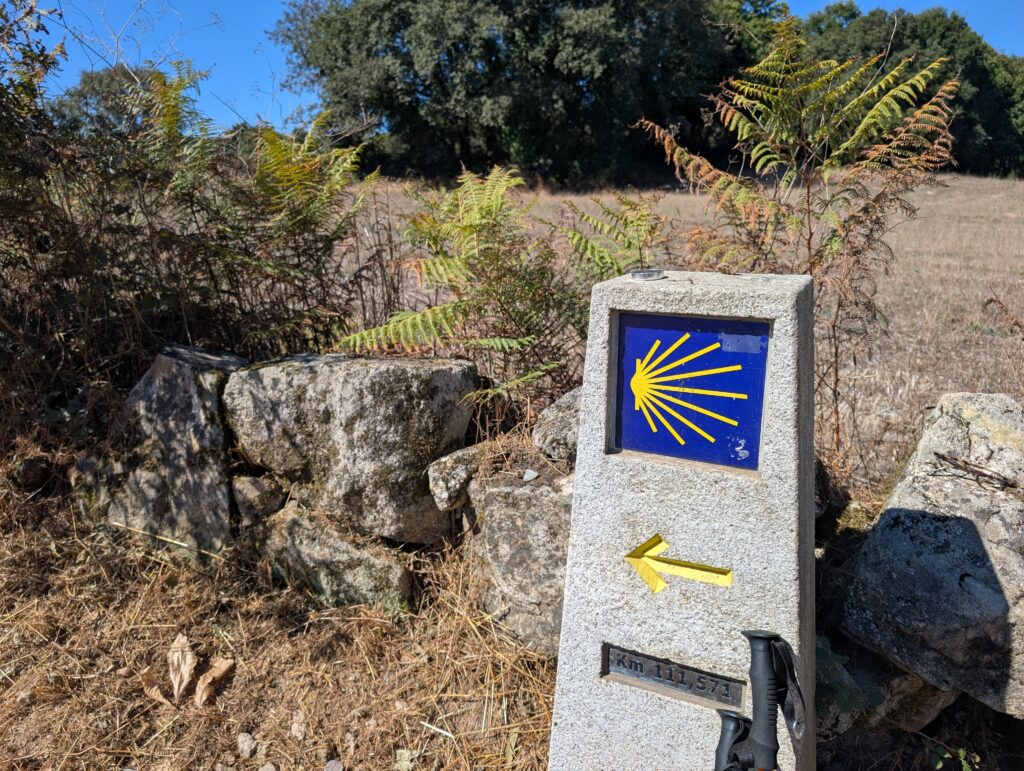
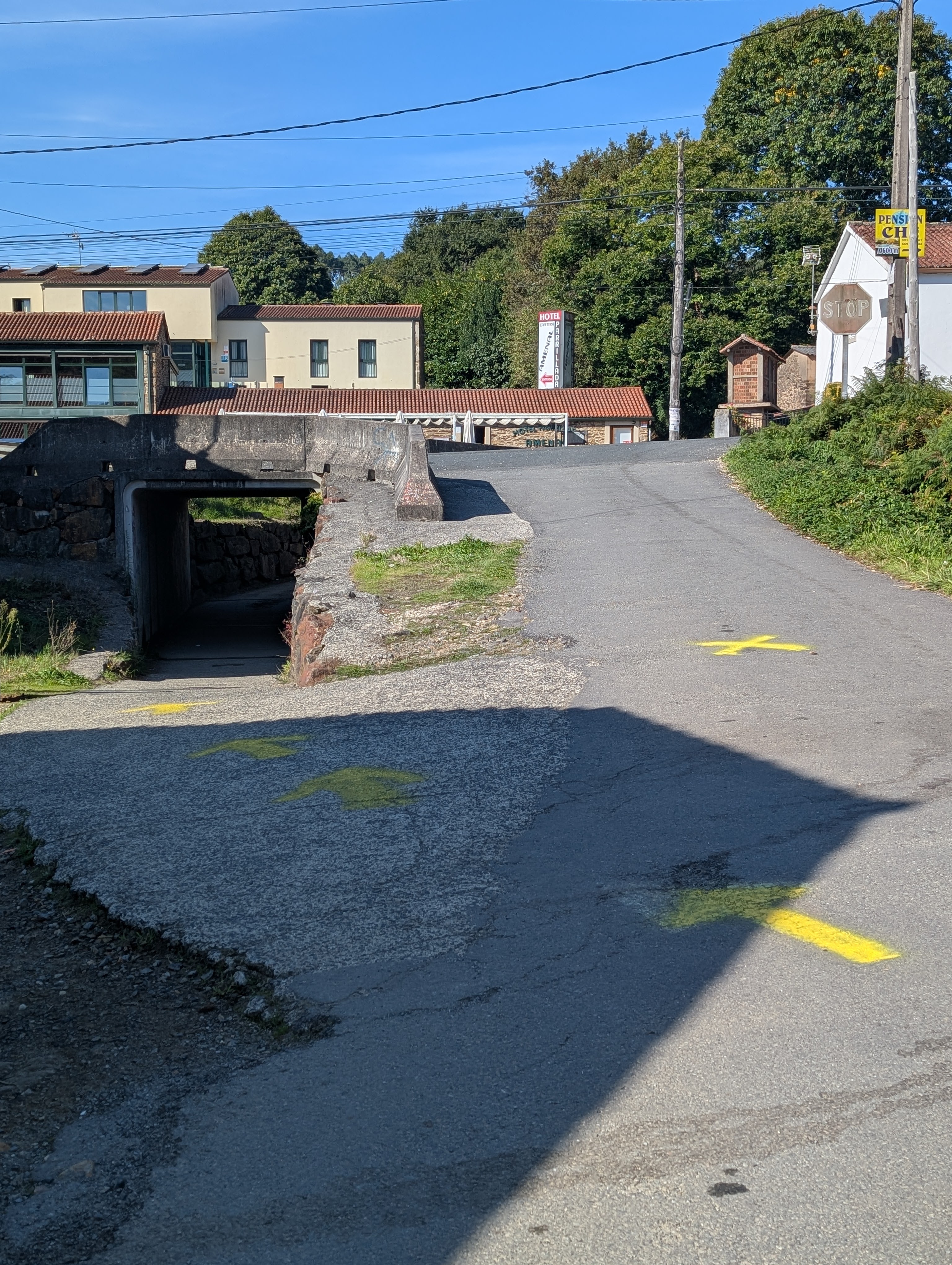
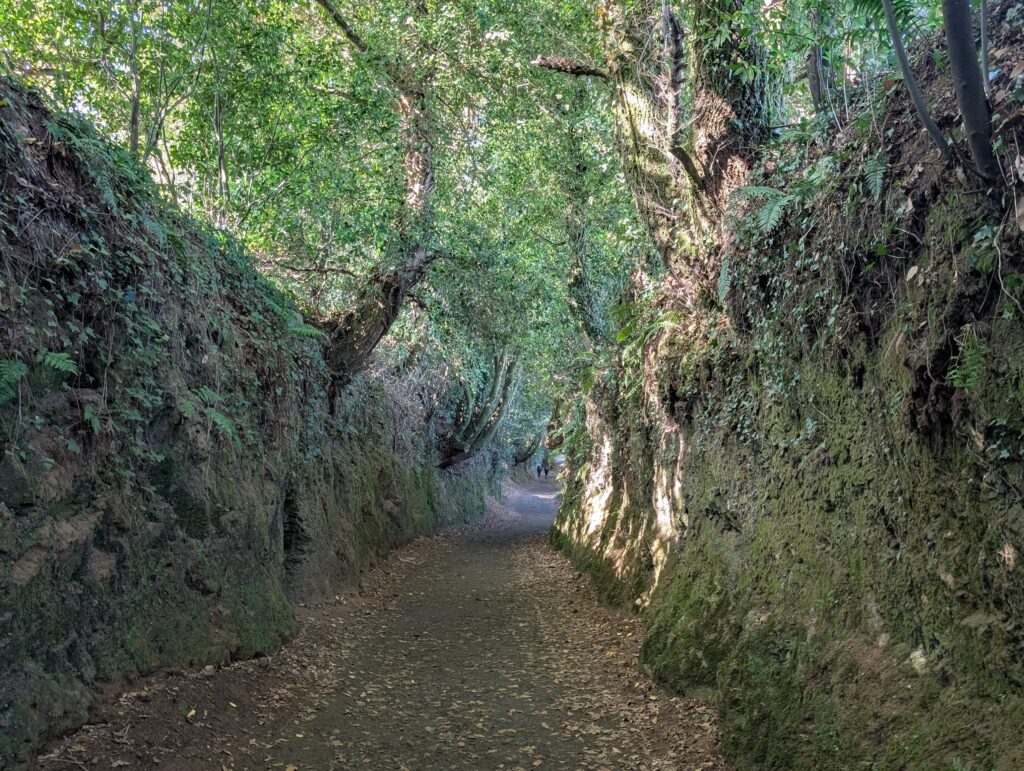
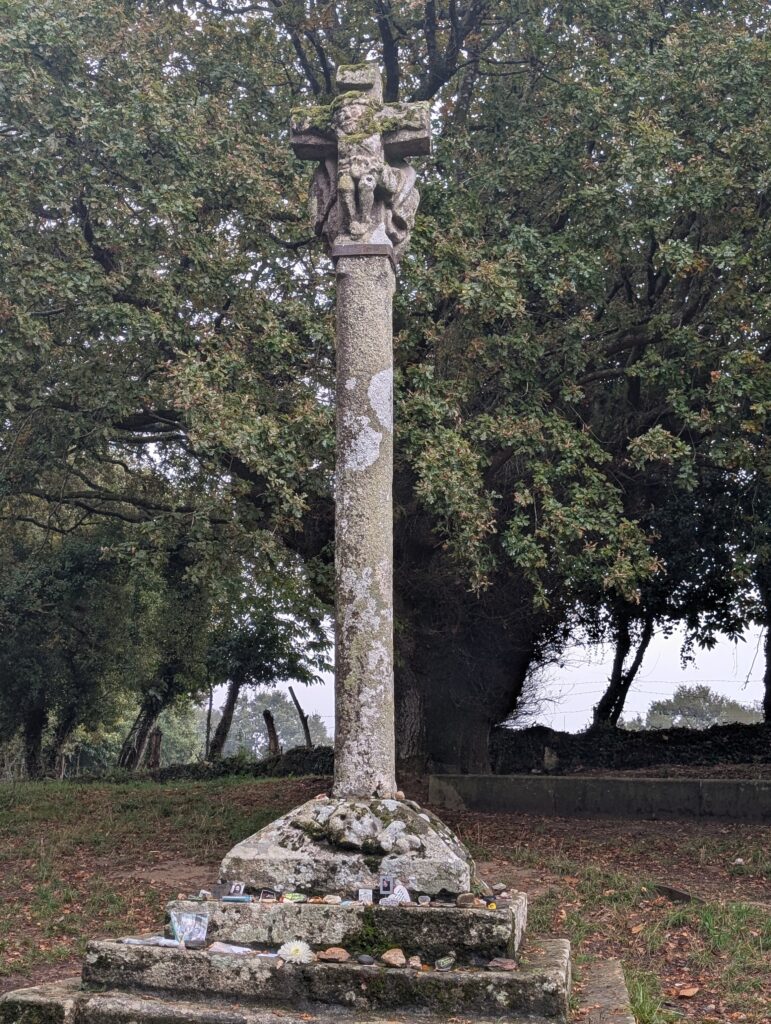
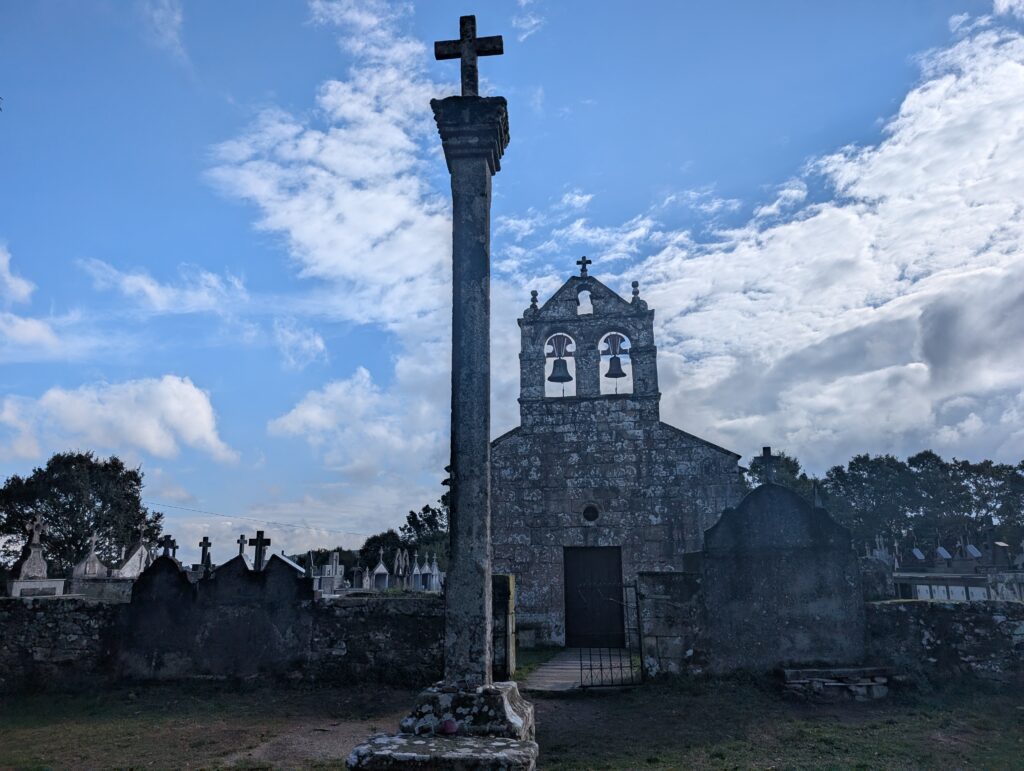
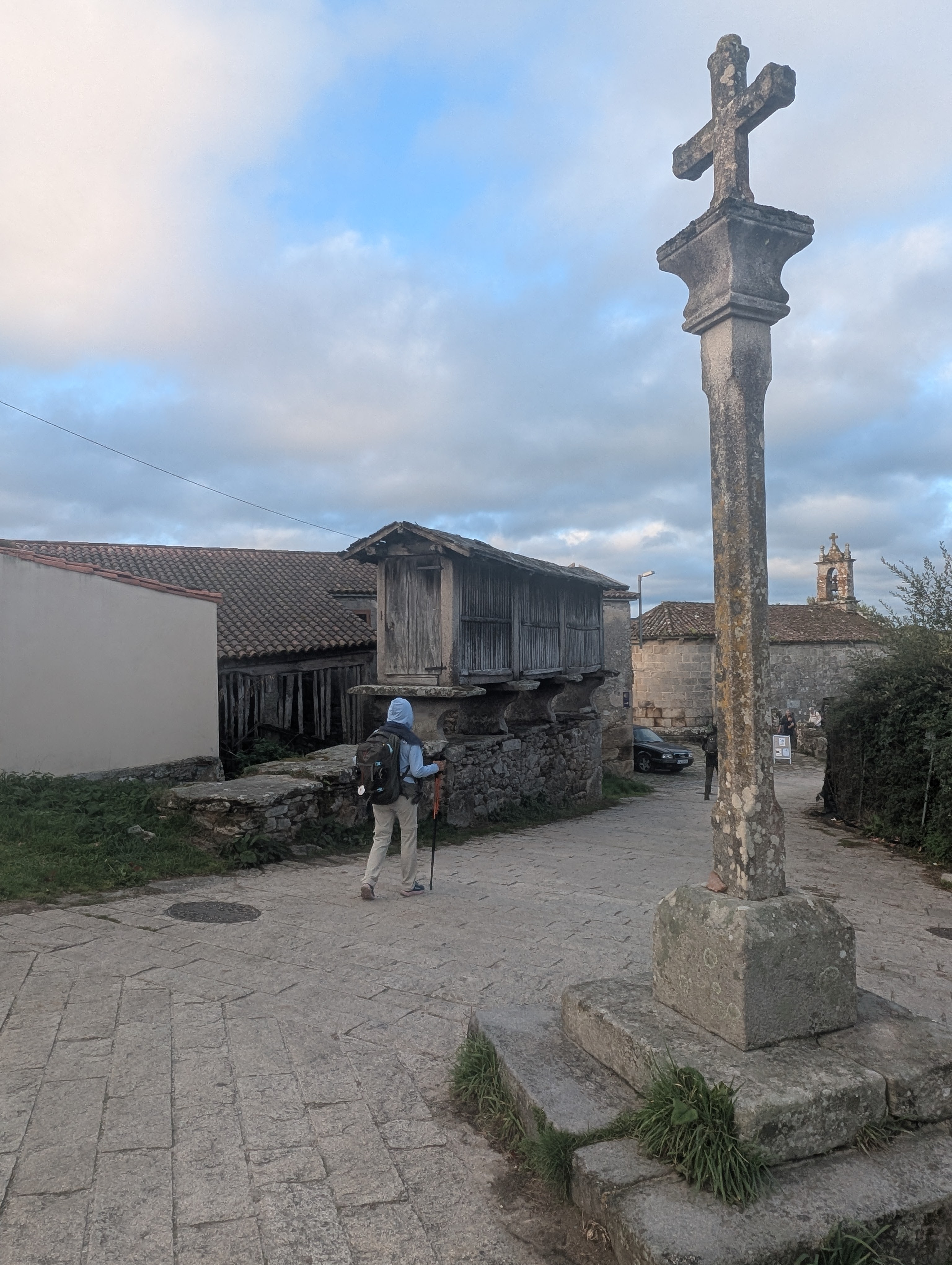
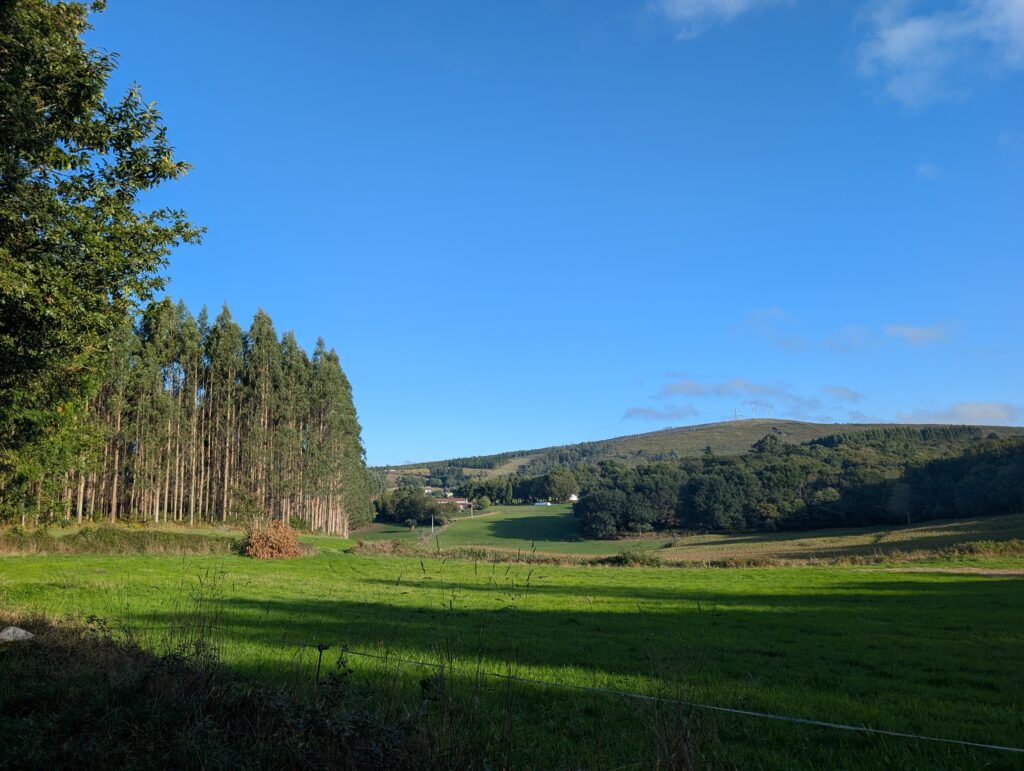
Along the way were markers that counted down the km and had a yellow arrow to show the way.

Some people use a carry service for their backpacks. In life, you are responsible for yourself and what you carry. It is the same on the Camino and people often pack too much and leave something along the way to lighten the load. Quite a good life metaphor, right?

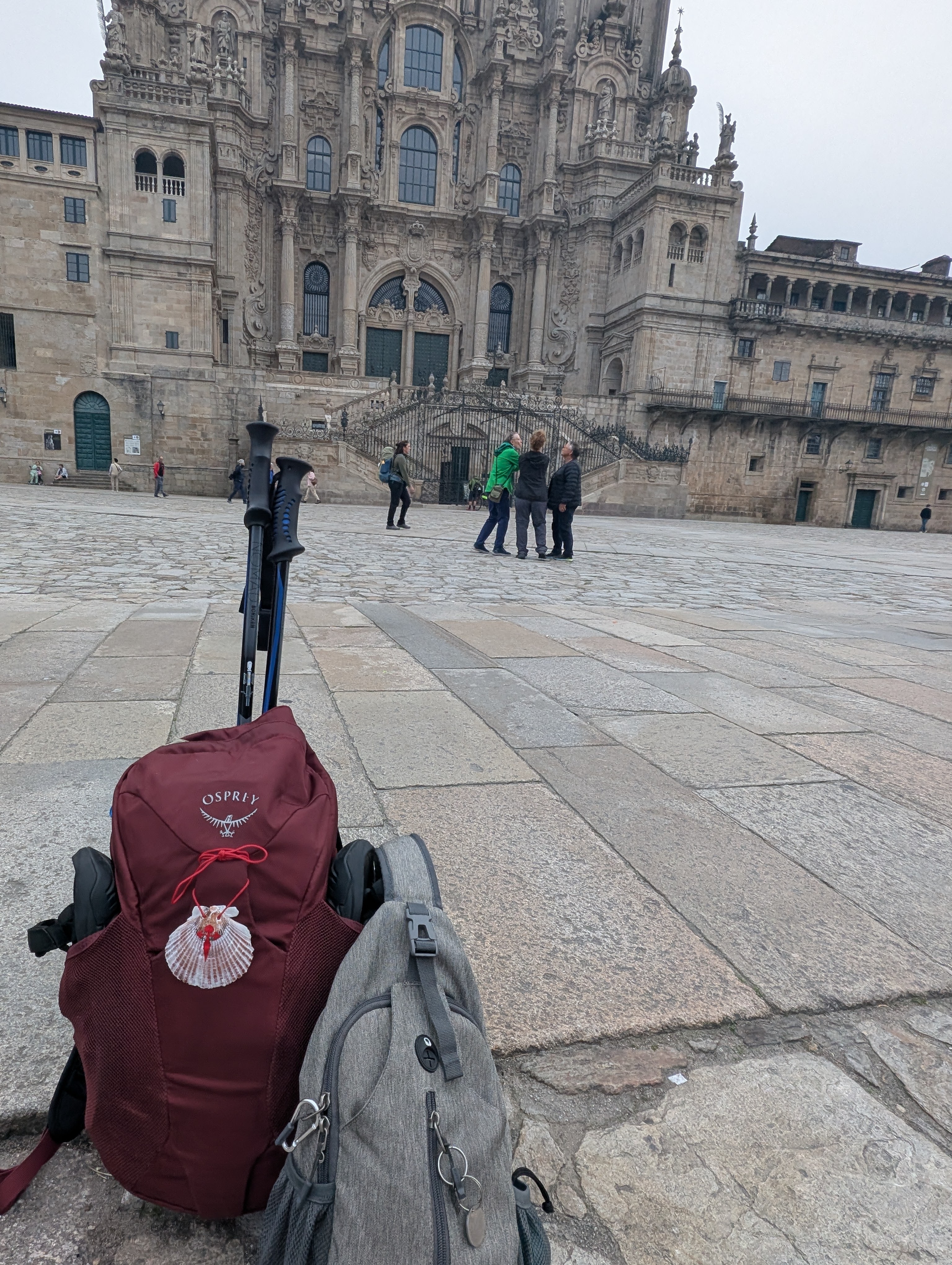
The shell is a symbol of having been changed as part of the experience. While walking, many things did not seem as important as they used to and you are reminded that you are only able to change things that are within your control. Not a new lesson, but a constant daily reminder.

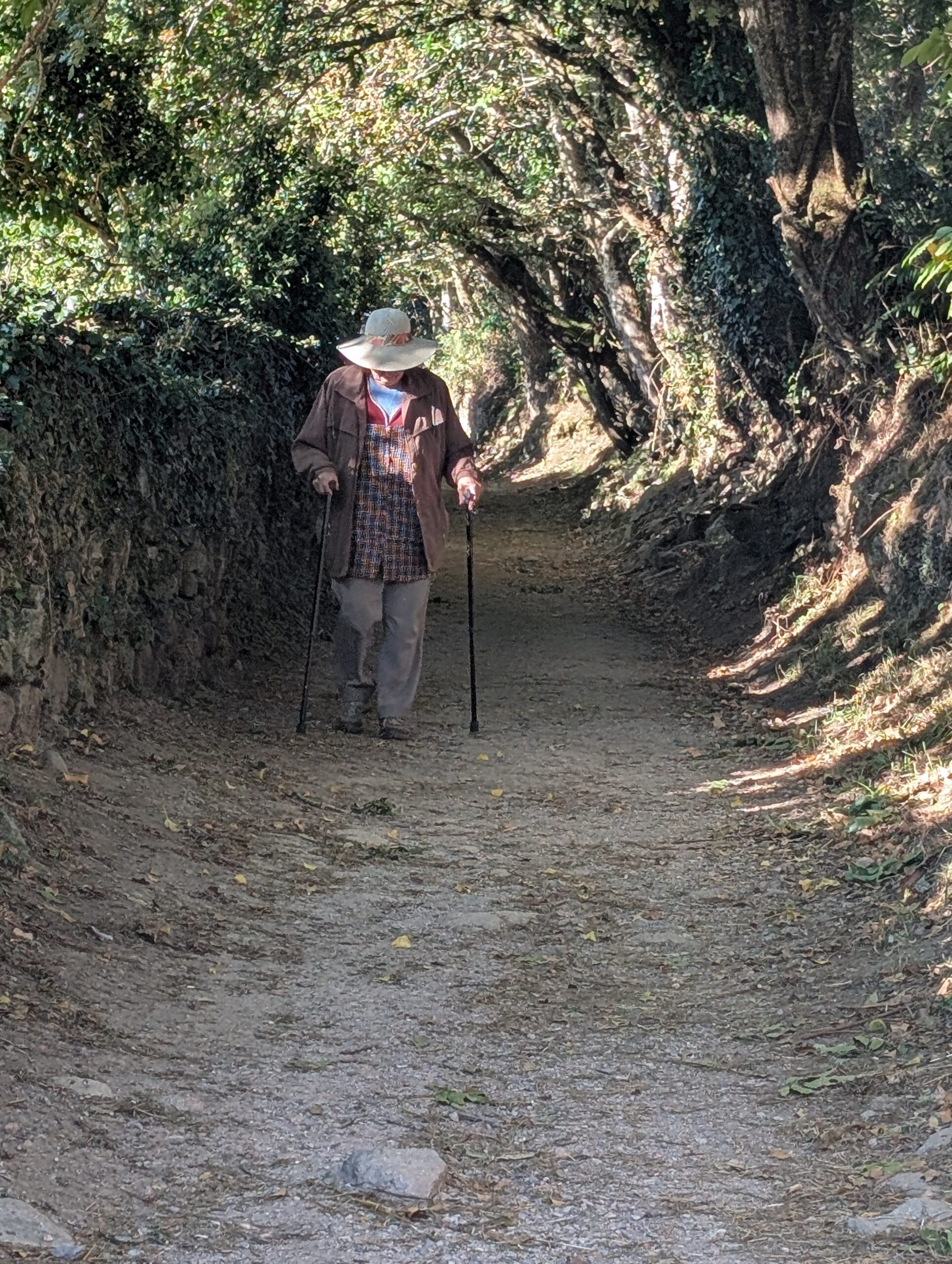
I did a lot of research in preventing blisters, using Vaseline on my feet before adding socks, wearing two lighter socks, etc. I also used hiking poles to help reduce the weight on my knees and feet. It also helps you with better posture when walking with a pack. All the people that we met on the camino were encouraging for us and we to them as well. No one truly walks alone.

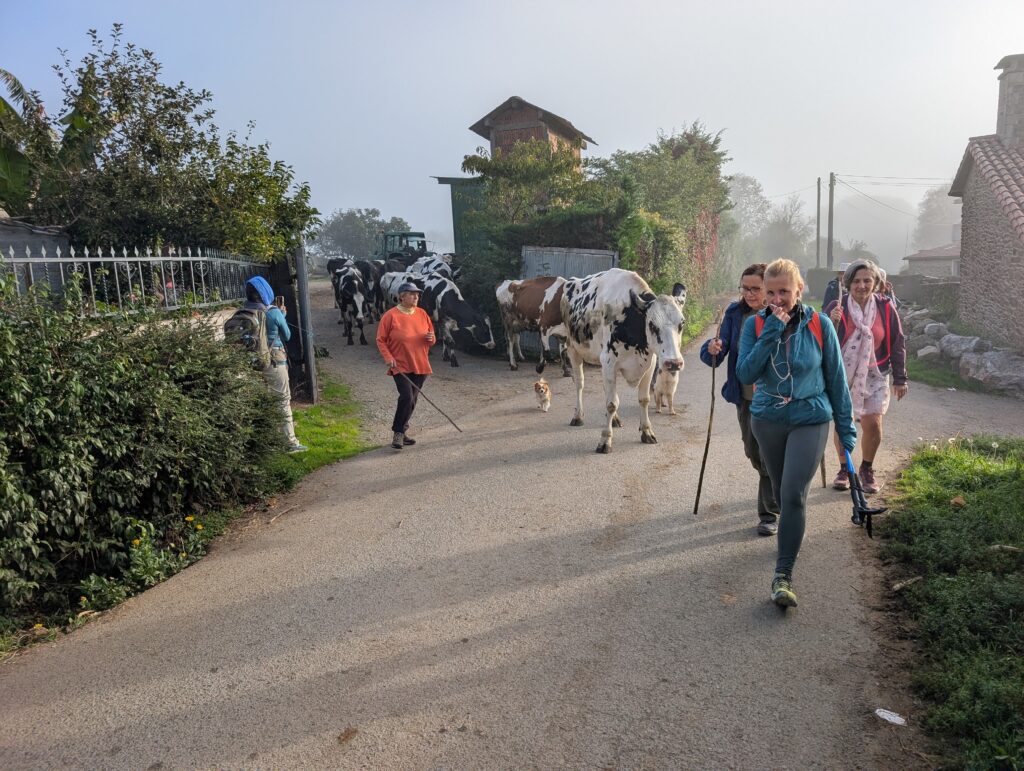
We stayed at albergues each night. Bunk beds in mixed dorm rooms and the price was quite cheap (15-20 euros per night). It was quite fine as everyone was tired. Pretty much everyone was asleep by 9 pm and people started leaving around 6 am. We generally left when it was light out just after 8. Some places had family dinners which were quite fun with the stories and personalities from people all over the world.

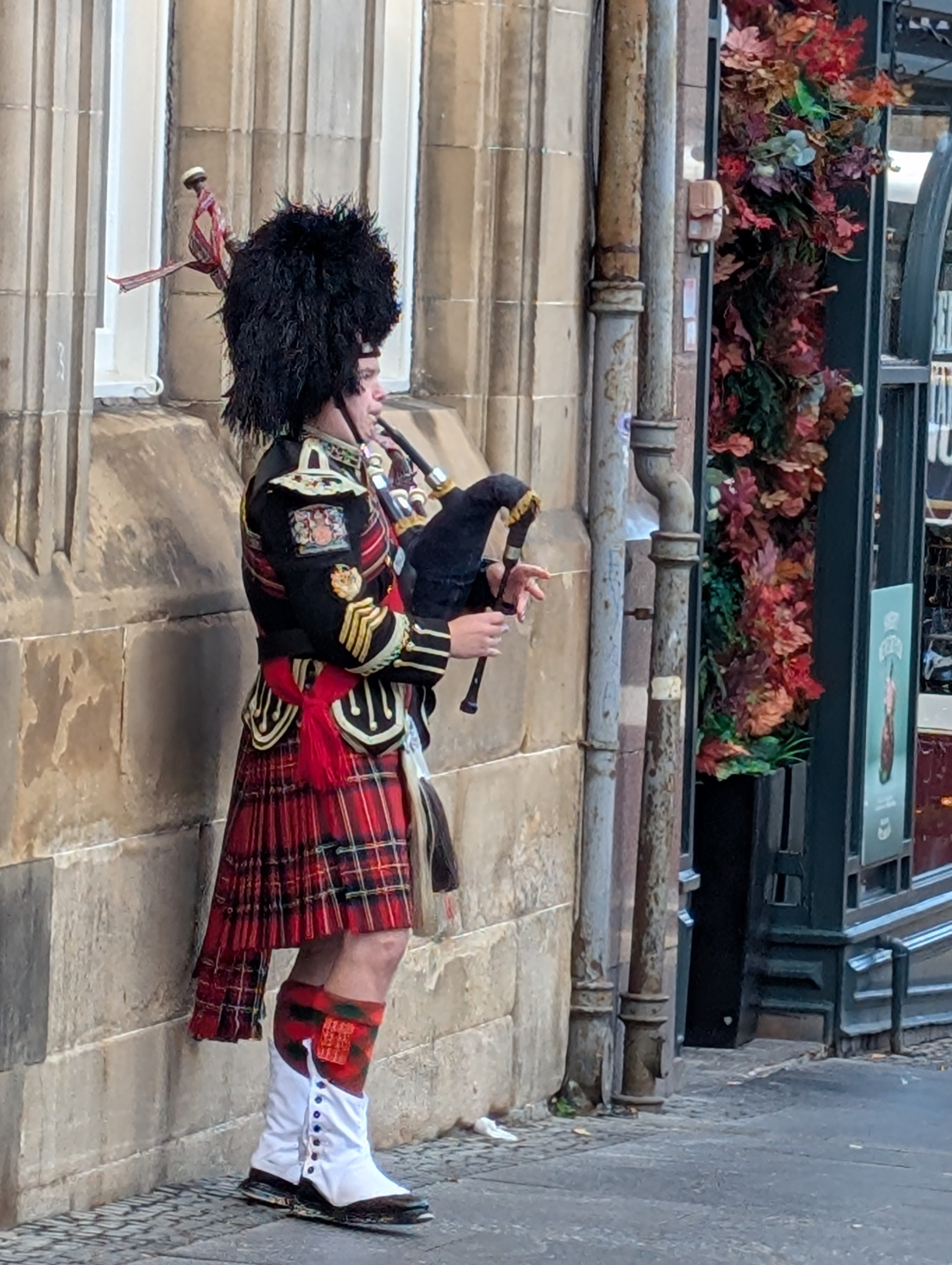
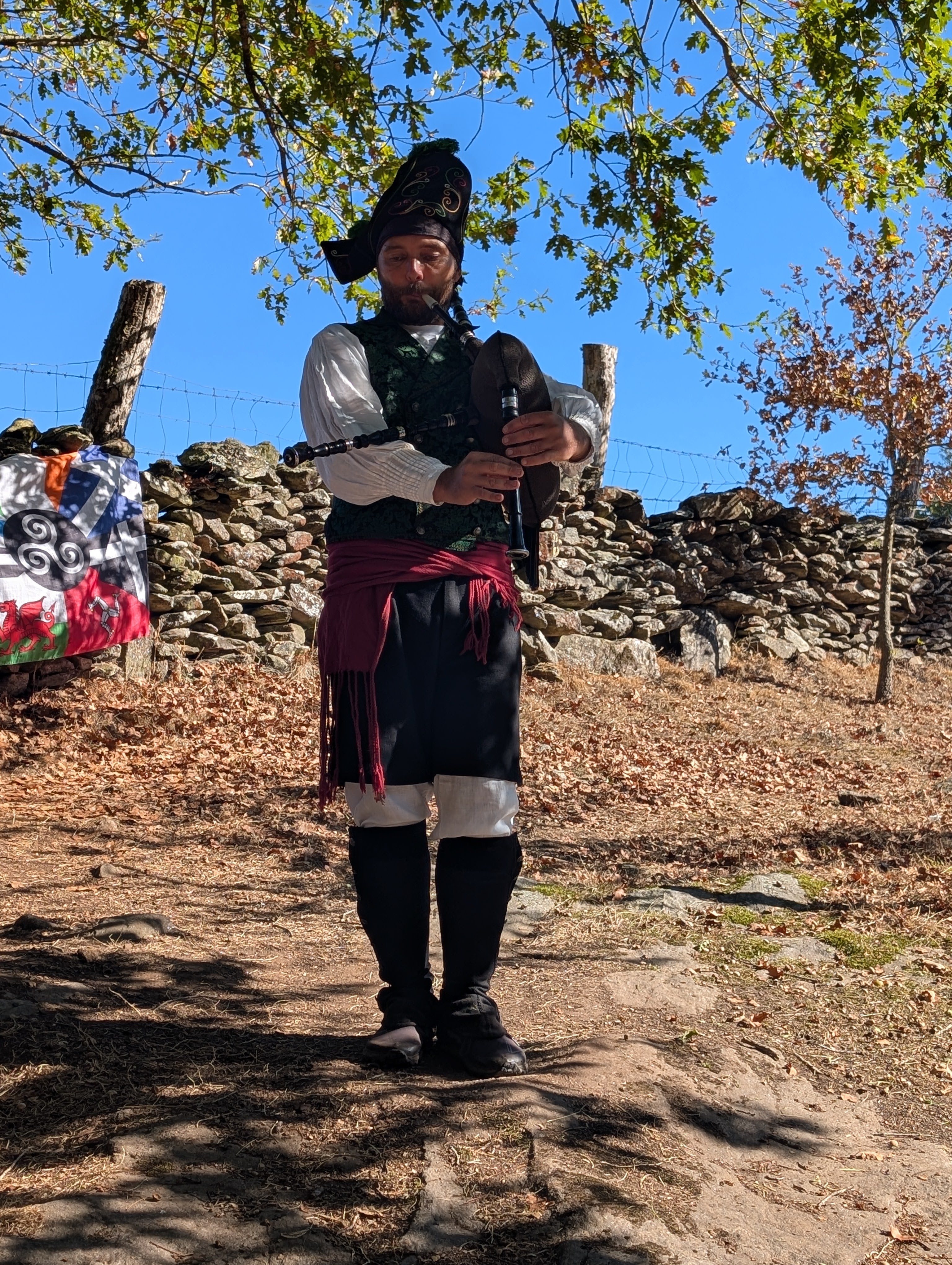
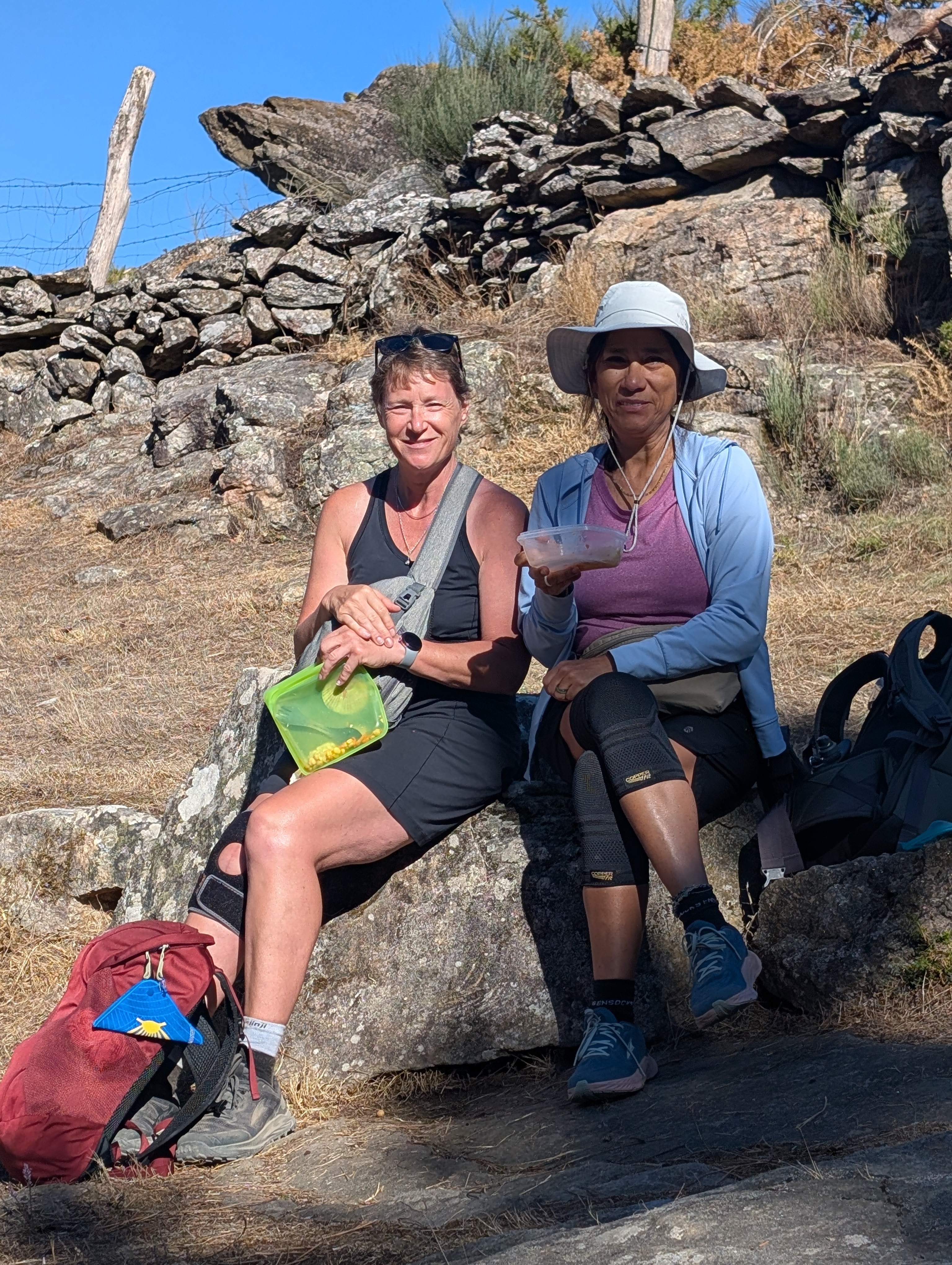
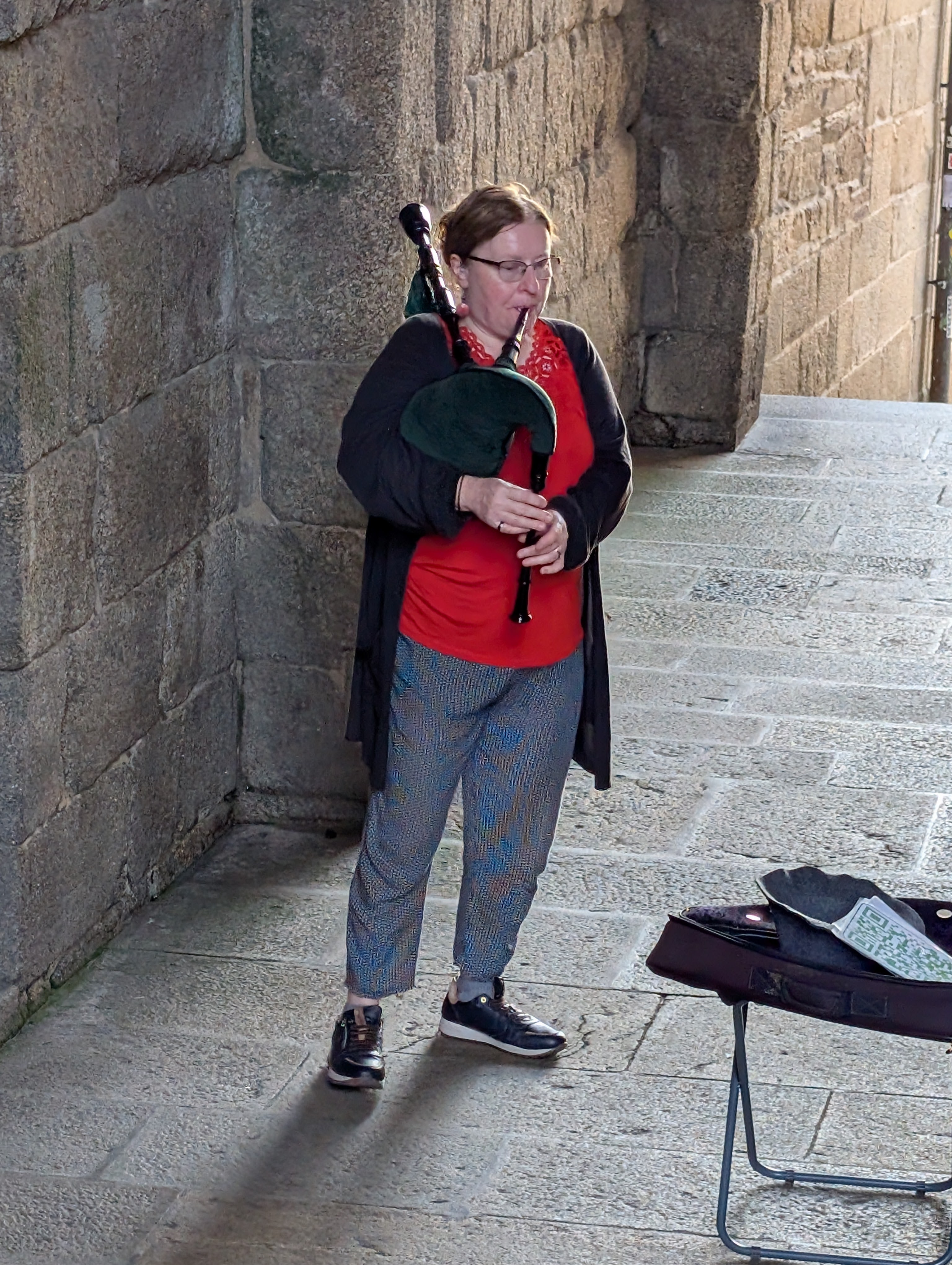
The Celtic influence is large in Galicia and bagpipes can be heard as pilgrims enter the square. The man offered a special stamp with a donation. We ate lunch while listening to him. You must collect 2 stamps a day to get the official certificate (Compostela) at the end.

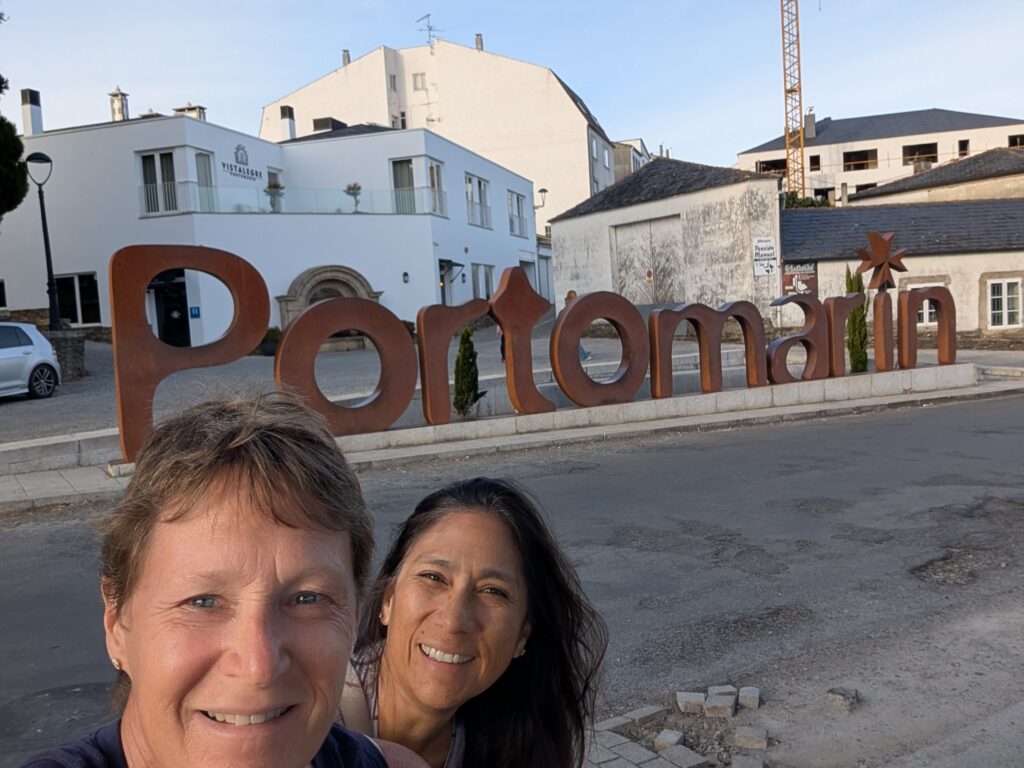
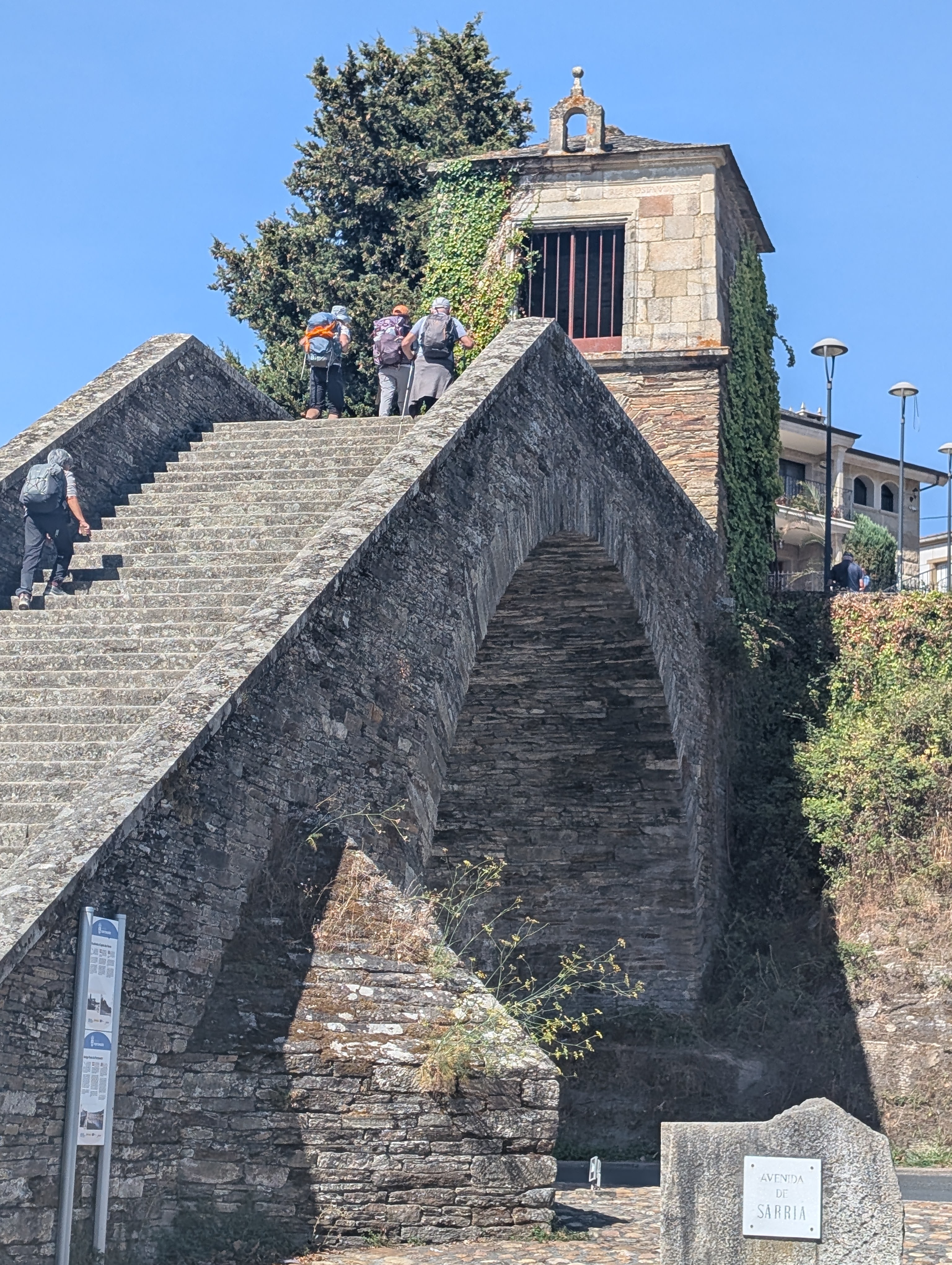
In Portomarin, we had already walked 18 km and were greeted by these stairs….

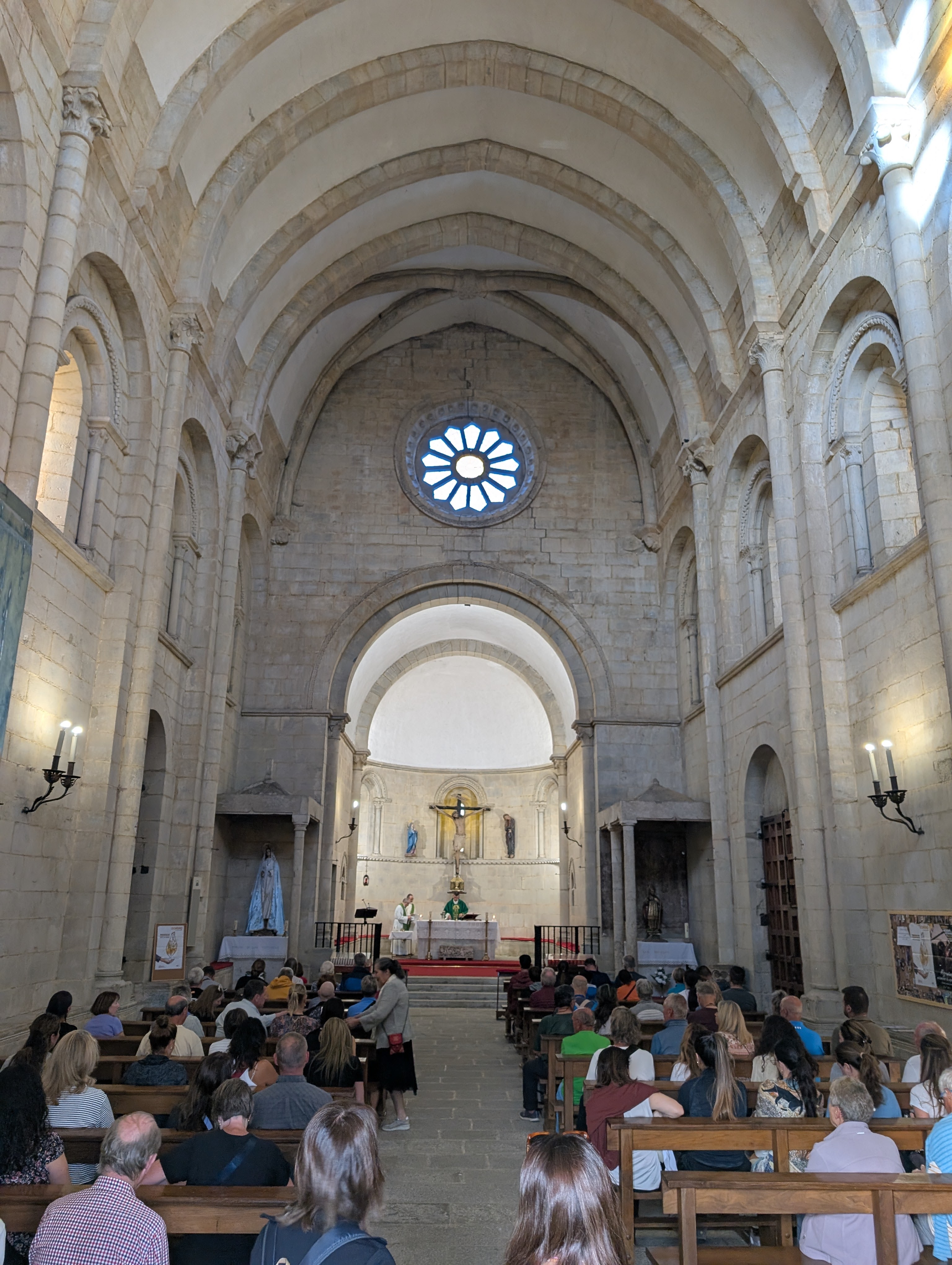
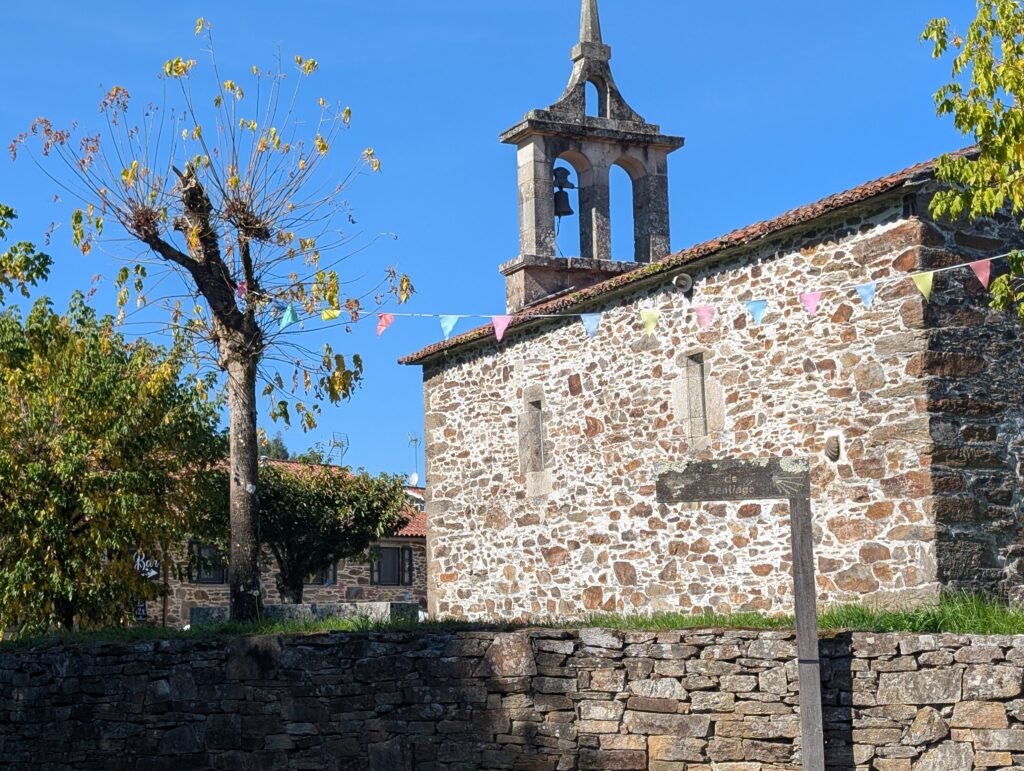
We attended a pilgrims mass at one of the towns.

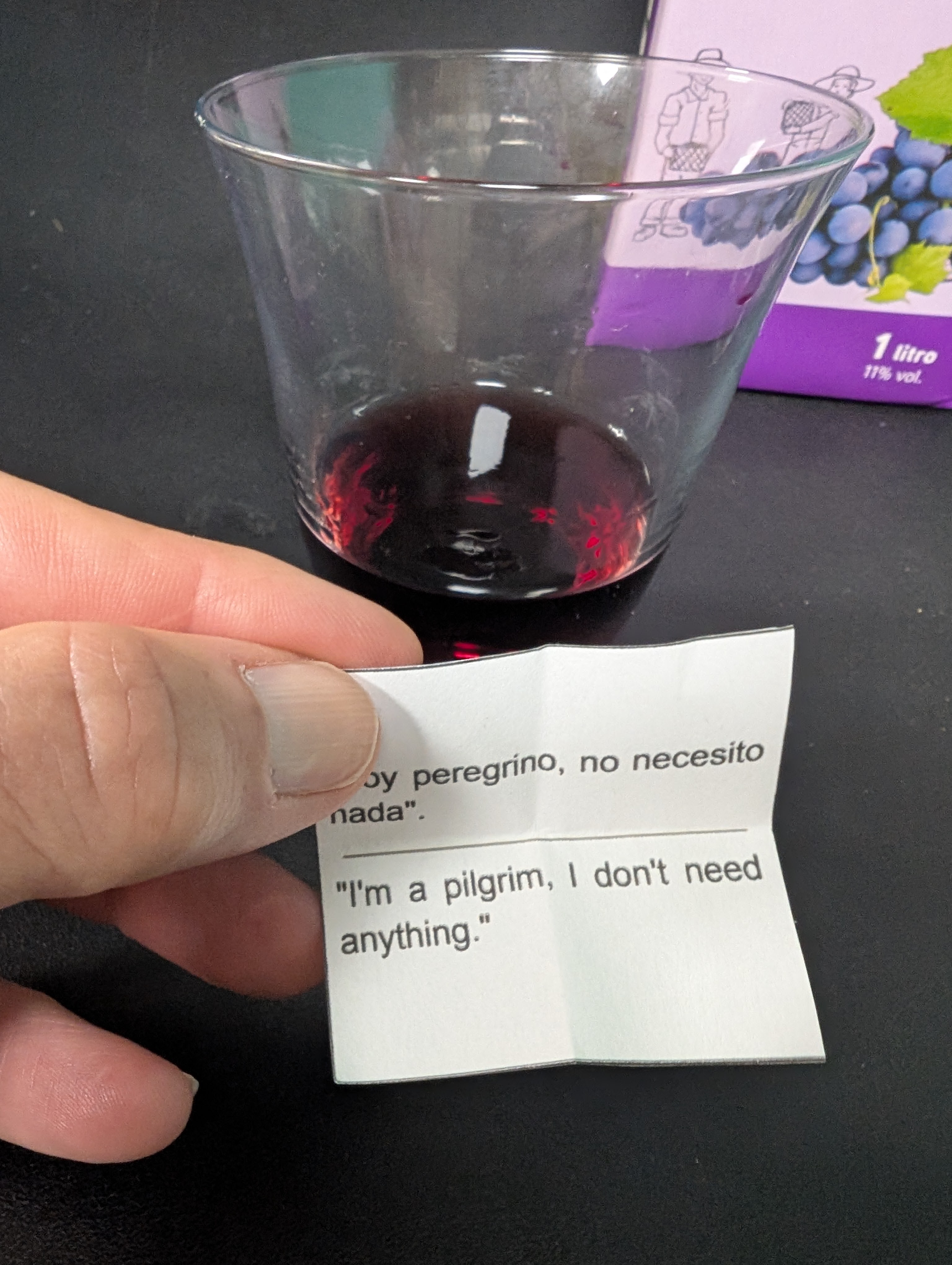
In Arzua, the albergue had a basket of statements you could randomly choose. This was mine….

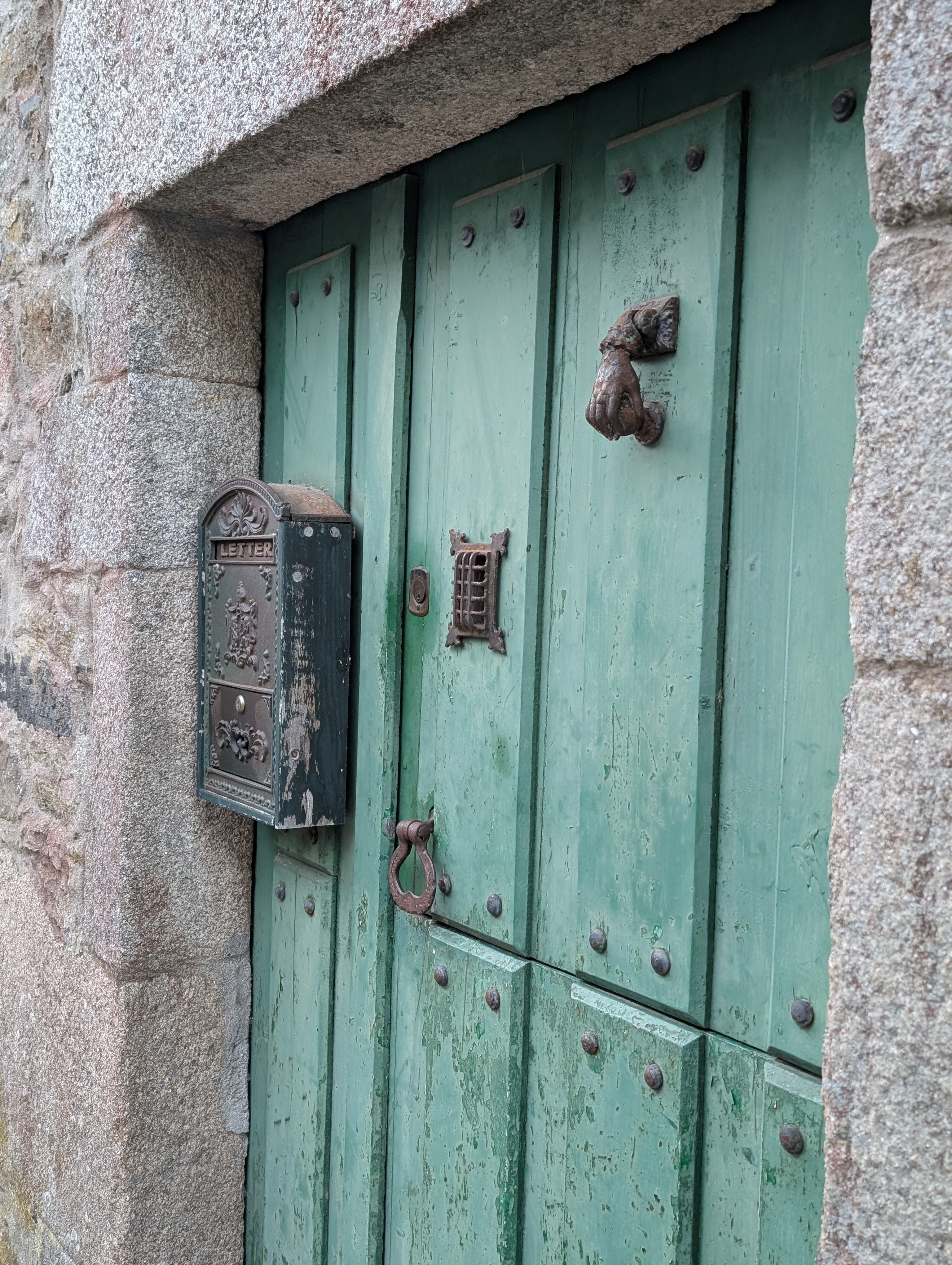
We loved the little hand door knocker…

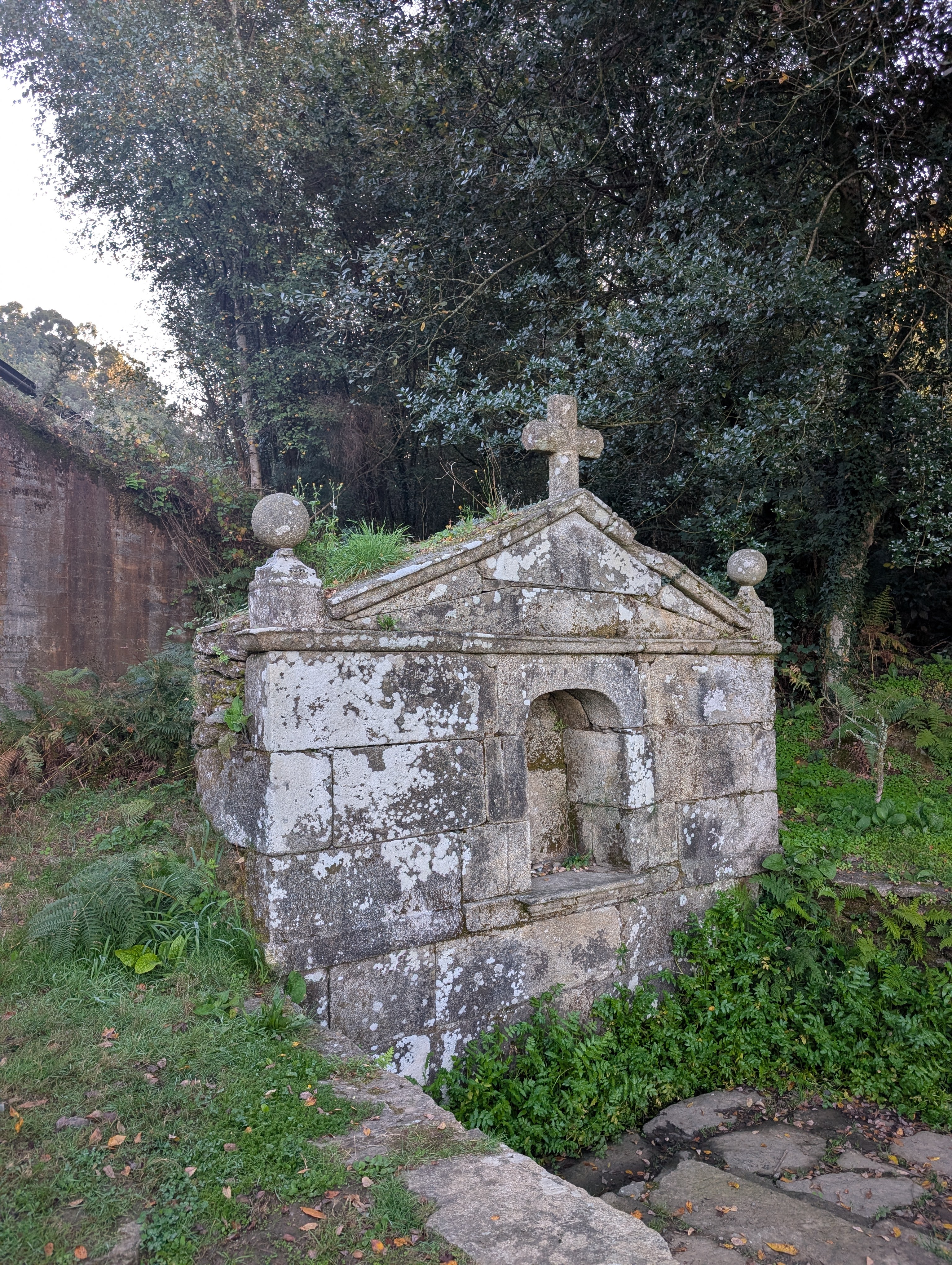
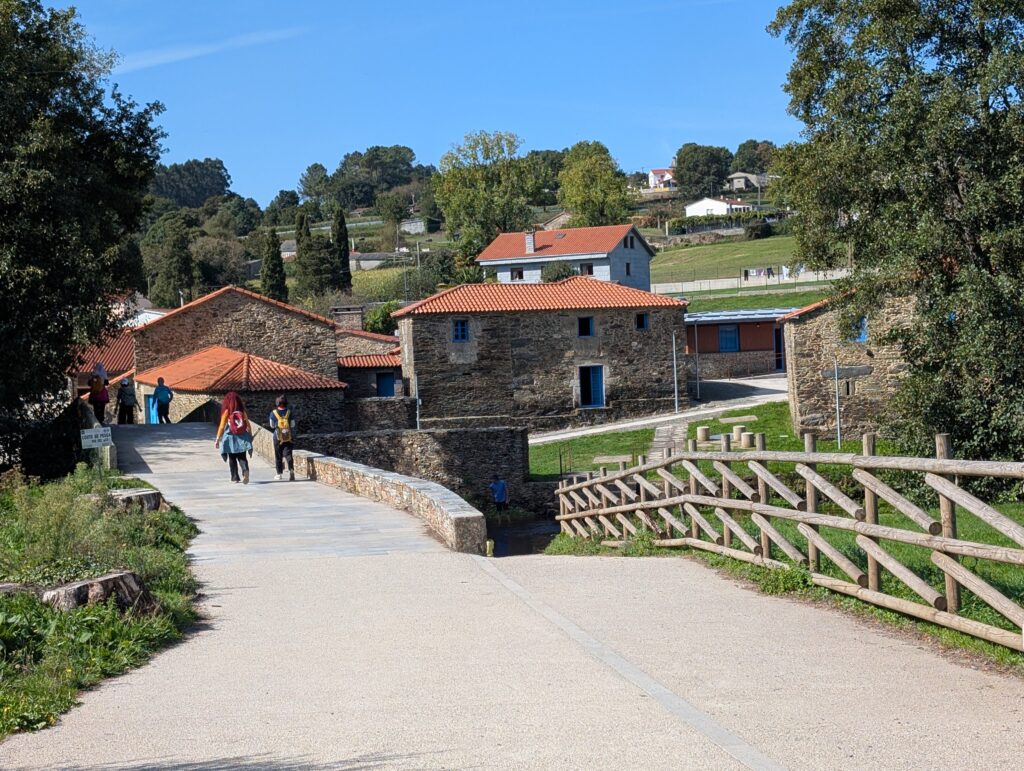
In this little town, we took the path to the right where you could put your feet into the cold water. Heavenly after walking for some time.

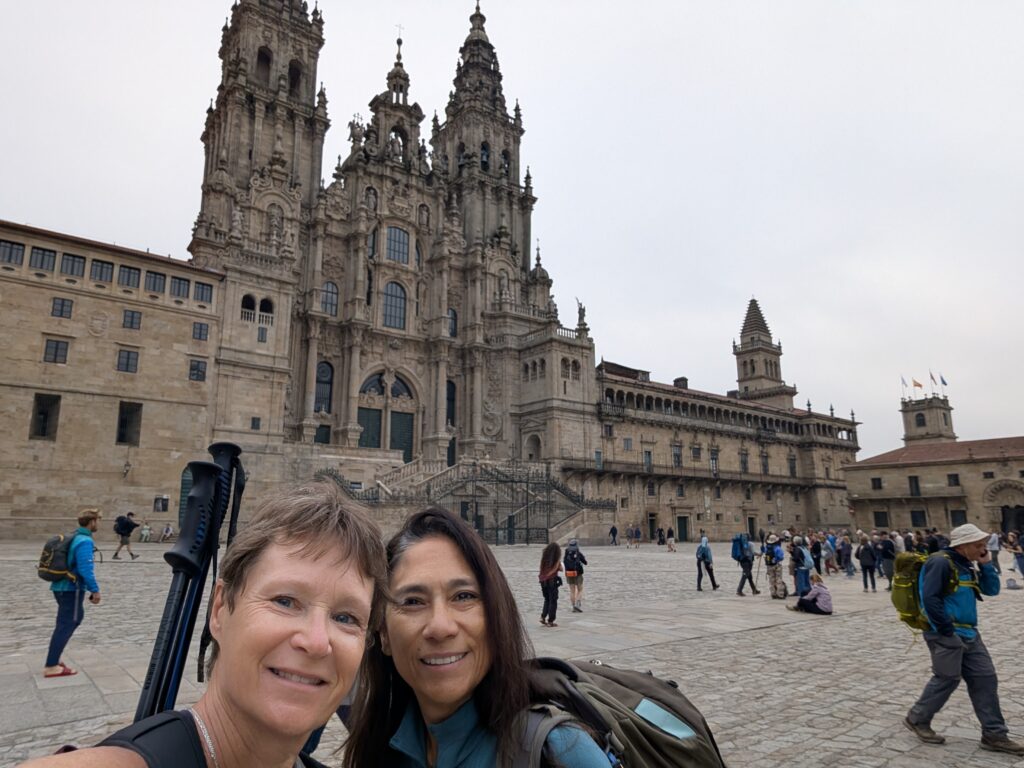
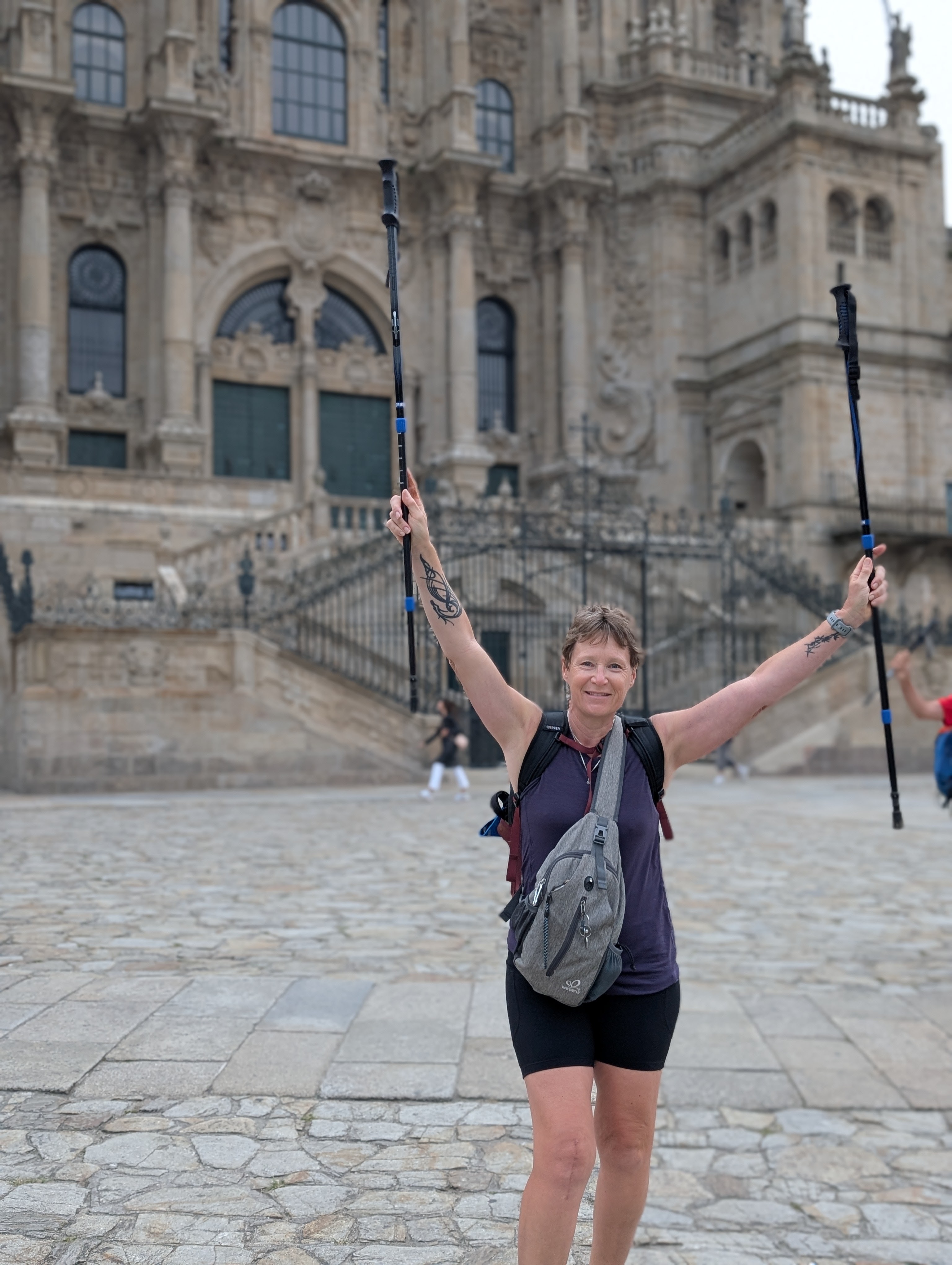
And finally, we were done….

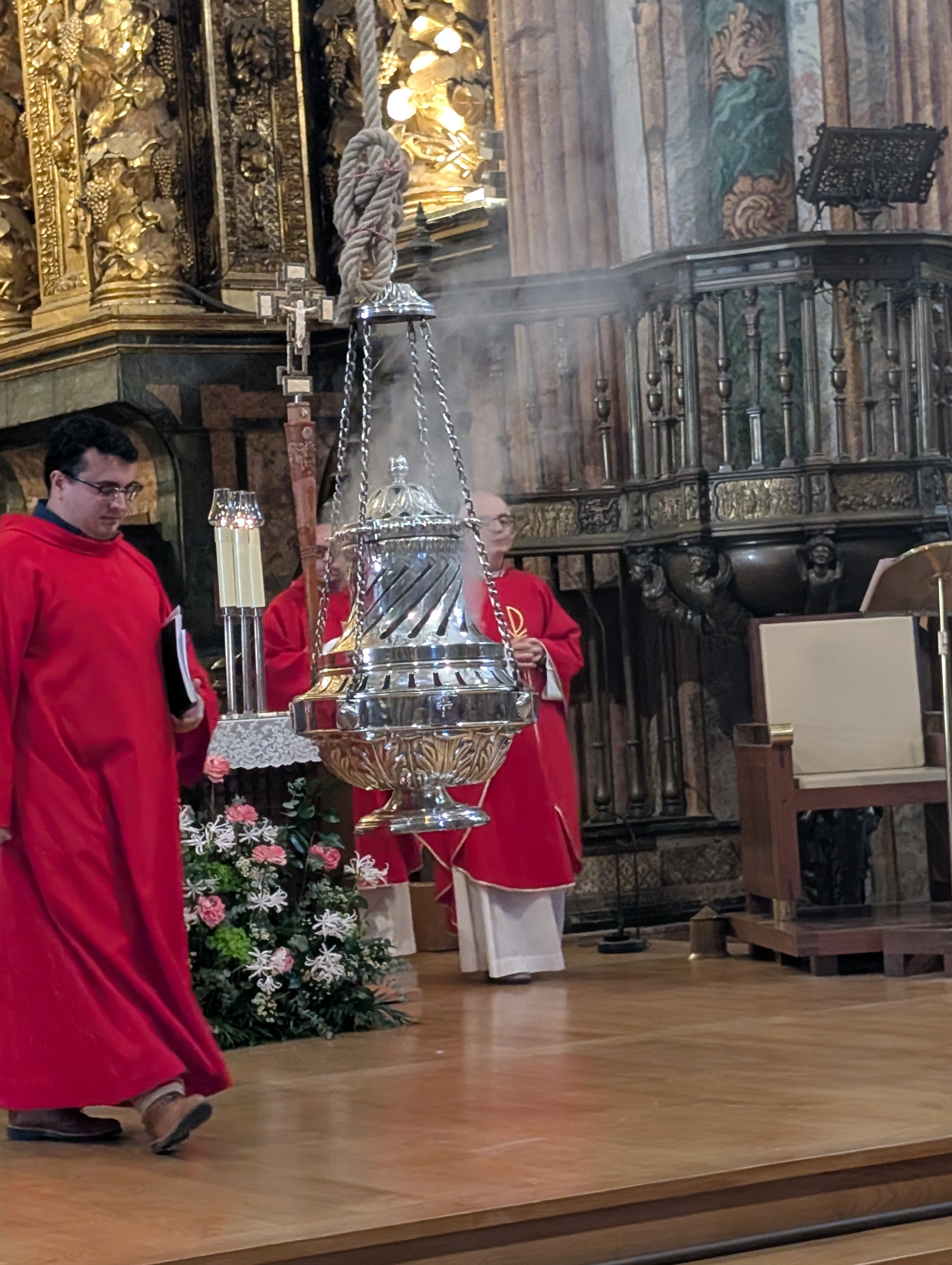
We also attended the pilgrims mass in the cathedral.

The Botafumeiro has been used since the Middle Ages to help remove smells from the cathedral (not much bathing back then). Today it is a tradition in Santiago and we were privileged to see it.

Madrid

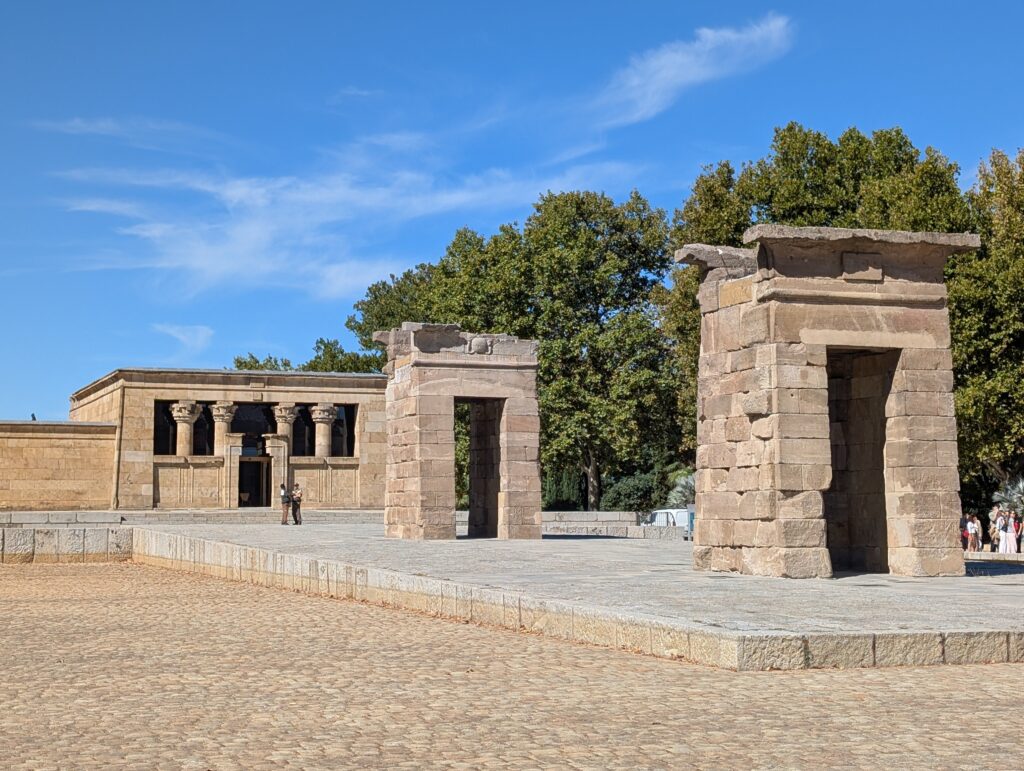
As I have traveled around Spain, each move led me to a larger city. As it is the capital, it is the largest. I am pretty cautious with my knee especially with the varying types of cobblestones in the city. Also, standing for long periods is really tiring on the knee. As a result, I decided to avoid museums, cathedrals, and other places where waiting in line and crowds within ar a problem.

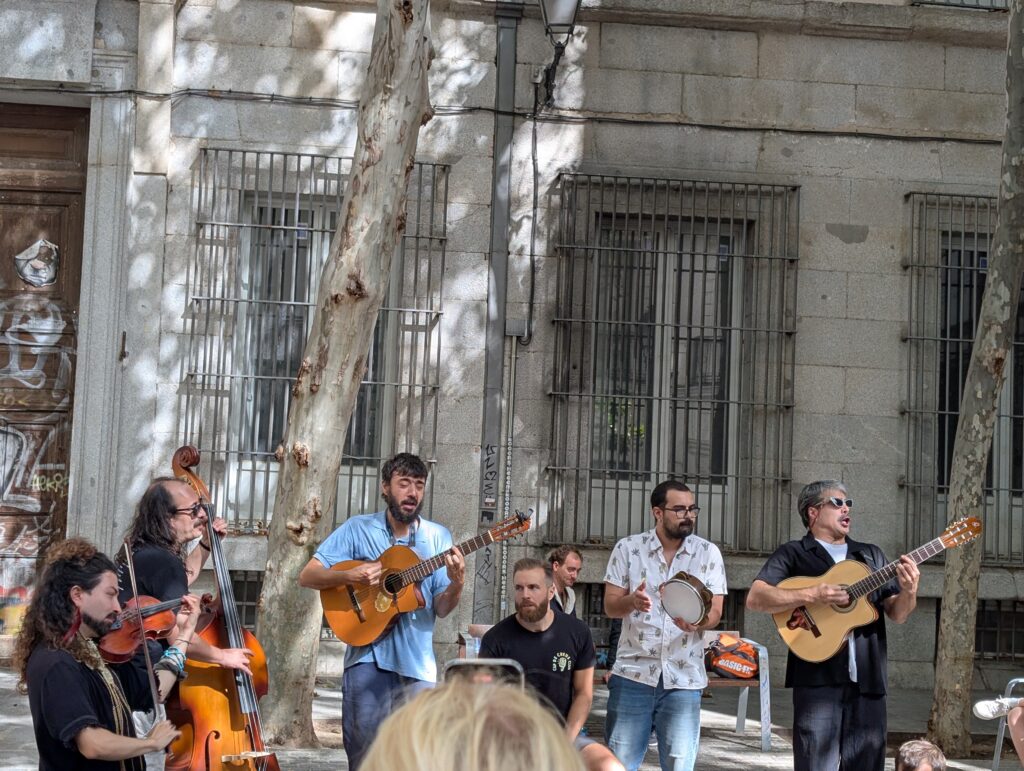
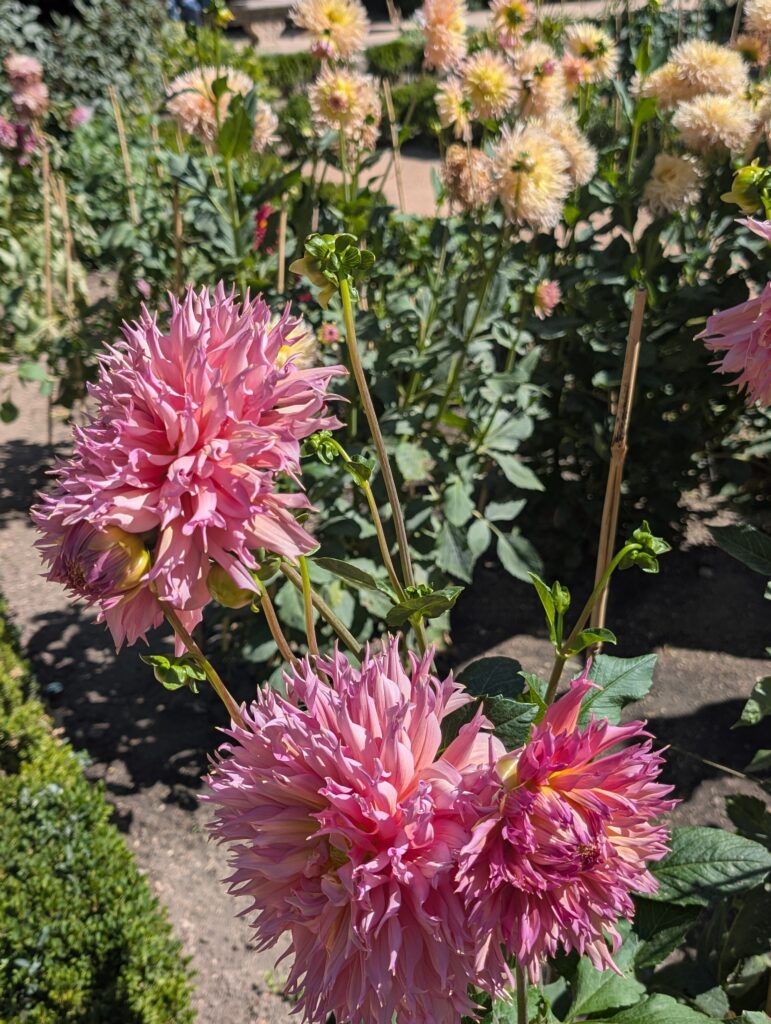
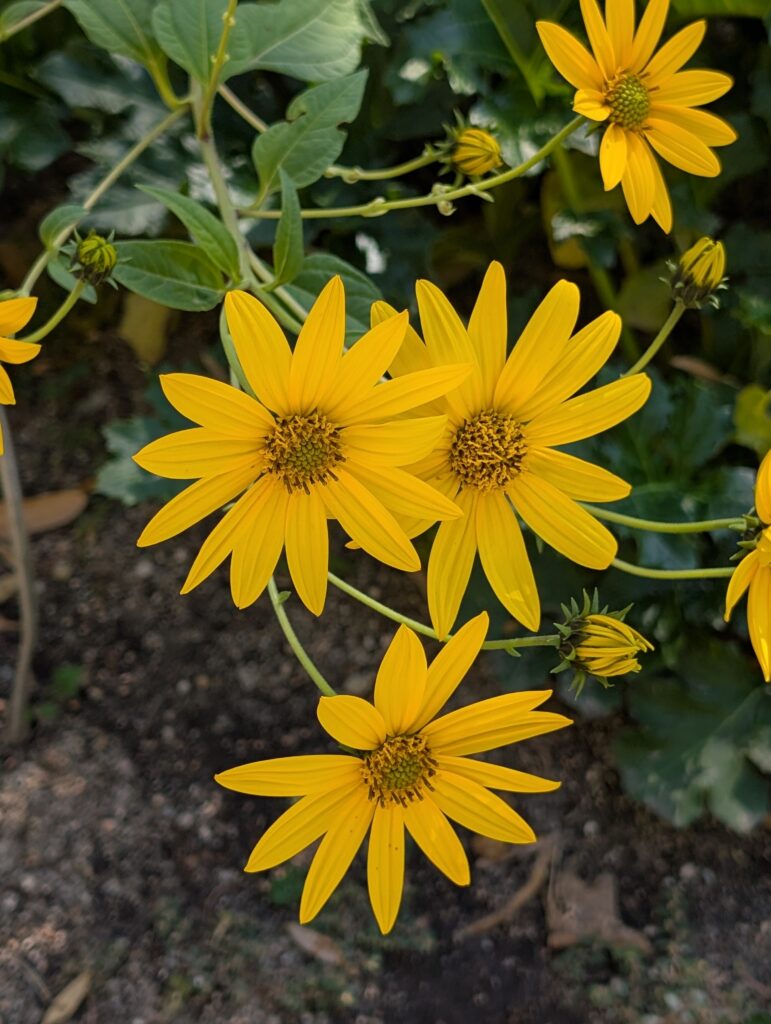
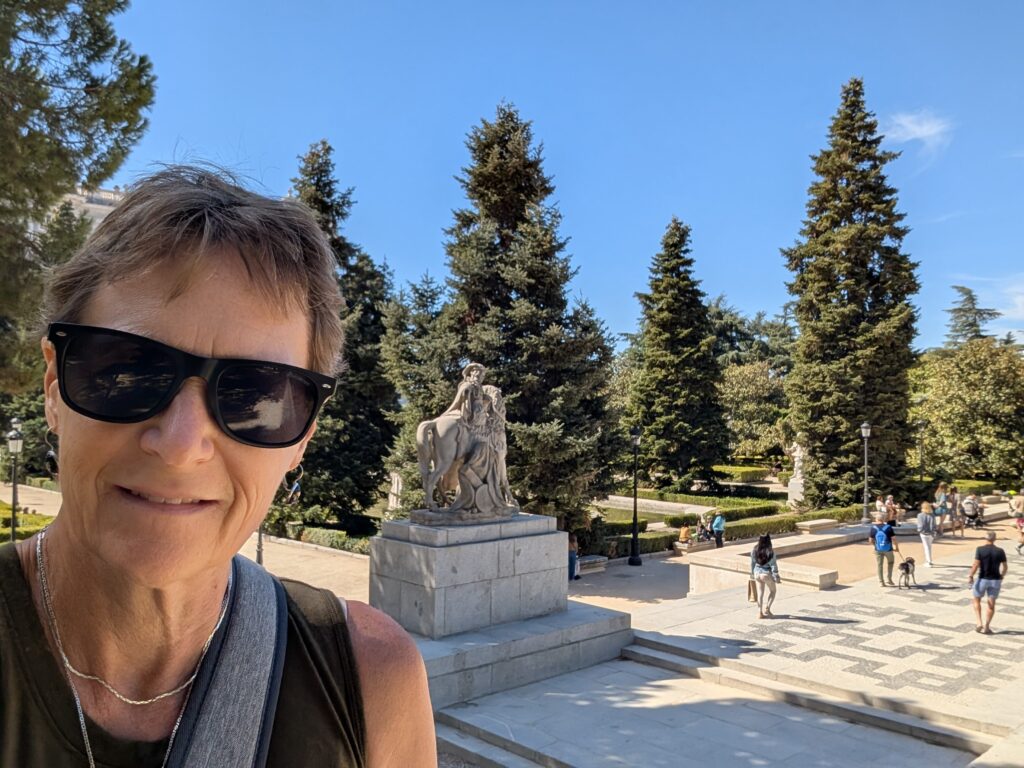
Instead, I thoroughly enjoyed people watching, visiting parks and the botanical garden. There is always something going on in this city.

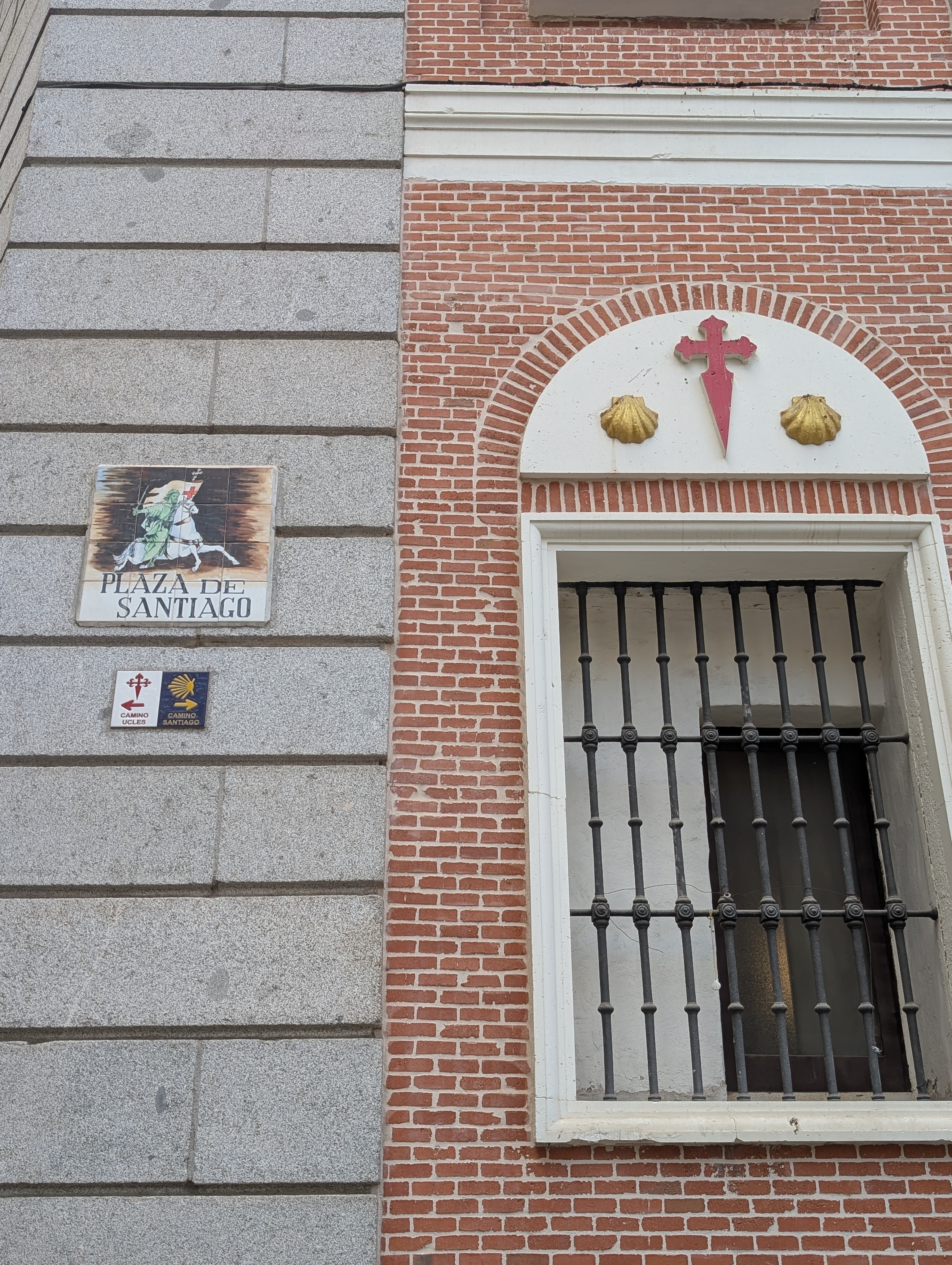
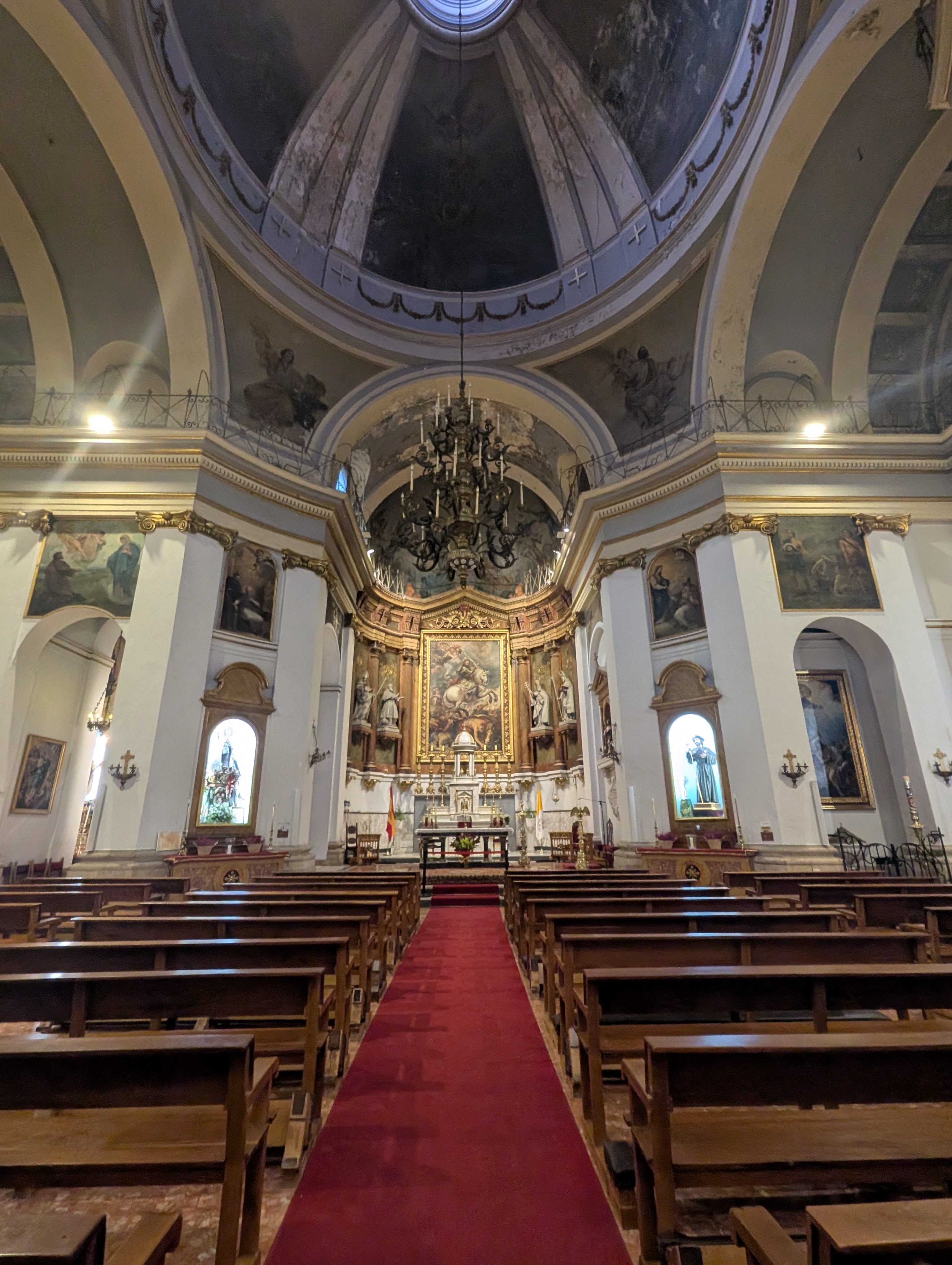
I found the church dedicated d to Saint Santiago and the start of one of the Camino. Routes.

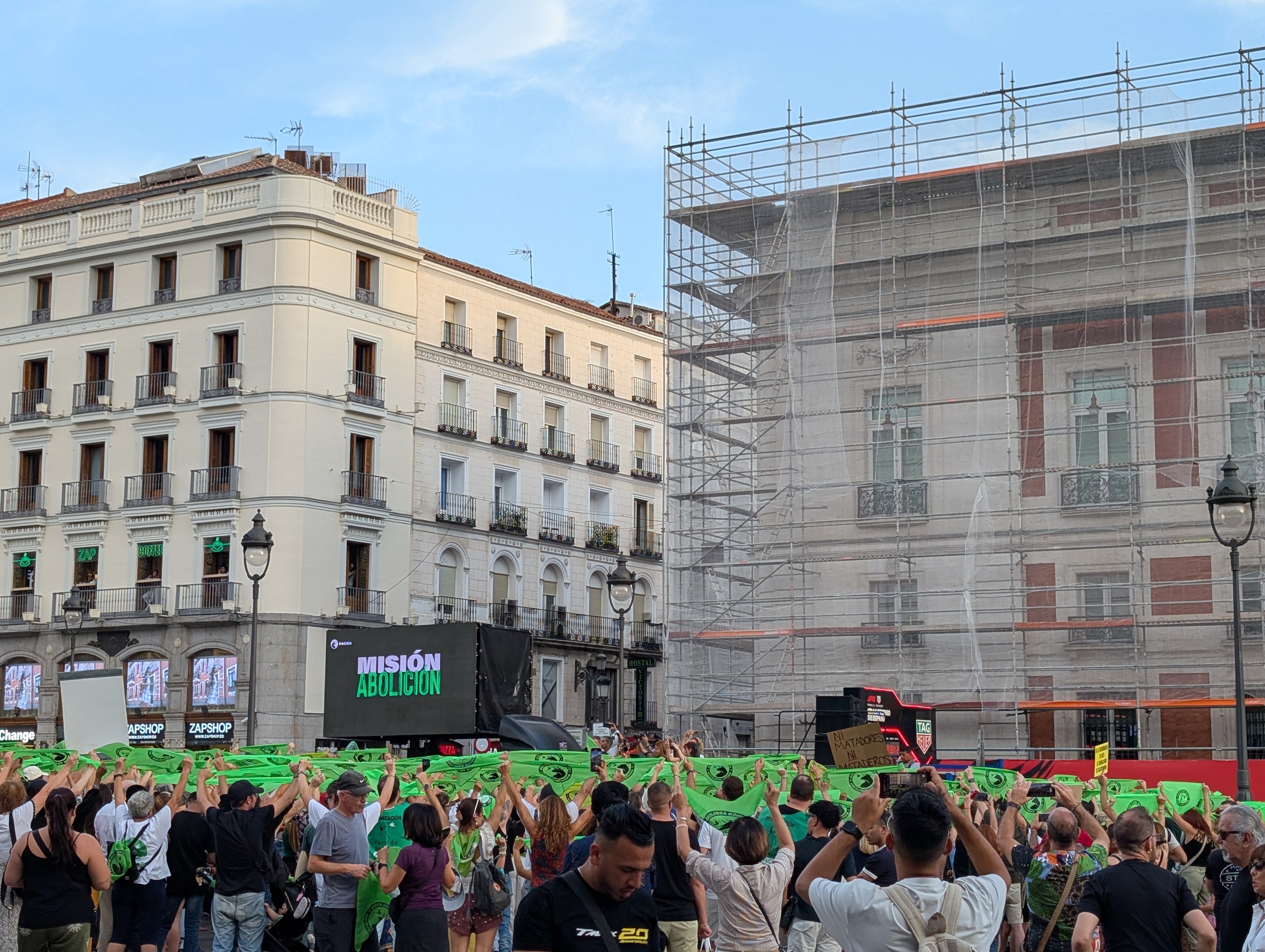
Plazas always have something going on. The Plaza del Sol had a demonstration against bullfighting.

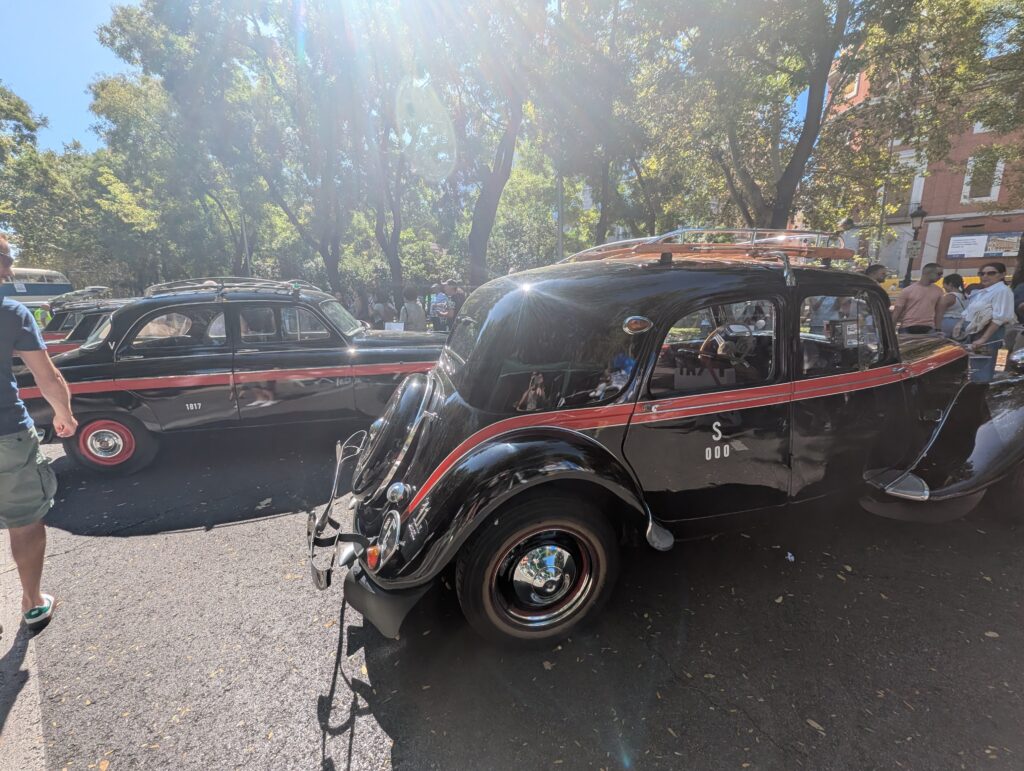
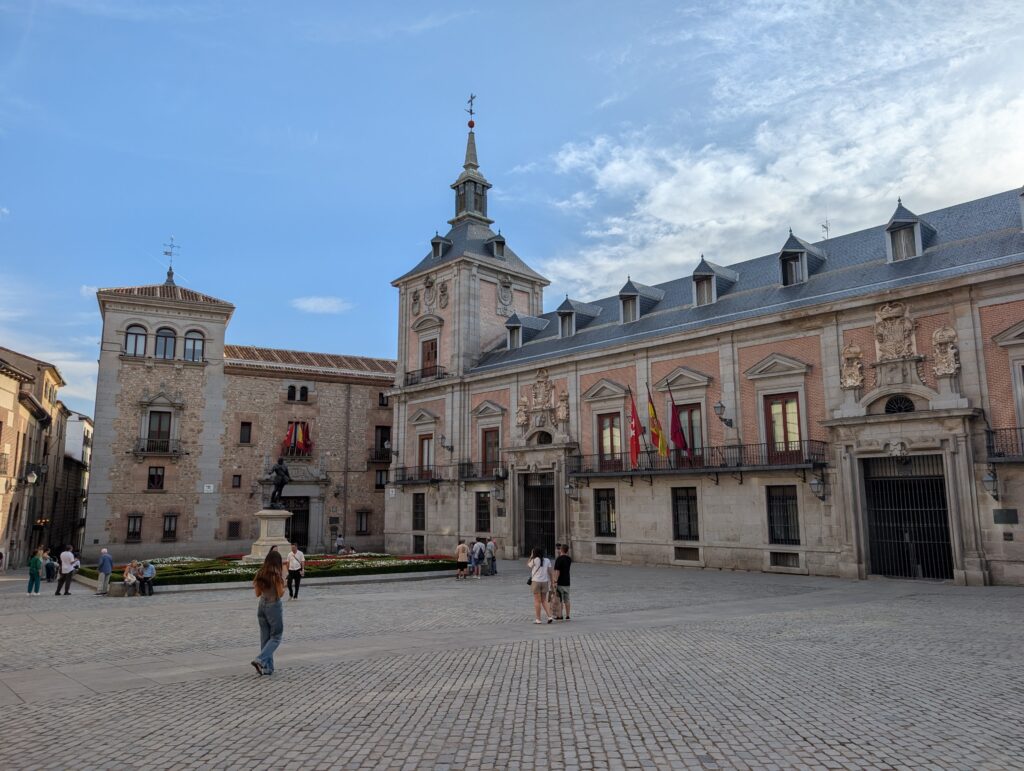
Other plazas were used for children’s activities with police, taxi drivers, and others creating a obstacle courses for little ones to bike and scooter through. Everyone was having a good time and they even had vintage taxi to look at.

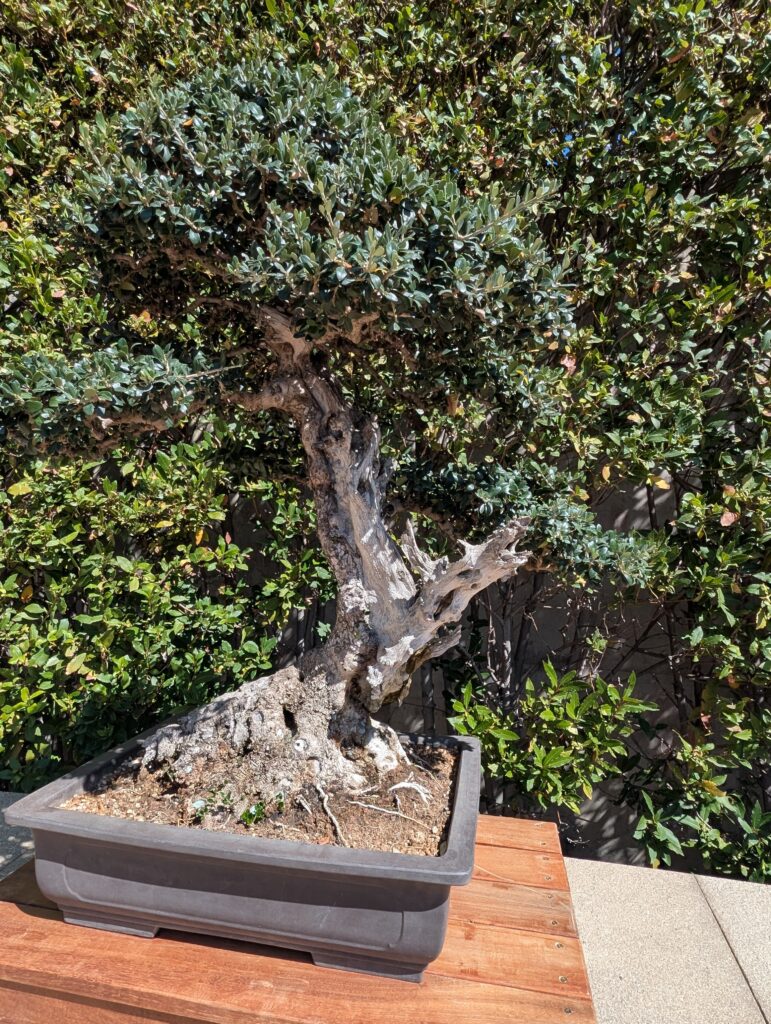
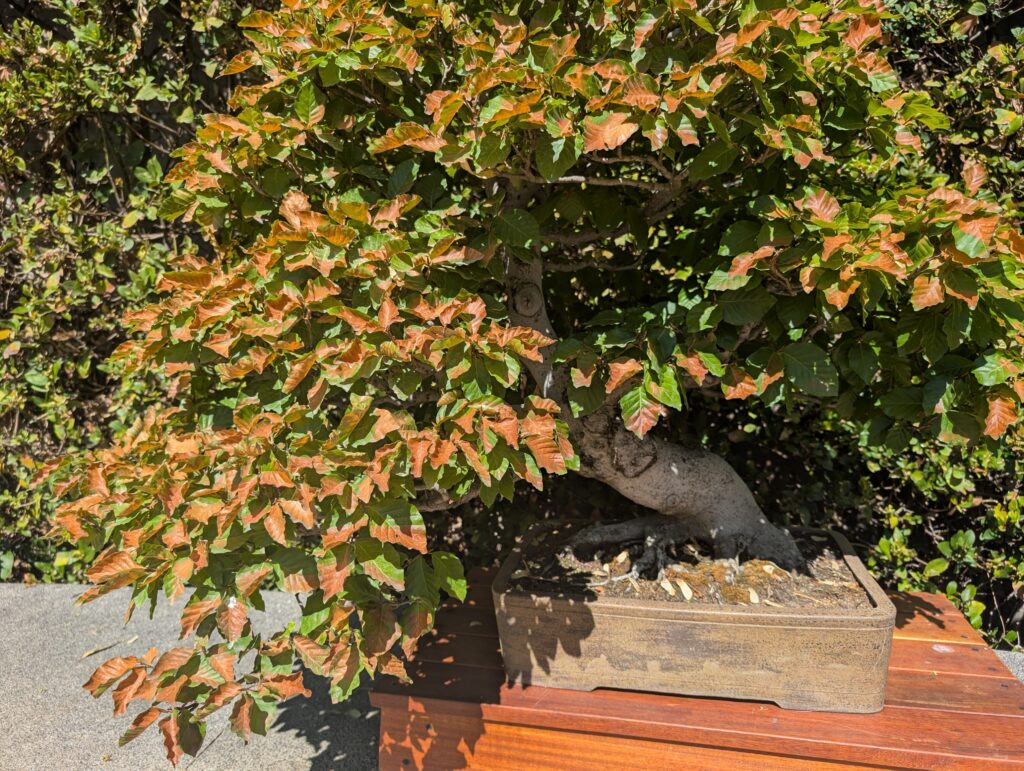
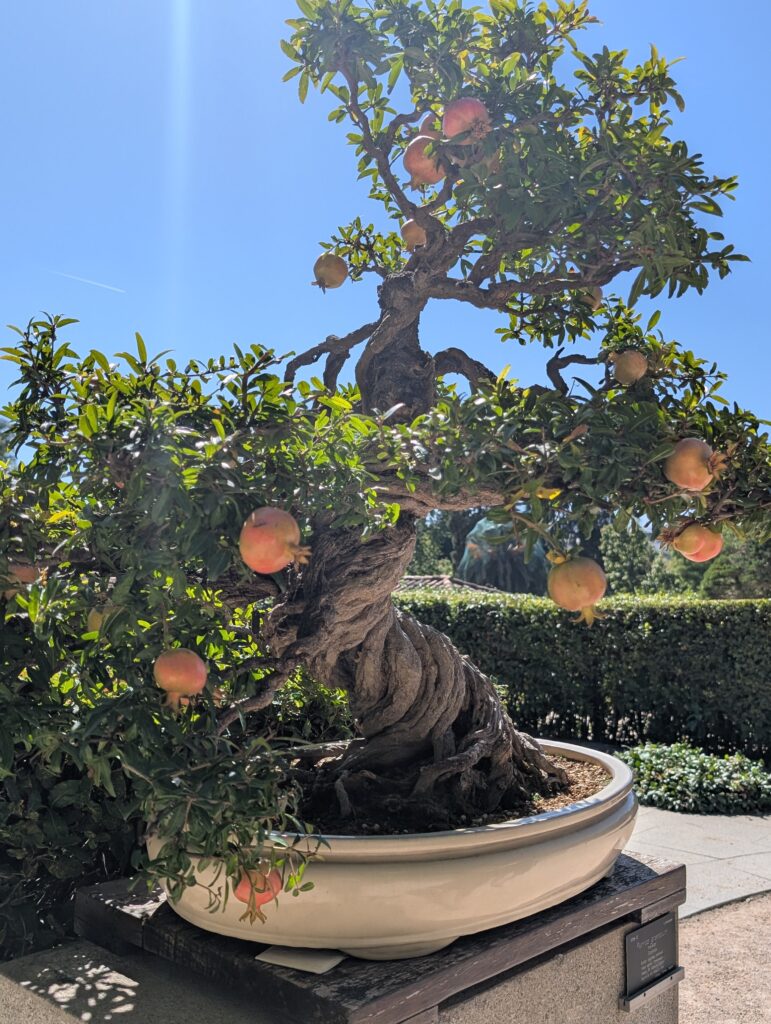
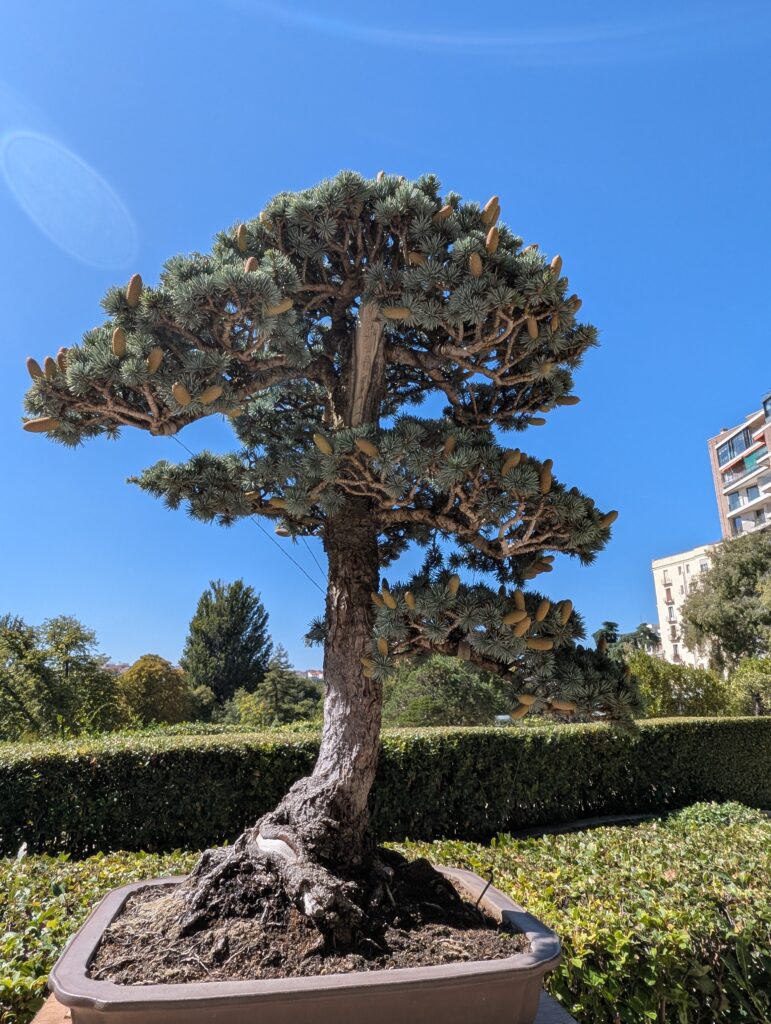
The botanic garden was great, especially the bonsai exhibit. Most of them ar 60-90 years old and made out of trees like elm, fig, pine, and olive trees.

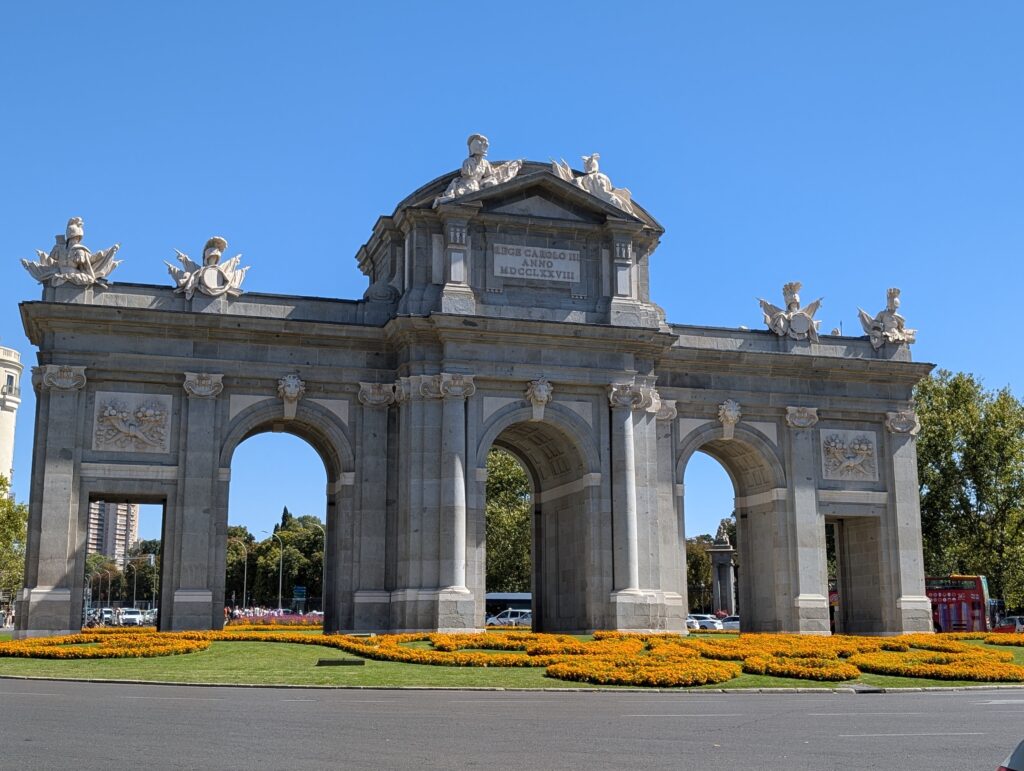
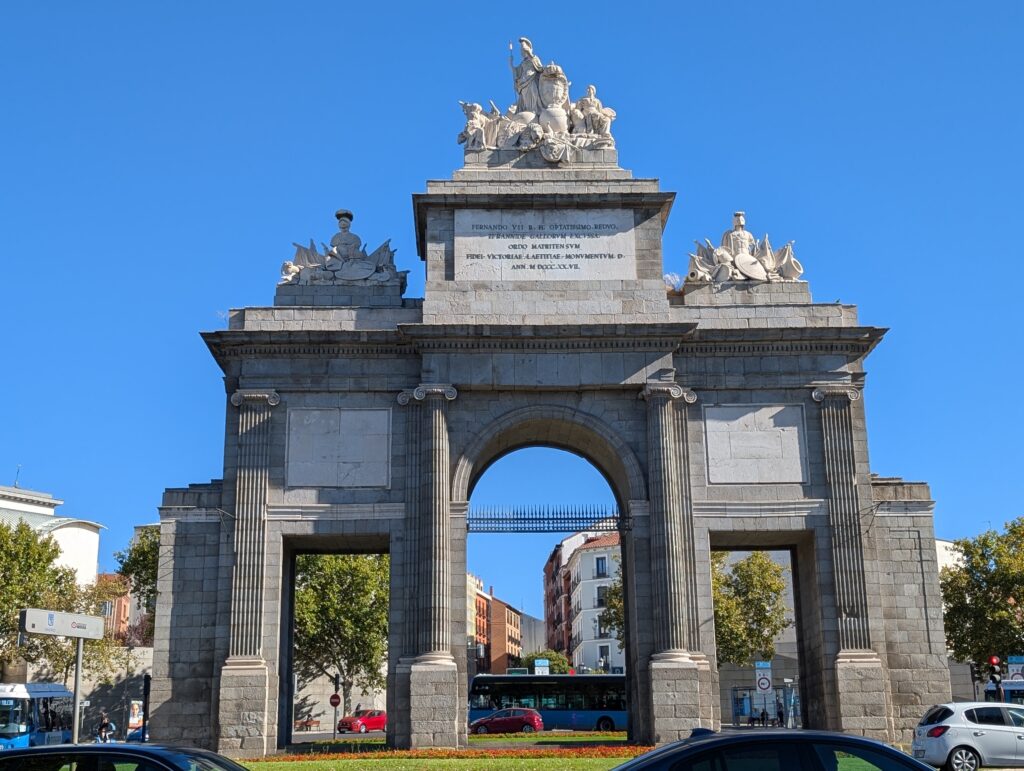
Puertas which are city gates were built in the 16th to 18th century as entry to the city as it was a walled city.

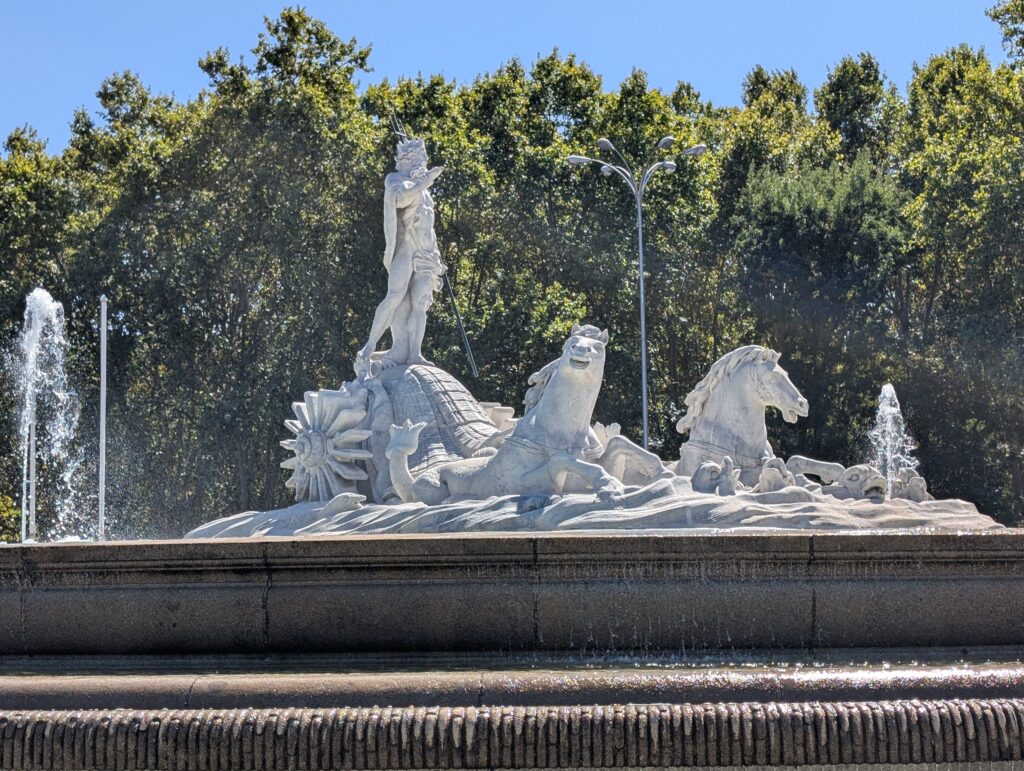
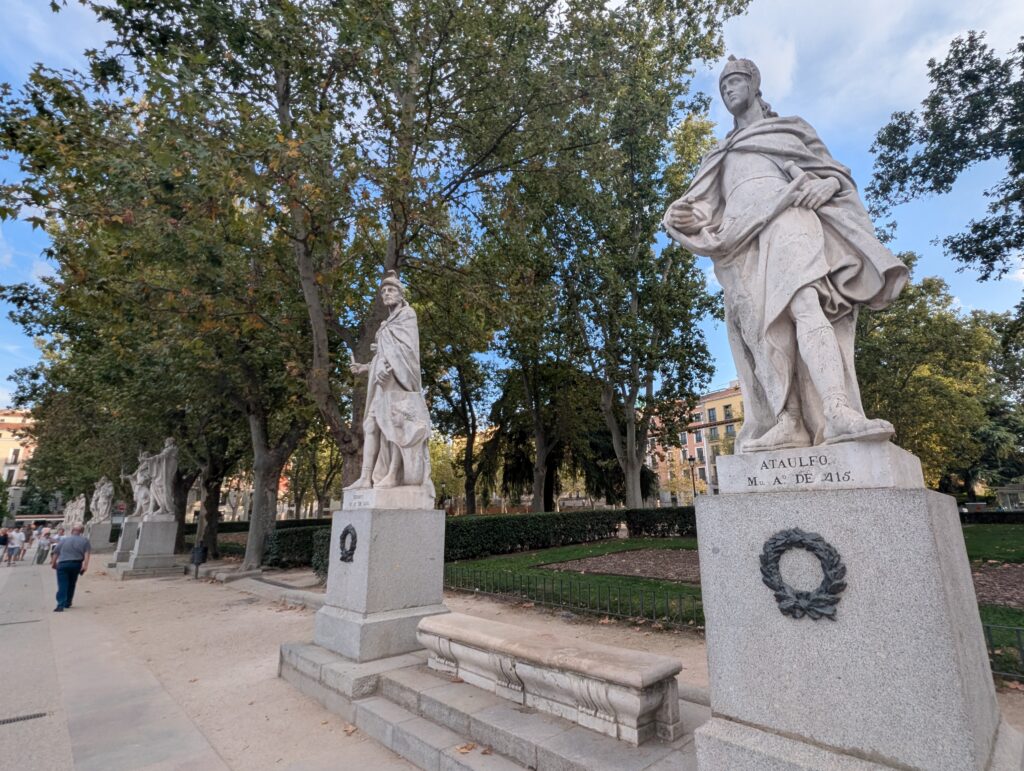
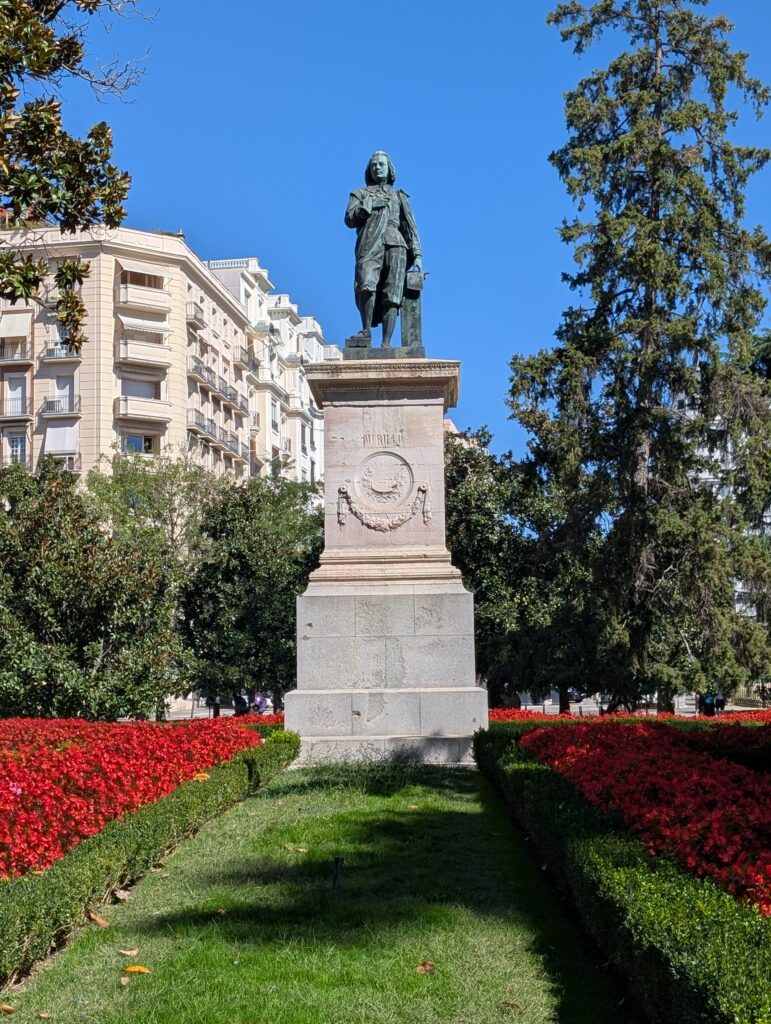
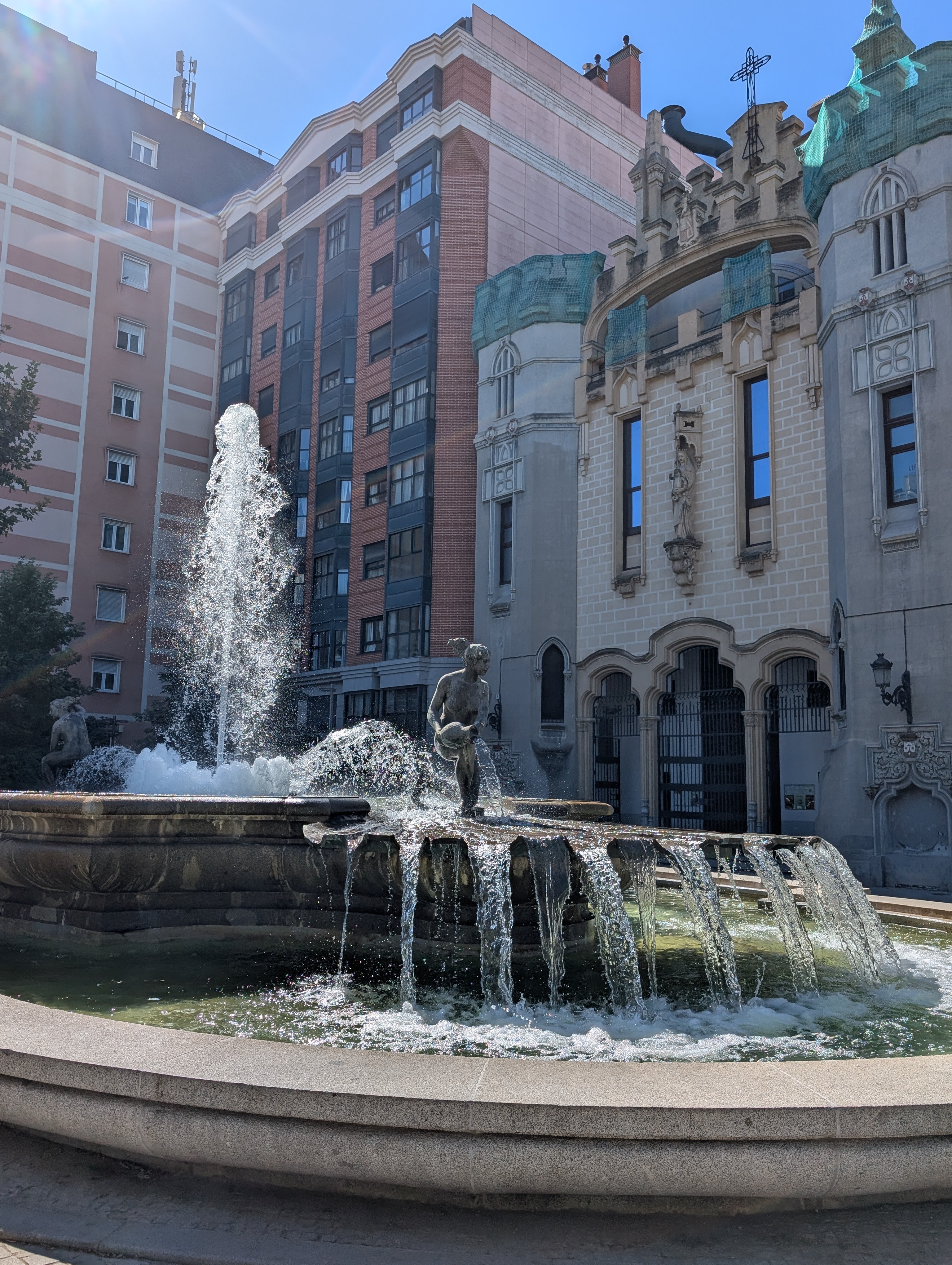
Fountains and other images

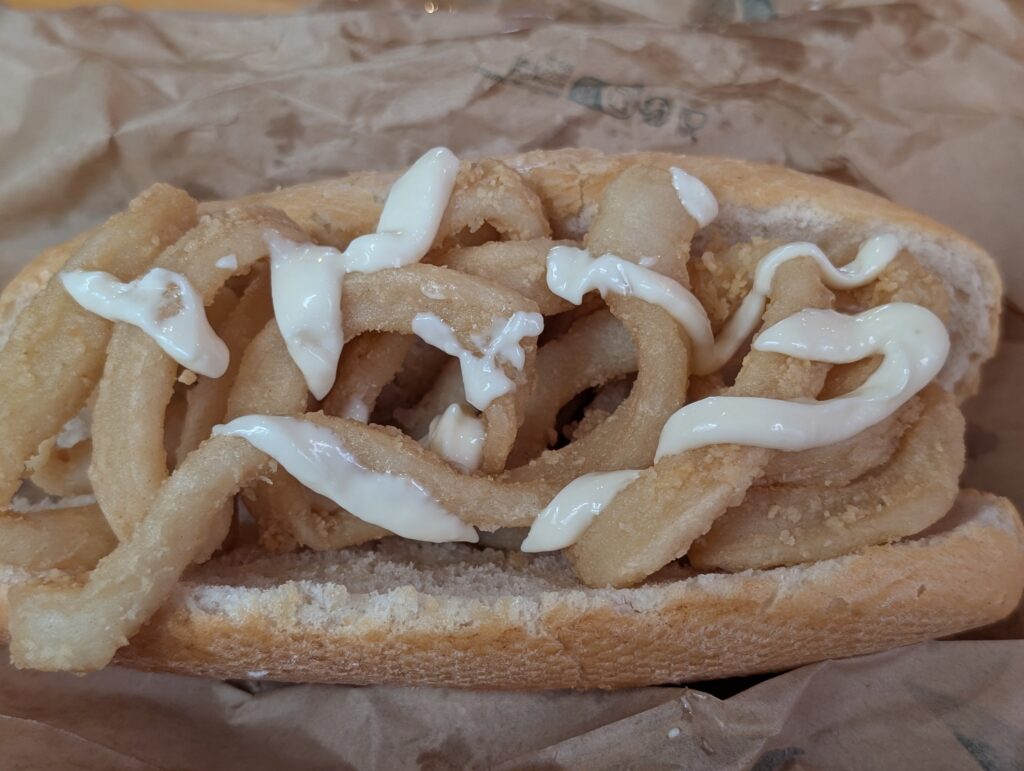
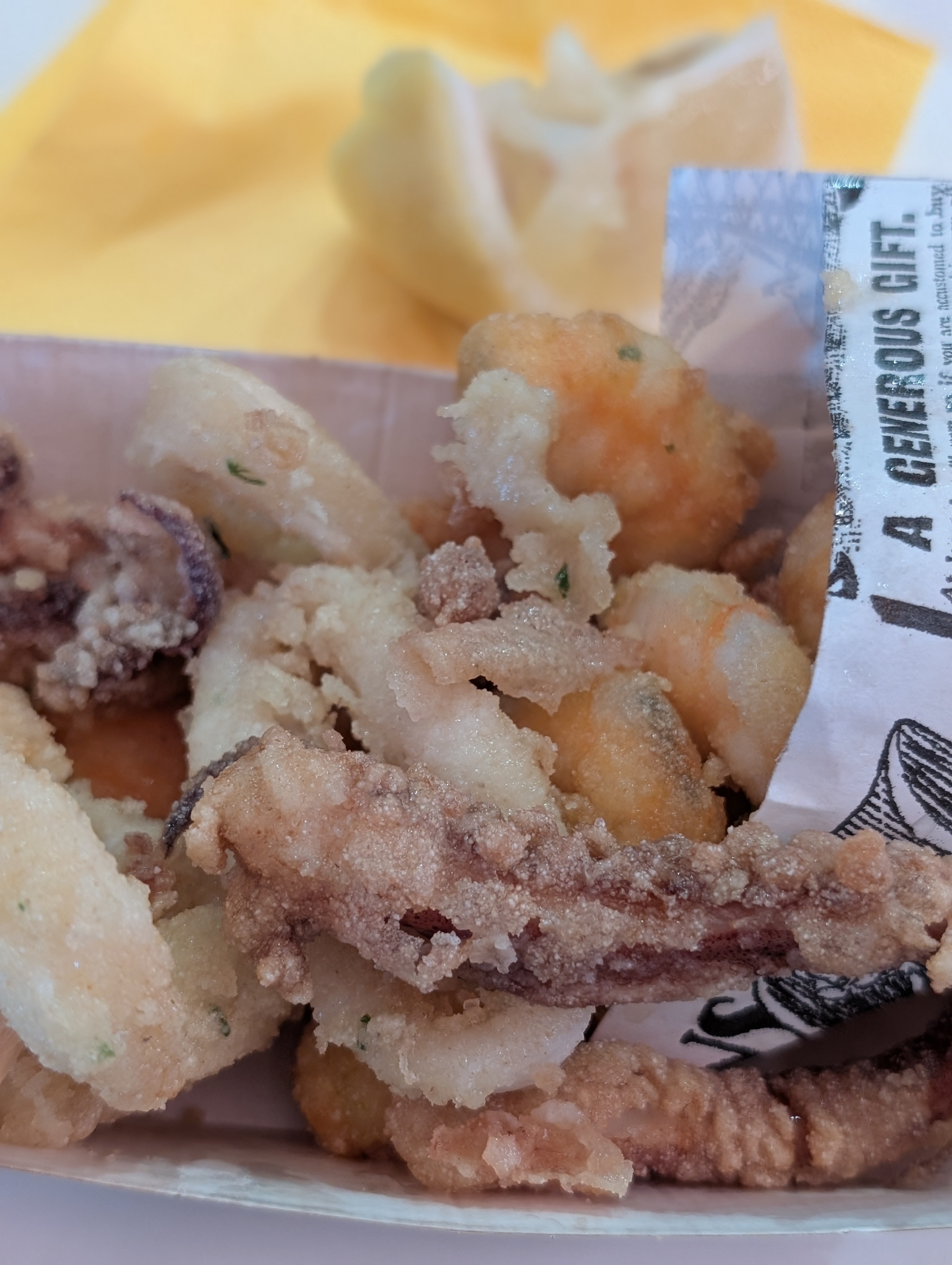
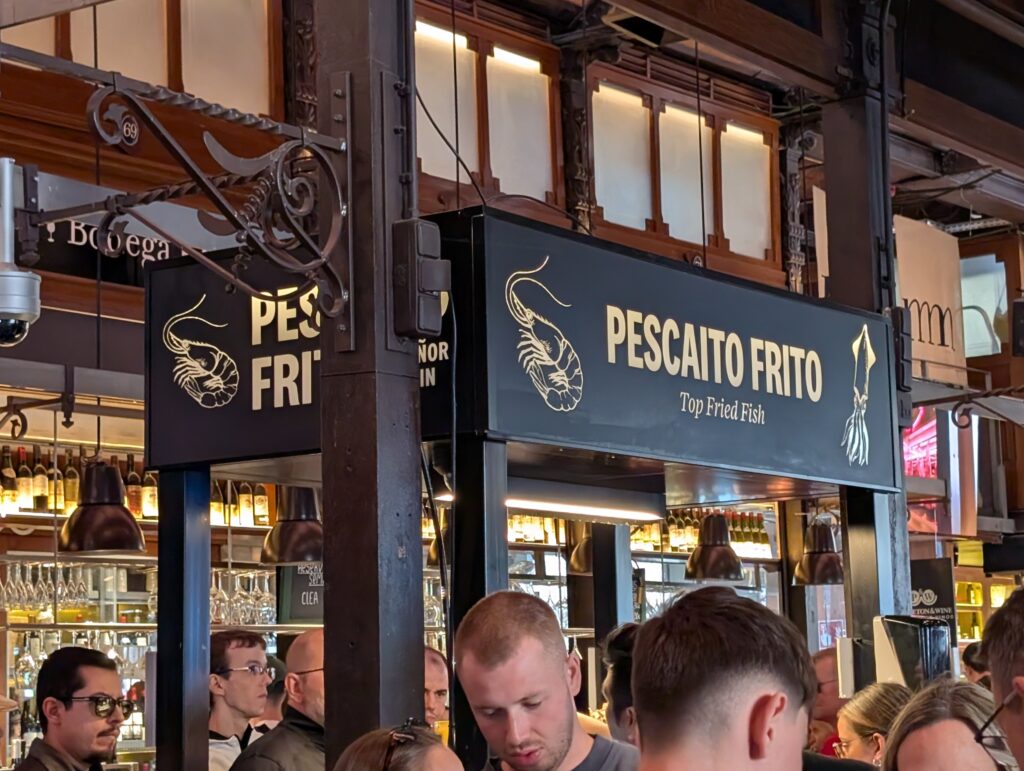
Last, but not least, the food here is similar to many large cities. All is possible. The specialty here is sandwiches with lightly fried calamari rings in it (with garlic mayo). It was good but the fried calamari and shrimp that I had the next day was better.

Seville

I was pretty excited about Seville even though it is a much larger city than the others I have visited. I was starting to think a UTI that I had at the end of August had returned. After checking in, I asked the person at the front desk of the hostel about options. I chose a private hospital instead of the public one and once there it was confirmed I did have a UTI. I do have global health insurance with a pretty high deductible. My Spanish is intermediate enough to be able to comunicate and understand.

Needless to say, I tried to take it a little easier here and did not do long day trips that I had been thinking about.

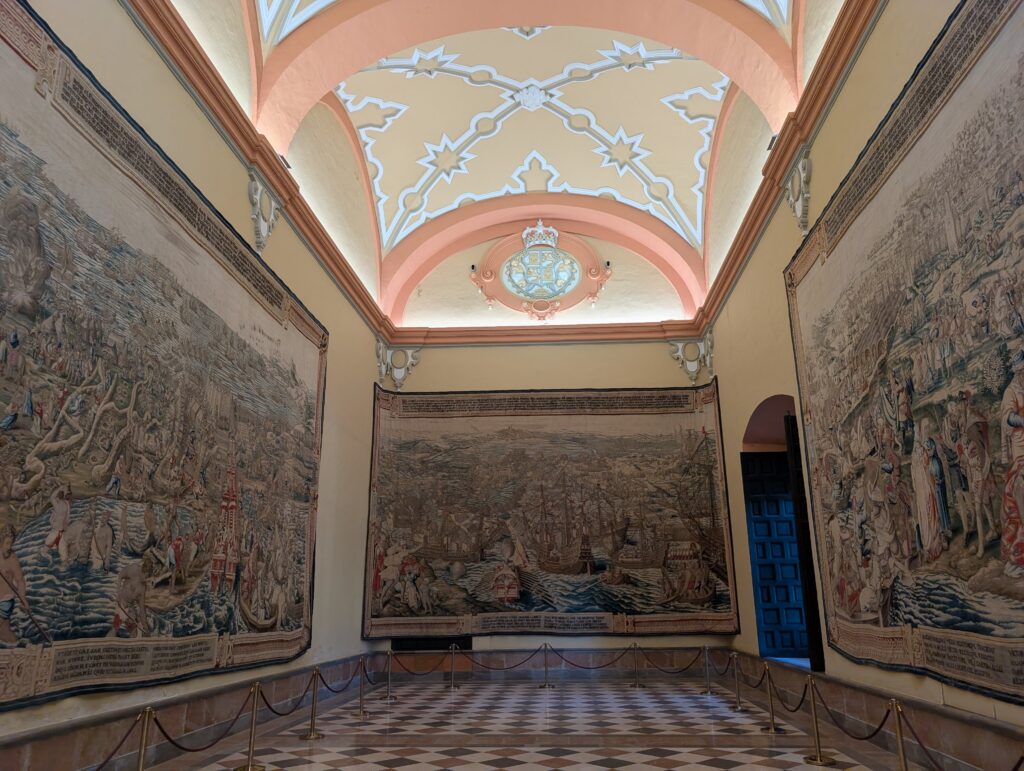
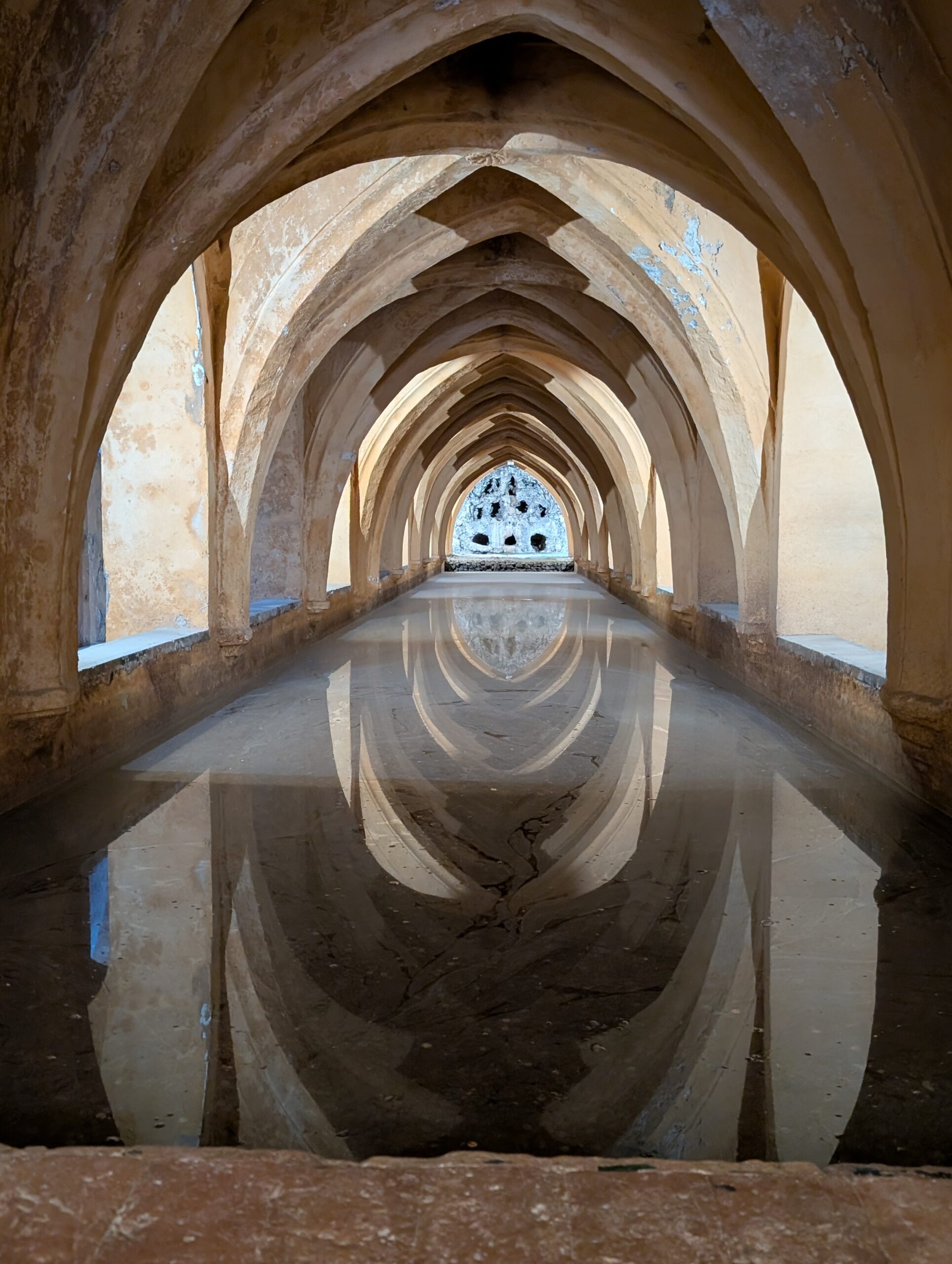
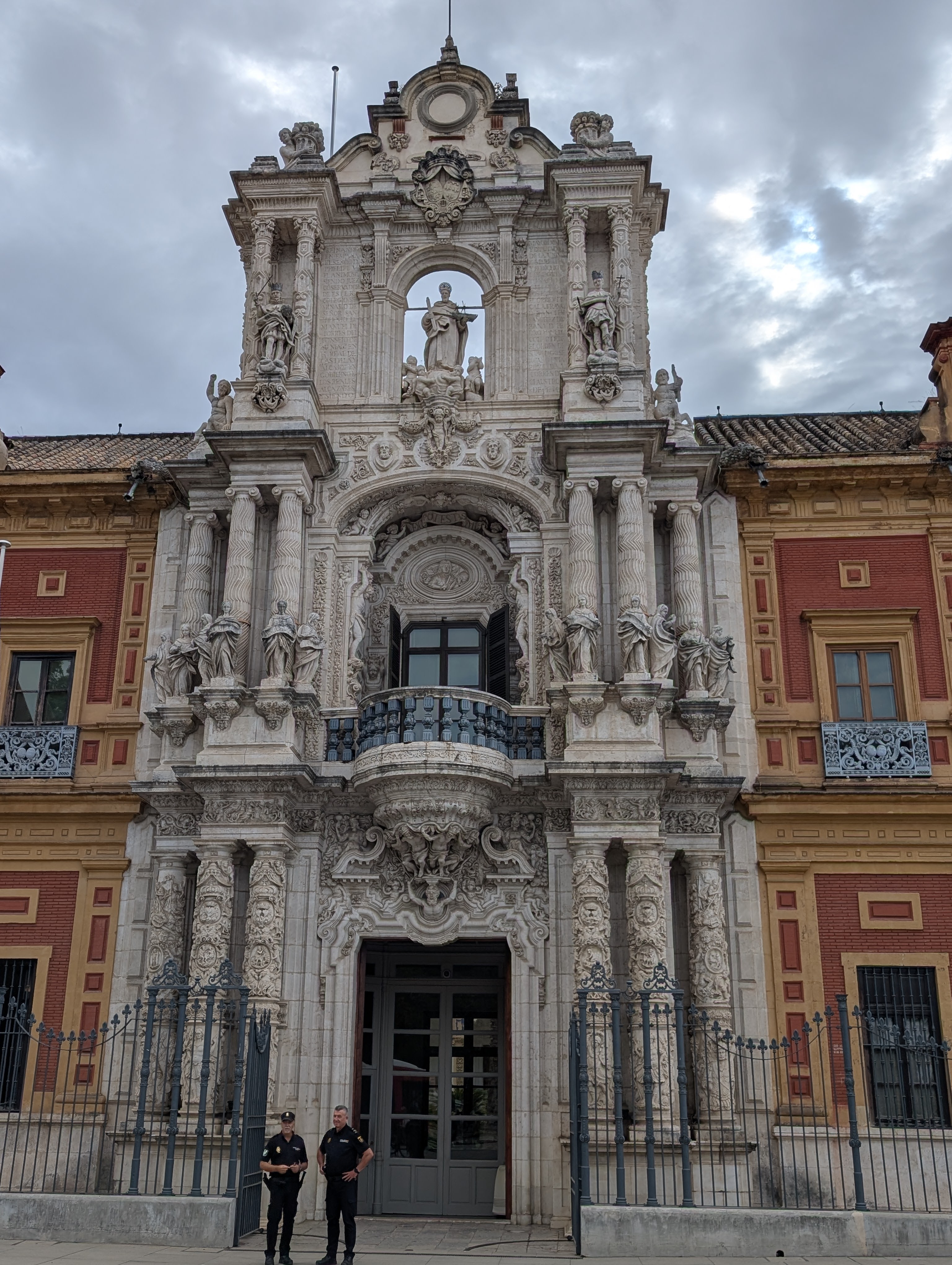
Royal Alcazar of Seville. It originated in the 10th century as an Islamic citadel and was expanded by the Moors and again in 1248 by Christian monarchs. It is the oldest royal palaces in continual use in Europe. Currently the Spanish royal family resides there. It has architecture from all past influences.

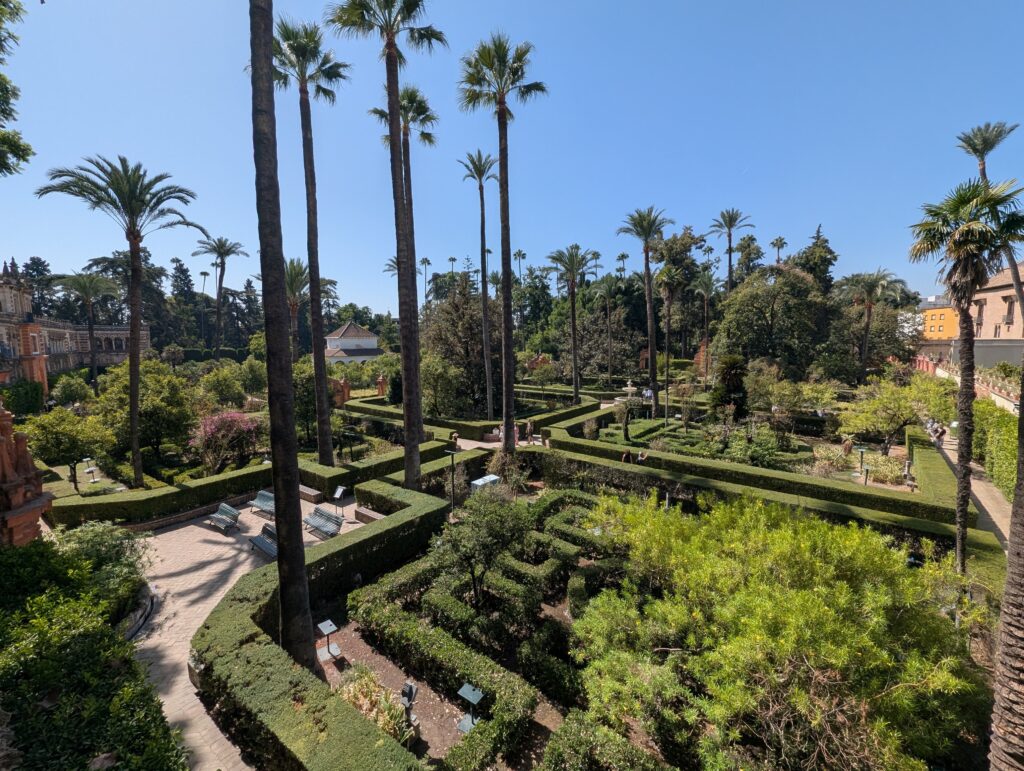
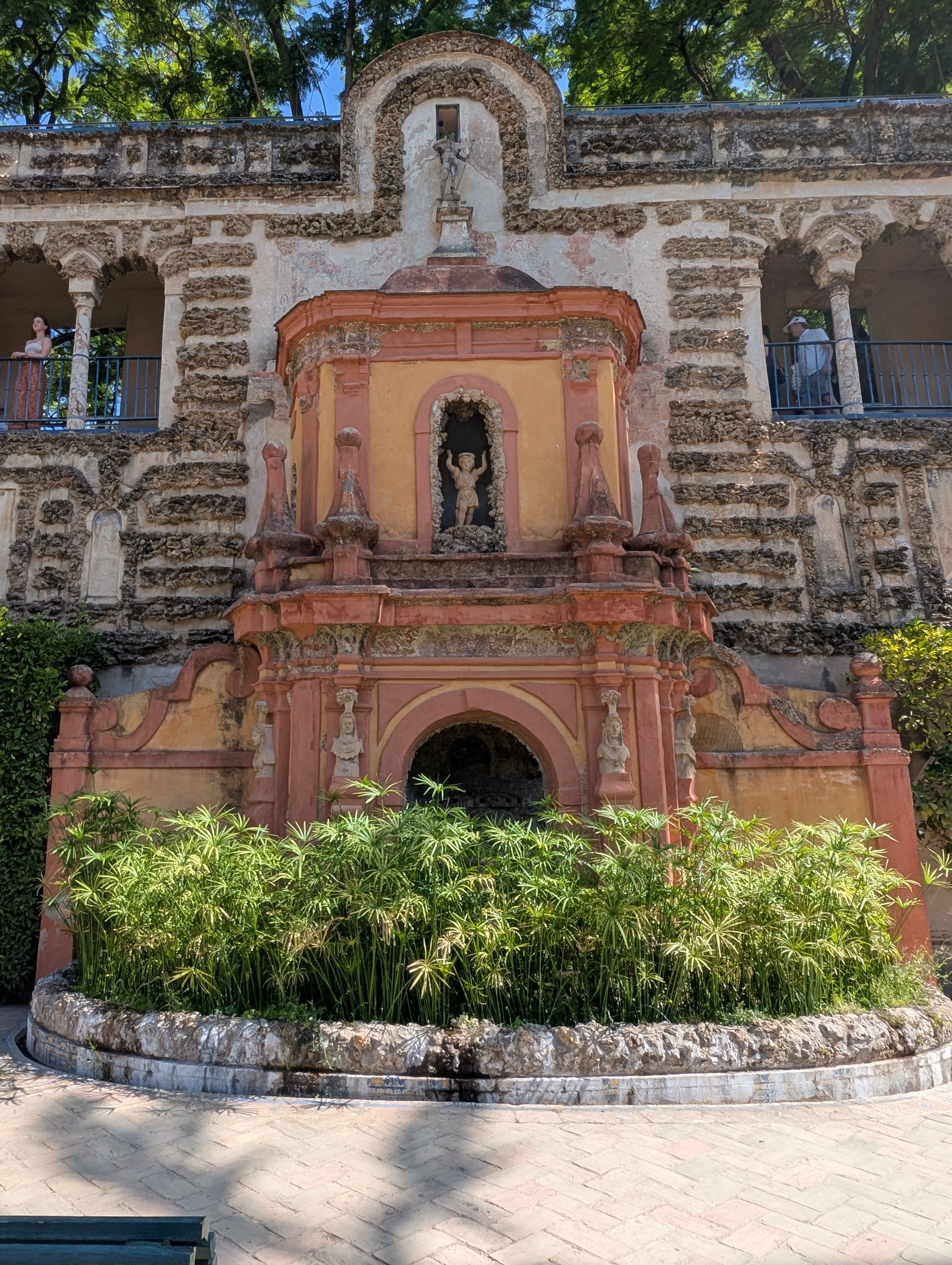
The best part is the gardens which is immense and features fountains, formal gardens, and a wooded section. There is even a water organ, that played tunes as water flowed through.

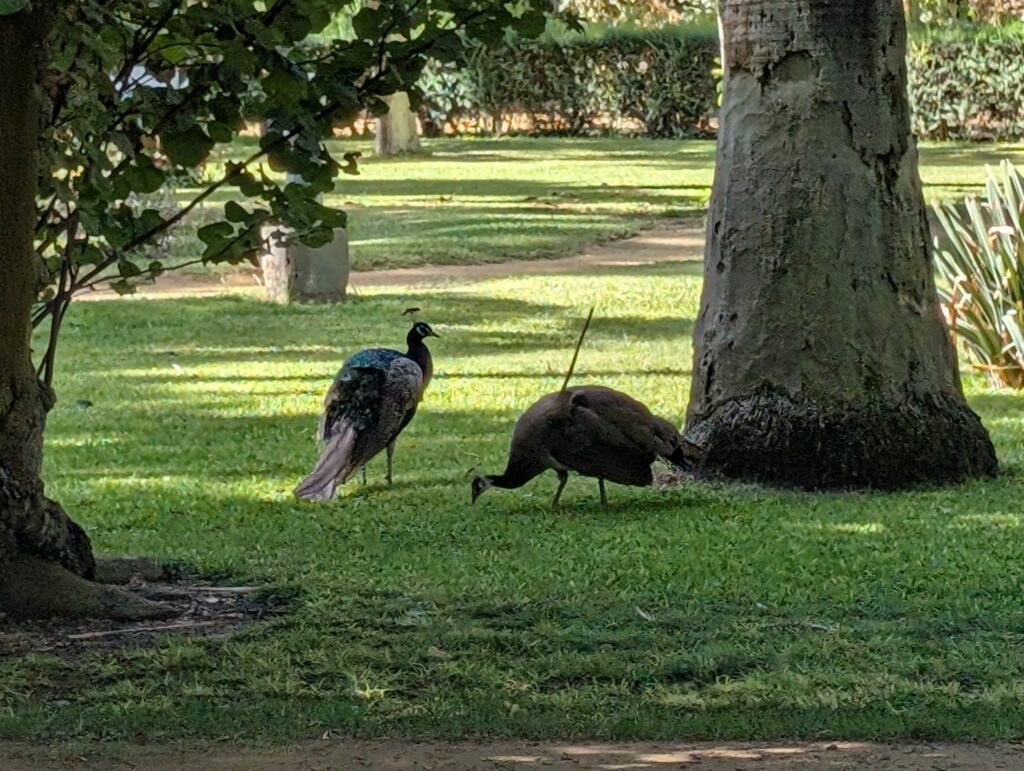
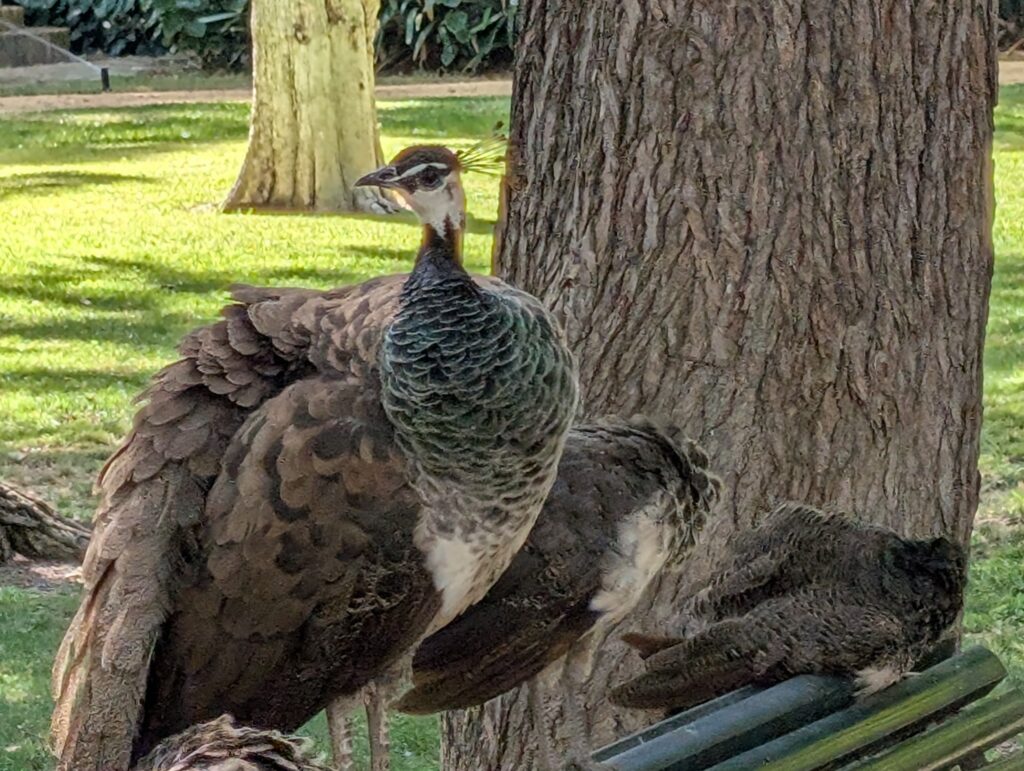
And there were peacocks. Not sure why it looks like a stick is coming out of the back of one of them.

Down in the basement was tunnels that led to the burial catacombs.

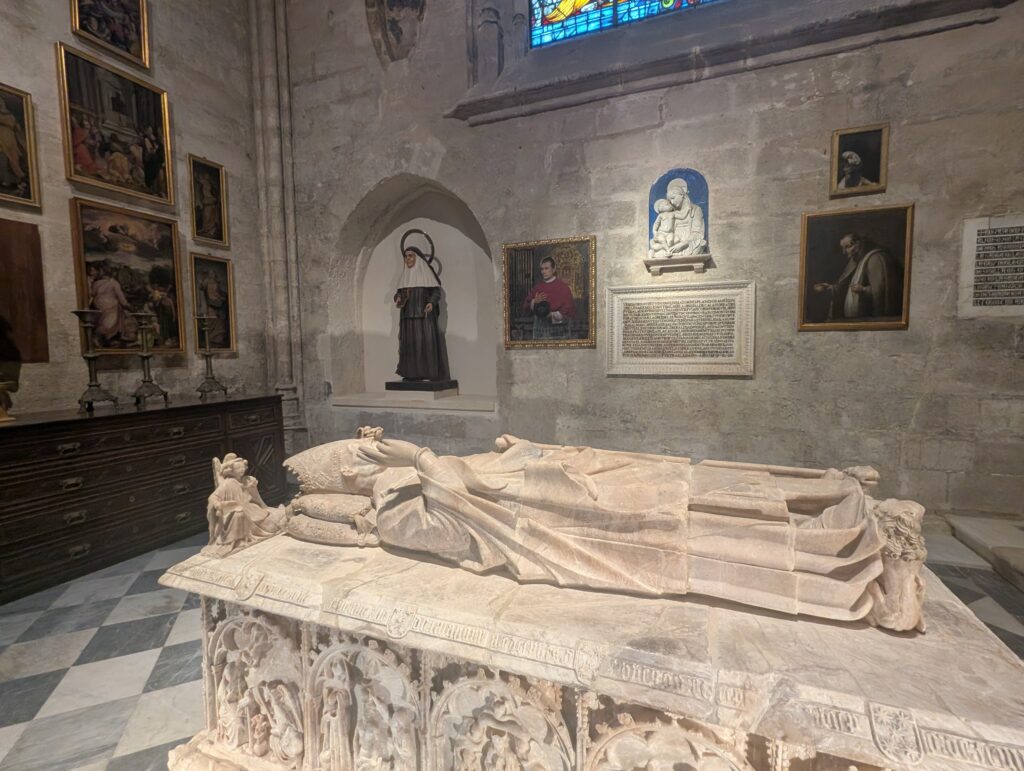
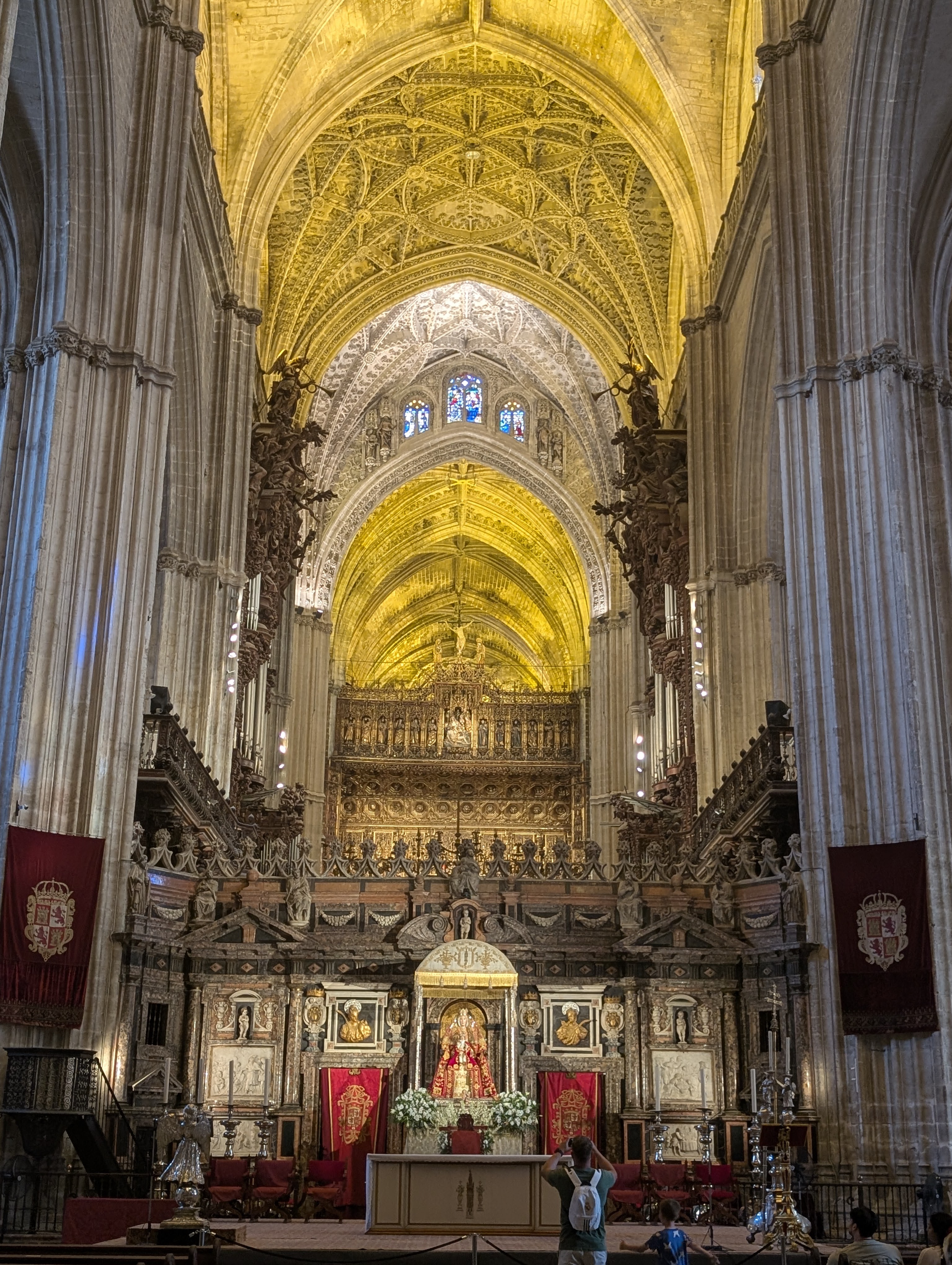
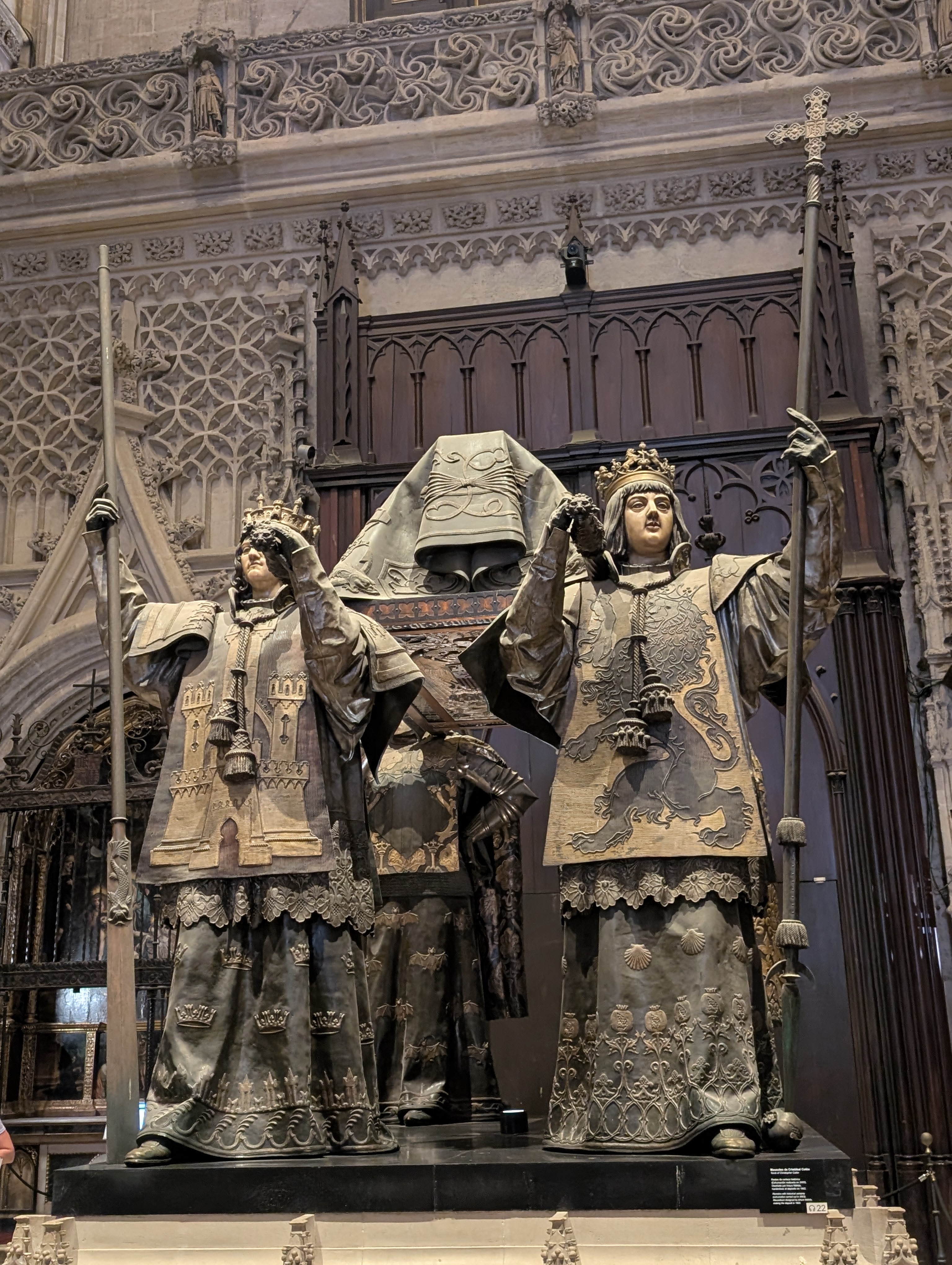
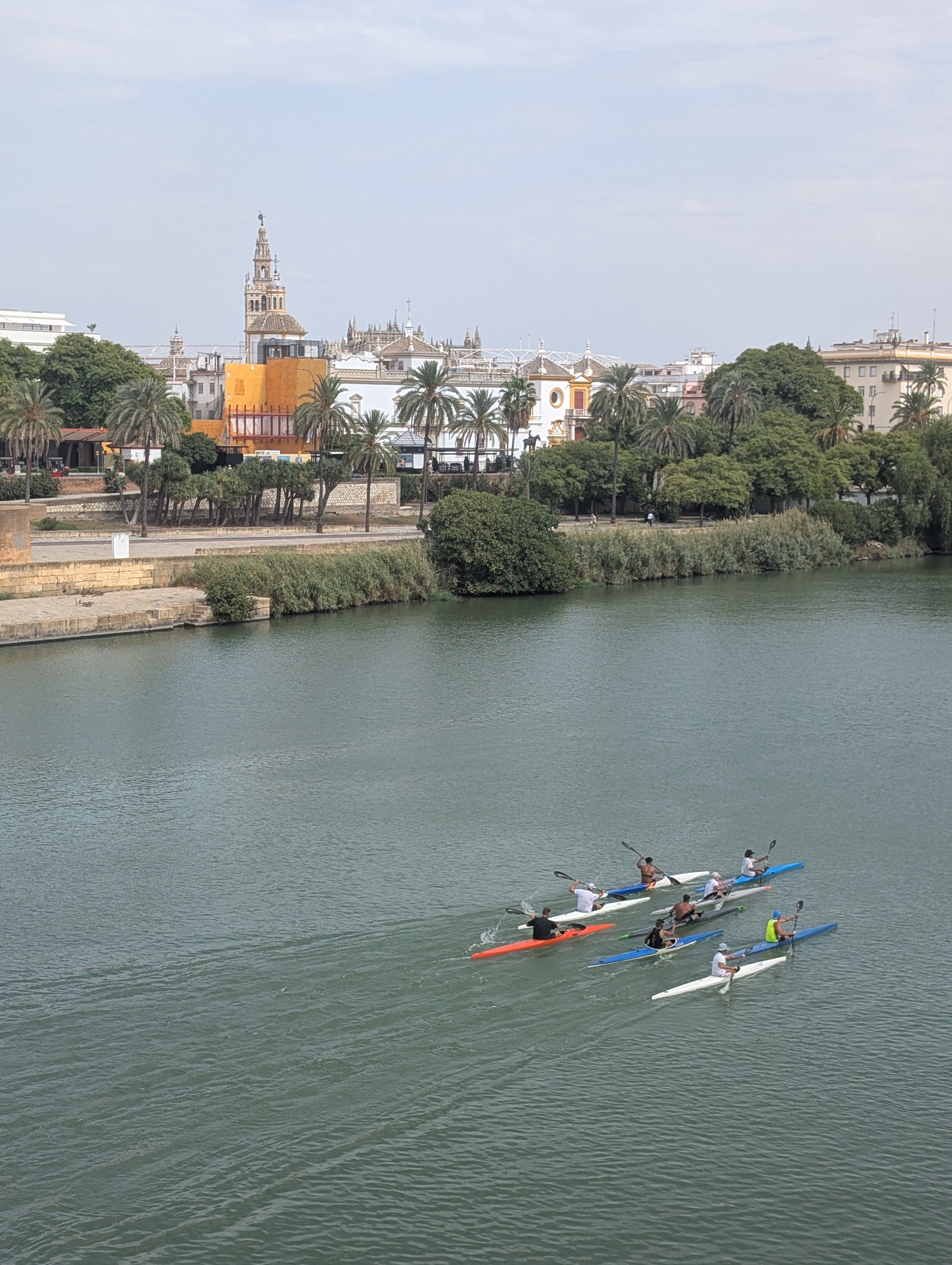
The cathedral was originally built where a mosque used to stand. In fact, La Giralda is a tower that used to be a minarete of the mosque.

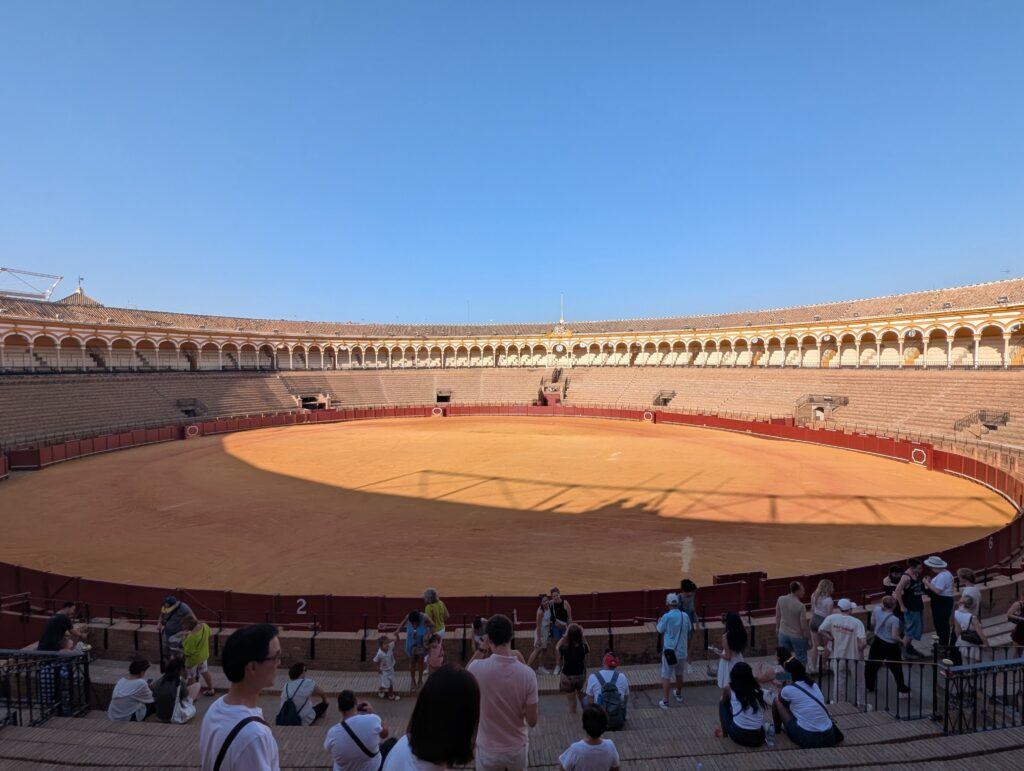
I stayed at the Black Swan Hostel. It was fabulous and they have many free events like family dinners, a flamenco show, and a tour of the bull ring. (I also took a cooking class to make paella).

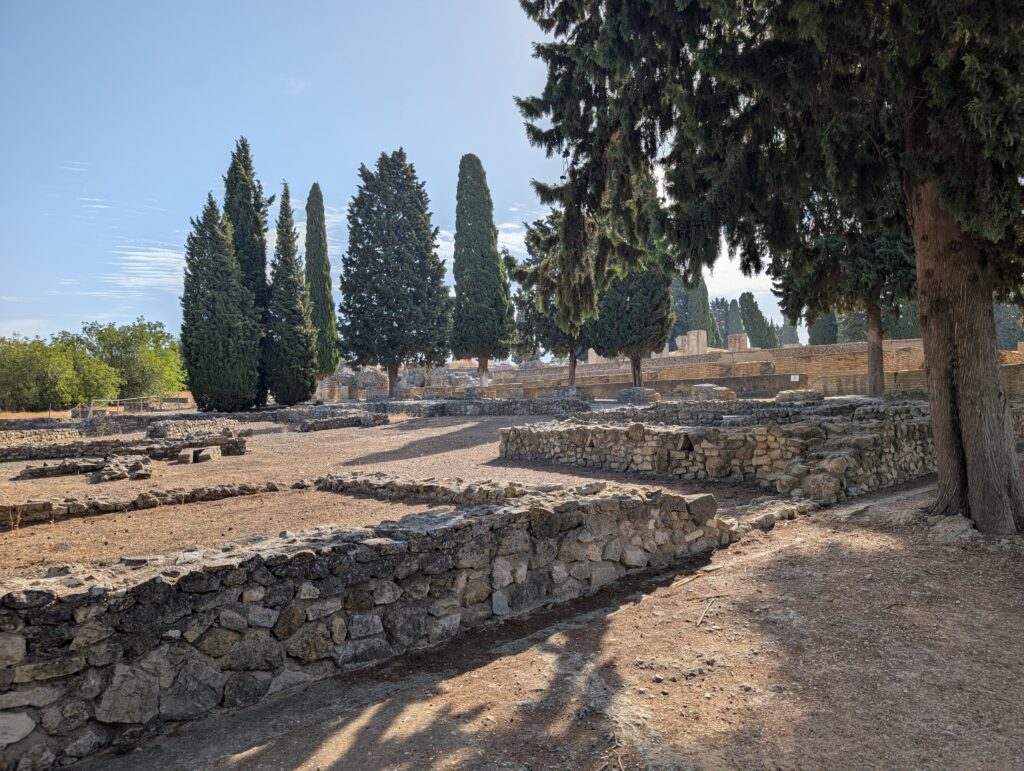
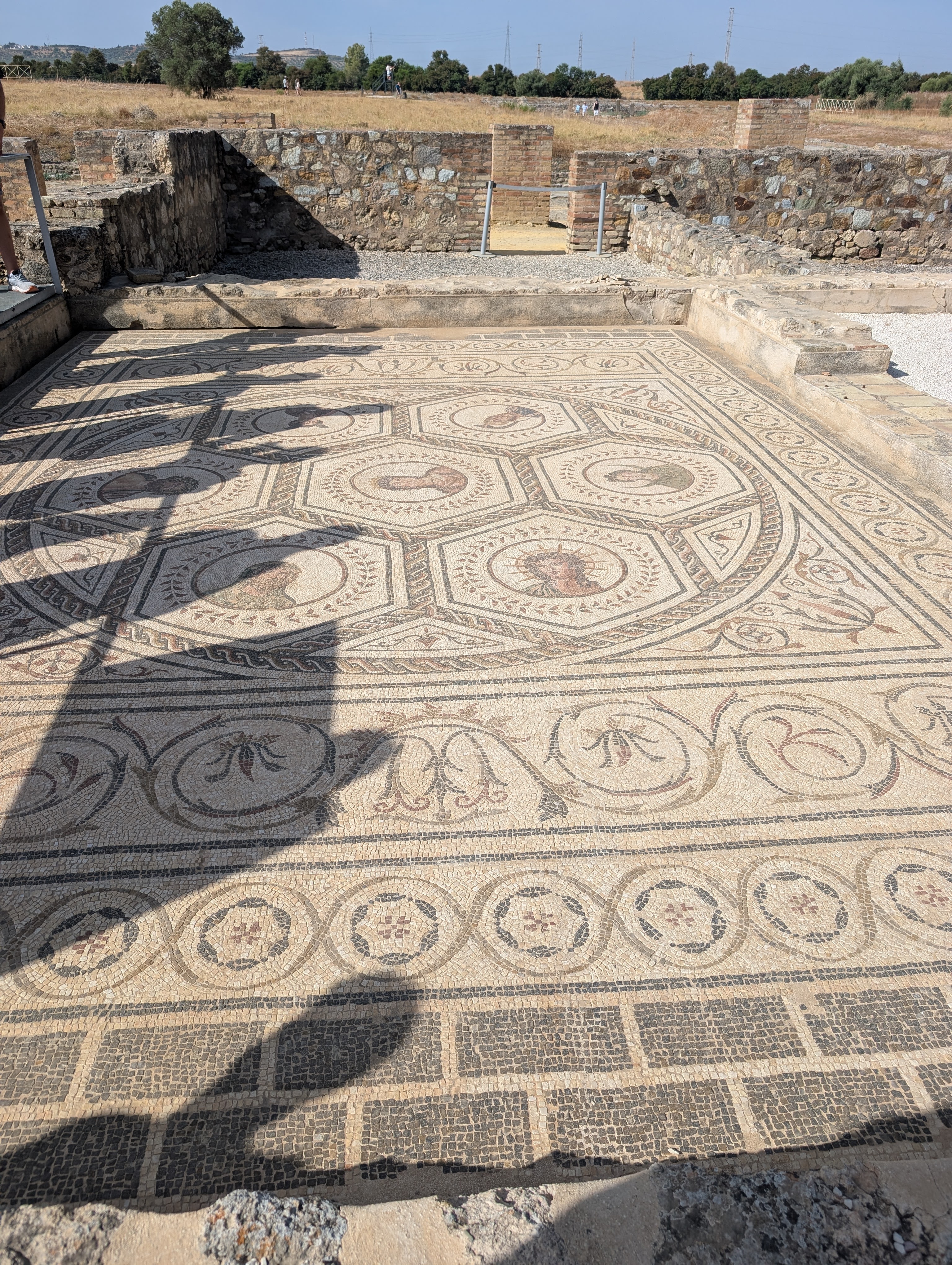
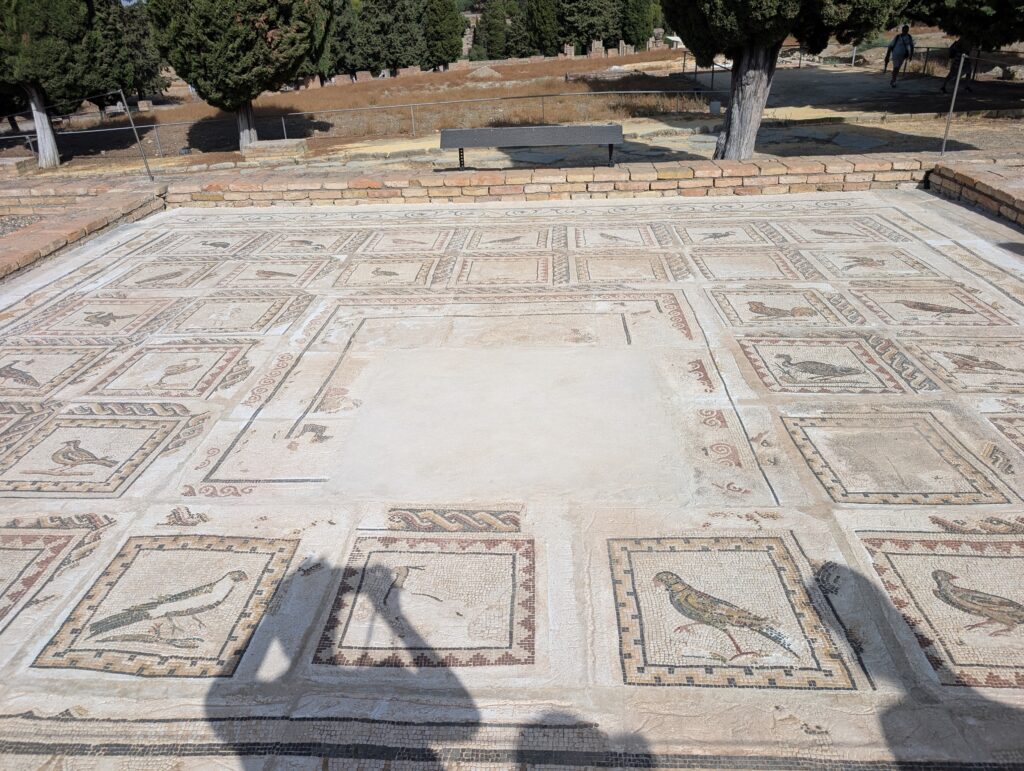
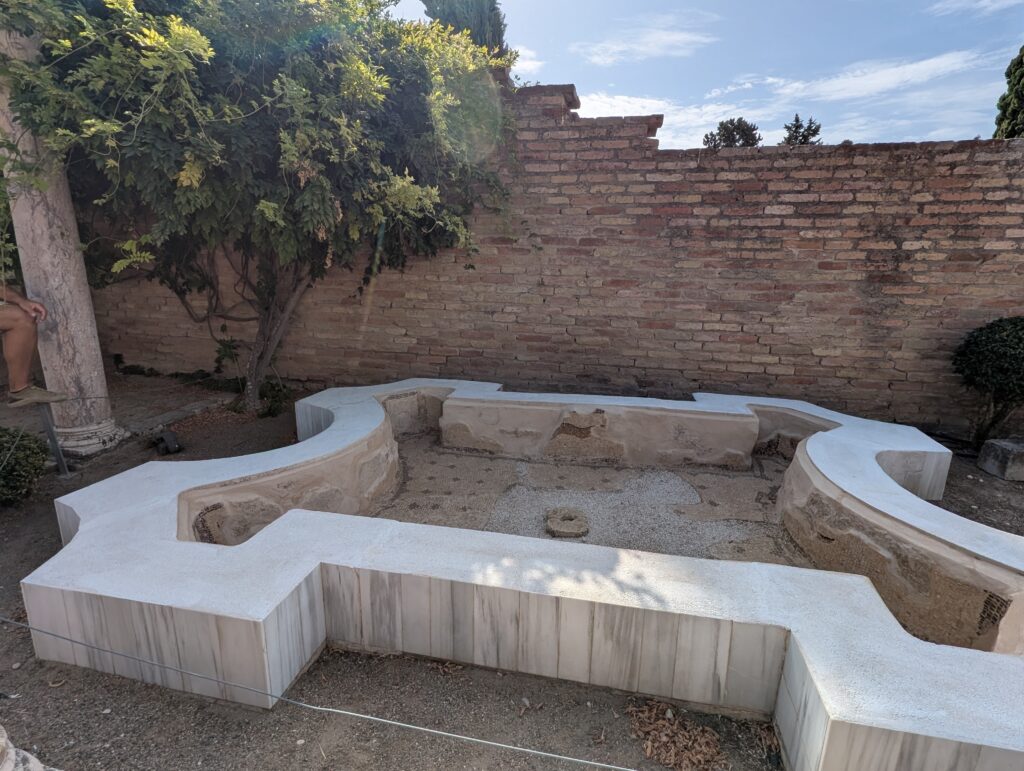
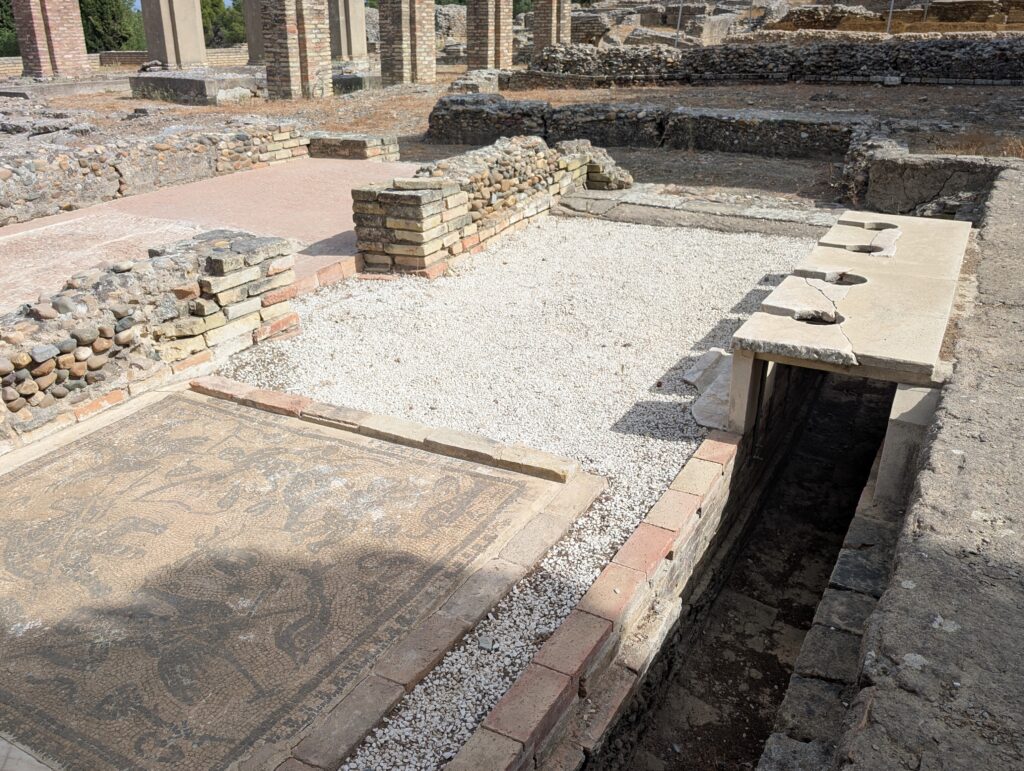
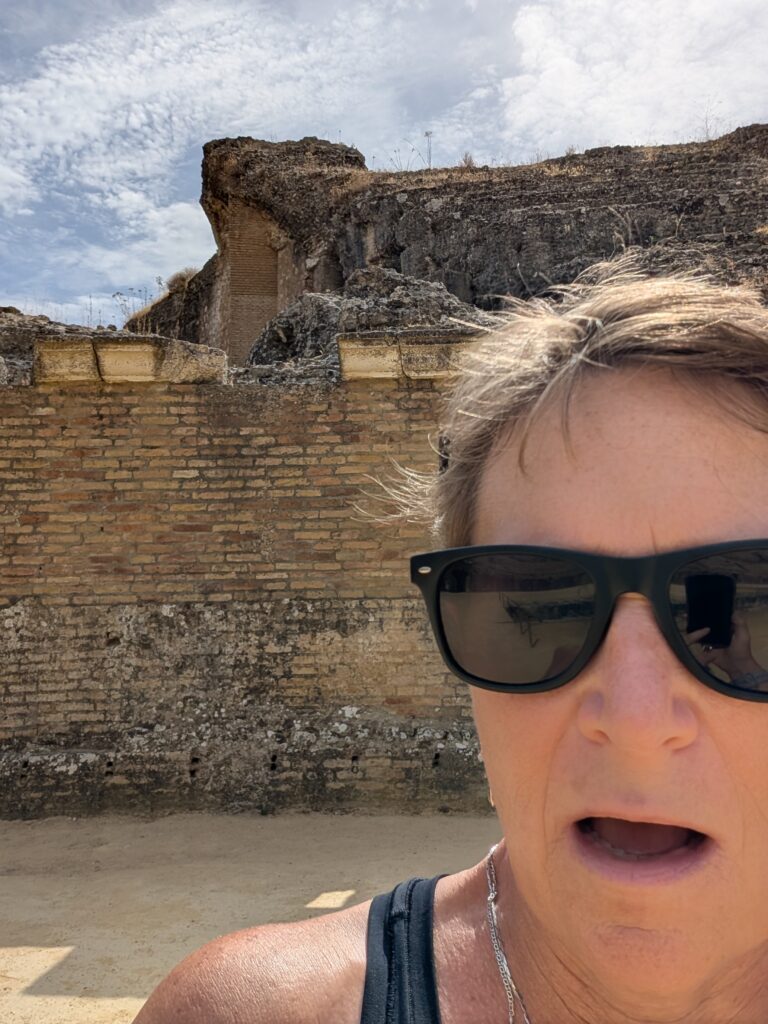
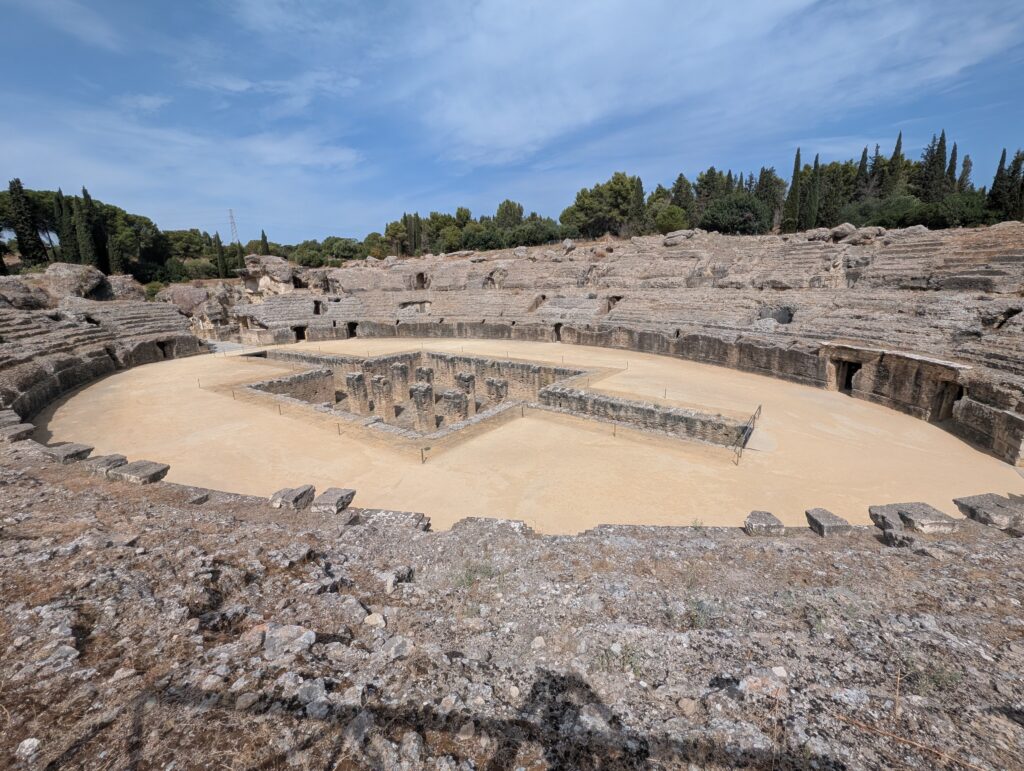
I did a tour of Itálica which is a little further than the city center. This is an archaeological site of a Roman town and an amphitheater. After the town was abandoned for many centuries, much of the rock and structures were used to build Seville. After digging, they found statues, Roman columns, and beautiful mosaic floor work.

A marble fountain

This is part of a school for the rich residents. Note the toilets.

We then visited the amphitheater where several episodes of Game of Thrones was filmed including when Danaerus flew in on her dragon. That is me thinking the CGI dragon landed behind me.

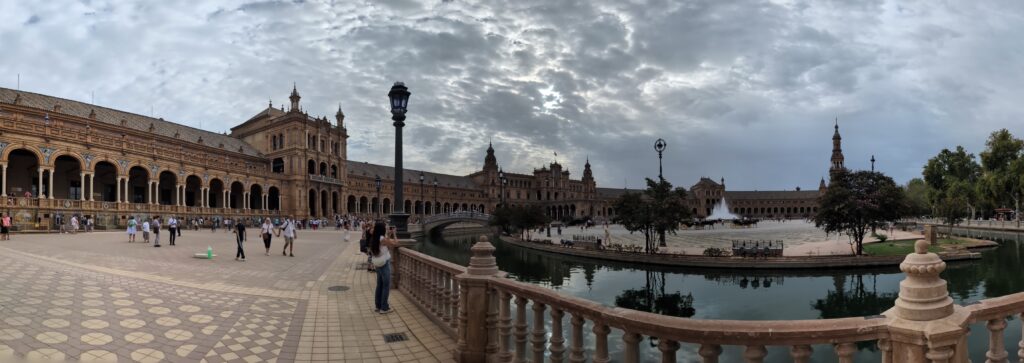
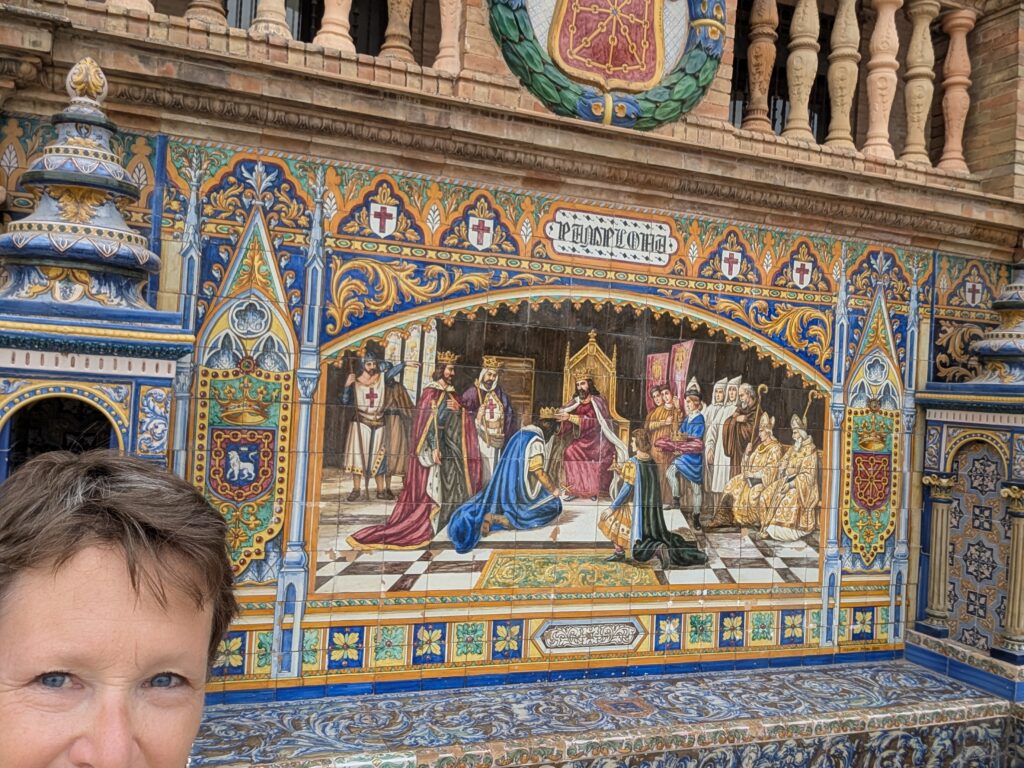
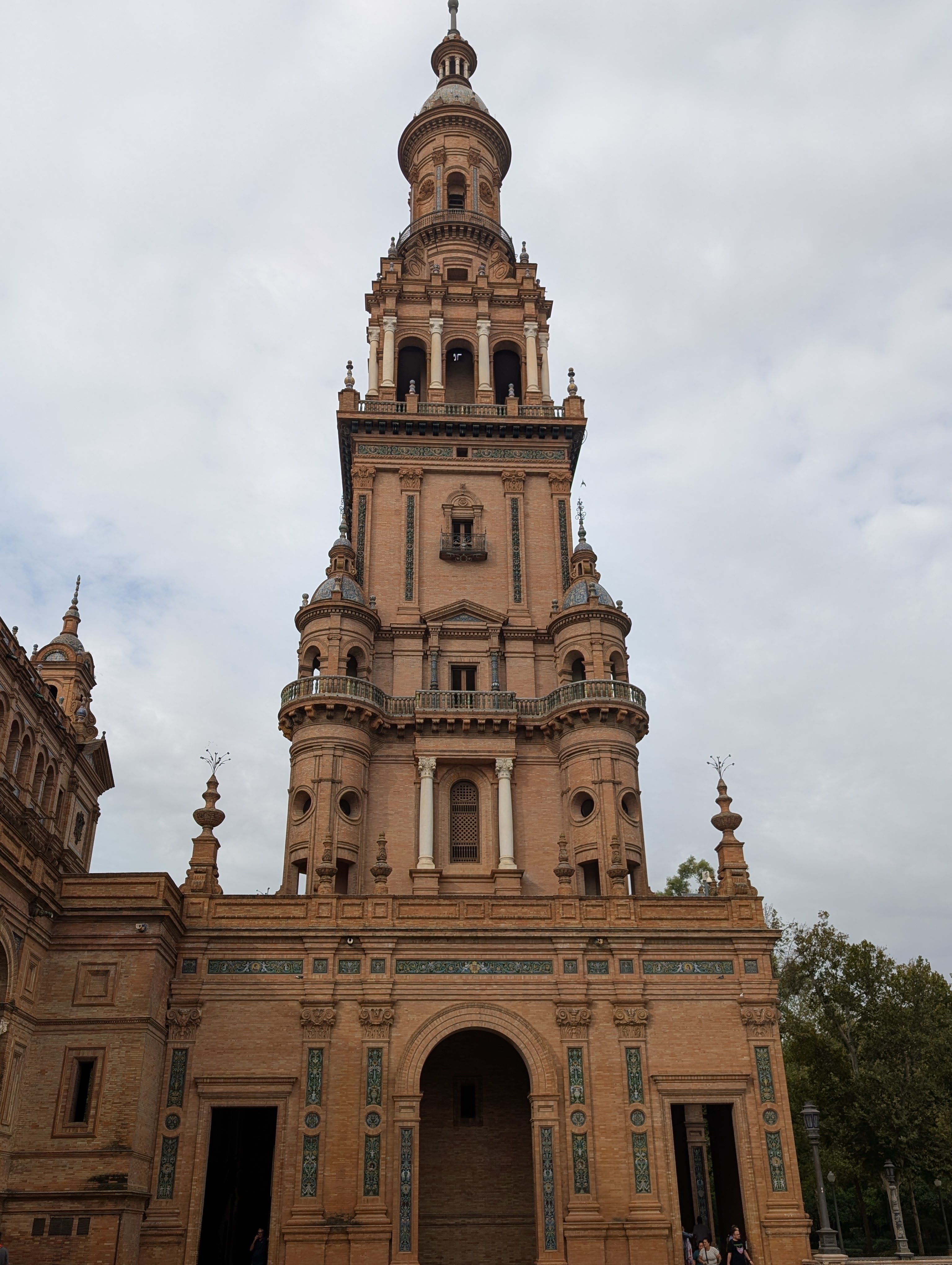
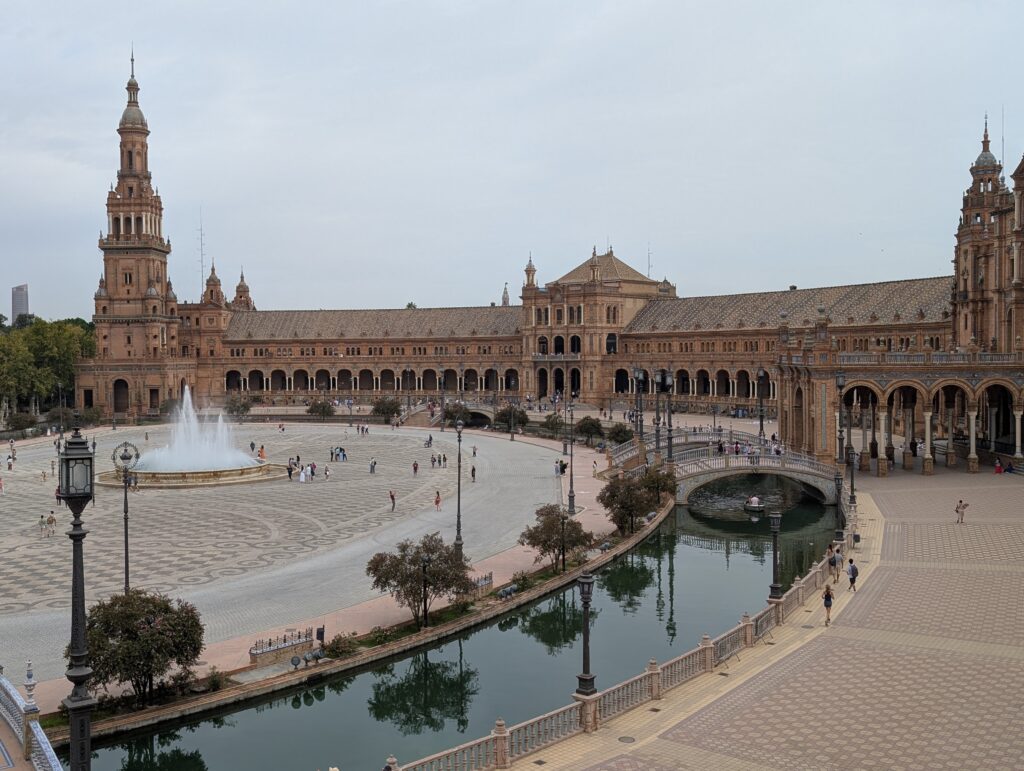
Plaza de España was built for the Ibero-American Exposition of 1929. The was designed to strengthen ties between Spain and Latin America. Along the base of the building are beautifully tiled alcoves representing each of Spain’s provinces. The mosaics are gorgeous. This structure was used in Star Wars episode 2 as the planet Naboo.

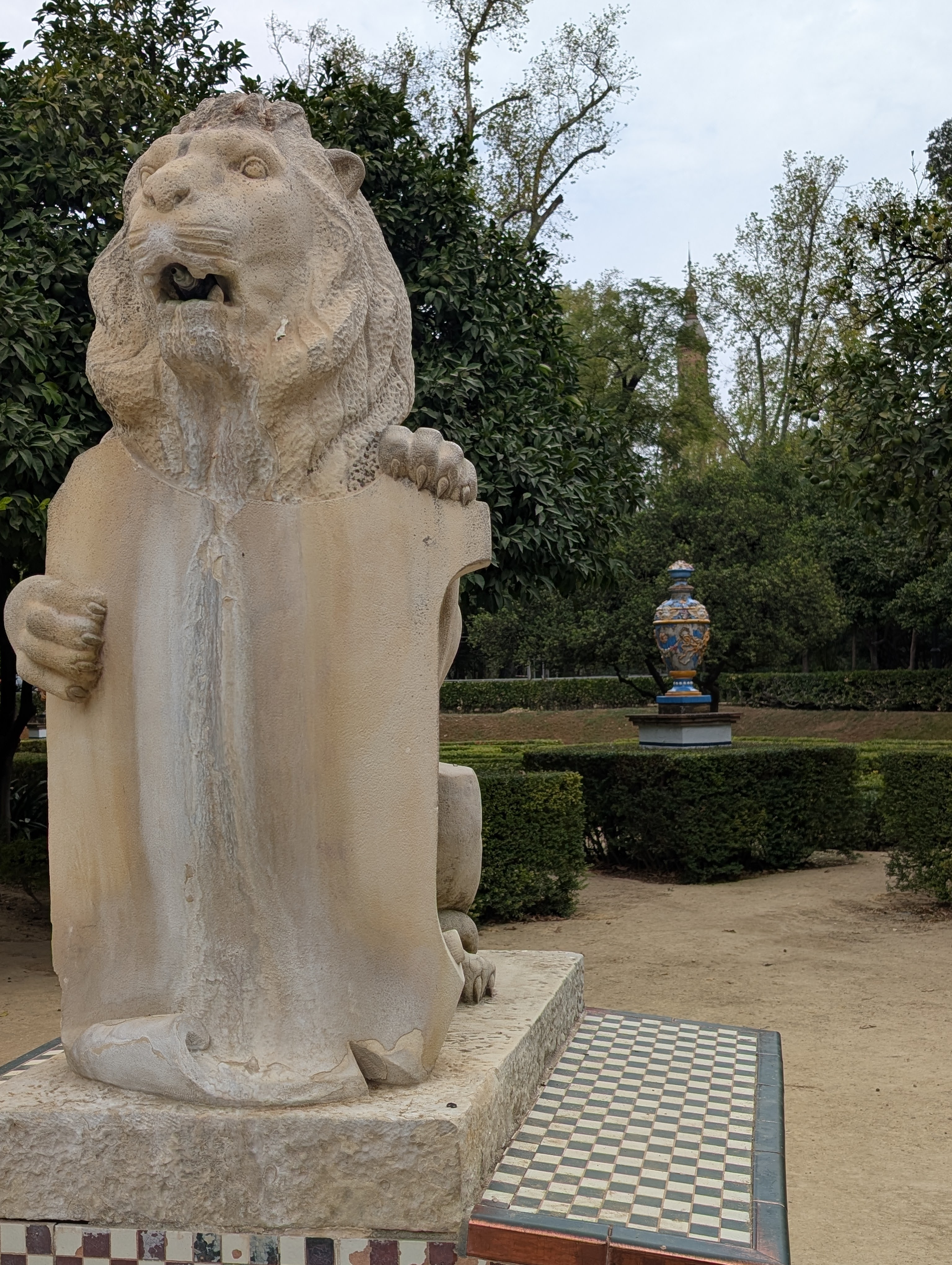
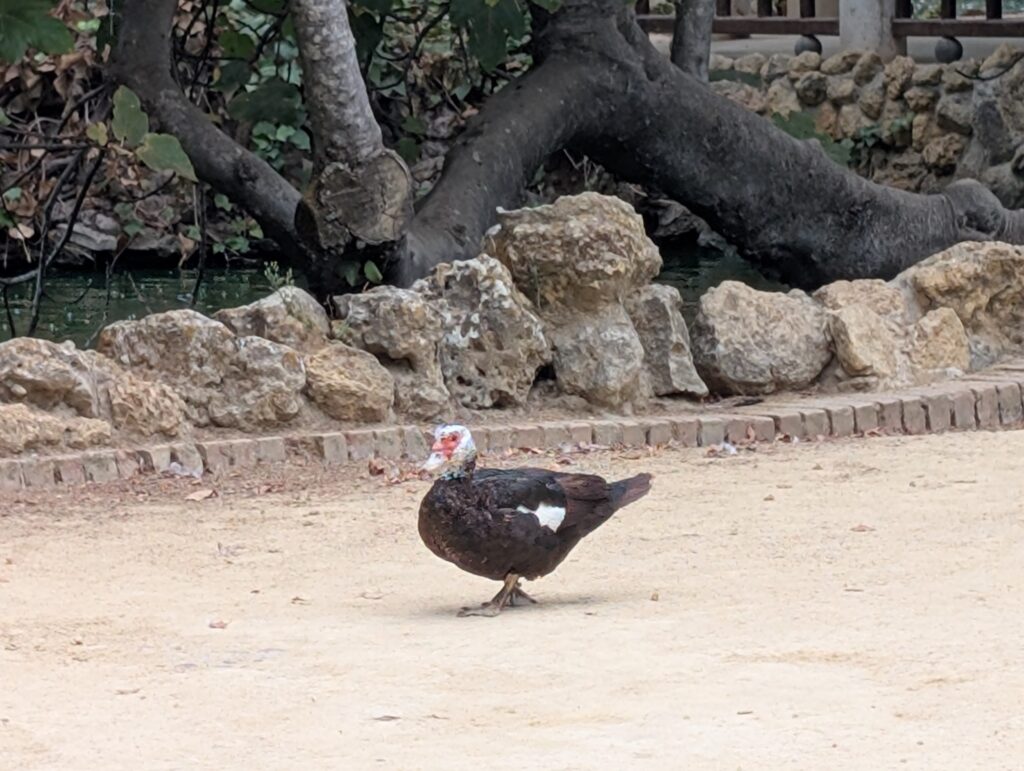
A stroll around the gardens and other parts of Seville.

More Granada

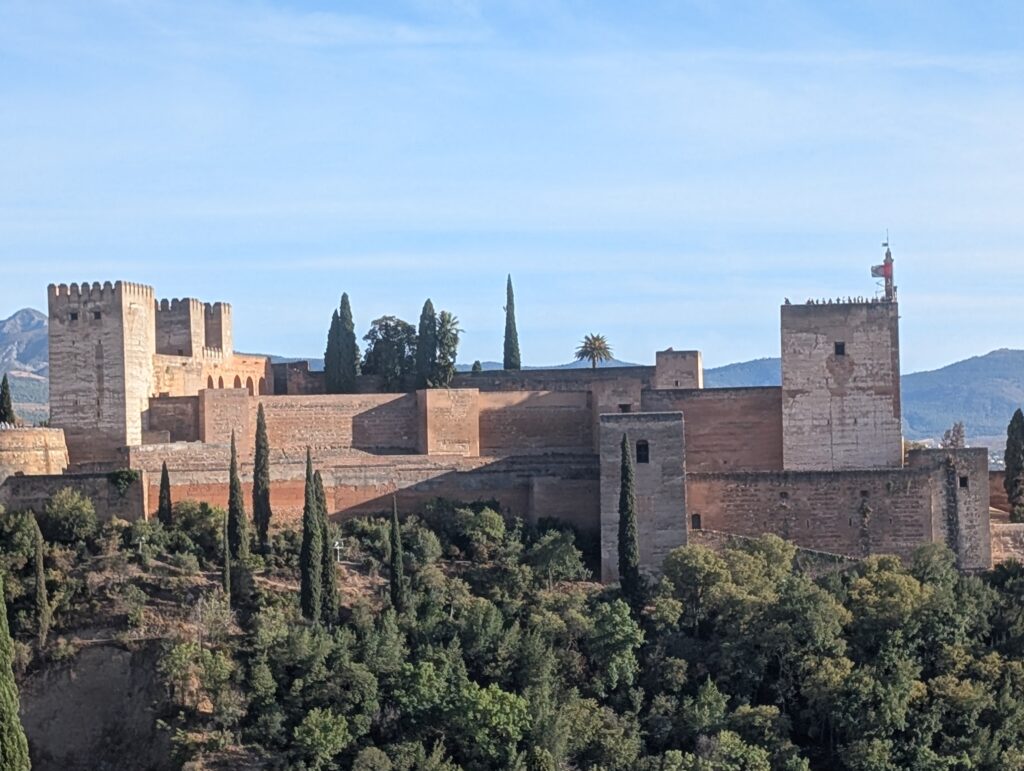
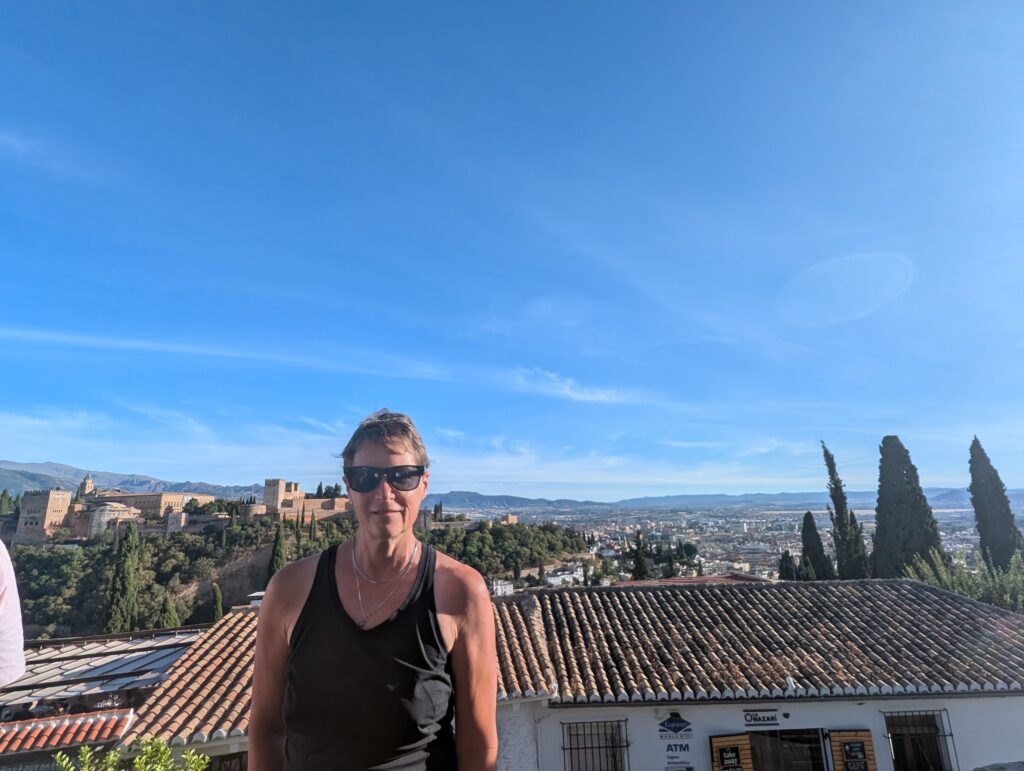
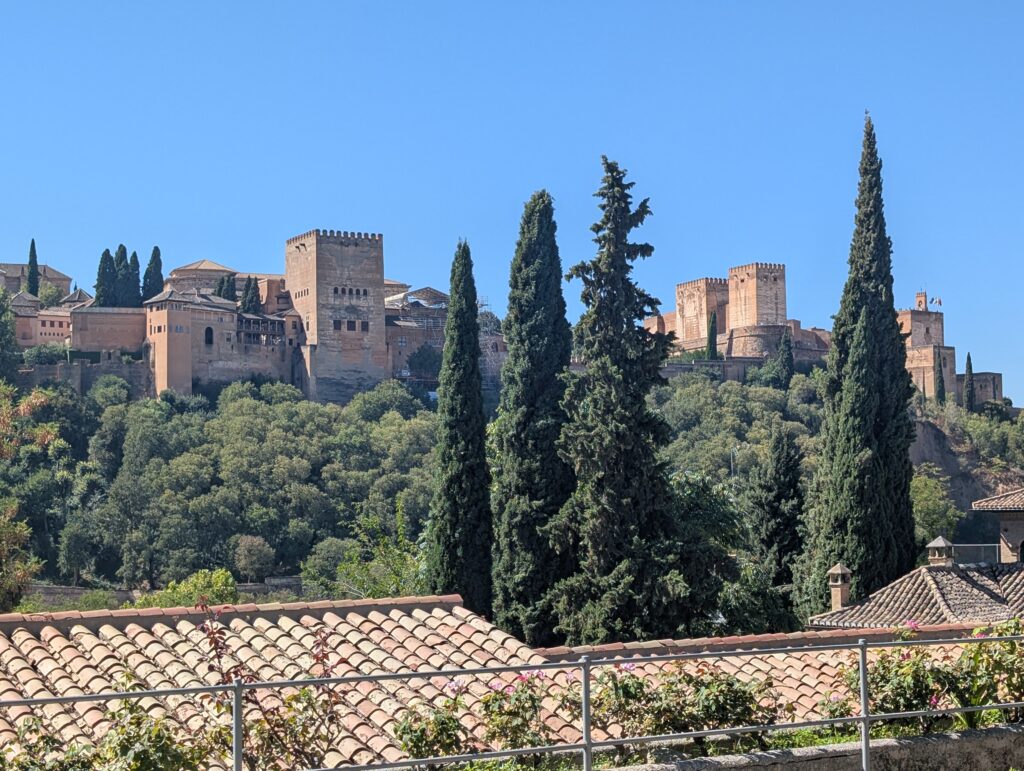
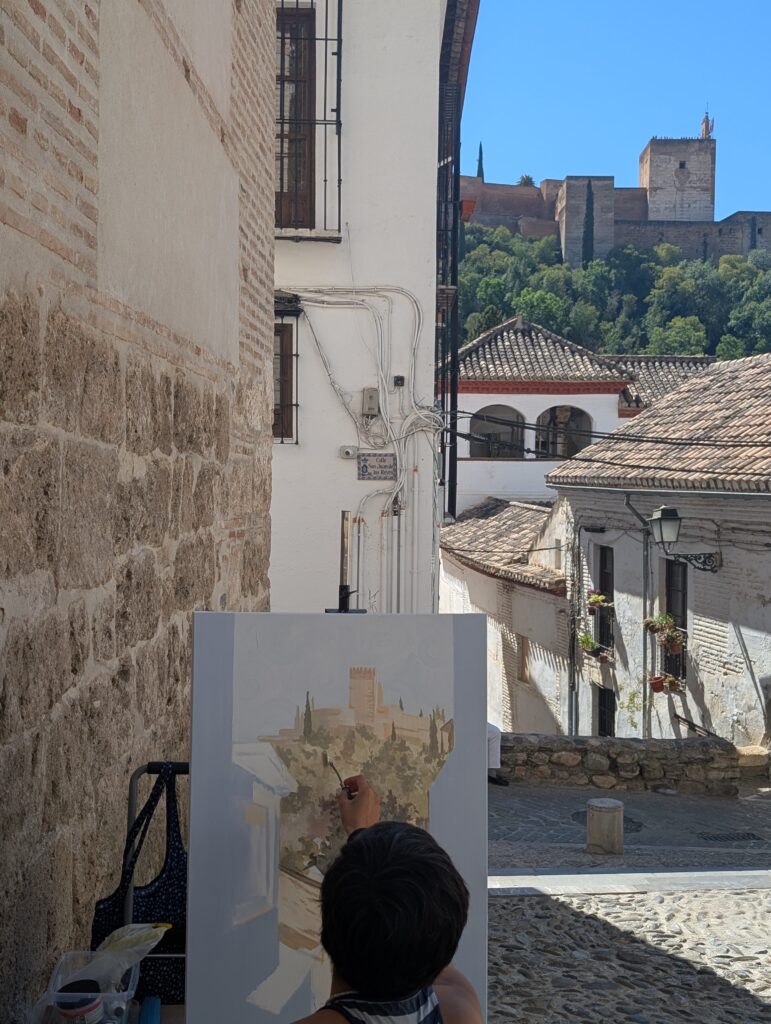
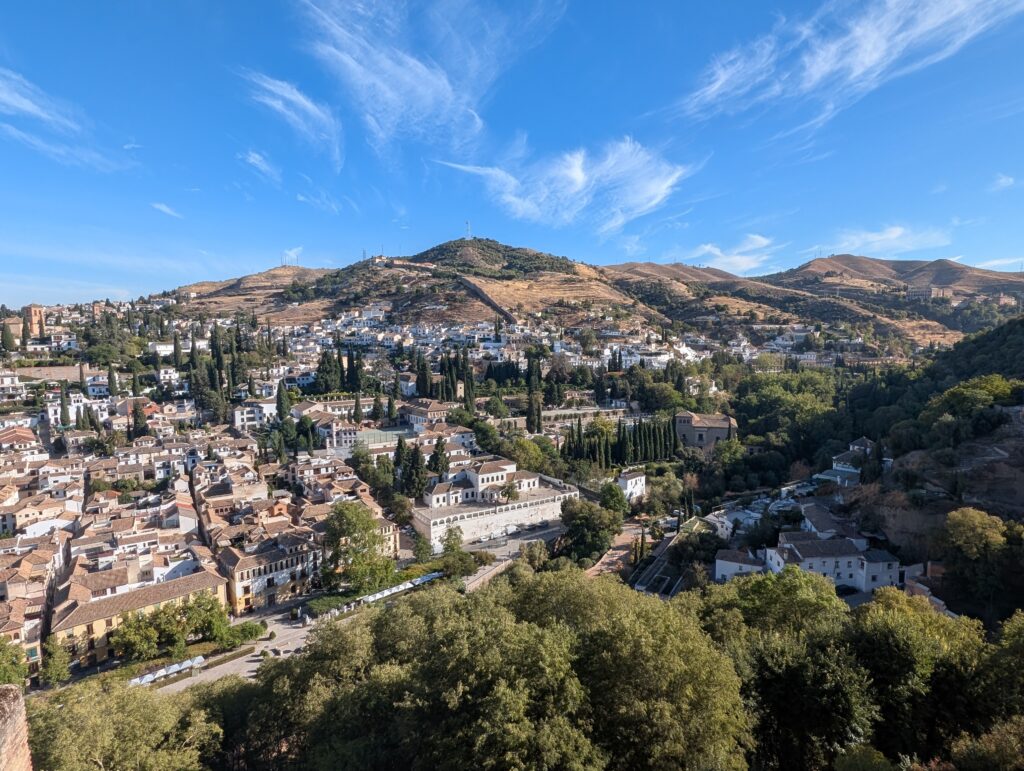
i walked to one of the high points to see the city and also the Alhambra .

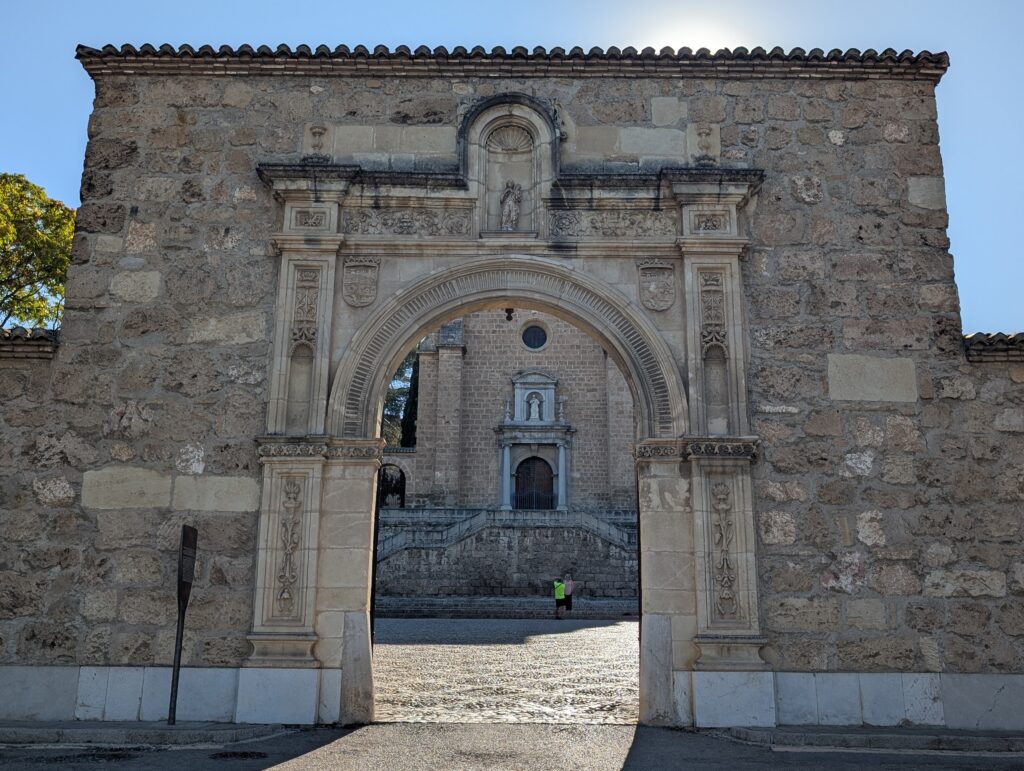
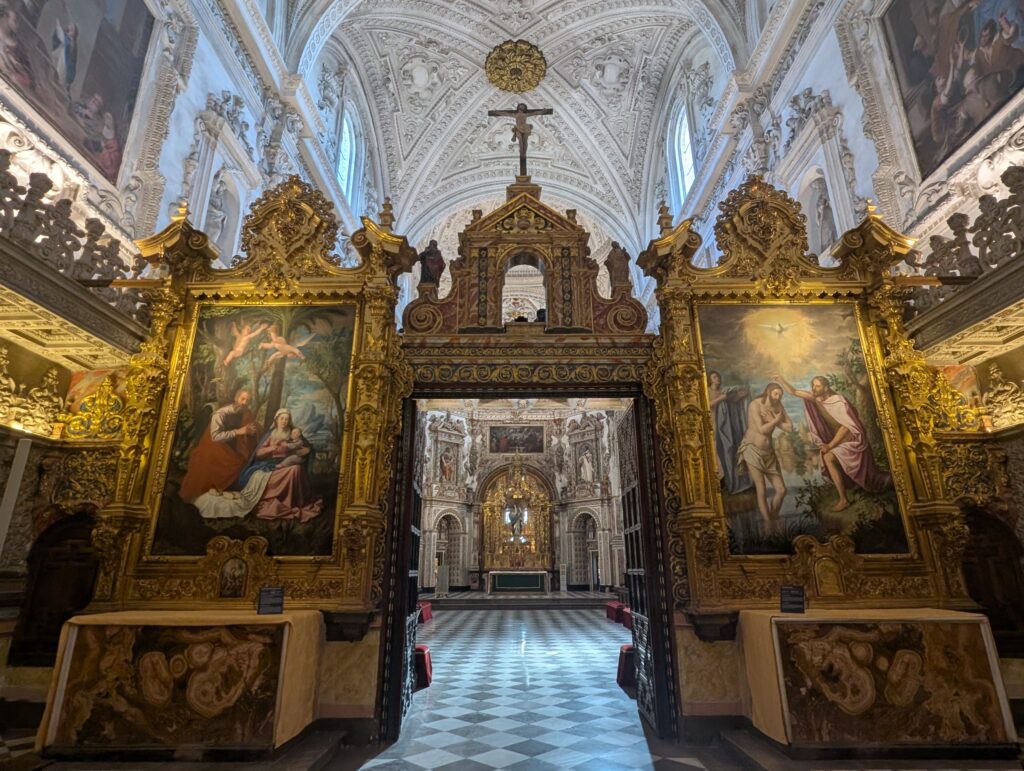
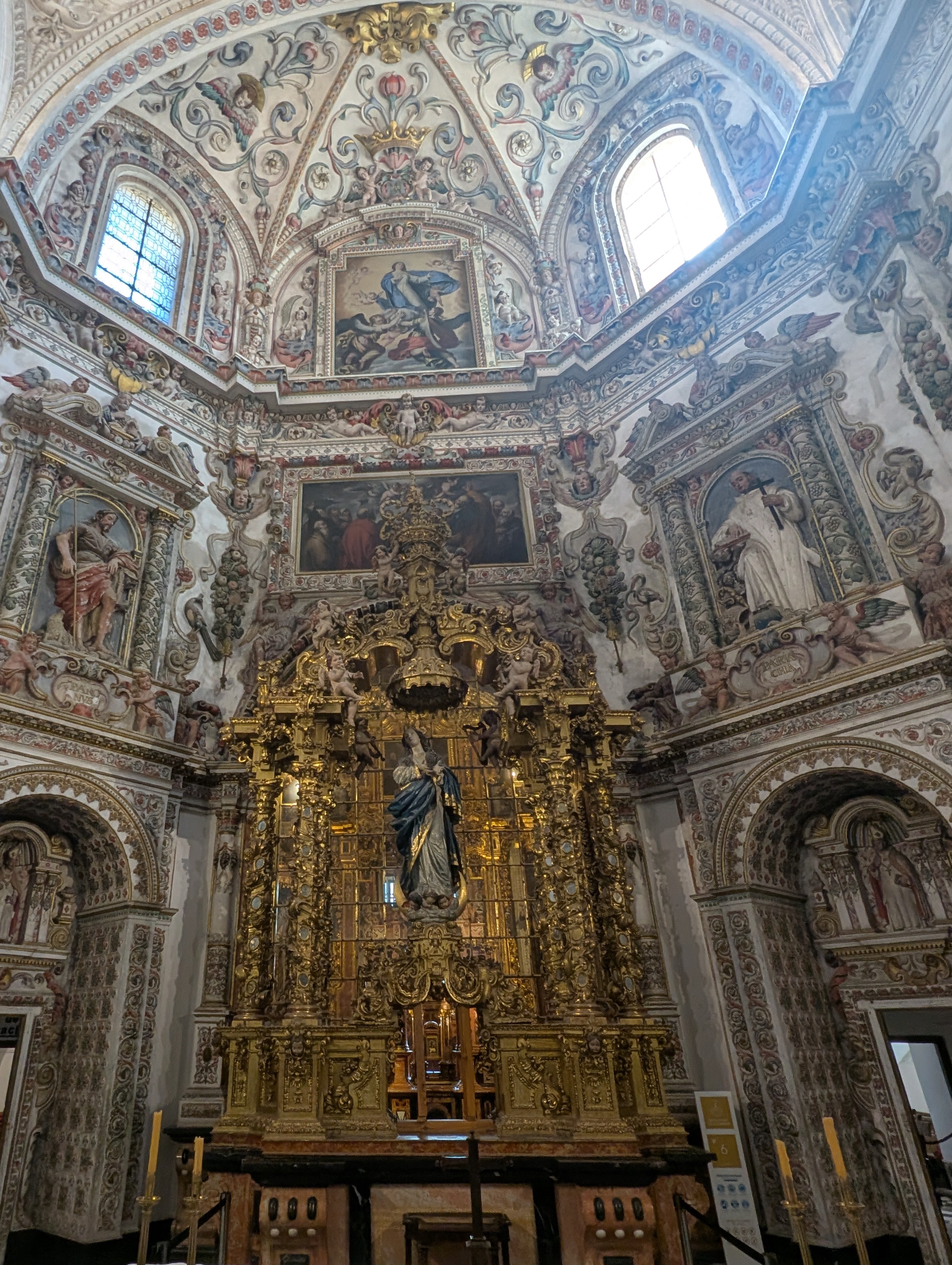
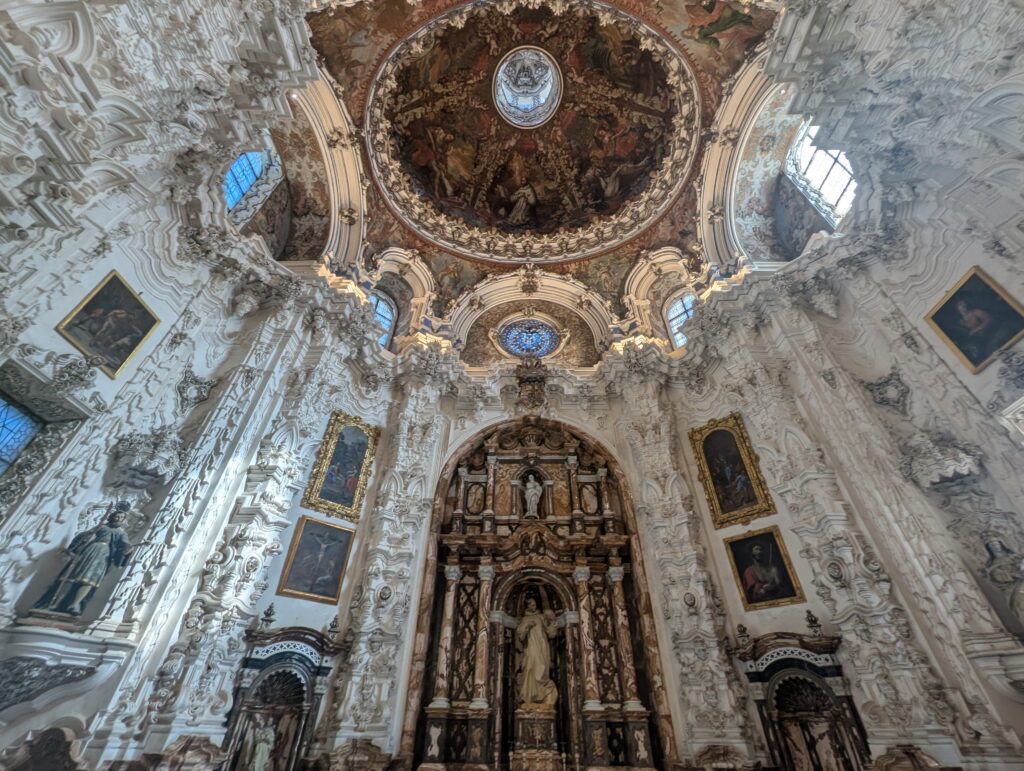
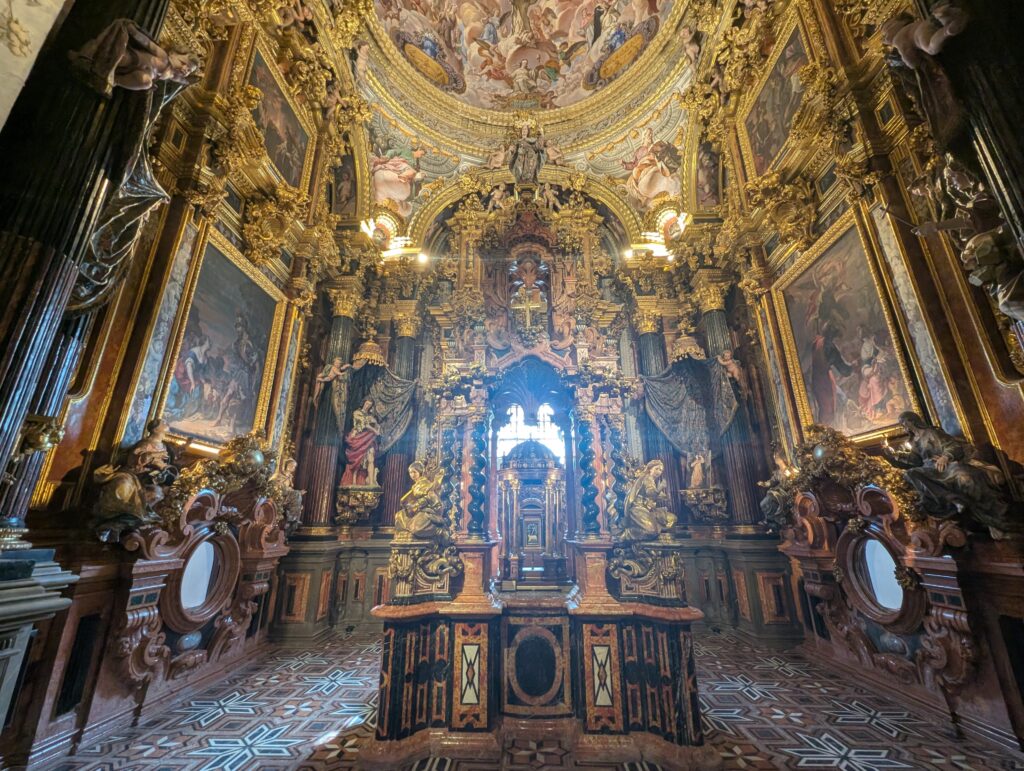
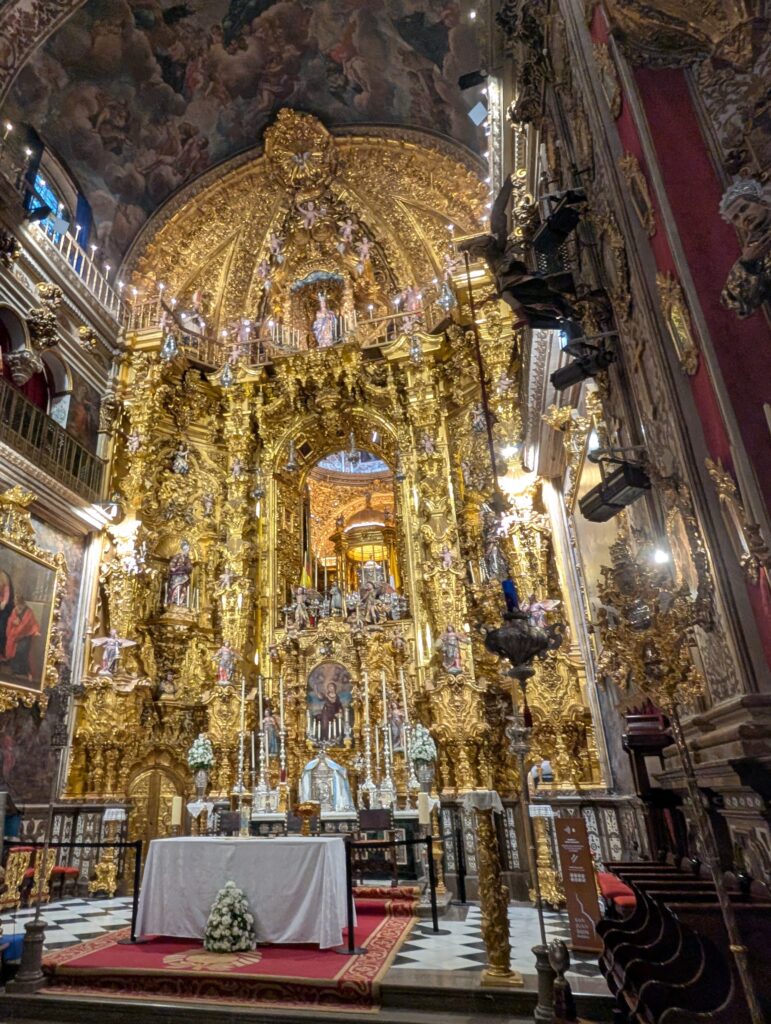
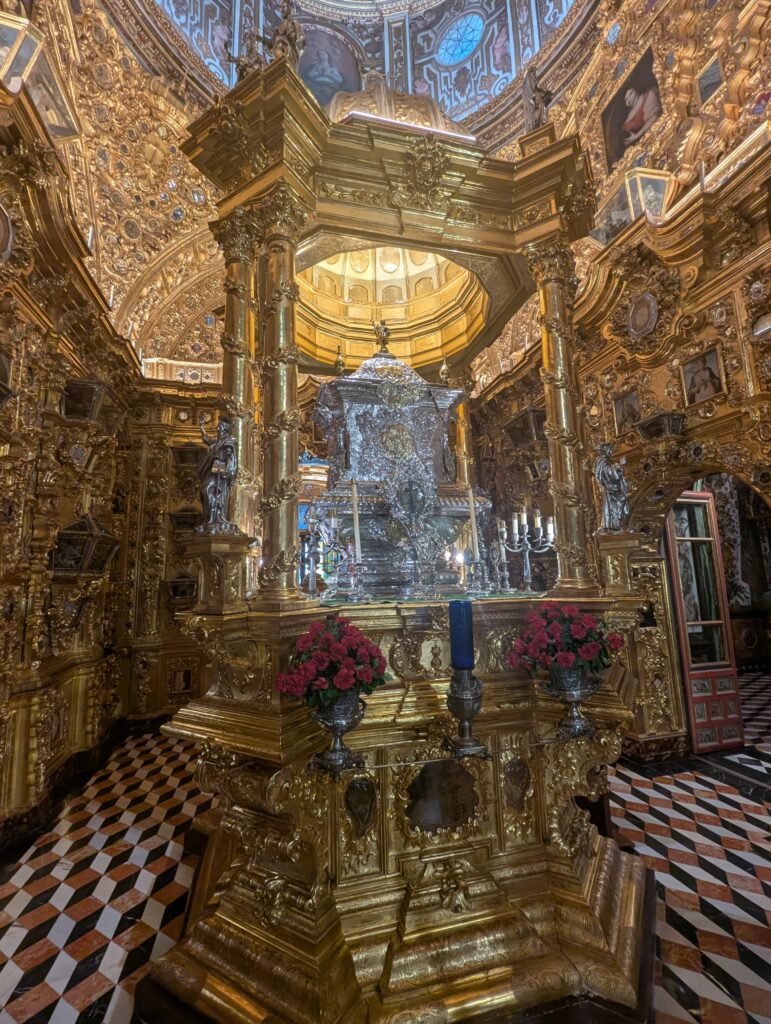
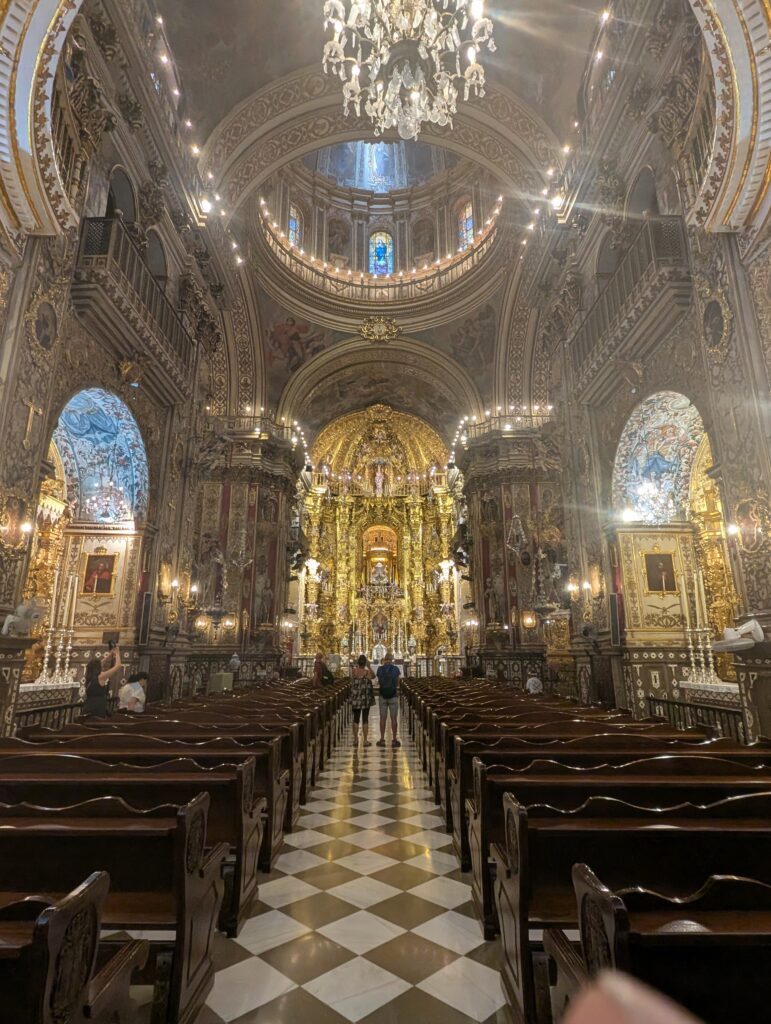
I also walked to the Monastery as it is one of the best examples of Baroque design and using good in the design.

As it was Sunday, many museums and houses were free (not the Monastery). At the Casa del Chapis, they had beautiful gardens and also a great view of the Alhambra.

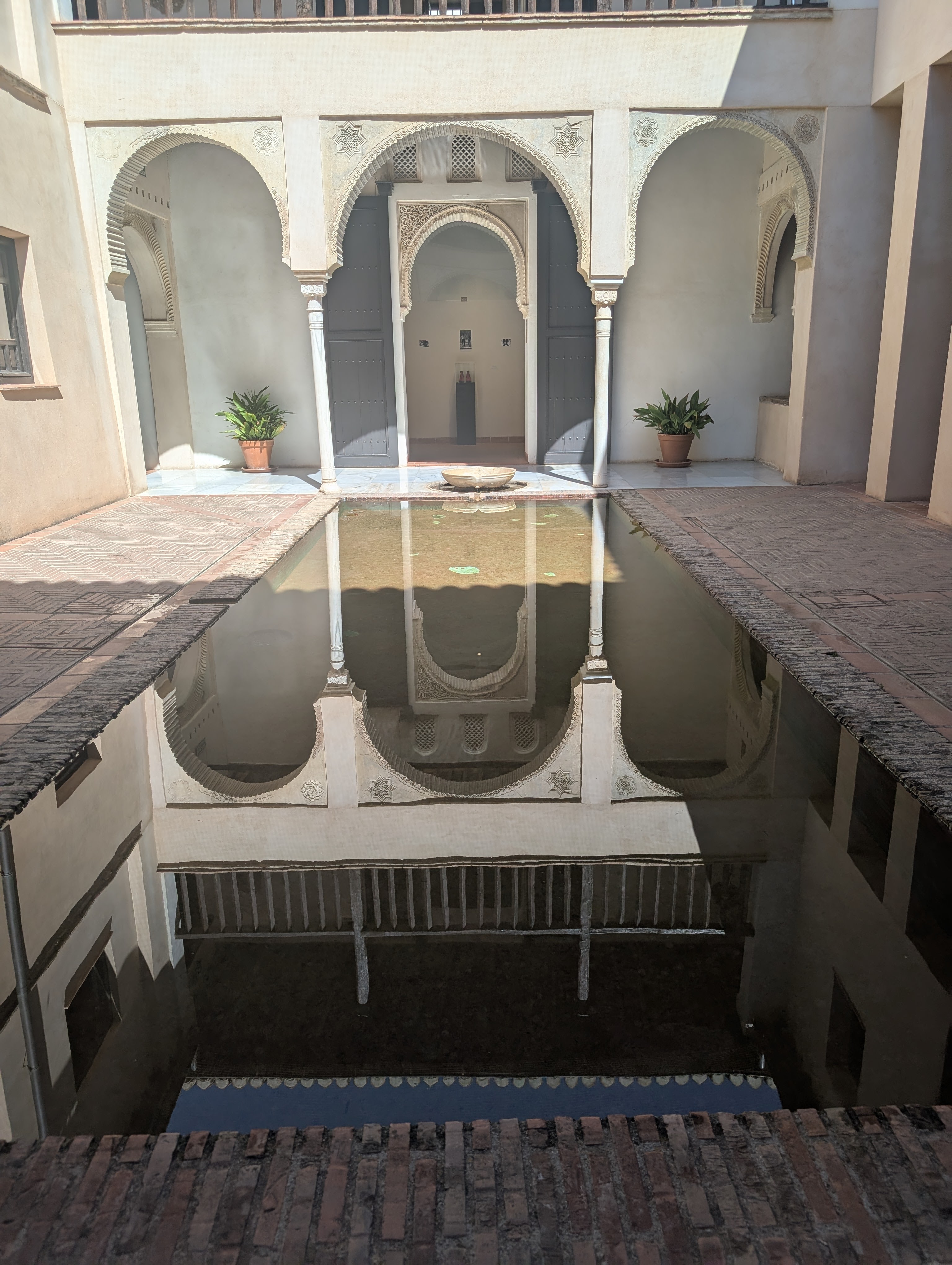
Casa de Zafra

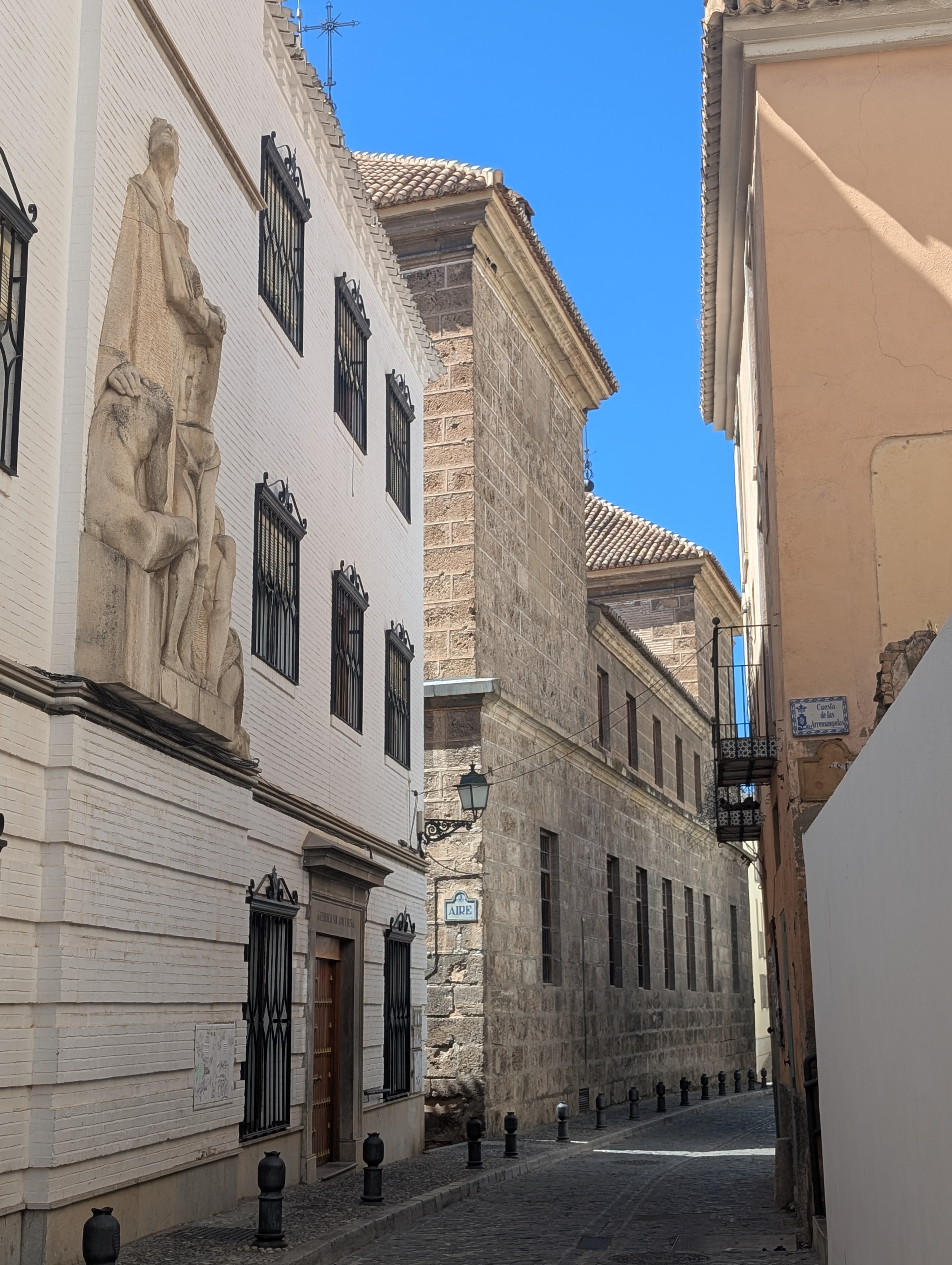
Other things I took pics of include some of the streets as they are narrow with cobblestones and lead to many turns and dead end which lead to some wonderful plazas.

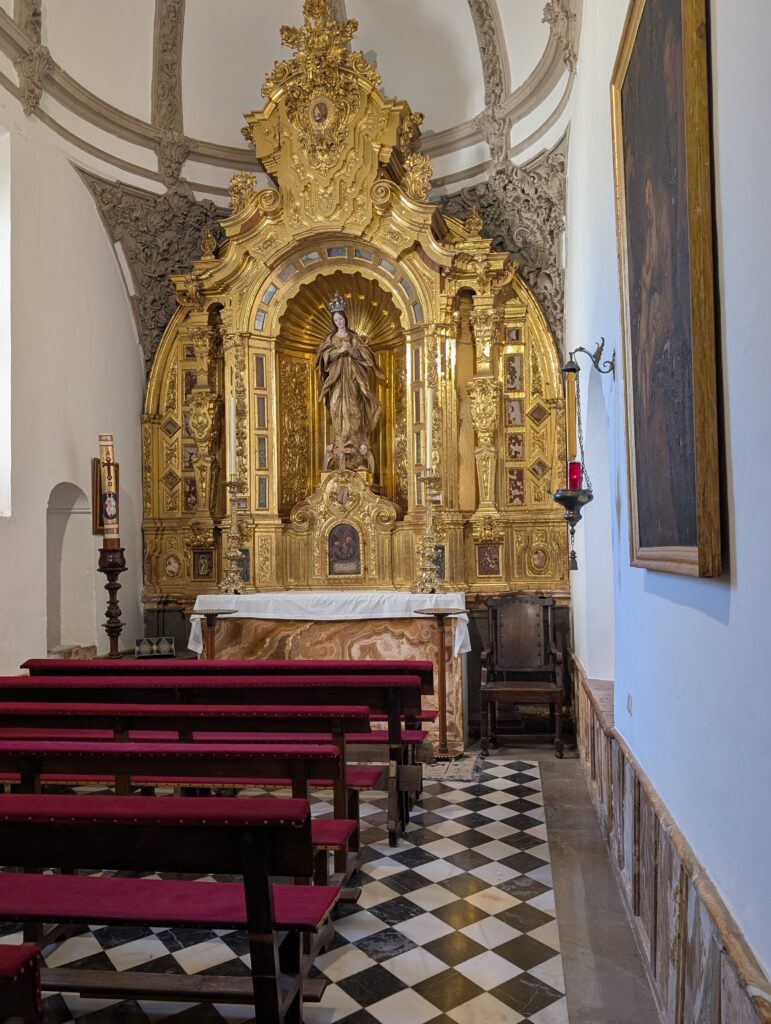
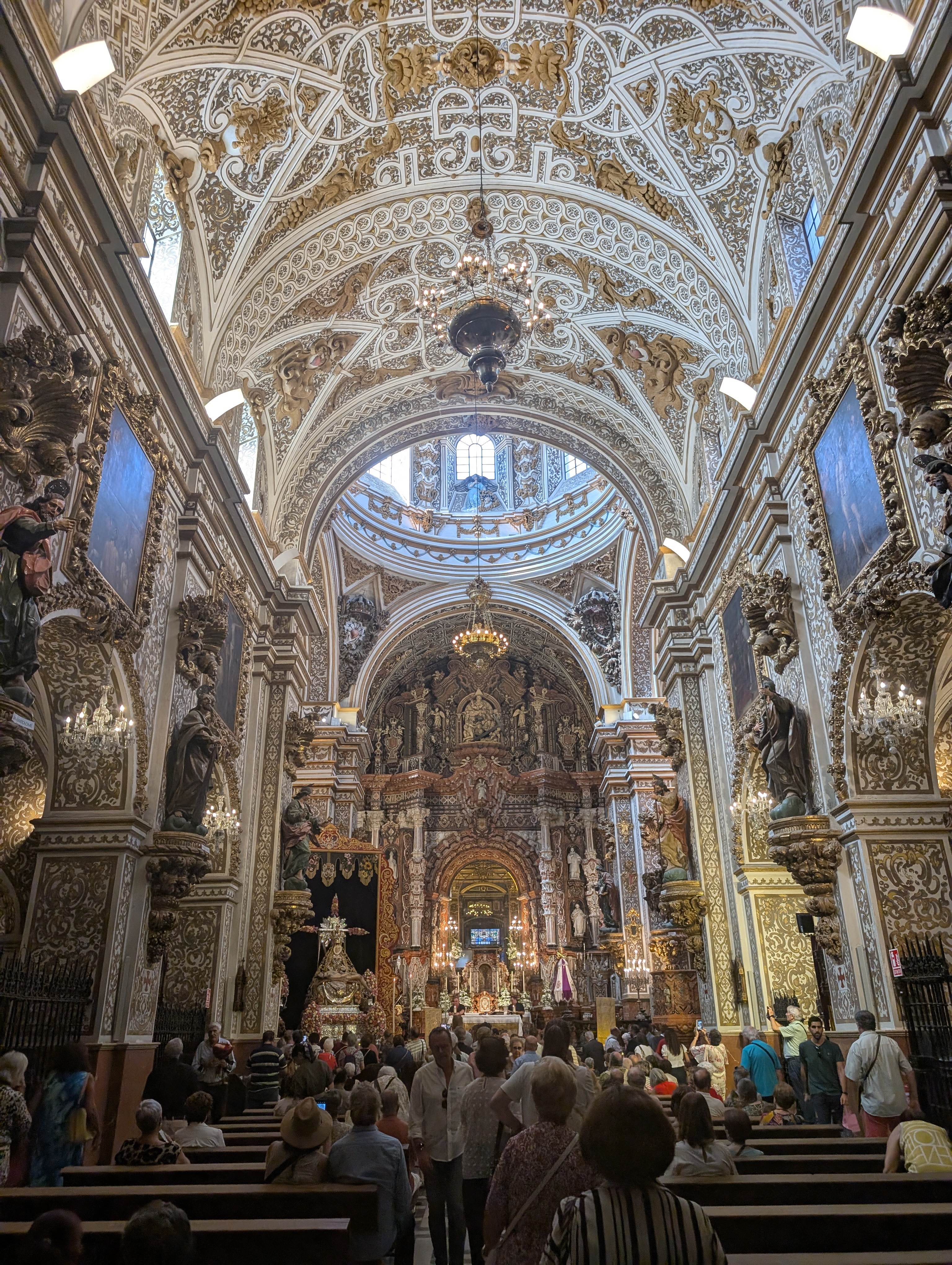
The basilica in Granada was built for Saint John of God whose remains are interred here. It has a classic Baroque style.

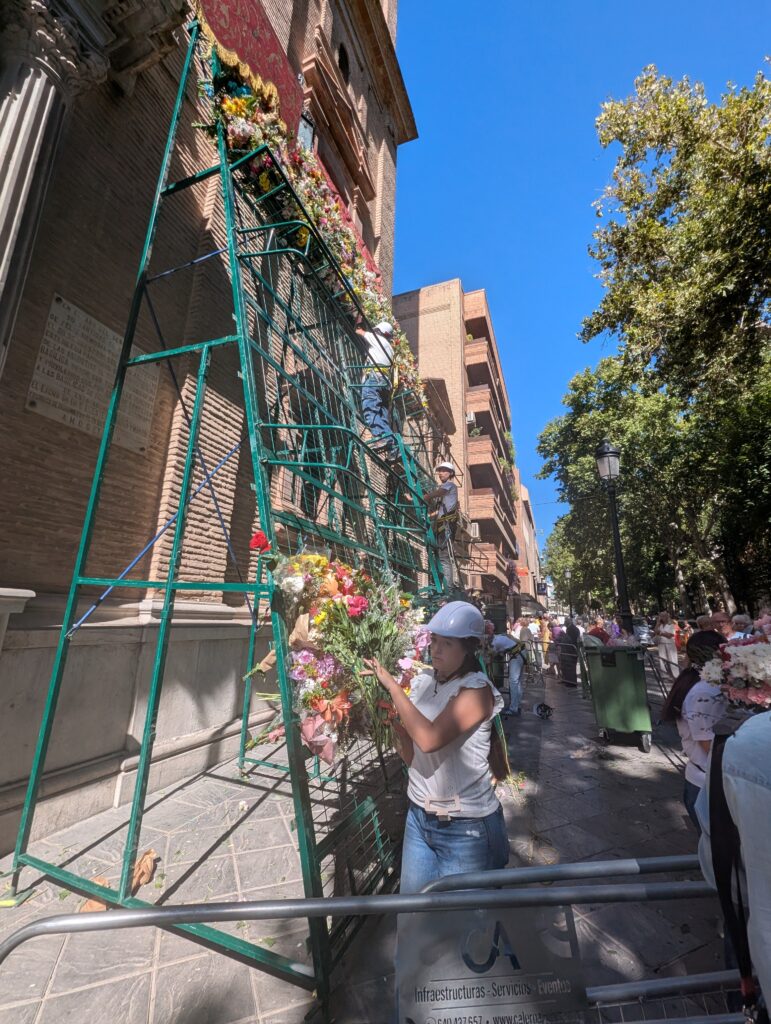
September 15th commemorates the beginning of festivities for Virgen de las Angustias which if the patron saint of the city. Today was the day of the Floral offerings where people buy flowers and offer to the church. These flowers are placed in a scaffold to display in front of the church.

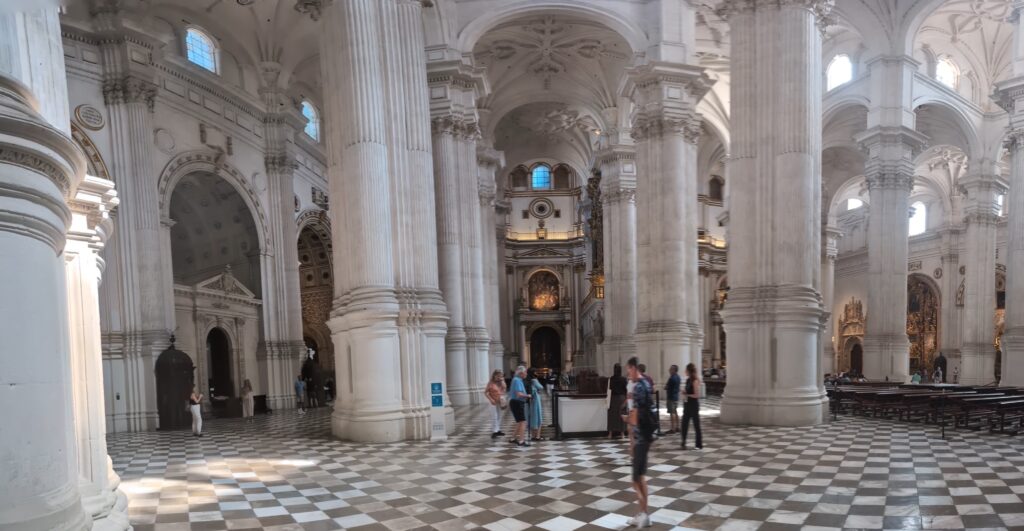
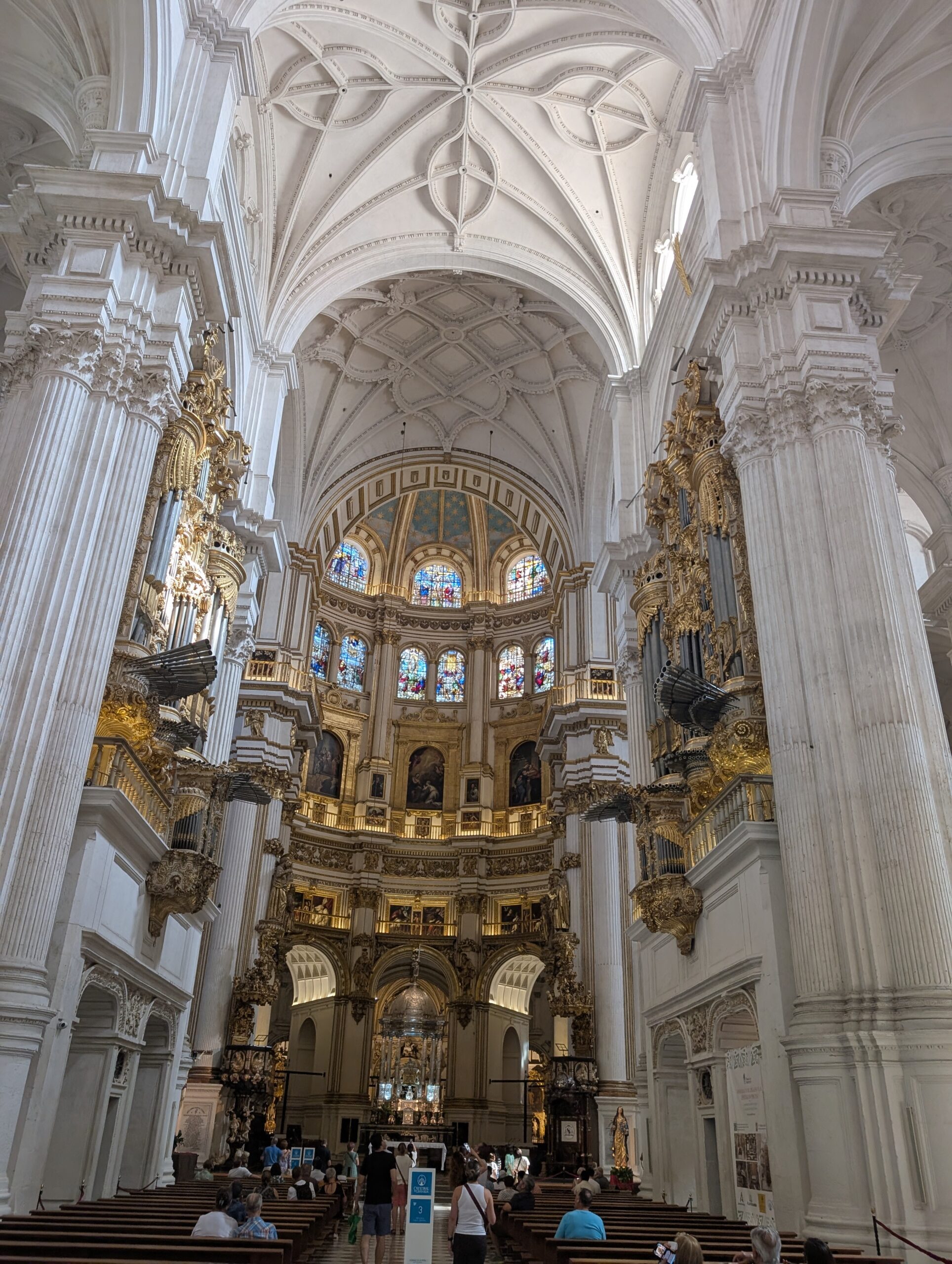
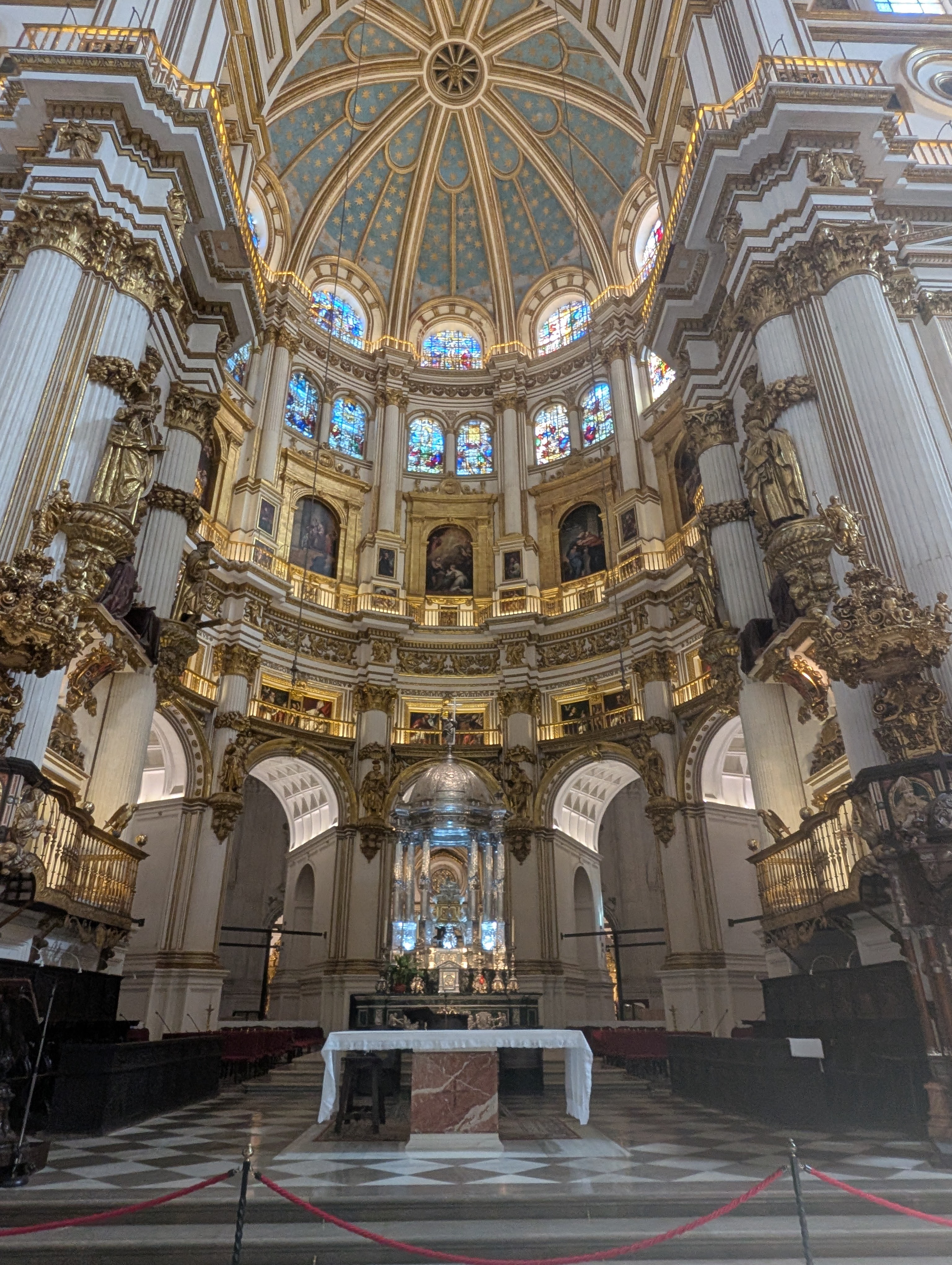
I also visited the Cathedral of Granada.

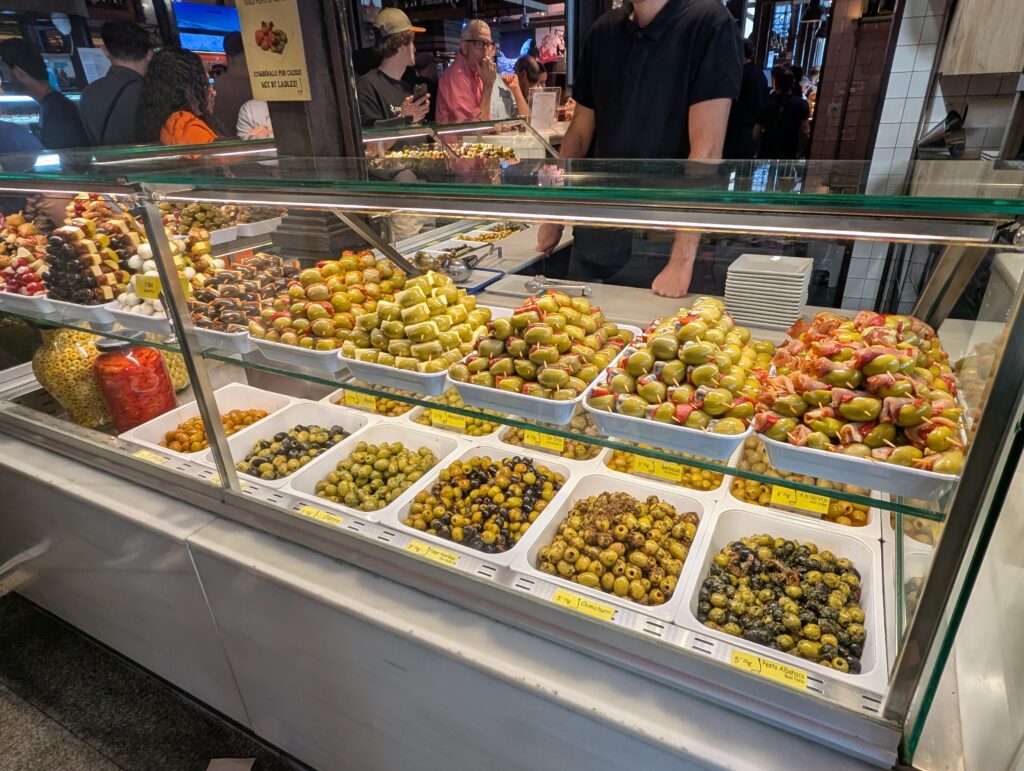
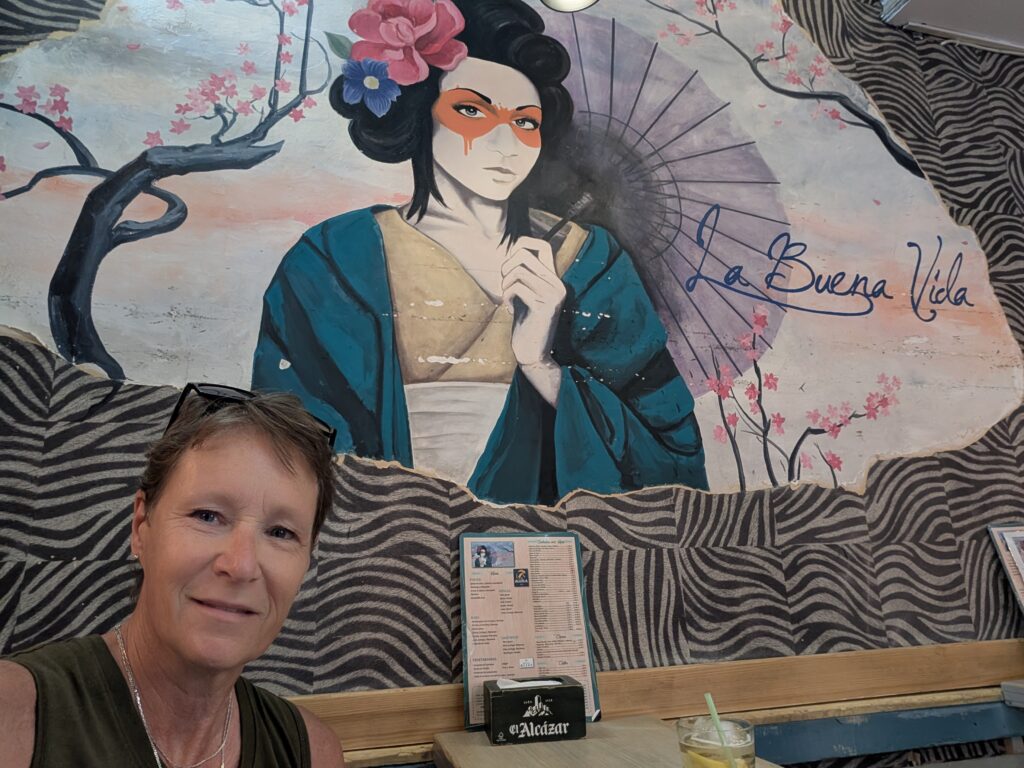
I ended my last full day going to a tapas bar. When you order a drink they also bring you a snack for free. After that, I went to a hammam to soak Ian warm and cold baths as well as a massage. Very relaxing.

La Alhambra

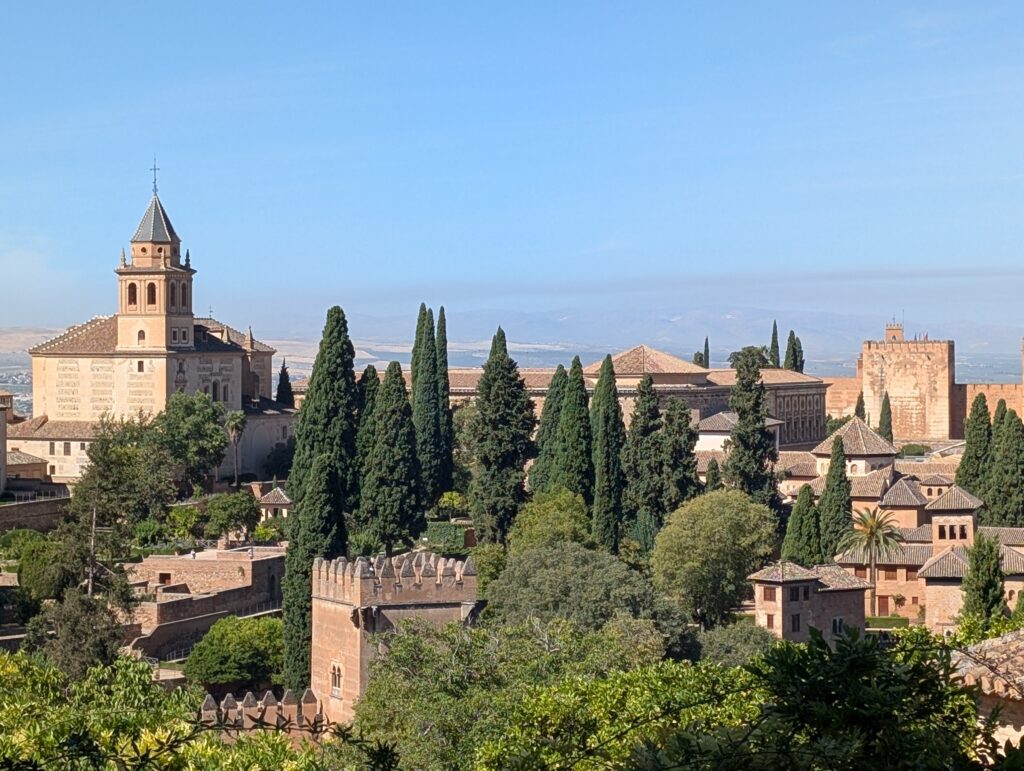
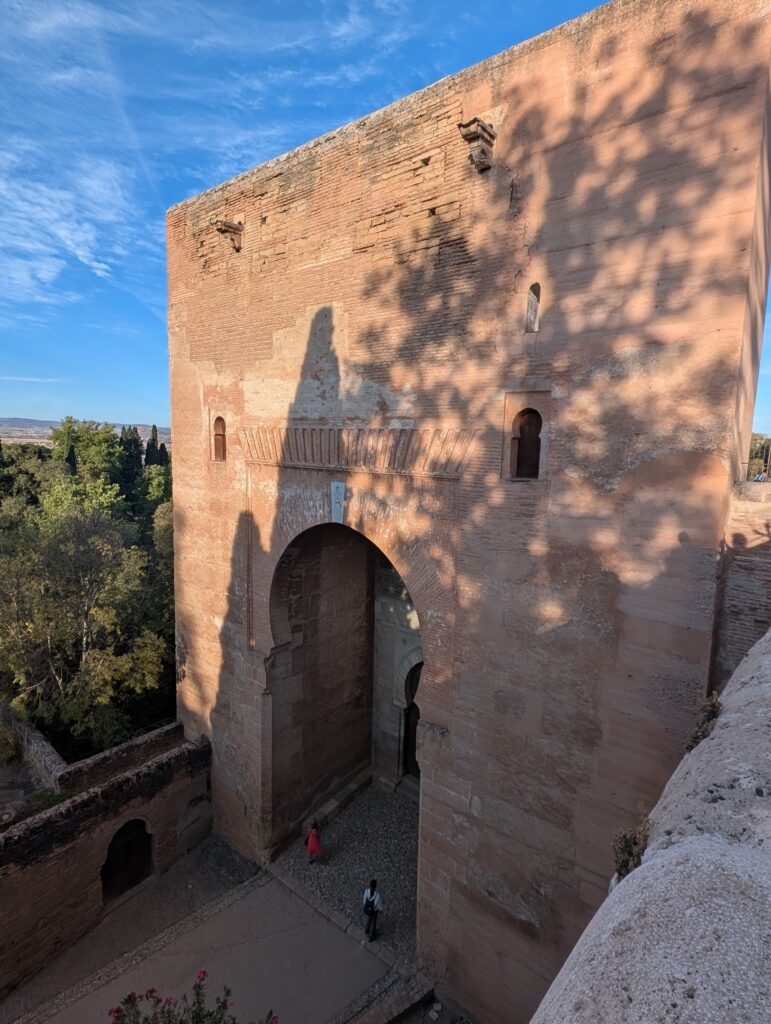
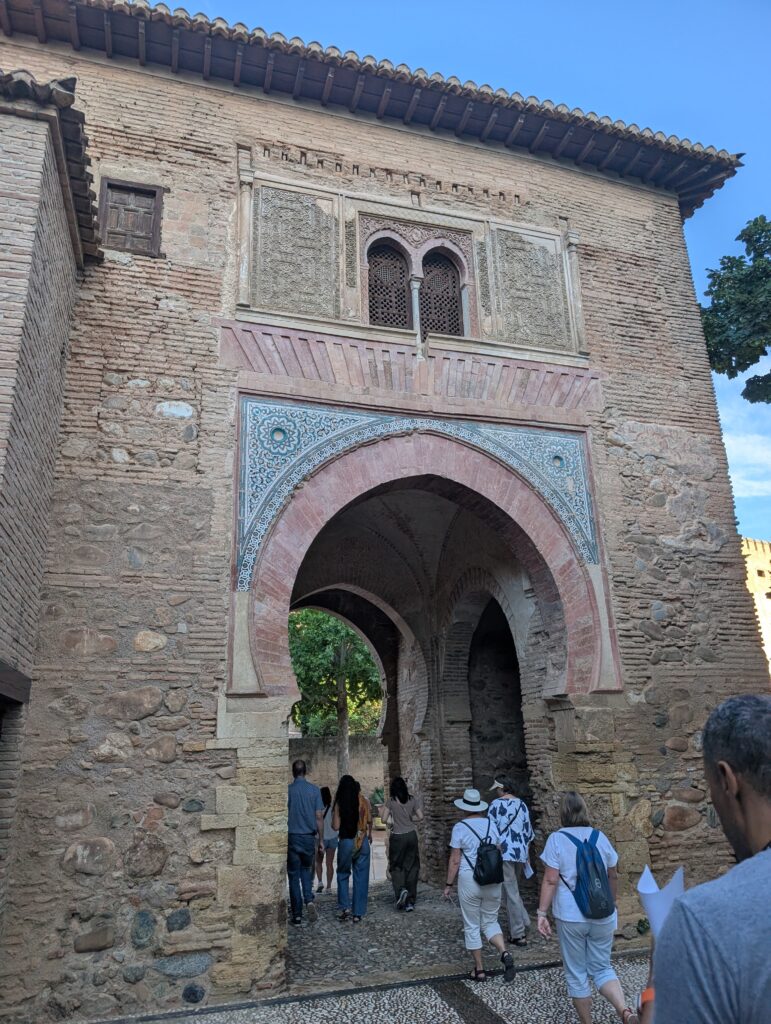
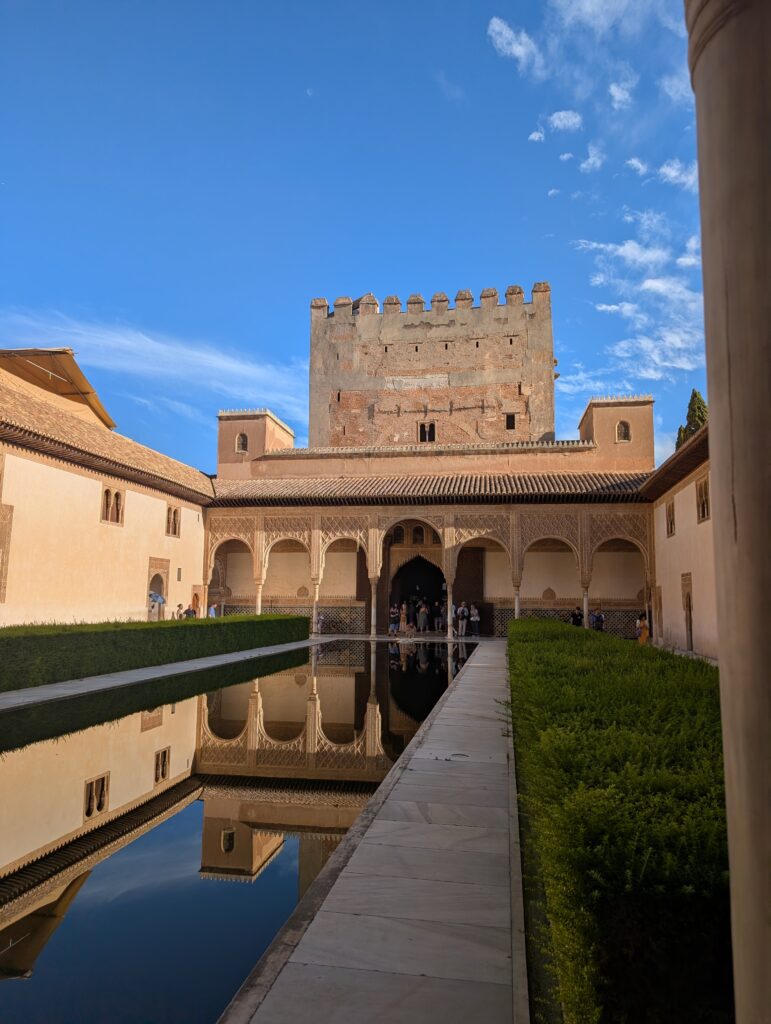
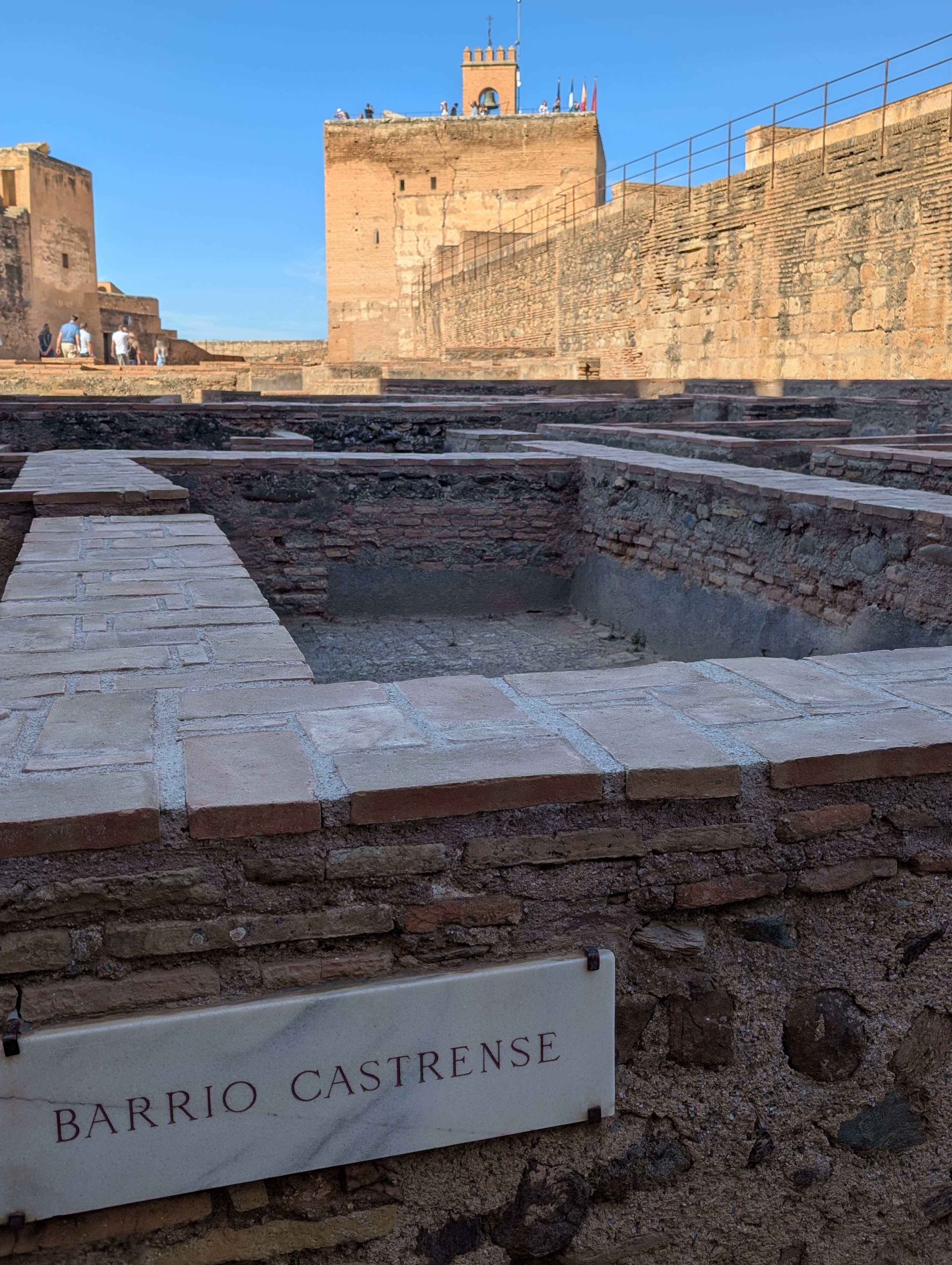
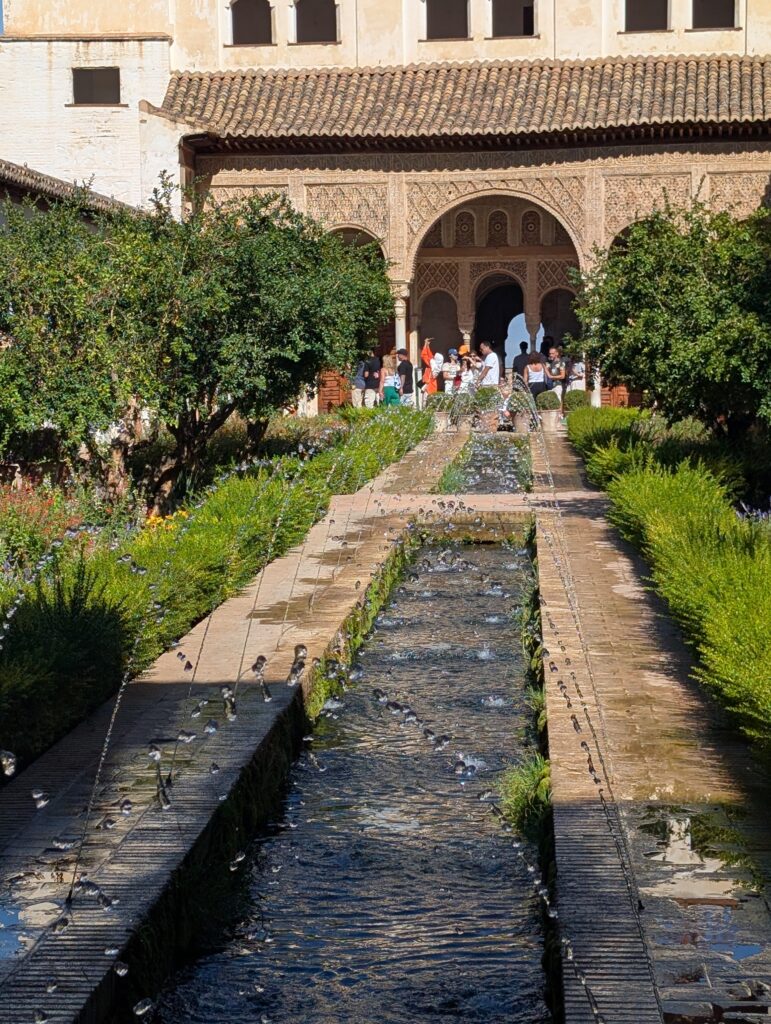
The Alhambra is a historic palace and fortress here in Granada. It was built in the mid-13th century by the Nasrid dynasty who were the last Muslim rulers in Spain. It was a royal palace to the Nasrids with 5 palaces being built during the dynasty. 3 of them are still standing as during the Napoleonic war, the French destroyed palaces and the houses outside the palace where nobility lived. It also was a military stronghold, and a symbol of Islamic architecture and culture in medieval Spain.

There are beautiful entrances into the Alhambra.

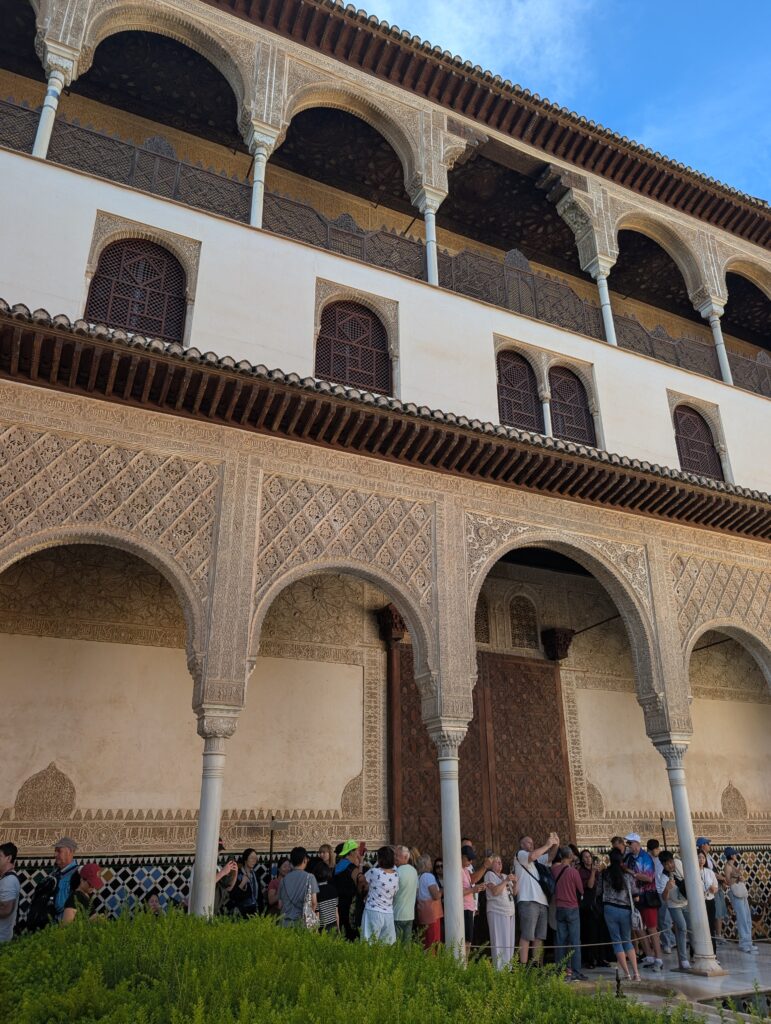
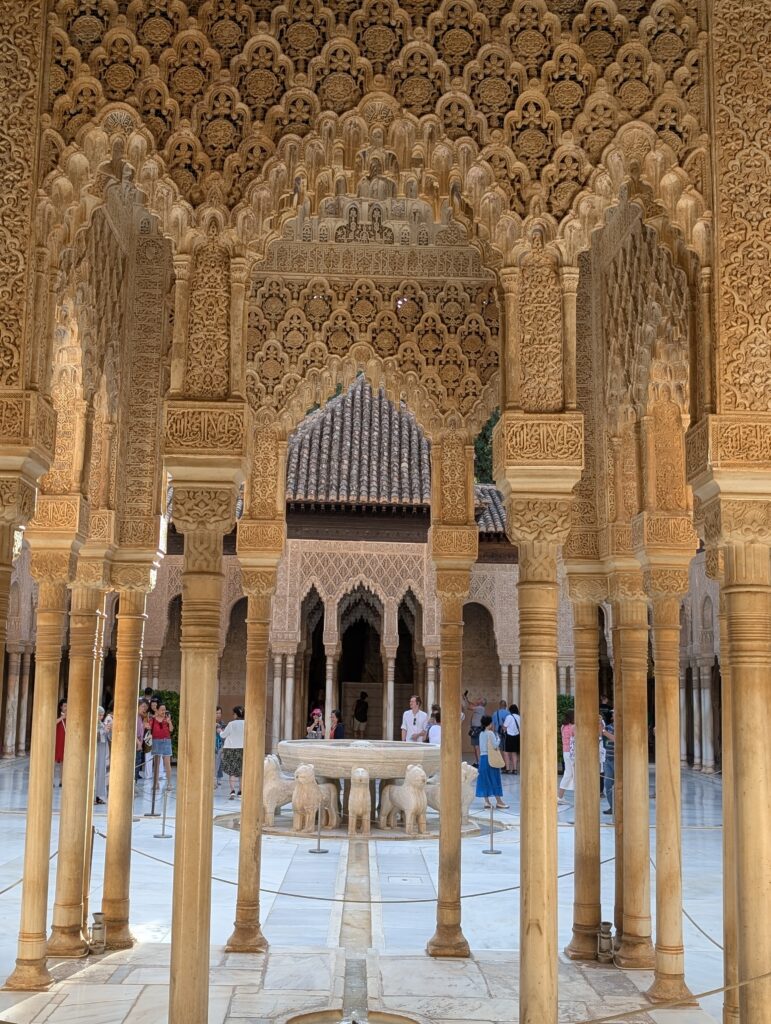
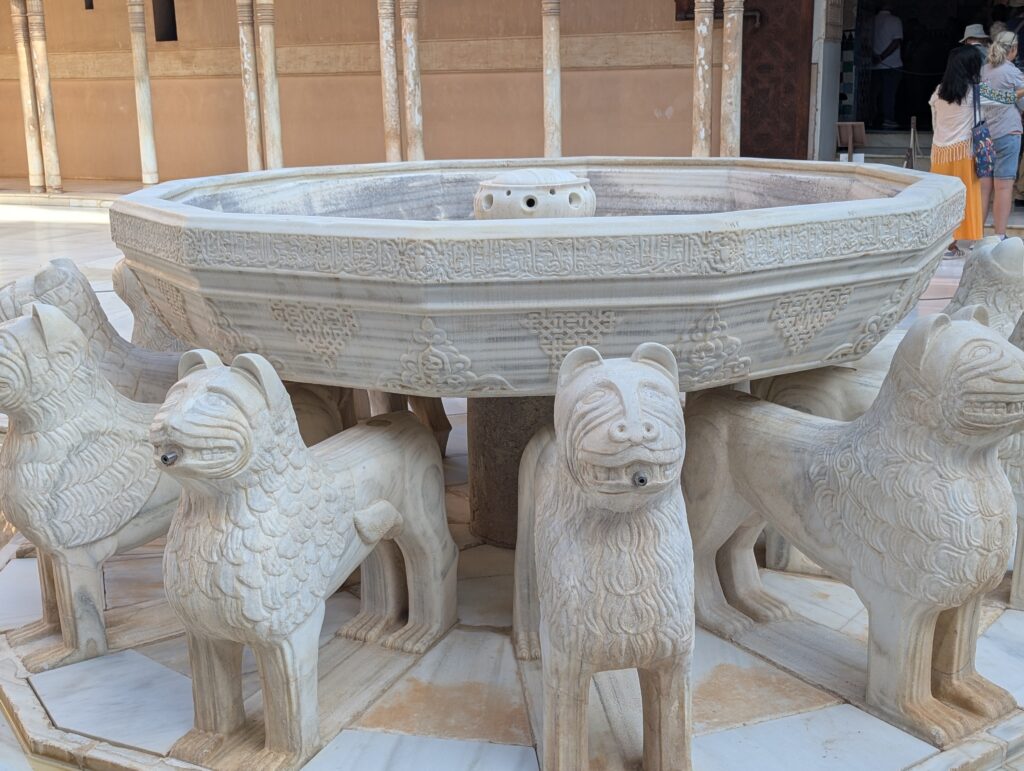
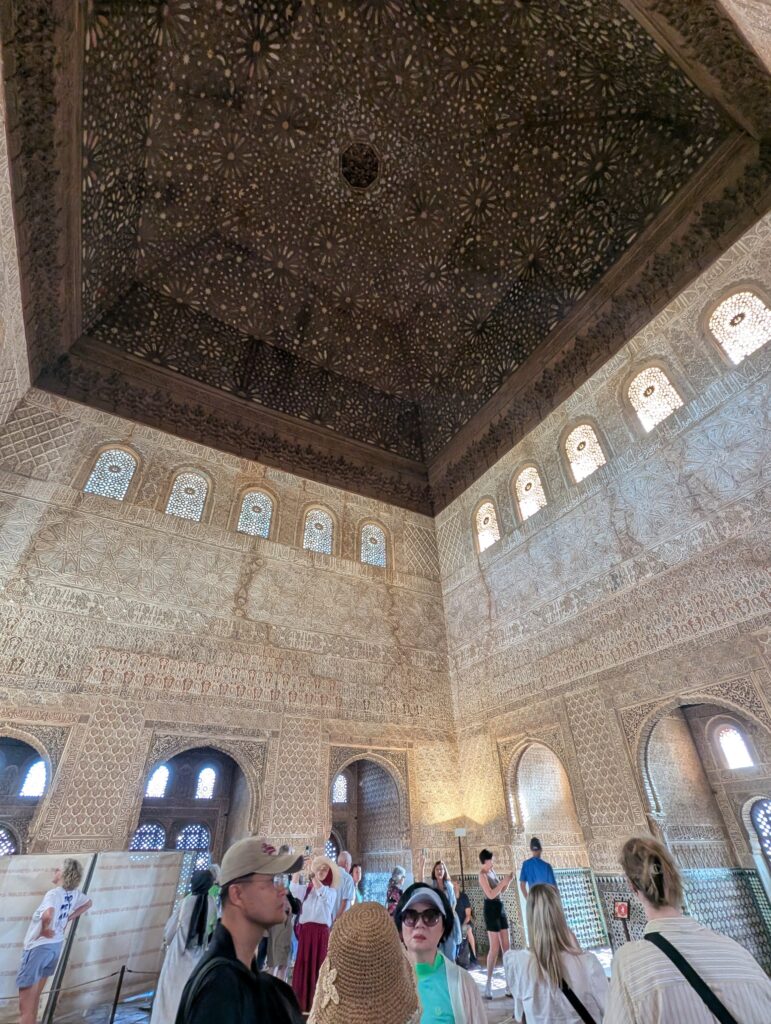
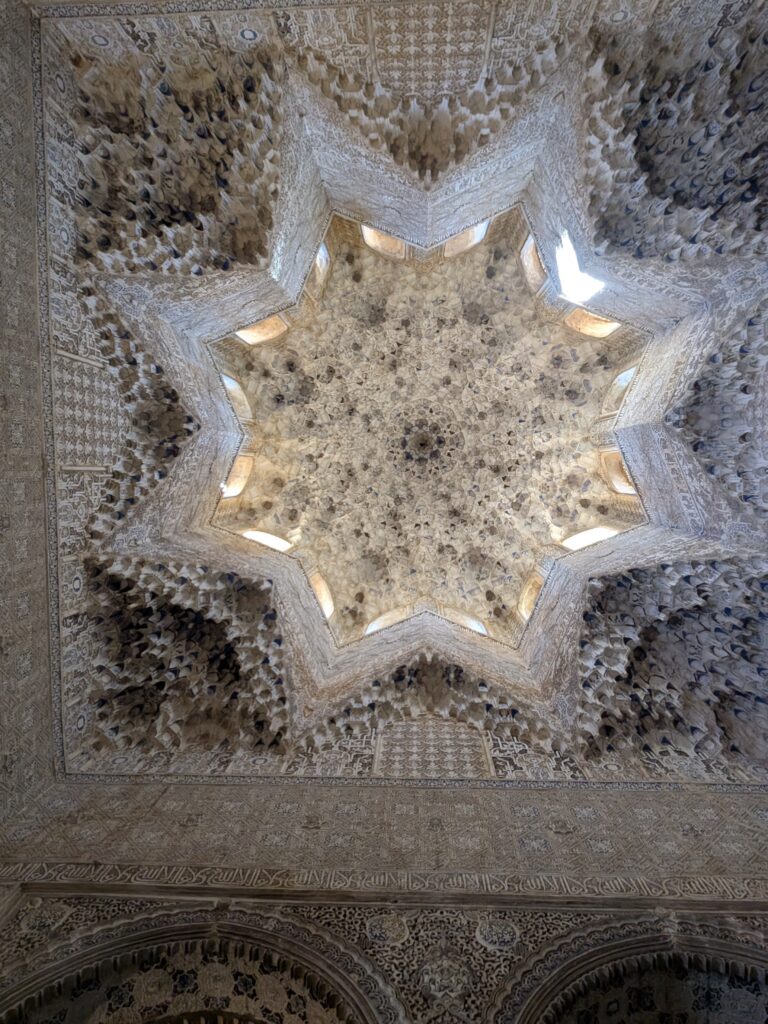
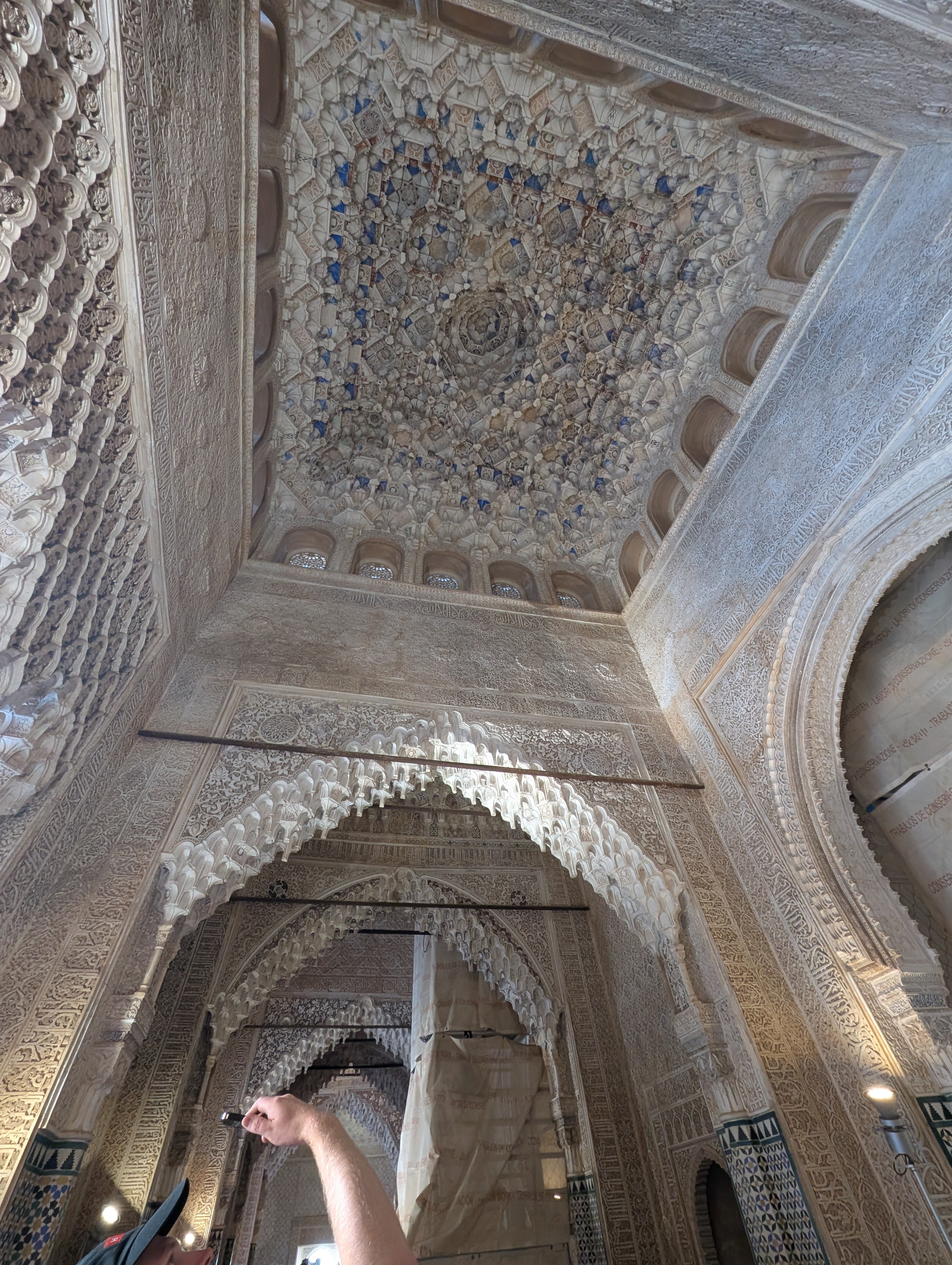
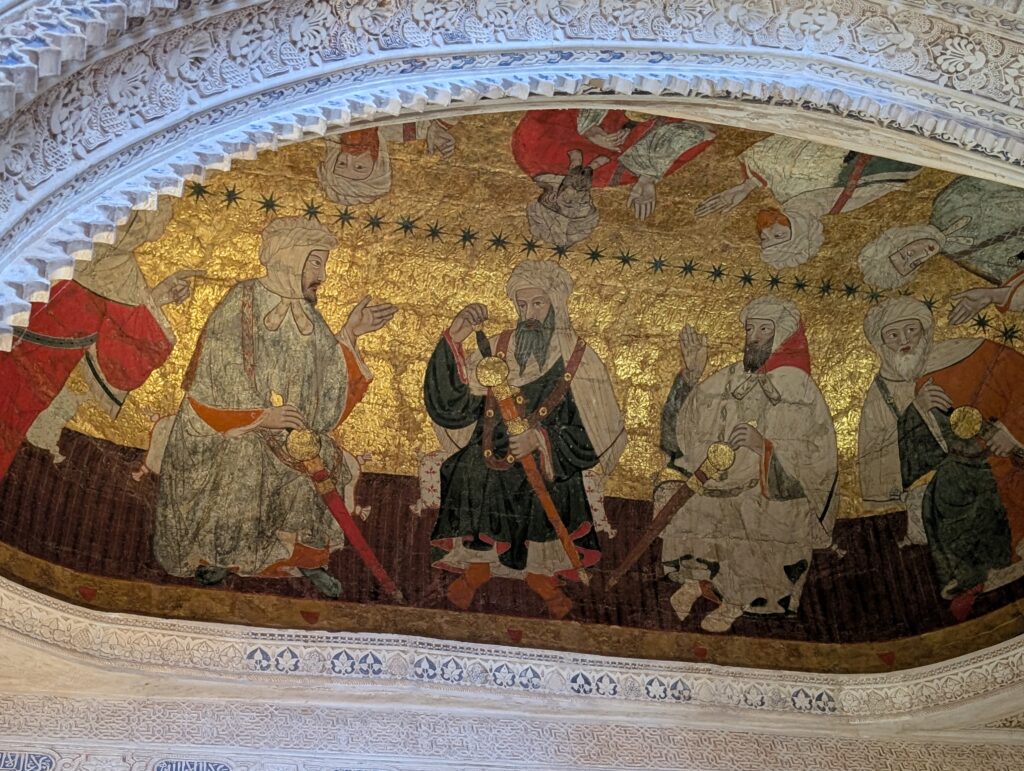
The name “Alhambra” means “The Red One” in Arabic, because of the reddish color of its walls. What is amazing is the intricate Islamic art, including beautiful tile work, calligraphy, carved stucco, and serene courtyards like the Court of the Lions. The use of red and blue colors as well as the placement of water for cooling and to move water through the complex was amazing. The whole of the Alhambra is like a poetry book with the inscriptions throughout providing a lesson.

The court of the lions.

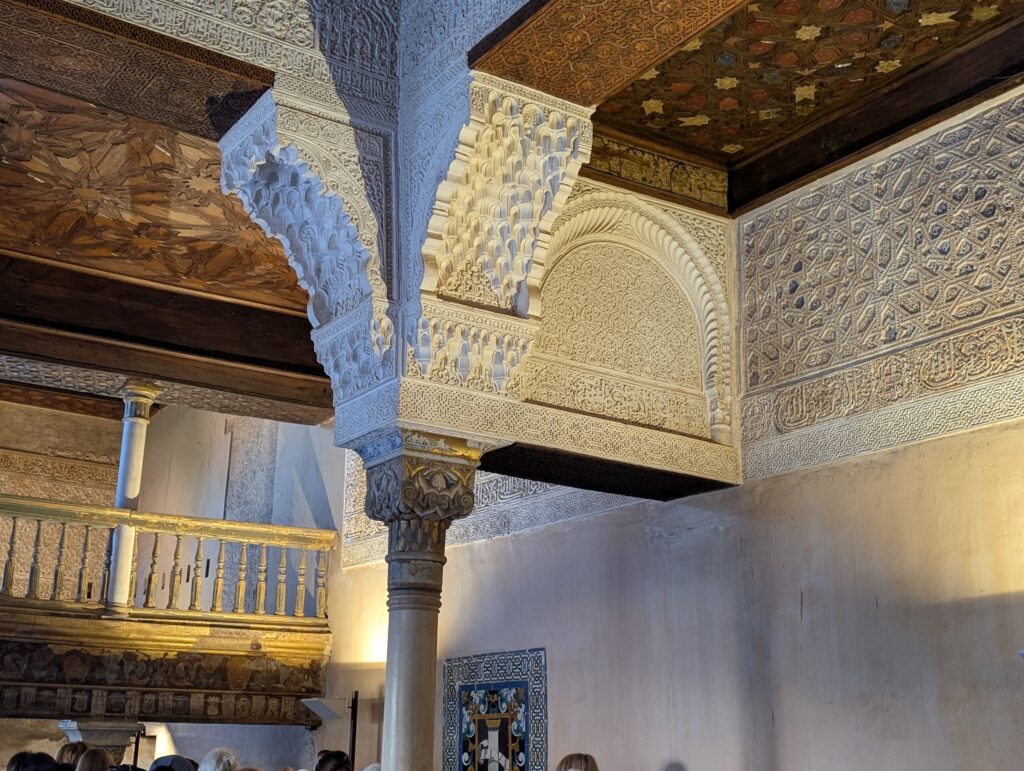
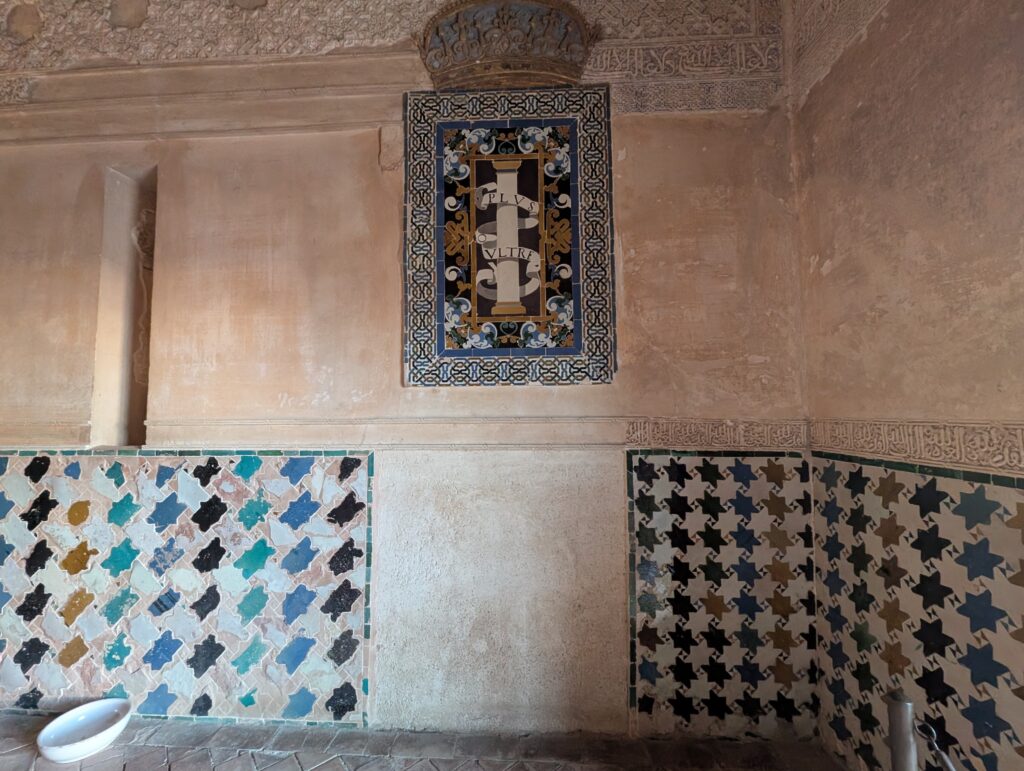
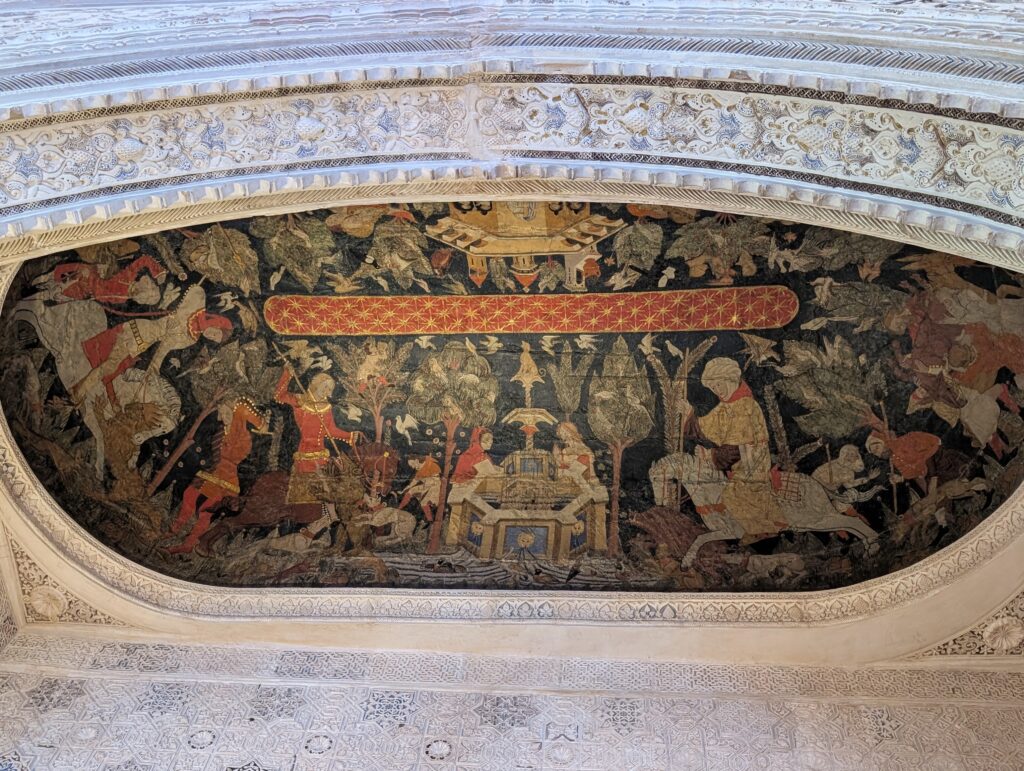
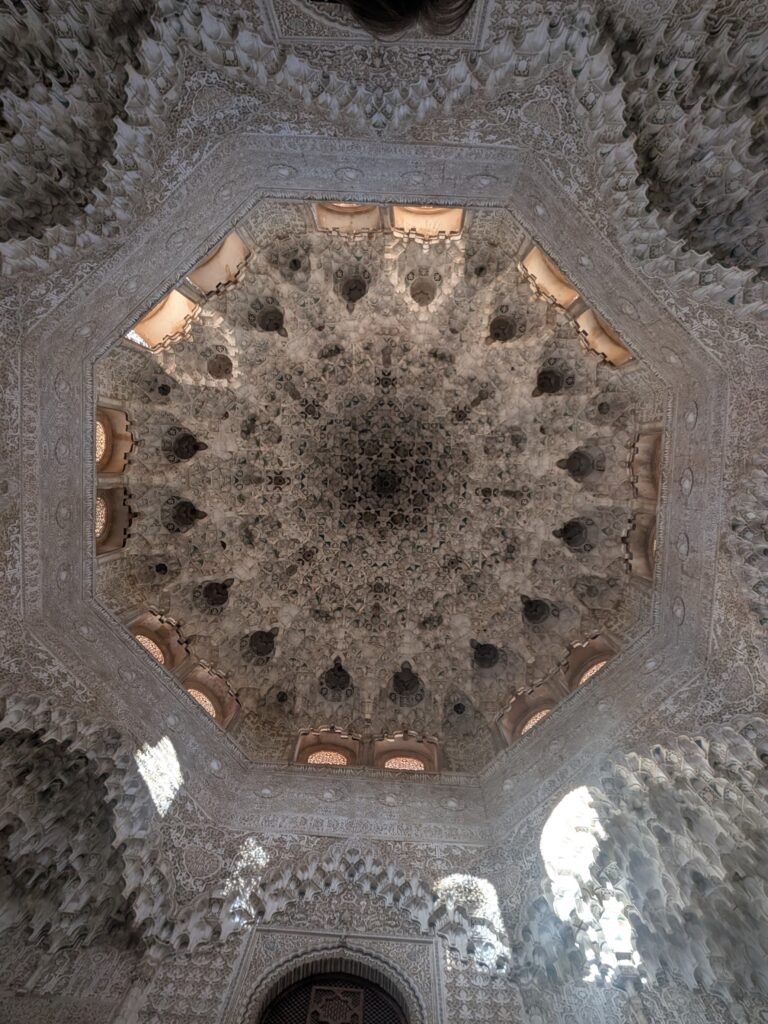
Here are some pictures of the tiles and the artwork of the ceilings which are crafted to utilize the light throughout the day and to create the illusion of the stars.

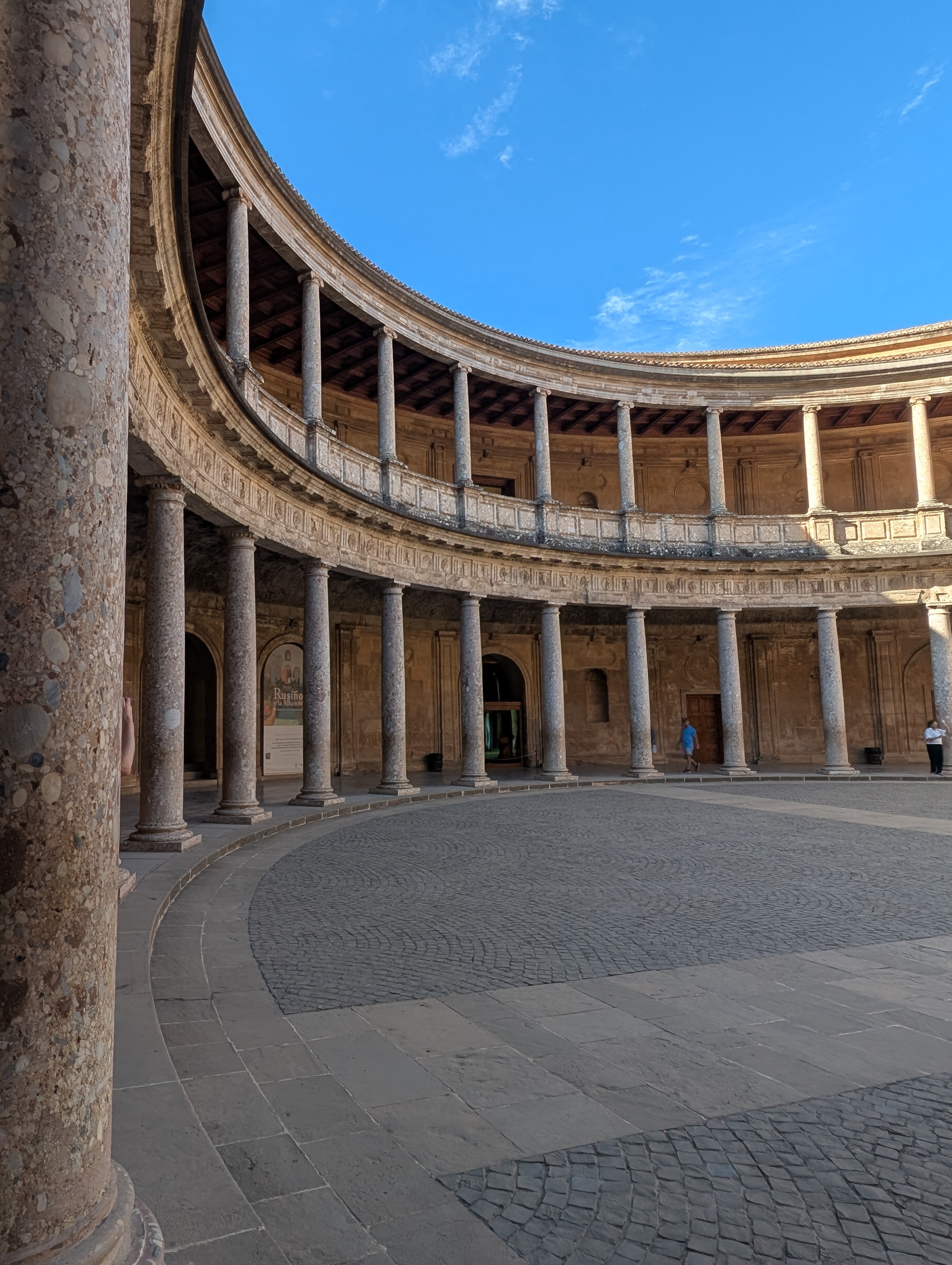
After the Christian conquest in 1492, the Alhambra was taken over by the Catholic Monarchs and later altered by various rulers, including Charles V, who added a Renaissance-style palace which was never finished (and paid for by local tradesmen, which did not go over very well.)

The views from the Alhambra are amazing.

These would be soldier houses in the Kasbah.

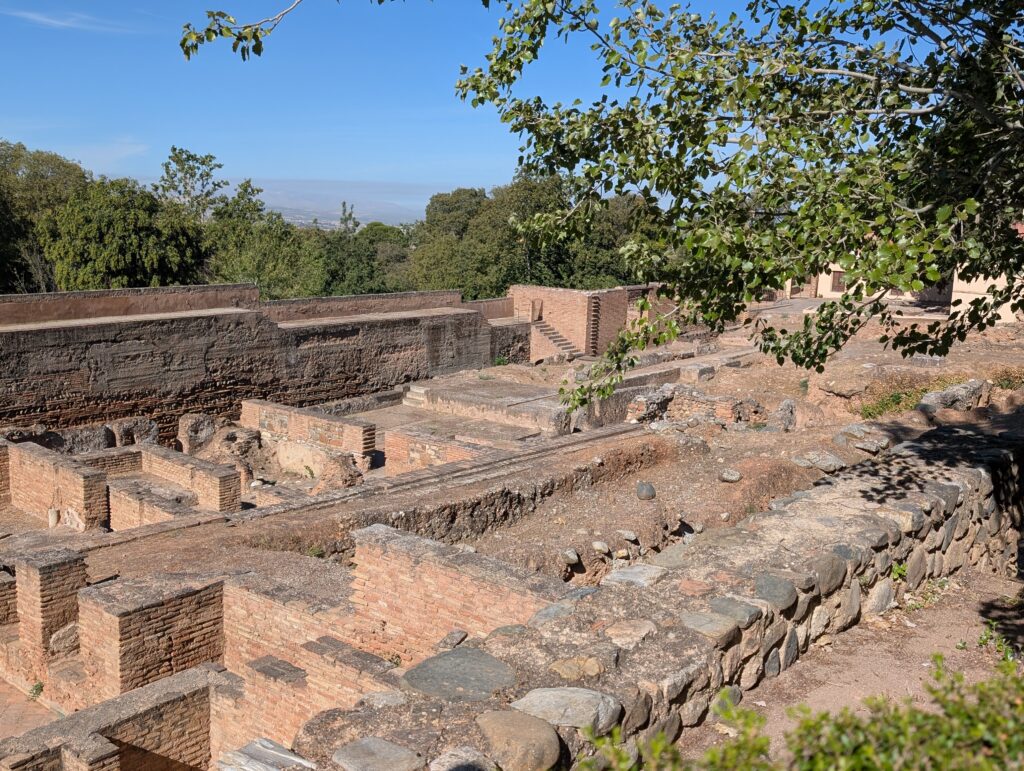
Ruins of one of the palaces.

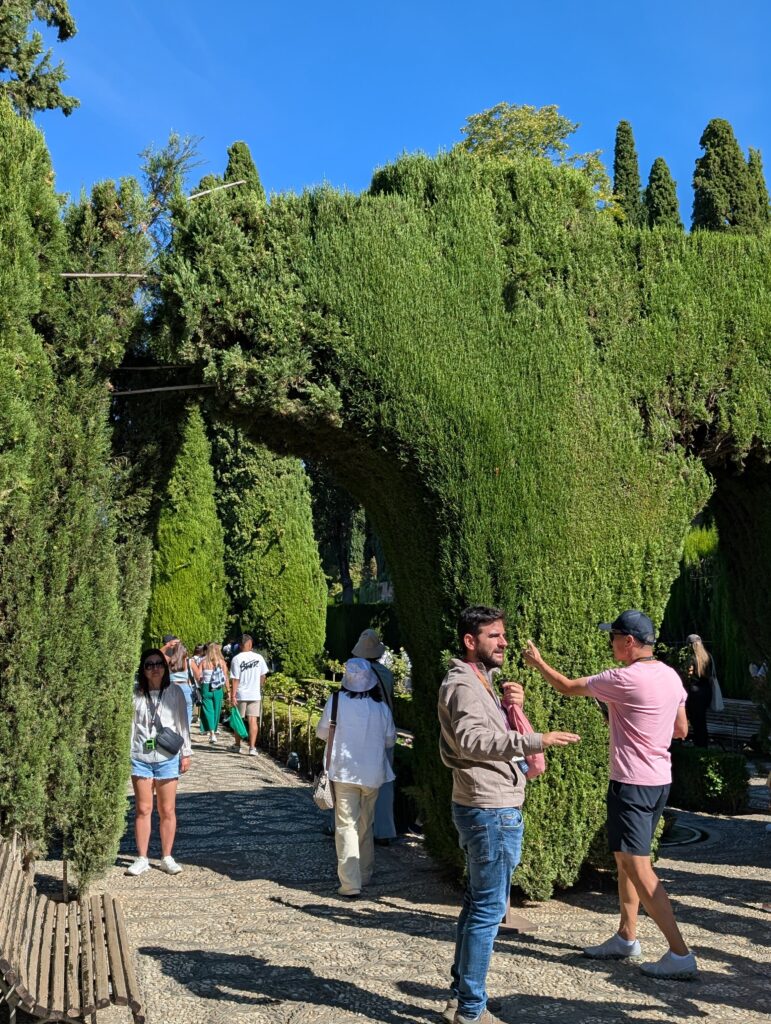
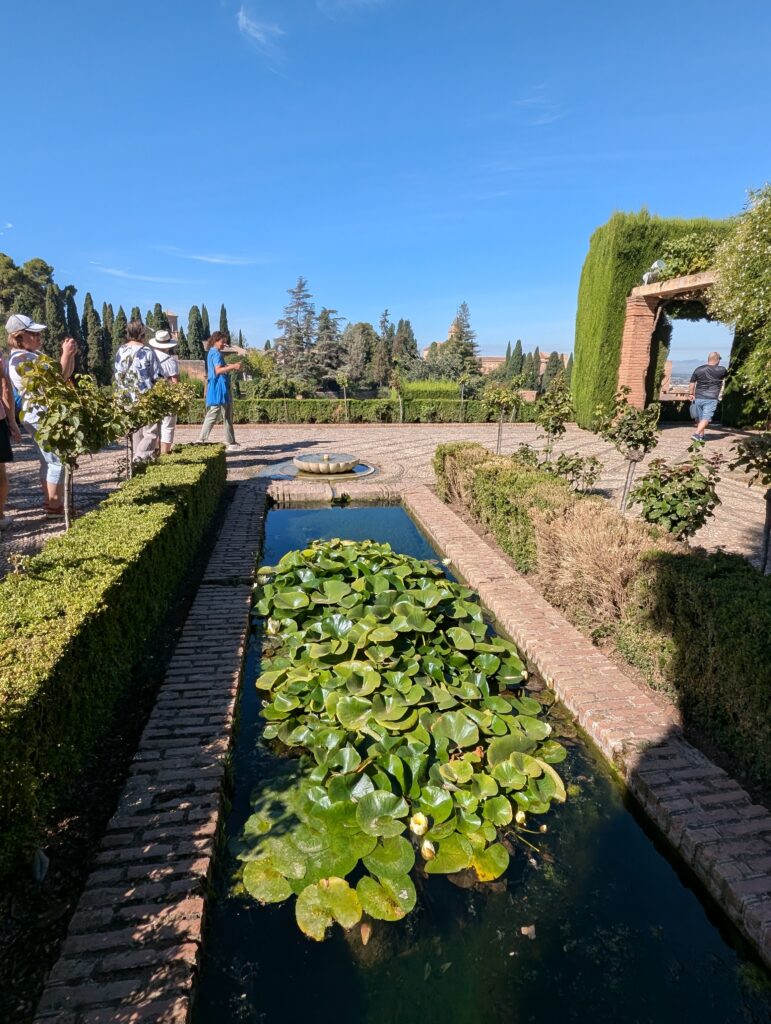
There were also extensive gardens to provide not only beauty, but also to provide food for those living in the Alhambra. The water features help to bring the water up for irrigation.

Tarragona

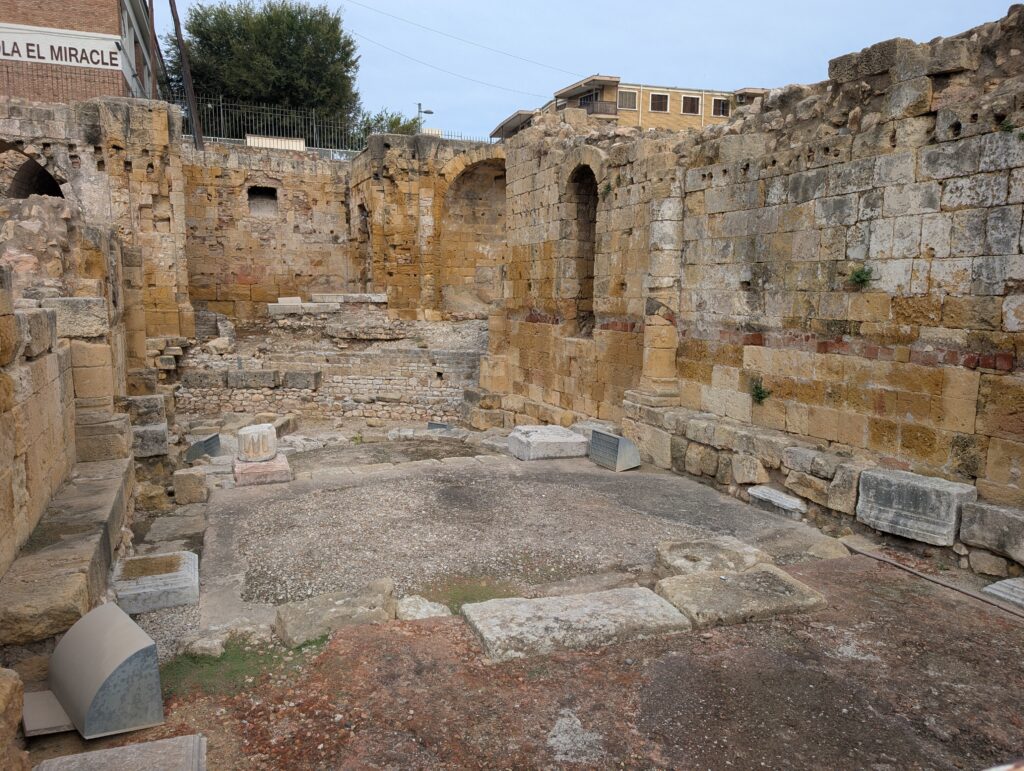
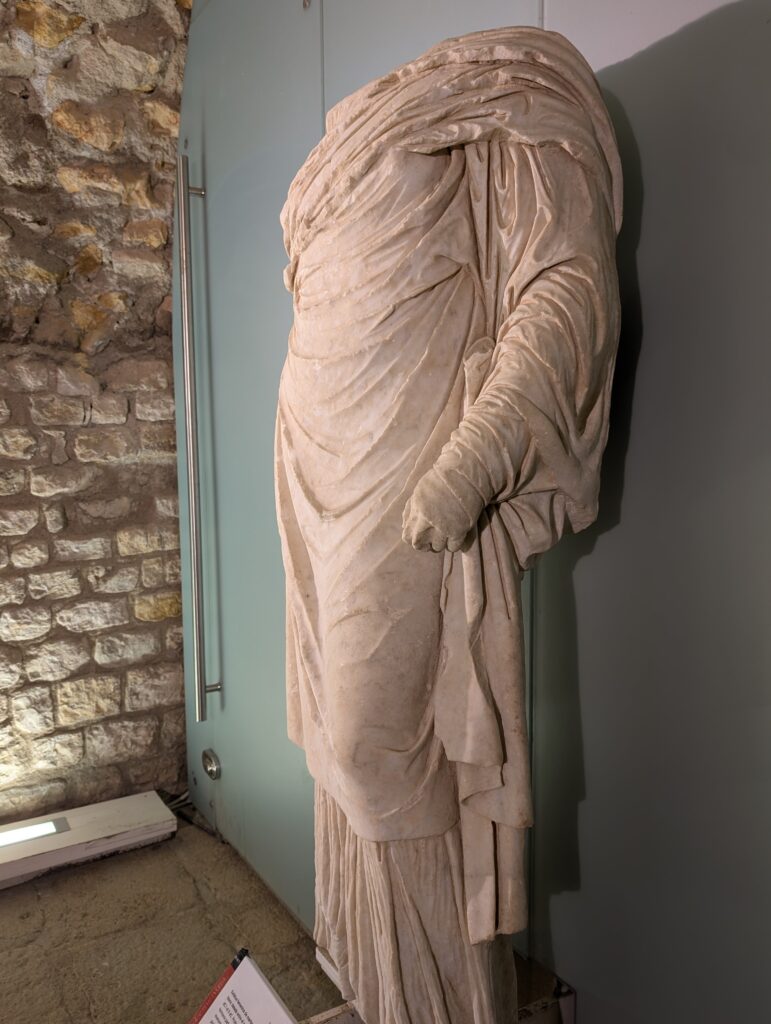
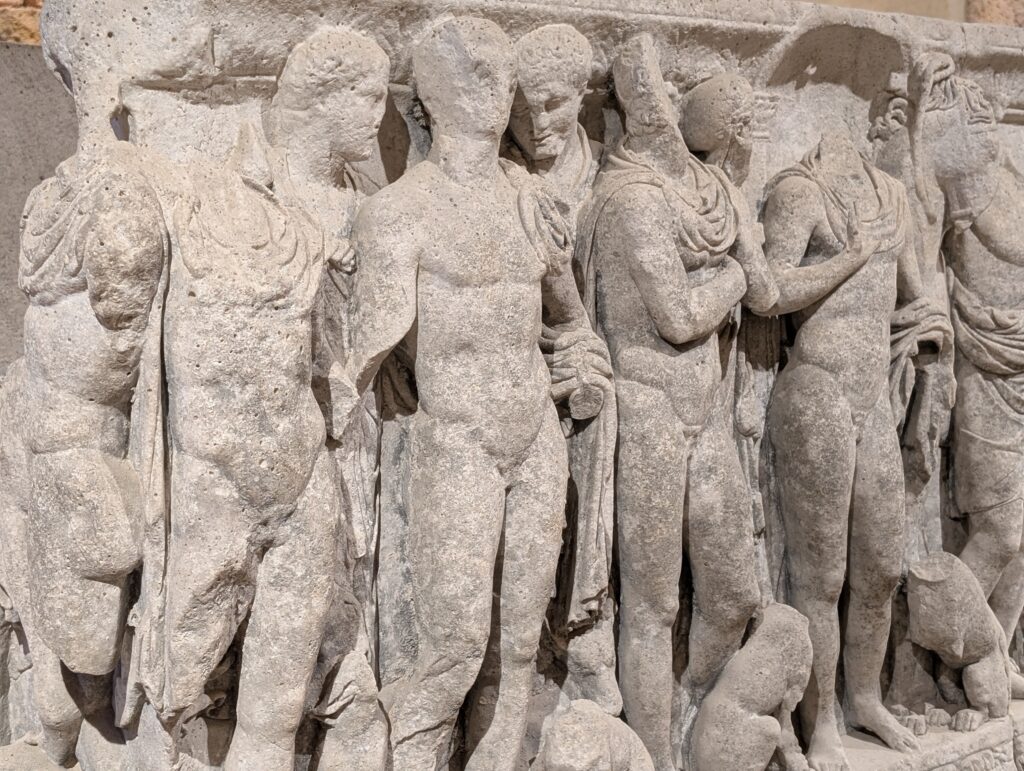
Around 218 BCE the Romans established a military base called Tarraco.It became a key Roman city, eventually the capital of the largest provinces in the Roman Empire. Emperor Augustus even stayed in Tarraco, and the city became a political, economic, and cultural hub.Many Roman remains still stand, including an amphitheatre, circus, aqueduct, and walls and is an UNESCO World Heritage Site.

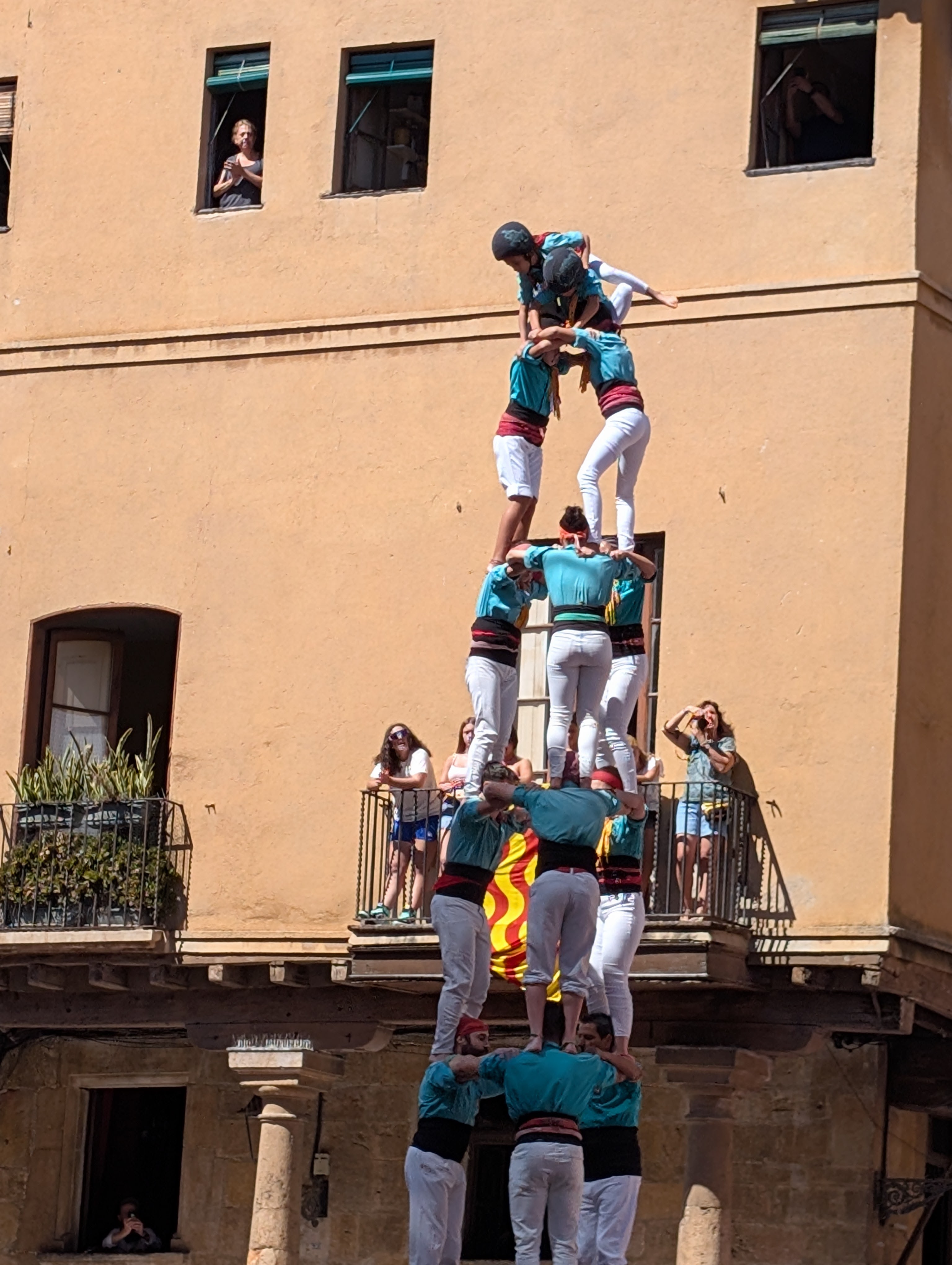
It was a great place to stay as it has beaches along the Mediterranean and Catalán culture including creating Castells or human towers. I was lucky to be here on one of their holidays to see them. The top is higher than the second floor.

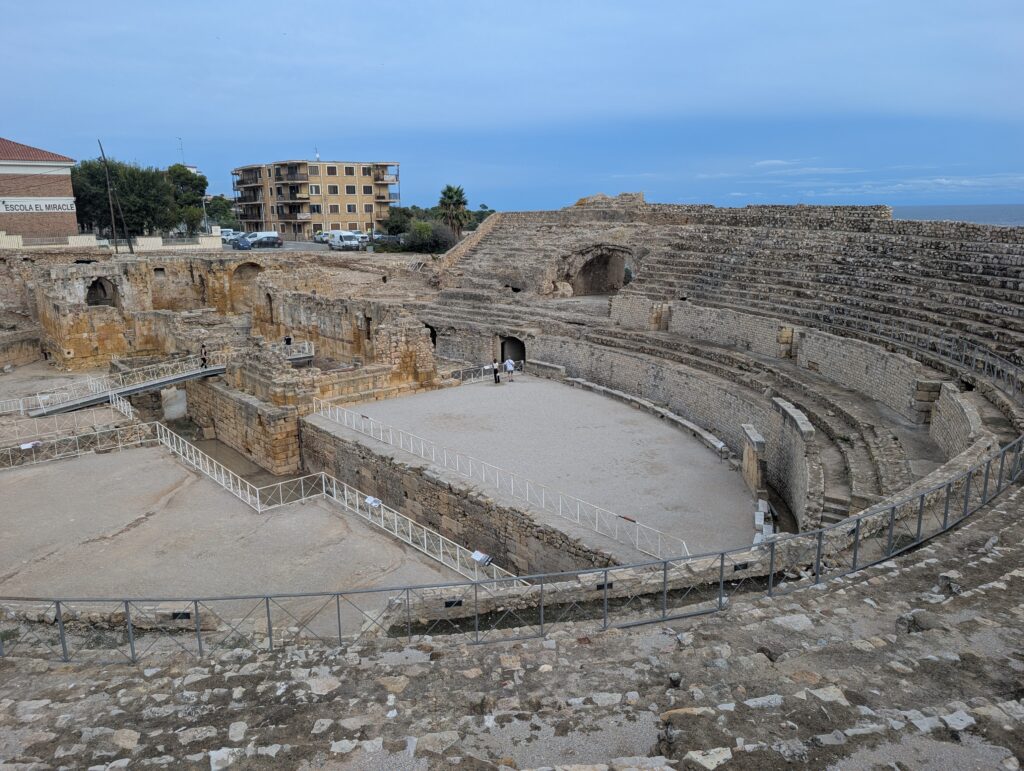
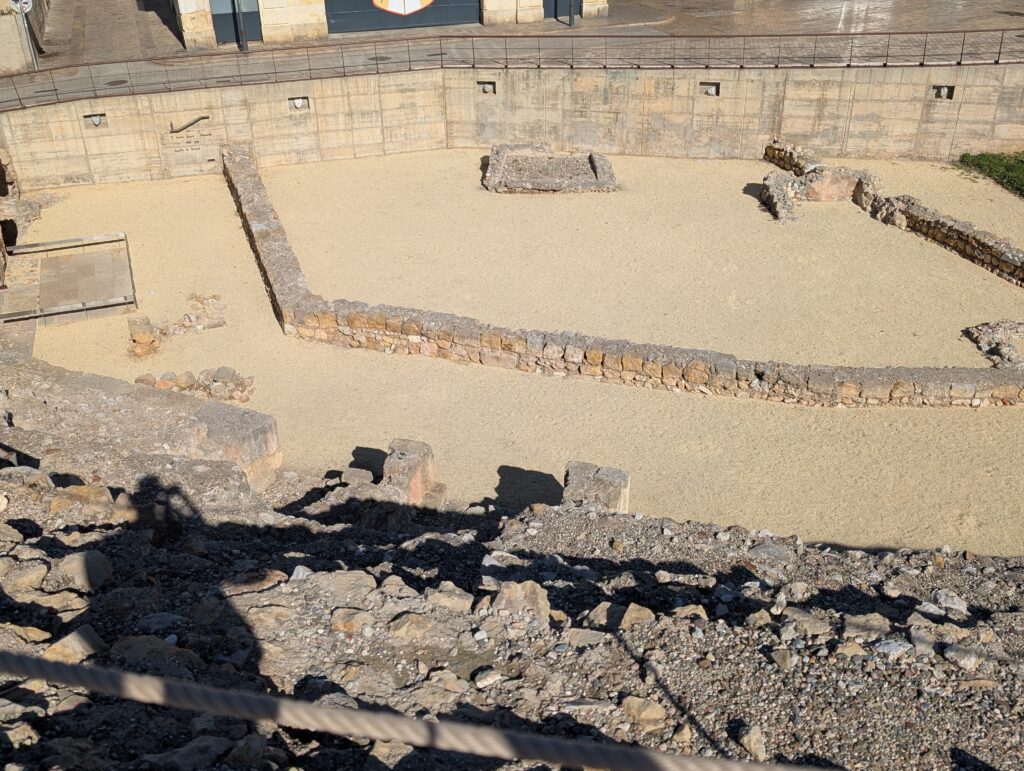
The amphitheater was used for sport (humans against lions)… You can see the seats arranged around. Holes can be seen in the rock where netting was applied to stop the lions from getting in the stands.

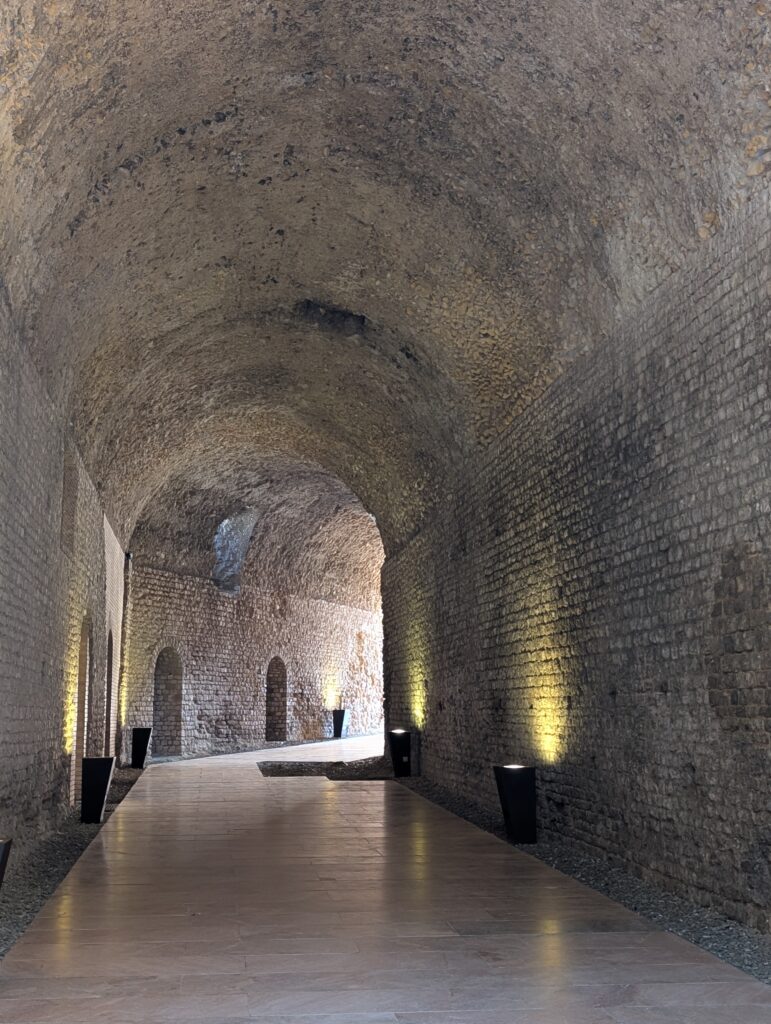
Roman circo. This was for chariot races and the vaults/tunnels underneath for bringing the chariots in was well preserved.

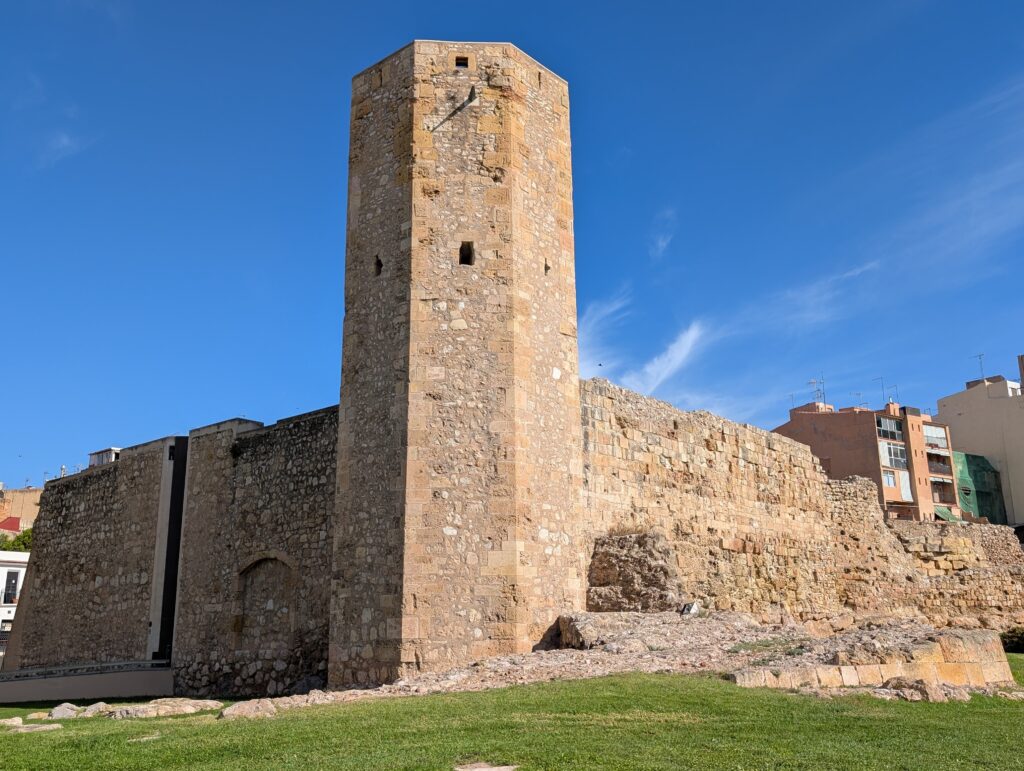
The tower was used for defense and also for political prisoners by the Romans, the French, and by Franco during the civil war, among others. This picture was taken at the top of the tower.

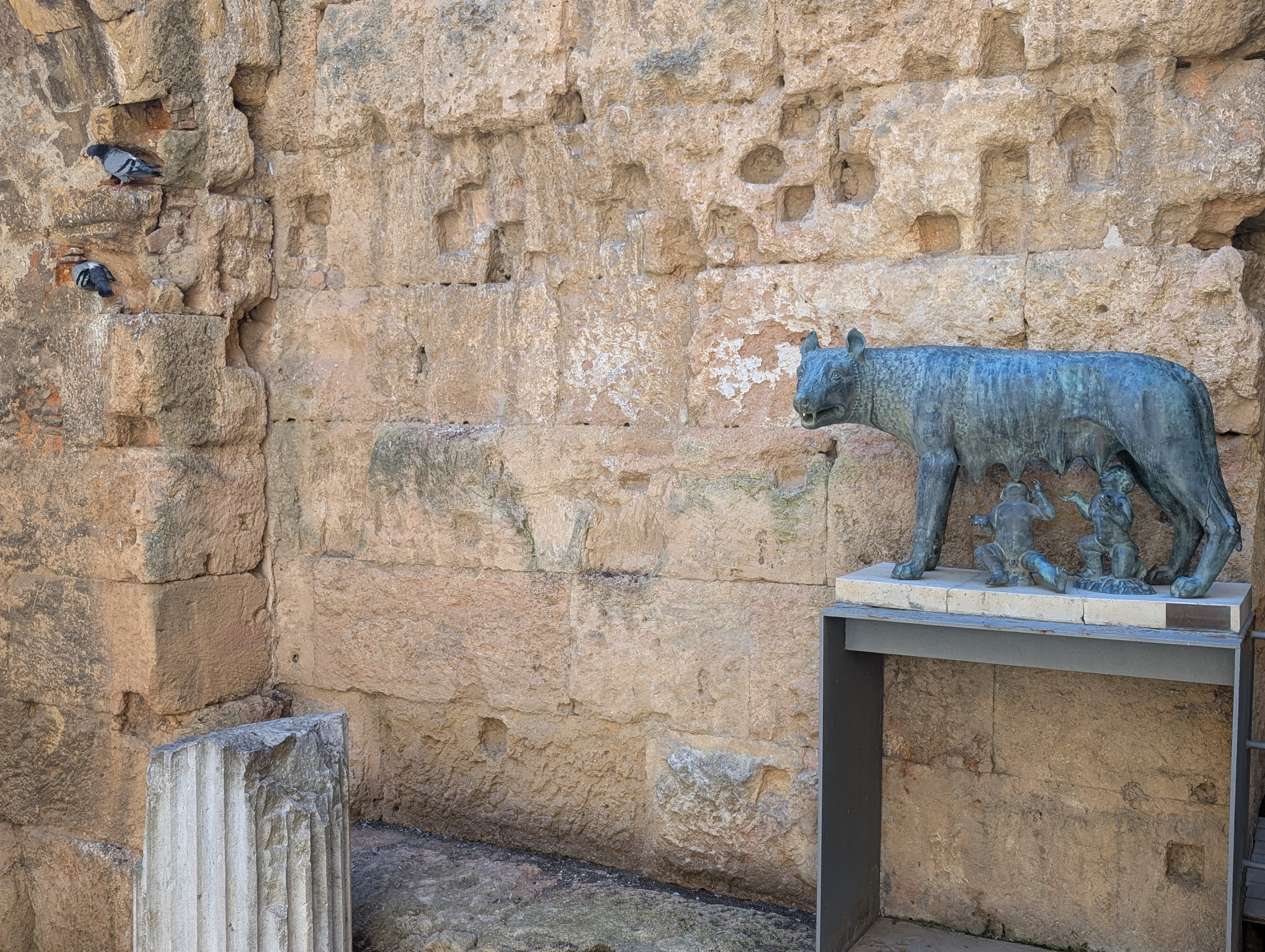
In walking around I saw this statue of Romulus and Remus.

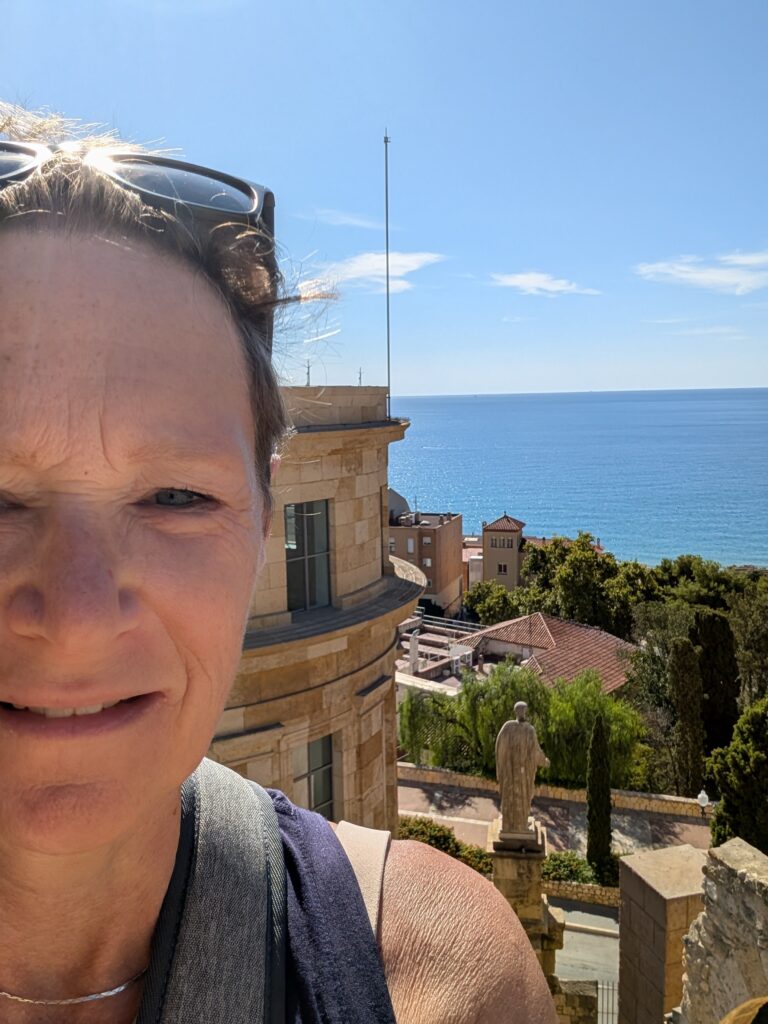
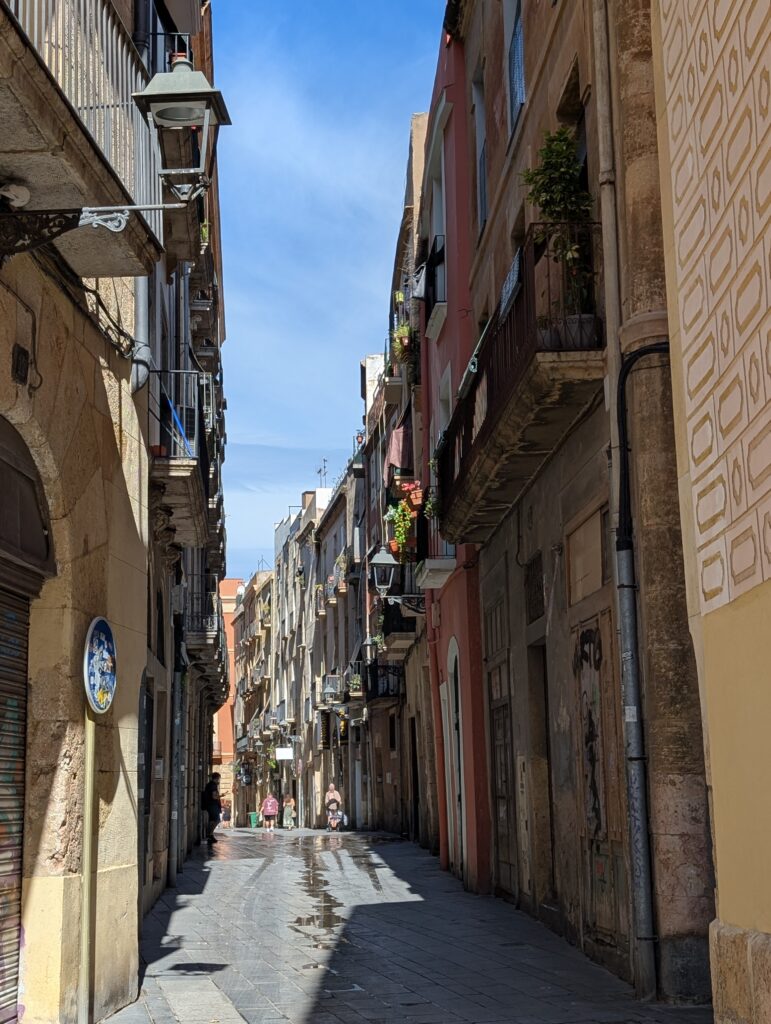
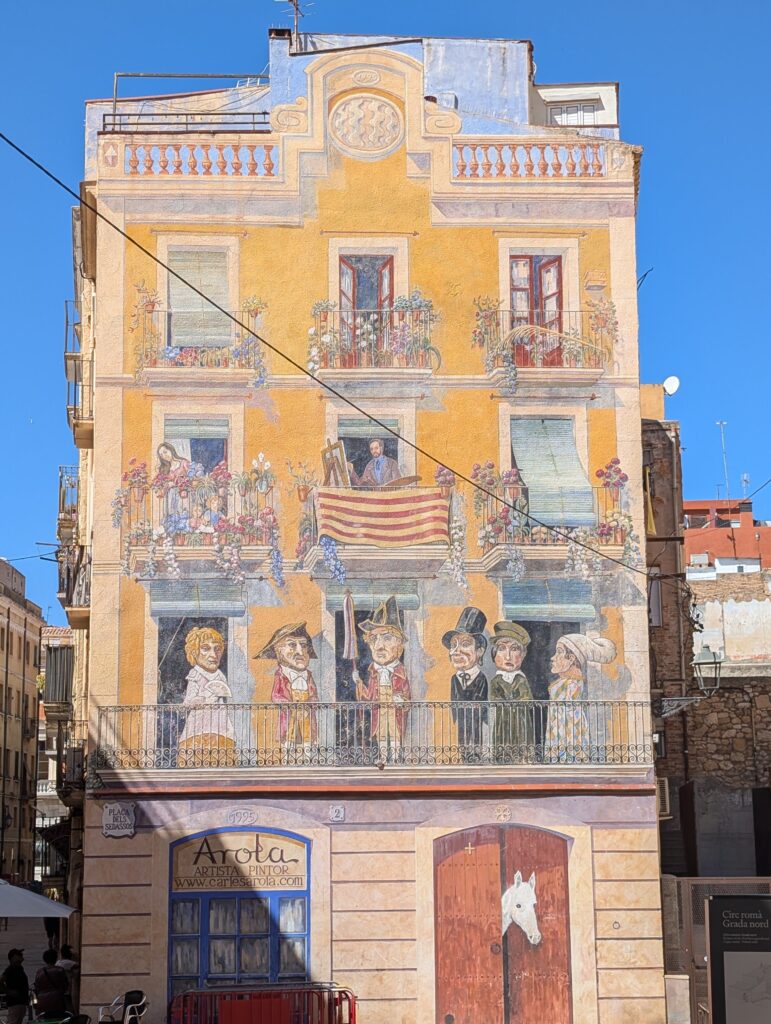
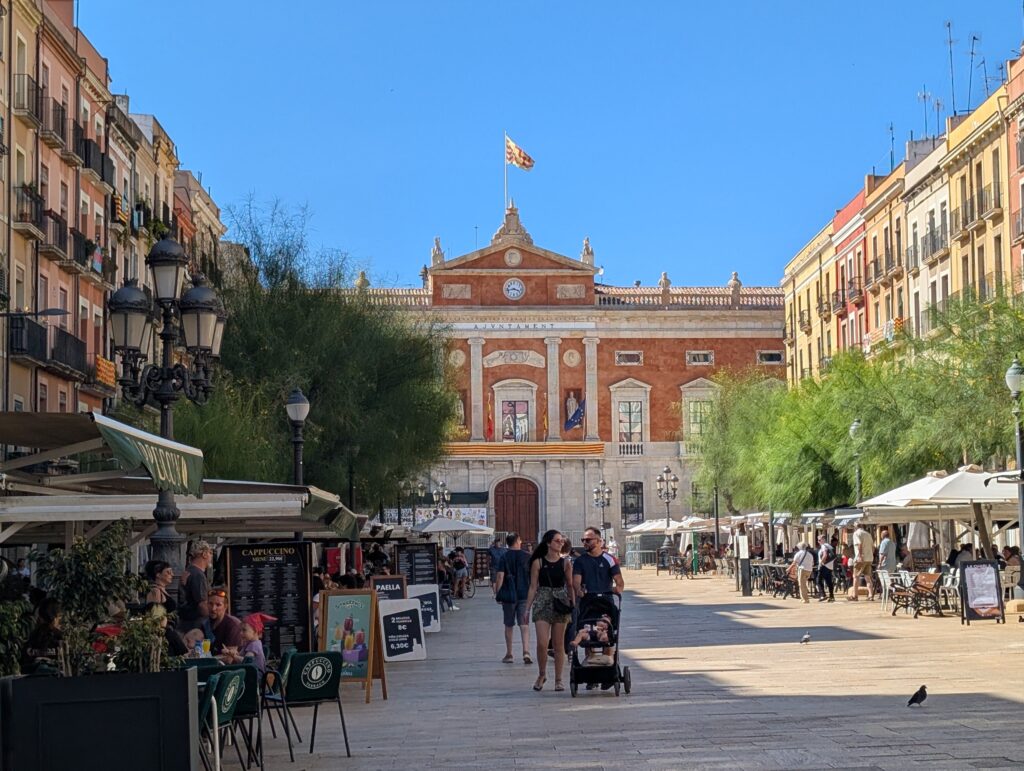
Views of Tarragona while walking around the old city.

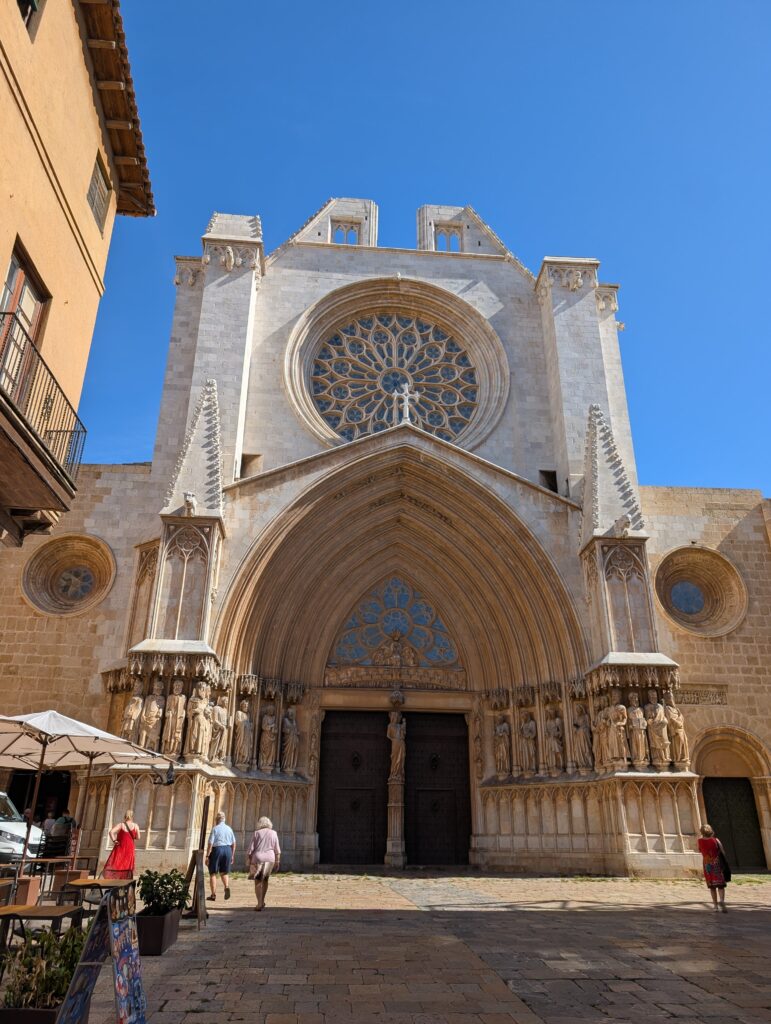
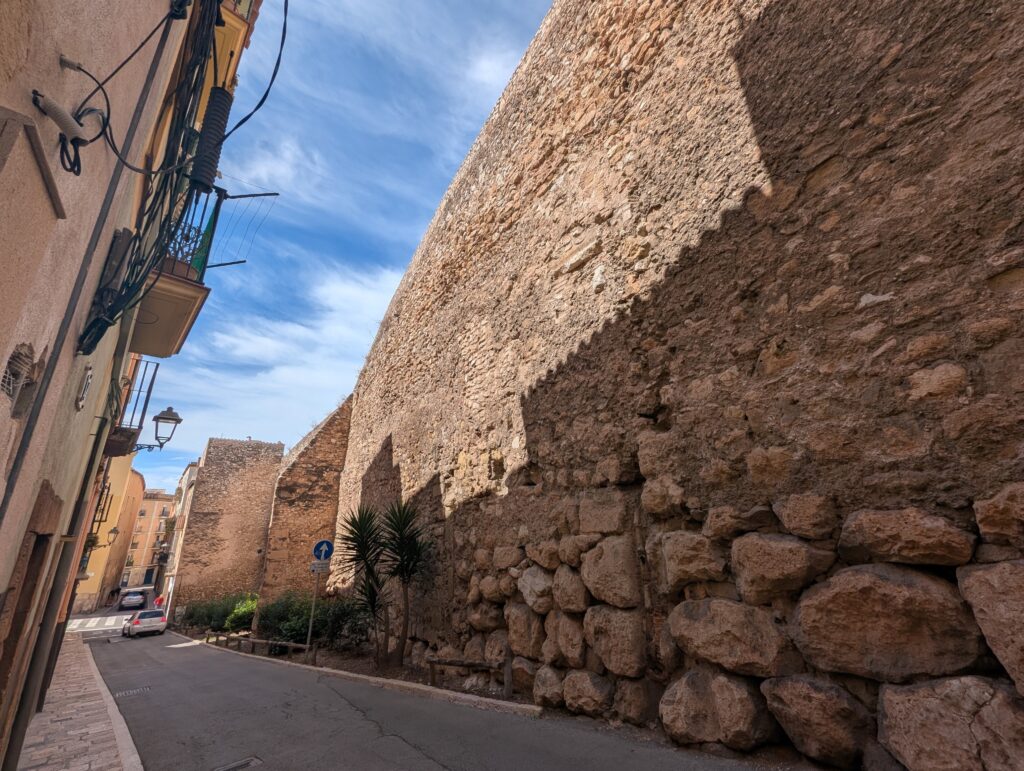
Above is the Cathedral and below is remains of the Roman city wall which is extensive in the city.

Tarragona is definitely a place to go and more laid back than some other cities. The Mediterranean was great for swimming and looking at all the little fish swimming by.

San Sebastian

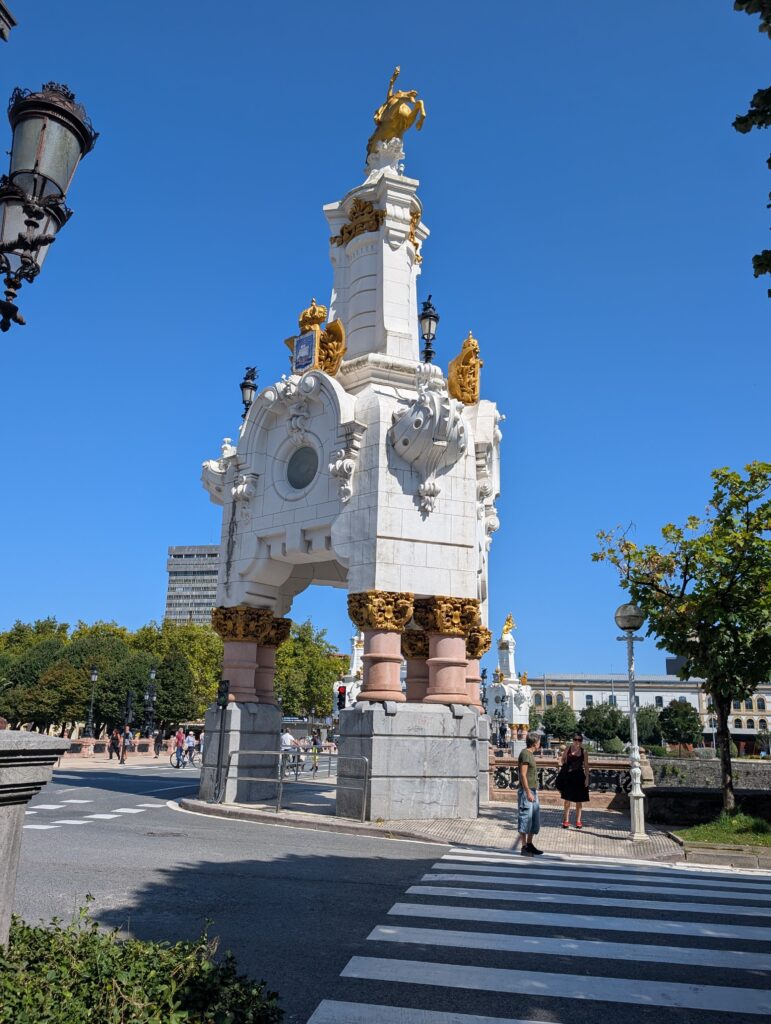
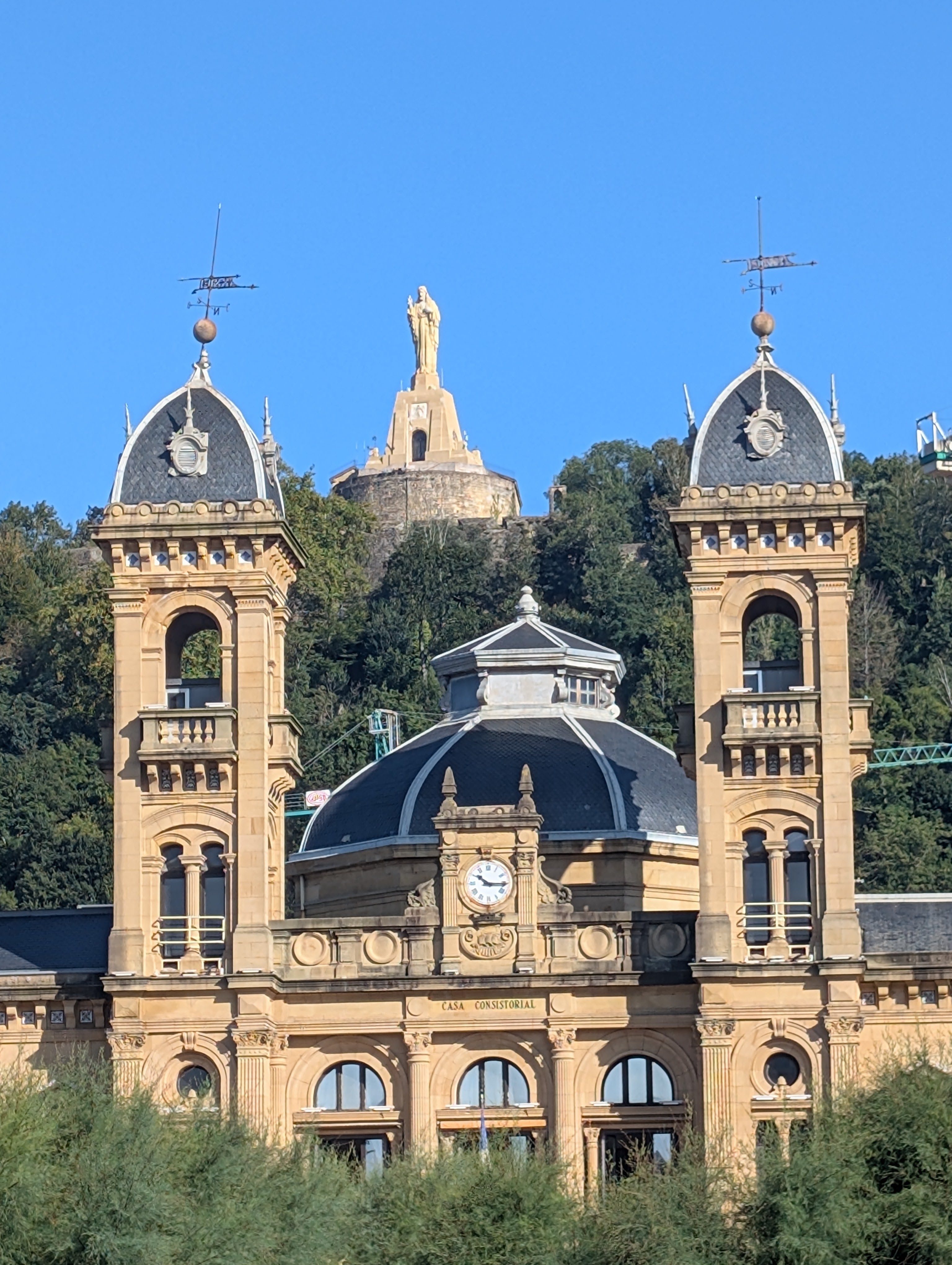
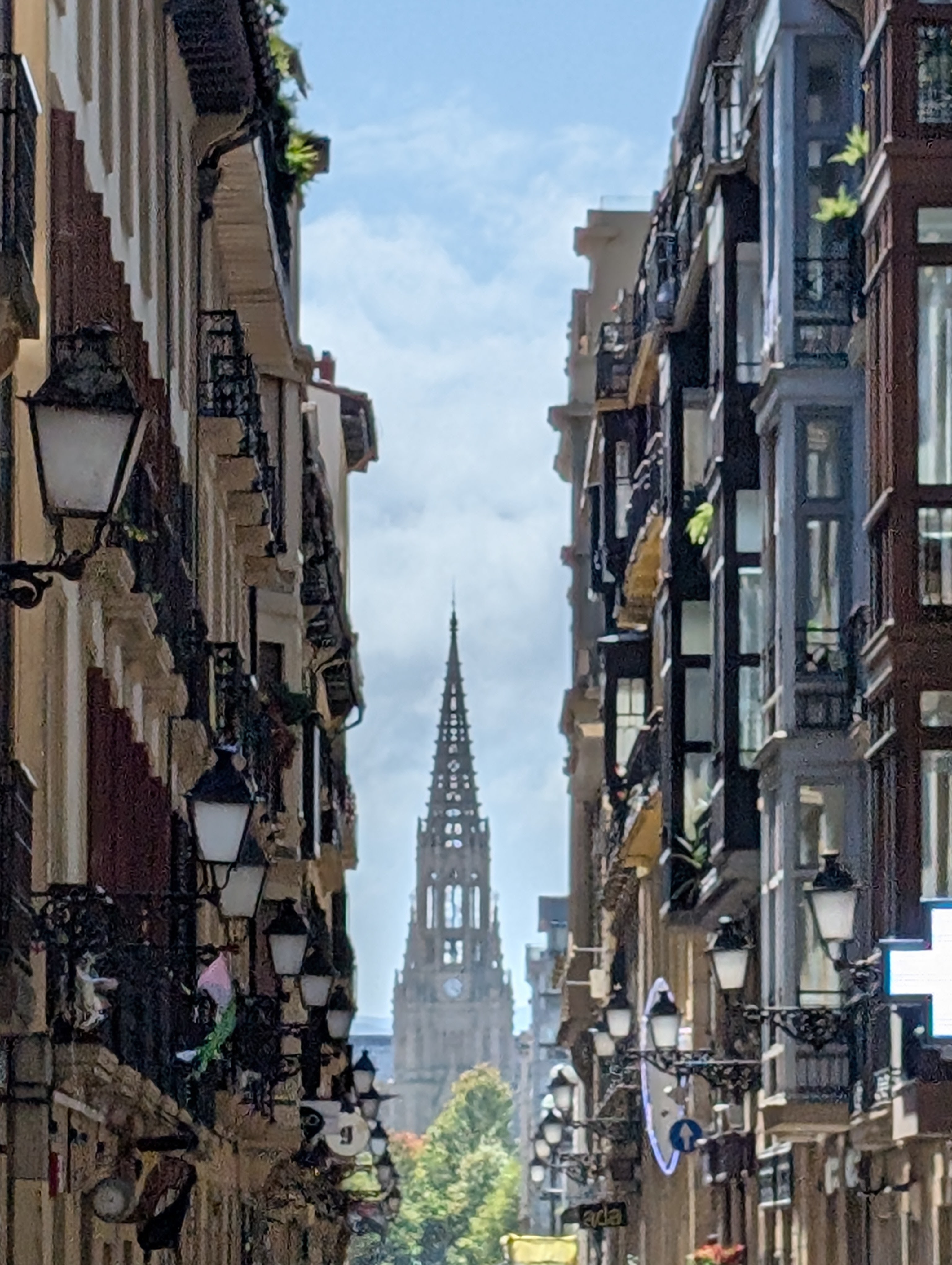
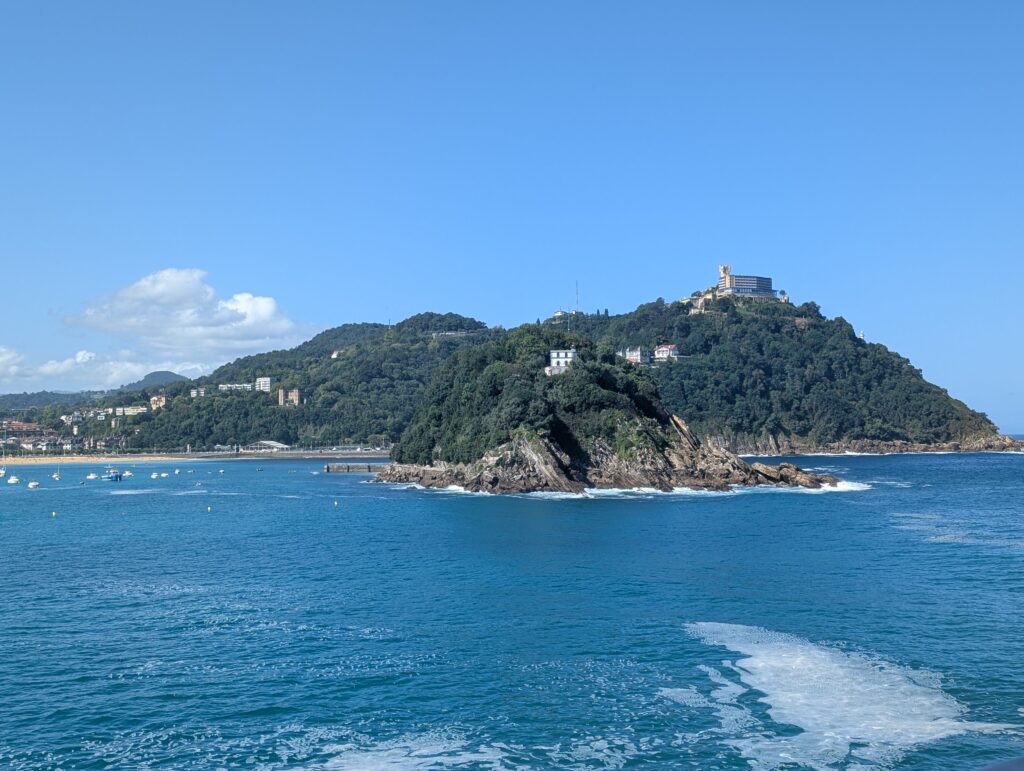
I took a bus to the city on the coast about 1.5 hours away. What a beautiful city and day!
It originated as a fishing port and became a military stronghold. It was the last of the Basque area to be freed from French rule.

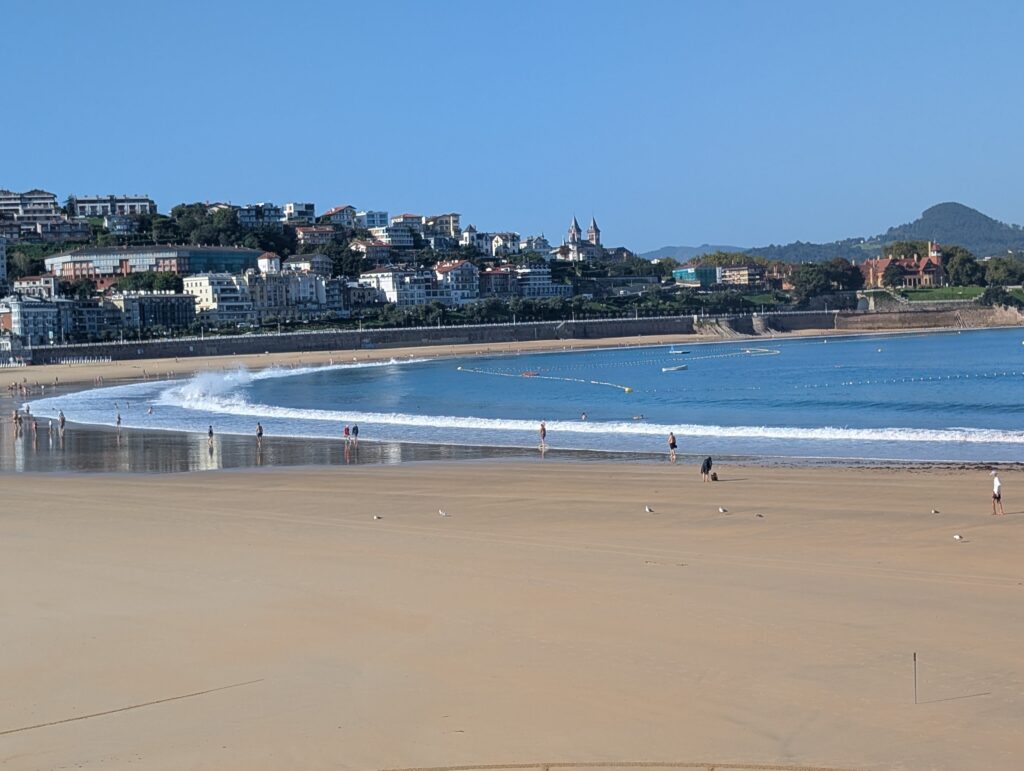
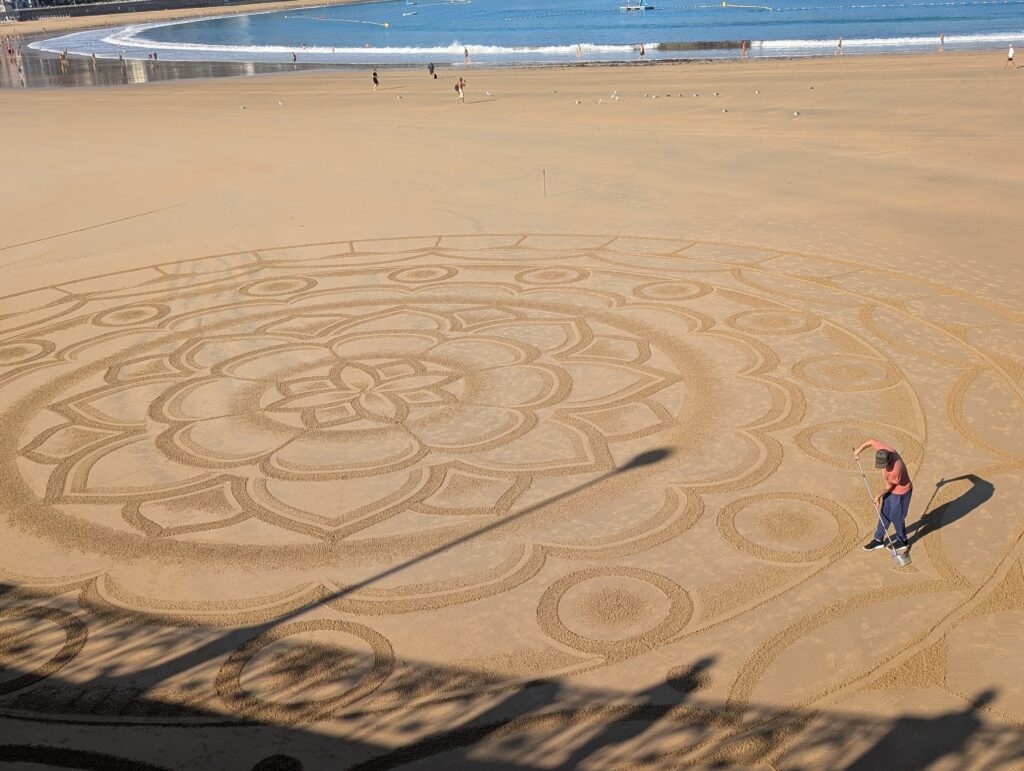
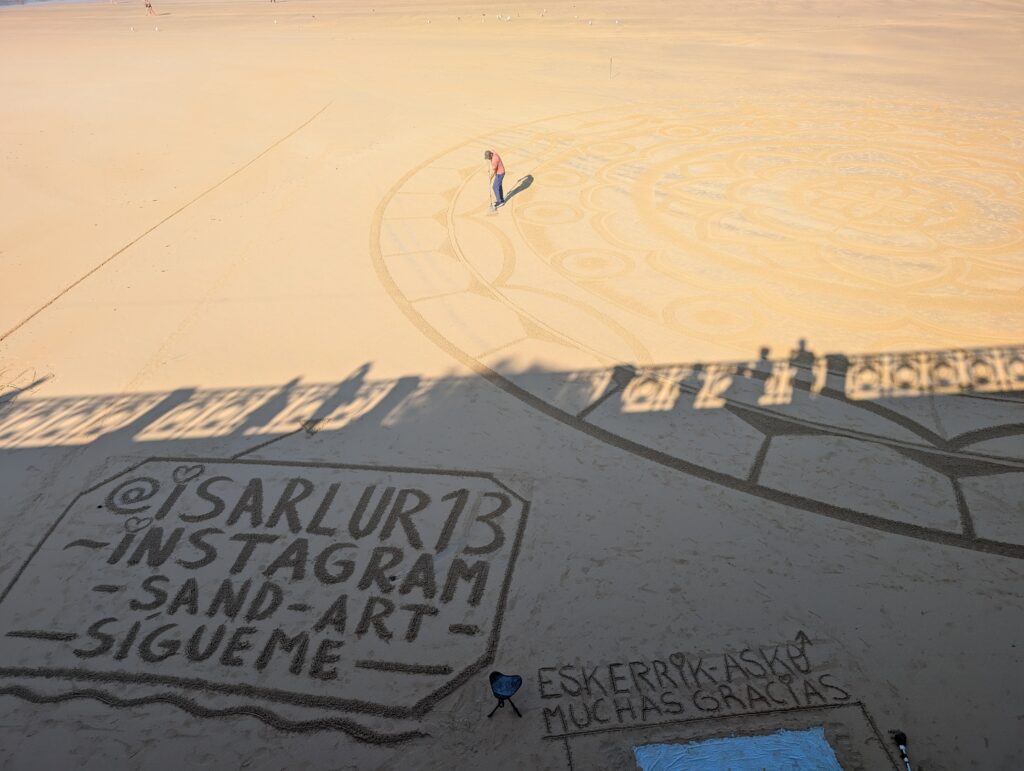
La Concha beach. Before I left I was able to sit in the water which was good as I walked a bit too much this day.

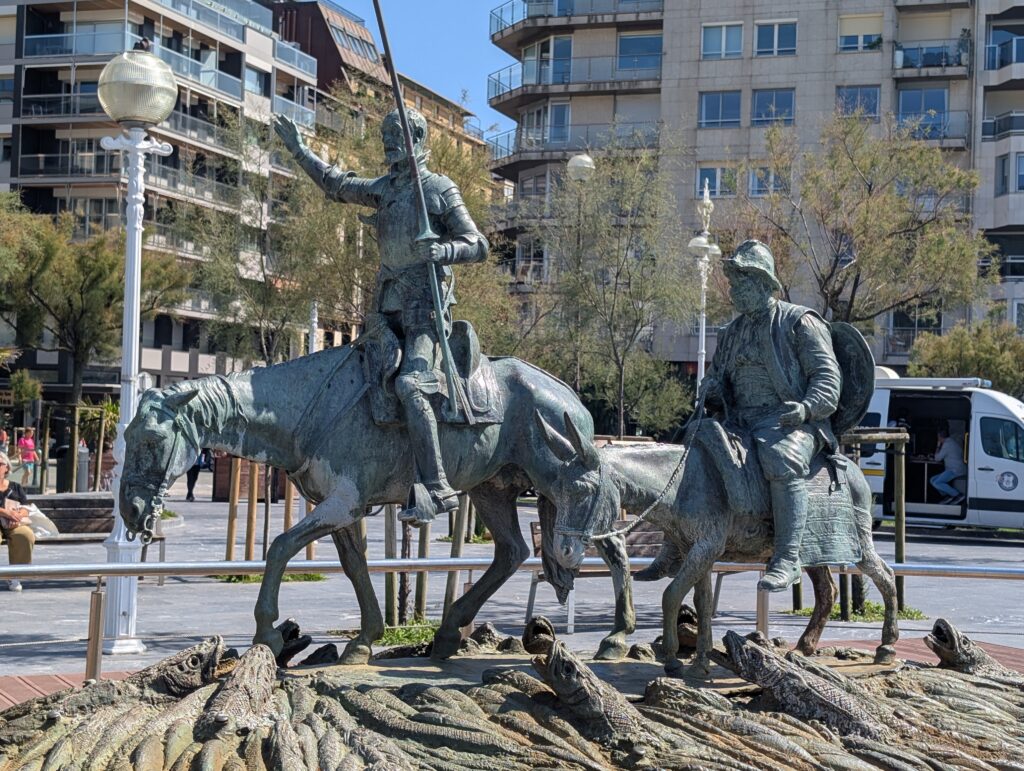
statue of Don Quixote and Cervantes.

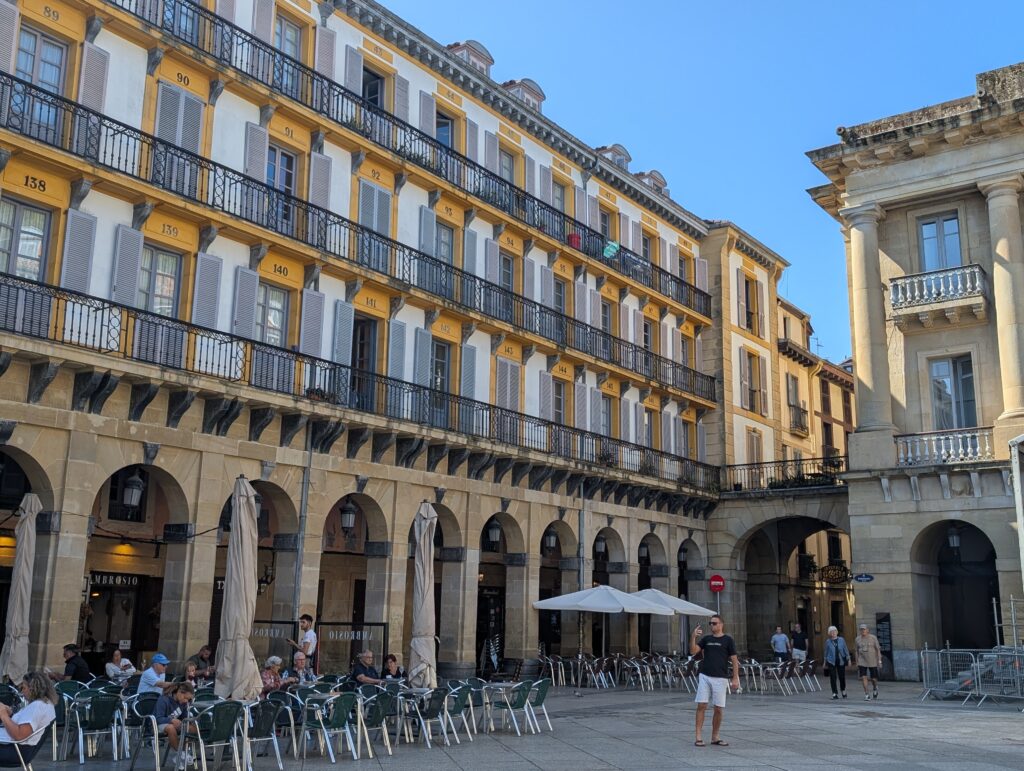
In the past, to rebuild the city after a devastating fire, they sold space in these apartments to watch events. Namely, bull fighting and executions by guillotine (when the French still ruled).

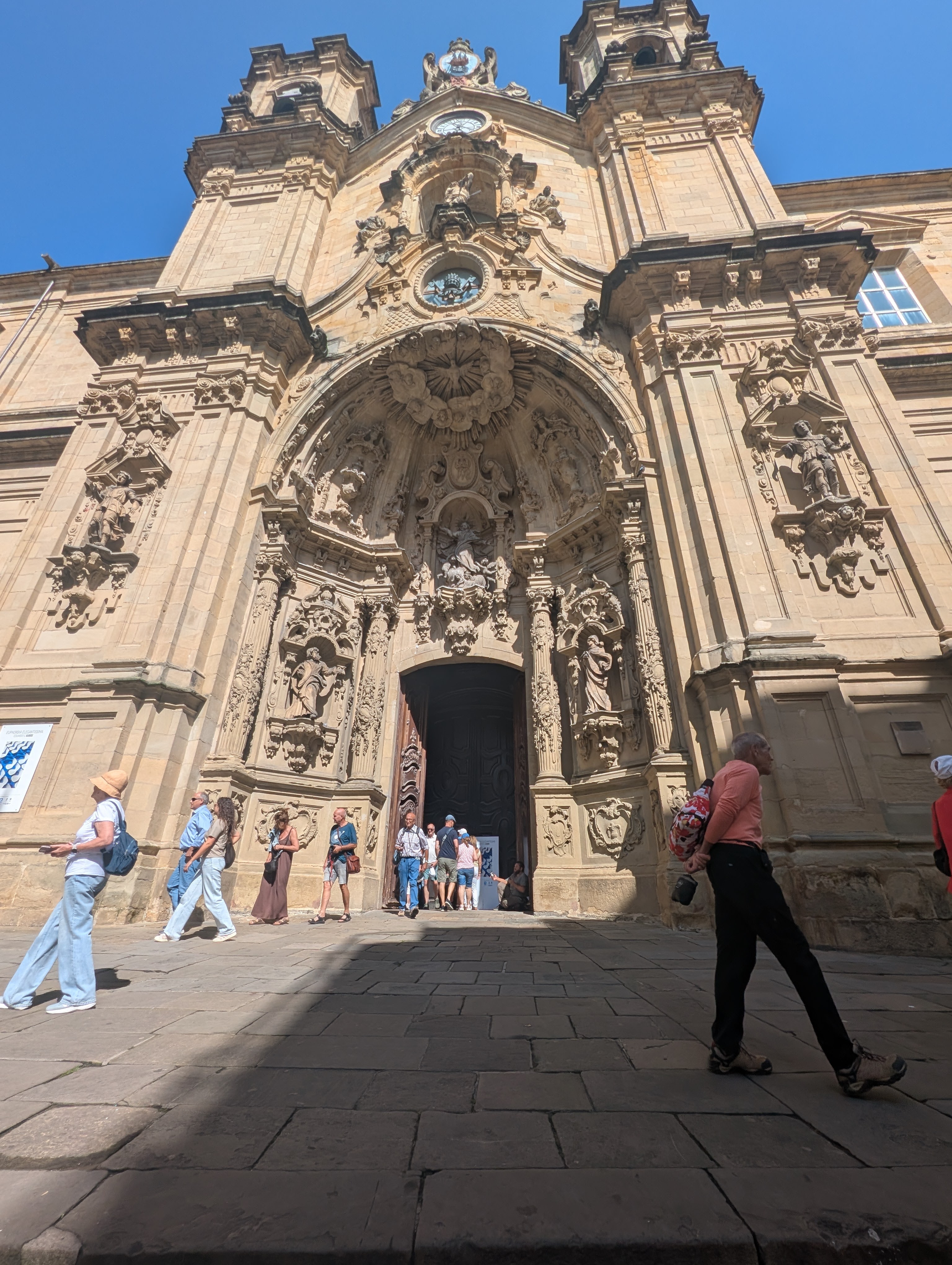
The walking tour through the old town was amazing! Great places to try Pintxos.