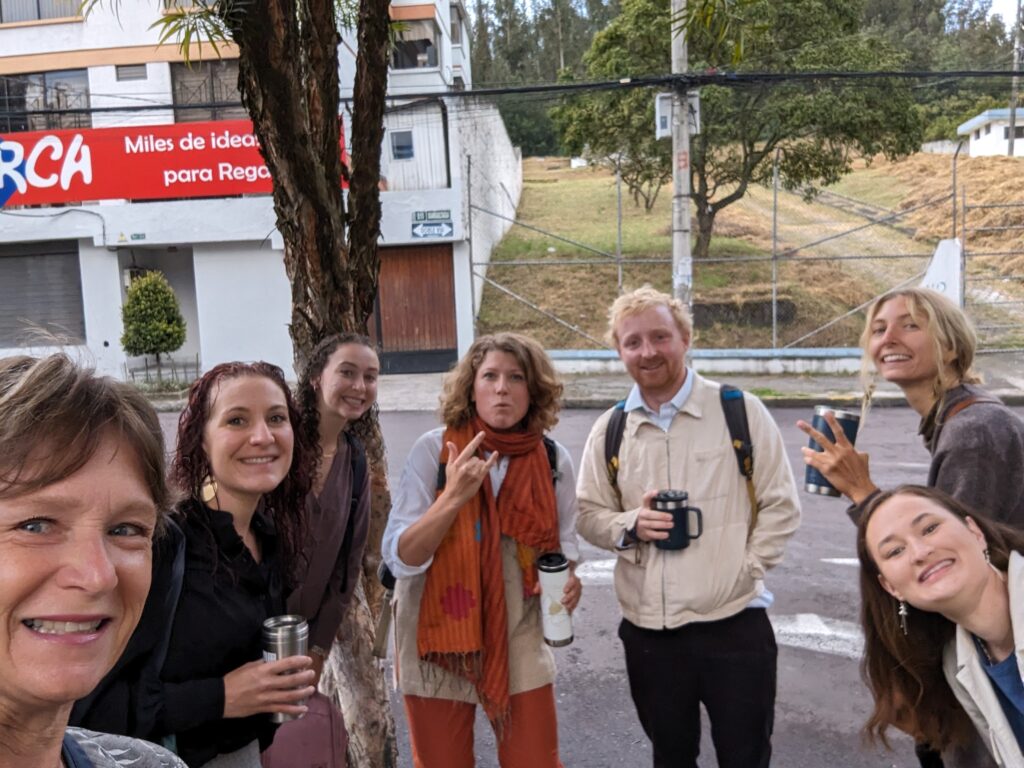
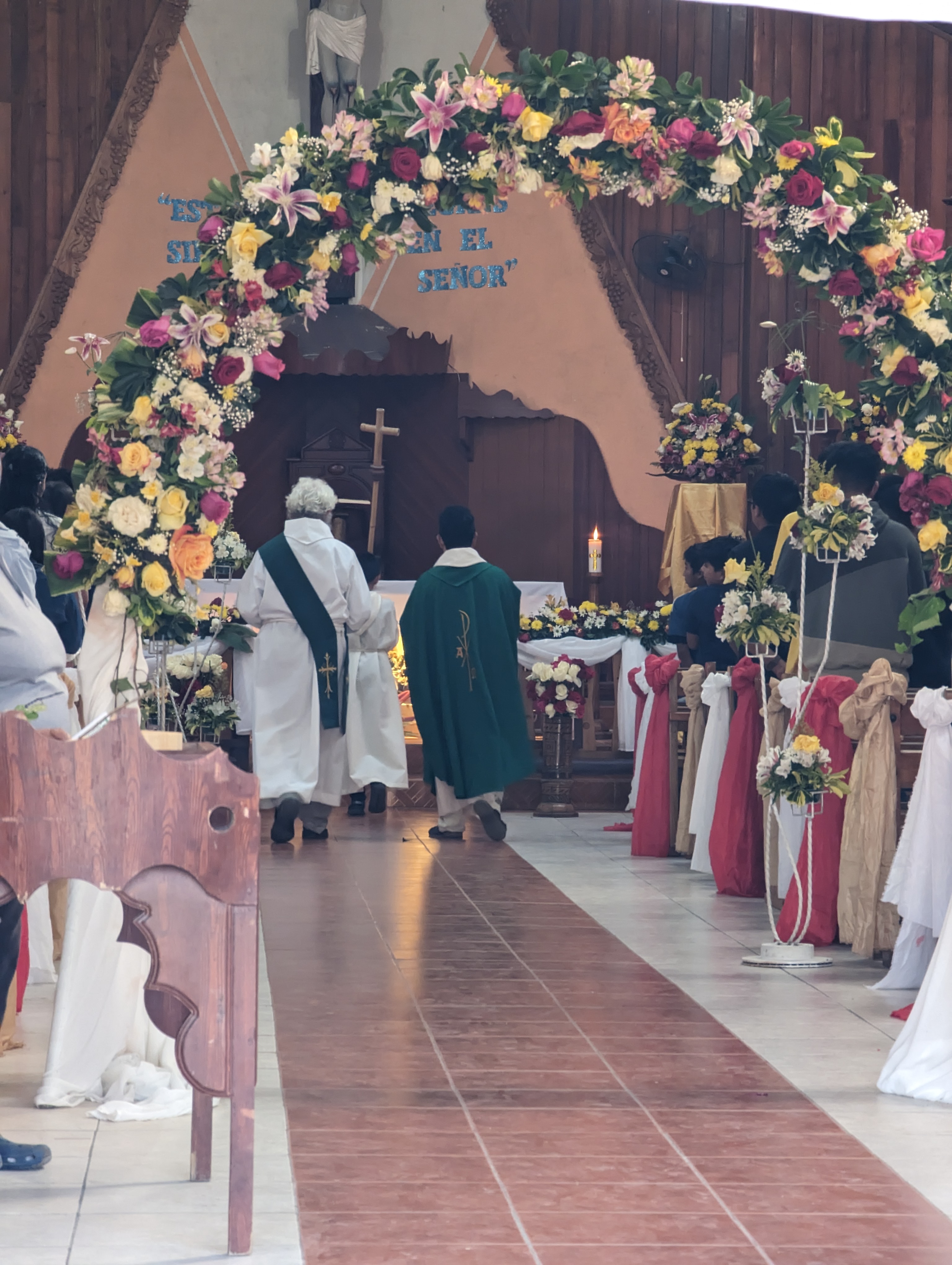
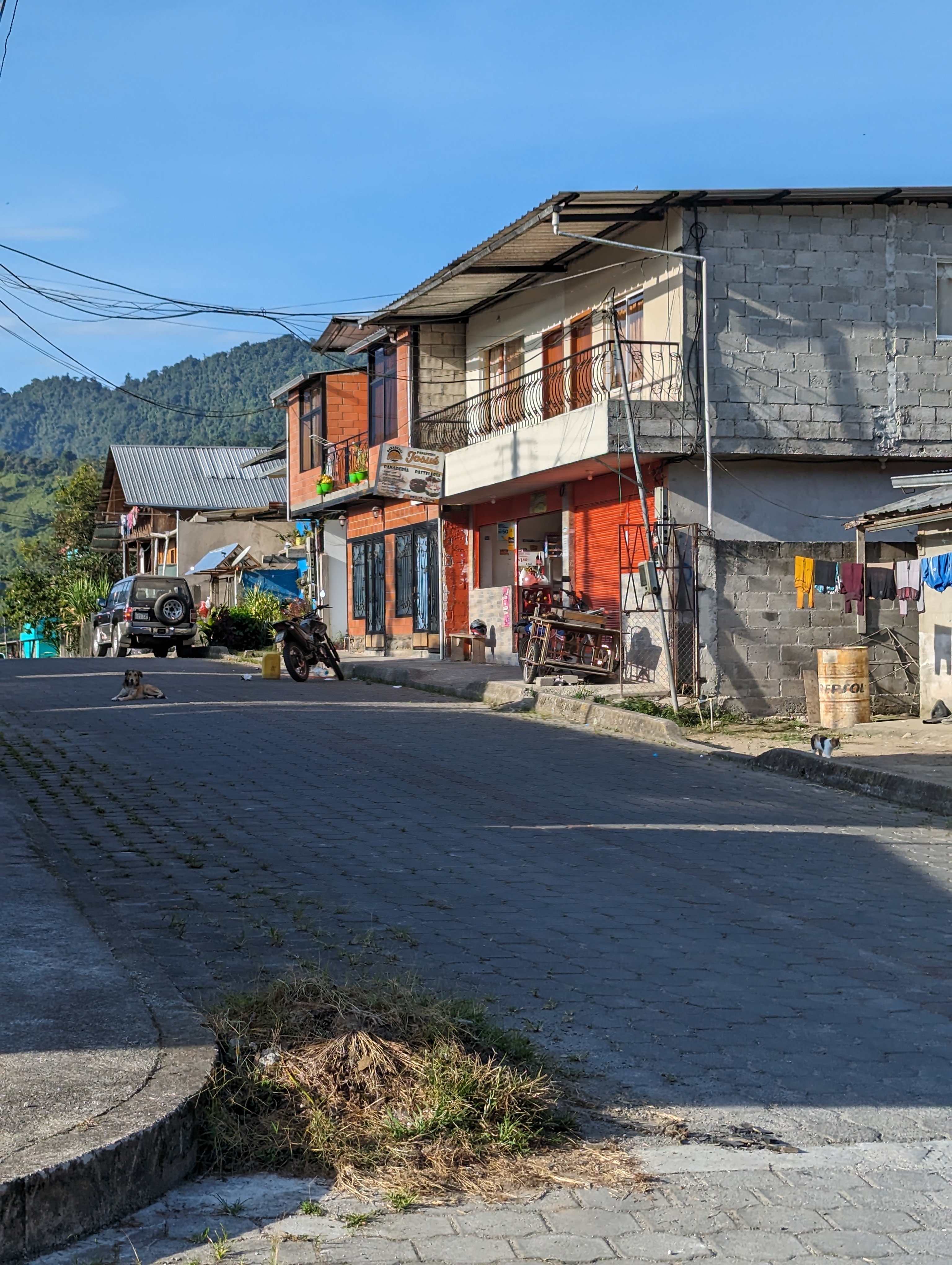
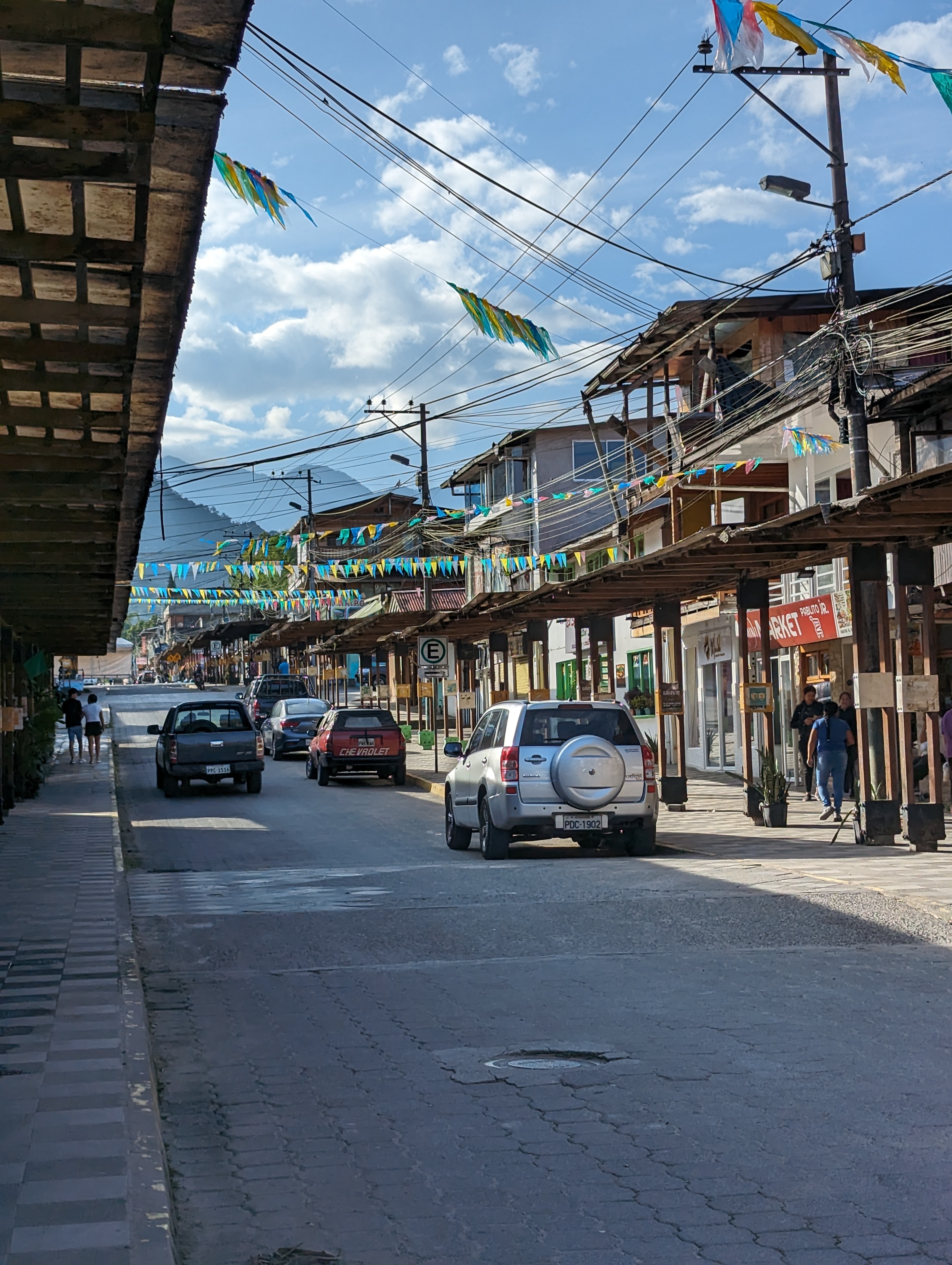
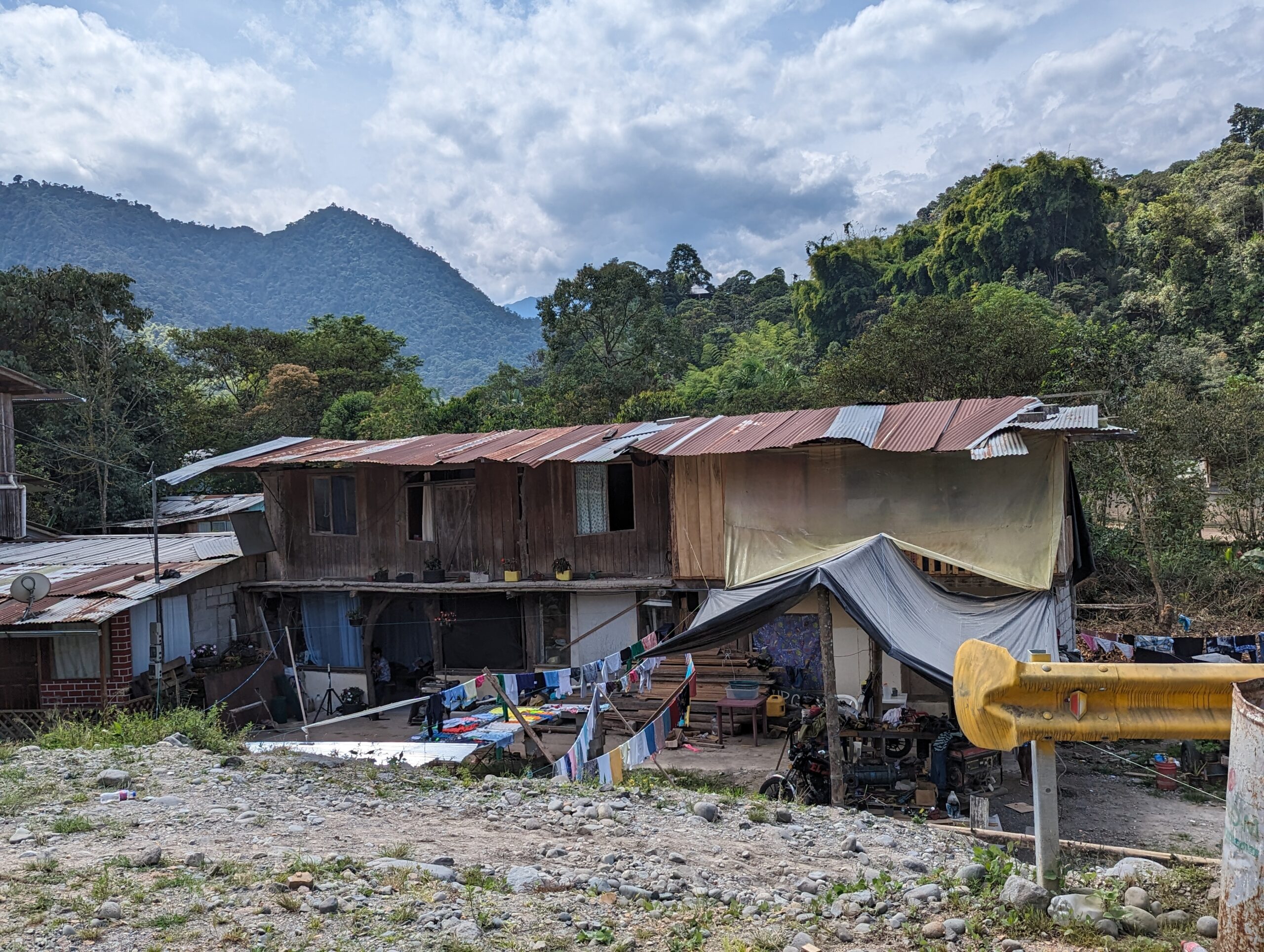
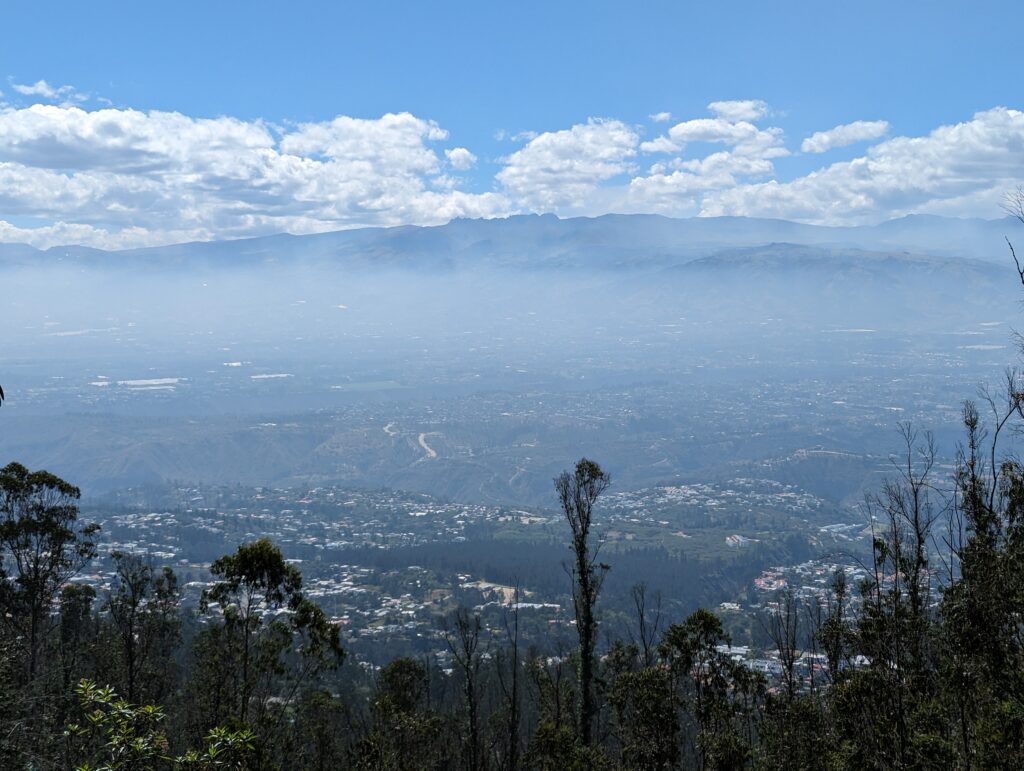
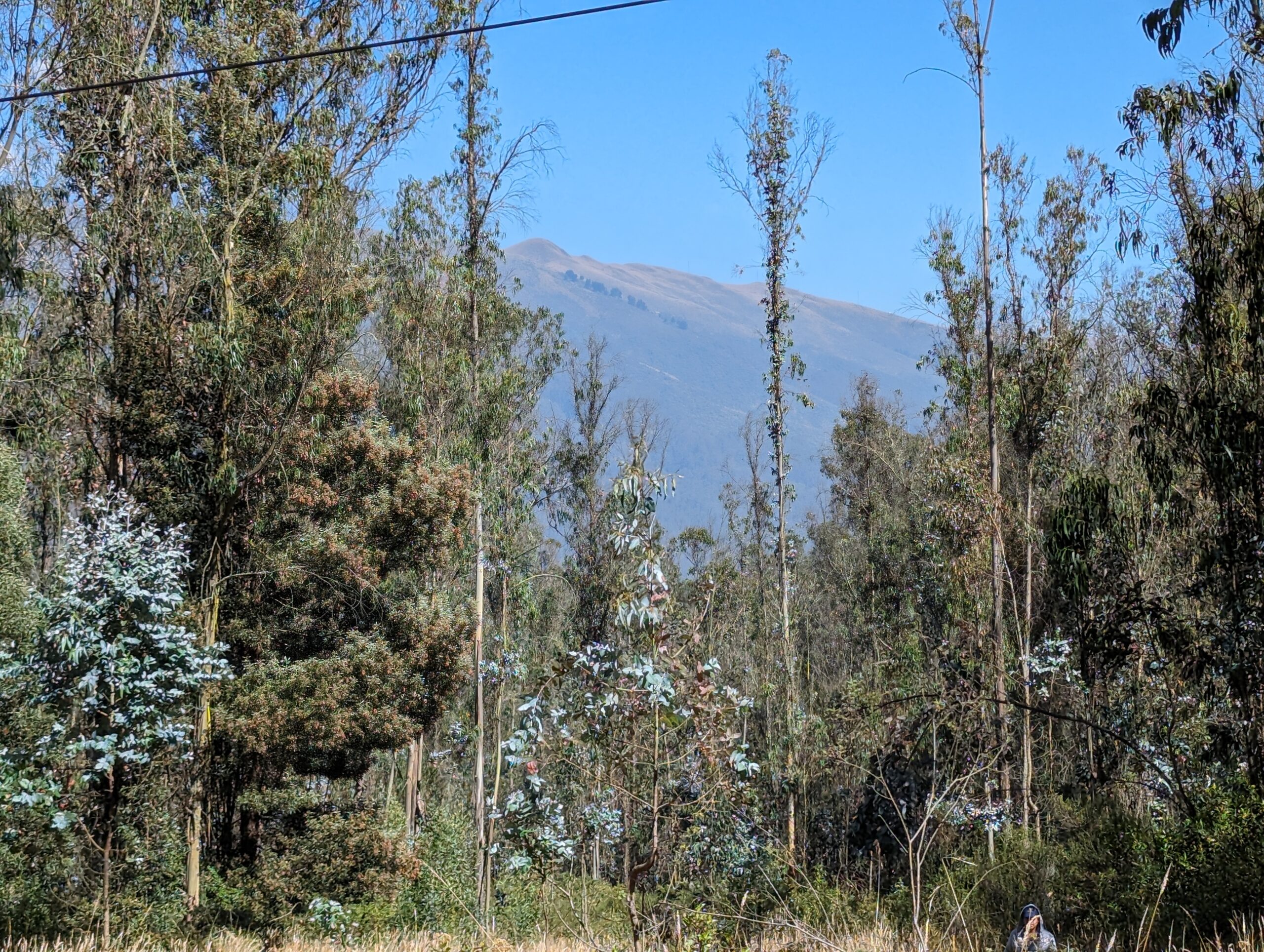
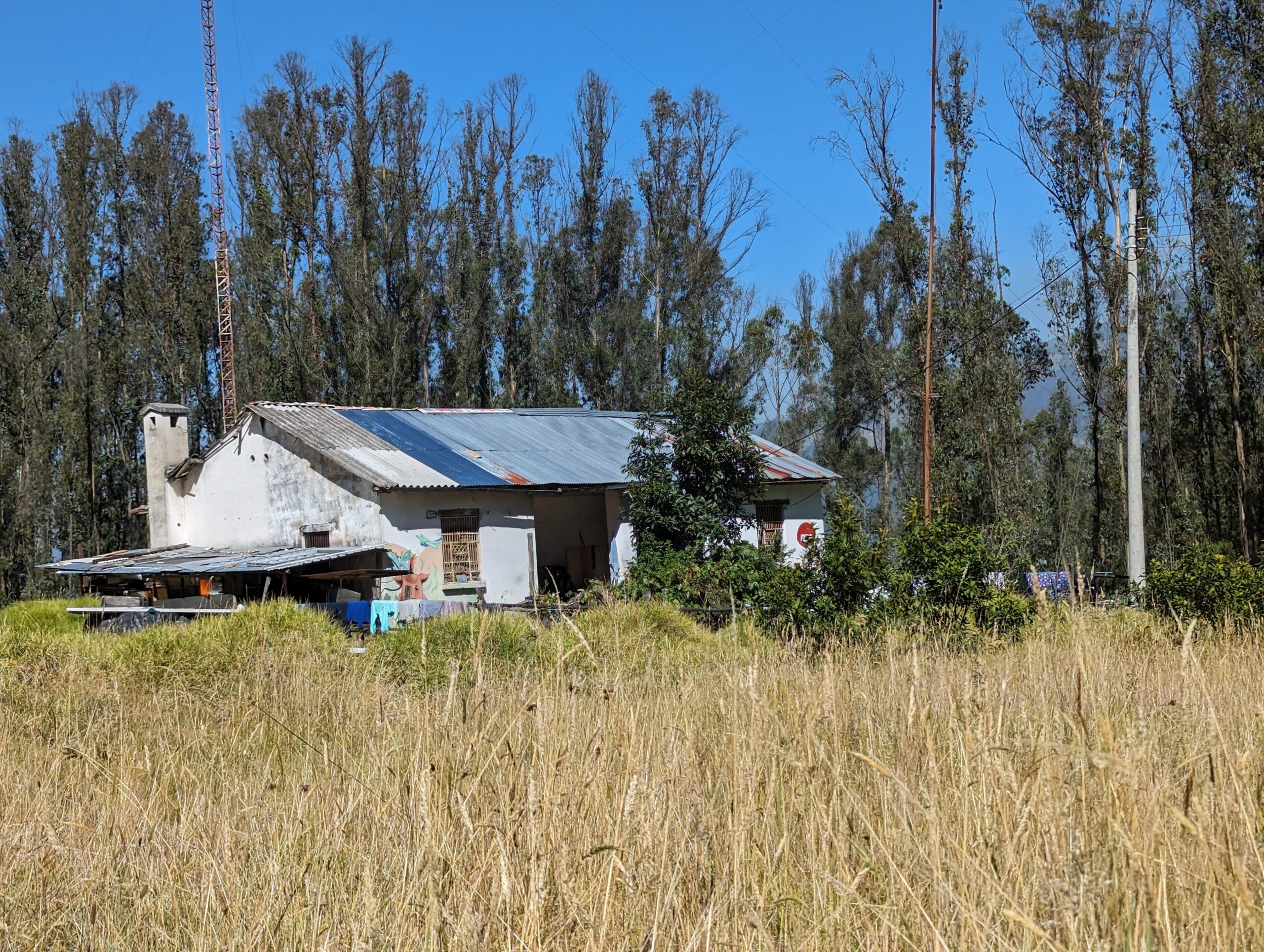
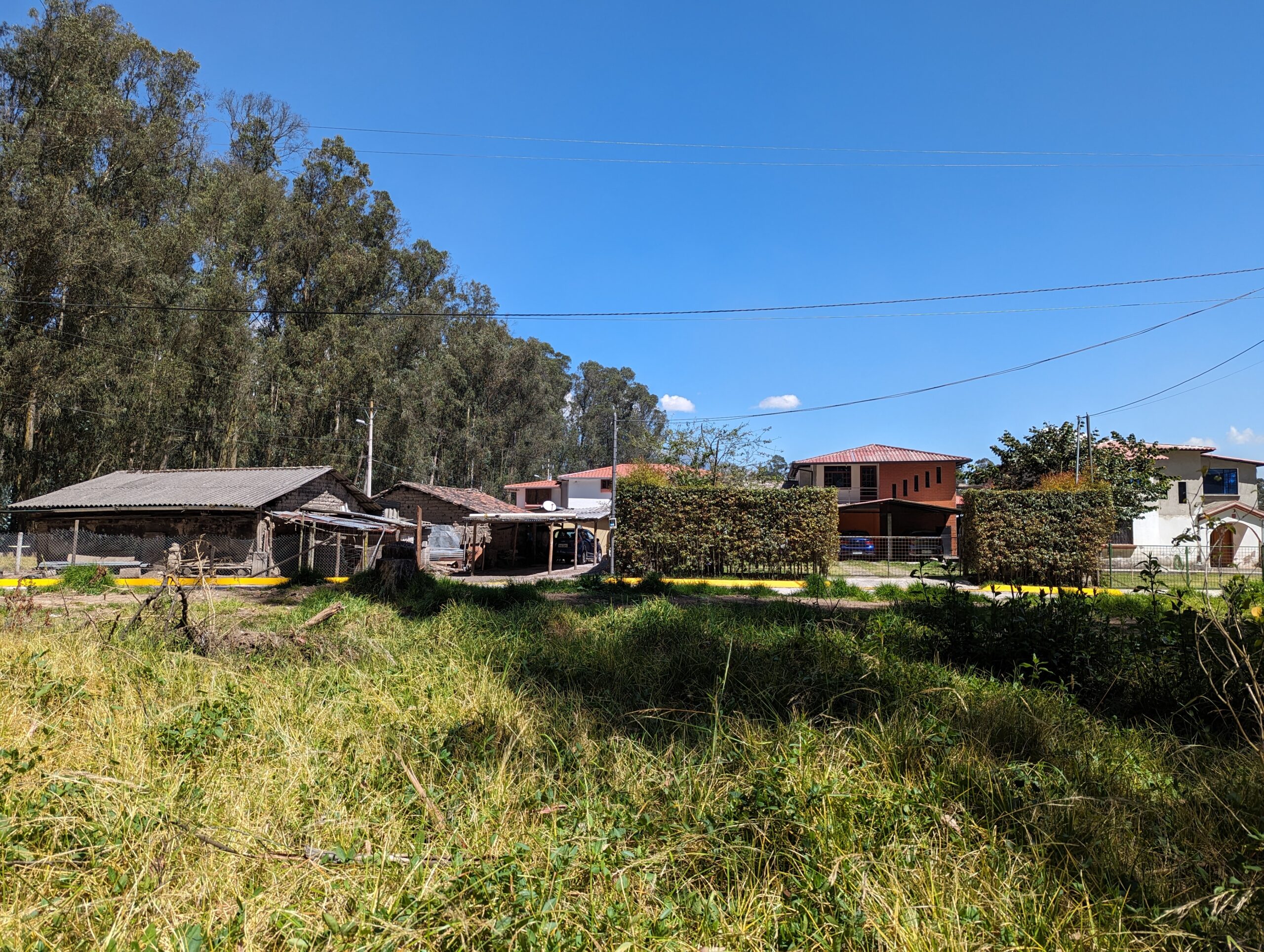
One week was to just get the visas, get settled in an apartment, get a cell plan, bank account, etc. Finally it was time for the new teachers to be at school for a week.
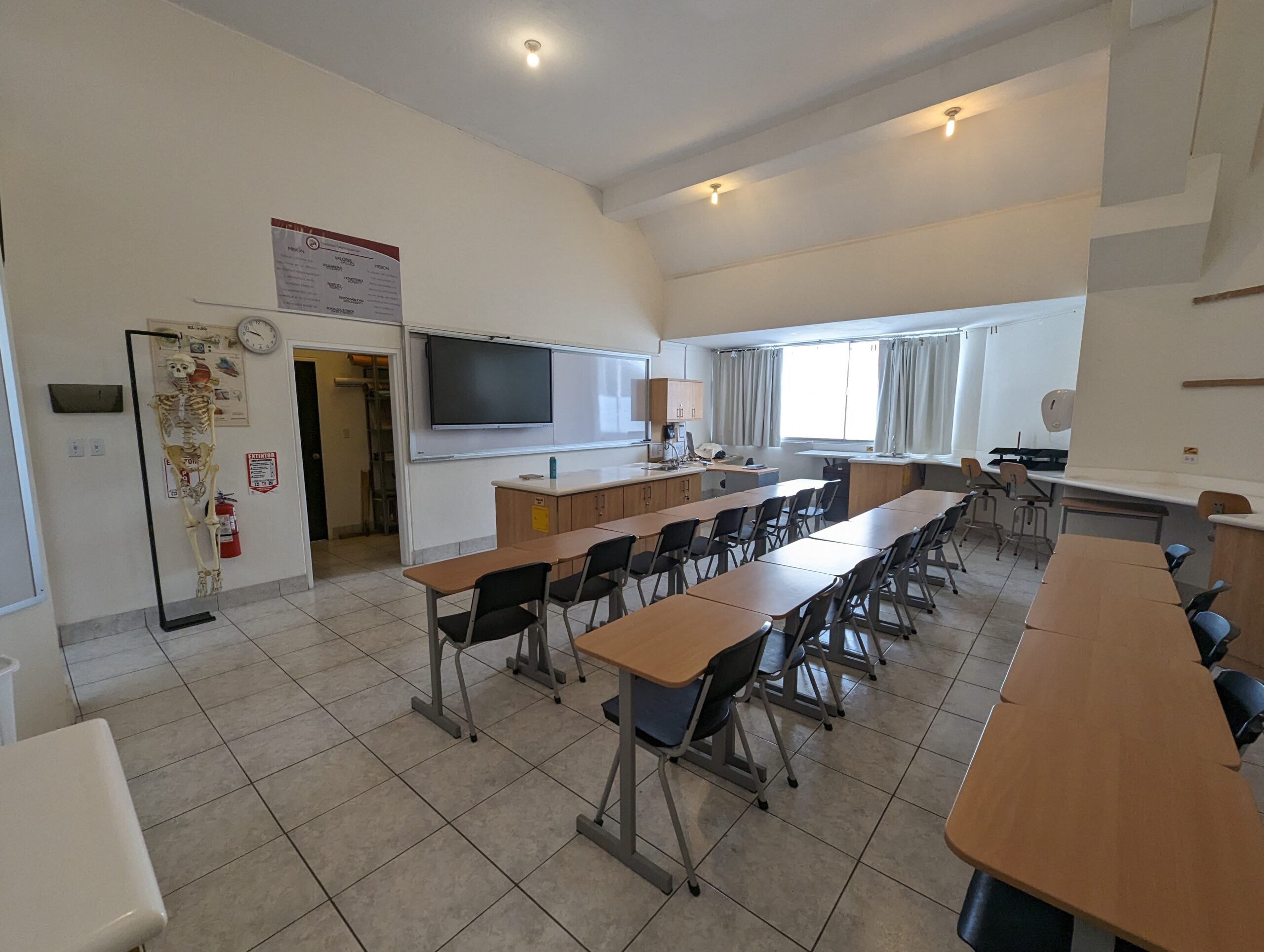
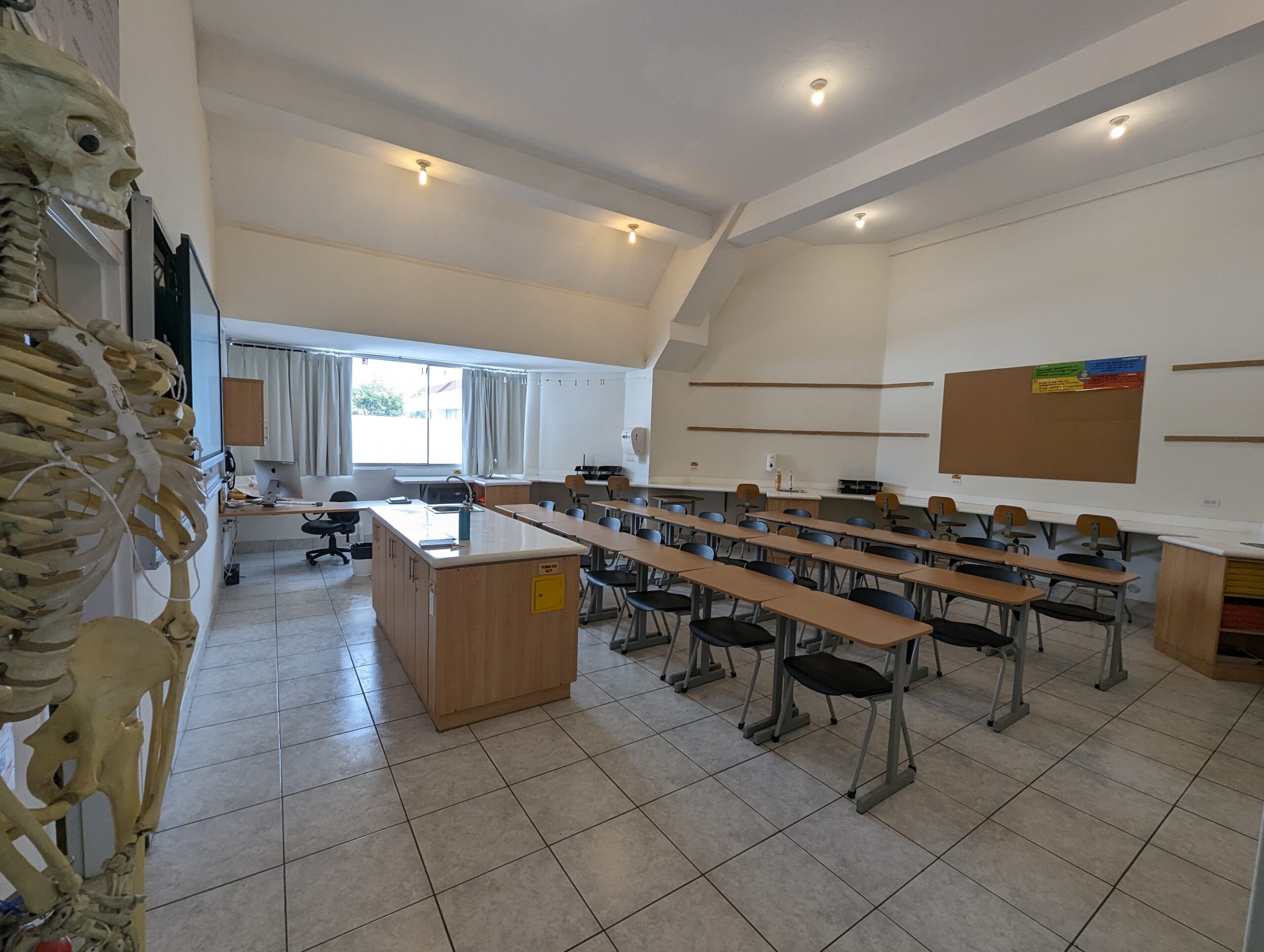
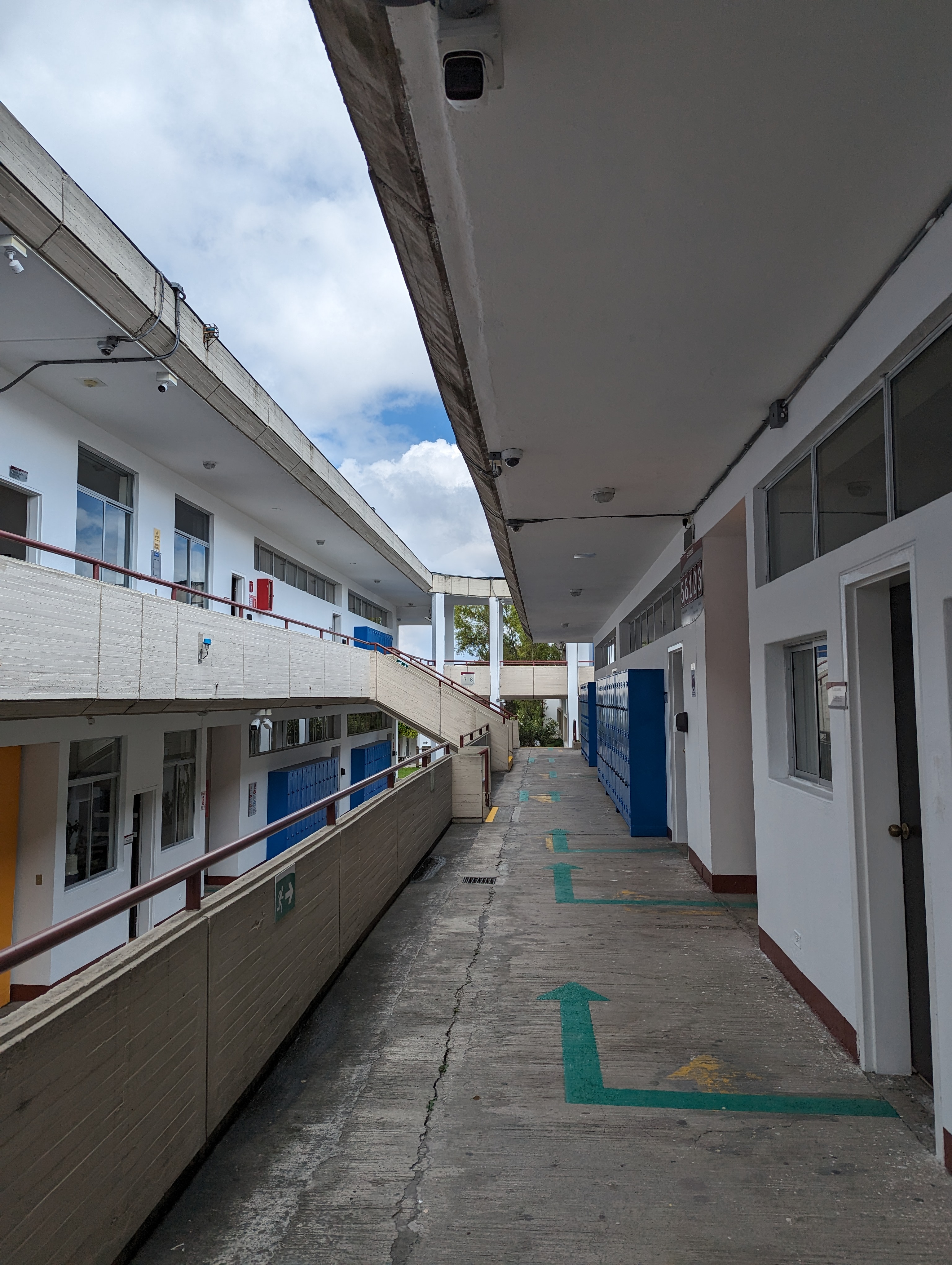
First day of school for the new teachers.My classroom.
We have an amazing lab assistant who is so knowledgeable, organized, and we have access to a lot of things which I was so happy about.
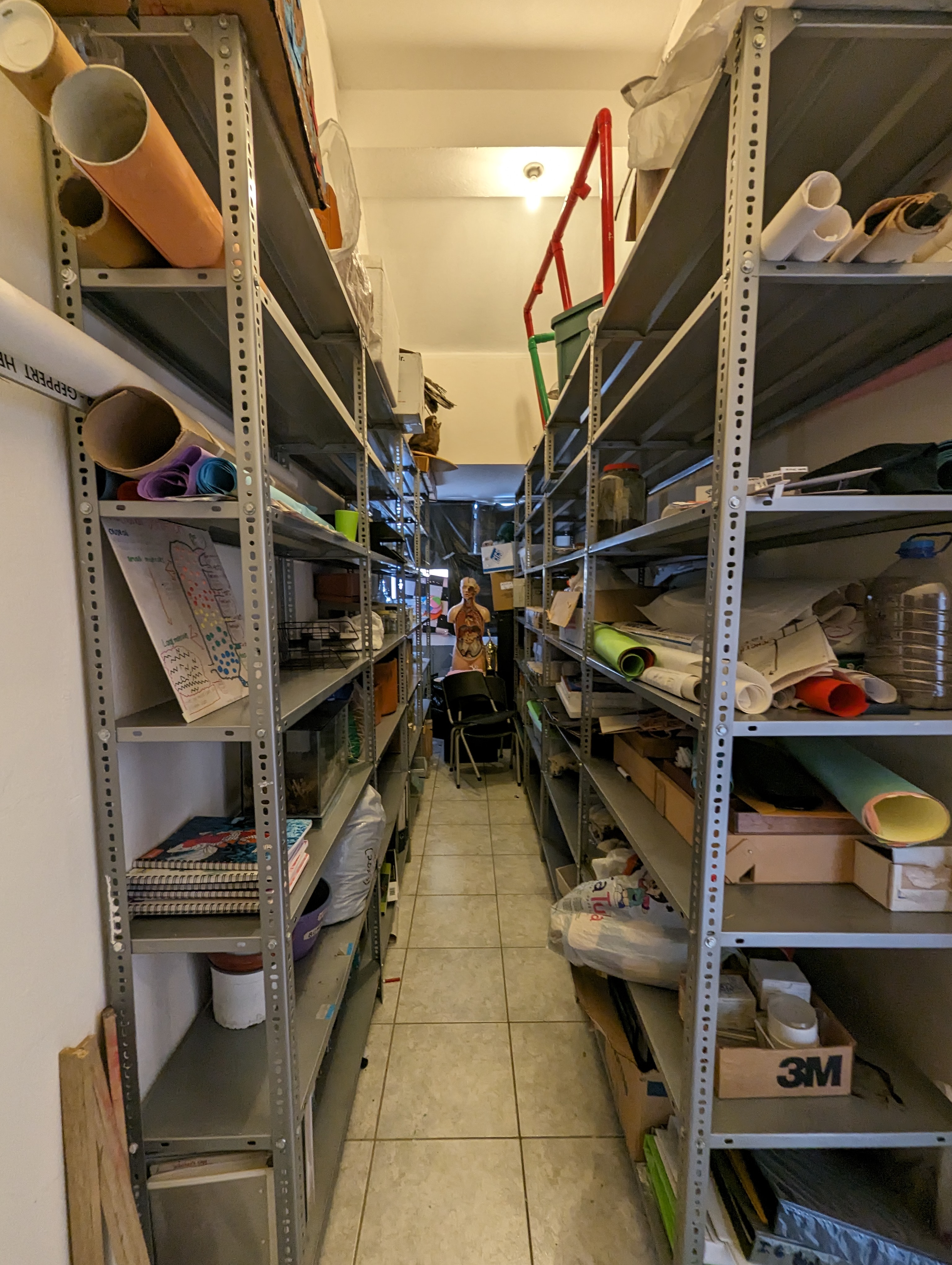
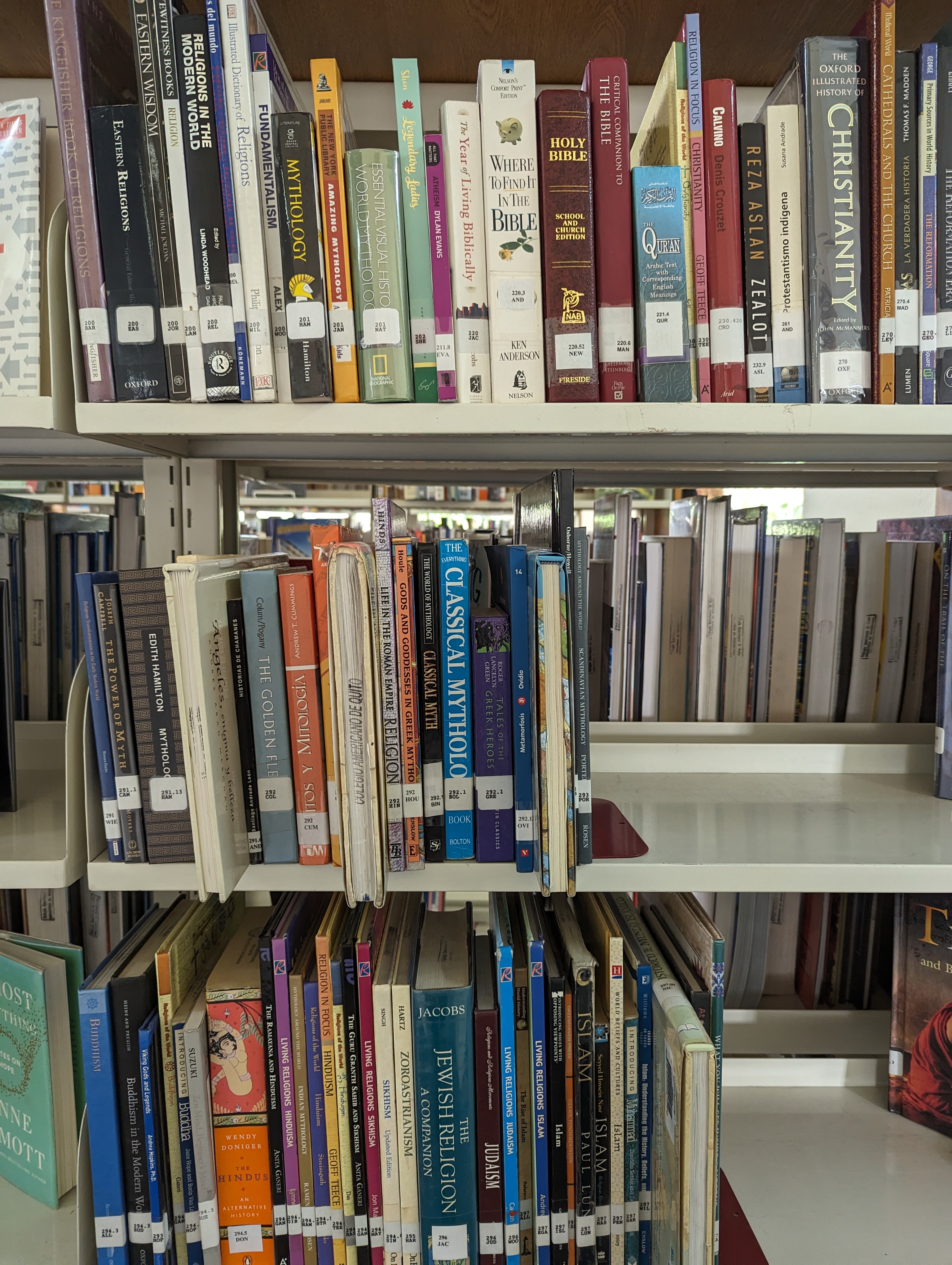
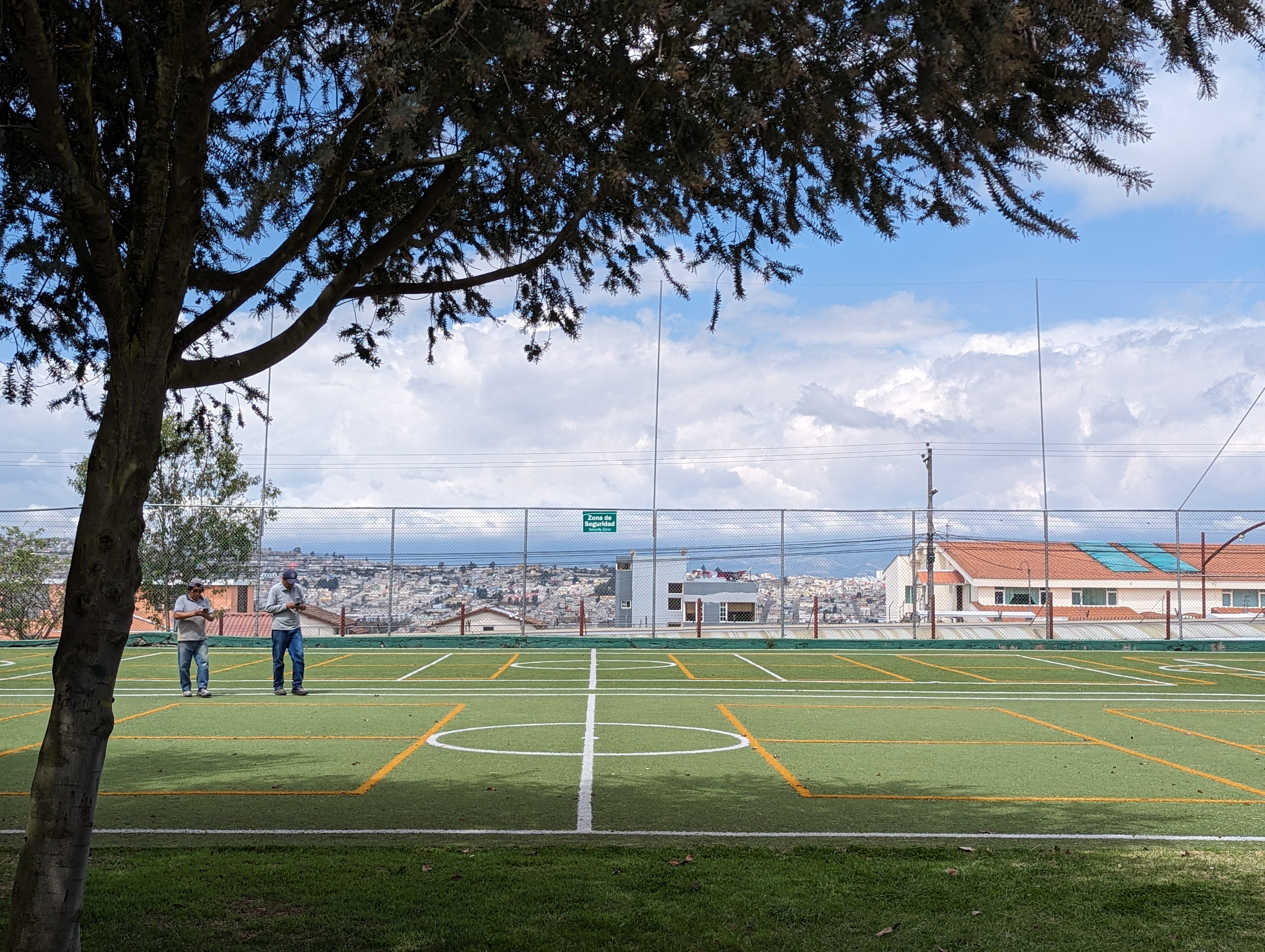
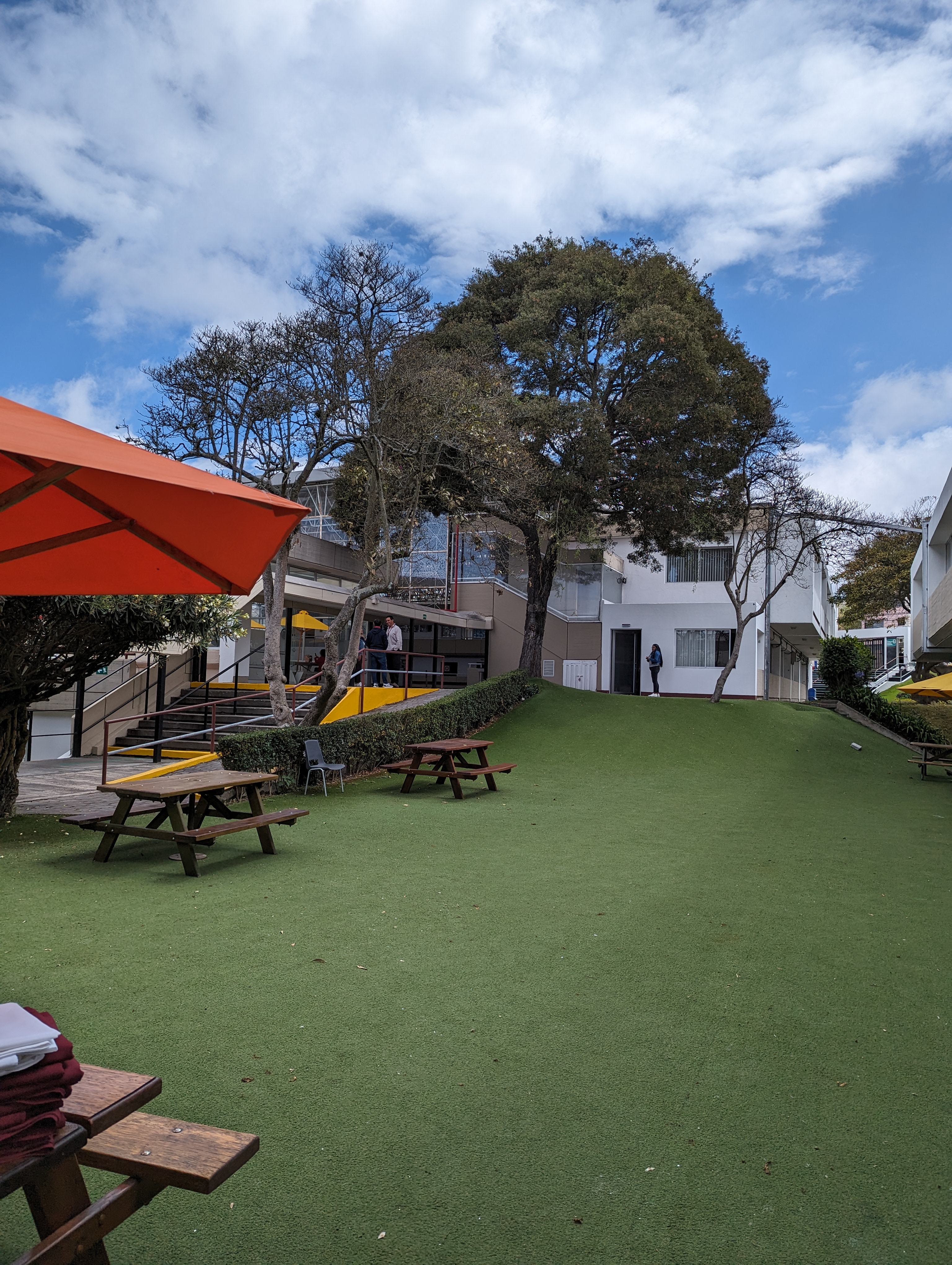
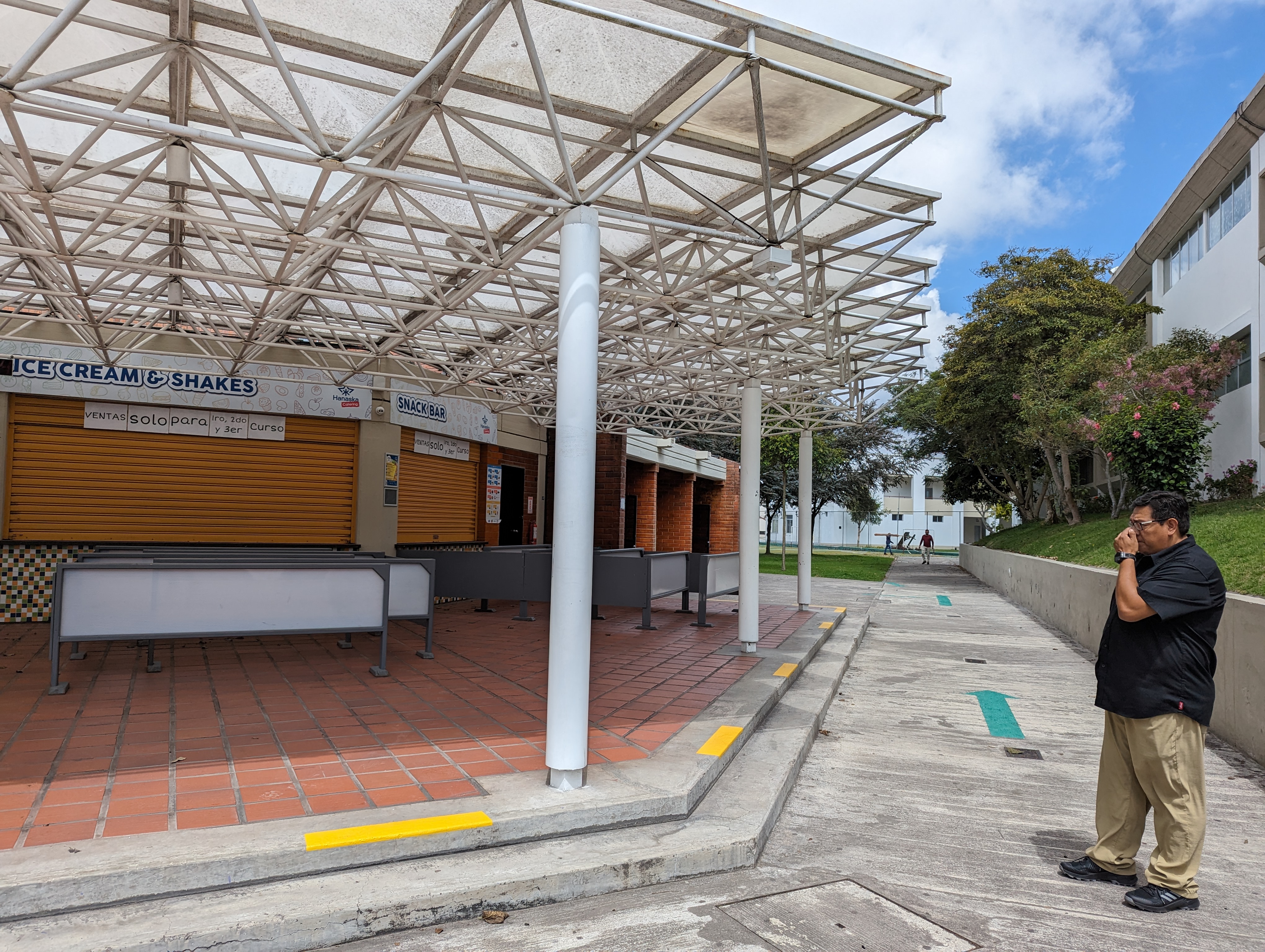
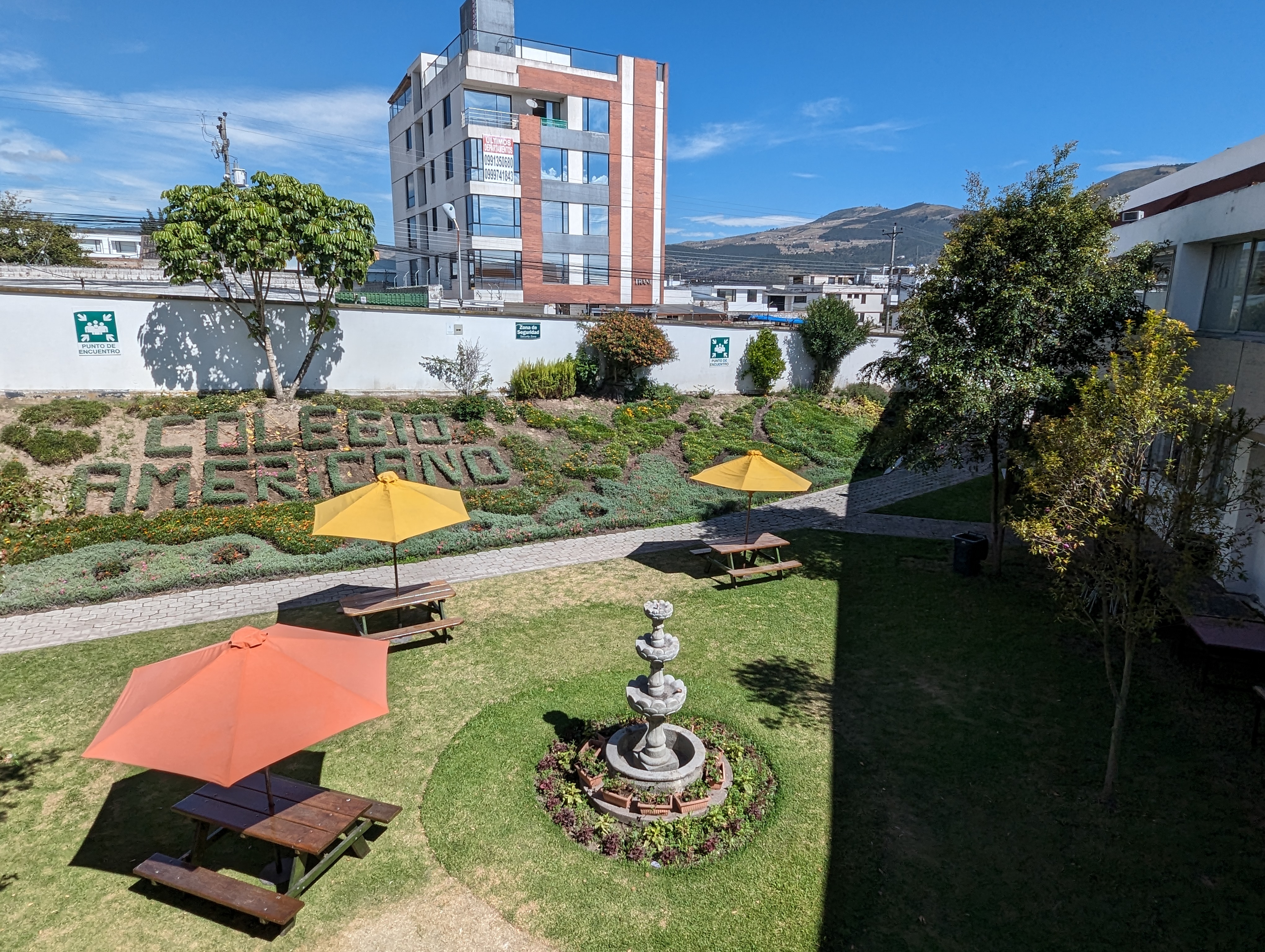
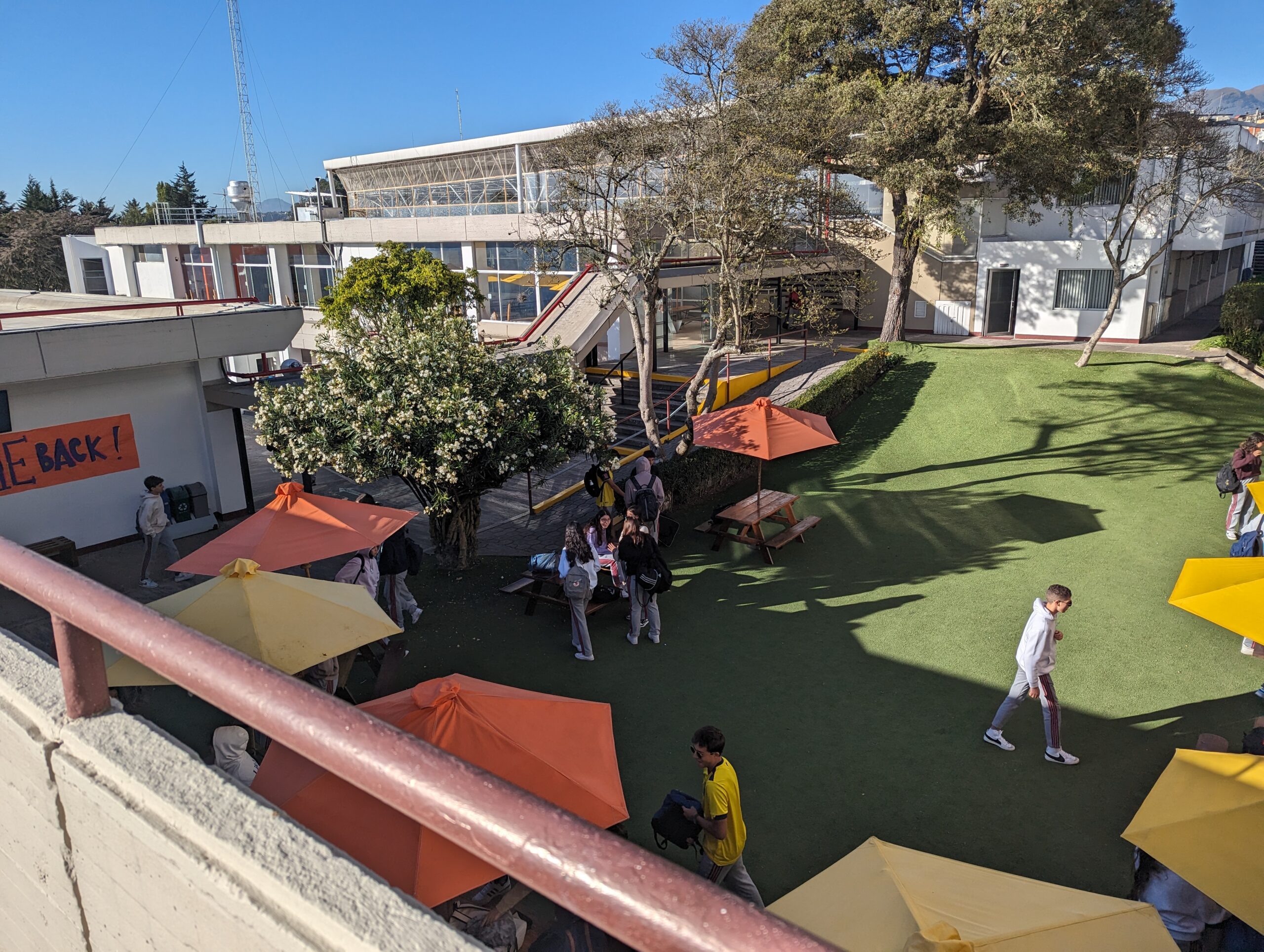
Prep space and storage.I’m the library, religion and mythology are in the same section…..Another view of my room.Sports field. We are high up and surrounded by all the mountains.The patio de tortugas. There used to be giant turtles here until the government said they needed to be in a preserve or other place.
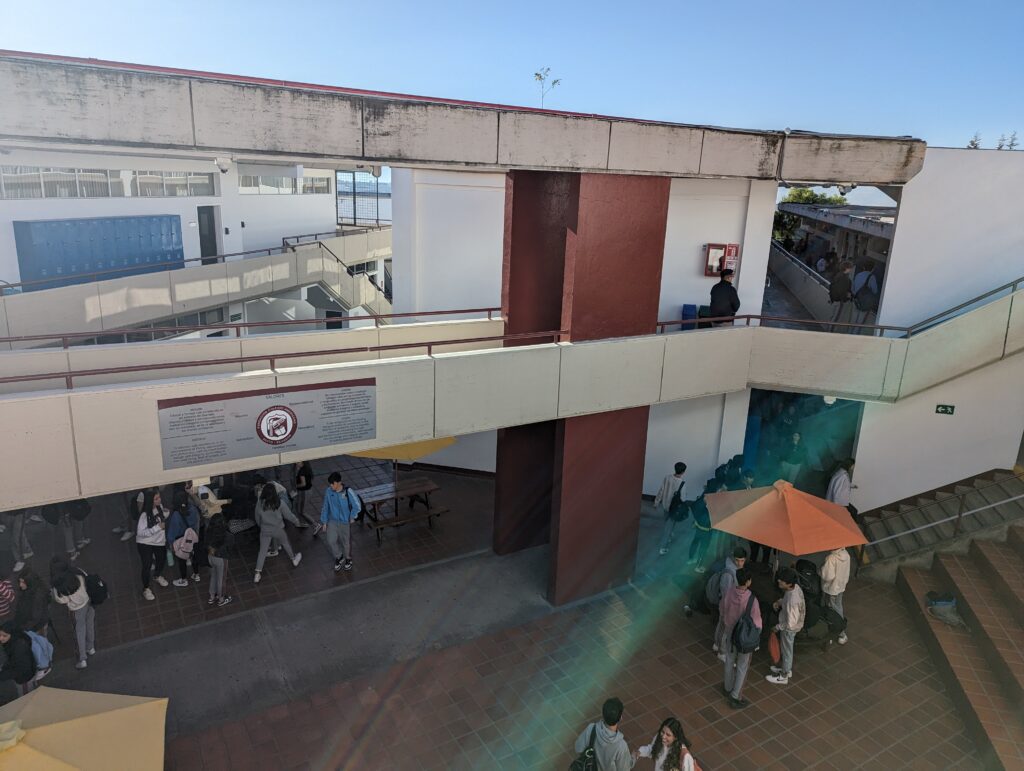
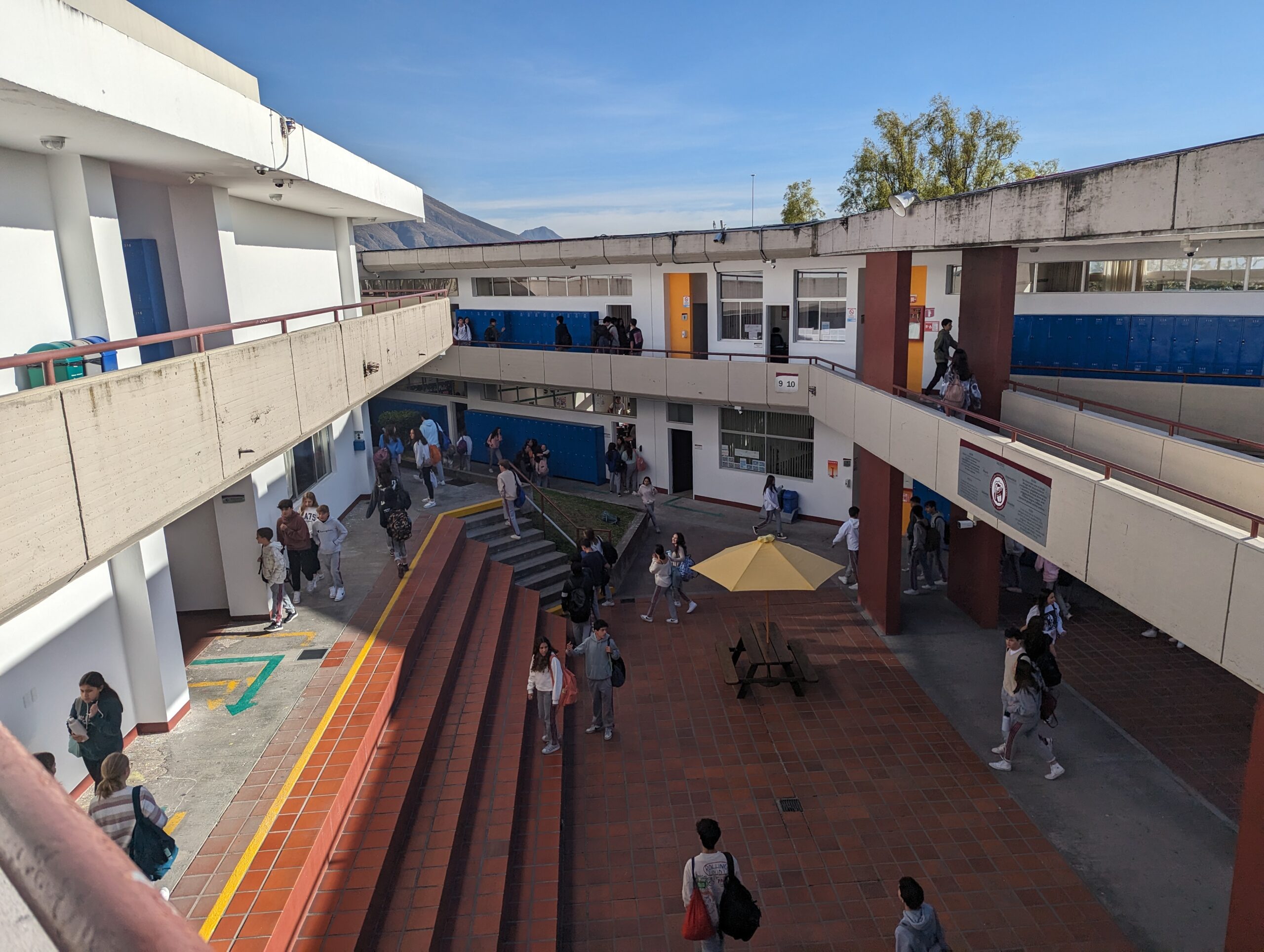
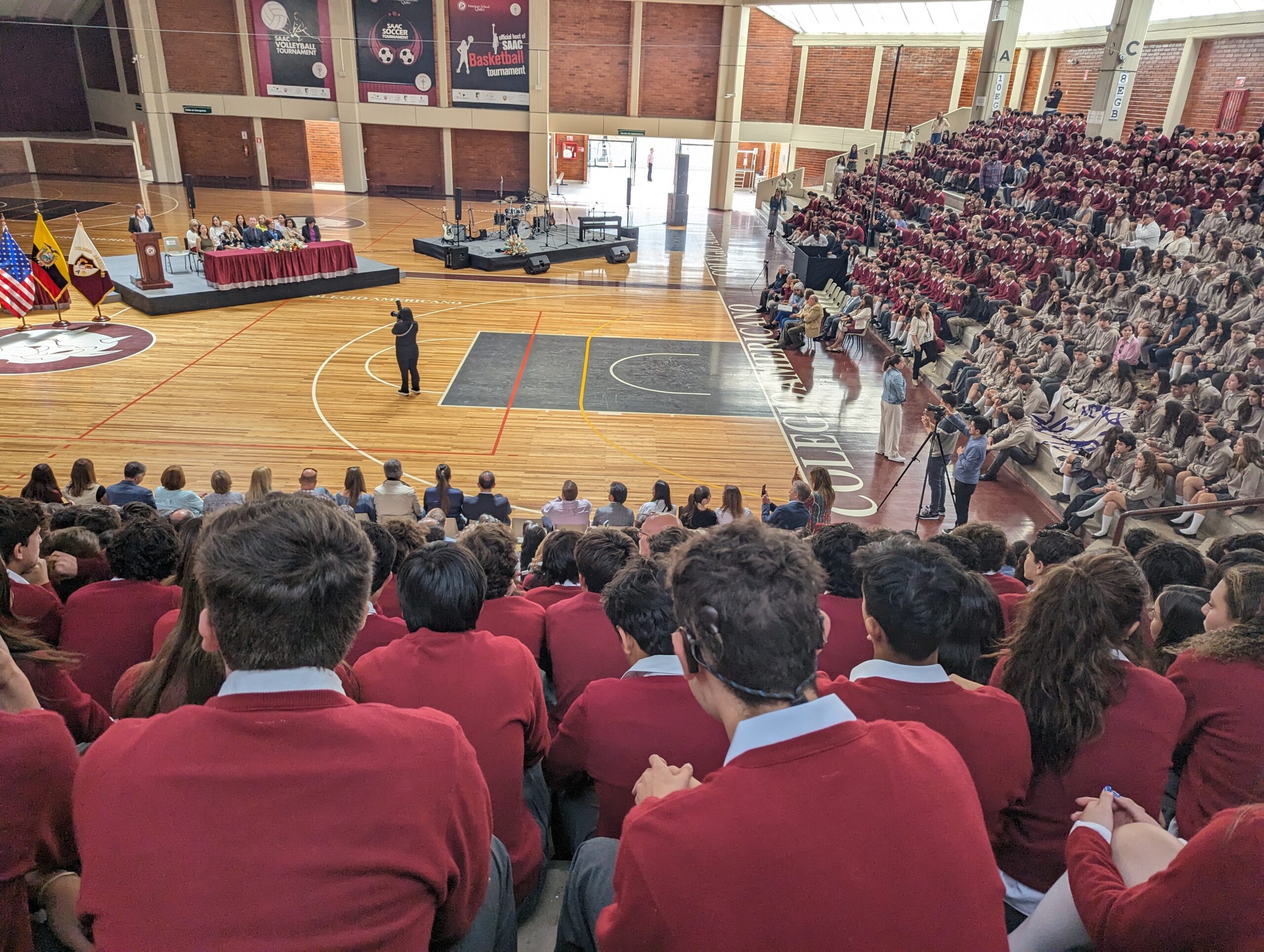
After another week with all faculty, students returned. I forget how much energy is required into getting to know a new system and culture in a school. In the second week we had an assembly. Students were asked to wear uniforms even though they do not have to on a daily basis. They started the assembly with both the Ecuador and USA national anthems and ended with the colegio song.
I was impressed that the focus of the assembly was on academics and the arts. Awards were given and a shout out to sports were mentioned at the end.
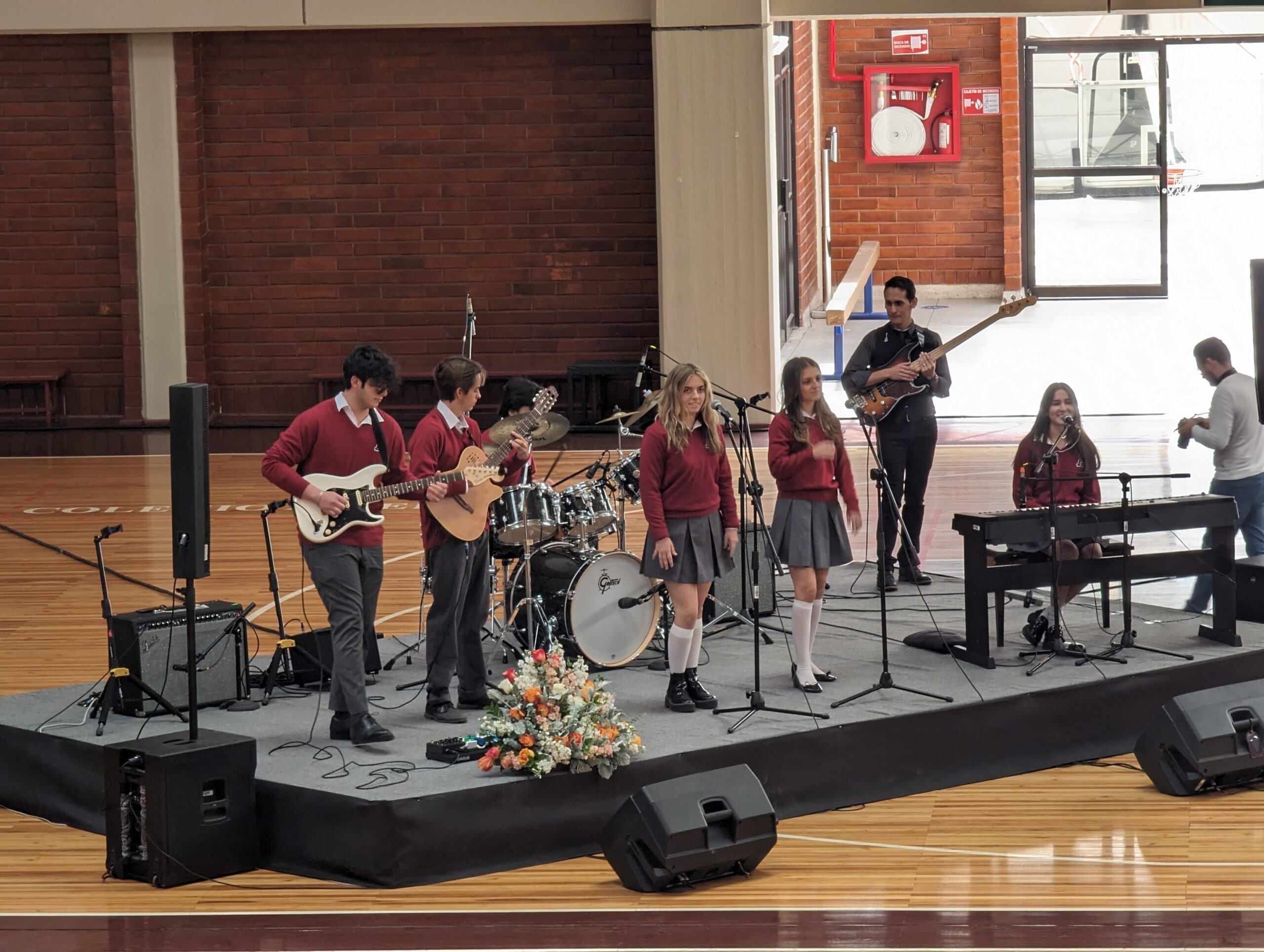
A student band played. They were very good.
Despite differences in how schools are run and a little disorganization especially where new platforms being used this year that there is little experience in, it has been a good start to the year. The students are kind and motivated in my class. There are always a few students who test you and they are in the lower grades, or 10th grade for me. There is a lot of support for any discipline issues which I’m grateful for.
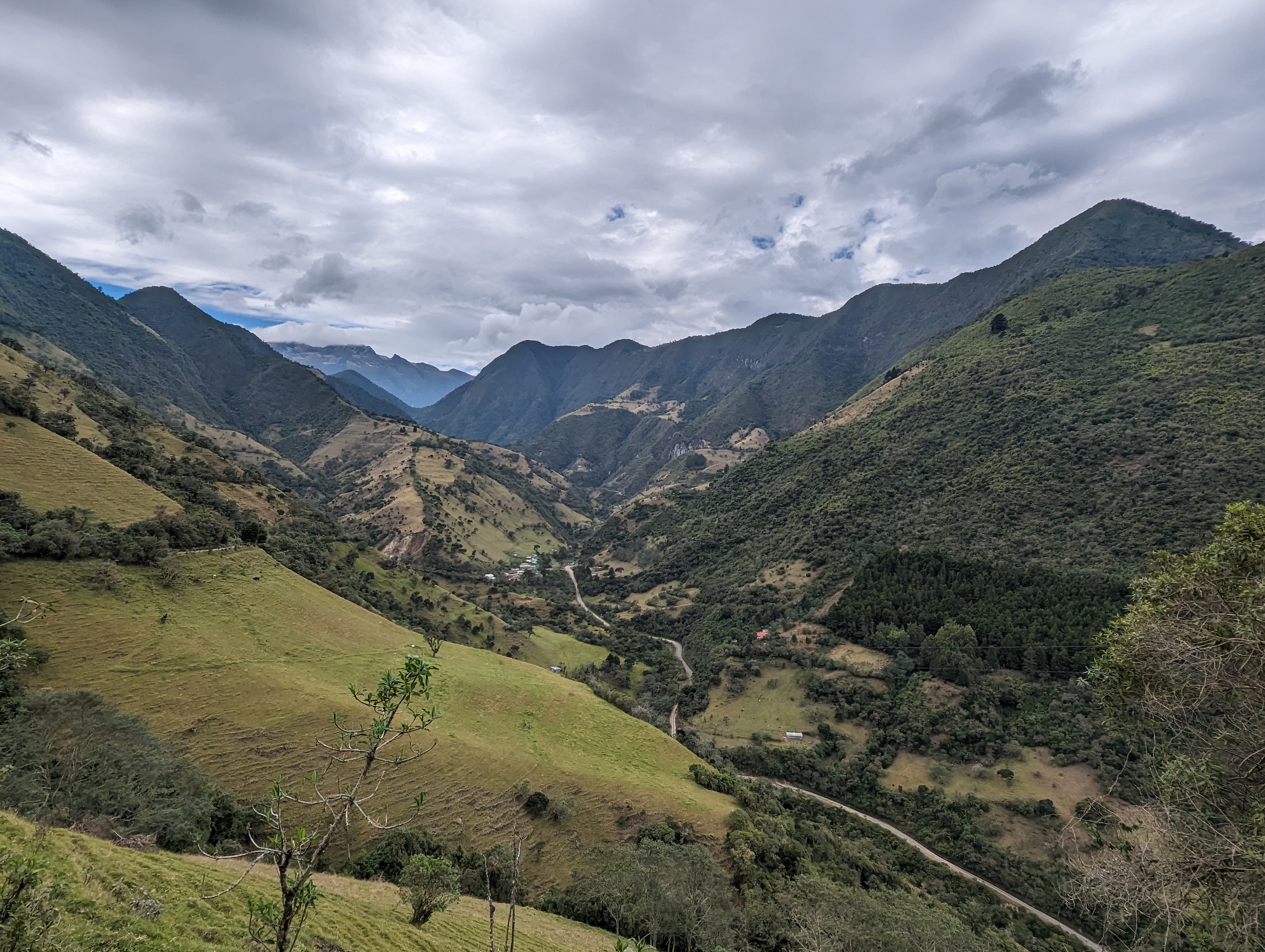
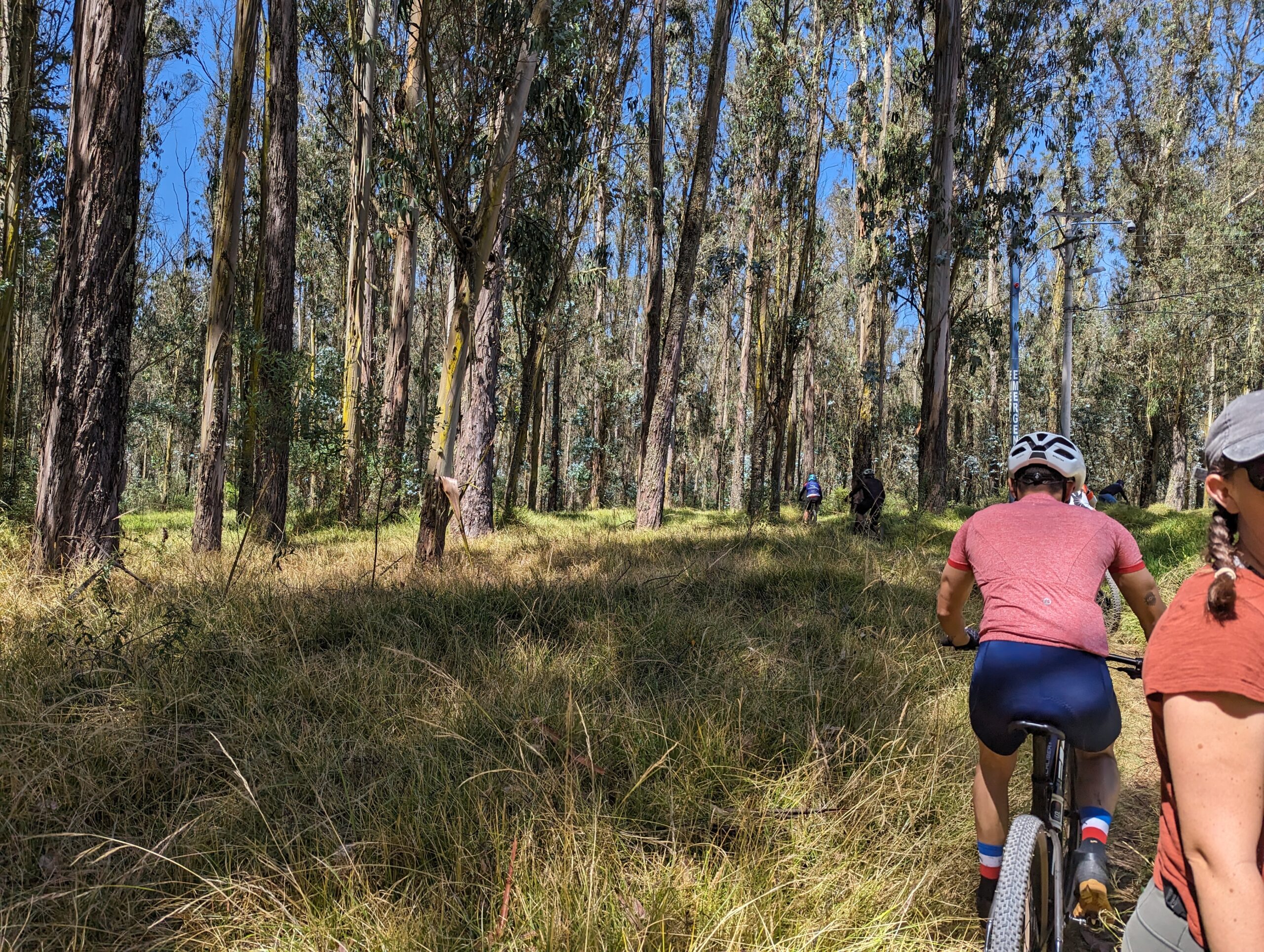
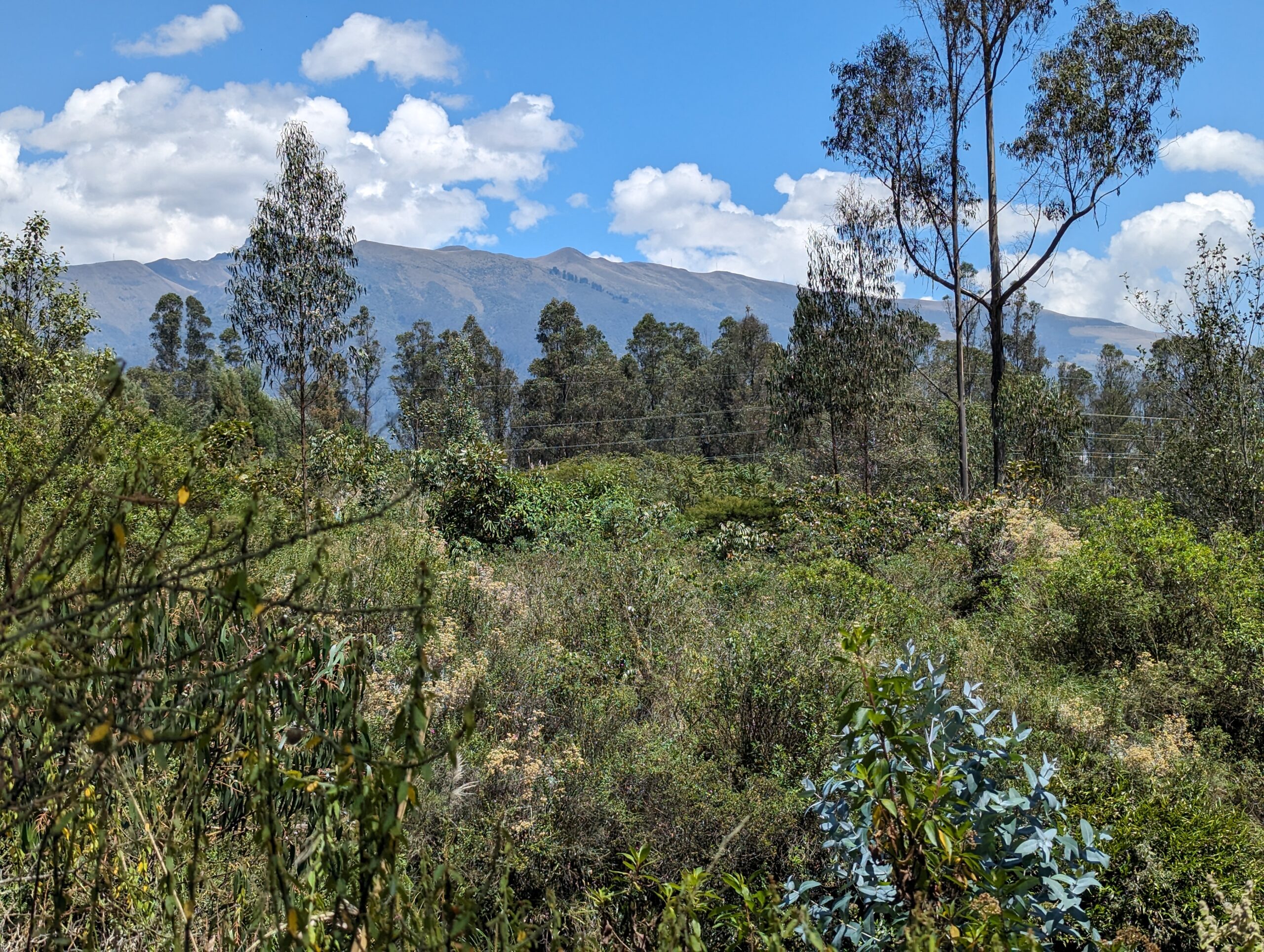
I joined a bike ride with from Quito to Mindo. All the riders were school teachers from my school and another international school in the city. We live in the mountains so the ride was up and down some steep inclines.
I wasn’t sure my knee would be okay and in the end I did not do the two biggest hills. It was a supported ride, so there was a trailer carrying our bags and also could take you and the bike up a hill. I did do some hills and the knee felt good though tired. I did not want to find out I hurt myself in the middle of the biggest hills.
We first went through Quito at 5:30 am to the point where we loaded bikes to avoid the first hill
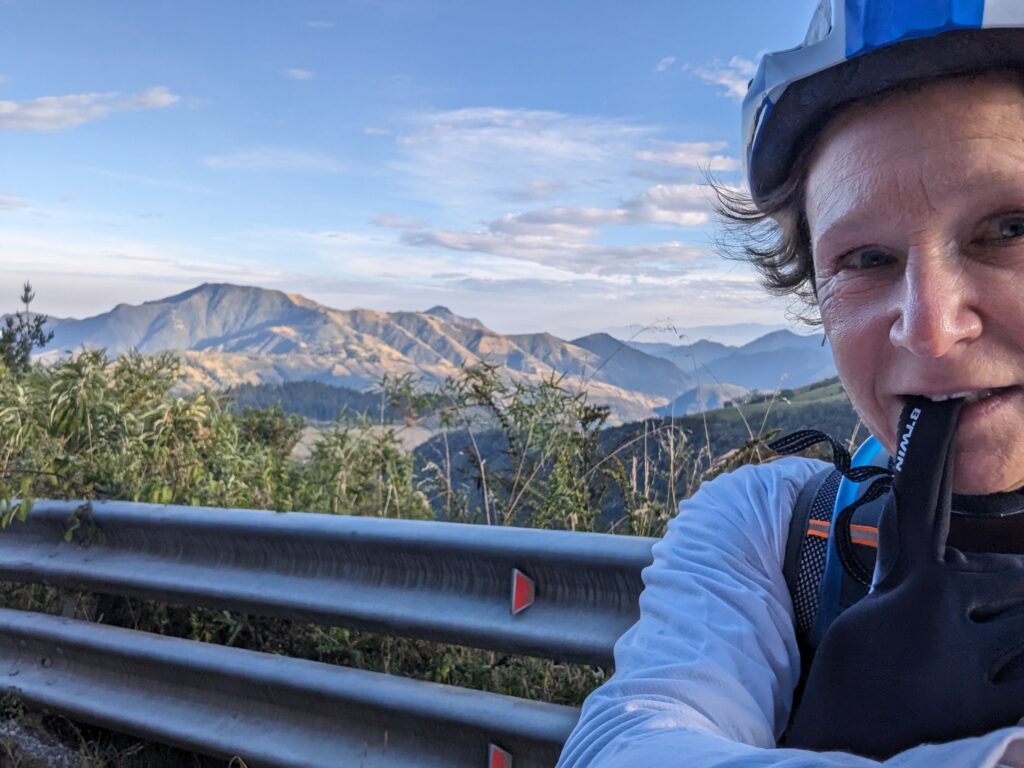
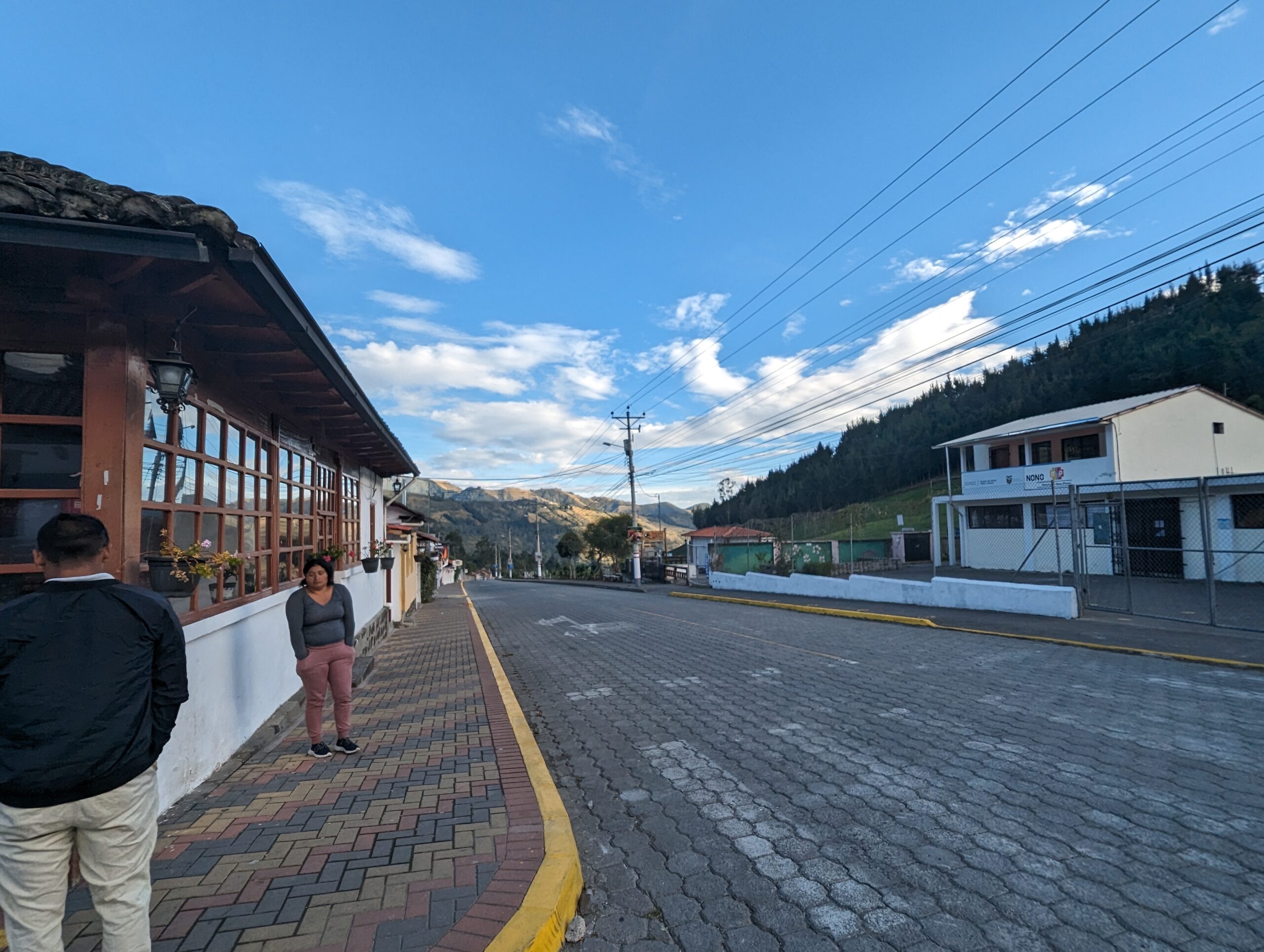
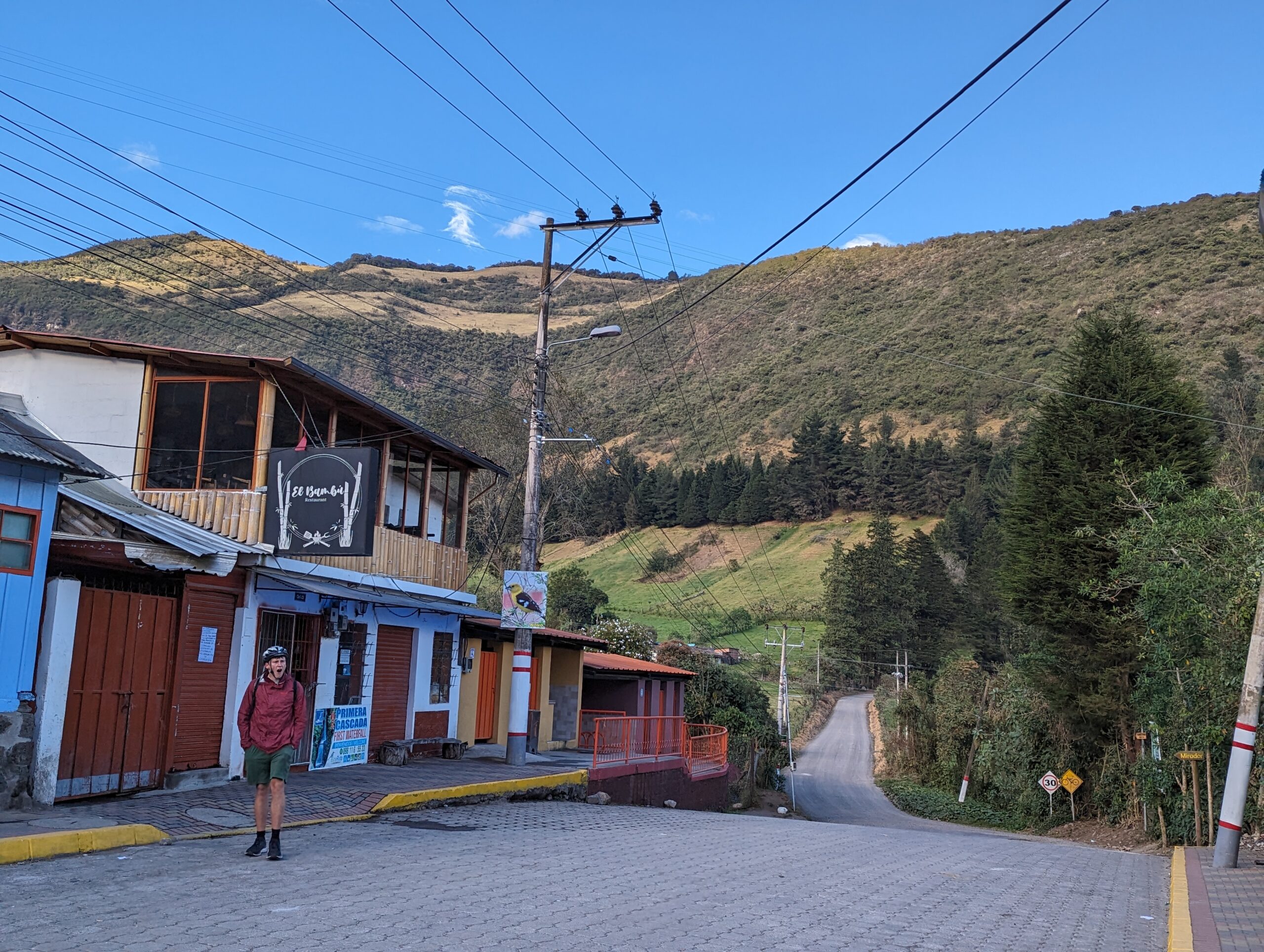
At the top of that first hill, I got on the bike but waited for the traffic to clear! I stopped along the highway going downhill to get this shot. So cold. It was just under 40 degrees. We stopped at Nono, the first town, to warm up before continuing on. So beautiful.
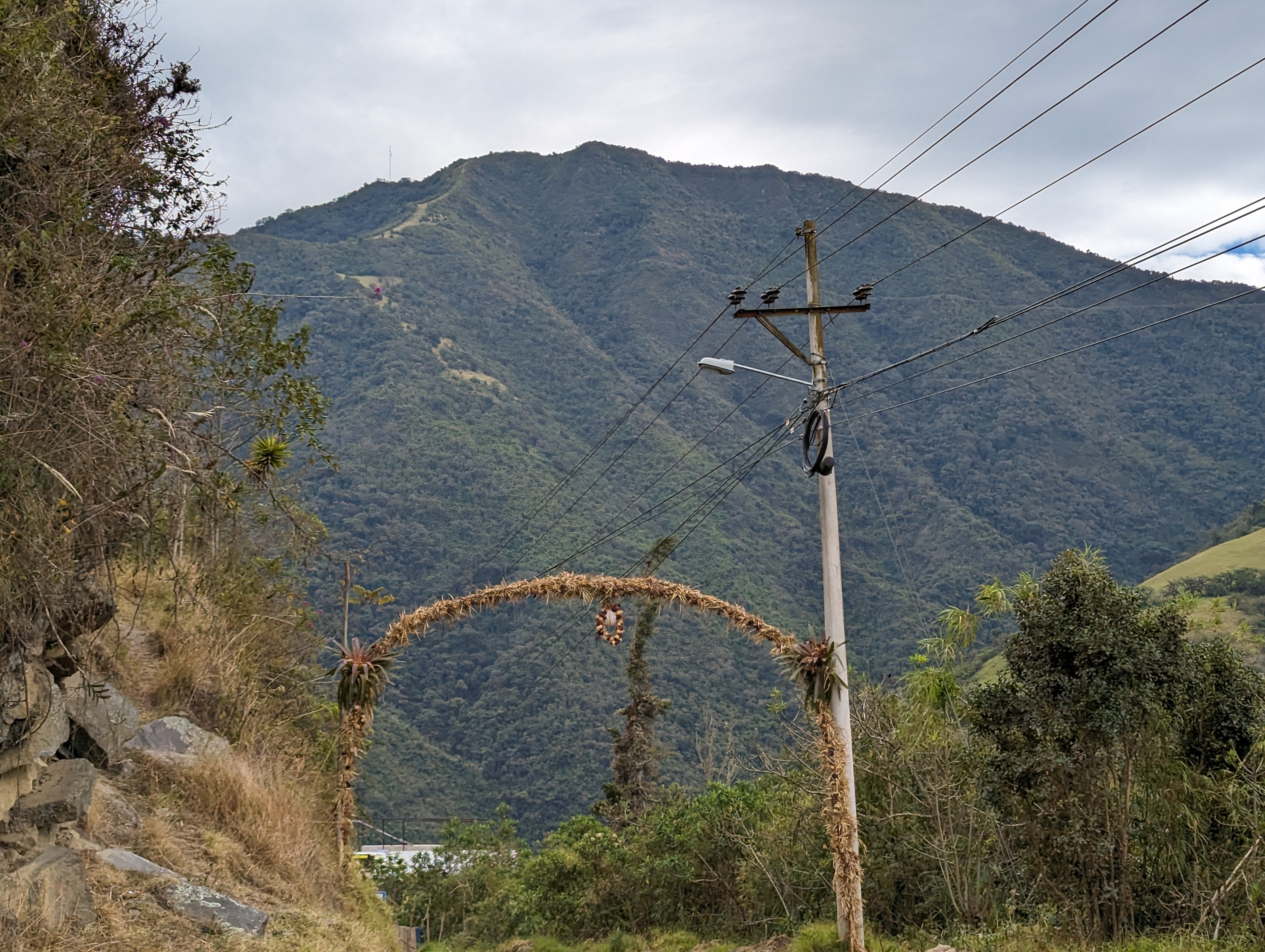
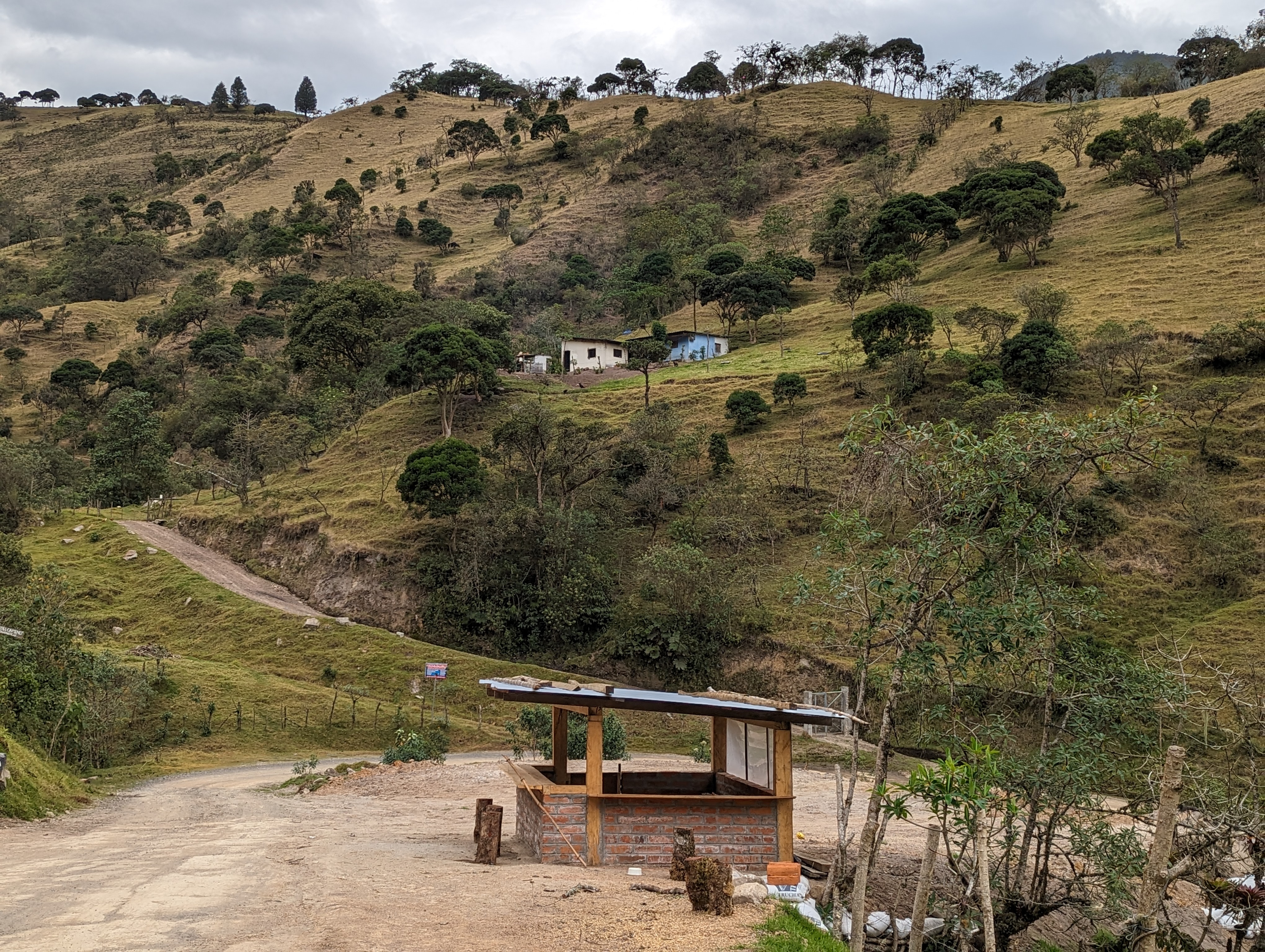
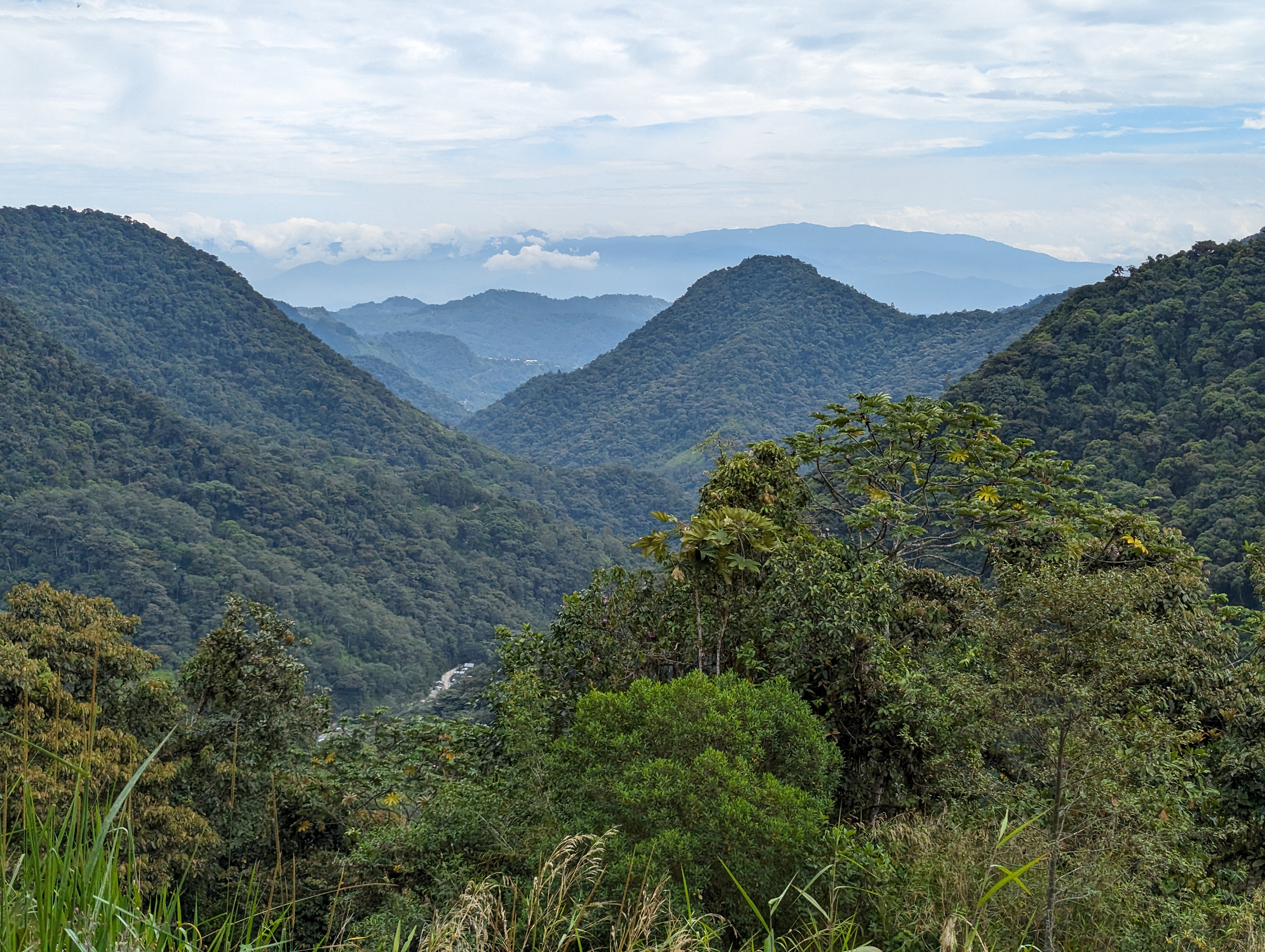
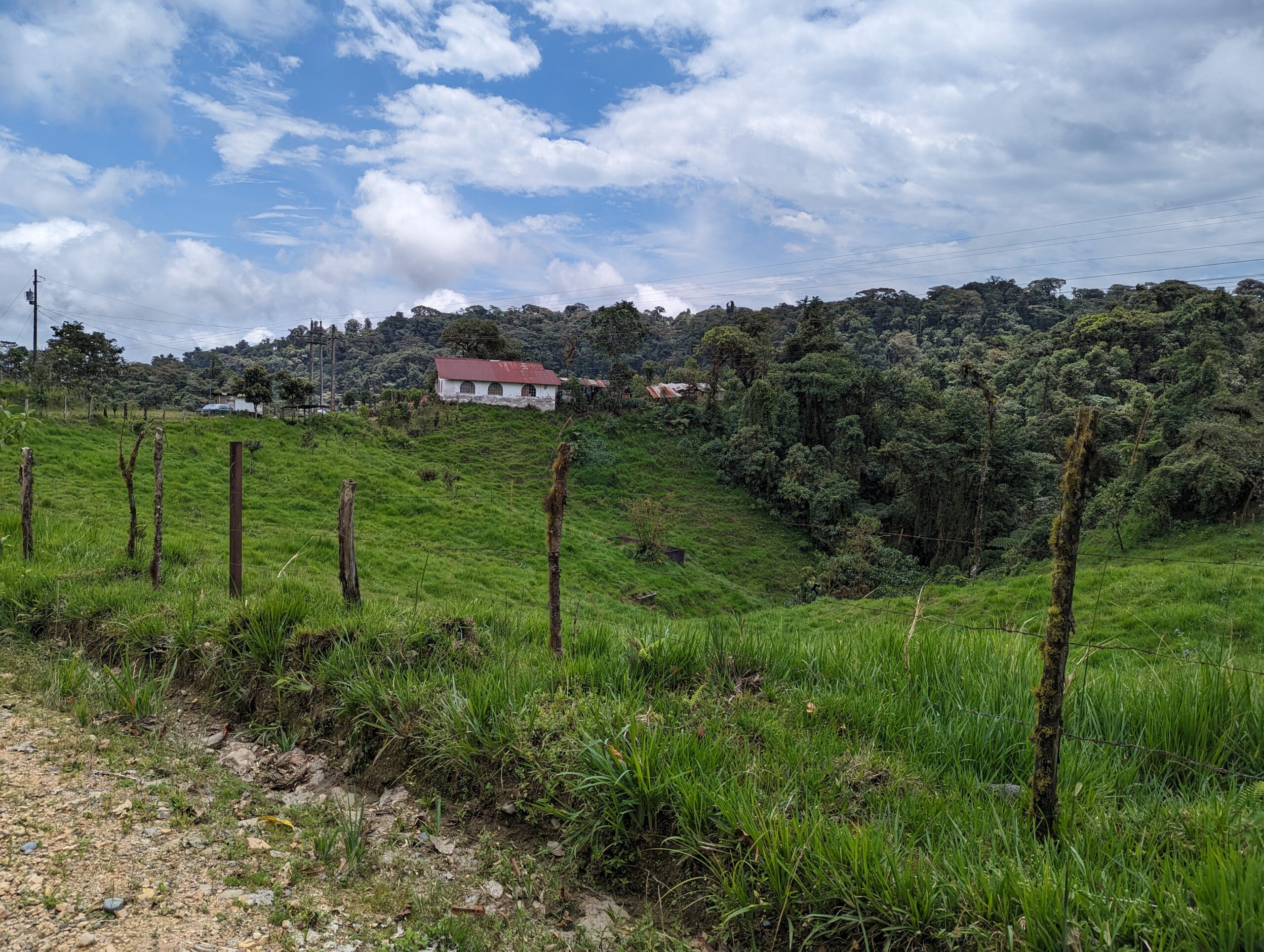
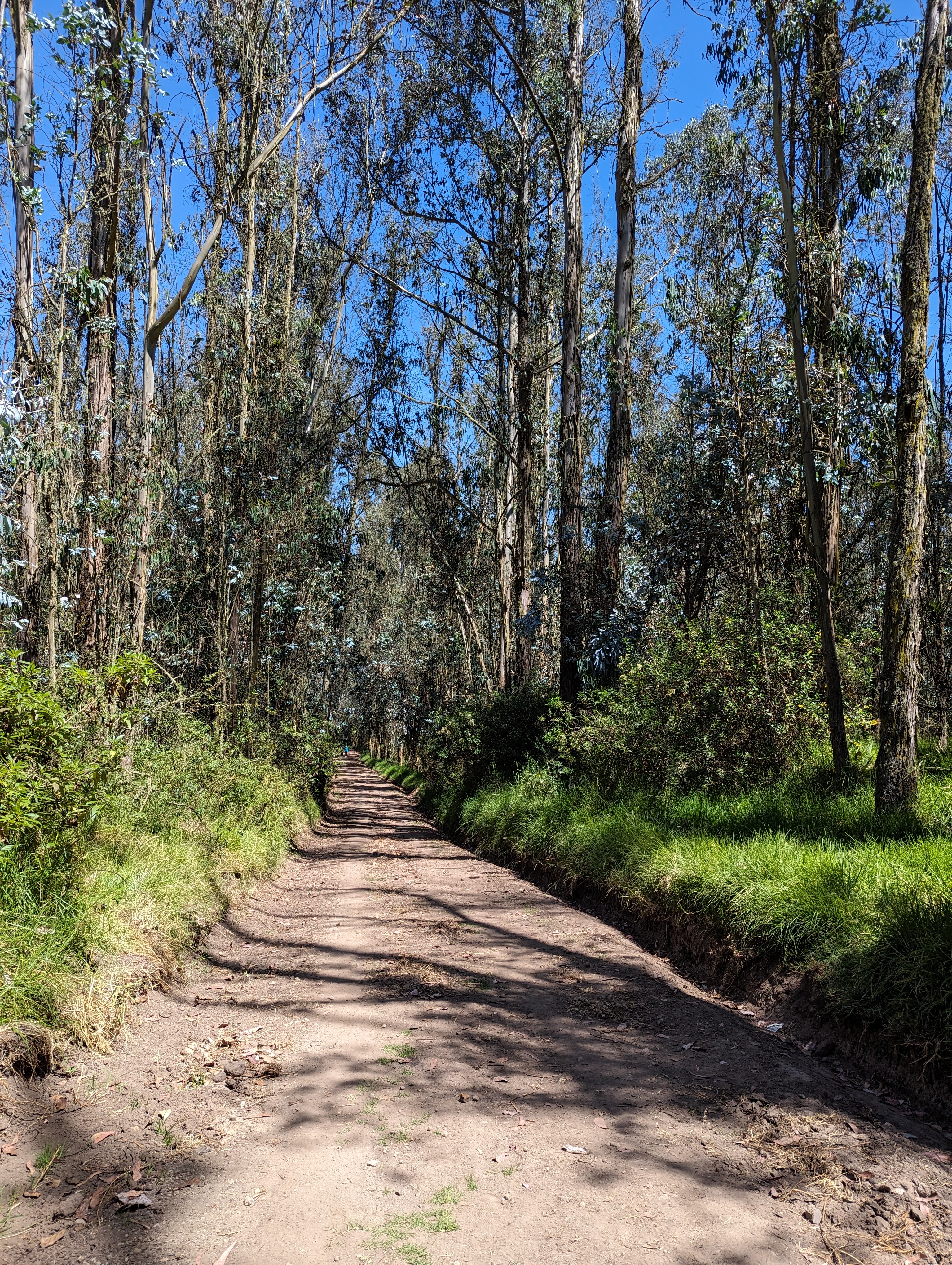
From here the road was gravel. On the downhills I went slow as I was not comfortable and also the tight turns. Lots of braking! In the end, going slow let me stop and take some great pictures.
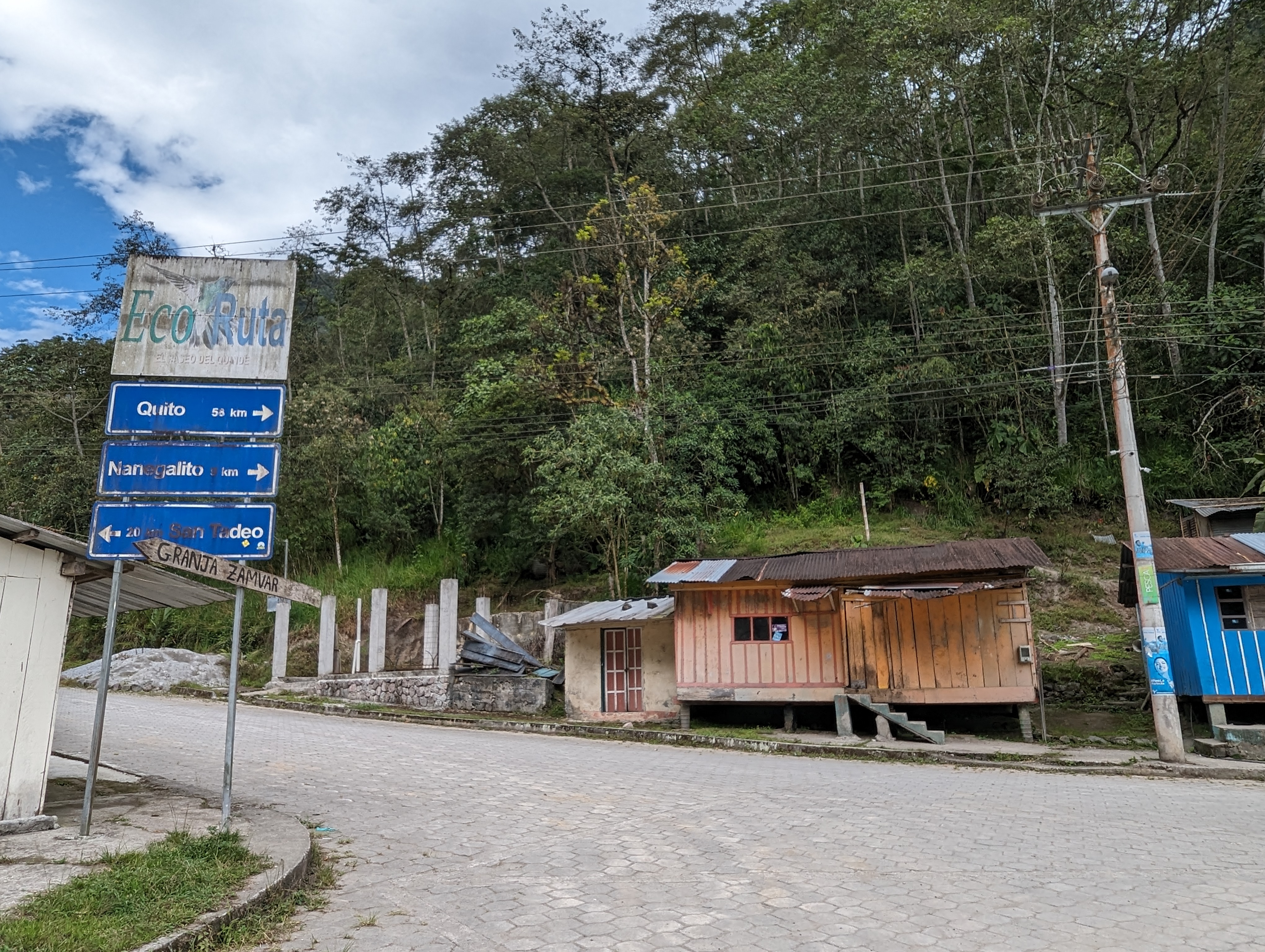
A second stop in Nanegelito. Here I realized the next hill was even steeper and decided to skip it.
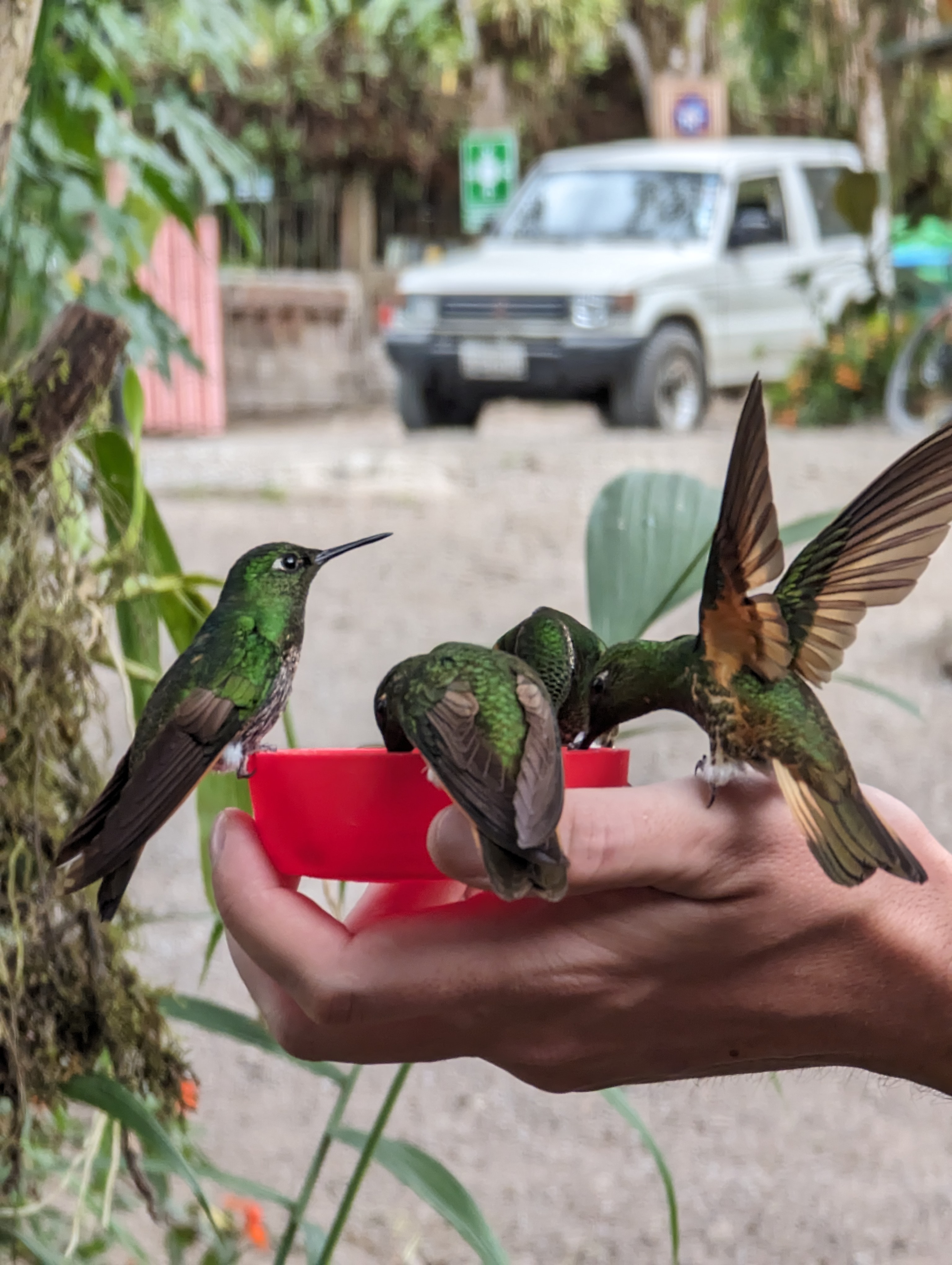
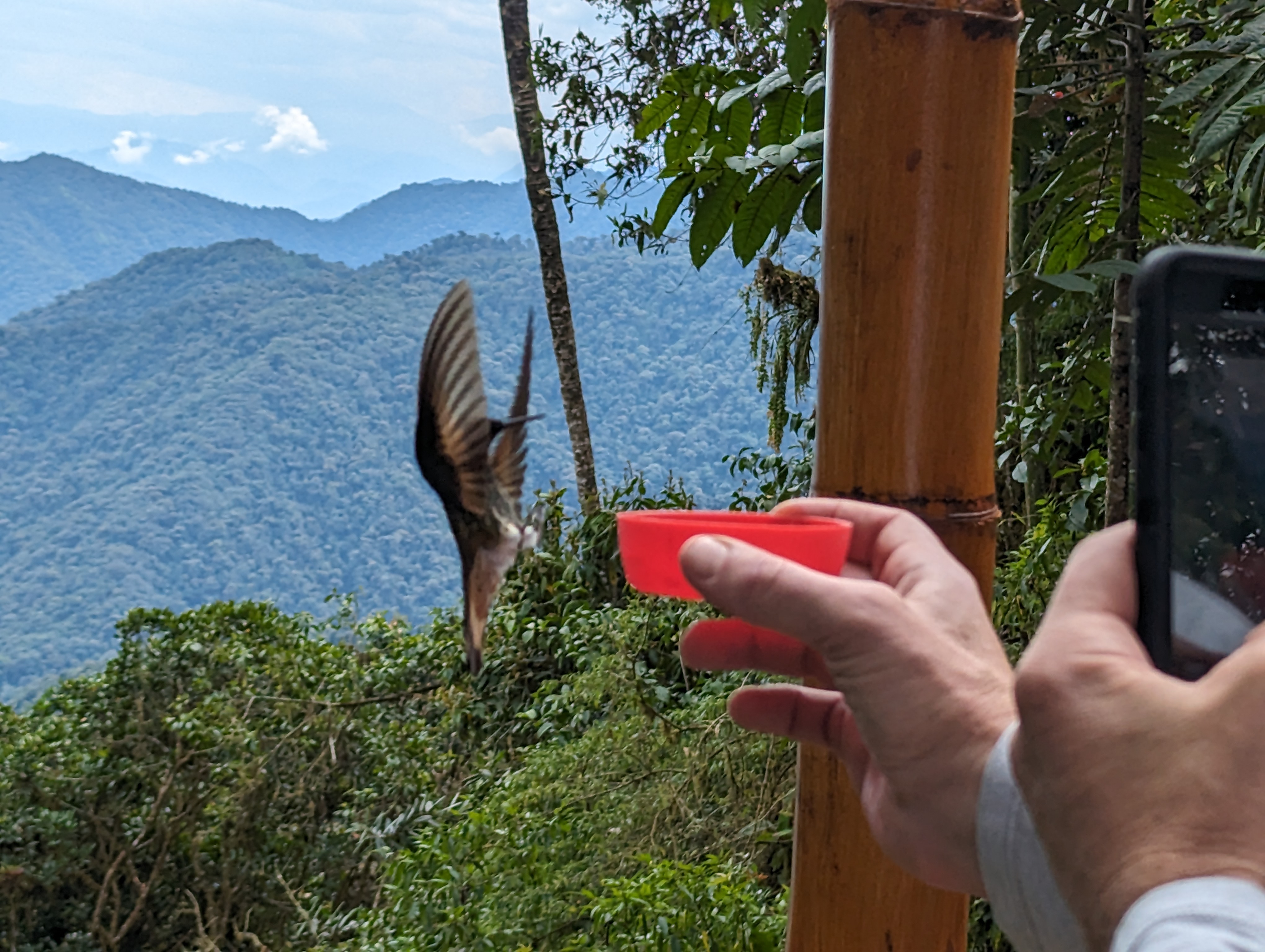
At the top of the hill was the next stop at Bellavista. This used to be the old highway and when the new one was put in, the little towns suffered. A foreigner purchased all the land and built the hostel resort and also manages the nature reserve. They had hummingbirds and incredible views.
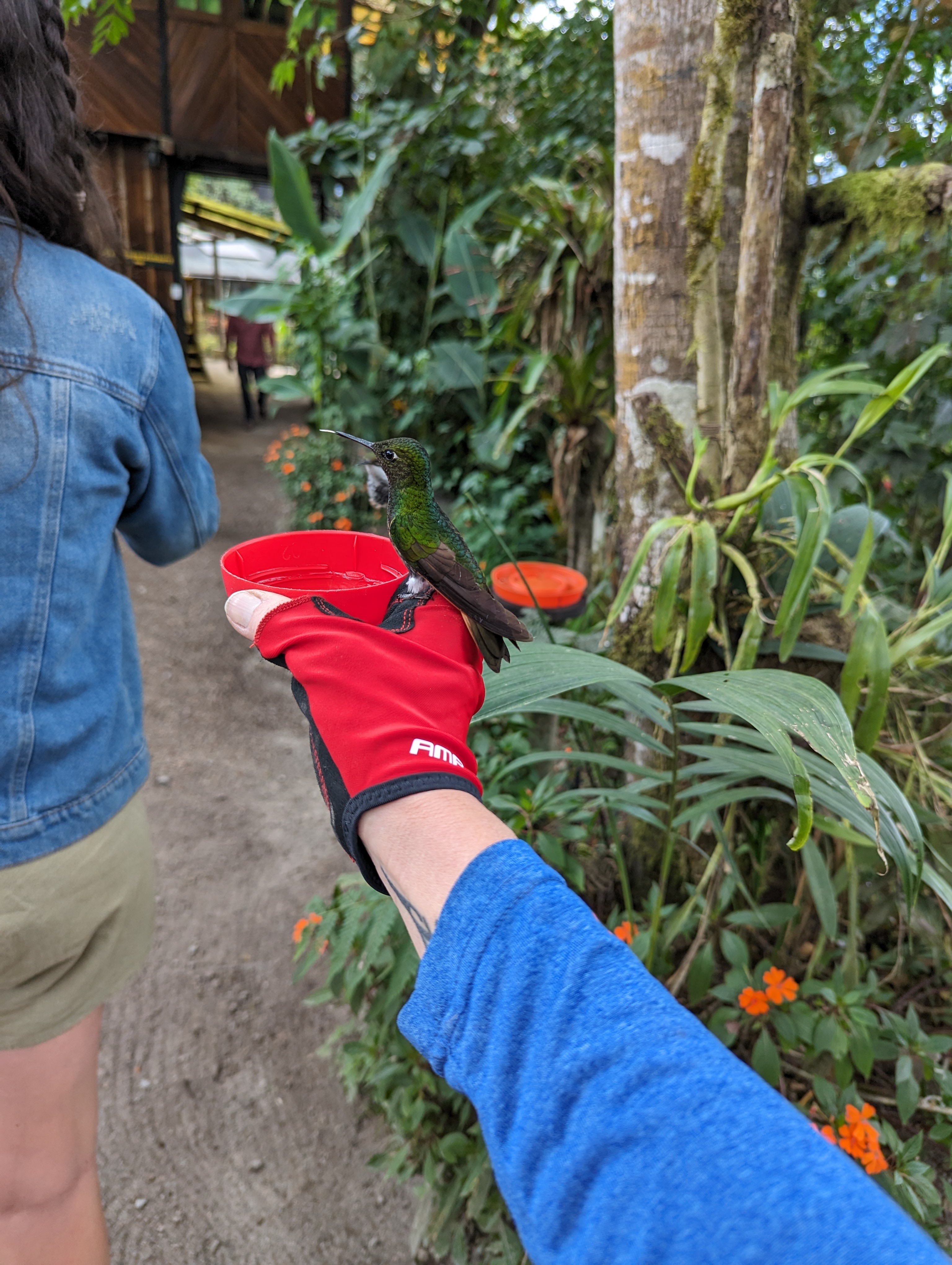
The hummingbirds were amazing.They loved my red gloves.
So many more hours of downhill on gravel.
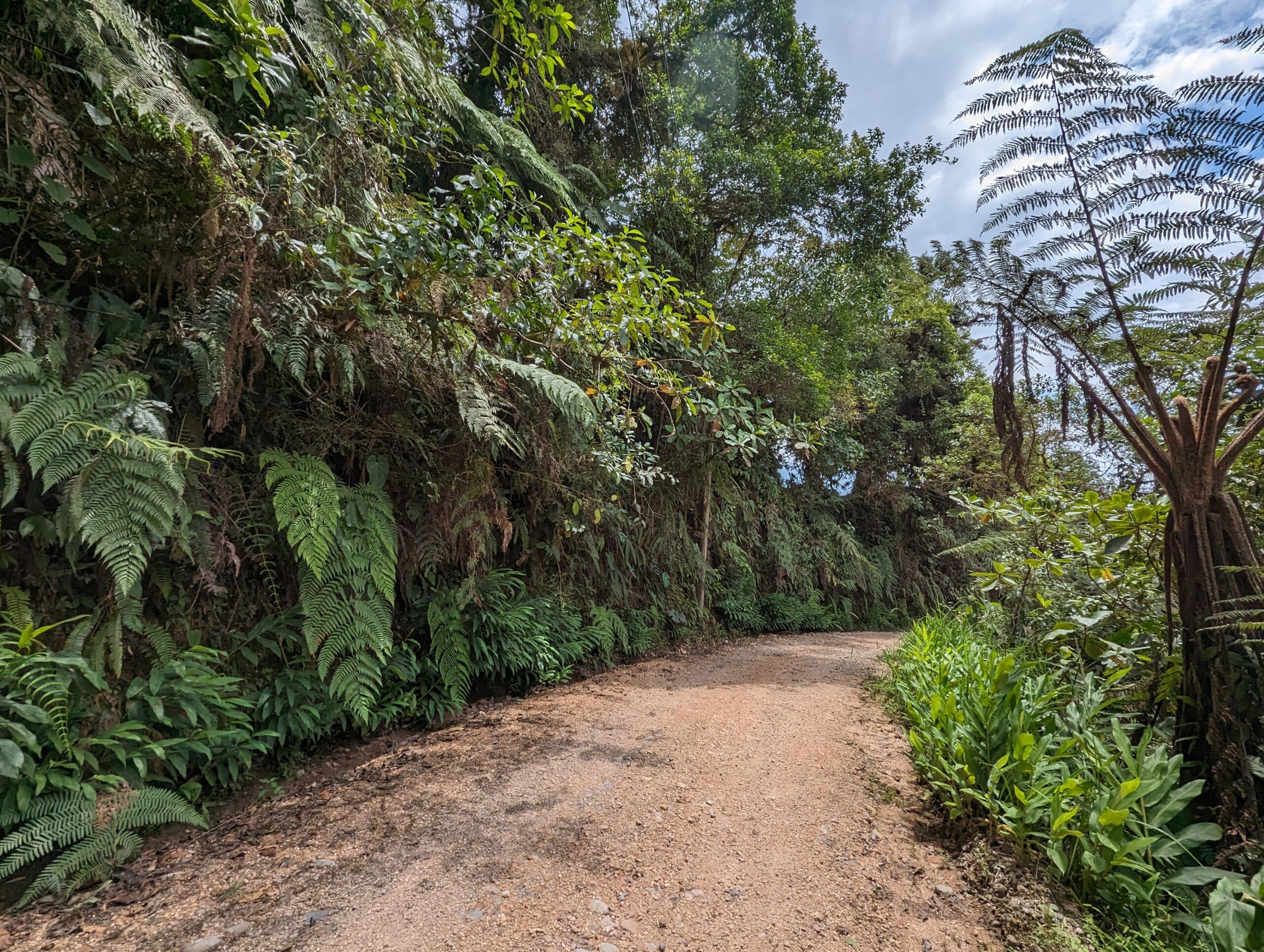
Finally I noticed that the vegetation had changed and we were no longer in the forests but in the jungle.
I was do glad to see paved road finally which was faster but it was also still downhill! Finally I made it to Mindo!
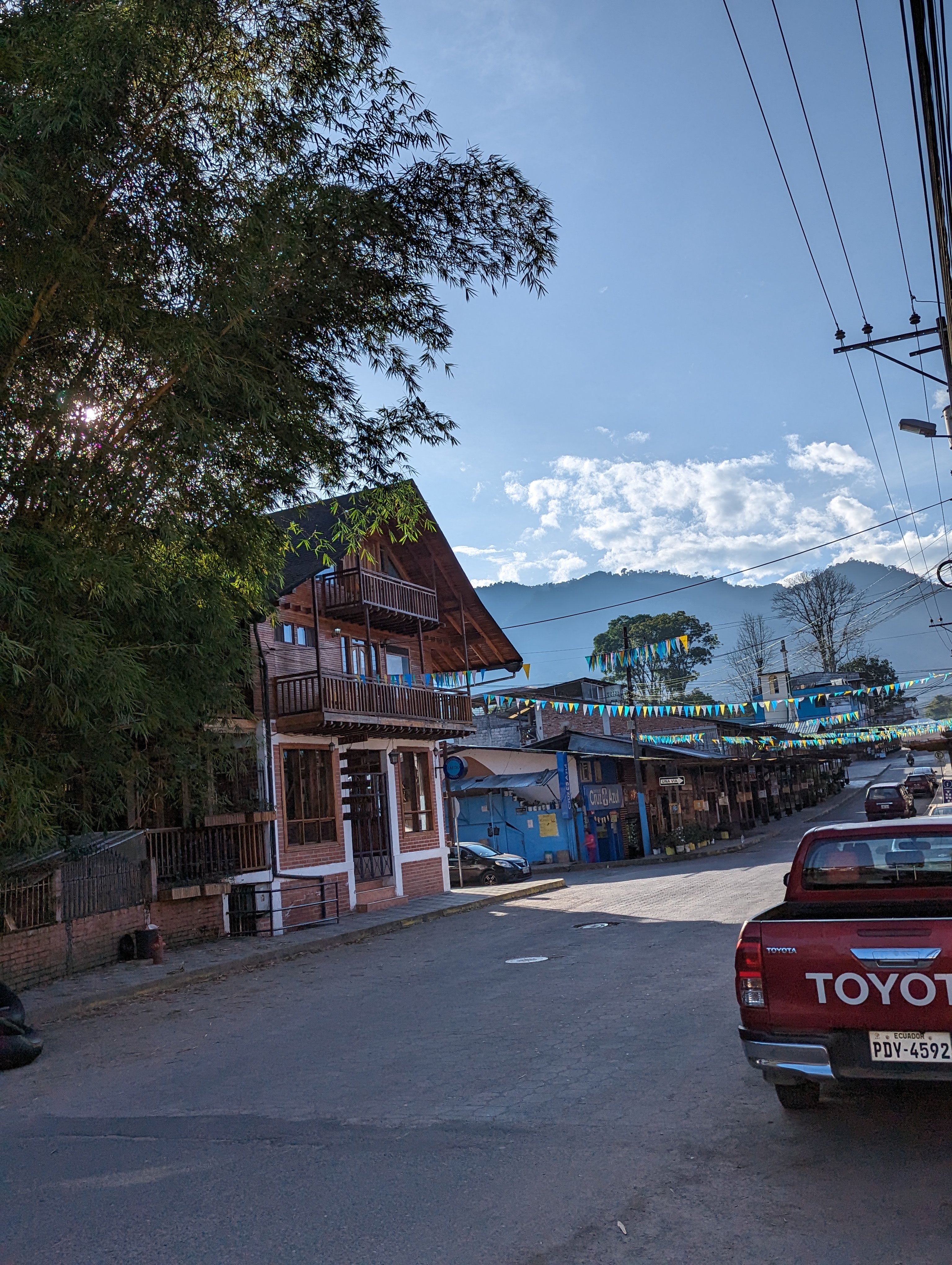
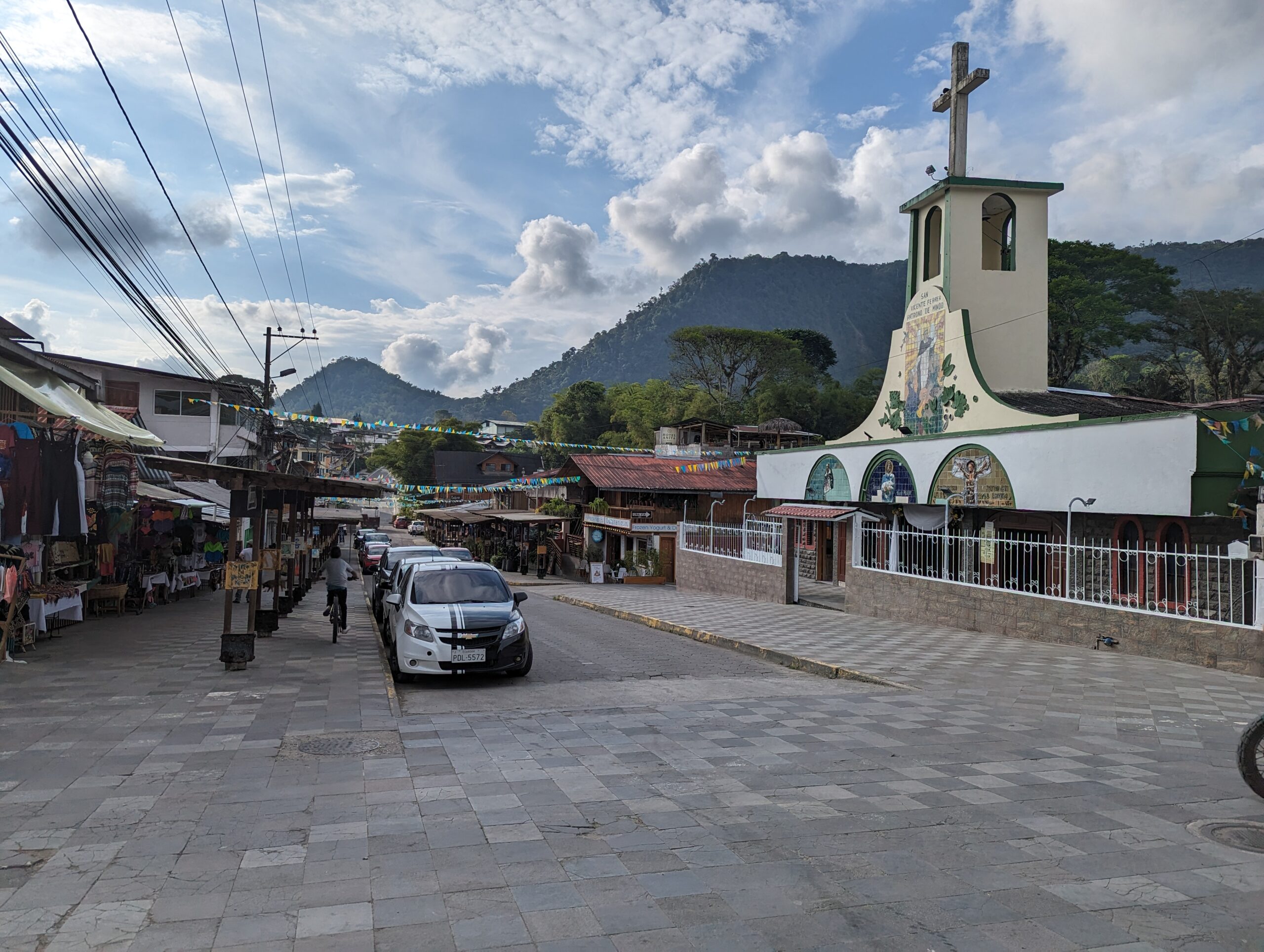
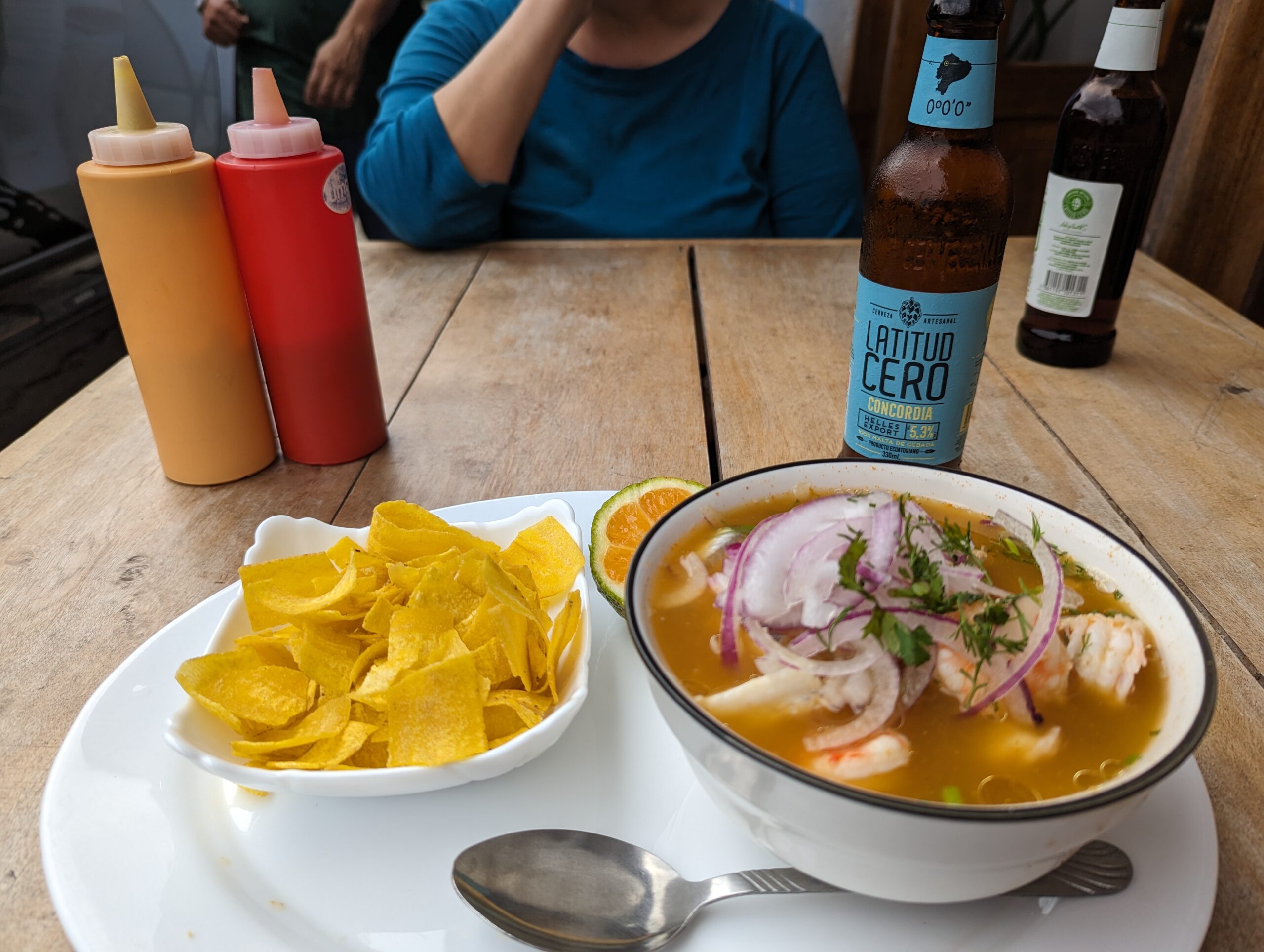
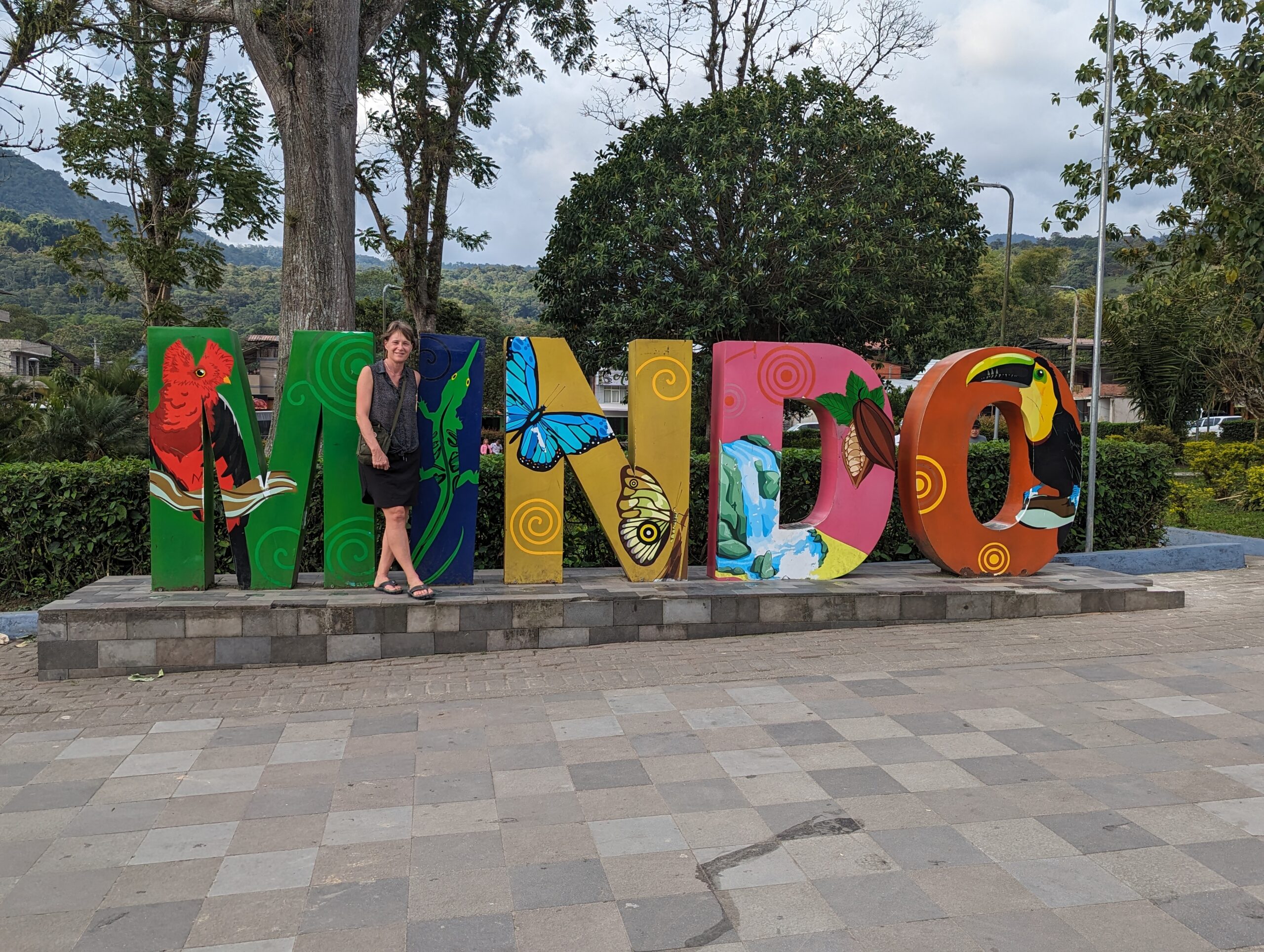
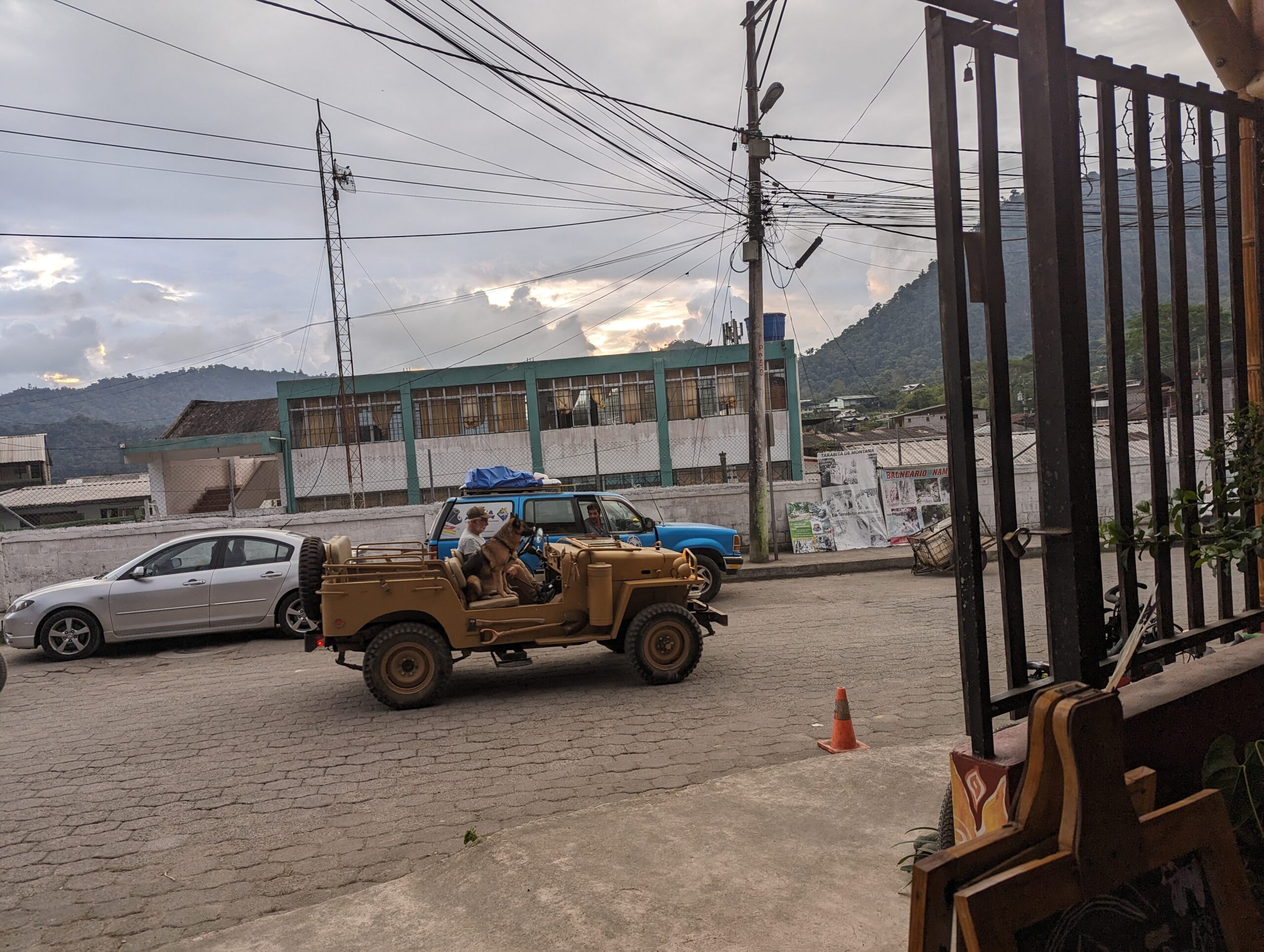
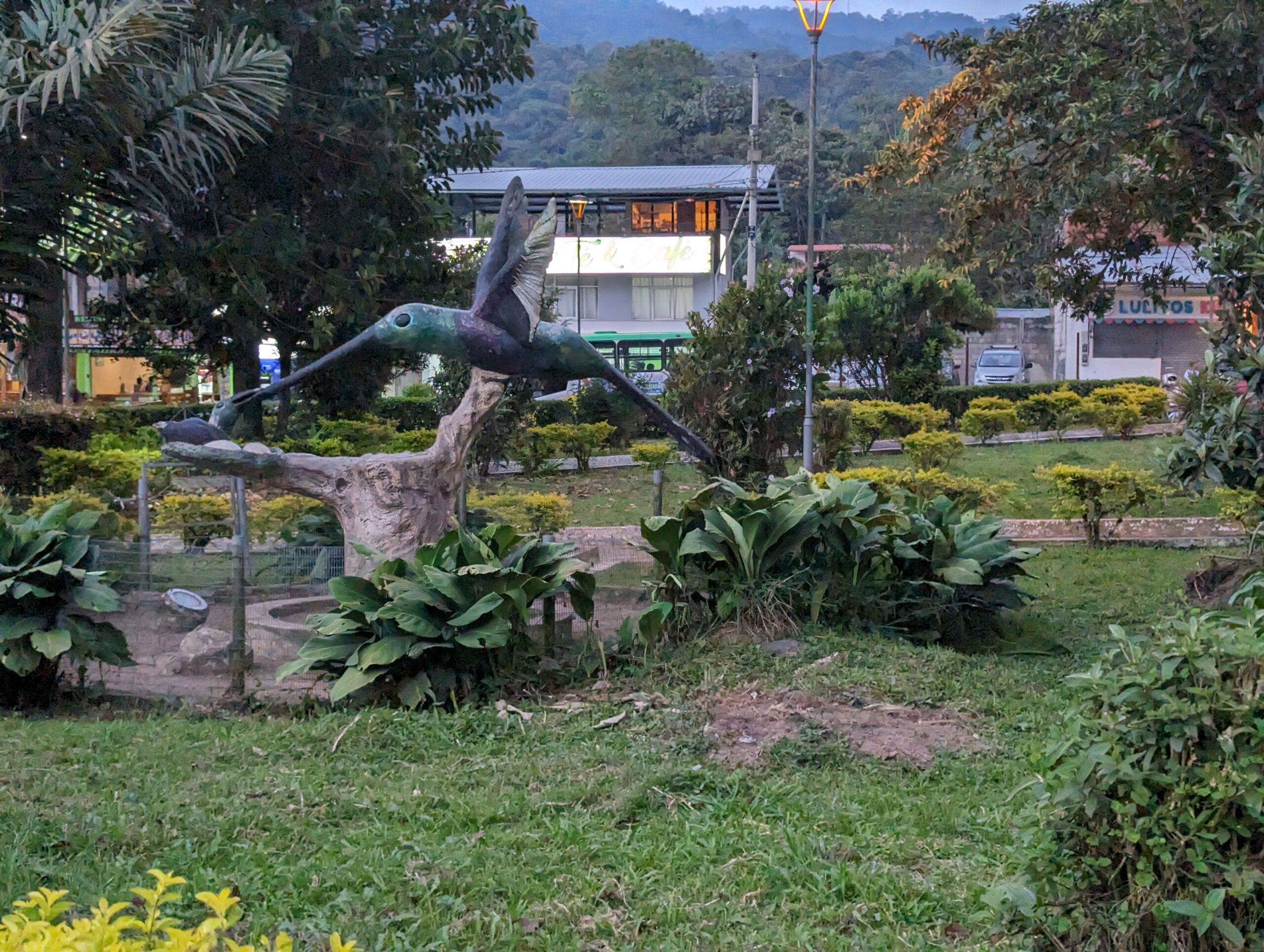
Such a cute very small town.I finally found a mixed encebollado to try. It’s a fish soup with onions, yucca, and spices. So delicious. It came with plantain chips.Just a guy and his dog out for a drive. In the center park.Service on Sunday.
A new friend from the other school, Cotopaxi, met me in Mindo. We had a good time hanging out, eating, and walking to the butterfly garden.
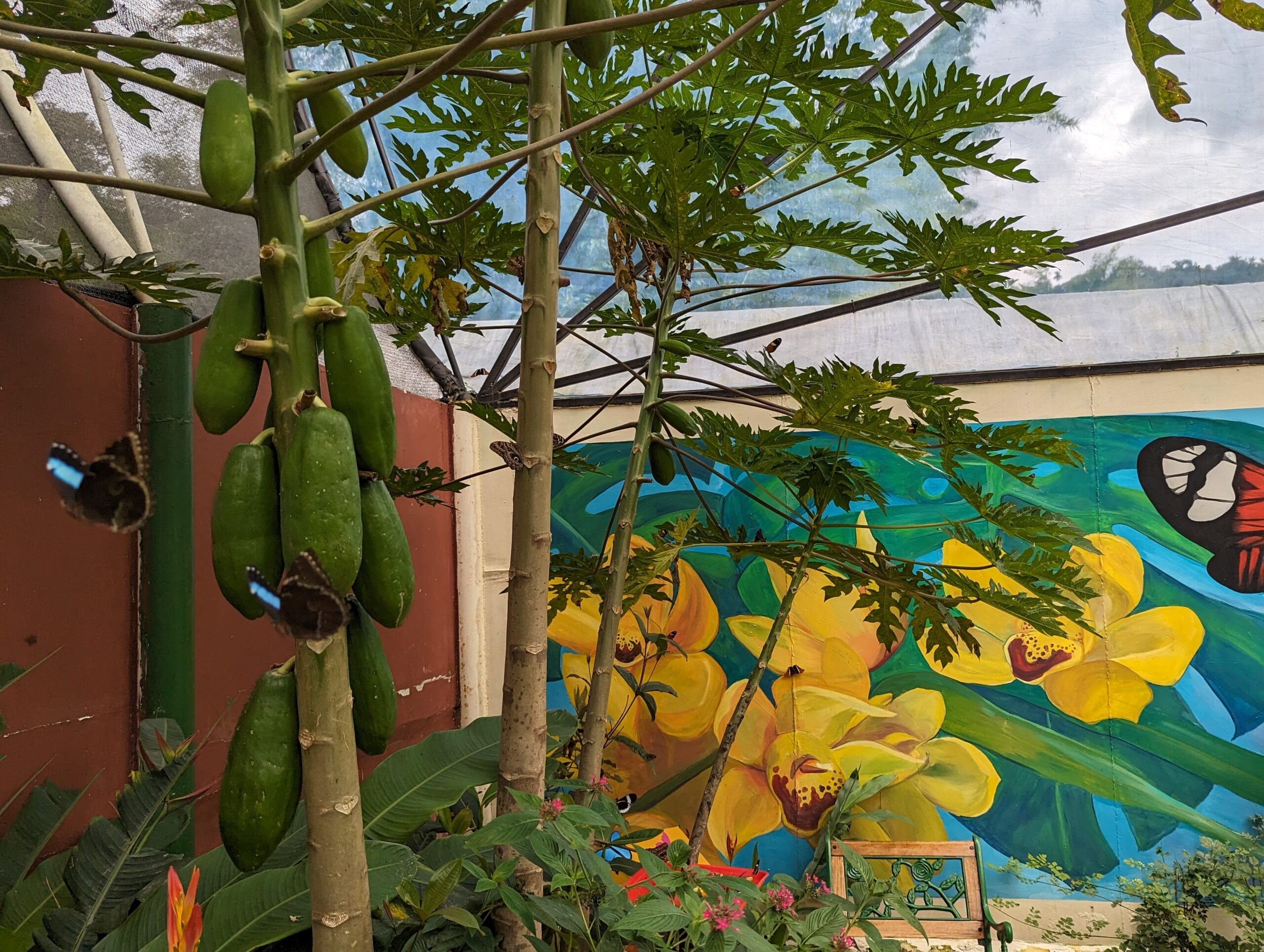
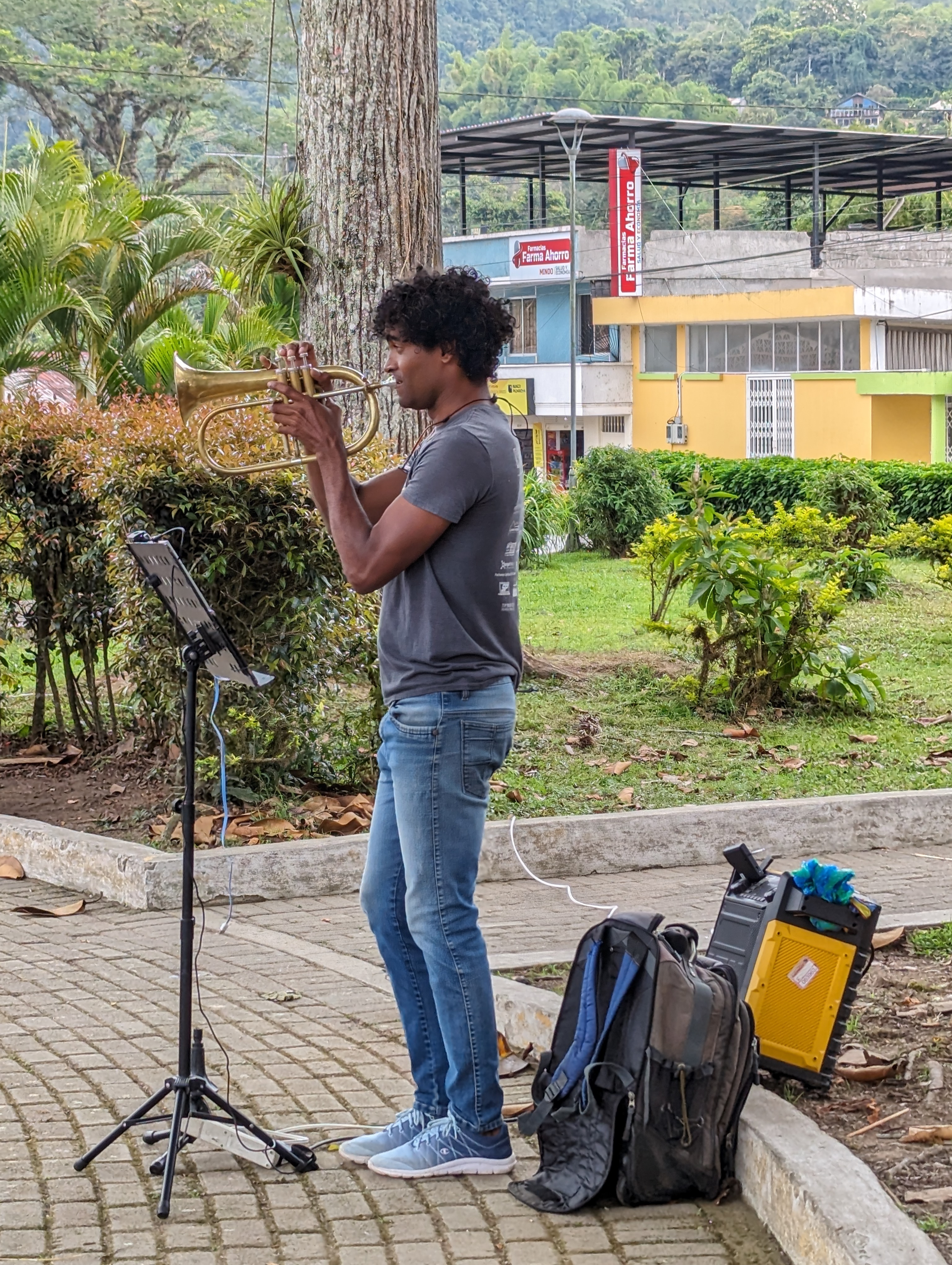
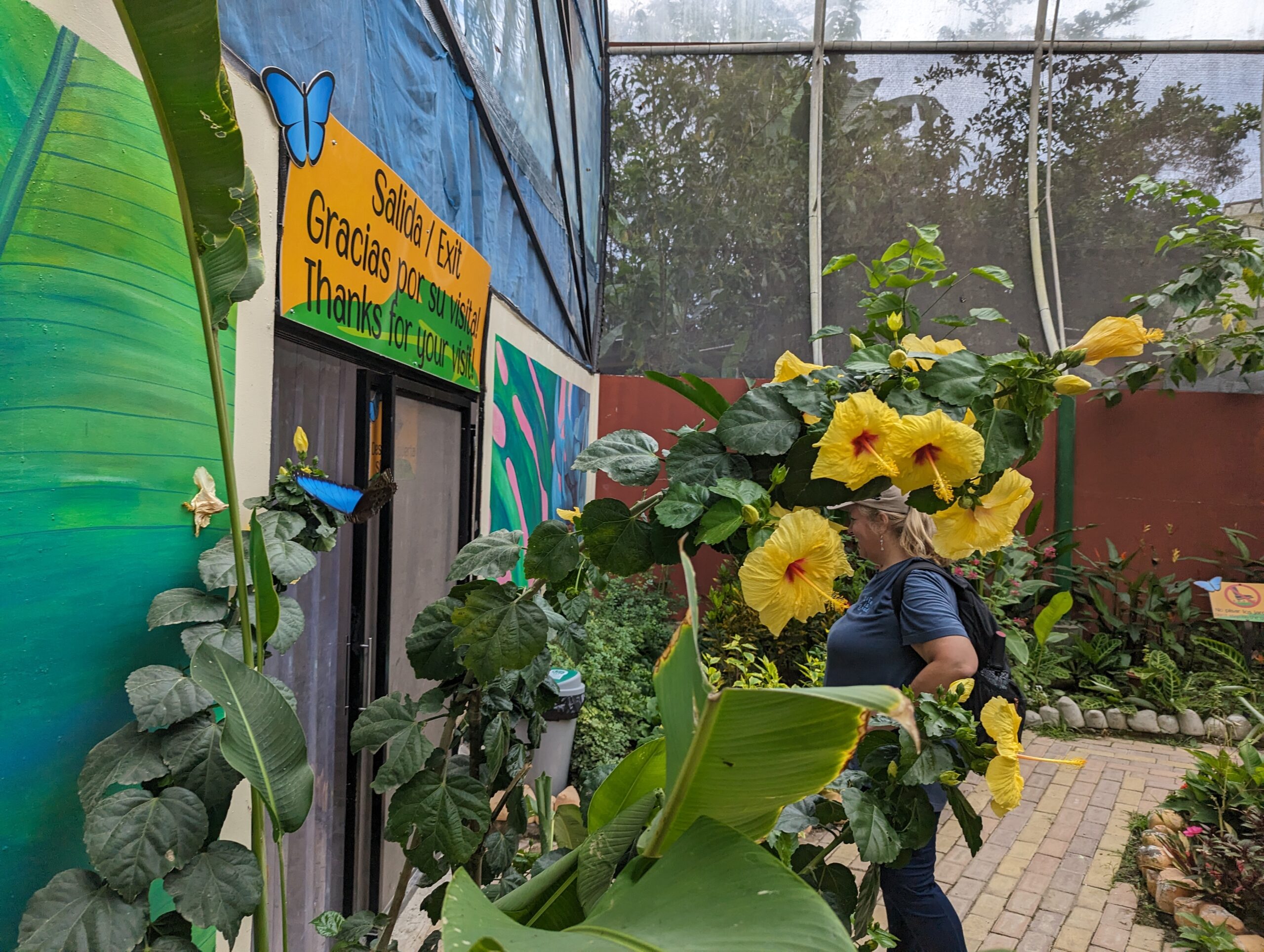
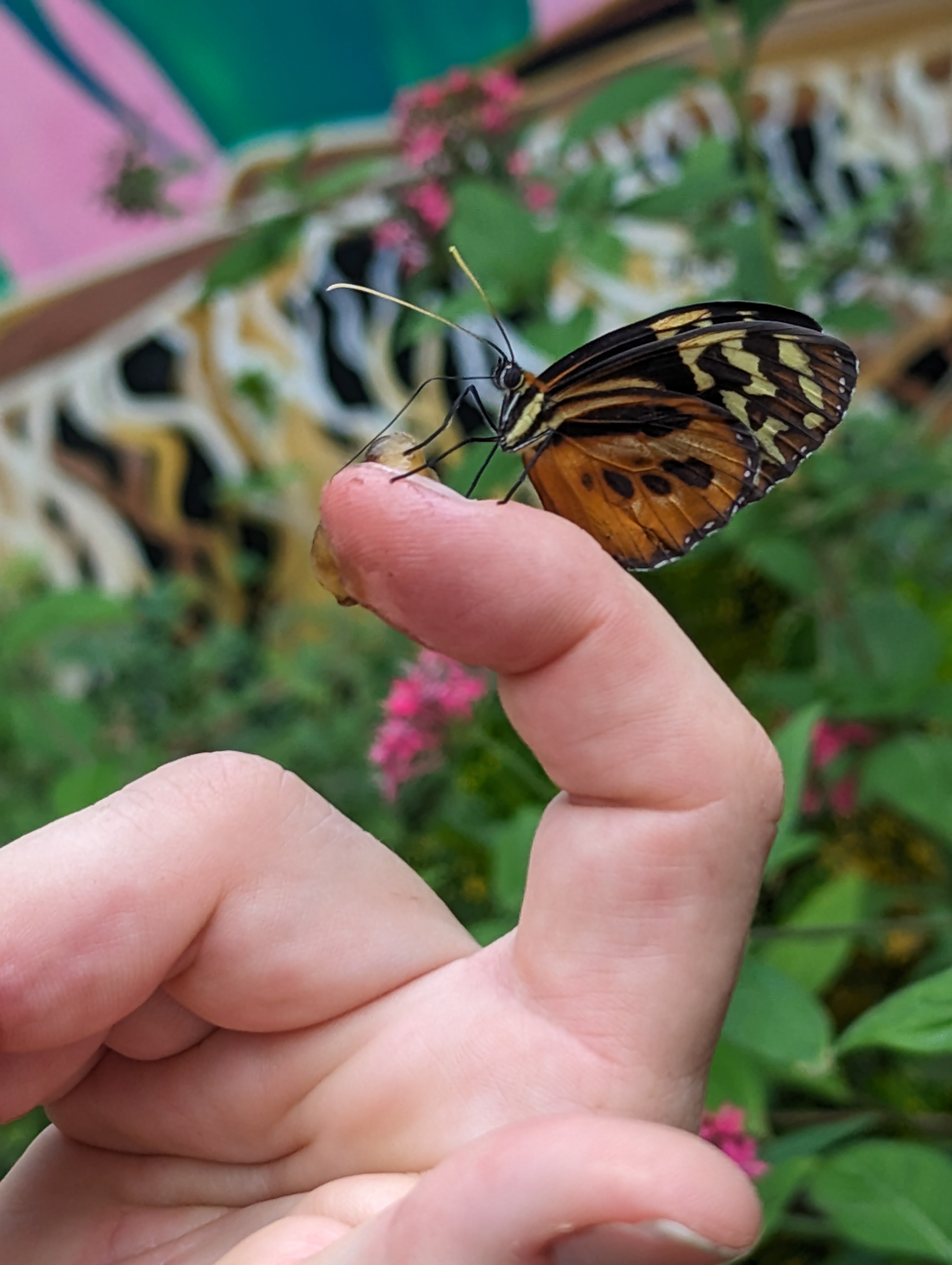
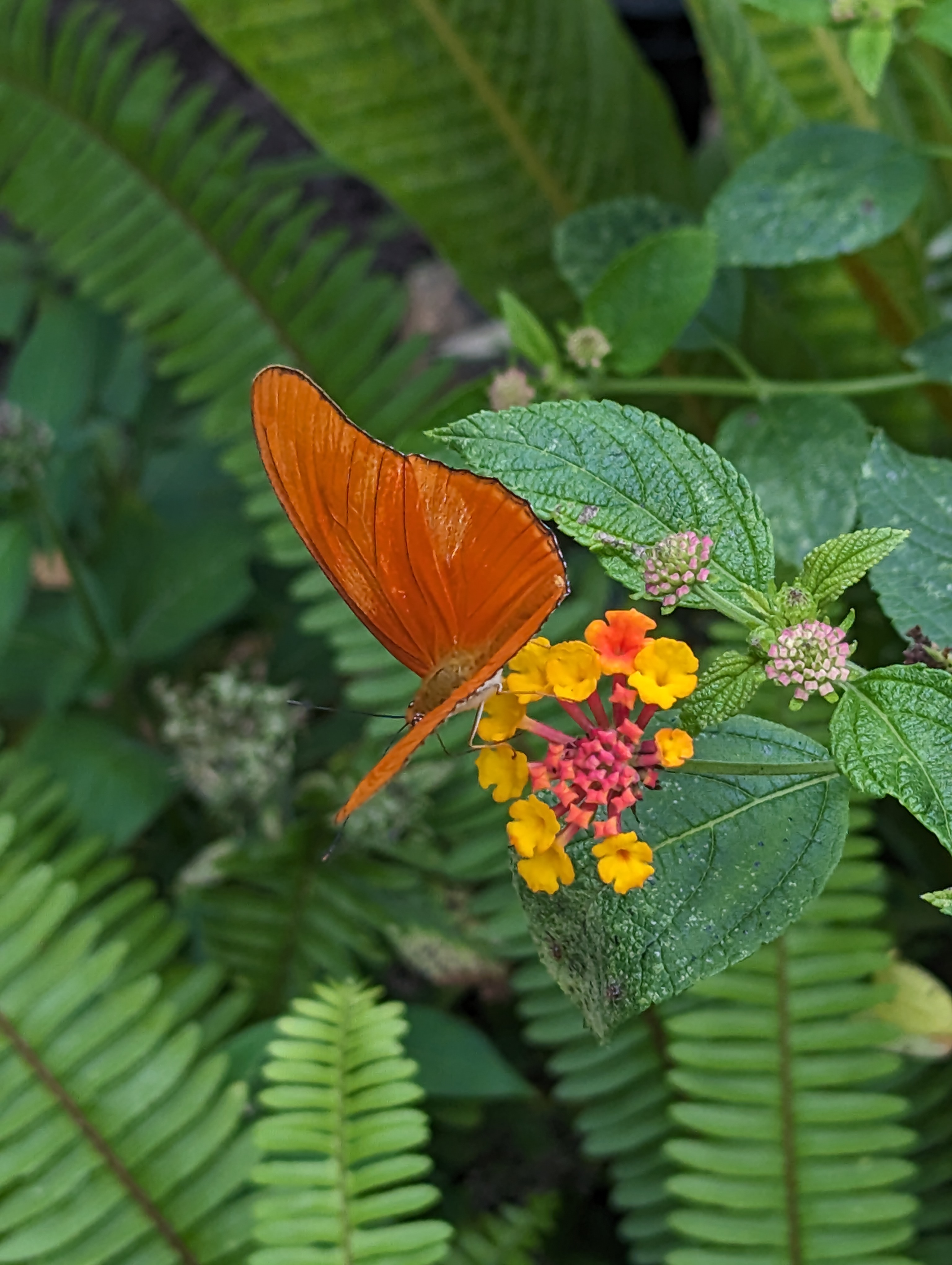
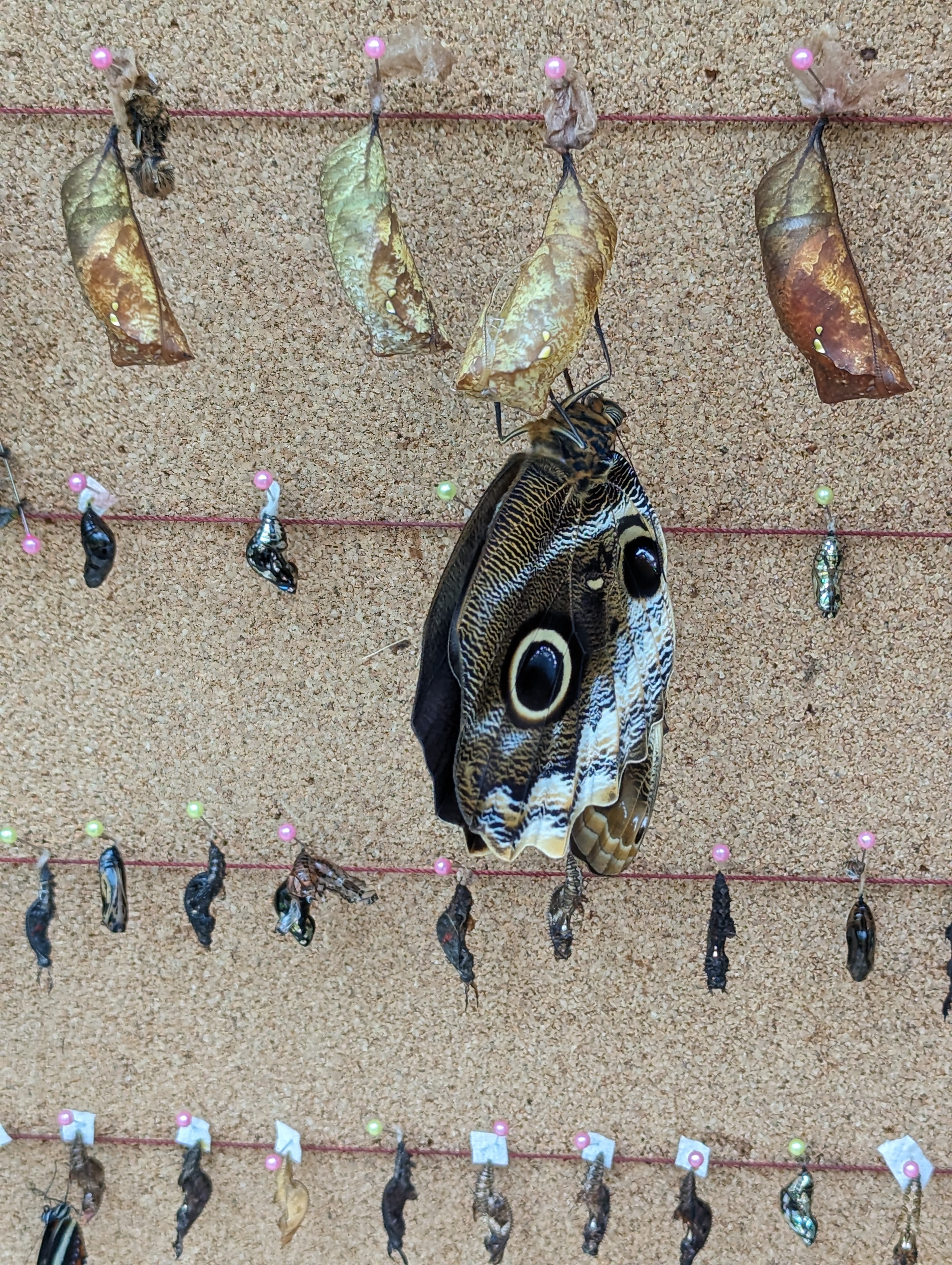
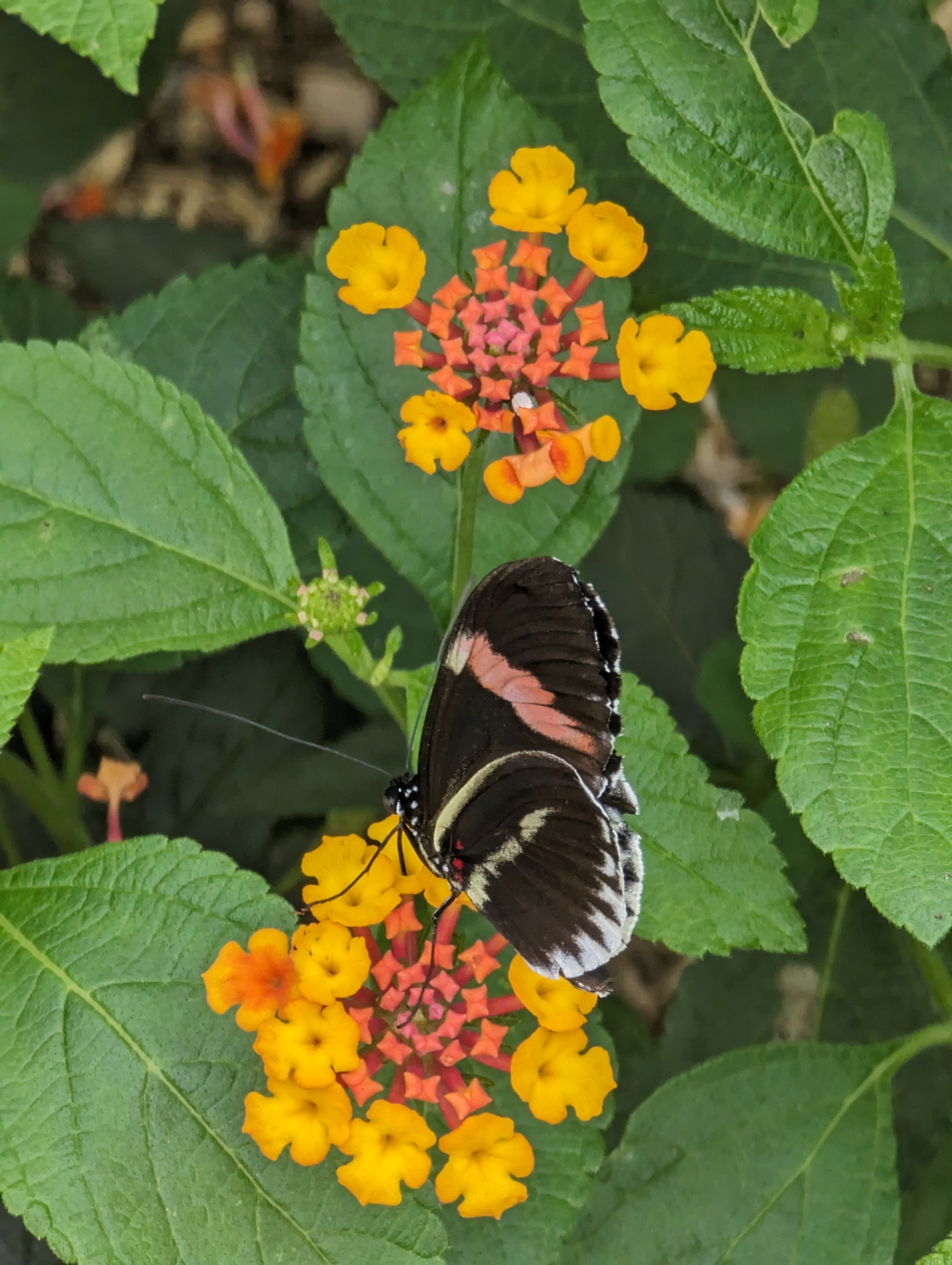
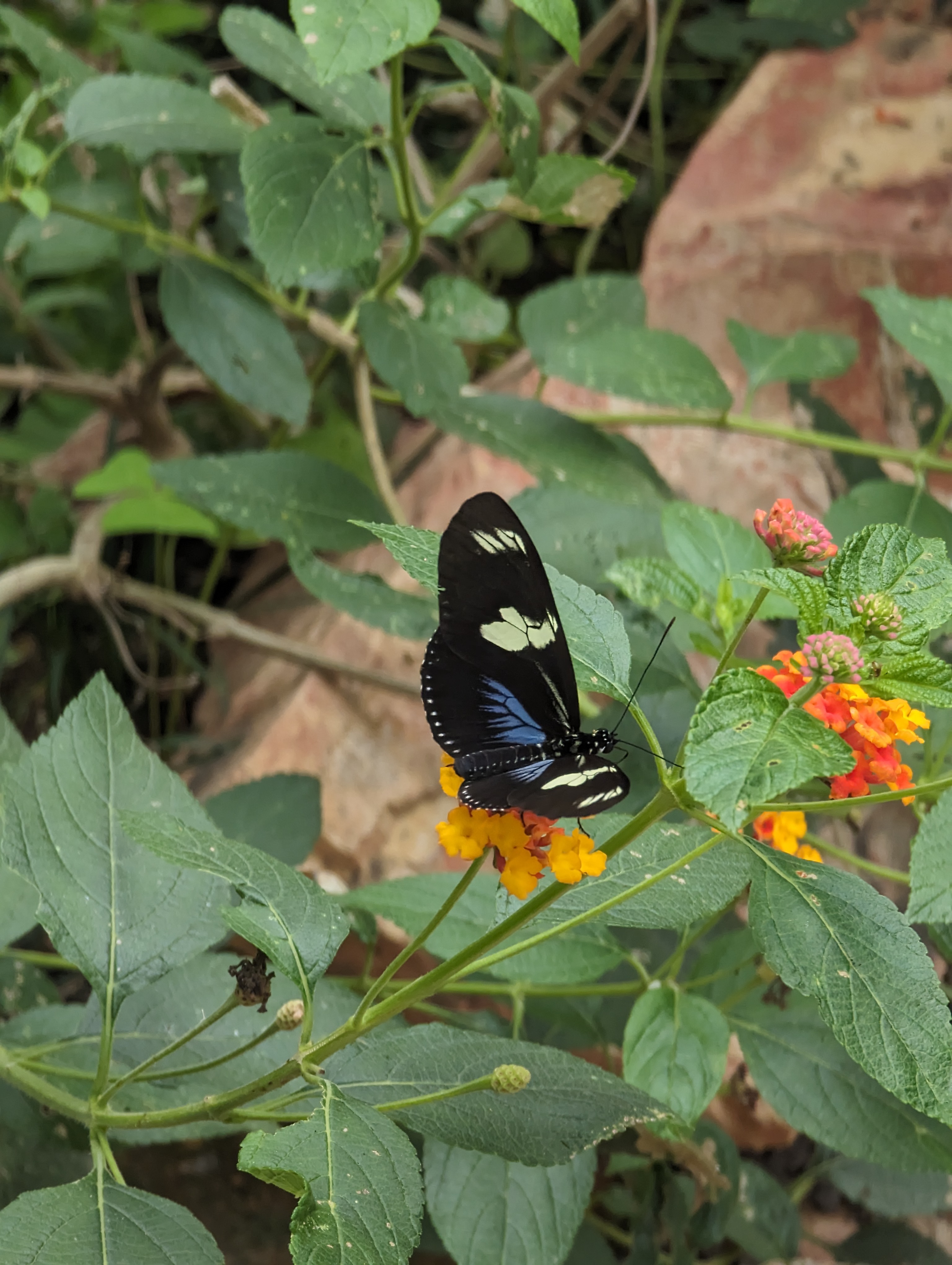
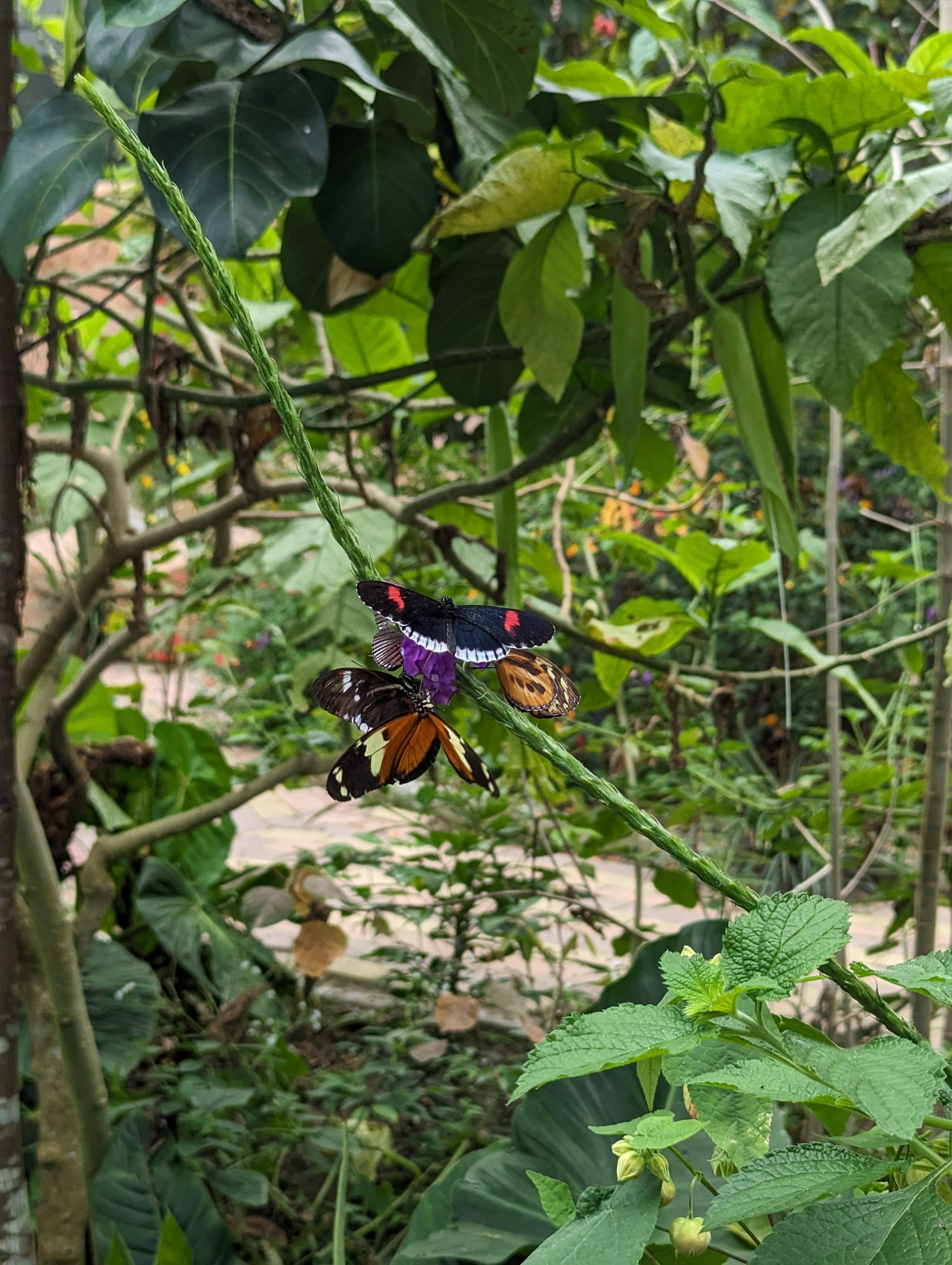
Those little flashes of blue on the left side were very beautiful and active blue butterflies. Live music in the park. I danced some salsa with him before boarding the bus back to Quito.More flash of blue at the door. They did not alight anywhere during our stay.One butterfly that just emerged from the chrysalis.
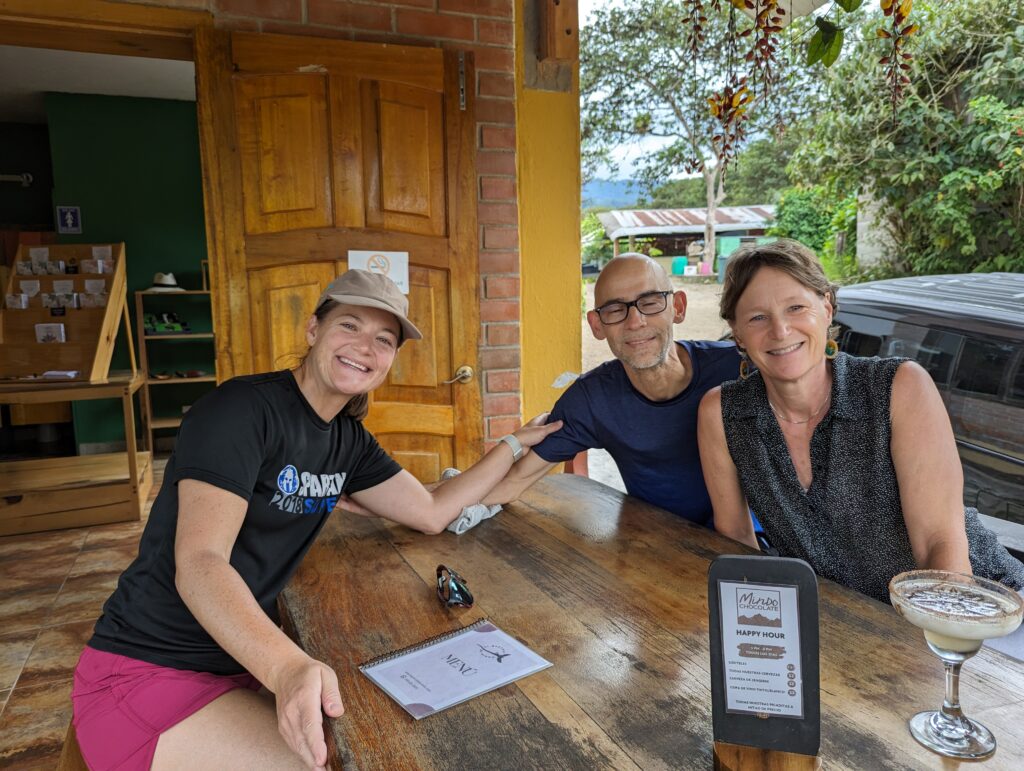
We packed up our things but went to lunch to wait for the bus to go back to Quito. Devon and Sergio know great friends of mine from Guangzhou. Kathy and Mitch thought that was great too!
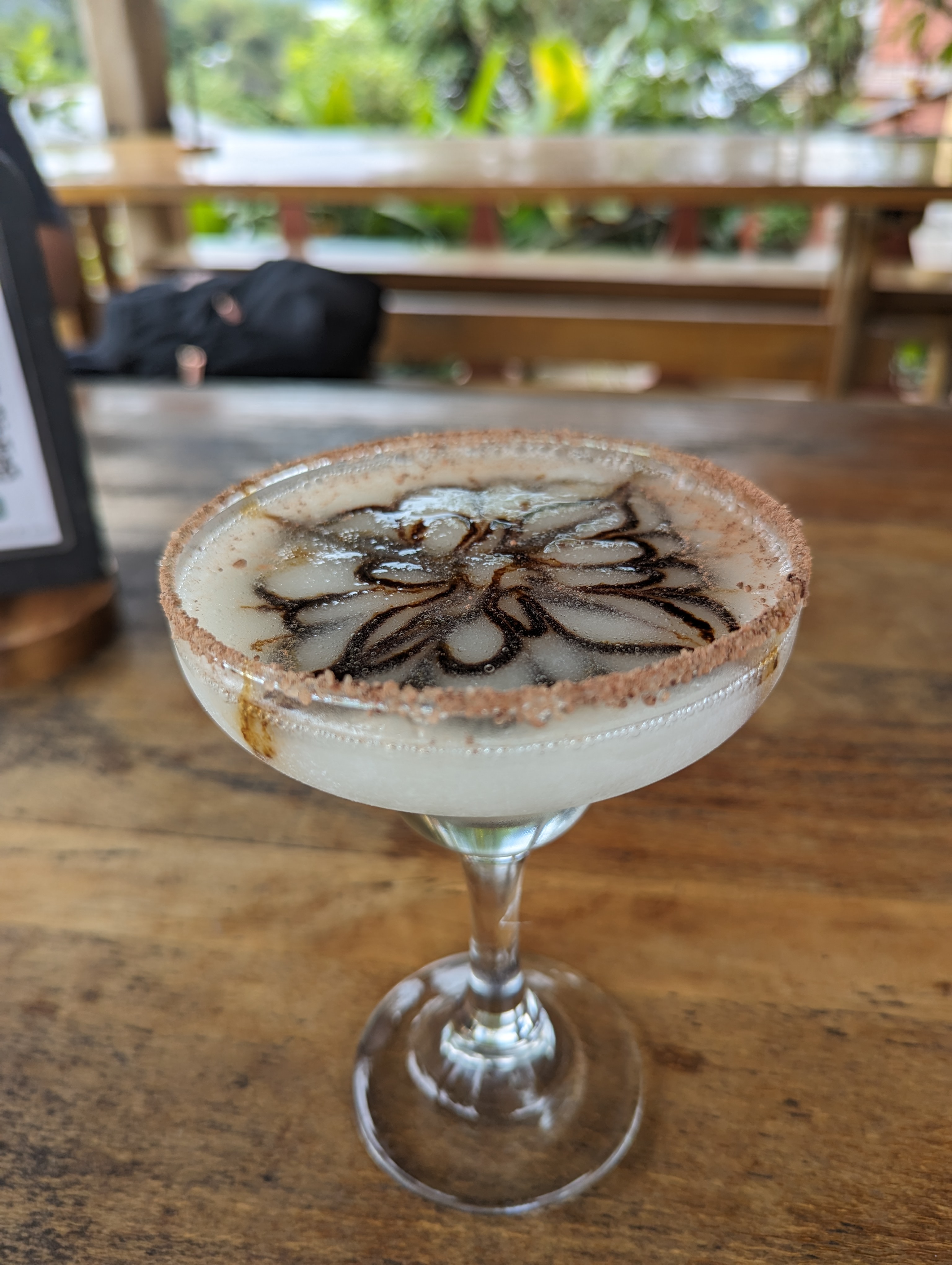
The cacao margarita was fresh (no syrup). We ate at Quetzal, which had amazing food.
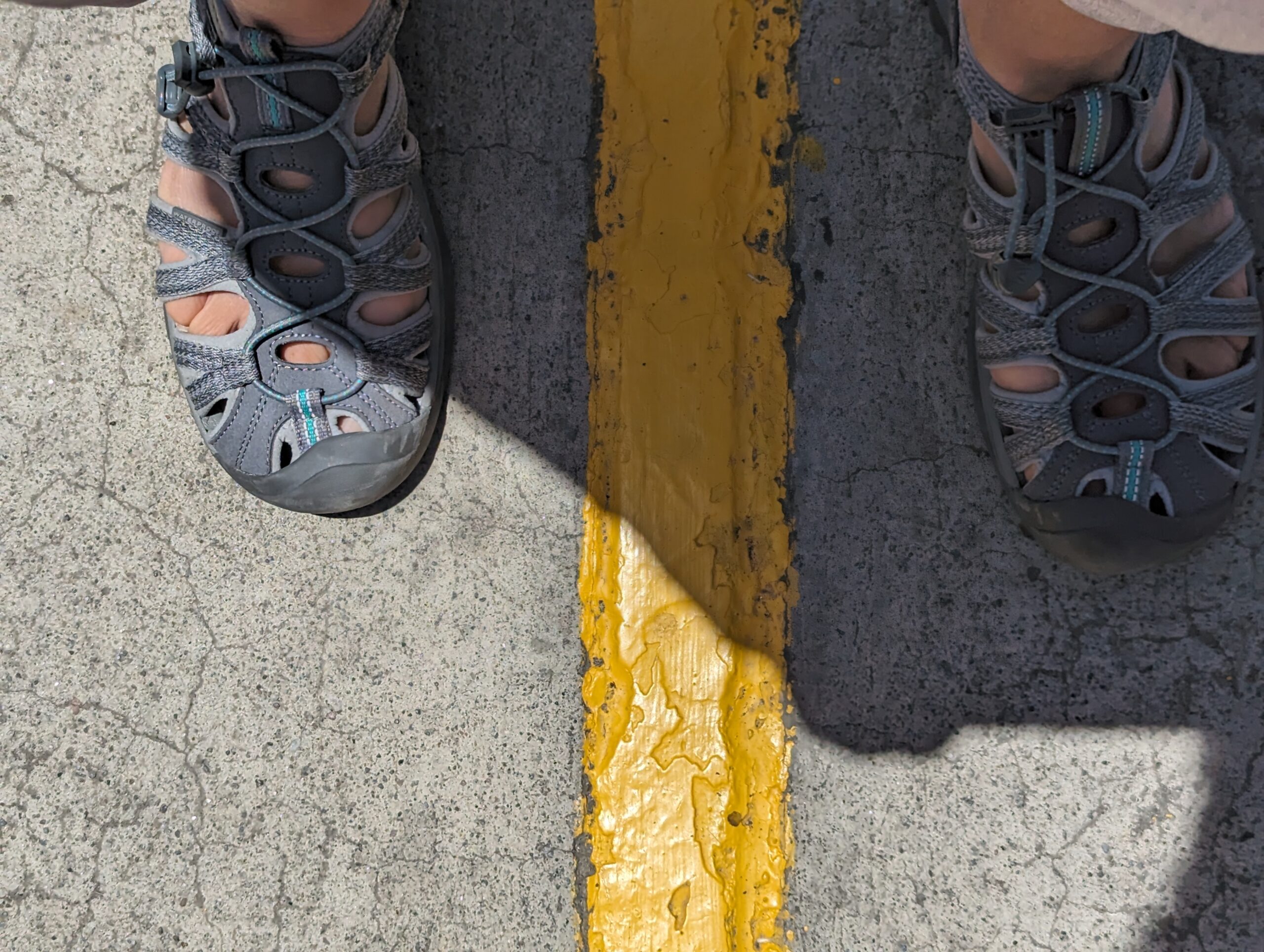
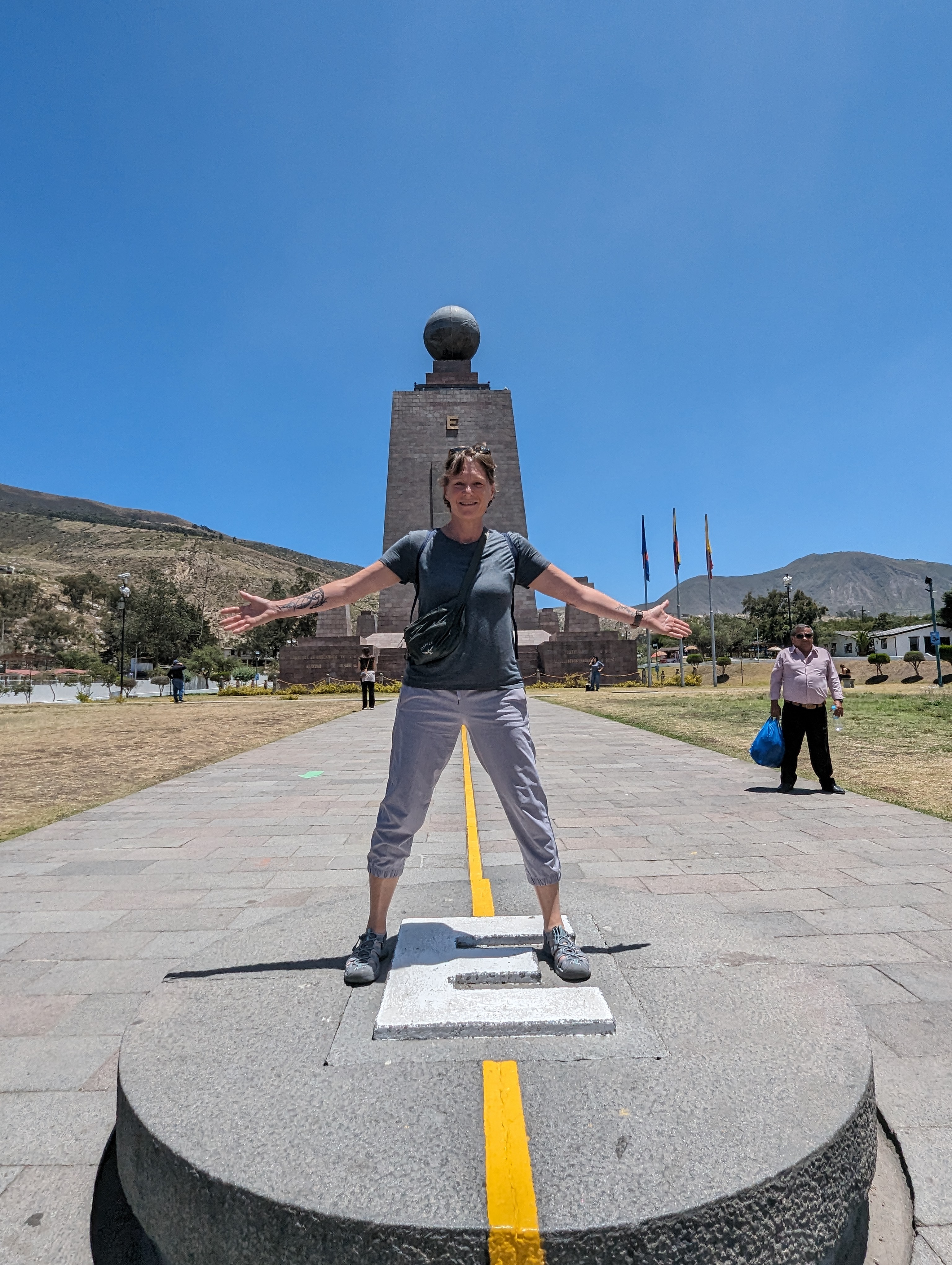
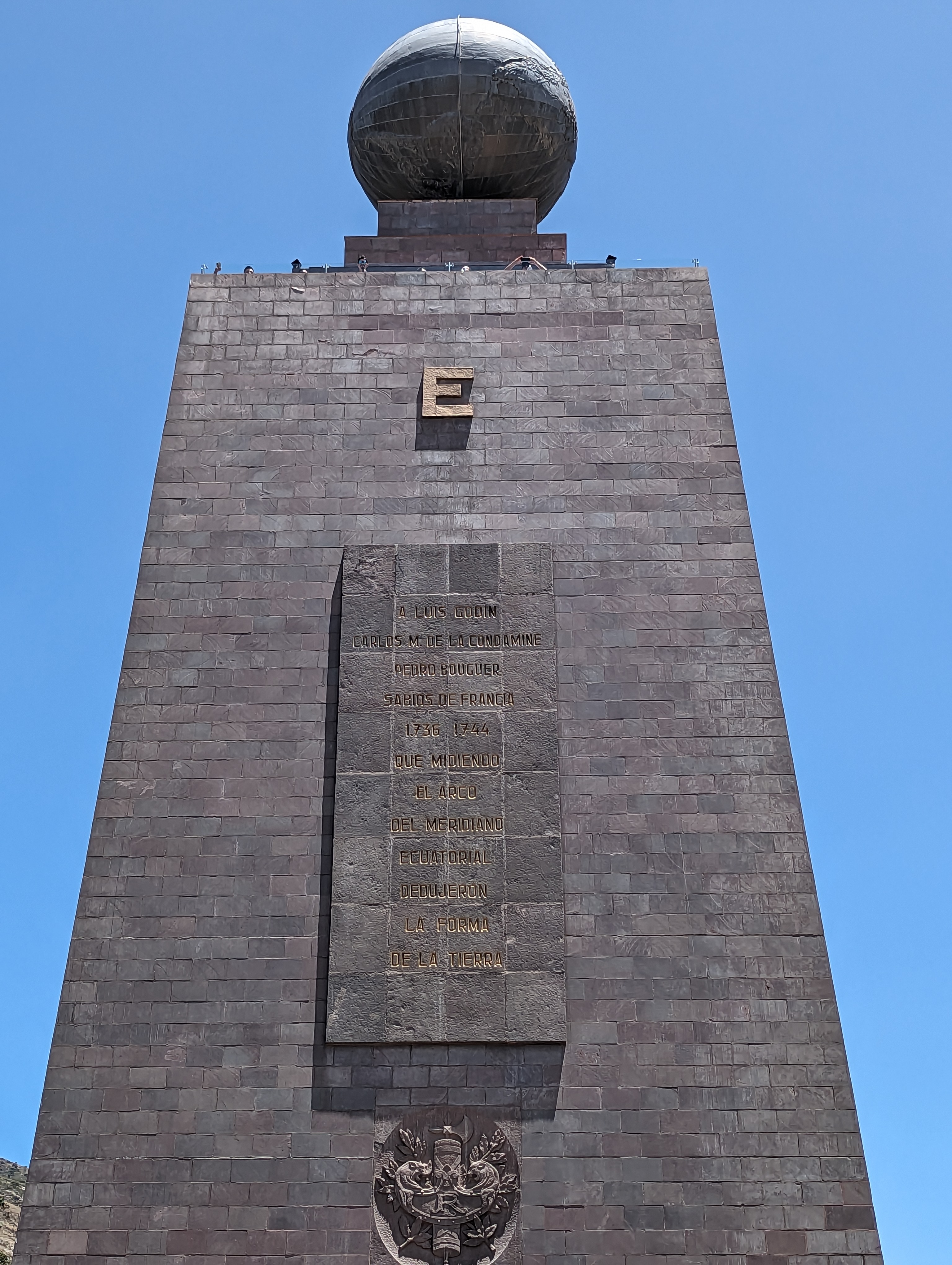
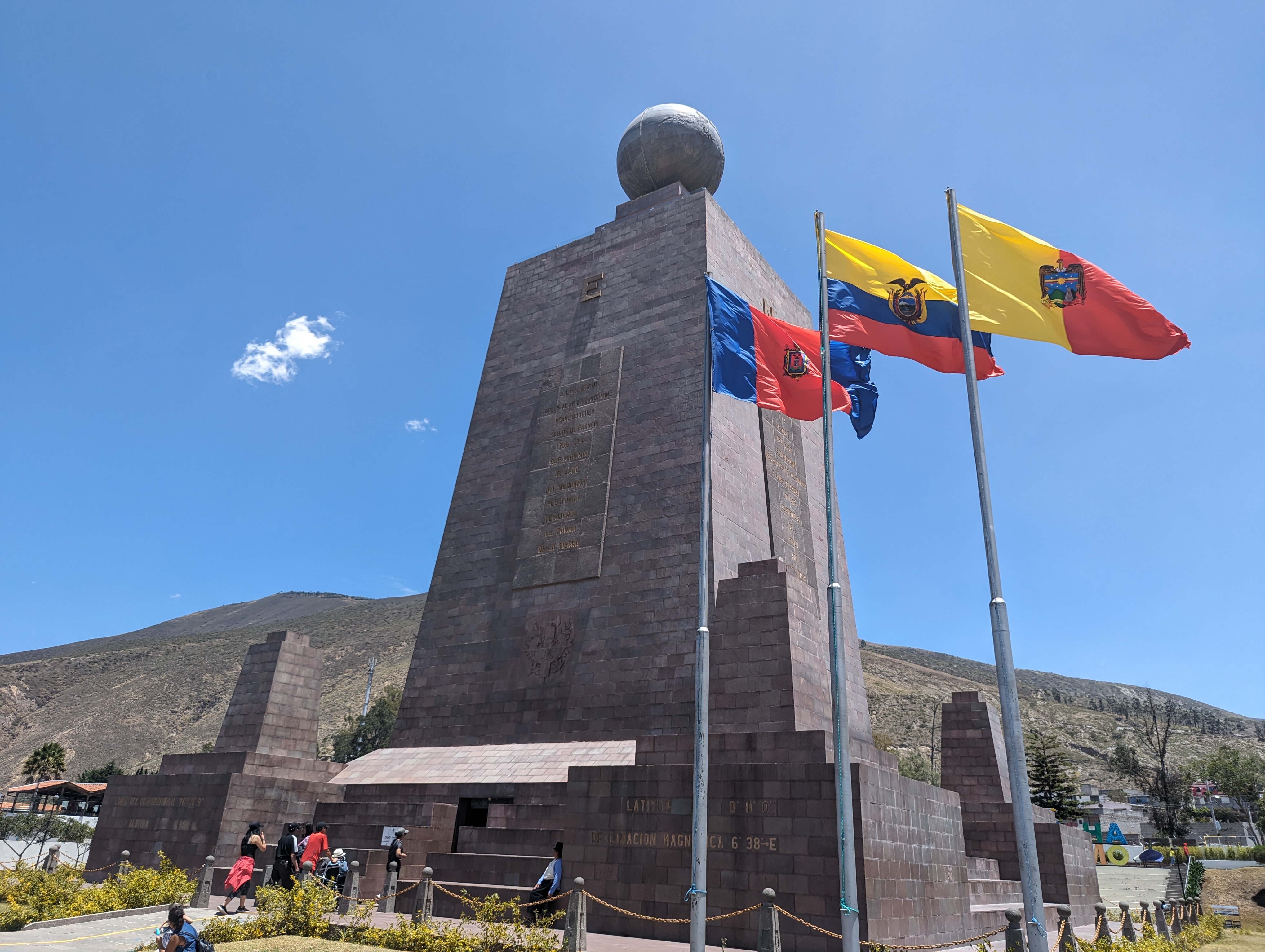
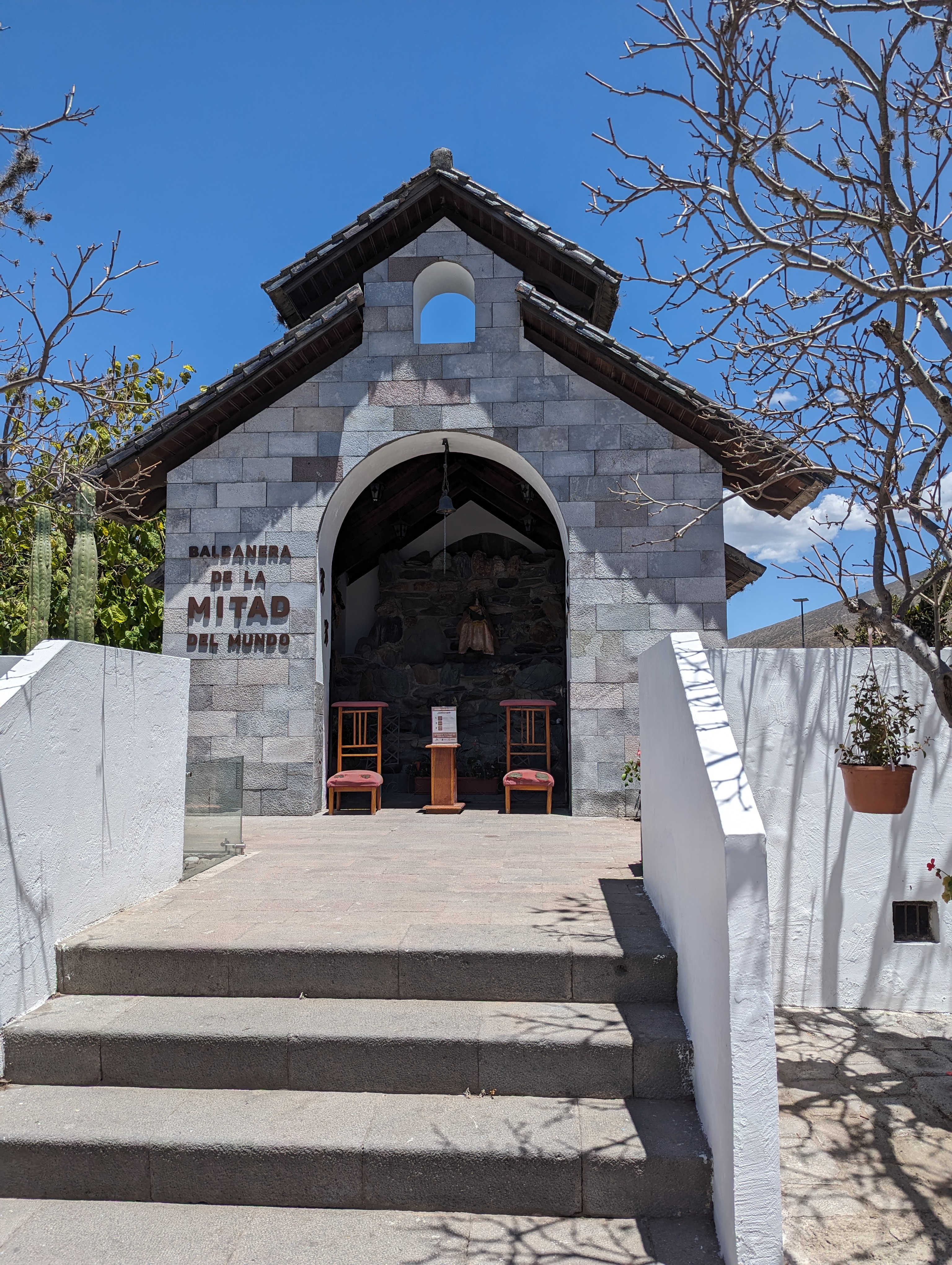
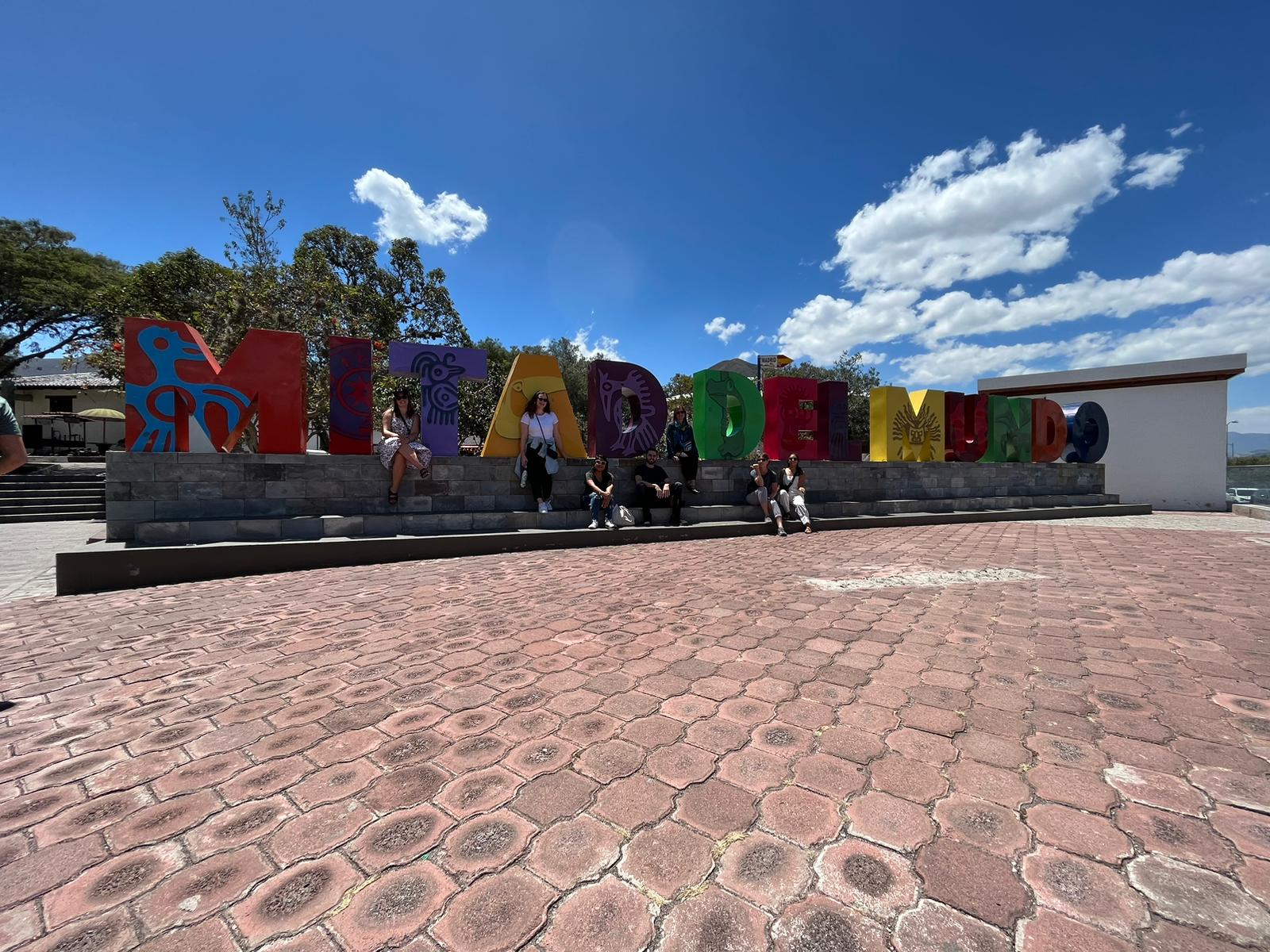
Such a beautiful weekend, a bunch of us decided to go to Mitad del Mundo. Well over 100 years ago explorers sought to find the middle of the world (or halfway between the poles) In 1932 a monument was erected in that spot. Unfortunately, now with GPS, we know they are off a little bit. But the site still stands and you can (technically) put your feet on each side of the equator.
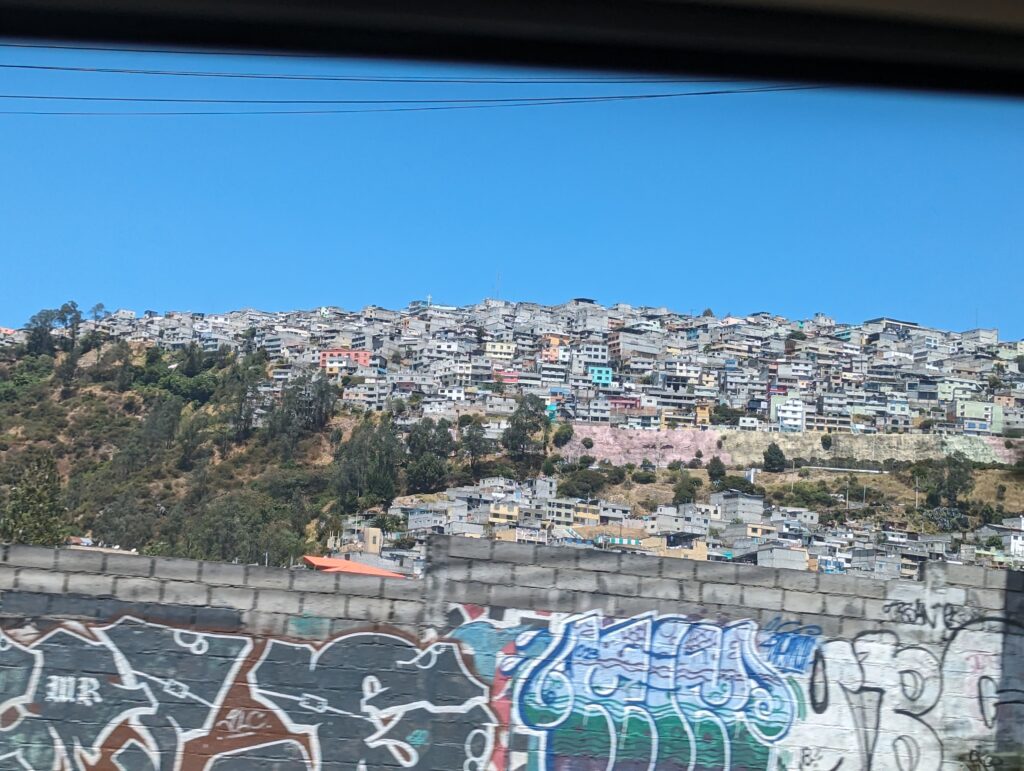
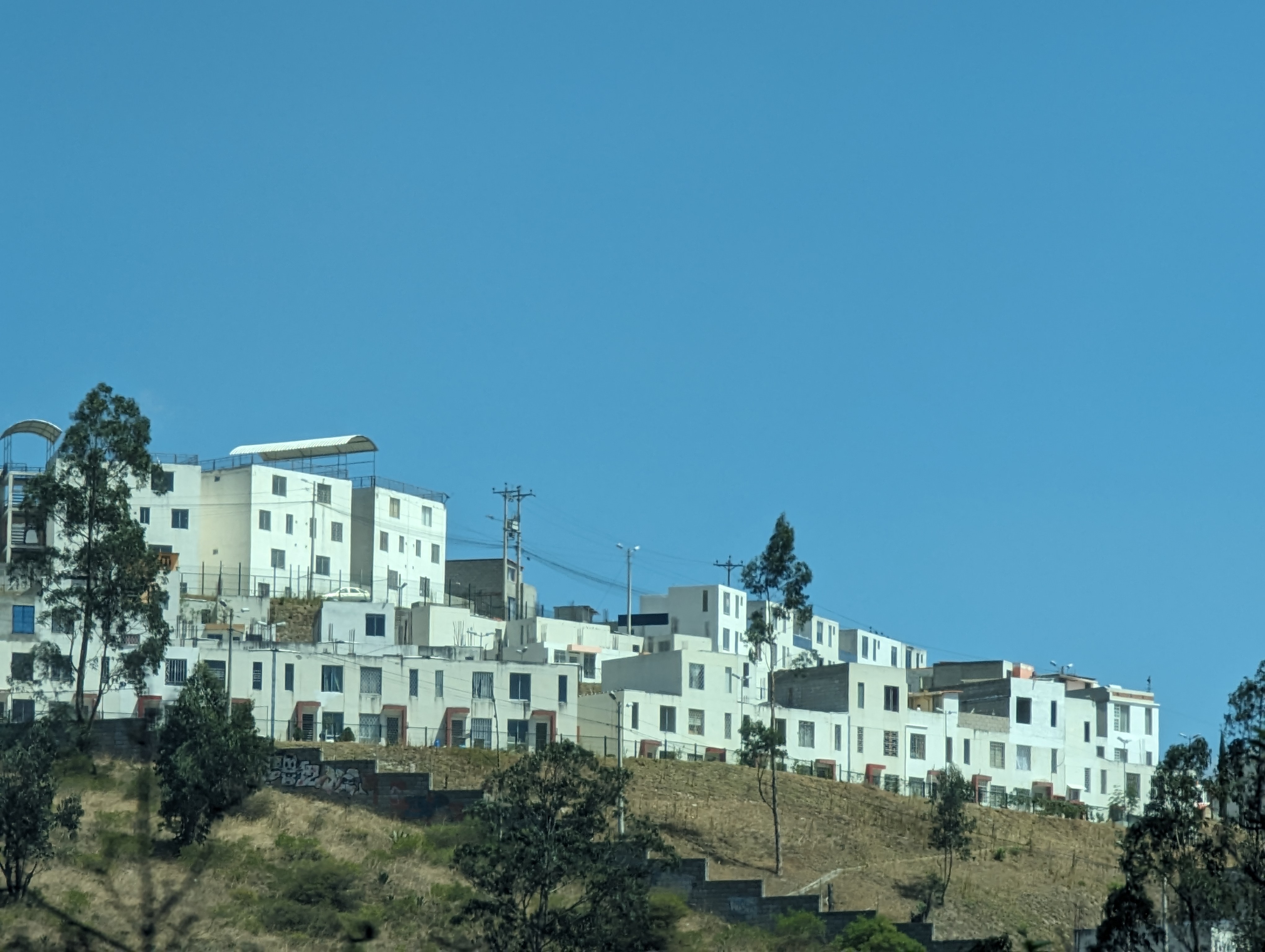
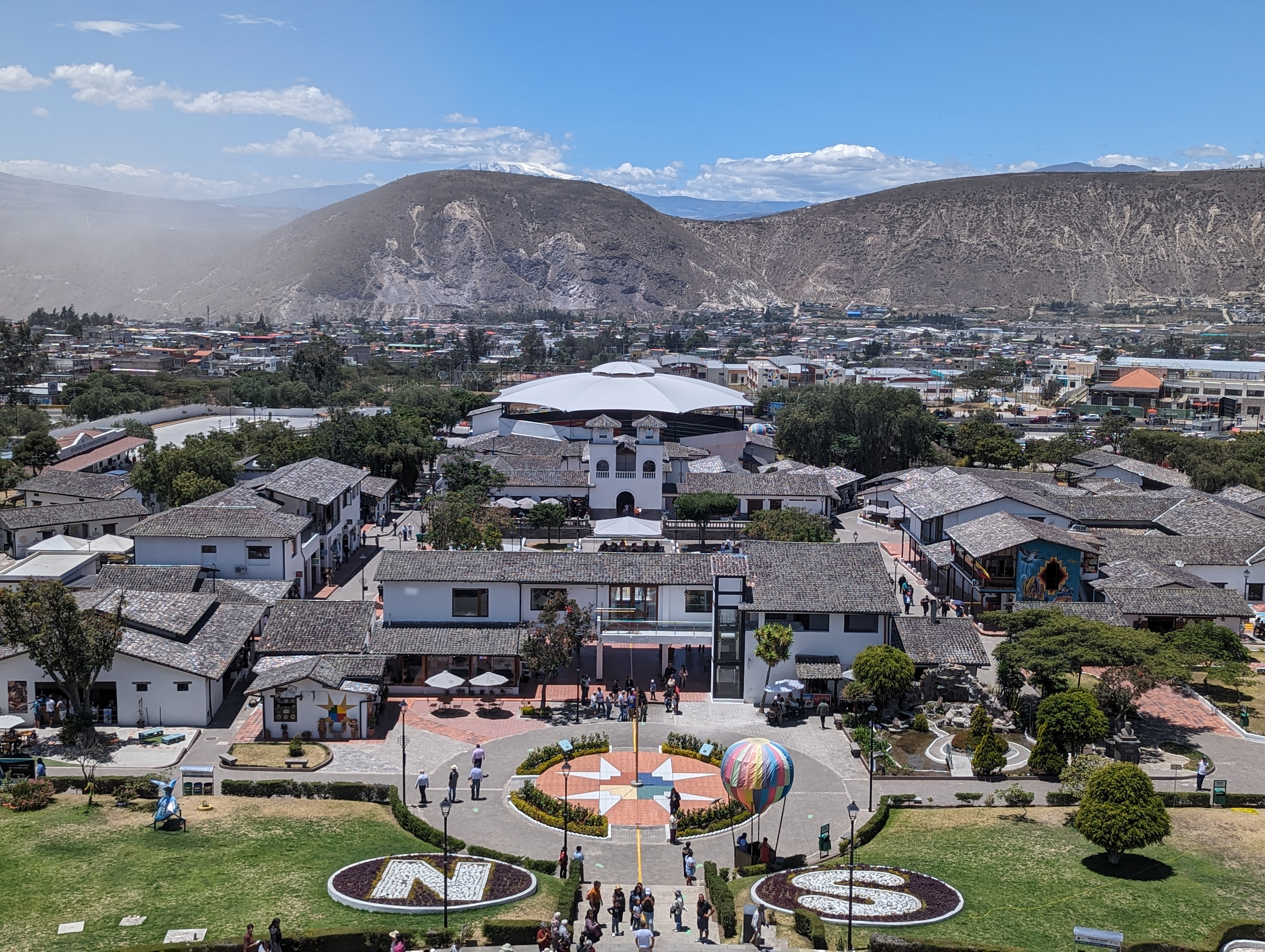
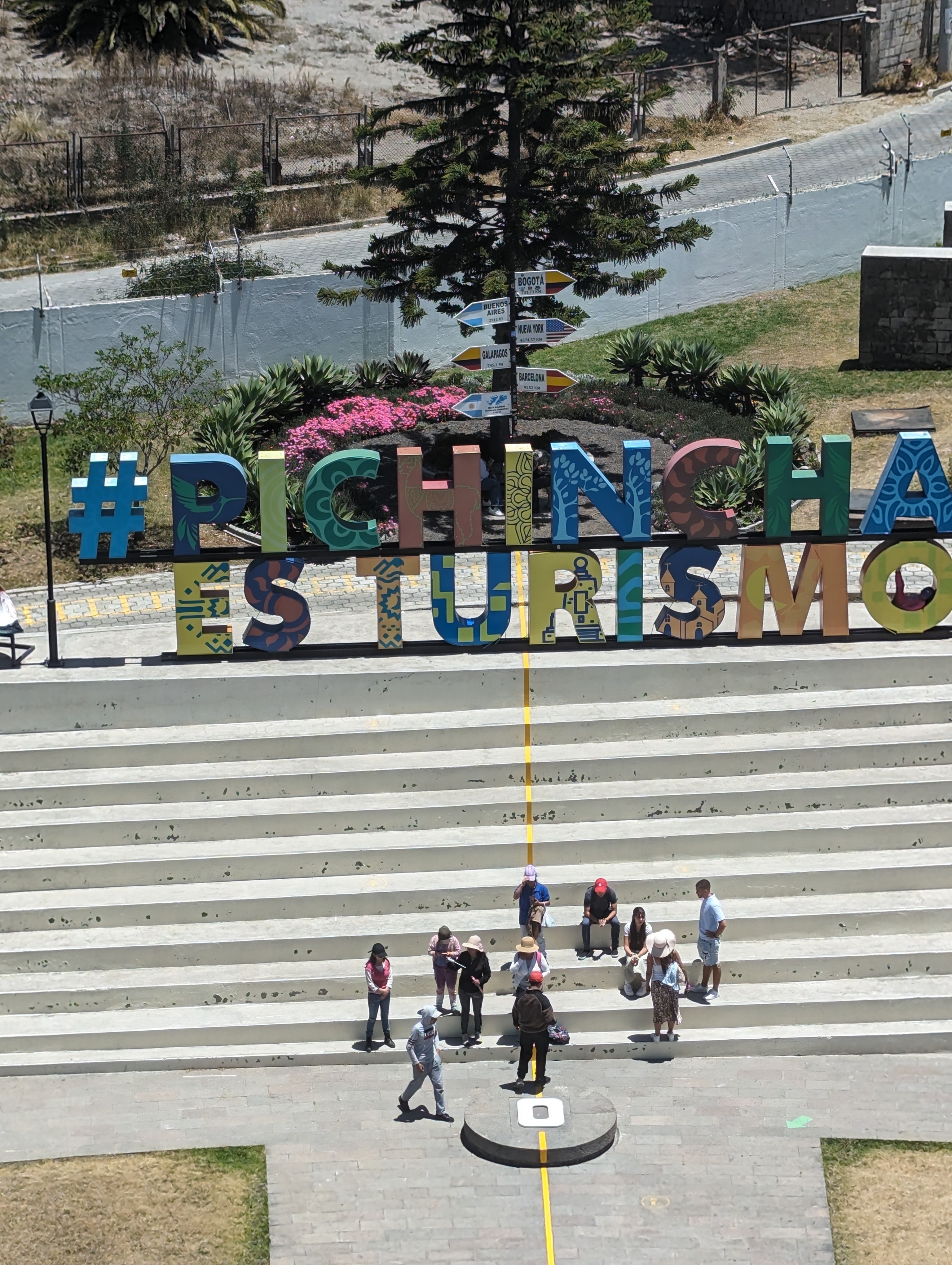
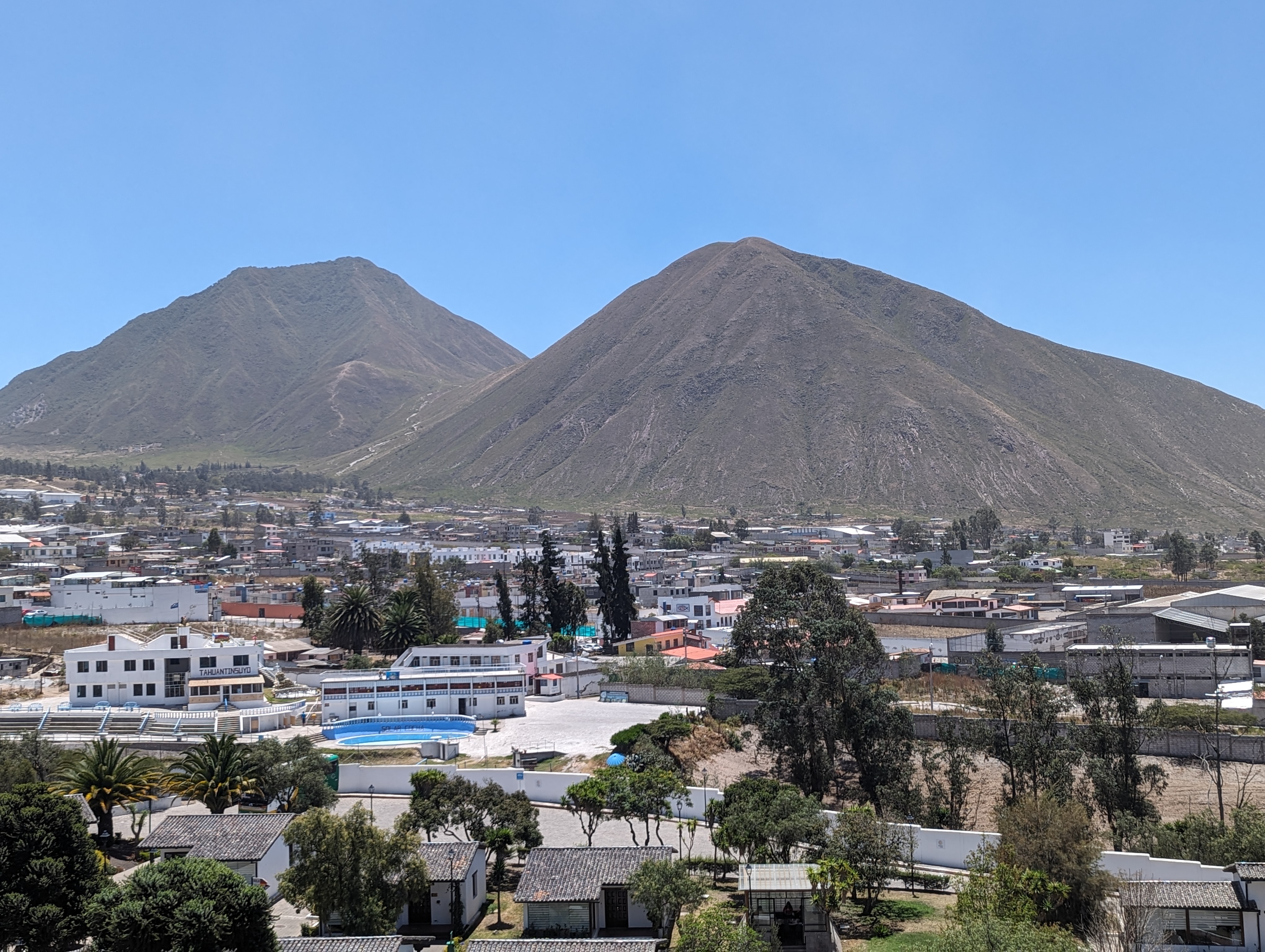
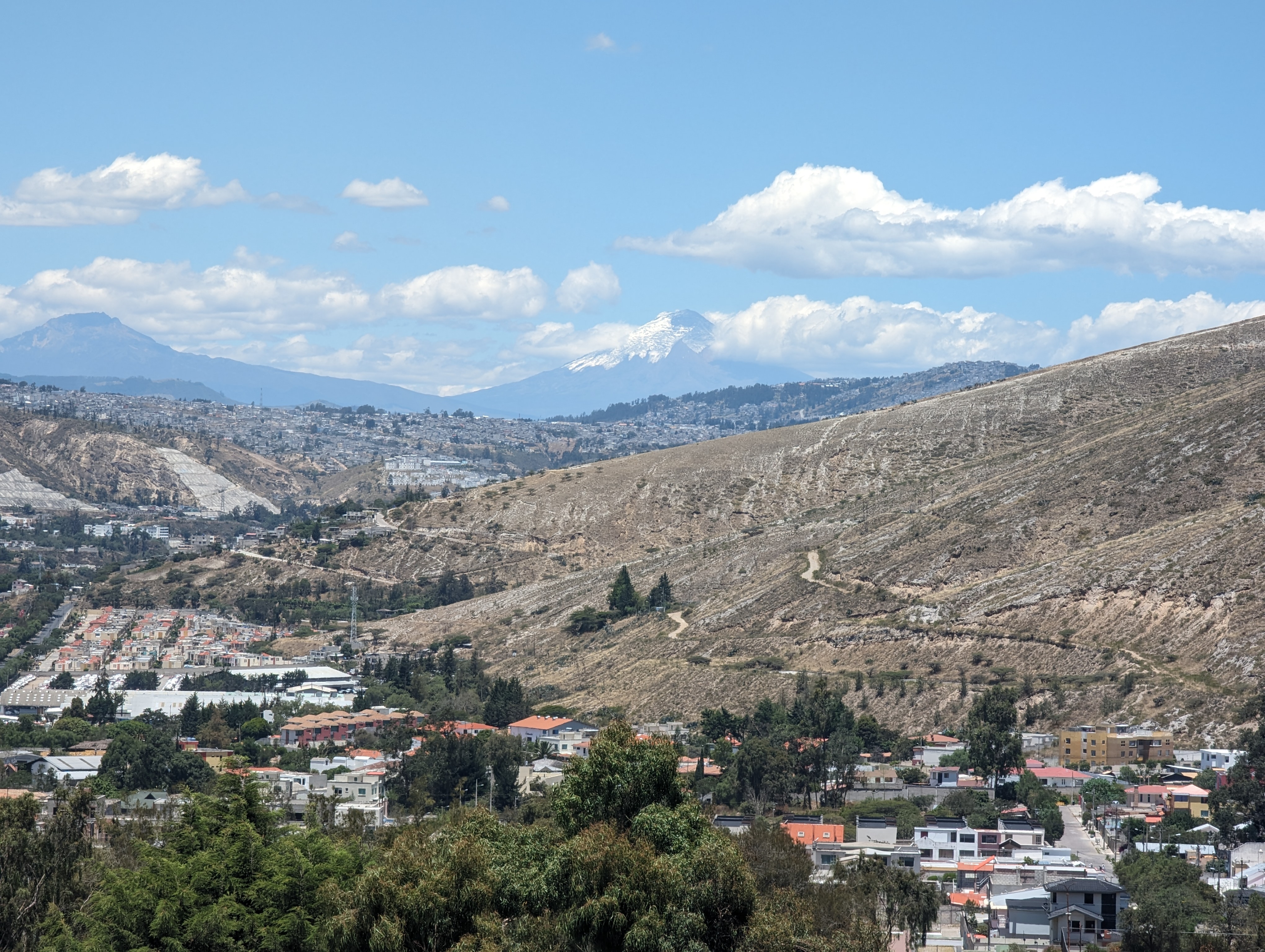
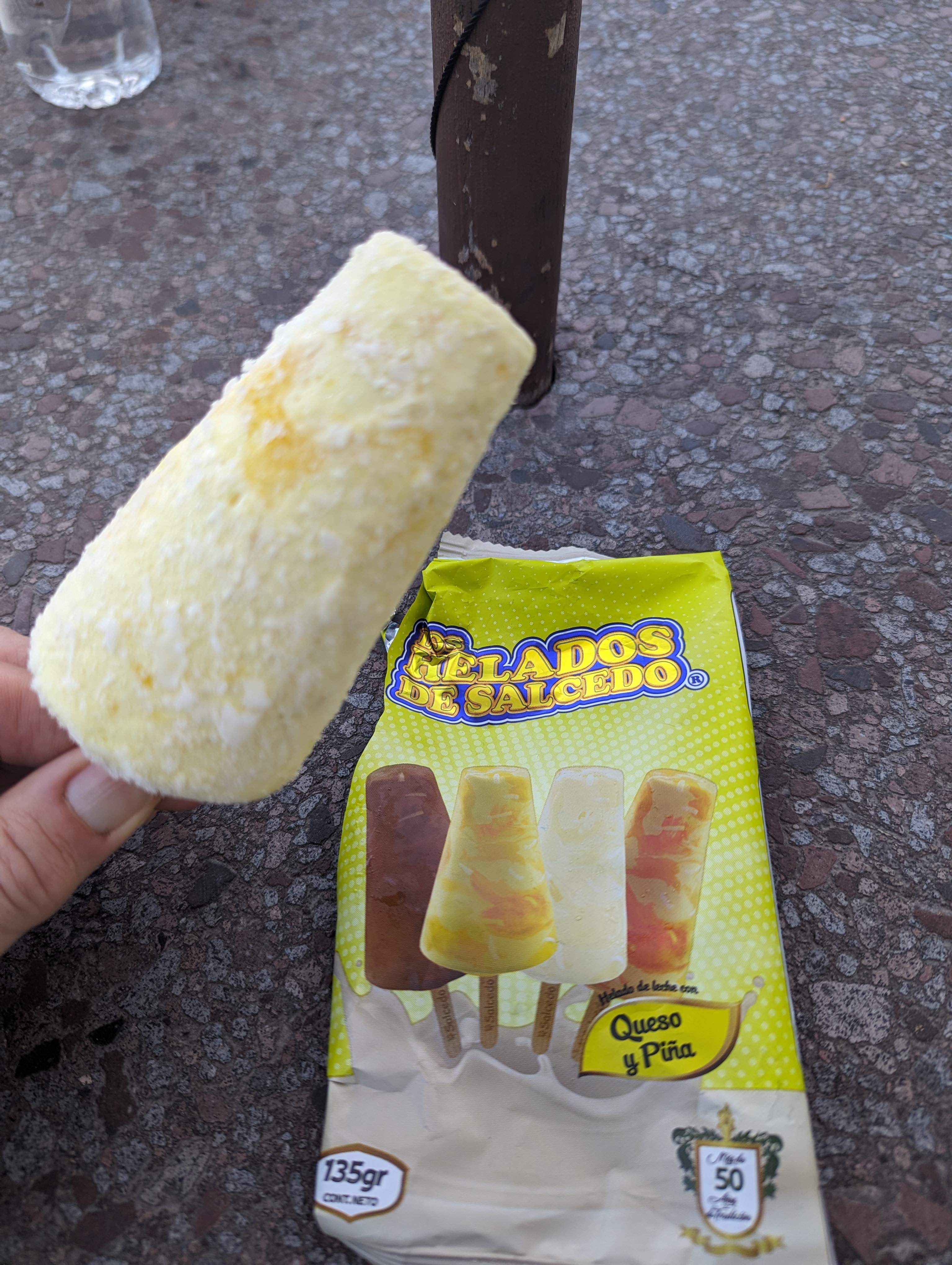
Different neighborhood on the way to the site.Another neighborhood.Standing on each side of the equator.I’m facing east with north being to the right of the picture and south to the left.Inside is a museum of history of Ecuador and a great view from the top.A view down where we were just standing.This is the west side. the O stands for Oeste which means west in Spanish.View from the top.In the distance you can see a snow capped mountain near the middle of the picture and surrounded by clouds. That is the Cotopaxi volcano and is south.I will try many different flavors of ice cream. This is cheese and pineapple. It tasted more like pineapple but with the saltiness and texture of cheese in it.
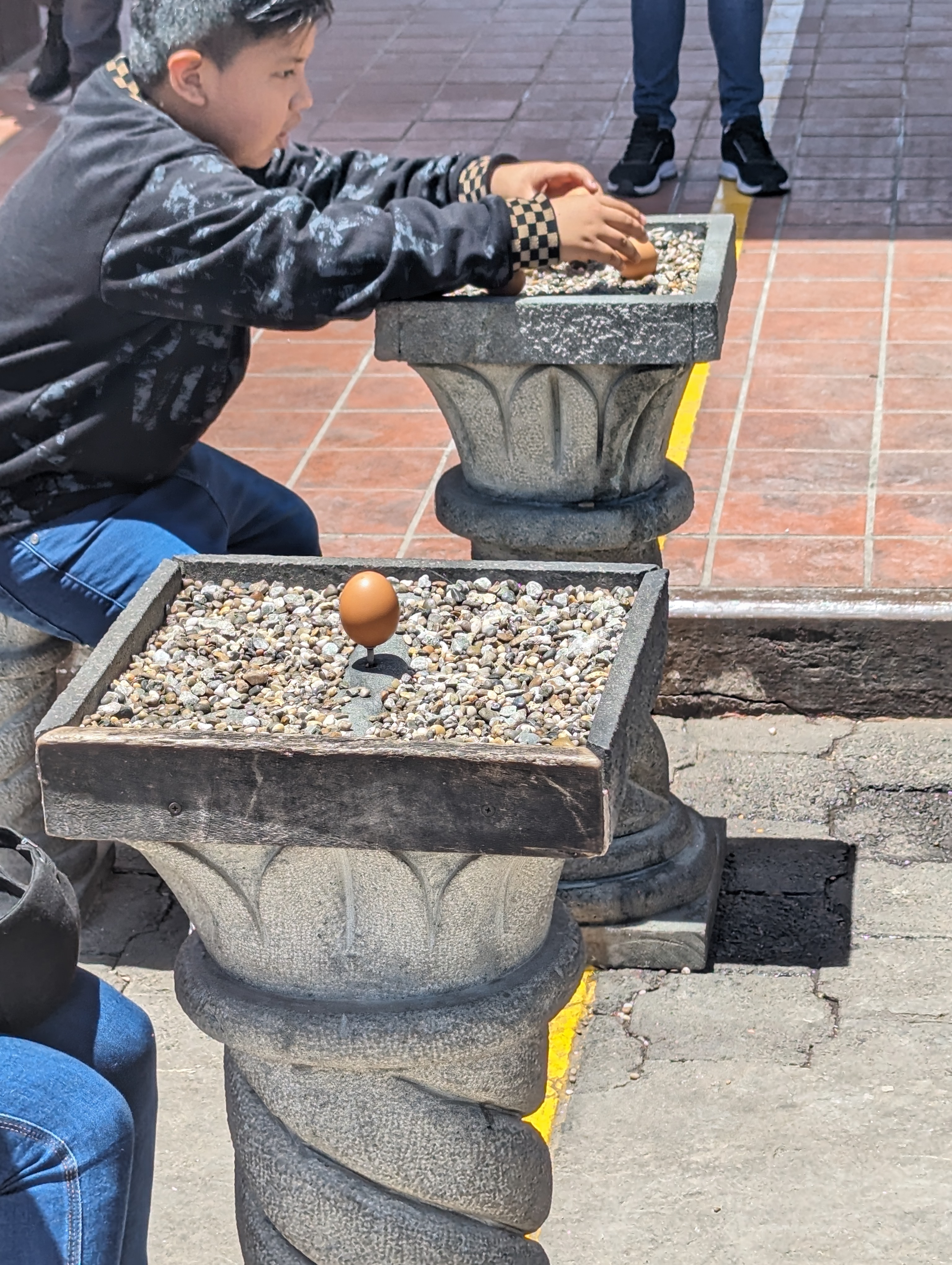
Technically you are supposed to balance an egg on a nail at the equator. This is really said to be only true in spring and fall. However, this is not true. You can balance an egg like this anytime, anywhere if you are patient enough. But it is fun to try and keeps the kids entertained.
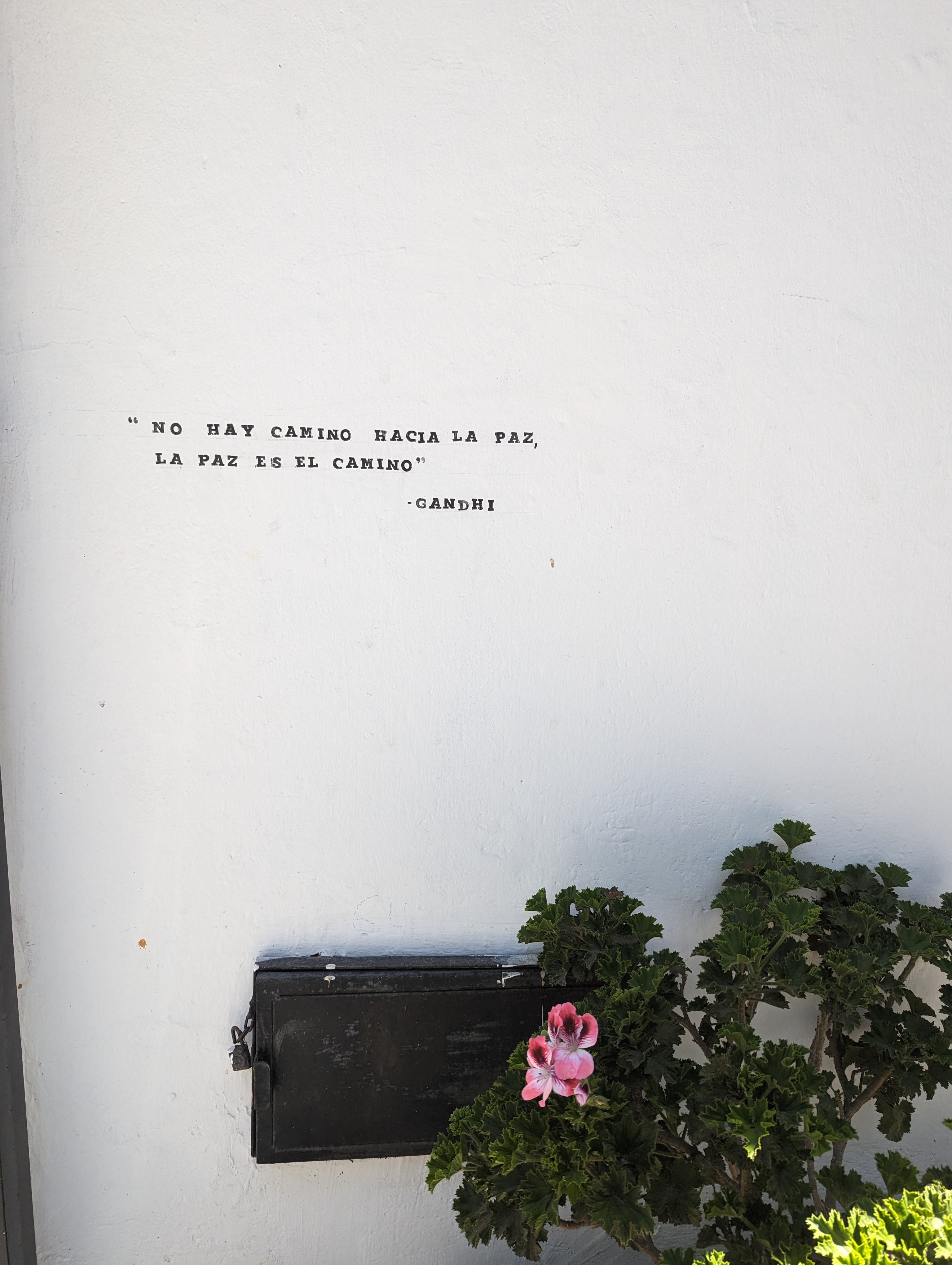
The monument along the equator.There is no path to peace, peace is the path.
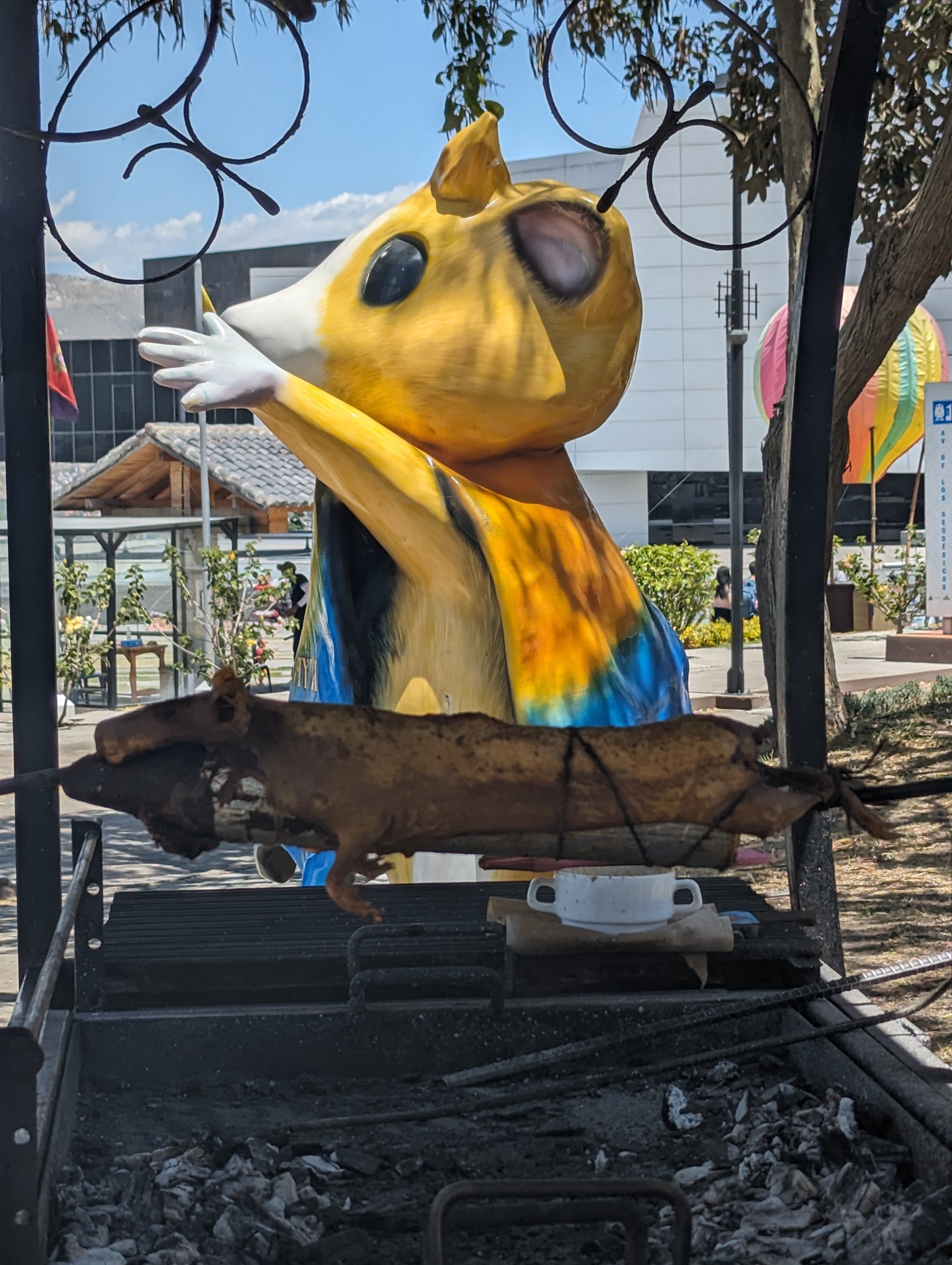
Not sure why they have a guinea pig on the spit here but it is an Ecuadorian custom and delicacy. There is a sign saying not to take it off the spit. That is actually one really big guinea pig.
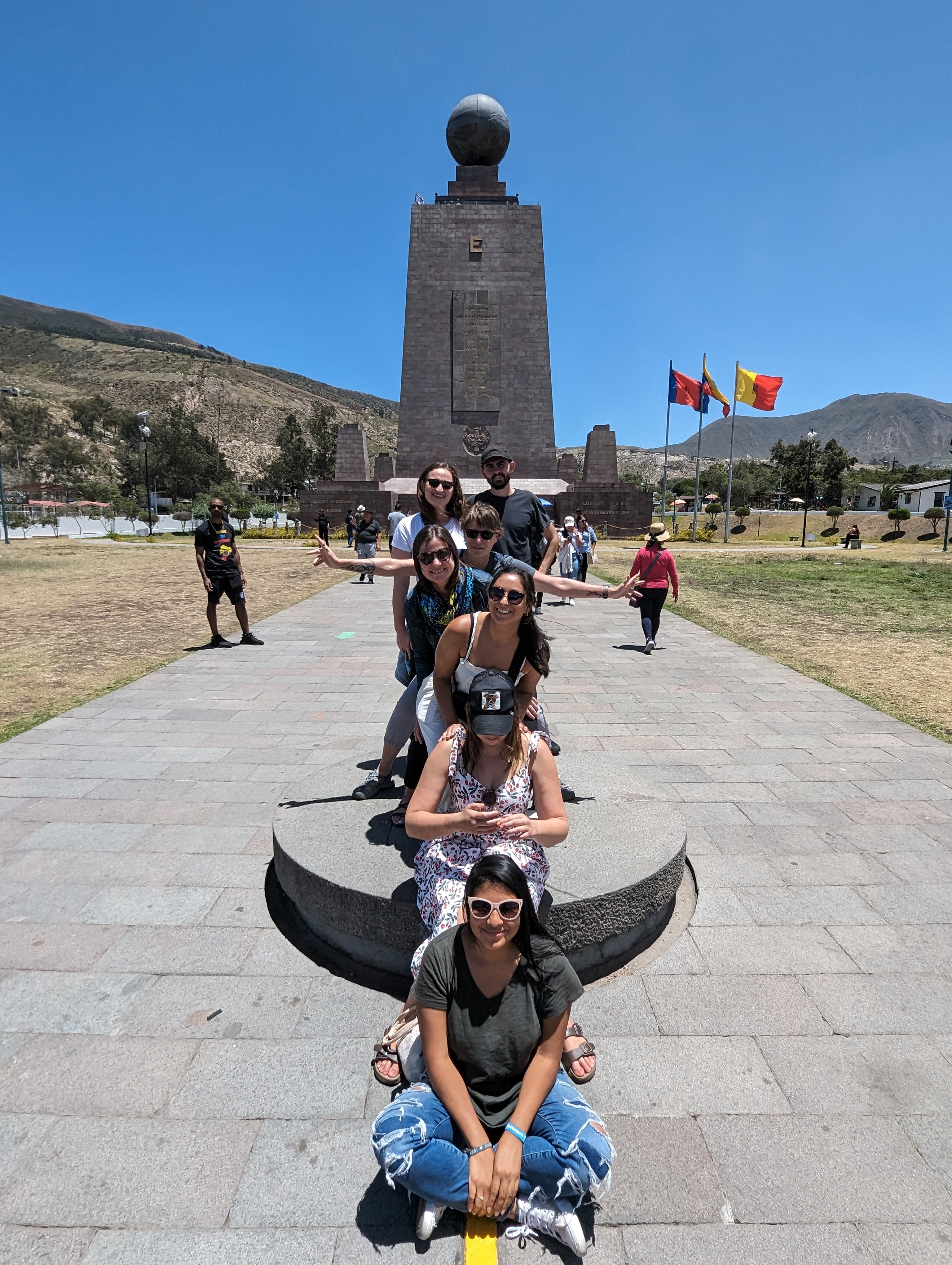
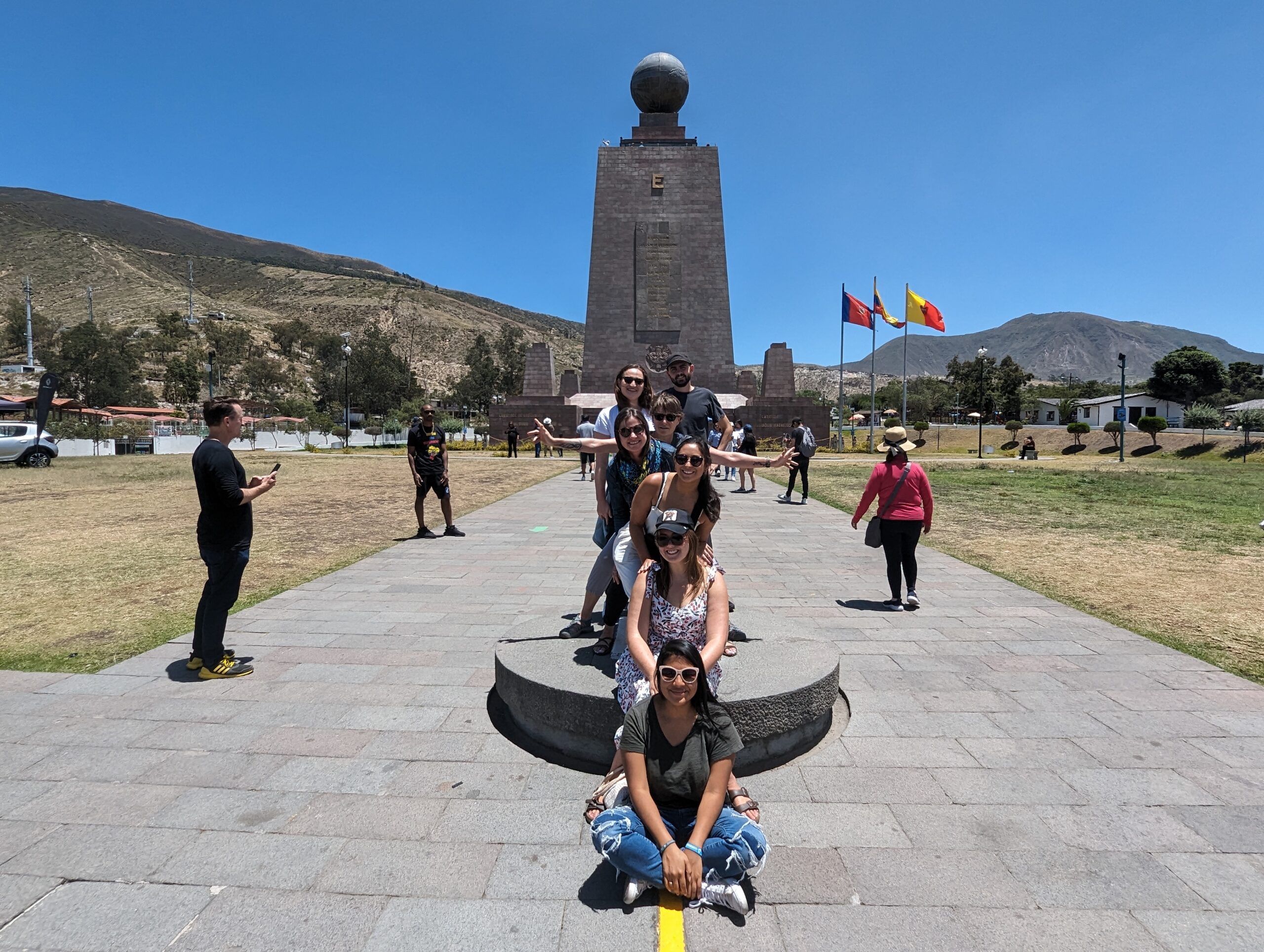
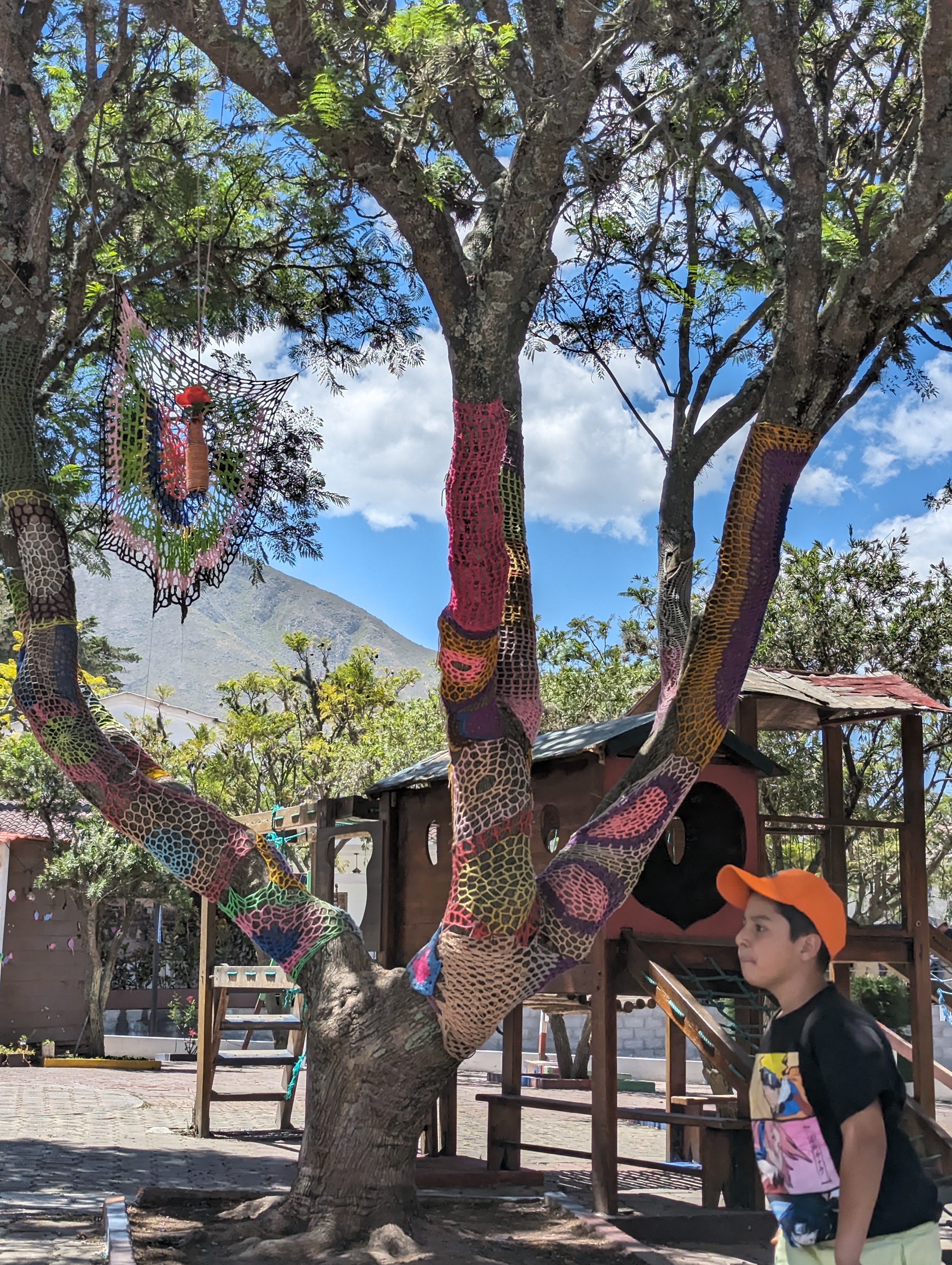
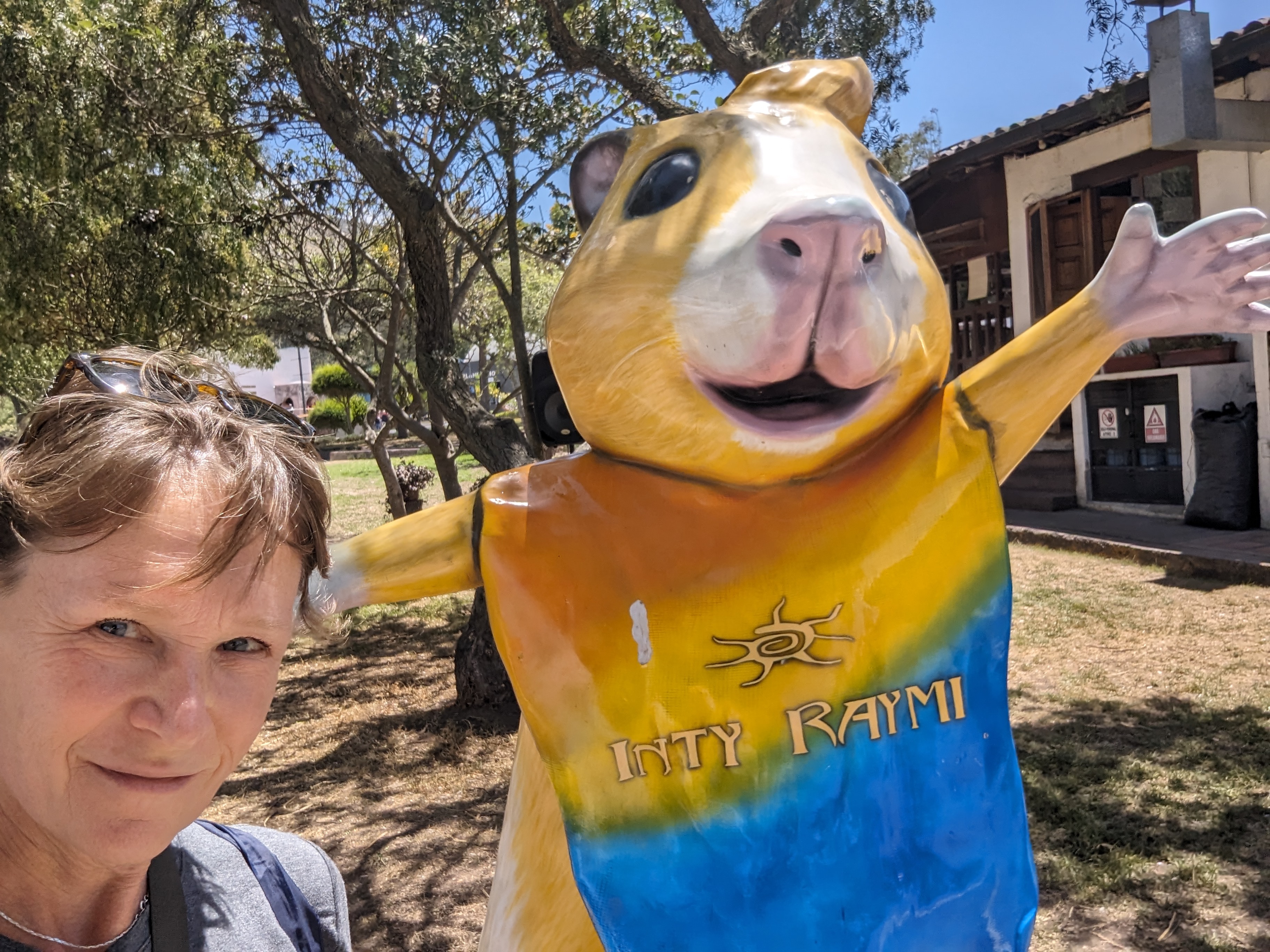
Crochet art on the tree.A little cathedral.That is a big guinea pig!I still don’t feel guilty I ate the guinea pig.Difficult to see but we are all sitting along the sign.
What I love about working overseas is the wonderful people you meet. Even on tours you meet amazing people and get to know about one another.
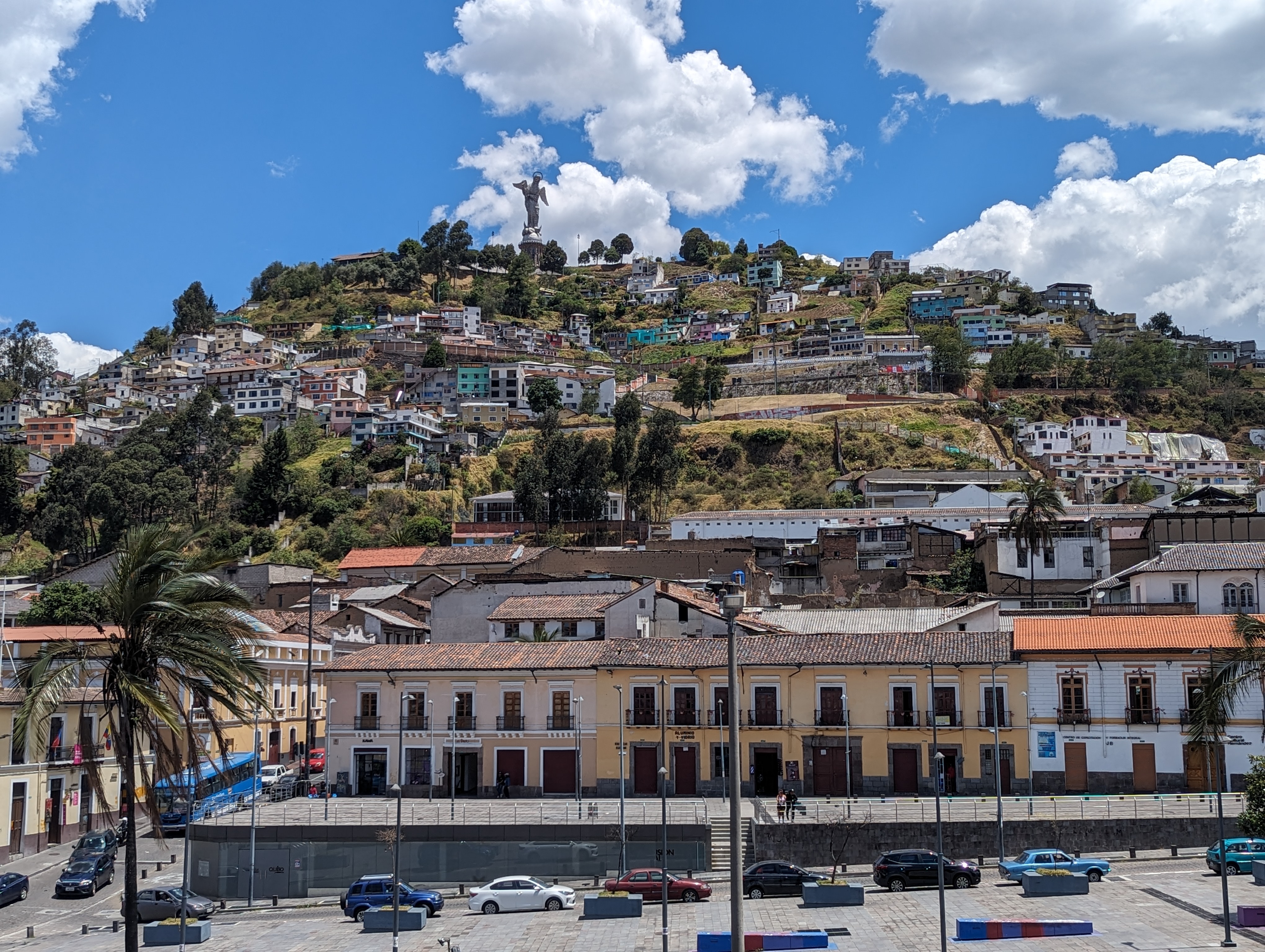
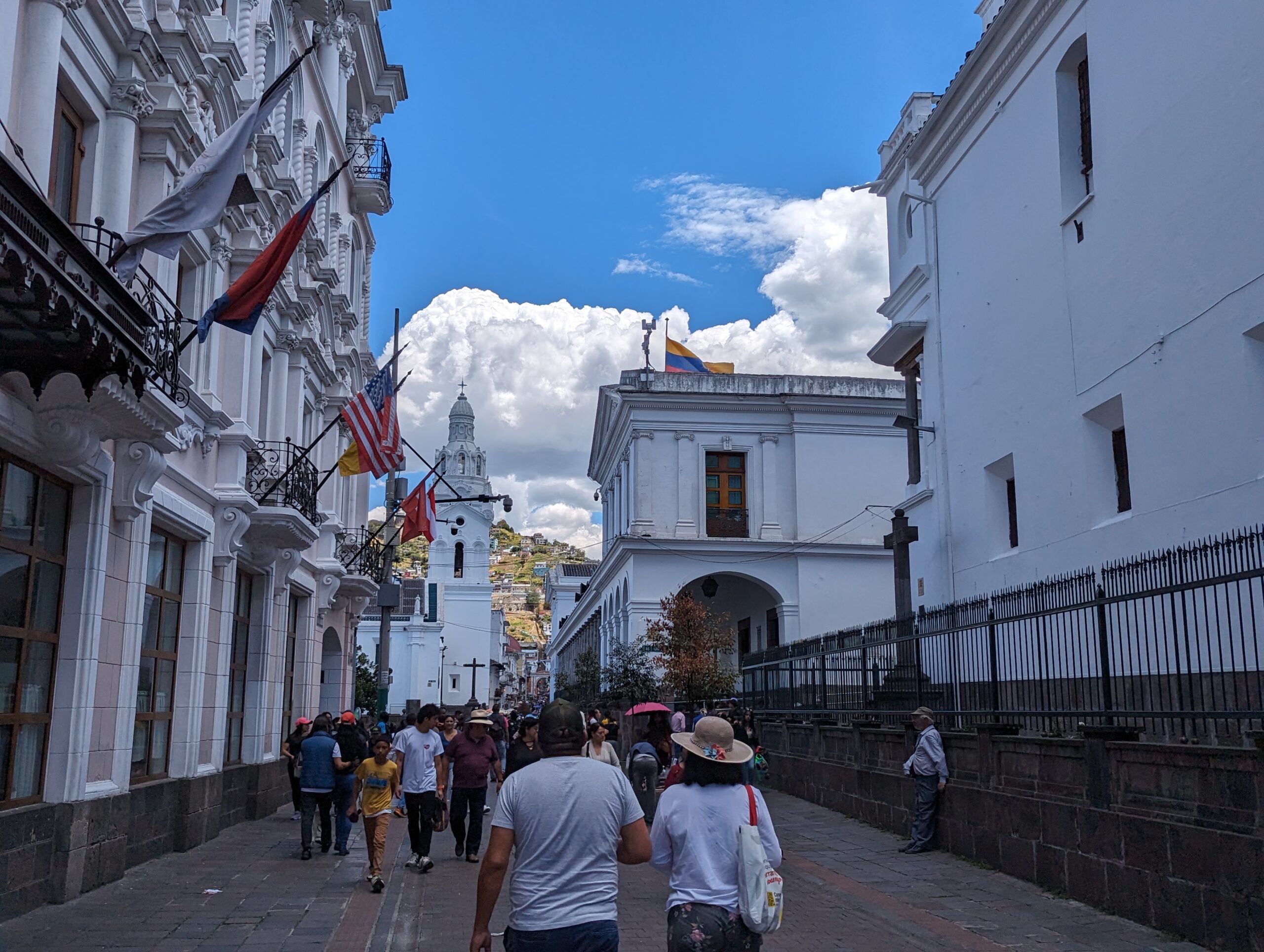
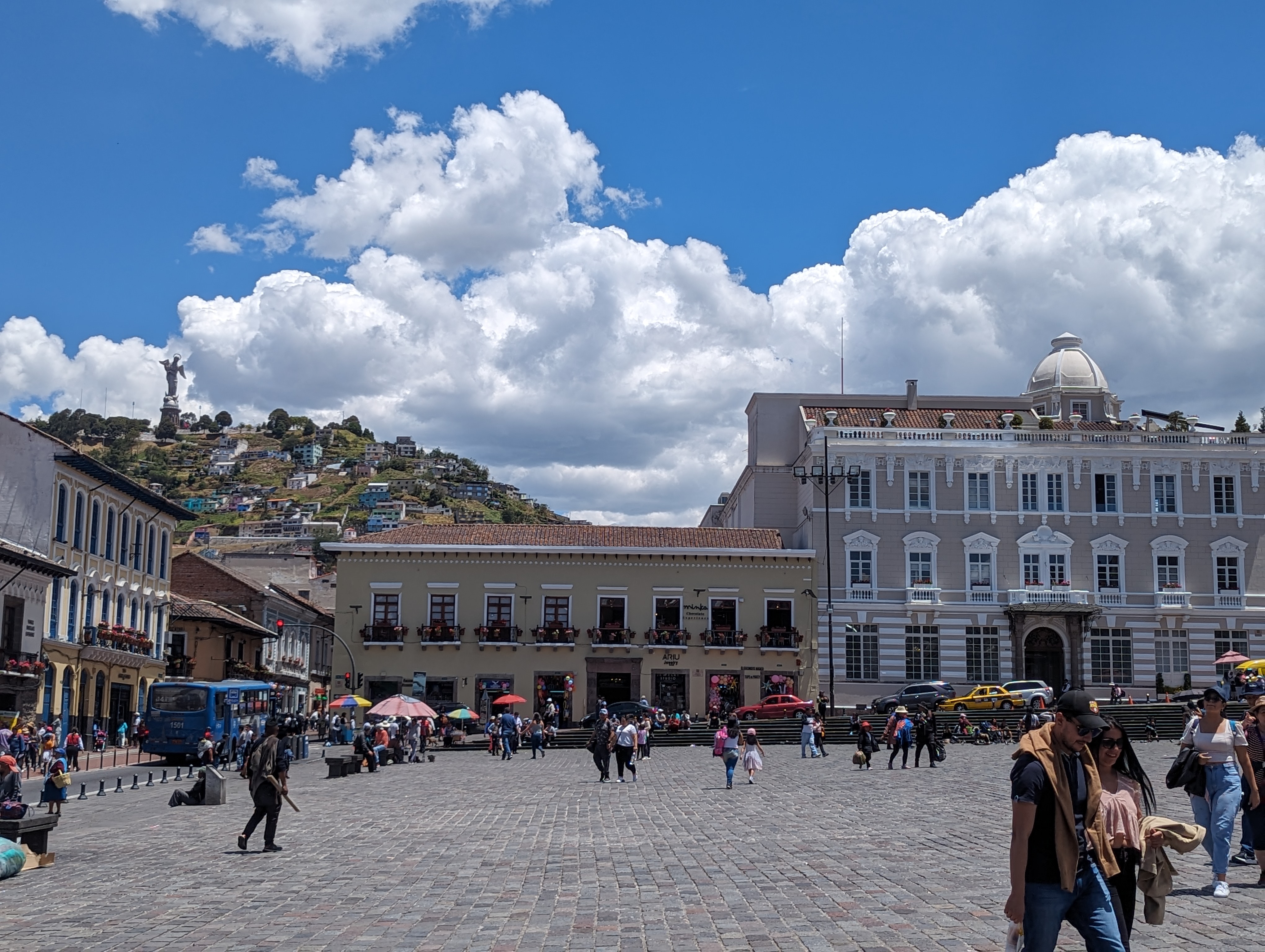
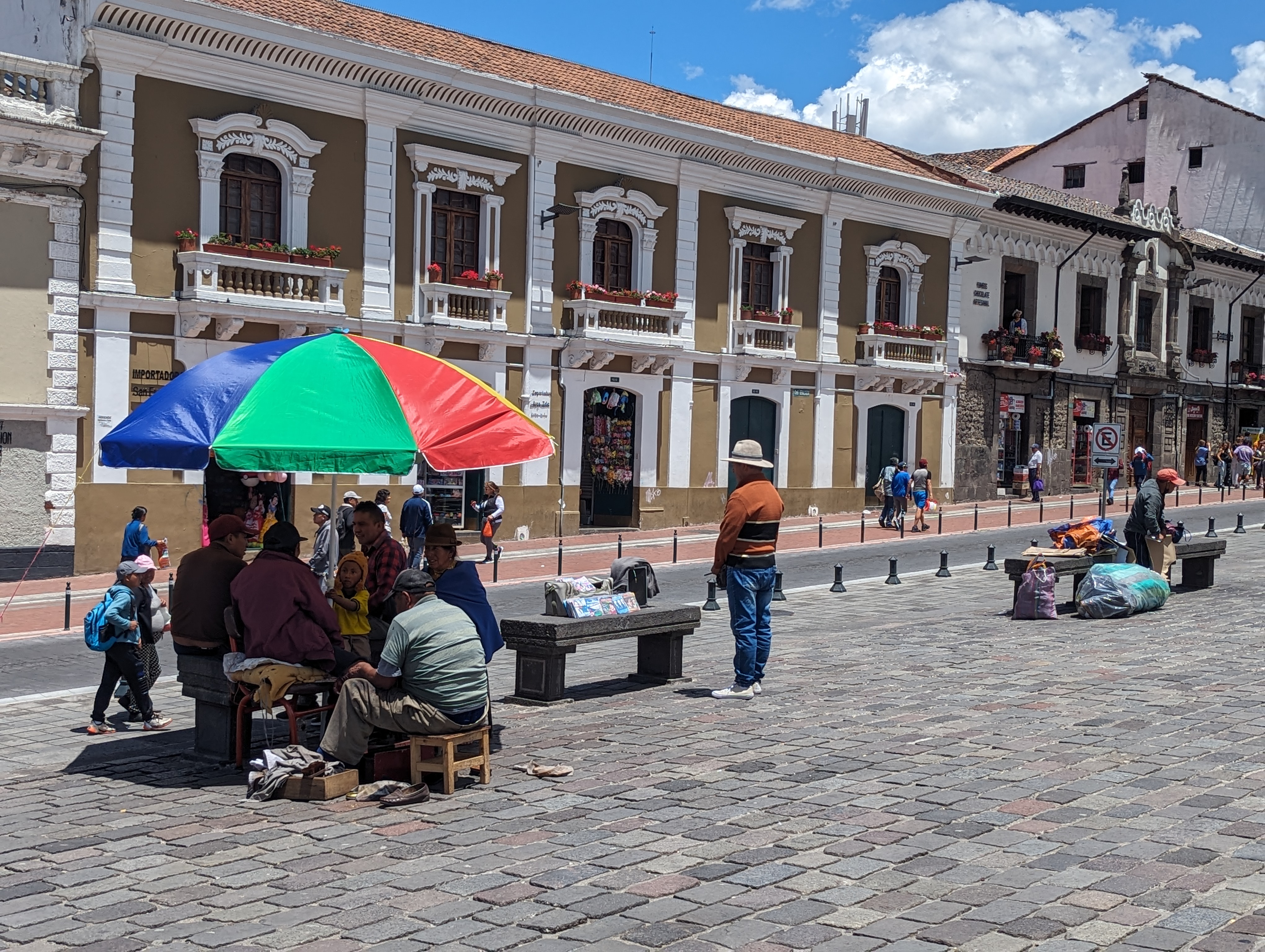
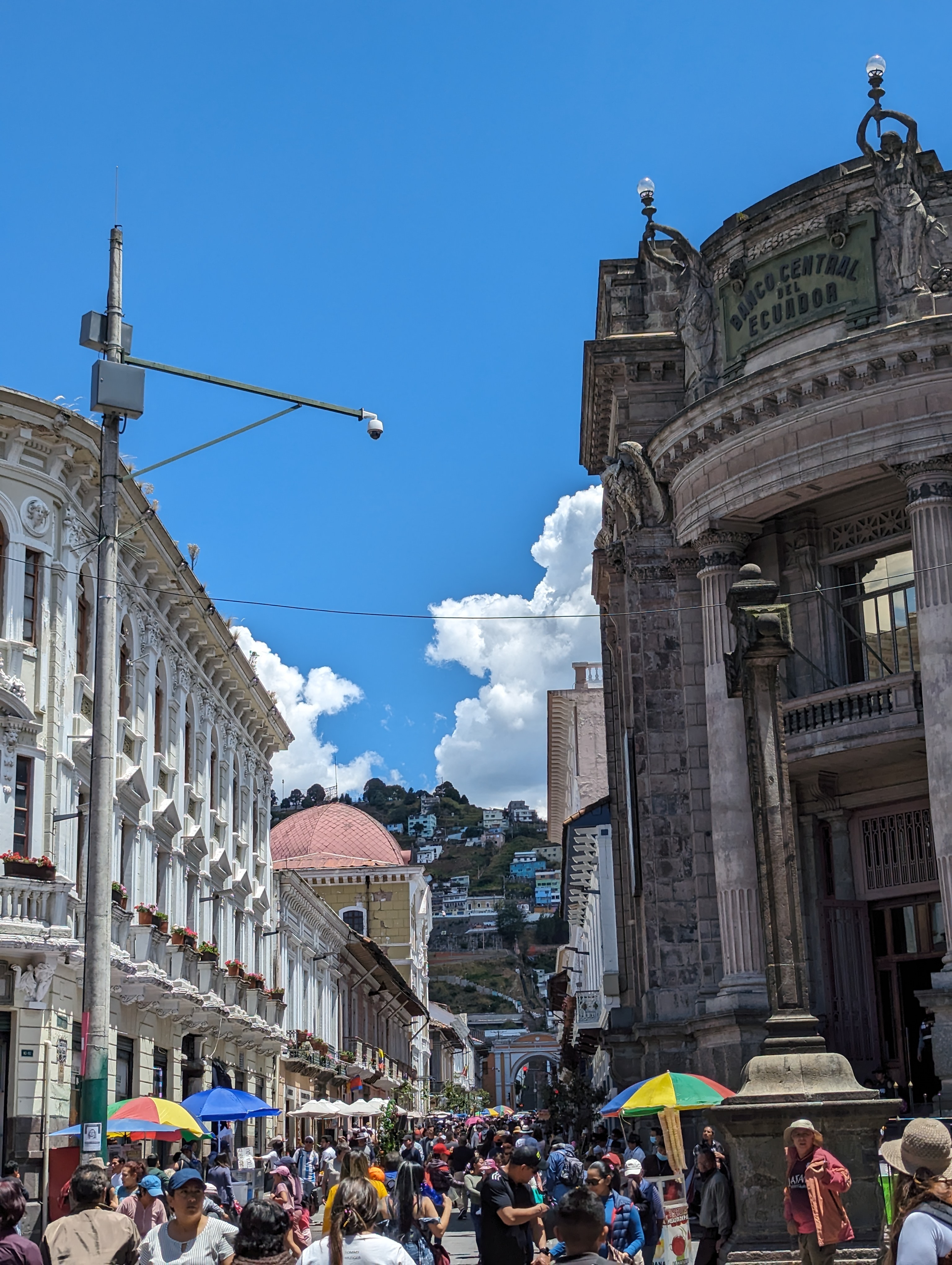
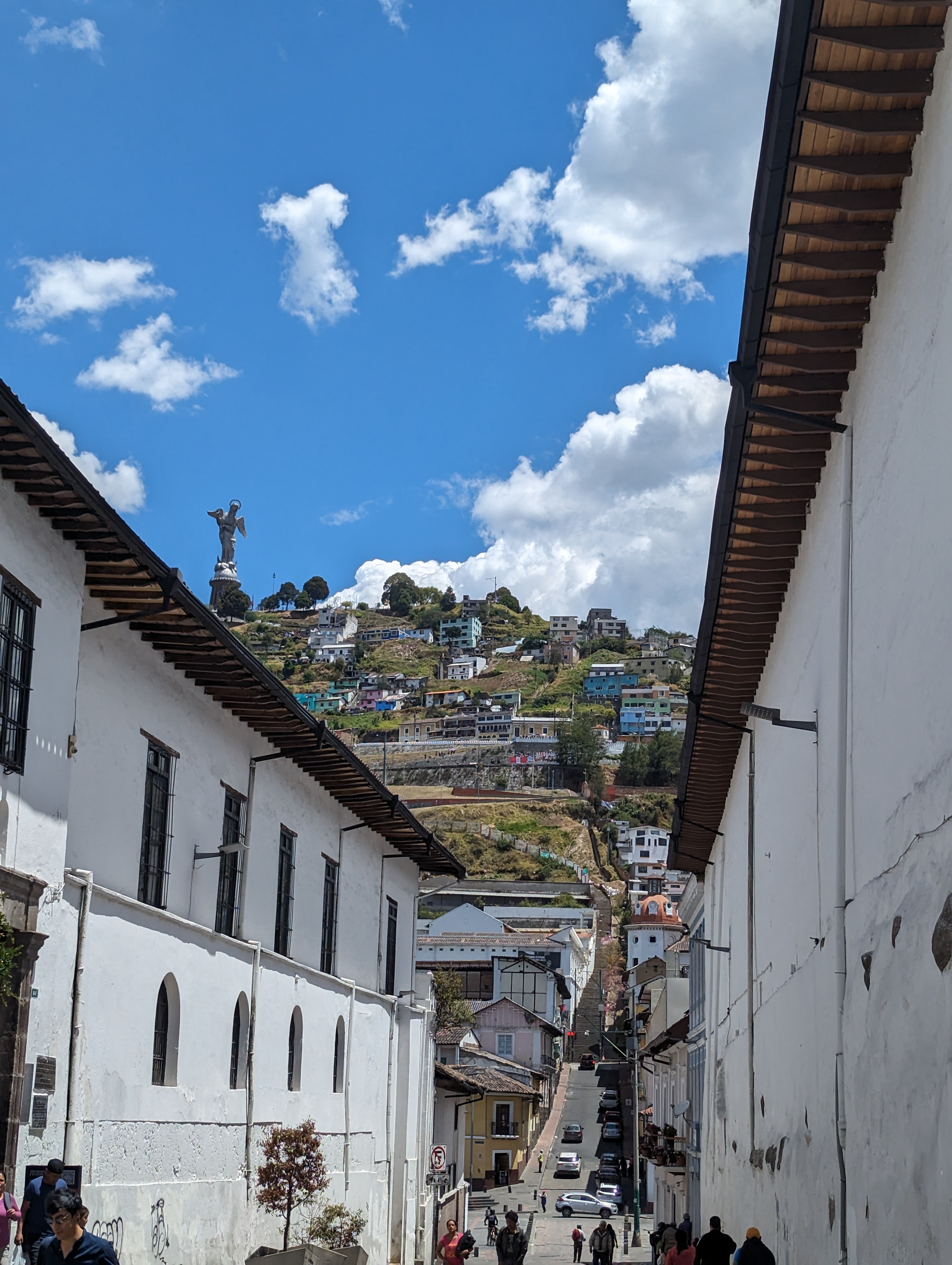
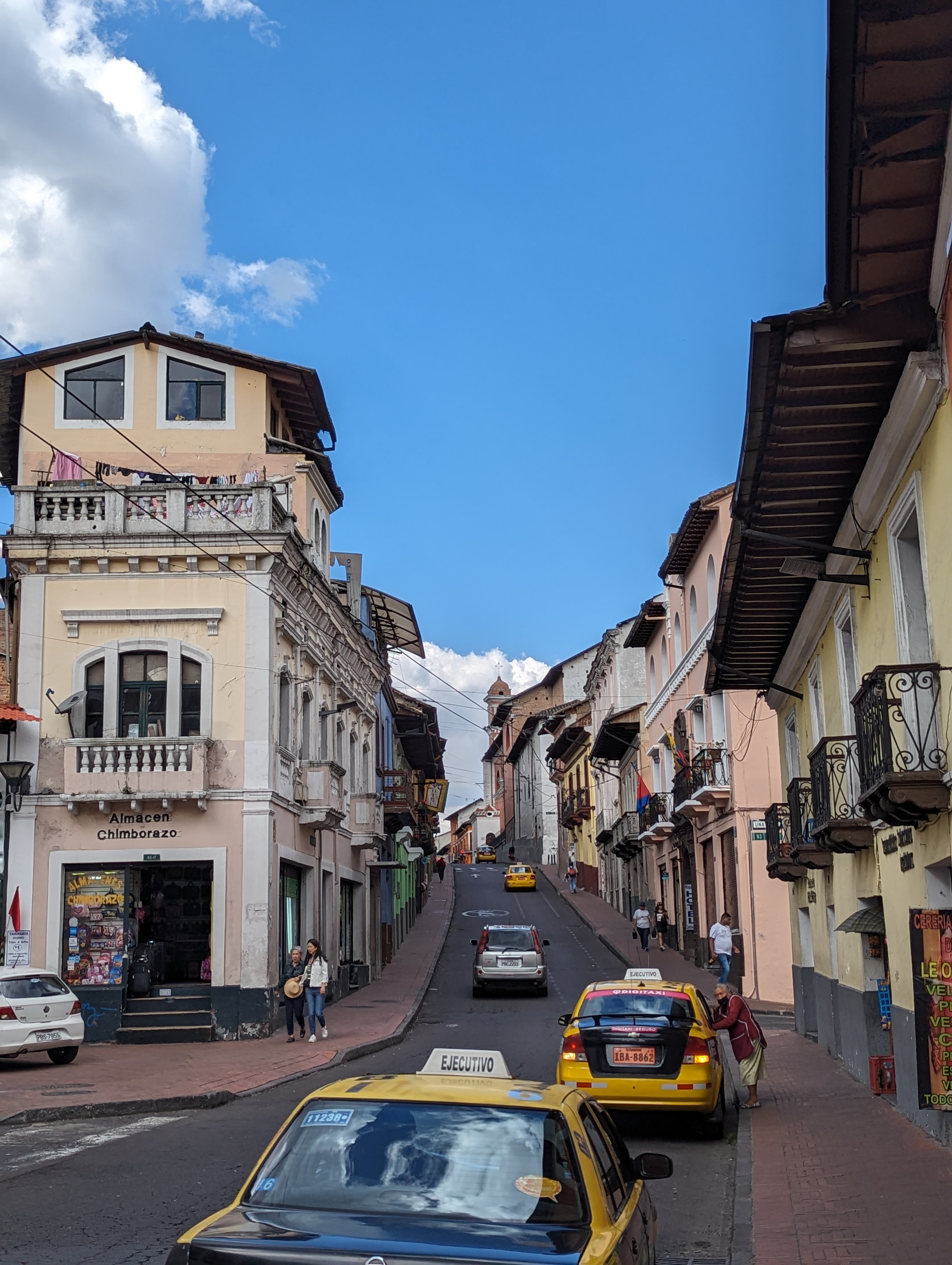
The historical center in Quito is one of the best preserved colonial centers across Latin America. I joined many great teachers from my school to take a walking tour of this beautiful part of Quito. It was amazing to finally go out and start looking at all the fantastic places in this city.
The view from the rooftop of the local hostel.
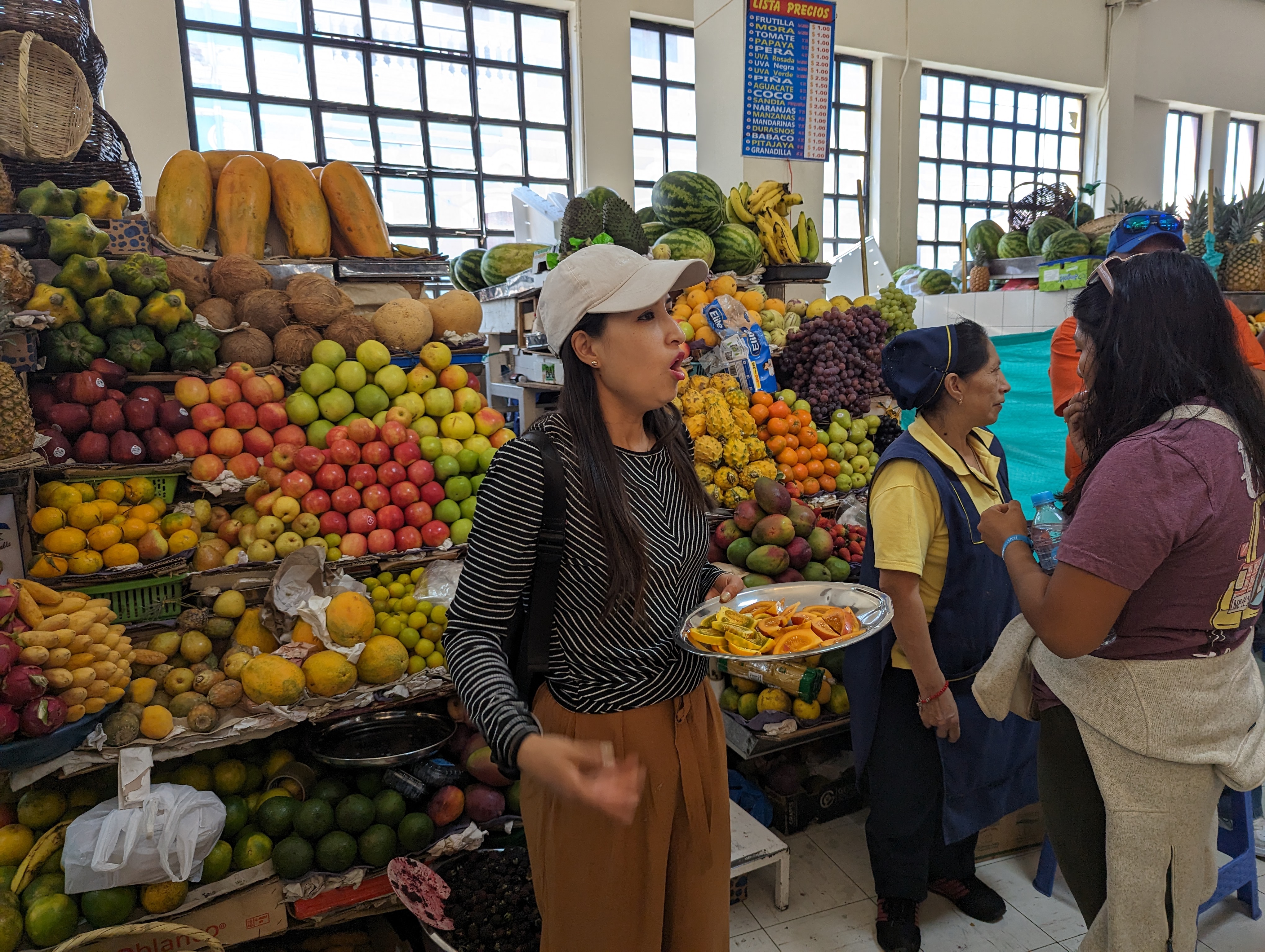
The first stop was in the market to try various fruits from Ecuador including yellow dragon fruit (Pitaya), golden berry, passion fruit, and others.
A walk through the streets….
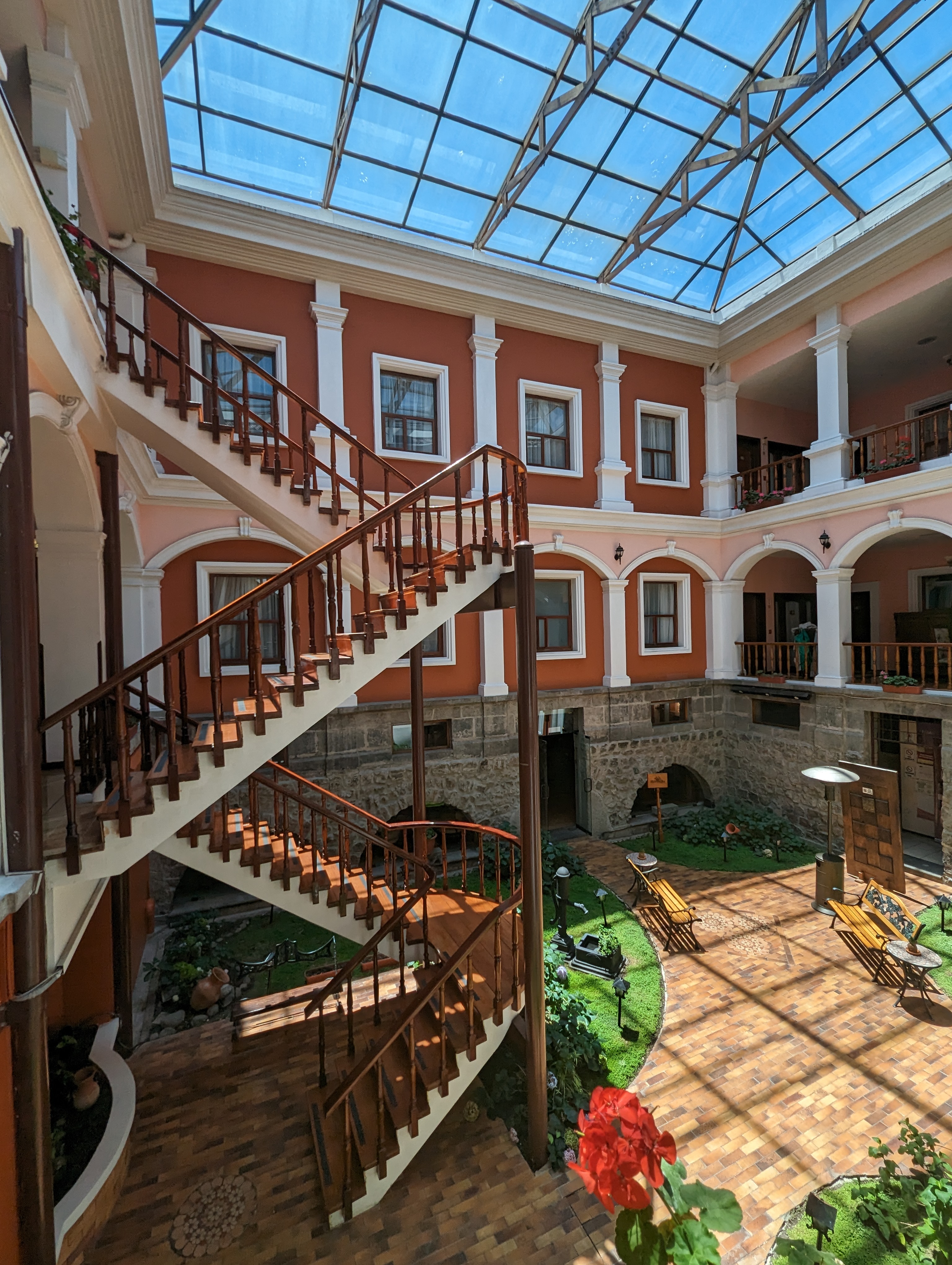
In the Hotel Patio Andaluz, we tasted many different percents of dark chocolate and learned about the yellow cacao tree. It is fascinating that it will absorb flavors from other trees planted nearby.
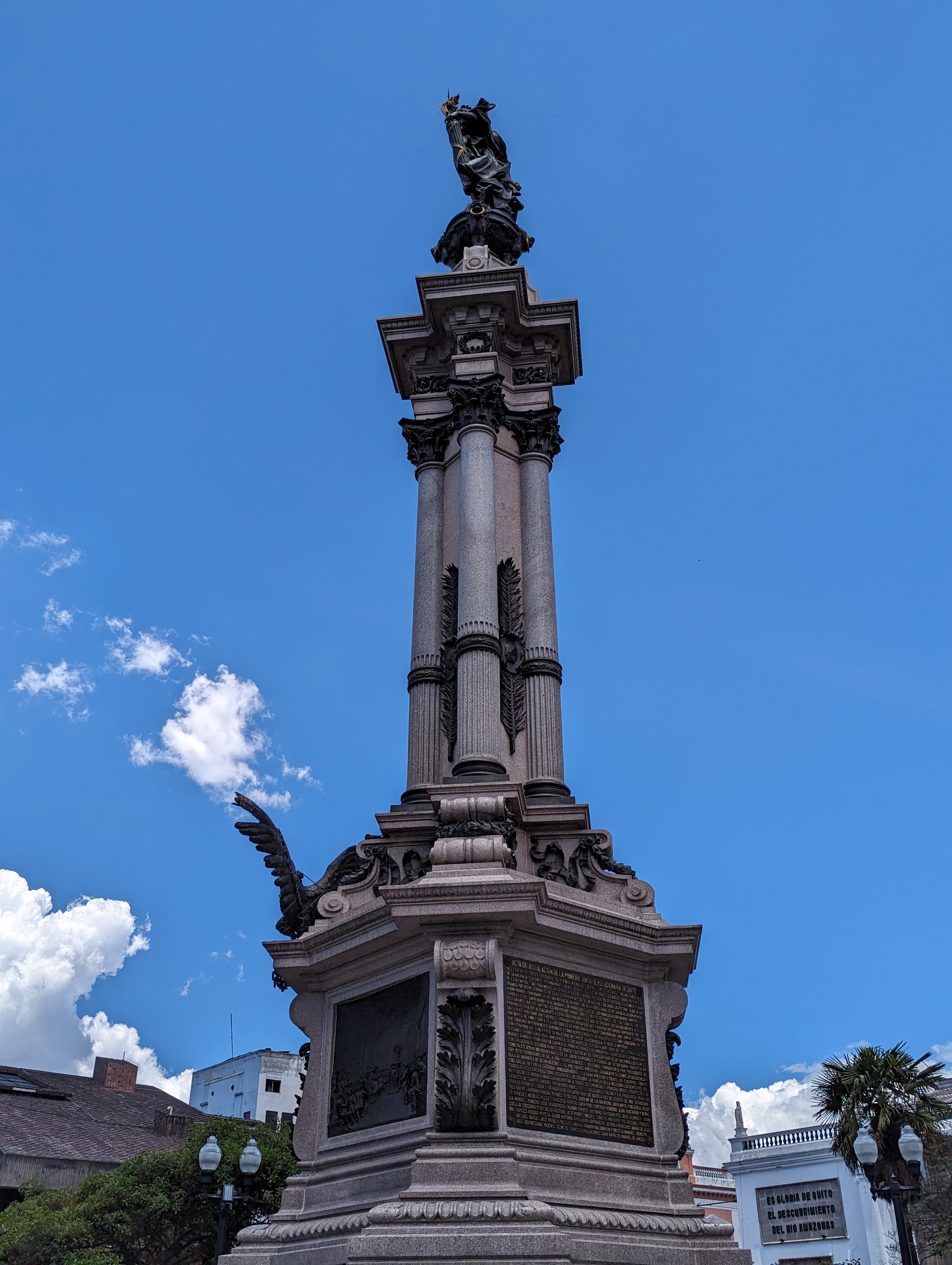
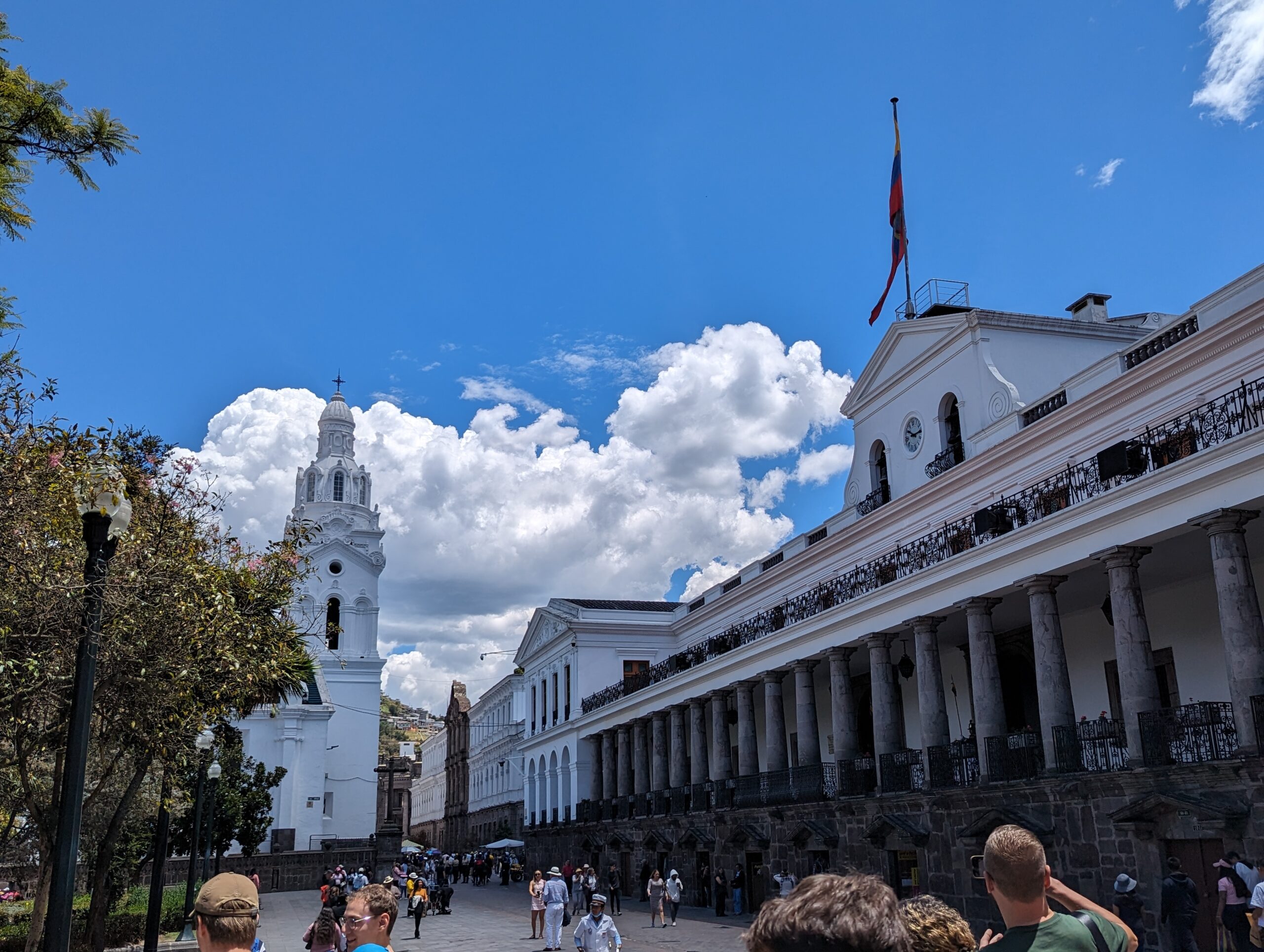
Independence square
Statue honoring those who fought for Independence Carondelet Palace at Independence square is the seat of the government in Ecuador.
Street of the 7 crosses
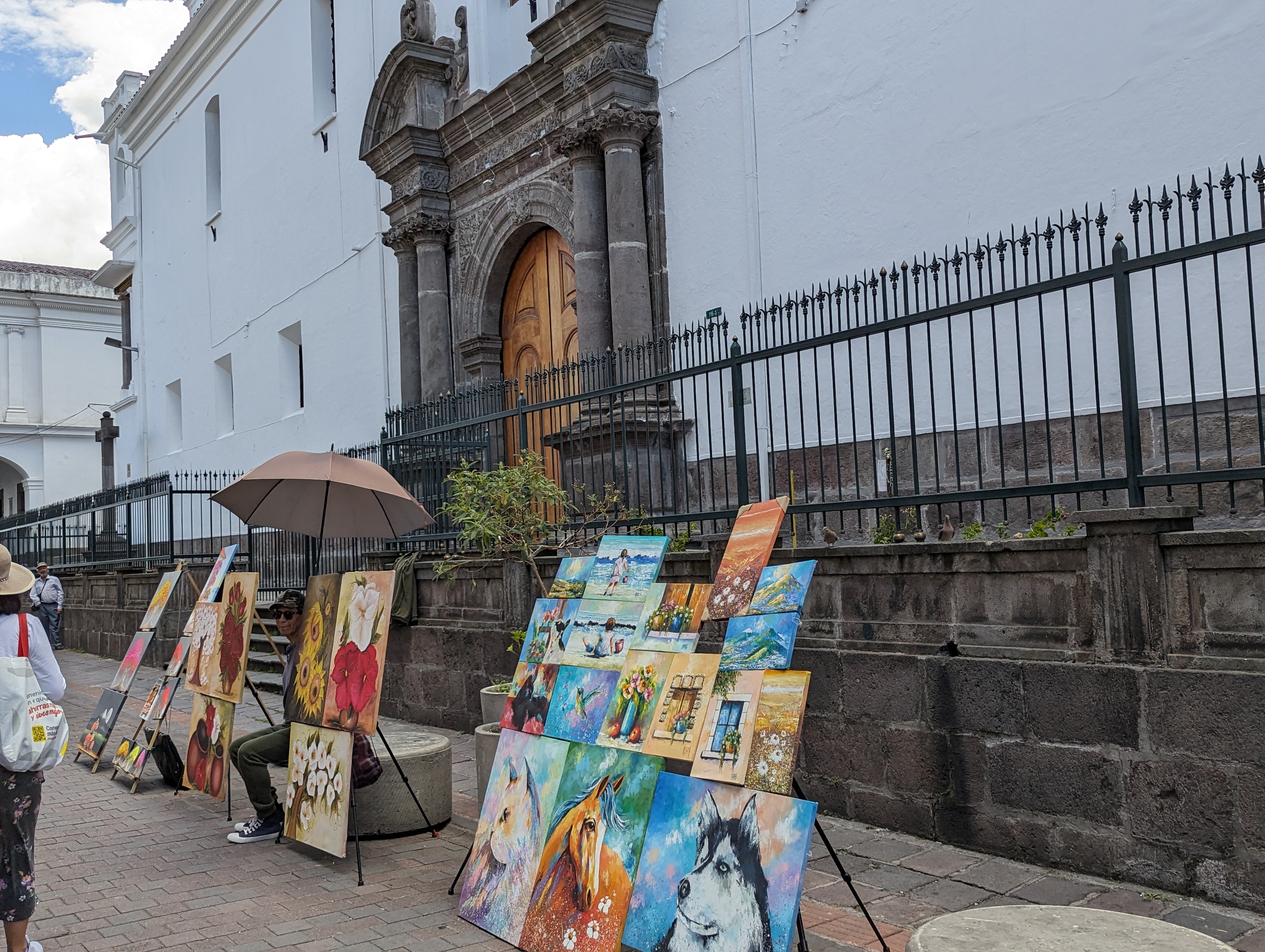
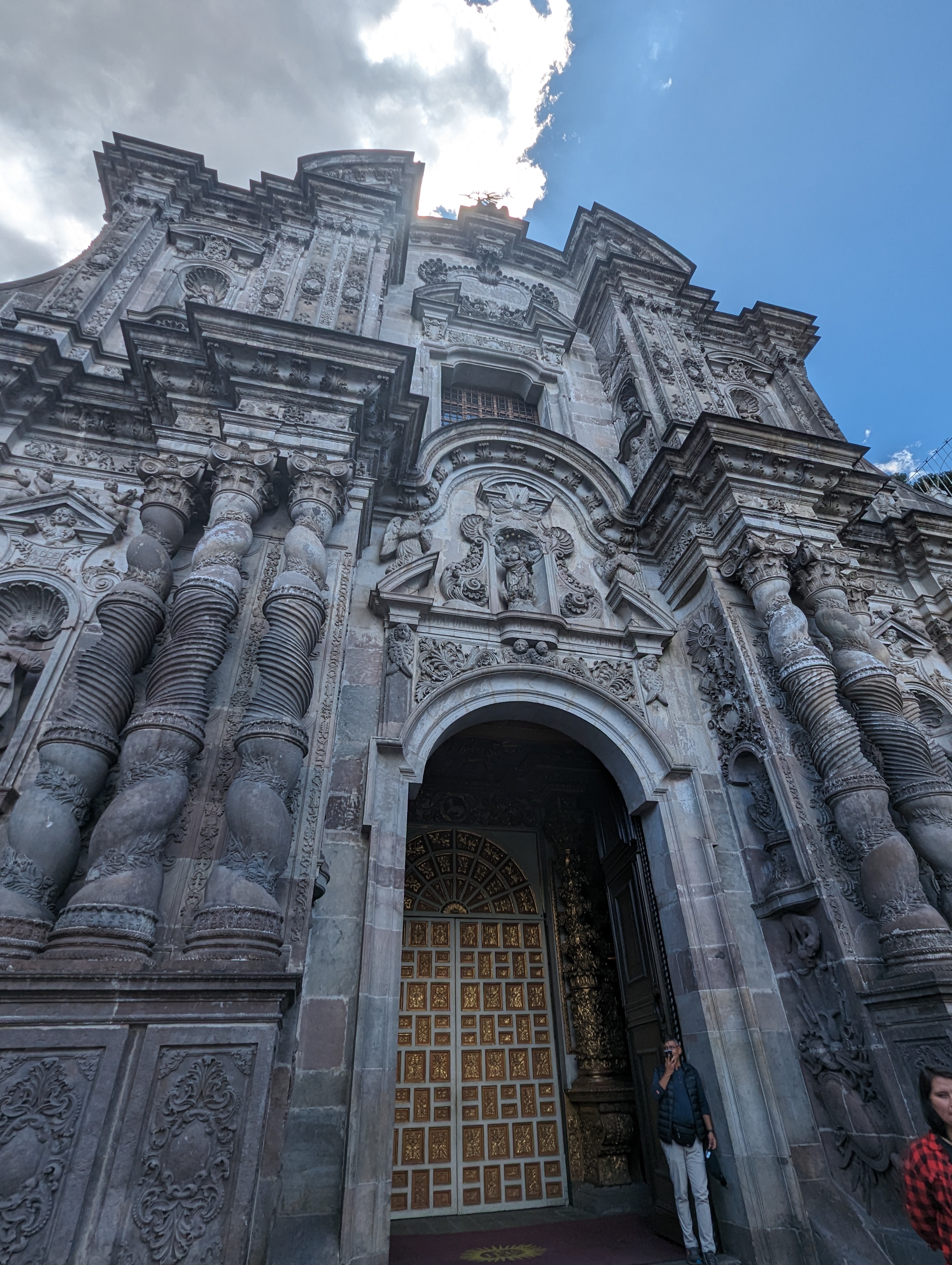
There are many churches here in the old city, many from Spanish occupation and influence.
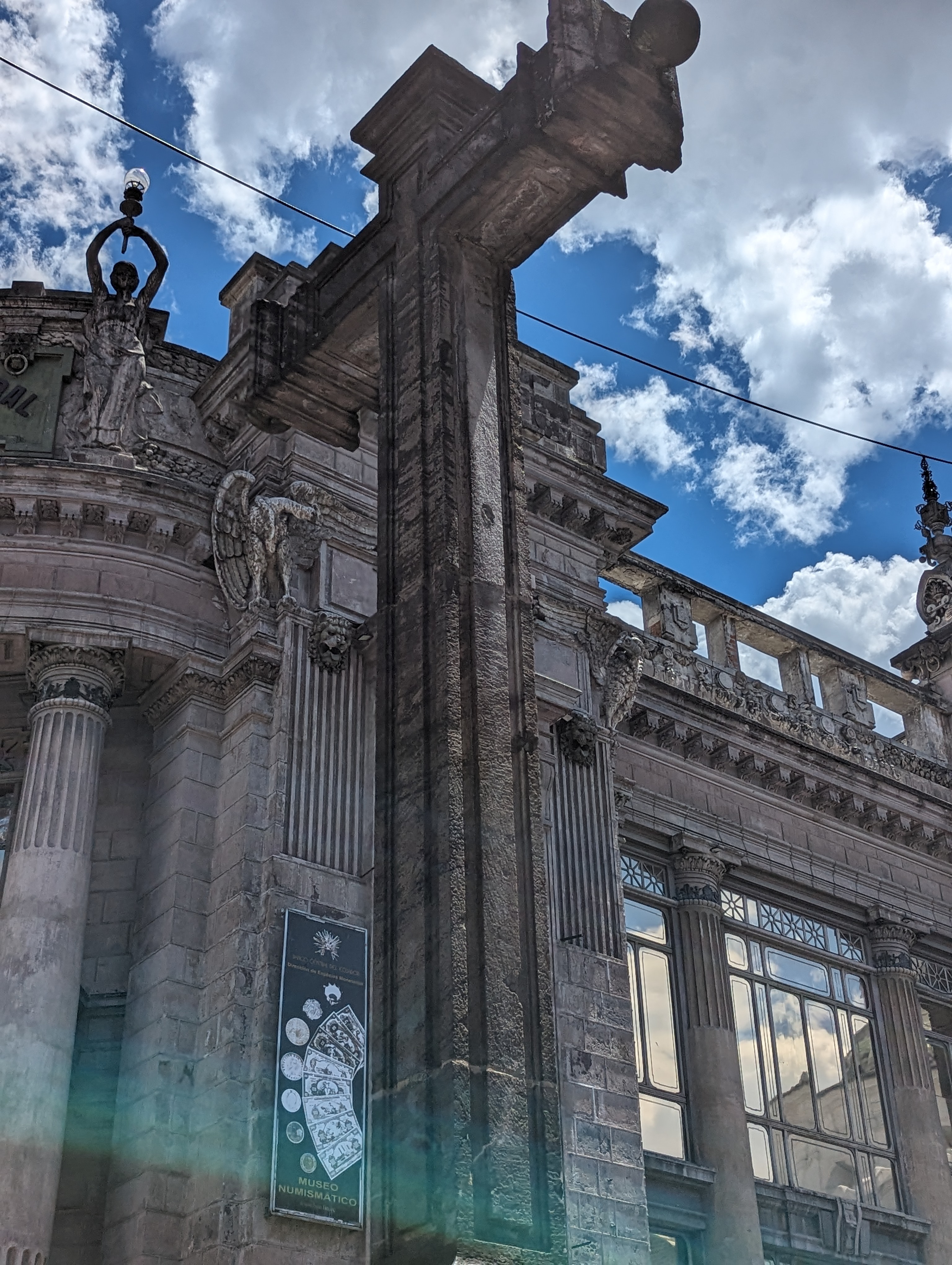
Church of the Society of Jesus. This is one of many churches along this street. Cross outside of the church.Museo numesmatico – this used to be a bank and now it’s a museum showing the evolution of Ecuador’s monetary system.Iglesia de Santo Domingo.
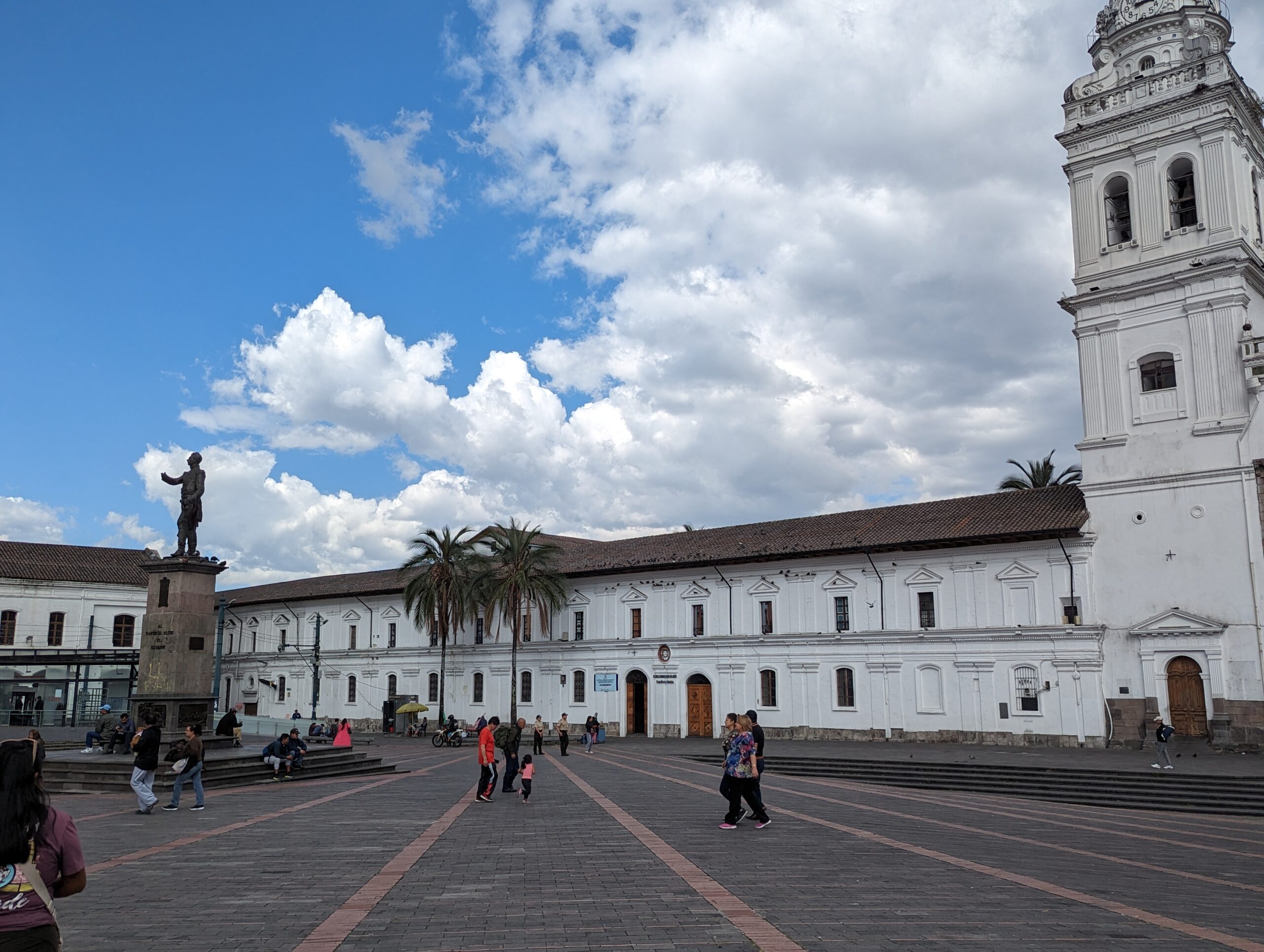
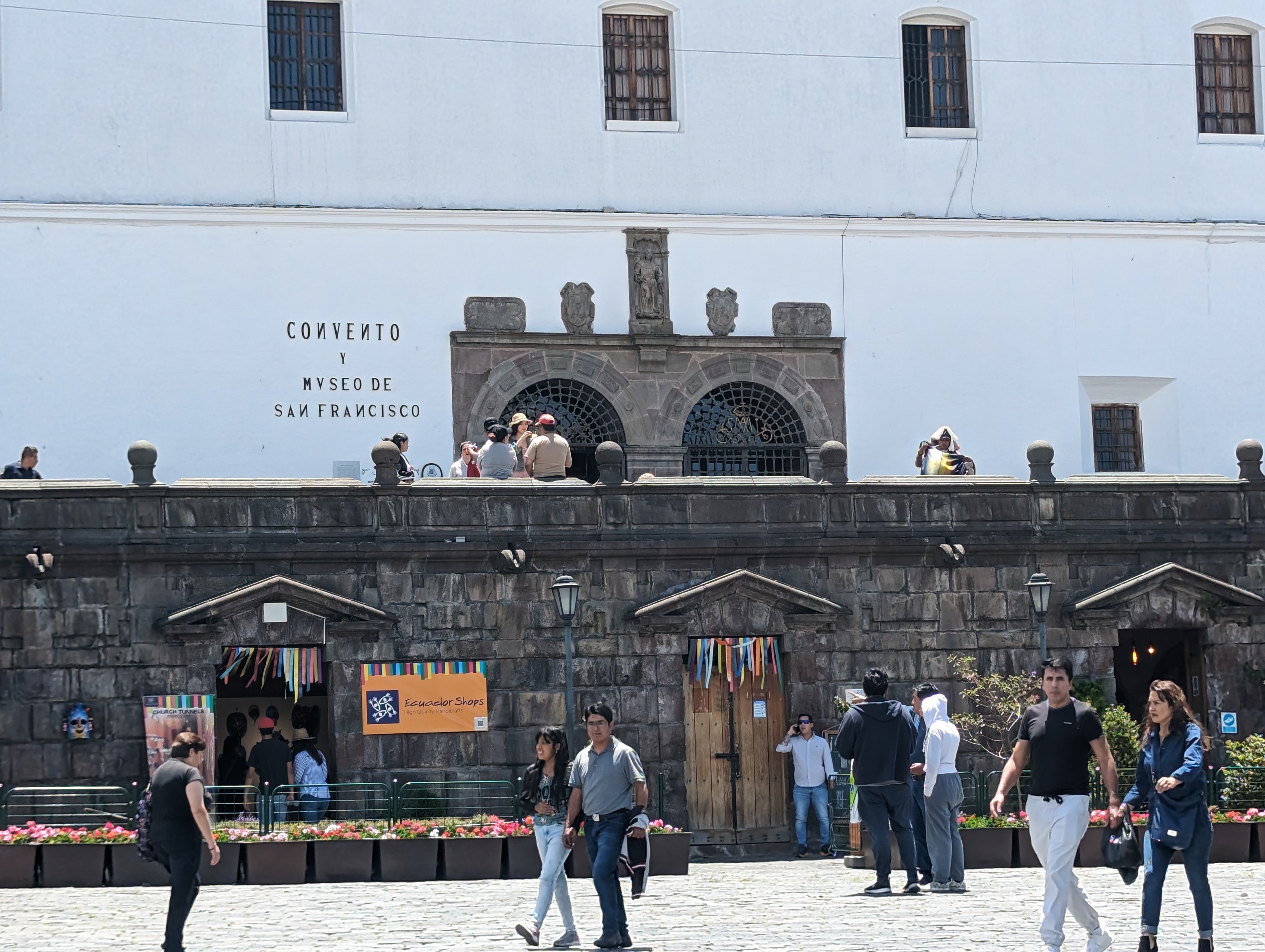
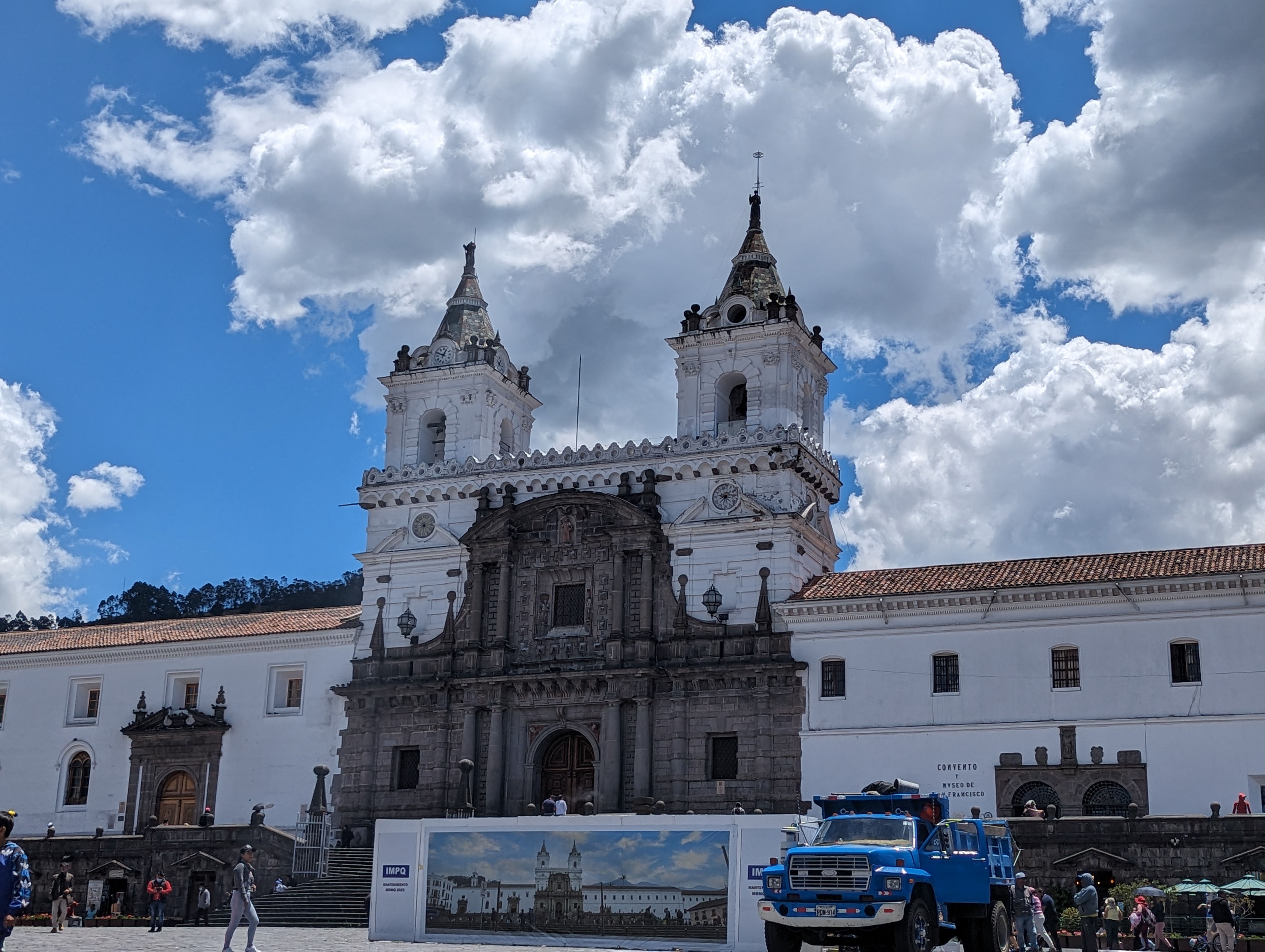
San Francisco Plaza
The church is said to be spectacular inside but unfortunately we did not go inside.
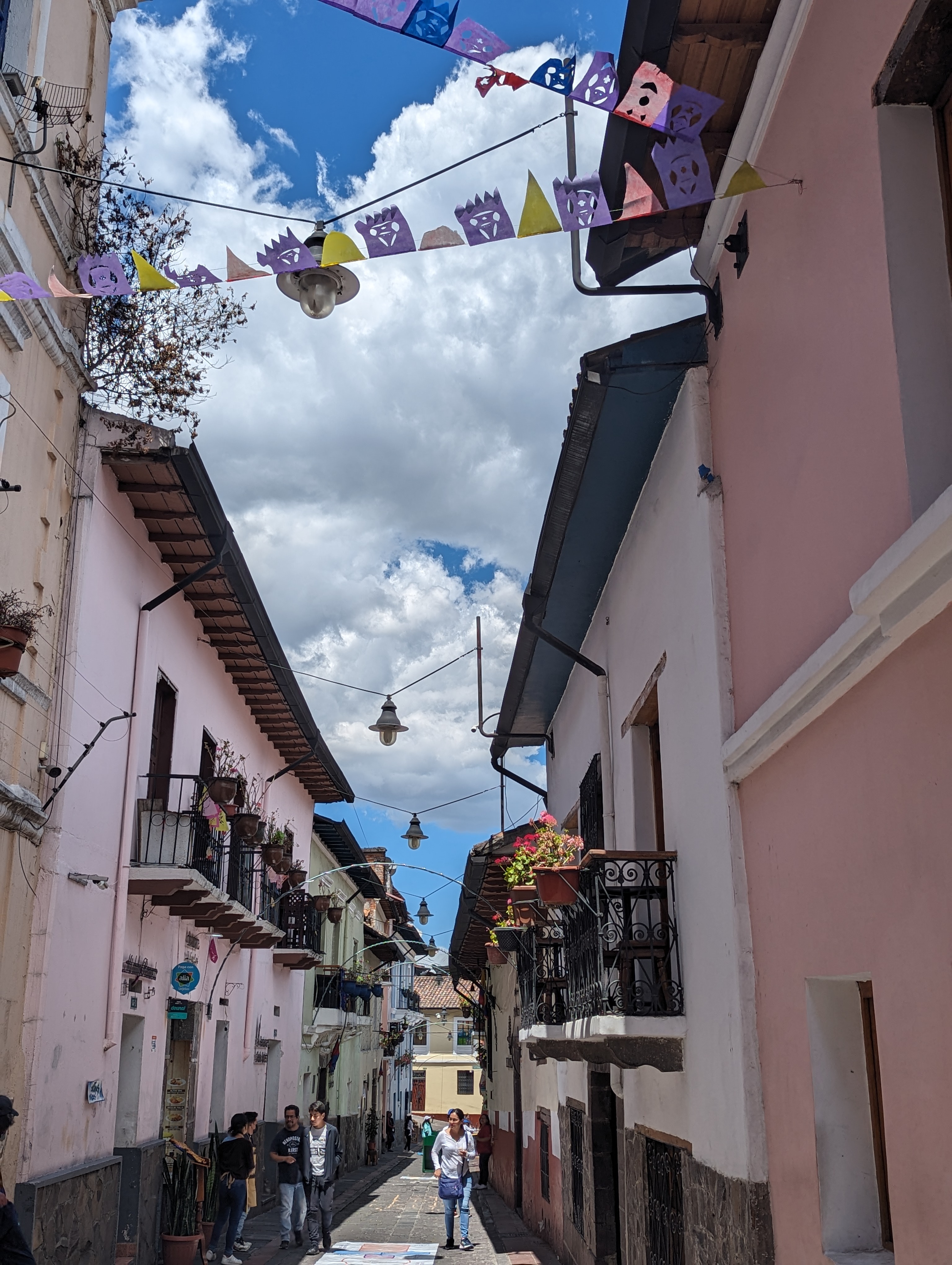
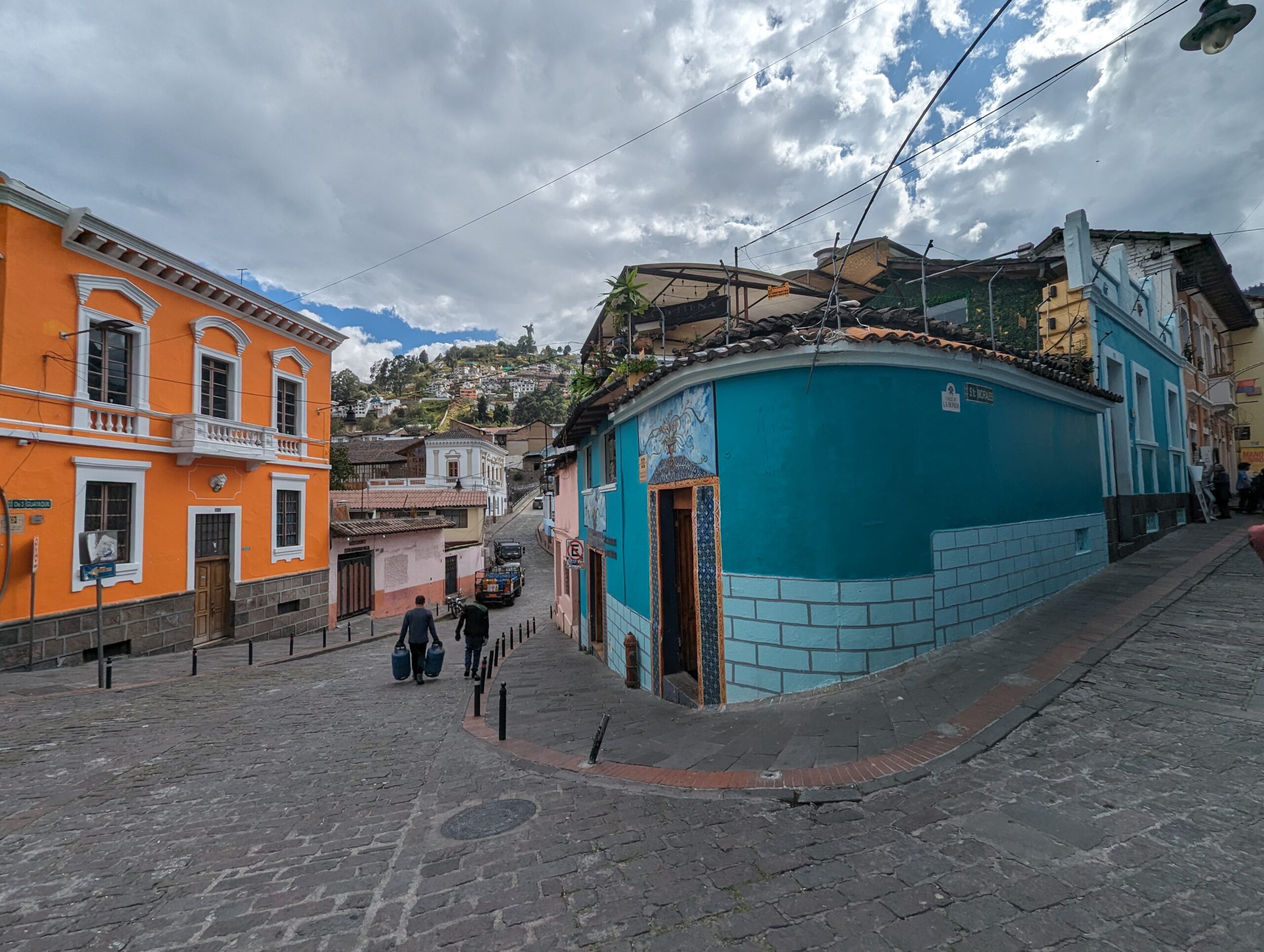
Calle La Ronda
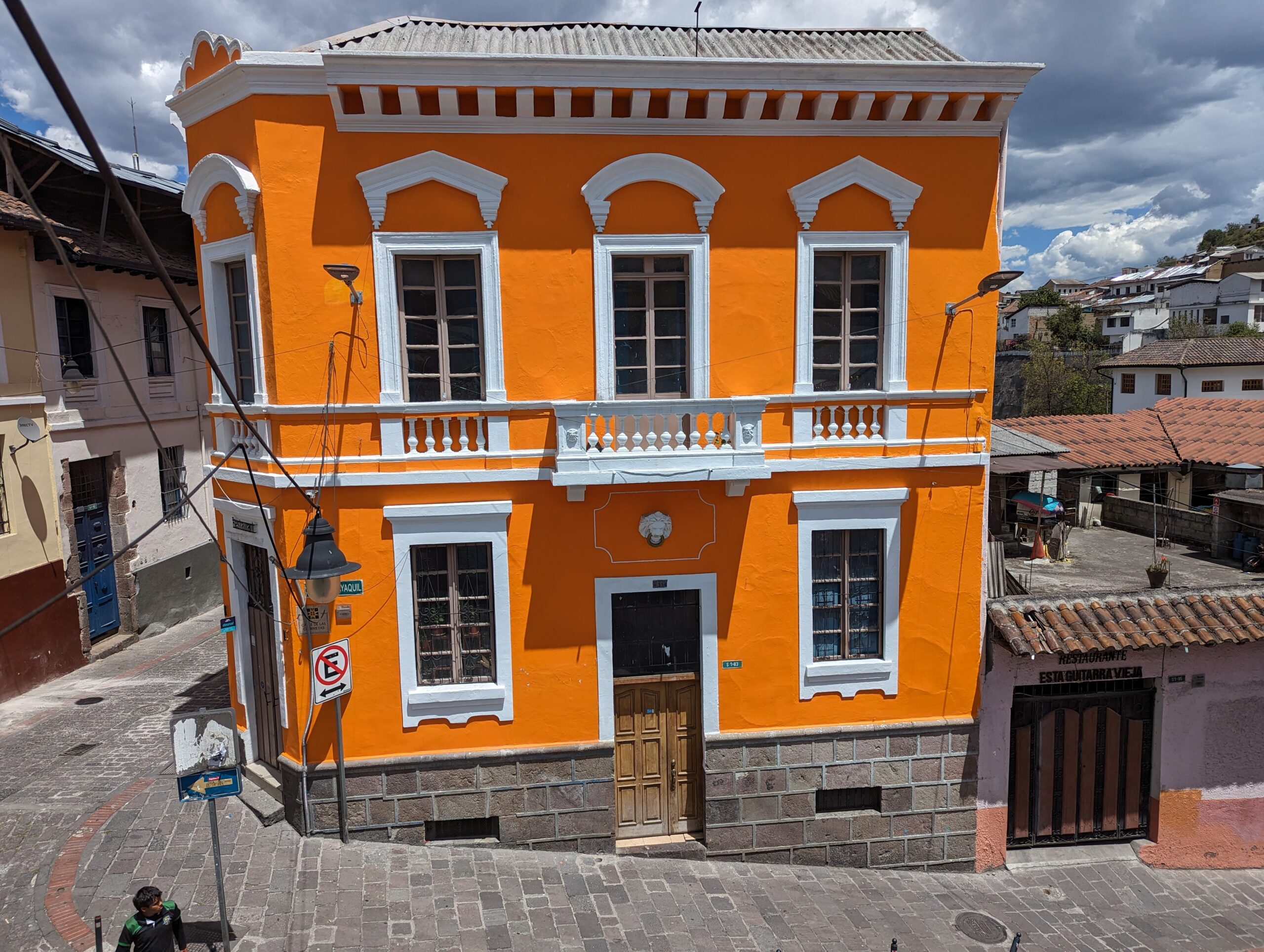
This street started as part of an Incan trail. Spanish colonists built houses on the trail in the 1500’s. At the turn of the 20th century it was popular among many types of artists and in the 2005 was restored after many decades of neglect. It is really charming with cobblestone streets and beautiful buildings.
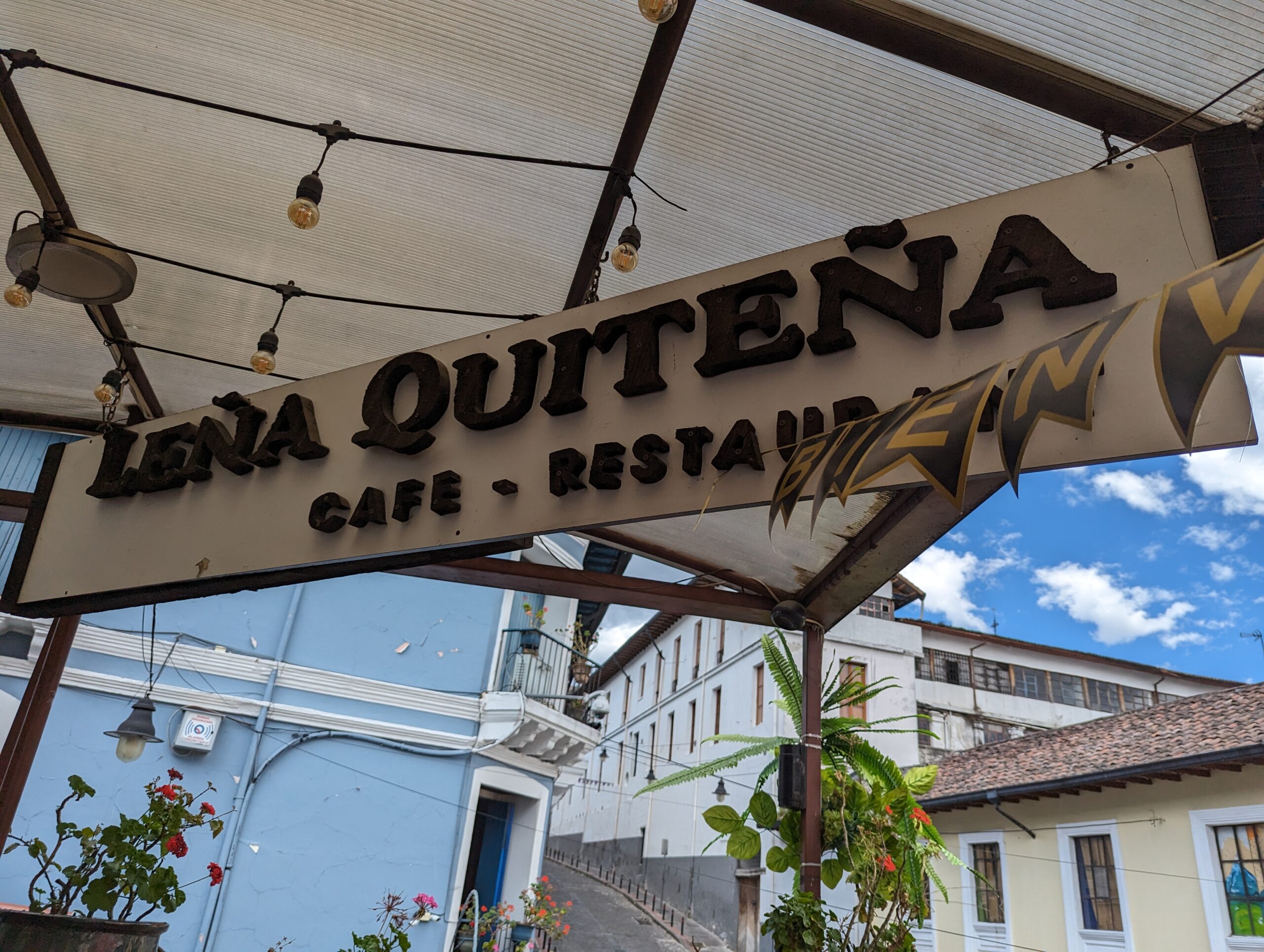
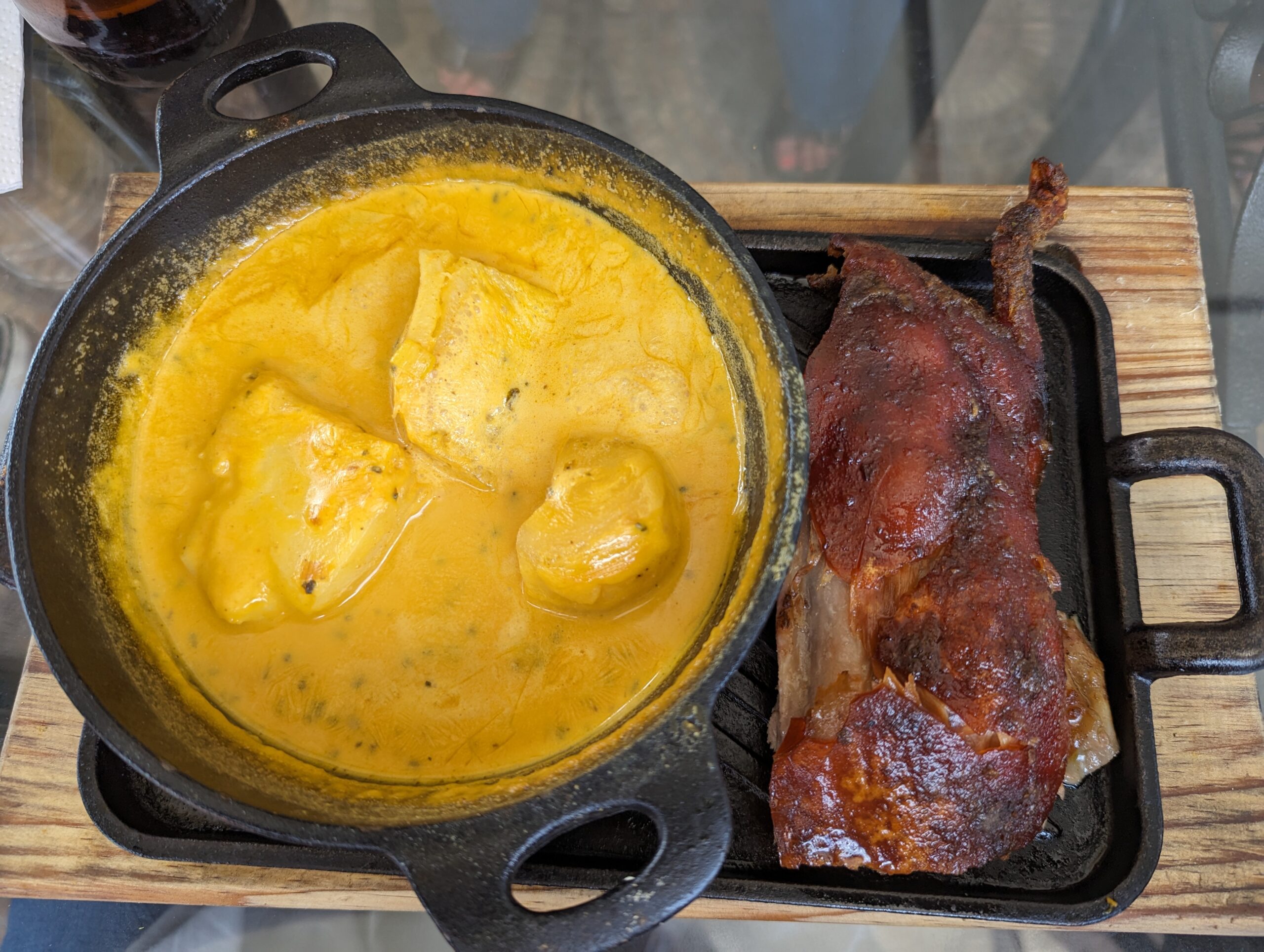
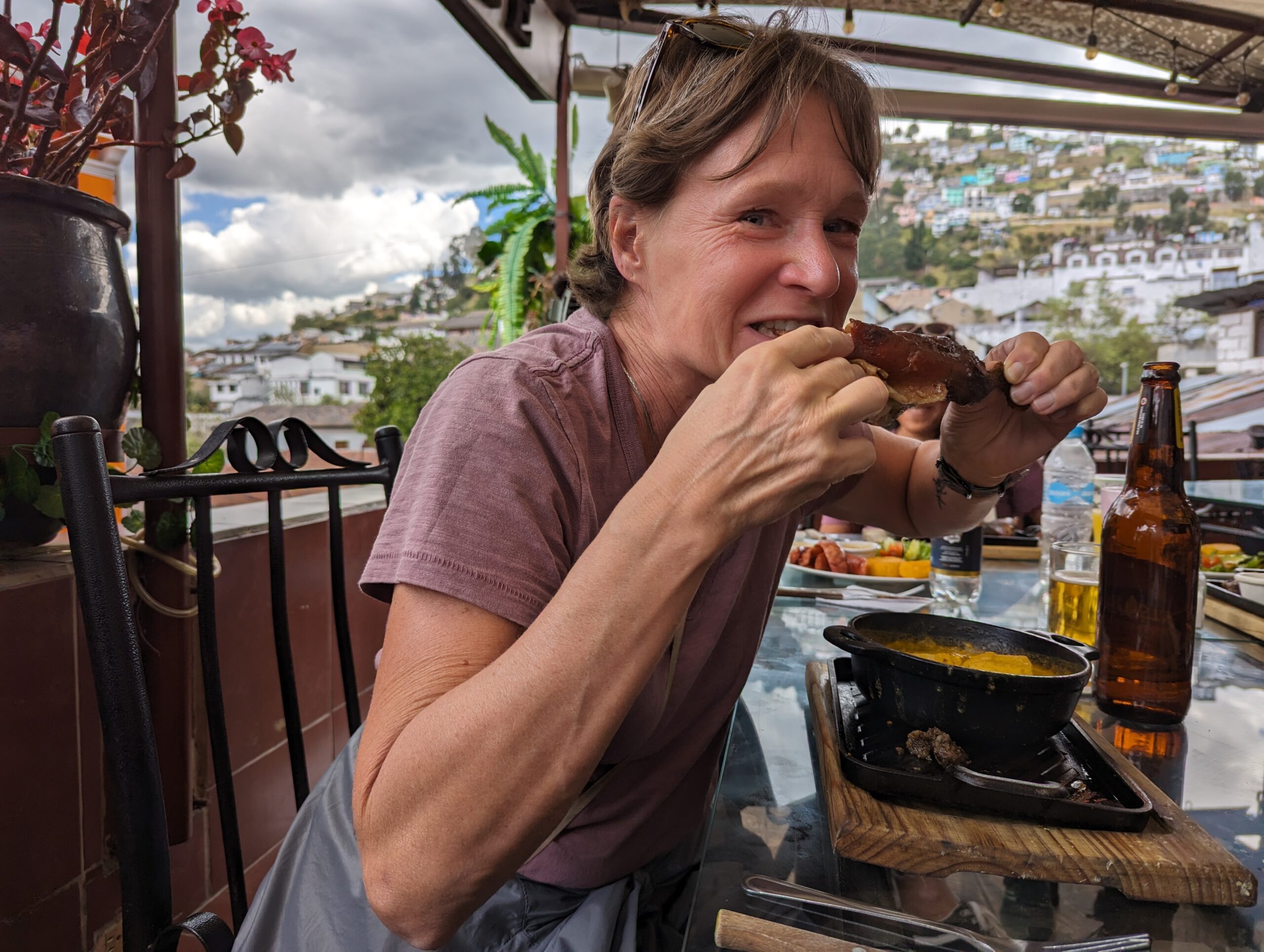
We heard the guide mention cuy, which is guinea pig and a delicacy here in Ecuador. Always willing to try something new, we ate lunch at the restaurant, and that is what I had. I did think of my childhood guinea pig pet, Squeaky. Sorry, I had to try it. It was good. Kind of tasted like duck and a bit like squirrel. They actually say it tastes like a cross between duck and rabbit. The slight greasiness reminded me a bit of duck.
1/4 of guinea pig. That is the back leg.View from the restaurant.
We walked back to a shop we were browsing in earlier. Such beautiful streets.
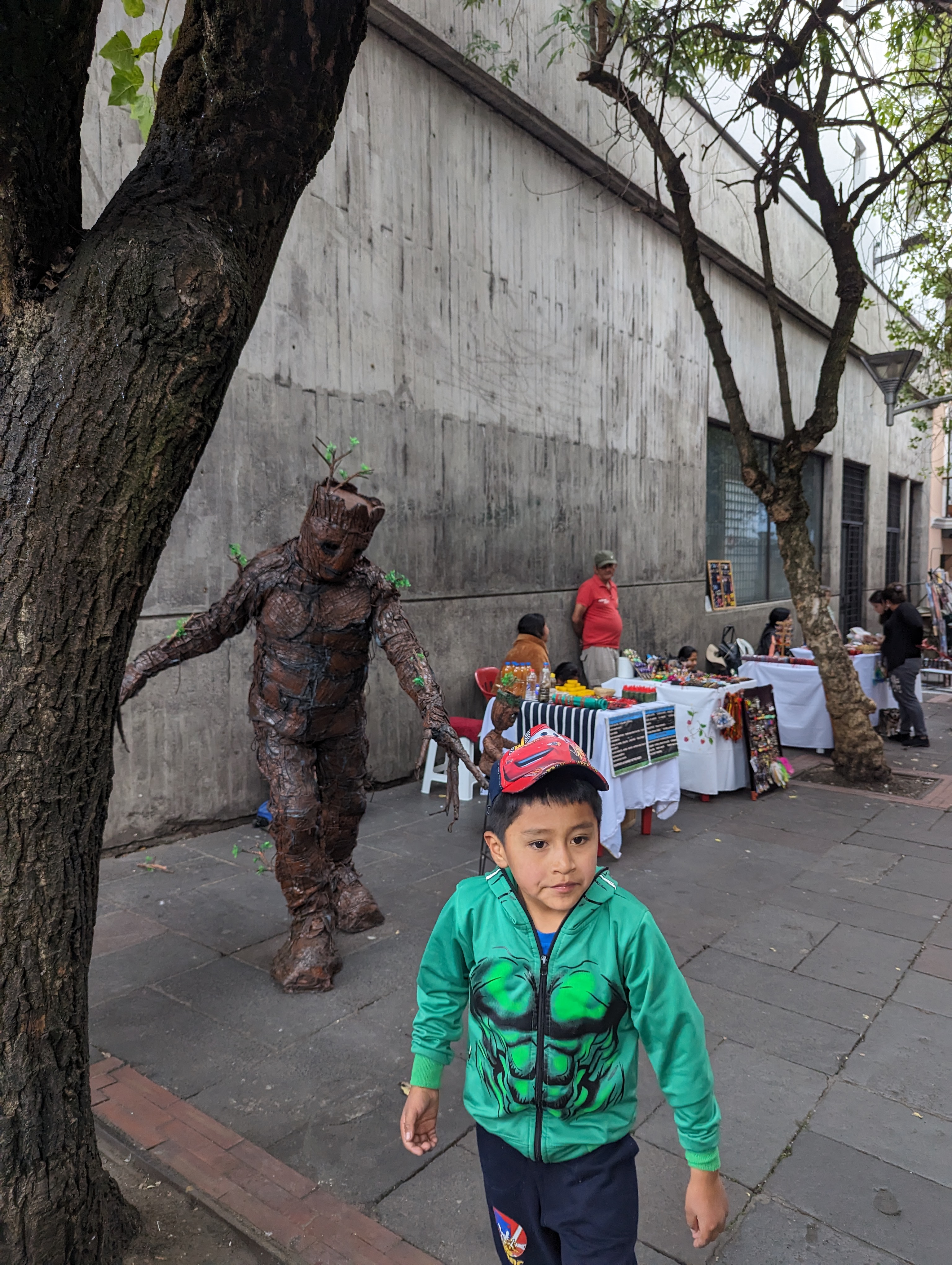
Besides artisans and street vendors, there were some dressed up as characters. Here Groot from Guardians of the Galaxy is having fun with a small child.
A really great afternoon with some fun colleagues at school. It was a beautiful sunny day and it is pretty hot here in the sun at this altitude.
It was a longer summer than what I’m used to but having that time at home was amazing. Before I knew it, it was time to go to Ecuador.
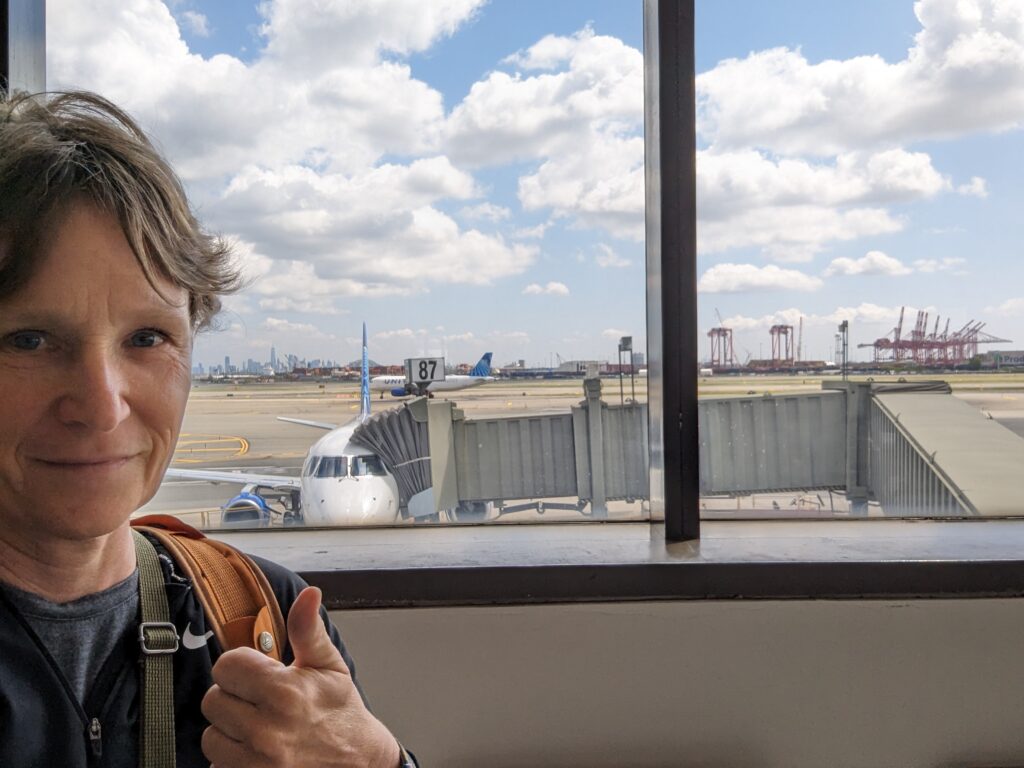
It is a bunch of flights to get there.
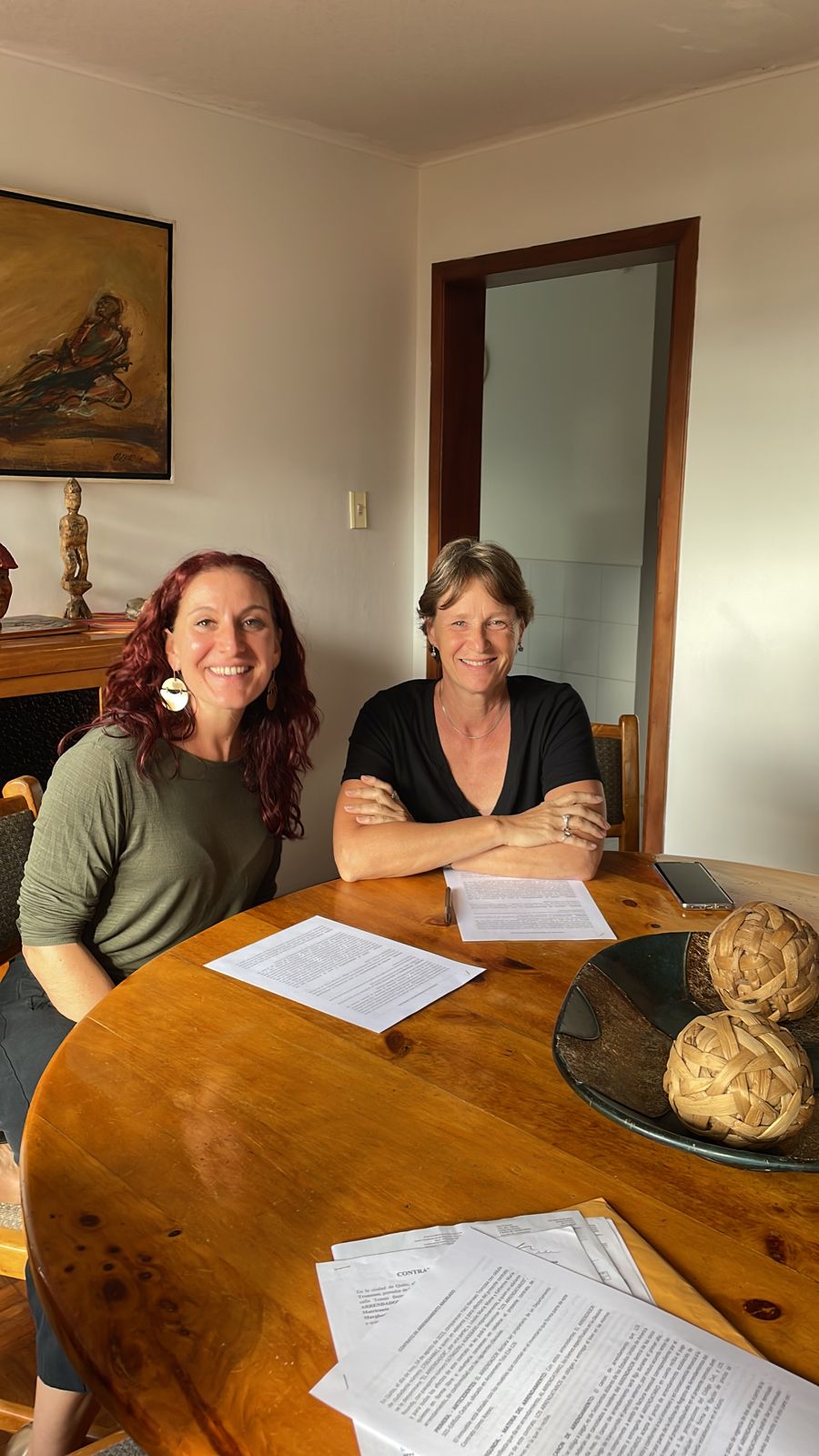
The school put us in the Sheraton until we found an apartment. I had already found mine and committed at the end of June but still needed to sign the contracts, etc. I chose an apartment based upon location and the reputation of the landlord. Here is a link to a quick tour: https://youtu.be/lvdYFYguqrA
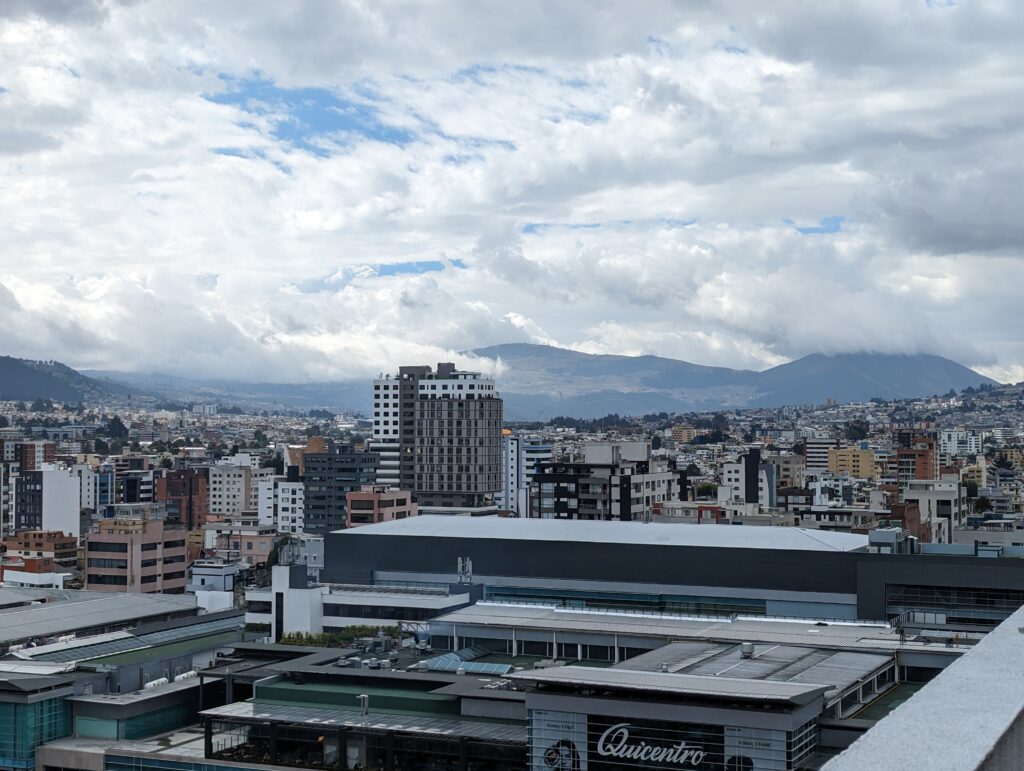
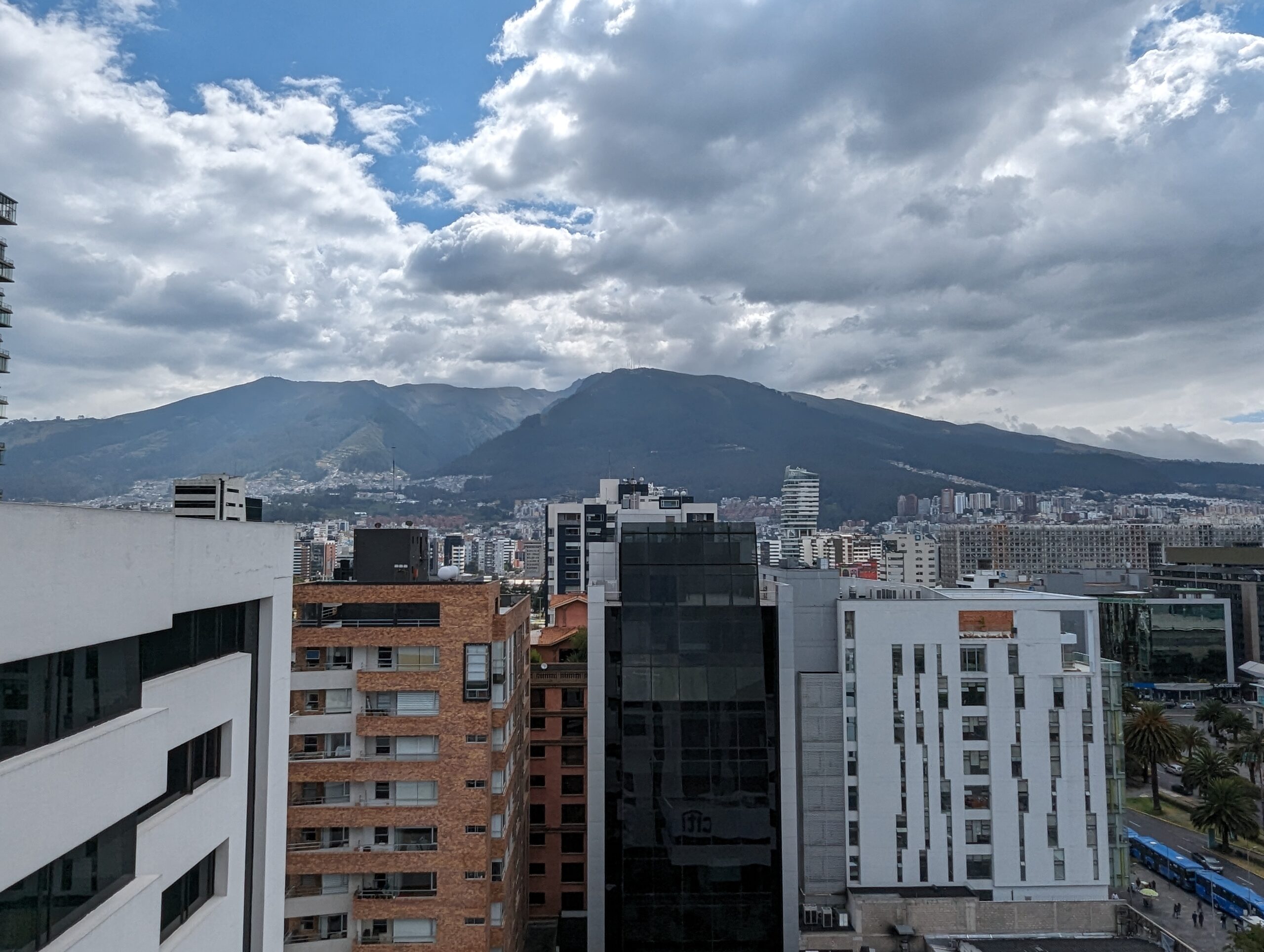
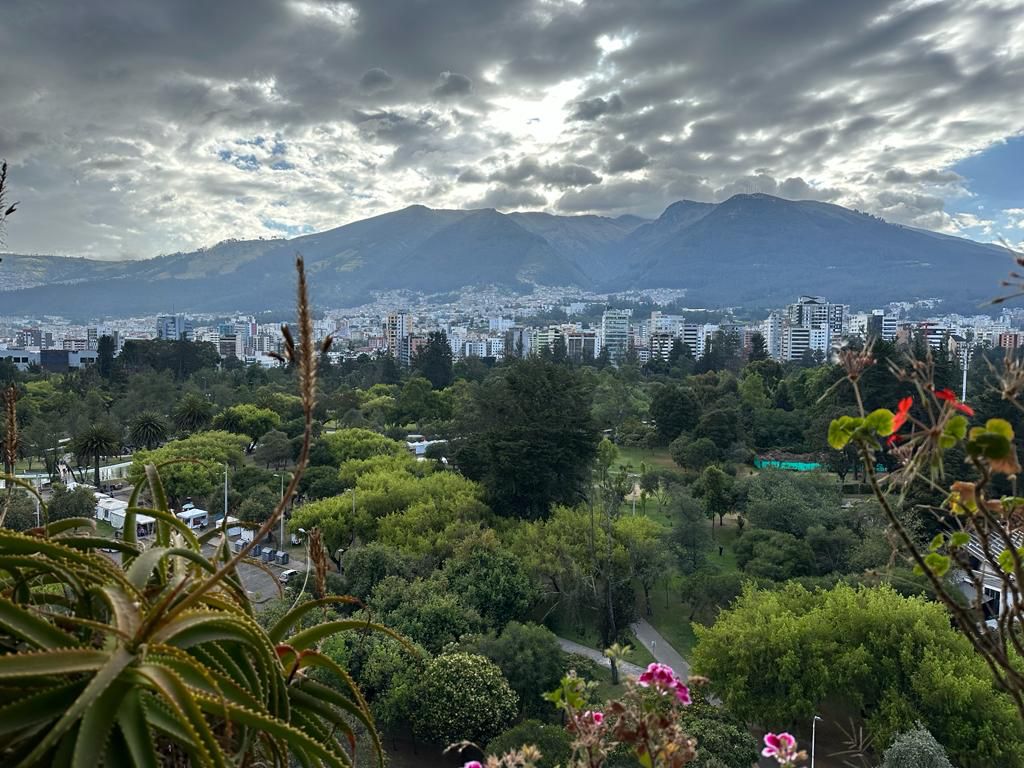
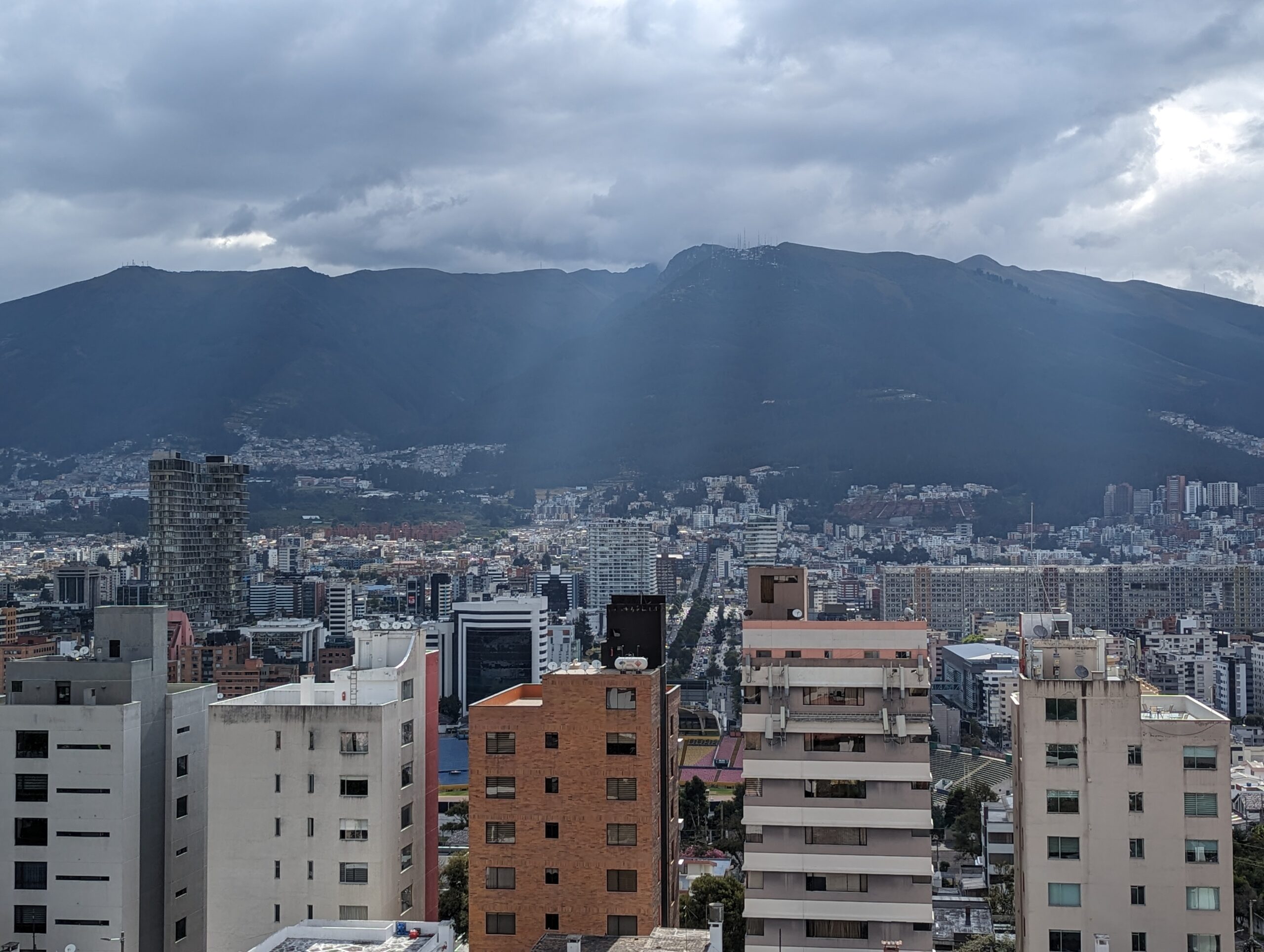
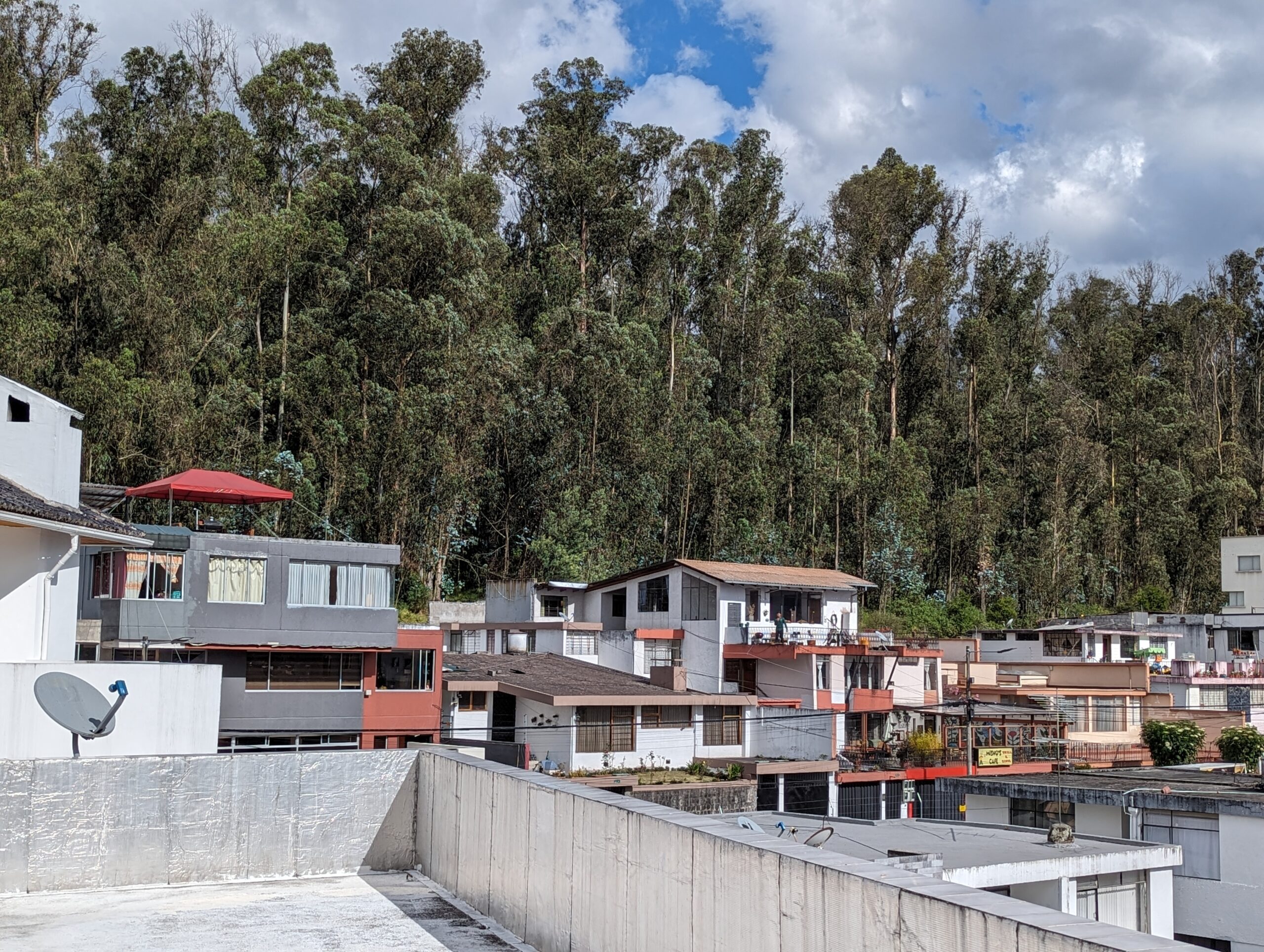
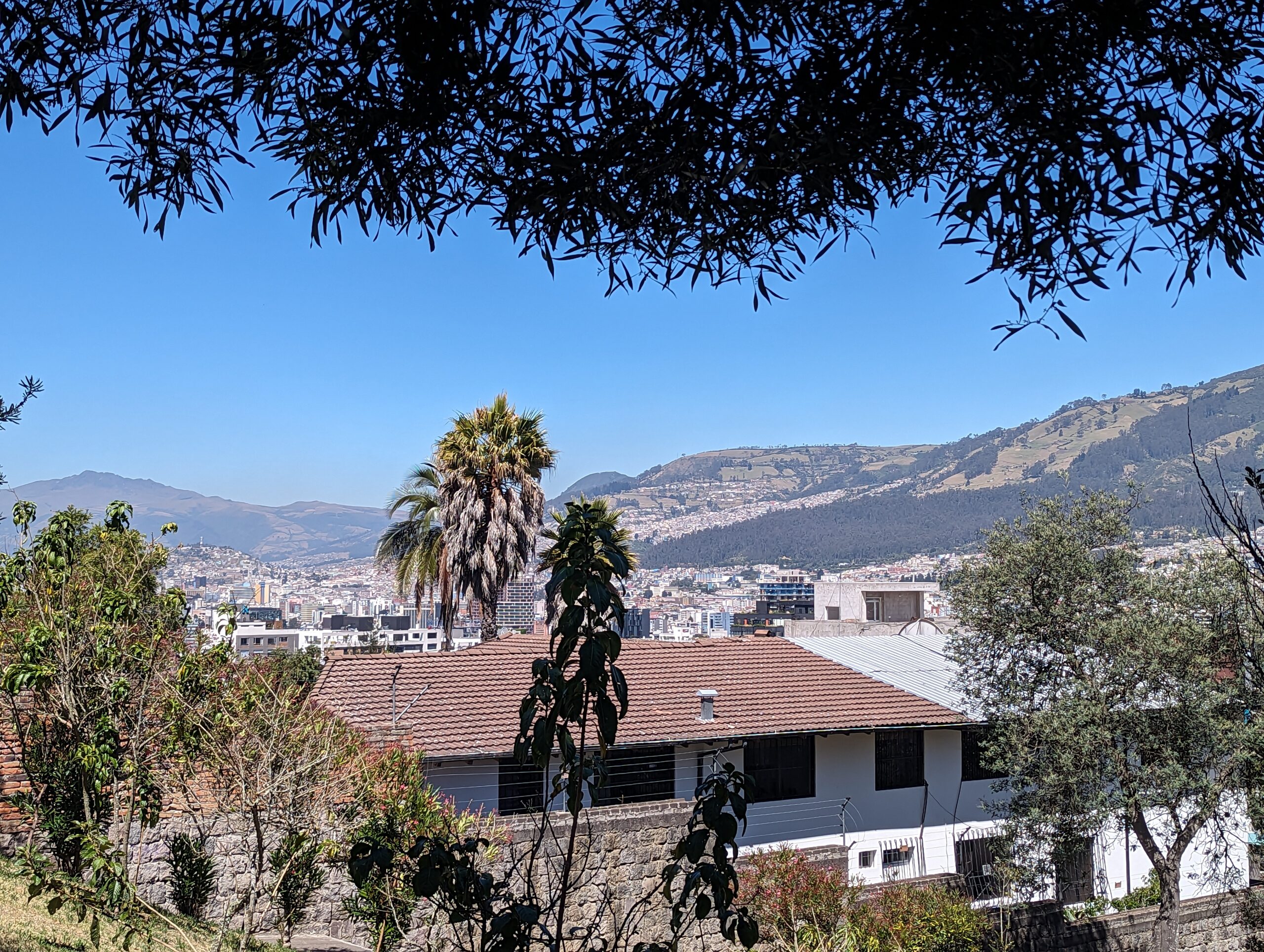
View from the rooftop of the building.A different view.Panorama from the top of the building.Signing the lease. I was happy someone wanted to share an apartment as this space was big and at the top of my office range.
The week was filled with obtaining our bank account, visa, and SIM card. Very different from China. Times that we would meet would change unexpectedly, SIM card activation took a couple days, and we were surprised that we received our bank card in three days and not the two weeks they expected…. By mid week I was moved in.
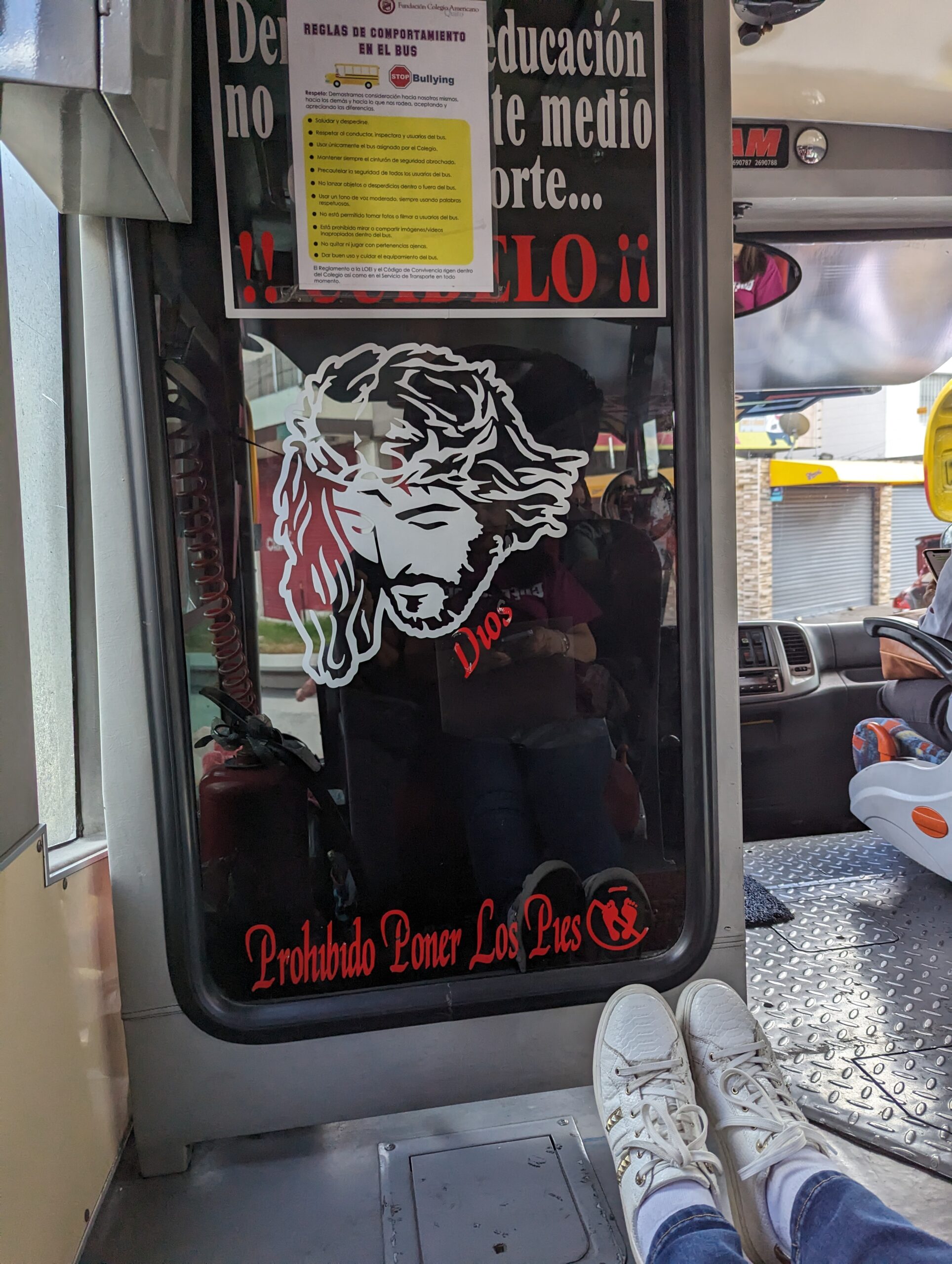
We were in buses or cars most of the week traveling to the agencies we needed to be at
It wasn’t until later in the week that we had time for shopping and walking around. Some of the views around La Carolina and Batan.
Dinner at the directors house. Great Ecuadorian music and three kinds of ceviche: chochos (Andean soybean), camarón (shrimp), and pescado (fish).
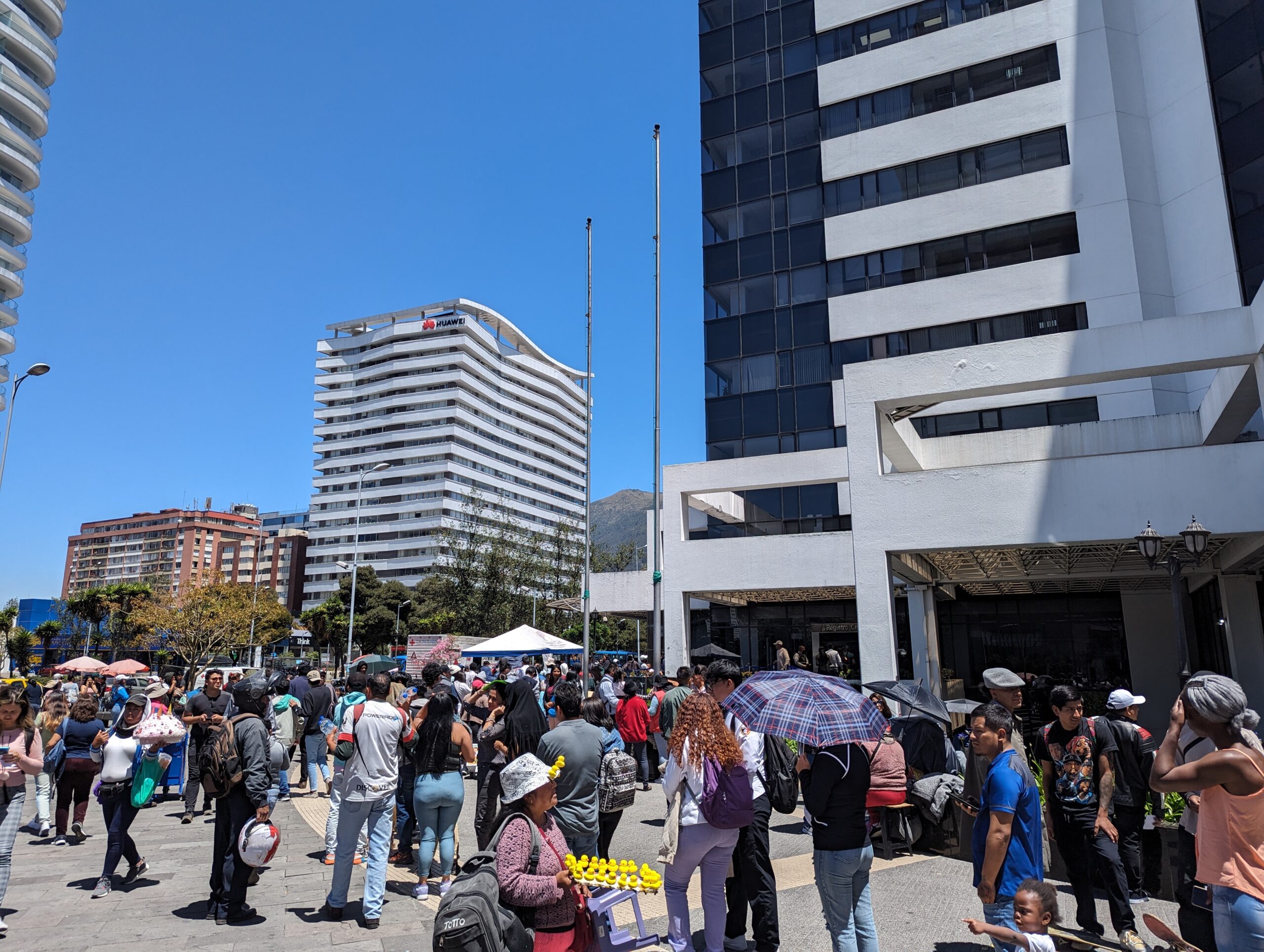
There was an assassination of a minor presidential candidate just before I left the US. The city was calm and there were no protests when I arrived. It was the week before the election and I was surprised to learn that it is required for citizens to participate in elections. They must register and voting is on Sunday. If they do not vote, they are fined $450 which is one month’s wage (minimum wage). In order to have an orderly voting process, no alcohol was allowed to be purchased or served Friday through Sunday. Anyone publicly intoxicated would also be jailed. It is called La Seca (dry law)
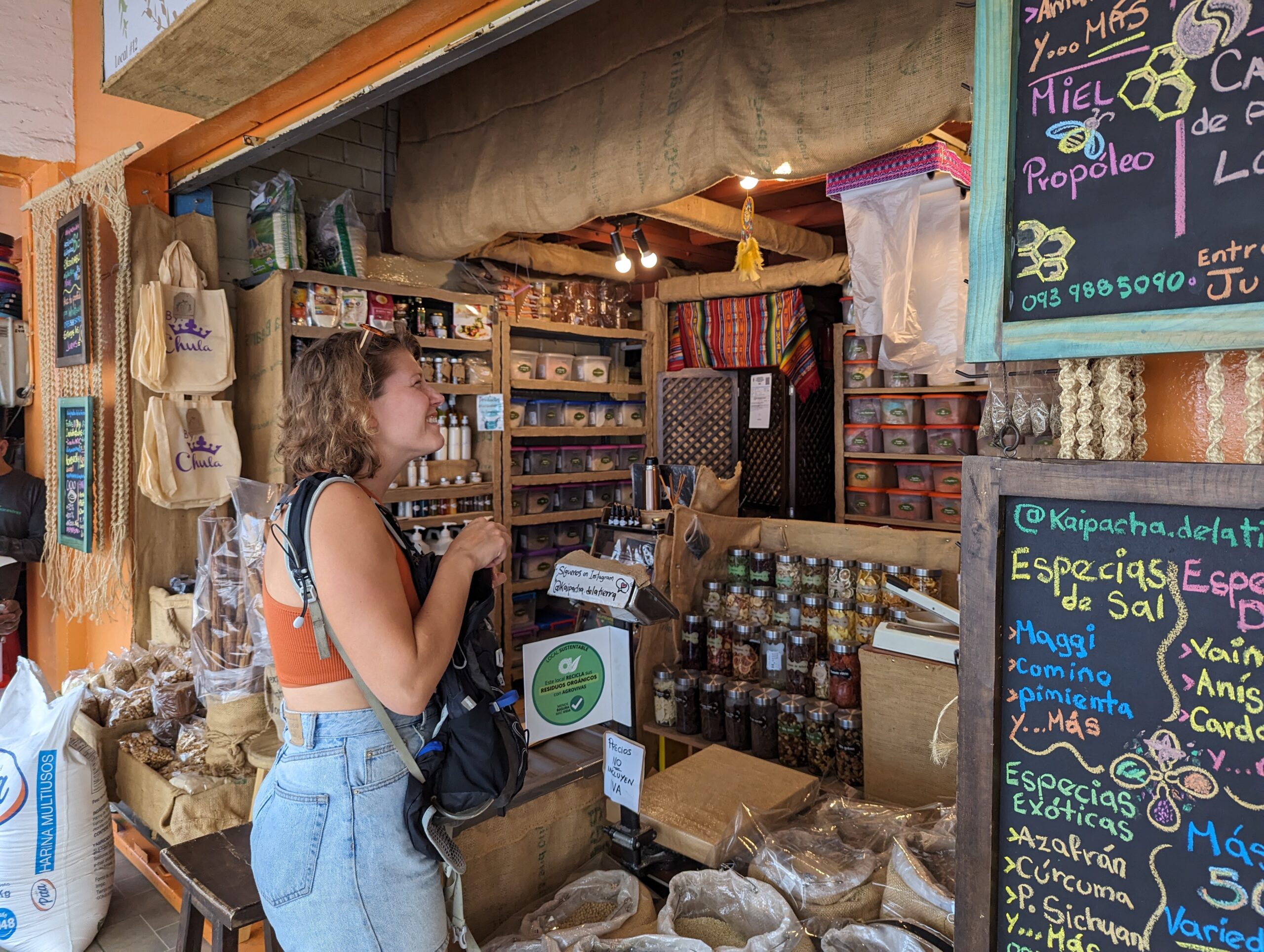
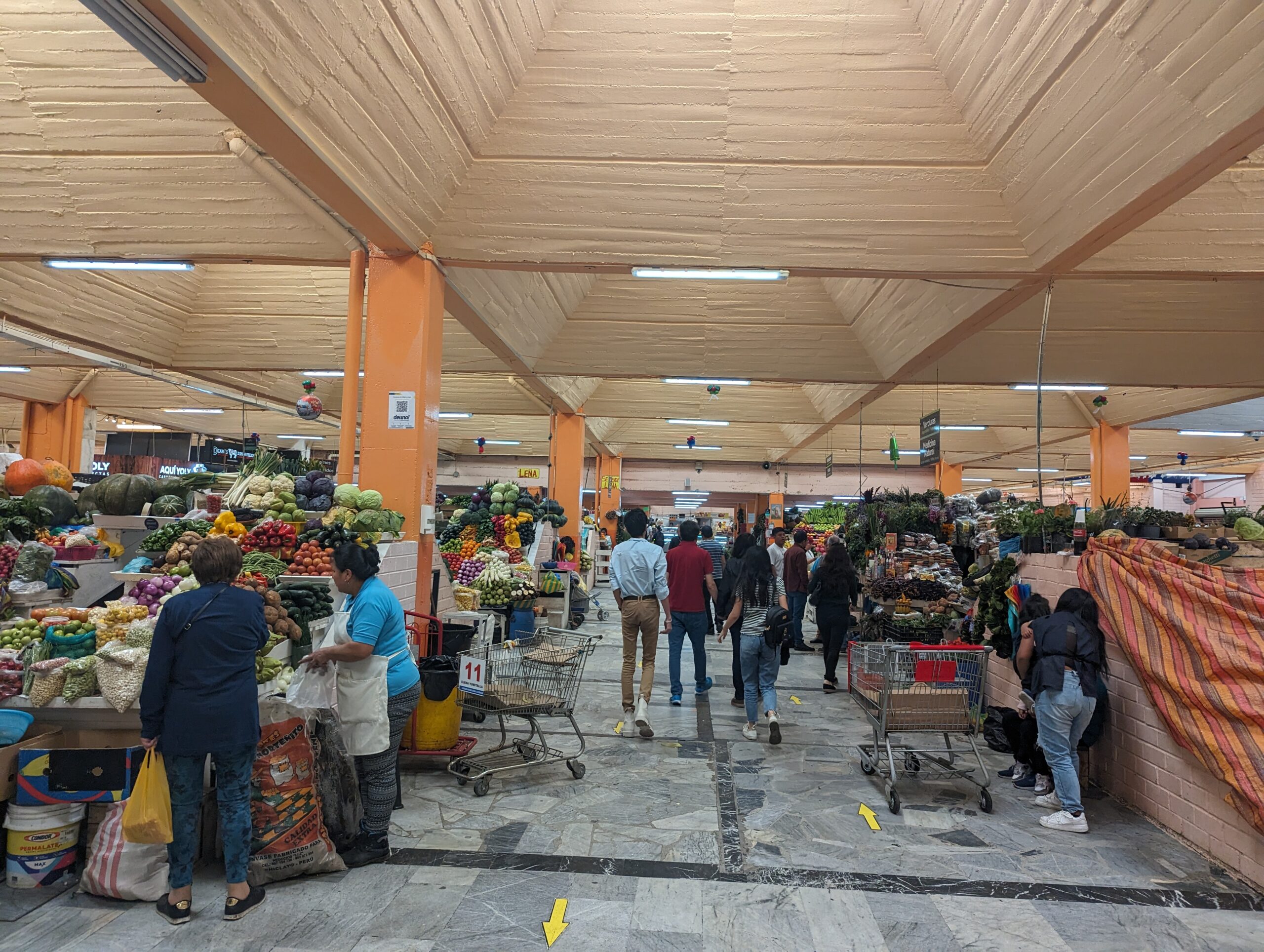
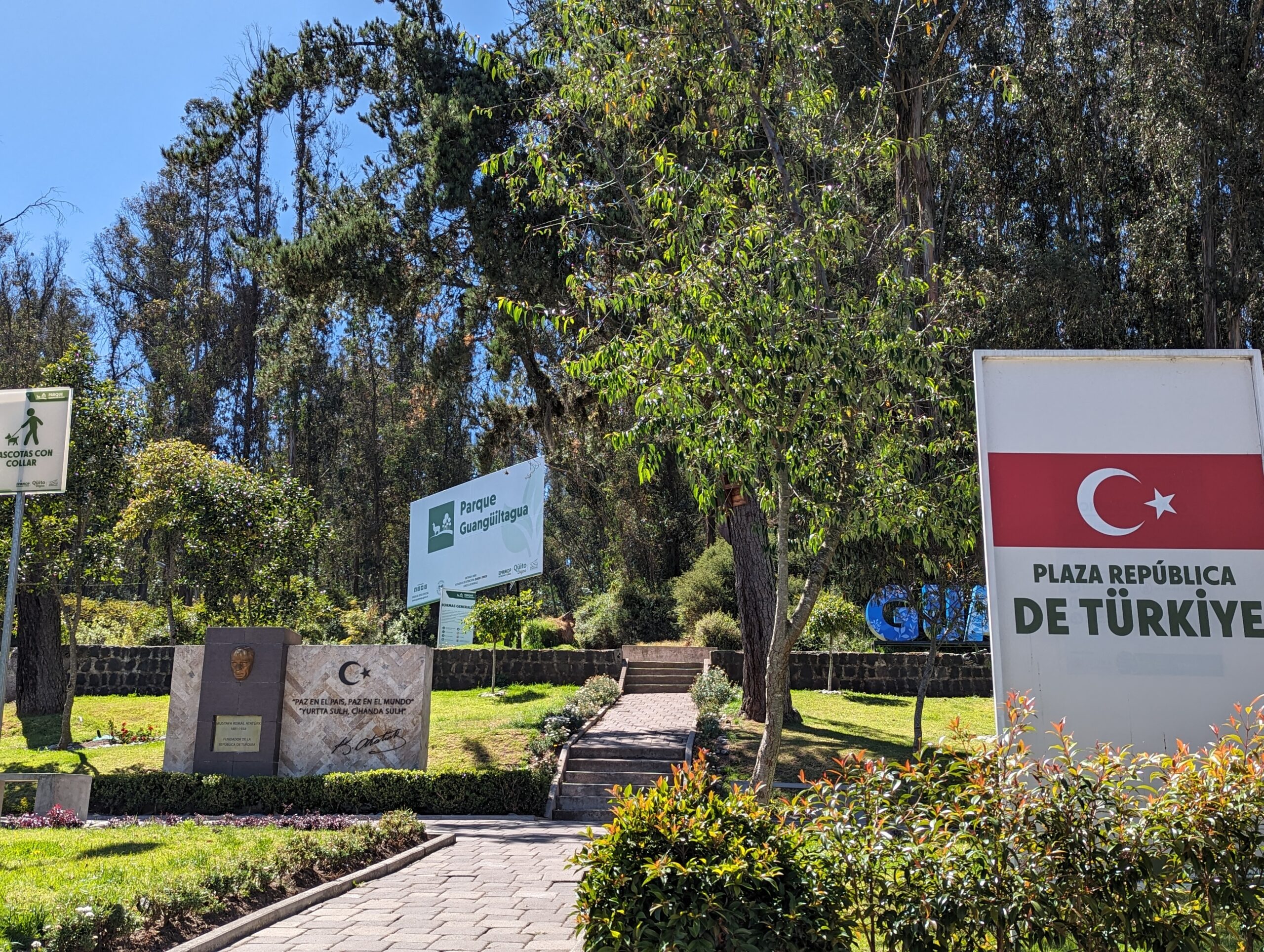
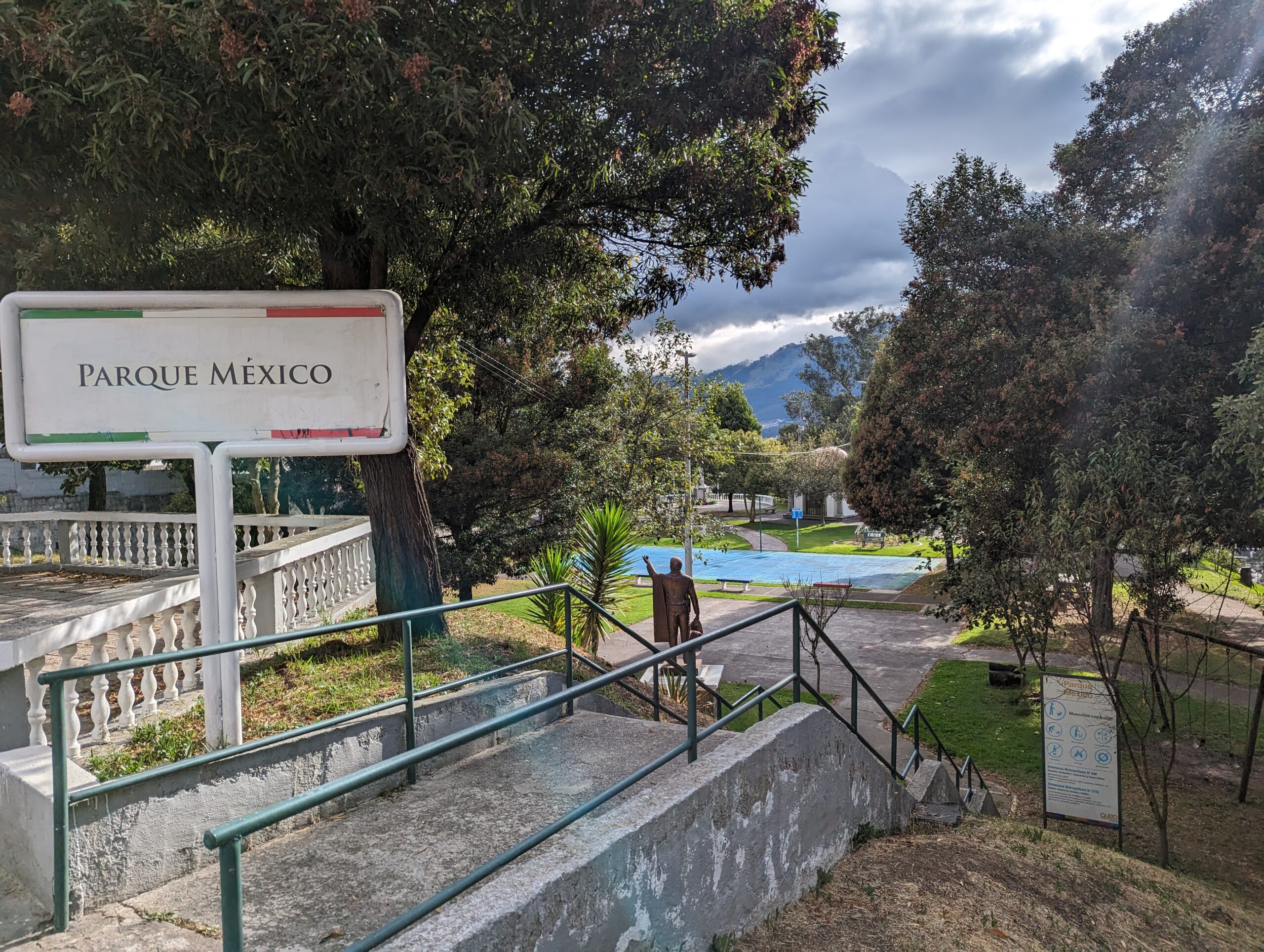
People in line for registration to vote This vendor at Mercado Iñaquito had bulk dried goods and even refillable bottles for natural laundry detergent.Inside Mercado Iñaquito.This park is named after the Machalilla culture that over inhabited the area for 3000 years. There is a statue honoring the founder of modern day Turkey.This park has outdoor sports facilities and great places to walk around.
On Saturday, a group of us went hiking in Parqué Metropolitano. It is the largest park here and is mostly forest hiking. It was a great 6 miles and even better that it is only 300 meters from my doorstep.
Indigenous community that was able to retain their property when the park was created around them.
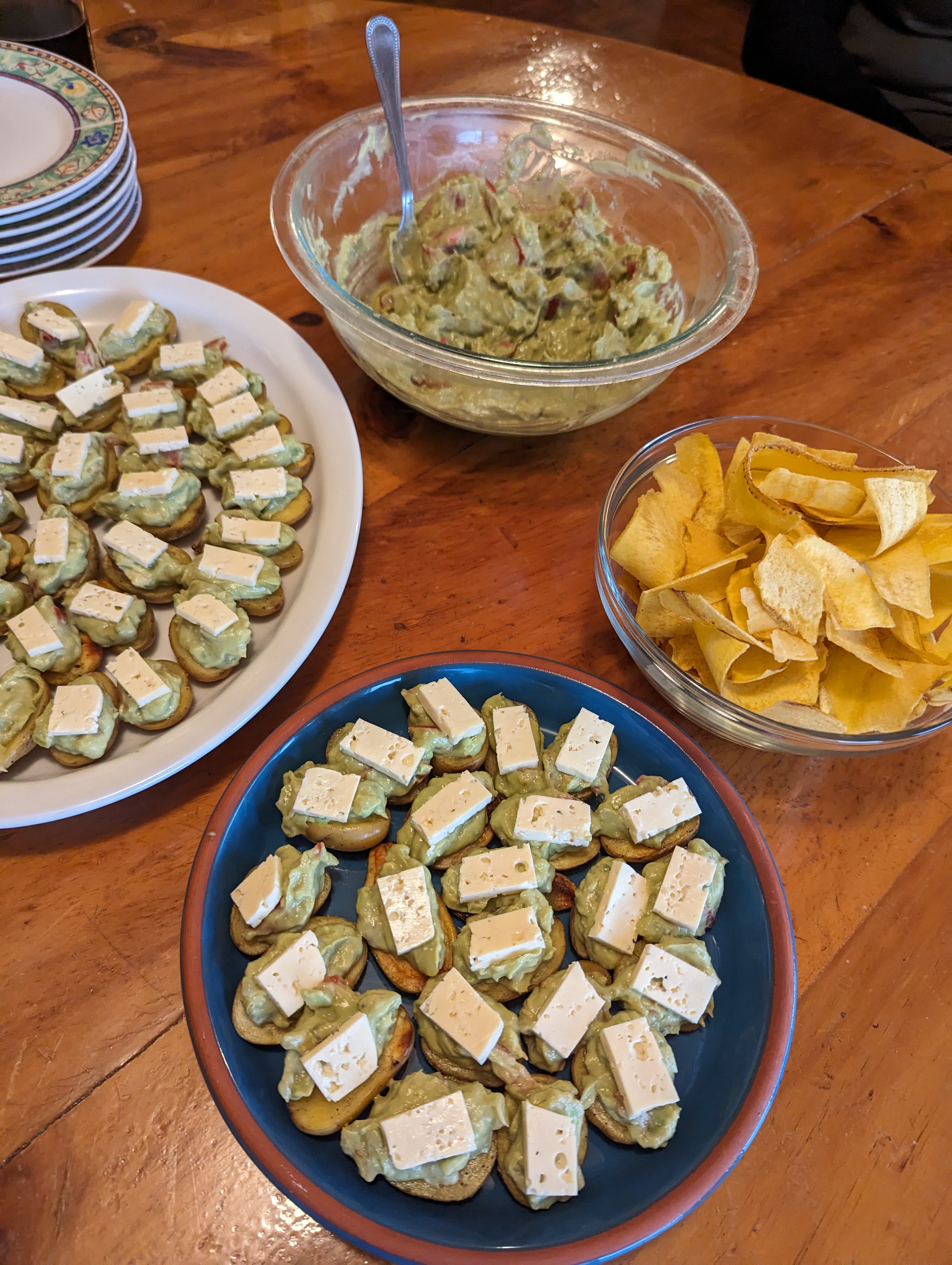
It was a beautiful hike and that evening our building had a progressive dinner. There are 4 apartments of teachers from our school in the building. Our apartment started and we made roasted potatoes (papa chola) with guacamole and farmers cheese. Plantain chips were also great to dip into the guacamole.
The other apartments contributed with entree and dessert. It was a great way to start in and not be out and about.
Sunday was very relaxing. As it rained off and on and was a voting day, we stayed in and did some work and relaxed. I heard helicopters overhead twice and there was one police car present on a short walk I did. Otherwise, not many people were out and only about a third of the businesses were open.
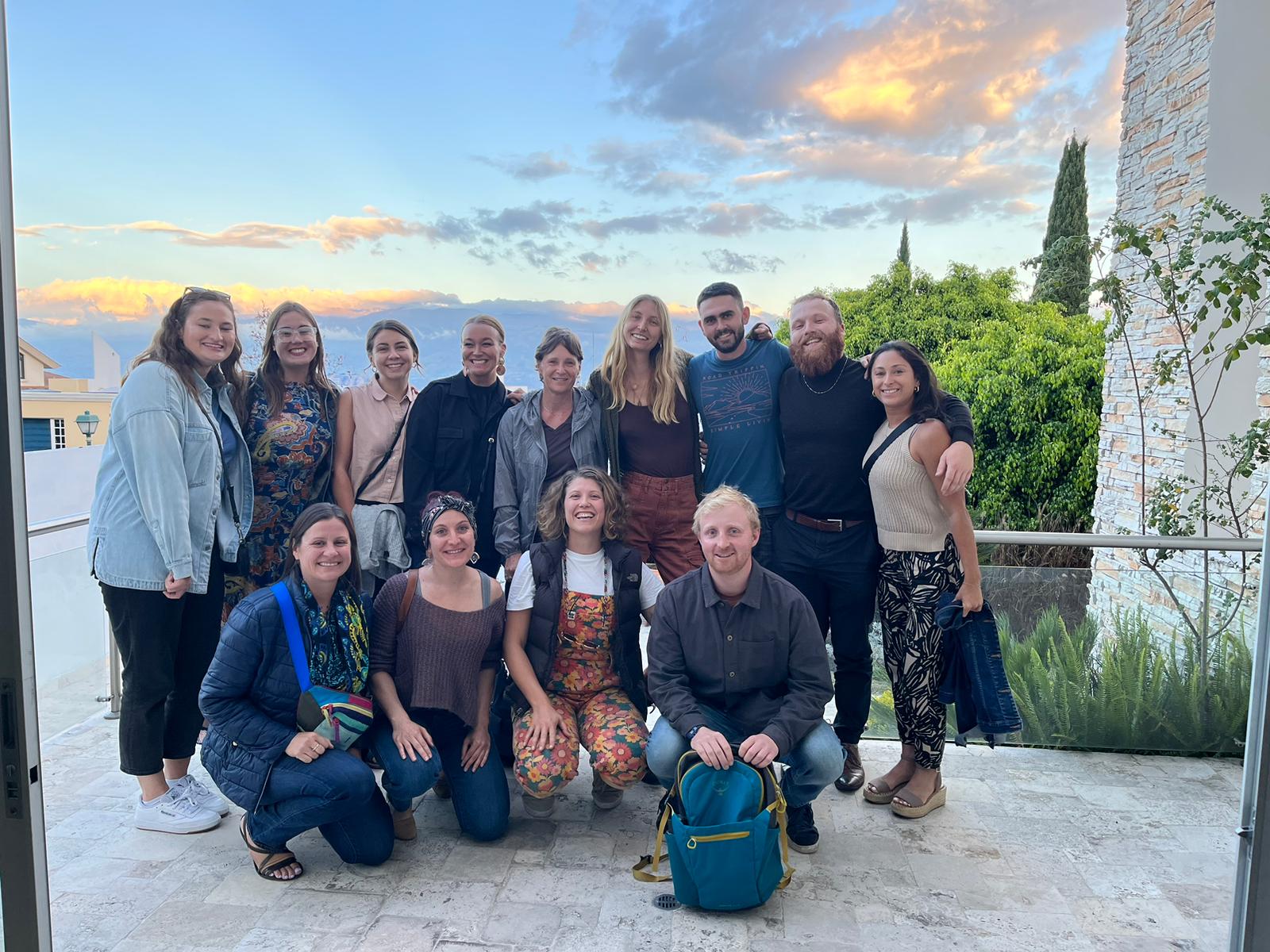
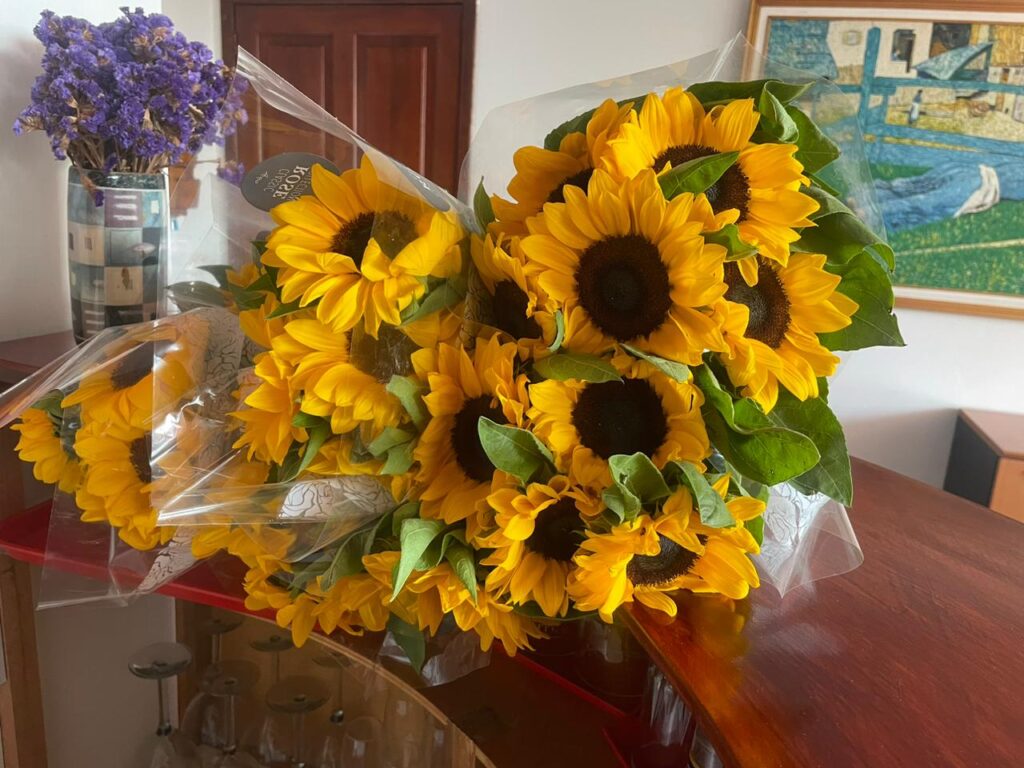
Our buddy teachers that transported us all week long and helped people find apartments bought us these beautiful flowers. They are such lovely and warm people. Though we spent hours in the car with them, it was amazing to talk to them!
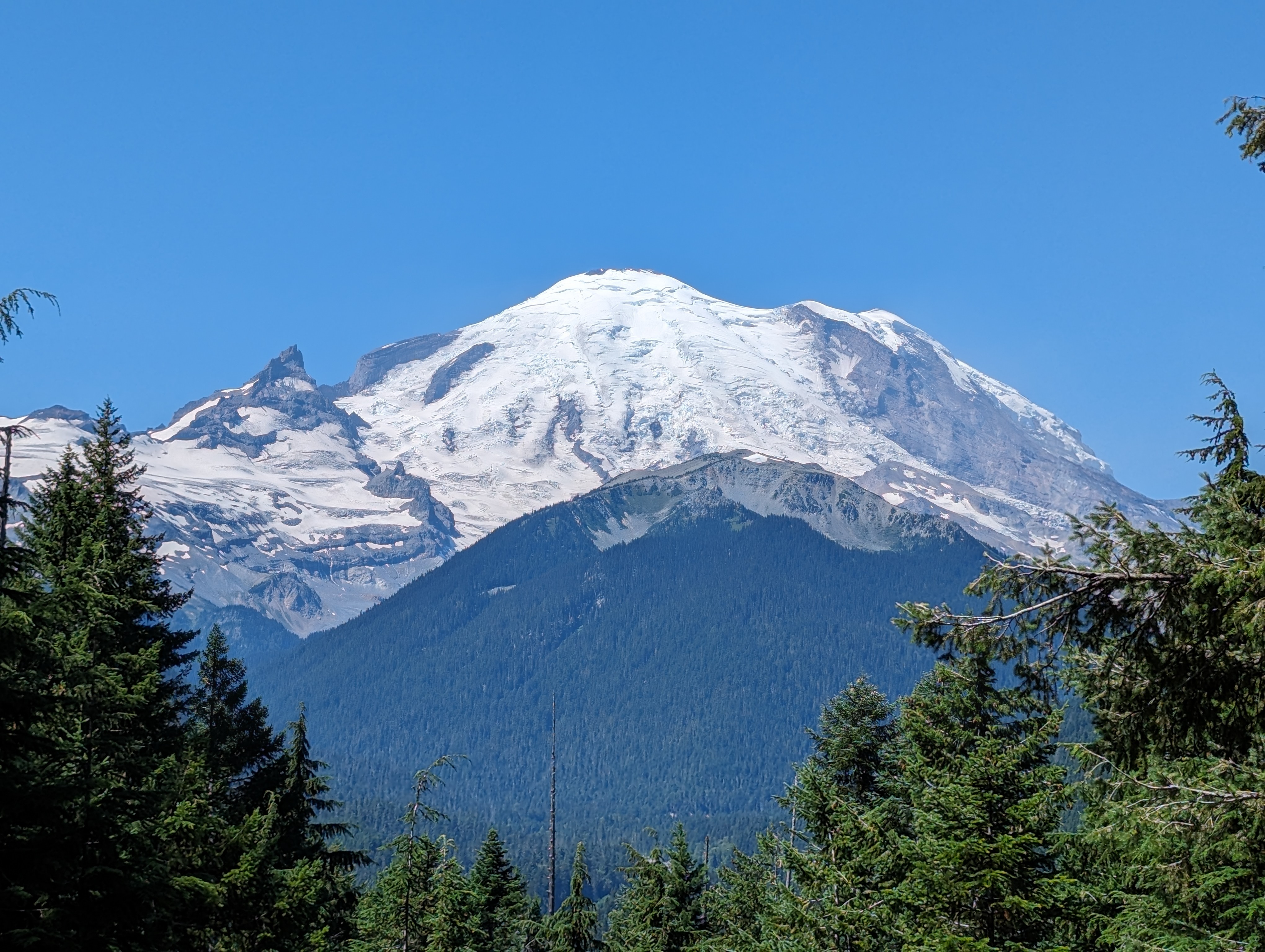
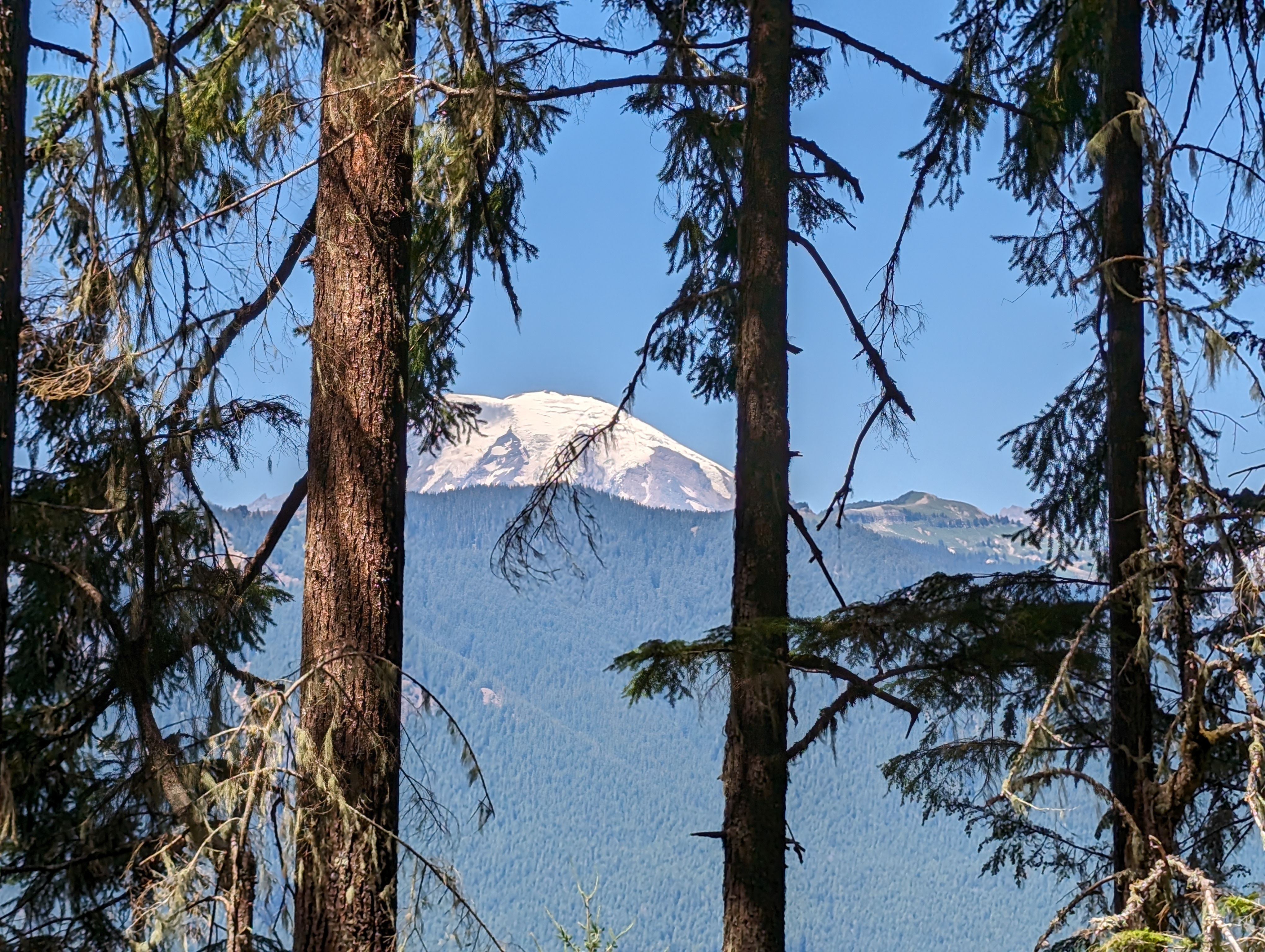
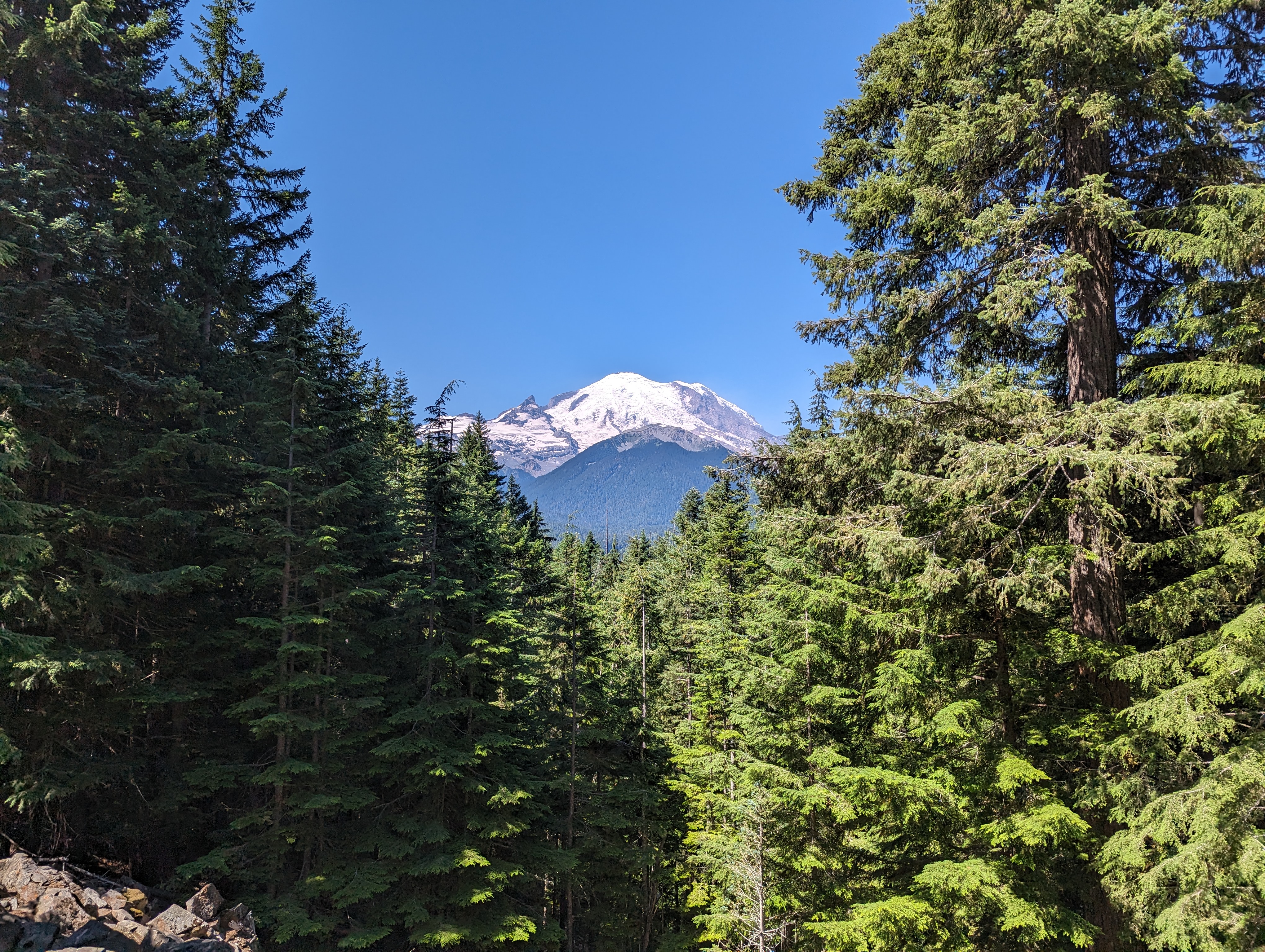
From Seattle, travels led me to Rainier. Beautiful driving and only a little hiking. And yes you can see Rainier from everywhere!
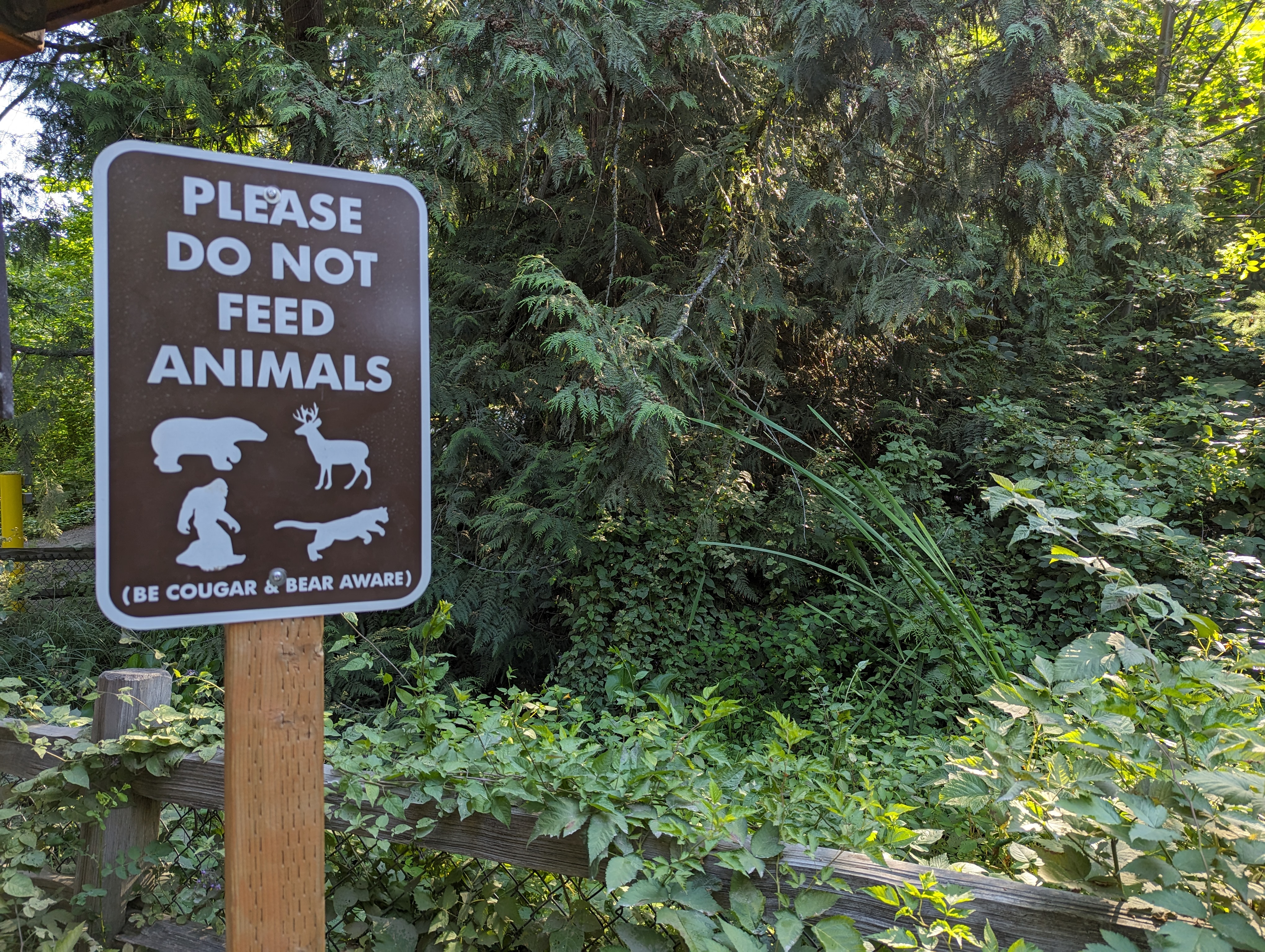
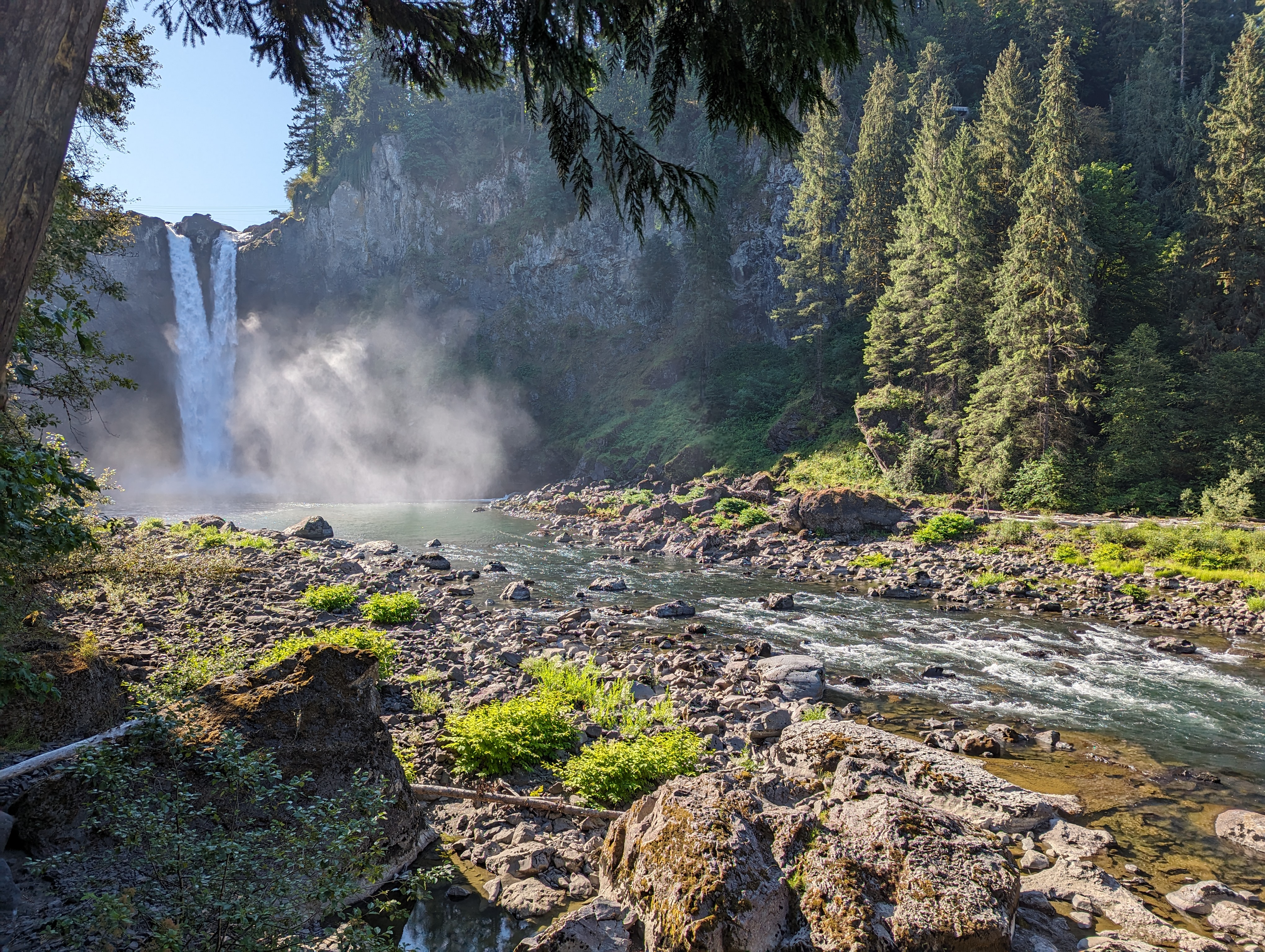
Sad there was no Sasquatch but definitely saw bear skat on the trail. Beautiful waterfall.
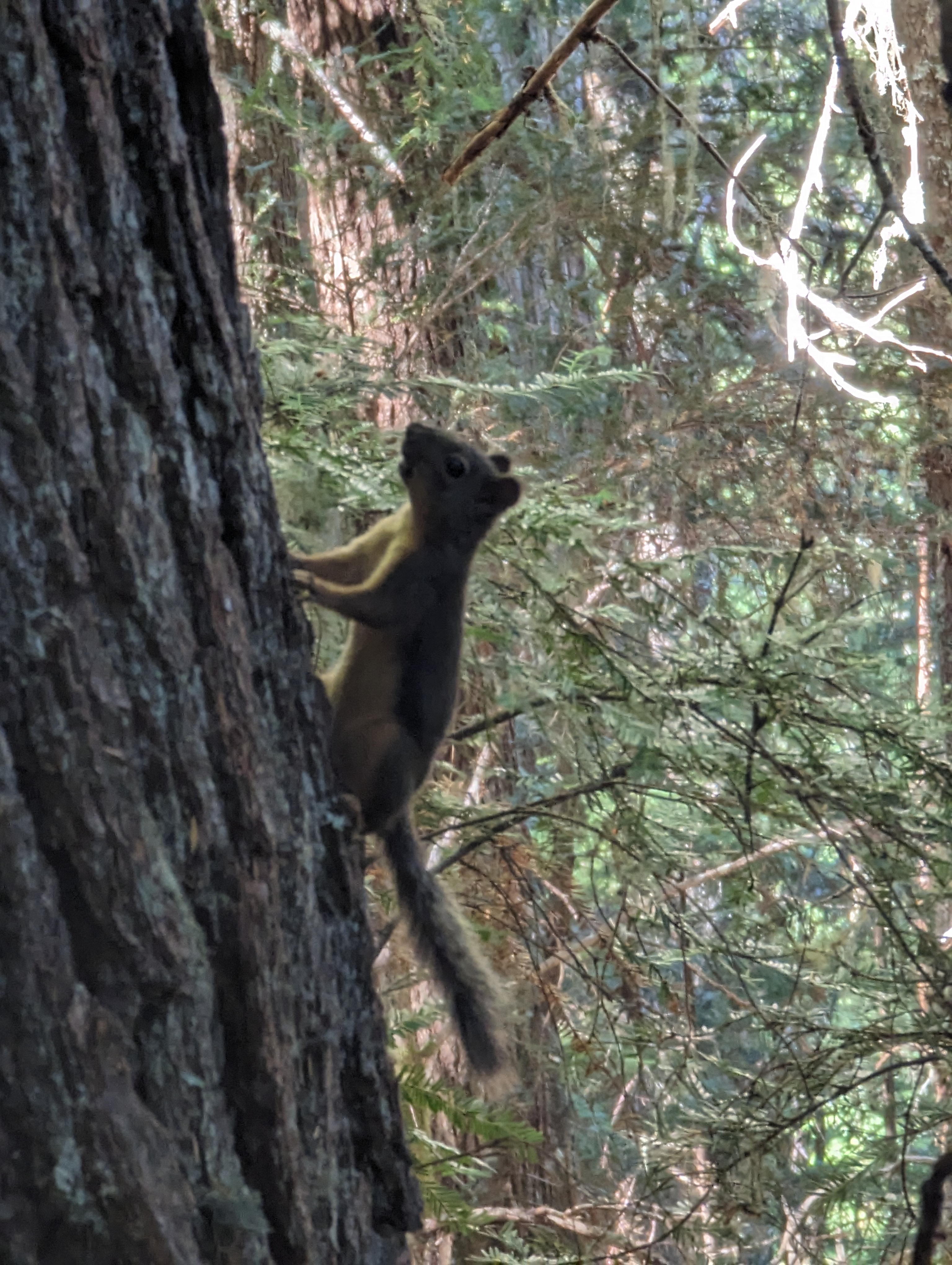
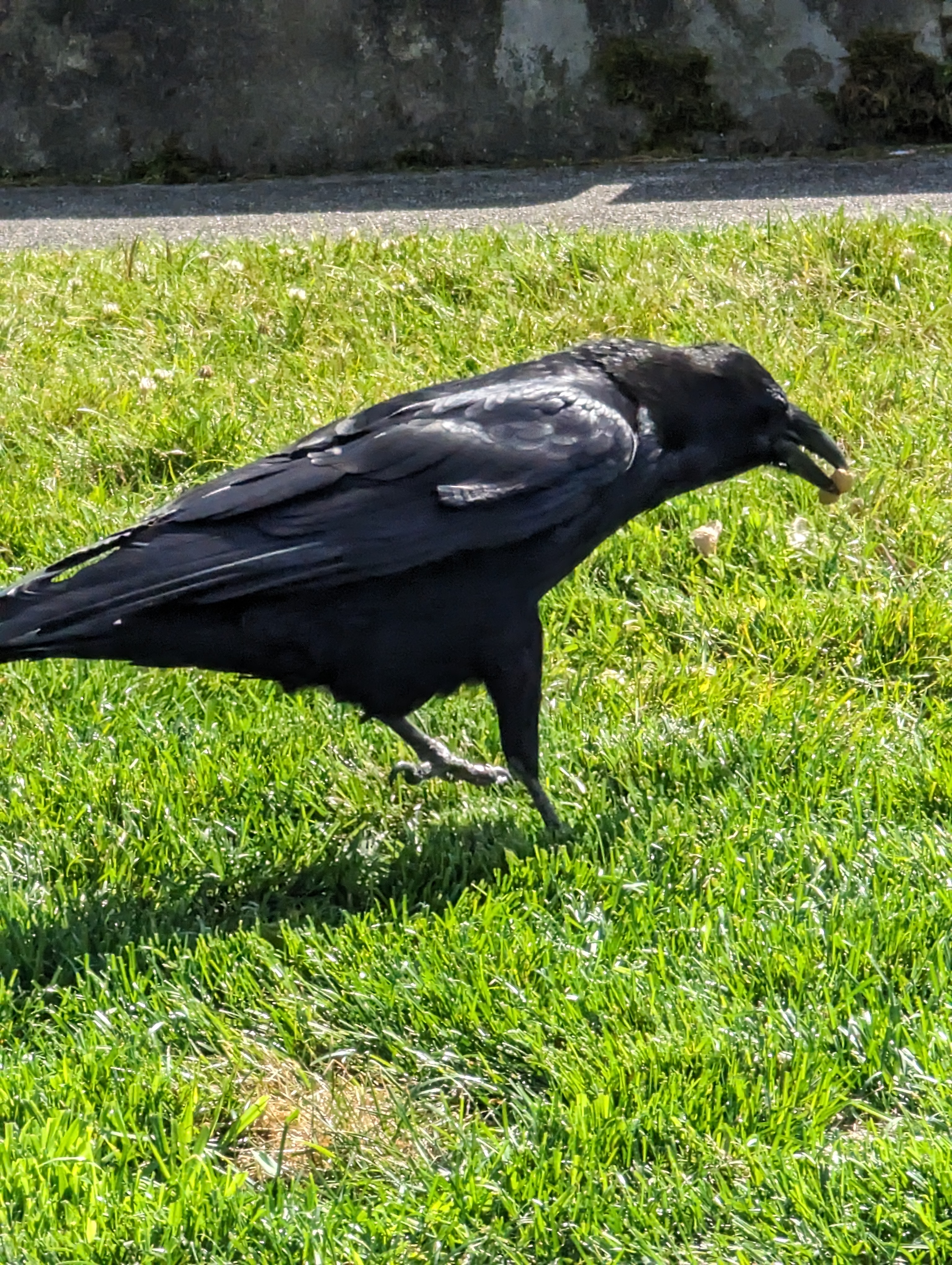
I made friends with this beautiful black squirrel. He chirped at me and stood and stared. He was a great conversationalist and was there to greet me on my return trip back.
From Rainier I headed to the Oregon coast to check out the towns along the coastline. Along the way, I could have stopped to see Mt St Helens, but I was not sure how far out of the way it was. The day before and that day was longer drives. I’ll come back again. Washington is definitely beautiful (Montana is too as Becca and her Ryan is now living there.)
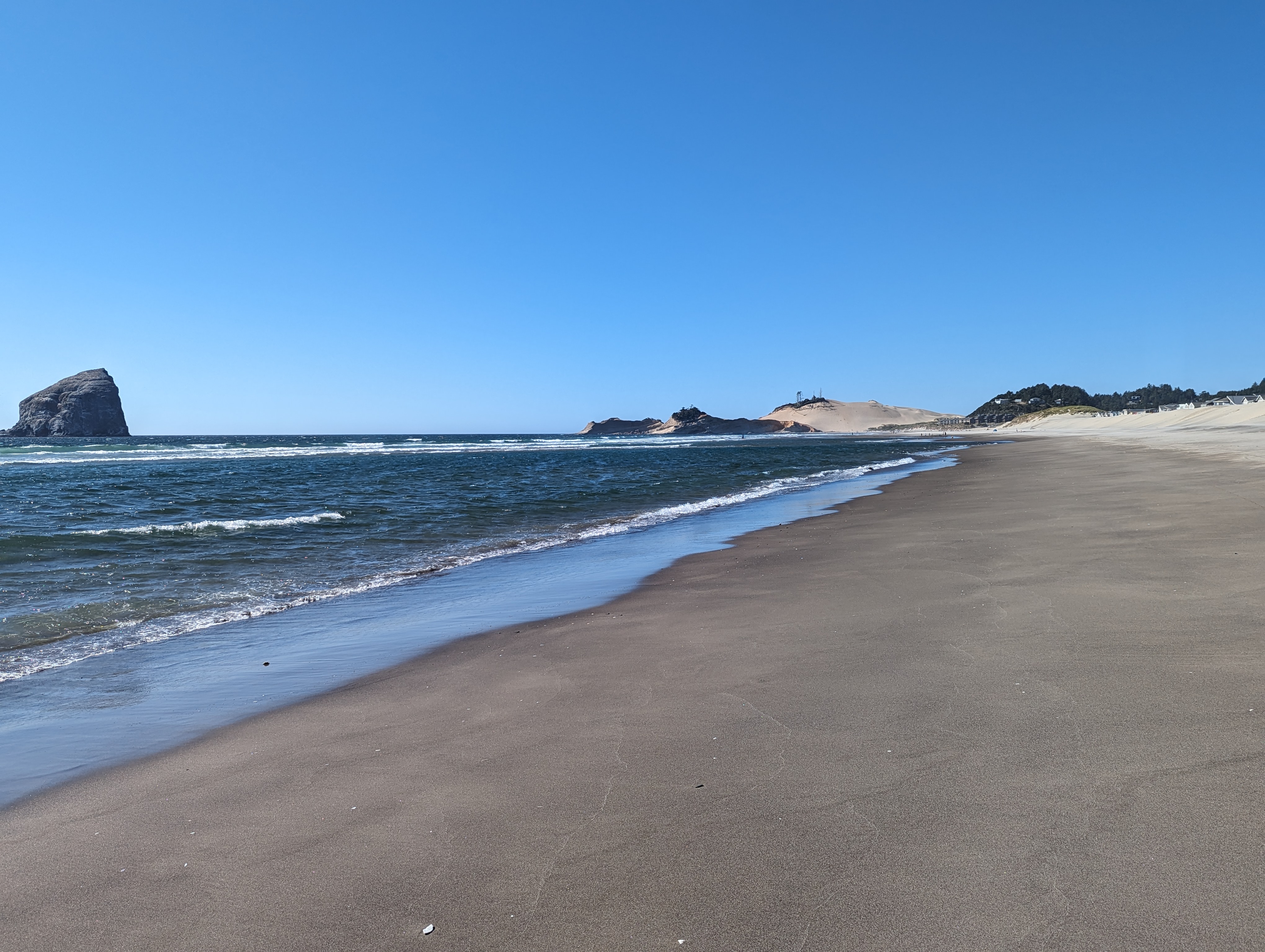
My first stop was Pacific City. Really small town and a great place to relax.
From Pacific city, my next hotel was in Seaside. This gave me enough time to take the coastal loop along the Oregon coast.
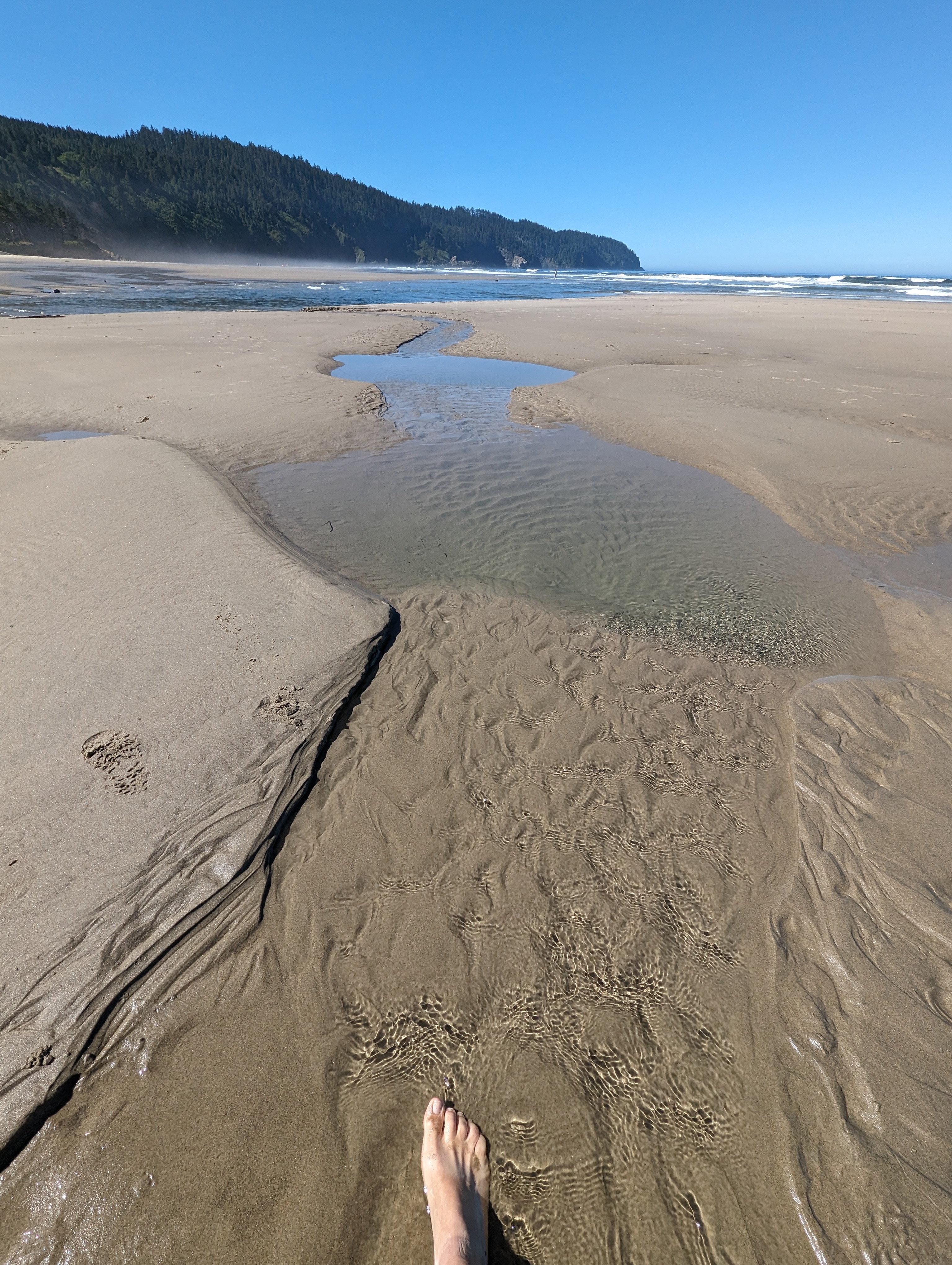
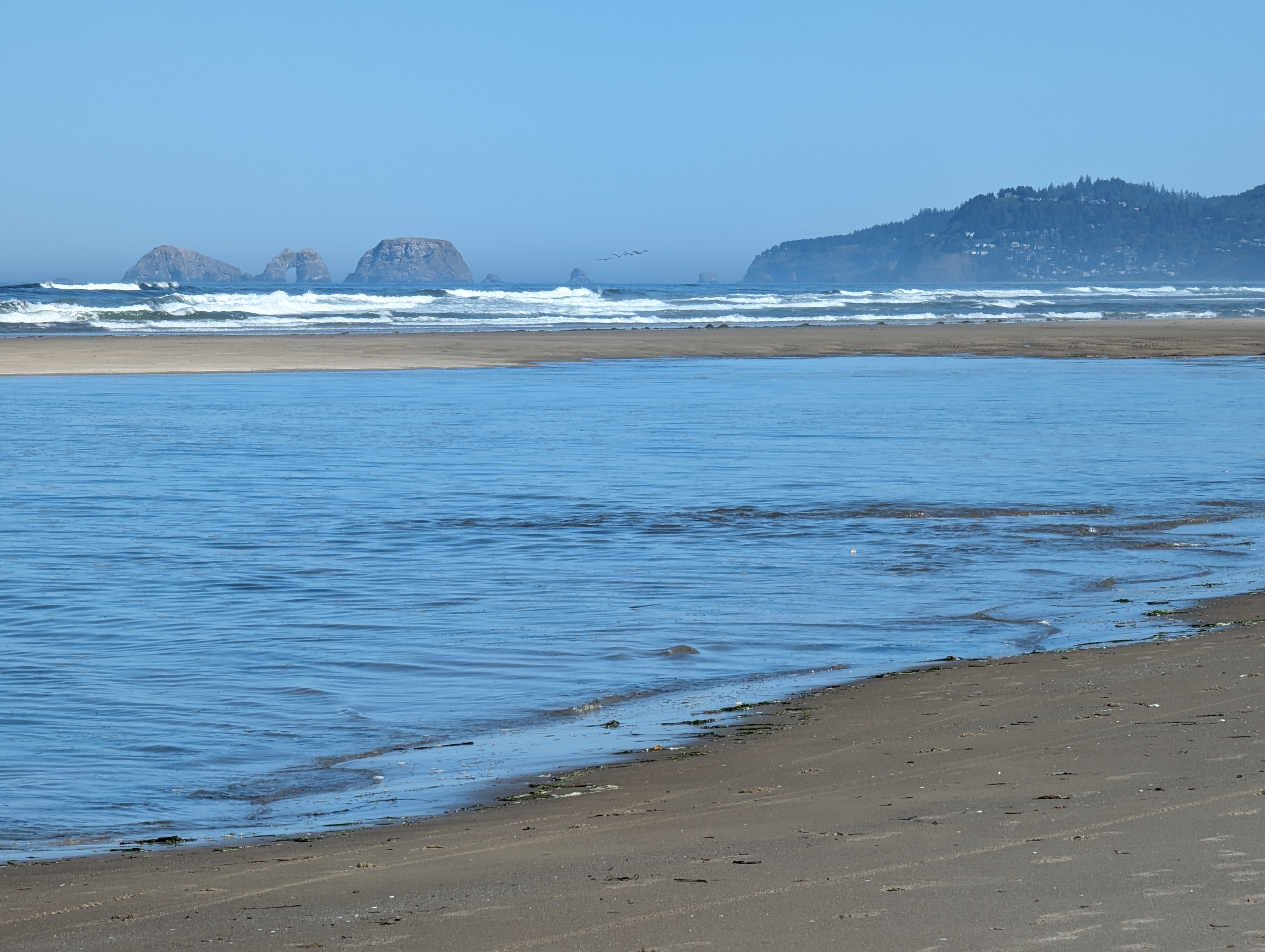
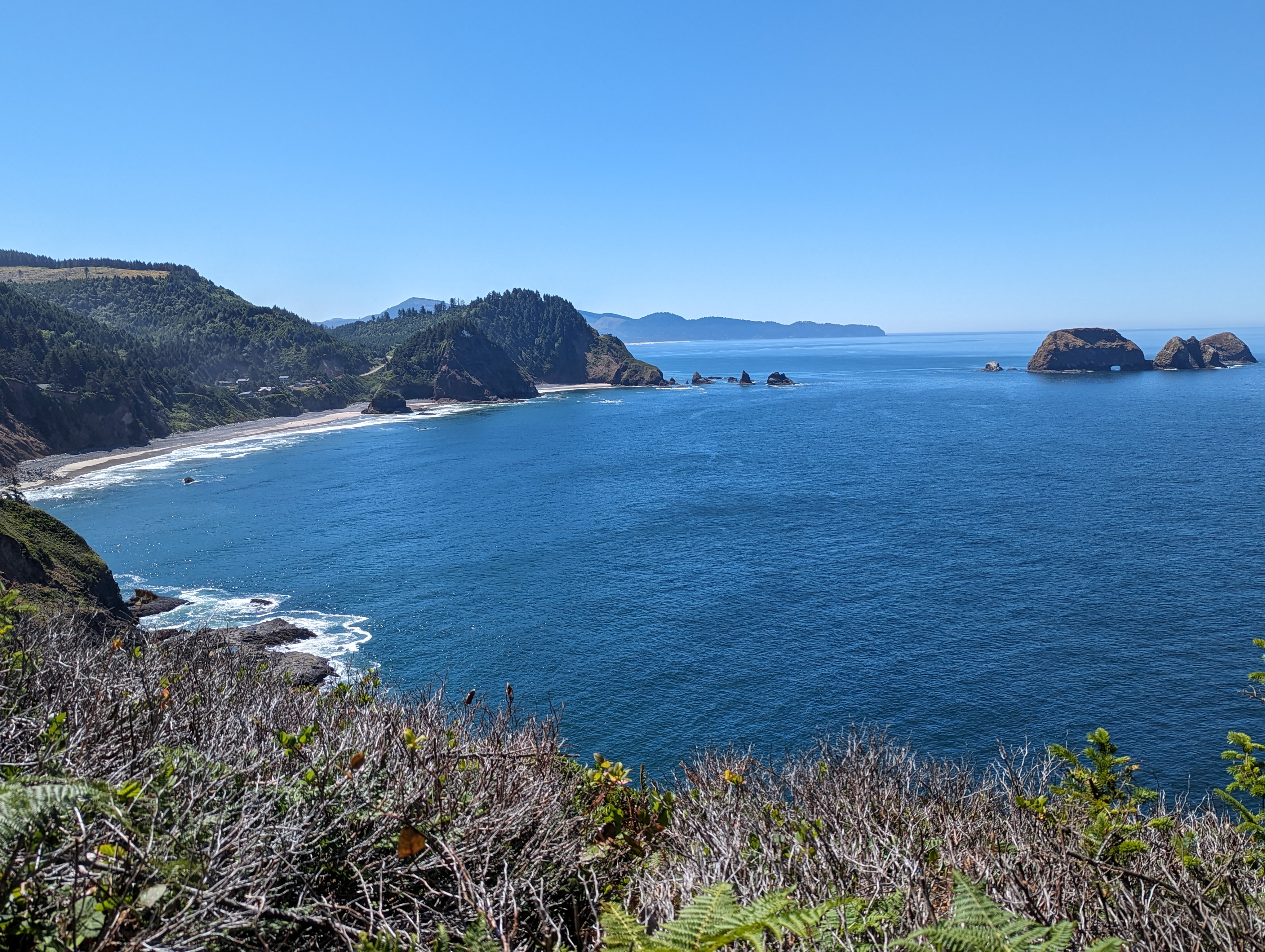
Cape Kiwanda
The water is very cool so at low tide one can walk in the tidal pools along the beach. Ok, It is still really cold but nice nonetheless.
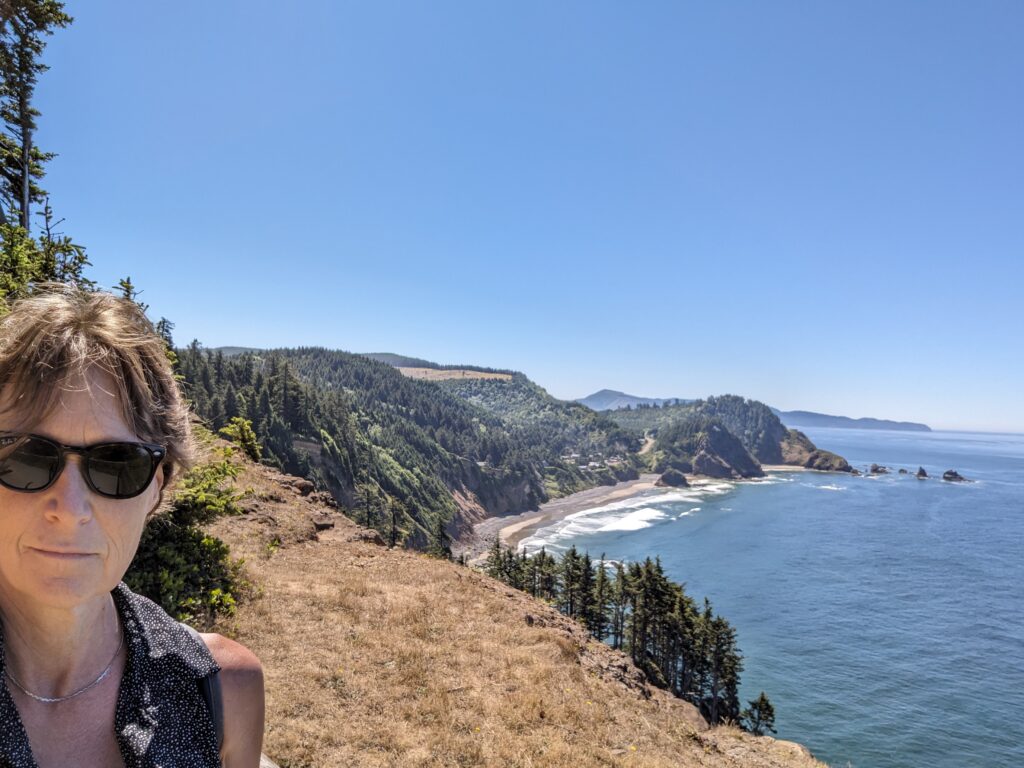
Cape Lookout
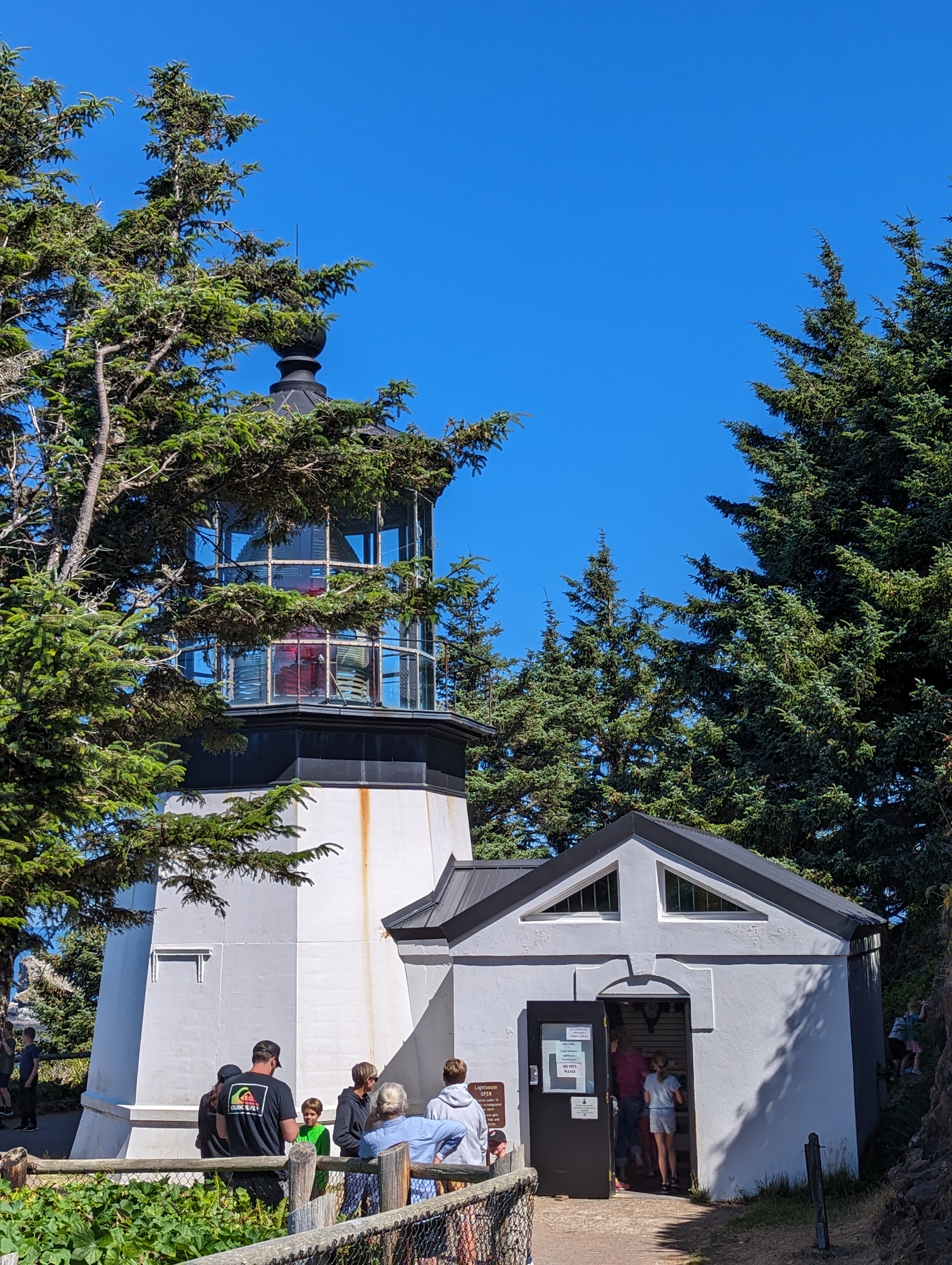
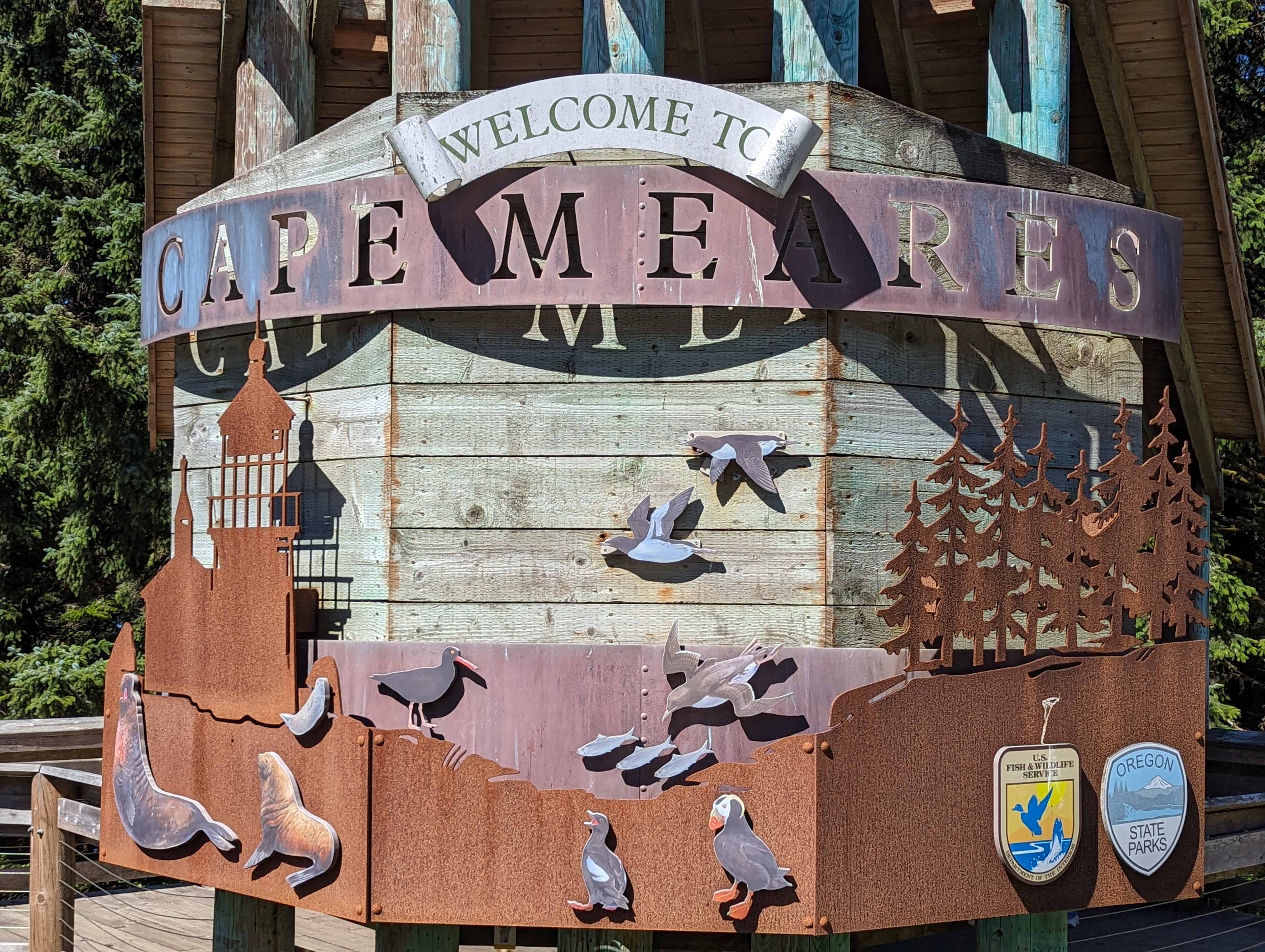
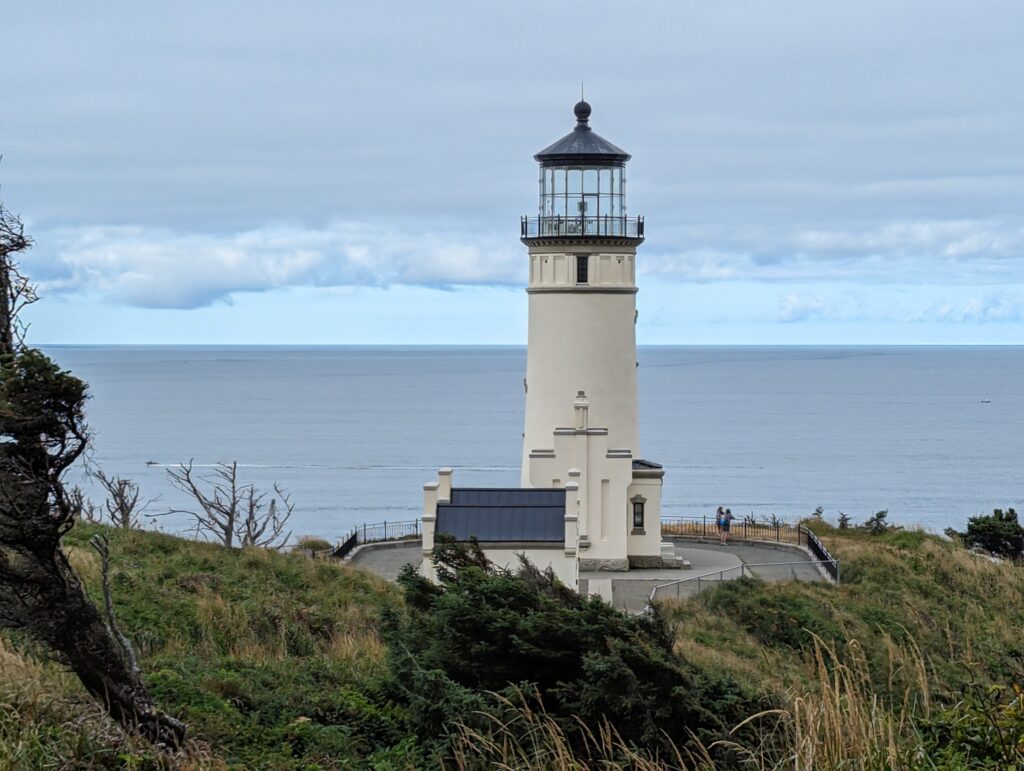
Cape Meares
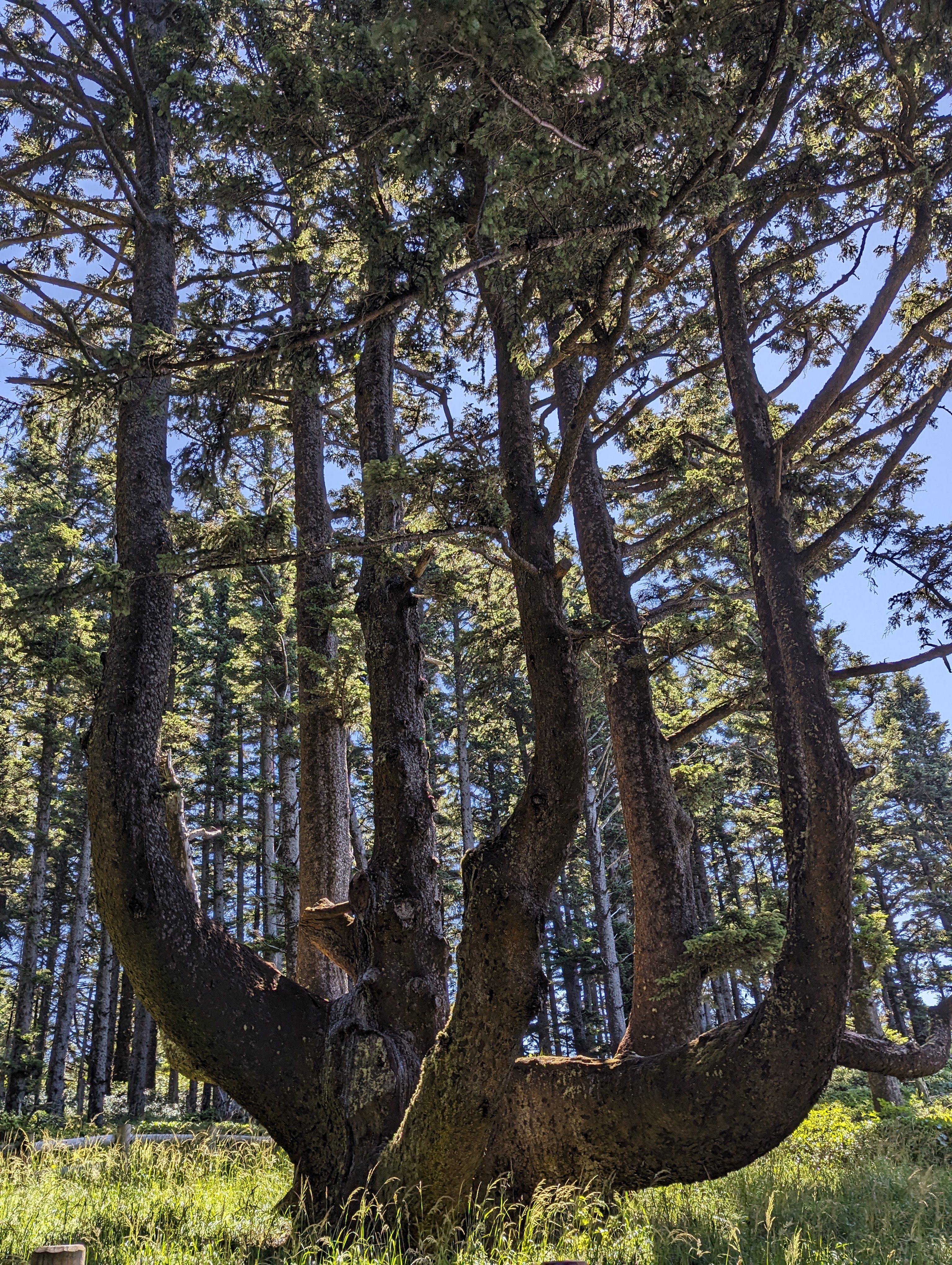
Octopus tree. The forces that made this happen were either natural or from Indians bending branches for direction pointing and navigation.
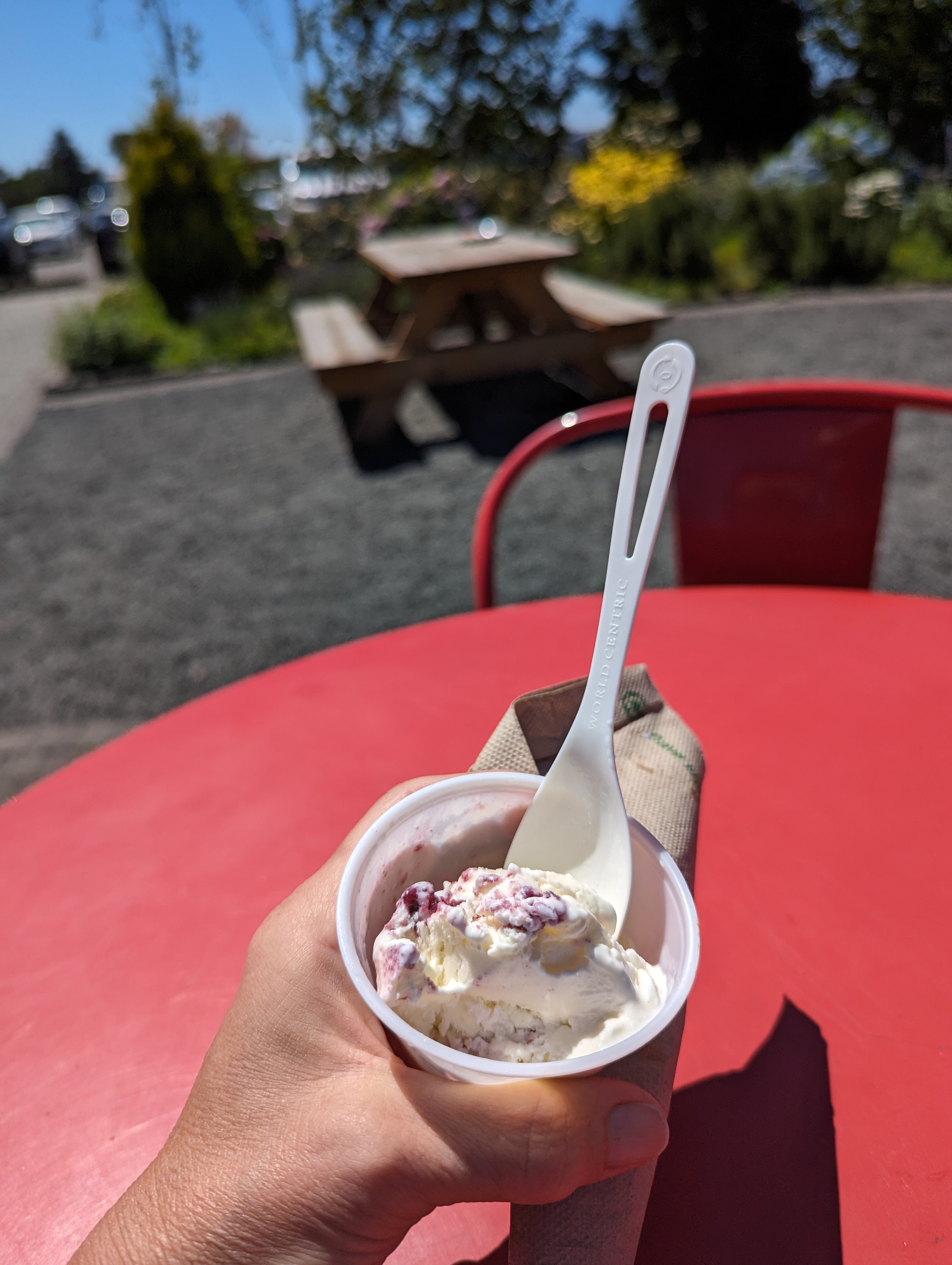
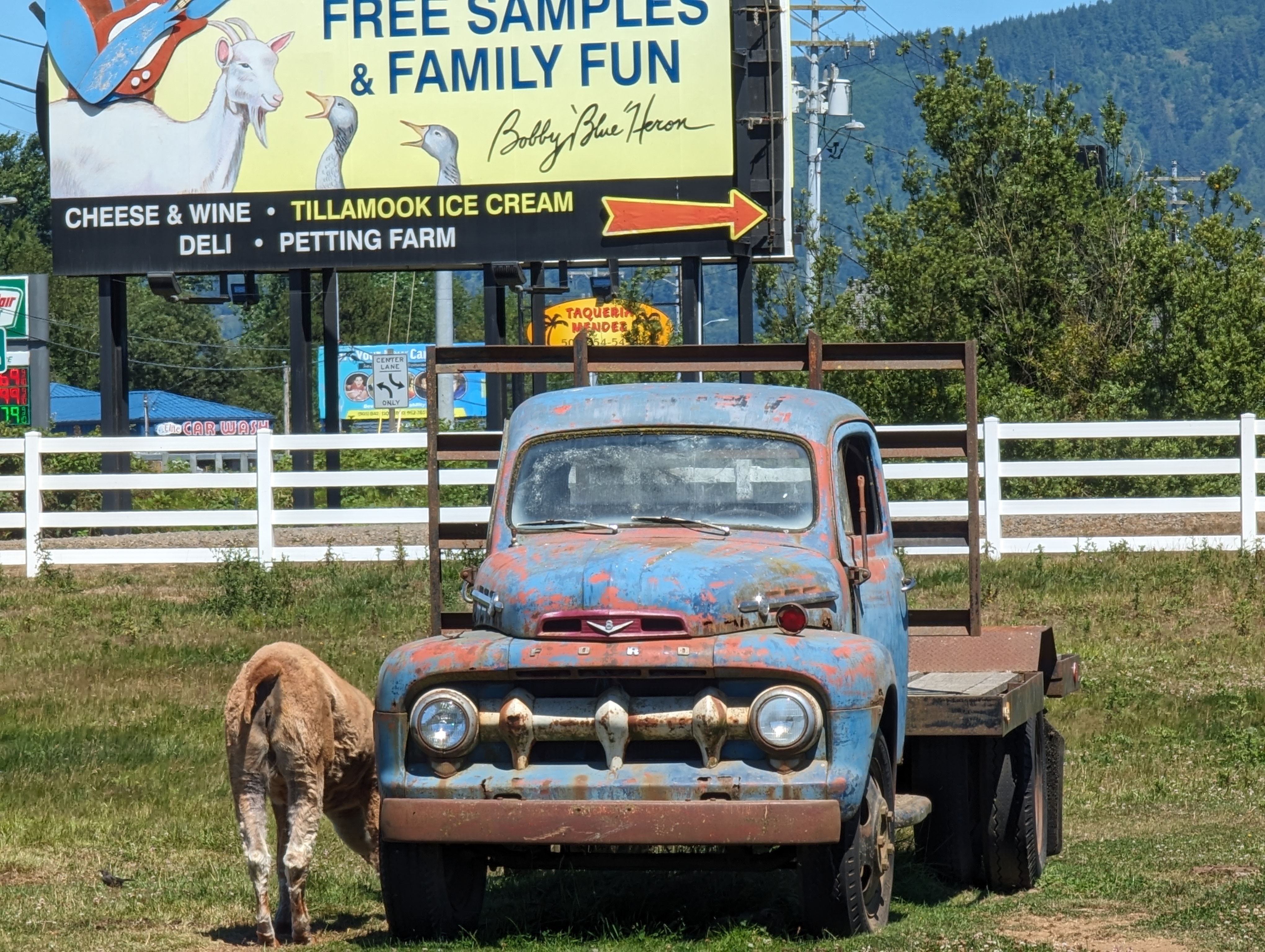
After the Capes I stopped in Tillamook at a creamery and had huckleberry ice cream.
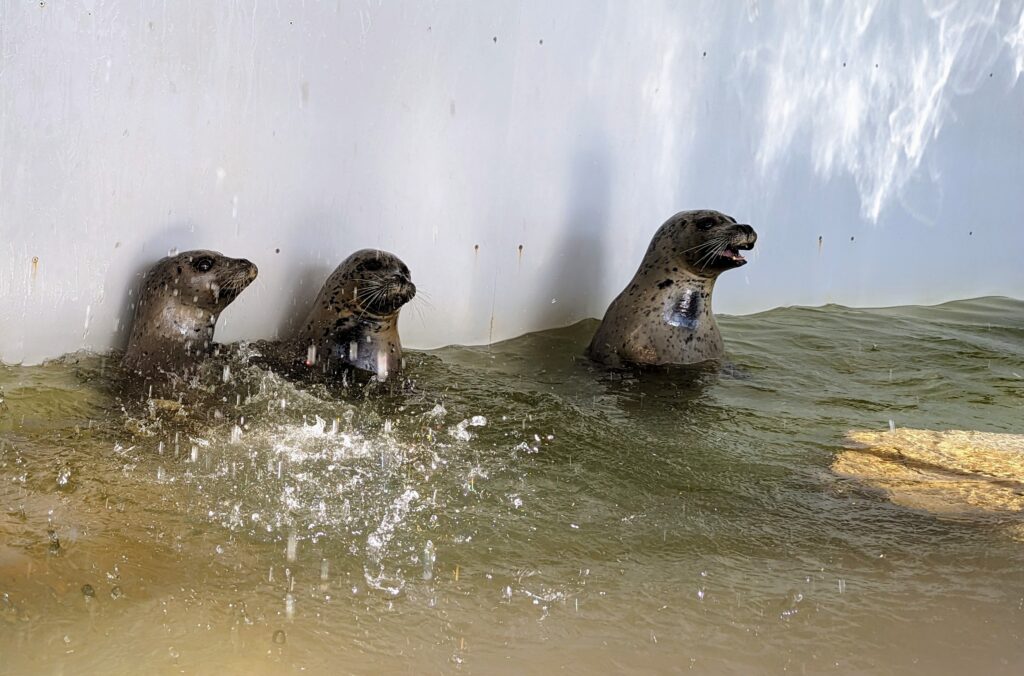
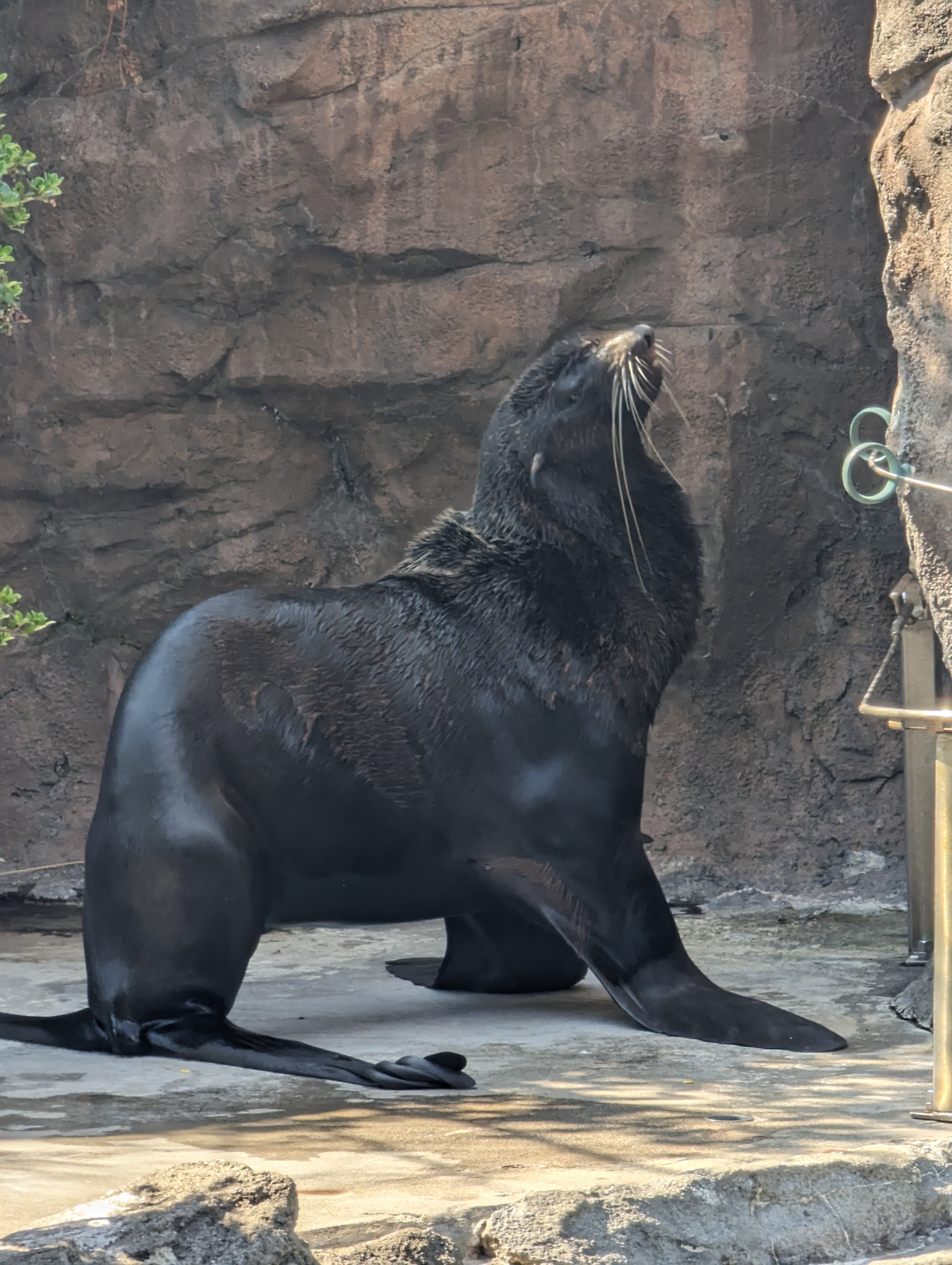
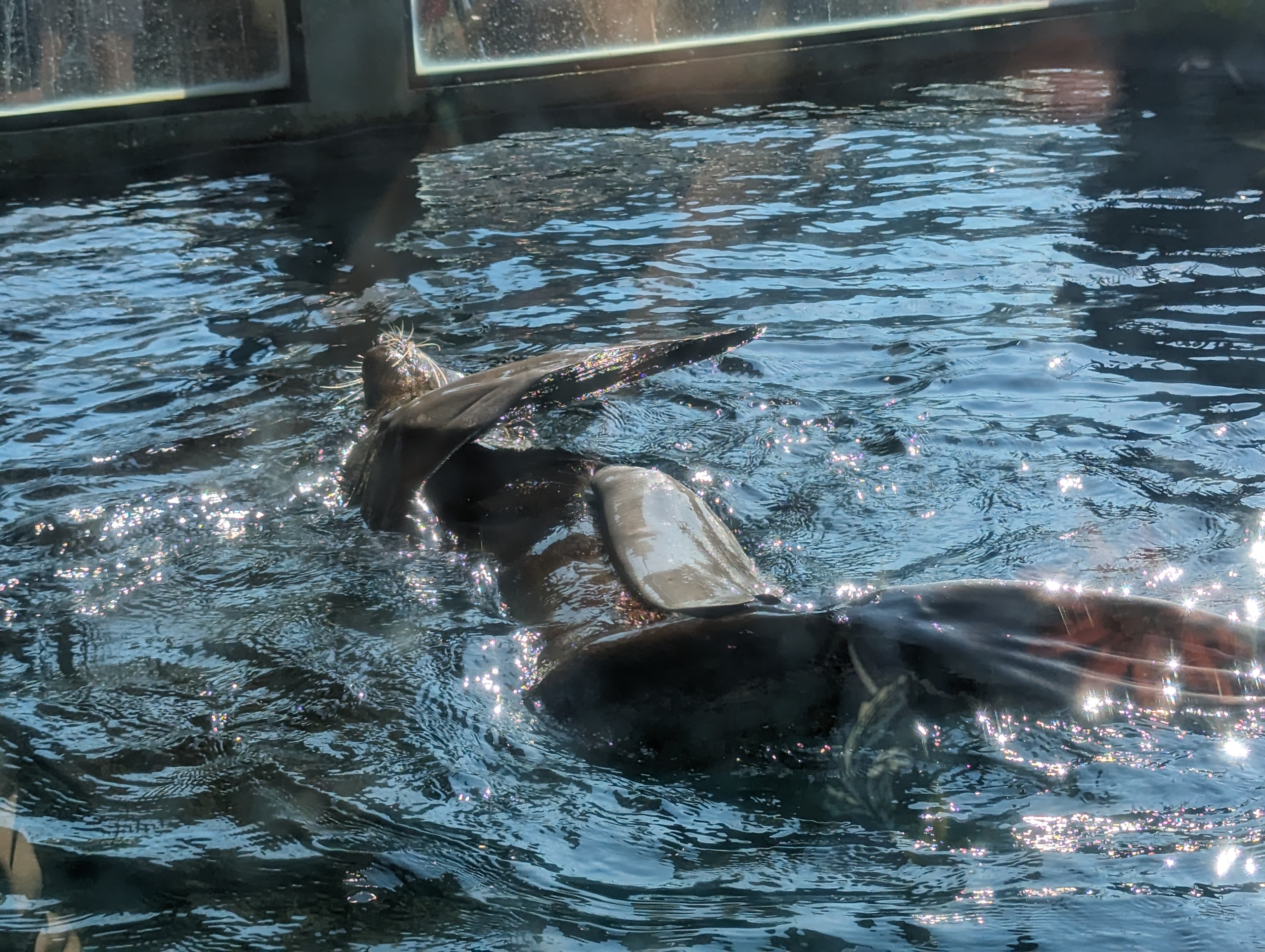
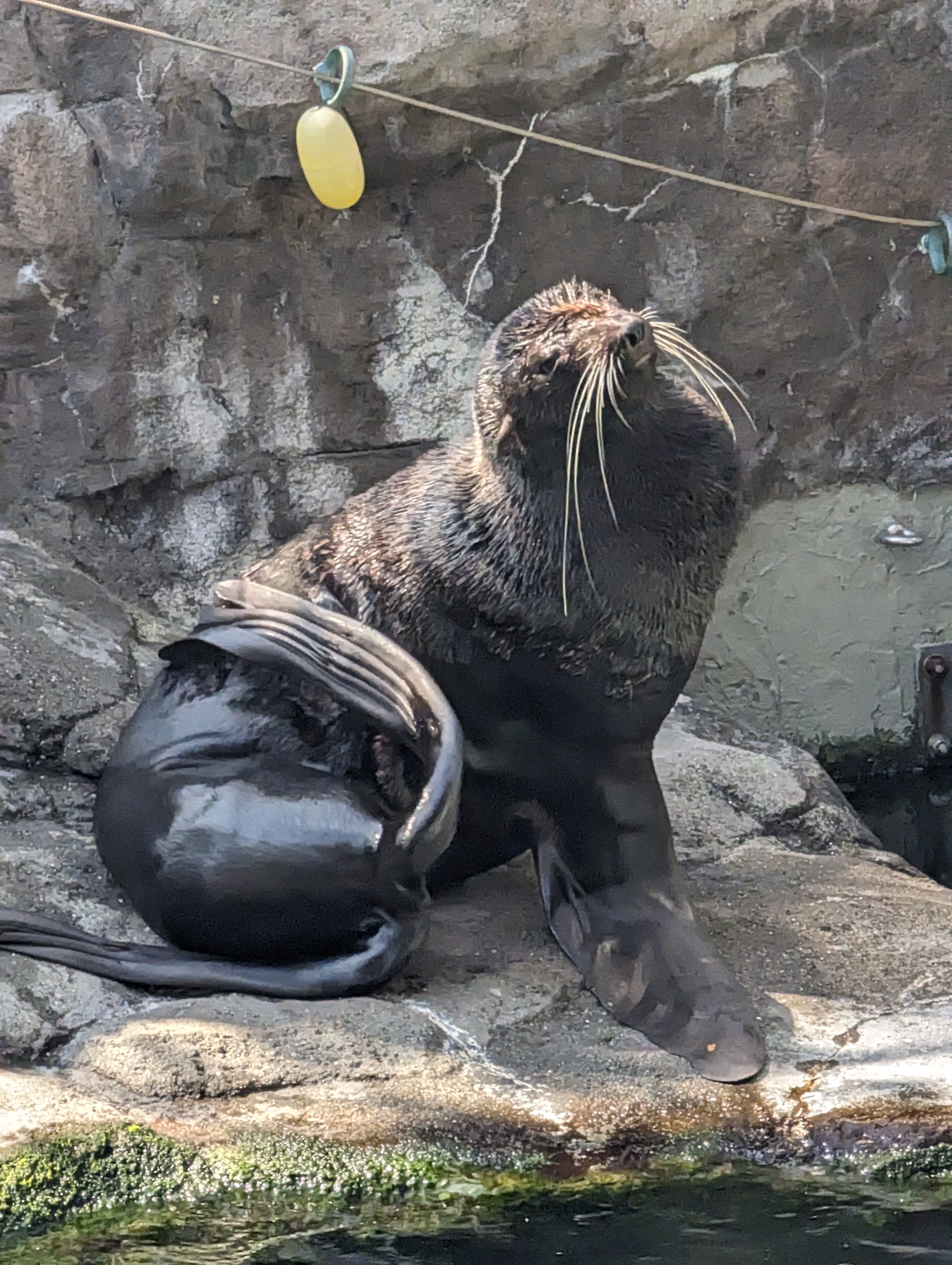
I stayed over in Sunset Beach. Not a quiet beach, but not the busiest either. I visited a small aquarium that is family owned. The reviews looked good and the animals looked will cared for. You could feed the sea lions with fresh fish which was fun.
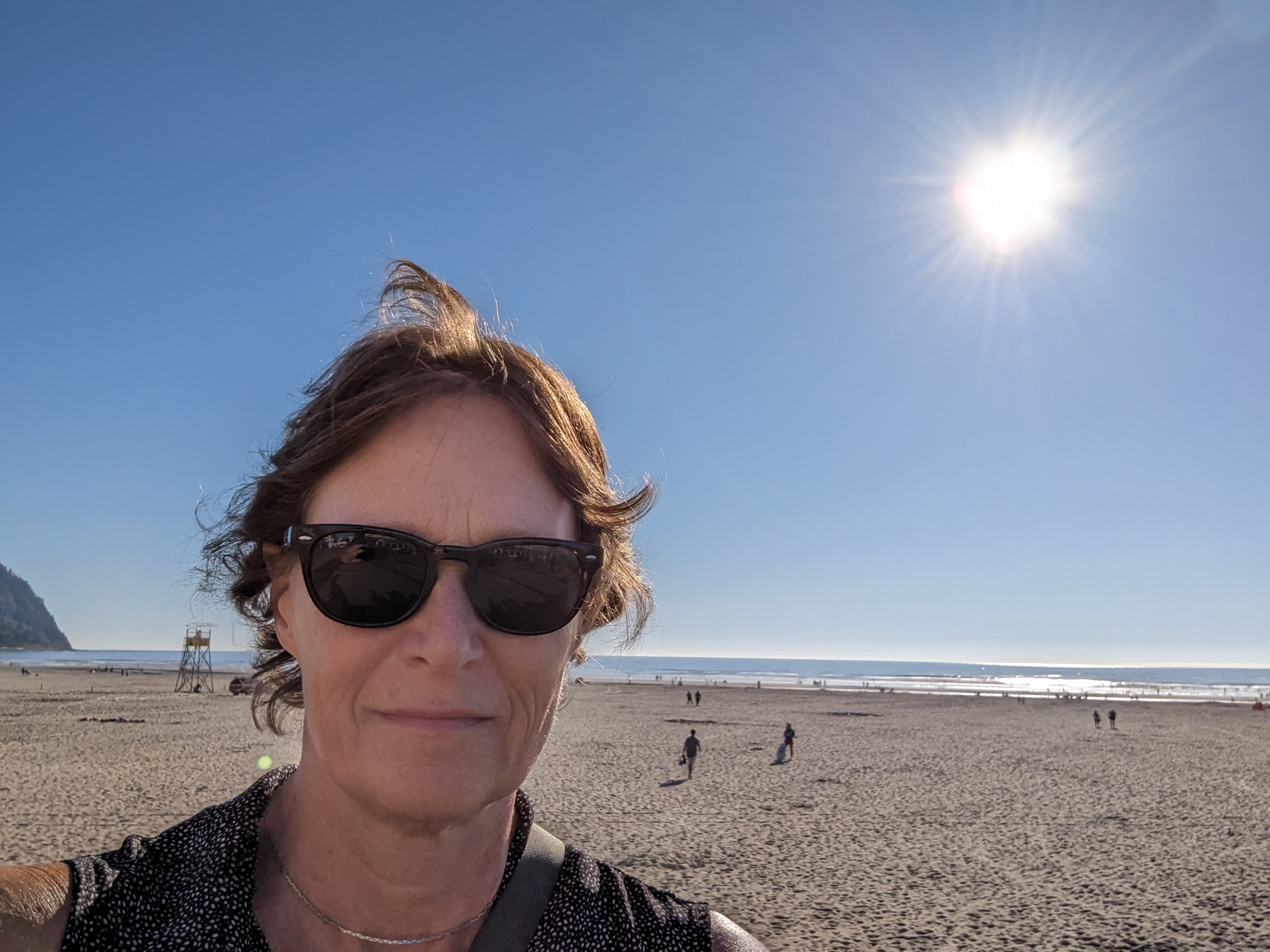
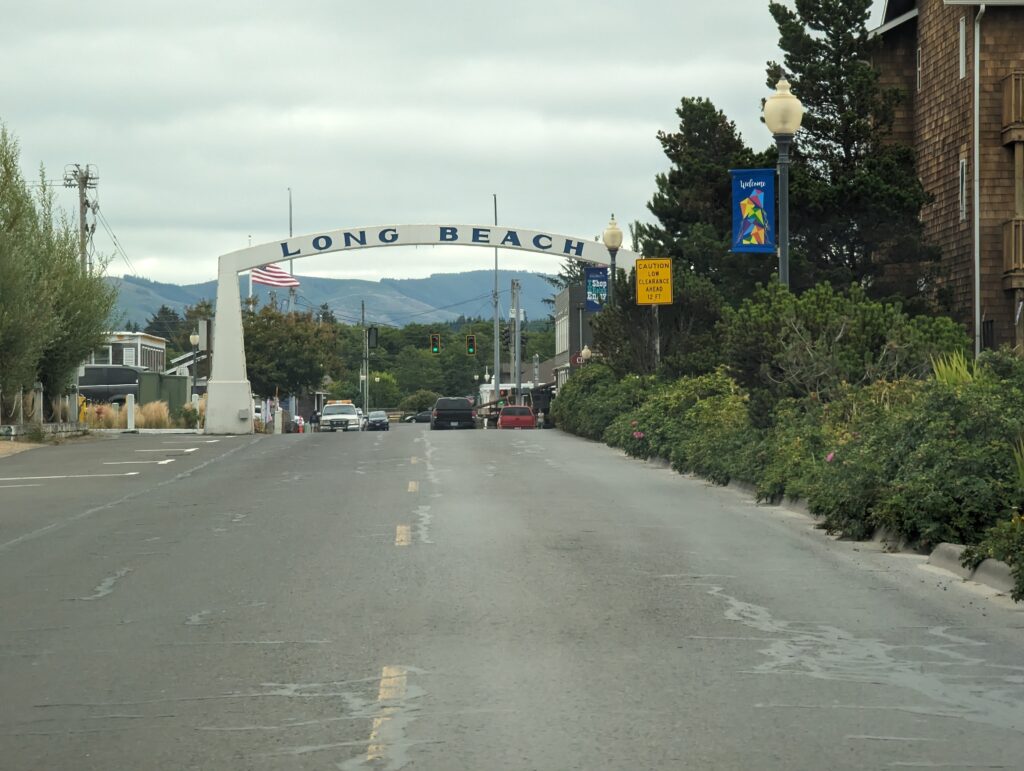
I stopped for a moment in Long Beach. The world’s longest beach but not much to see….
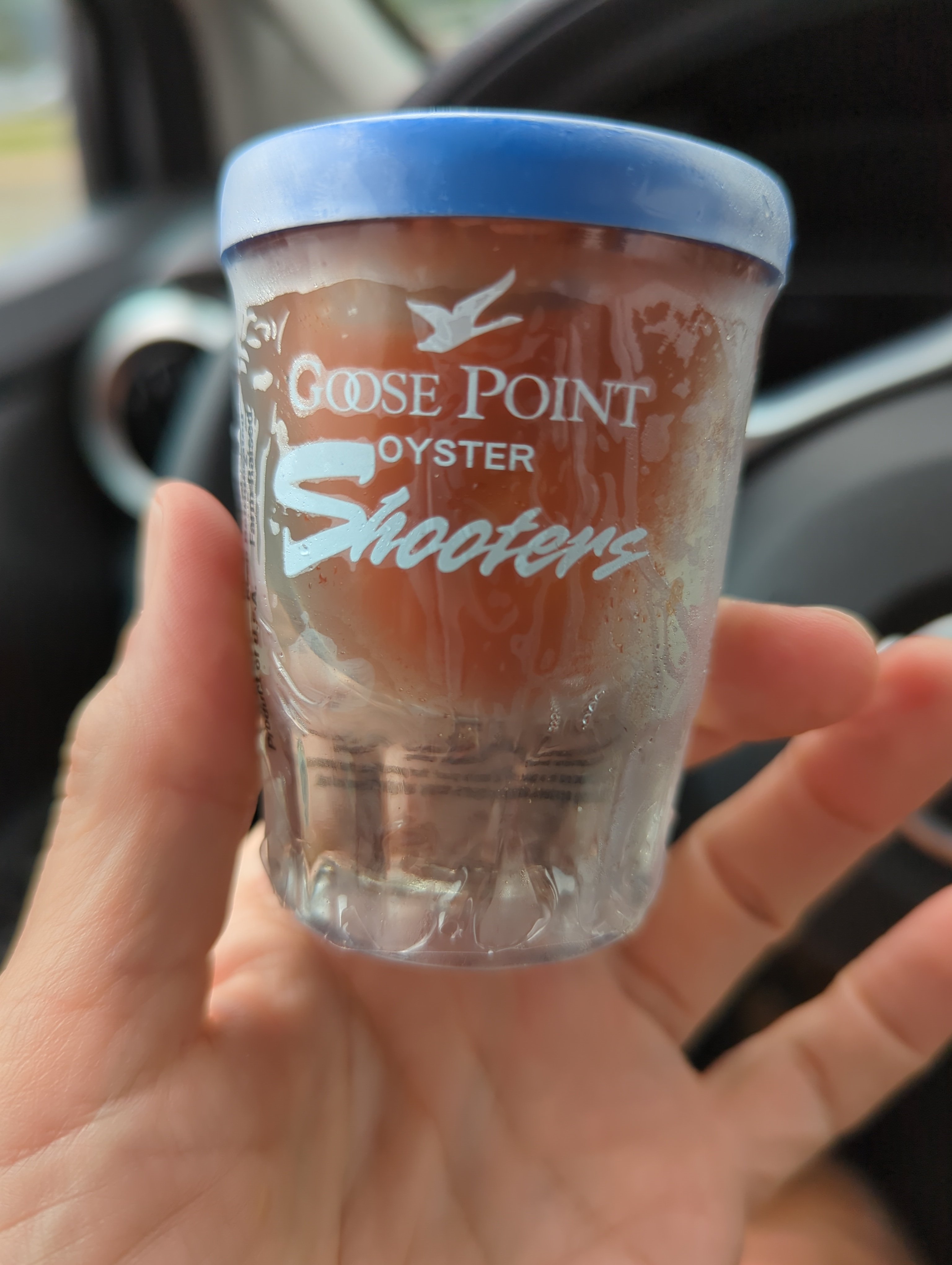
Later I saw a sign for oyster shooters. I had to stop.
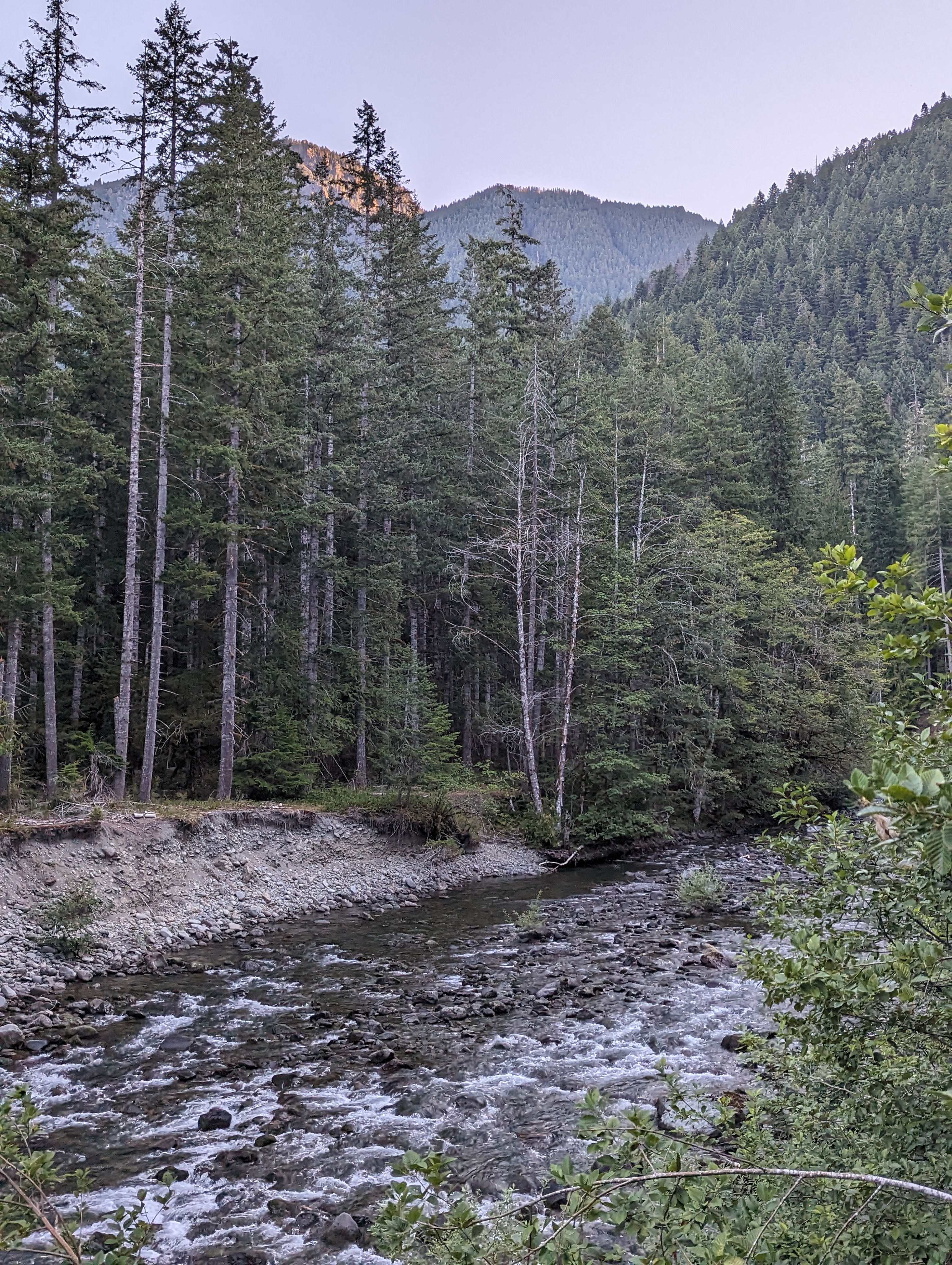
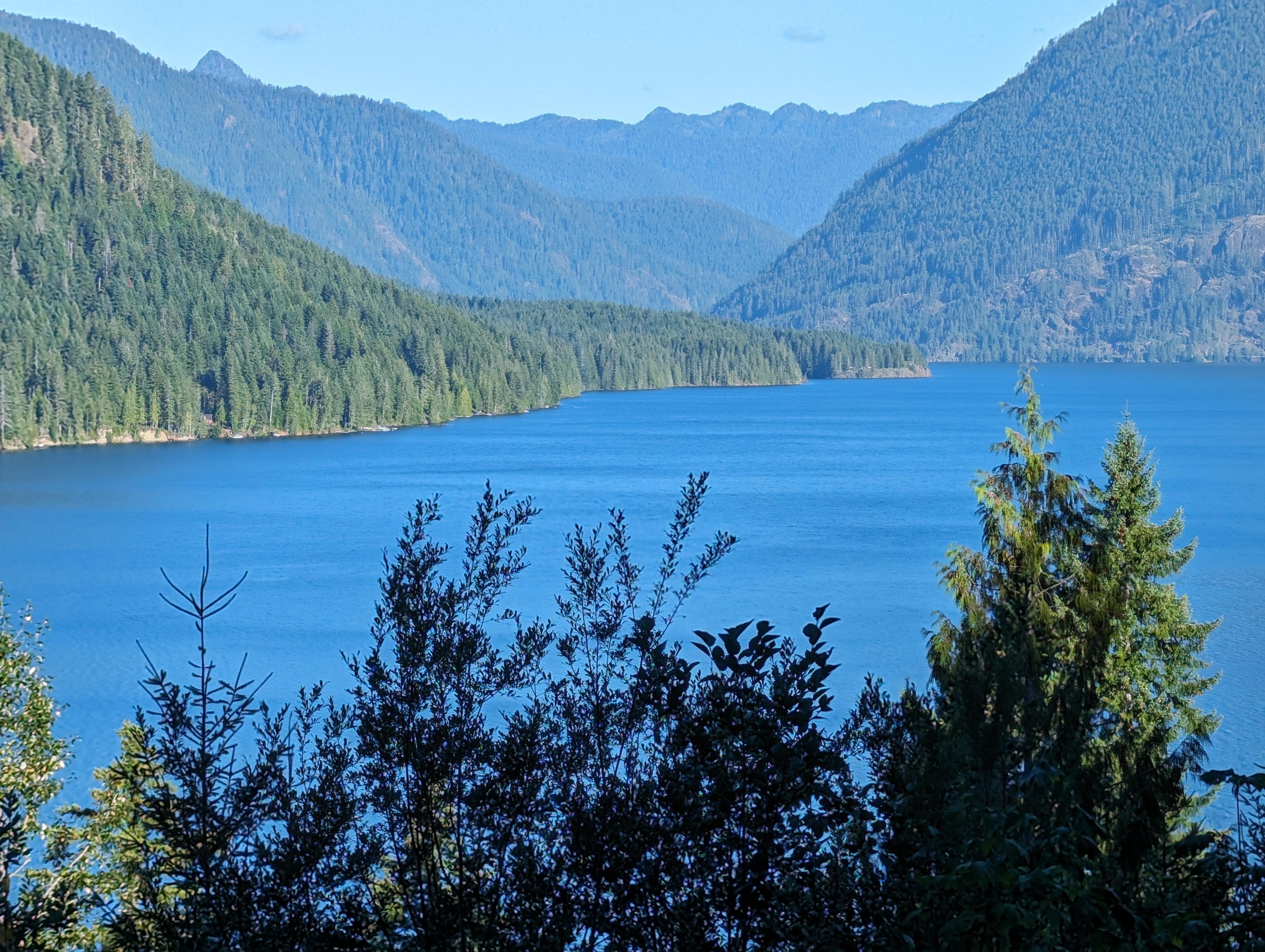
Skokomish and Olympic national Park. One of the better places I stayed at was Waterfront at Potlatch. Right on the Hood Canal, and close to the staircase entrance of Olympic national Park.
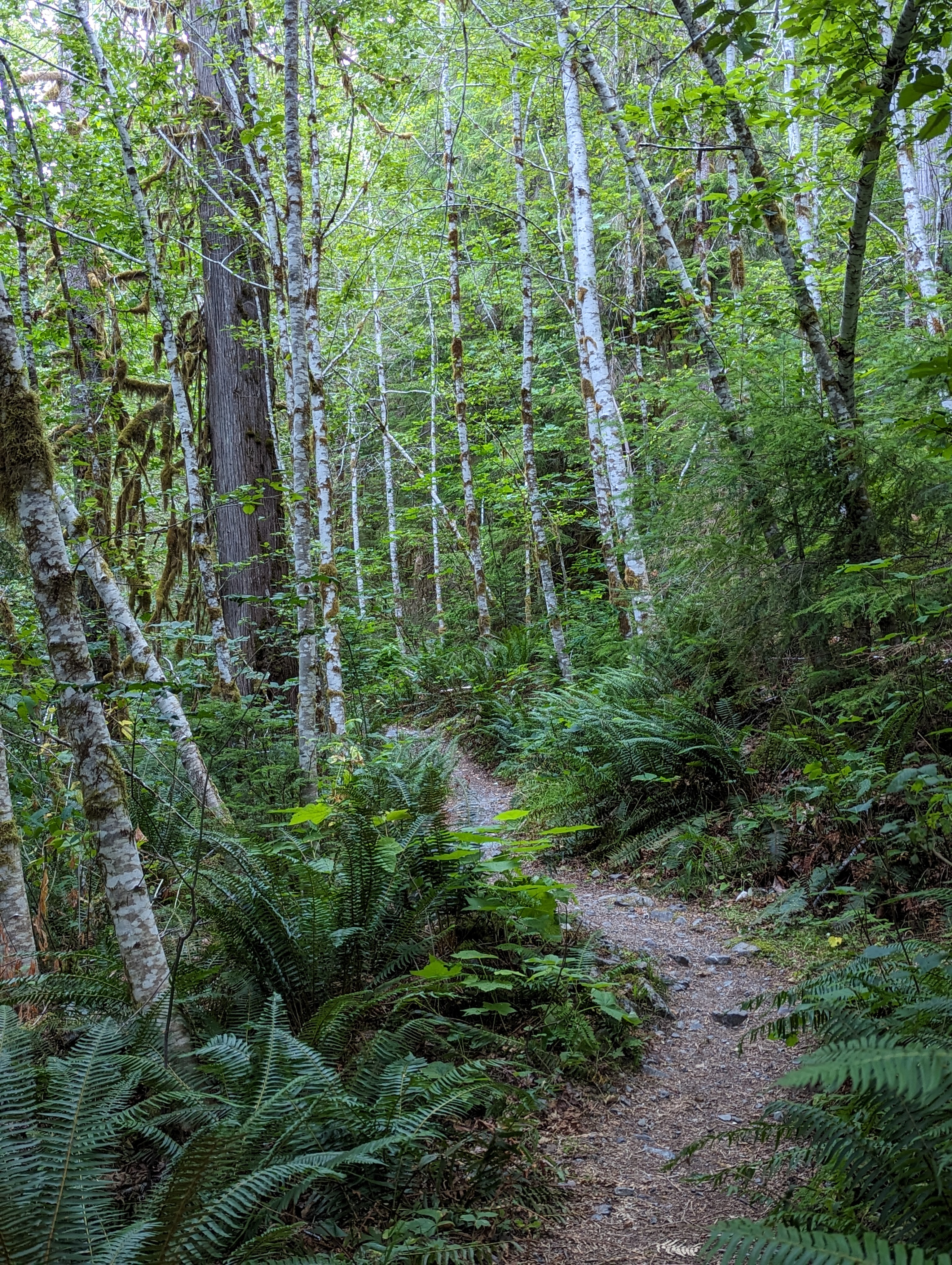
Hike in Olympic.
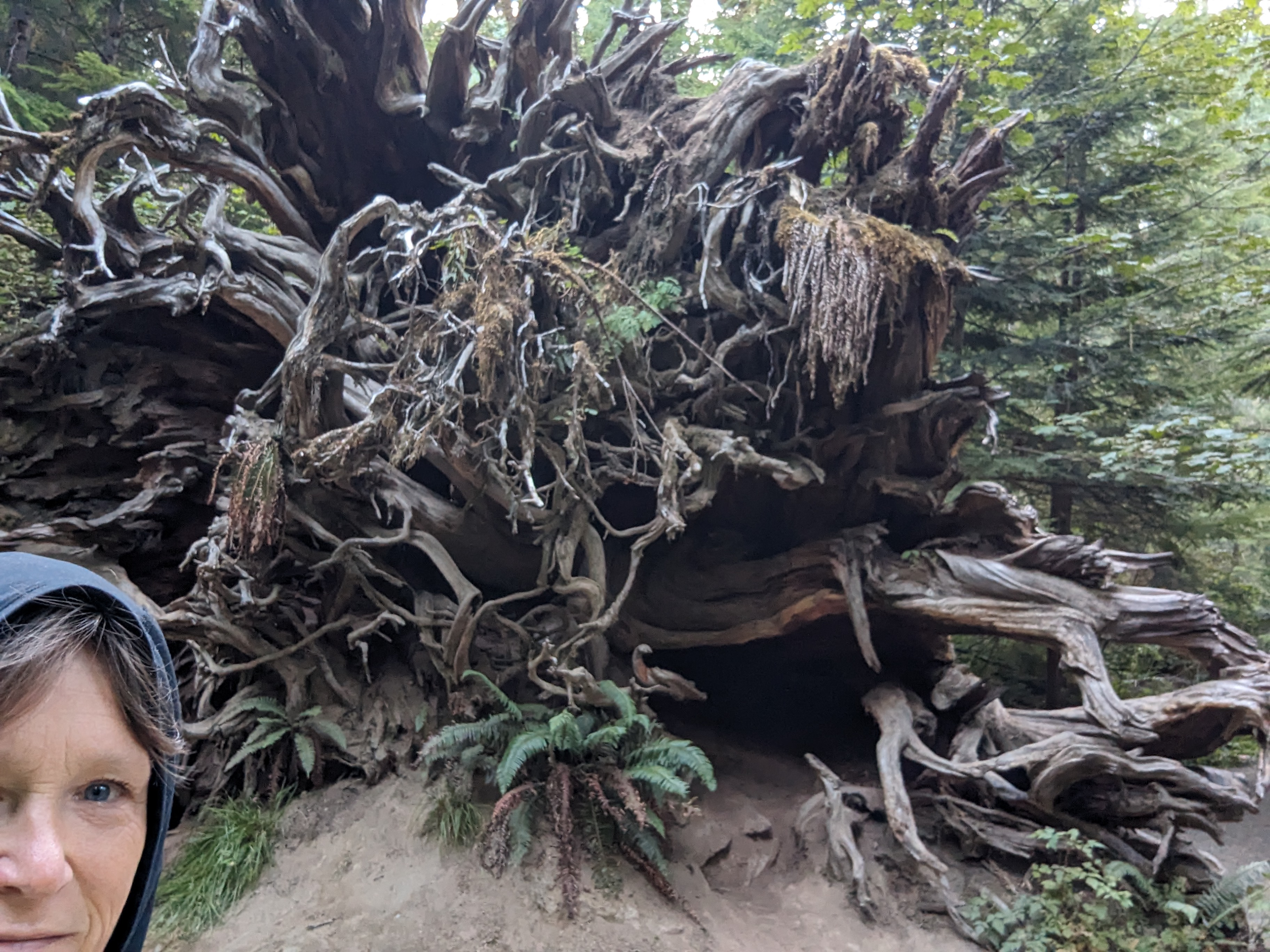
Very large Western red cedar with 14′ diameter.Difficult to see but there is a lot of moss on the trees due to the temperature rainforest.
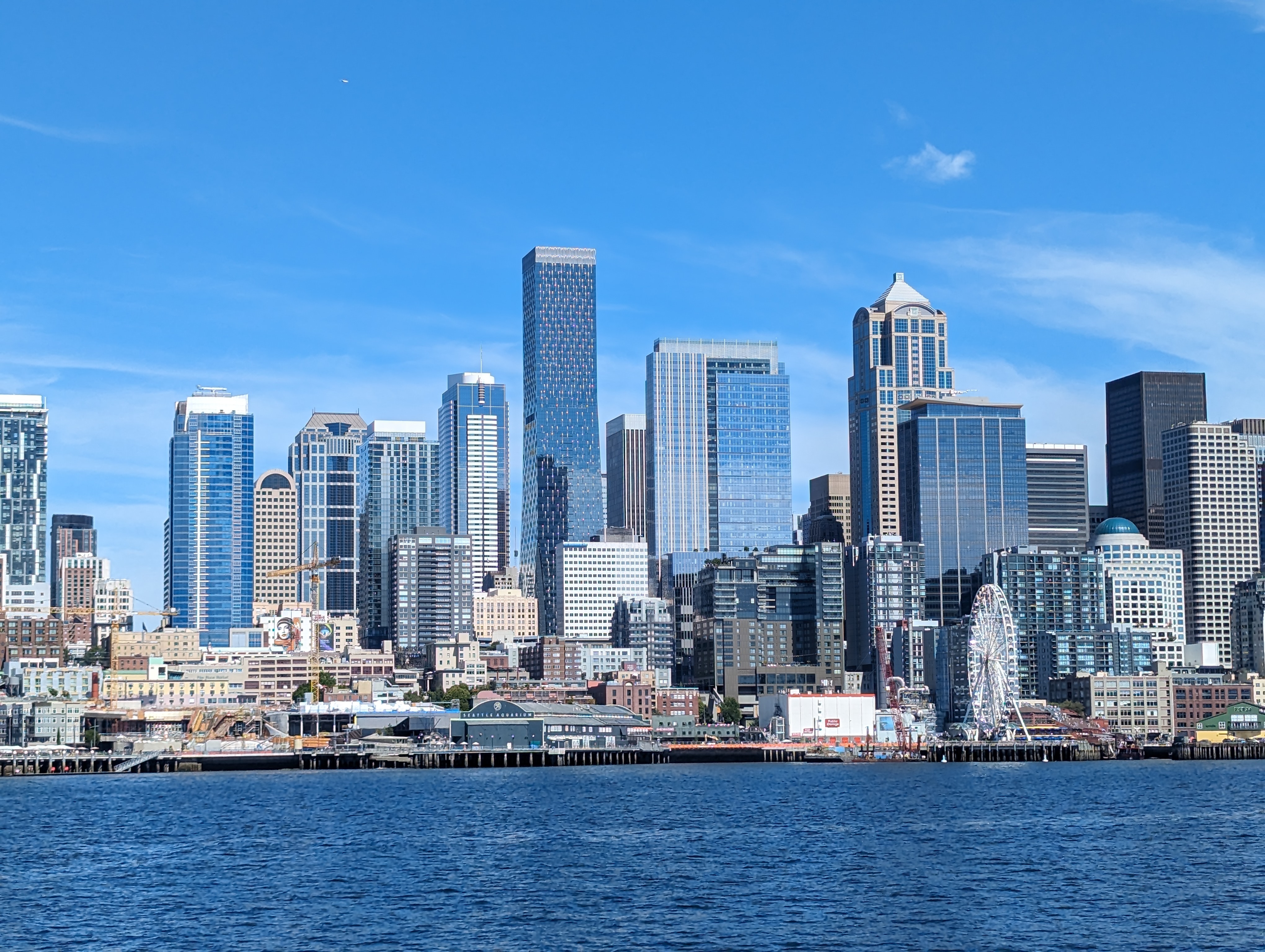
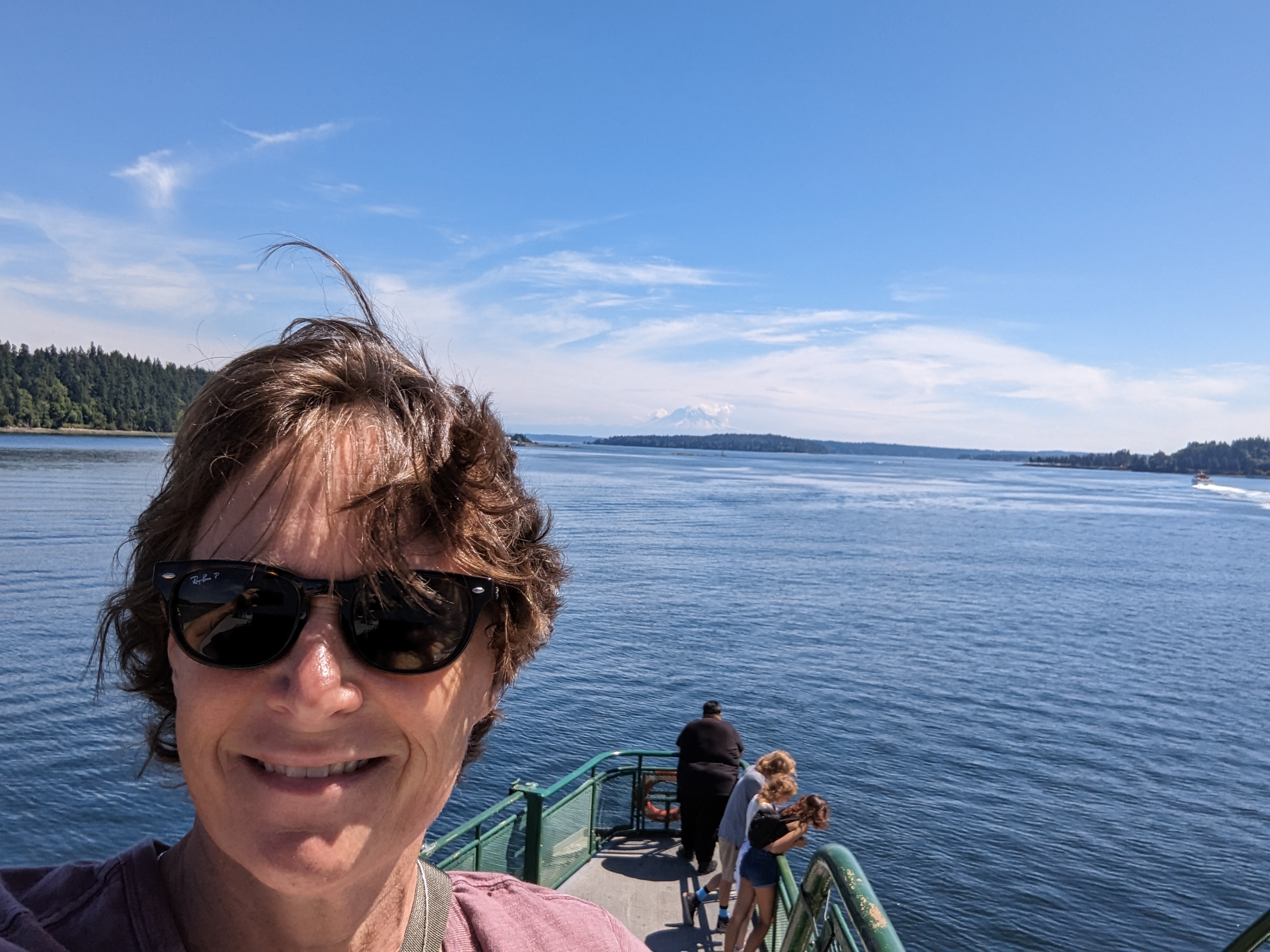
Bremerton and the Seattle ferry. This is a much better way to get back to Seattle than going the highways. So easy and quite a bit of fun.
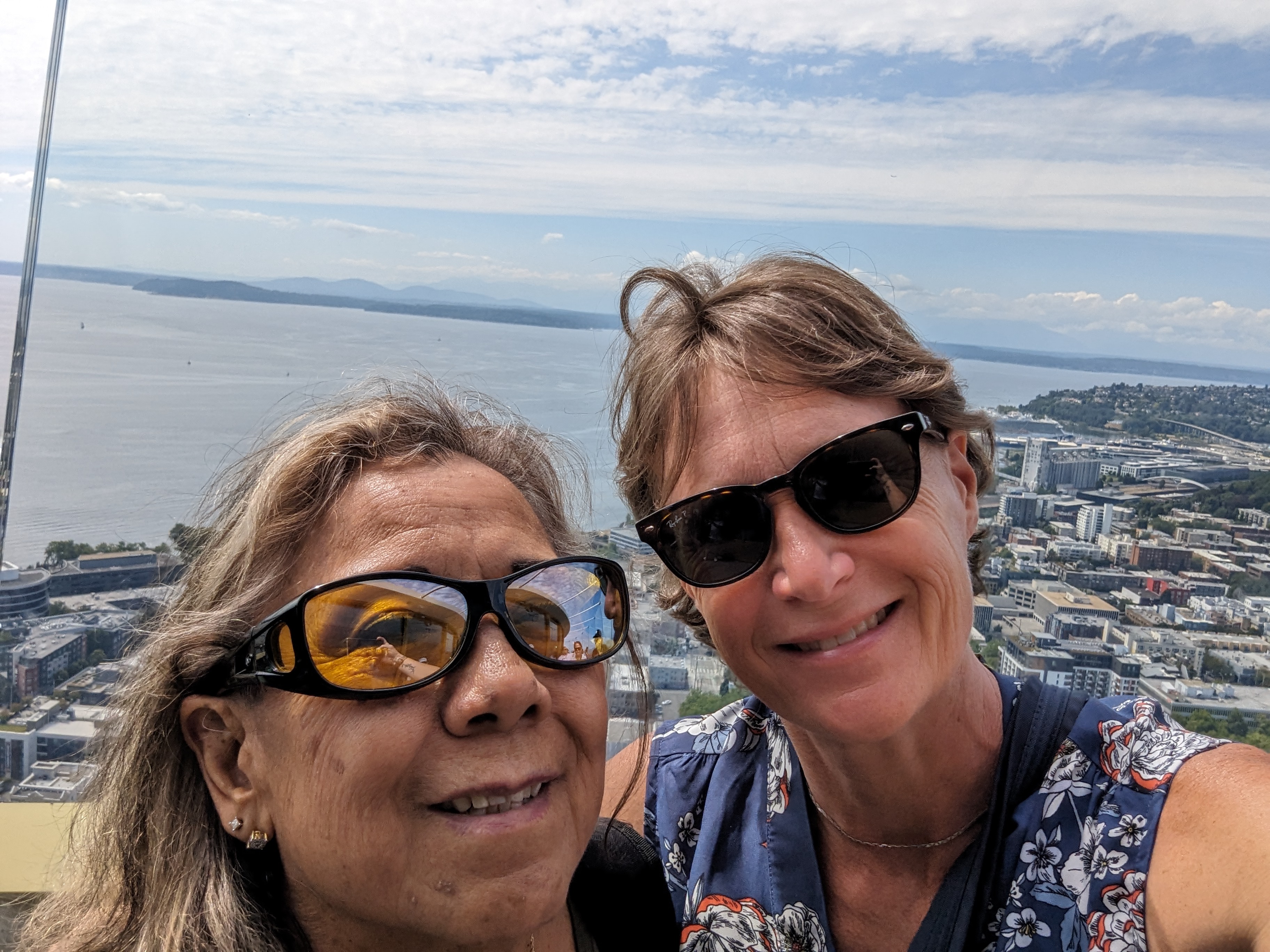
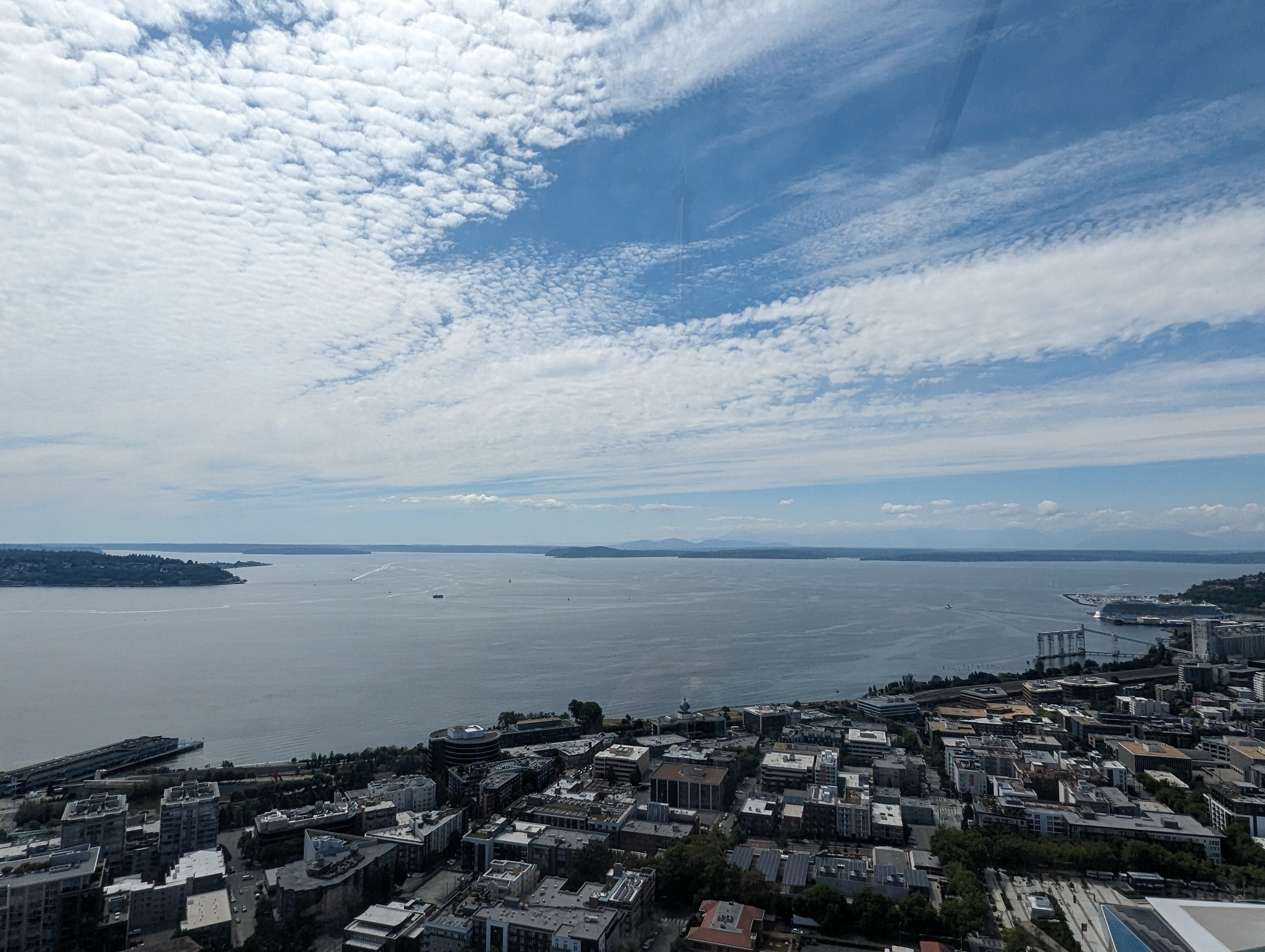
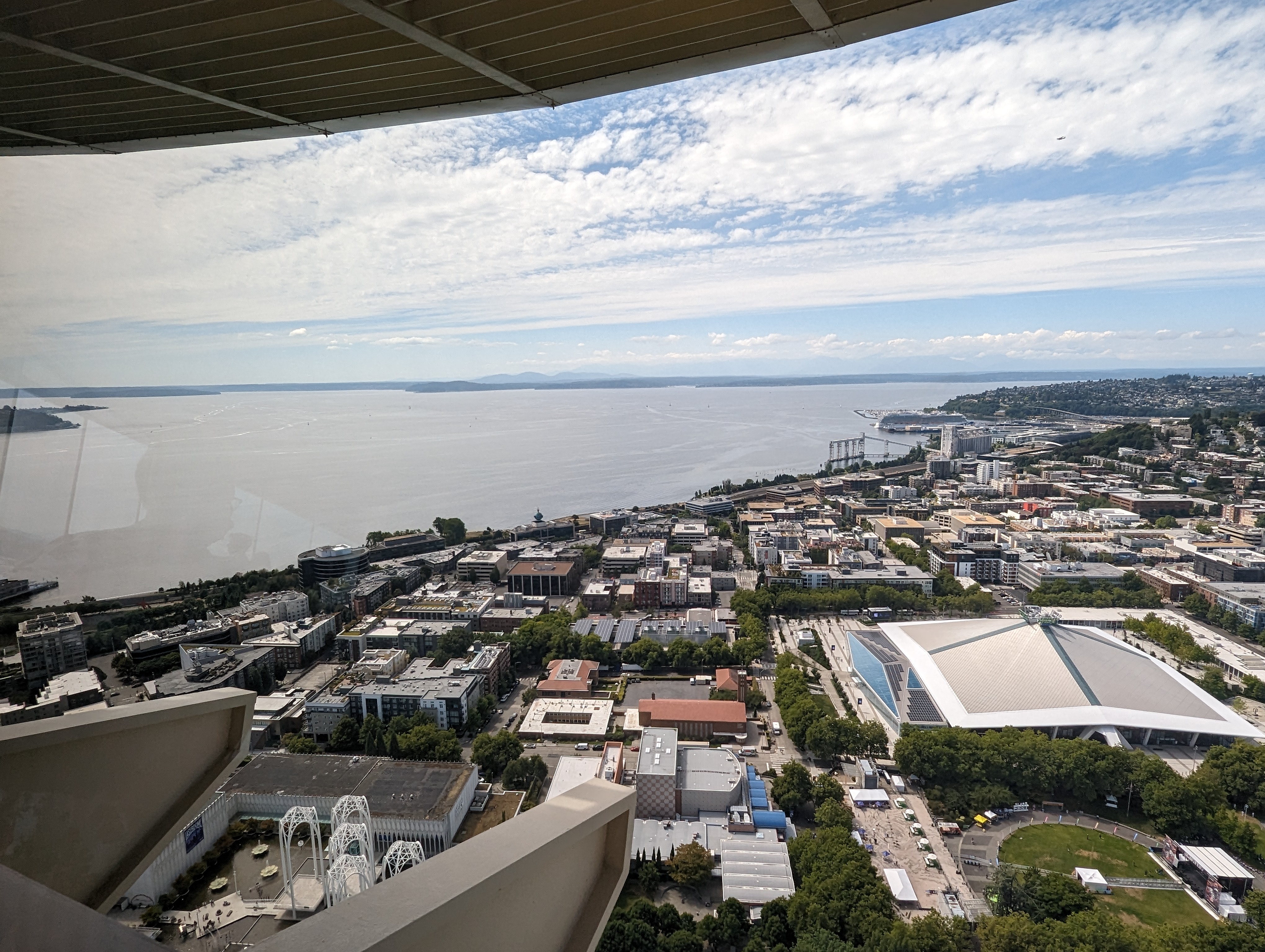
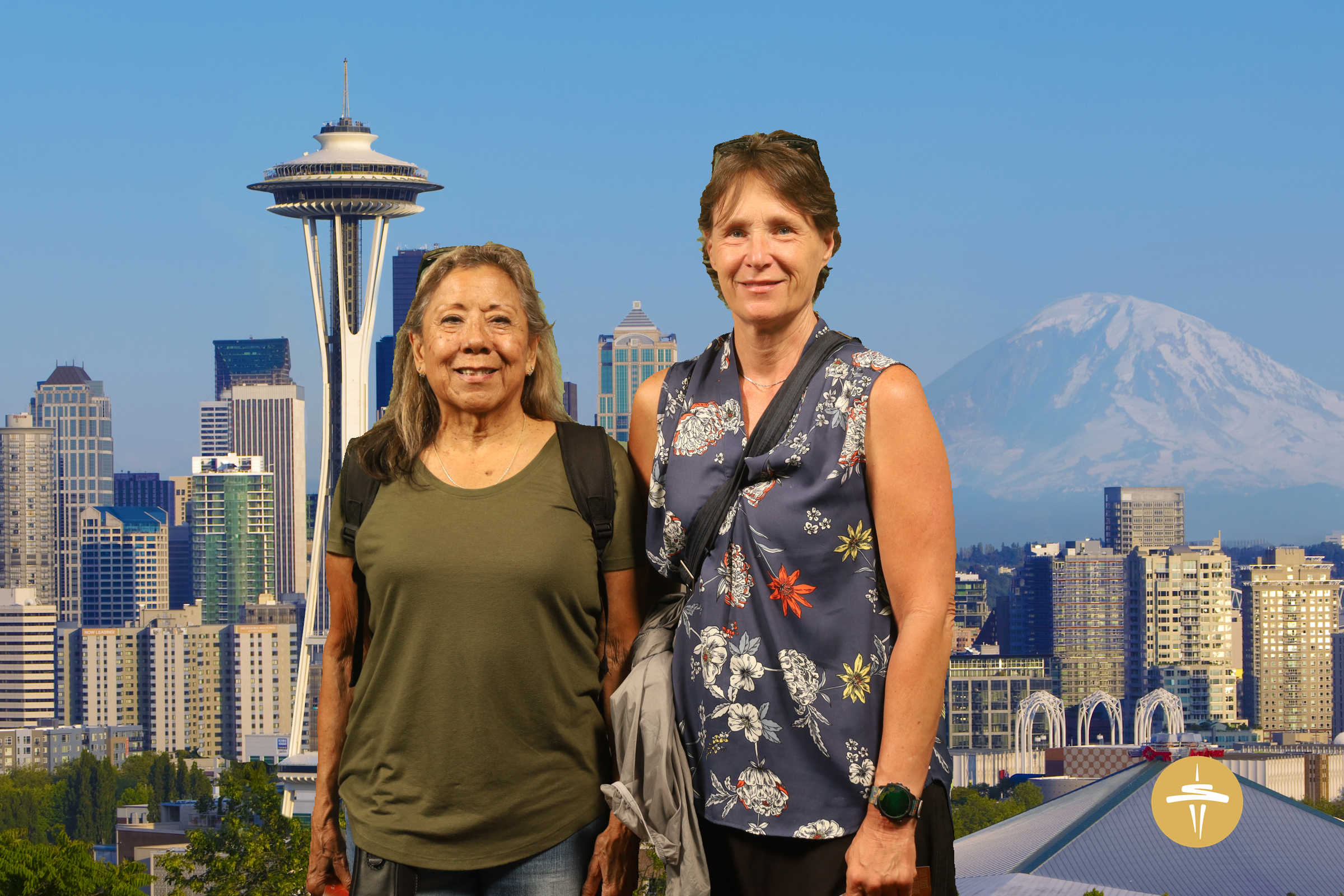
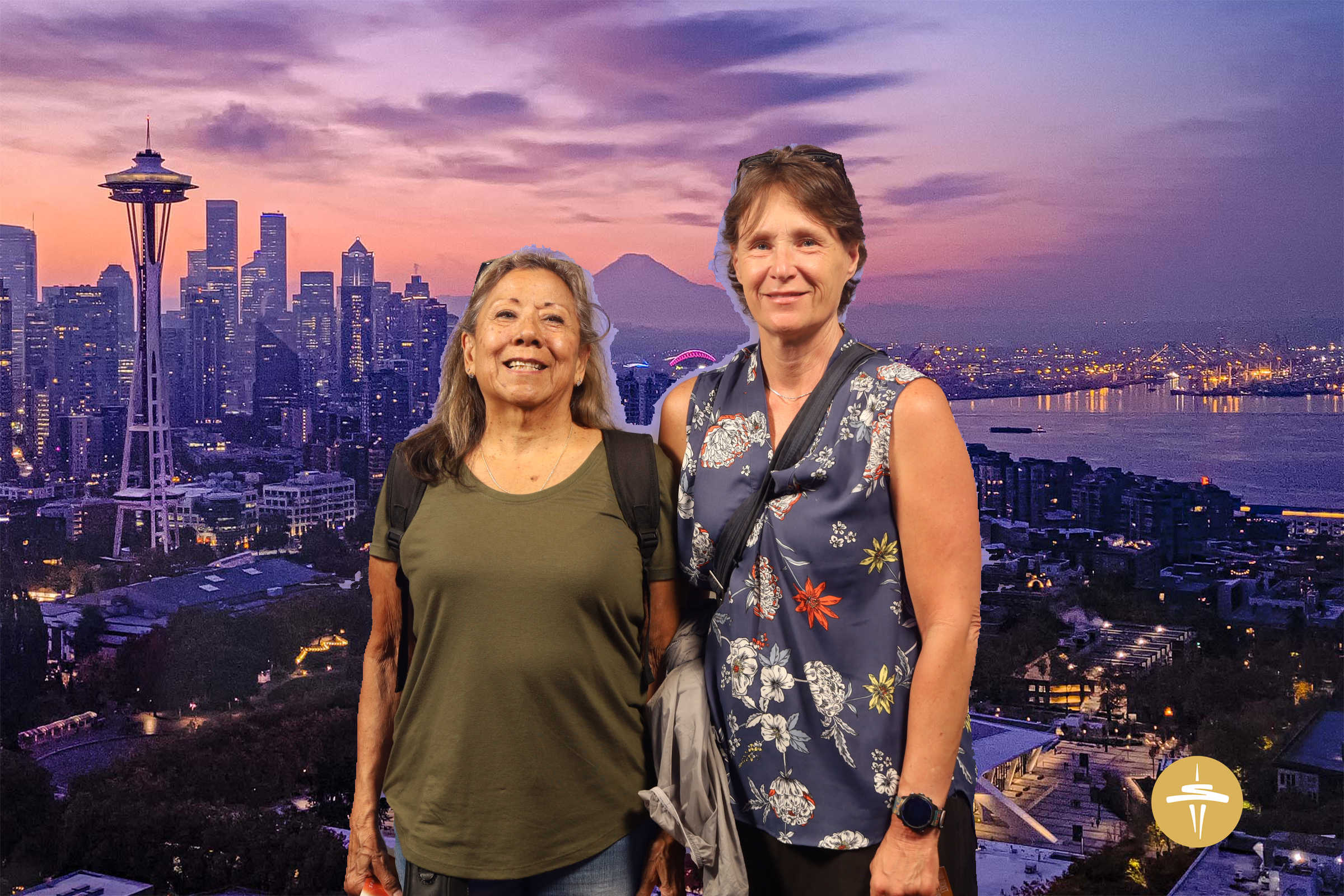
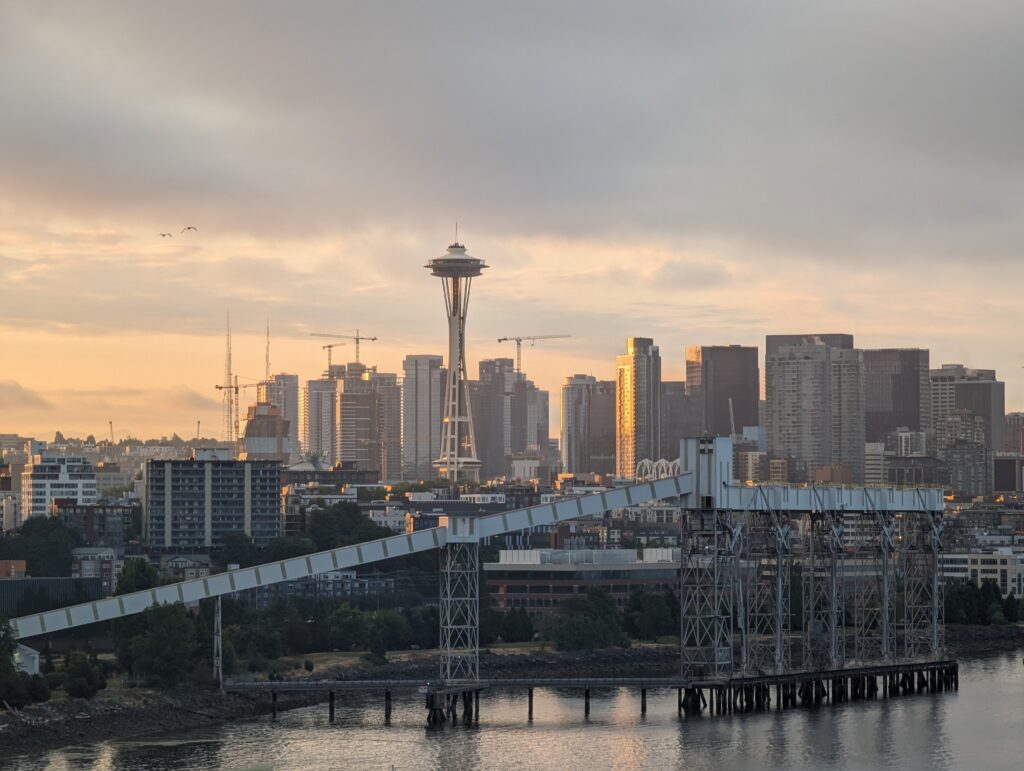
2 days in Seattle and so much to choose from. Of course one needs to see the space needle which was erected in 1962 fire the world fair and at the height of the space race. The space needle was fun to go up in and see the city. Not usually something that I do but the history of it and seeing the city was spectacular.
Picture they took as we entered and could choose the backgrounds for each.
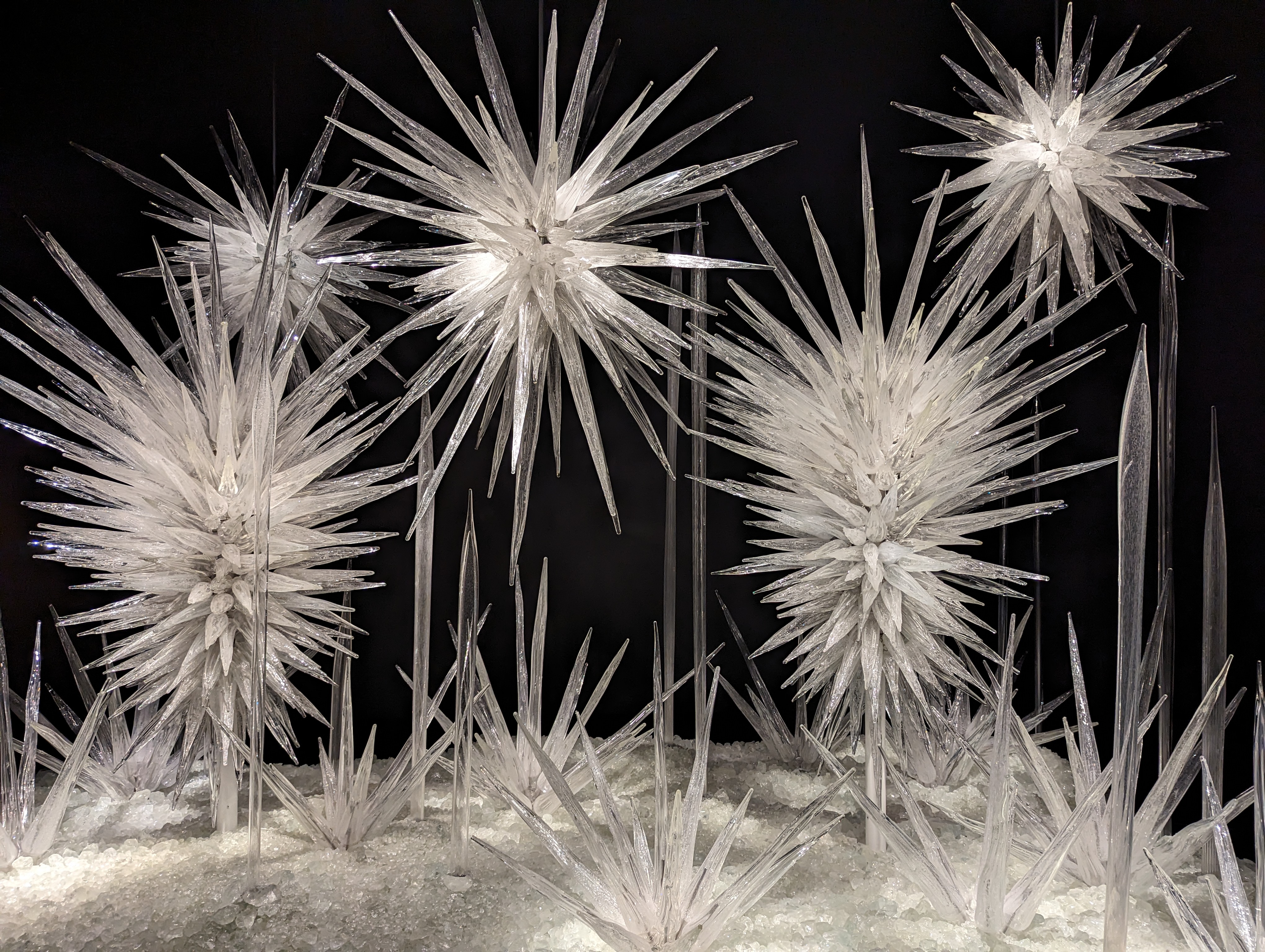
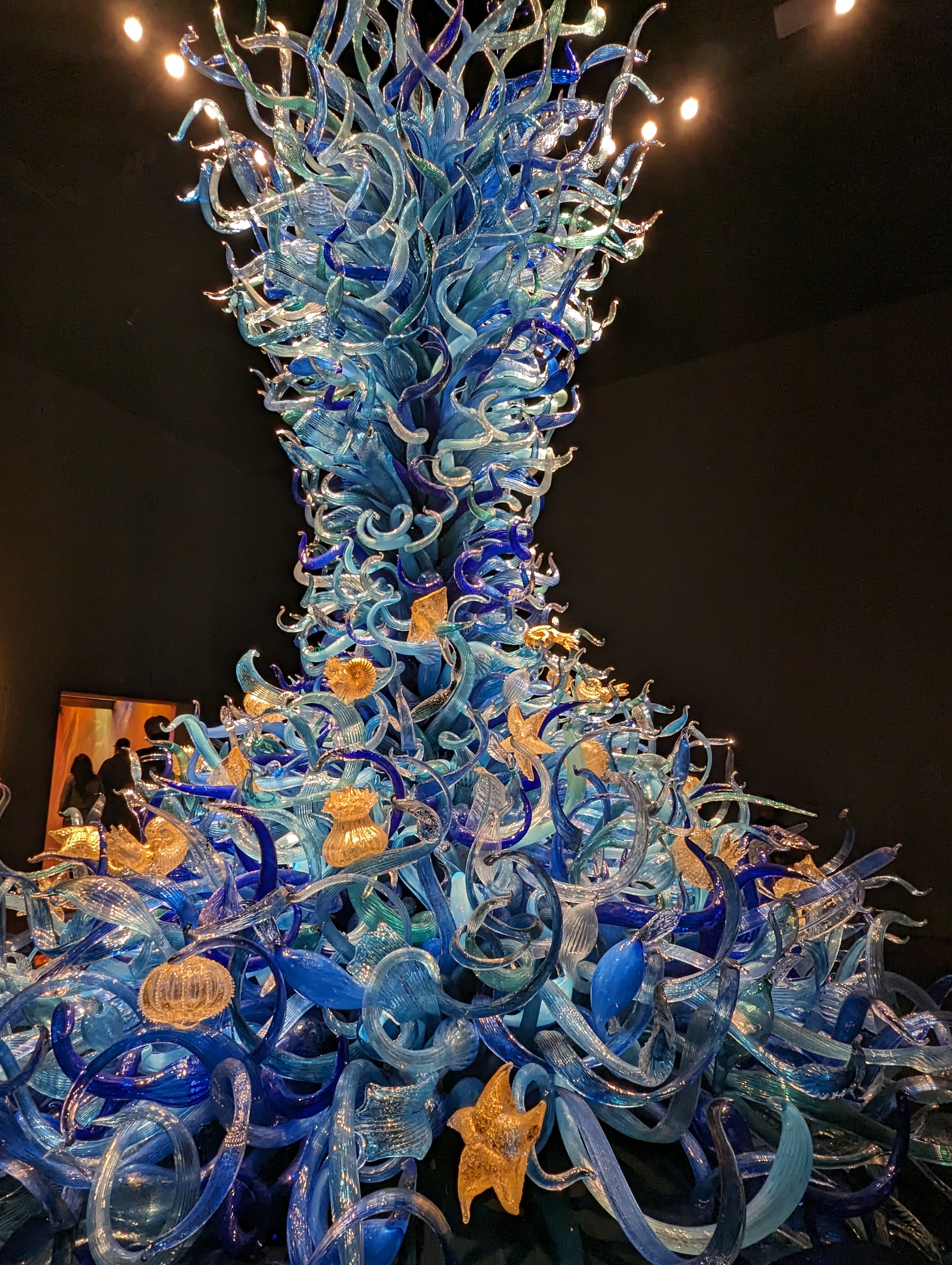
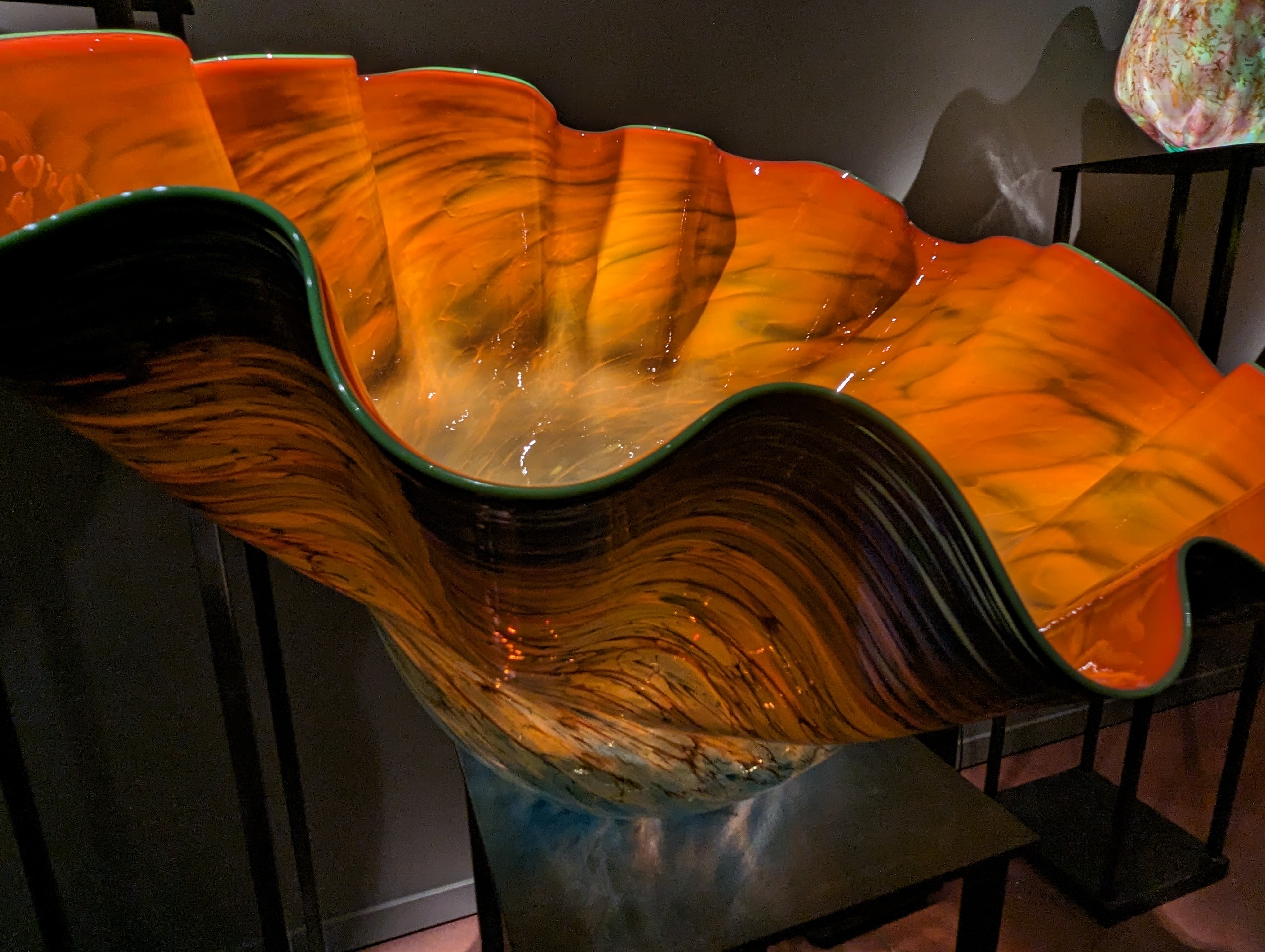
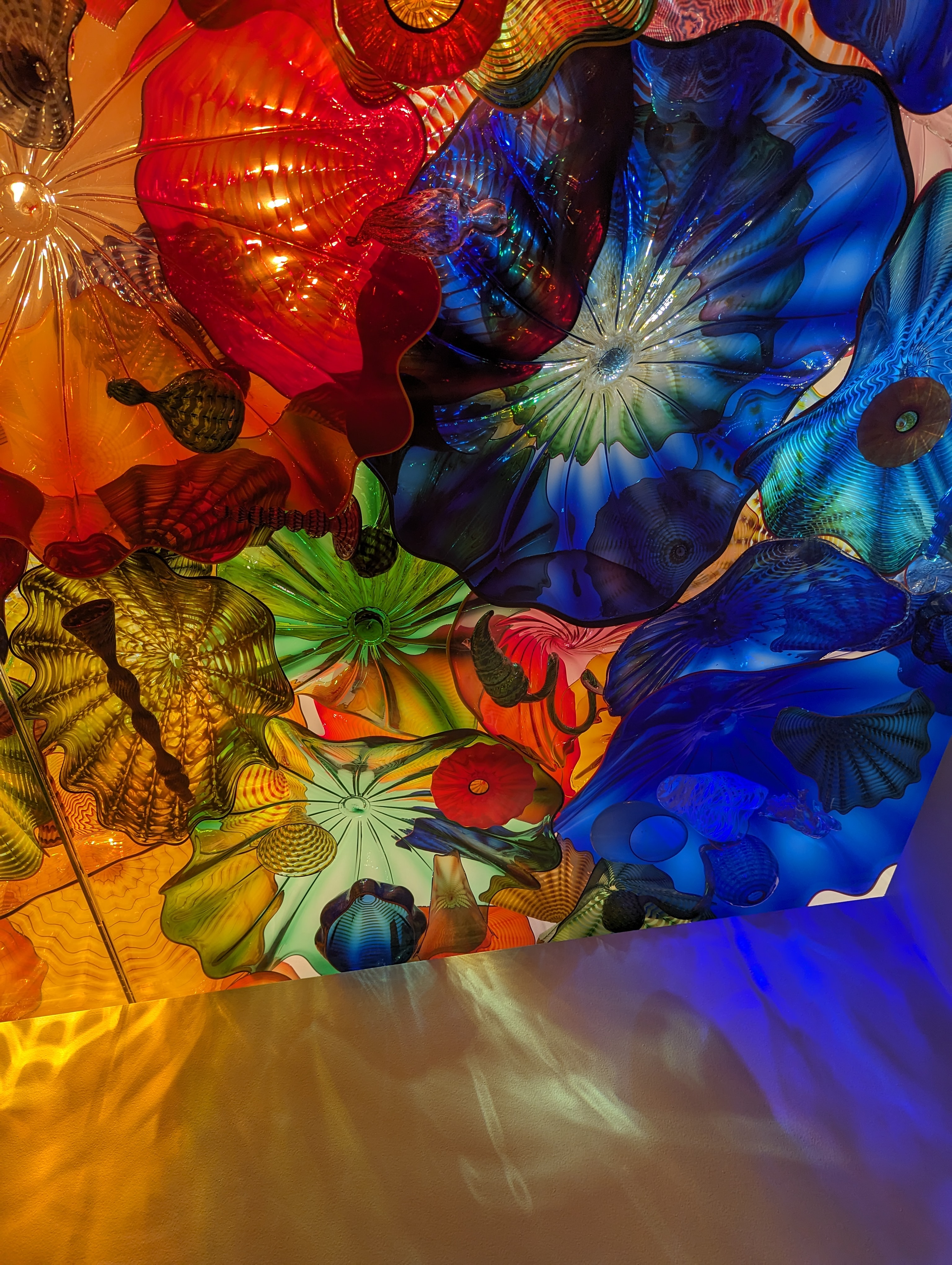
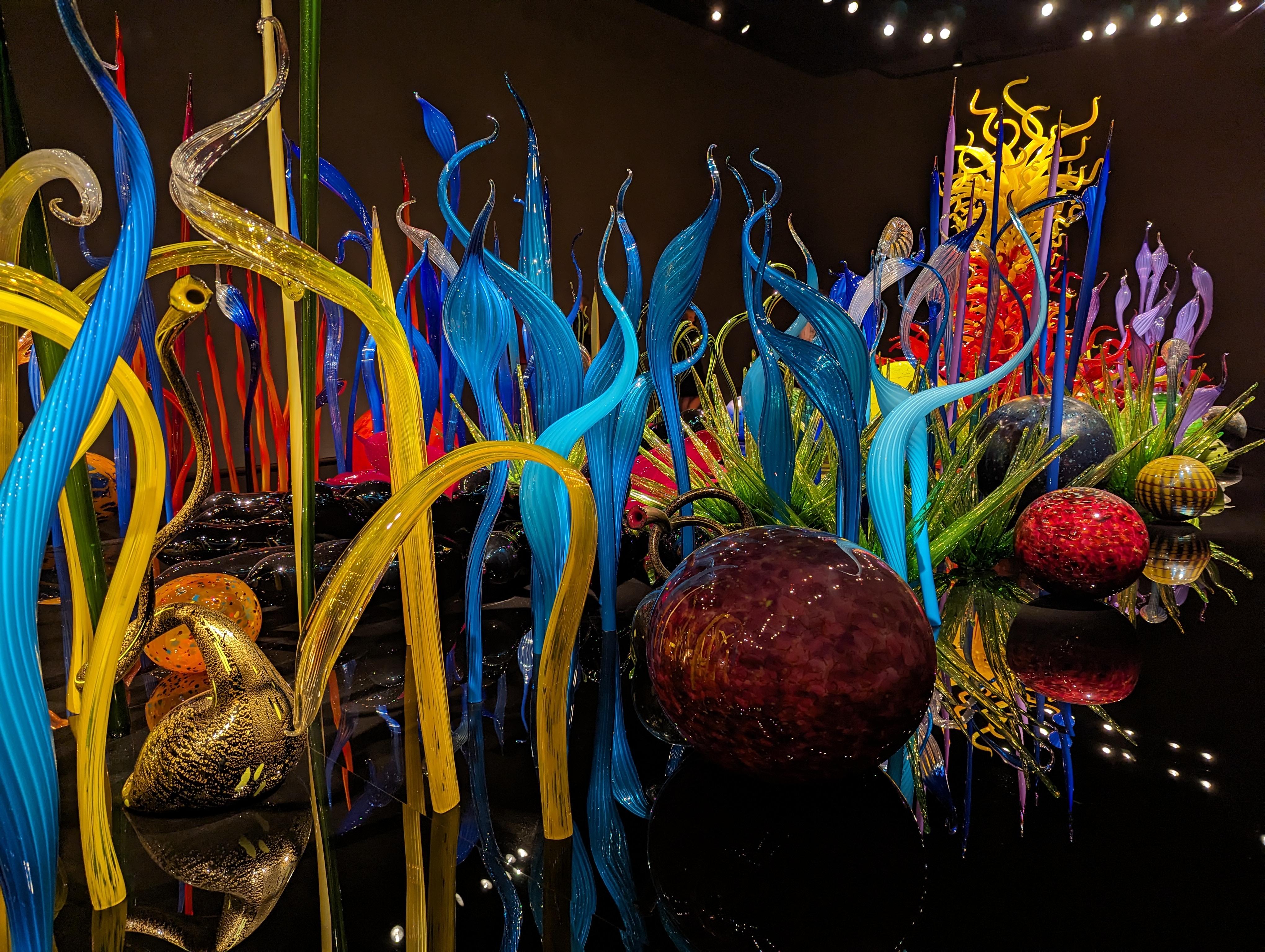
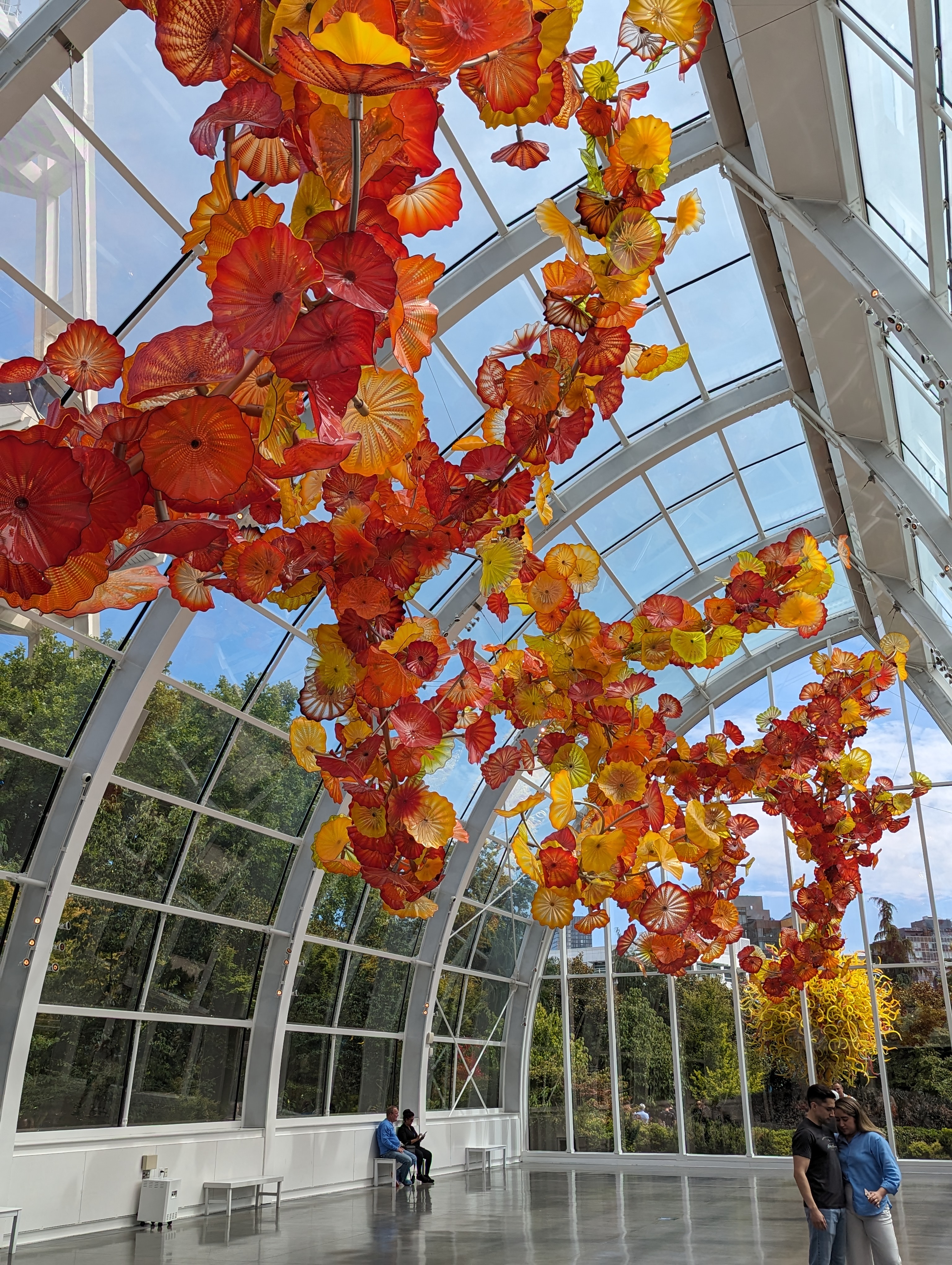
We also visited the Chihuly Garden and Glass to view a master glass artist’s creations. So incredible what he did with glass to create such large installations.
This was on the ceiling and the light cast shadows into the corners of the room.
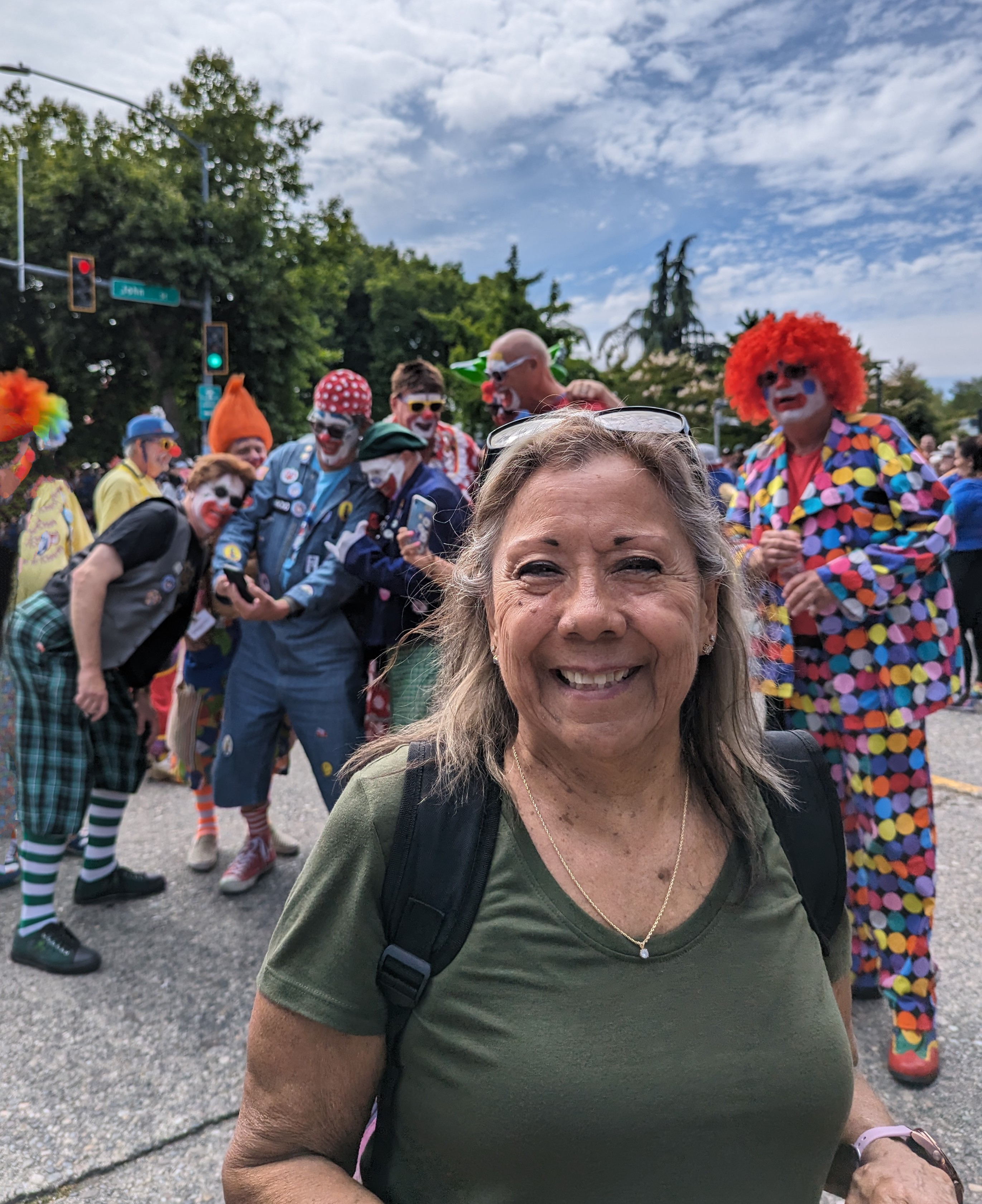
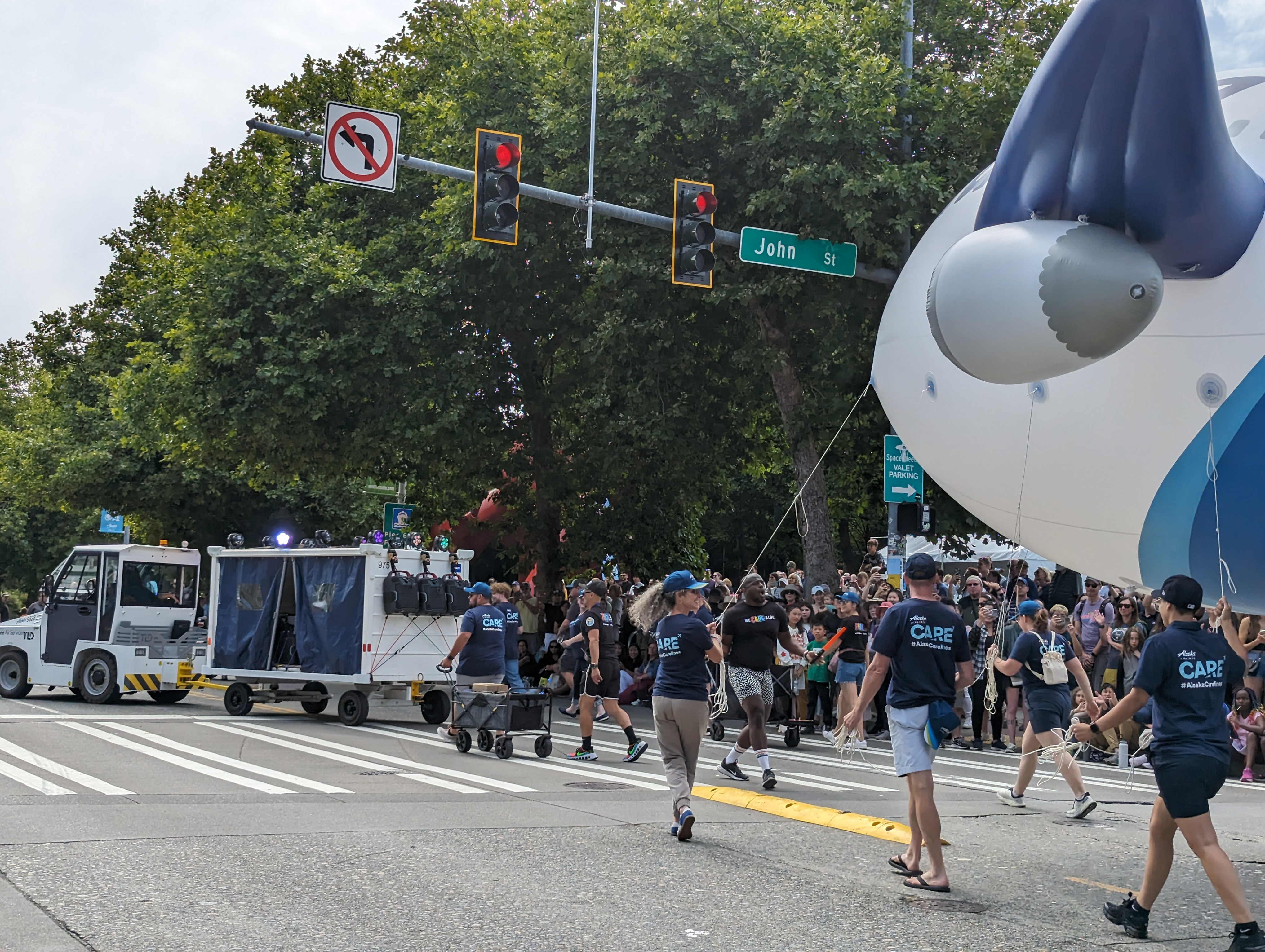
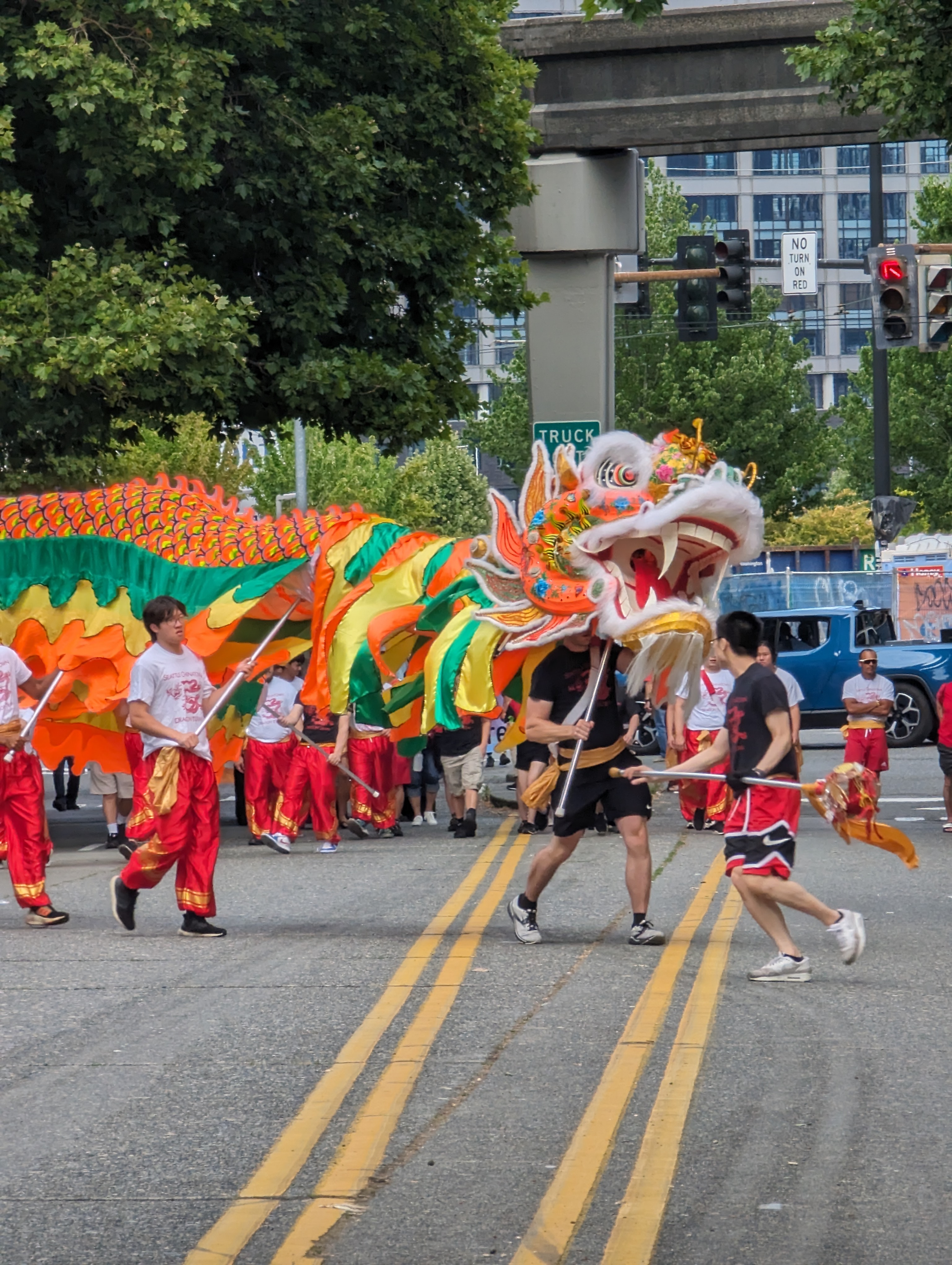
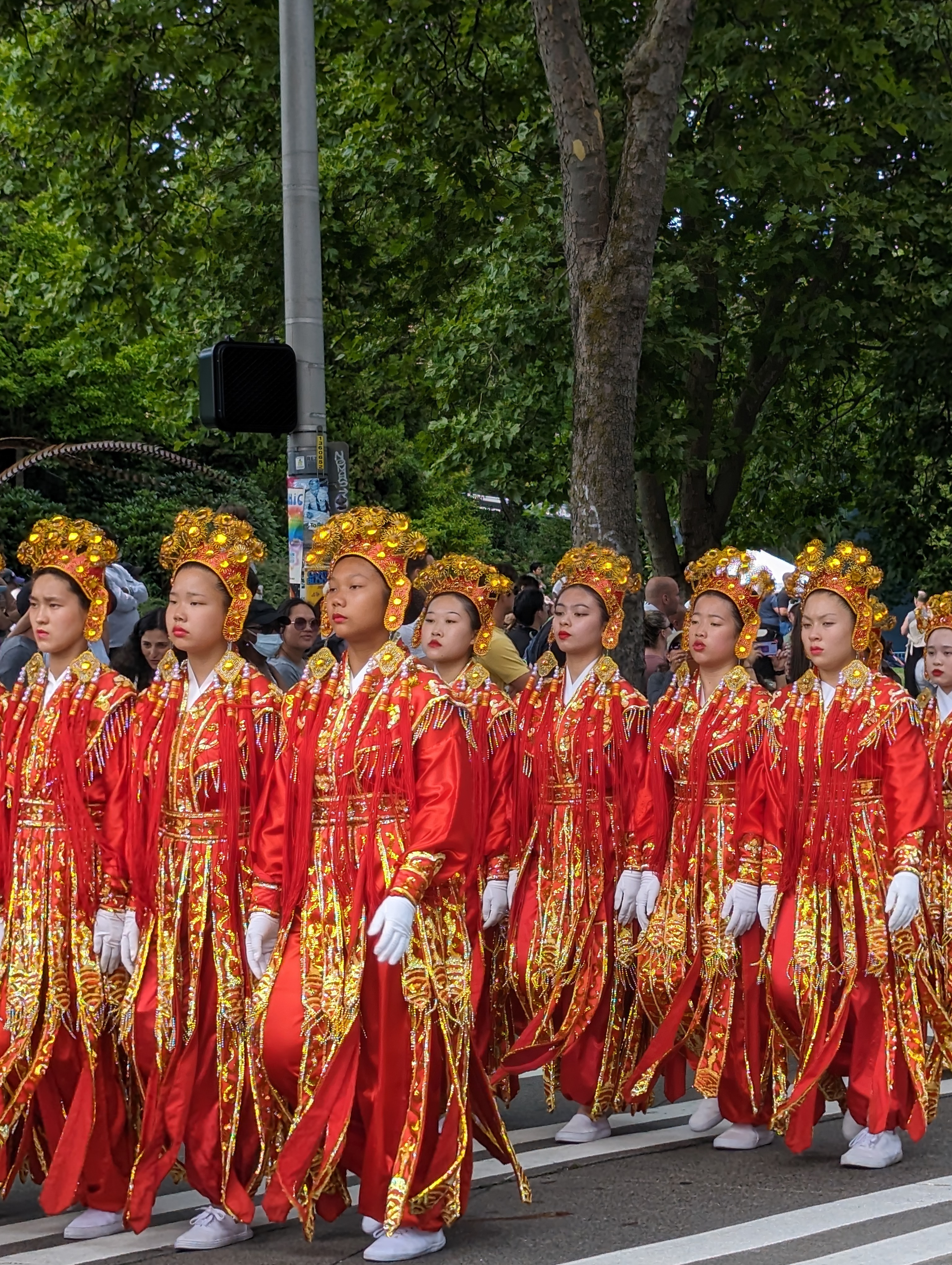
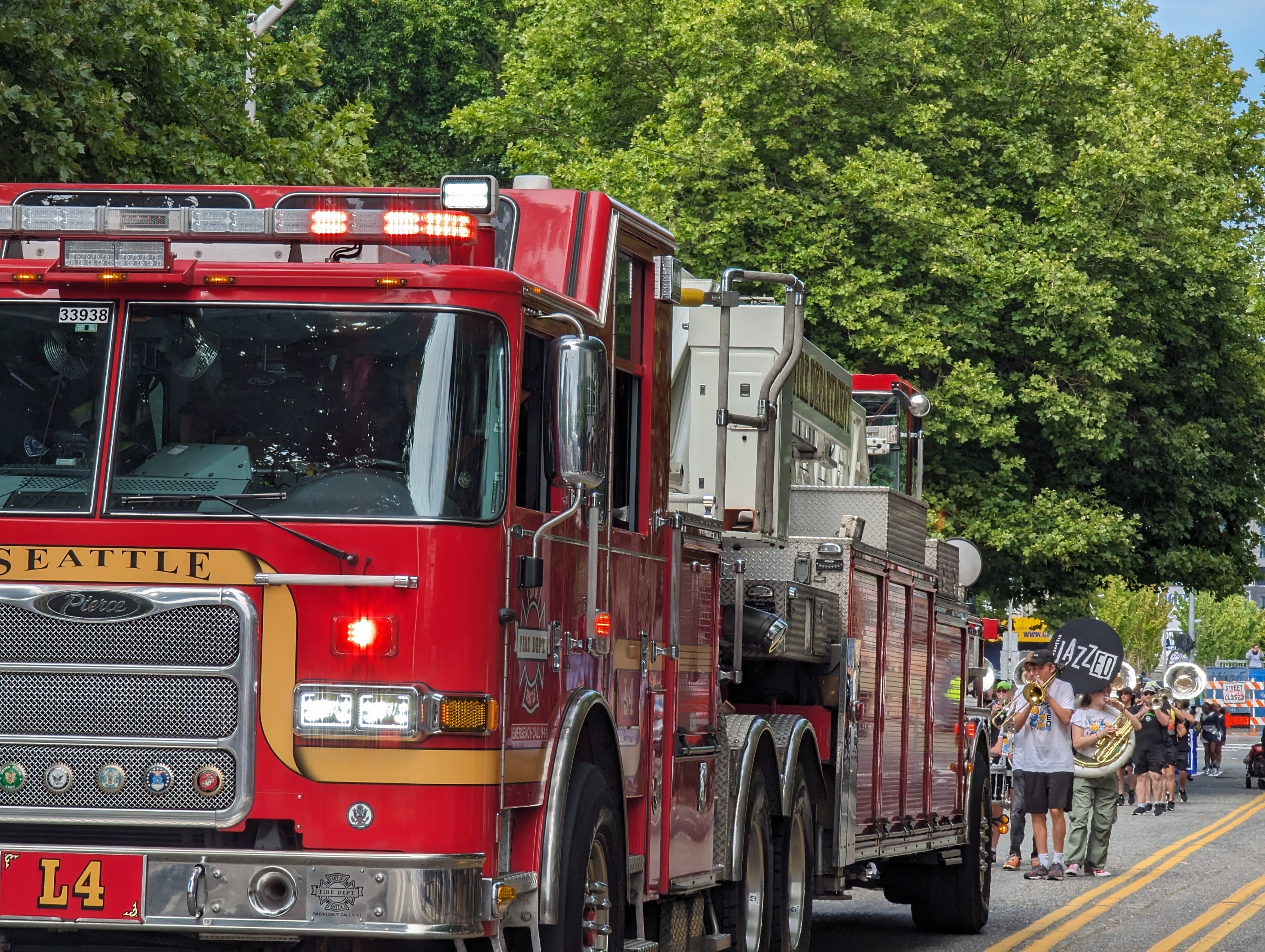
On the way back to the hotel so Sunni could get ready for her flight, we had to pass a parade. Fun! It was pretty long but we were able to watch more of it on the the TV in the room.
Alaska airlines was fun to watch as they danced.Lots of amazing bands
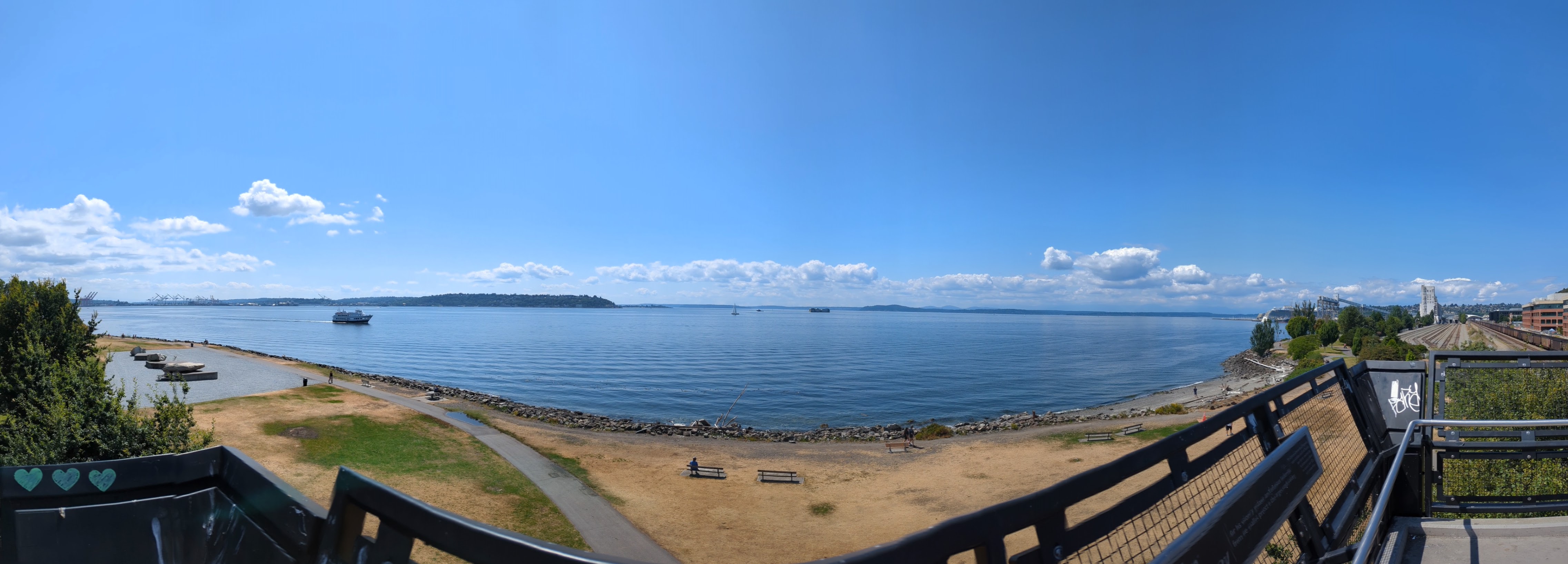
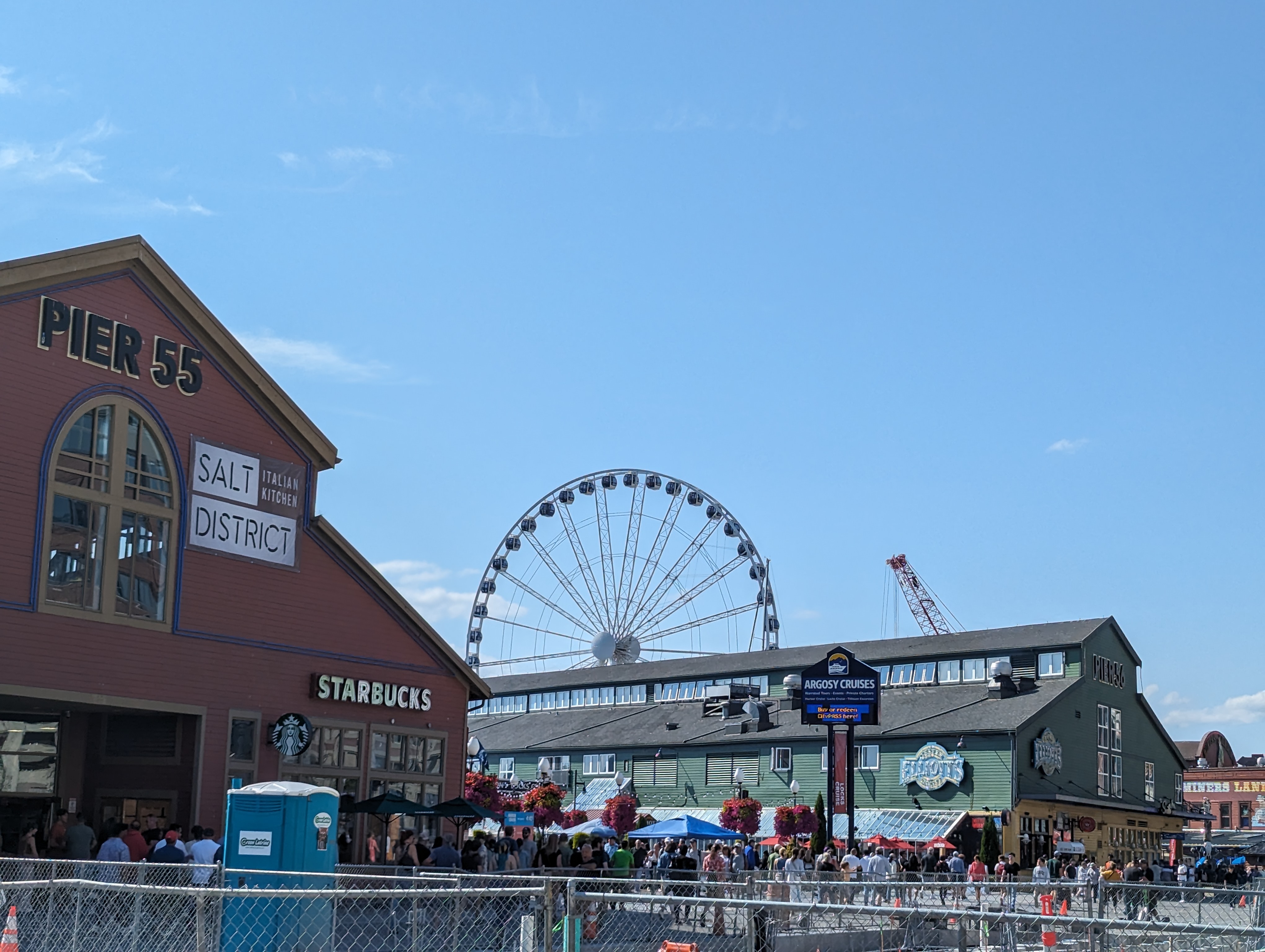
What to do in Seattle? There is a lot but I really did not plan and was happy to do some shopping (I had yet found a pair of jeans I was happy with and each region of the country has slightly different offerings). I also wanted to walk along the water and see some of the sights
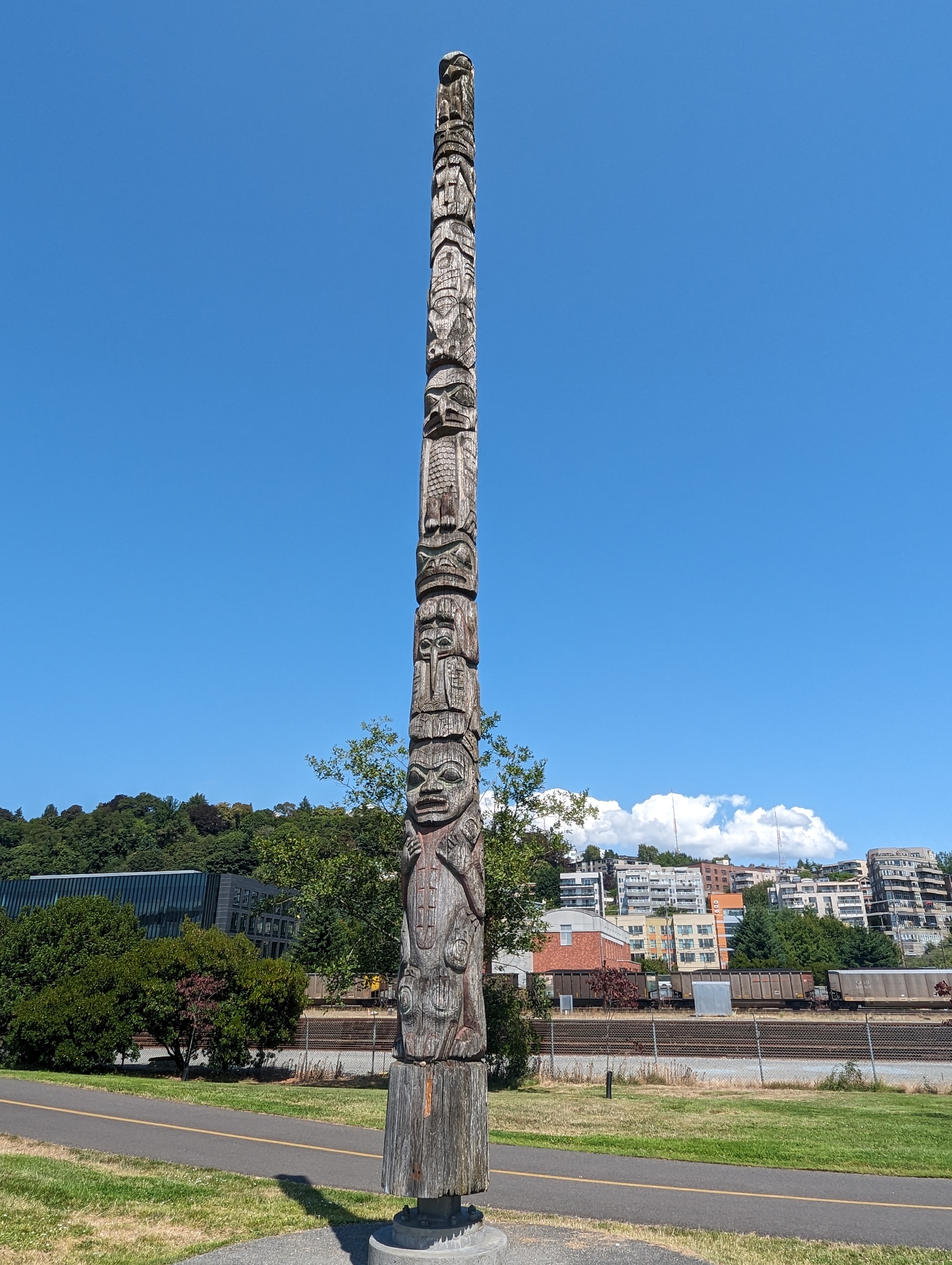
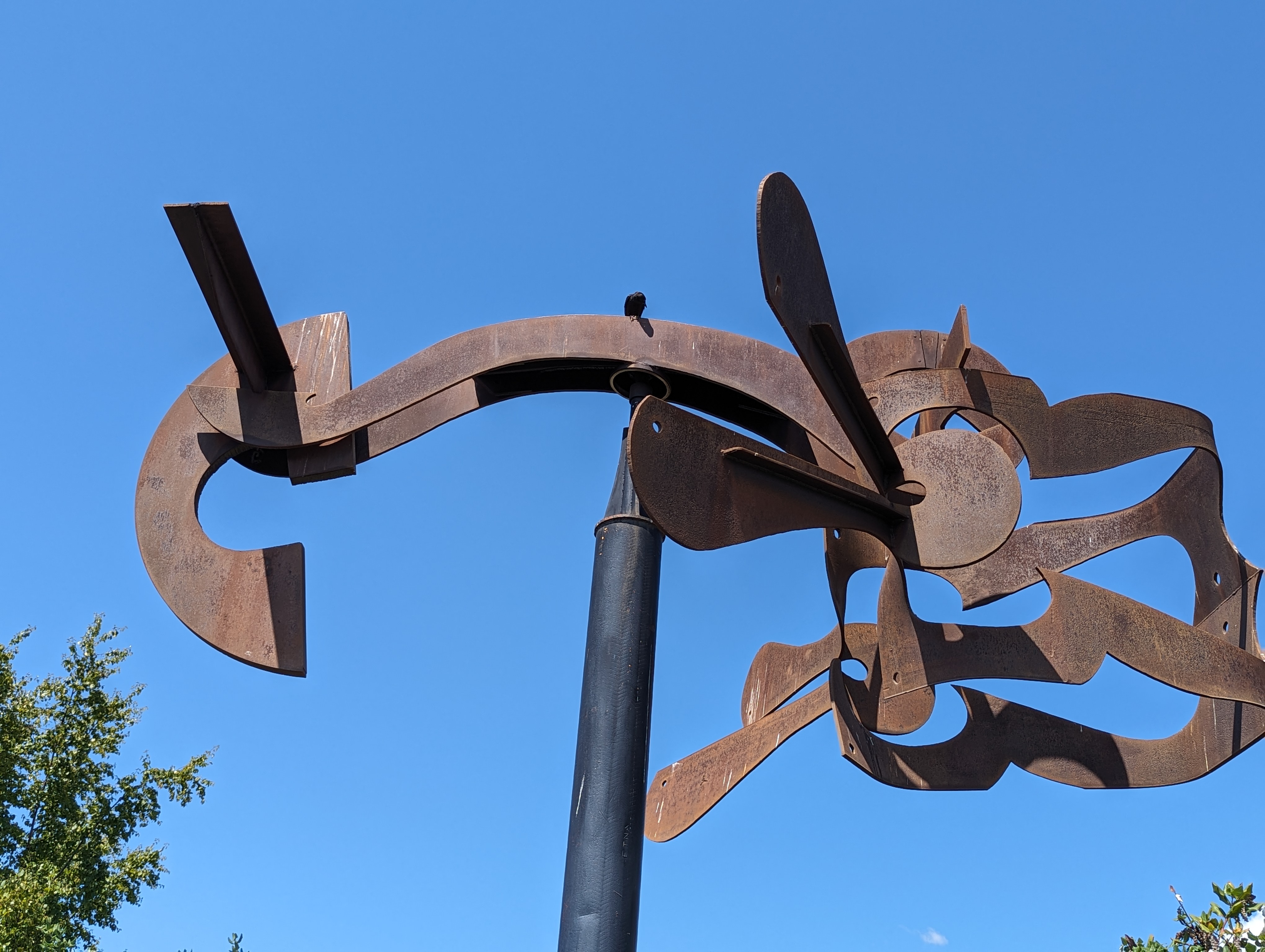
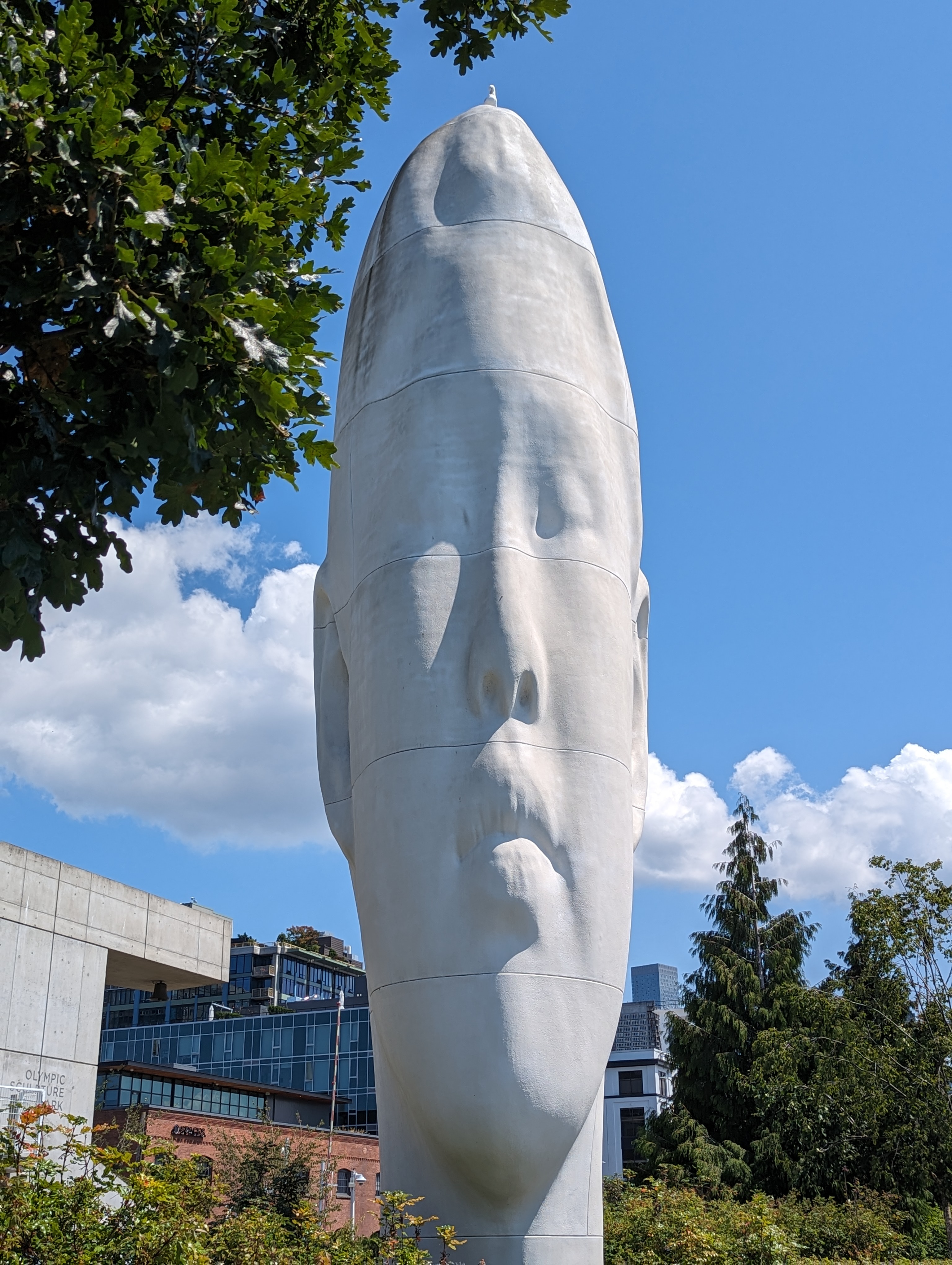
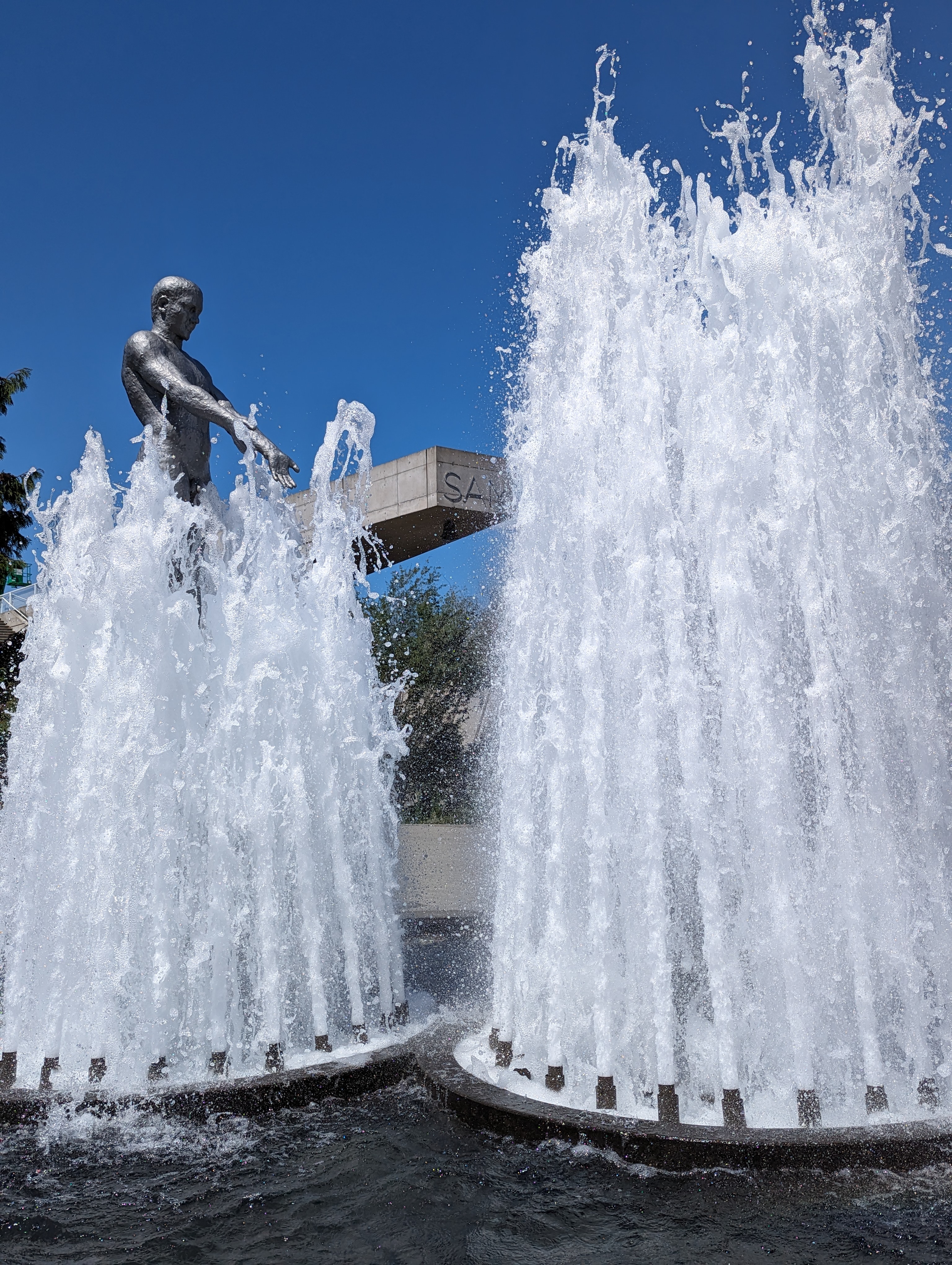
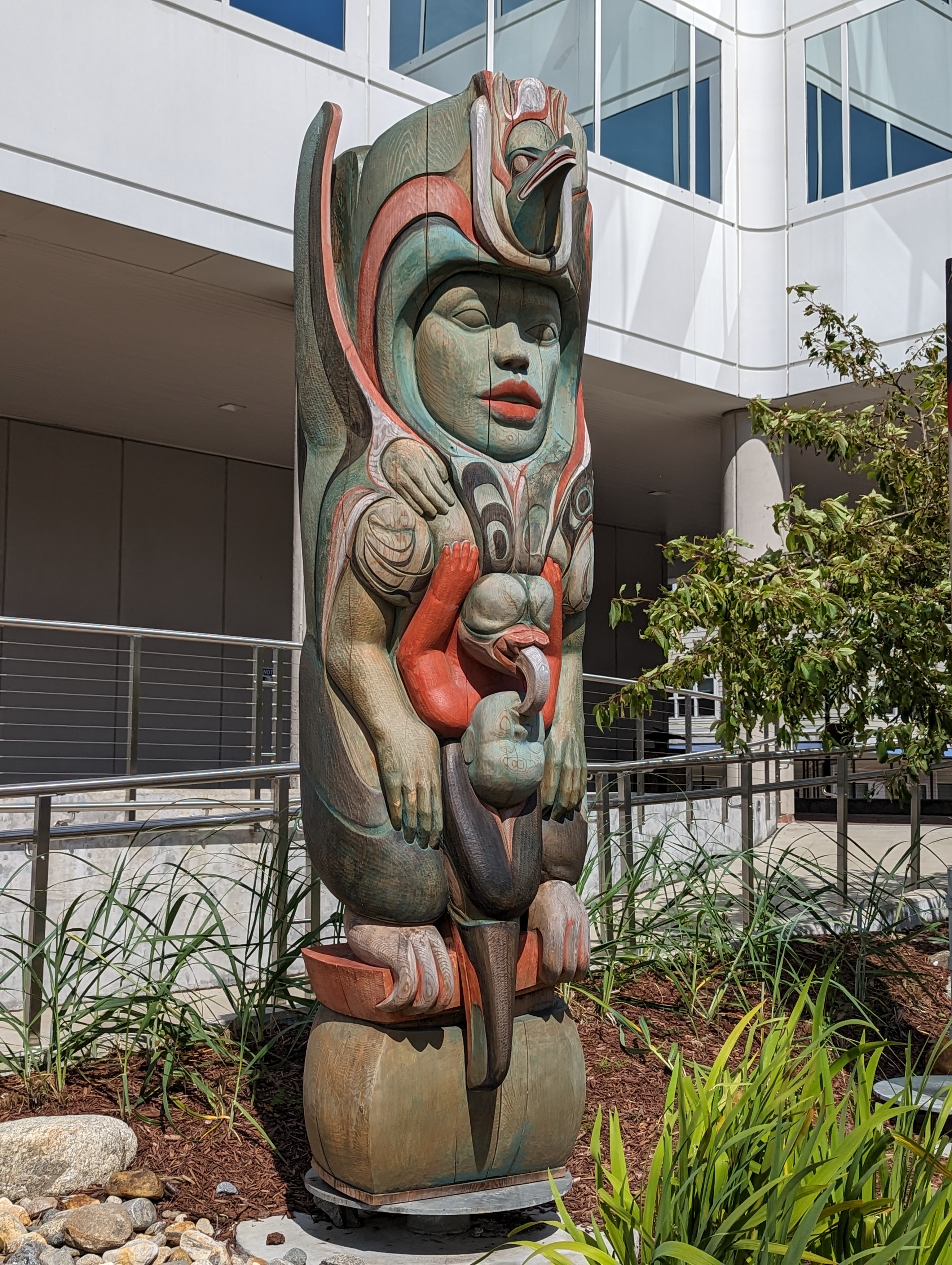
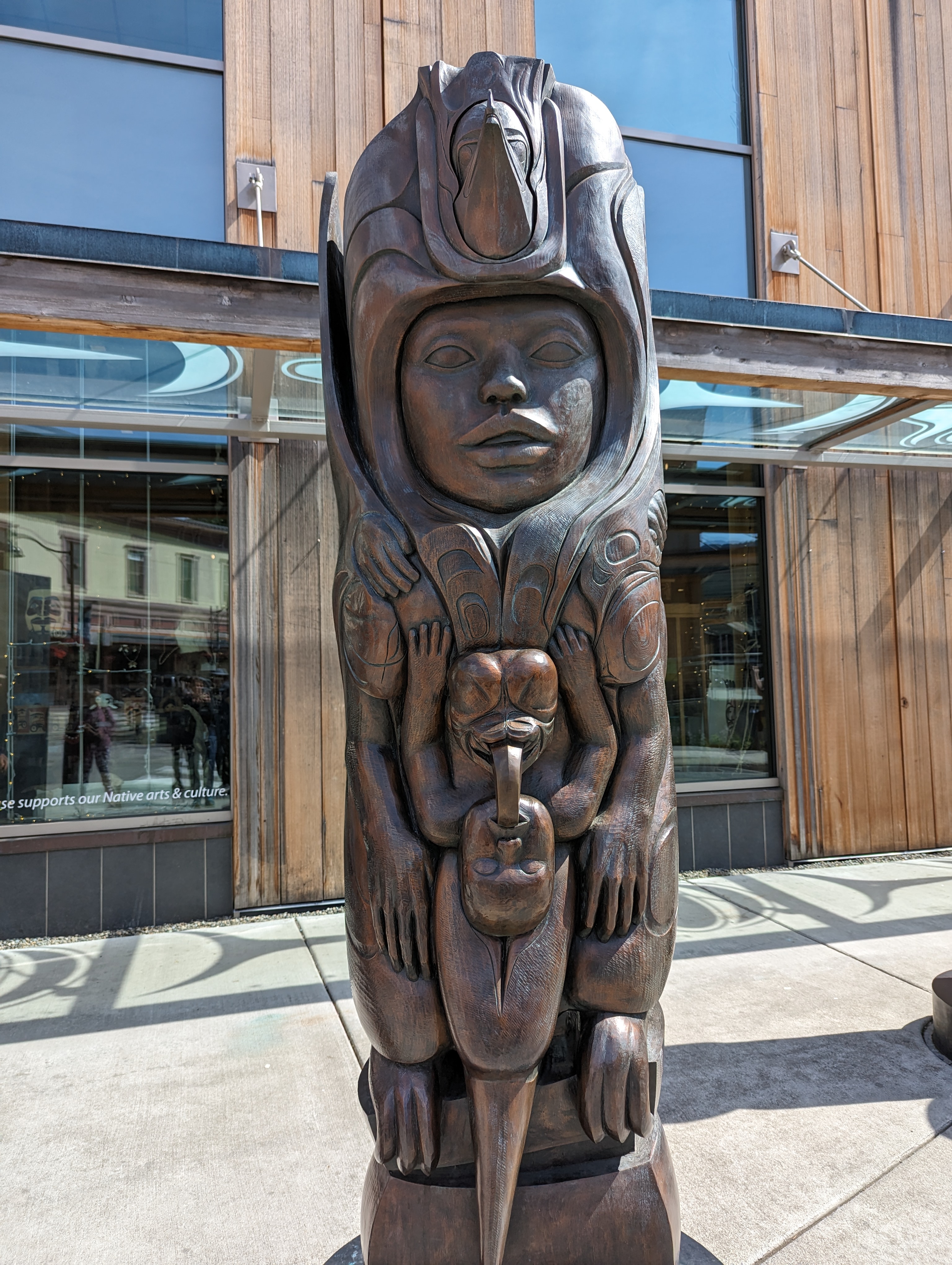
Tlingit totem pole Pier 91Sculpture in the Olympic sculpture park.Not a distorted face (with a seagull on top).
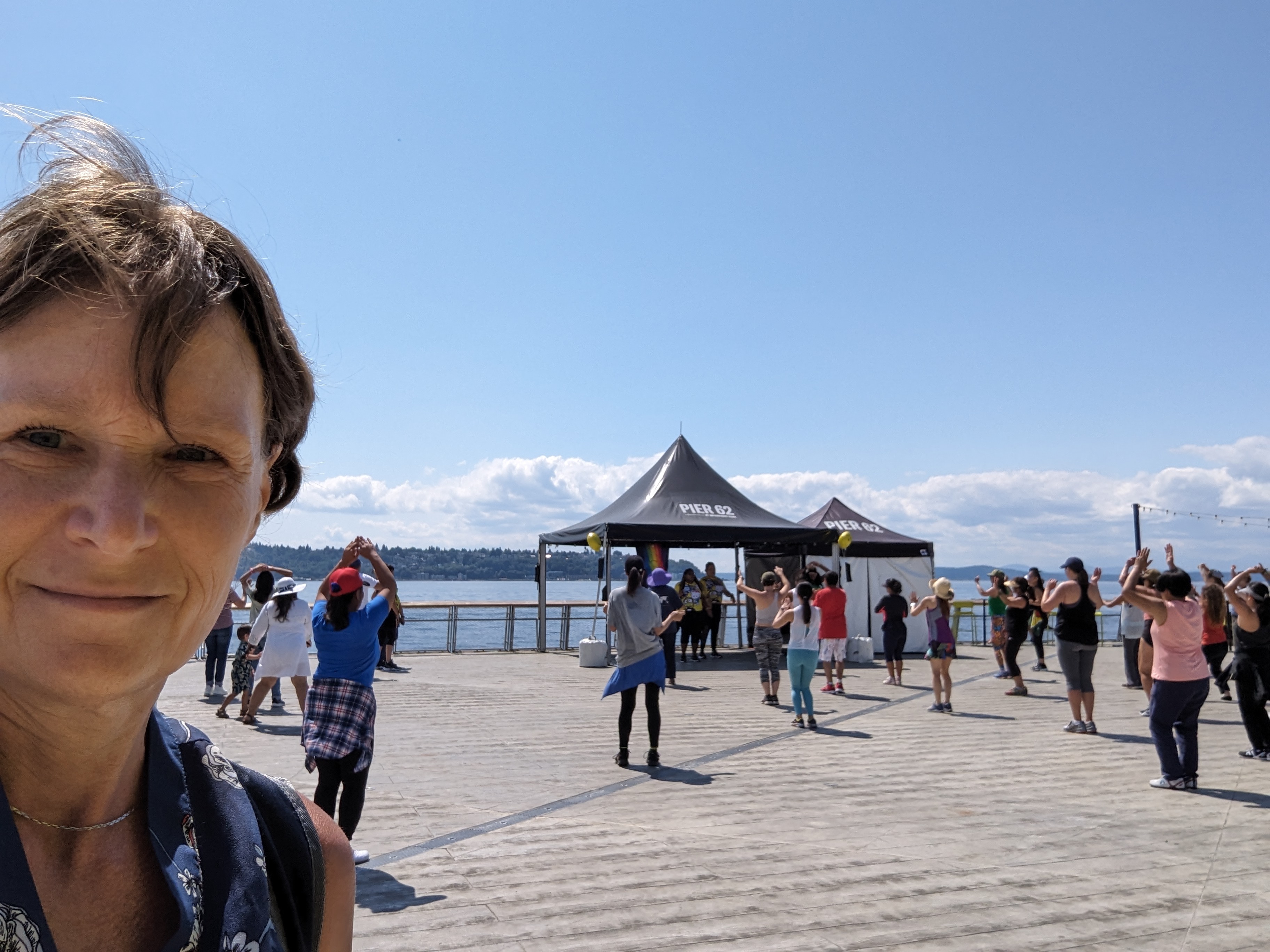
I passed pier 62 and noticed they had a free Zumba class at the end of the pier. Such fun!
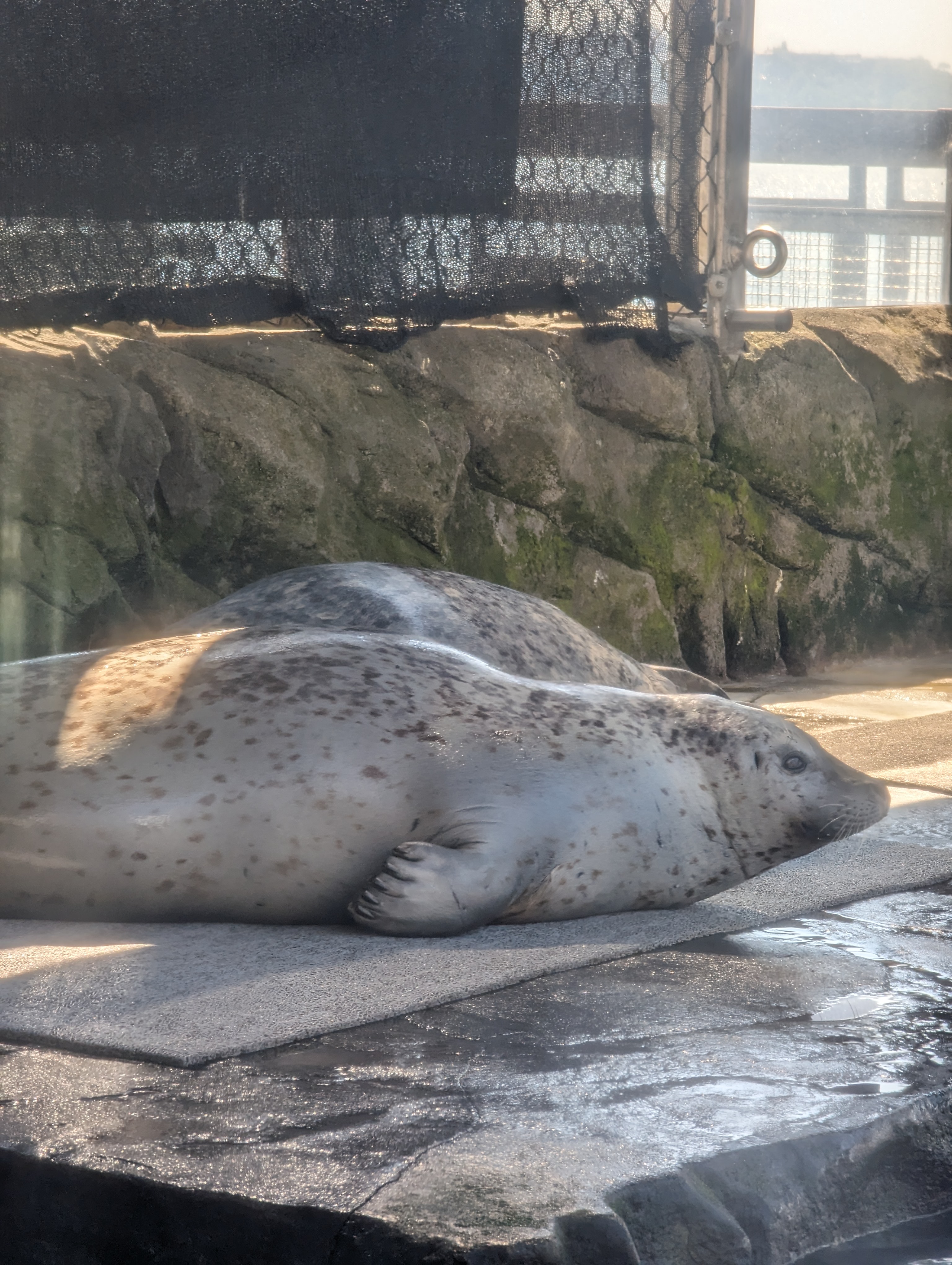
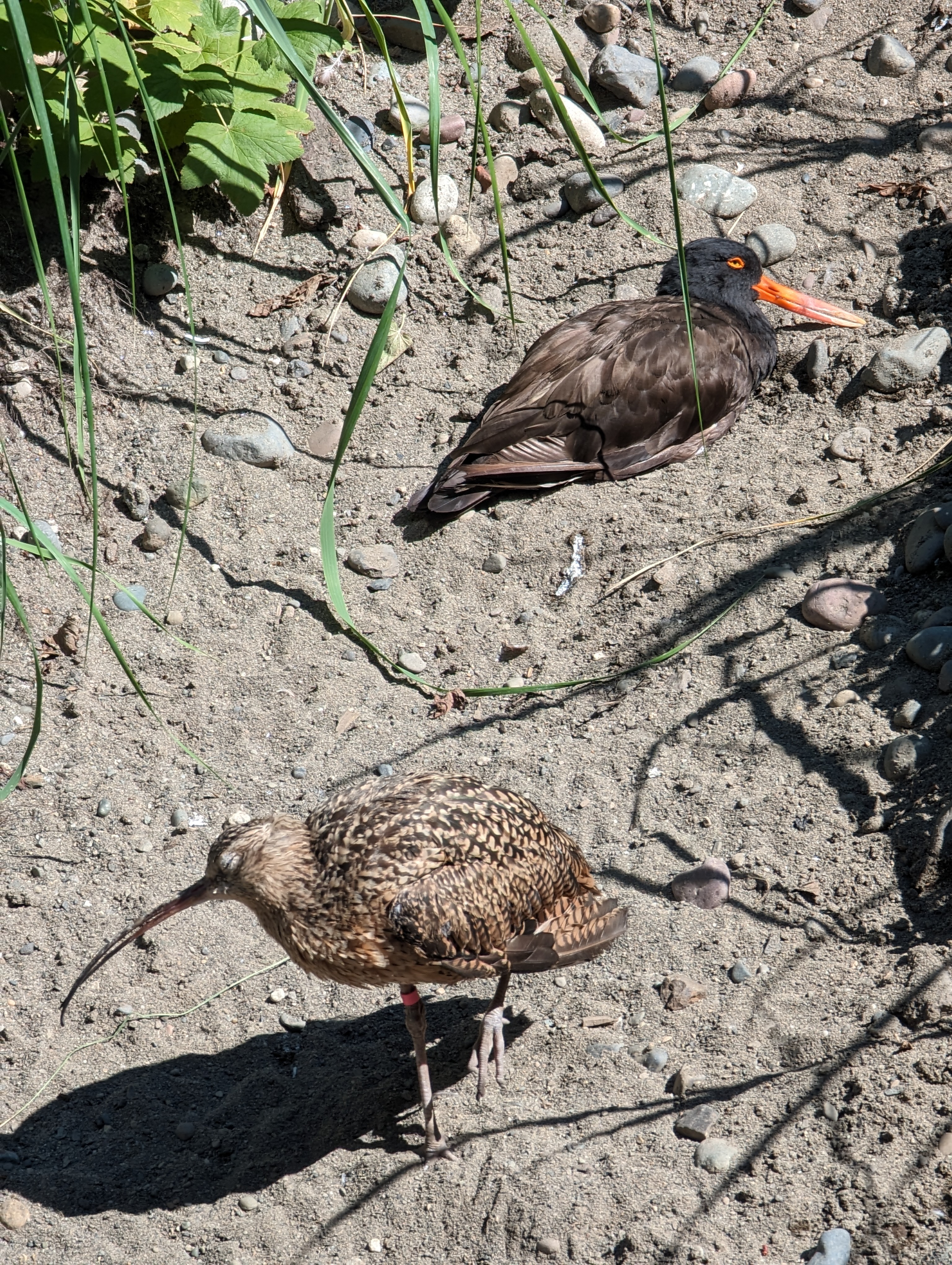
Of course the aquarium was pretty amazing. Next to pier 62, it is along the water so fresh salt water is used for the exhibits.
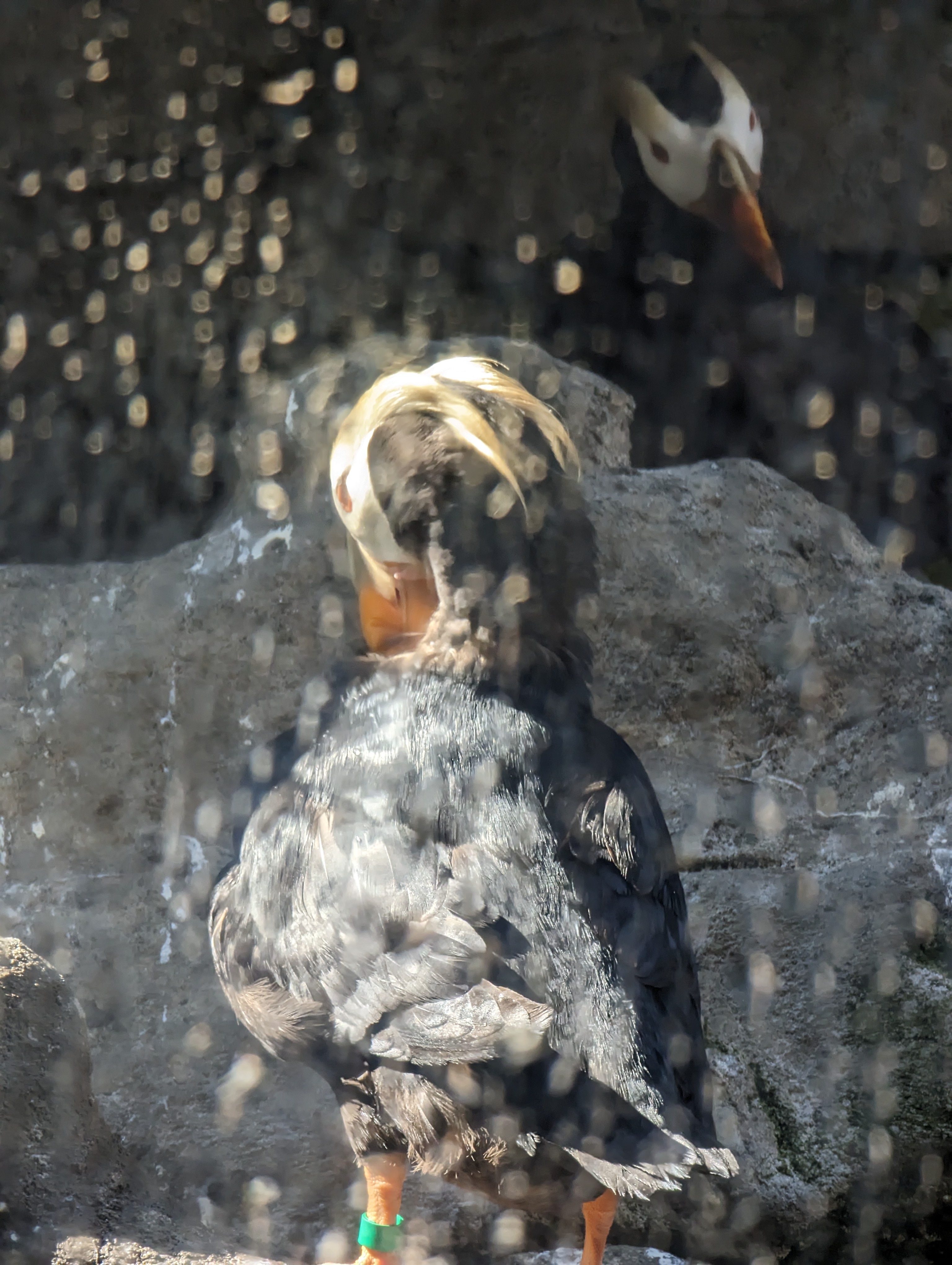
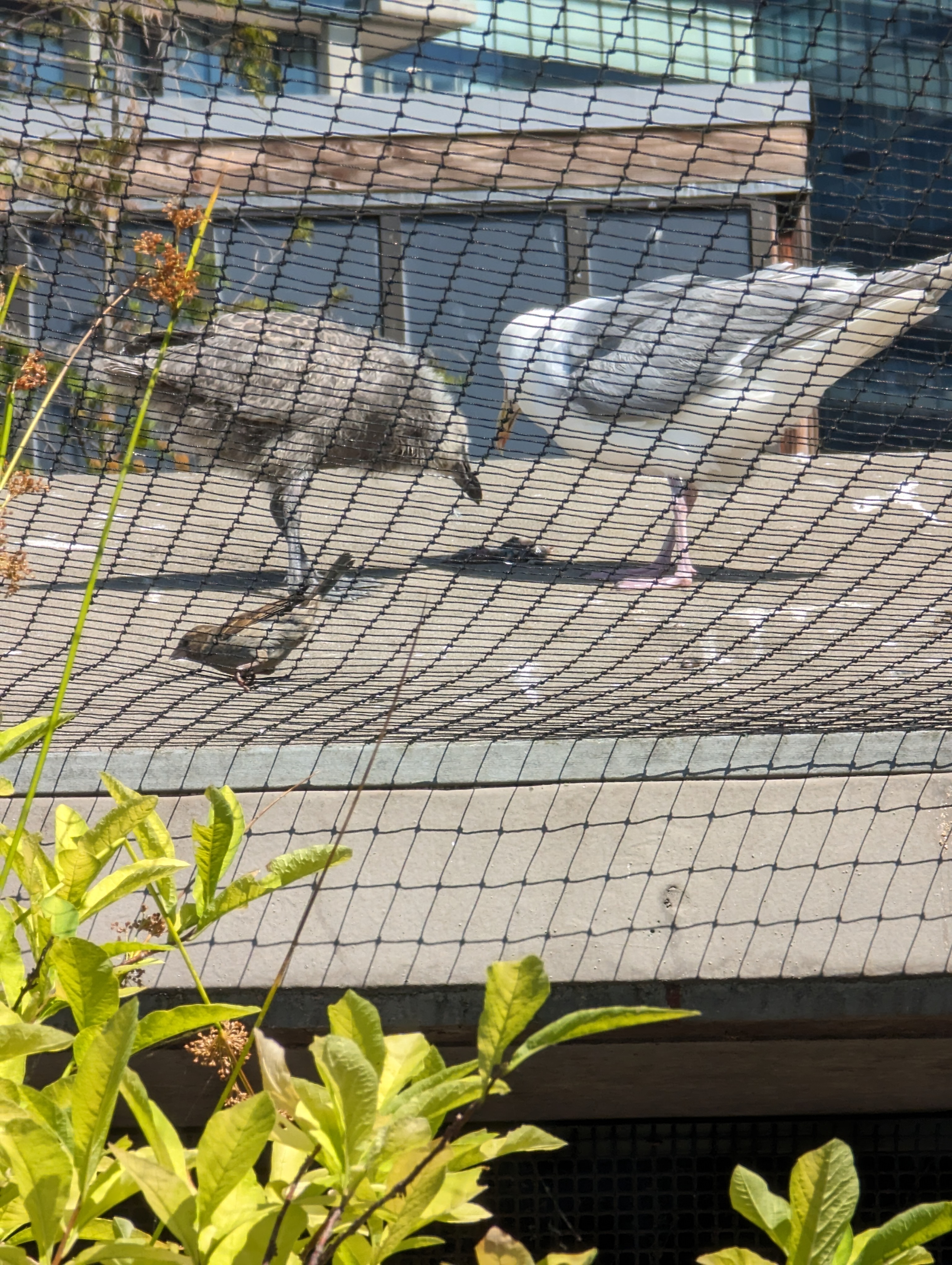
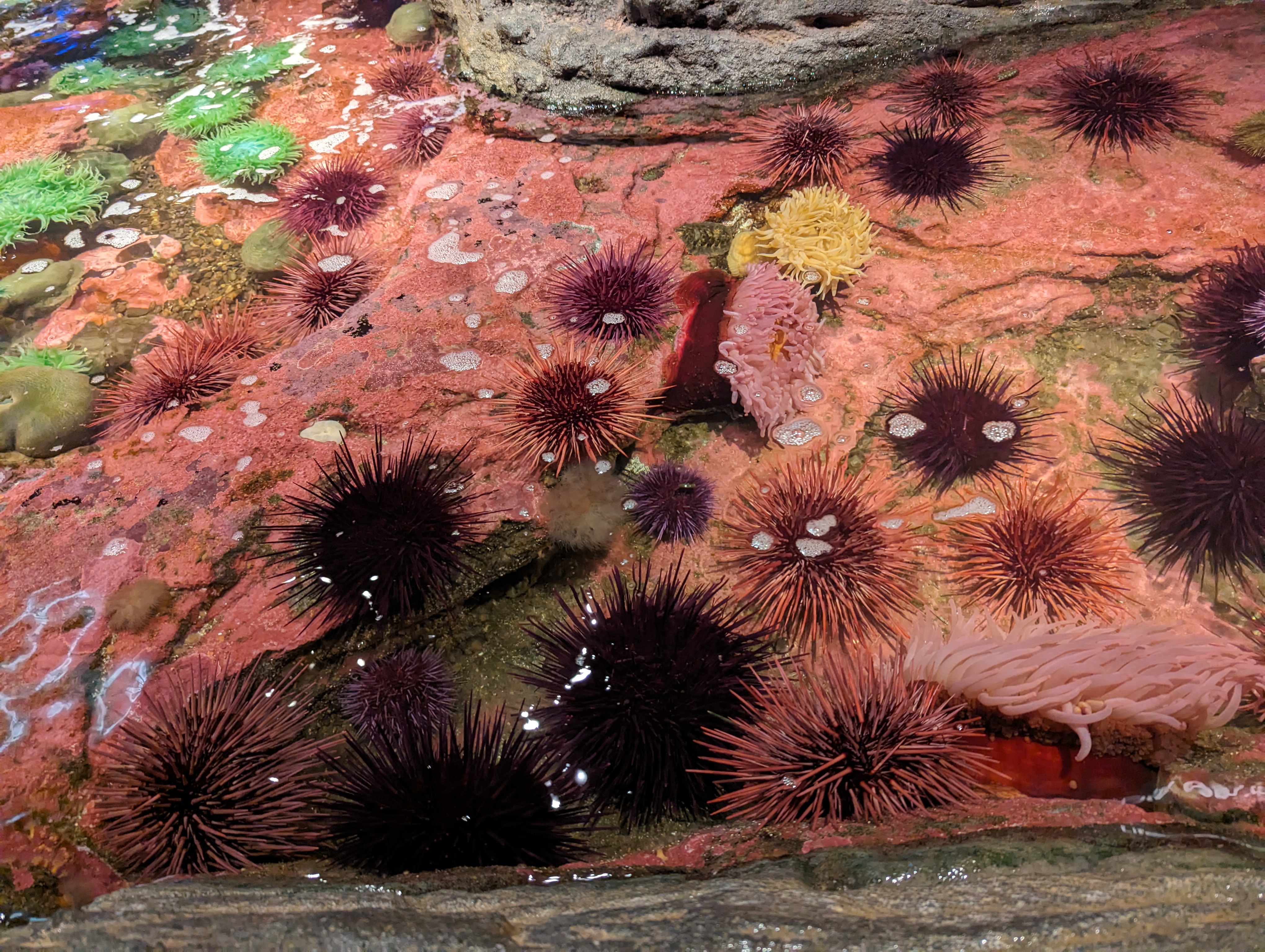
Puffins.A seagull feeding its chick.Sea anemones. I love how when you stick your finger between the spines they hug your finger.
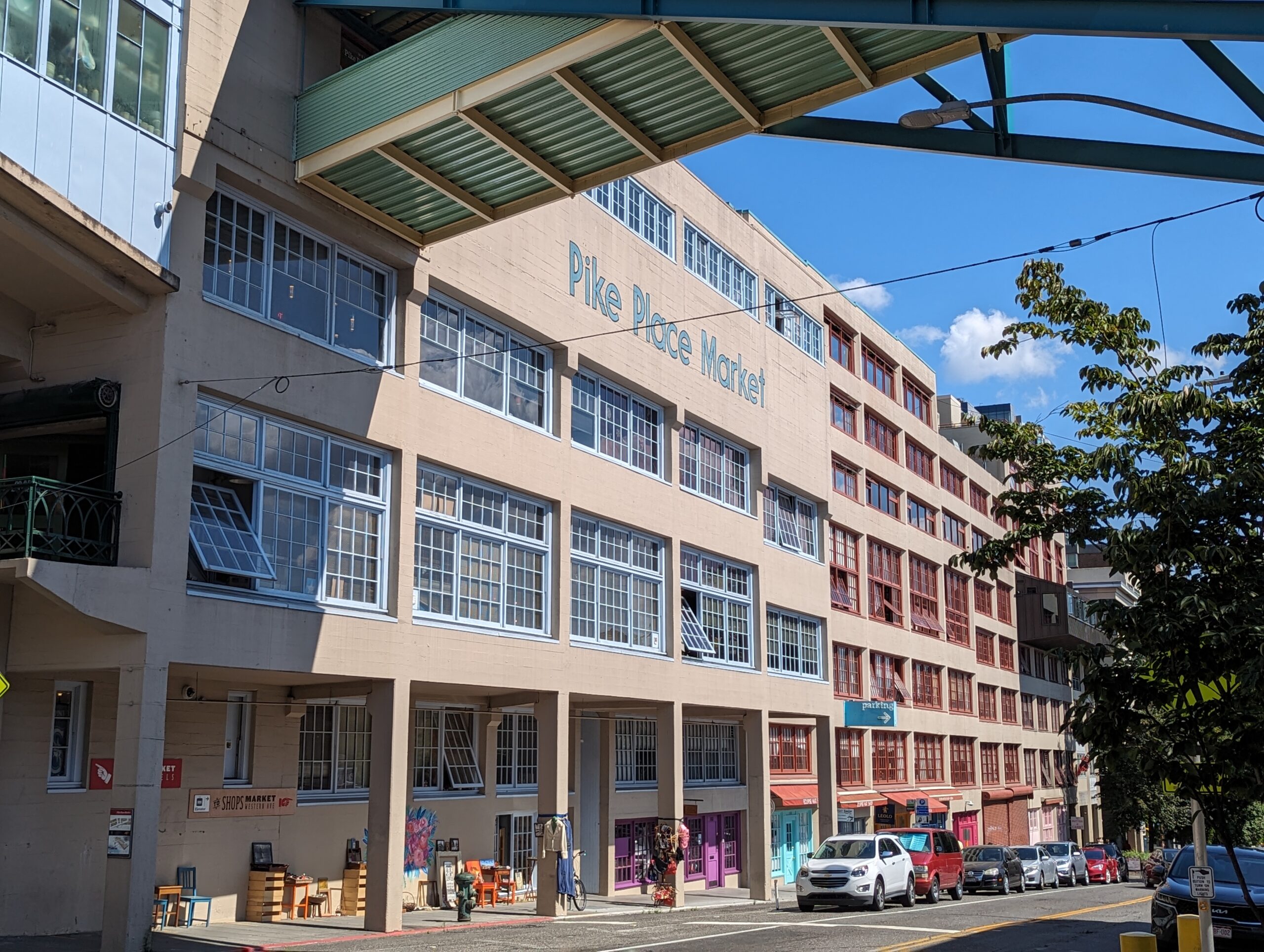
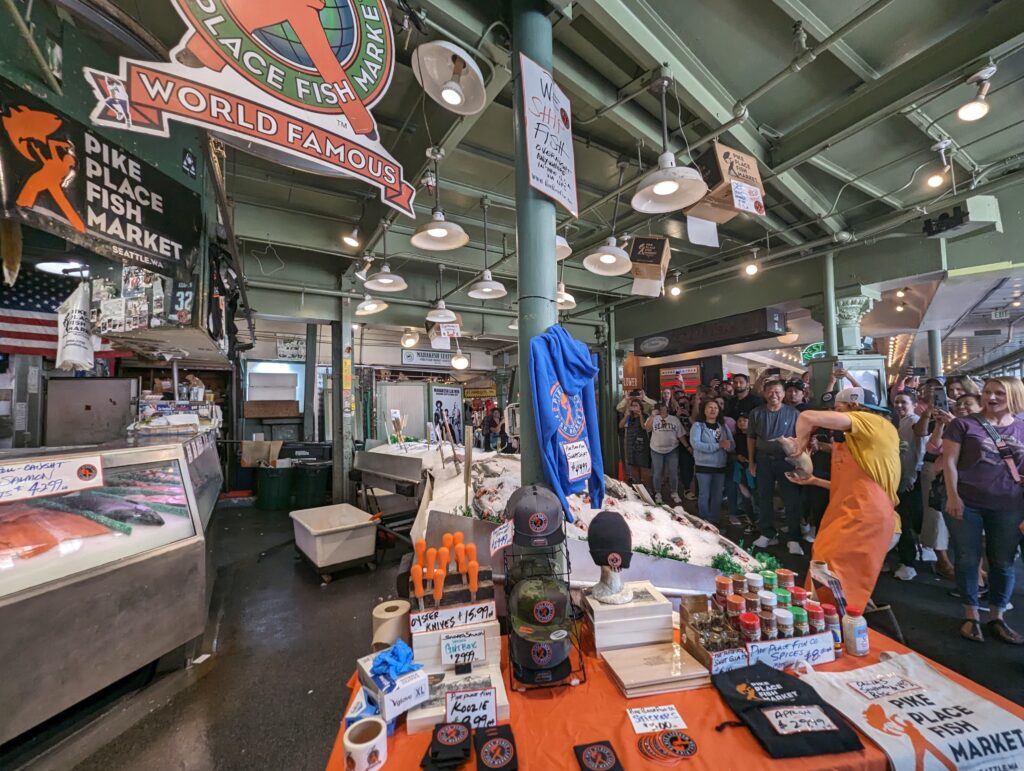
And the trip would not be complete without going to Pike Place Market to get something to eat and watch for flying fish.
This guy would put money in the mouth of a fish and they would toss it back and forth. The money never fell out of the fish. Quite the show!
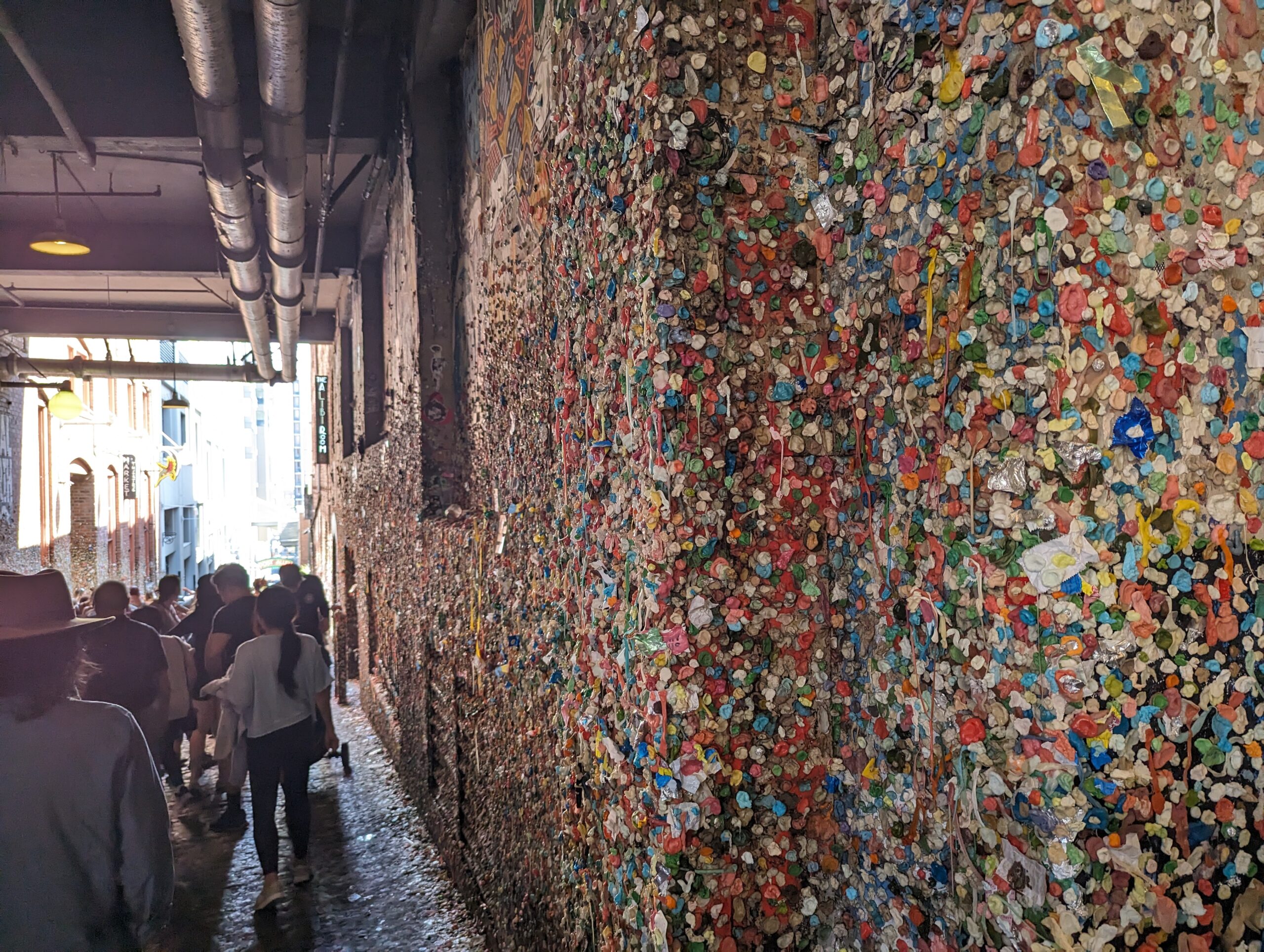
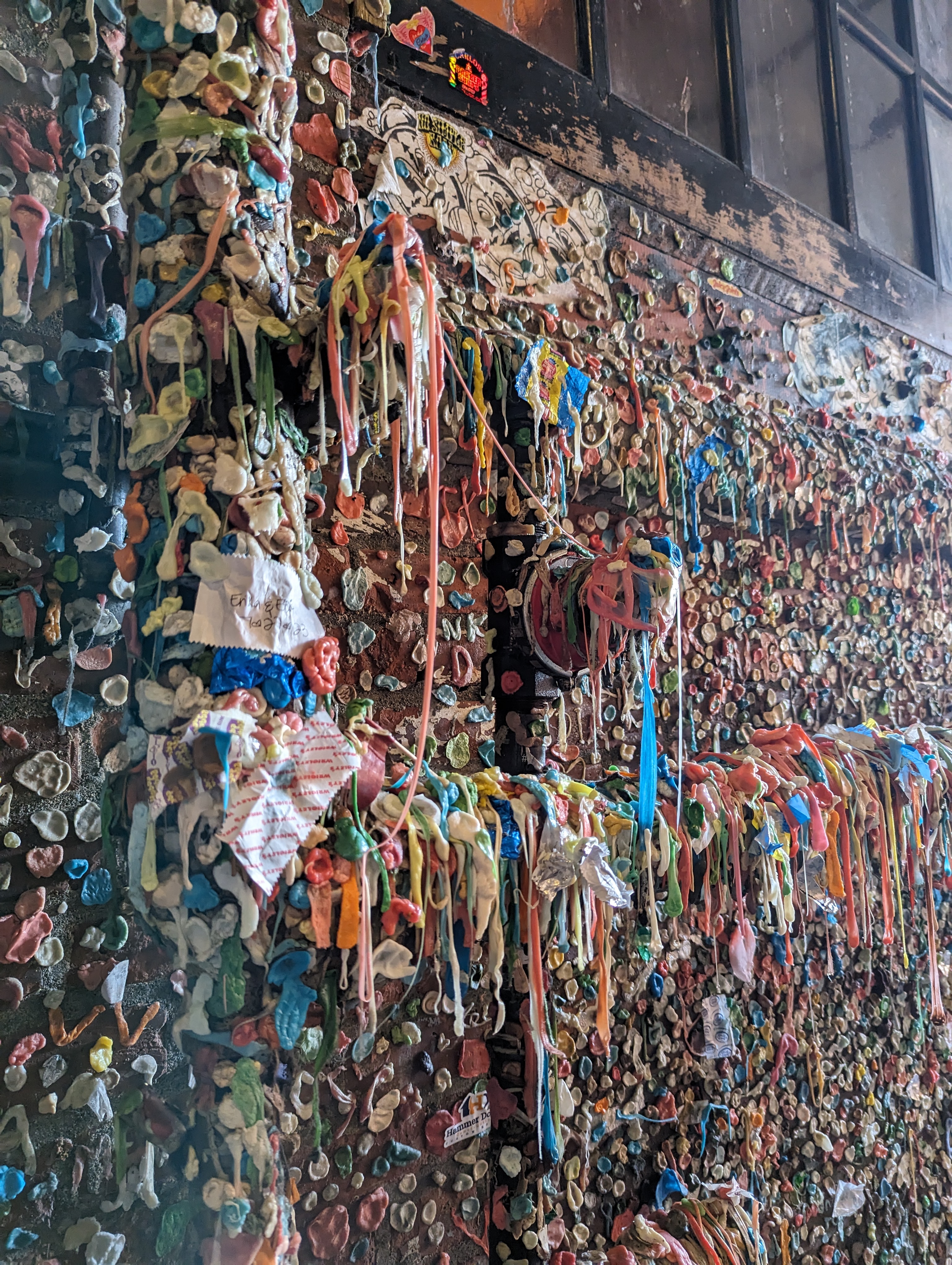
The weirdest thing was the Gum Wall at Pike Place Market. There are so many used pieces of bubble gum dripping along all sides….
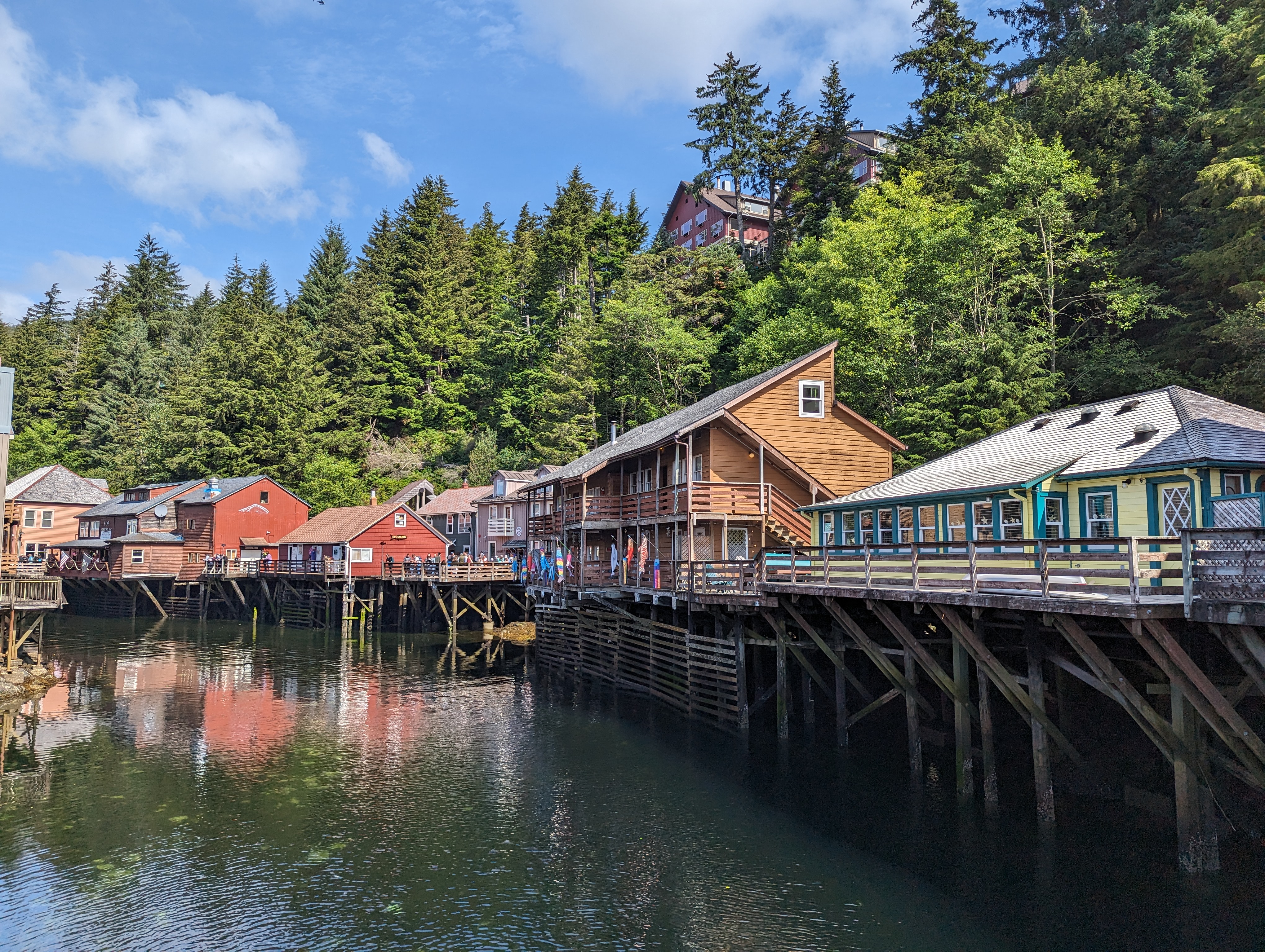
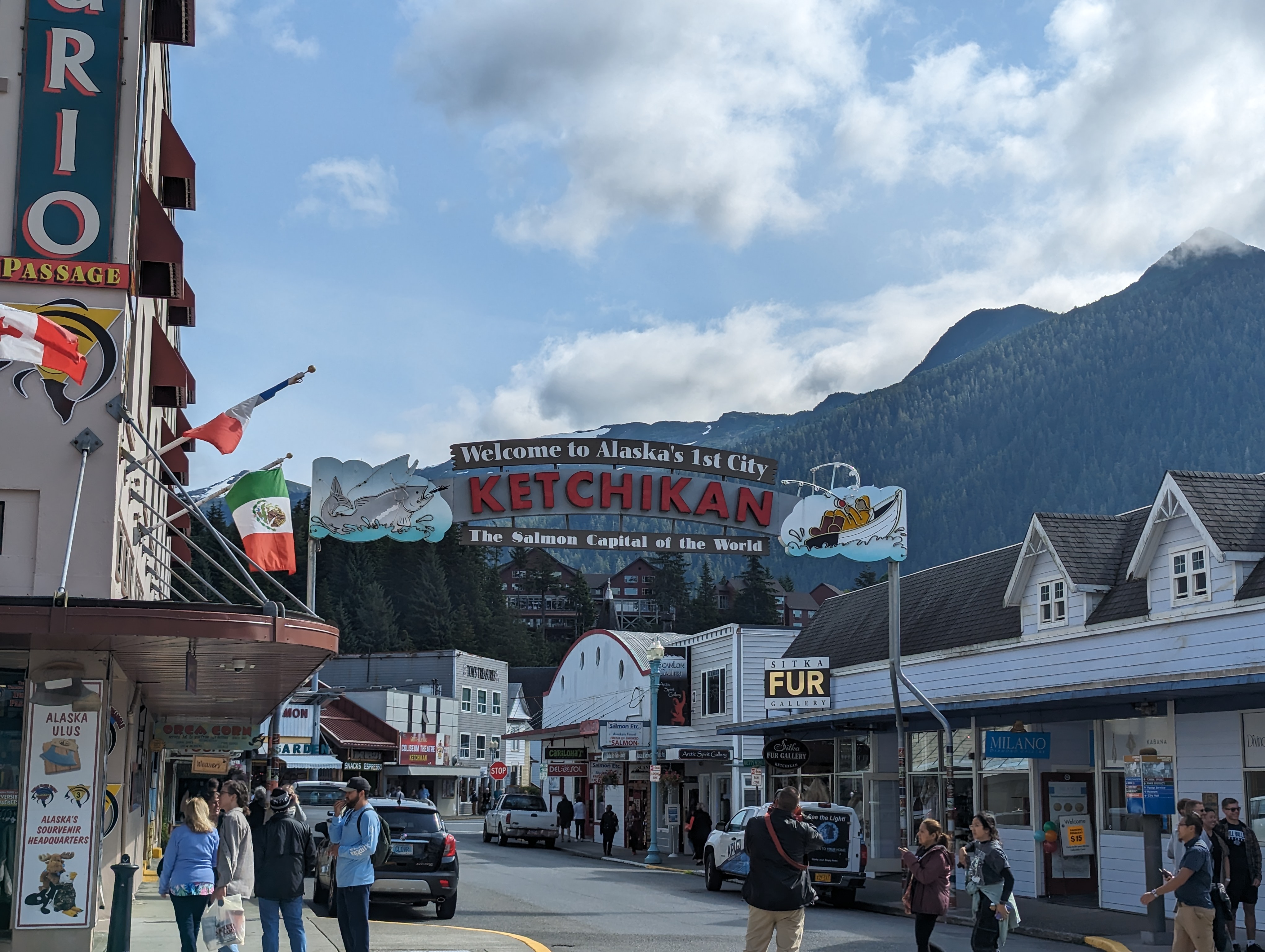
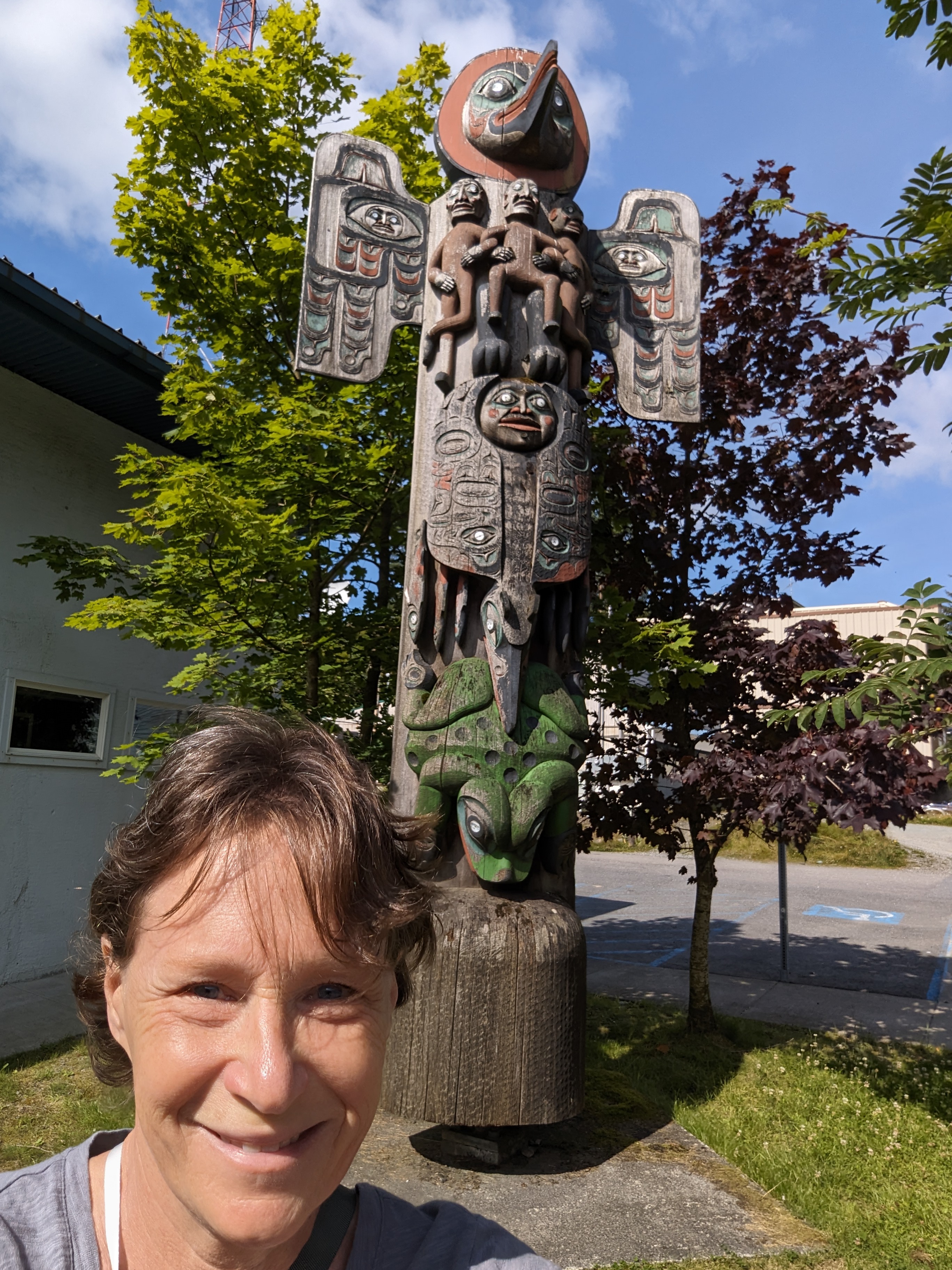
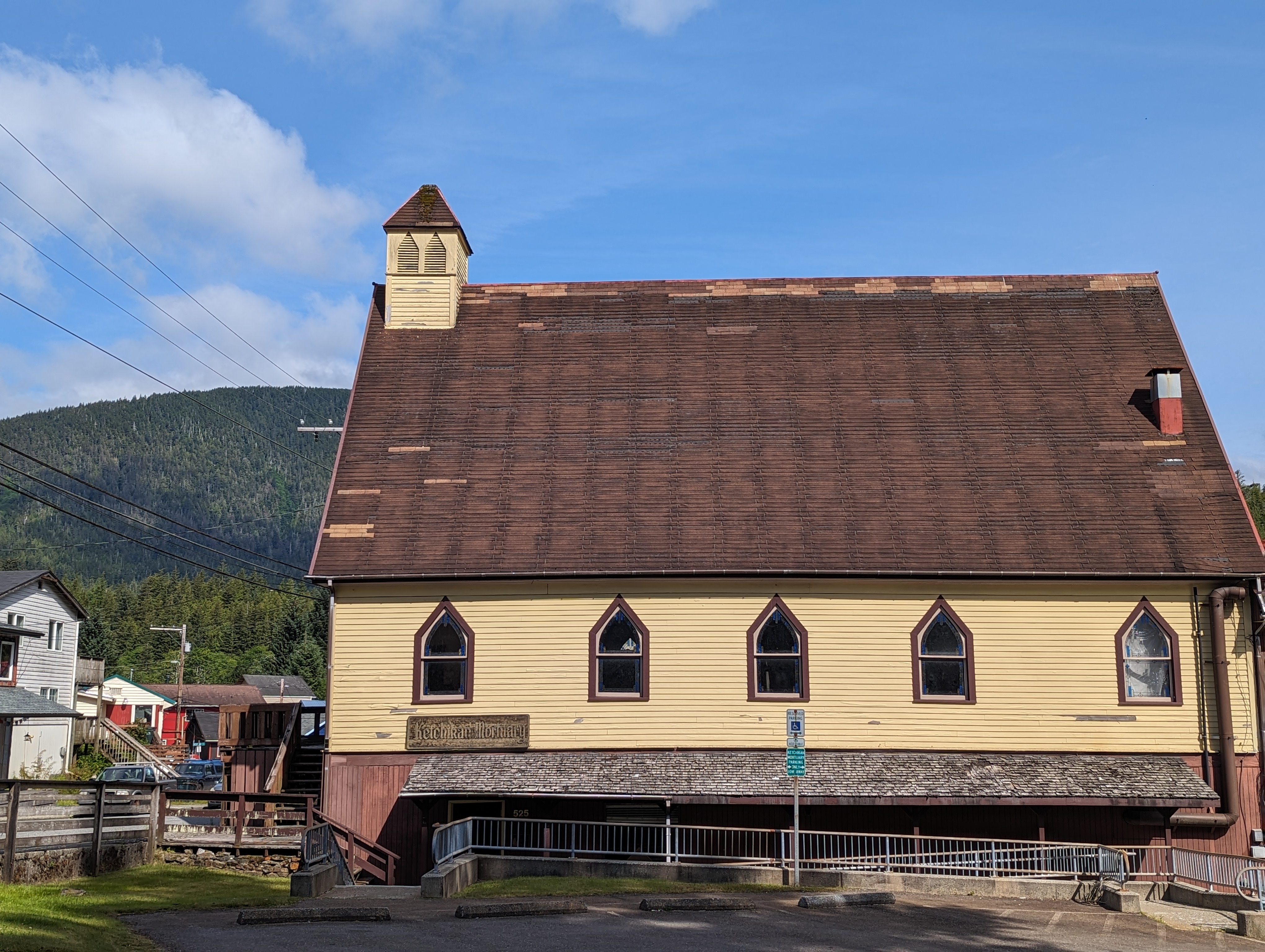
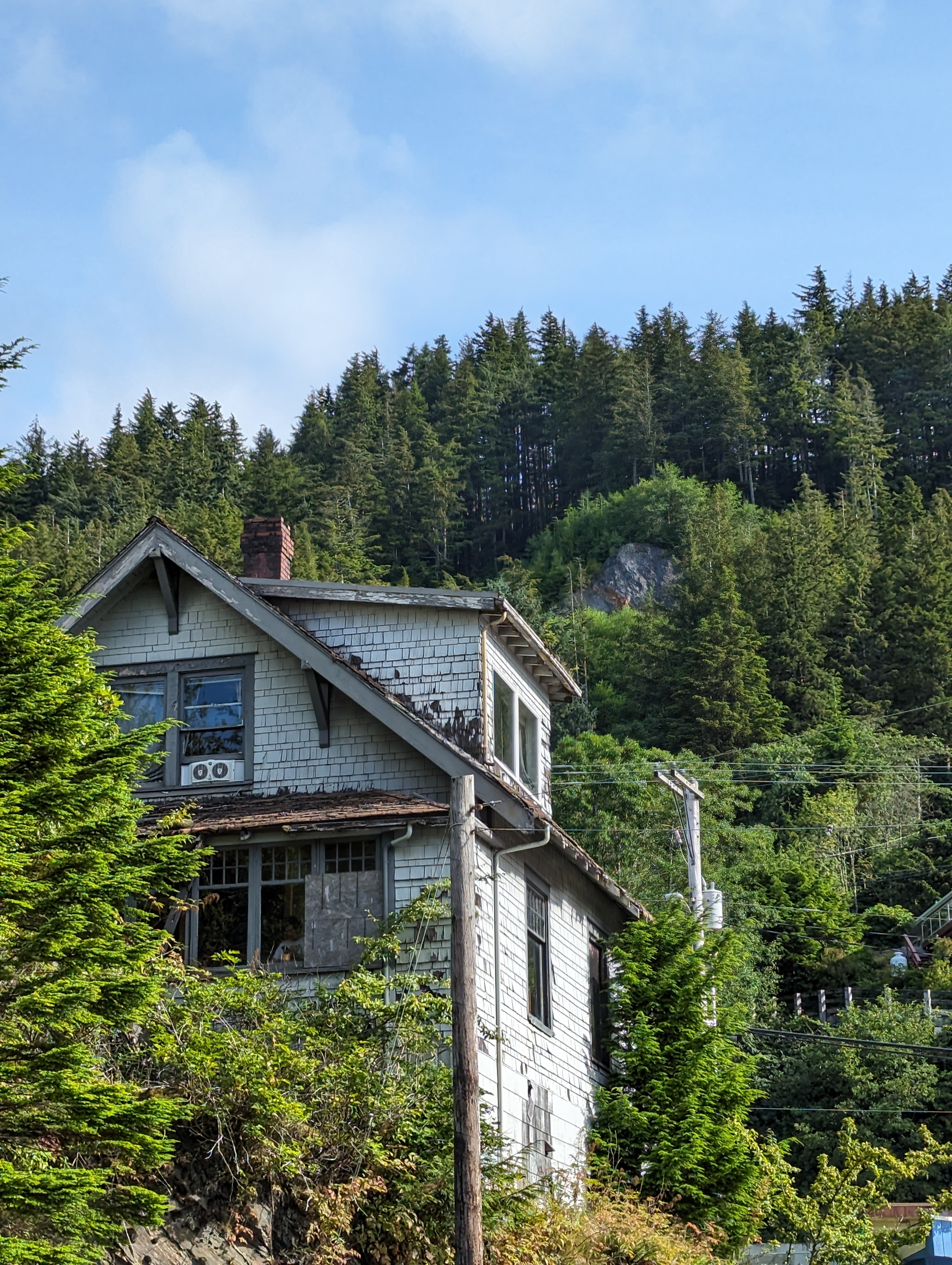
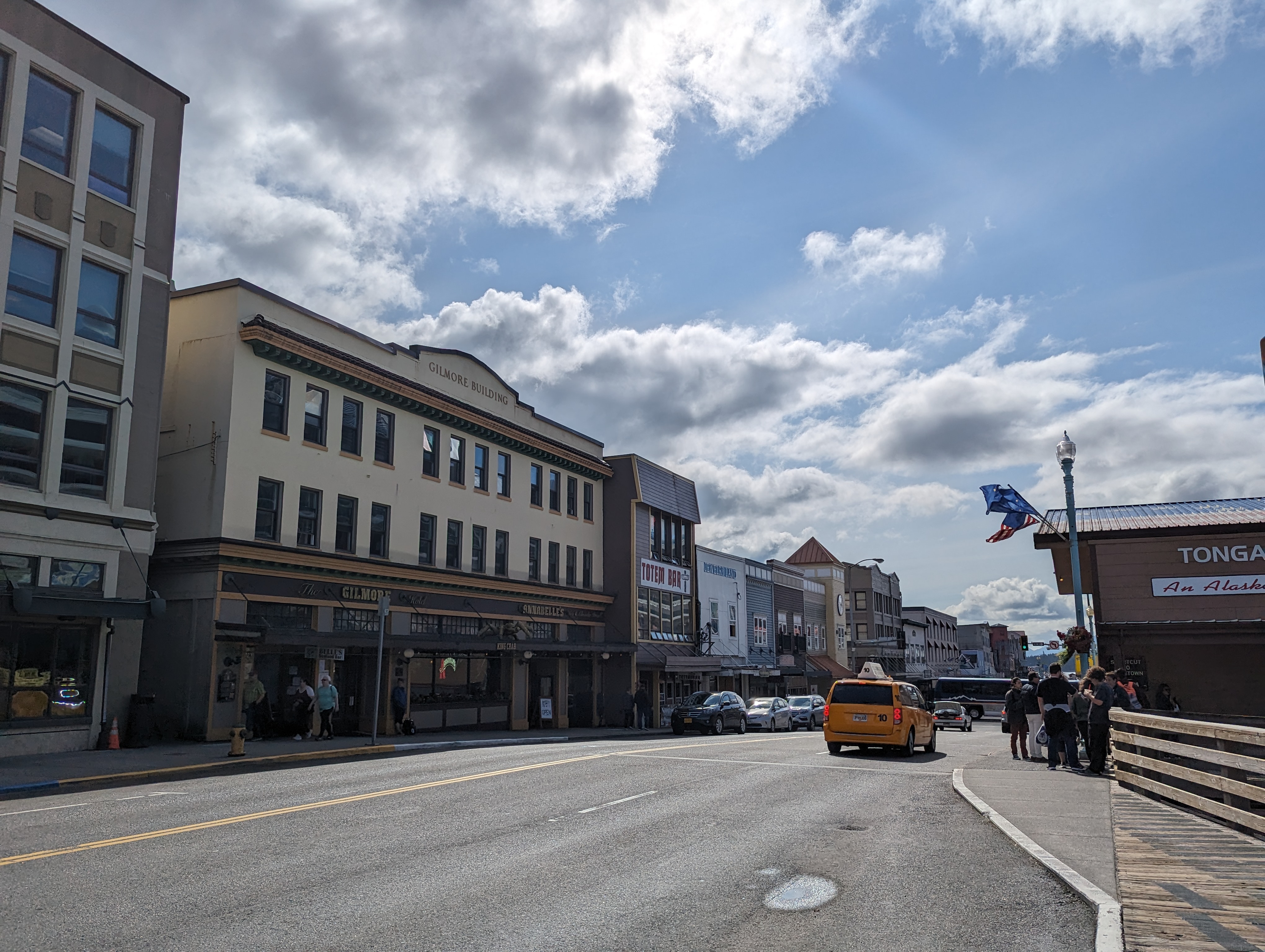
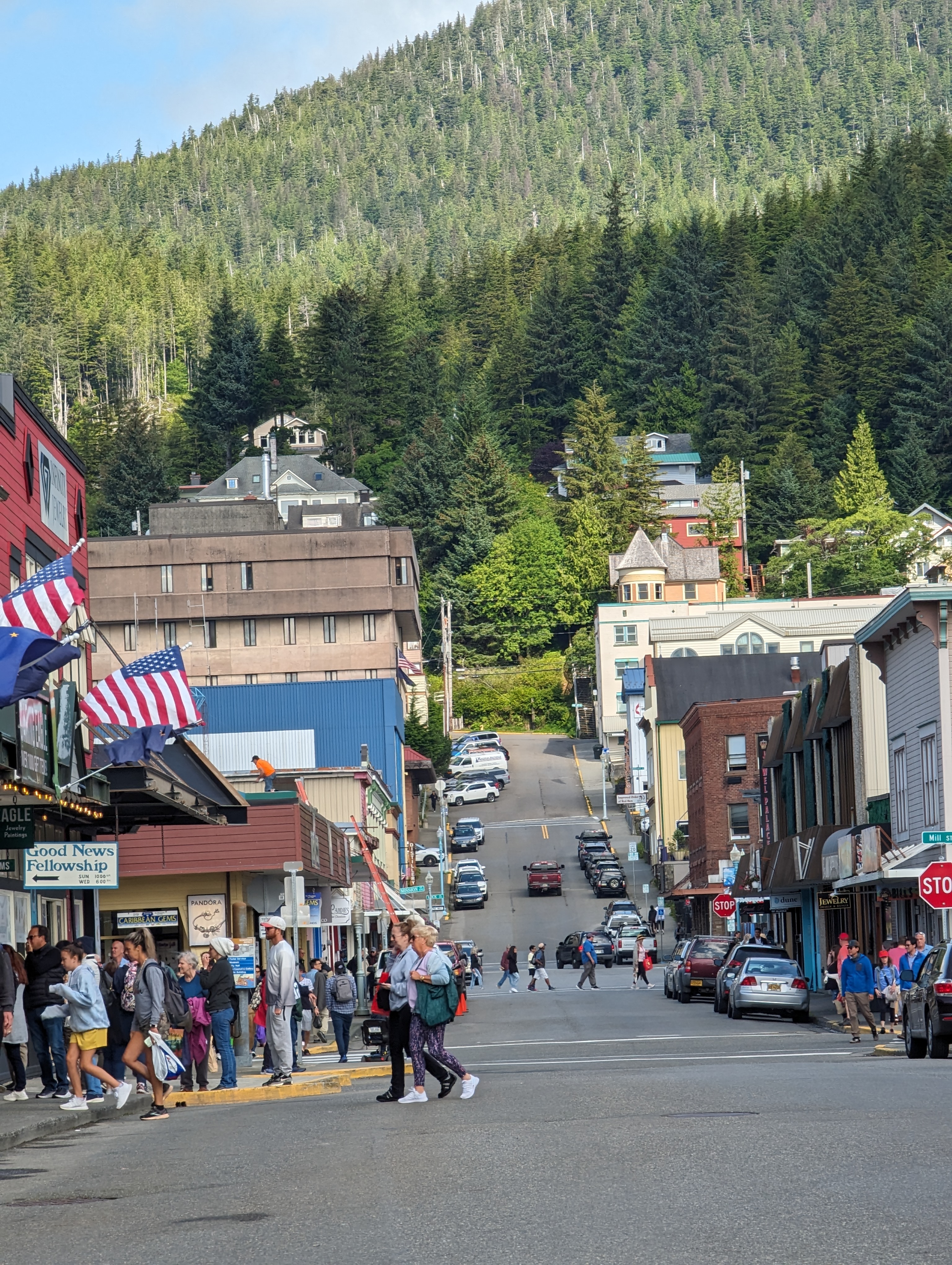
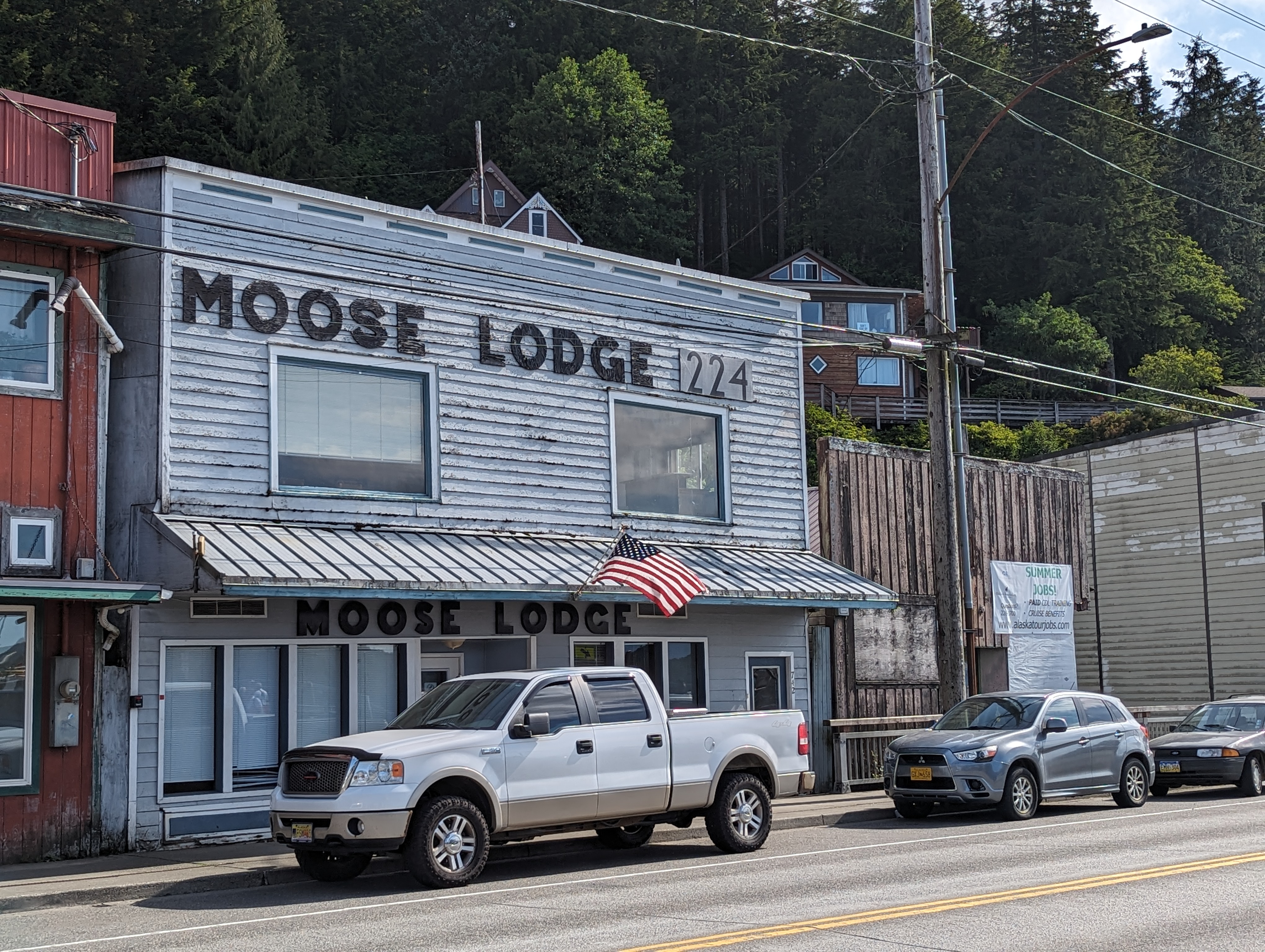
Ketchikan is known for its salmon fishing and native Indian population. It is surrounded by the Tongass National Forest.
An old mortuary
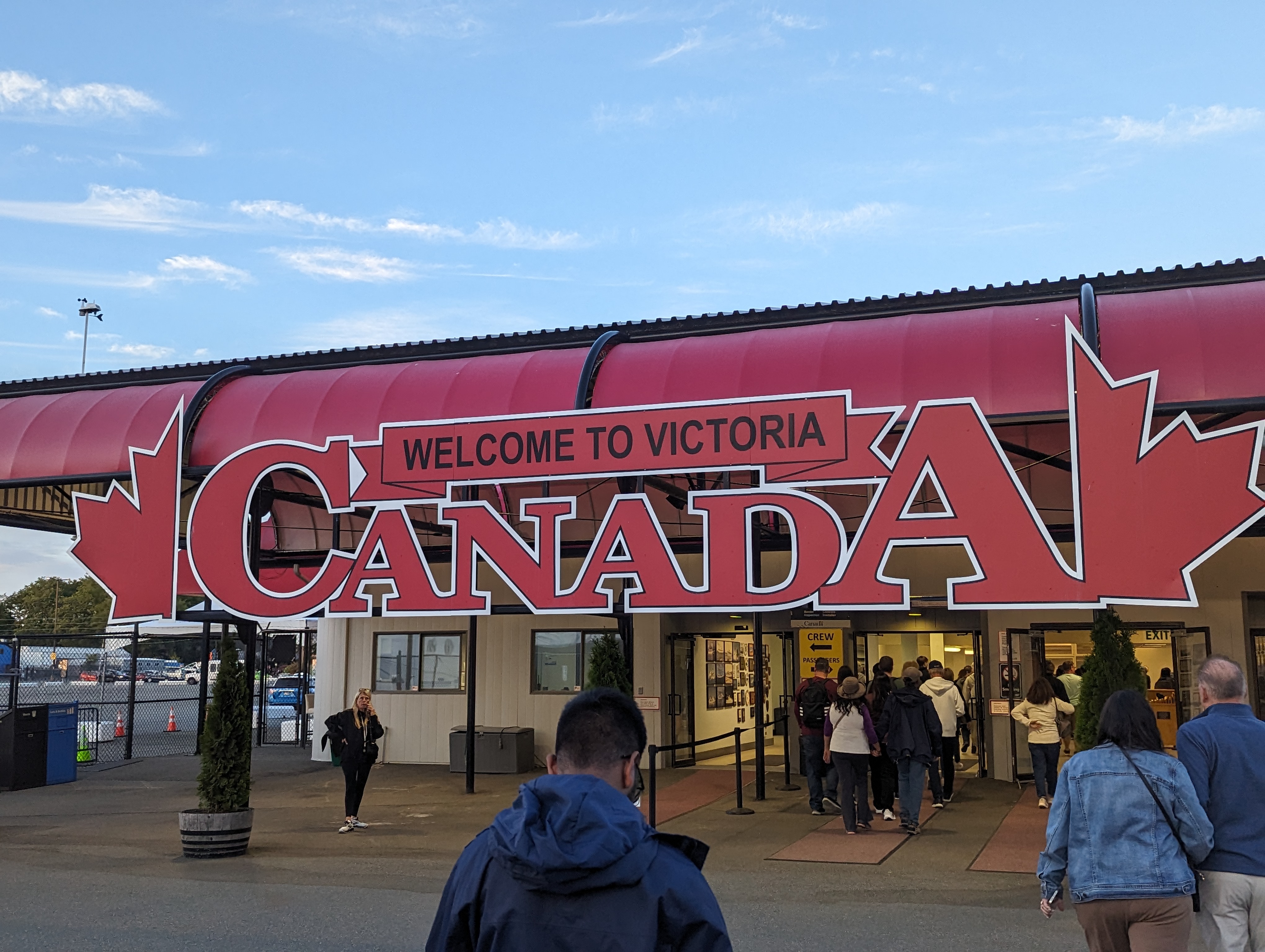
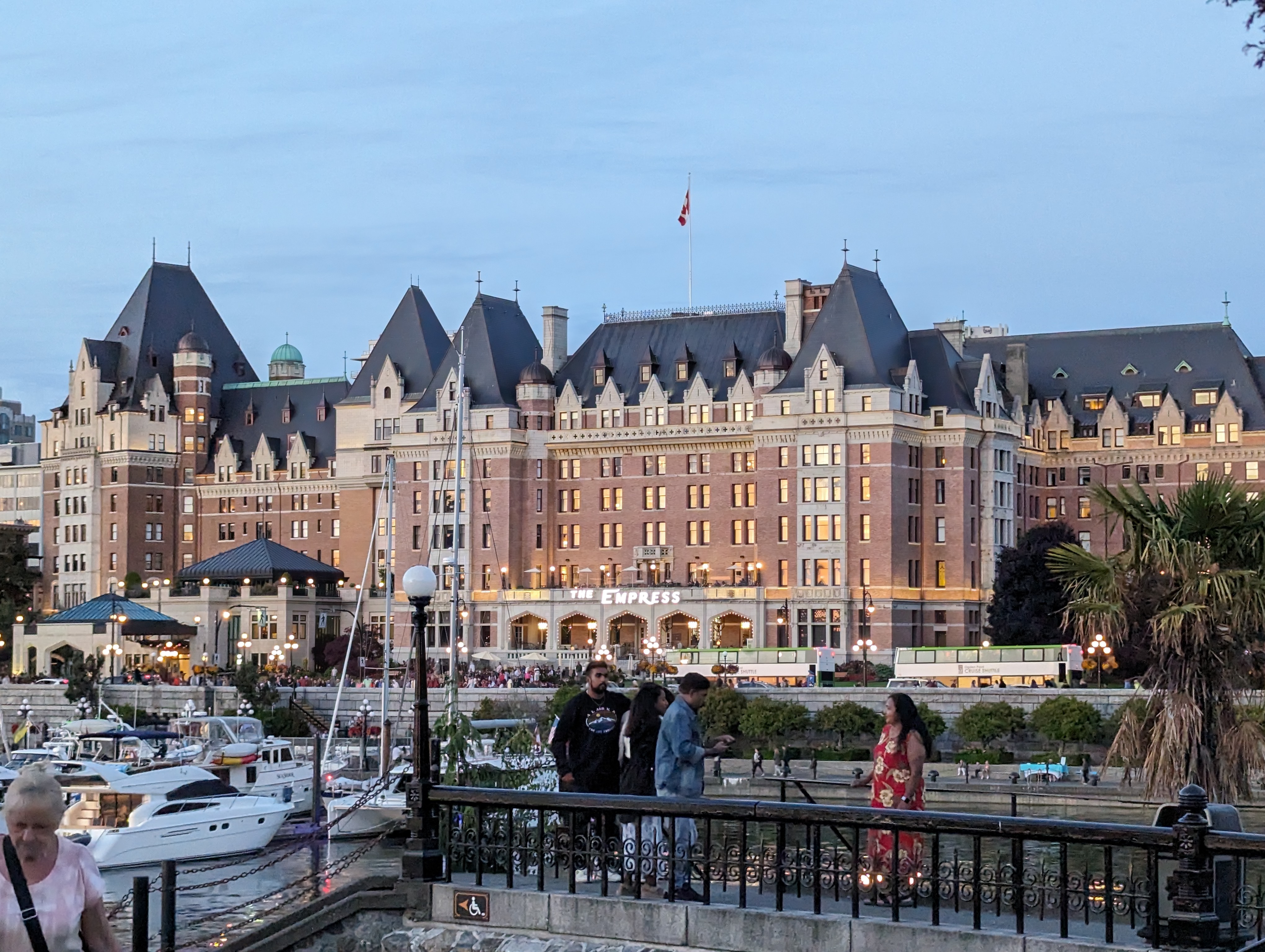
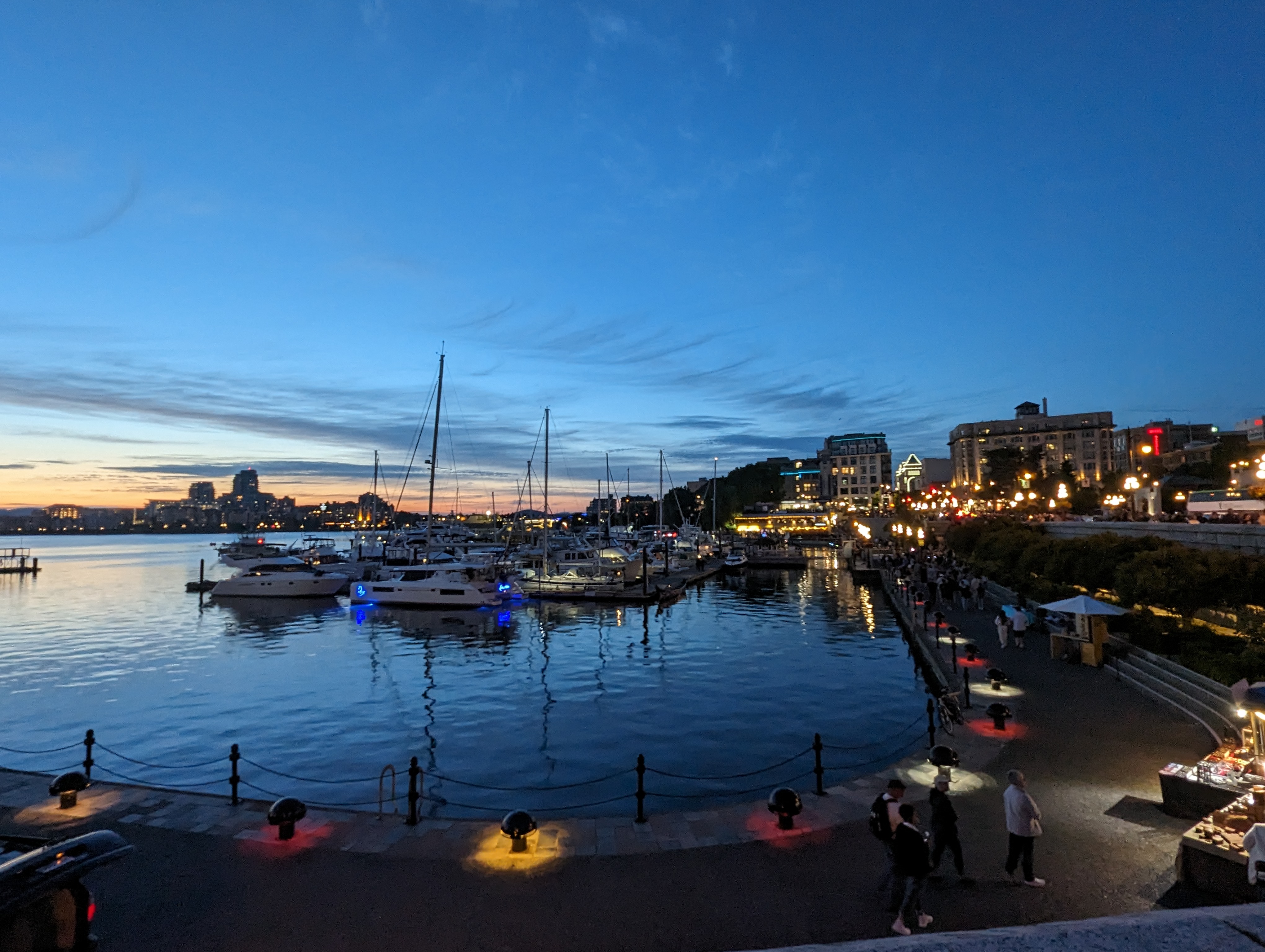
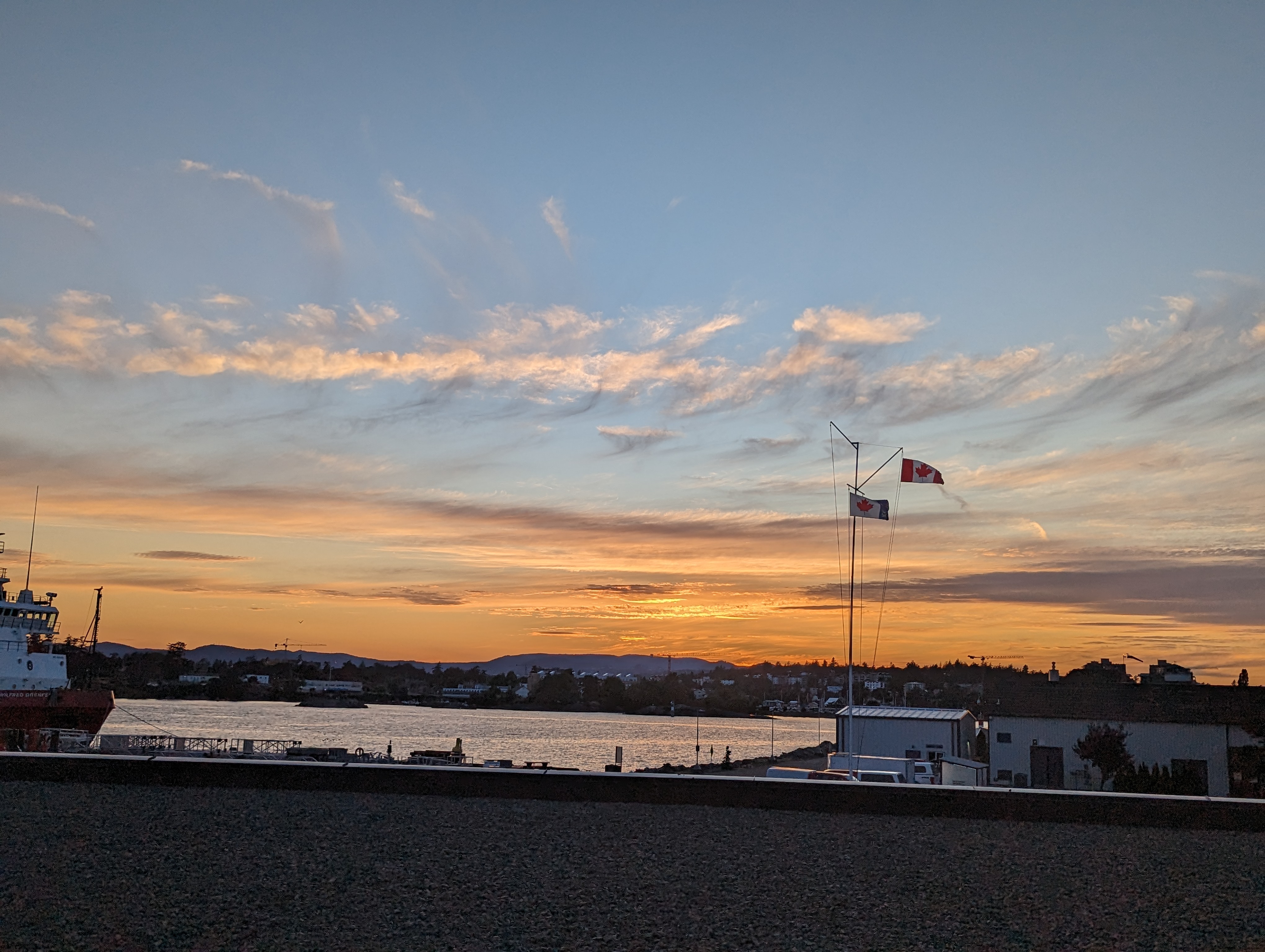
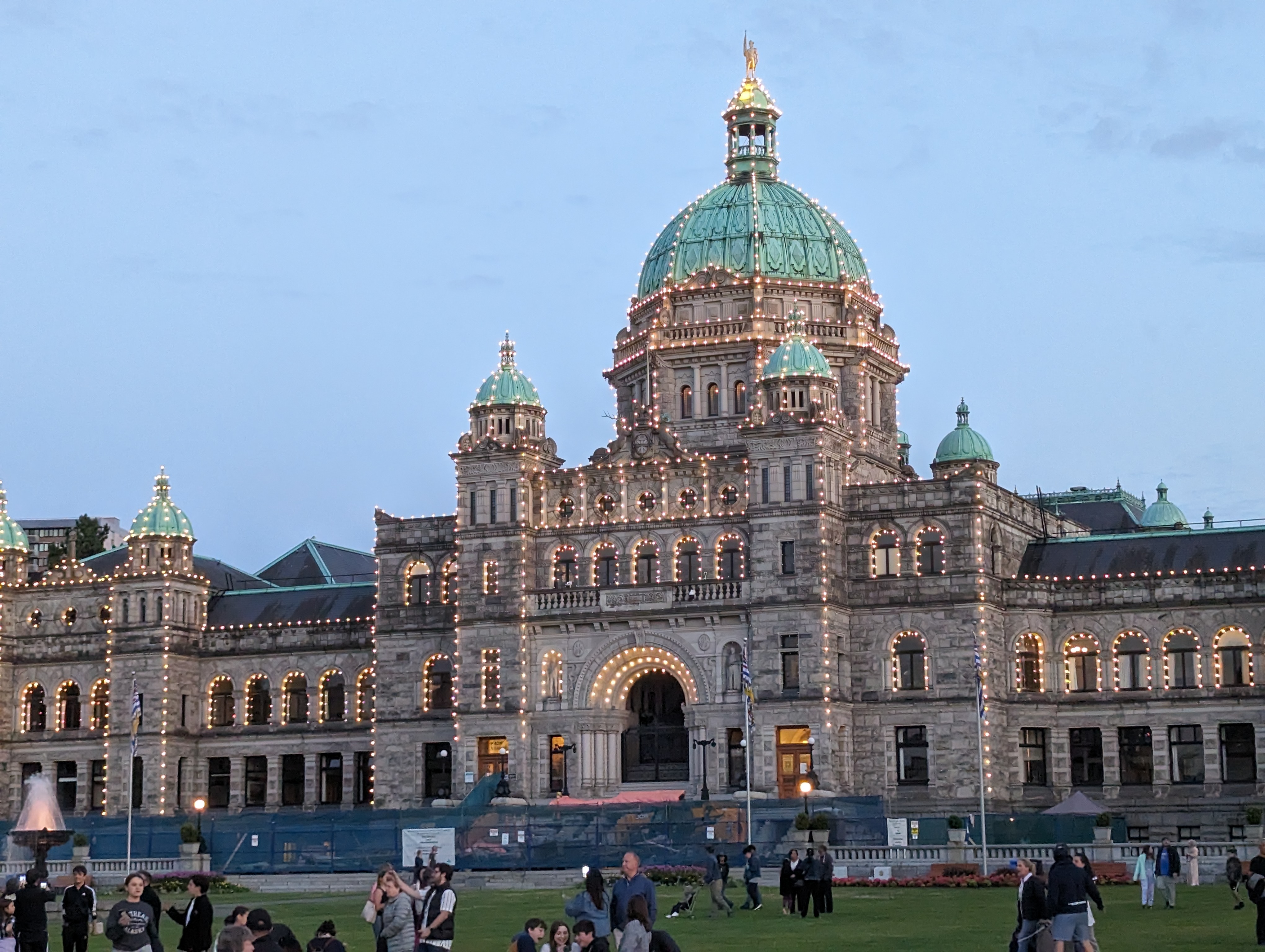
Victoria, British Columbia was different as the architecture looked quite British. It was a good opportunity to get off the ship and walk around for about an hour.
Parliament building
The next morning we docked back in Seattle. Plans for the day are to leave the ship, get a rental car, and visit the space needle.
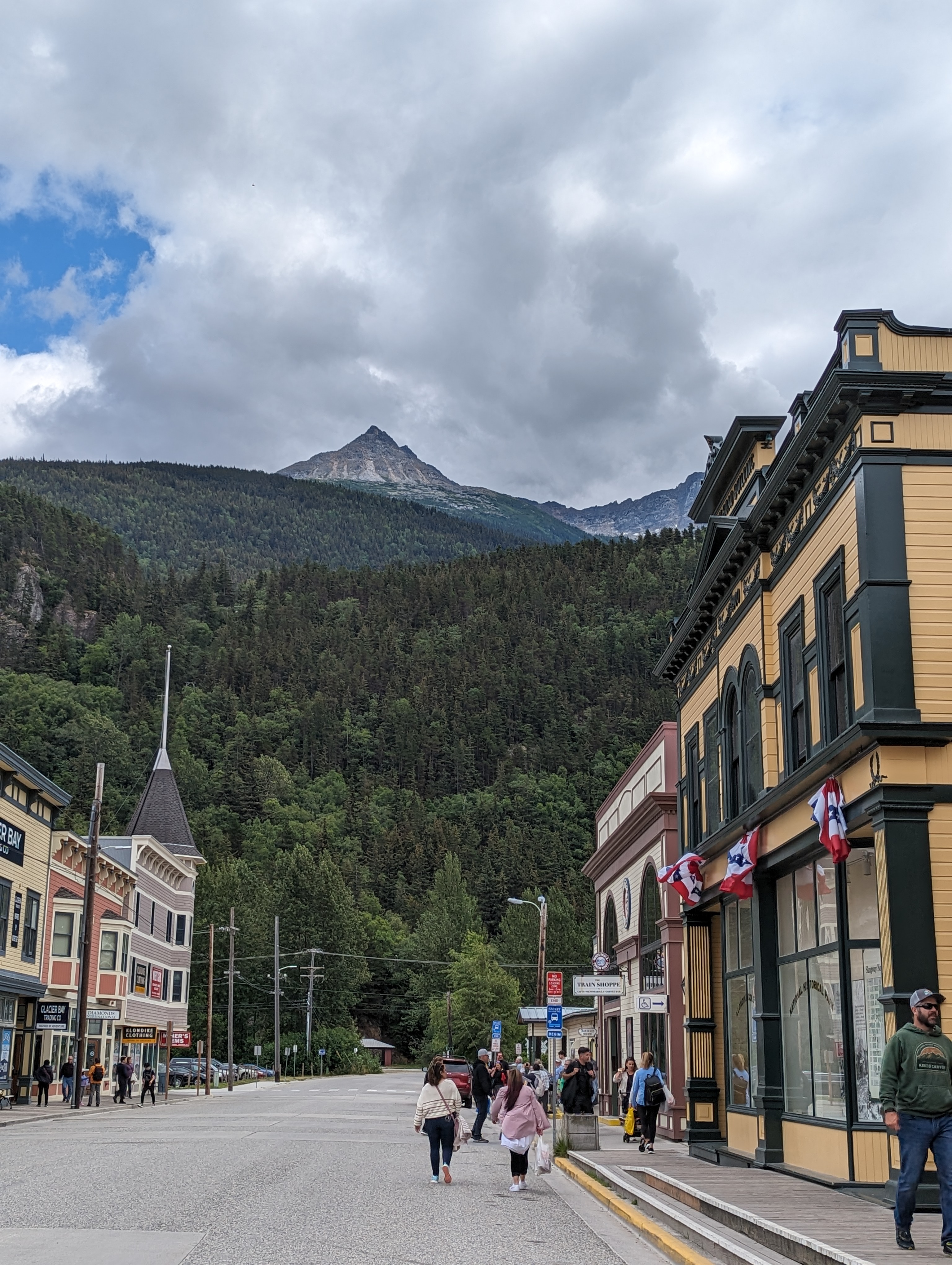
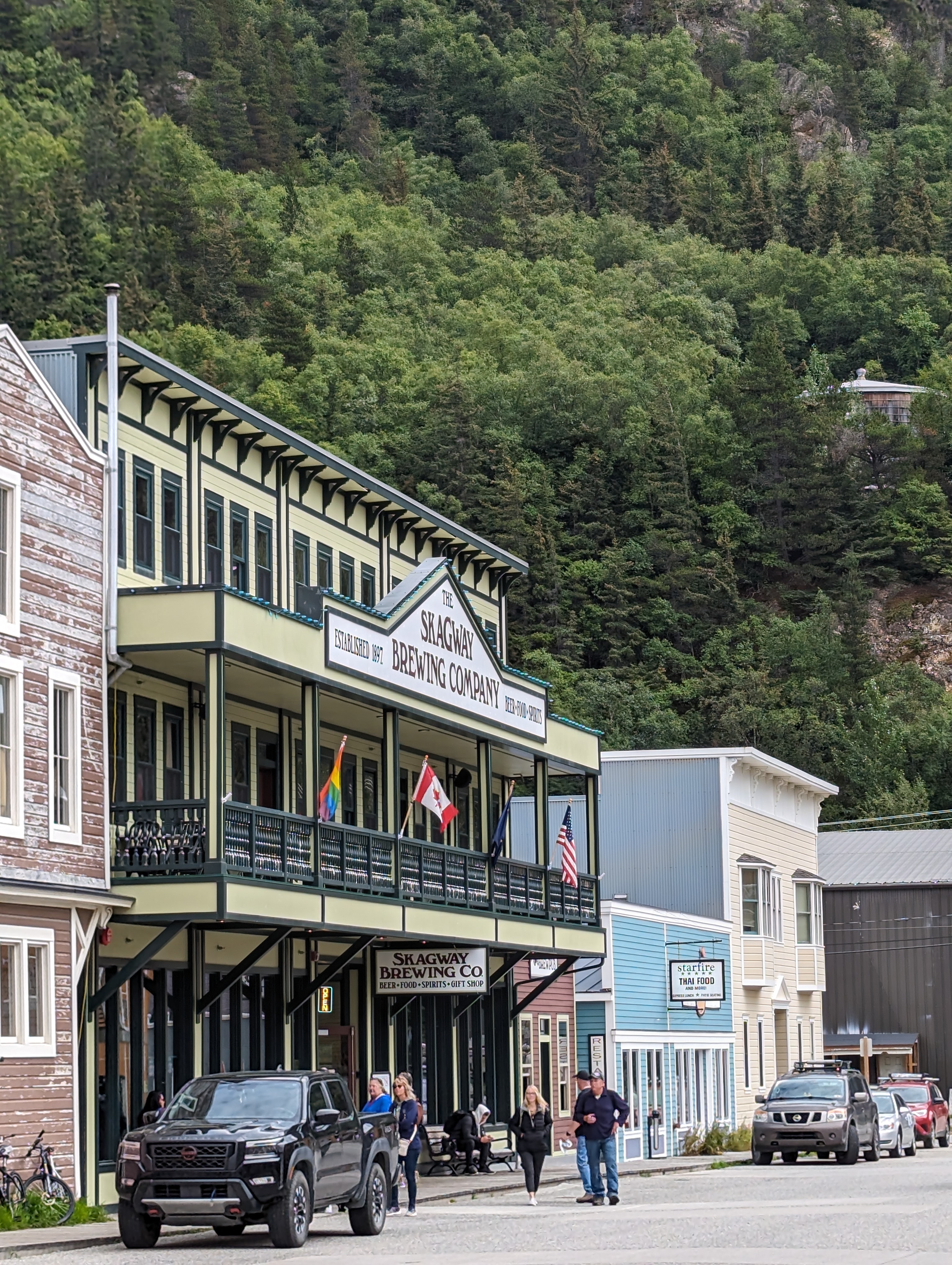
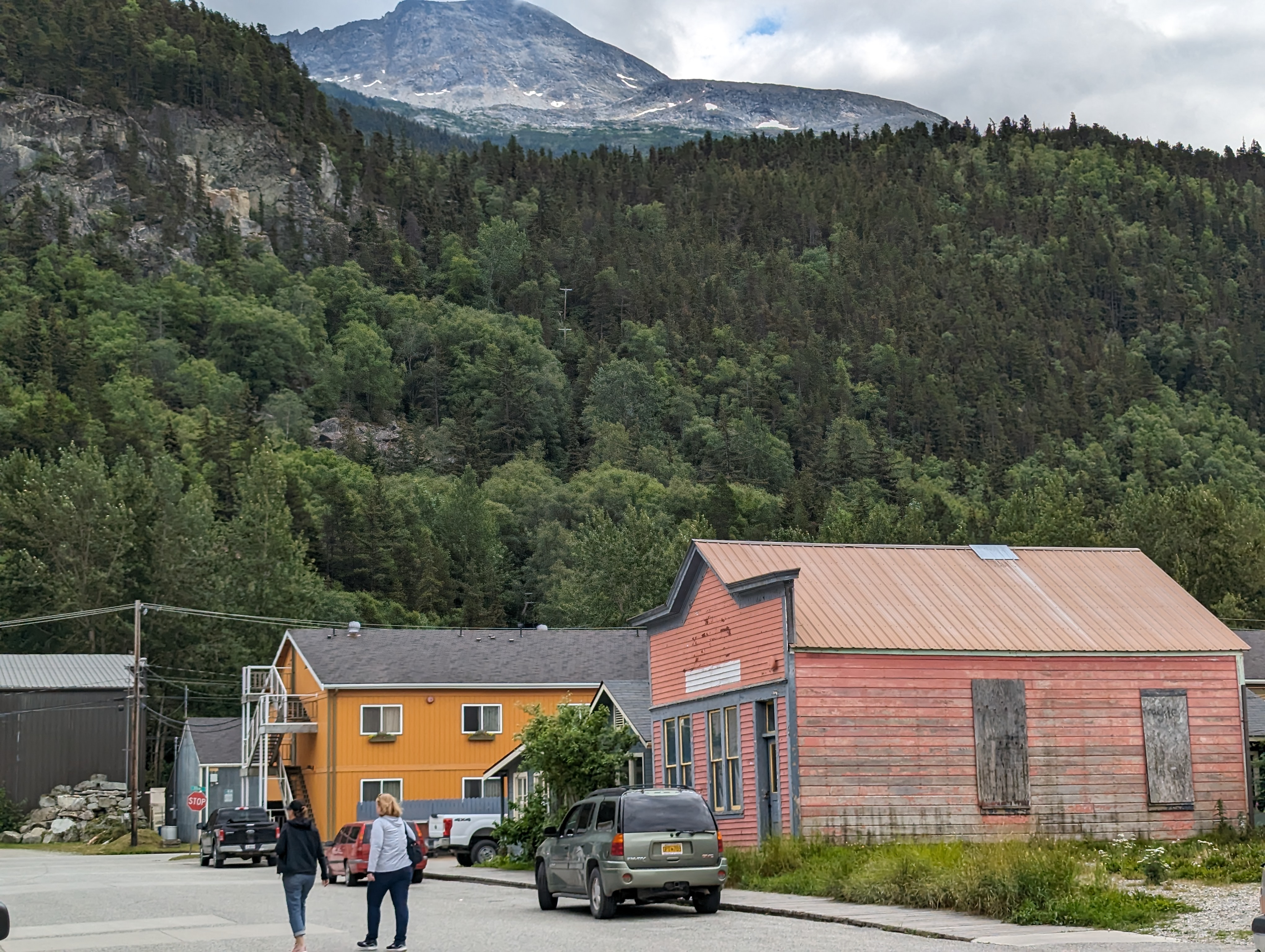
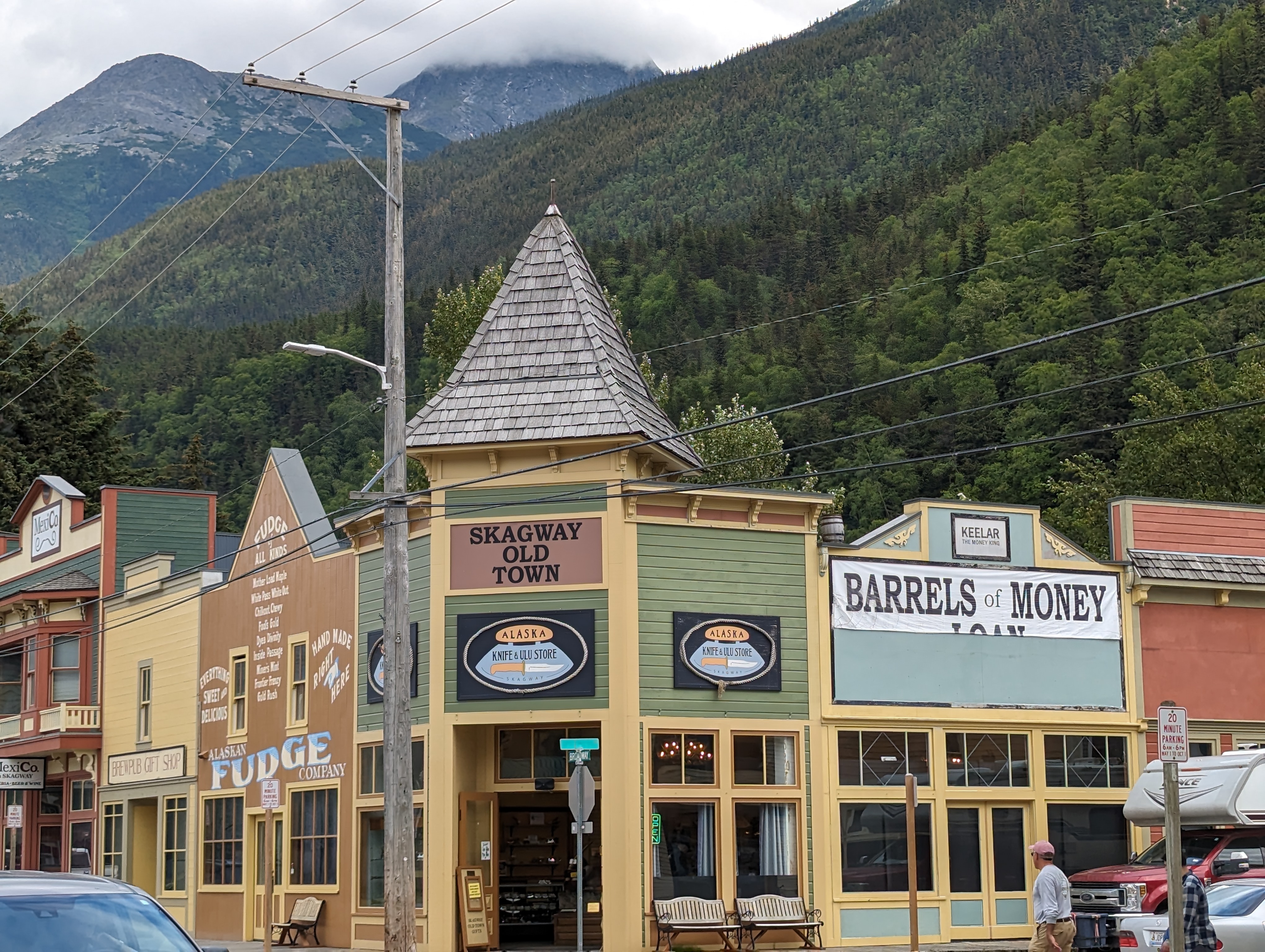
Skagway is one of the first mining towns in Alaska and still looks like it did in 1898. It is at the top of the inner passage inside Alaska. Lots of stores selling gems and a few other things to do and see.
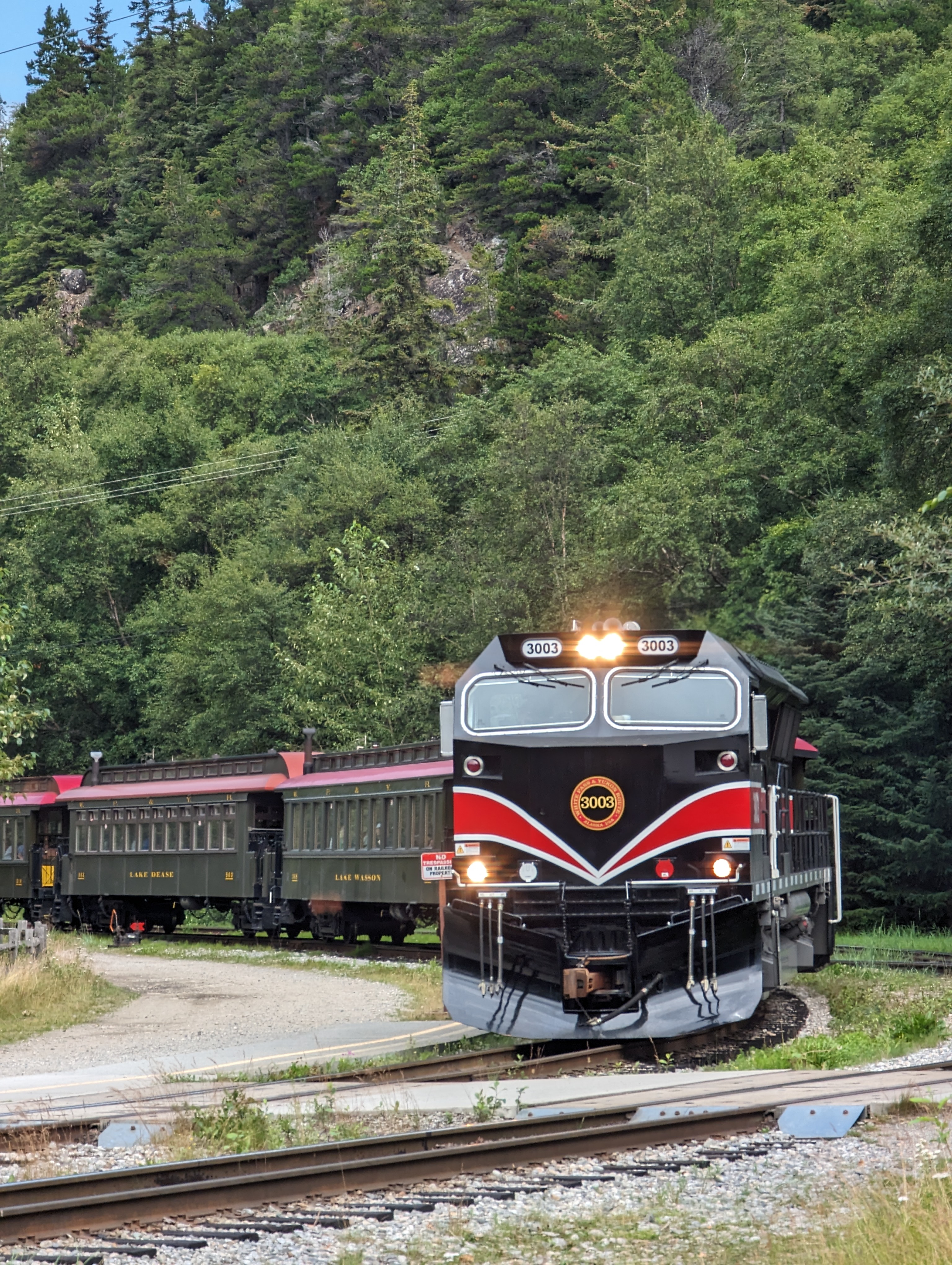
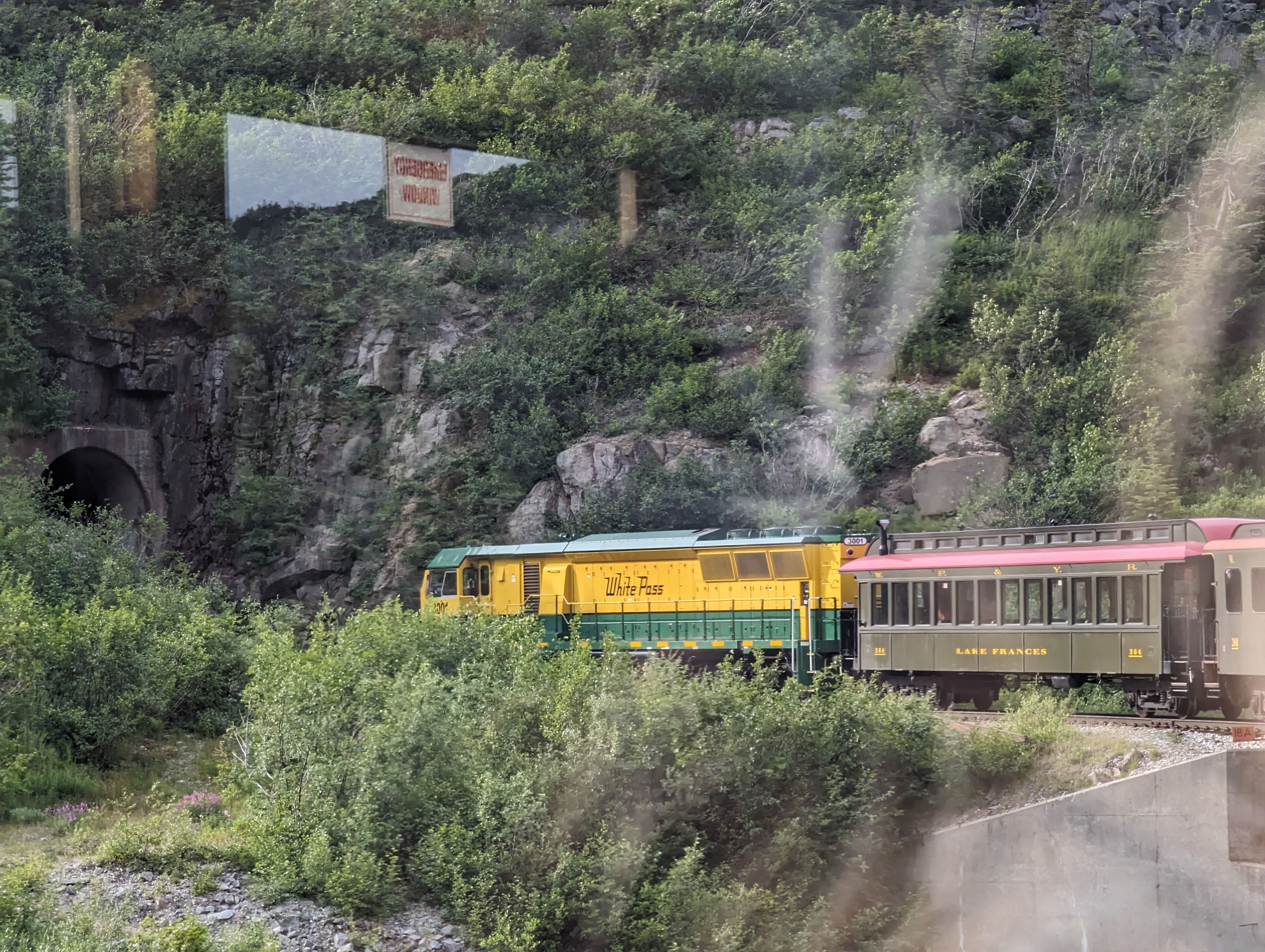
White Pass Scenic Railway
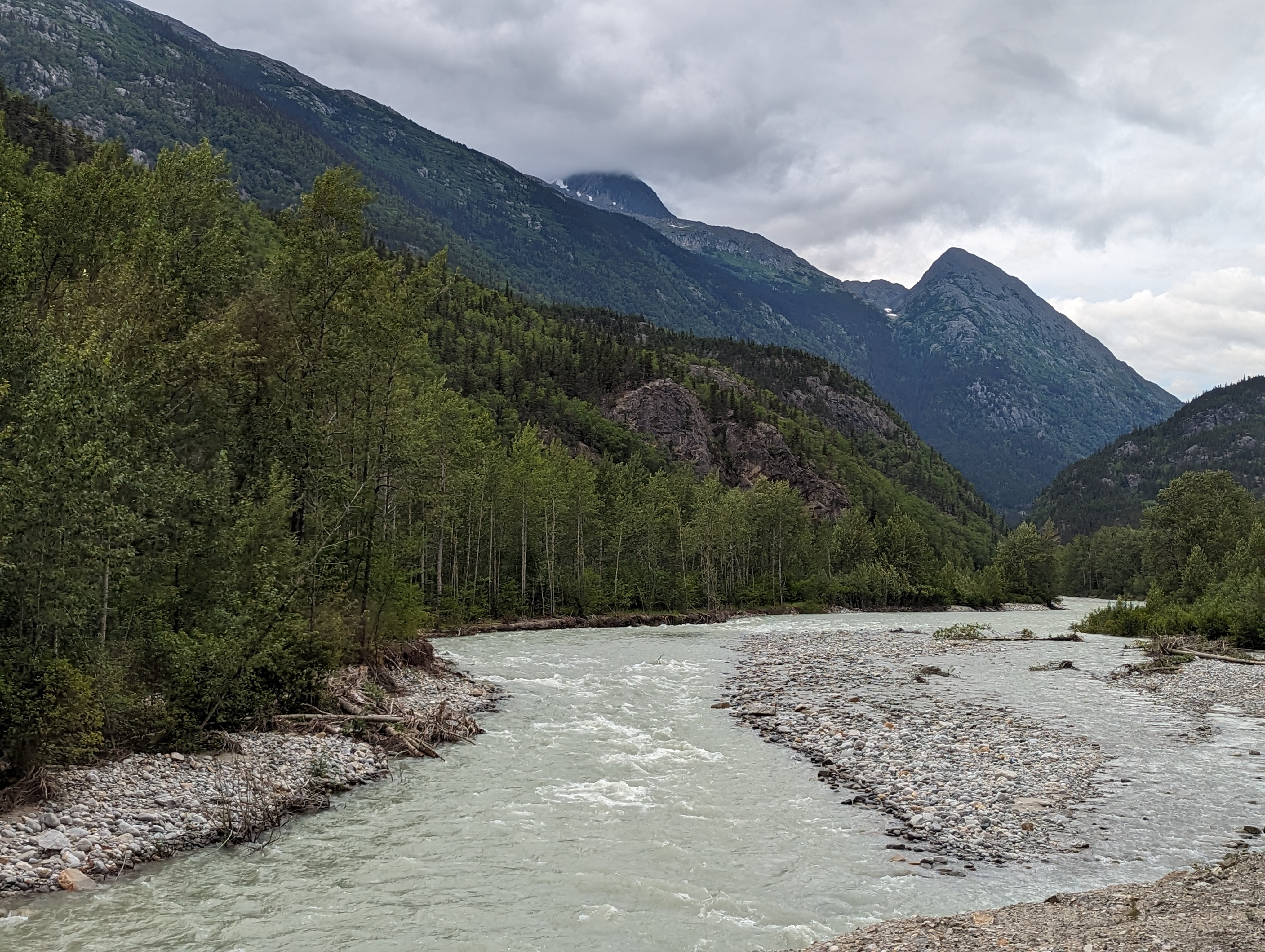
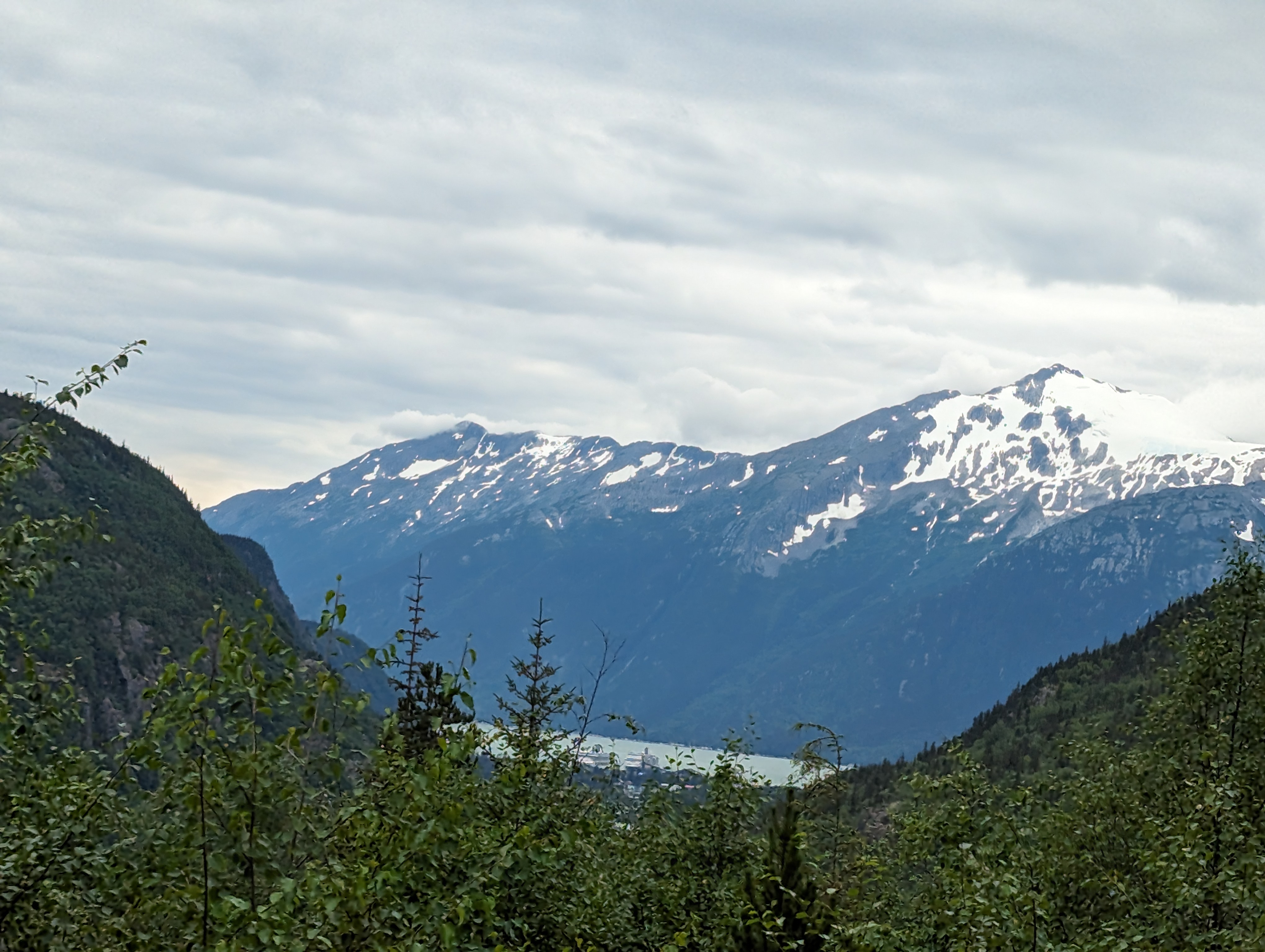
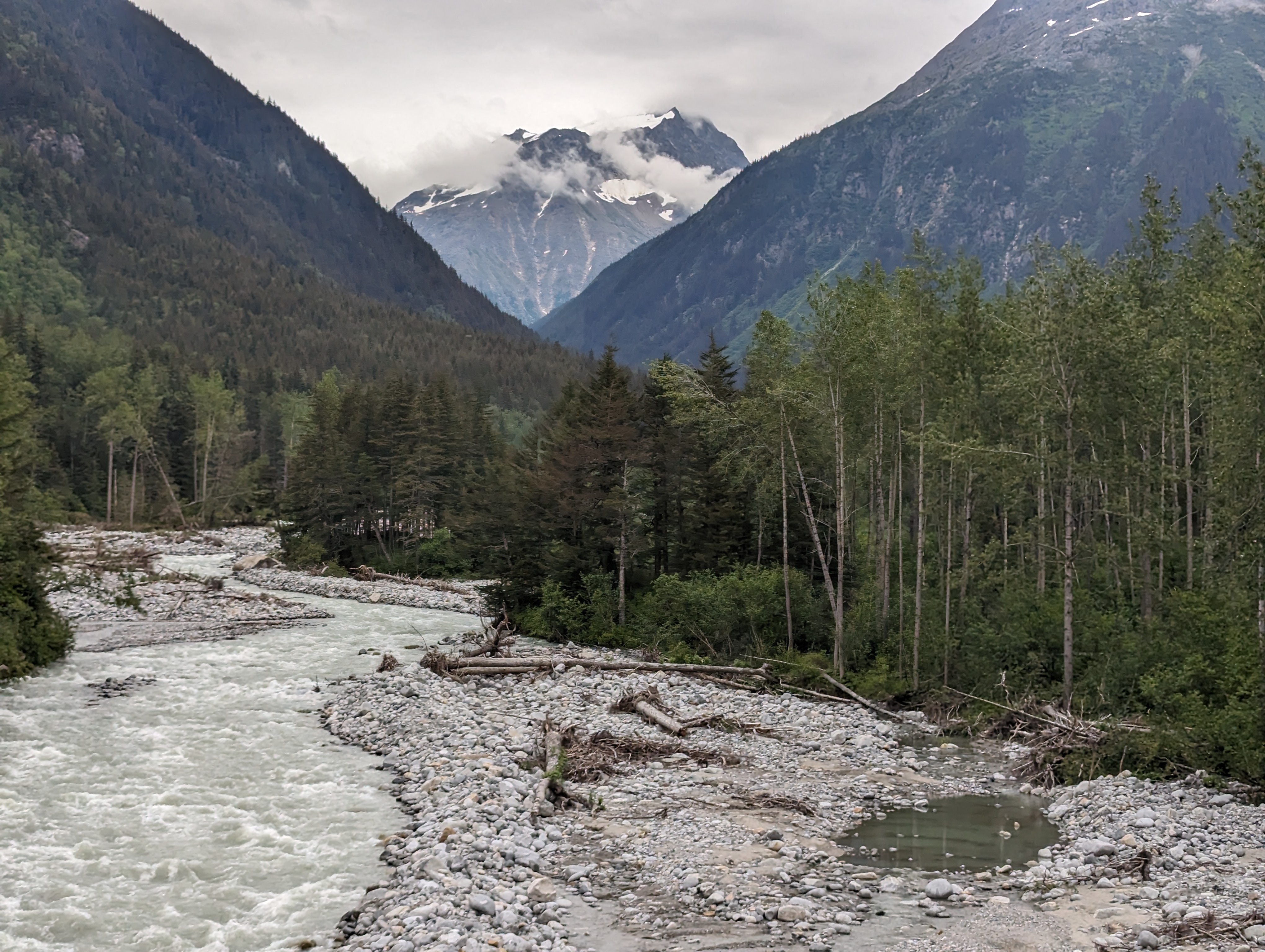
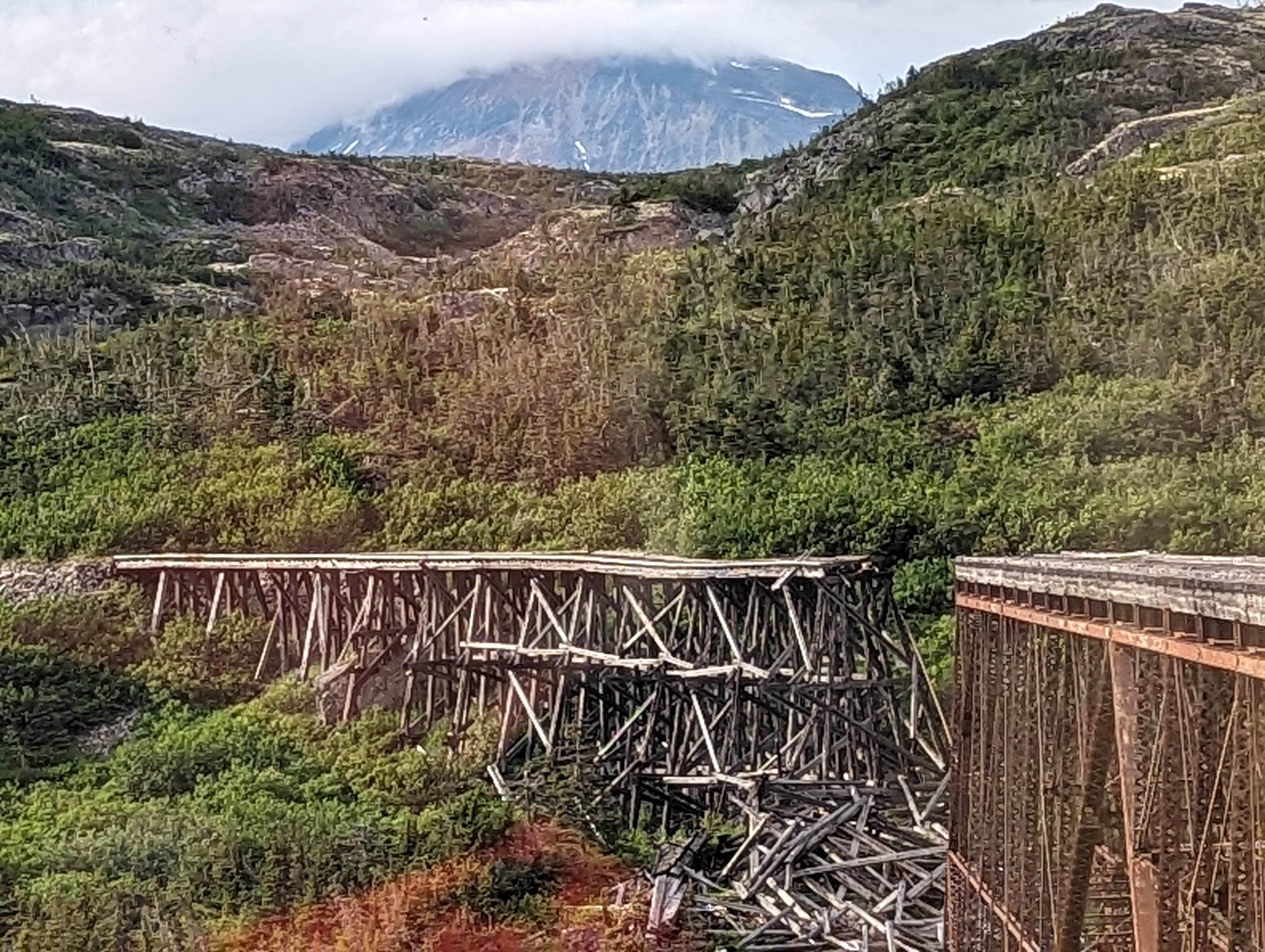
The railway goes through the Tongans National Forest. The views were really pretty and we entered just briefly into British Columbia.
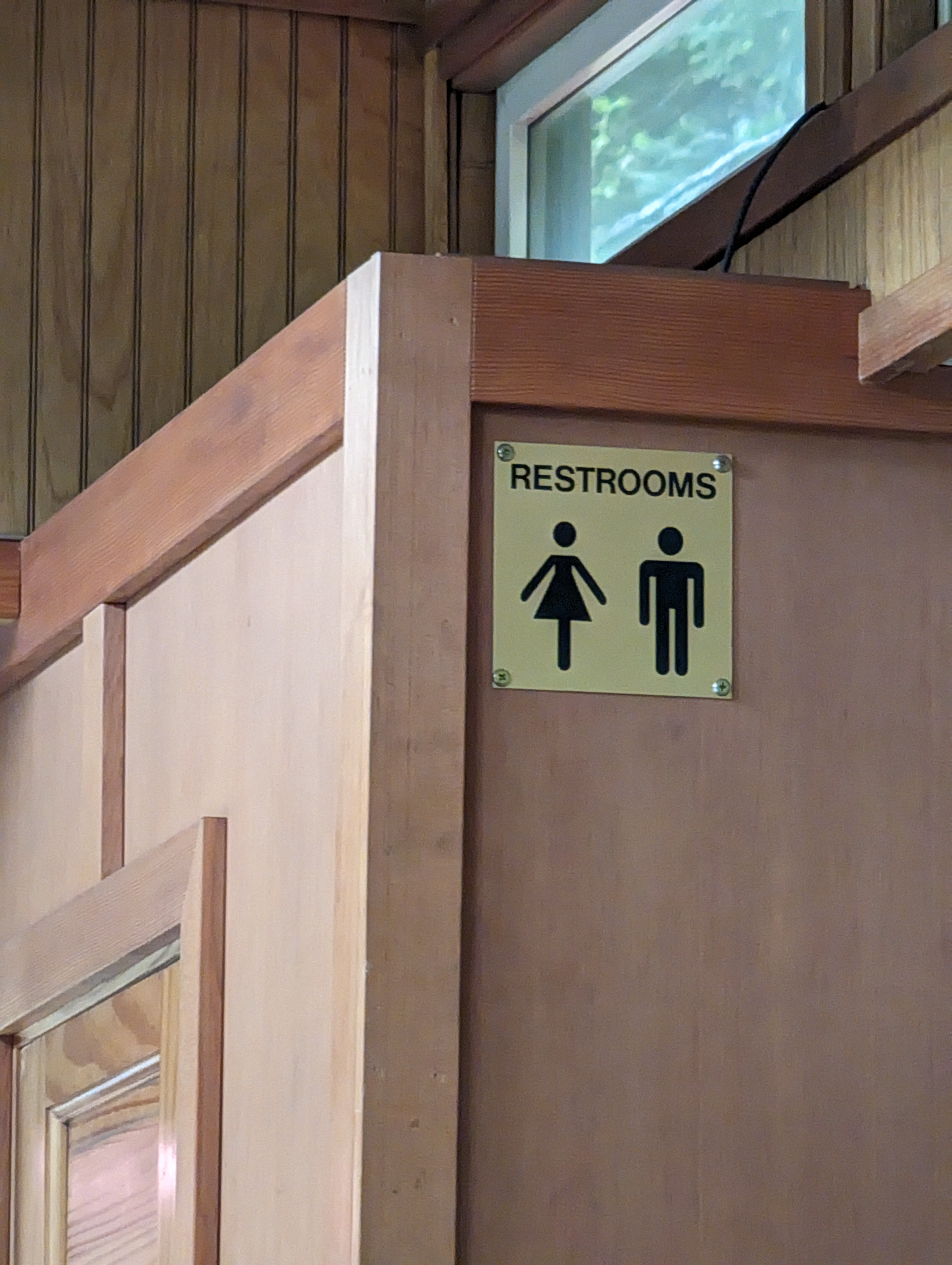
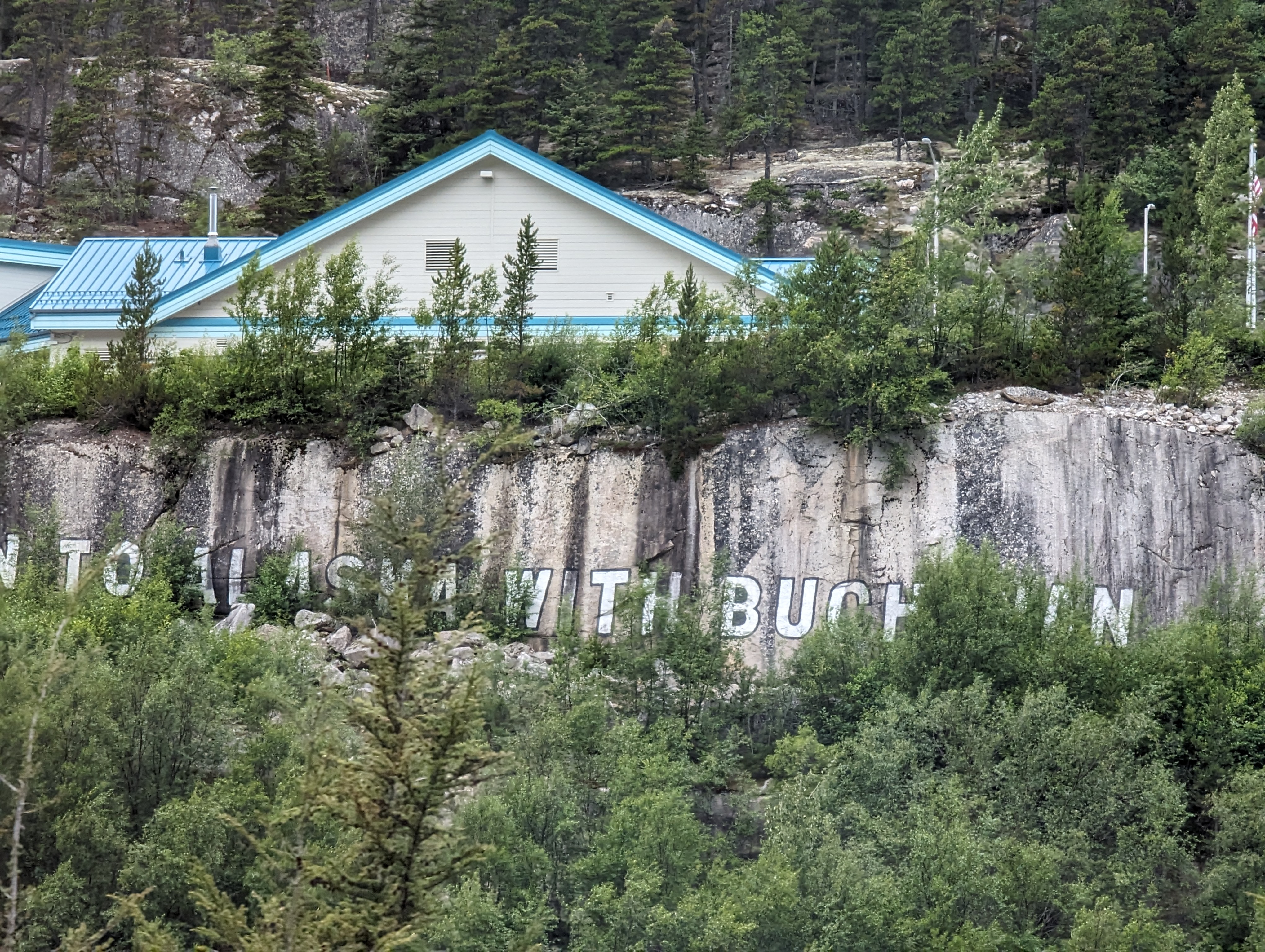
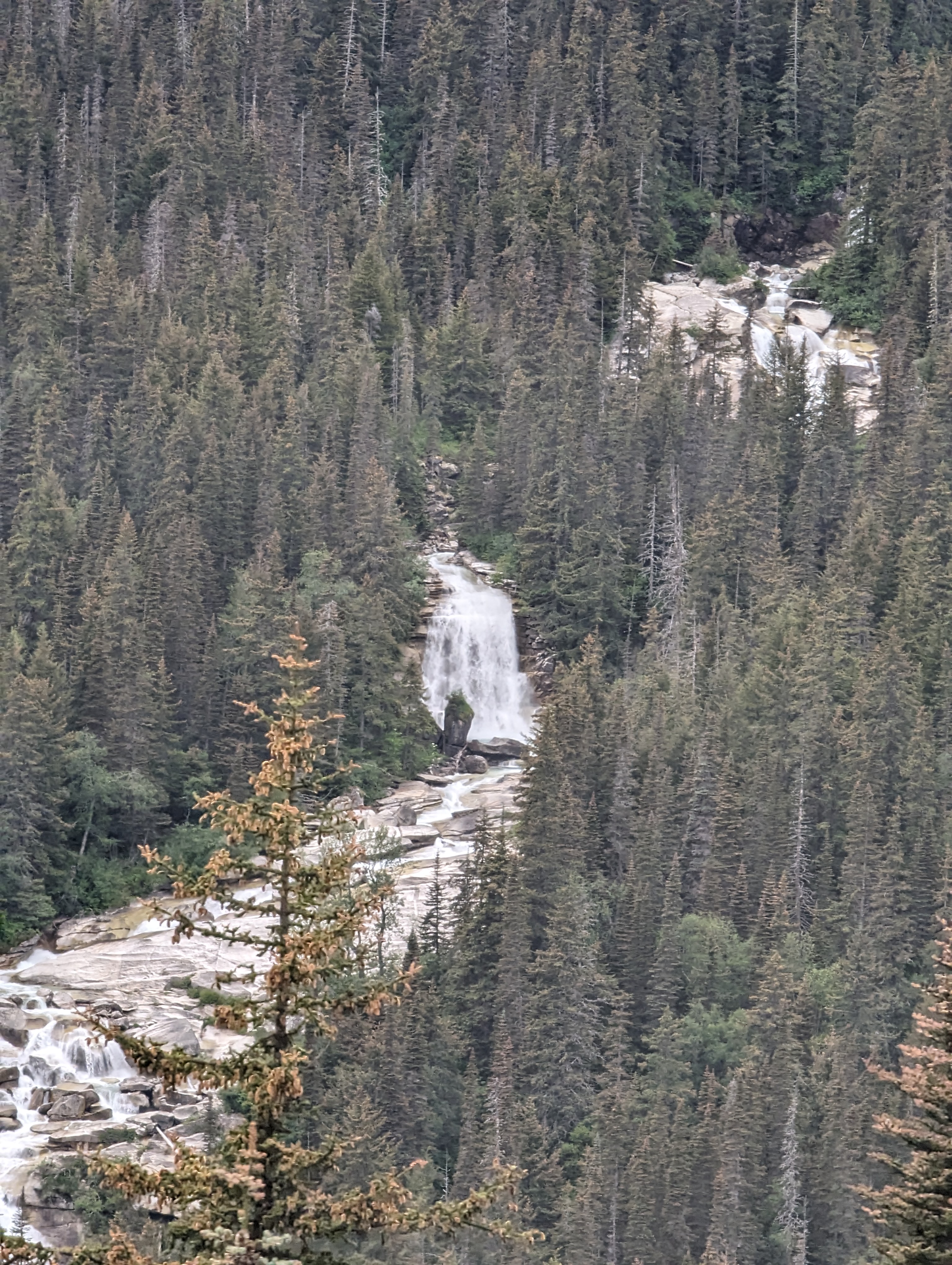
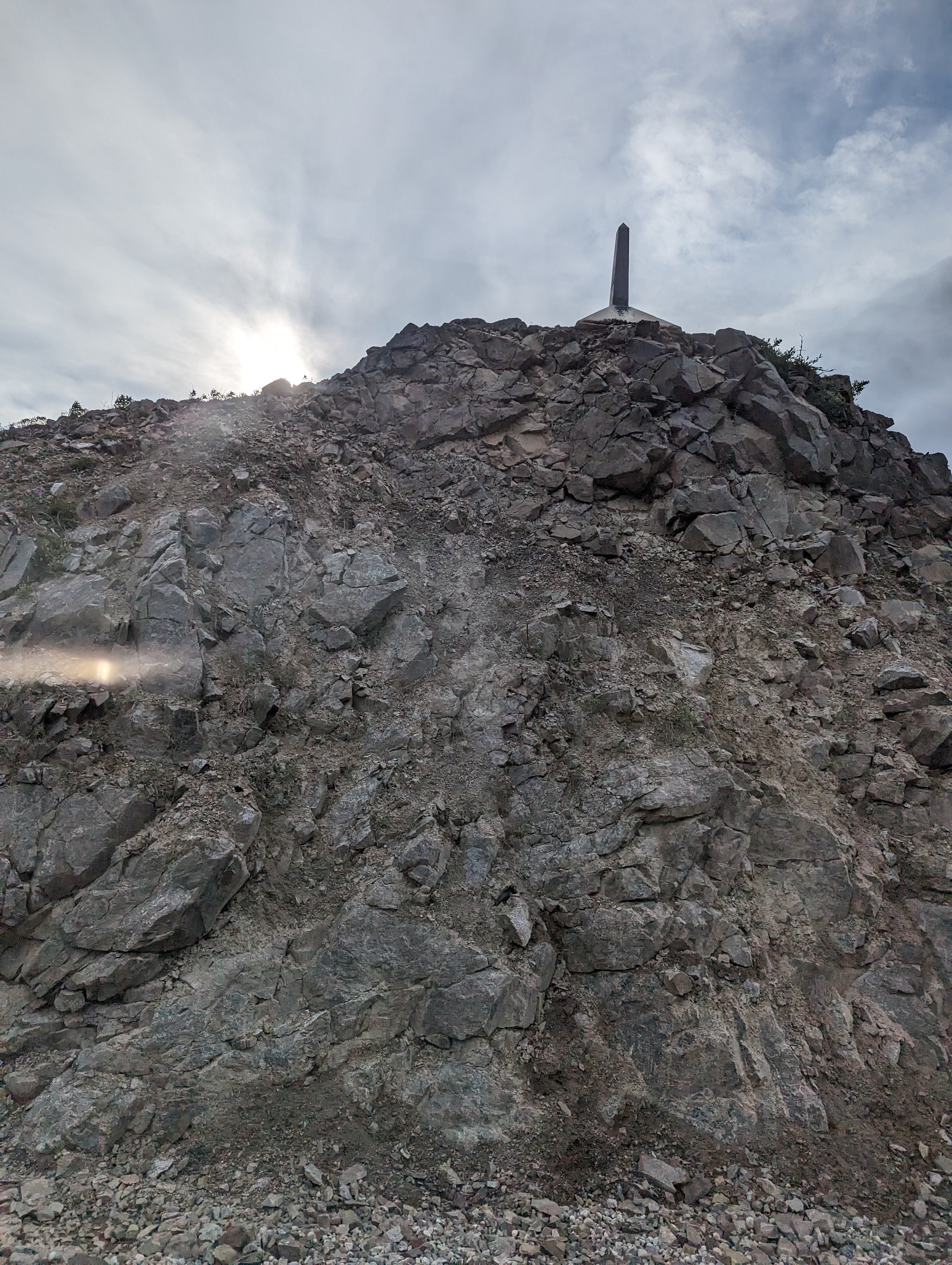
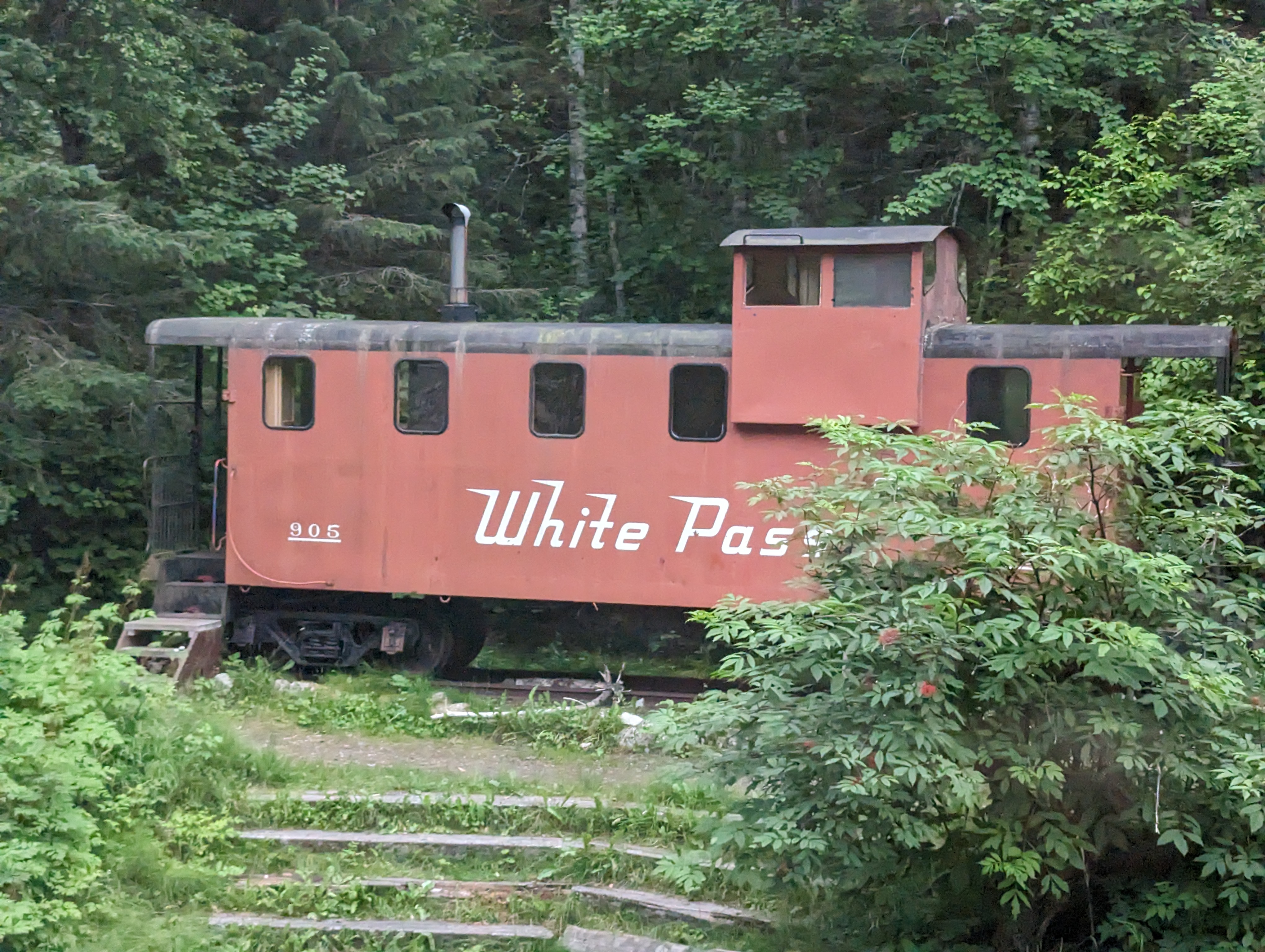
Good thing girls with two legs could use the bathroom also.George Buchanan had a campaign to bring young people to skagway. On to Alaska with Buchanan was carved into the rocks below the customs house.Bridal veil falls.The market of the US/Canada border.This older caboose on the edge of the forest can be rented for overnight stays.
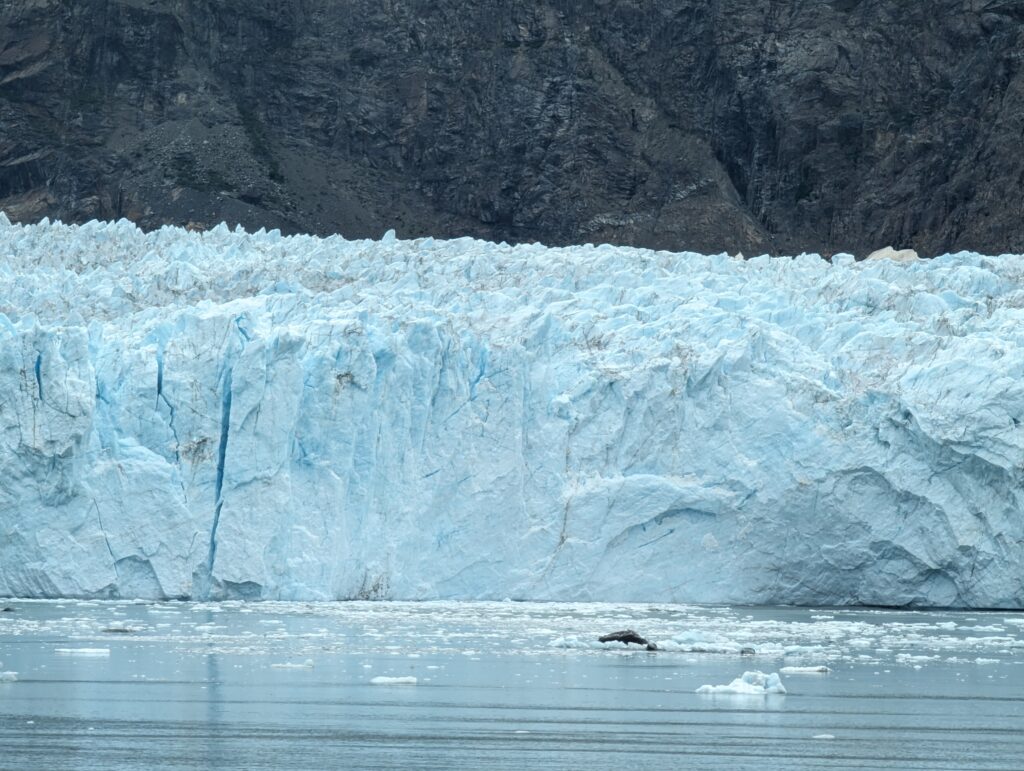
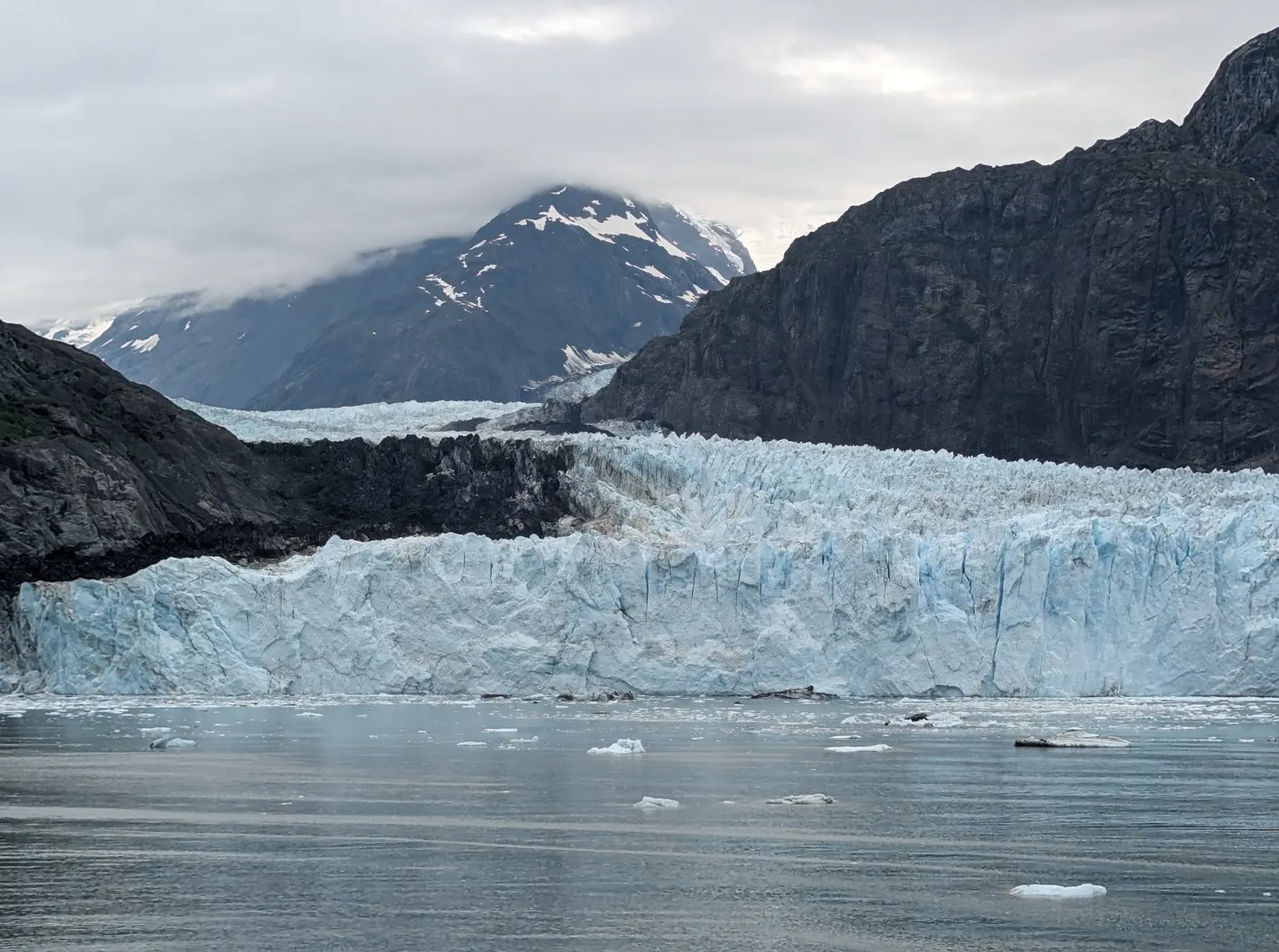
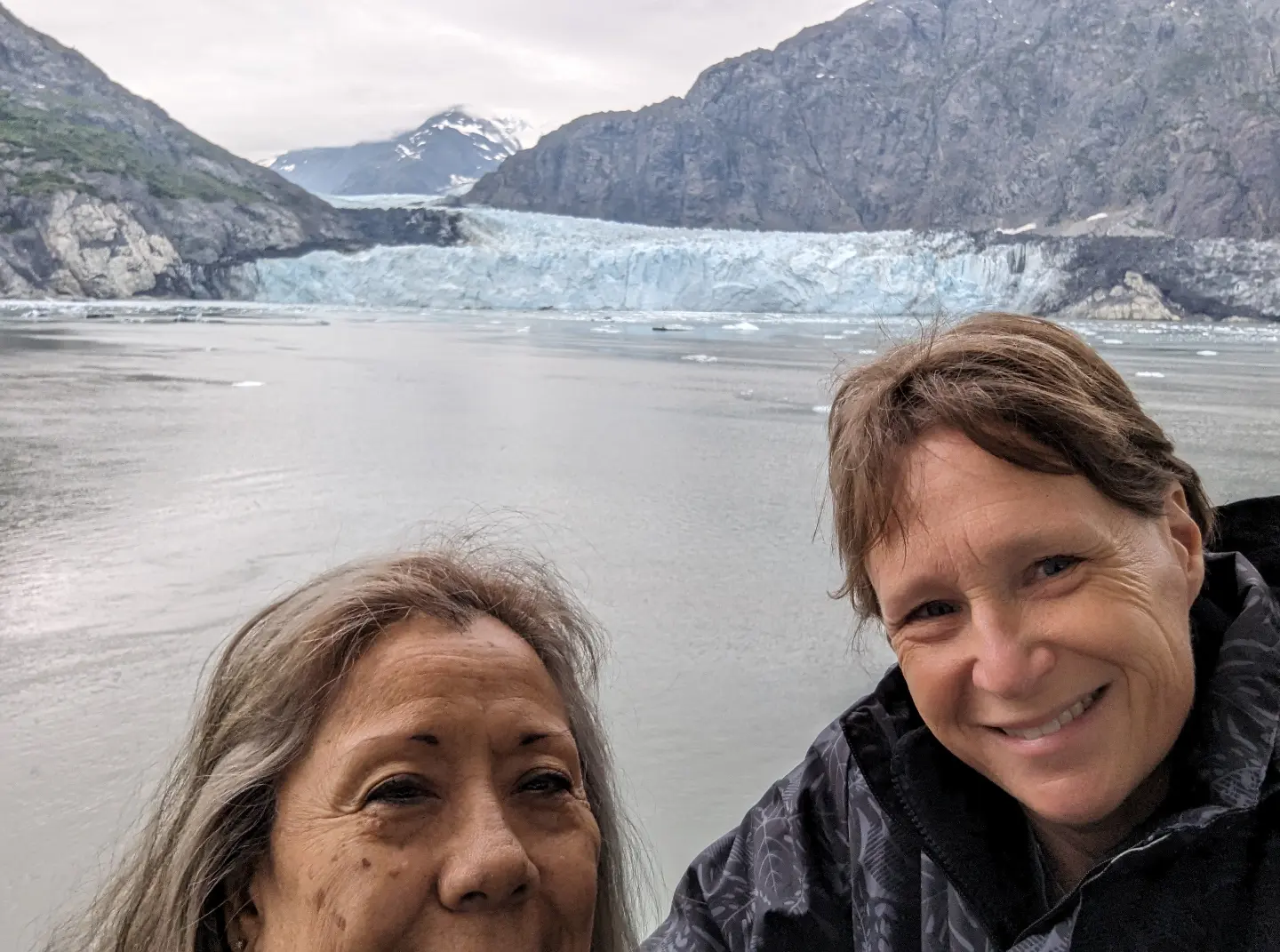
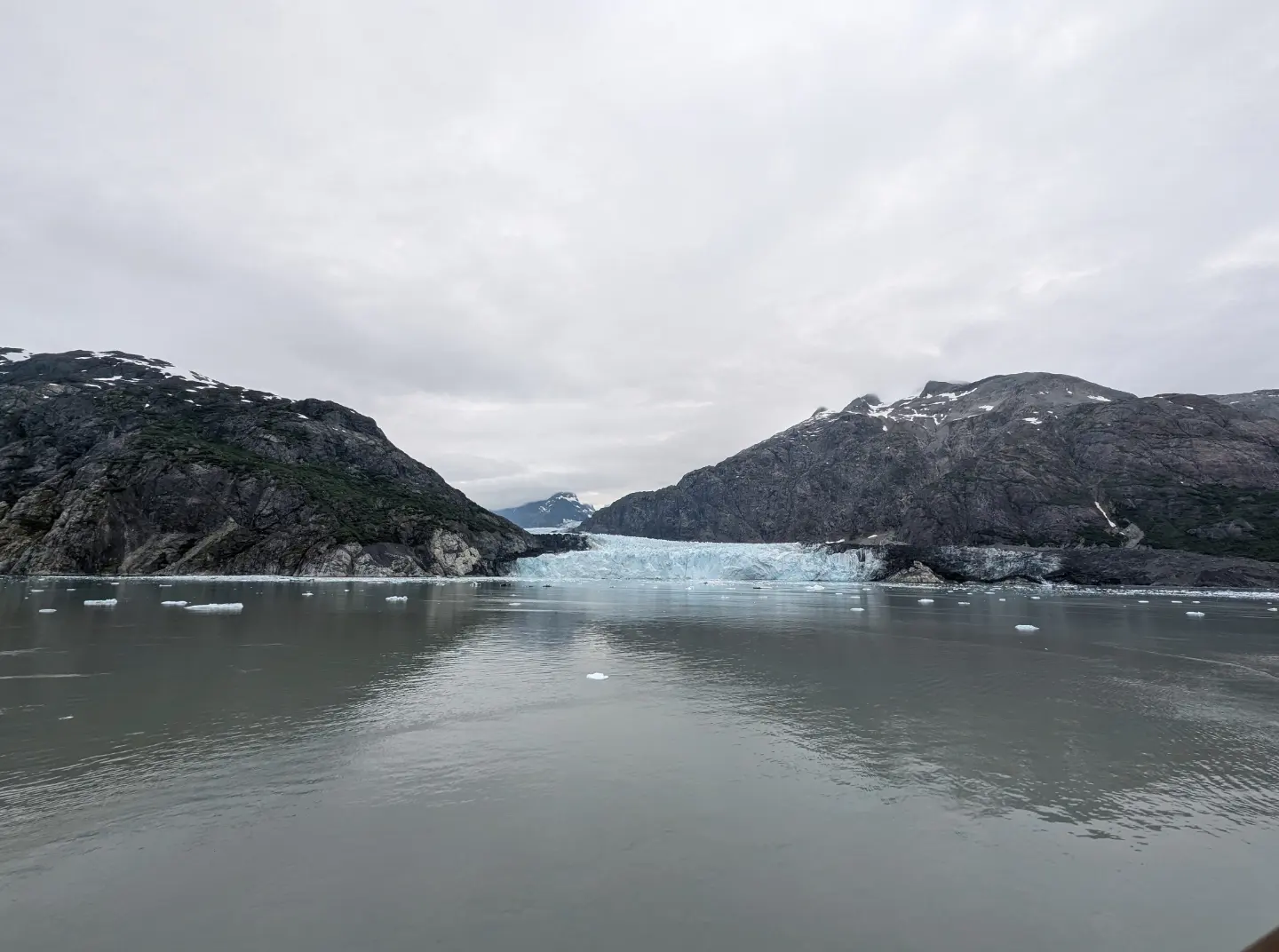
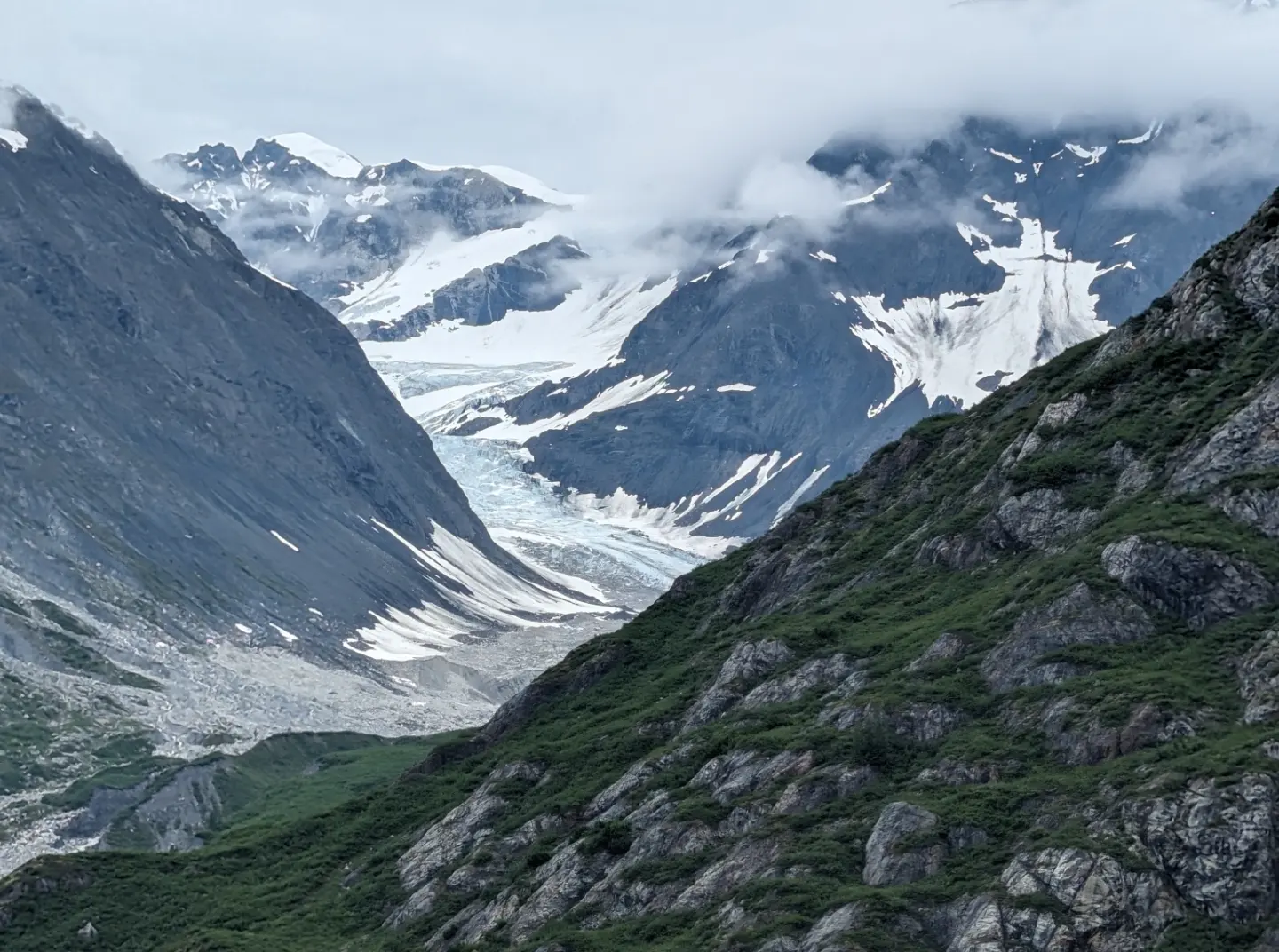
We made our way from Skagway and by the next morning we were in Glacier Bay National Park. It was incredible. Park rangers provided commentary over the loudspeakers on outside decks and on the TV’s in the room. Since we upgraded to a better balcony, we didn’t need to leave the room. Being near the glacier dropped the temperature quite a bit. We headed to the Marjorie glacier. This is at the northern part of the Park. At a distance it does not look big but it is 350 feet tall and extends 100 feet below the water surface. Here is a video of a piece of the glacier falling off, called calving: https://youtu.be/5LhBpAcVma8https://youtu.be/5LhBpAcVma8
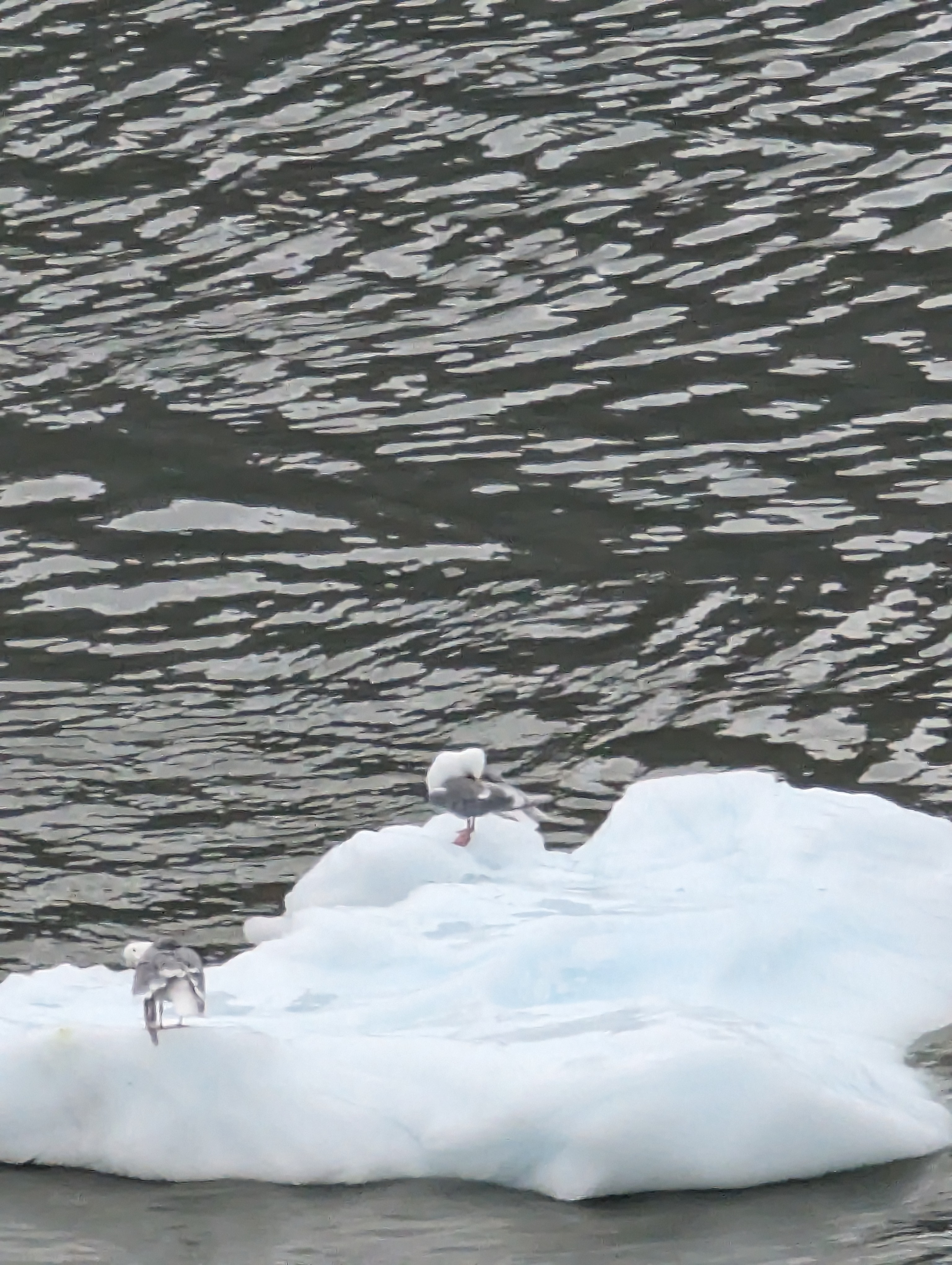
Seagulls taking a break on a piece of glacier ice.Sea otters floating in the water. It is hard to get a clear picture as we were moving in opposite directions from each other.
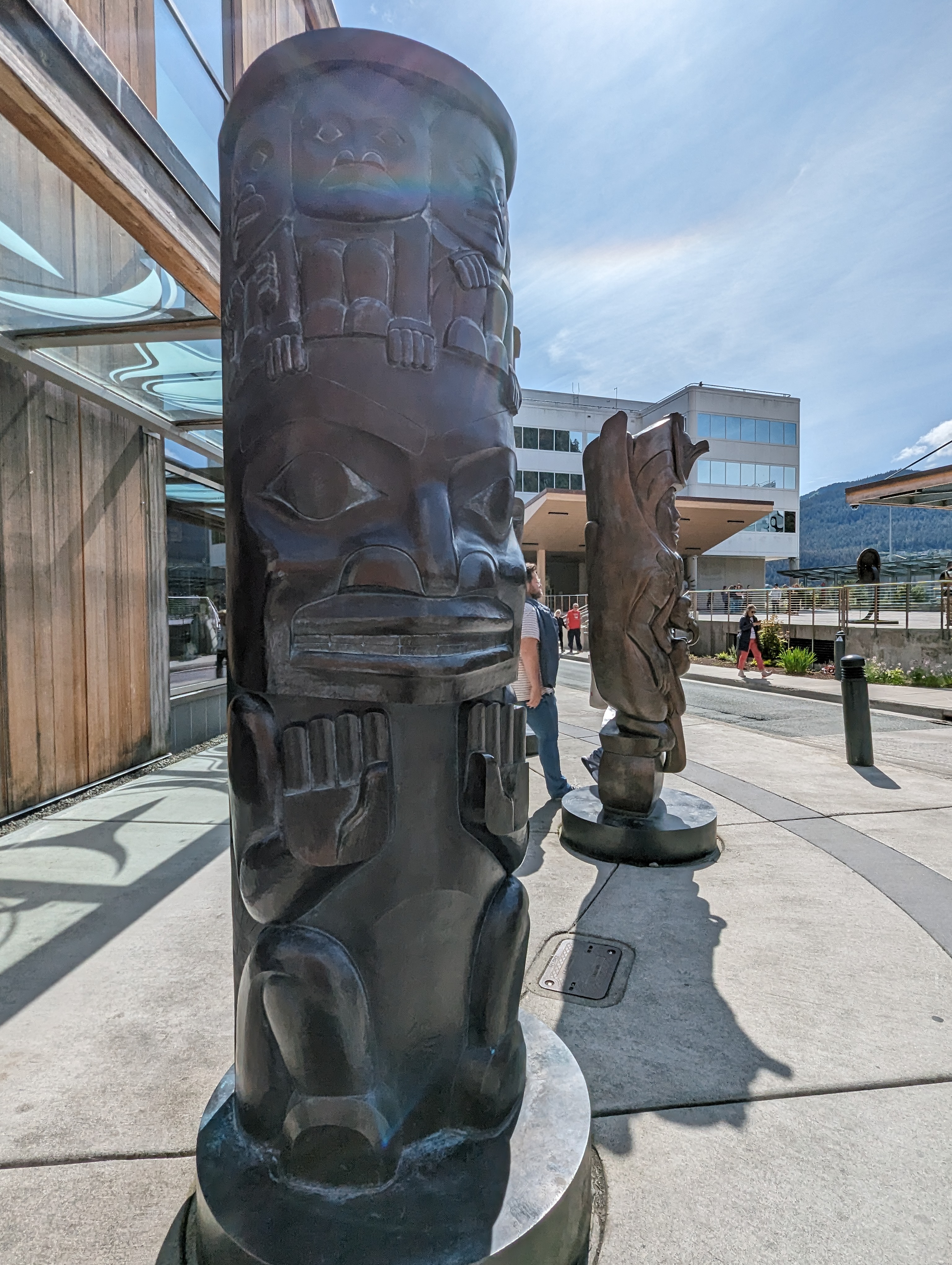
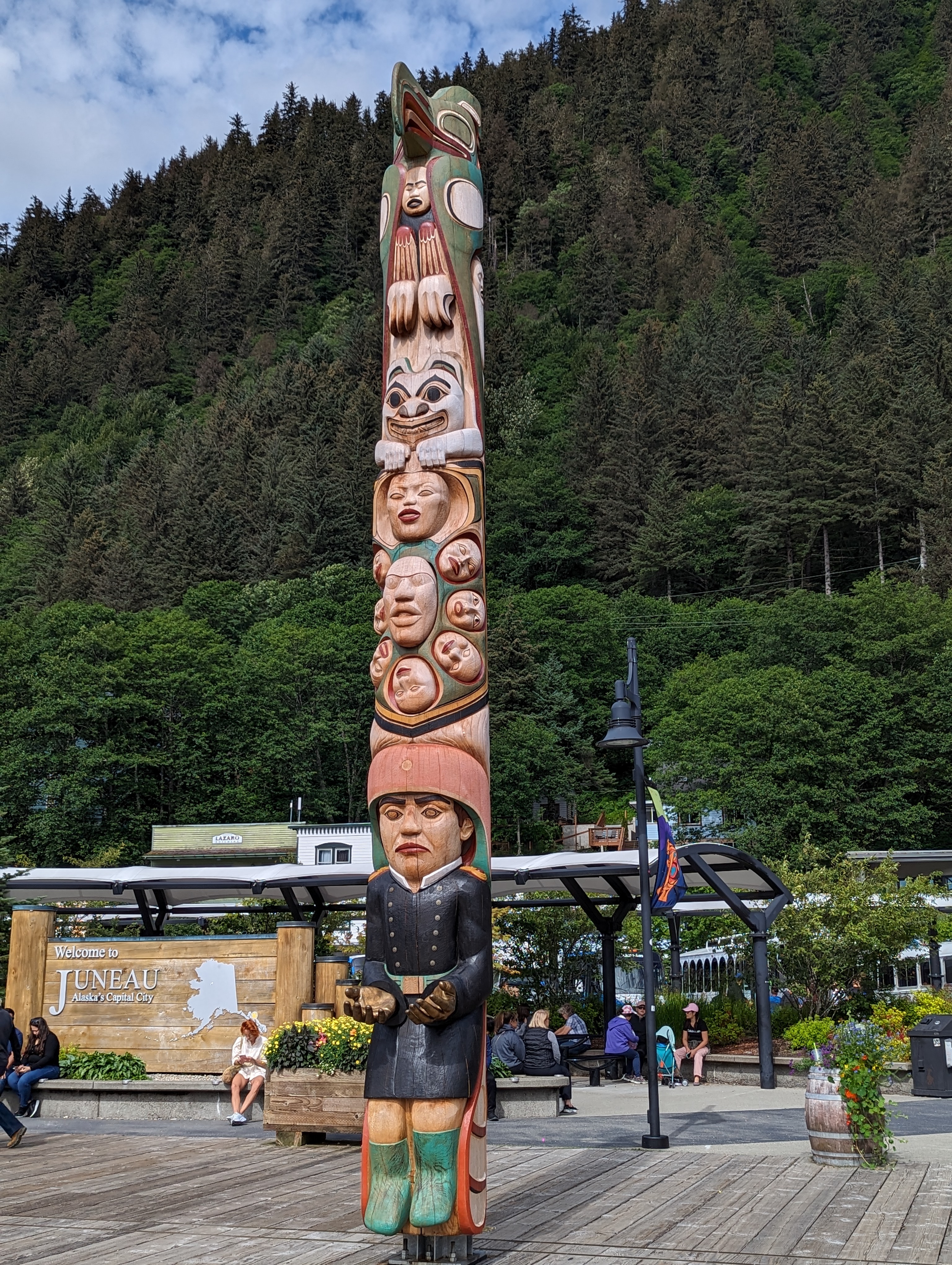
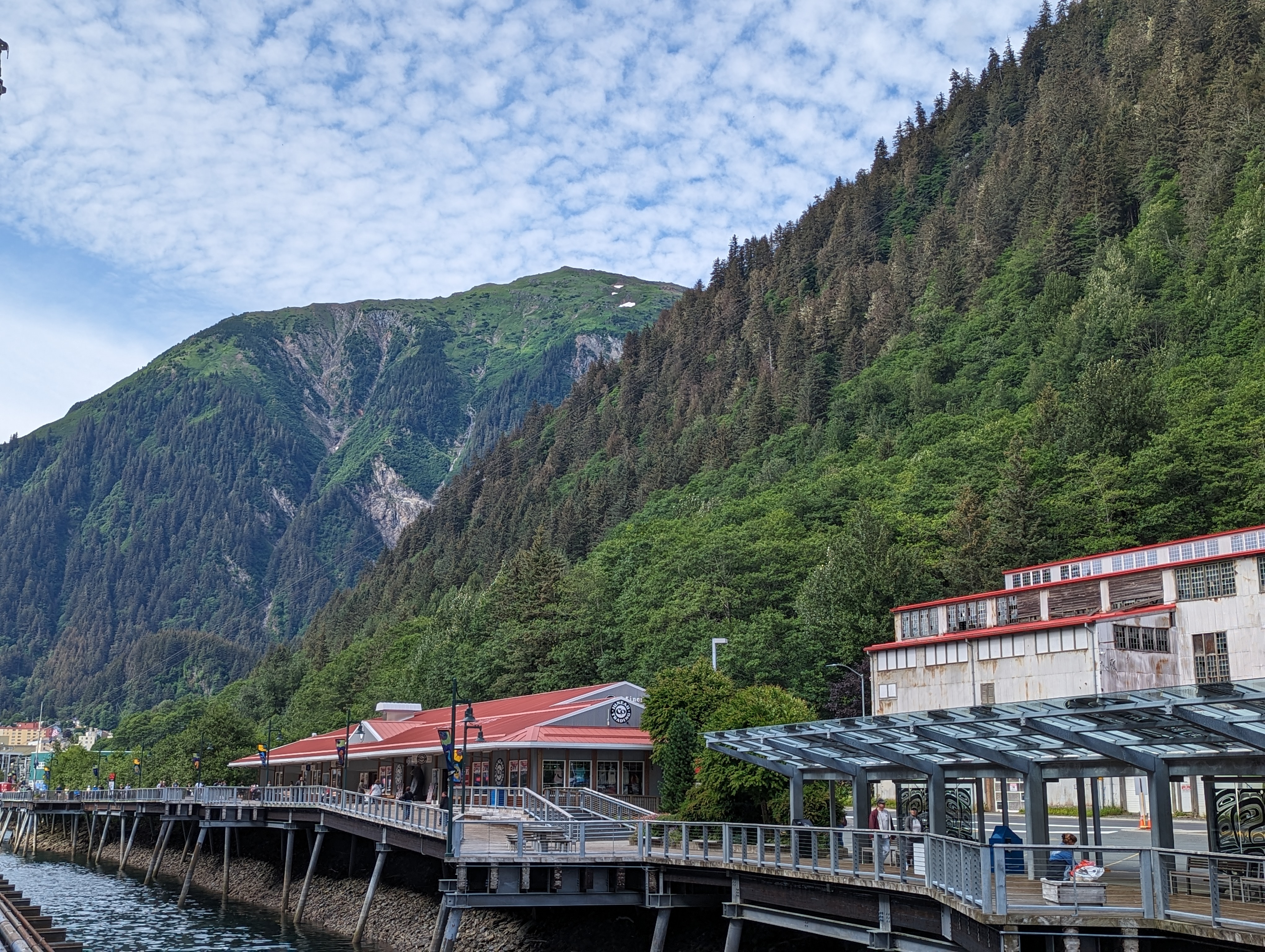
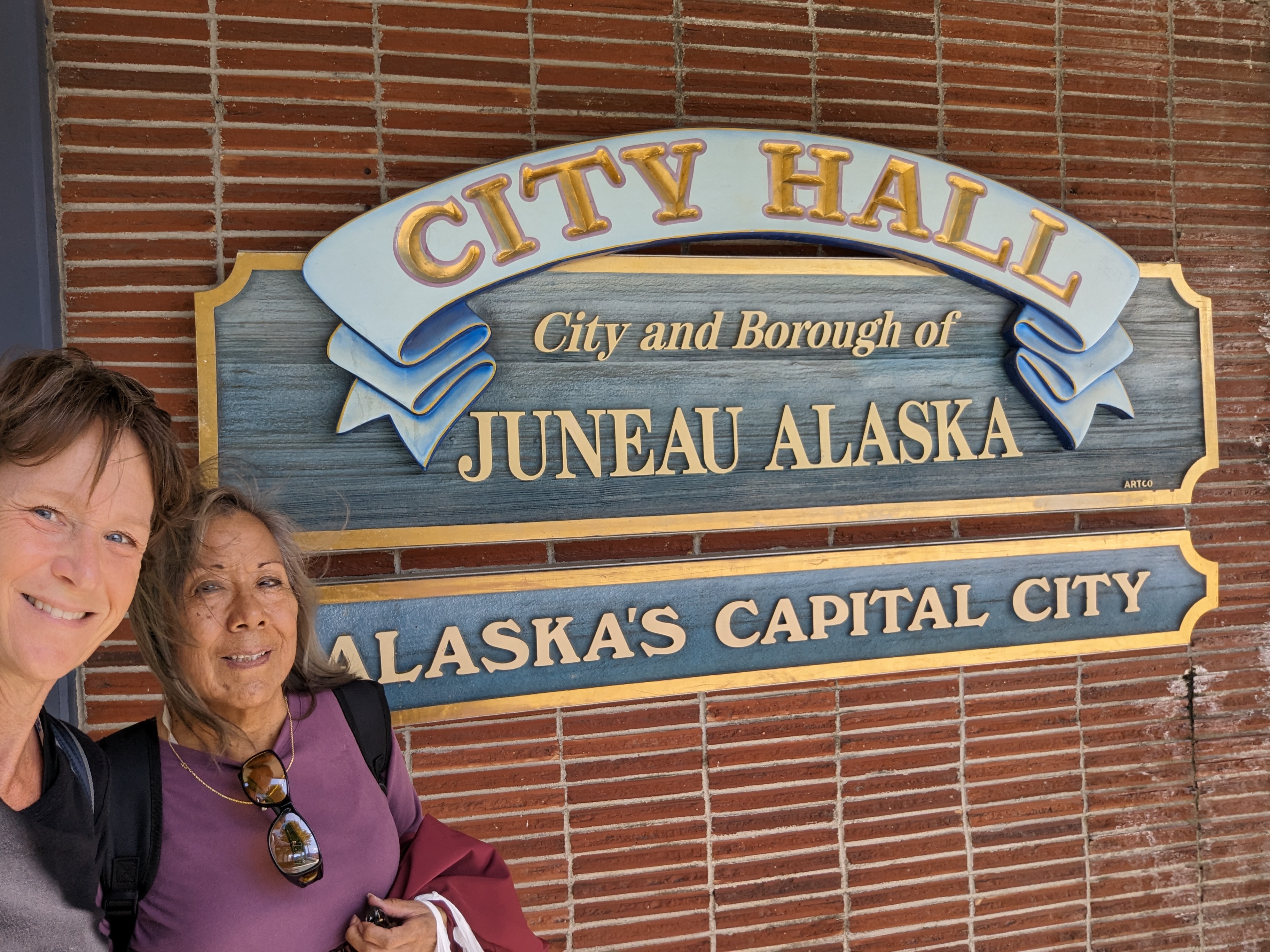
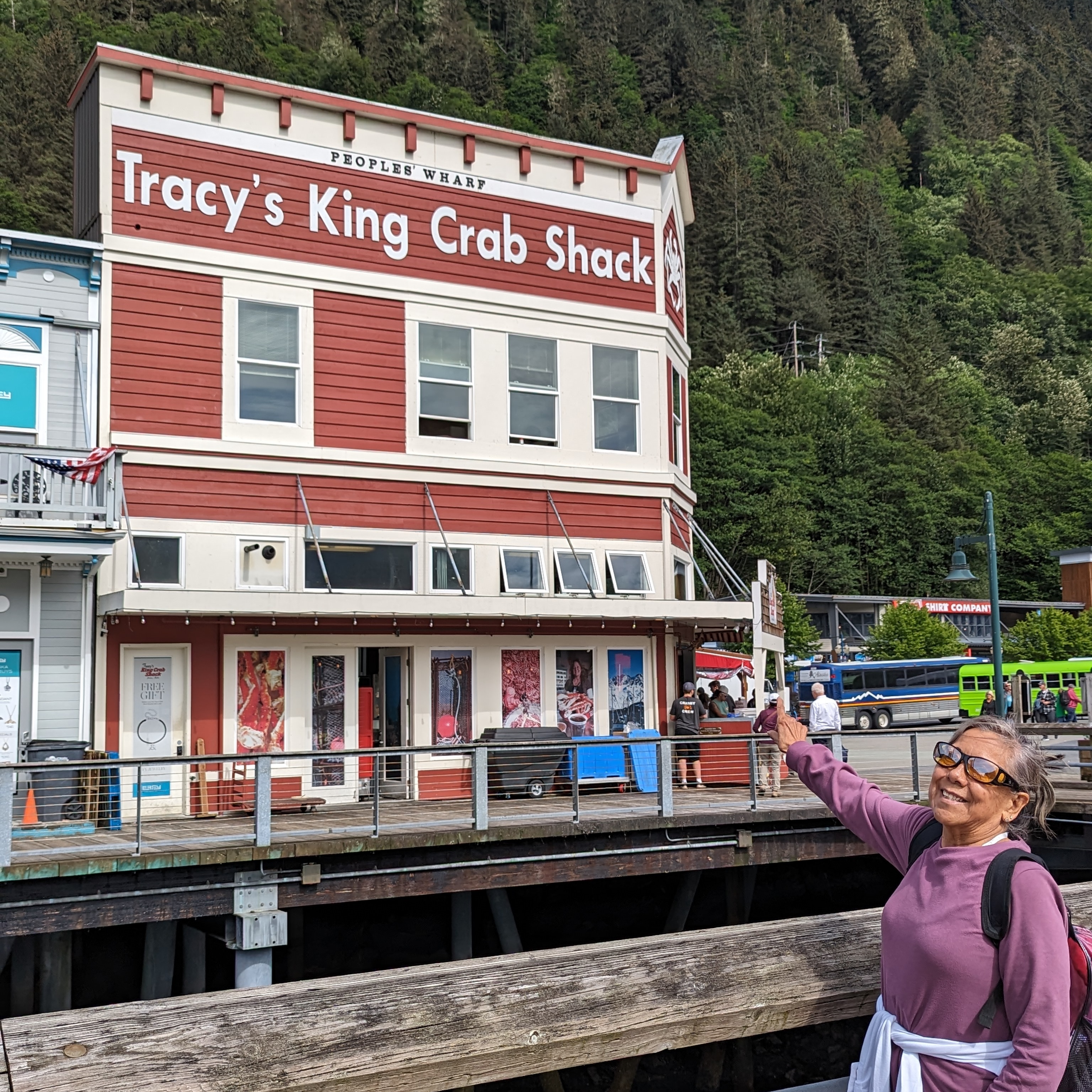
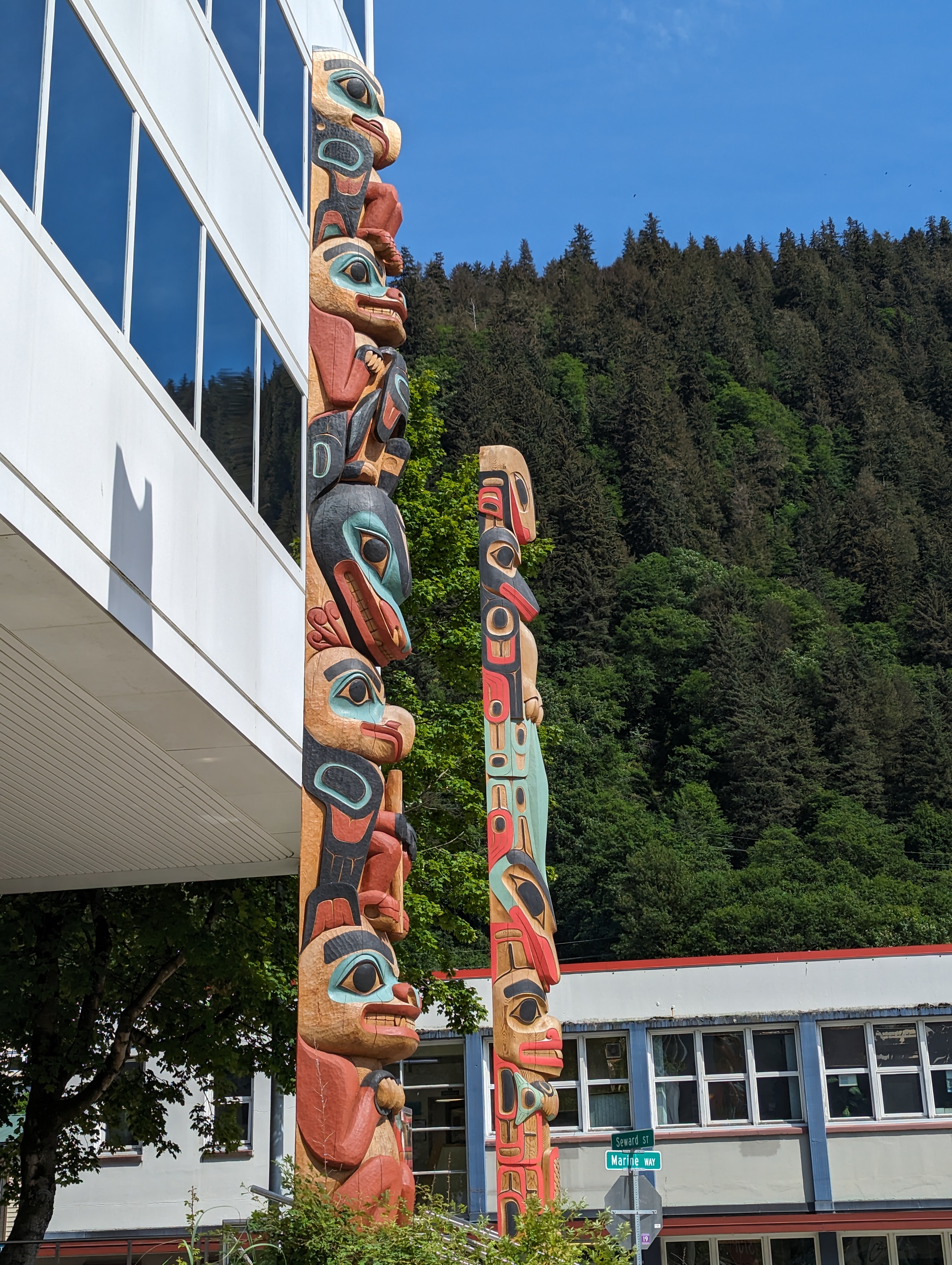
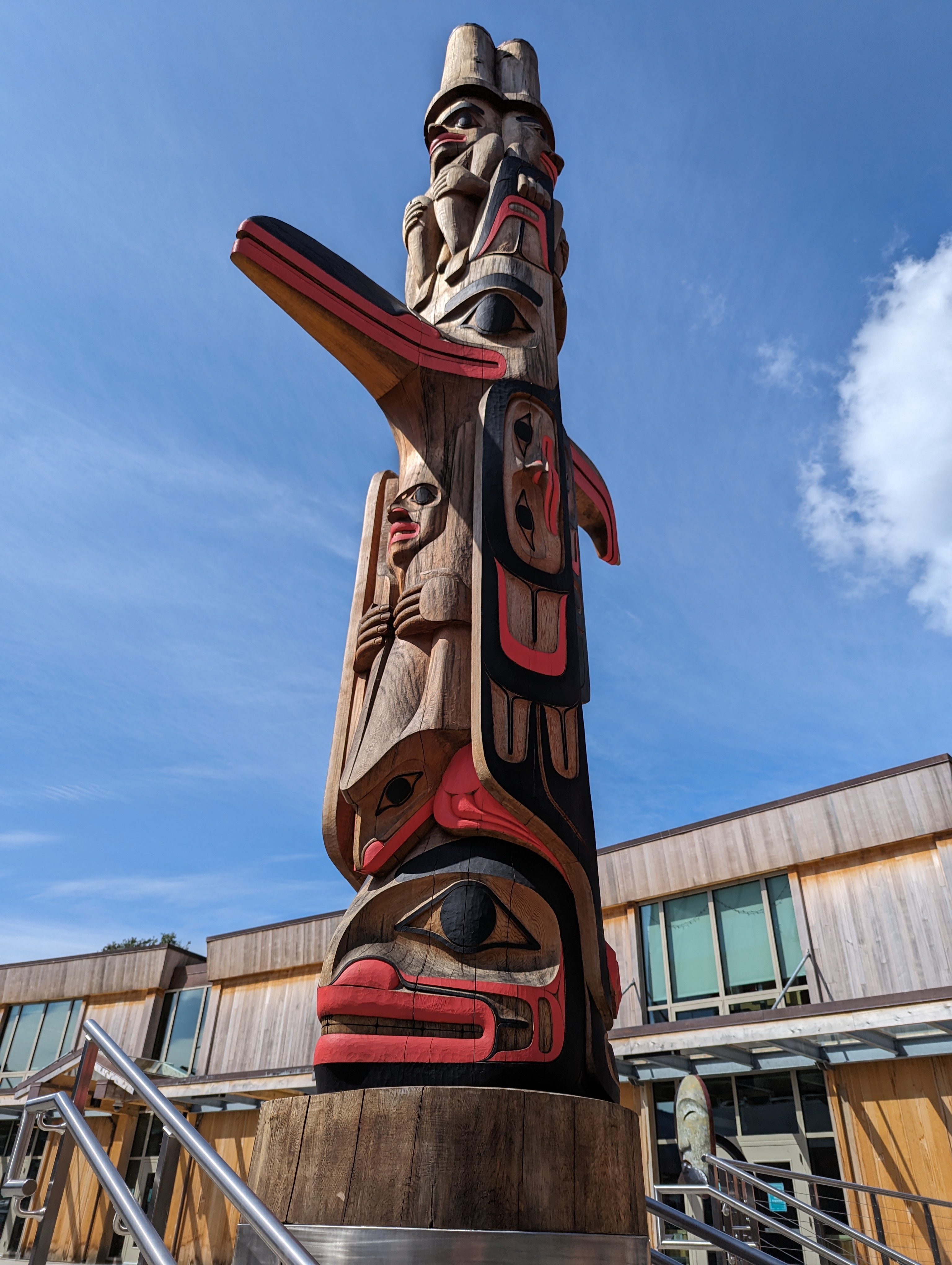
The first port of call was Juneau. Lots of jewelry, gemstones, and totem poles! It is one of the largest state capitals by land size but has a small population. The only way to get to Juneau is by air or sea and artists to be a popular cruise port!
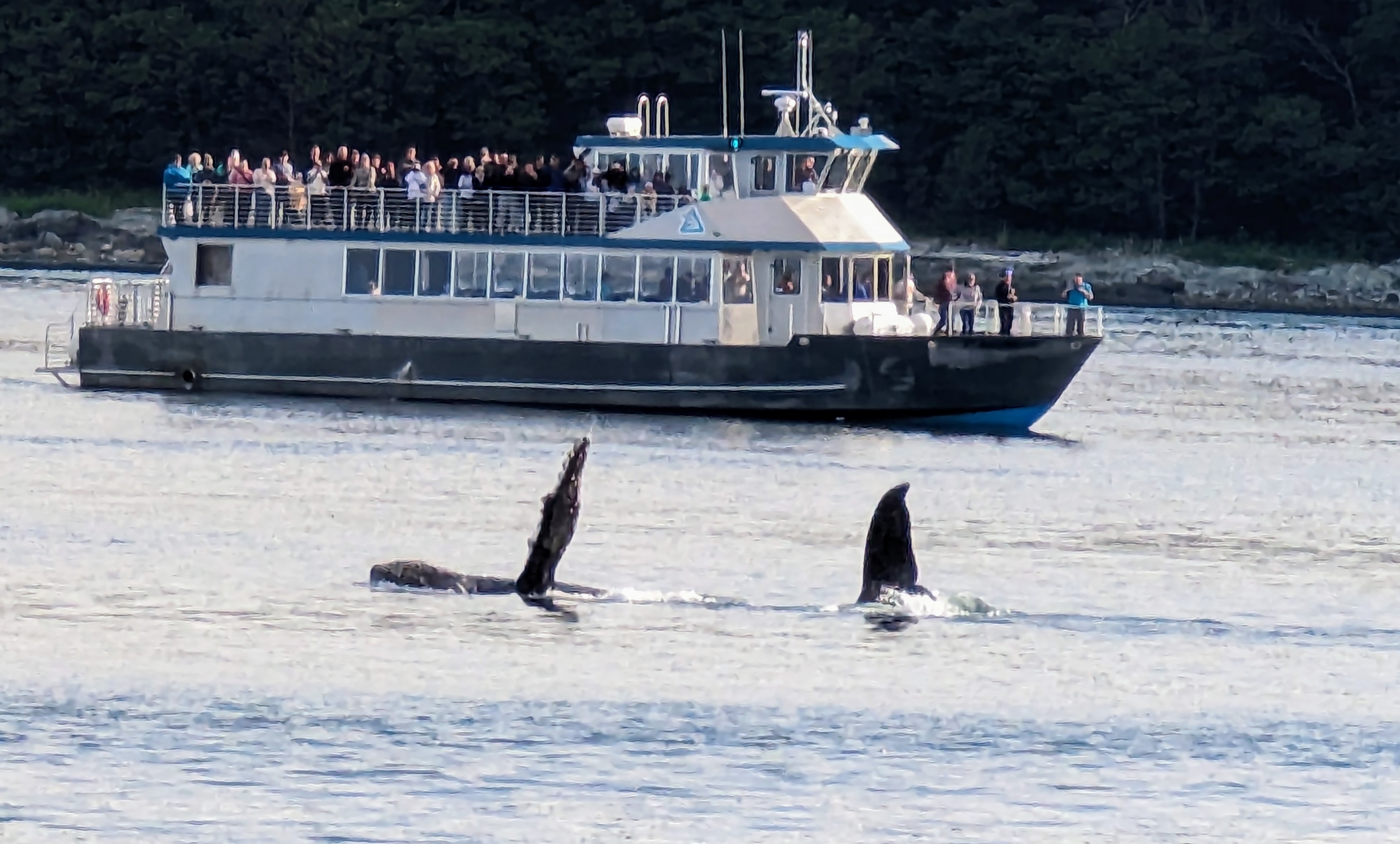
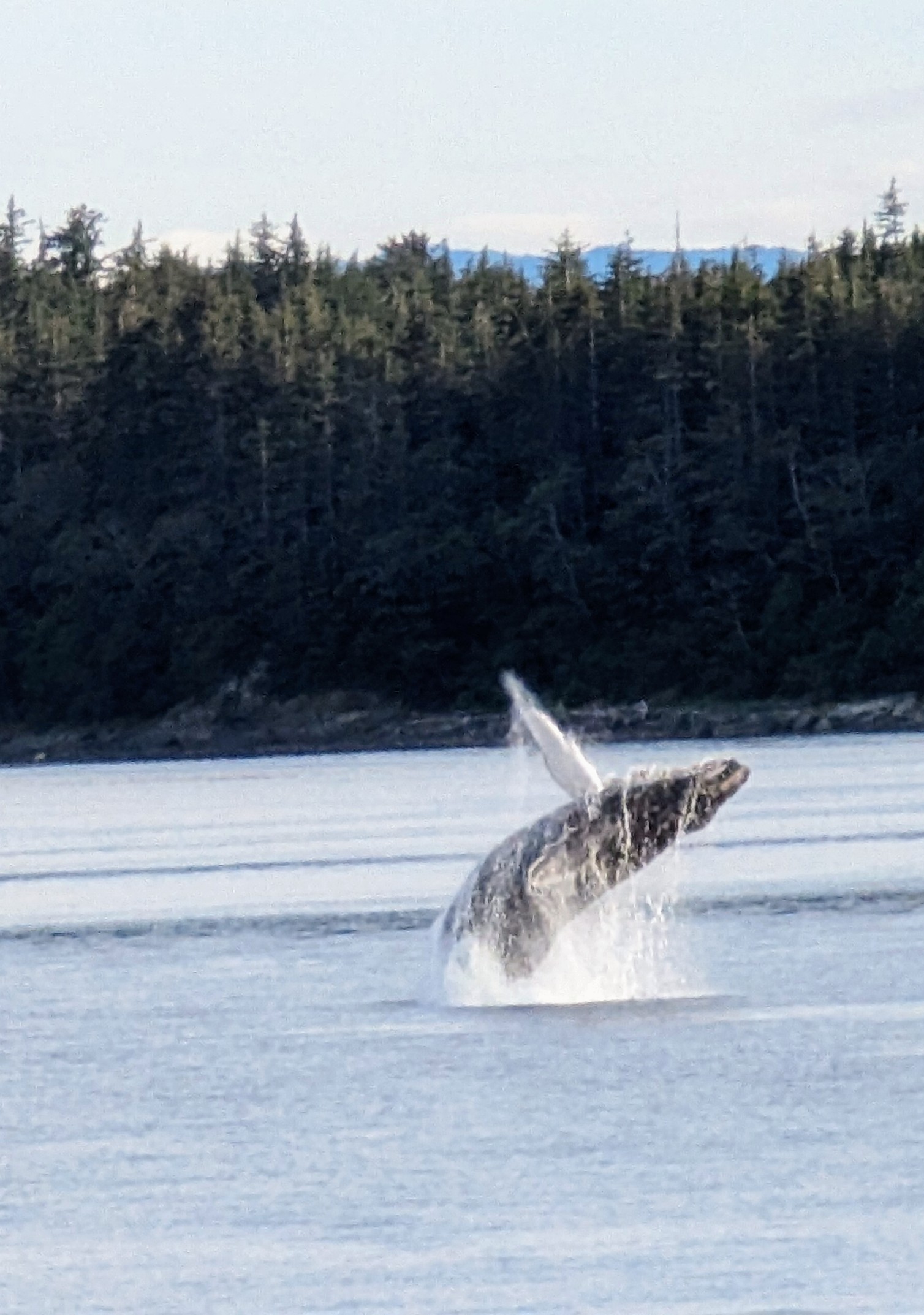
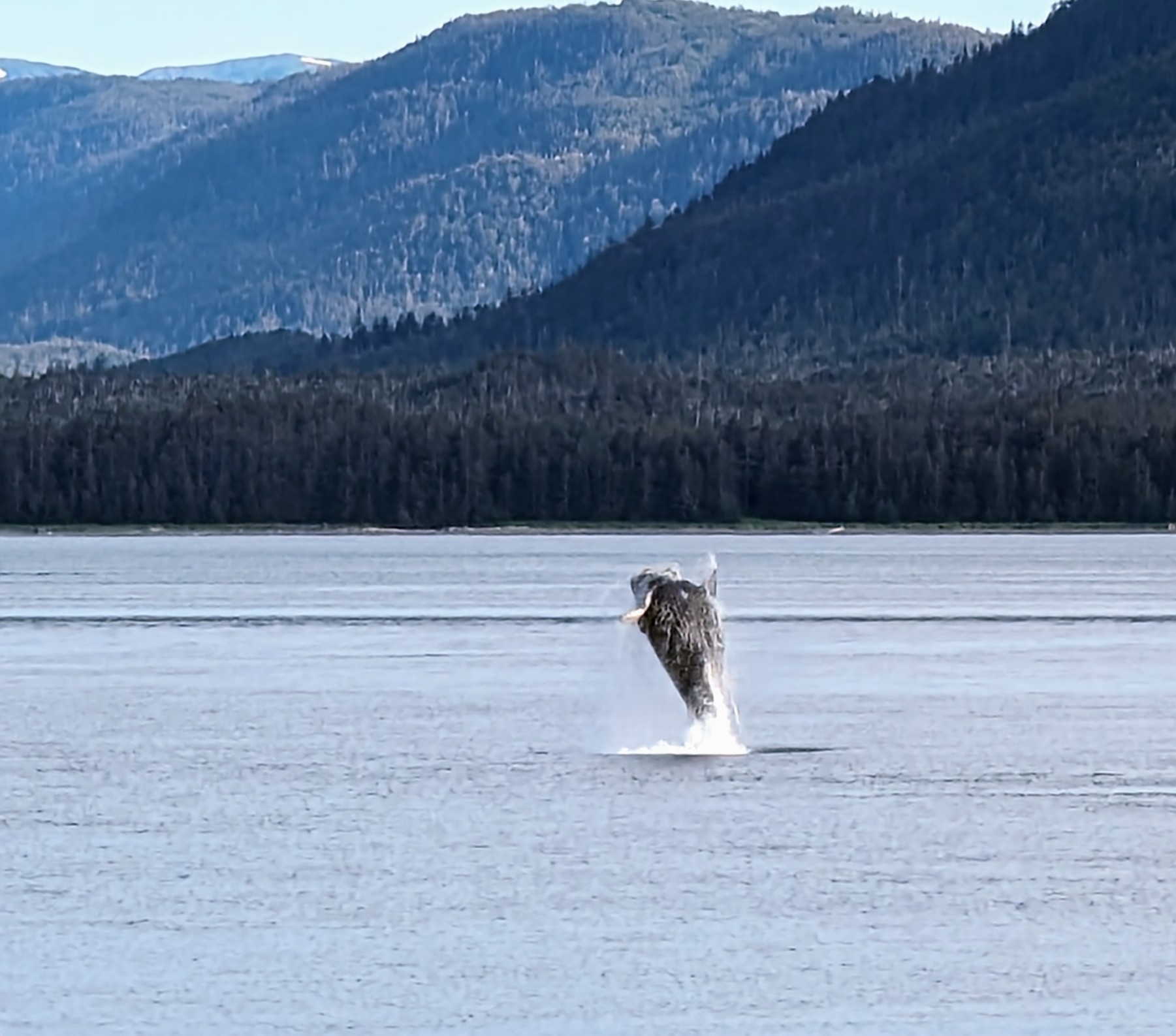
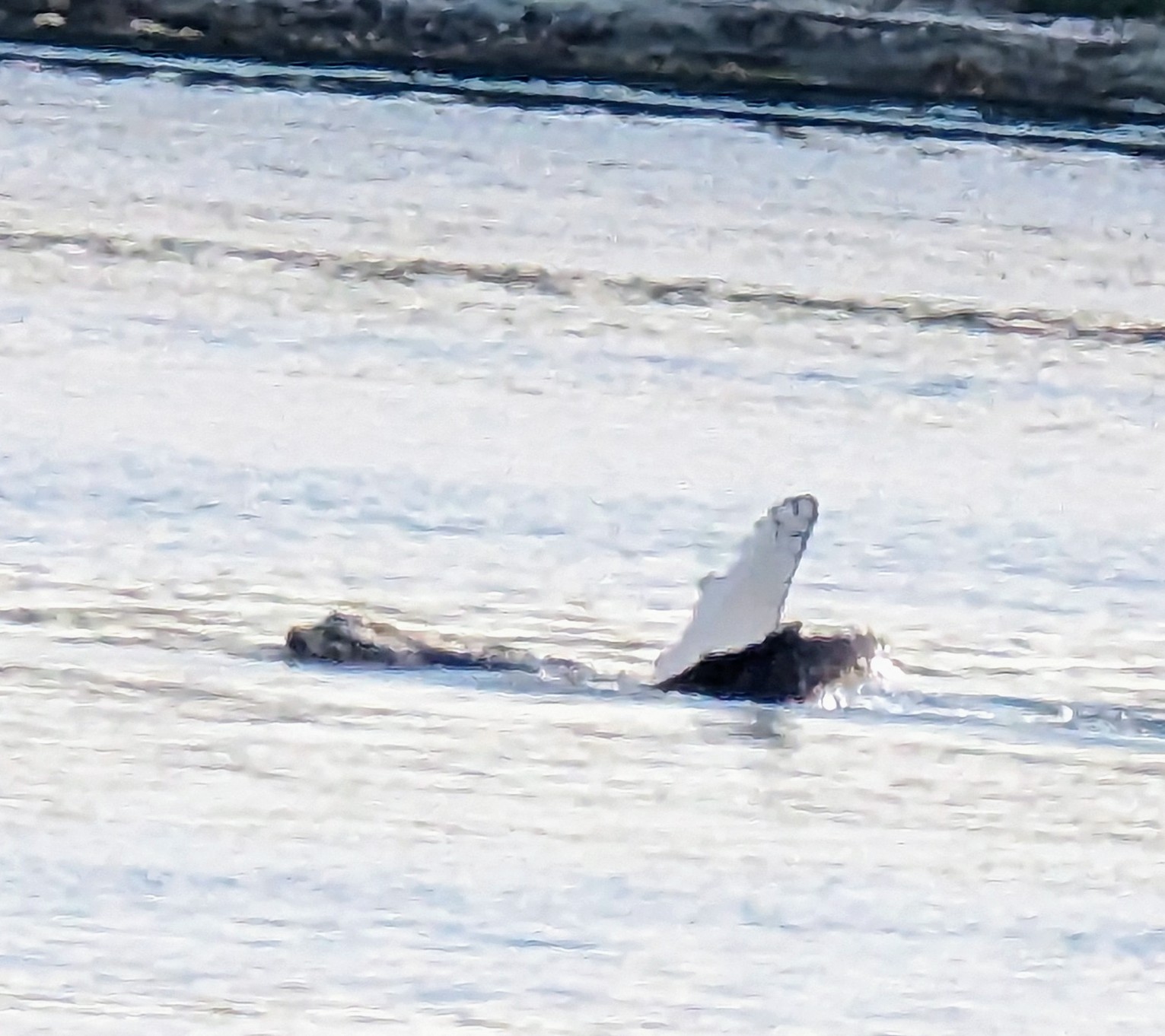
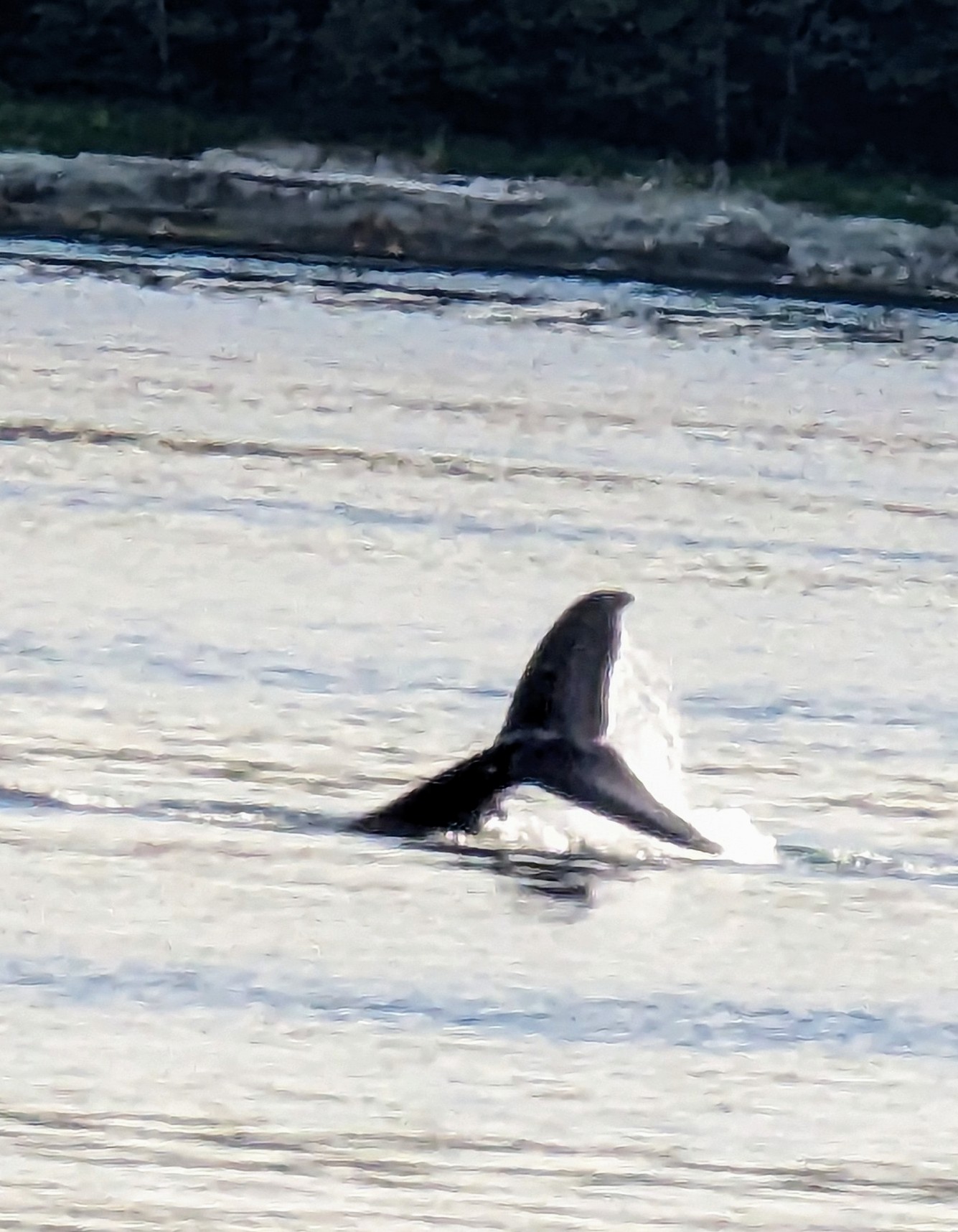
We had booked a tour to go whale watching. It was fabulous. They served Alaskan seafood and had a naturalist on board helping to look for whales and offer commentary. We actually saw both a mother and baby humpback breach (jump out of the water) and do acrobatics in the water.