Kubuqi Desert

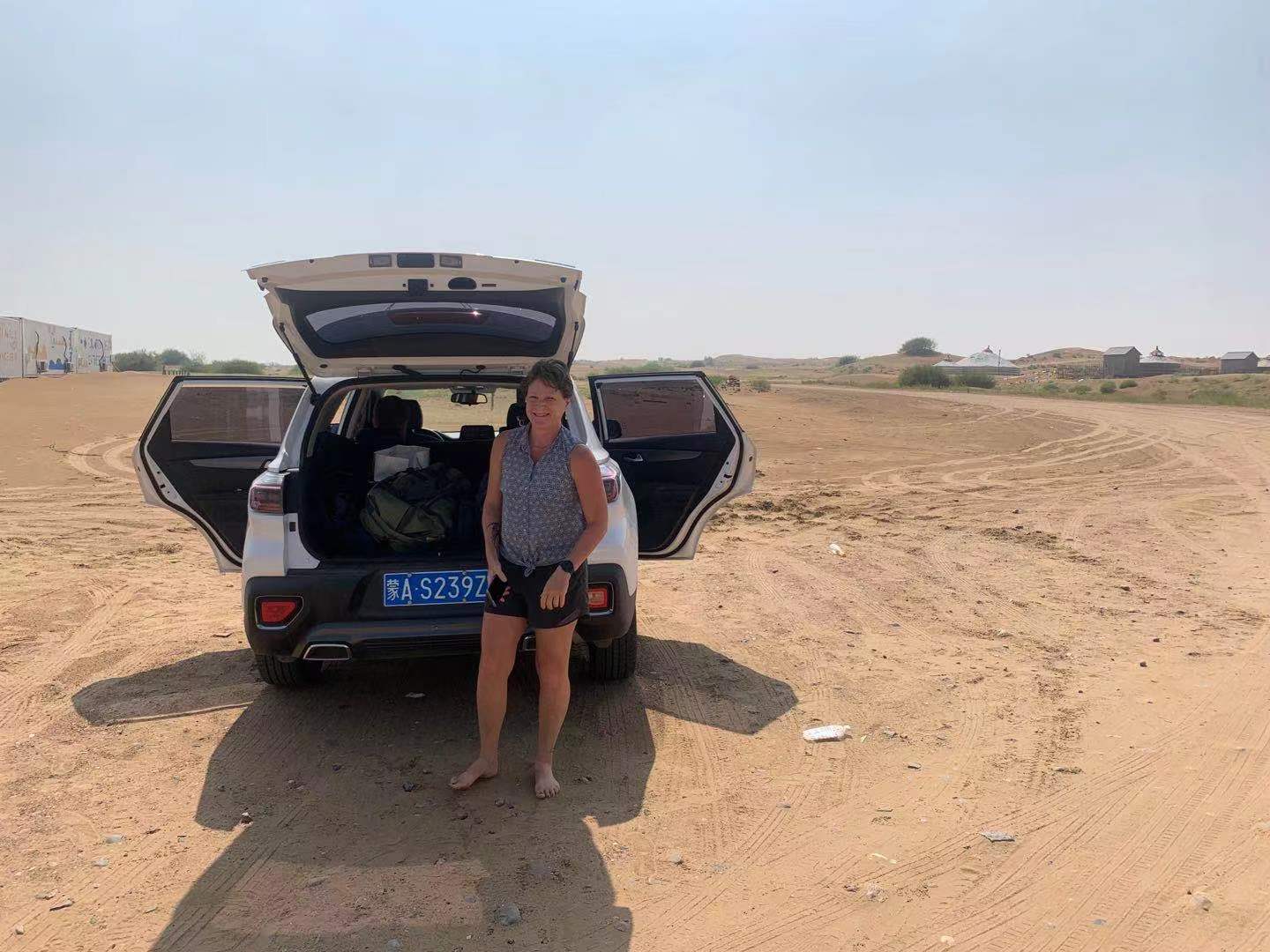
We drove from the grassland in inner Mongolia to the desert. It was the longest drive and at this point we are getting pretty tired of being on the road but everything is so far away.

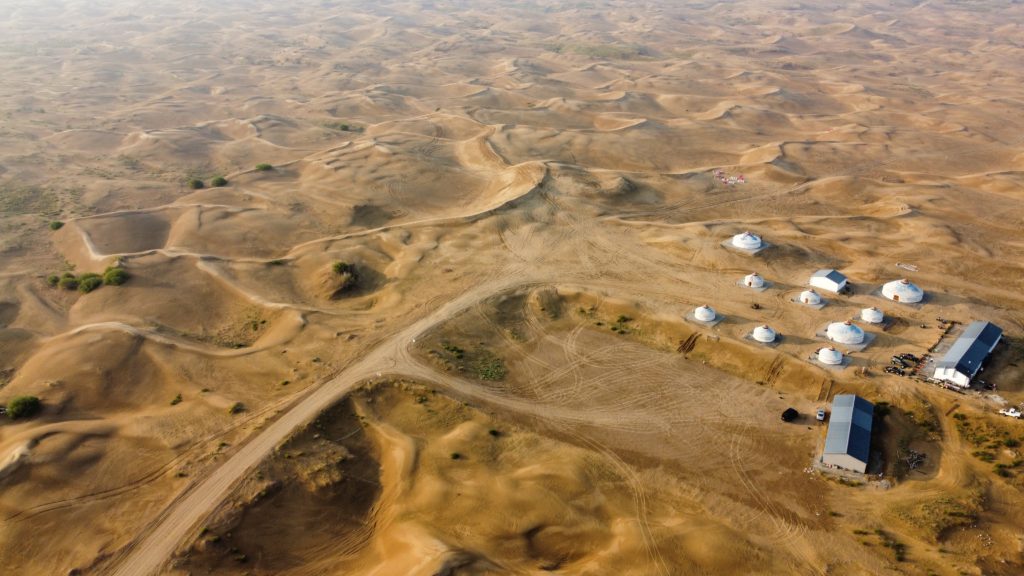
Container rooms and yurt from drone photo.
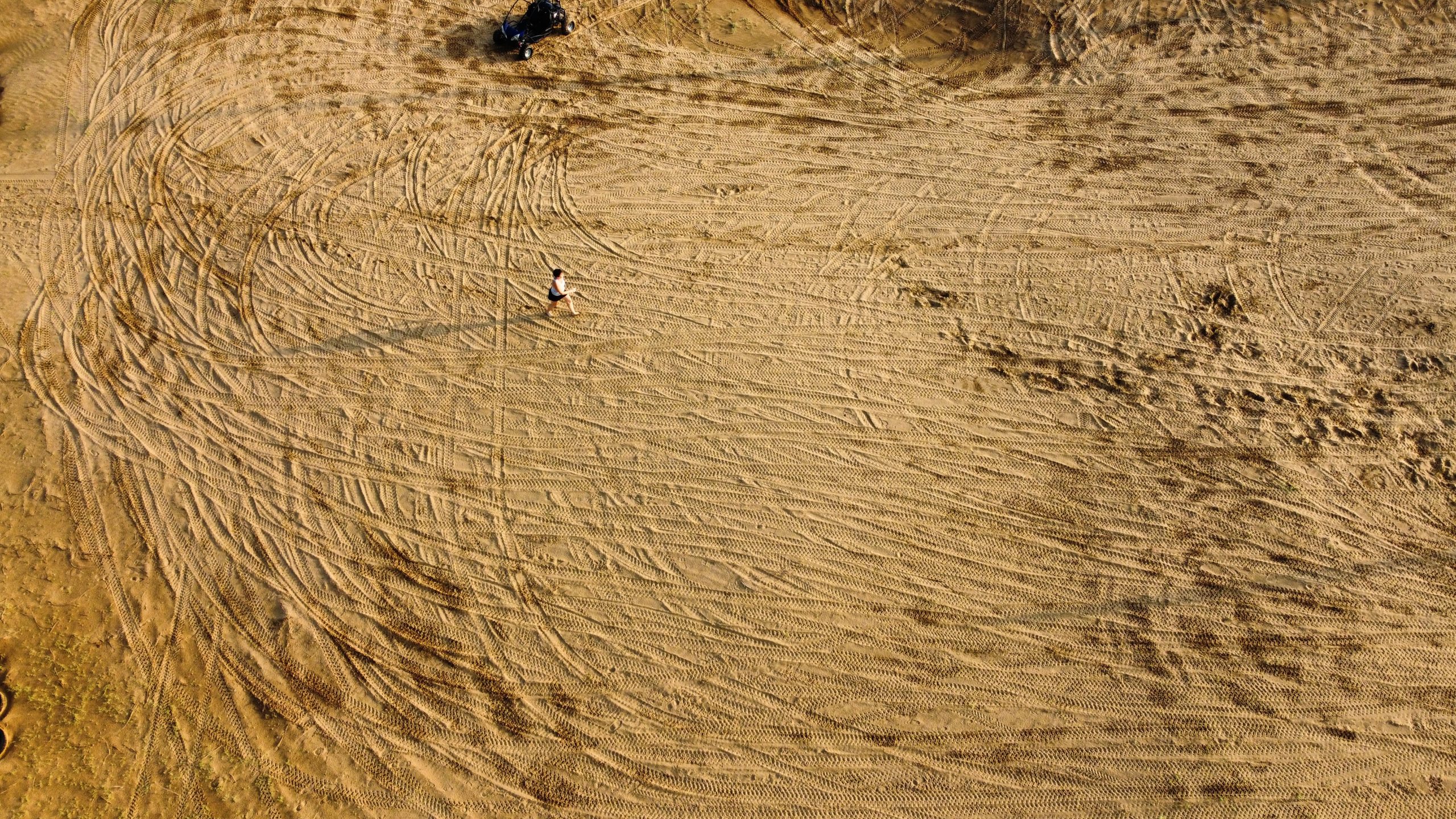
Drone image of me on a 2 km run through desert.

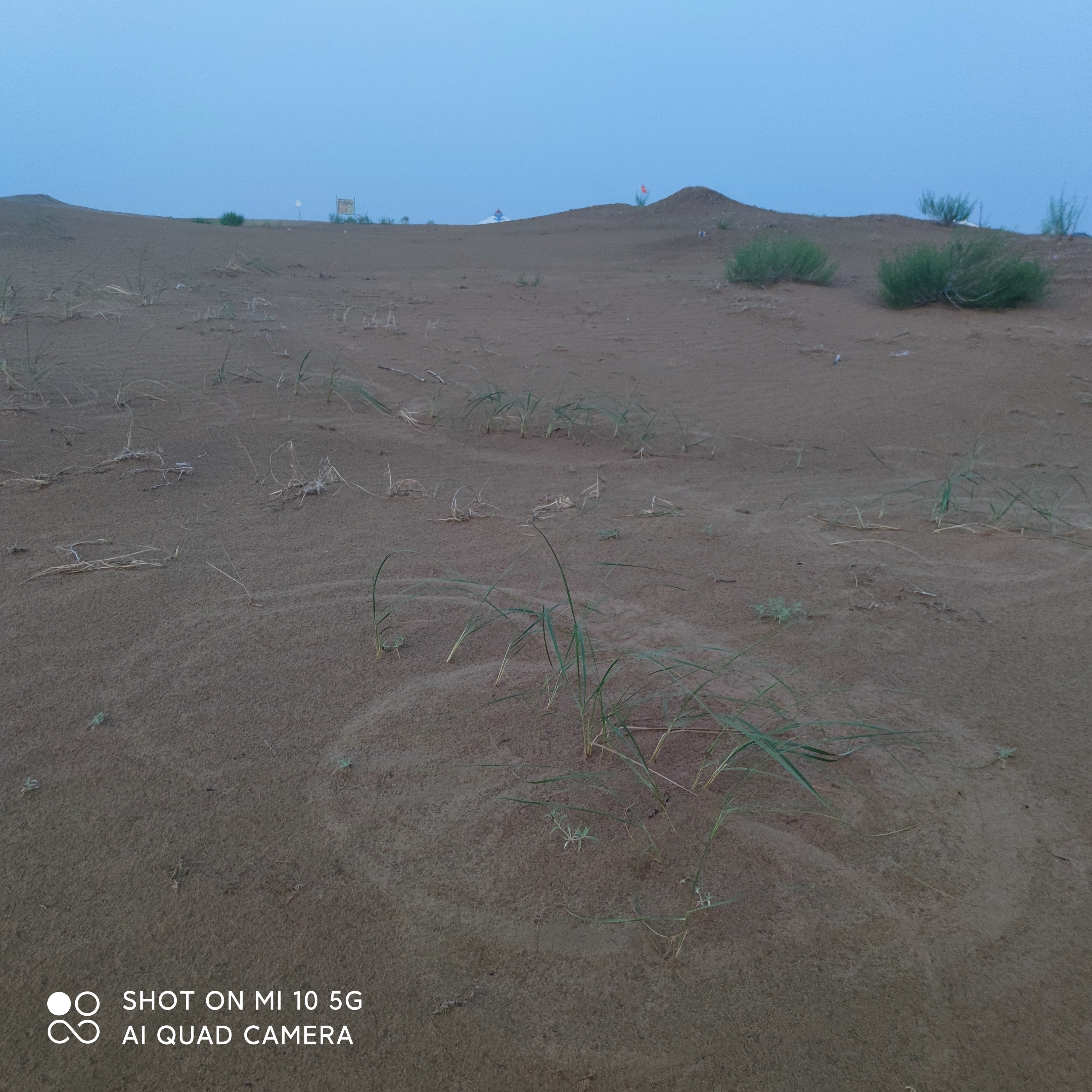
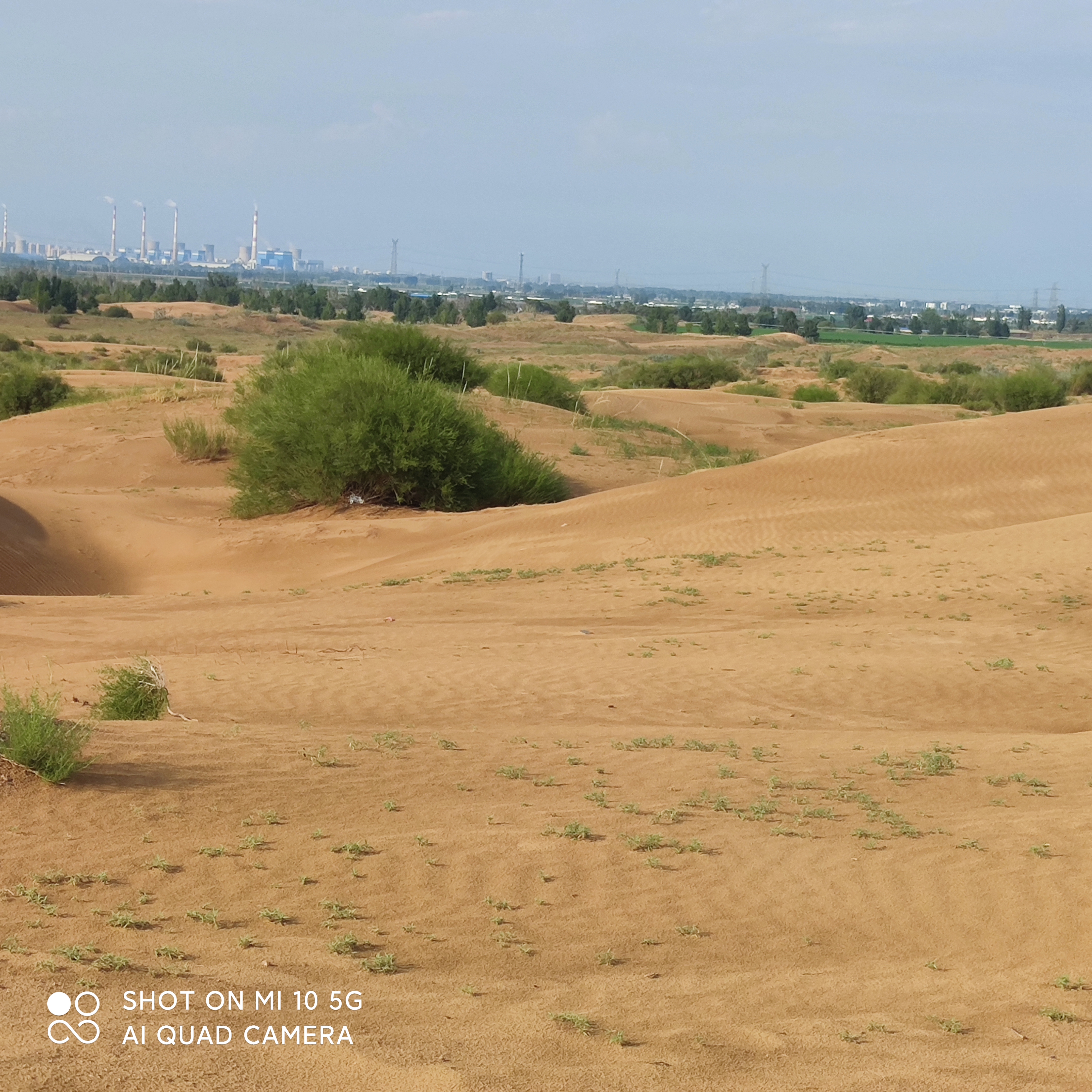
This area is part of the greening of China initiative. See the paragraph at the end of this post.

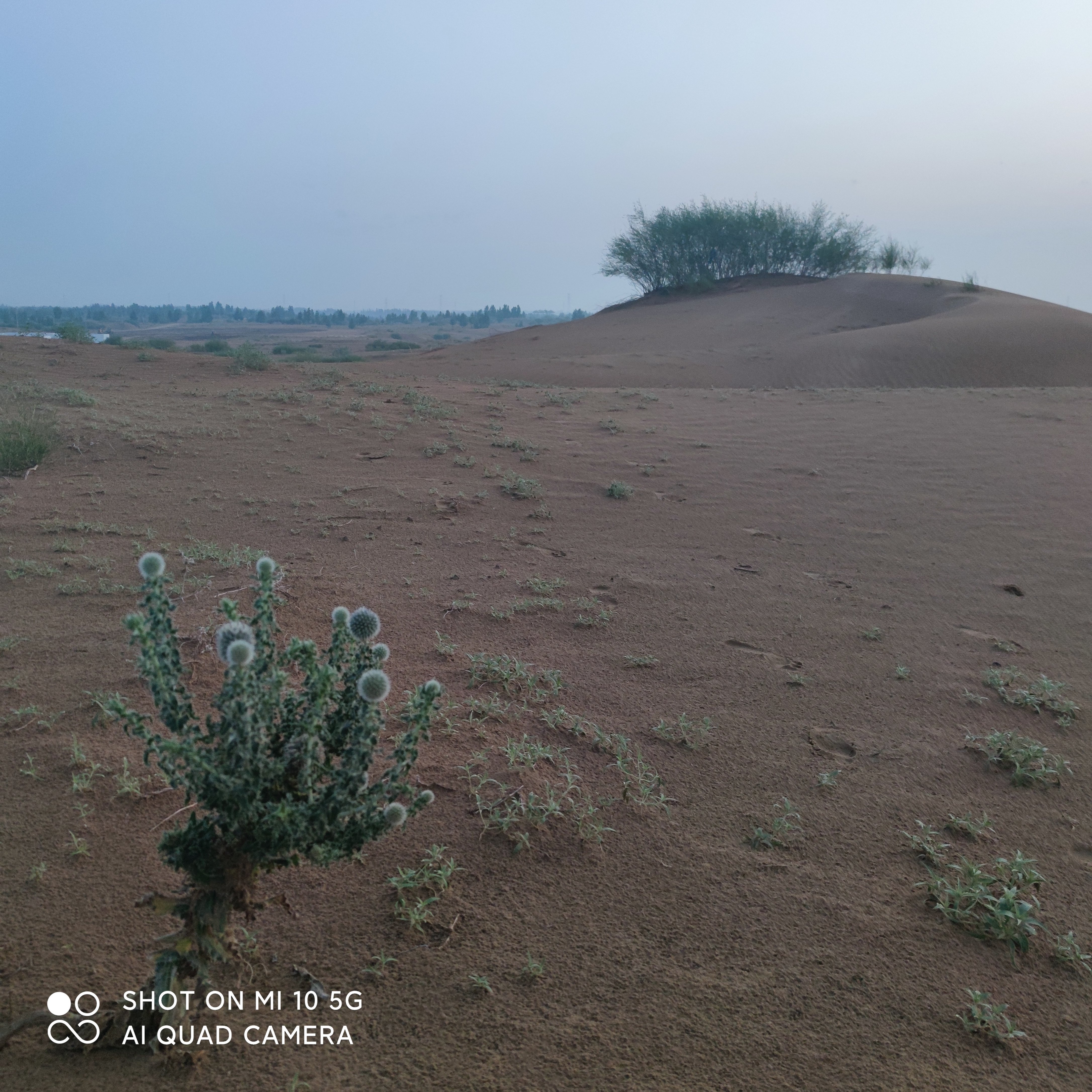
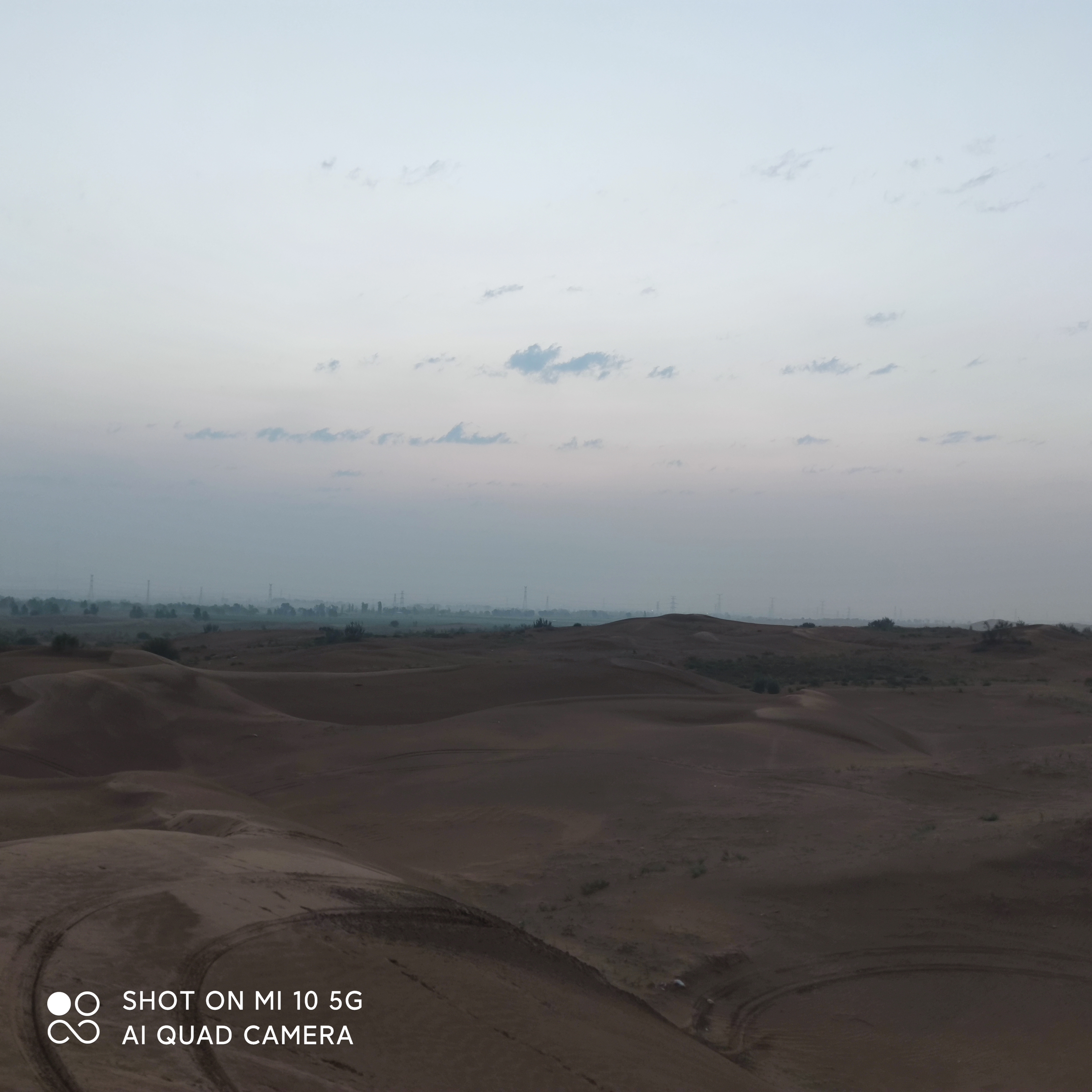
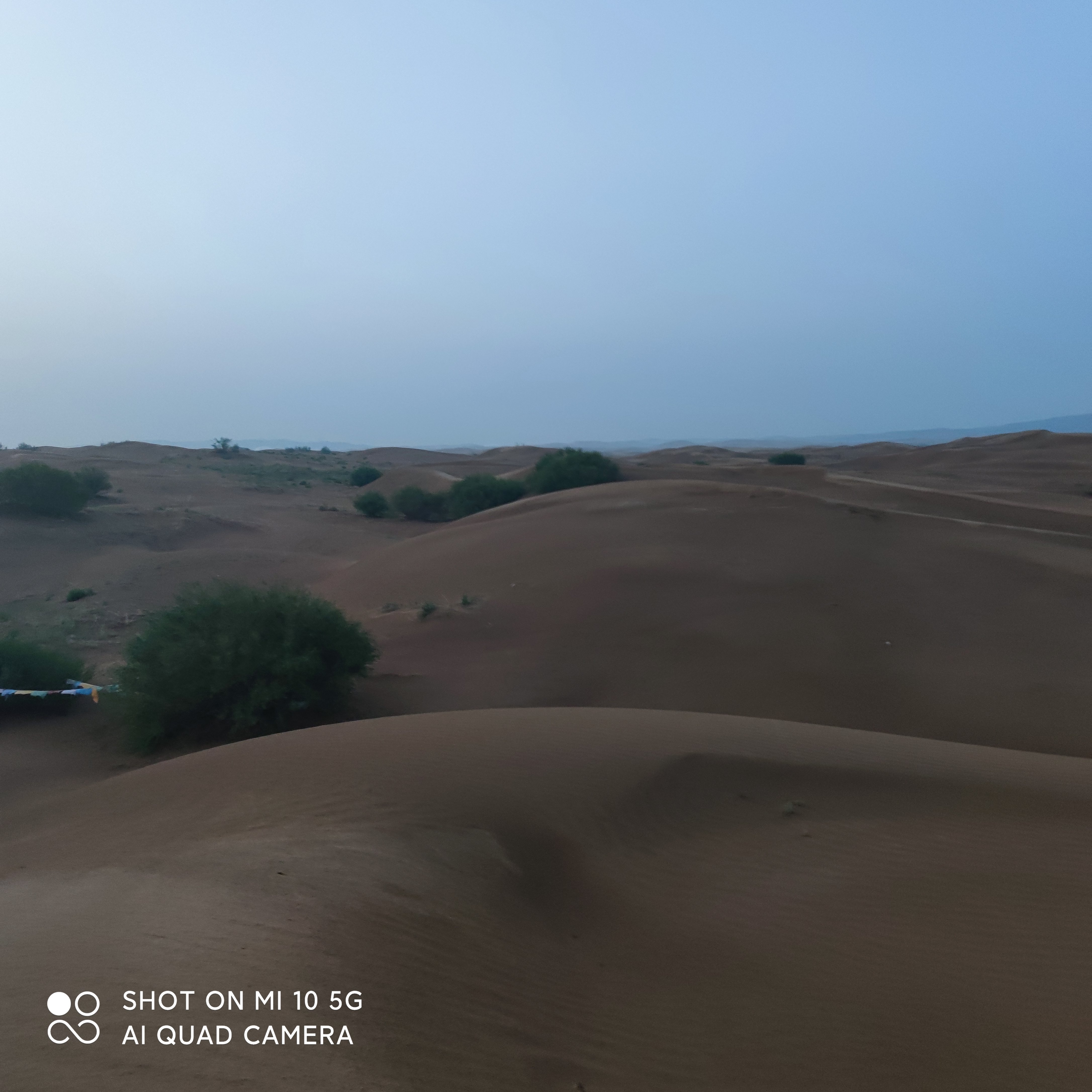
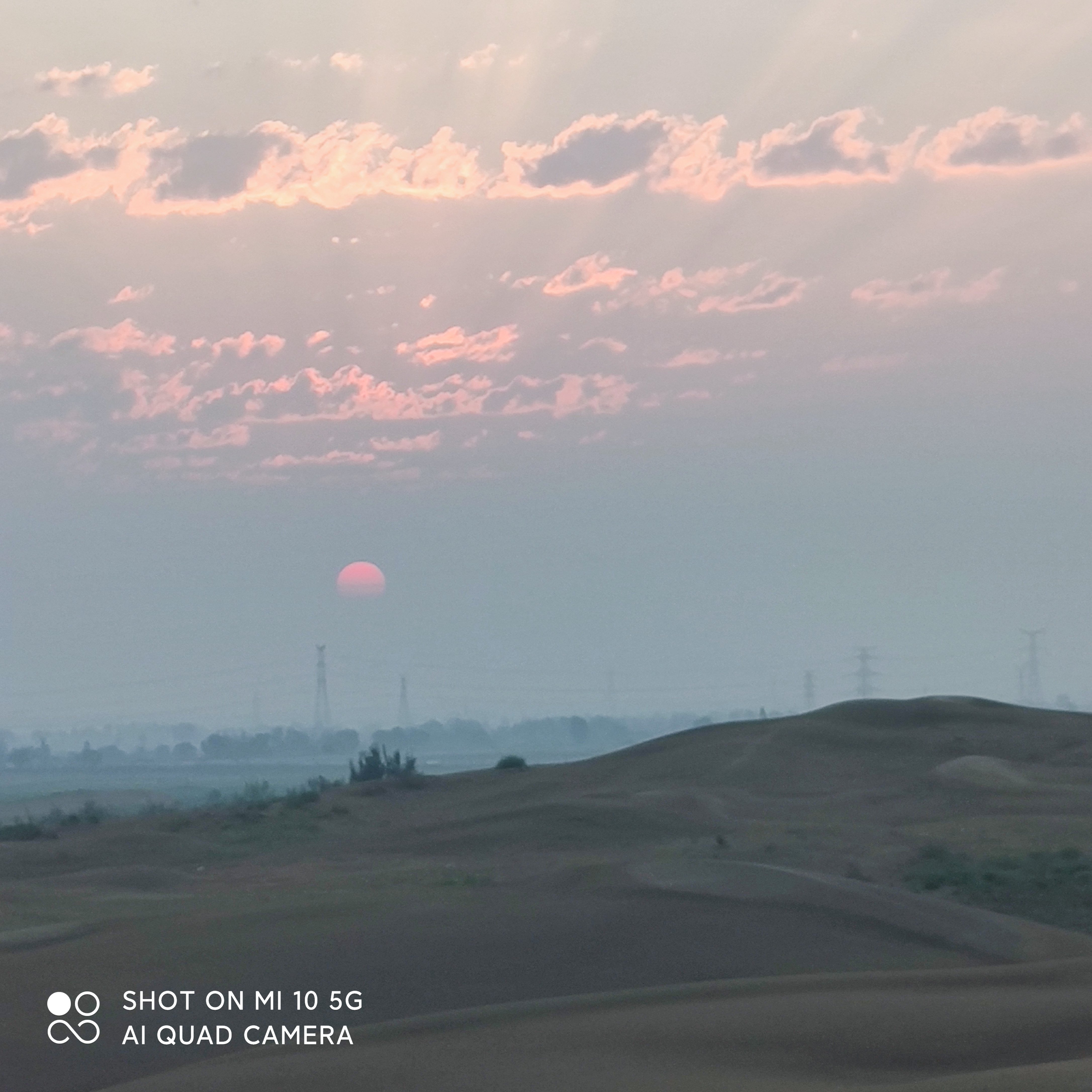
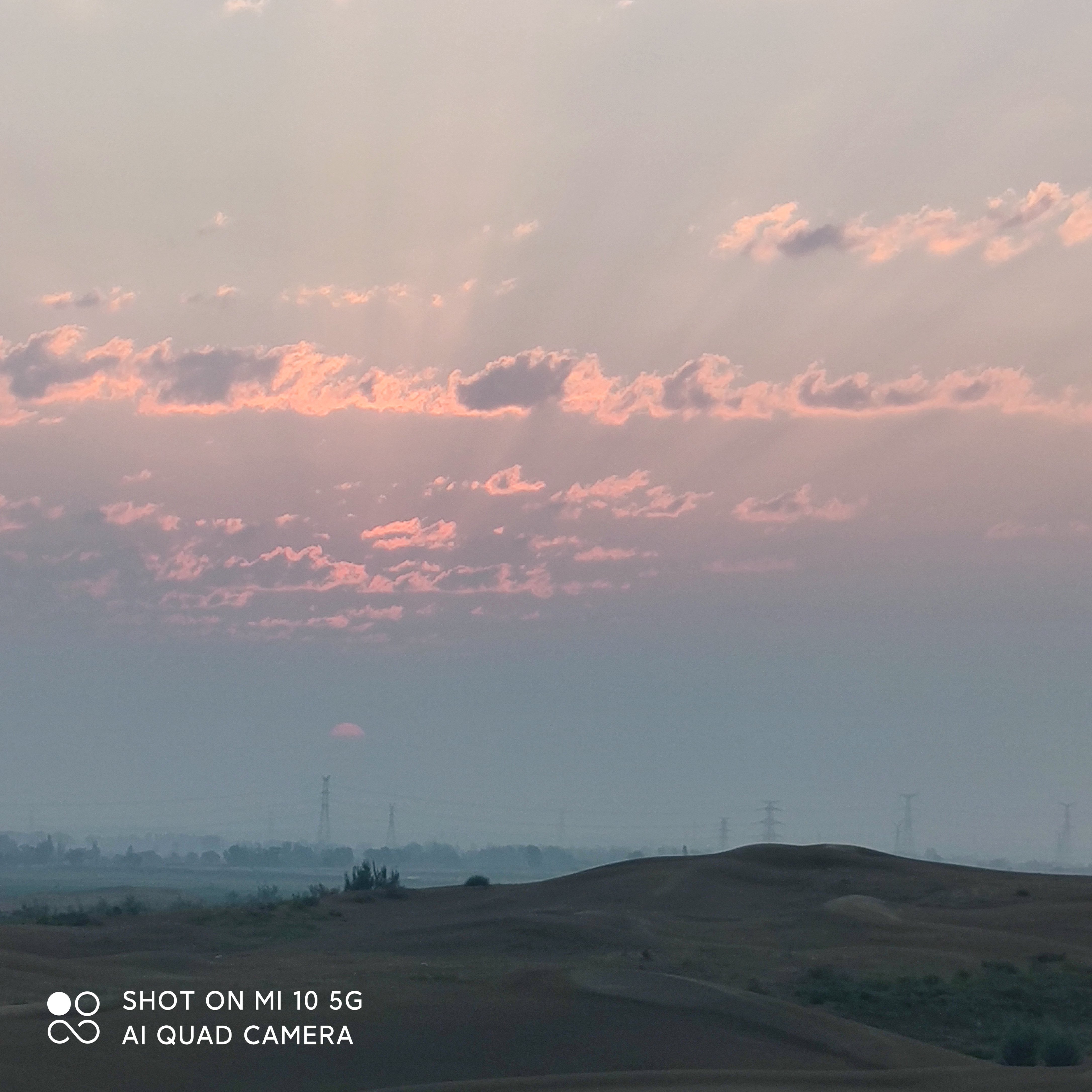
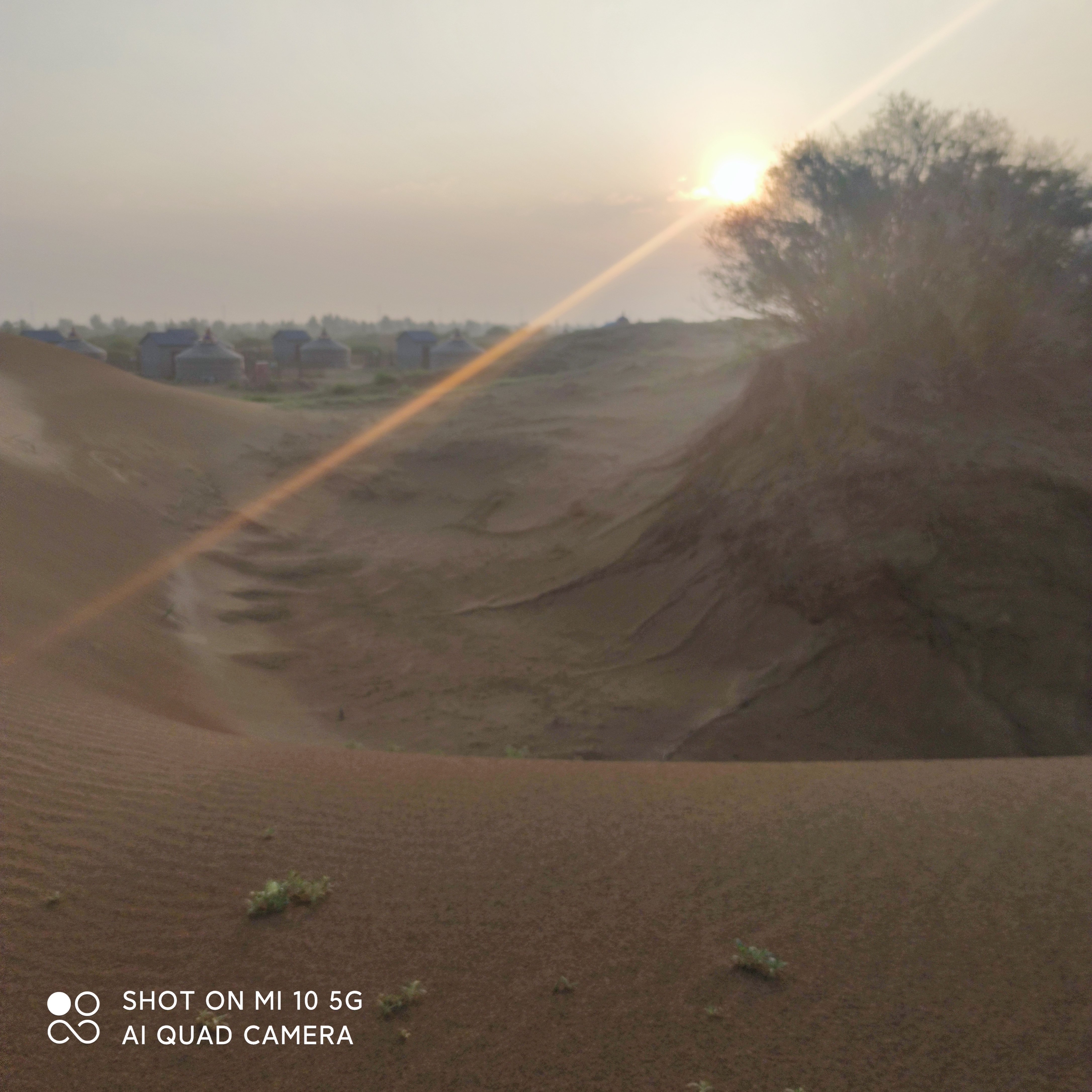
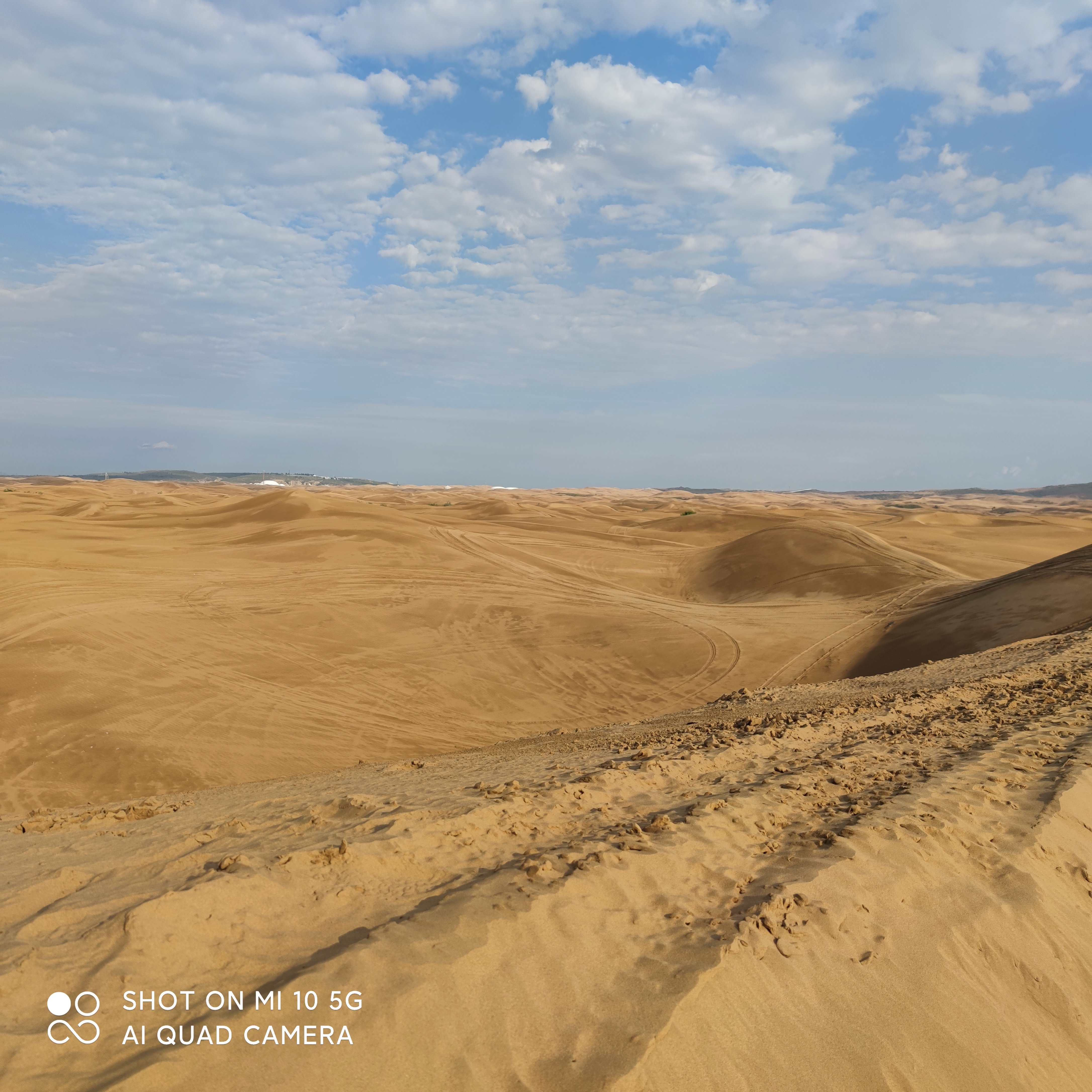
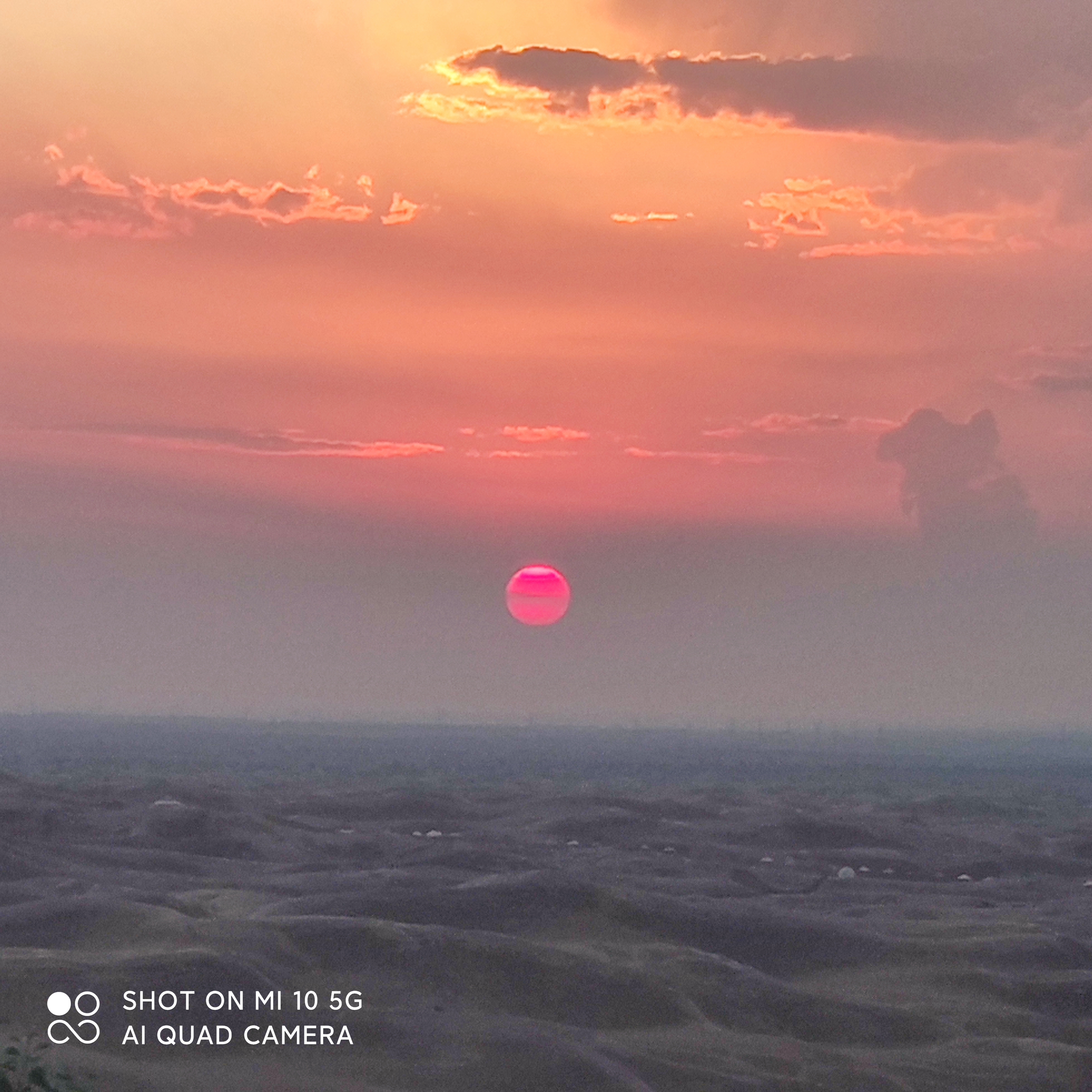
We stayed in a container room. It was not our best accommodation but it was nice to walk right out on to the desert when I wanted without driving there. In the early morning I went out to get a sunrise shot but many clouds were in the horizon.

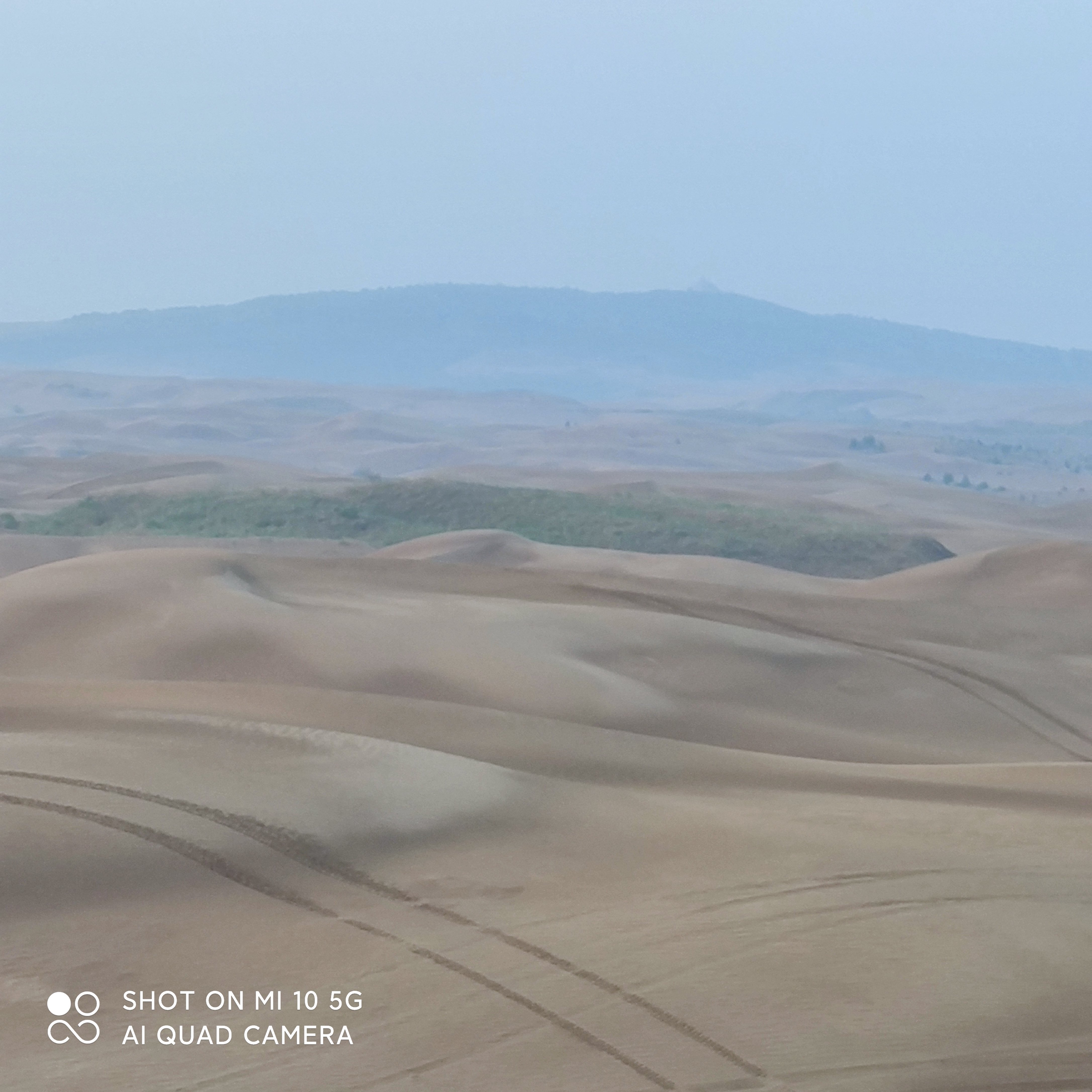
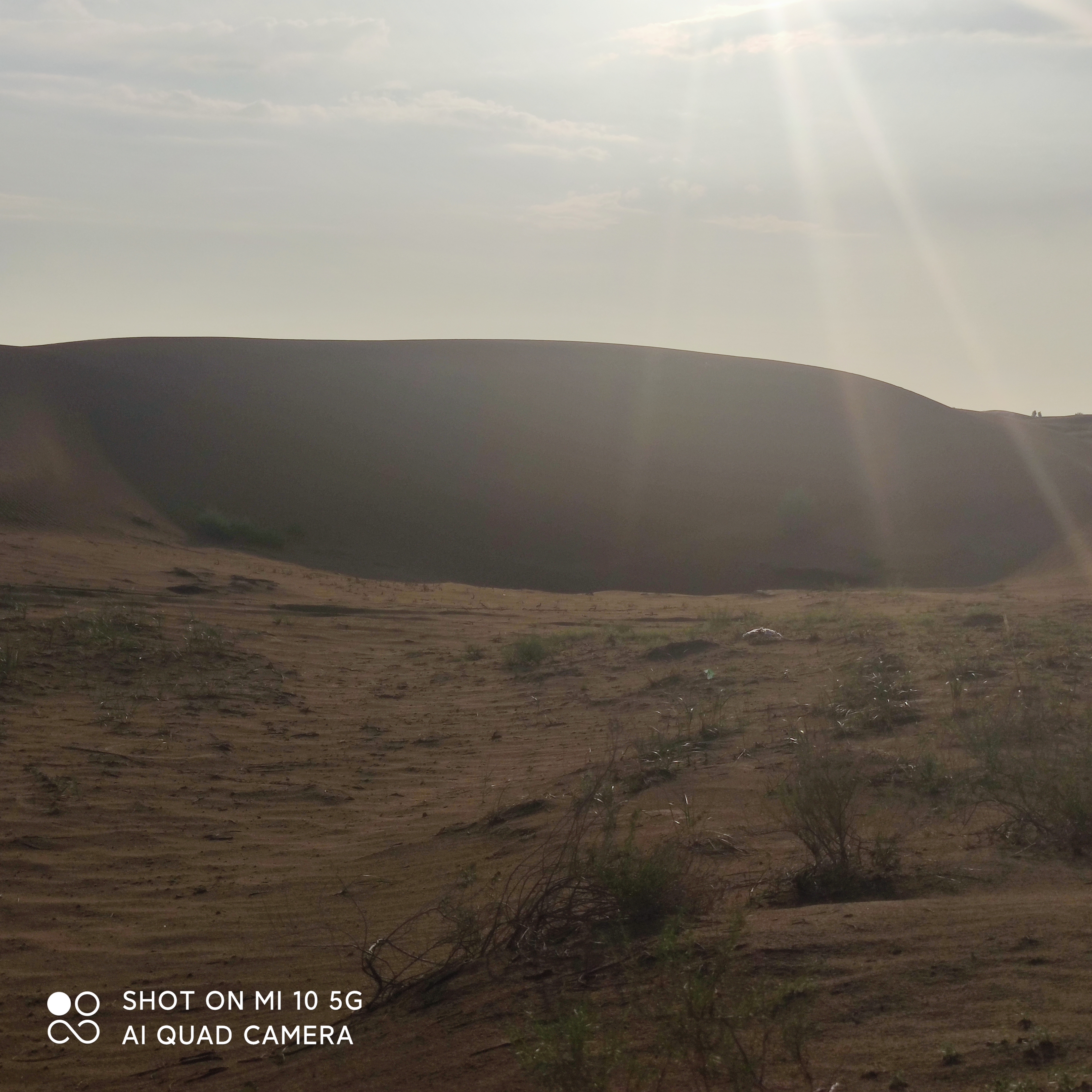
We set out to walk around when it was so quite warm.

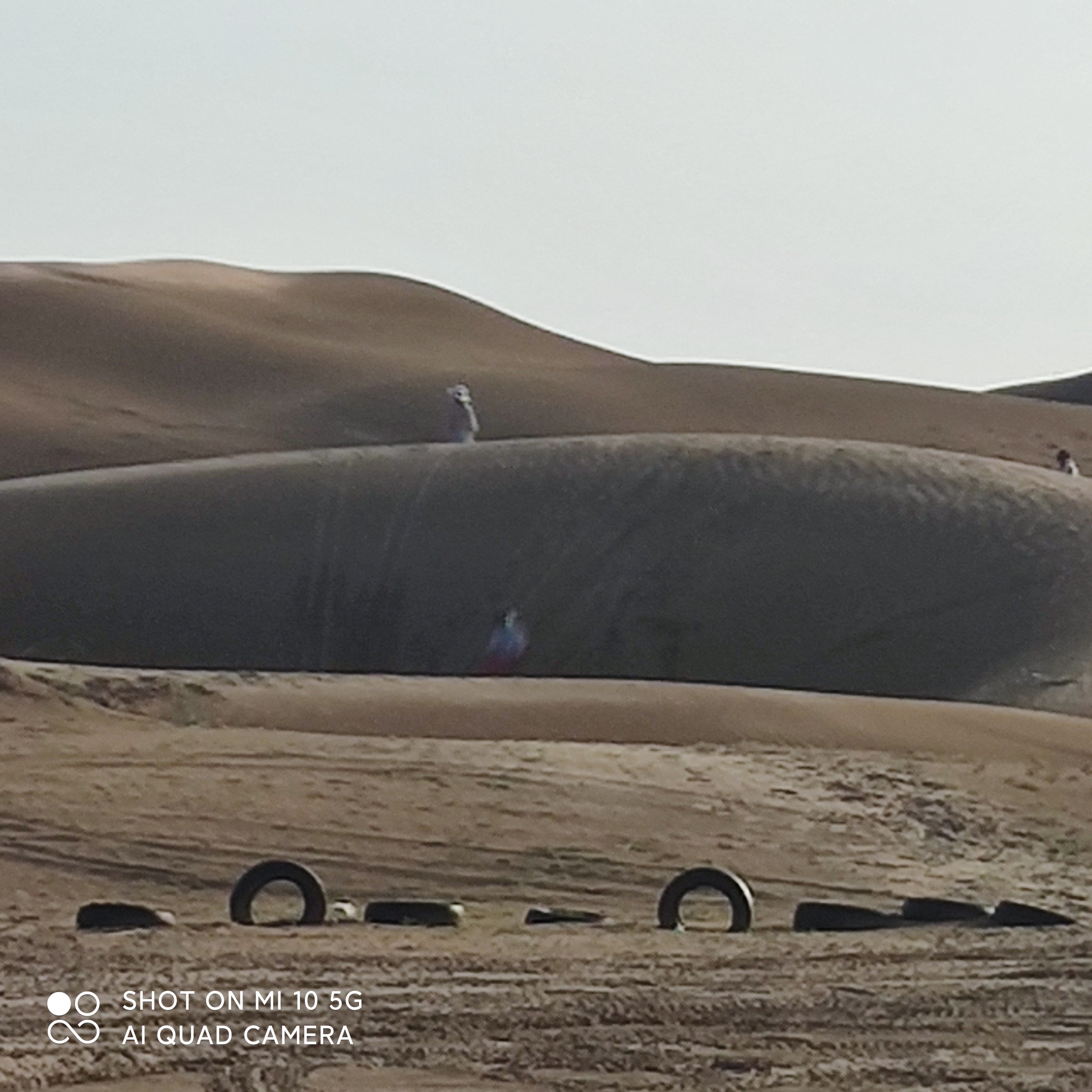
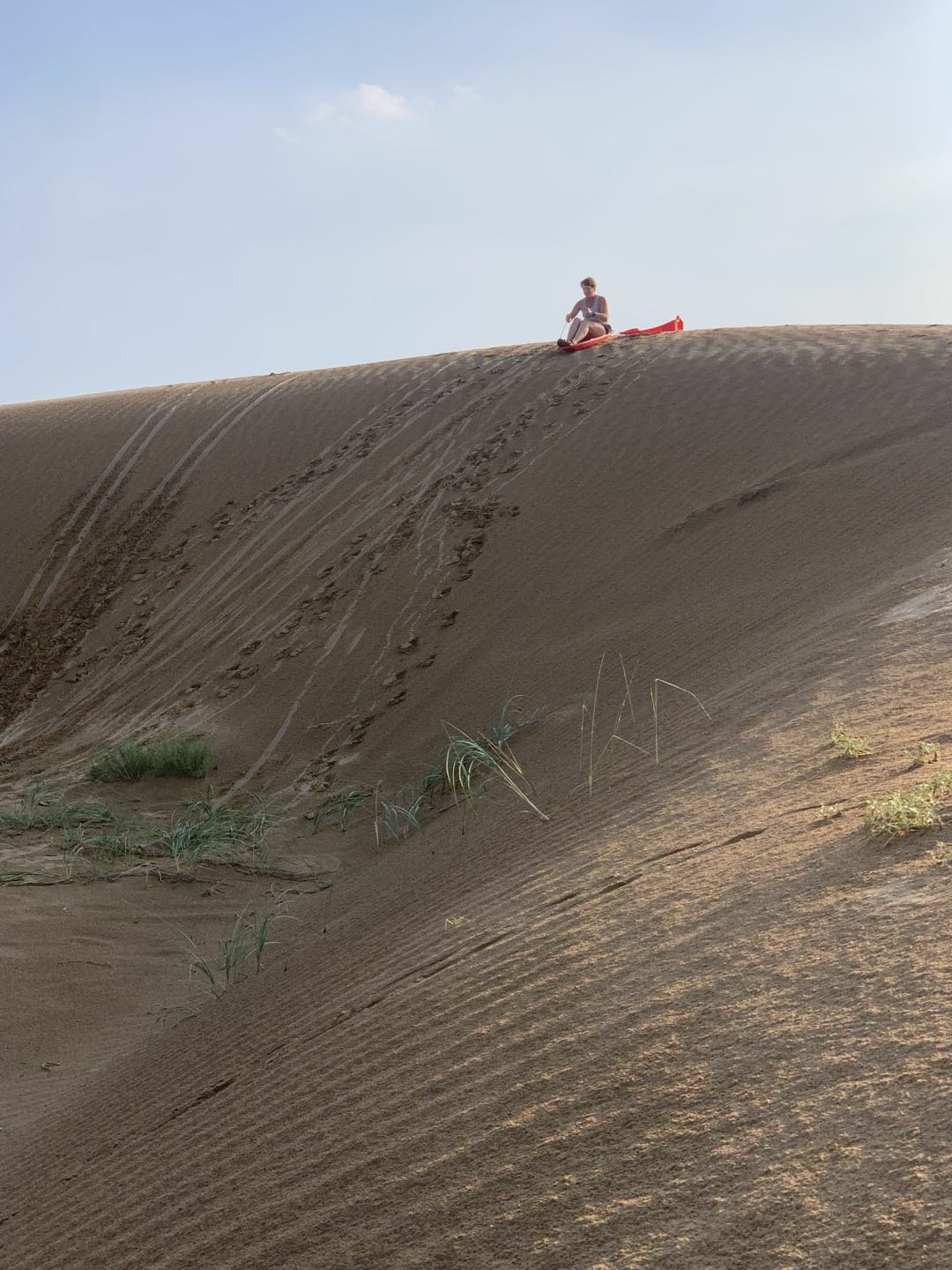
Sand sledding.

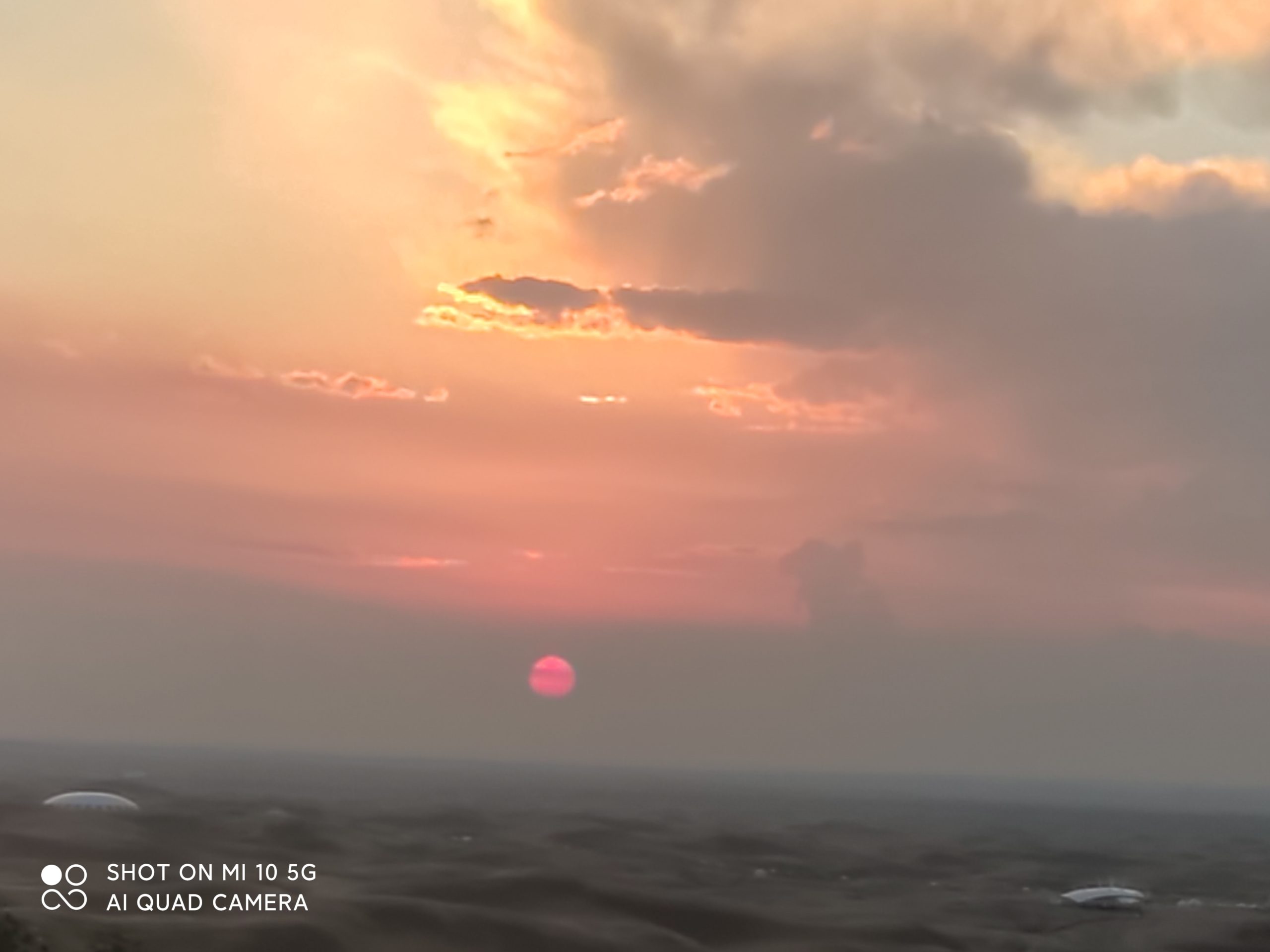
Sunset pictures were taken from a viewing platform a half hour drive away and overlooking a very expensive 5 star accommodation.

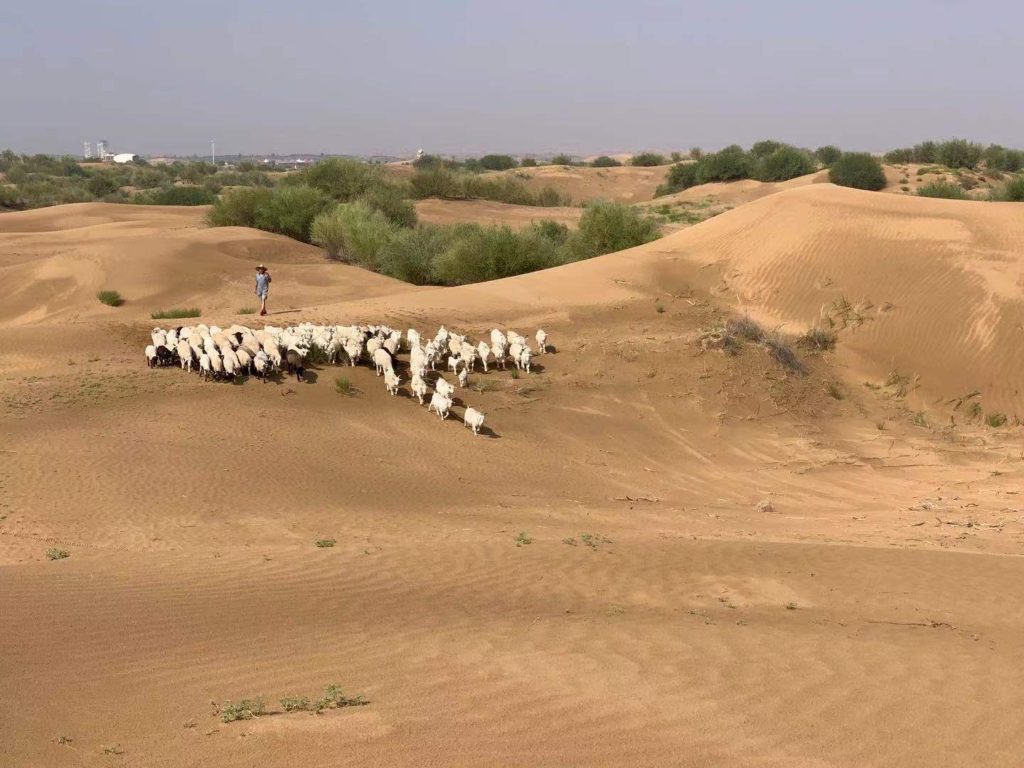
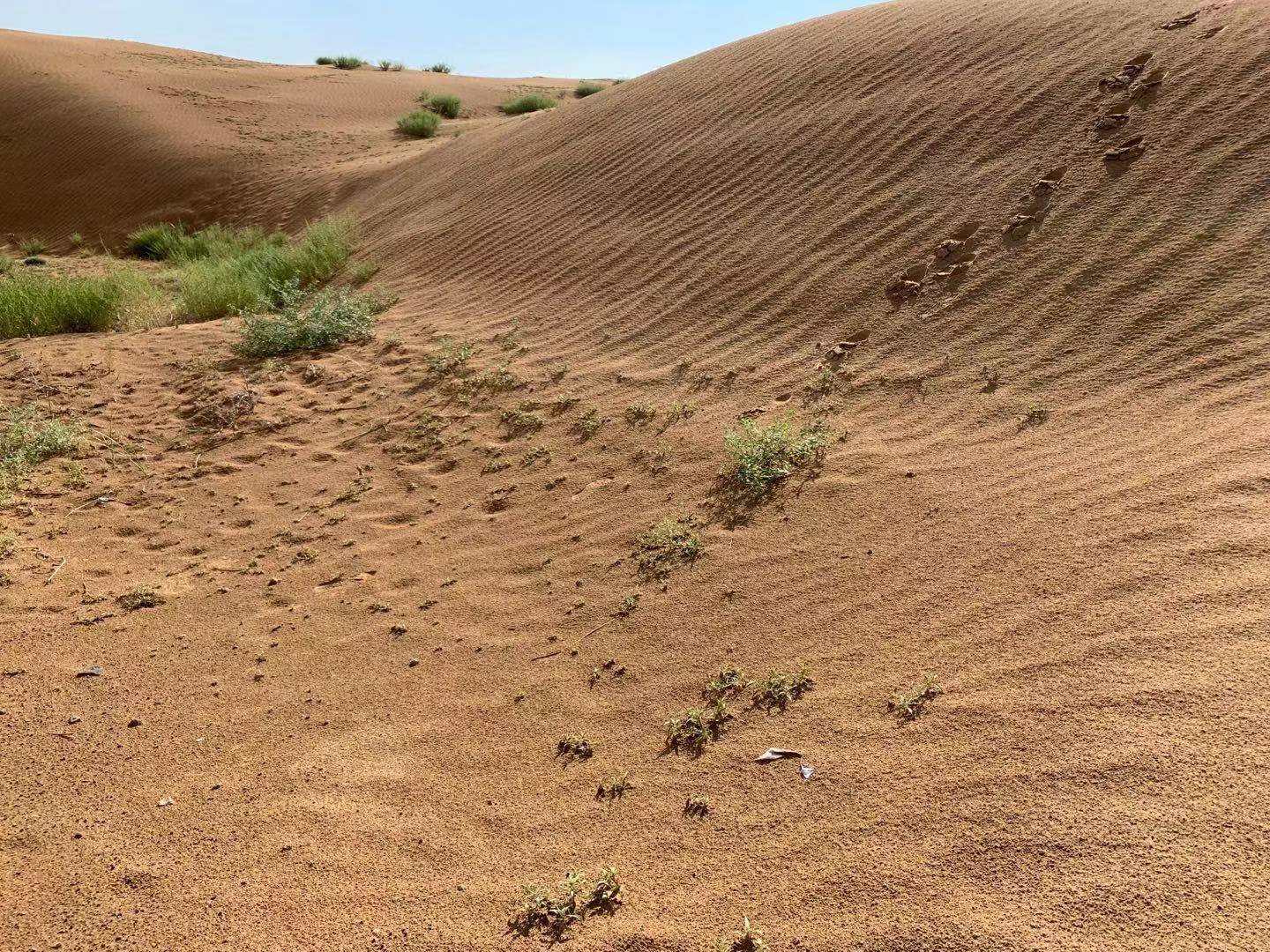
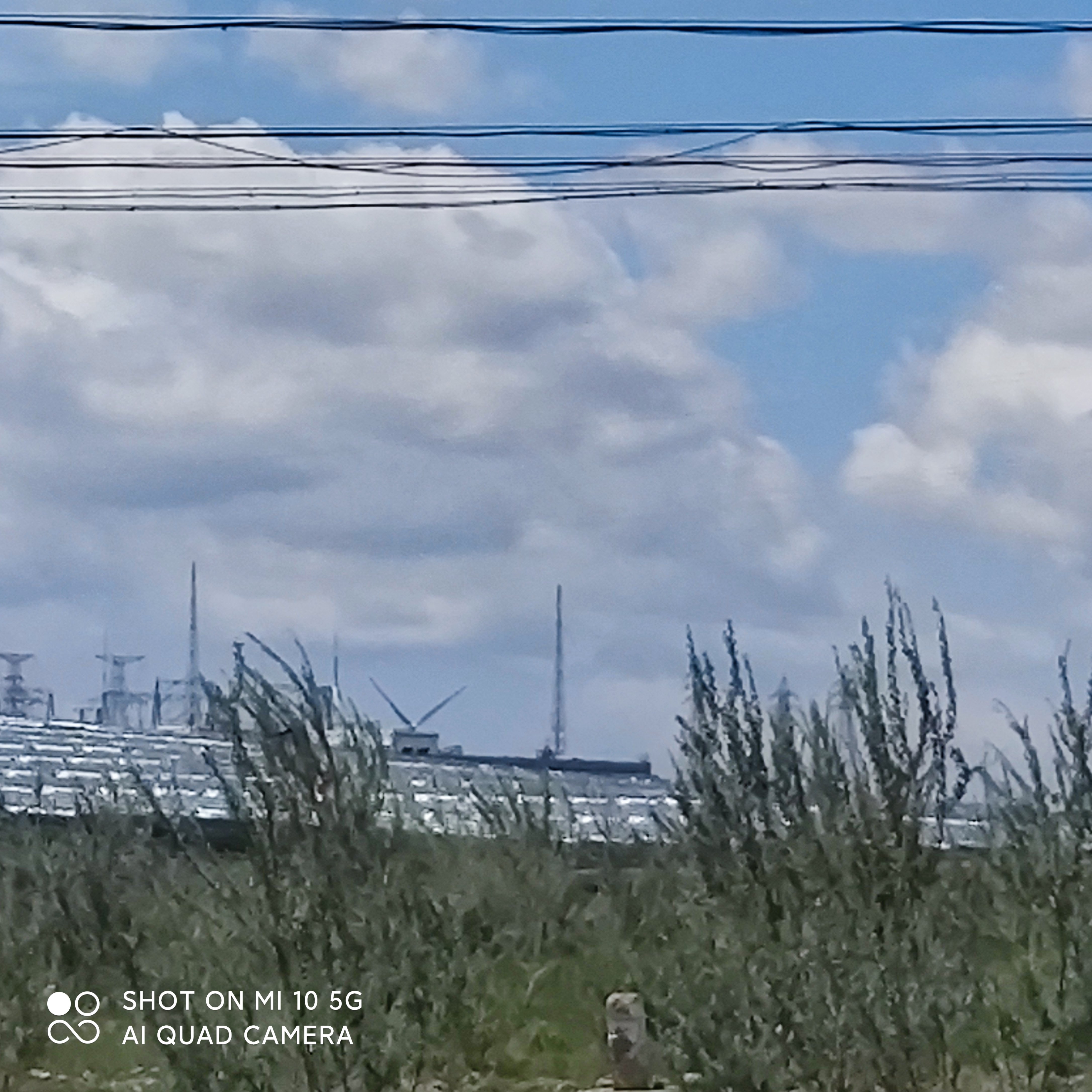
There is a large solar panel farm on the desert. They are also greening the desert areas that have been overgrazed for centuries. From Time article:

Kubuqi, for one, boasts China’s largest single-stage solar farm, boasting 650,000 fixed and sun-tracking panels, which together channel 1,000 megawatts of electricity into the national grid — about half the power-generating capacity of the Hoover Dam. A team of 47 households are employed to maintain the panels. “Everyday each household can clean more than 3,000 panels using high pressure water jets,” says chief engineer Tian Junting. “And the run-off water feeds the crops that grow underneath.”

Solar panel farm from the road.
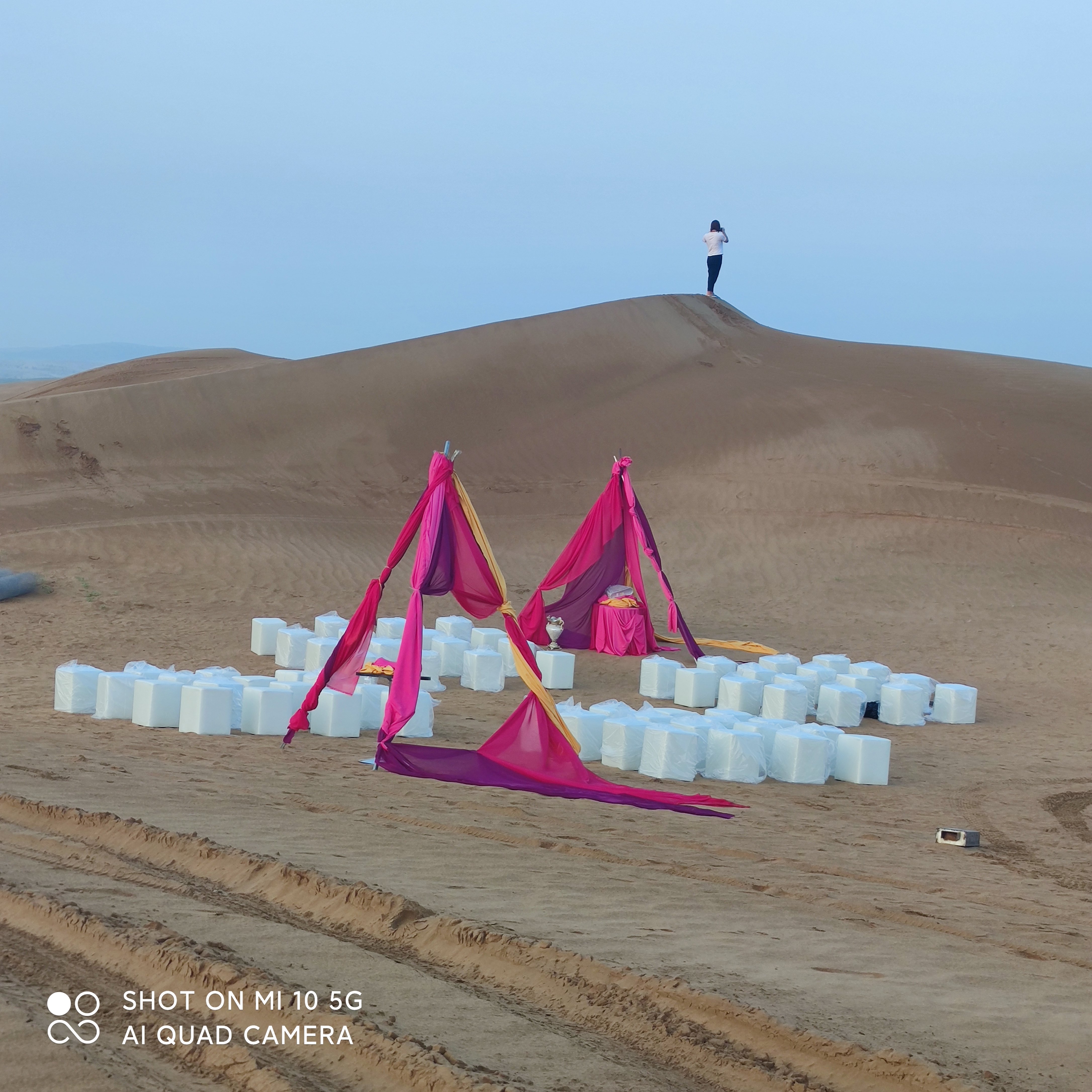
On our morning walk we saw a set up fur a desert themed wedding.

Xilamuren grassland

This is the nearest grassland to Hohhot and the earliest grassland to have been developed for tourists in Inner Mongolia. It is 1,000 square kilometers (400 square miles) and at an altitude of 1,700 meters (5,600 feet).

This plateau grassland has a chain of hills around it. In the Mongolian language, Xilamuren means “yellow water”. Unfortunately, tourism and changing weather patterns is changing the grasslands. There are other grasslands but they are farther away.

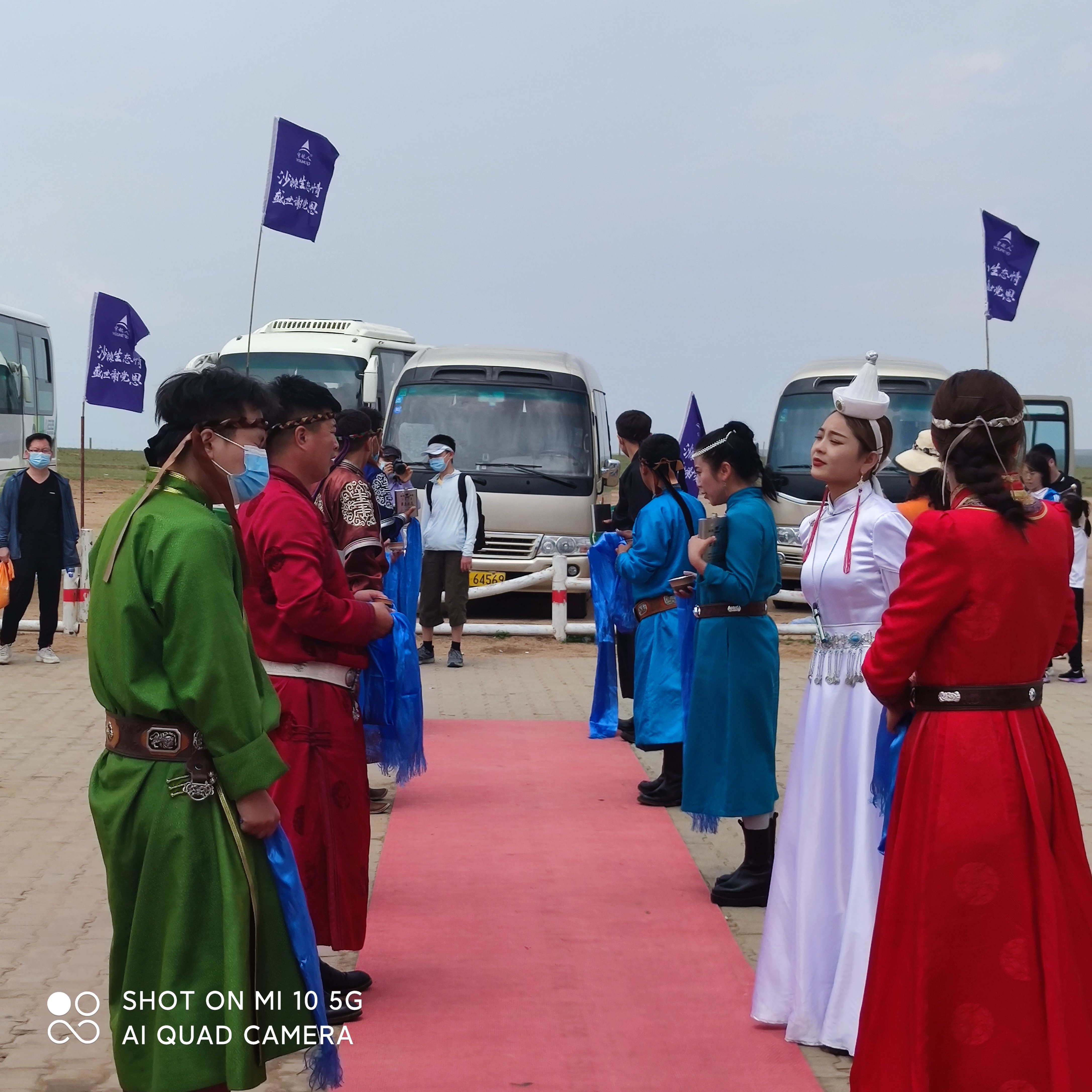
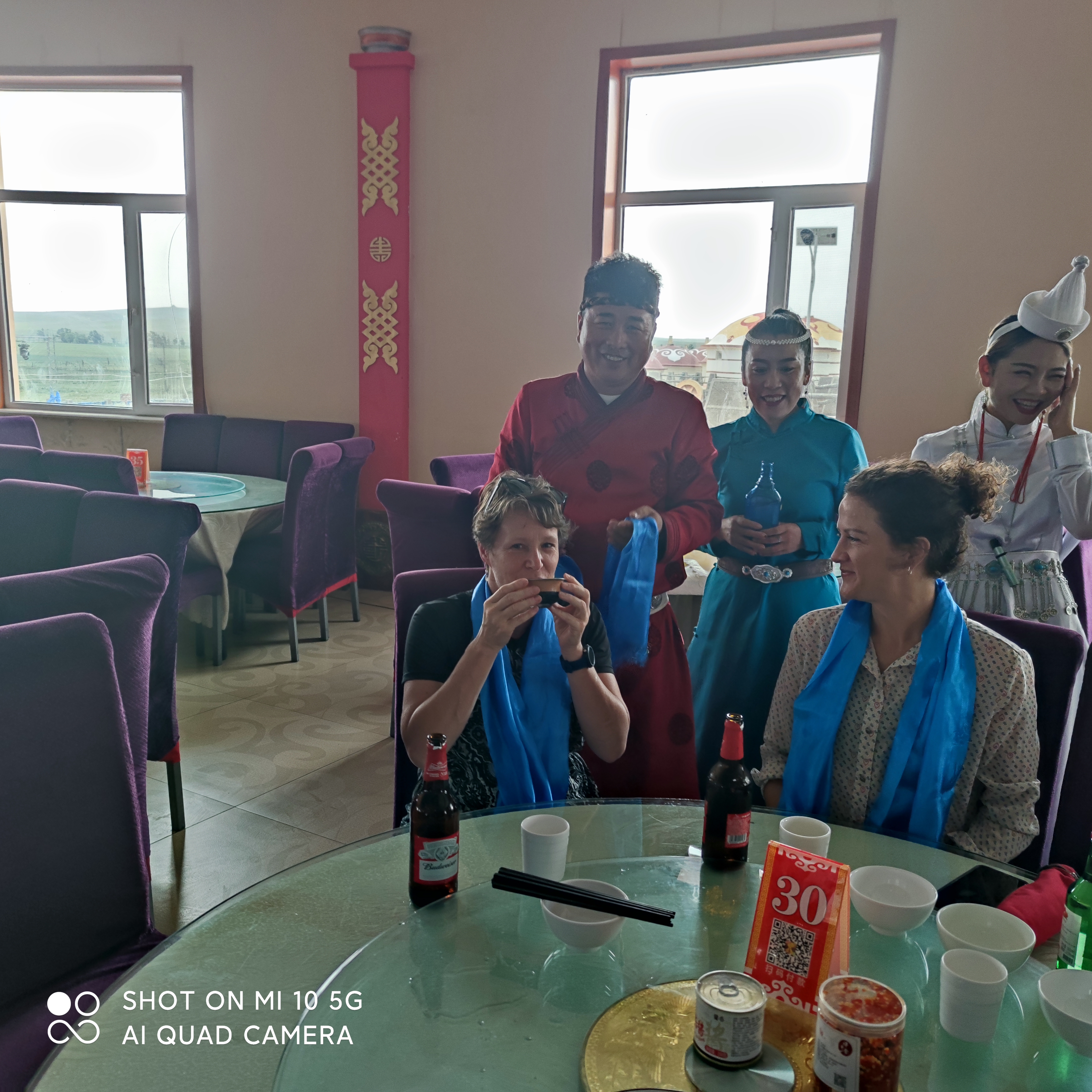
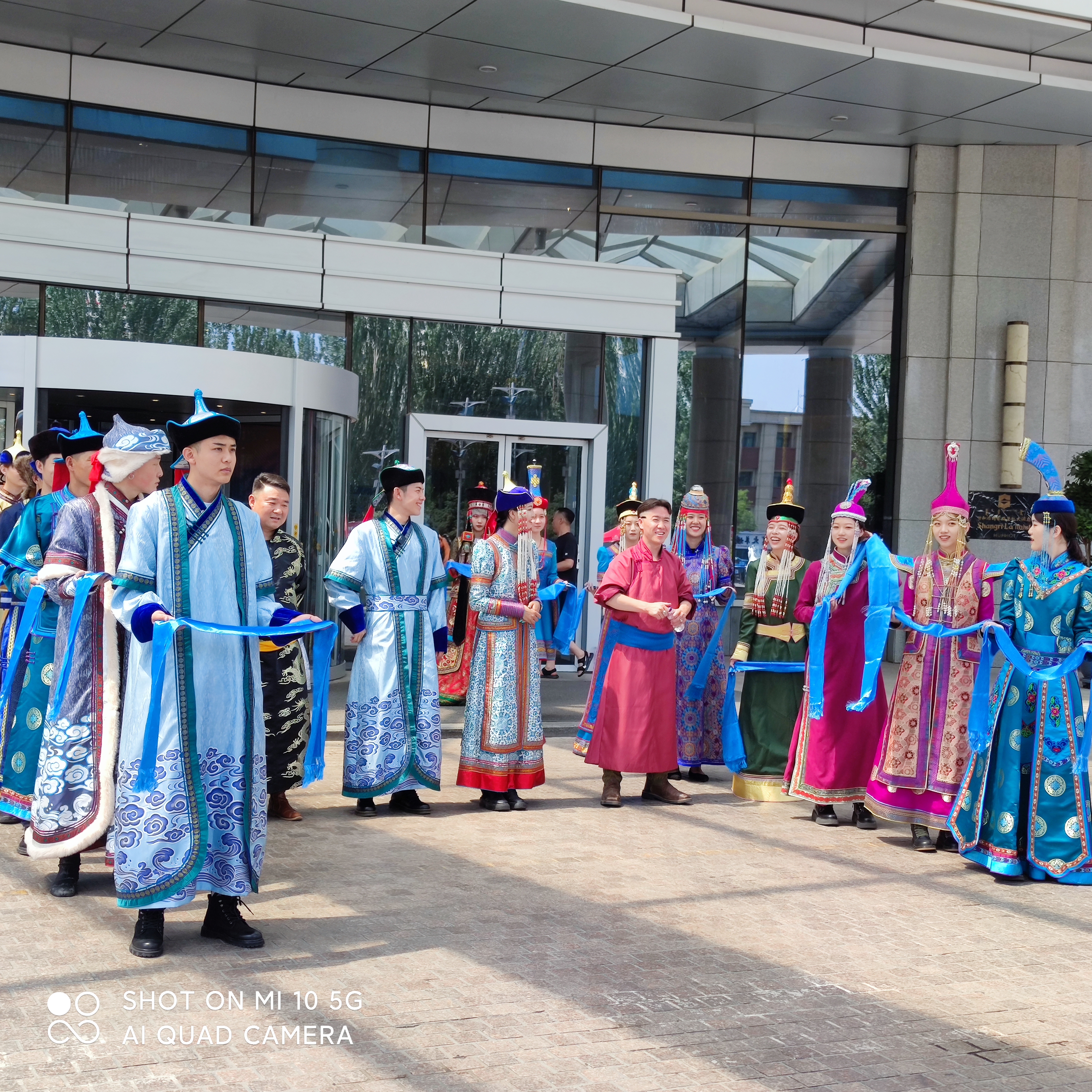
This was a memorable part of our trip. We enjoyed a traditional welcome ceremony where we were handed a blue scarf and given a cup of baiju.

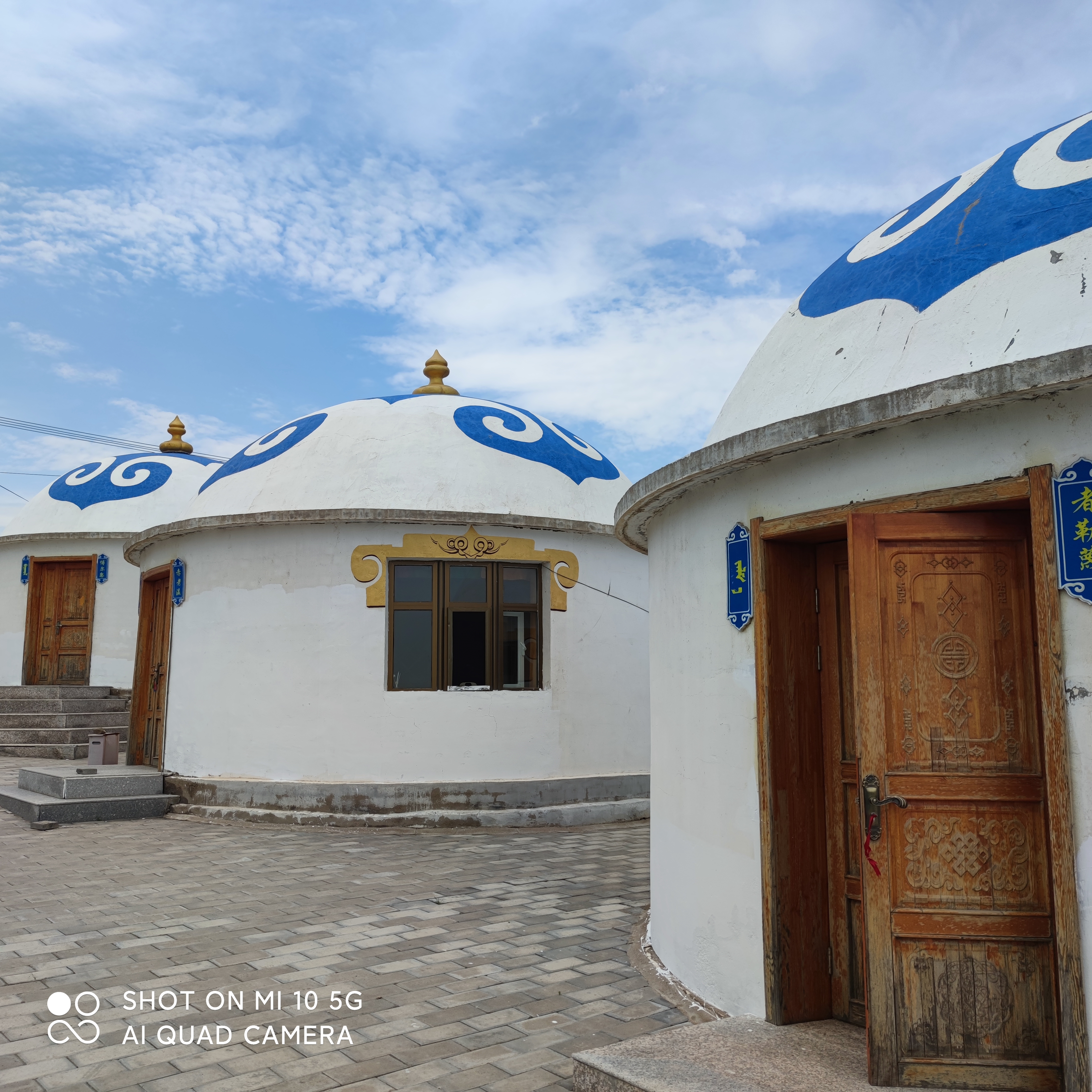
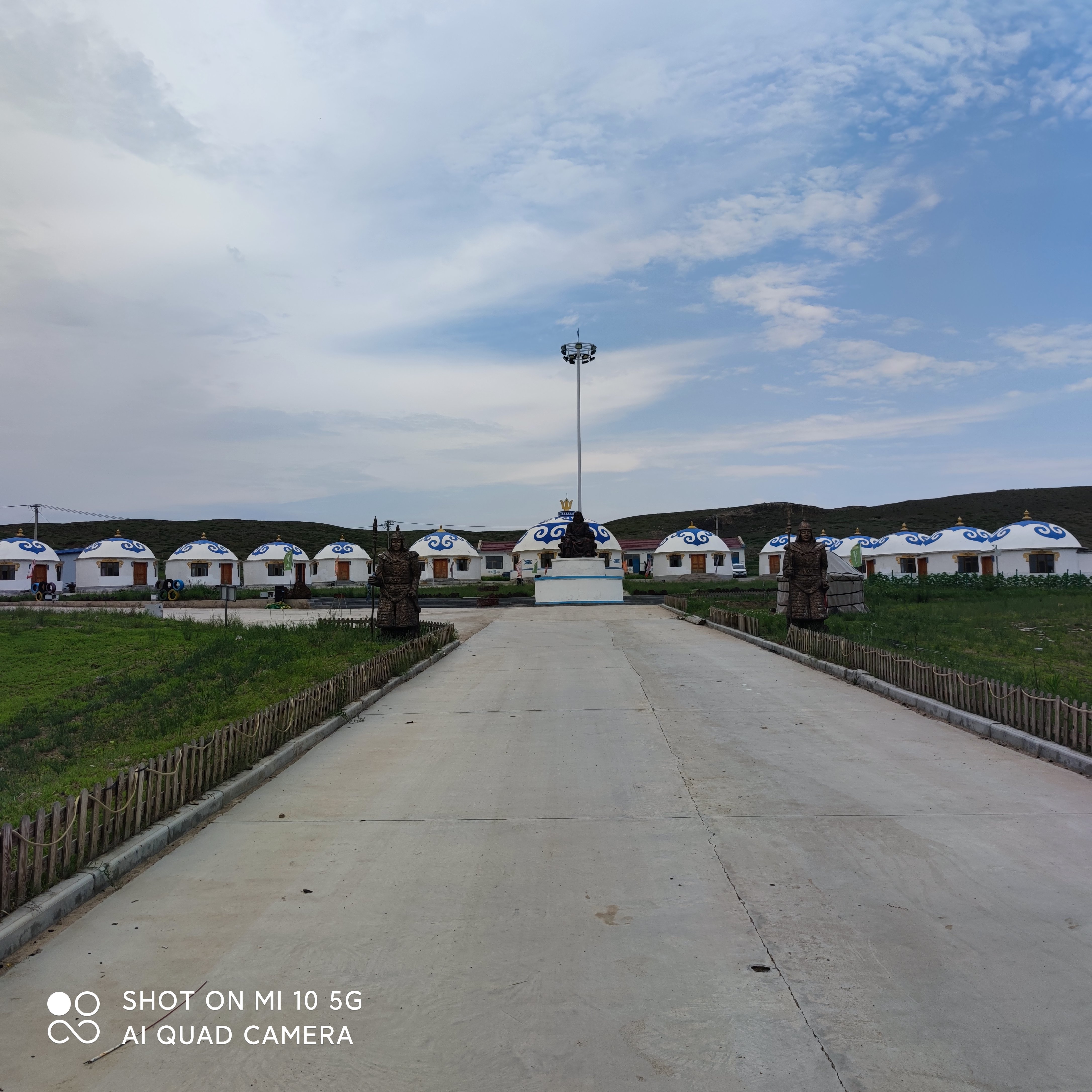
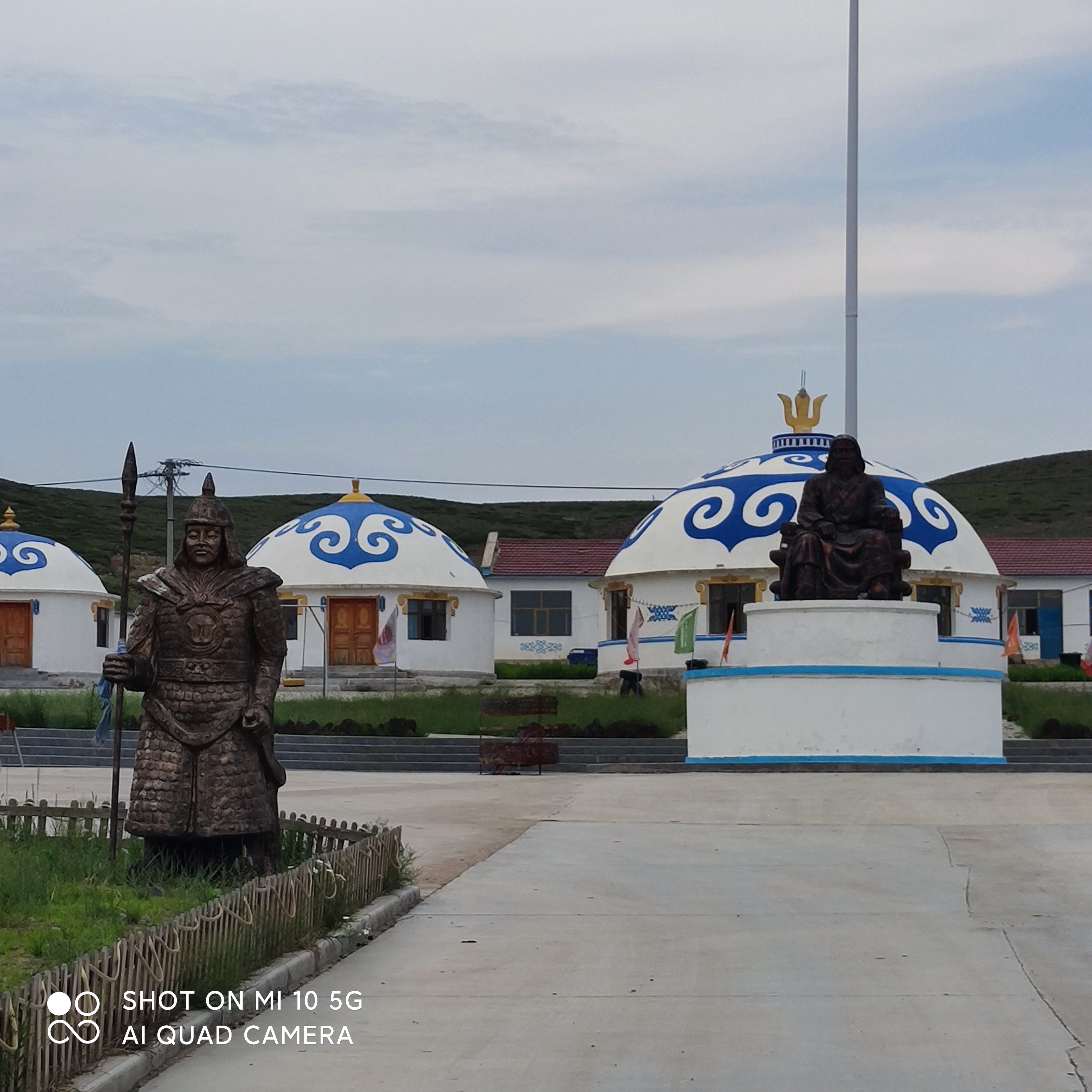
We stayed in another yurt, though we know it is not traditional.

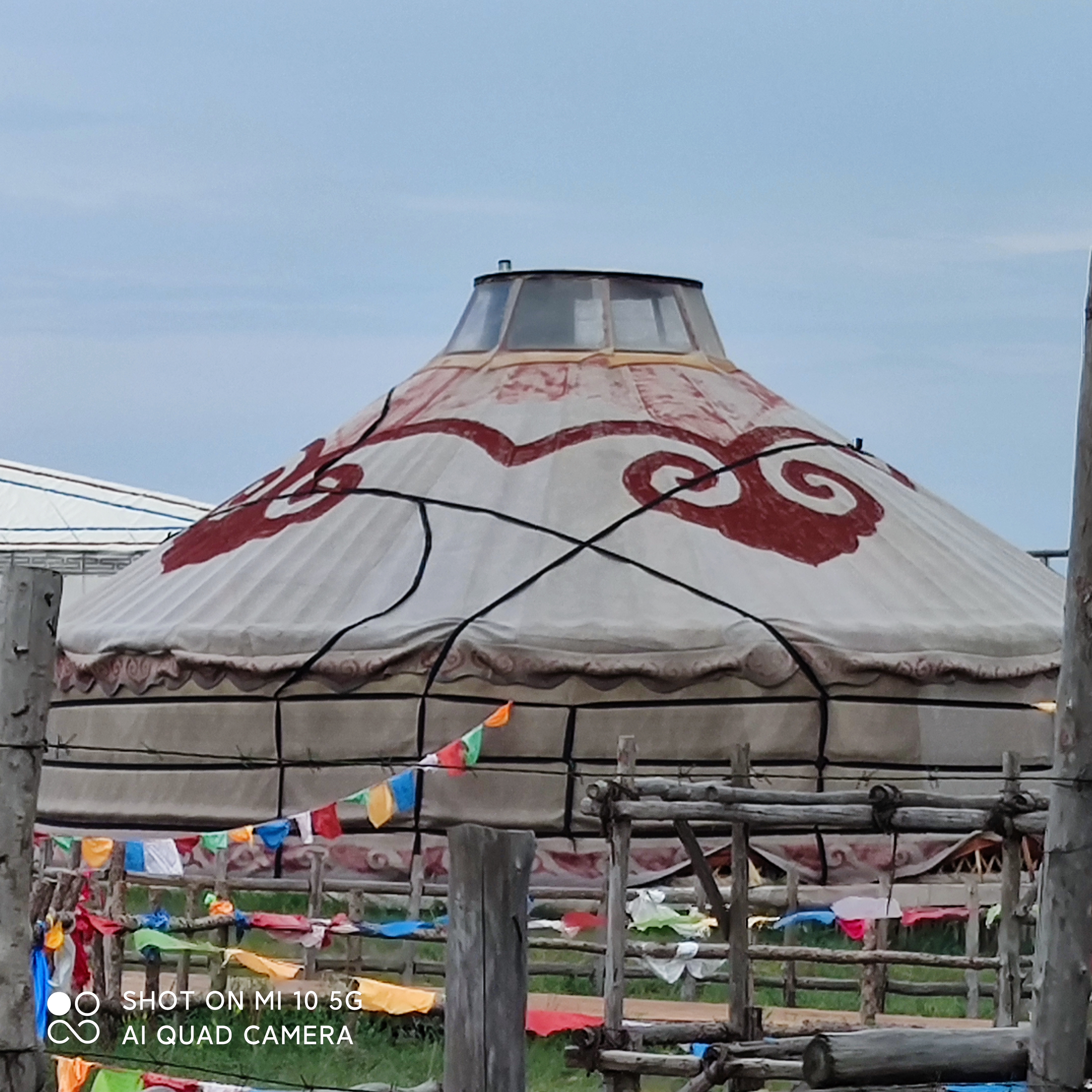
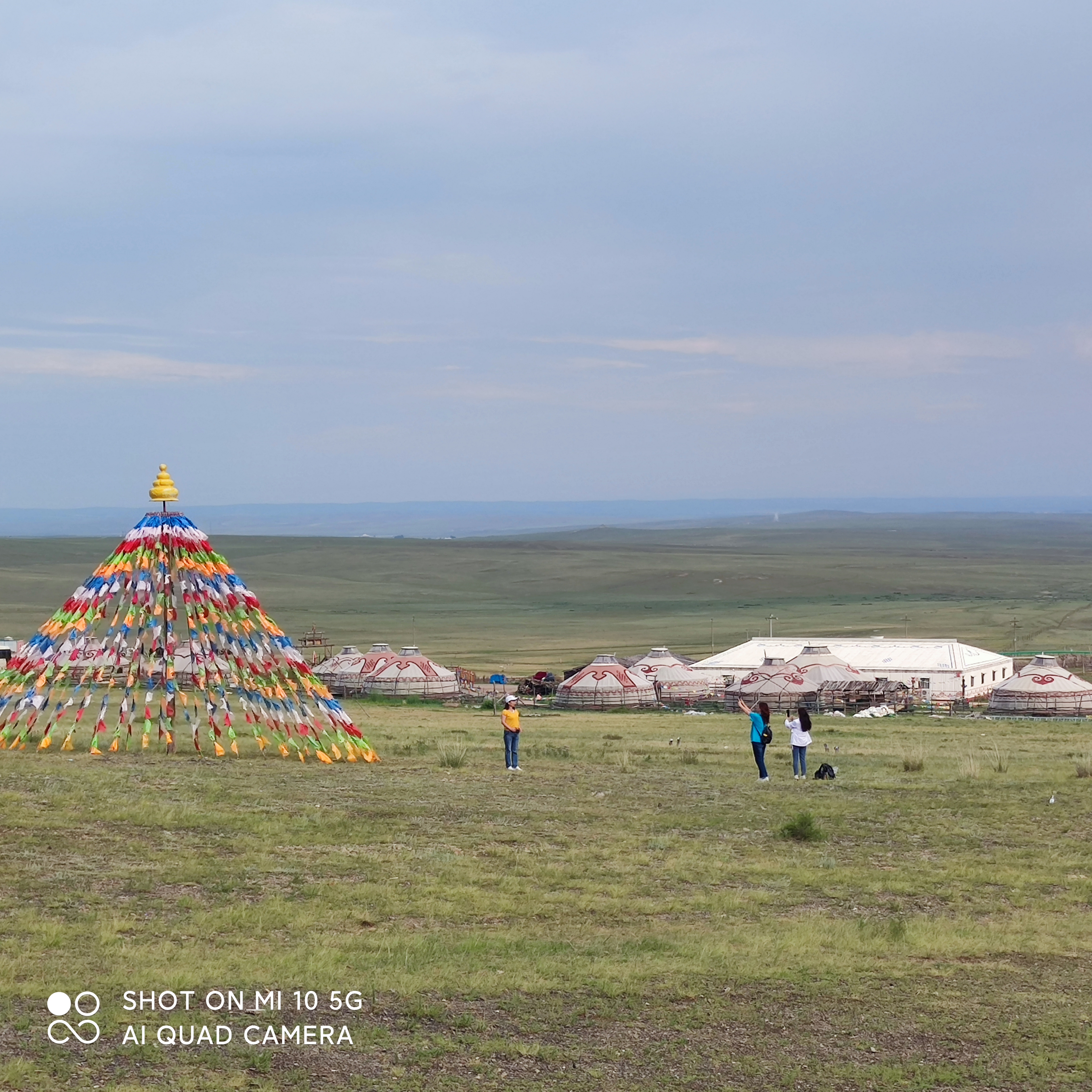
This is a traditional yurt.

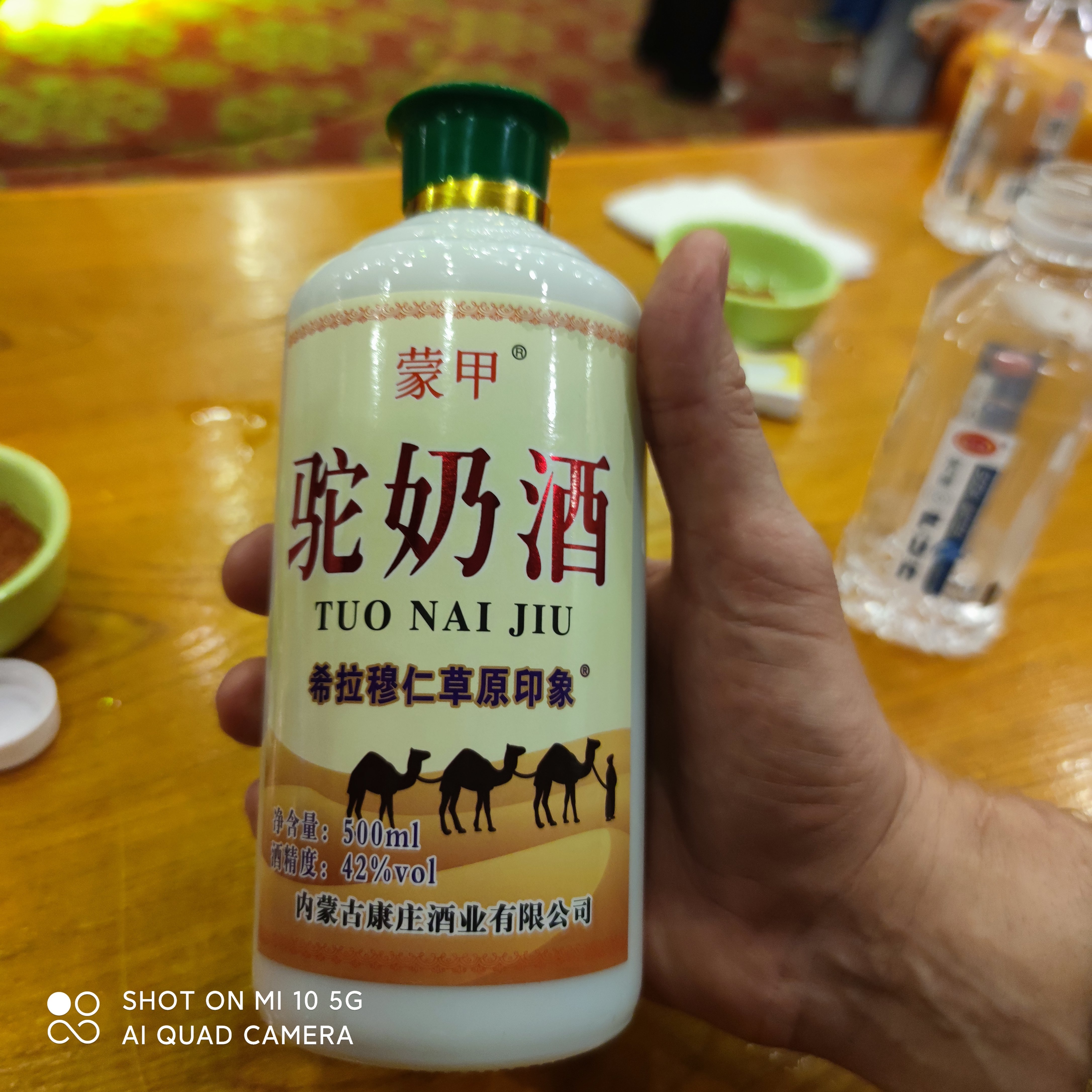
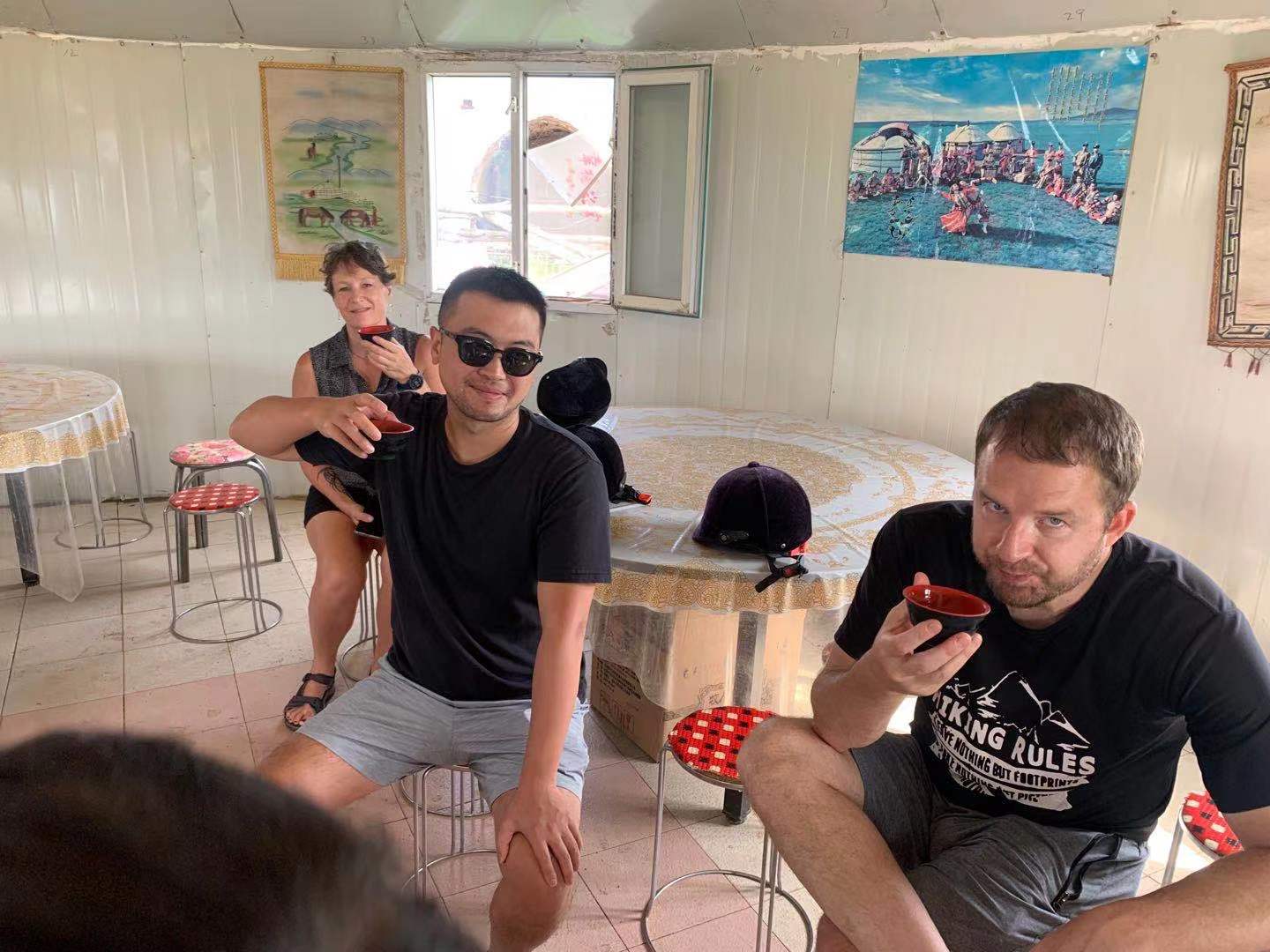
We drank kumiss which is a fermented drink made from animal milk. This one was from camel milk.  It was very delicious and smooth.

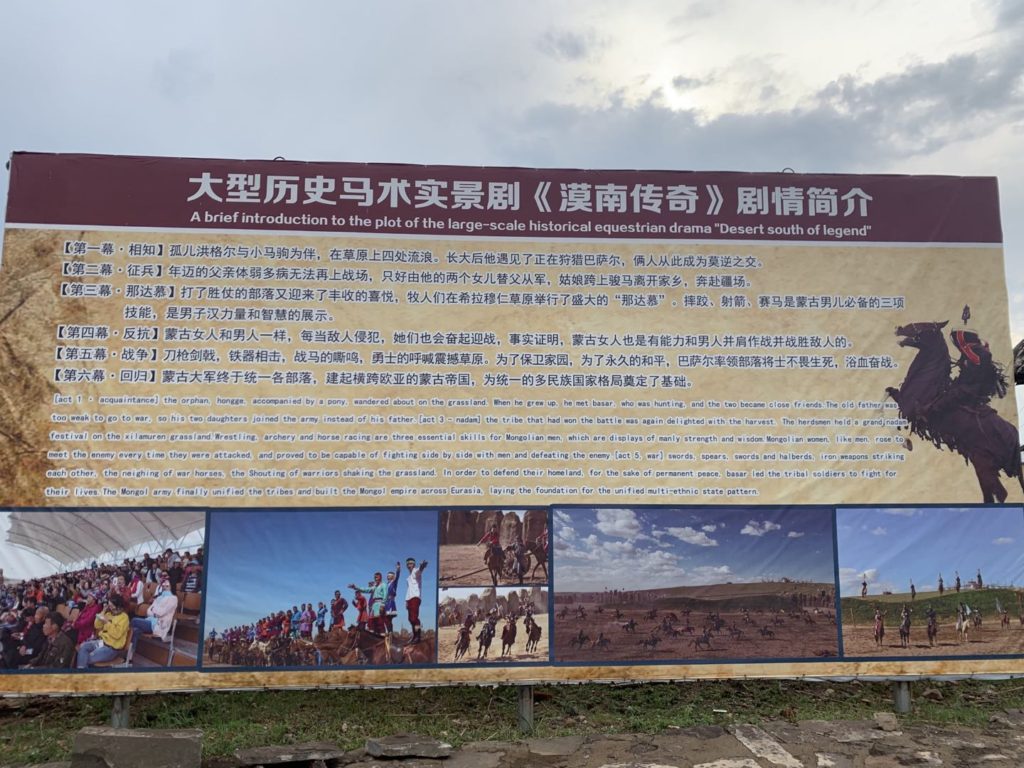
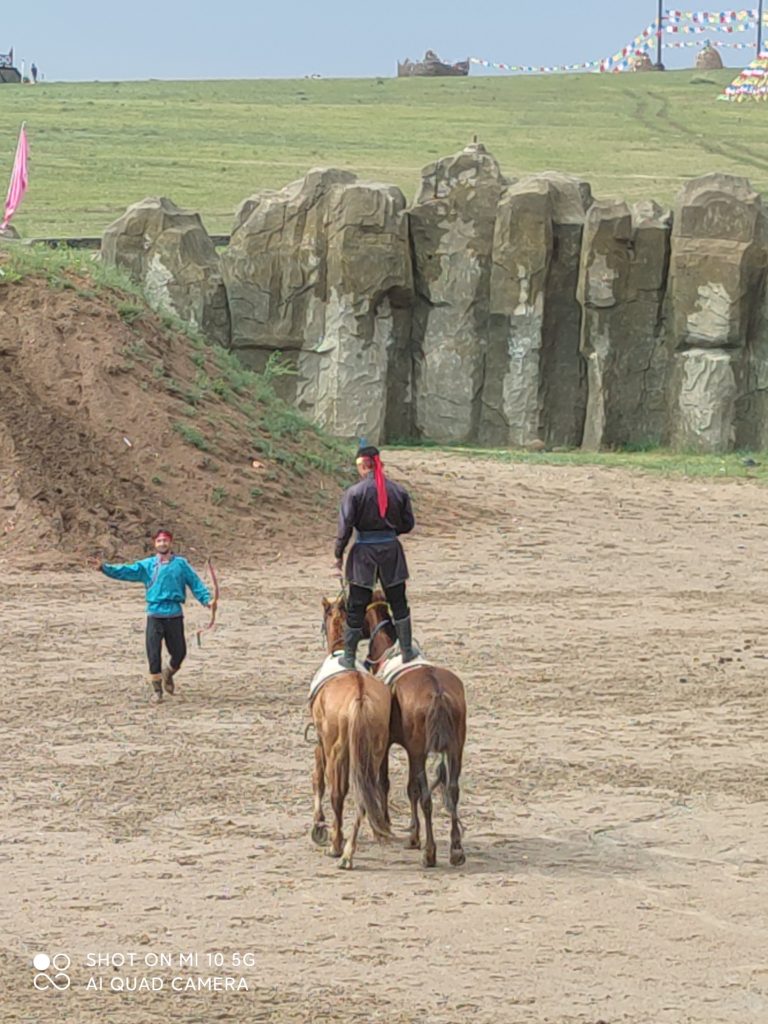
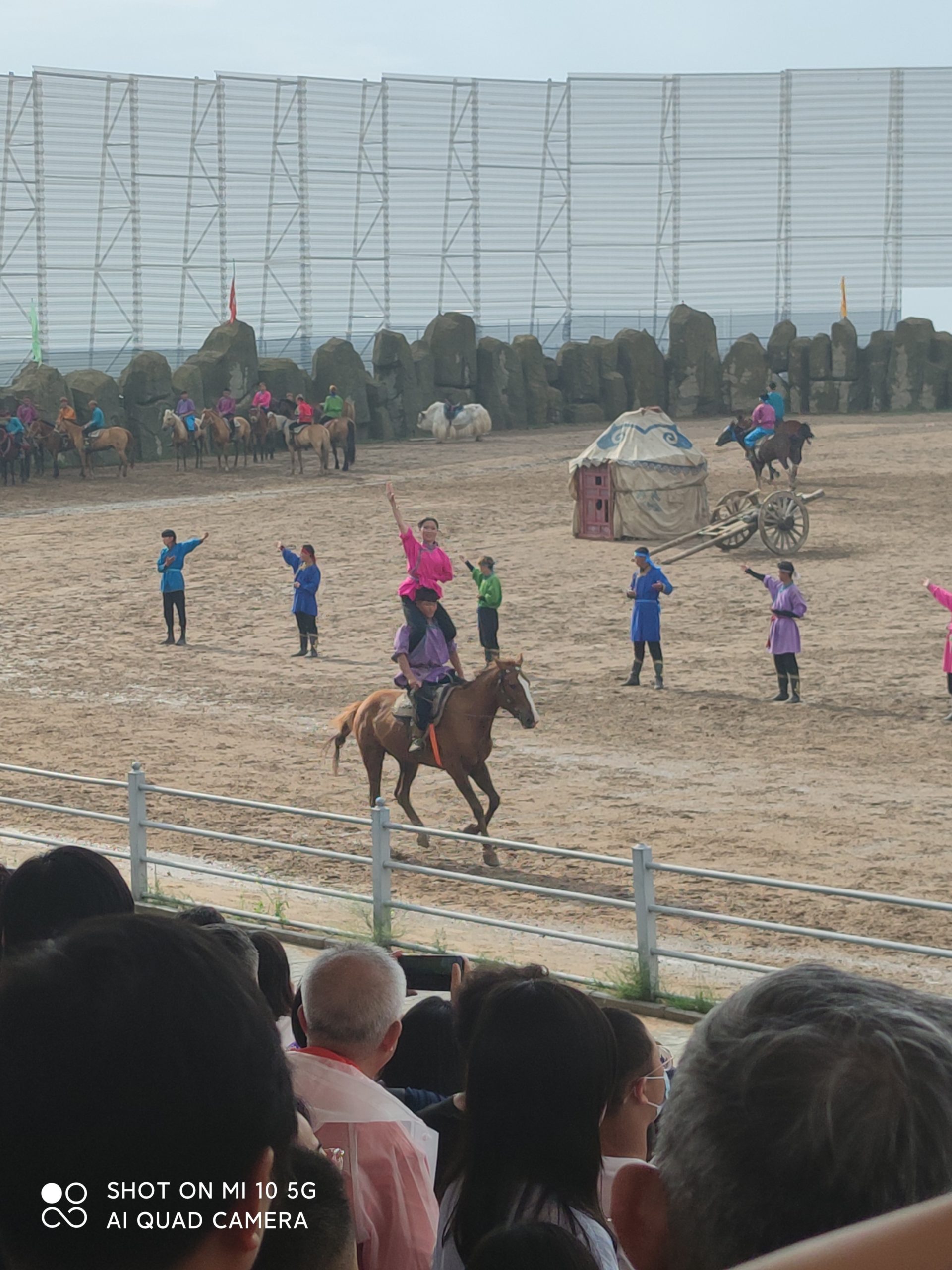
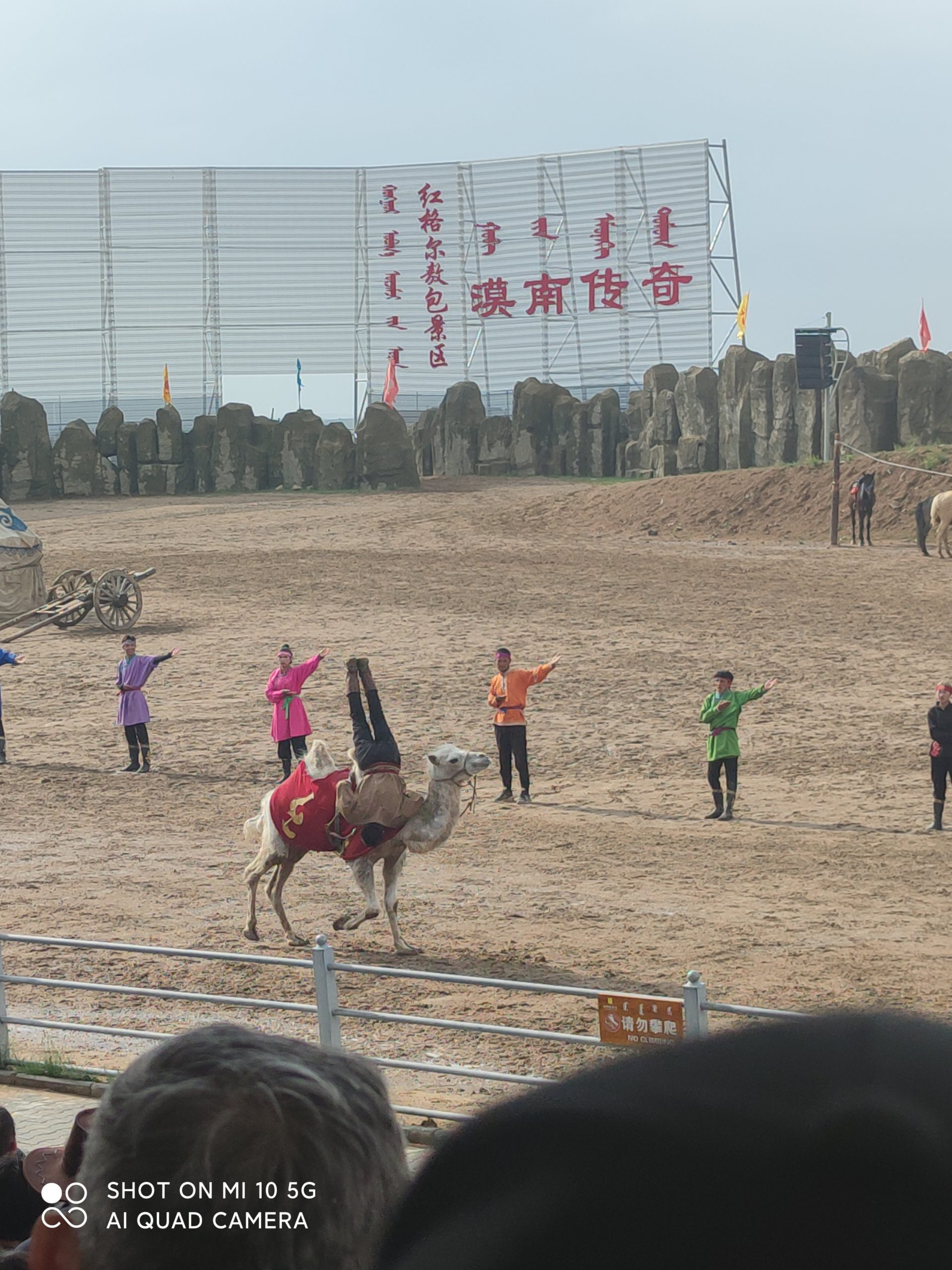
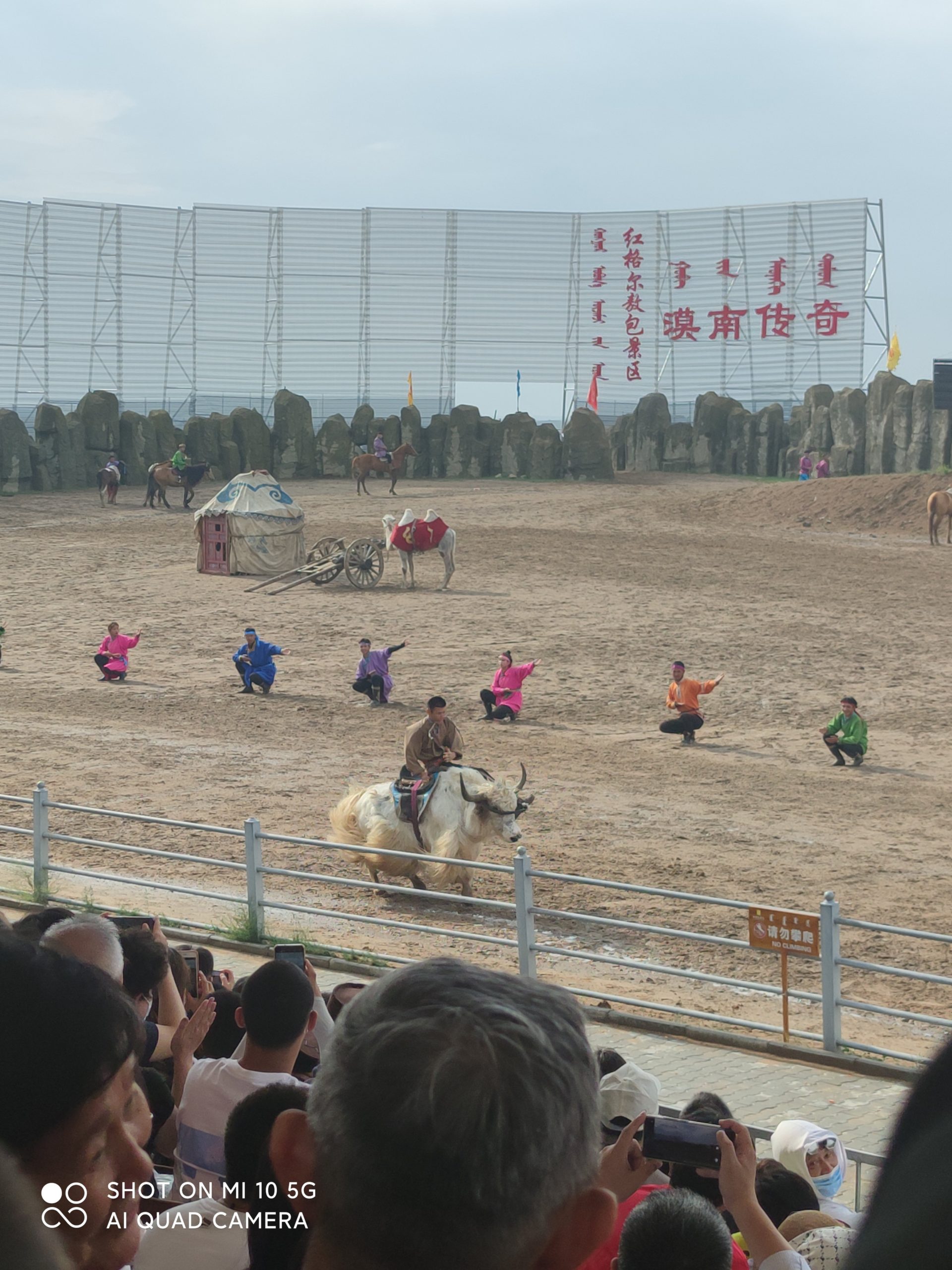
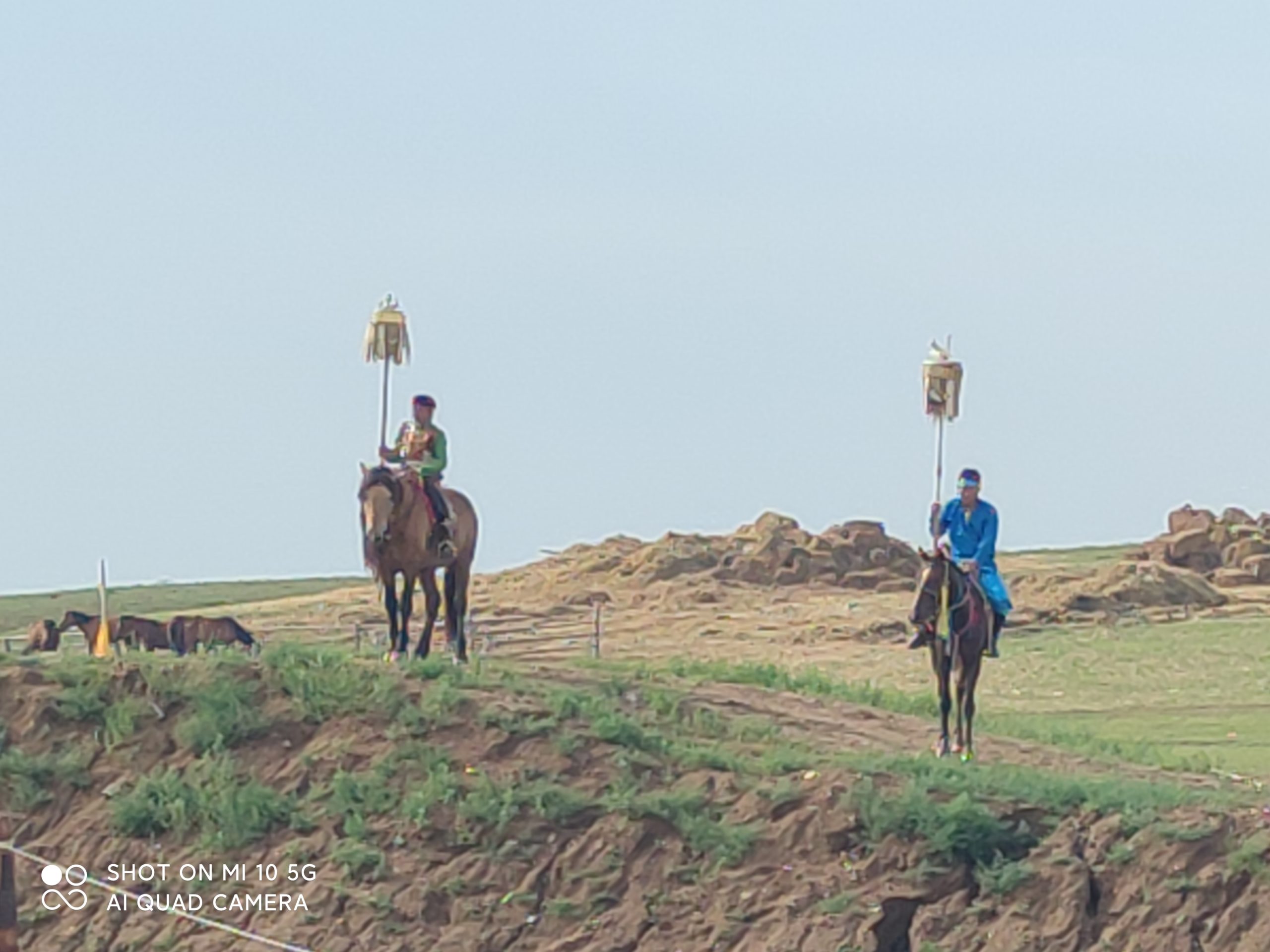
In Mongolia, there are the Three Games of Men: “Horse Racing”, “Wrestling” and “Archery”. We saw a show that gave the history of Mongolian people and demonstrated these three games. Mongolians are known for their horse riding capabilities and ability to shift sides and other tricks. They told the story of tribes and eventually being unified into one Mongol group.

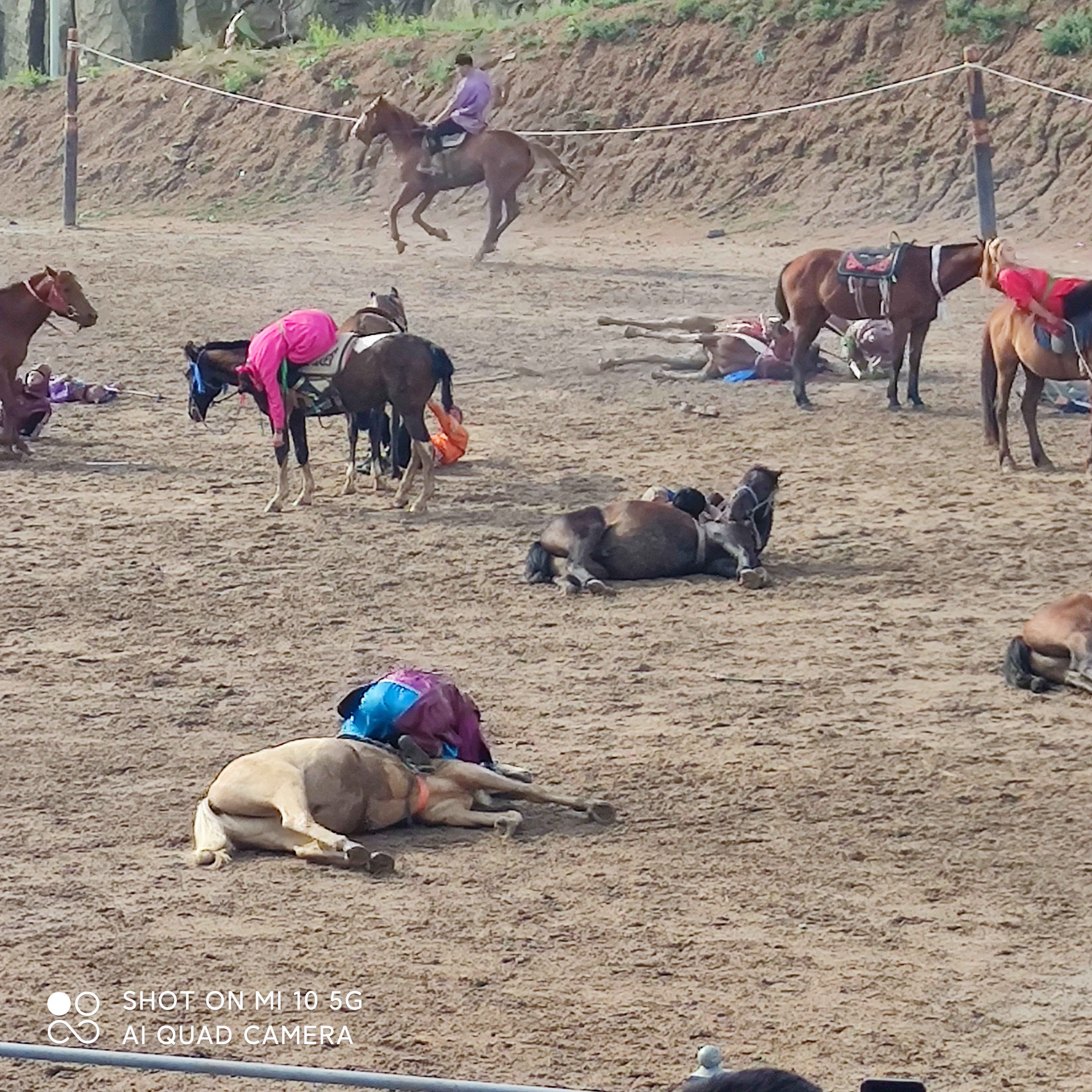
The horses even played dead on command.
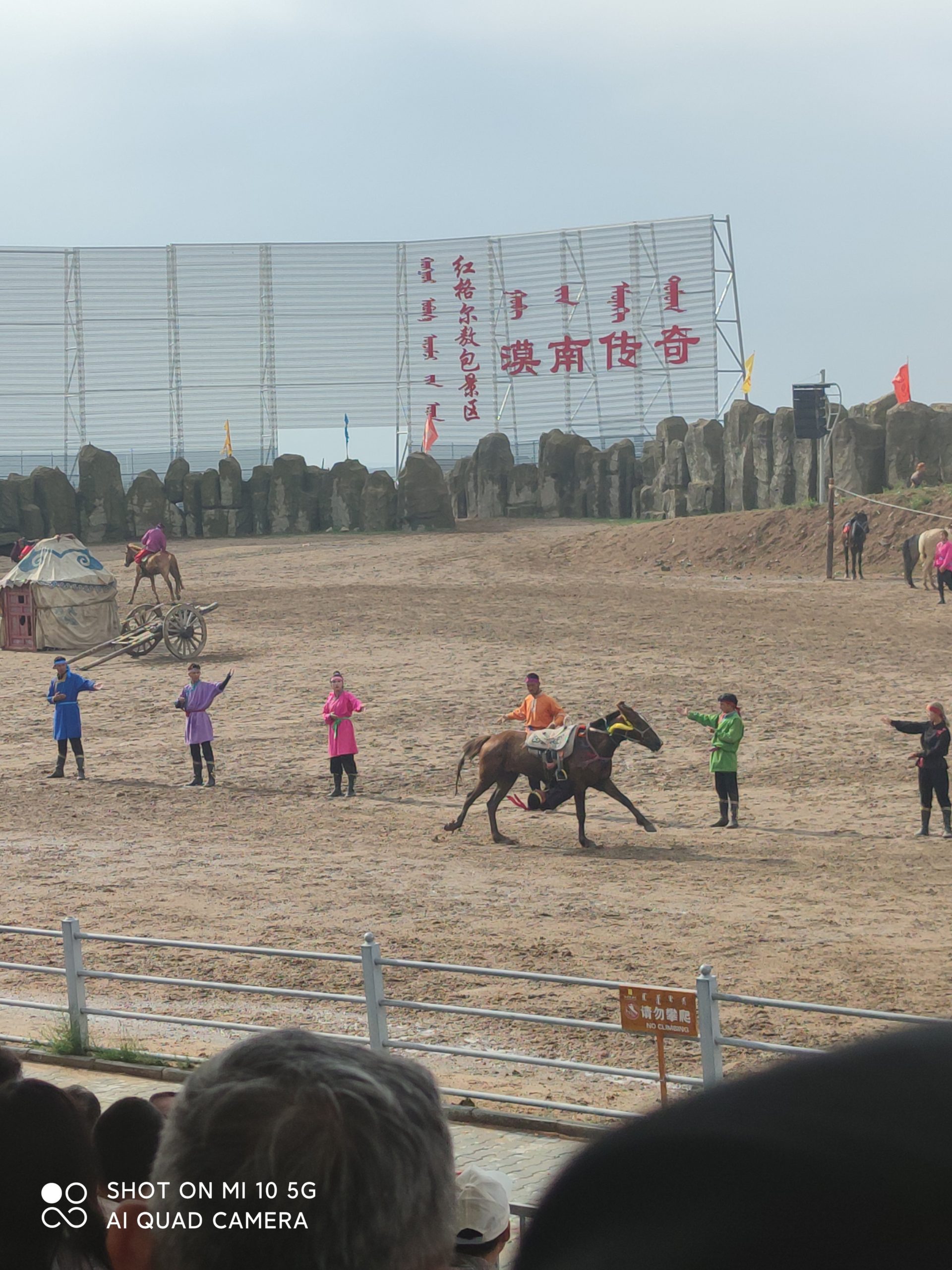
This rider went off one side and went under the horse to go back up the other side.
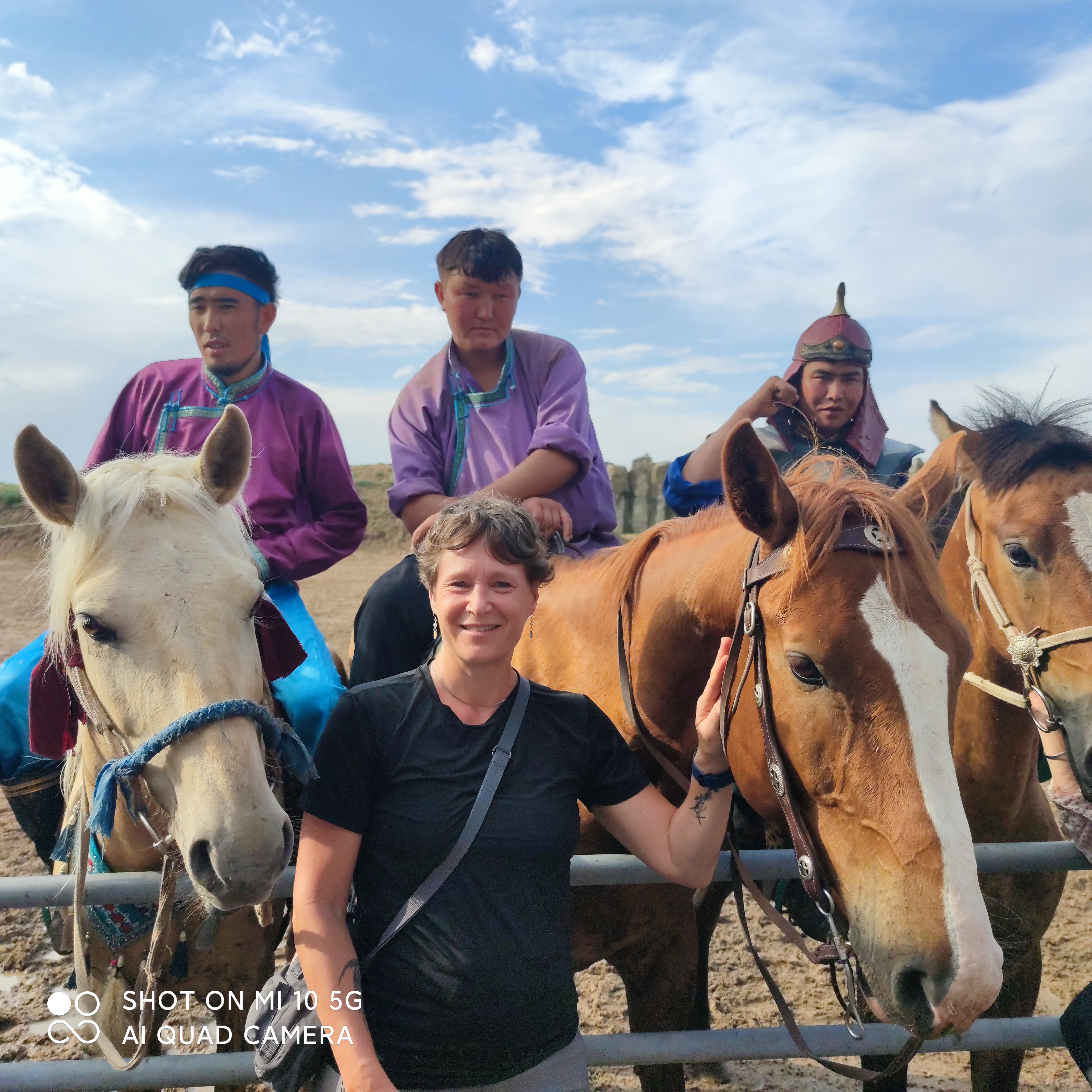
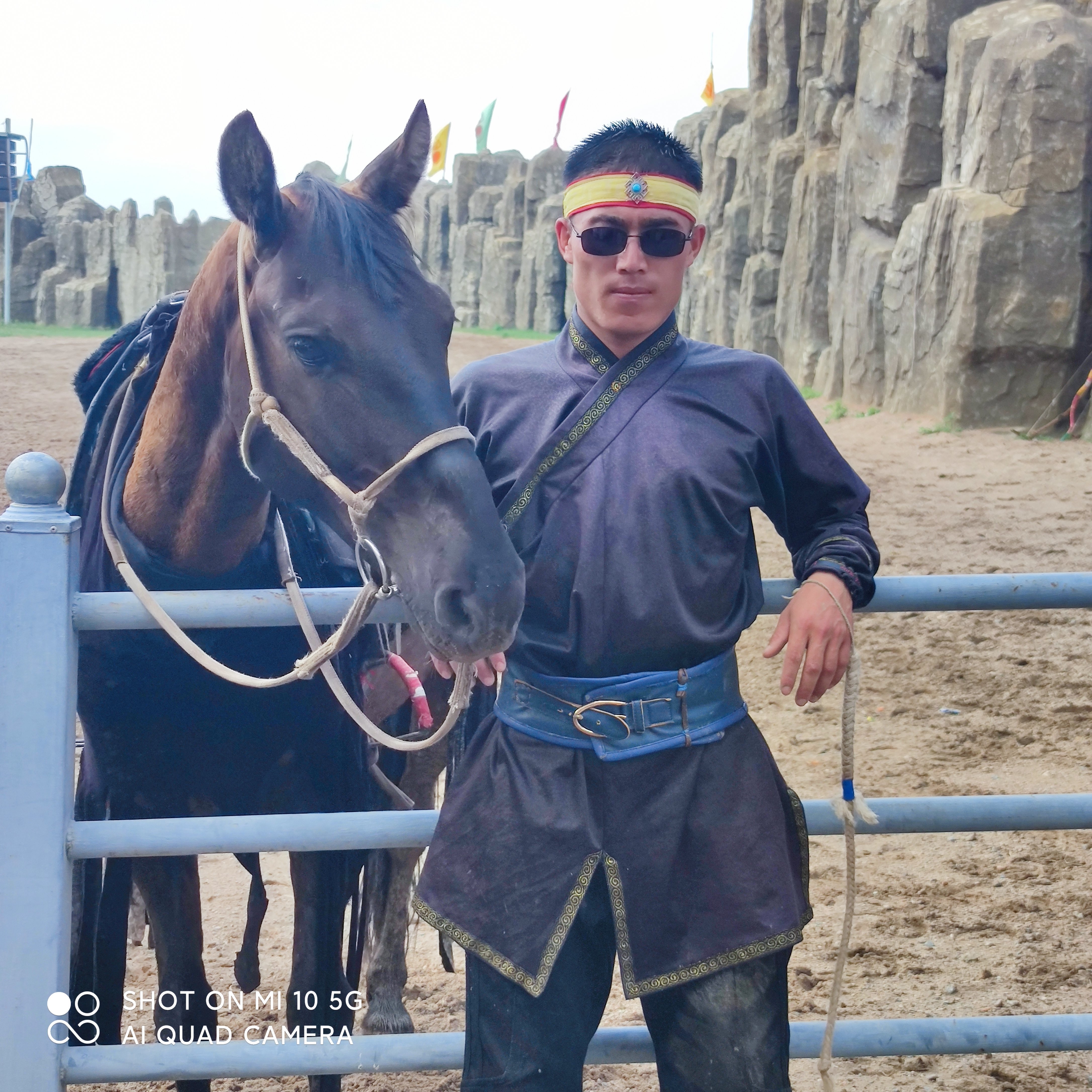
These are actual Mongolian ethnic people.

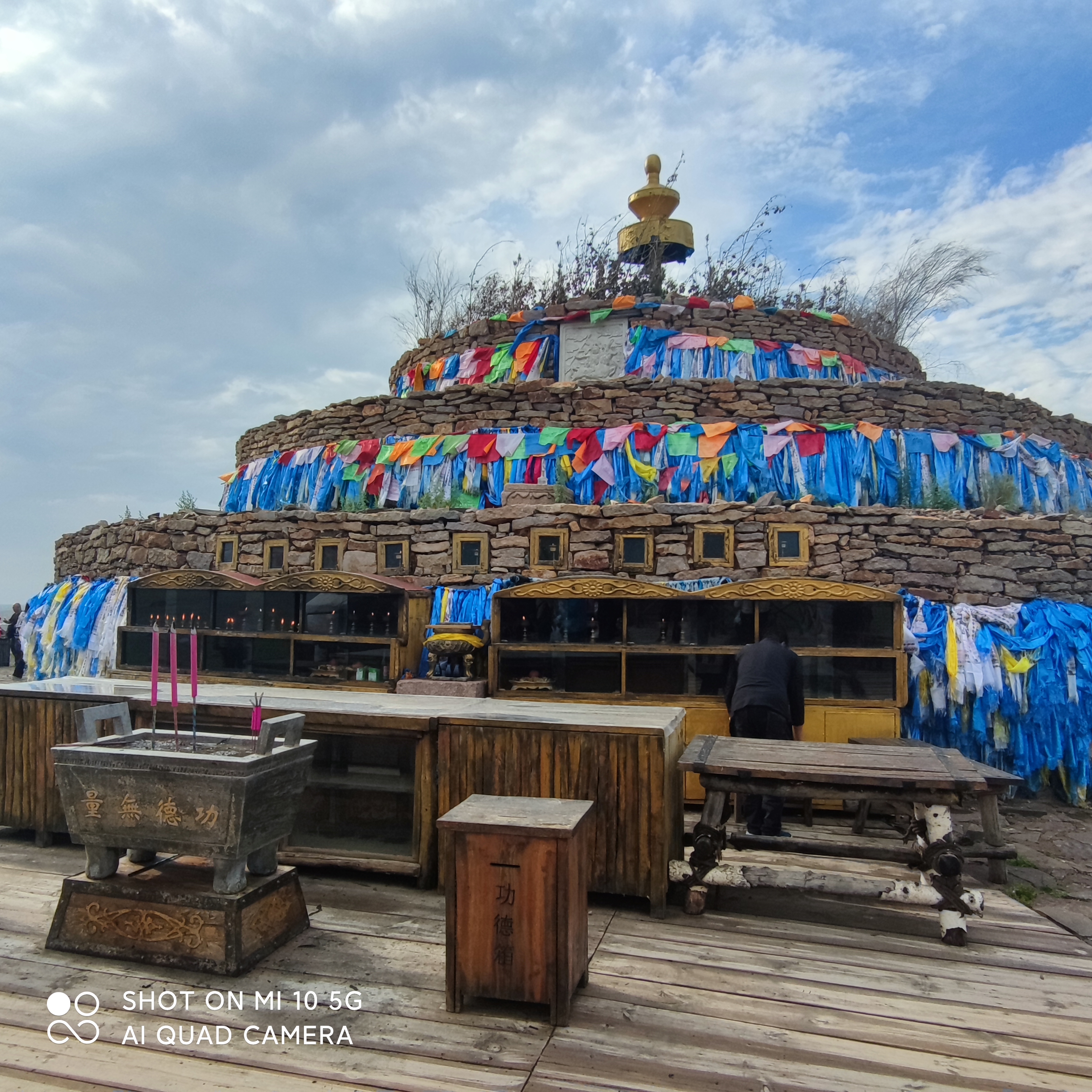
Aobao (敖包)

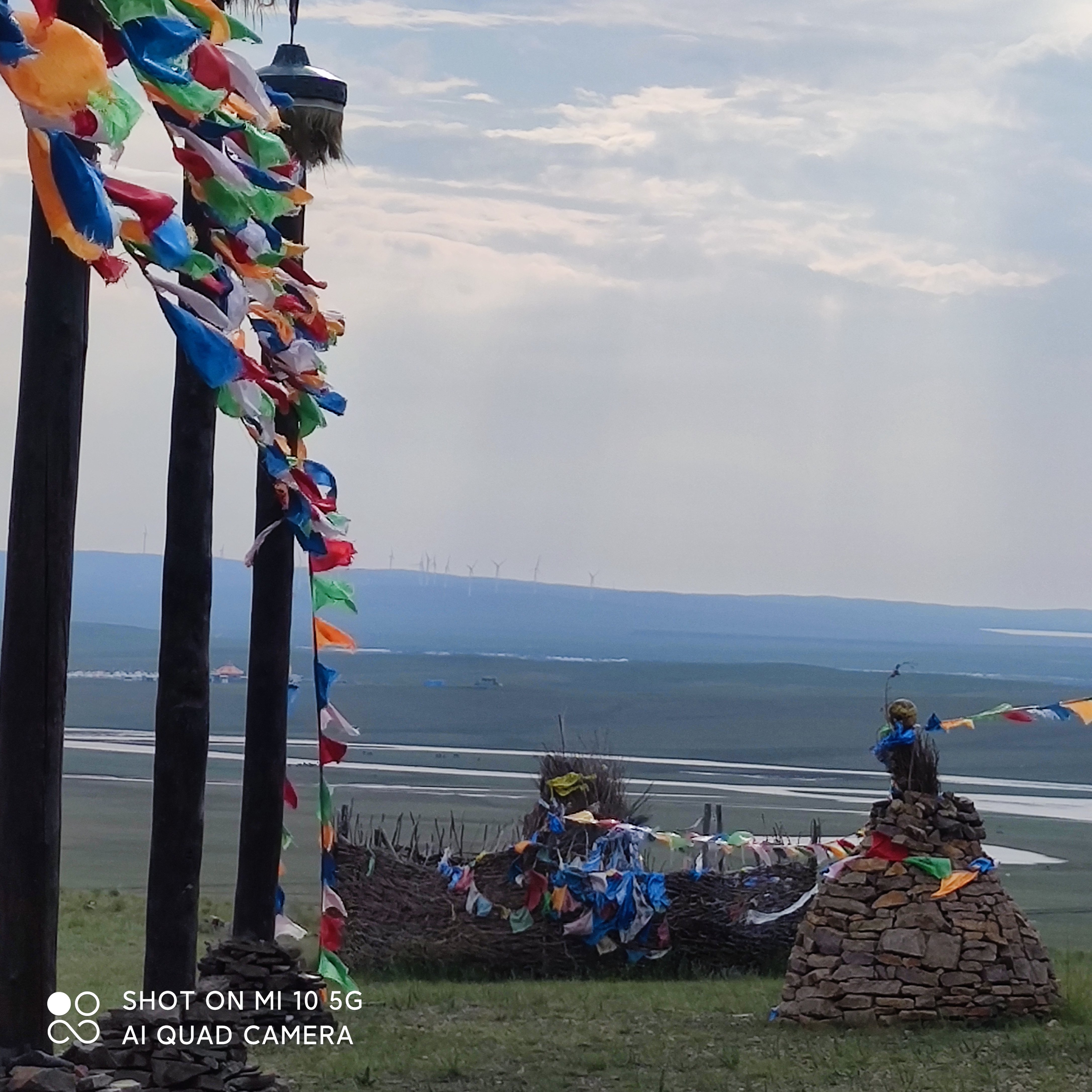
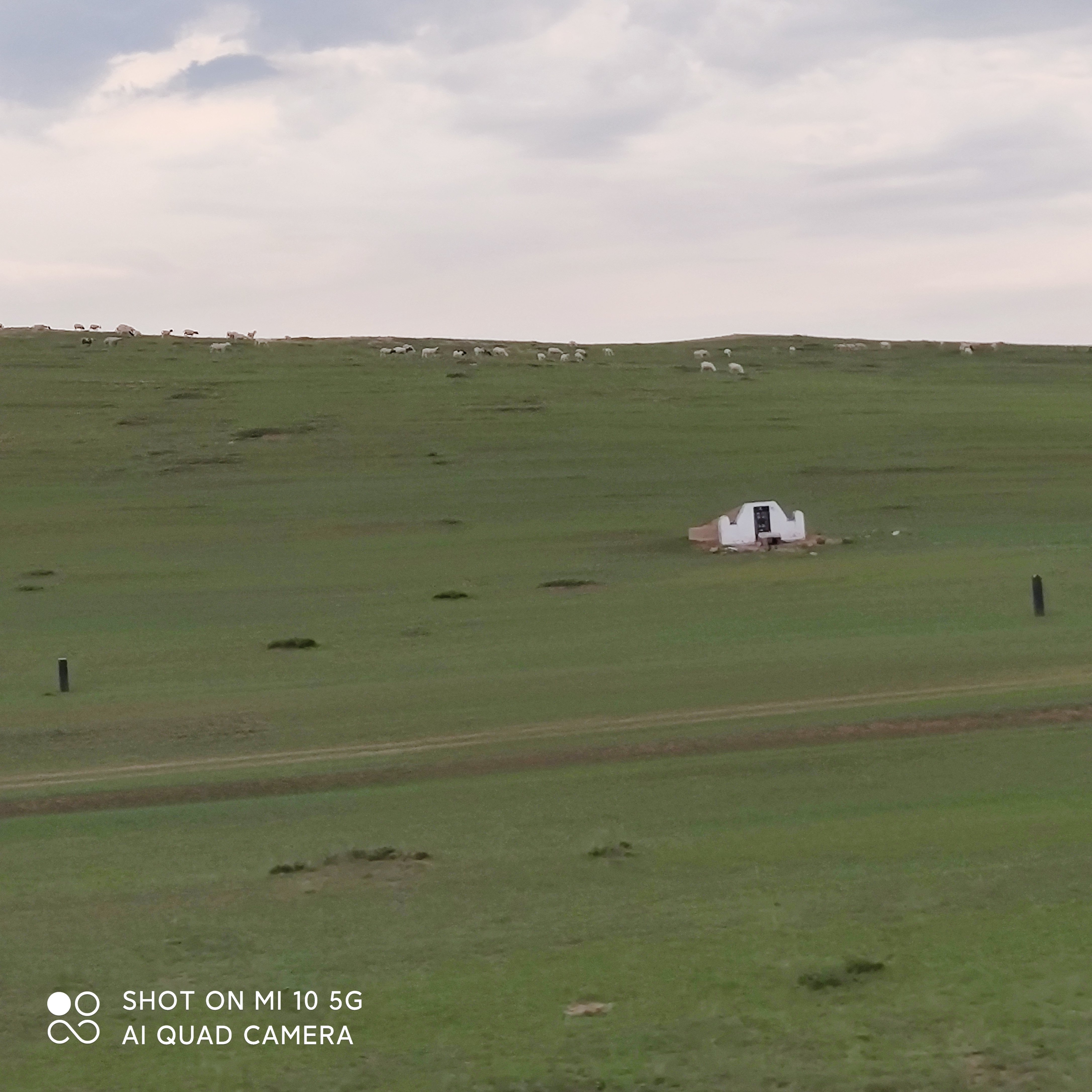
The aobao is the Mongolian stone piles or heaps for worship. Local people always sacrifice food goods and alcohol to the gods at the Aobao to pray for good weather, harvest and fortune.

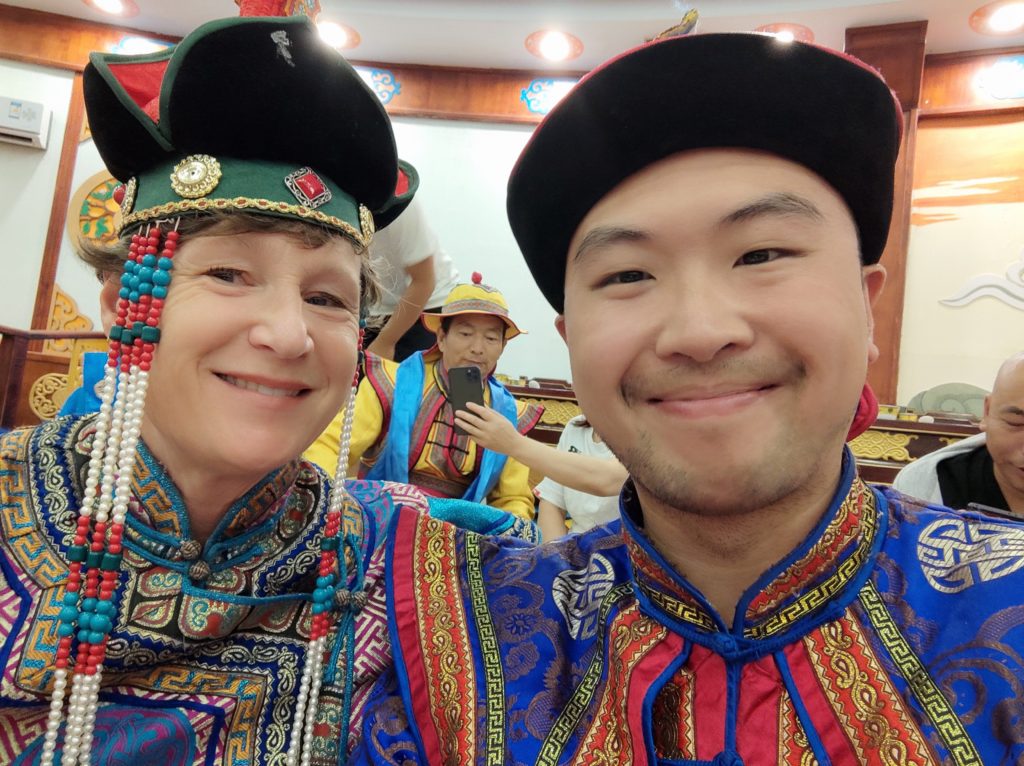
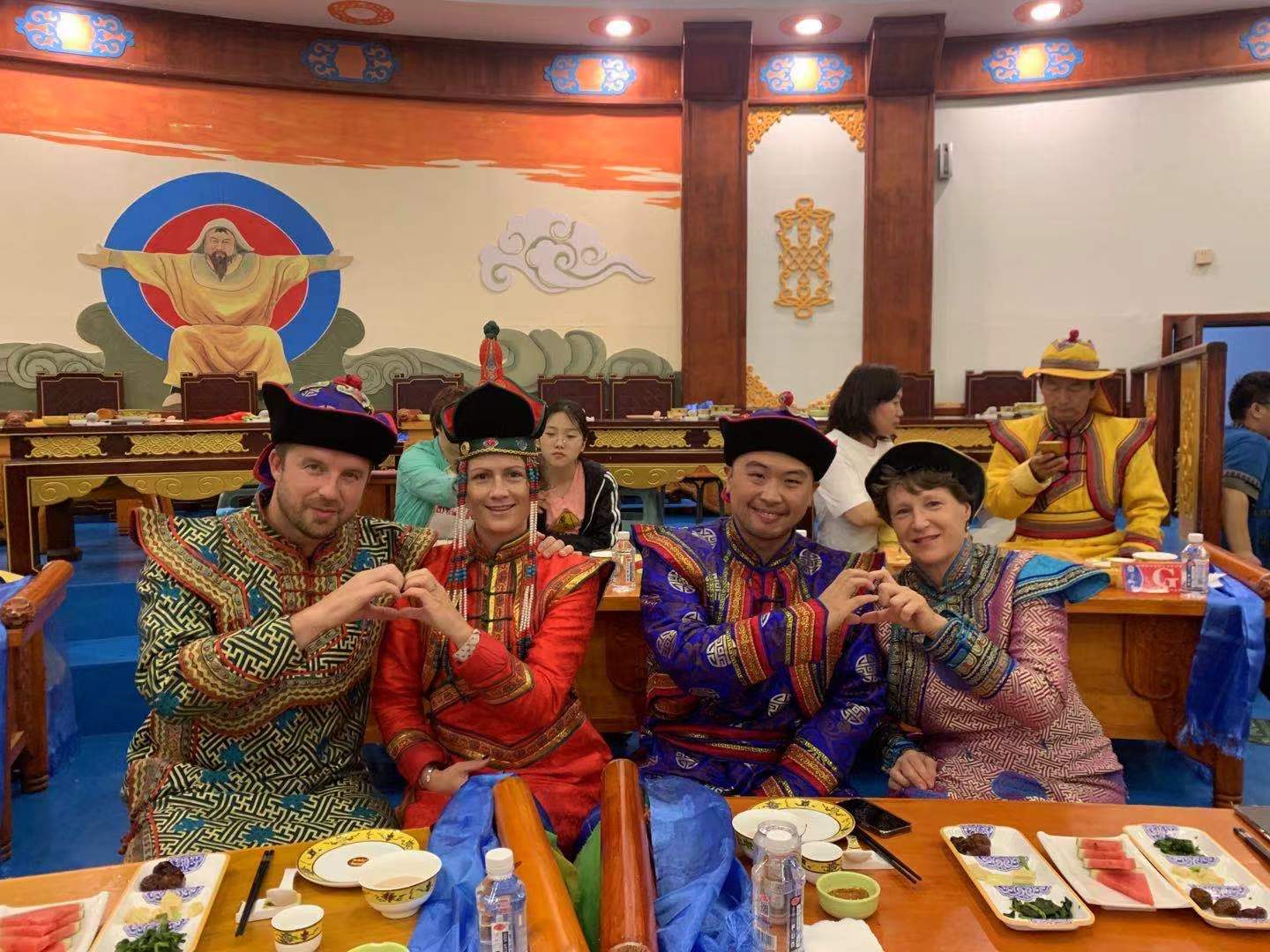
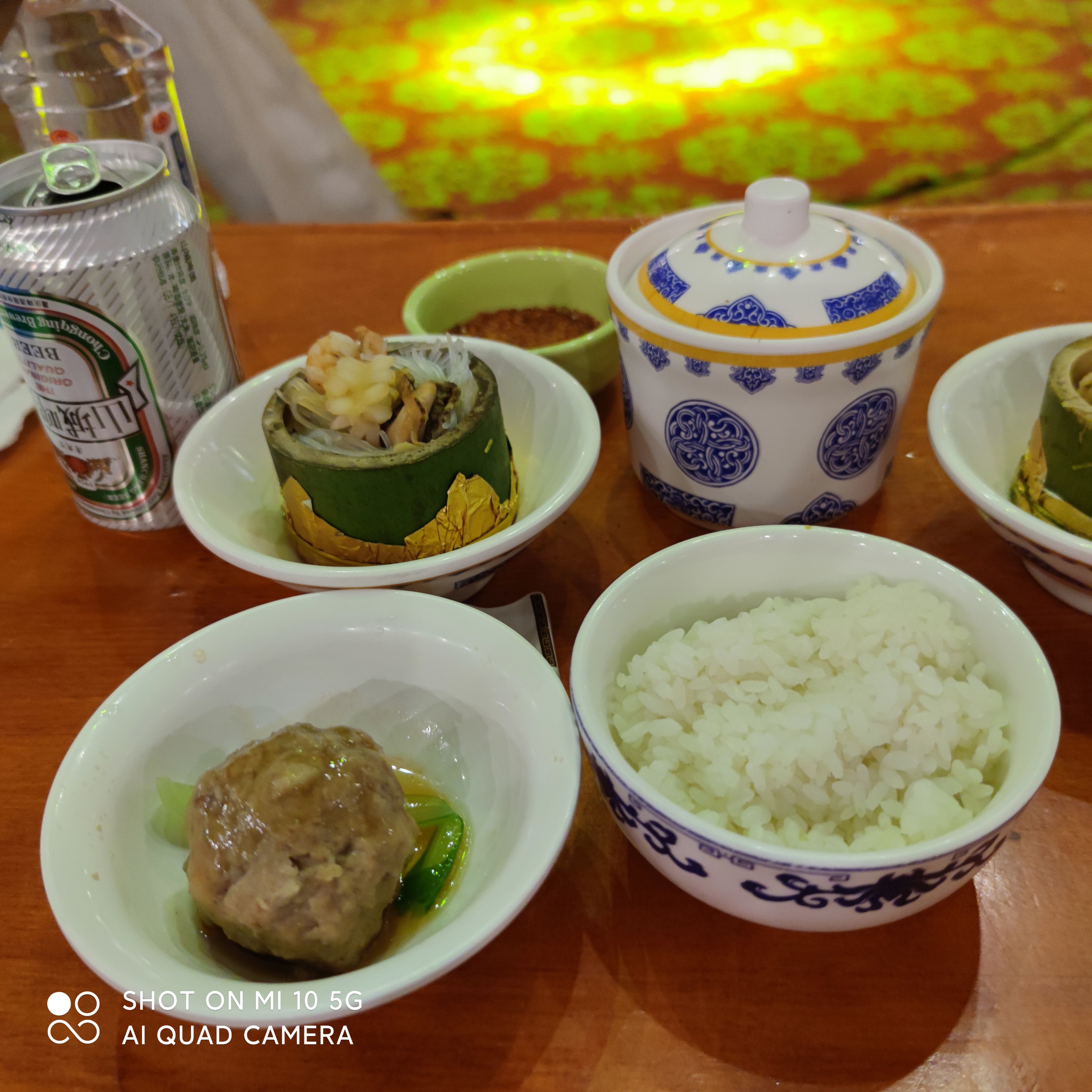
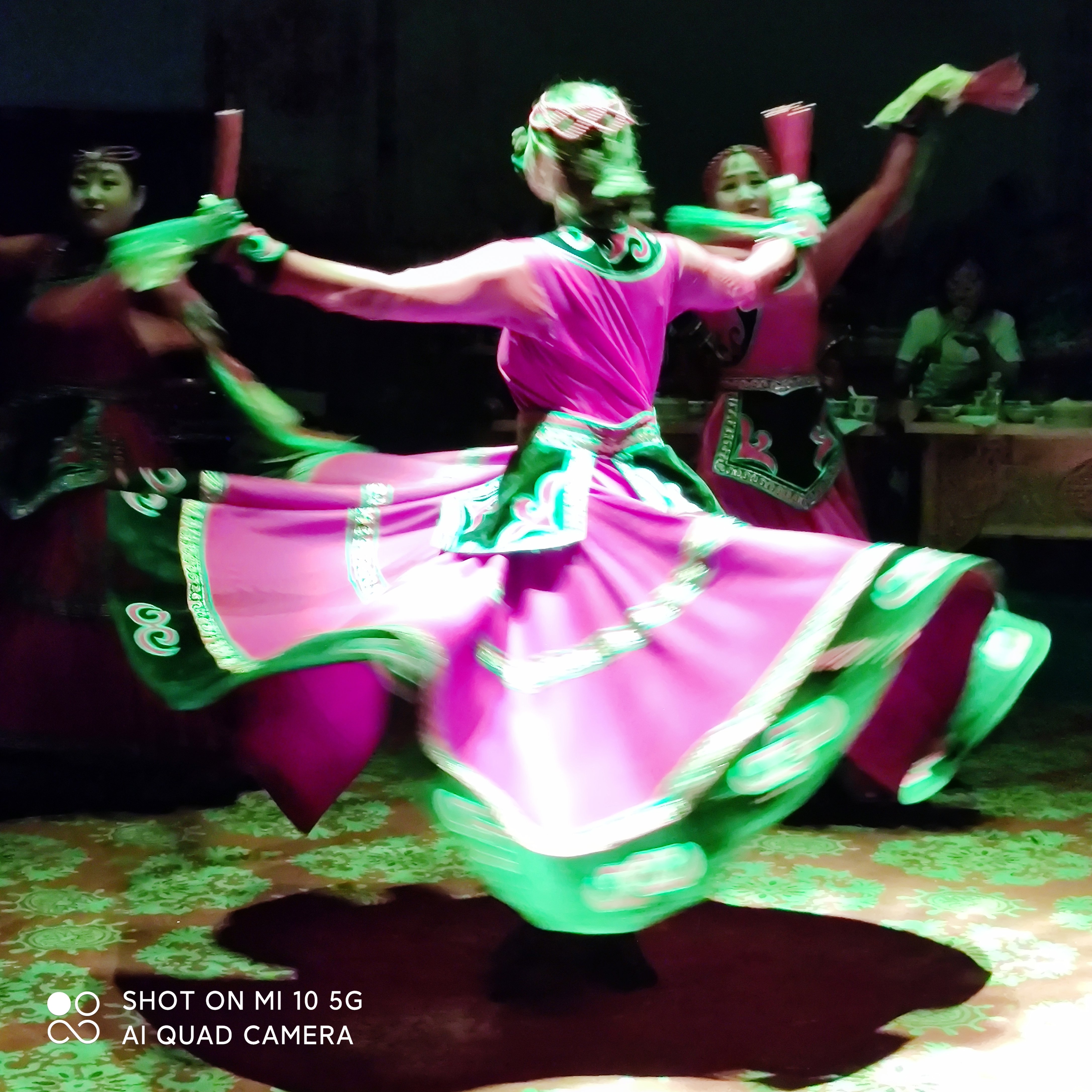
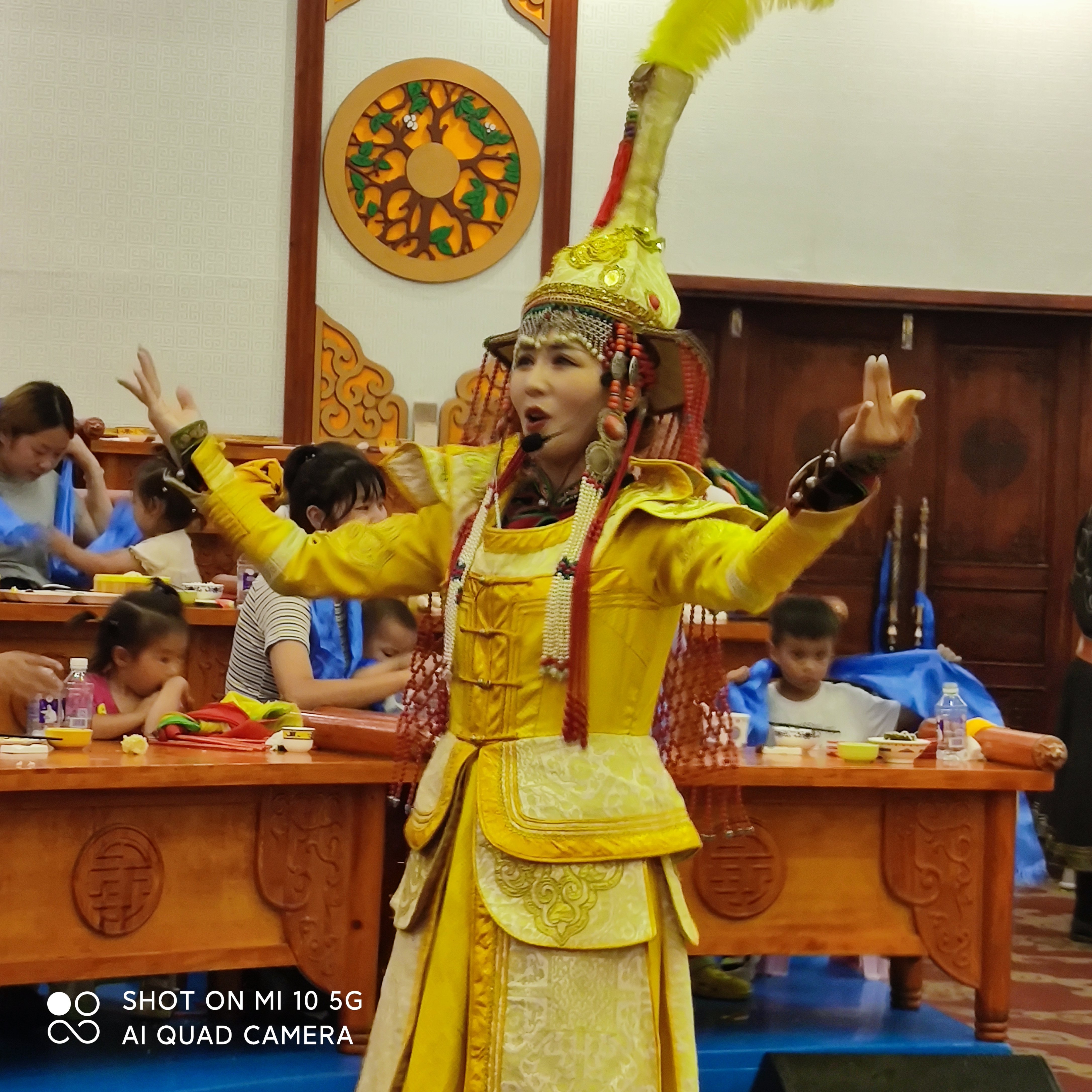
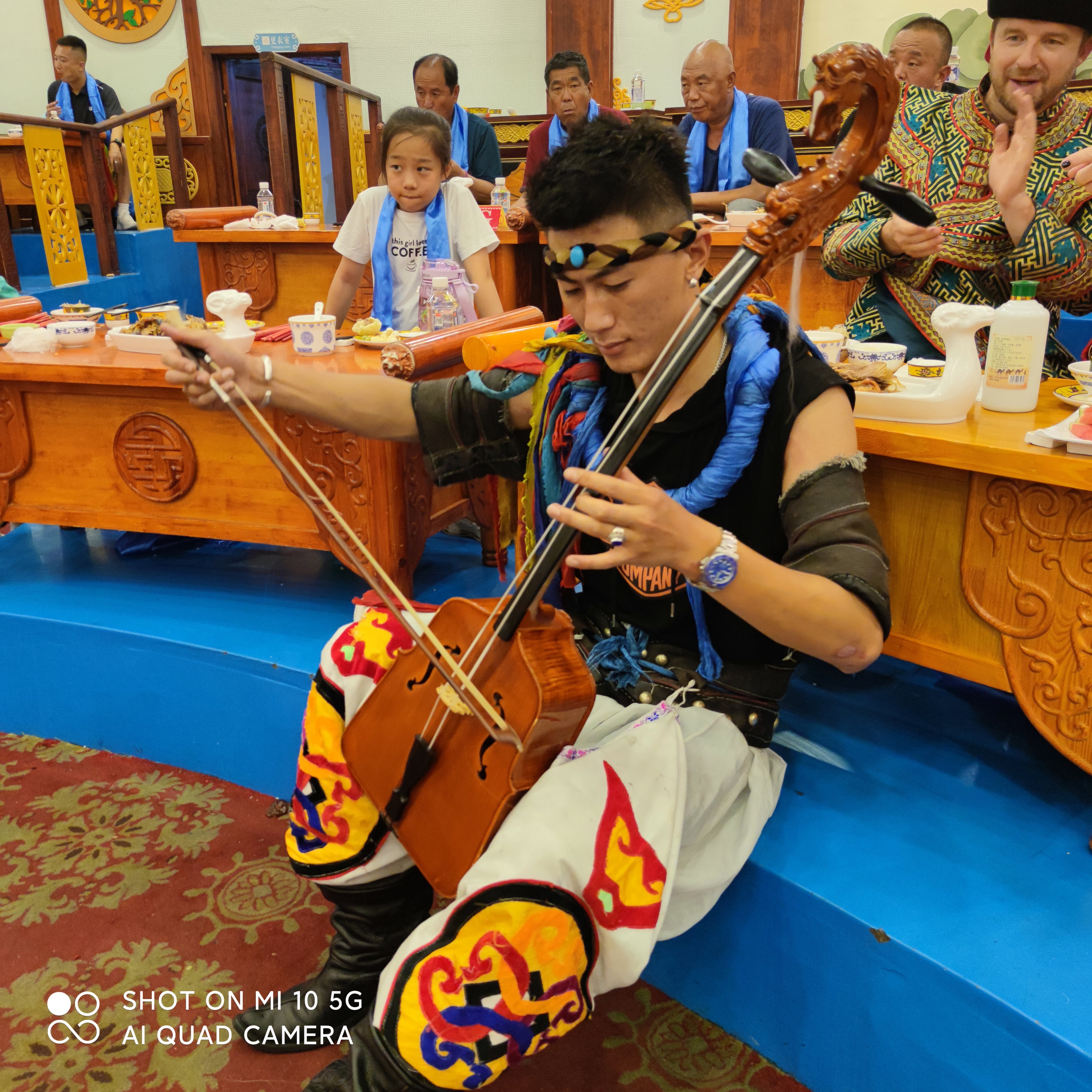
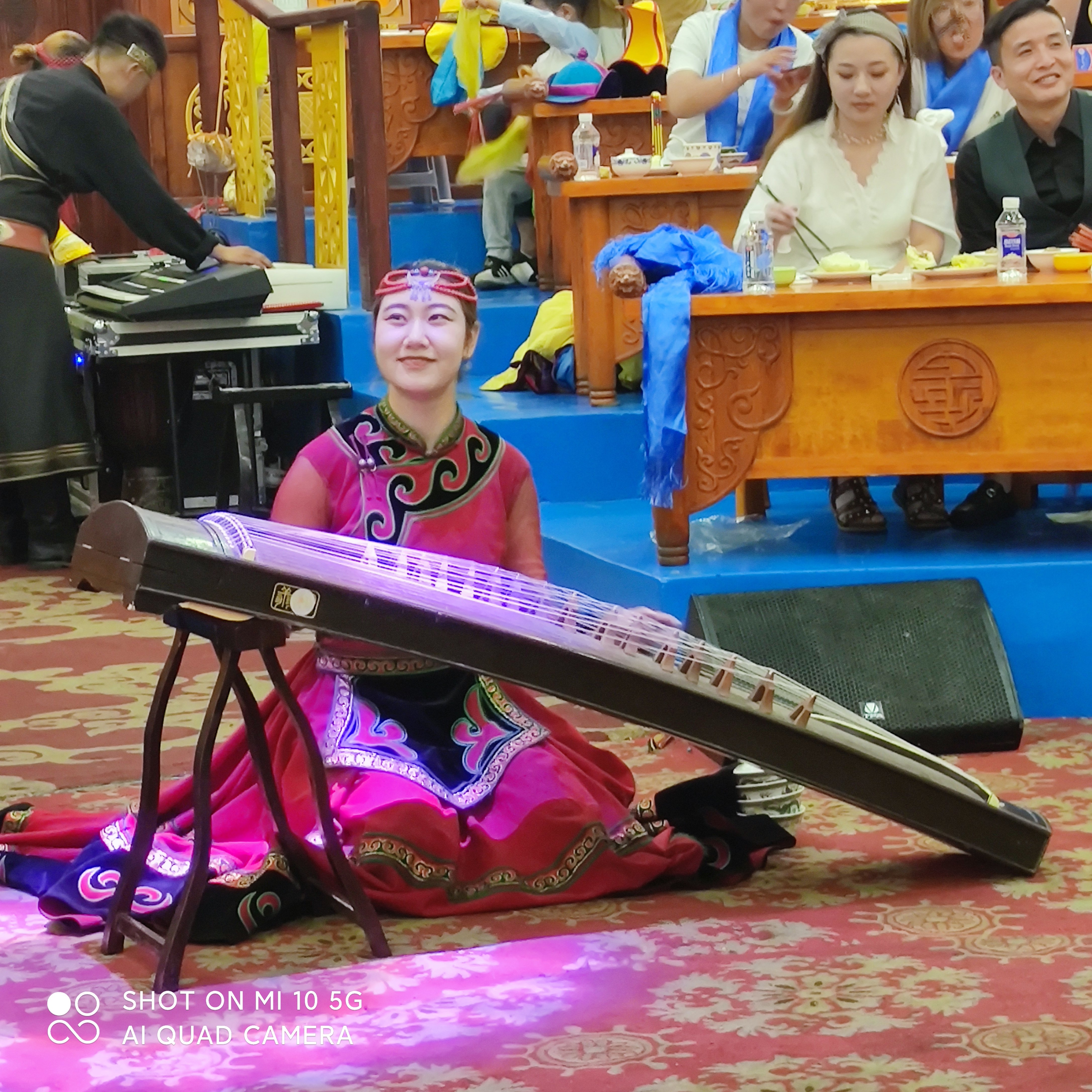
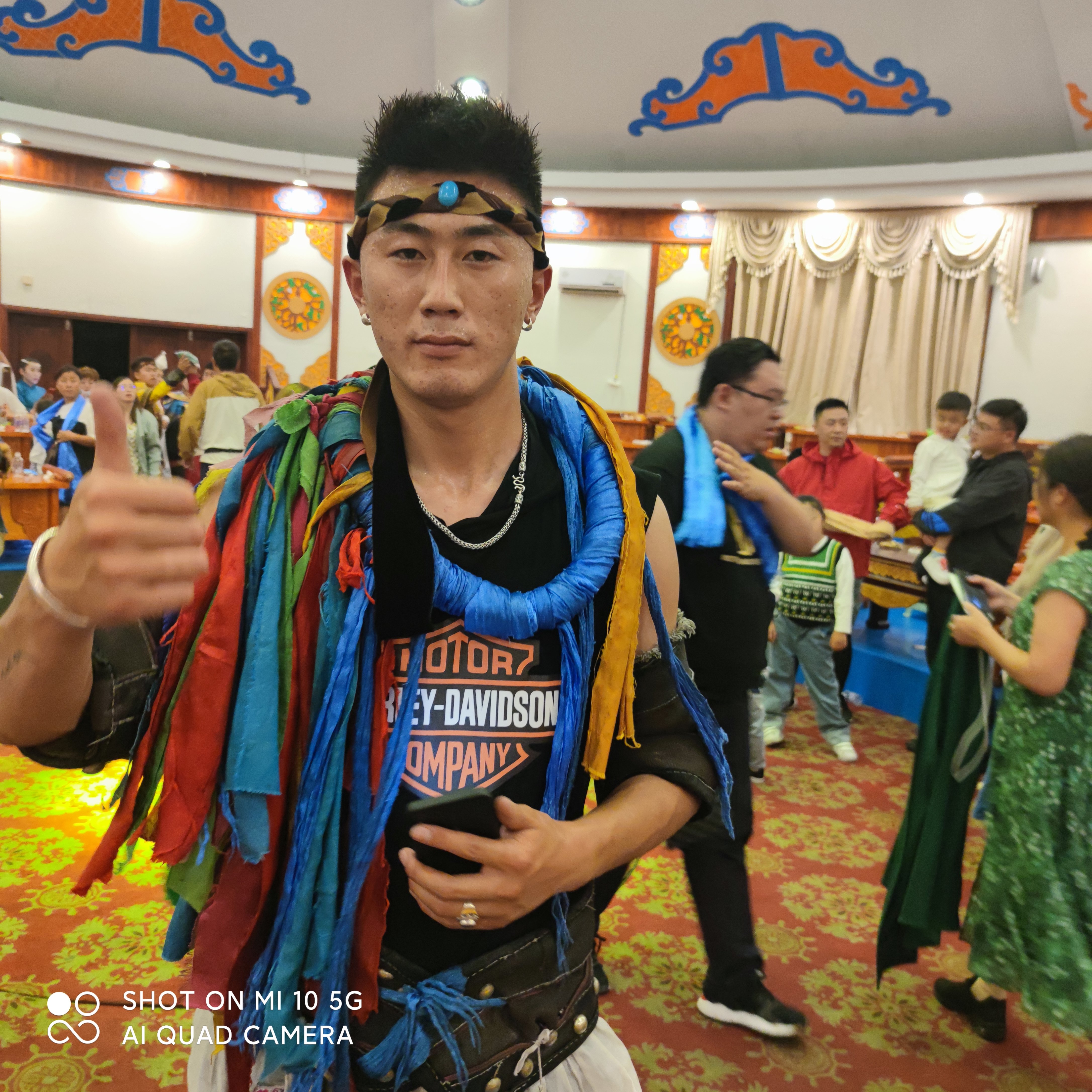
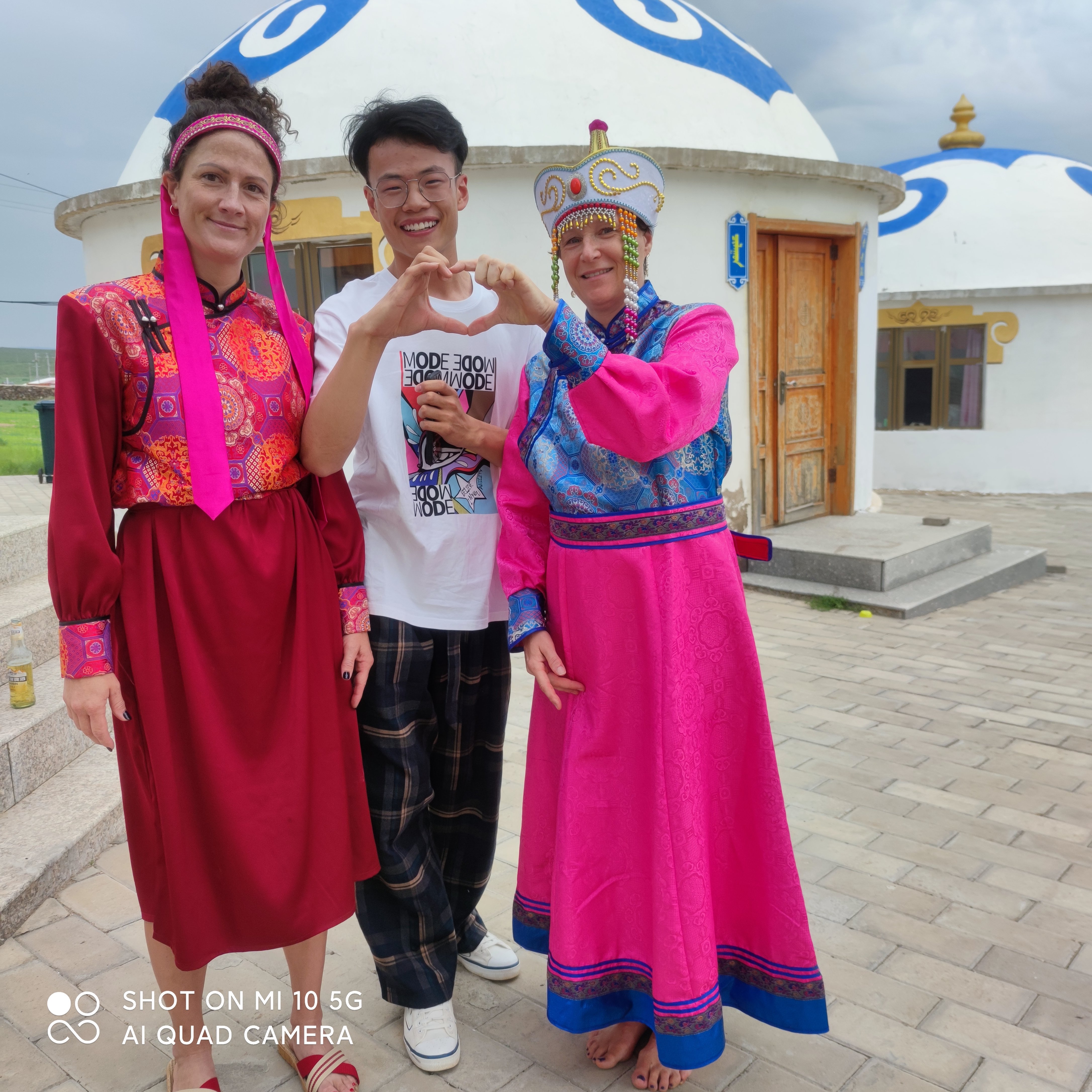
At night we celebrated at a feast. We wore Mongolian dress and were served some really great food while being entertained.

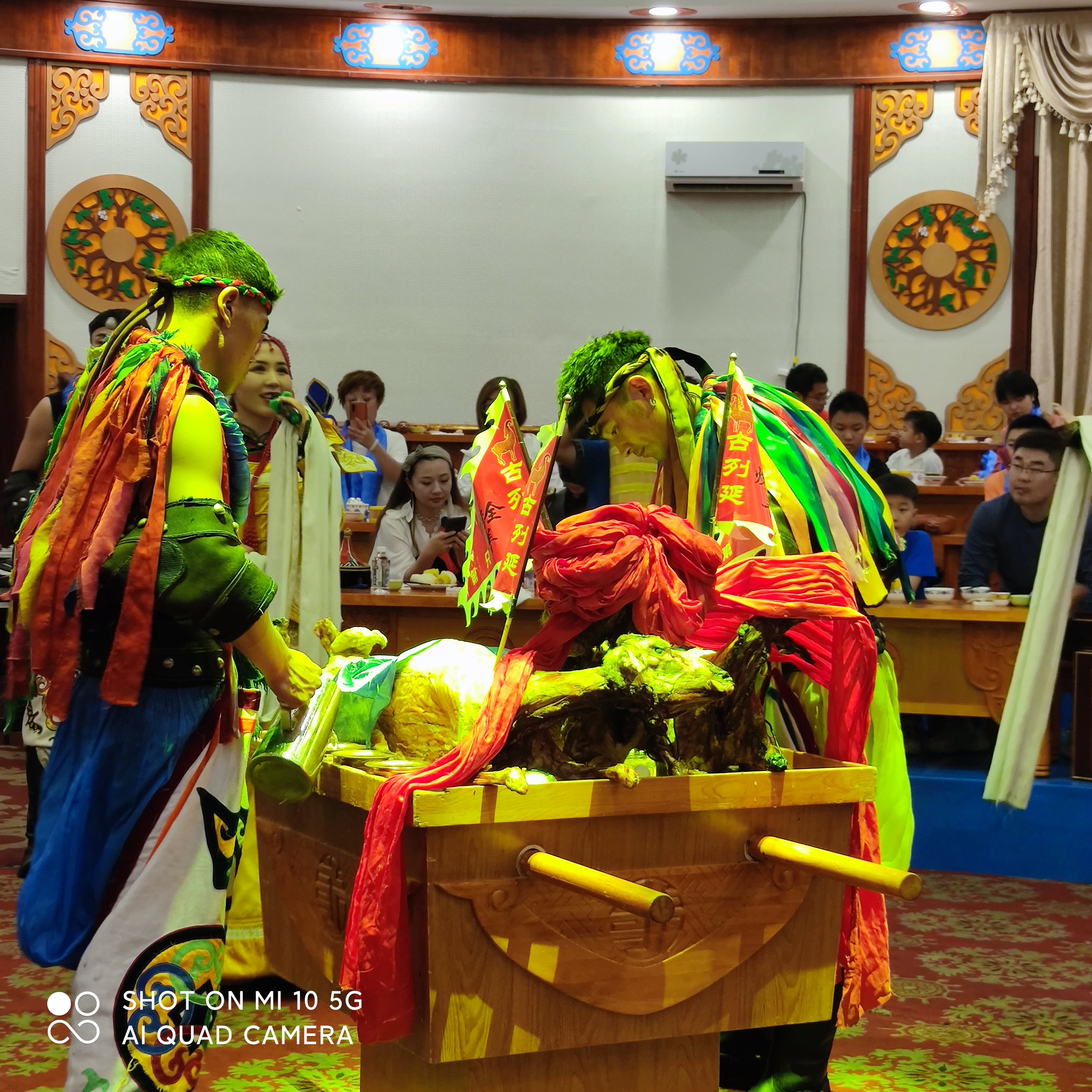
The main dish was roast lamb. They had three lambs brought out and carved to be served.
The winner of the wrestling competition.

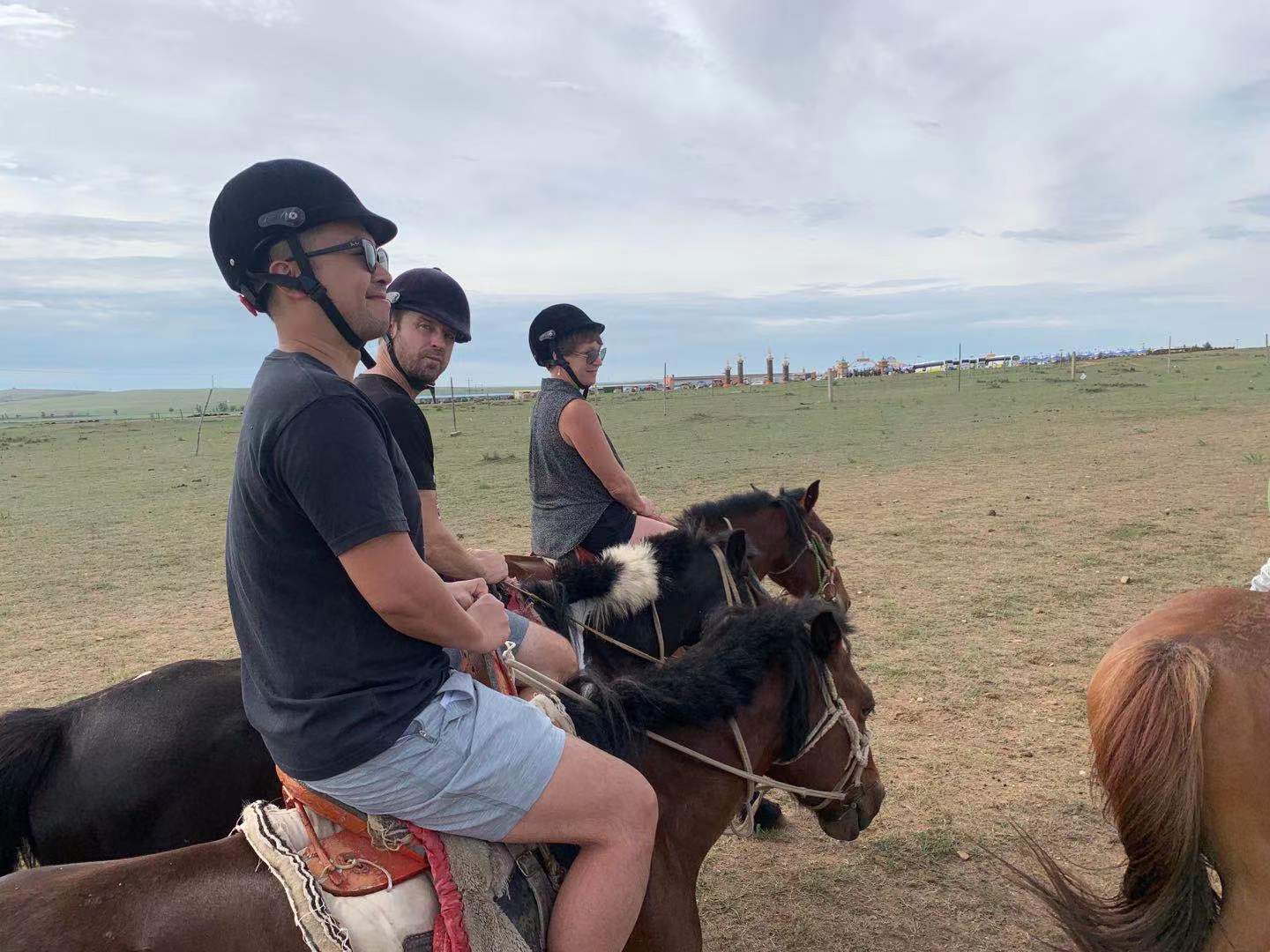
We went horse riding to a herdsmen’s home through the grassland.

Inner Mongolia, Ulanhada volcano cluster

After a plan for Tibet fell through due to covid, I went to one of my other options of inner Mongolia.

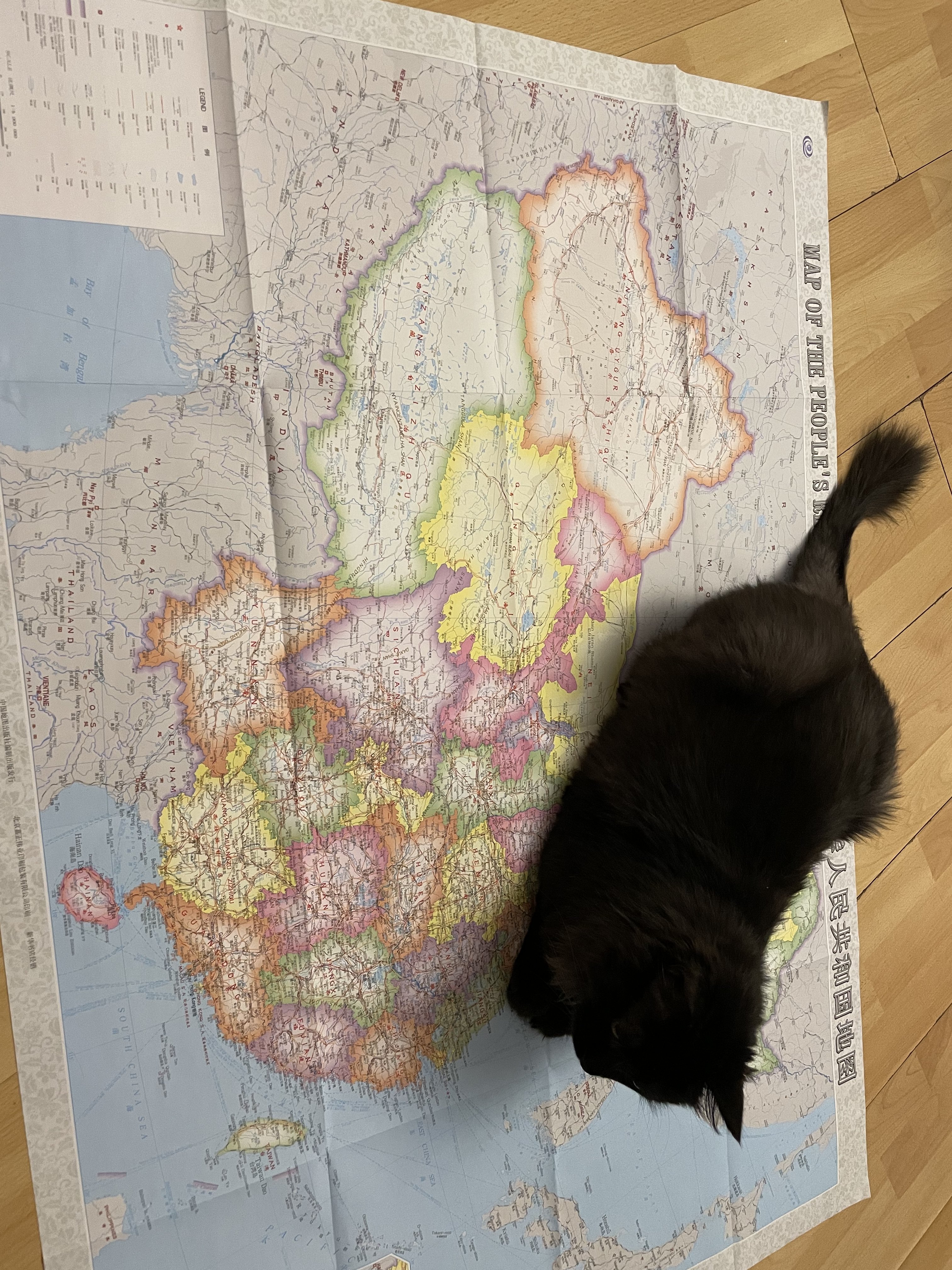
The cat immediately sat on the area of inner Mongolia to distract me from going.

In Inner Mongolia, the names of several cities end with the word hot. In ancient times, hot referred to settlements of the nomadic peoples. With the process of urbanization, hot has come to mean city now. Hoh in Mongolian means blue.

We flew into Hohhot and rented a car after staying the night at the shangri-la. The hotel was beautiful. I went for a run in the nearby park.

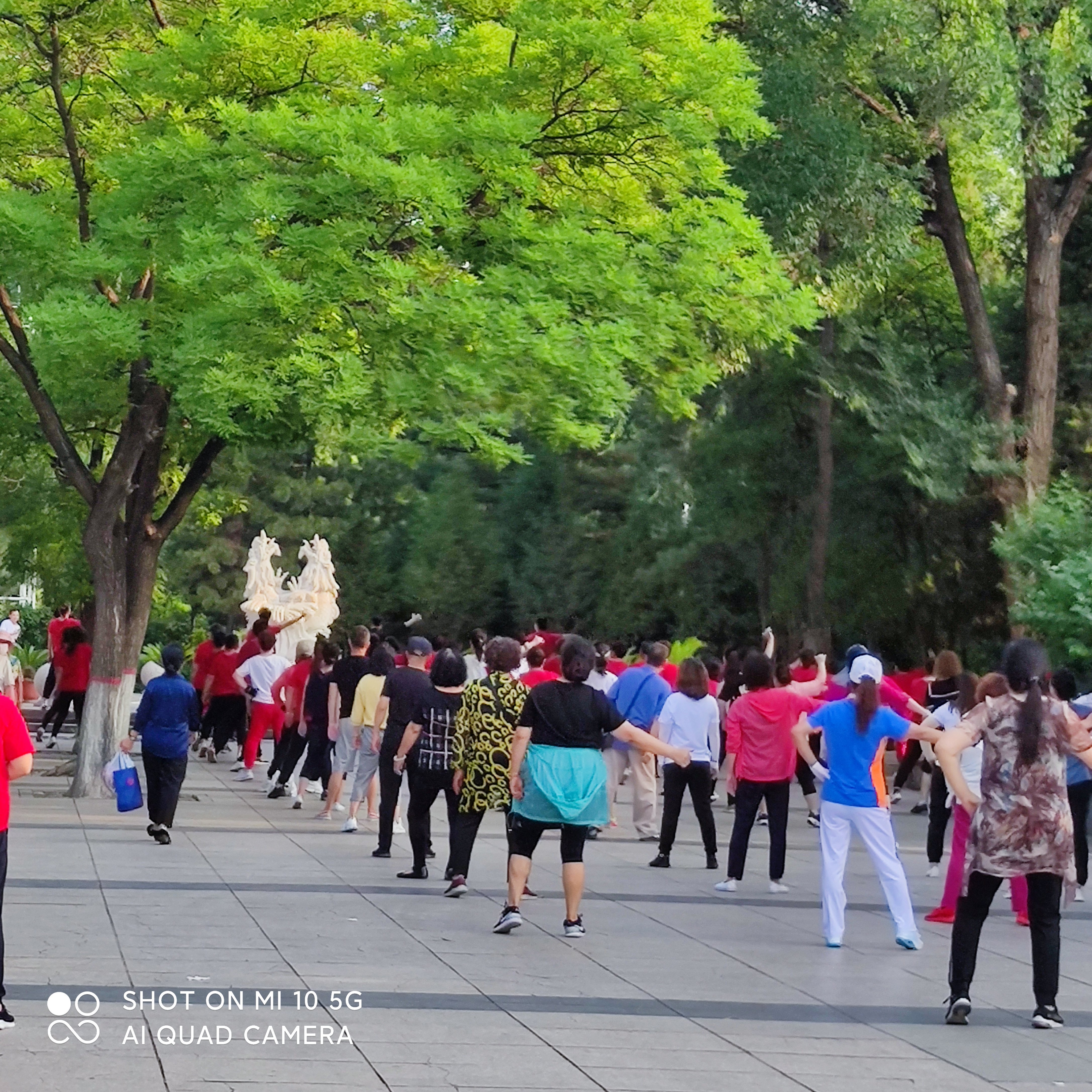
Women exercising in the park.
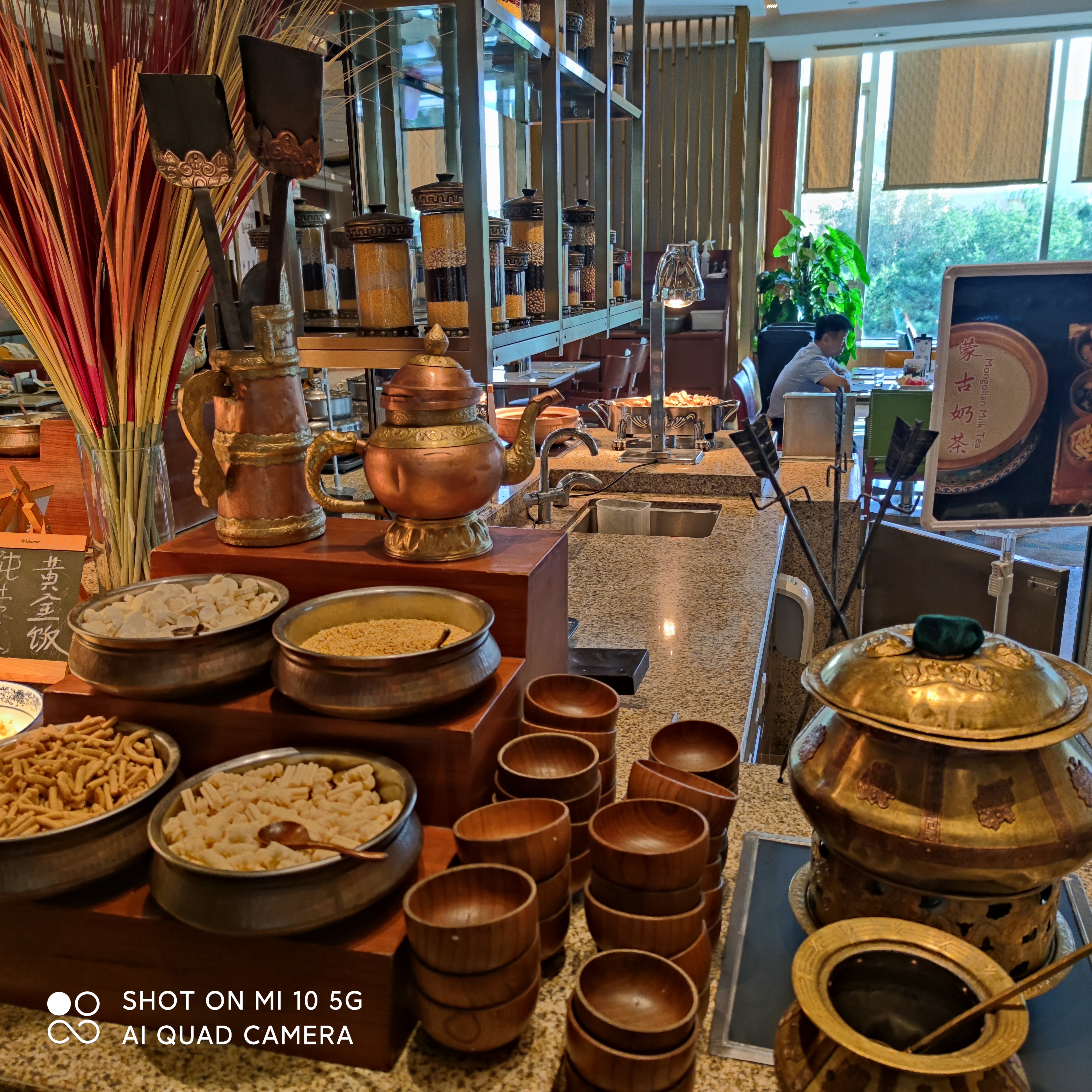
Mongolian milk tea which was pretty delicious.

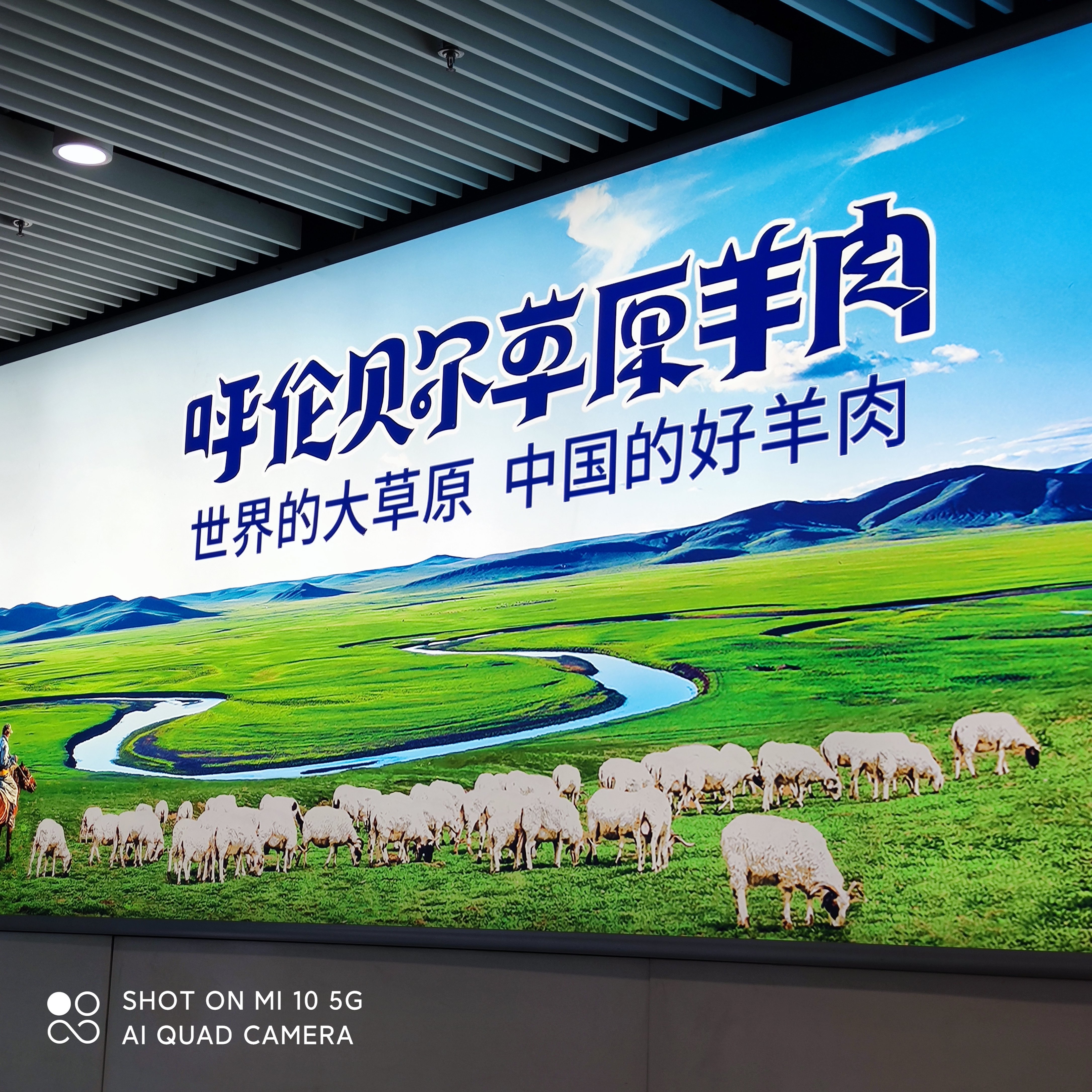
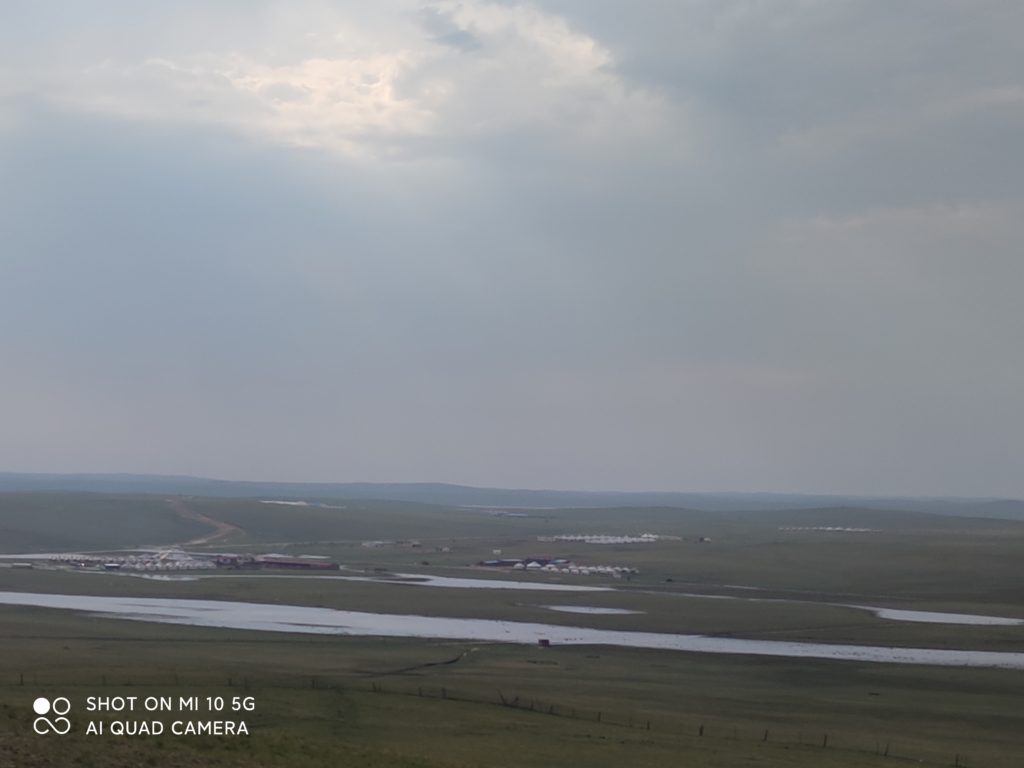
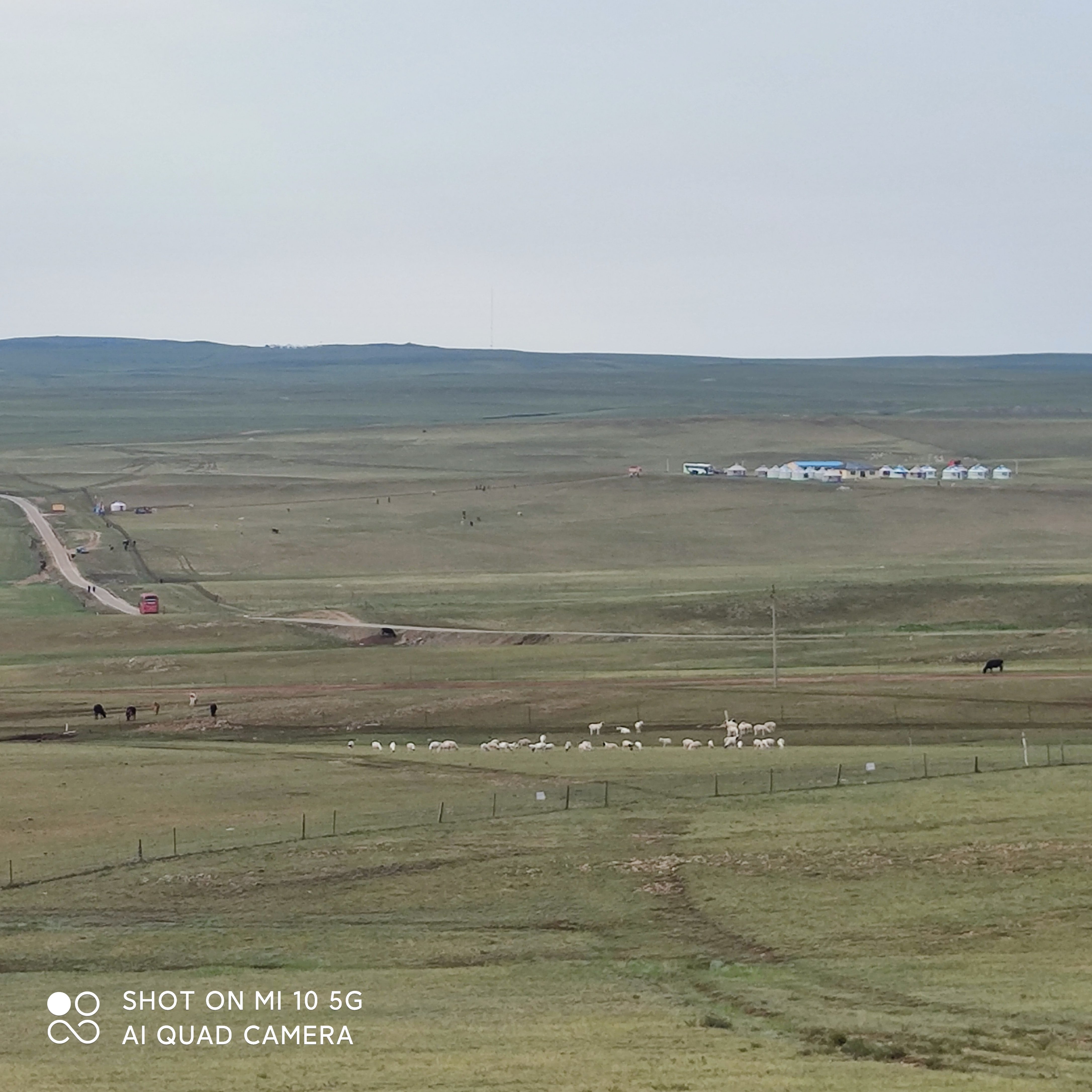
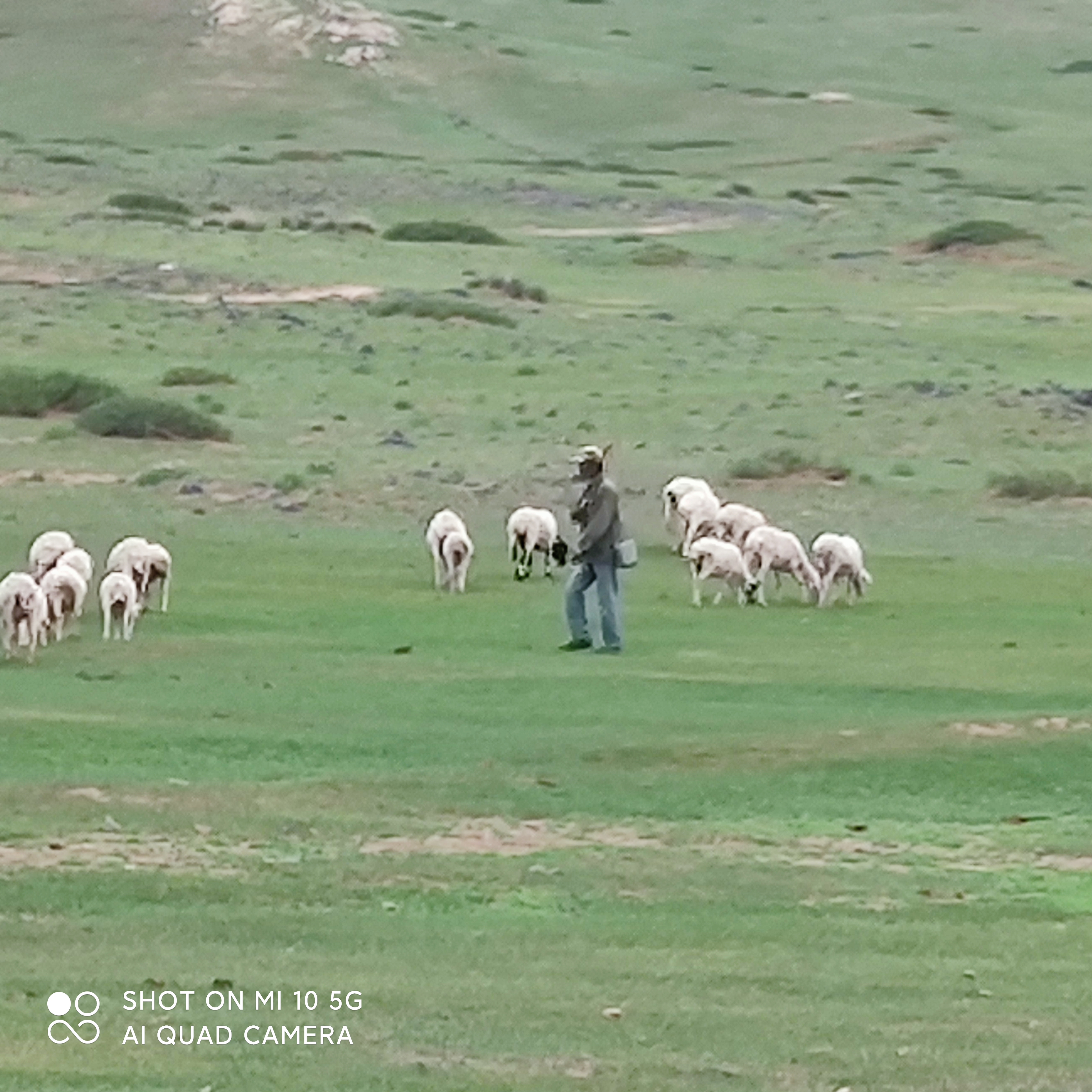
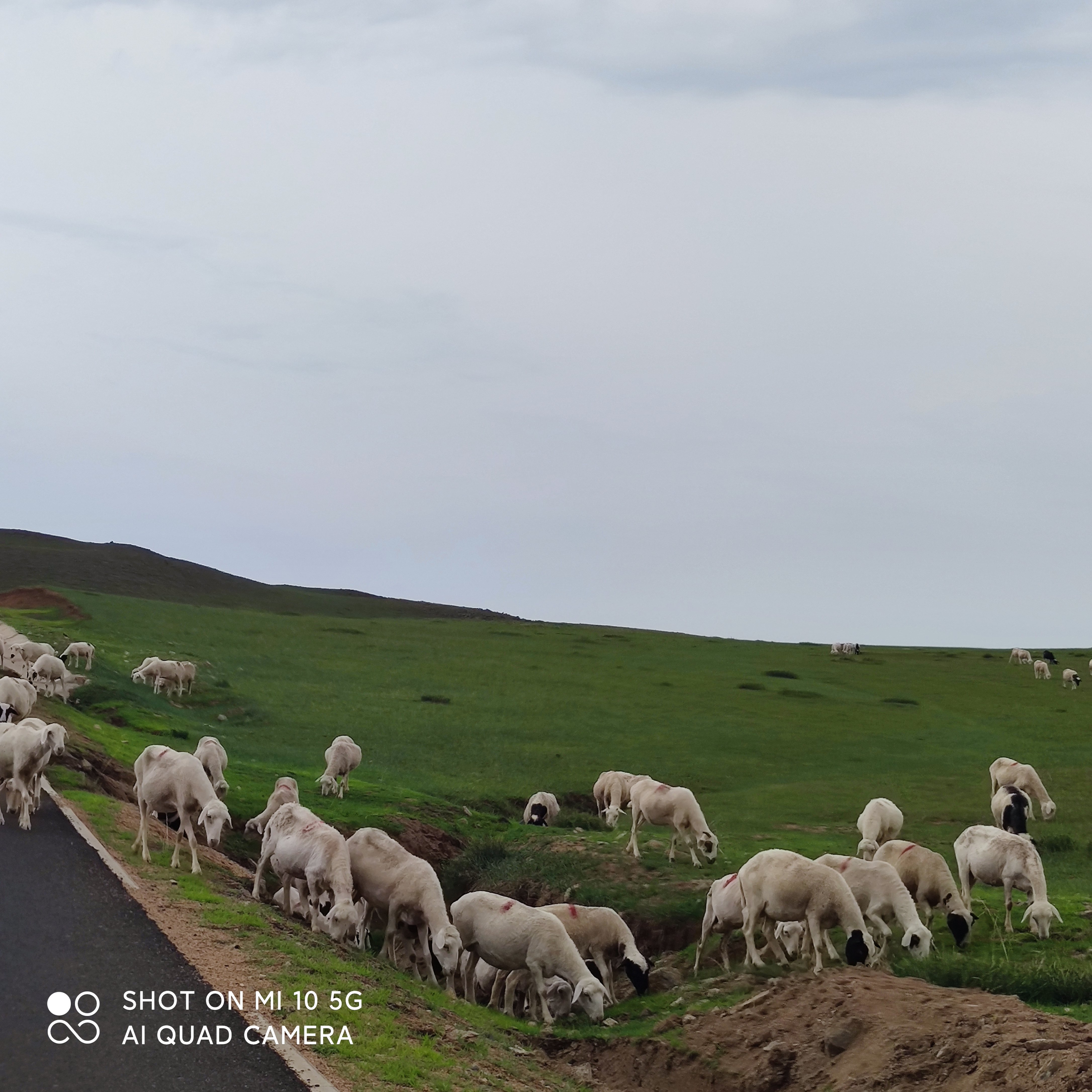
We drove to the Ulanhada volcano cluster and stayed at a nearby yurt. We are in the grasslands which are dotted with herds of sheep and horses, and looked forward to living like a nomad with an overnight stay in a Mongolian yurt.

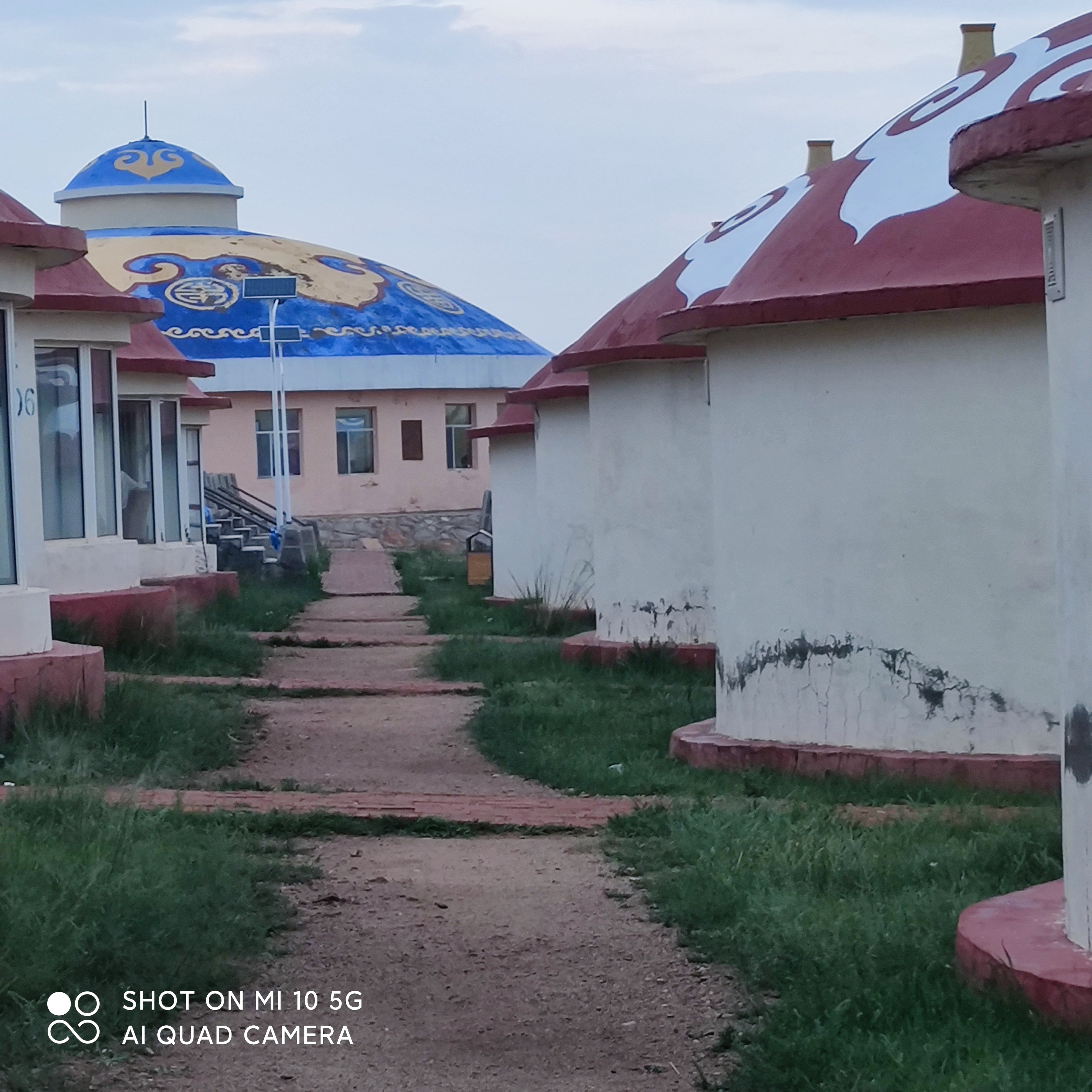
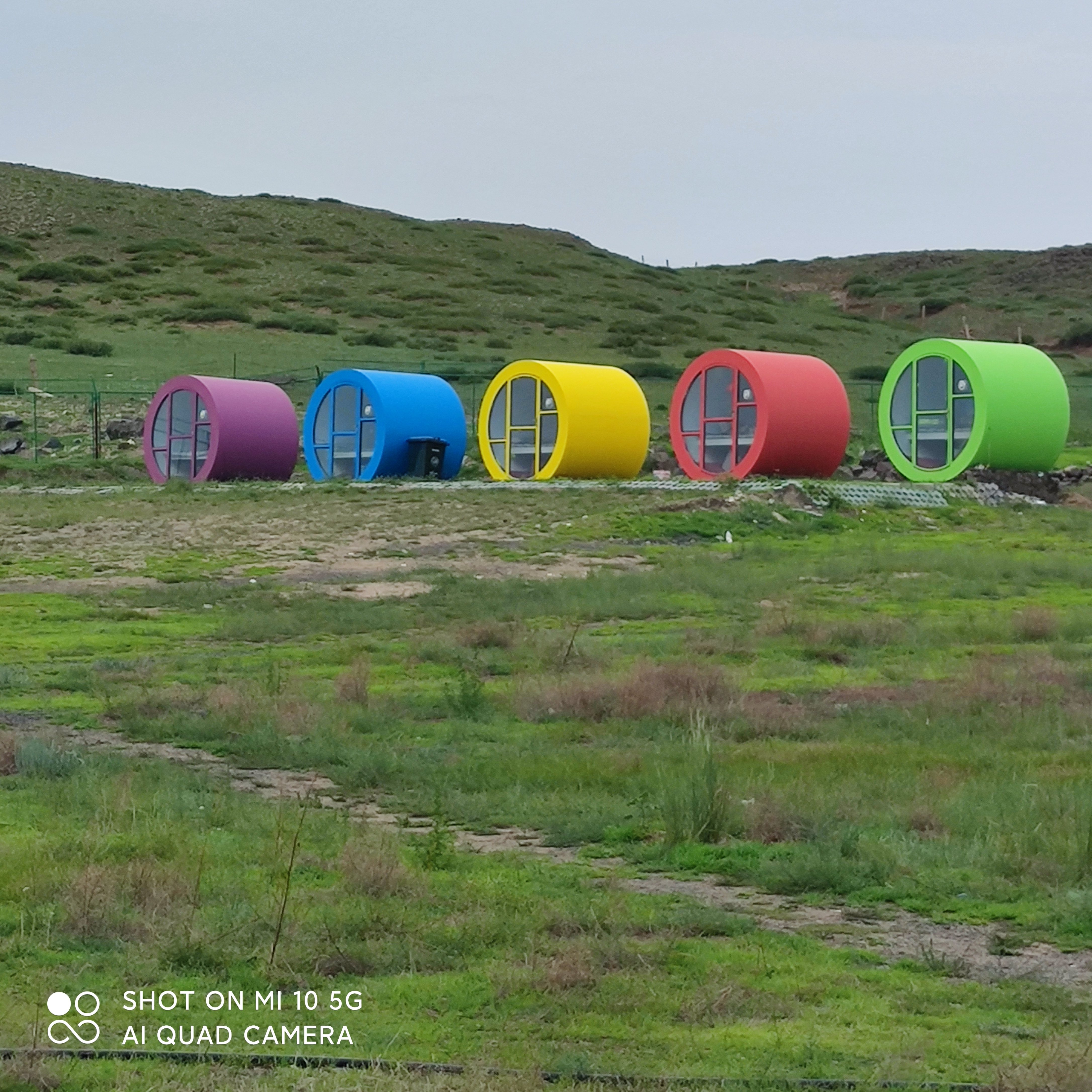
Container huts on the grasslands behind the yurts.
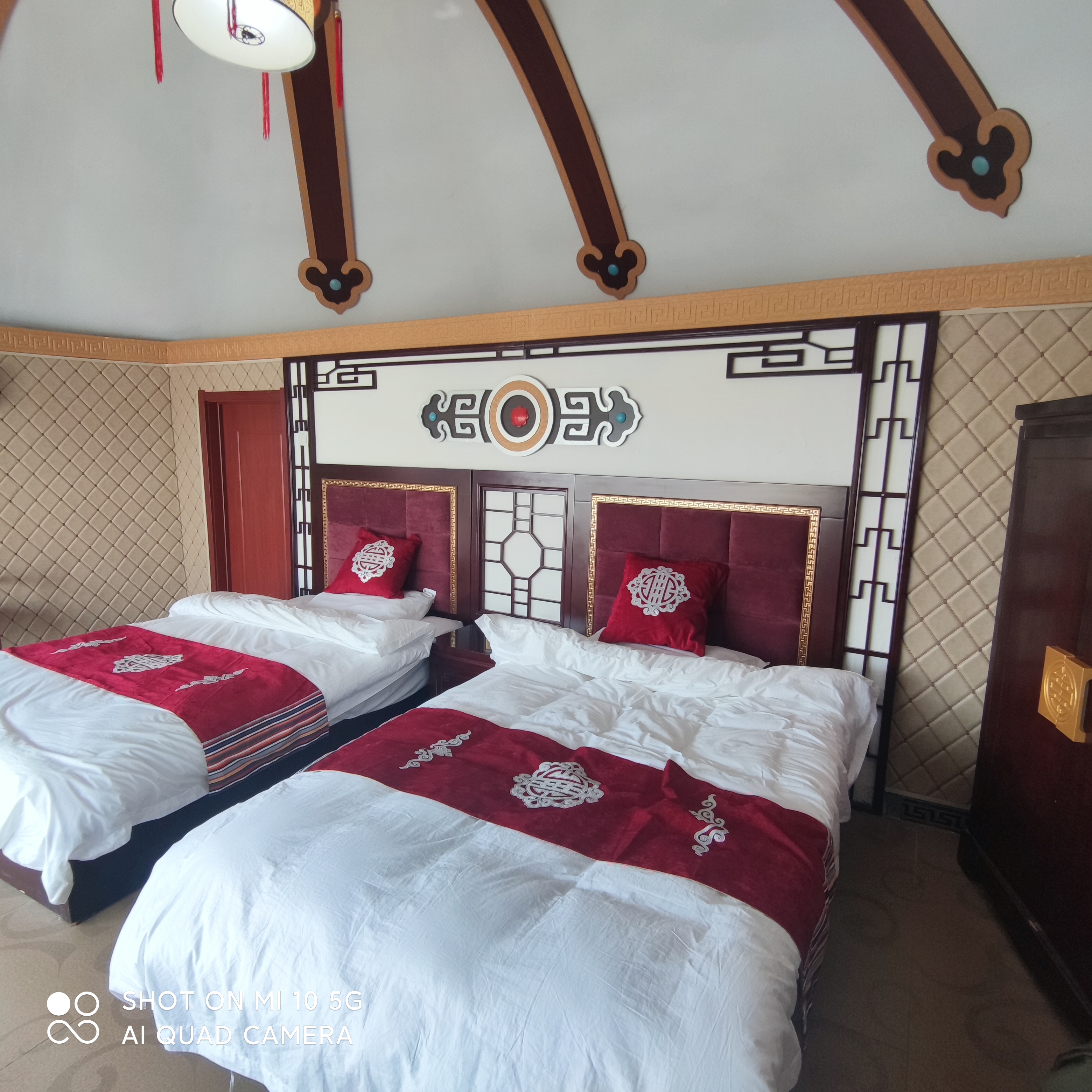
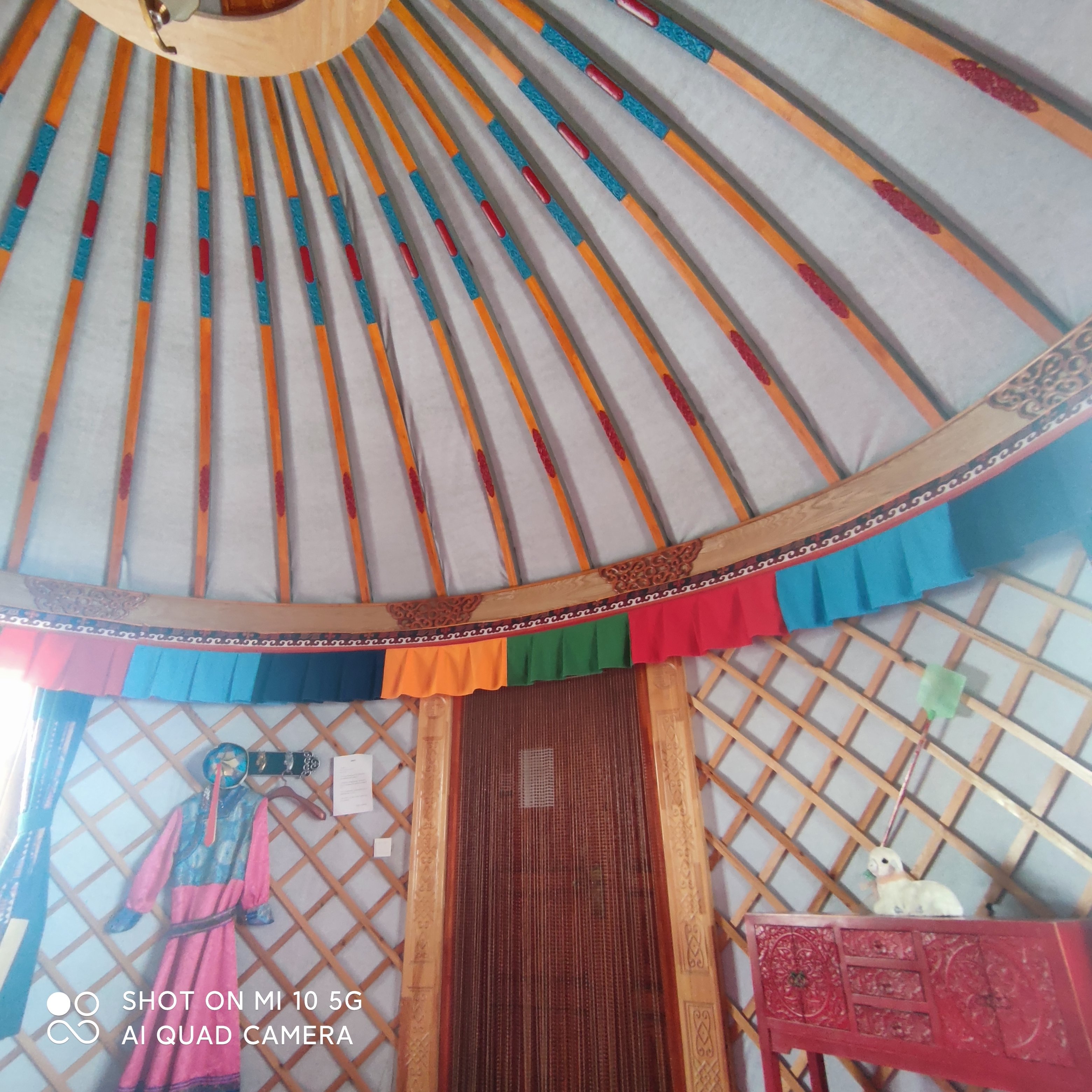
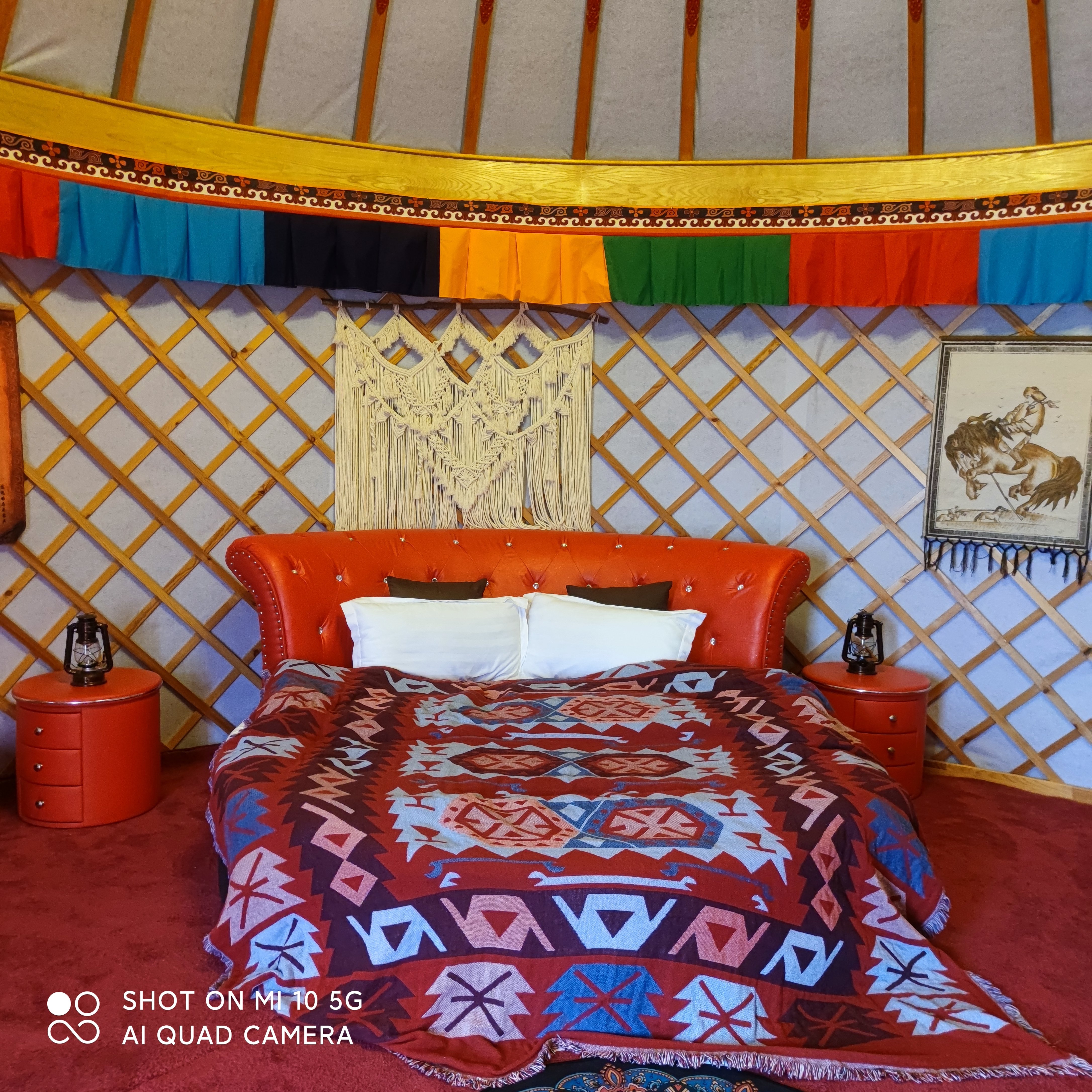
Inside the yurt.
That macrame hanging reminds me of the 70’s.

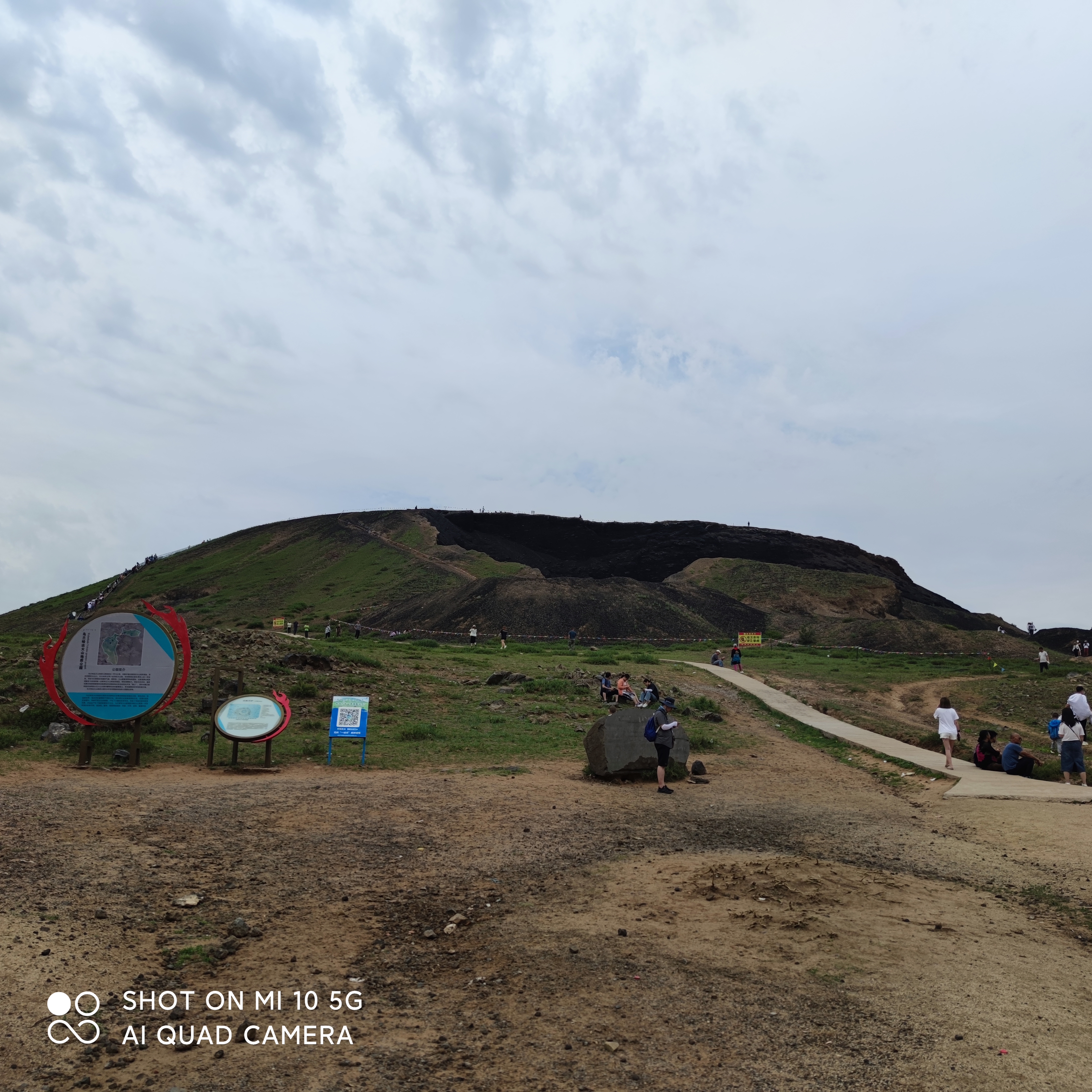
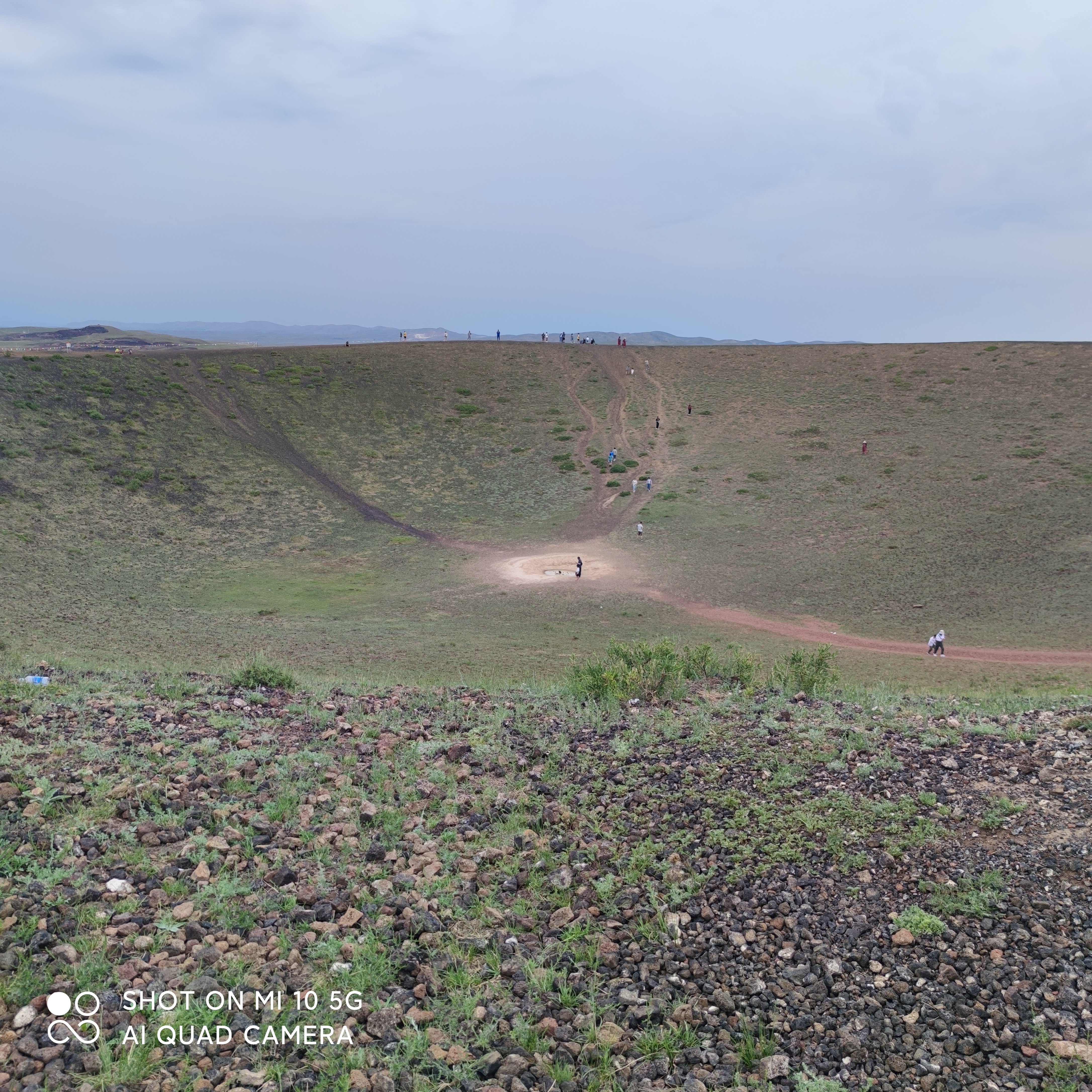
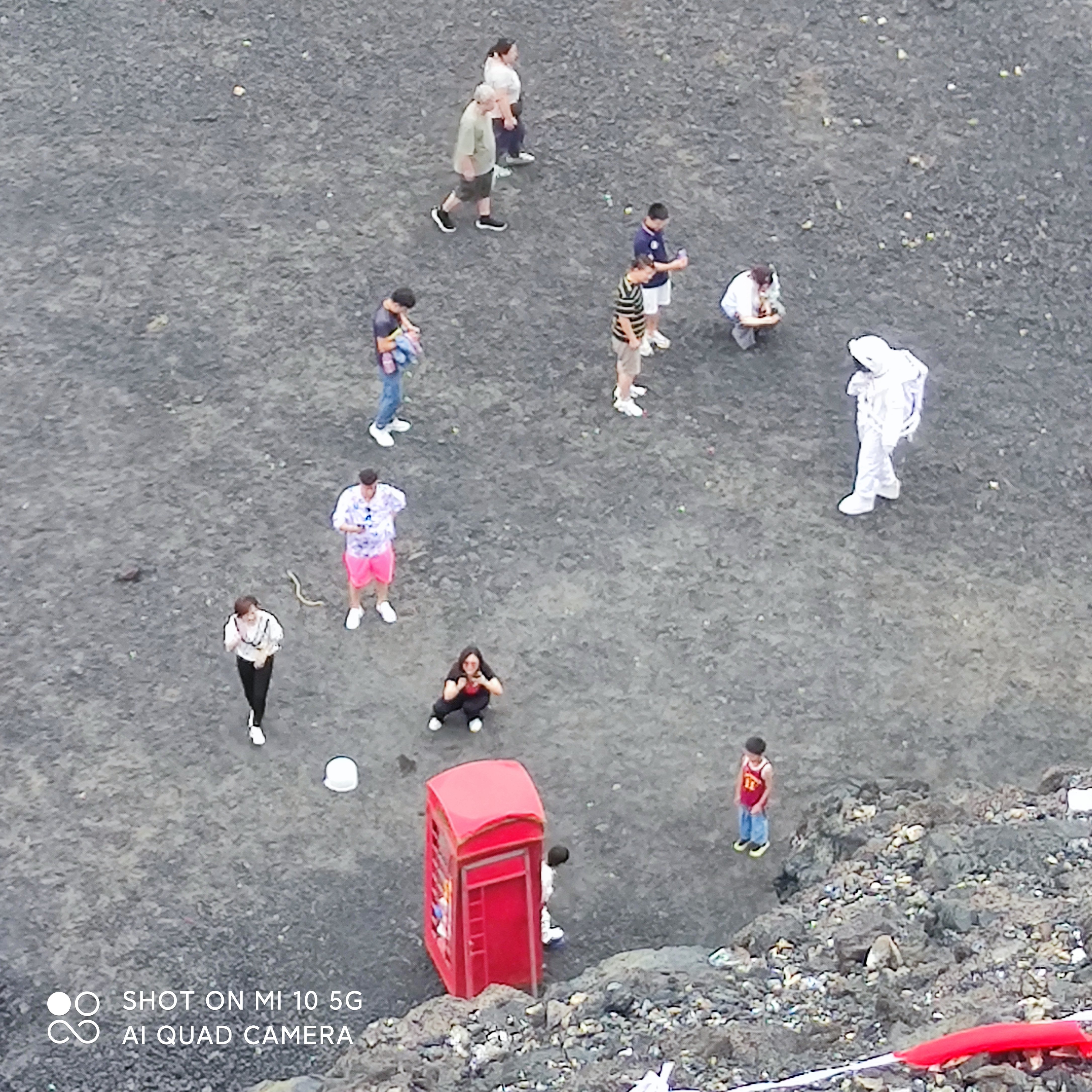
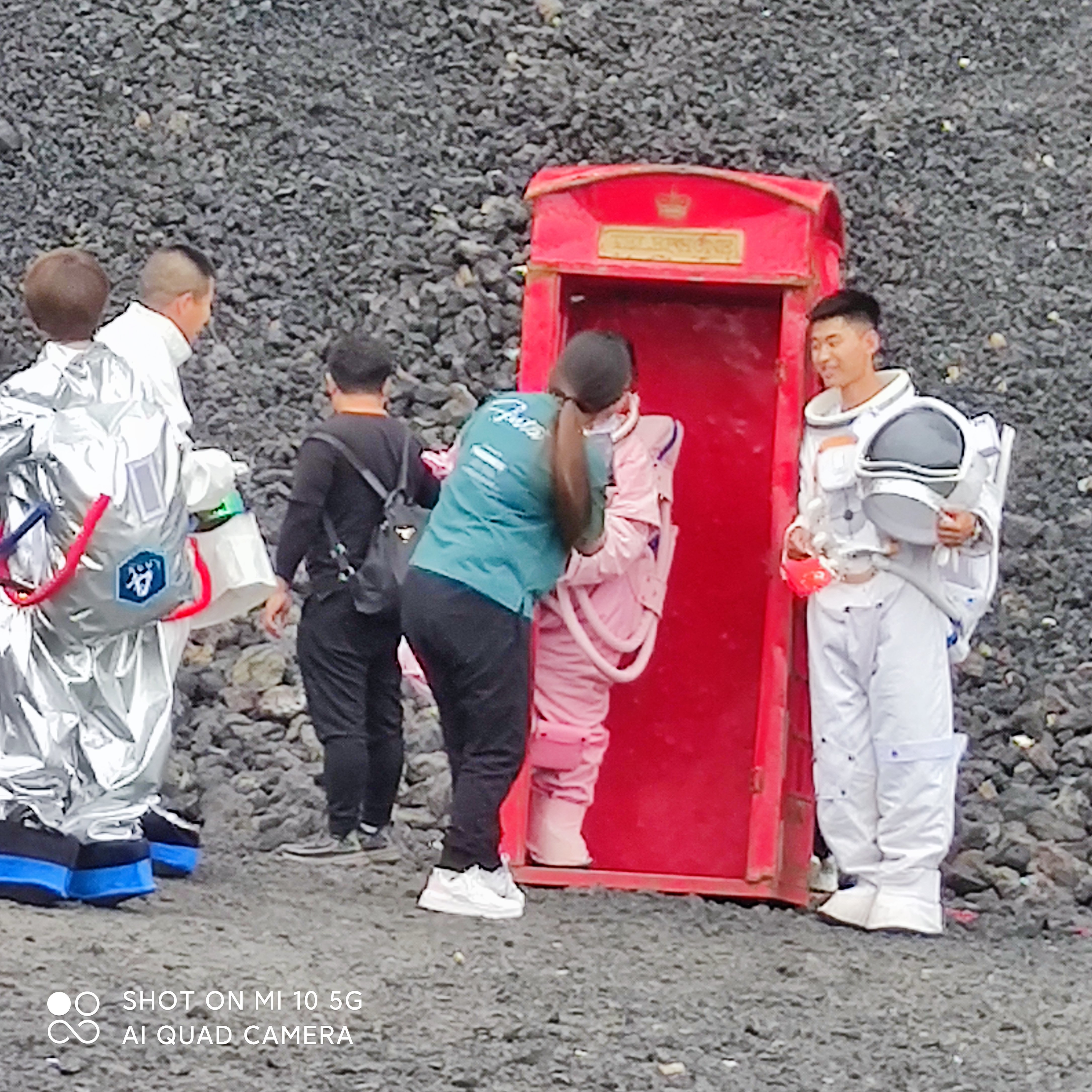
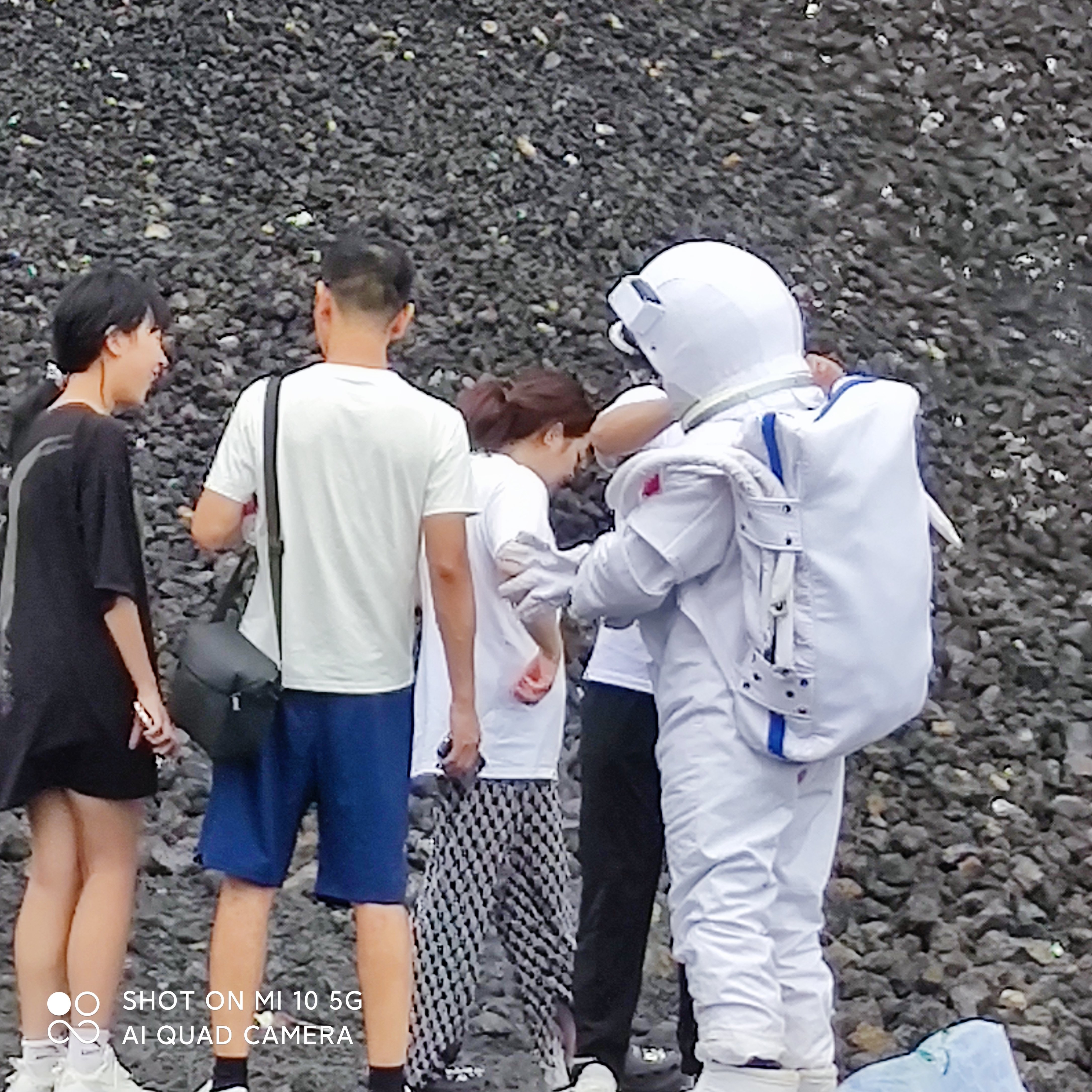
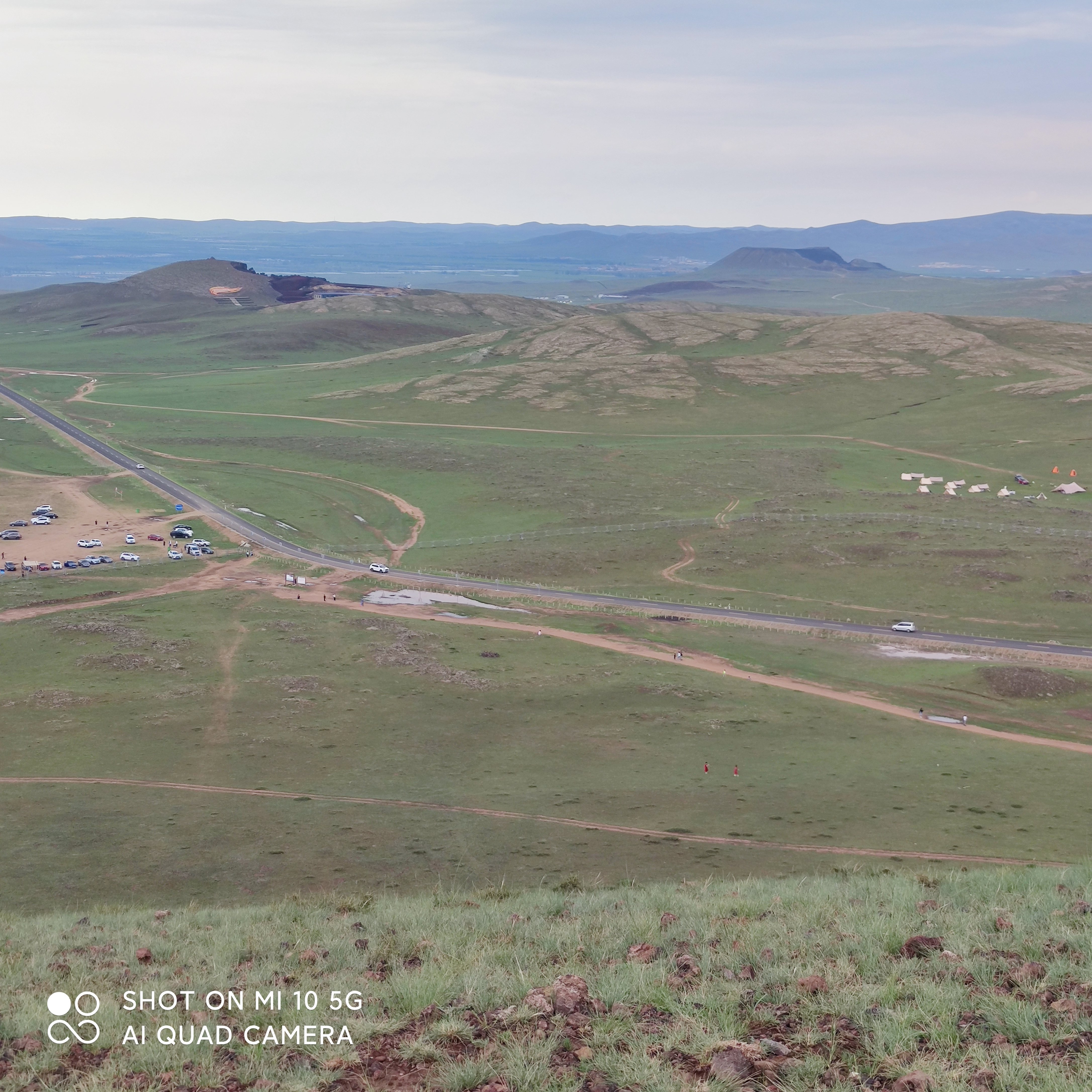
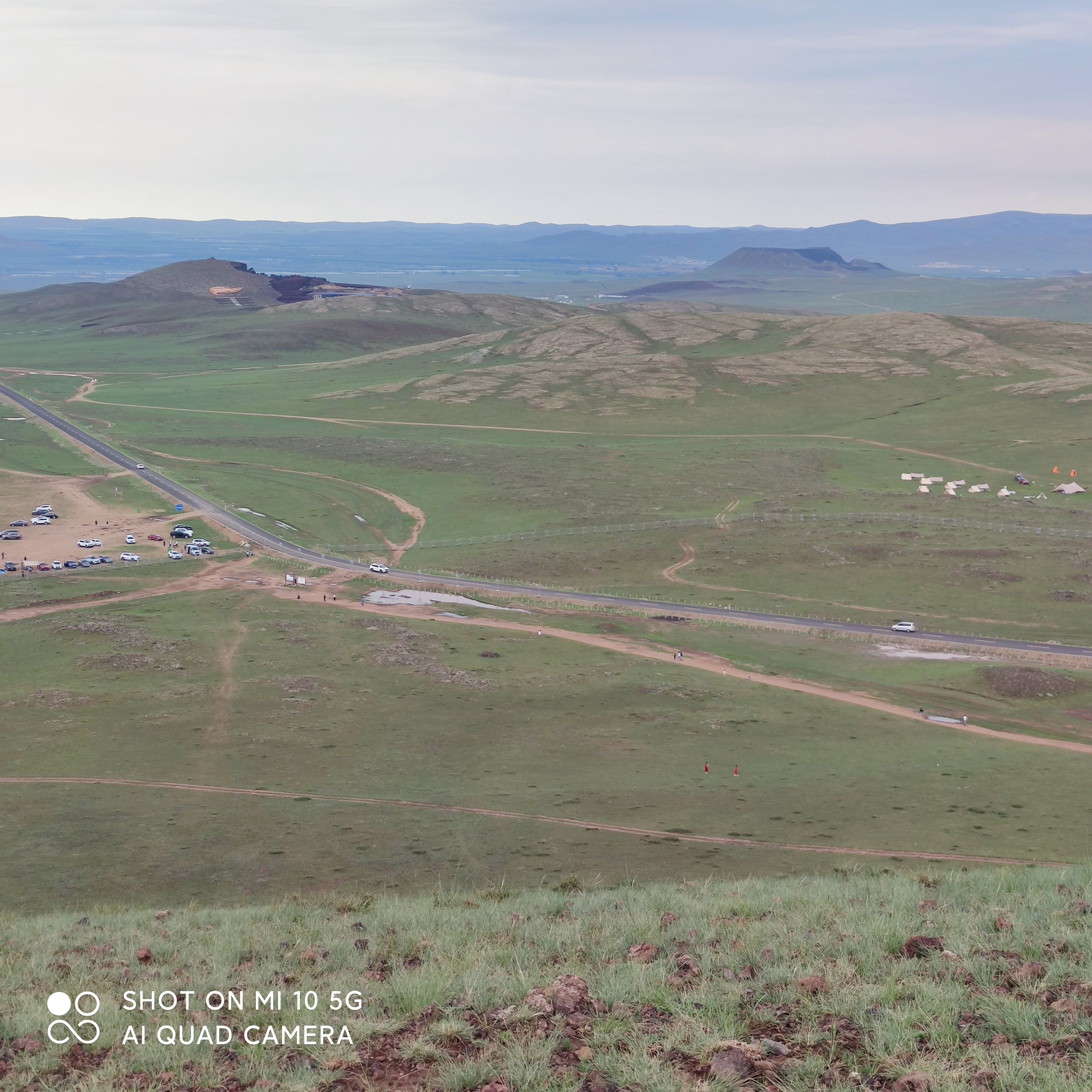
Volcano crater #3 is the one with stairs to go up. You can go into the crater. We walked the 0.6 km along the top of the rim and down one side you can see where companies came in to take the volcanic rock for building projects. Along that side people dressed in space man costumes to pretend they are from Mars.
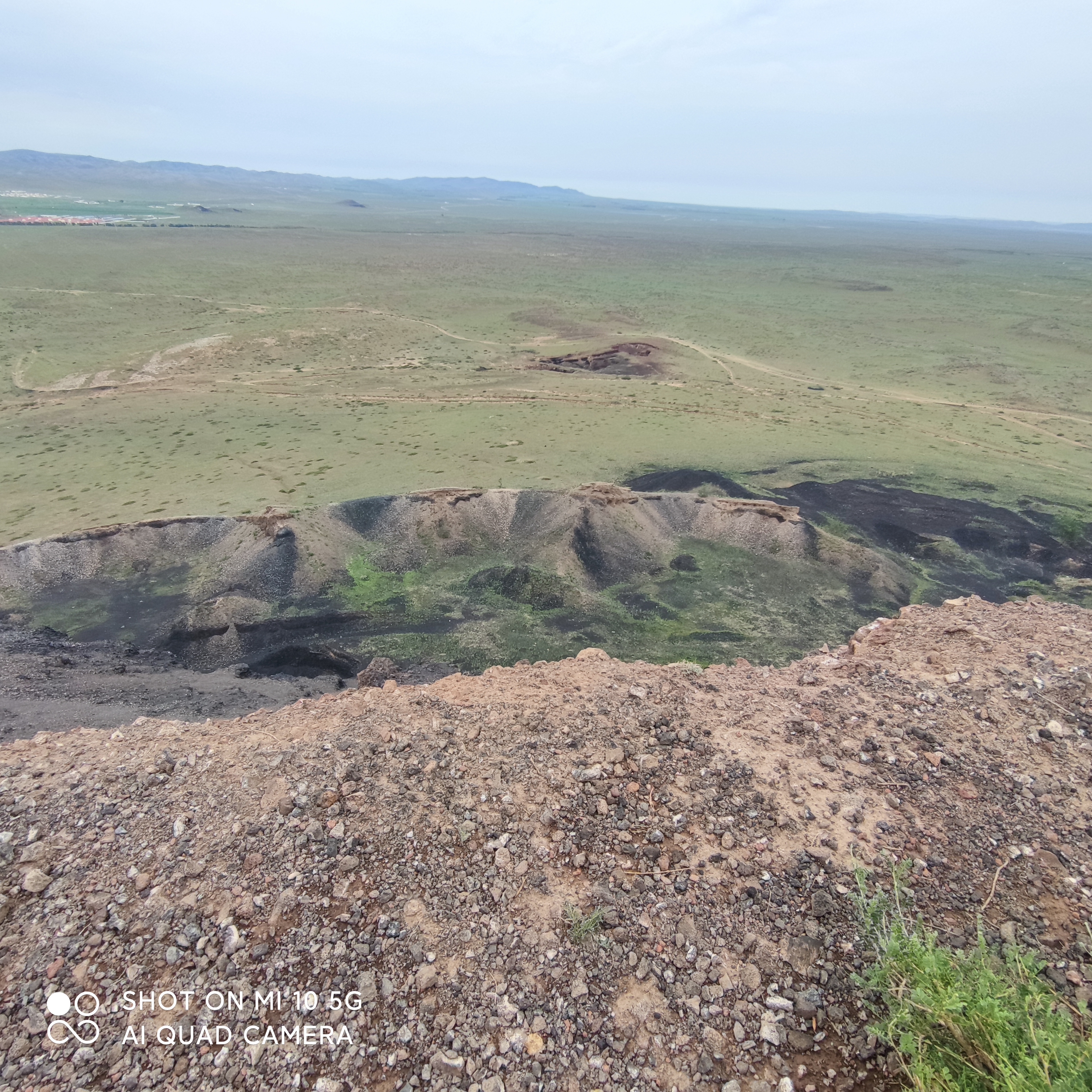
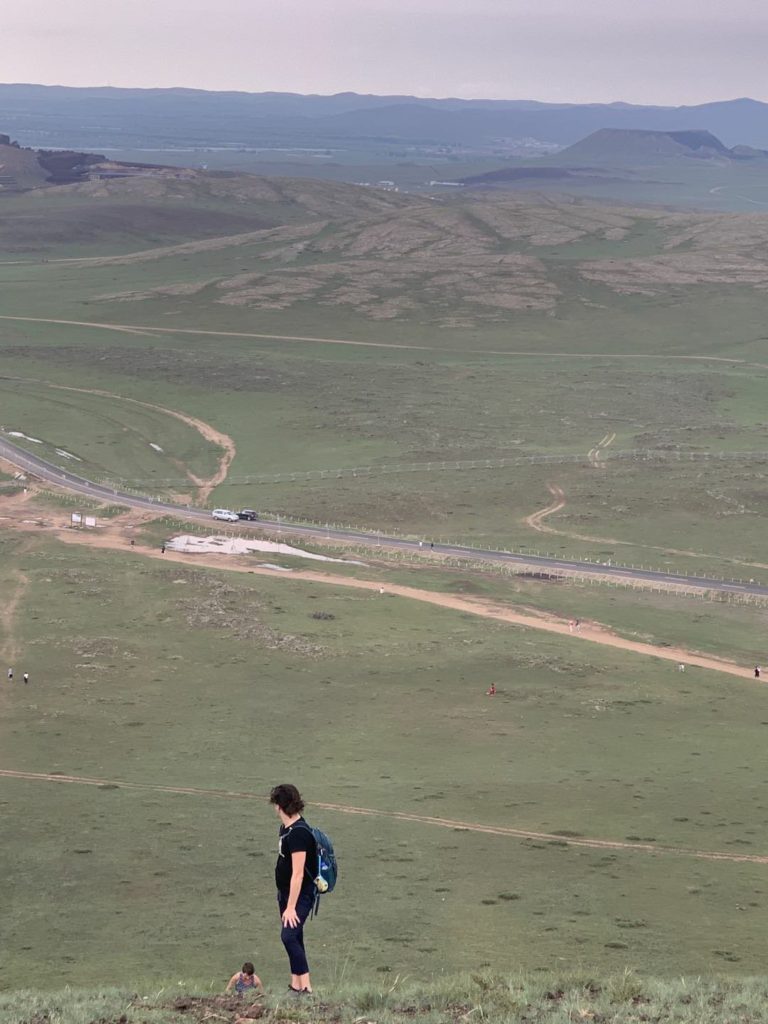
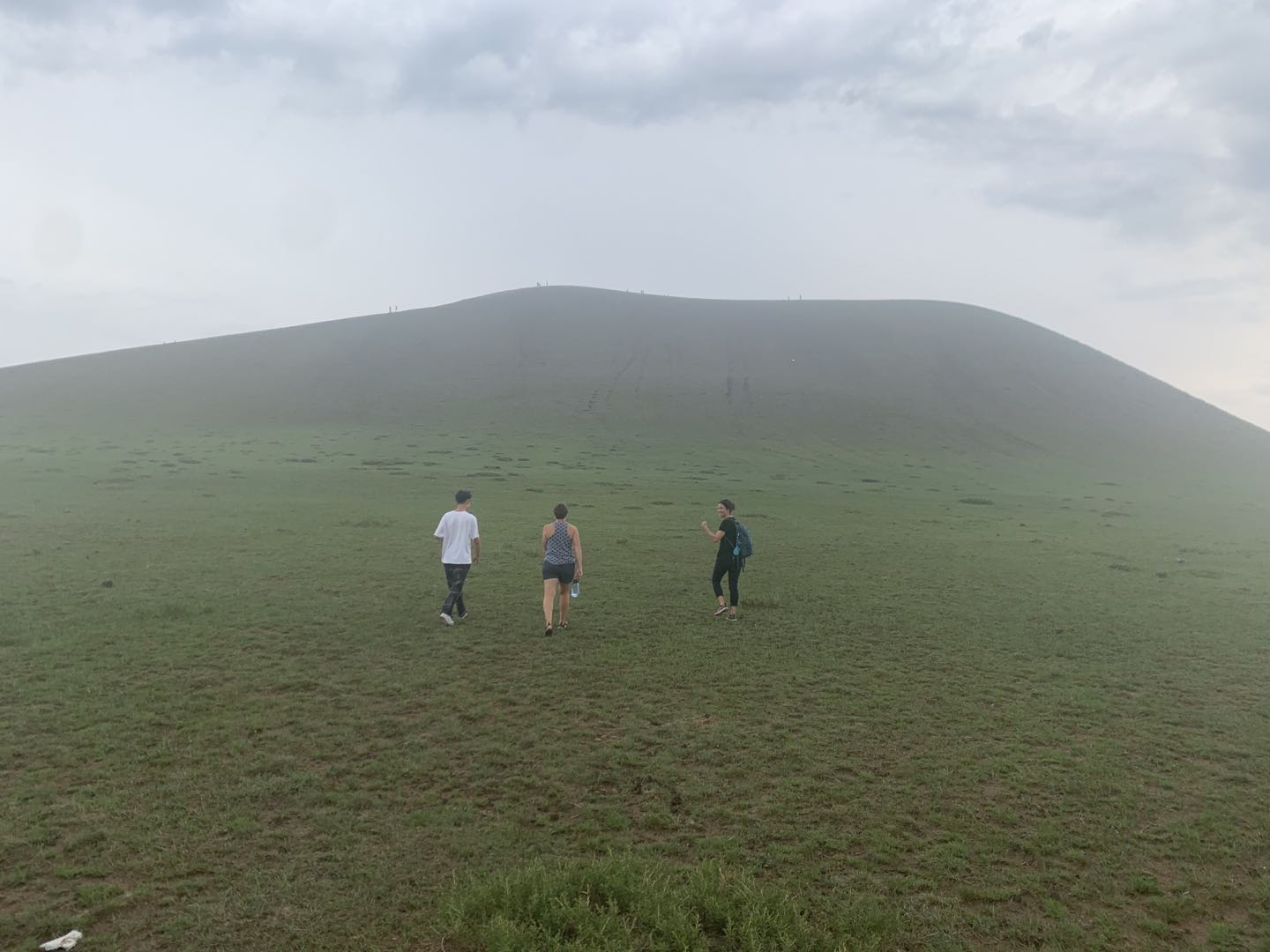
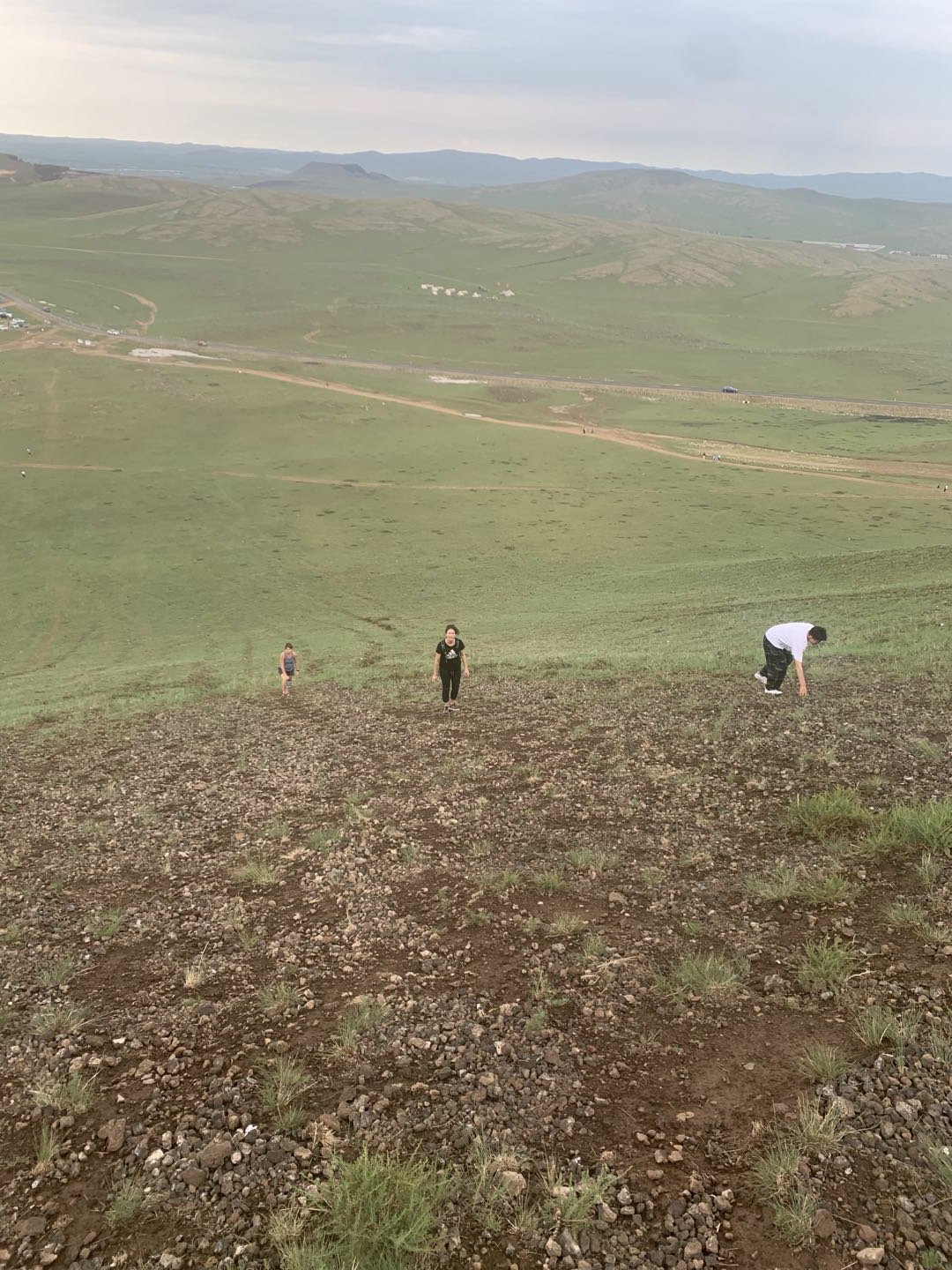
#5 volcano crater had much loose rock and steep sides. It was a climb and a scramble getting down. There is a beautiful view all around.

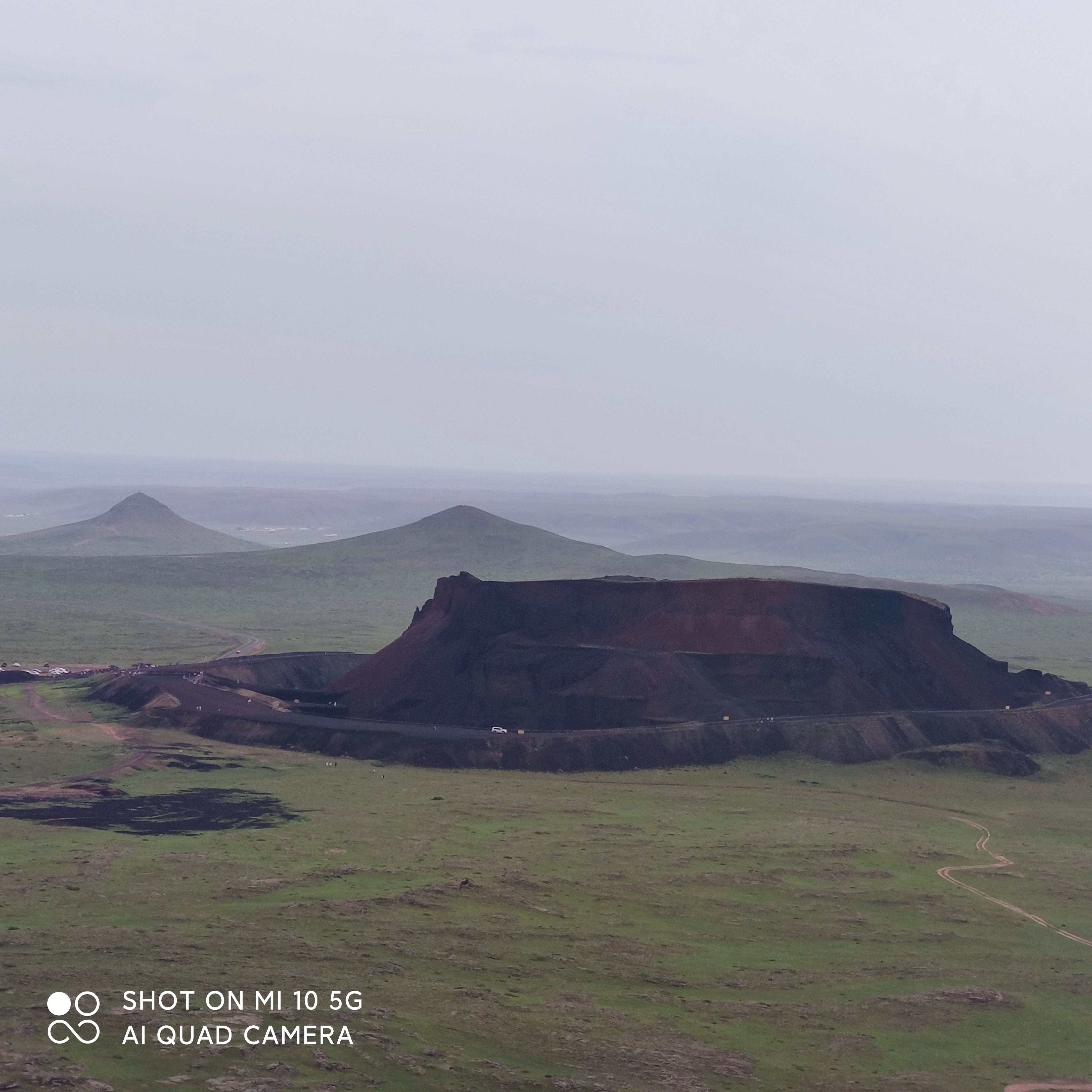
We could see the #4 crater from the top. It has been dug up for building material and in not as good a condition.

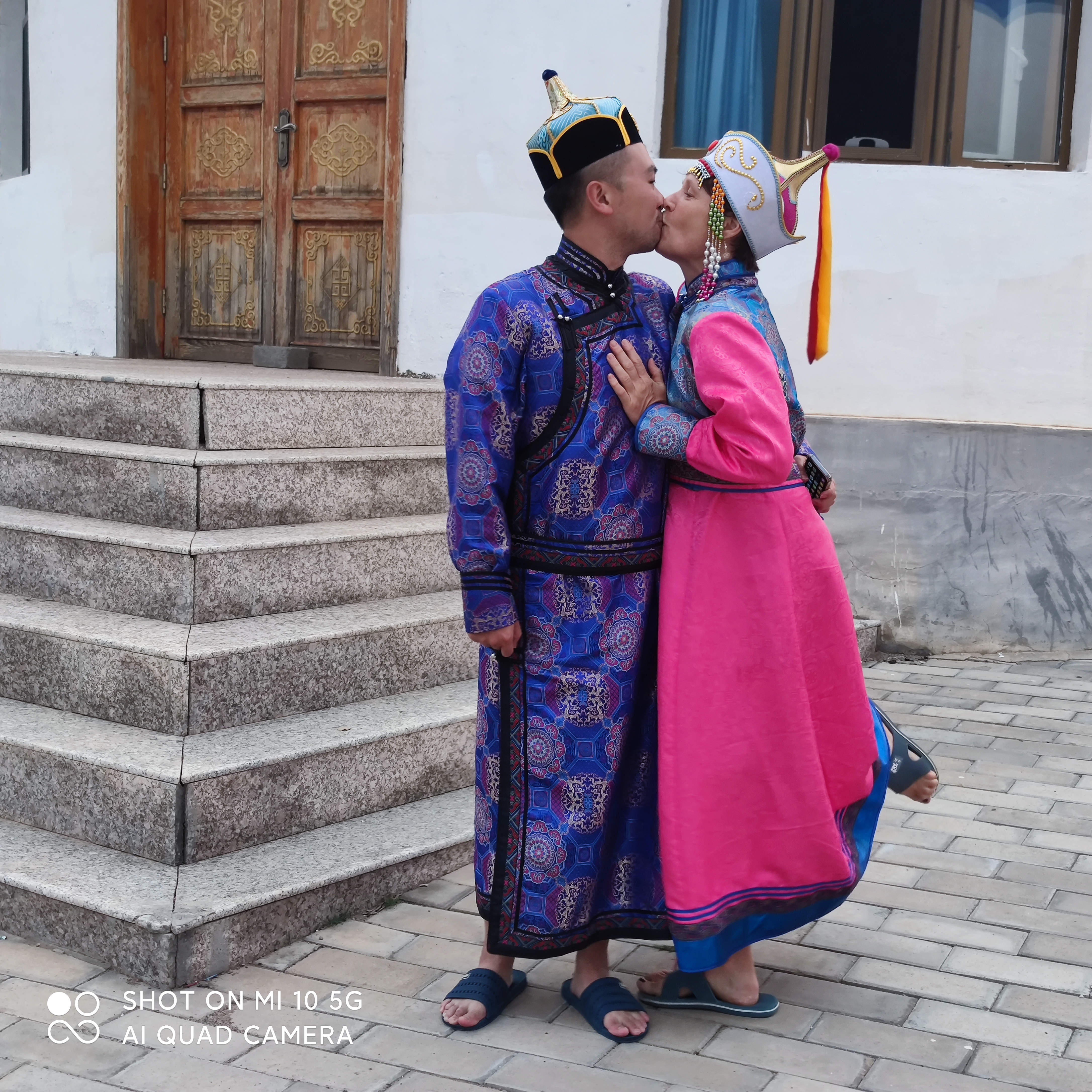
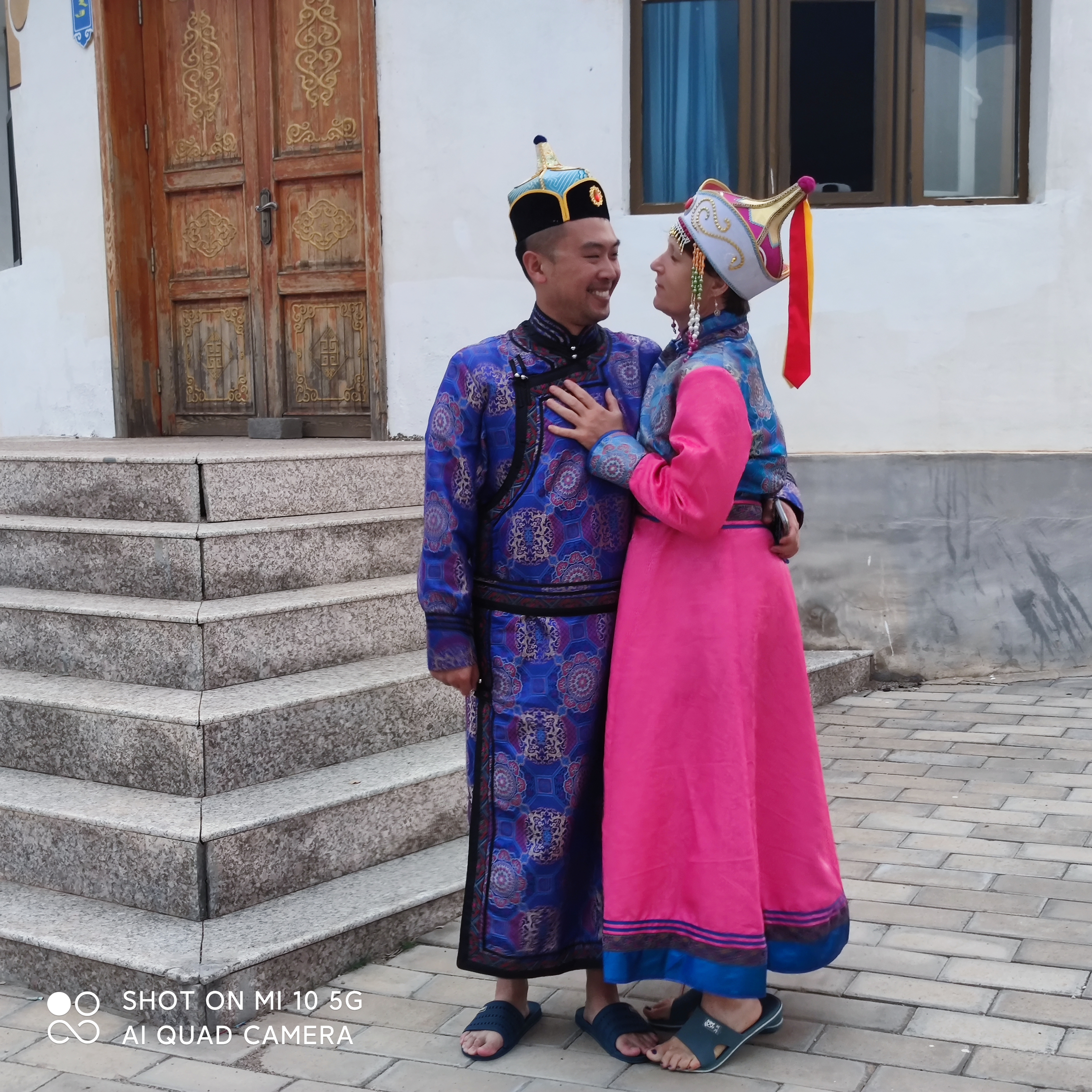
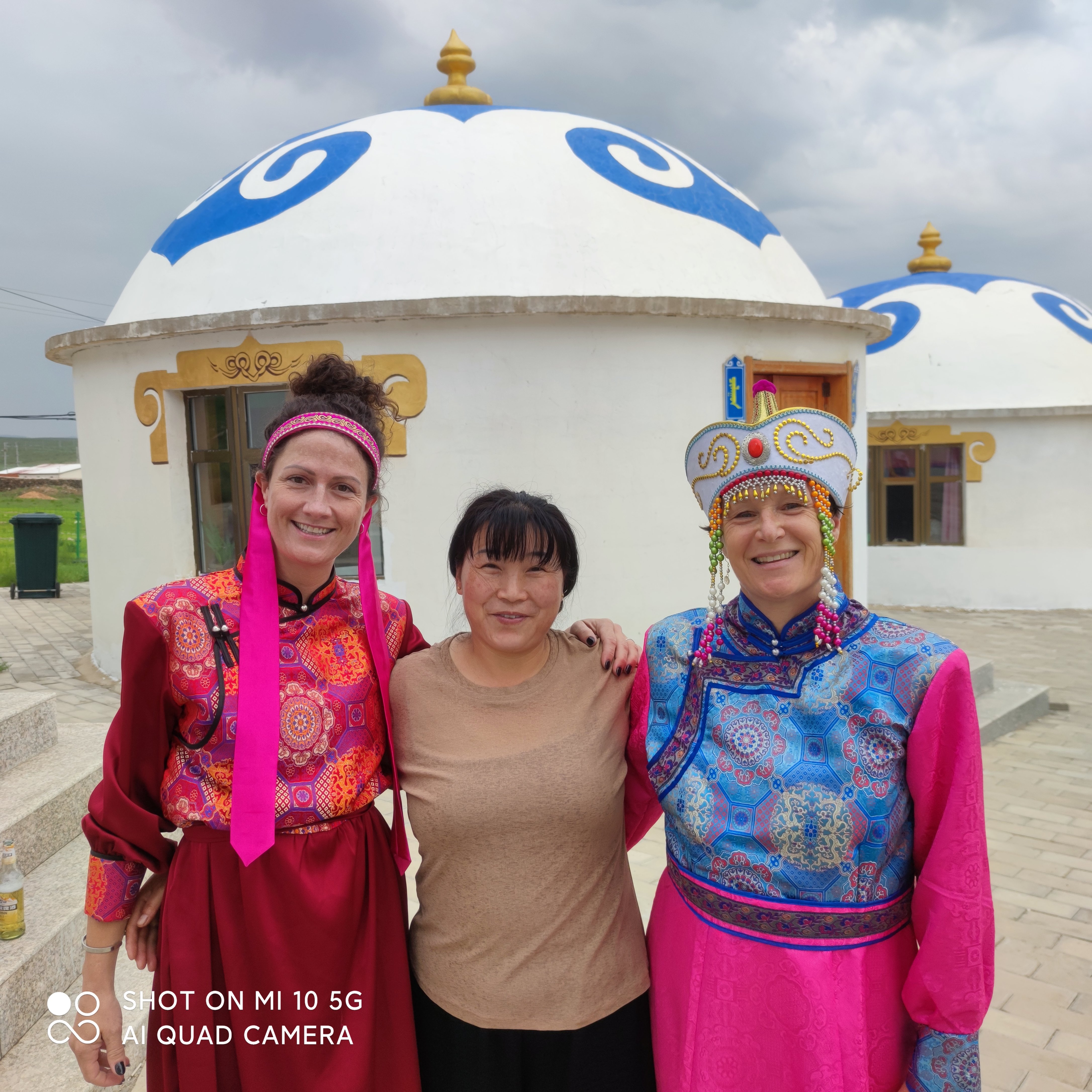
Back at the yurt we dressed in Mongolian dress.

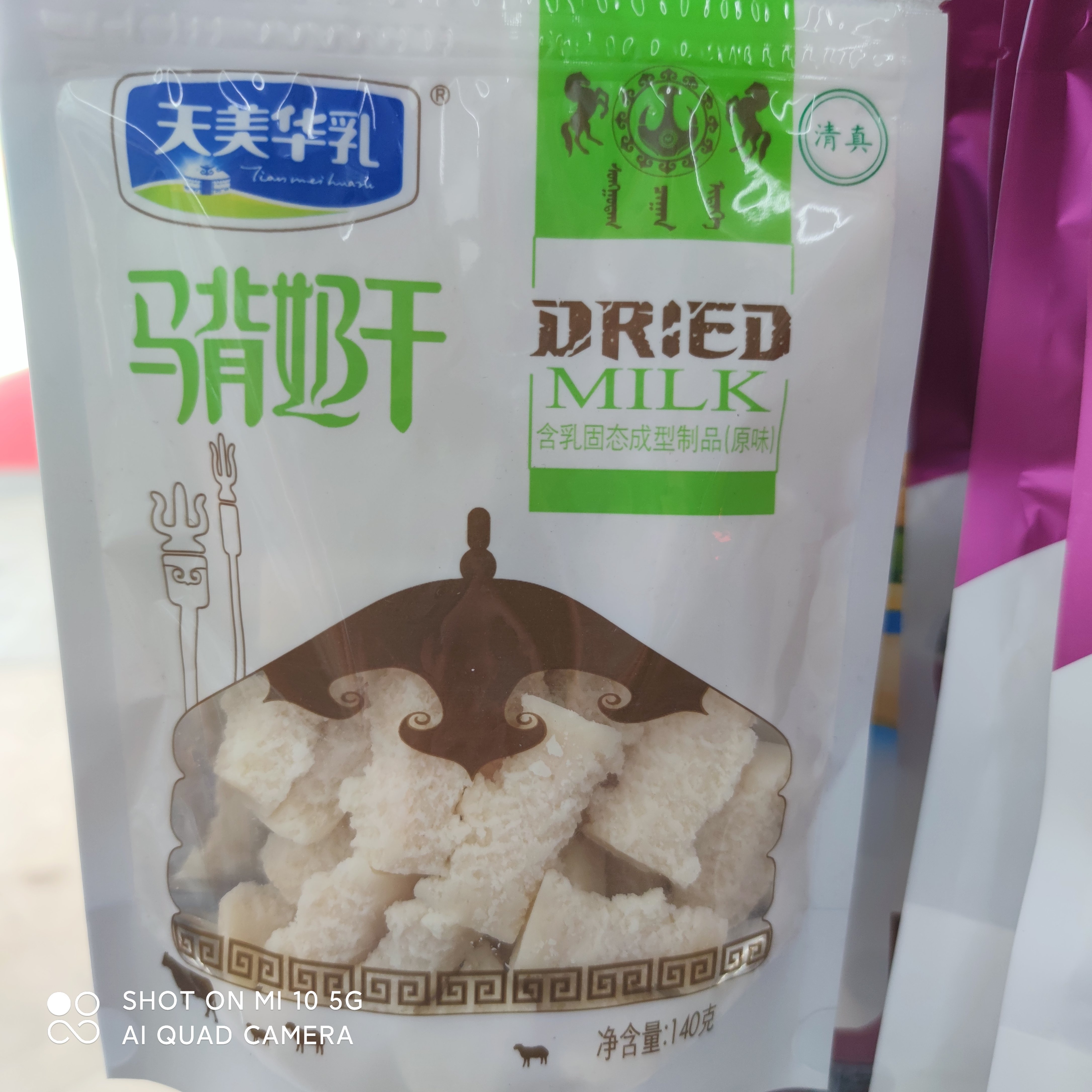
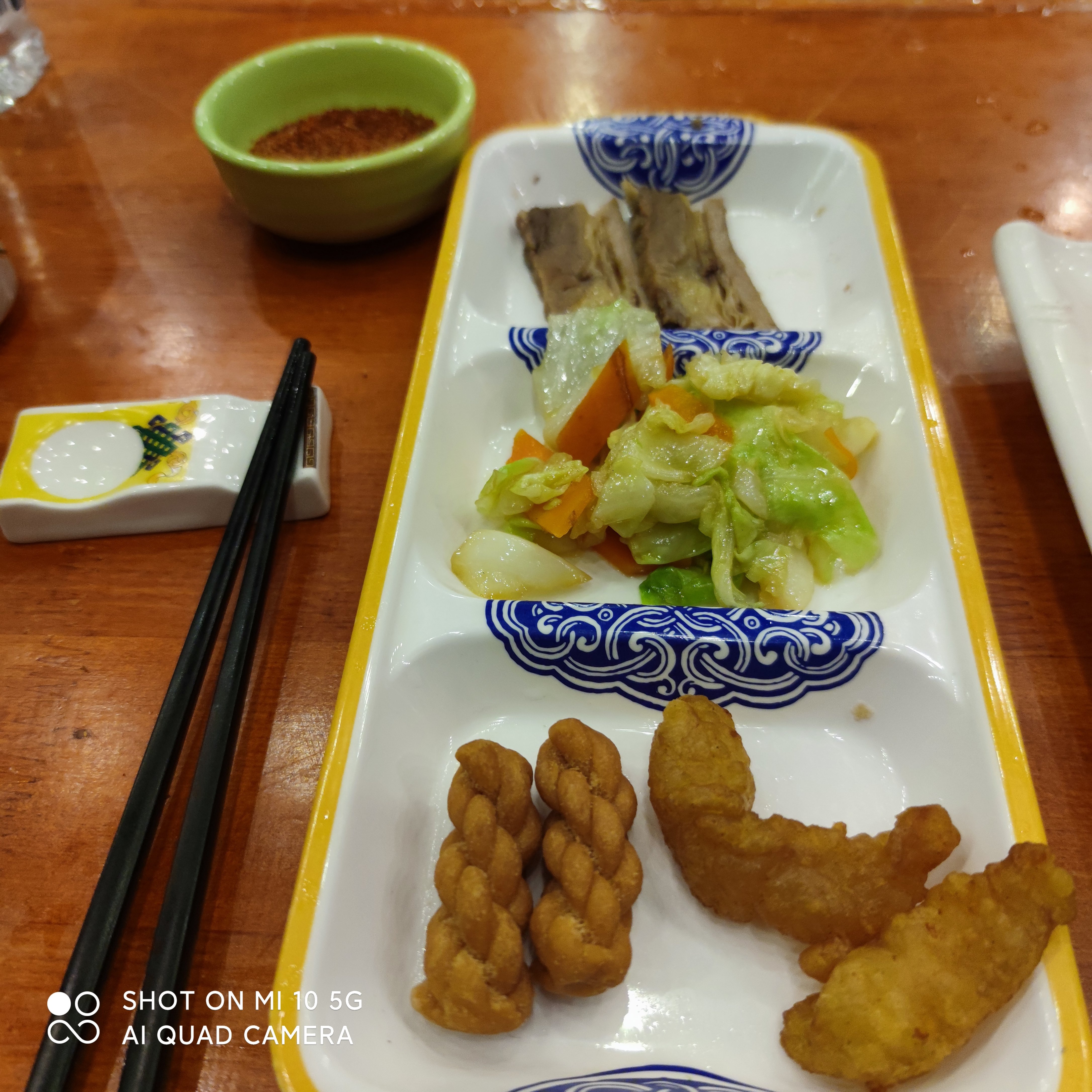
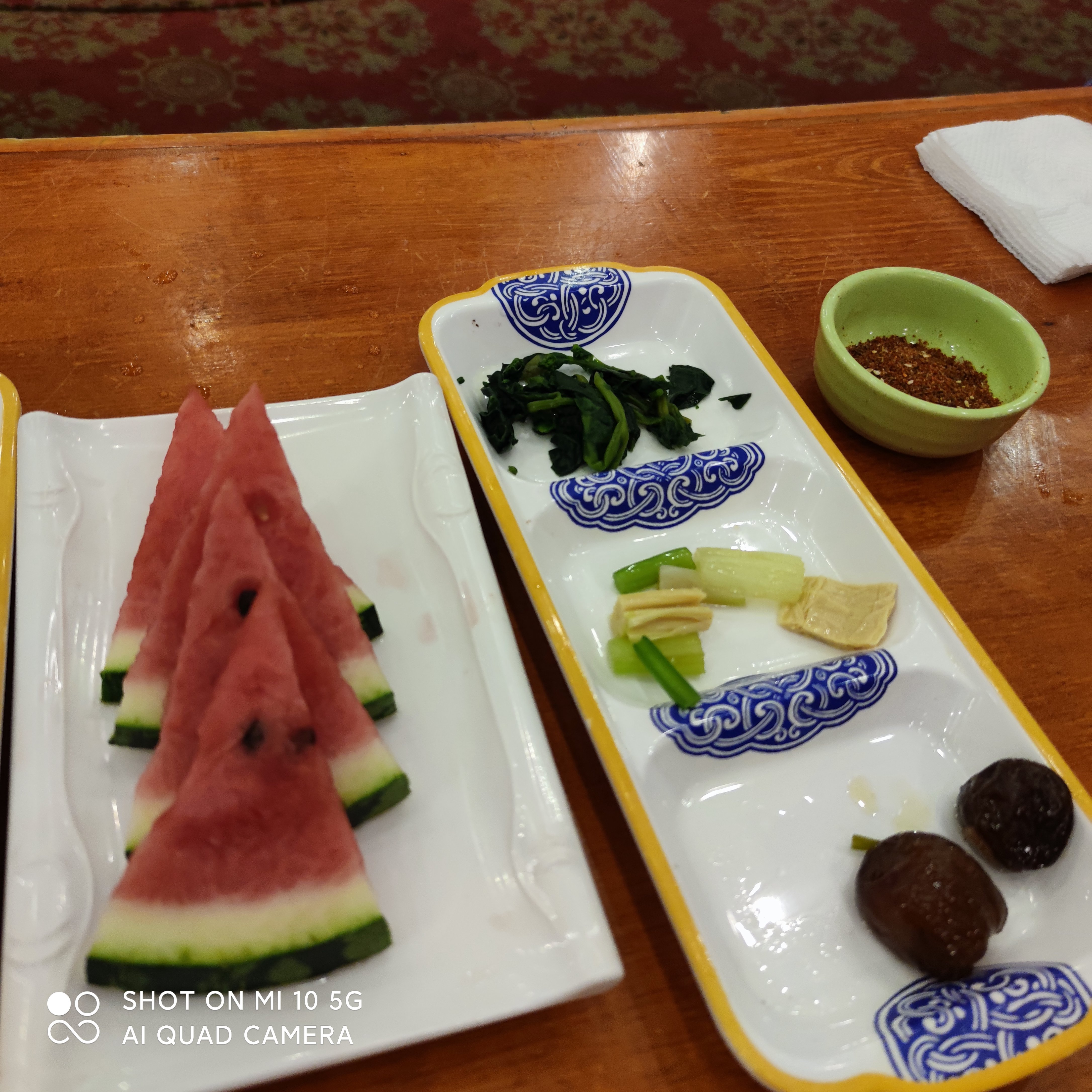
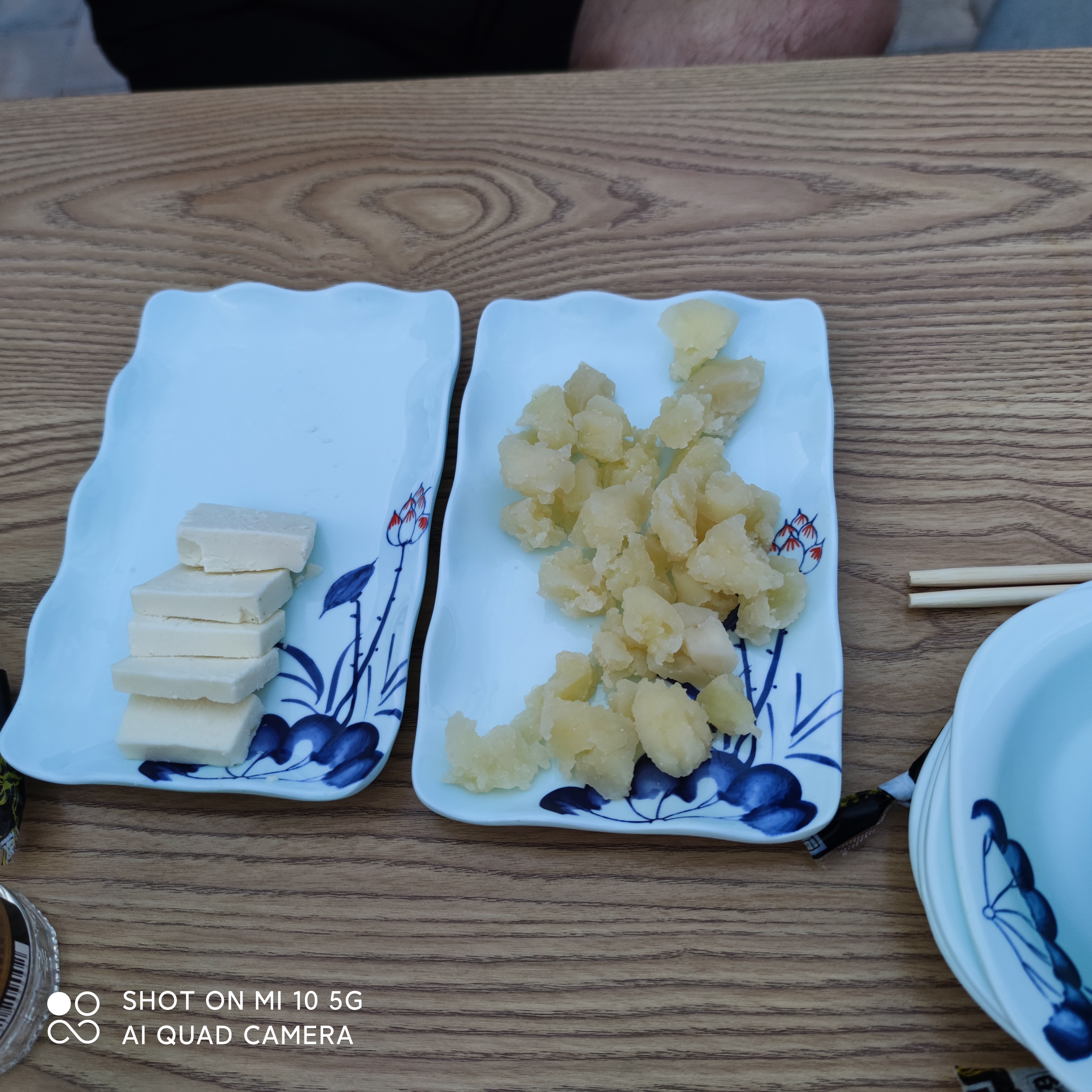
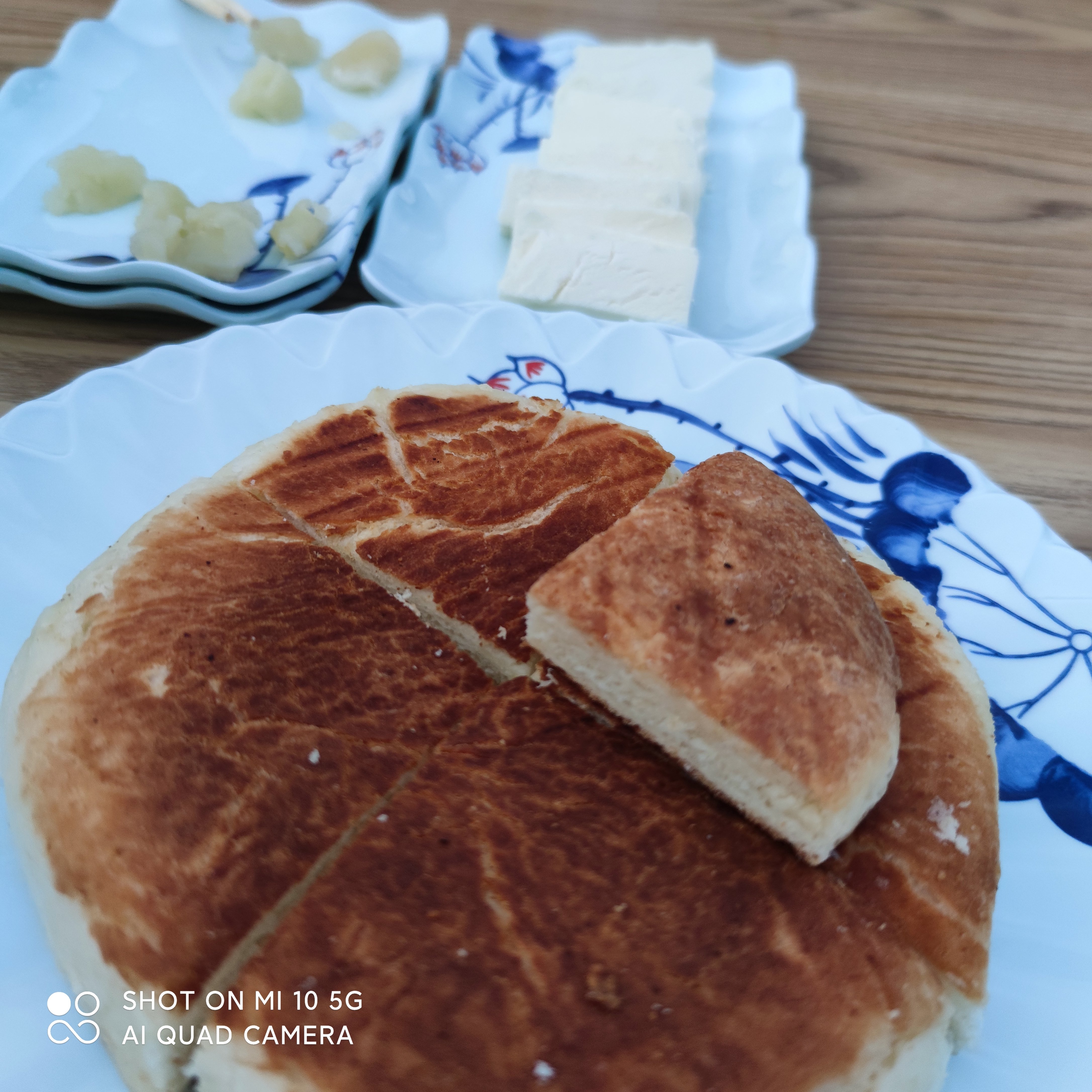
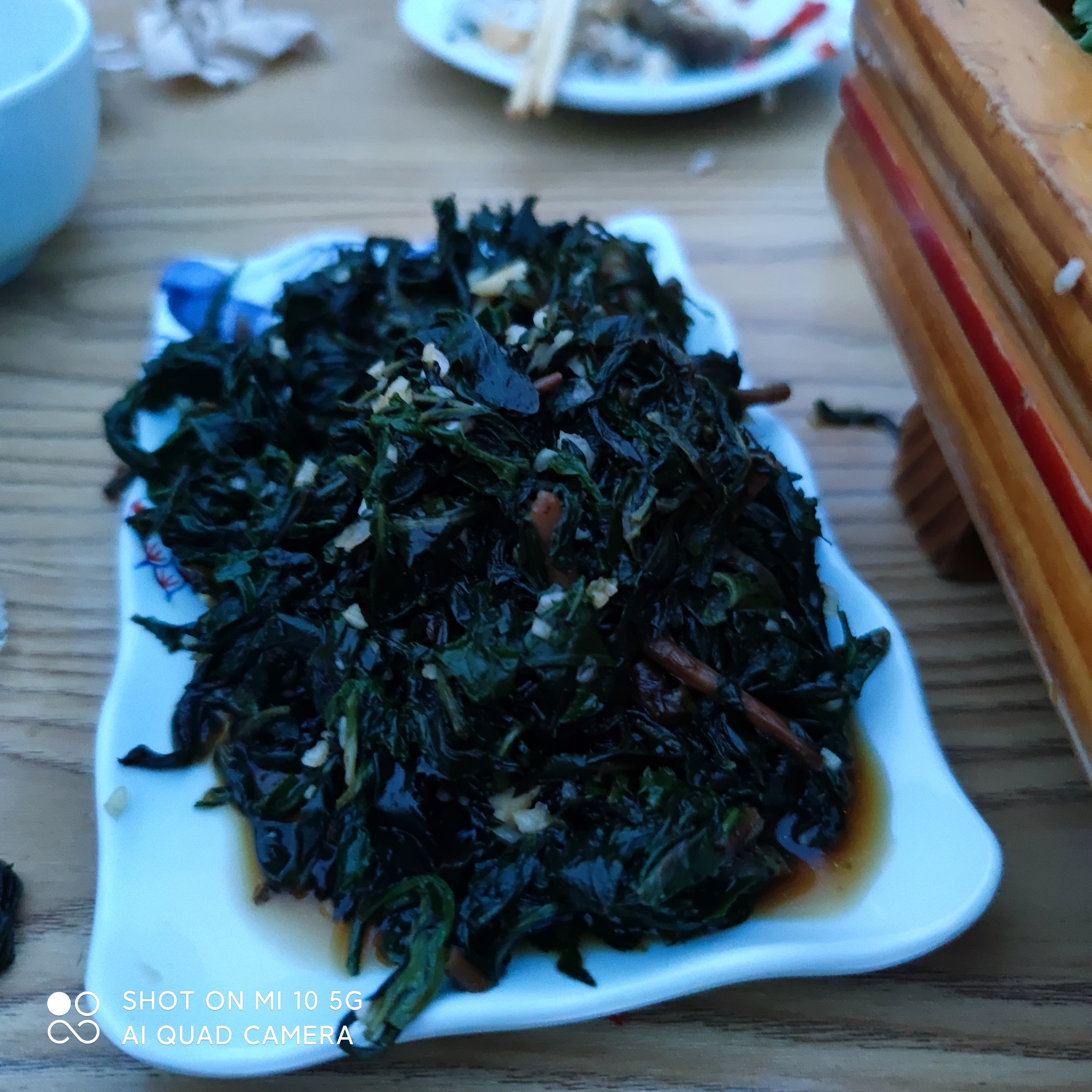
Dinner was amazing. Fresh greens from their garden, Mongolian pancake, yak cheese and tofu.

Chongqing at night

The first night we went on a river cruise along the Yangtze River which is one of the top 3 longest in the world. The Yangtze is the longest river in Asia, the third-longest in the world and the longest in the world to flow entirely within one country

The second night we walked down to the river.
We weren’t sure what this building is but it is striking and when looking at the skyline it looks like a ship passing between buildings.
You can see the red triangle on the right side that looks like a ship moving left.

Hongya cave is at the junction of the Yangtze and Jialing rivers and is a 10 story, underground shopping complex that contains a lot of memorabilia and raw jade rocks. Always wanting to avoid crowds we did not go there but instead walked across the bridge to take a picture of the cave from across the river. The facade looks much like what buildings in past would look like and beautiful when lit up.
Stairs go down to the river and the rails are lighted here. You can see it in the left and right in the picture. This is just to the right of the cave.

Chongqing has been beautiful with amazing food. There are a lot of people here. 33 million to be exact. It is a city the size of an actual province. That is a lot of people and this is peak tourist time as well. Much like Hong Kong with an amazing metro system (just like other cities in China actually). The city design is impressive and so clean. What I liked is its people do not smoke as much here as in the southern part of China.

As nice as these days were, I am looking forward to Inner Mongolia and the grasslands, desert, and an old volcano. And less people….

Chongqing Hot pot, aka when I ordered pig intestine

Spices, peppers, broth are heated to boiling and you cook your own meats and veggies you order as the meal progresses. There are many hot pots I have had (the one using fresh coconut water is my favorite) but you cannot be in Sichuan province without trying theirs. It is considered the hottest.

Hot pot. The center is bone broth with medium spice and the outer ring is medium hot hotpot which is very spicy. Mushrooms, veggies, lamb, bean sprouts, and lamb.
We thought we were ordering fish but instead ordered pig intestine. Ever adventurous, we all tried it anyway. Chewy but not much taste.

The next night we went to a different hot pot place. Again we had the bone broth in one side and hot pot on the other. It definitely gets hotter in spice the longer it cooks. The bone broth did not have heat to it so added some of the other liquid to give it a kick.
There is sesame paste, cilantro, green onion, seasonings, etc. and you do your cooked foods in it before eating.
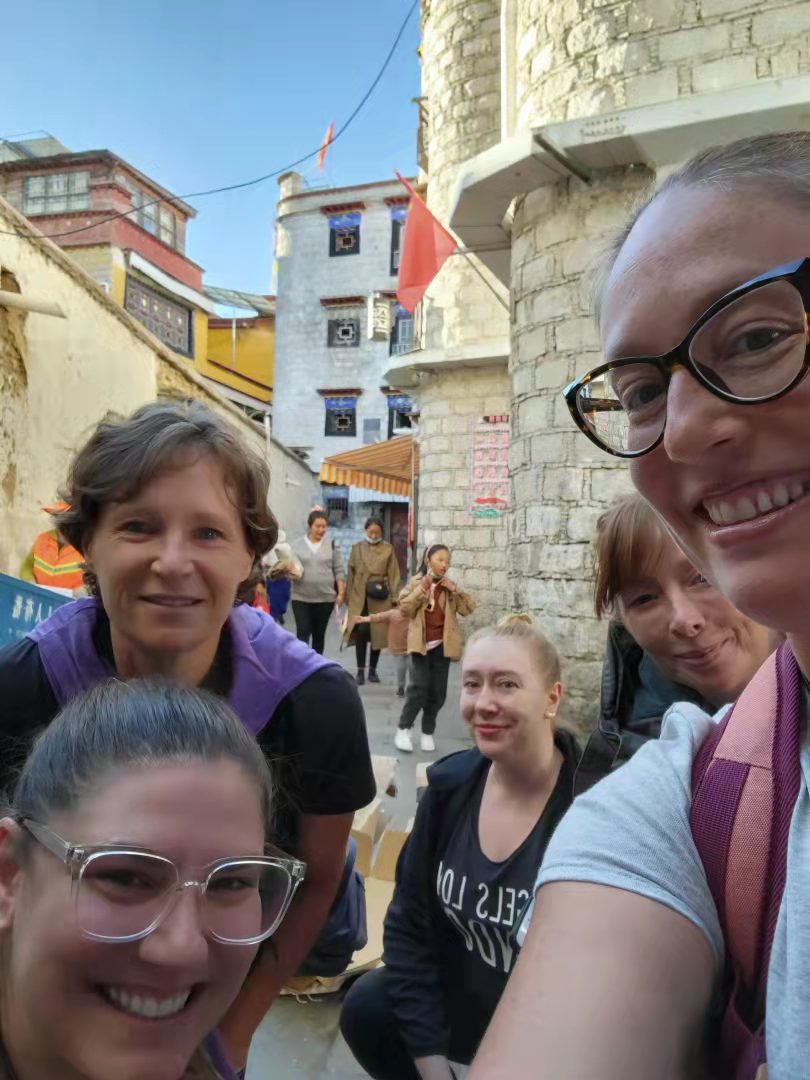
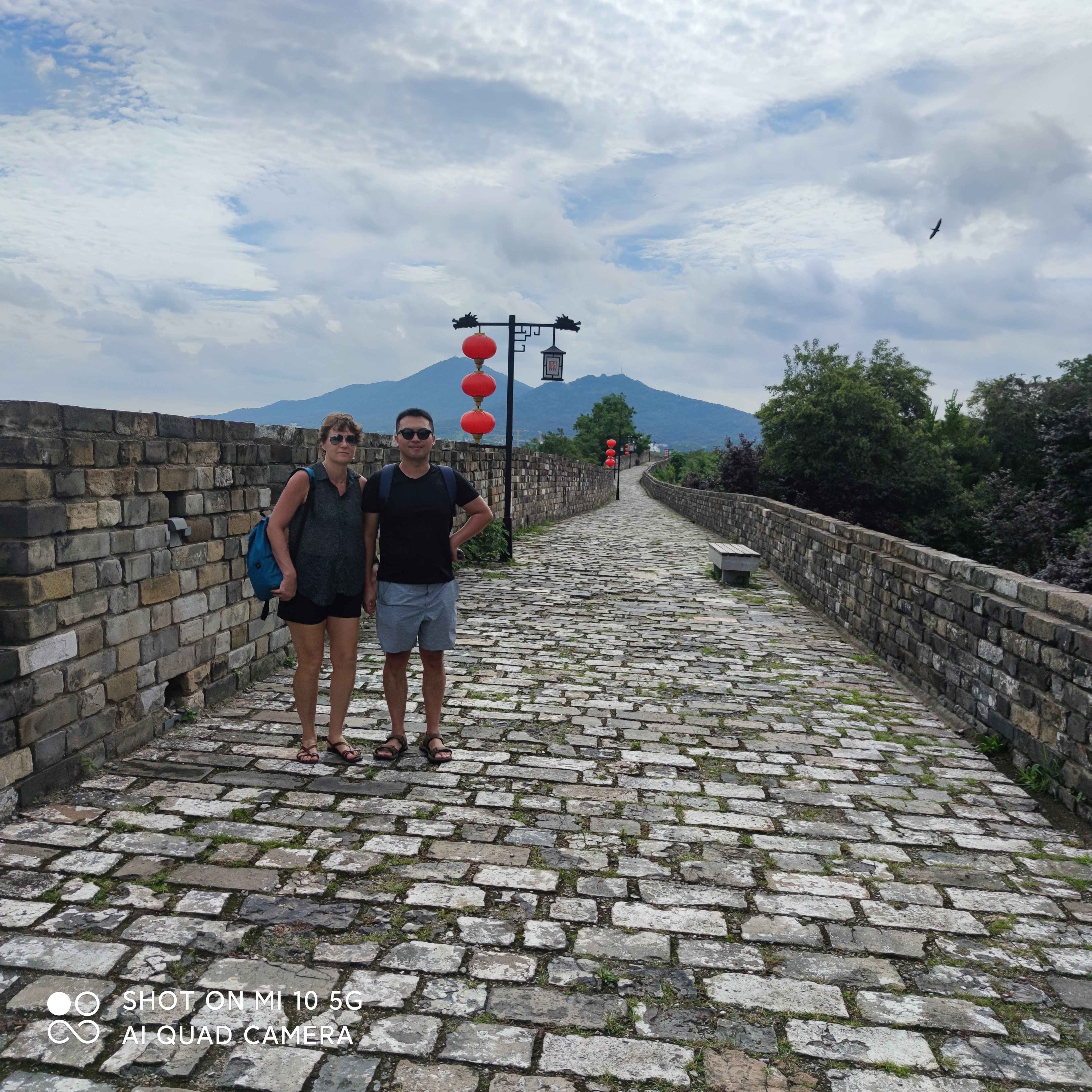
Amber, Michael, Jack and myself.

Excellent hot pot and trying different meats, fish, and types of veggies. Definitely a reason to visit again!

Chongqing, sanfu, one of the three furnaces

This summer vacation I planned to visit places I have wanted to go : inner Mongolia and ancient capitals: Nanjing and Luoyang. I had never been to Chongqing and people said it is a place not to be missed. It is very hot as it is surrounded by mountains and little air movement as a result. Because of this it is one of the “furnaces of China”. It is also in Sichuan, known for its spicy food.

Heading back to the hotel. It is pretty hot here.

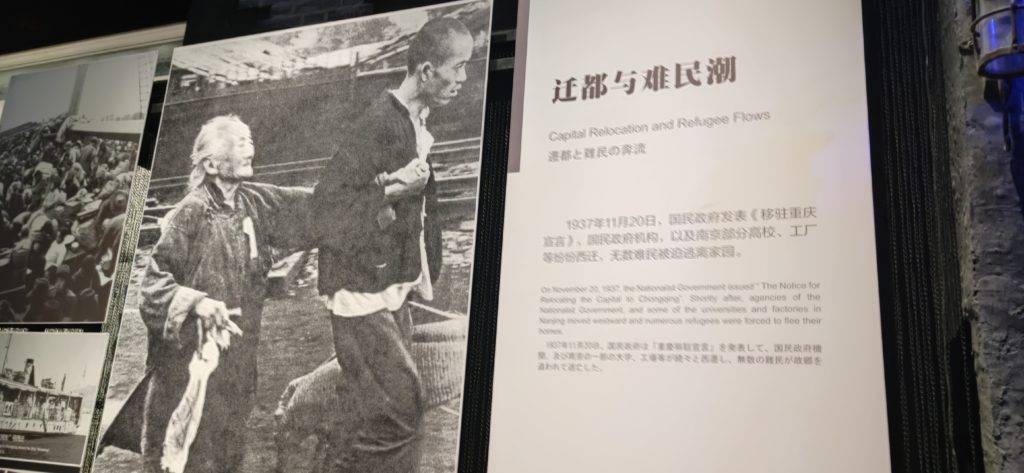
Chongqing was the capital of the Republic of China for seven years during the late 1930s and early 1940s during the Anti-Japanese War (World War II). This isn’t one of the ancient capitals but a place I was told not to miss.

Chongqing Jiefangbei Pedestrian Street  (重庆解放碑步行街) was just outside the Crowne Plaza hotel we stayed at. There is the People’ s Liberation Monument at the center of the city. It is in commemoration of the end of Japanese invasion during second world War.

Celebrating of the Anti-Japanese movement.

The city reminds me of Hong Kong with close buildings and hilly streets that seem to rise out of the water. We took the metro to view some spots. One is the metro line that runs through a building.

A video I took of the metro train: https://youtu.be/fhUylmYOcRo

We visited Ciqikou old town which was built in 1000 AD and was an ancient port. It is surrounded by a mountain and three rivers. Now it has beautiful tea houses, unique snacks and gifts and a temple (we didn’t make it to the temple as there were too many people). It was great to try some snacks and look around.

This is a cucumber carved into a Buddha. If you eat it you will live a long time. I don’t pass up vegetables when I see them.
Everything with hot peppers.
This is yogurt quickly frozen on an anti-griddle.

The Art street is more graffiti than street art but the art on the buildings was pretty impressive and anyone can buy paint and a brush and become an artist. We took a didi to 501 Art Base which is the Art university and walked back taking in the sites and buying souvenirs. .

Tiananmen Square before leaving

The night before I left I went to Tiananmen Square. Security is right for the upcoming 100 year celebrating of the communist party. I took the photos one should take while standing in the square.

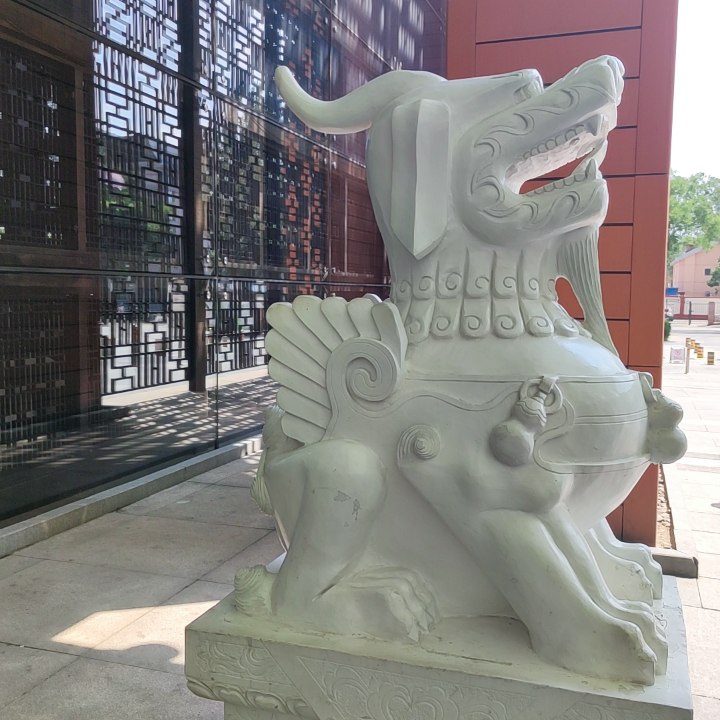
A hubao which is said to send the will of the people to above. These assist near palaces and tombs. This is its front of the forbidden city.

Of course walking back to my hotel earlier I was reminded of the times we are in. An ambulance taking away a person. The people in contamination garb. One watching the street after the ambulance left and another had just reentered the building spreading all surfaces. We have a long way to go with covid.

At the airport I was quite early. I have not much experience with Beijing Airport so took no chances. Actually, of all airports I have been: Amsterdam and the US are the worst for getting through security. Security is still tight here, they just don’t have lots of wait. If course this is actually not peak season yet. So I went to the very affordable flight lounge (no alcohol that is why it is affordable).

In the airport there are displays and history :

Temple of heaven

For 500 years in the Ming and Qing dynasties, this was an important place of worship for abundant harvests. It is the most important temple in China.

Imperial hall of heaven

An important building with 9 figurines on the roofline.

The echo wall is a building so designed that you can carry on a conversation on one side with another person on the other side through whispers.

The circle mound is comprised of stones around a center stone with 3 circles of 9, 18, and 81 stones referring to the 9 heavens. The center is called the heavenly centre stone and one that stands there will be particularly resonant.

Another beautiful park. This one has been a model for architecture and landscaping in the east and the west. The buildings in particular are architectural marvels.

The Summer Palace

I spent a morning touring the grounds of the summer palace. This is northwest of the forbidden city and the imperial family would escape government life to relax here. It is really a park and one can imagine what it would be like to be free to swim, walk through the woods, and be carefree. I enjoyed the beauty of nature and the smell of pine and cedar.

The gardens, temples, and pavilions are in harmony with nature. The Chinese name means Nourishing Peace Garden.

During the hot summer, the imperial family preferred the Summer Palace to the Forbidden City. Dowager Empress Cixi lived here for some time, with much speculation of extravagence.

History:

  • In 1750, Emperor Qianglong, 4th Qing Dynasty emperor ordered the building of the first Summer Palace, named Qingyi Yuan or ‘the Garden of Clear Ripples’.
  • In 1860, it was destroyed by the Anglo-French Allied Forces and rebuild in 1886.
  • In 1888, the Summer Palace was given its present-day Chinese name, Yihe Yuan, and served as a summer resort for the Empress Dowager Cixi.
  • In 1900, it was destroyed by the Allied Forces of the Eight Powers.
  • In 1912, it was rebuilt as one of the final commissions of the Qing Dynasty (1644–1912).
  • In 1924, it was opened to the public.

It is beautiful!

Beihai Park and the Drum Tower

The drum tower was used for telling time until 1924. It was built in 1272 during the reign of Kublai Khan and was rebuilt after two fires during the Ming and Qing dynasties. Beginning in the Han Dynasty, the system of the “morning bell” and “dusk drum” necessitated towers to be built. The Drum Tower was used to keep time during the night hours.

Many very steep stairs to get to the tower.

In the tower are many relics used to keep time through Chinese history.

The Kalou used the movement of water to tell time and was very accurate. Of course the water had to not freeze and later mercury was used instead of water for clock movement.
The beilu uses movement of little balls to accurately tell the time.
The bell tower was under construction.

From there I searched for Beihai Park and the white tower I have seen from time to time. It is a large park with half being covered with water. In the center is the Jade Flowery islet with a large white dagoba.

The Tibetan lama suggested to the first emperor of the Qing Dynasty to build the Tibetan dagoba to show his belief in Buddhism and his desire for the unification among various Chinese ethnic groups. It is a beautiful park and while walking around the dagoba you could smell the numerous pines there. It has been two years since I smelled the pines and miss that.

This Reading Cloister houses tablets kept from 220 to 1644 and had important history of Chinese calligraphy. You can see the tablets on the lower floor (they look like windows).

After that I went back to the hotel. It was a very long day with a lot of walking. Quite interesting to be on the Great Wall, then see innovations in how they measured time, and walj in a beautiful park.